Whistler’s Mother: the portrait and its quiet structure
Whistler’s Mother is a portrait of Anna Matilda Whistler. Explore its arrangement through six contextual works by the same artist.
Whistler’s Mother is both a portrait of a particular woman and a painting whose formal title asks us to notice colour: Arrangement in Grey and Black No. 1. James McNeill Whistler painted his mother, Anna Matilda, in 1871. She sits in profile within an unusually restrained interior, a person with an unmistakable presence and a component in a carefully measured arrangement. Those two ways of seeing need not cancel each other.
The famous portrait is held by the Musée d’Orsay. It is not the image at the top of this story, and it is not reproduced here. The six pictures shown below are other works by Whistler, selected to explore his use of colour, spacing and the figure. Their captions identify them individually; none is presented as a substitute portrait of his mother.
A seated woman and a formal title
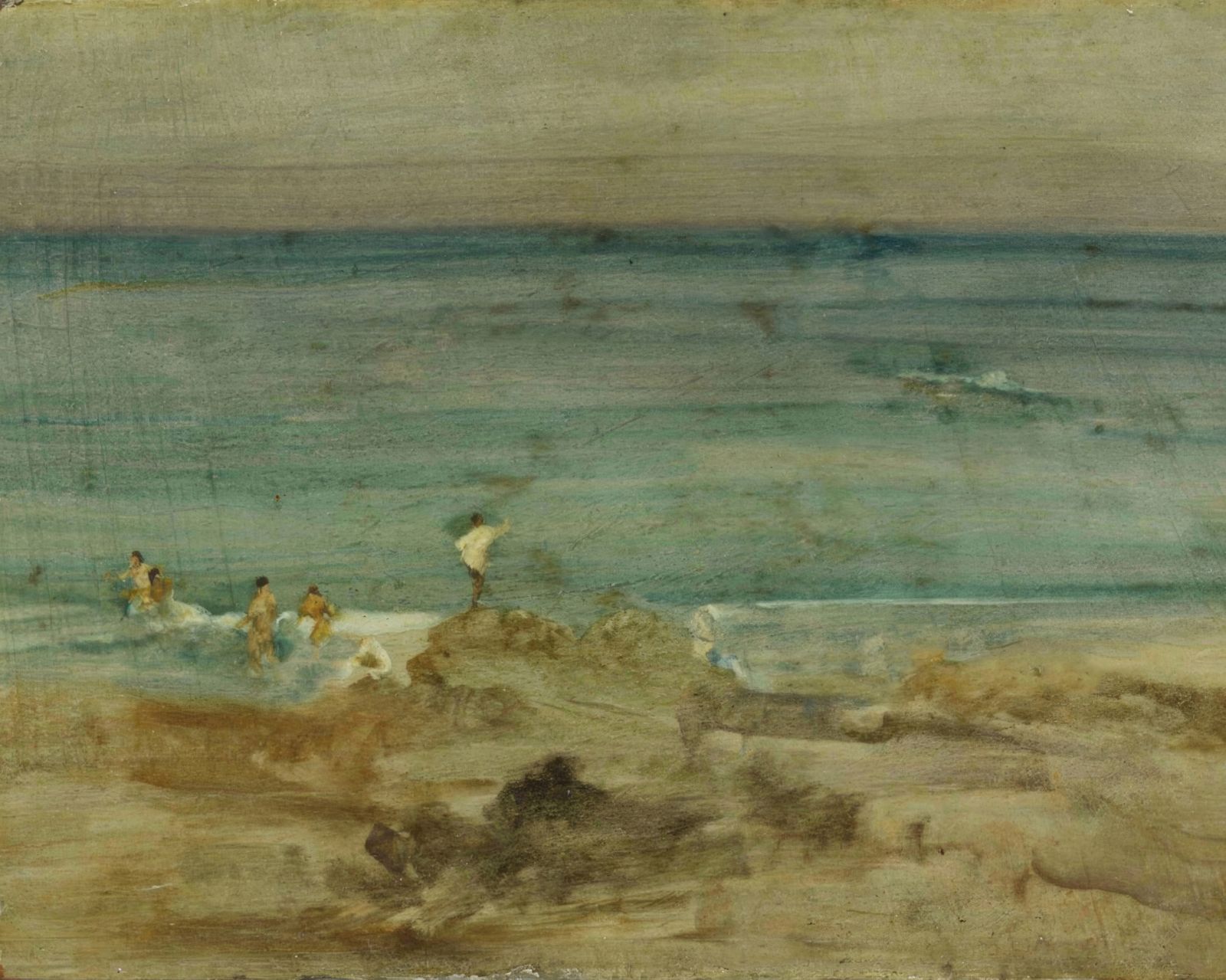
Violet and Blue: The Little Bathers, Pérosquérie · James Abbott McNeill Whistler, 1888 · Harvard Art Museums. Prepared for print by Surrealium at Vaxholm Fortress, Sweden.
The familiar nickname directs attention towards a relationship: the artist and his mother. The formal title directs it towards an arrangement of greys and blacks. Looking at the Orsay’s collection record helps keep both in view. Anna Matilda is seated sideways, her hands gathered in her lap and her feet supported, while the room’s large shapes establish a firm geometry around her.
The contextual picture shown here, The Little Bathers, Pérosquérie, works very differently in scale and setting. Yet its colour title also encourages us to consider how figures belong to a larger field of tones. A small human presence can matter without filling the surface. That comparison is a way into Whistler’s thinking, not a claim that the beach scene contains the same story or emotional content as the portrait. Each work needs its own first description before the comparison becomes useful. Notice how much of the beach scene remains open around the figures, then imagine how different the effect would be if that surrounding space were cropped away.
The mother does not disappear into geometry
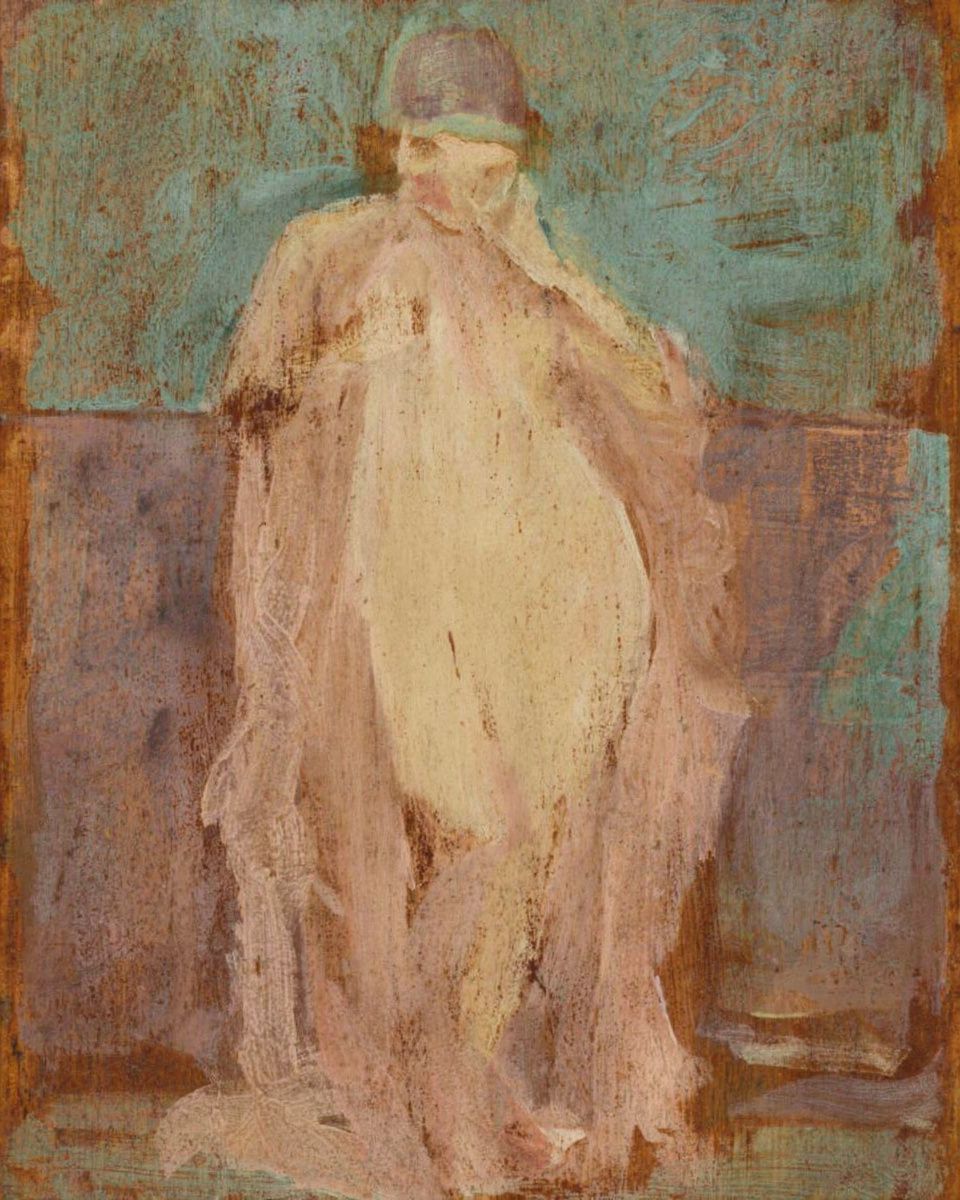
Violet and Rose: La Belle de Jour · James Abbott McNeill Whistler, c. 1885 · Harvard Art Museums. Prepared for print by Surrealium at Vaxholm Fortress, Sweden.
It would be a mistake to treat the sitter as an excuse for a diagram. The turned head, the gathered hands and the relation between the body and the chair remain the visible presence of a person. At the same time, the wall, curtain and floor do not behave as incidental decoration. They regulate the space in which that presence can be felt.
La Belle de Jour offers another contextual comparison in the relation between a figure and a restricted colour world. Its violet and rose title does not tell us everything about the person; it tells us one of the ways the picture is organised. In portraiture, a likeness can coexist with choices about intervals, silhouettes and repeated tones. Our famous portrait paintings story offers other examples of that balance. A useful question is not whether a portrait is about personality or composition, but how its composition allows a particular personality or mood to become visible. The answer will be different for each work, even when the artist remains the same.
The room gives the figure weight
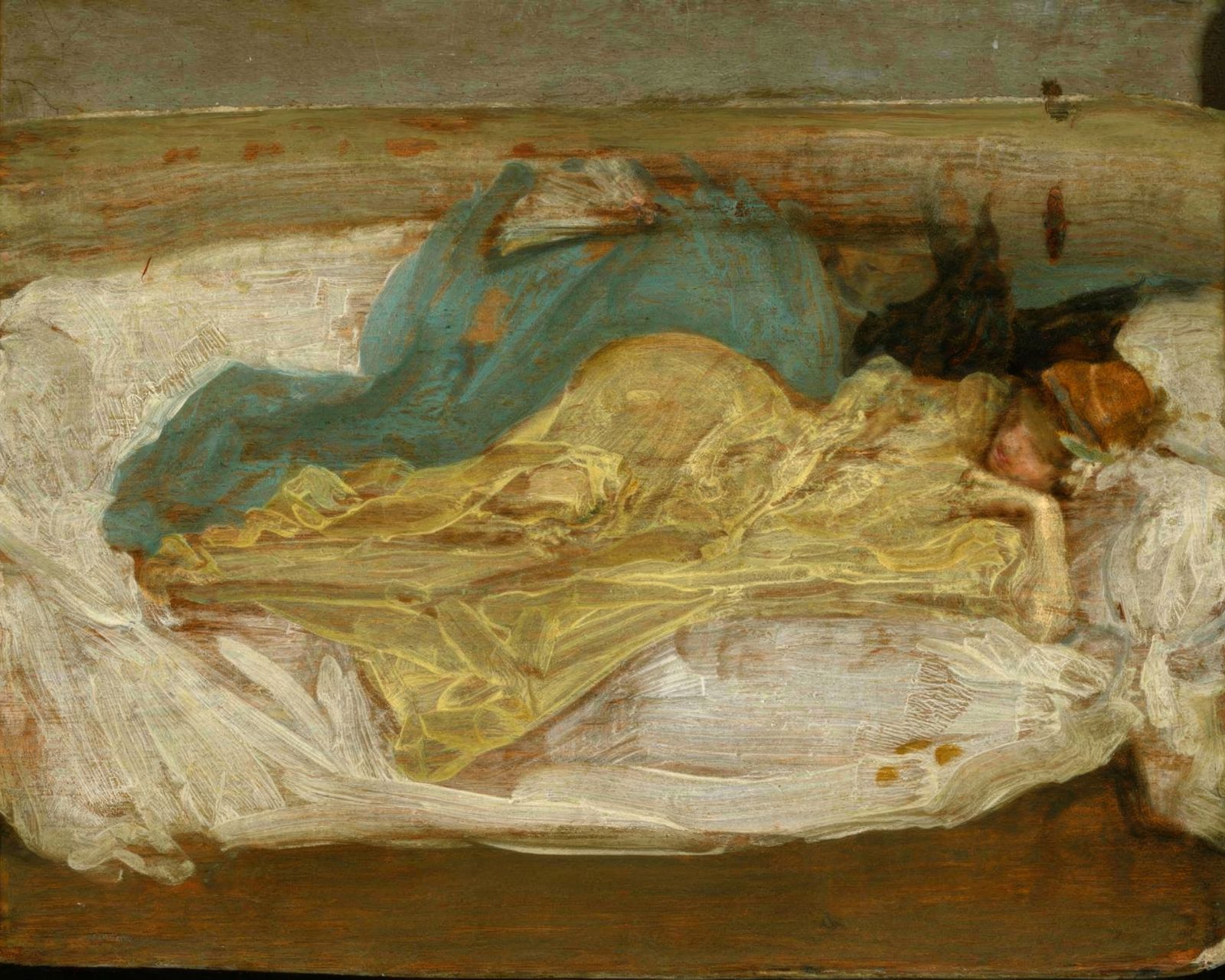
The Little White Sofa · James Abbott McNeill Whistler, c. 1883-1884 · Harvard Art Museums. Prepared for print by Surrealium at Vaxholm Fortress, Sweden.
Furniture in a portrait can do more than signal wealth or period. A chair supplies a structure for the body; a floor establishes contact with the ground; a wall controls how far the eye can travel behind the sitter. In Whistler’s Mother, those ordinary elements help give a seated figure the gravity that viewers often remember. The painting’s restraint depends on relationships among substantial shapes, rather than on the simple removal of interesting things.
The Little White Sofa makes a smaller domestic object the starting point for a different arrangement. Look at the pale furniture against the surrounding tones and notice how the figure’s placement changes the object’s scale. This is a useful exercise for anyone choosing a portrait photograph: the setting can support the person without demanding a story of its own. A plain room is not automatically a strong composition, just as a richly furnished room is not automatically a distraction. What matters is how its forms meet the body, where the light falls and how clearly the person remains the centre of attention.
A painter’s face, an artist’s choices
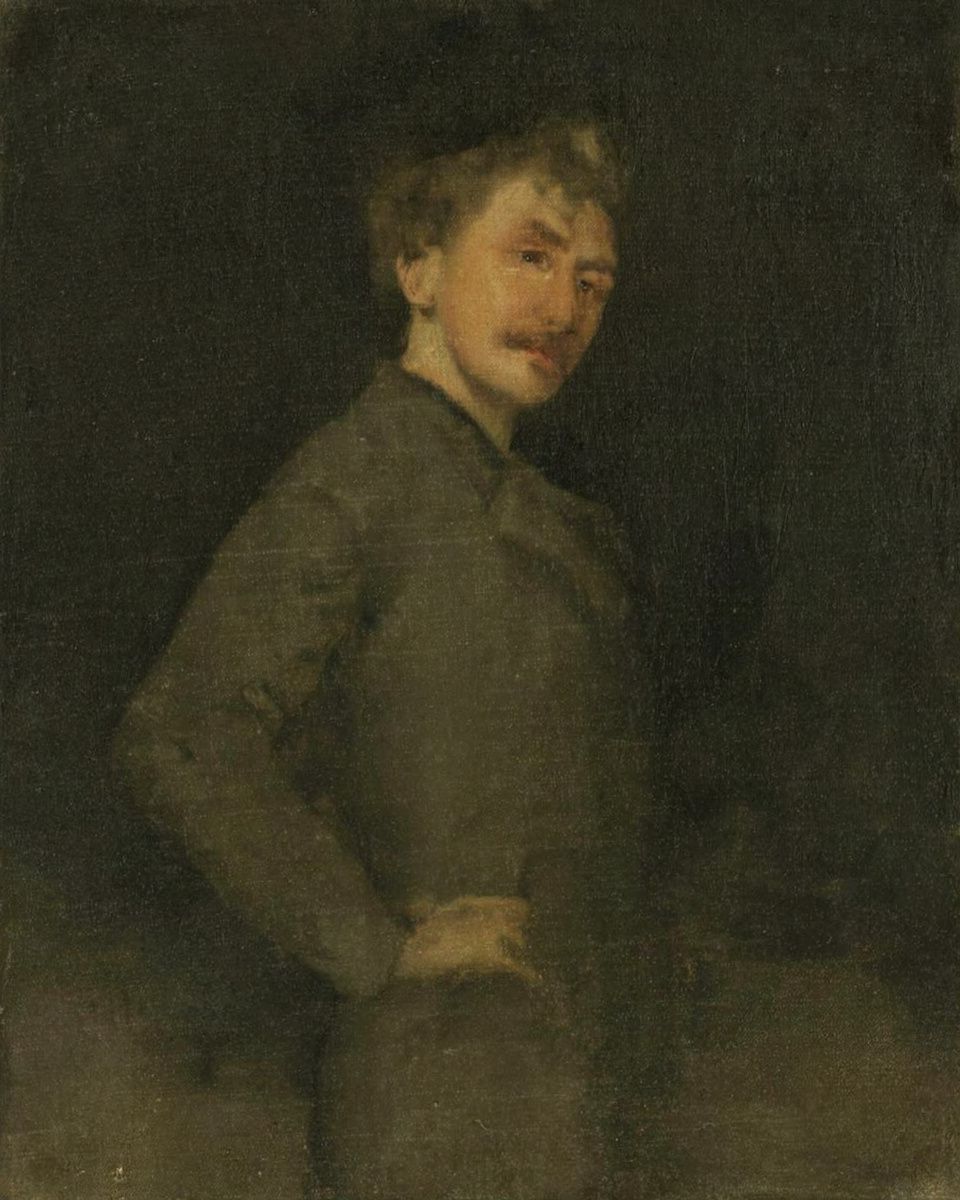
Self-Portrait · James Abbott McNeill Whistler, c. 1893-1899 · Harvard Art Museums. Prepared for print by Surrealium at Vaxholm Fortress, Sweden.
A self-portrait brings another complication. The artist is both the person observed and the person deciding how observation will be presented. Whistler’s later self-portrait shown here can therefore be considered beside his portrait of Anna Matilda without assuming that the two pictures offer equivalent access to private character. Each is a made image with its own emphasis, date and circumstances.
The scholarly Whistler catalogue records the 1871 portrait and its exhibition history, including its appearance at the Royal Academy in 1872. Such records help separate the object’s history from the many meanings subsequently attached to the nickname. A painting can become a familiar emblem of motherhood while remaining a specific picture made at a specific moment. If that family connection is what brought you here, the mother-and-daughter gift guide considers ways to choose an image through a real relationship rather than through a generic ideal of what a mother should represent. A personal association can enrich a picture without replacing the identity of the person originally shown.
Colour can organise an everyday scene
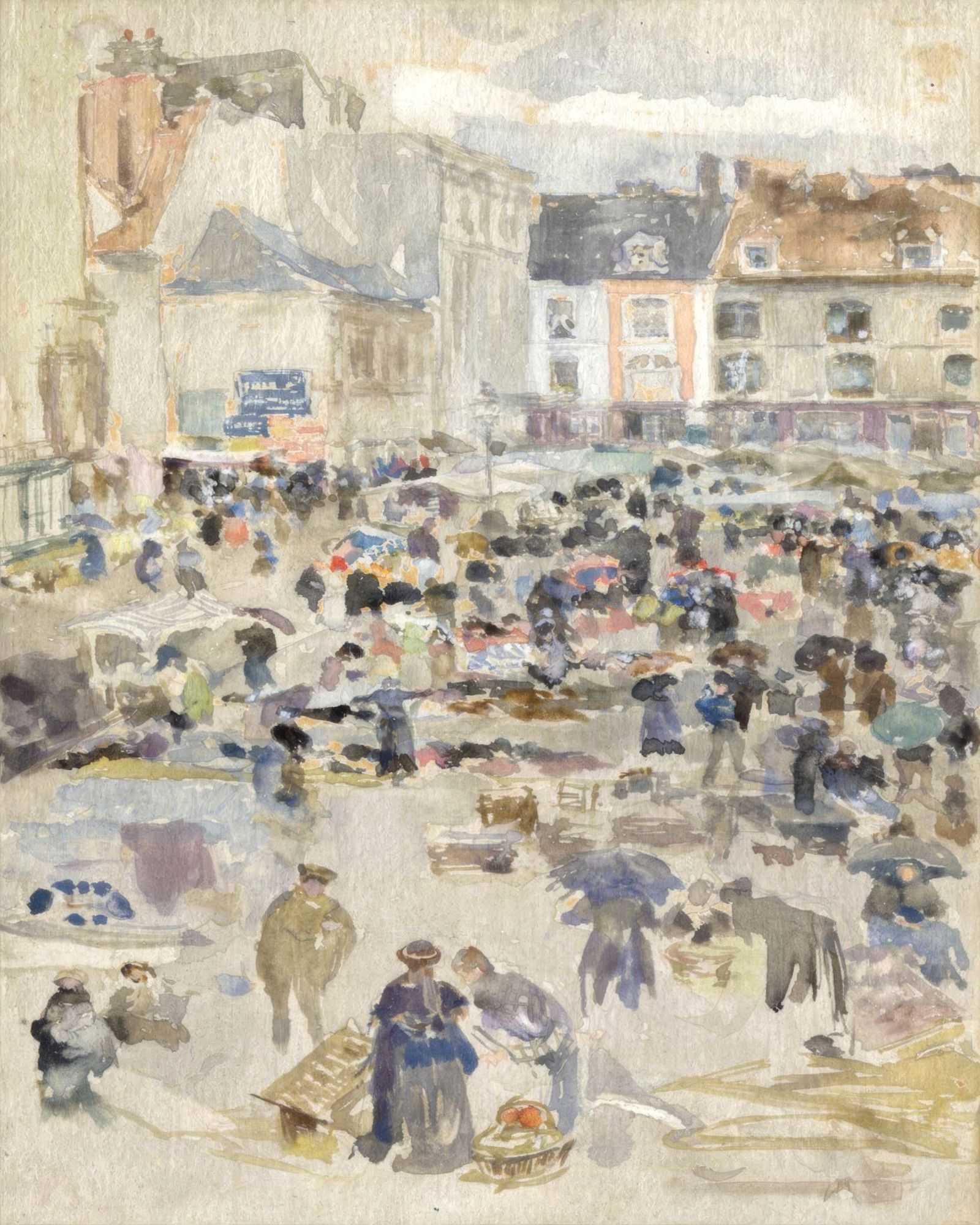
Variations in Violet and Grey—Market Place, Dieppe · James McNeill Whistler, 1885 · The Metropolitan Museum of Art. Prepared for print by Surrealium at Vaxholm Fortress, Sweden.
The market place at Dieppe is a change of subject, but its violet and grey title keeps attention on tonal relationships. Buildings, figures and open areas become parts of a small visual arrangement rather than an encyclopaedic description of the town. Look at how much information is sufficient to make a place recognisable, and how much of the picture’s character comes from the spaces between its incidents.
That economy offers a productive comparison with Anna Matilda’s room. In both cases, reducing the number of competing colours can make small differences more consequential. It does not mean that grey has one universal emotional meaning or that every muted painting is solemn. The George Inness landscapes show a different artist allowing atmosphere to gather separate forms into a coherent field. Comparing the two painters is useful precisely because a shared interest in tone can lead to very different kinds of space, touch and feeling. One artist’s quiet should not become a formula imposed on every other restrained picture.
What a contemporary portrait can take from this
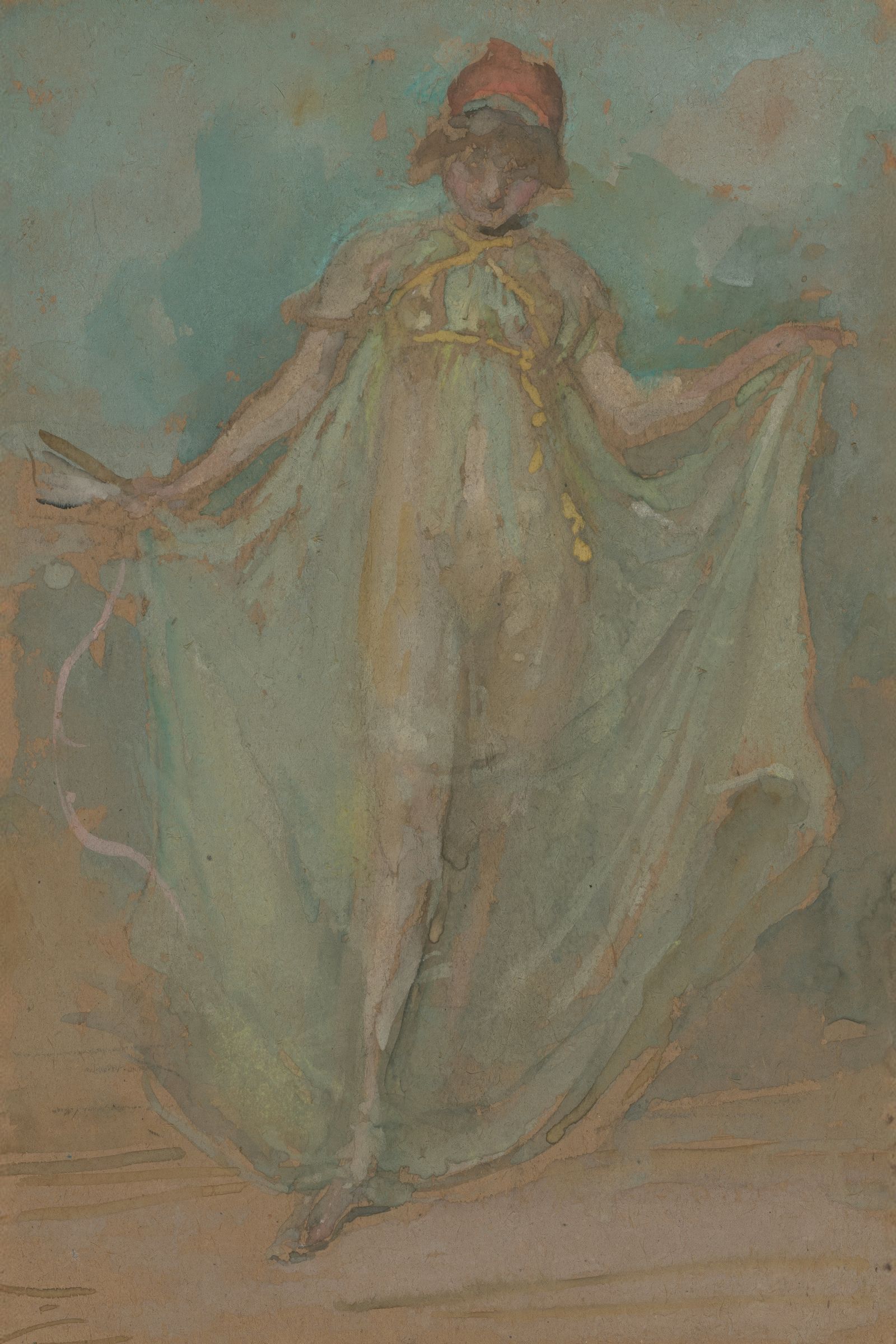
Green and Blue: The Dancer · James McNeill Whistler, c. 1893 · Art Institute of Chicago. Prepared for print by Surrealium at Vaxholm Fortress, Sweden.
The Dancer makes the body’s movement part of a green and blue arrangement. Its flowing presence is far from the still, seated profile of Whistler’s Mother, reminding us that a limited palette does not require a single pose or mood. Before borrowing the appearance of a famous portrait, identify the quality you actually value: a clear silhouette, a quiet room, an attentive expression or a relation between clothing and background.
For a new portrait, begin with the person you know. Our guide to choosing a portrait photograph is a practical next step if the likeness matters more to you than owning a reproduction of a historic painting. If Whistler’s own pictures are the attraction, browse Masterworks and compare the complete compositions. In either case, let the whole image remain available to the eye. The distances around a figure can carry as much of its presence as the face itself, and a small detail often becomes more expressive when it has enough room around it.
A useful final exercise is to describe the portrait without the word mother, then describe it again with the relationship in mind. The first account may notice the chair, the dark dress and the wall; the second may change how you read the hands or the patient pose. The painting is large enough to hold both kinds of attention. Compare his work in the Impressionist collection, or turn to Arcimboldo’s composite heads for a very different relationship between a face and its parts.
- Who is the sitter in Whistler’s Mother?
- Anna Matilda Whistler, the artist’s mother. James McNeill Whistler painted the portrait in 1871.
- Where is the original painting?
- It is in the Musée d’Orsay collection in Paris. Consult the museum’s current information for display and visiting details.
- Is the famous portrait shown in this article?
- No. The illustrations are six other works by Whistler, each identified in its caption. They provide comparisons for colour, composition and the figure.