Gifts for history lovers: ten pictures to start from
Ten historical artworks help you choose a personal emblem for a history lover, with clear boundaries between inspiration and ancestry.
Gifts for history lovers work best when they begin with a specific interest. A reader of maritime history may enjoy a ship’s rigging more than a crown; someone fascinated by gardens may prefer a tree to a battlefield. A decorative crest can gather that interest into a small personal image, provided it is described honestly as a new design rather than an inherited historical object.
The ten works below are prompts for choosing a subject and a visual language. They are not pictures of finished crest gifts, and they do not establish a connection between the recipient and the people who originally owned or commissioned the artworks. Look for one meaningful feature, then explain why it belongs in the design you want to make. The personalized gifts guide can help keep that explanation personal, while gifts for art lovers takes a broader approach to choosing an image.
If heraldry is new to you, begin with what a coat of arms is. That distinction between historical arms and a contemporary decorative emblem is especially important for a recipient who cares about getting the past right.
1. For the reader of maritime history
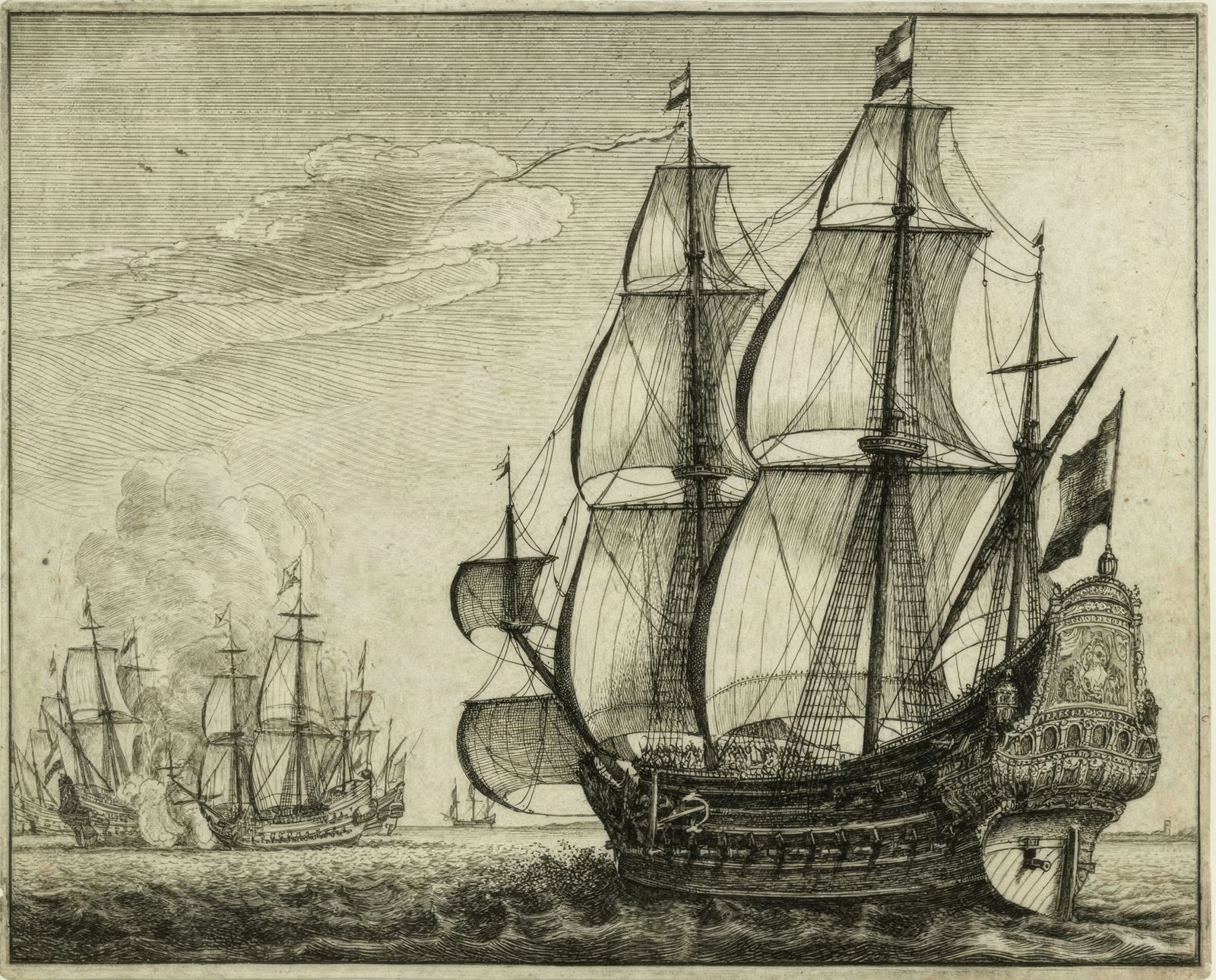
Dutch Warships · Wenceslaus Hollar, 1647 · Harvard Art Museums. Restored by Surrealium at Vaxholm Fortress, Sweden.
Hollar’s Dutch Warships gives the rigging and hulls of several vessels a precise graphic presence, with the nearest ship filling much of the sheet. The crowded lines reward a viewer who enjoys the construction of things as well as the stories attached to them. For a crest idea, borrow the broader theme of navigation or a vessel’s silhouette, then simplify it; a personal emblem does not need to reproduce every rope in order to acknowledge a serious interest in ships.
2. For someone drawn to Japanese print culture
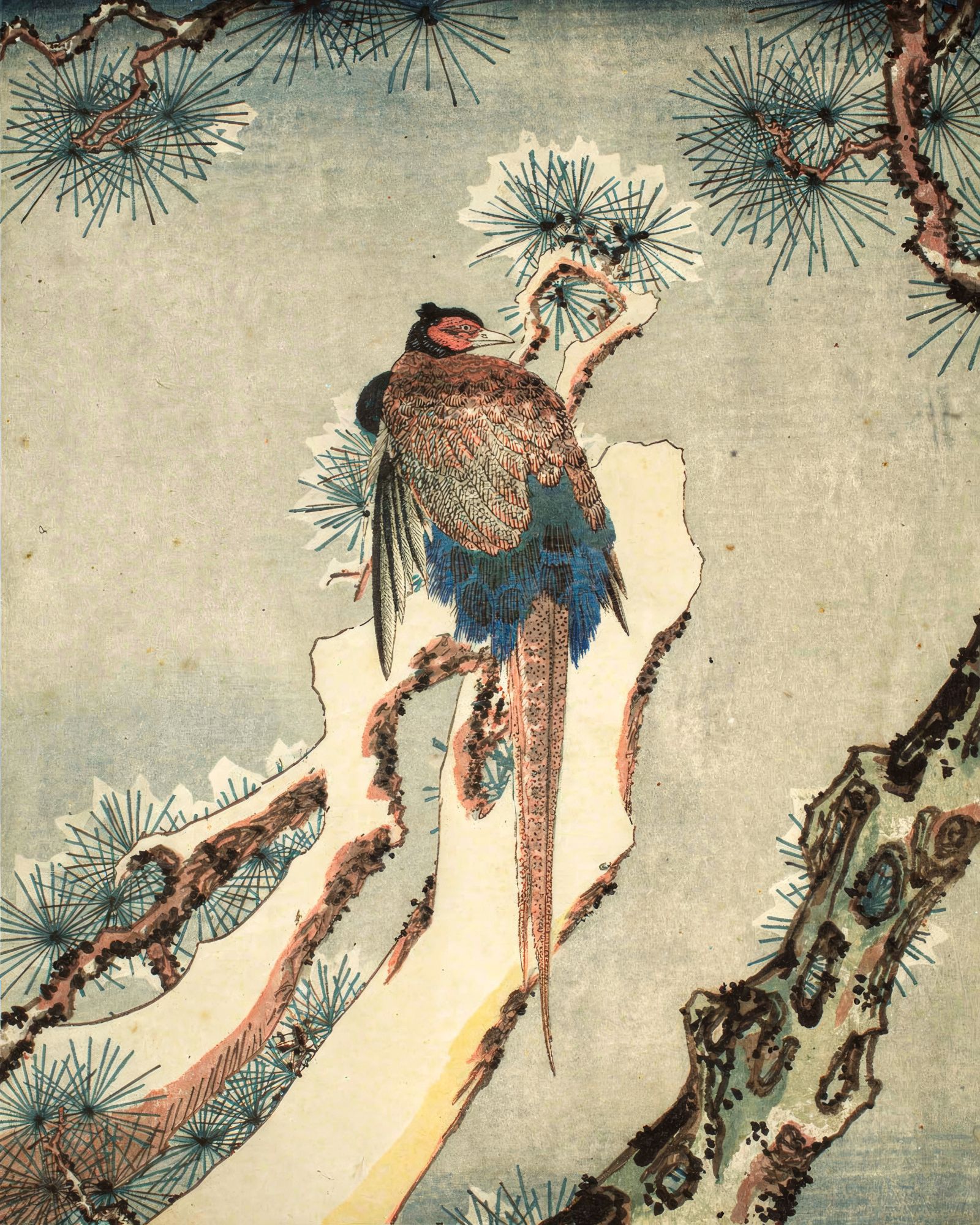
Pheasant on a Snow-Covered Pine Tree · Utagawa Hiroshige 歌川 広重, mid–1830s · Art Institute of Chicago. Restored by Surrealium at Vaxholm Fortress, Sweden.
Hiroshige’s pheasant on a snowy pine brings a bird, a branch and open pale areas into a compact vertical design. The subject offers a starting point for a conversation about printed images, seasonal observation and the pleasures of looking at an original composition. A new emblem might reflect a love of birds or trees, but avoid lifting Japanese writing or official-looking marks as decoration when you cannot explain what they say or whose identity they represent.
3. For the landscape historian
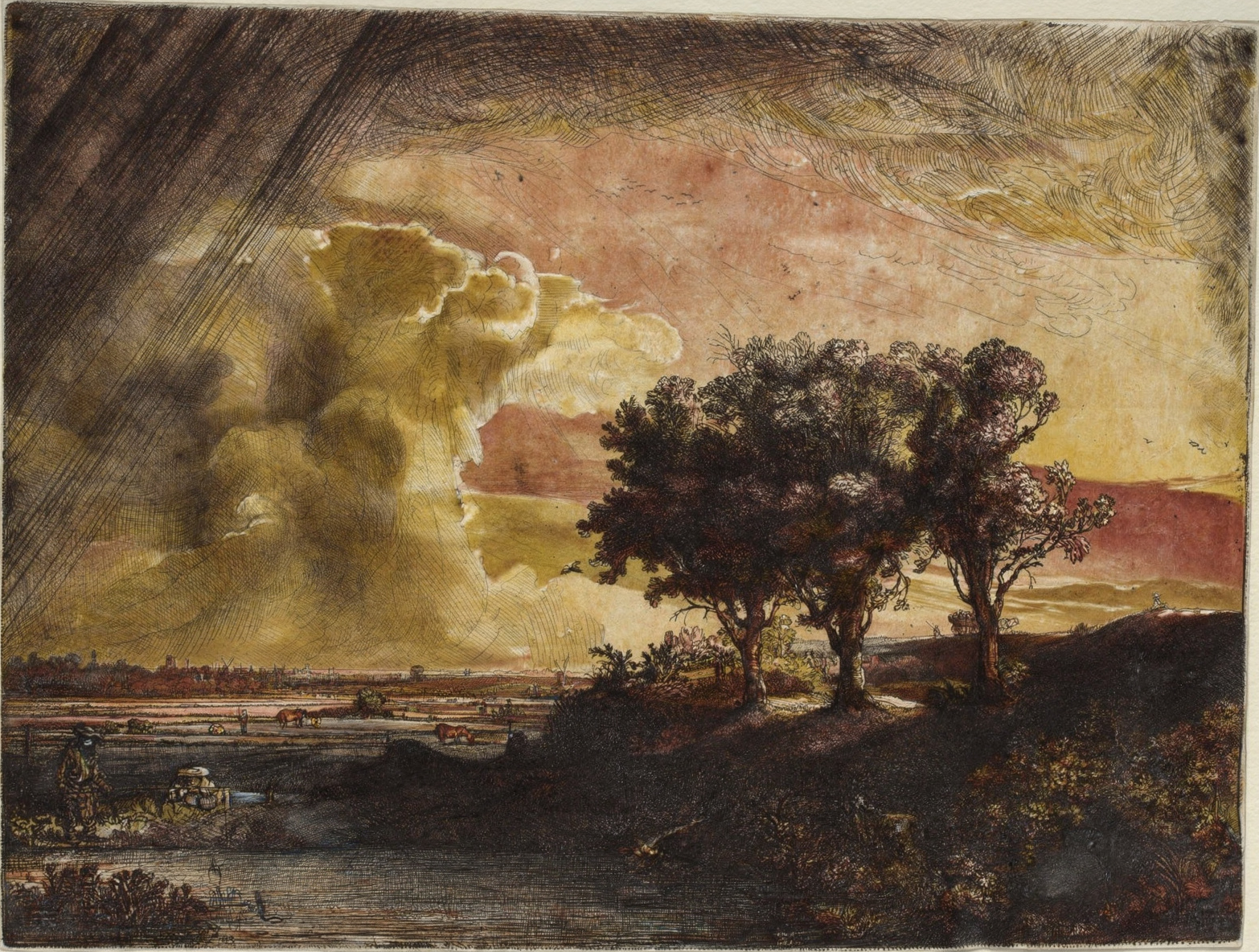
The Three Trees · Rembrandt van Rijn, 1643 · Cleveland Museum of Art. Contemporary Fable colour edition after the historical print. Restored by Surrealium at Vaxholm Fortress, Sweden.
The Three Trees gives a small group of trees an emphatic place beneath an expansive sky, with land and water stretching away around them. The image shown is a contemporary Fable colour edition after Rembrandt’s historical print, so its present colour should not be mistaken for the original etching’s appearance. A tree can become a personal design motif for someone interested in landscape history, but its meaning should come from your own account rather than a claim that every heraldic tree carries one fixed message.
4. For a reader of heraldry
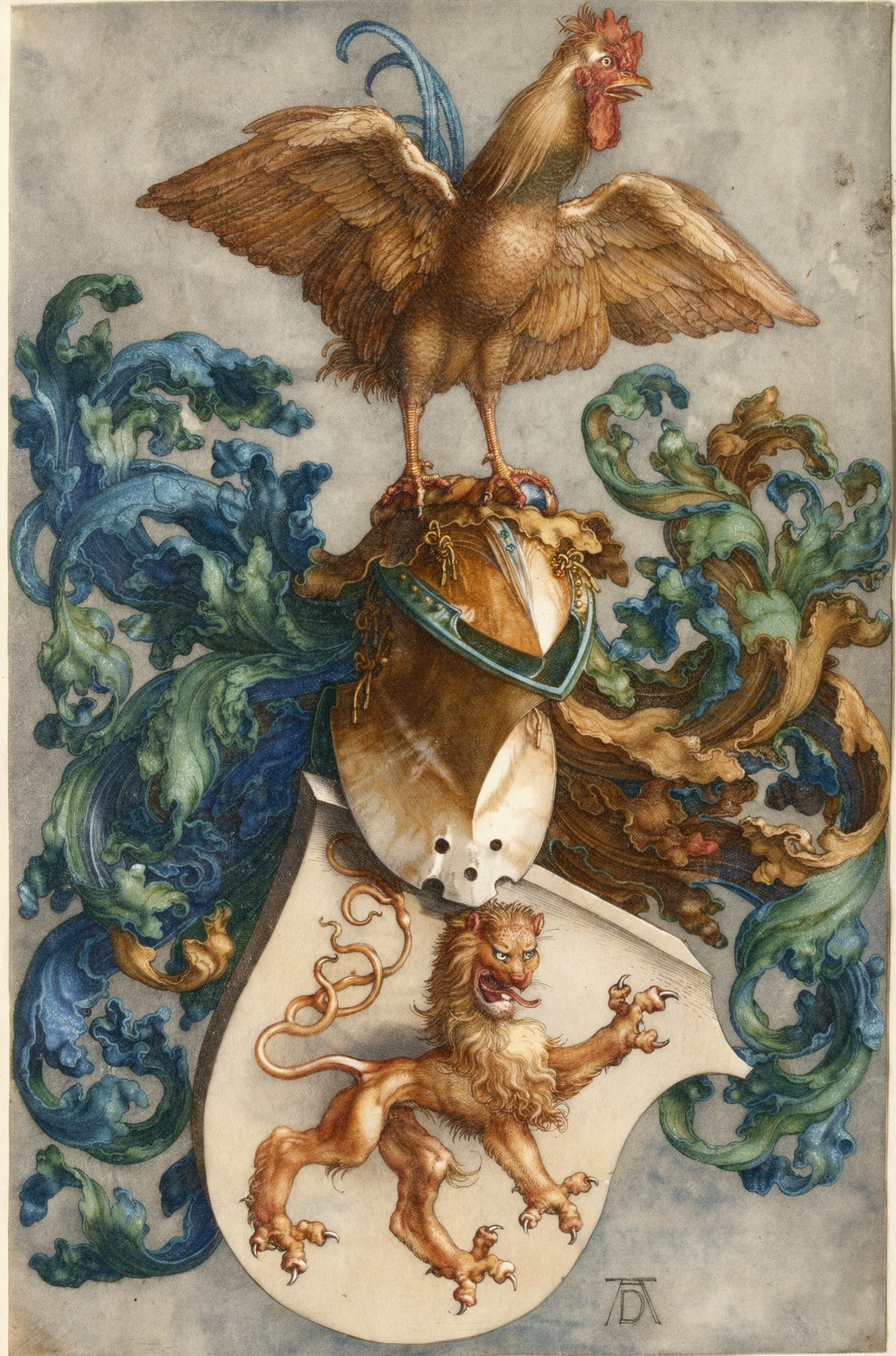
The Coat of Arms with a Lion and Cock · Albrecht Dürer, probably 1503 · Cleveland Museum of Art. Contemporary Fable colour edition after the historical print. Restored by Surrealium at Vaxholm Fortress, Sweden.
Dürer’s lion-and-cock design separates the shield’s lion from the bird above the helmet, with elaborate mantling joining the parts. The edition shown adds contemporary colour to a historical print, making it important to distinguish the old composition from its present treatment. Use the work to learn the anatomy of an achievement before choosing a new crest; the recipient may appreciate a clear explanation of those parts more than a borrowed claim to nobility or an invented family connection.
5. For the traveller who studies old gardens
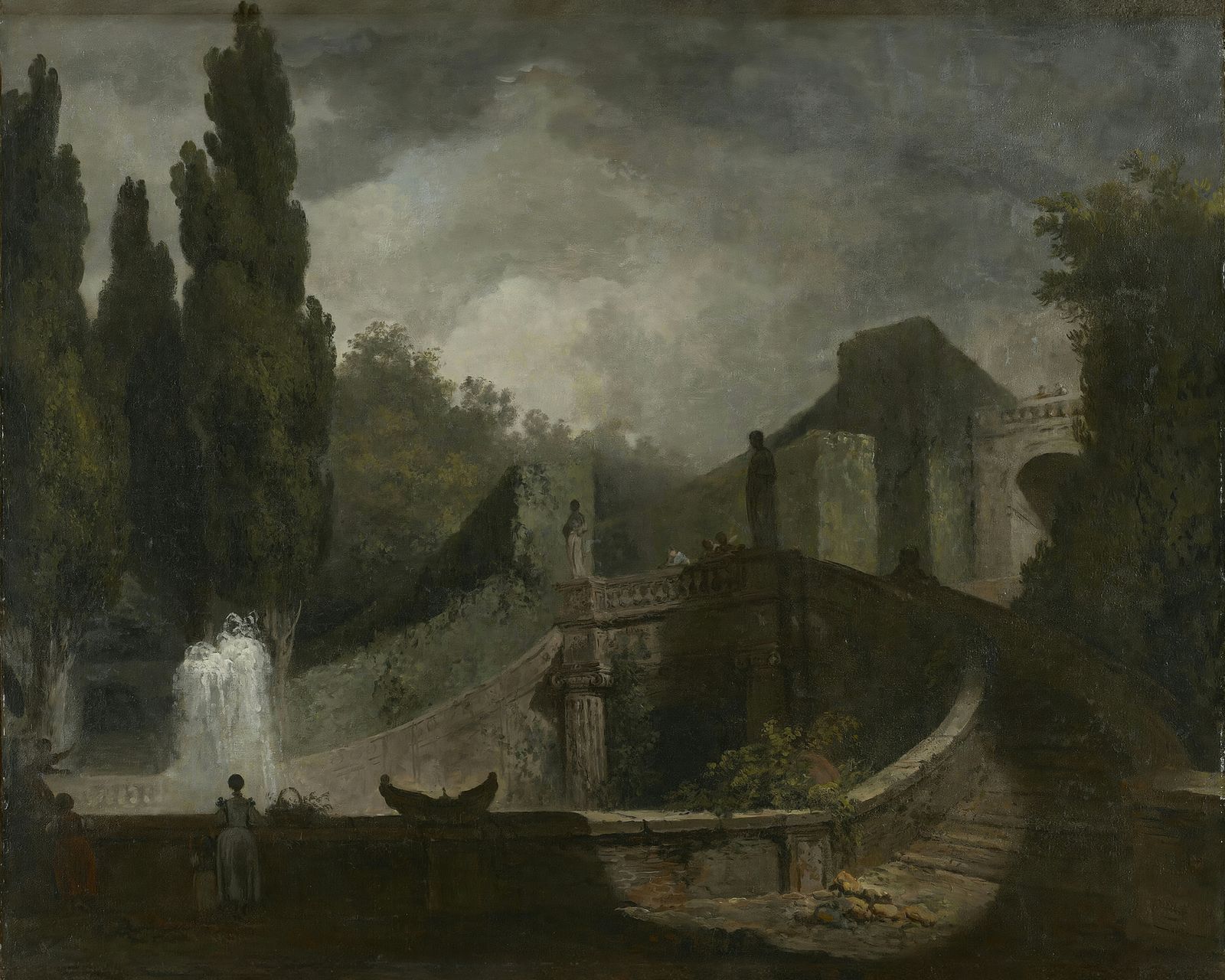
The Grand Staircase of the Villa d'Este at Tivoli · Jean-Honoré Fragonard, c. 1760 · Minneapolis Institute of Art. Prepared for print by Surrealium at Vaxholm Fortress, Sweden.
Fragonard’s view of the Villa d’Este staircase gives stone, vegetation and moving water a shared role in the scene. Small figures help establish the scale without turning the architectural setting into an empty diagram. For a personal emblem, think about a real journey or a longstanding interest in gardens, then choose one feature that remains readable when simplified; copying the whole stairway would make the design more complicated without necessarily making the gift more meaningful.
6. For the reader who keeps returning to antiquity
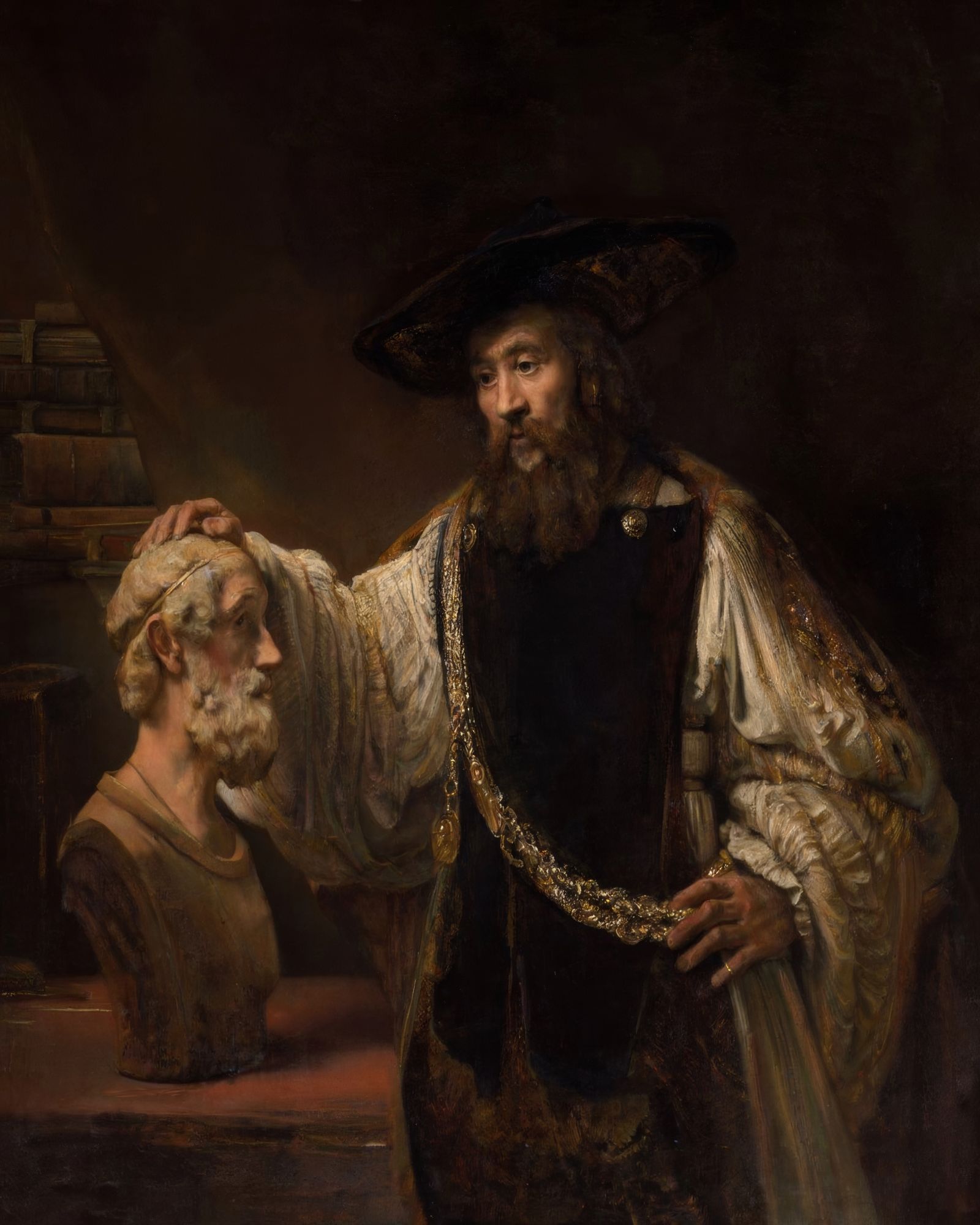
Aristotle with a Bust of Homer · Rembrandt, 1653 · The Metropolitan Museum of Art. Restored by Surrealium at Vaxholm Fortress, Sweden.
Rembrandt’s Aristotle rests a hand on a bust of Homer, bringing a painted figure into contact with a sculpted image of an earlier writer. The work offers a useful visual prompt for someone whose interest in history moves between books, objects and later interpretations of the past. A book or a modest classical reference can acknowledge that interest in a new crest, while a short accompanying note can explain the connection without claiming that the recipient belongs to an ancient lineage.
7. For a lover of manuscripts and stories

The Vizier’s Son and the Parrot · Lalu, c. 1560 · Cleveland Museum of Art. Restored by Surrealium at Vaxholm Fortress, Sweden.
Lalu’s illustration of a parrot presented within a courtly gathering combines painted figures with a visible band of writing. The small bird draws the attention of people arranged around it, showing how an illustration can guide a reader towards the important action. If storytelling is the recipient’s interest, consider a bird, a page or another personally chosen motif, but keep the new design distinct from a copied manuscript passage whose words and context have not been established.
8. For someone who studies sacred art
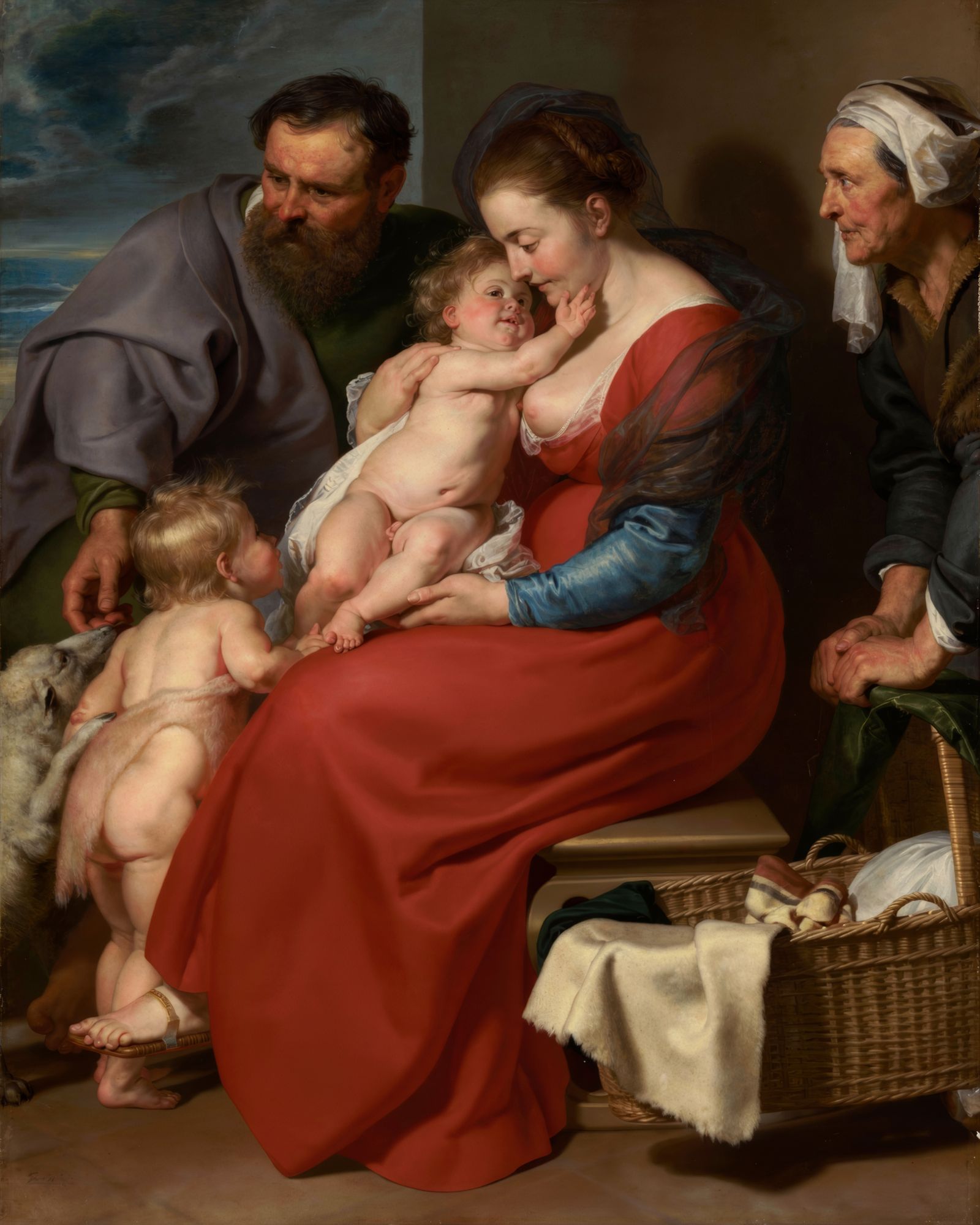
The Holy Family · Peter Paul Rubens, c. 1615 · Art Institute of Chicago. Restored by Surrealium at Vaxholm Fortress, Sweden.
Rubens’s Holy Family groups adults and children through touch, overlapping bodies and close attention. Its religious subject should remain part of the gift’s meaning rather than being reduced to a generic image of family affection. For a recipient with a particular faith or interest in sacred art, discuss the symbols they would welcome before creating an emblem; a thoughtful design respects that preference and does not treat every historical religious image as interchangeable ornament.
9. For a historian of place
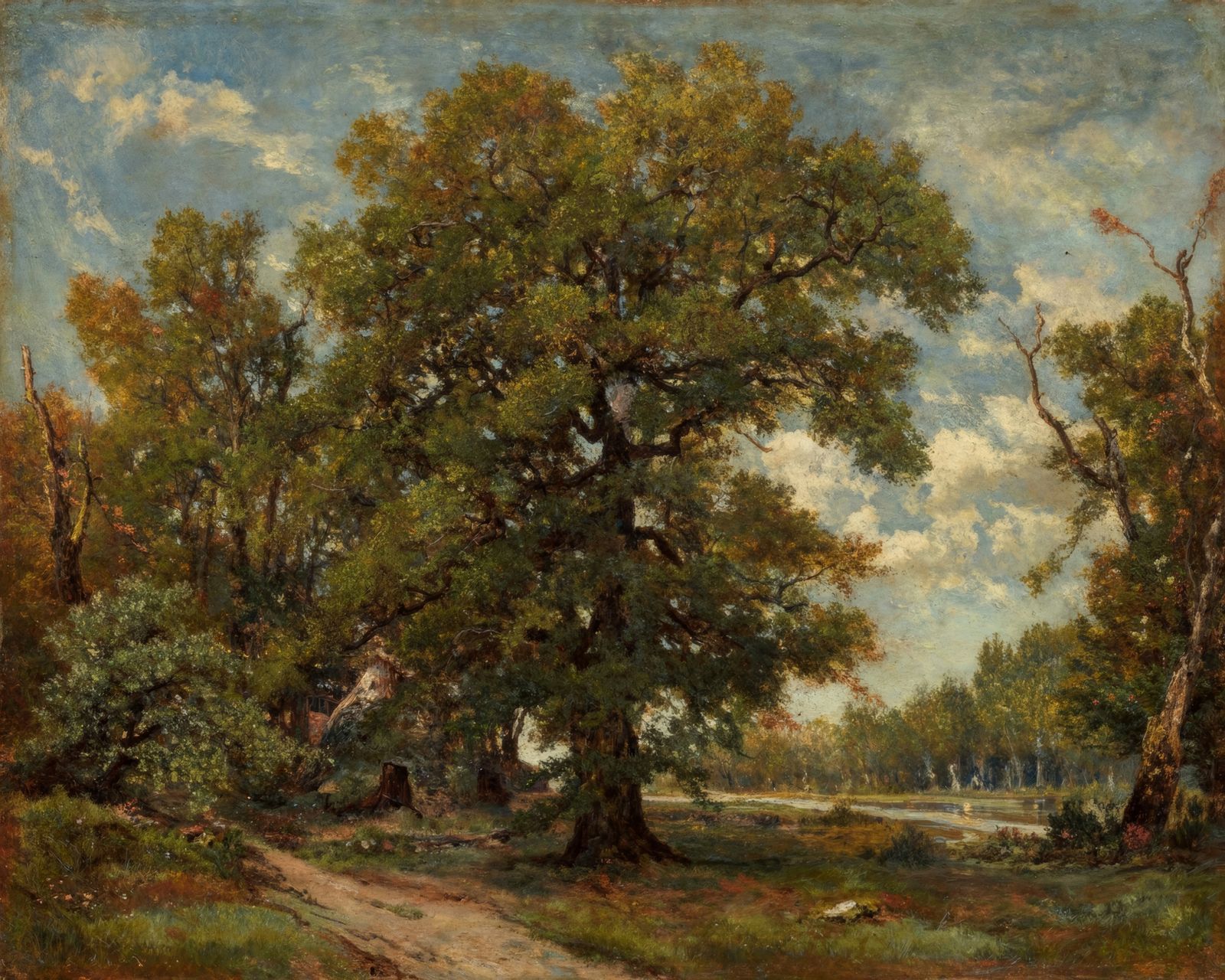
The Oak Tree · Théodore Rousseau, 19th century · Cleveland Museum of Art. Restored by Surrealium at Vaxholm Fortress, Sweden.
Rousseau’s oak occupies the centre of a woodland scene, its broad crown spreading over a much smaller stretch of ground. The tree’s presence can prompt thoughts about a remembered landscape, a garden or a place that has mattered across generations. Those associations make a useful starting point for a new decorative crest, but keep the wording precise: a symbol inspired by a family’s stories is not the same thing as evidence for the age or continuity of that family’s arms.
10. For someone interested in animal imagery

Lion on the Watch · Jean-Léon Gérôme, c. 1885 · Cleveland Museum of Art. Restored by Surrealium at Vaxholm Fortress, Sweden.
Gérôme’s Lion on the Watch places the animal on pale rocks against a wide, bright landscape. The lion’s profile and the clean separation from the sky make its posture easy to read before you inspect the smaller details of fur and stone. That clarity is a practical lesson for emblem design: choose a recognisable attitude and enough surrounding space, then supply your own reason for using the animal rather than relying on a universal dictionary of heraldic meanings.
Choose one interest, one motif and one sentence that explains the relationship between them. The Dutch Warships masterwork offers a closer look at the opening print, while family motto ideas can help turn an intention into concise words. If the recipient’s main interest is genealogy, read coat of arms for a surname before making any historical claim. Fable Heraldry is a route to a new decorative design; the personal explanation is what connects that design to the person receiving it.
- Does a history lover need a historically inherited crest?
- No. A new decorative emblem can be an honest gift when it is labelled as such. It may refer to interests, places or values without claiming an inherited coat of arms.
- Can I use a surname to prove which arms belong to someone?
- A surname match alone is not evidence of a right to historical arms. Specific bearers and documented descent require research; a gift design should not pretend that this research has been completed.
- What should I include with the gift?
- A short note explaining the chosen motif and why it matters to the recipient is useful. If a historical artwork inspired the design, name the artist and work rather than presenting the new emblem as an antique.