Coat of arms: how to read and design an emblem
Understand a coat of arms, distinguish shield from crest, and find a clear route through heraldry, surname research and new design.
A coat of arms is a distinctive heraldic design associated with a particular bearer. The shield carries the central design; a crest is a separate element above a helmet. Around them, a fuller display may include mantling, a motto and other elements. Knowing those parts makes an elaborate image easier to read and helps separate historical research from the creation of a new decorative emblem.
This guide begins with two Dürer compositions, shown as contemporary Fable colour editions after historical prints, then turns to actual Fable Heraldry demonstrations. The historical works and the modern demonstrations have different purposes. Neither a decorative design nor a surname printed beneath it proves that a person has inherited arms.
If the terminology is your first question, family crest versus coat of arms gives a focused comparison. For the product’s visual scope, Fable Heraldry’s monograms and coats of arms introduces the contemporary design route.
For historical research, the College of Arms resources explain why a shared surname alone does not establish entitlement to a coat of arms. Fable’s Heraldry studio creates contemporary personal designs; it does not verify inherited arms.
Read the shield before the surrounding display
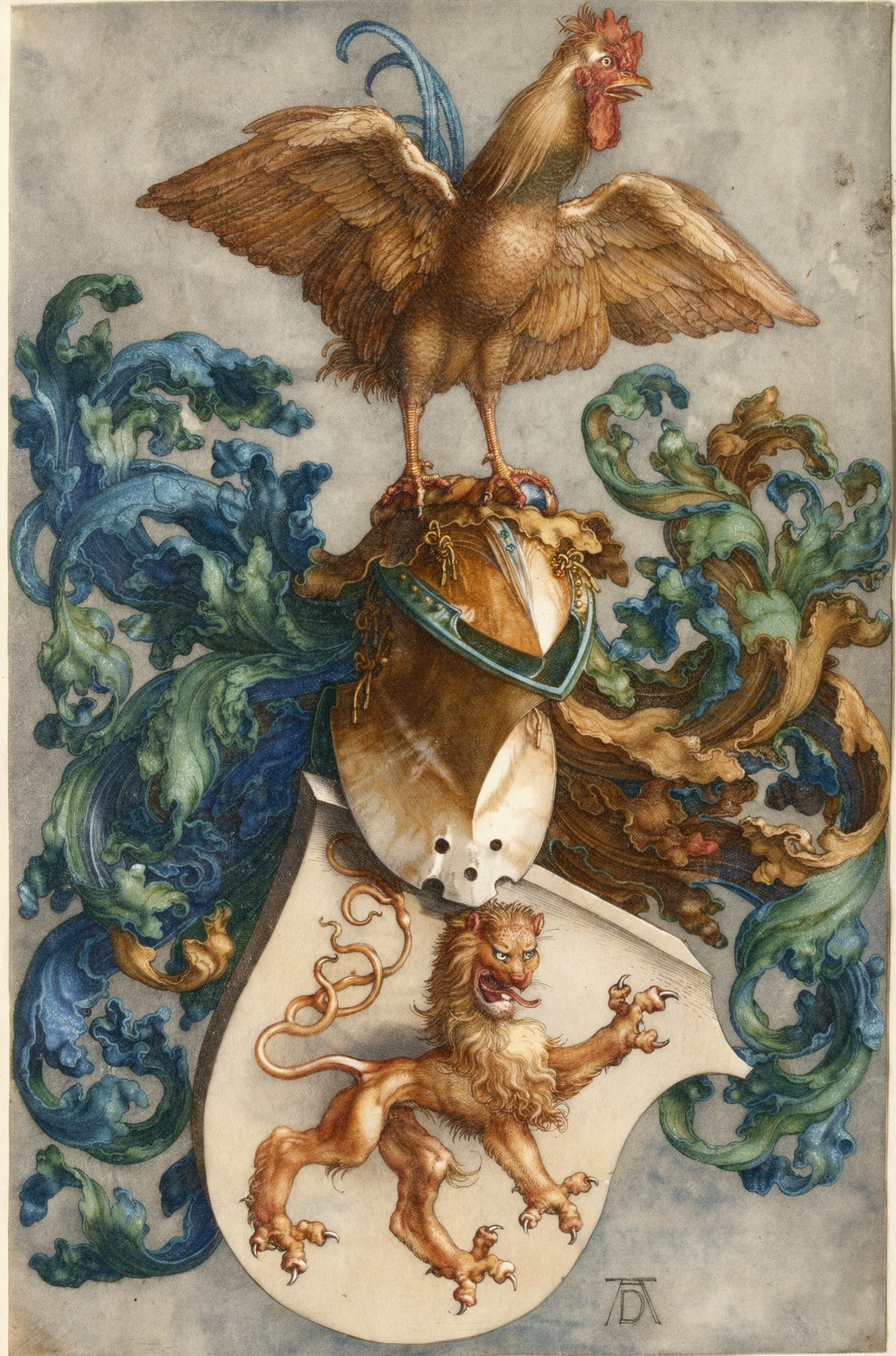
The Coat of Arms with a Lion and Cock · Albrecht Dürer, probably 1503 · Cleveland Museum of Art. Contemporary Fable colour edition after the historical print. Restored by Surrealium at Vaxholm Fortress, Sweden.
In Dürer’s lion-and-cock composition, the lion occupies the shield while the bird stands above the helmet. The two animals are part of one arrangement, but they occupy different heraldic positions. Start with that separation before following the curling mantling around them. The elaborate silhouette becomes easier to understand once the central shield is clear.
Within a shield, the background is called the field and the principal figures are charges. Those terms describe what you can point to, rather than telling you what every symbol must mean. A lion may have a particular reason for appearing in a particular design, but there is no universal dictionary that supplies the complete story of every lion-bearing shield. Read an identified historical record alongside the image when you want more than a description of its visible parts.
A crest is one part, not a second name for everything
The crest occupies the position above the helmet in a full achievement. In everyday conversation, people often use “family crest” for the whole display, which is why searches can return a shield, a complete achievement or a modern decorative logo under the same phrase. Describe the part you mean when discussing a design with someone else.
The distinction matters when changing scale. A crest alone may create a different silhouette from the shield alone, and both differ from the entire achievement with its surrounding ornament. Before choosing a ring, tattoo or stationery application, decide which element carries the identity you want to preserve. The design can then be assessed for its intended size instead of assuming that every part of a large illustration must travel together.
A historical image can also be an artistic invention
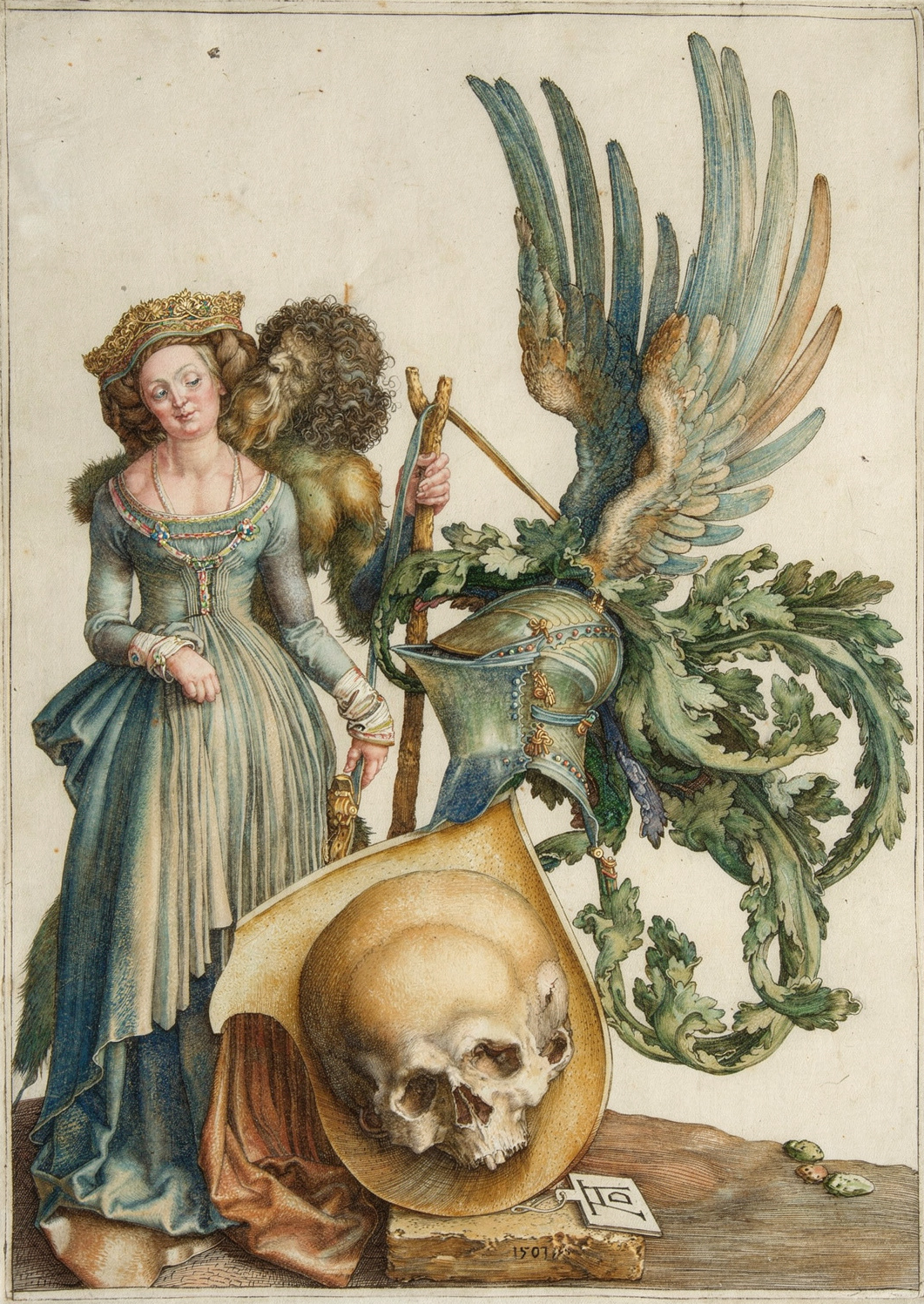
Coat of Arms with a Skull · Artist: Albrecht Dürer, 1503 · The Metropolitan Museum of Art. Contemporary Fable colour edition after the historical print. Restored by Surrealium at Vaxholm Fortress, Sweden.
Dürer’s Coat of Arms with a Skull includes figures, wings and a striking central skull, creating a work that is more than a neutral diagram of heraldic parts. The colour edition shown here is contemporary; its palette should not be used as evidence for the appearance of the original print. The historical composition in Fable’s catalogue is useful for studying how the artist arranged the forms.
This is a reminder to ask what kind of source you are looking at. A print, a manuscript entry, an official record and a modern decorative demonstration may all show heraldic imagery, but they do not establish the same facts. An attractive picture can inspire a design without proving a family connection, a date of adoption or an entitlement to reproduce another bearer’s arms.
Separate surname research from a new personal design
A shared surname does not by itself connect a person to a particular historical coat of arms. If you want to investigate that connection, begin with people and records: names, places, dates and documented relationships. Keep uncertain links visible rather than joining two branches because the names happen to match.
A new decorative emblem can begin elsewhere, with a place, interest or value meaningful to the people commissioning it. That project does not need a claim of inherited status. The Fable route concerns this kind of contemporary design. Describe it as newly made and keep any historical references clearly attributed. A personal story can be strong on its own terms; it becomes less useful when decorated with an ancestry claim that the evidence does not support.
Build a simple hierarchy of symbols
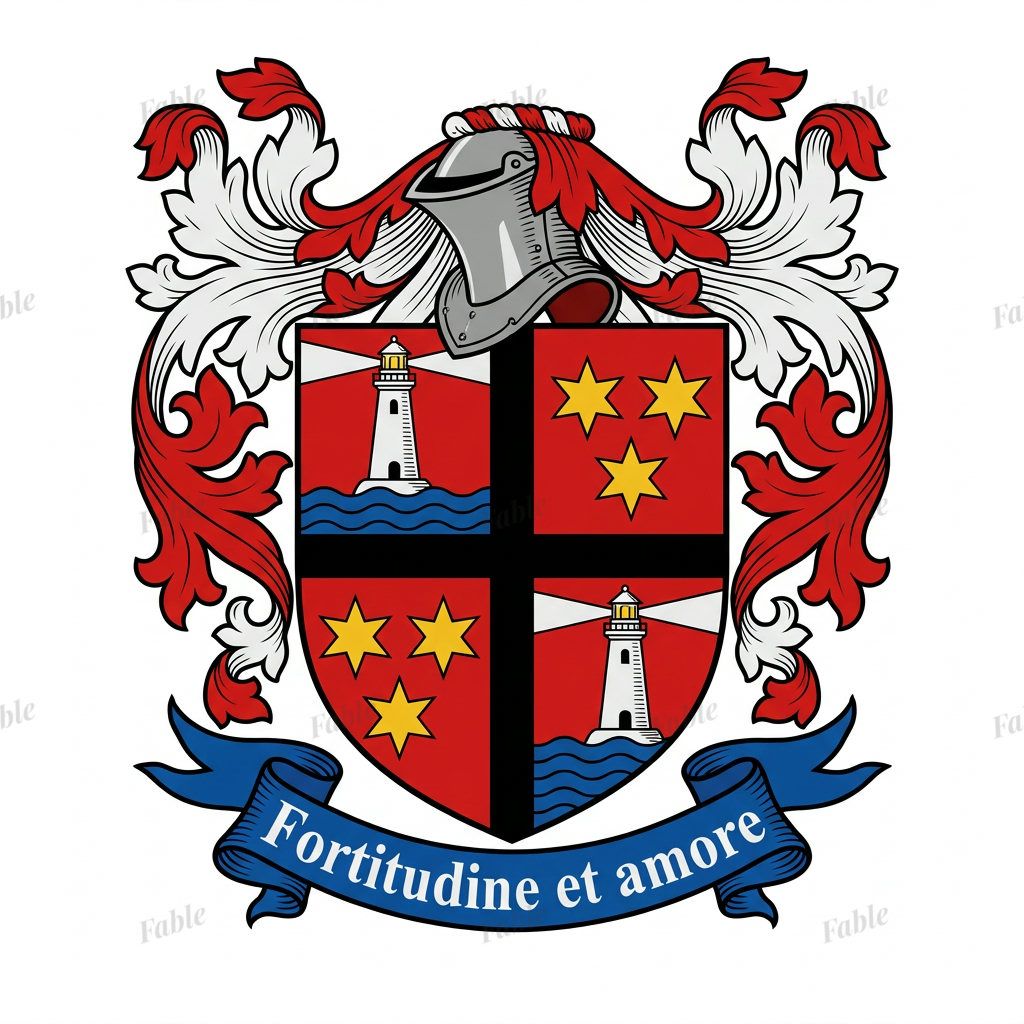
Fable crest demonstration · Fable · 2026 · Actual decorative Fable Heraldry output; not historic arms or a customer testimonial. Fable product demonstrations.
The Fable demonstration with towers and stars uses a divided shield, a helmet, mantling and a motto ribbon. It is an actual product demonstration, not a historic grant or a customer testimonial. At a large size, several elements can be read; at a smaller size, the main divisions become more important than the finer ornament.
Begin a new design with one principal idea. Decide which symbol should be recognised first, then whether a second element contributes something different. A place, an occupation and a shared value do not each require a separate compartment if that makes the image hard to read. The aim is a coherent emblem that can be explained, not a pictorial inventory of every fact about the people who will use it.
Use words and colour deliberately
A motto can be a short statement of intention in language its readers understand. It need not imitate an ancient phrase to be meaningful. Write down the exact wording and read it aloud before judging how it looks on a ribbon. If it uses a language you do not know well, have a competent speaker check it before treating the design as final.
Colour should also have a clear visual purpose. Strong differences between the field and its charges help shapes remain legible, while too many closely related tones can obscure the design. You may assign personal significance to a colour, but label that significance as your own choice rather than a fixed historical rule. The explanation belongs beside the emblem; the emblem still needs to work as a clear image.
Choose the guide that matches your next step
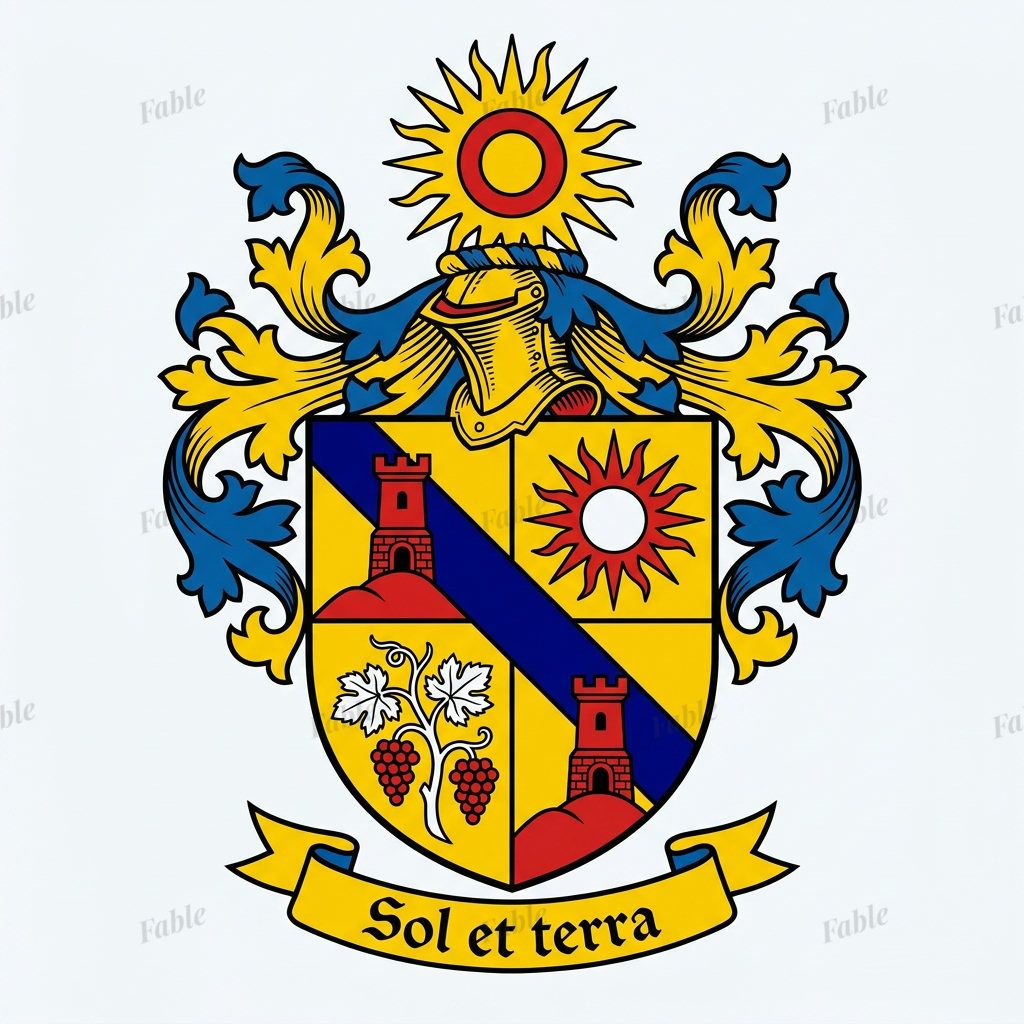
Winery crest demonstration · Fable · 2026 · Actual decorative Fable Heraldry output; not historic arms or a customer testimonial. Fable product demonstrations.
If you are beginning a new design, start with the coat of arms generator guide or how to make a coat of arms. For a smaller letter-based design, explore the monogram maker. For the words beneath the image, use family motto ideas.
A particular application asks different questions. The guides to a signet ring, a family crest tattoo and a wedding crest focus on those uses. If you are investigating an existing emblem, begin with the College of Arms resources and distinguish that research from exploring a surname’s meaning.
Follow a surname through people, not a single badge
The existing surname guides include Murphy, Campbell, Kelly, Stewart and Anderson. A surname is the beginning of an enquiry, not the conclusion that everyone with that name shares one emblem.
When comparing a historical example with your own records, keep the named bearer and source attached to the image. If you are creating a contemporary design inspired by a surname’s history, say so explicitly. The modern design can refer to an origin or a personal connection without presenting itself as the arms of every family that happens to use the name.
Keep national symbols in their own context
National arms belong to a different scale of identity from a new household emblem. Continue with the existing guides to Scottish and Irish traditions, German arms and Spanish arms, keeping each historical context distinct.
Do not copy an official emblem merely to give a personal design an air of authority. You can acknowledge a place through an original motif without implying that a state, institution or heraldic authority has granted the result. For a wider historical foundation, continue with heraldry and medieval heraldry, then return to the exact purpose of your own design.
A clear emblem begins with clear language about what it is. Read the shield, distinguish the crest and surrounding achievement, and keep historical evidence separate from contemporary design. If your aim is a new decorative crest, choose a small number of meaningful elements and a brief explanation that the people using it recognise. That is a sound starting point for Fable Heraldry.
- Is a crest the same as a coat of arms?
- Strictly, a crest is the element above the helmet; the shield carries the central arms. Everyday use often blurs the terms, so identify which part of the image you mean.
- Does everyone with one surname share a coat of arms?
- No. A surname match alone does not establish a connection to a particular historical bearer. Research needs specific people and records.
- Is a new Fable crest an official grant?
- No. It is a contemporary decorative design. It does not establish inherited arms, a registry entry or recognition by a heraldic authority.