Gifts for new grandparents: ten portraits of a new bond
Look at mother-and-child and family paintings to choose a first grandparent gift with care, clear photographs and room for everyone.
Gifts for new grandparents can mark a relationship that is only just beginning. The most useful portrait is not necessarily the most elaborate one: it may be the first comfortable cuddle, a familiar face bent towards the baby, or a small group finally together after a long journey. Wait for a photograph the parents are happy to share, and make the gift fit the grandparents’ life rather than an imagined version of it.
The paintings below show different ways artists have brought adults and children into one image. They do not all depict grandparents, and none is presented as a customer portrait. Use them to consider closeness, scale and mood. A gift can honour a new bond without making assumptions about names, family structure, childcare or how often anyone will visit.
For a related starting point, read gift for new parents.
1. Faces close together
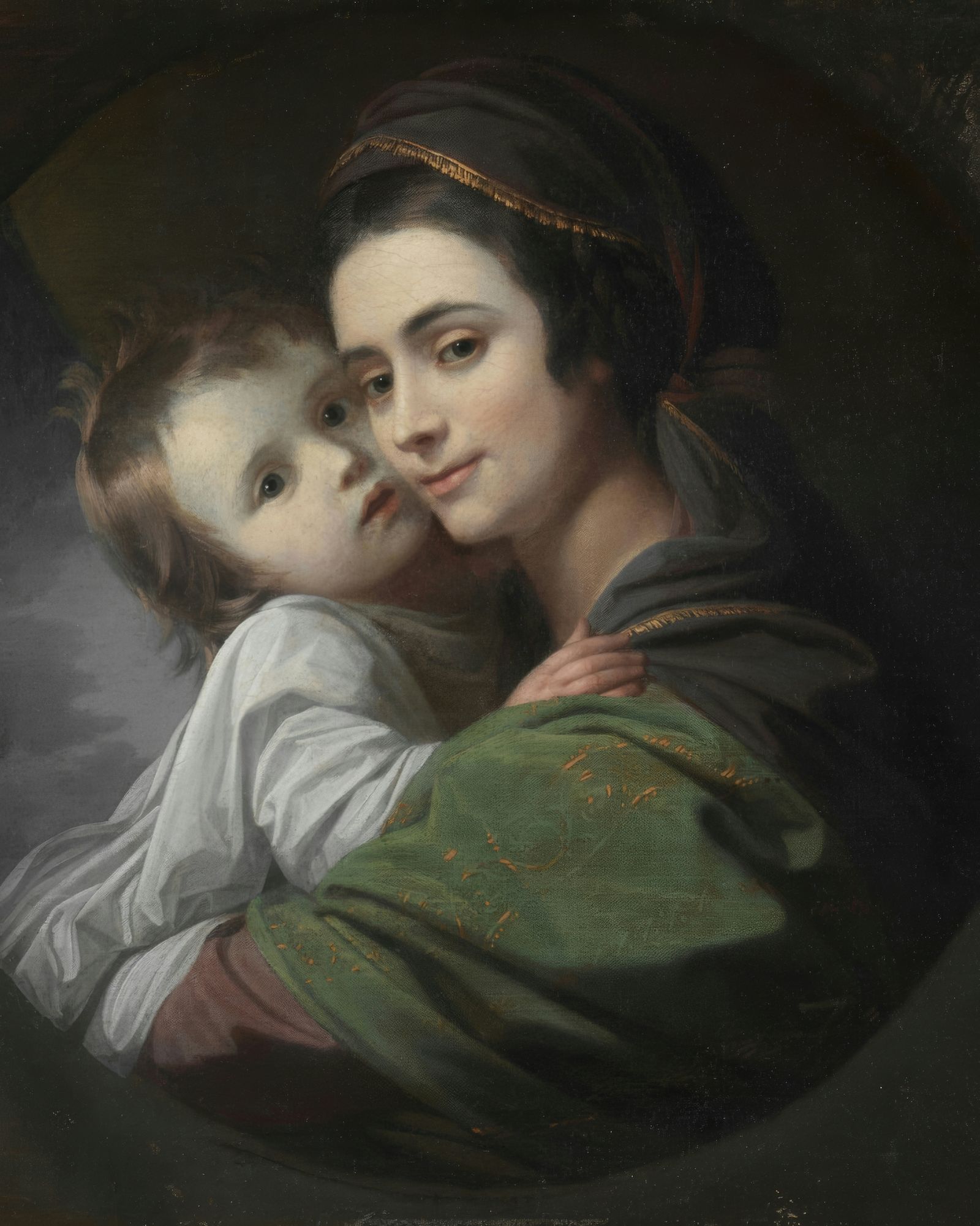
Elizabeth Shewell West and Her Son, Raphael — Benjamin West, c. 1770. Cleveland Museum of Art. Prepared for print by Surrealium at Vaxholm Fortress, Sweden.
Benjamin West places the child’s face against the adult’s, making their closeness the subject of the portrait. It offers a simple direction for a first grandparent photograph: look for a real moment when both faces remain visible. The picture need not show the whole room or a special outfit, and there is no reason to interrupt a comfortable cuddle to manufacture a more impressive pose. Compare the available family style before choosing.
Create a family portrait · Explore this artwork
2. The ordinary work of care
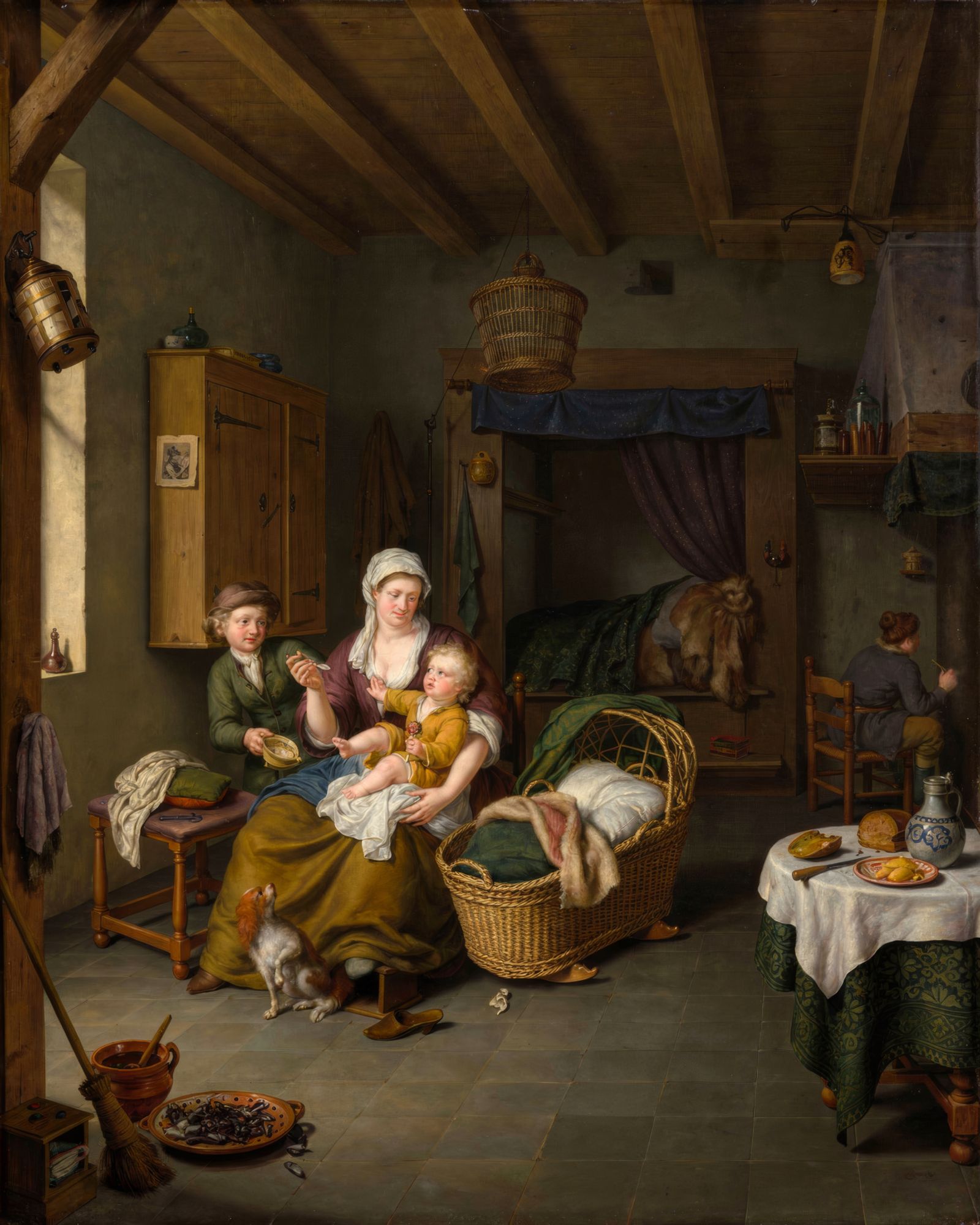
A Mother Feeding her Child (The Happy Mother) — Willem van Mieris, 1707. Art Institute of Chicago. Restored by Surrealium at Vaxholm Fortress, Sweden.
Van Mieris’s feeding scene gives a small household task a place at the centre of the room. For a new grandparent who has been helping with meals or holding the baby while others rest, that everyday attention may be the most meaningful theme. Choose the photograph with the parents, and keep your accompanying note specific about gratitude without implying a permanent obligation to provide care.
Create a family portrait · Explore this artwork
3. A child held securely
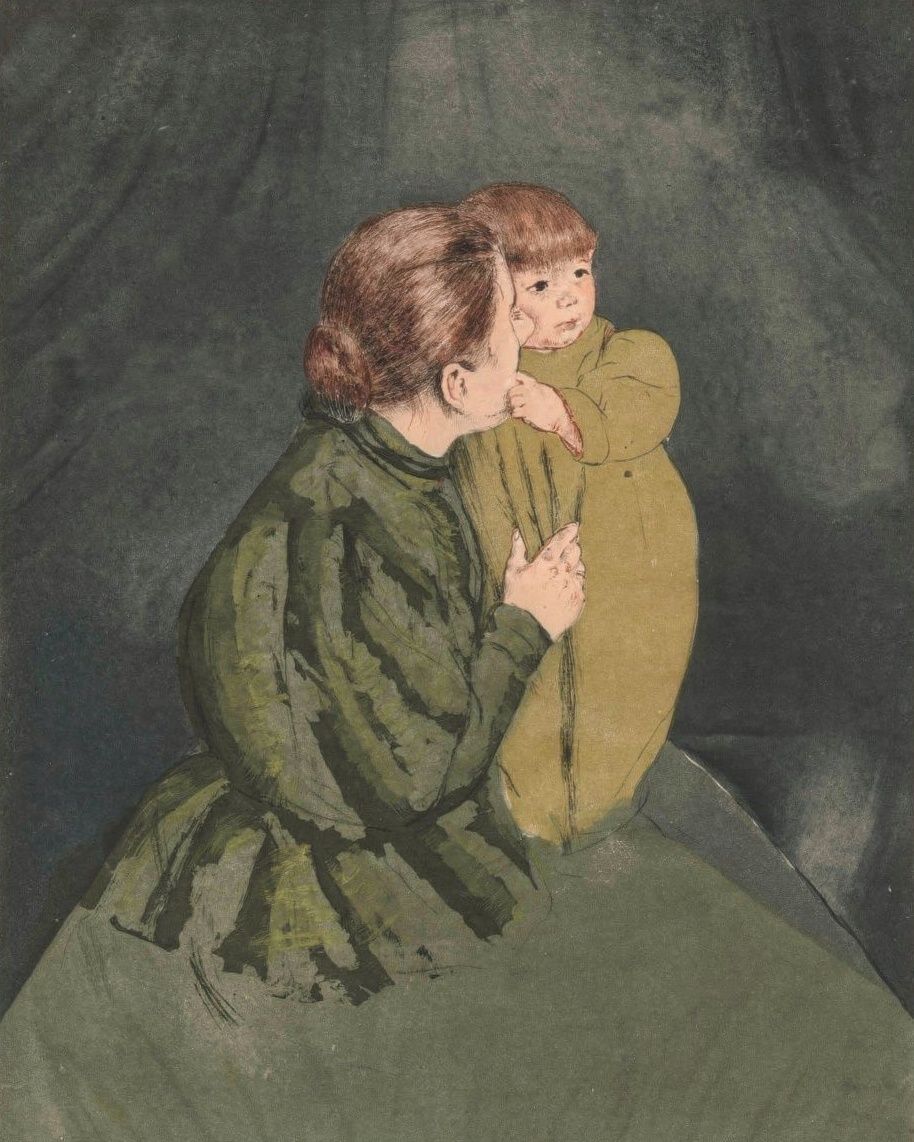
Peasant Mother and Child — Mary Cassatt, c. 1894. Art Institute of Chicago. Restored by Surrealium at Vaxholm Fortress, Sweden.
Cassatt’s Peasant Mother and Child brings two figures together against a restrained background, with the adult supporting the child rather than presenting them ceremonially. The simplicity keeps attention on the relationship. If your best photograph is similarly quiet, do not dismiss it for lacking Christmas decorations; a first-year portrait can be enjoyed long after the seasonal objects have been put away.
Create a family portrait · Explore this artwork
4. A familiar way of carrying
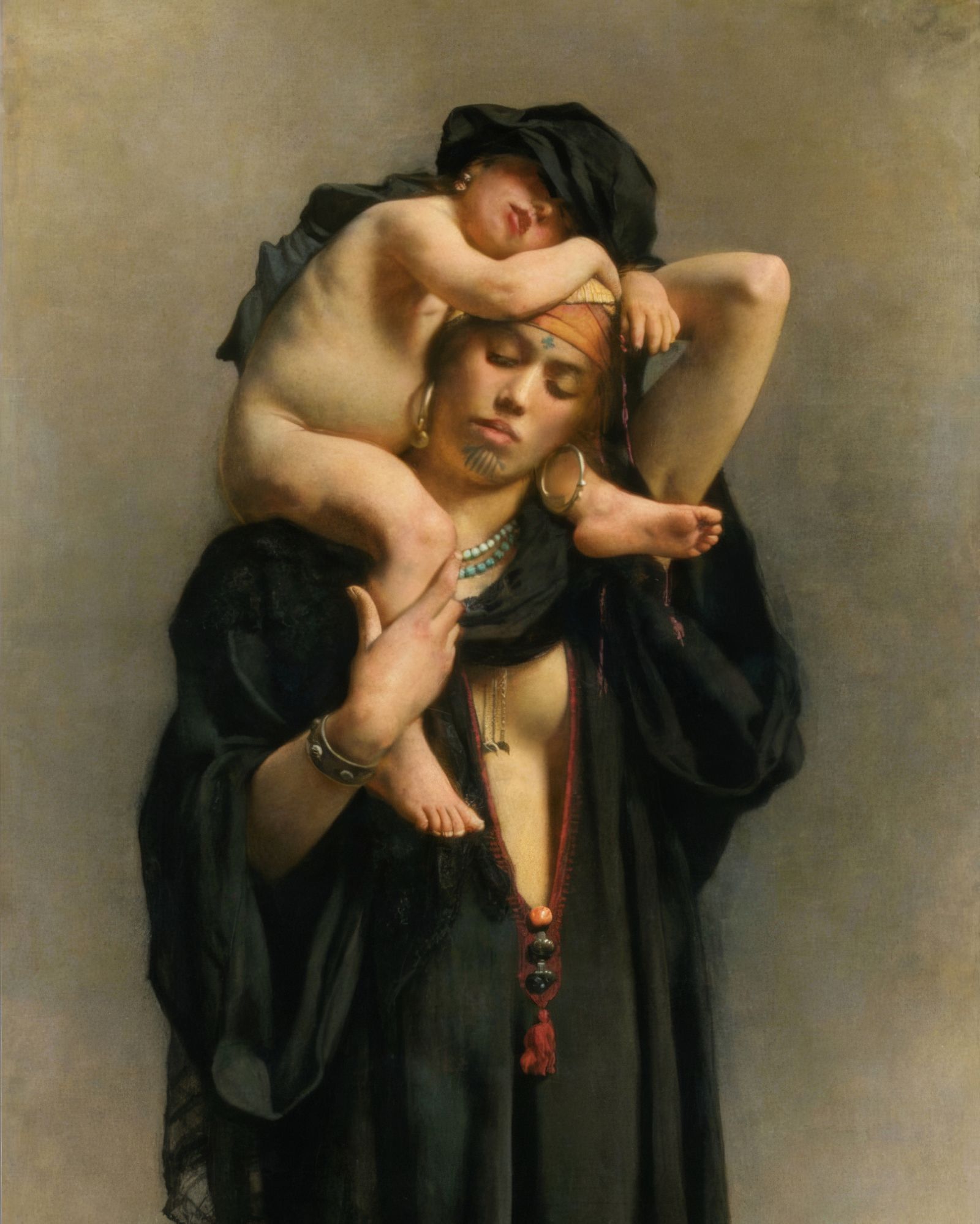
An Egyptian Peasant Woman and Her Child — Léon Bonnat, 1869–70. The Metropolitan Museum of Art, New York. Restored by Surrealium at Vaxholm Fortress, Sweden.
Bonnat’s woman carries her child high on her shoulder, and the raised arms create a strong shape within the narrow canvas. Treat the painting as a study of contact and balance, not as a pose to copy with a newborn. A photograph of a safe, familiar hold will be more useful than an elaborate arrangement that makes either the adult or the child uncomfortable.
Create a family portrait · Explore this artwork
5. More than one adult matters
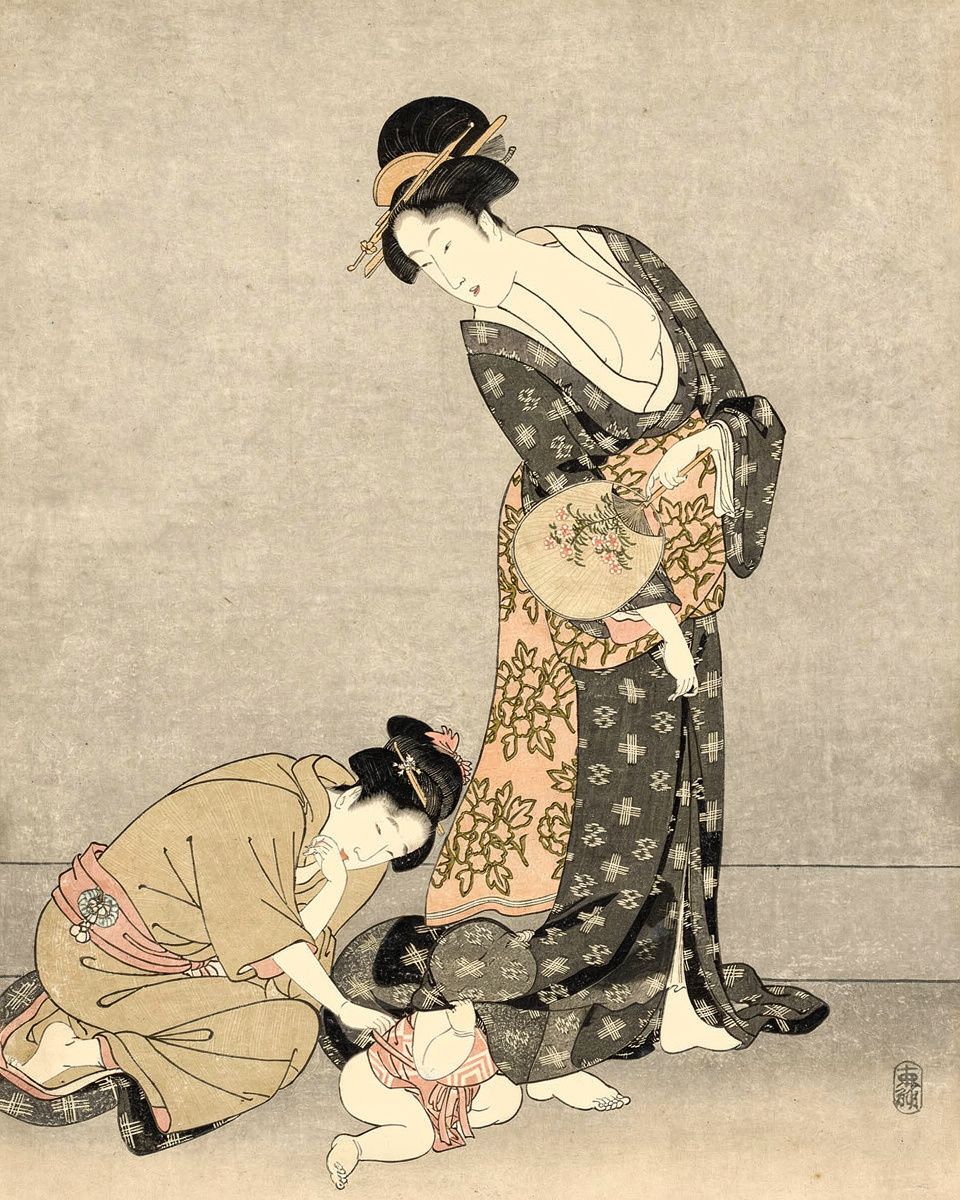
Mother and Child — Kitagawa Utamaro 喜多川 歌麿, c. 1800. Art Institute of Chicago. Restored by Surrealium at Vaxholm Fortress, Sweden.
Utamaro’s Mother and Child includes another adult bending towards the small child, allowing care to occupy more than one part of the image. It is a useful reminder that the new relationship may involve several people. Decide together who should appear in a group portrait, and make separate gifts when that would recognise distinct relationships more honestly than one crowded composition.
Create a family portrait · Explore this artwork
6. Looking at something together
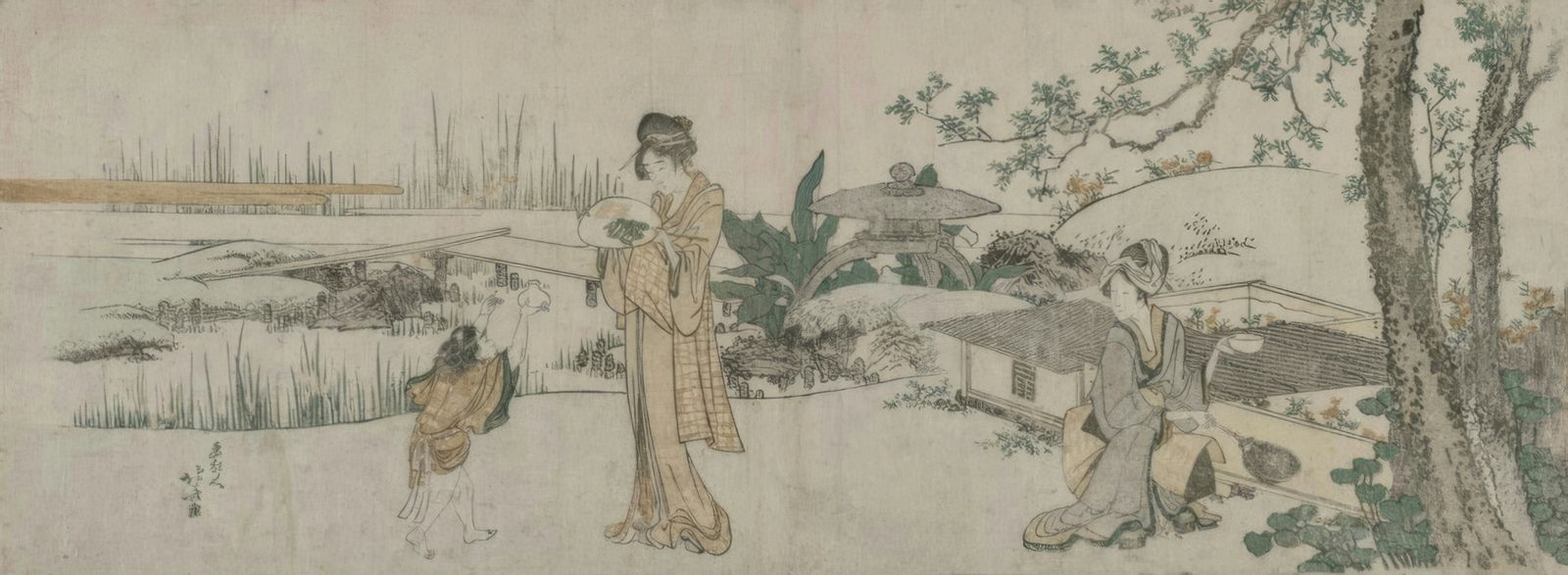
Two Women and a Child Beside a Goldfish Tank — Katsushika Hokusai, c. 1800. Cleveland Museum of Art. Prepared for print by Surrealium at Vaxholm Fortress, Sweden.
Hokusai stretches the scene beside a goldfish tank into a wide composition, giving the figures a shared object of attention. For a grandparent and an older child, looking together can produce a more natural photograph than facing the camera continuously. Keep faces sufficiently visible, however, and remember that a pleasing arrangement cannot compensate for an image in which the people are too small to recognise.
Create a family portrait · Explore this artwork
7. The quiet interval
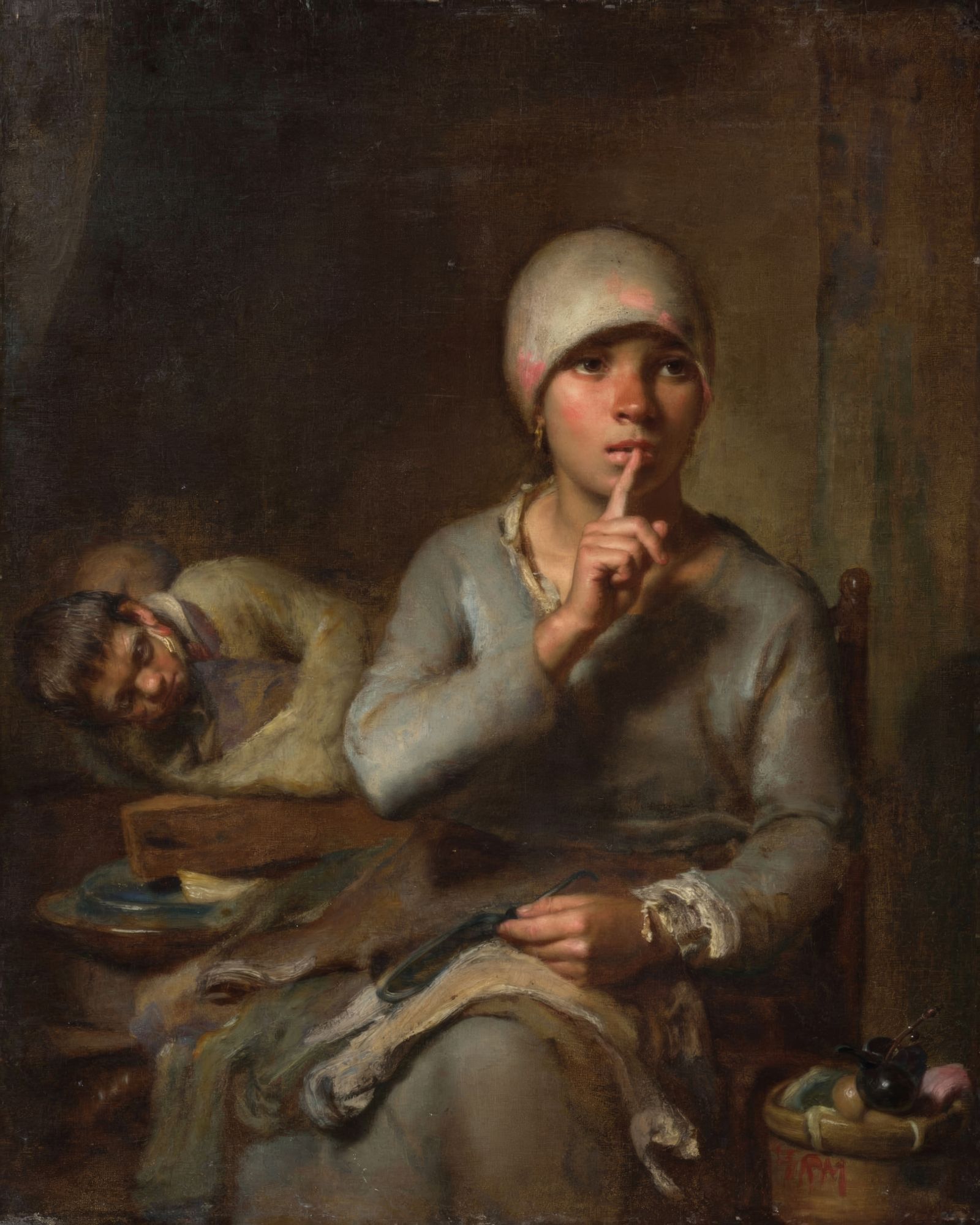
Woman and Child (Silence) — Attributed to Auguste Boulard, the Elder, 1855/60. Art Institute of Chicago. Restored by Surrealium at Vaxholm Fortress, Sweden.
In Woman and Child, the adult raises a finger to her lips while the child rests beside her. It offers an image of quiet attention rather than a demand for cheerful performance. A restful portrait can be a thoughtful gift after a busy first year, provided the person pictured likes the photograph and the moment is appropriate to share beyond the immediate household.
Create a family portrait · Explore this artwork
8. A changing point of view
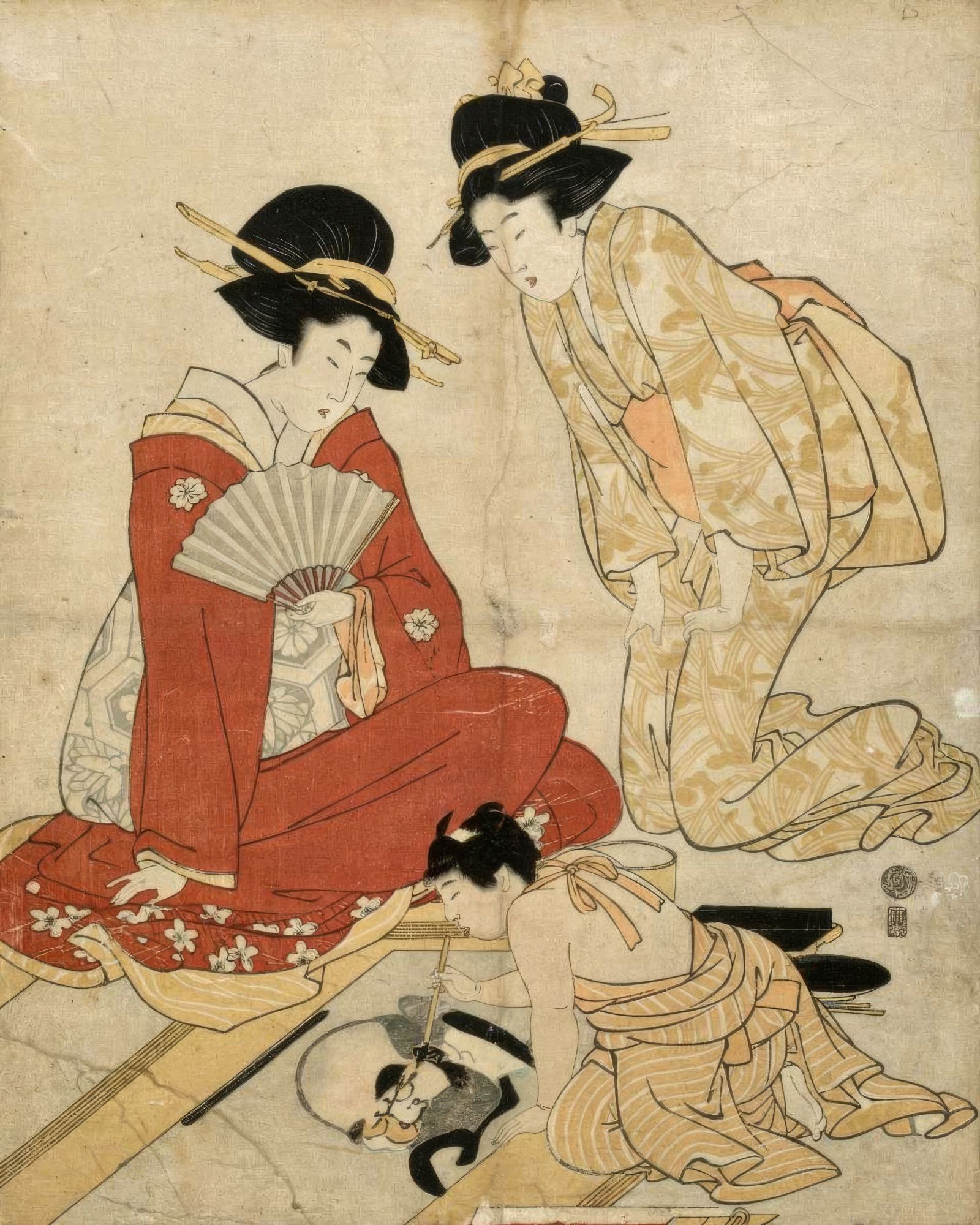
A Mother's Gaze — Kitagawa Utamaro 喜多川歌麿, Izumiya Ichibei 和泉屋市兵衛, 1806 (Bunka 3), 6th month. Harvard Art Museums. Restored by Surrealium at Vaxholm Fortress, Sweden.
Utamaro’s A Mother’s Gaze shows adults looking towards a small child near the floor, drawing the viewer down into the child’s world. It suggests photographing at a comfortable height rather than always looking down from above. For a grandparent gift, a simple adjustment of viewpoint can make a familiar scene feel more immediate without dressing anyone up or adding an invented setting.
Create a family portrait · Explore this artwork
9. A formal introduction
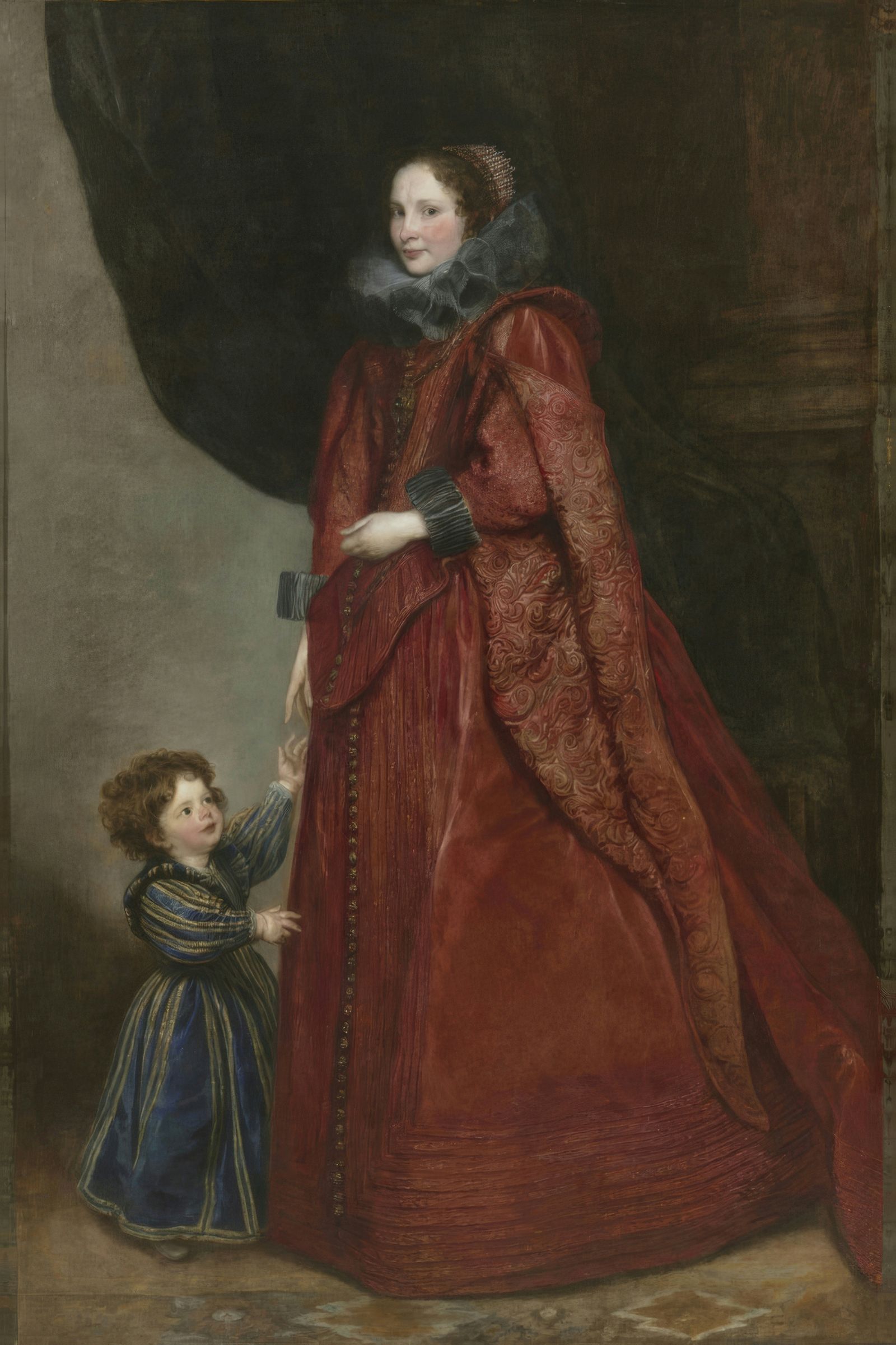
A Genoese Lady with Her Child — Anthony van Dyck, c. 1623–25. Cleveland Museum of Art. Prepared for print by Surrealium at Vaxholm Fortress, Sweden.
Van Dyck’s Genoese mother and child stand at different heights in a tall, ceremonial portrait. The difference in scale is part of its dignity, not something the artist disguises. If the grandparents enjoy formal pictures, choose a photograph with clear separation between figures and enough space around them; do not crop a child into an adult’s shoulder simply to make the faces equally large.
Create a family portrait · Explore this artwork
10. A place in the wider family
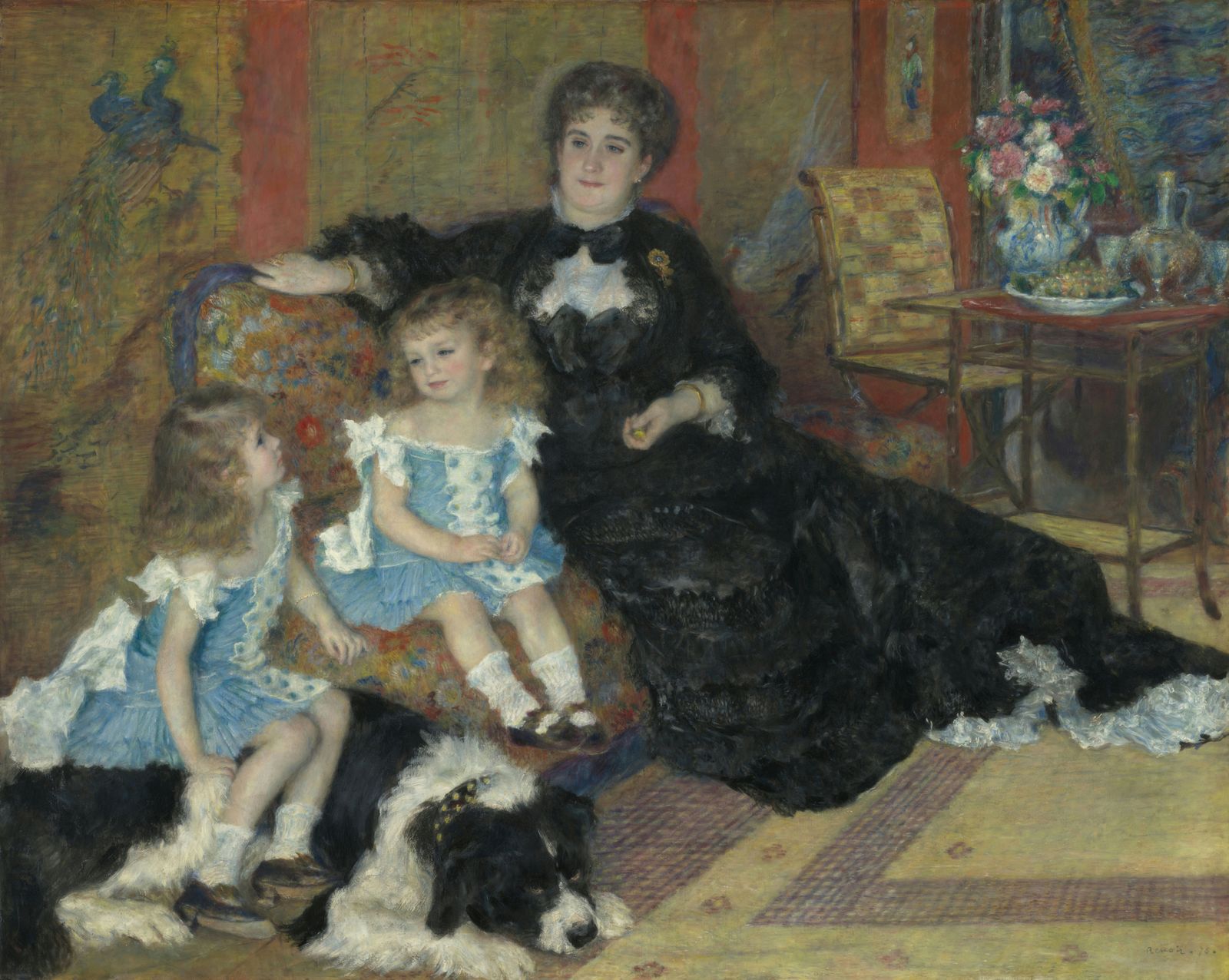
Madame Charpentier and Her Children — Auguste Renoir, 1878. The Metropolitan Museum of Art, New York. Prepared for print by Surrealium at Vaxholm Fortress, Sweden.
Renoir’s Charpentier portrait gives the children distinct positions beside their mother and the family dog. It can prompt a gift that acknowledges the new baby’s place among siblings or other relatives, while keeping the new grandparents’ own connection in view. Ask which people should be included before beginning, and let the family choose the final image together if a surprise would make that decision awkward.
Create a family portrait · Explore this artwork
A first grandparent portrait works best when practical details are settled early. Confirm the name or form of address the recipient prefers, ask before including a birth date, and keep the original photograph somewhere easy to find. If there is no suitable shared image yet, a promise to choose one together can be kinder than rushing. The family portrait route is a starting point for exploring the available treatments; it is not a reason to force a new family into a pose that belongs to somebody else.
Continue with family gift choices, Christmas gifts for grandma.
- What is a good first gift for a new grandparent?
- A portrait based on an agreed photograph can mark the new relationship. A short personal note explaining the moment may matter as much as the presentation. Choose something the recipient has space for and would enjoy displaying.
- Should I include the baby’s name and birth date?
- Only after checking the spelling and the parents’ wishes. Those details can go in your accompanying note rather than on the artwork. Do not assume everyone wants identifying information displayed publicly.
- Can I give the same portrait to both sets of grandparents?
- You can, but each relationship may deserve its own photograph or message. Ask whether the same image genuinely includes both households’ connection to the child, especially when visits and family circumstances differ.
- What if there is no clear photograph together yet?
- Wait for one or choose the gift together. A blurred face, hidden child or uncomfortable pose is a poor foundation for a portrait, however significant the occasion. There is no need to make the first visit into a photo session.