Christmas gifts for book lovers: ten pictures of reading
Painted readers offer a way into art books, from solitary concentration to poetry shared aloud, with practical advice on choosing an Edition.
Christmas gifts for book lovers should begin with the way the person reads. Some want a book to study closely, others enjoy browsing images with a visitor, and others want a beautiful object they can return to between novels. An art book can meet those different habits, but only if its subject interests the reader rather than simply matching the furniture.
These ten pictures show reading as an activity: private, social, absorbed, interrupted and shared. They are not a claim that every work is included in a particular Fable Edition. Use them to identify a subject or mood, then inspect the current Editions selection and its contents. Editions is open at the time of this check; choose from the books actually shown there rather than assuming a custom volume exists.
For a related starting point, read art books as gifts, luxury coffee table books.
1. A reader with her own corner
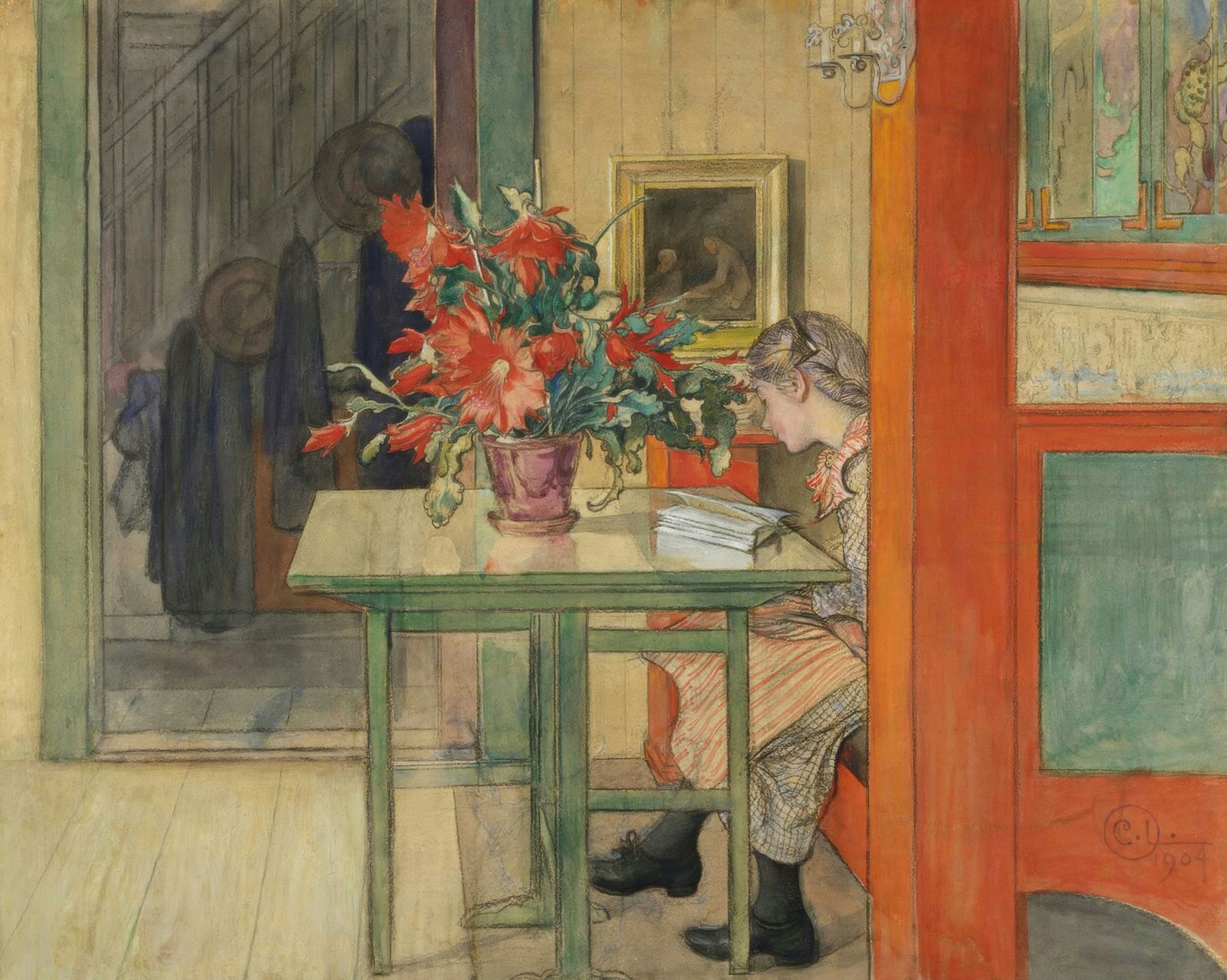
Lisbeth Reading — Carl Larsson, 1904. Nationalmuseum, Stockholm. Prepared for print by Surrealium at Vaxholm Fortress, Sweden.
Larsson’s Lisbeth sits behind a table with flowers, her book drawing attention into a corner of a busy domestic setting. The picture suggests a gift for someone who finds reading time inside an ordinary day rather than reserving it for a special room. Look for an art book whose images reward short visits, and check that its subject would interest her even without the attractive cover.
Explore Fable Editions · Explore this artwork
2. Reading with a visible response
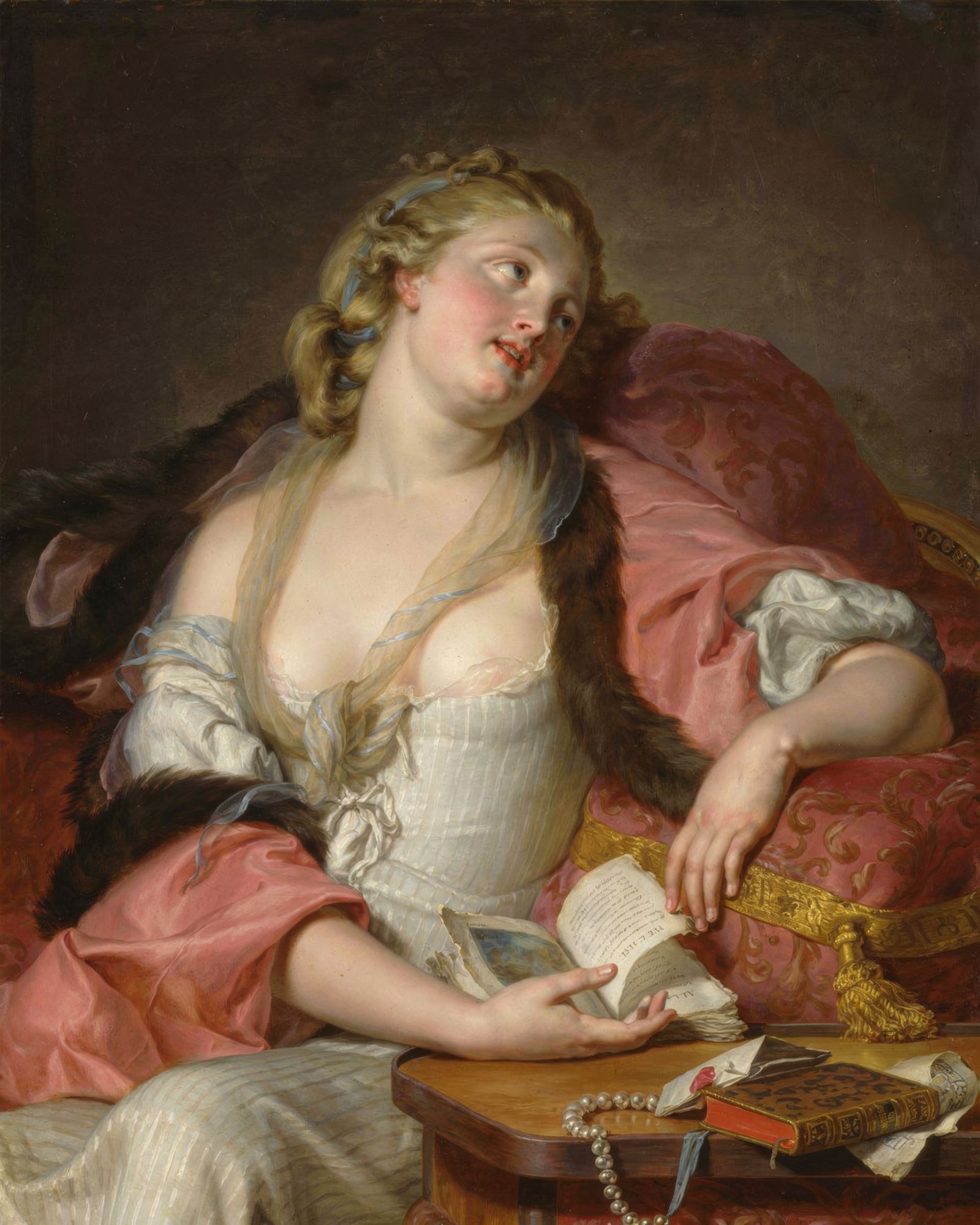
Lady Reading the Letters of Heloise and Abelard — Bernard d'Agesci, c. 1780. Art Institute of Chicago. Restored by Surrealium at Vaxholm Fortress, Sweden.
D’Agesci’s reader rests with an open book nearby, her posture making the act of reading feel emotionally charged. It is a useful reminder that a book gift can be chosen for a response as well as a topic. If the recipient enjoys stories about people, look for an Edition whose pictures invite that kind of attention rather than choosing only by the period printed on the spine.
Explore Fable Editions · Explore this artwork
3. A book read aloud
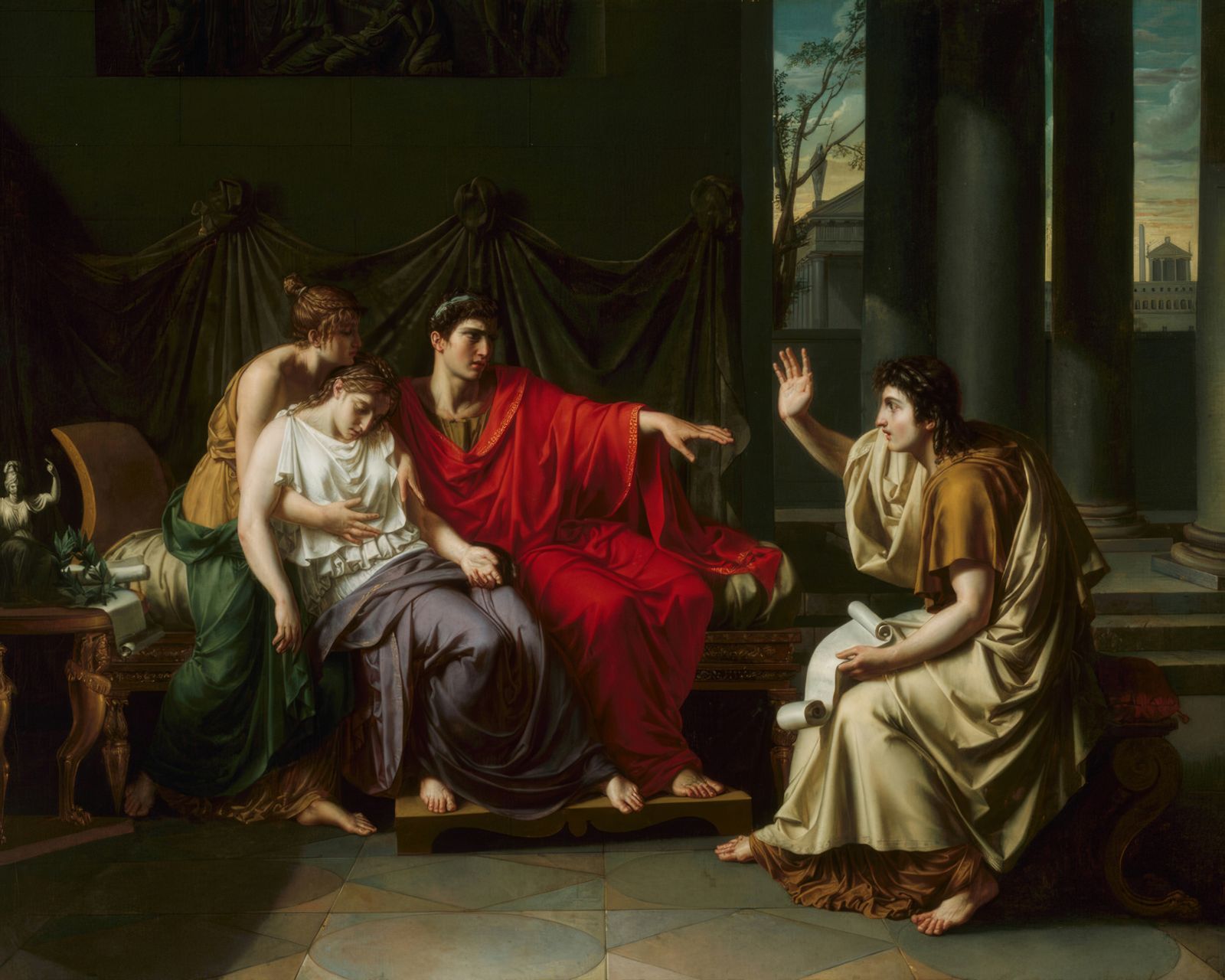
Virgil Reading the Aeneid — Jean Baptiste Joseph Wicar, 1790–93. Art Institute of Chicago. Restored by Surrealium at Vaxholm Fortress, Sweden.
Wicar’s Virgil reads to listeners whose bodies turn and react around him, making the room a place of shared attention. This direction suits someone who likes discussing a passage or showing a visitor a favourite image. An art book can become a conversational object, but choose one with enough substance for the reader themselves rather than imagining it only as something left out for guests.
Explore Fable Editions · Explore this artwork
4. The posture of absorption
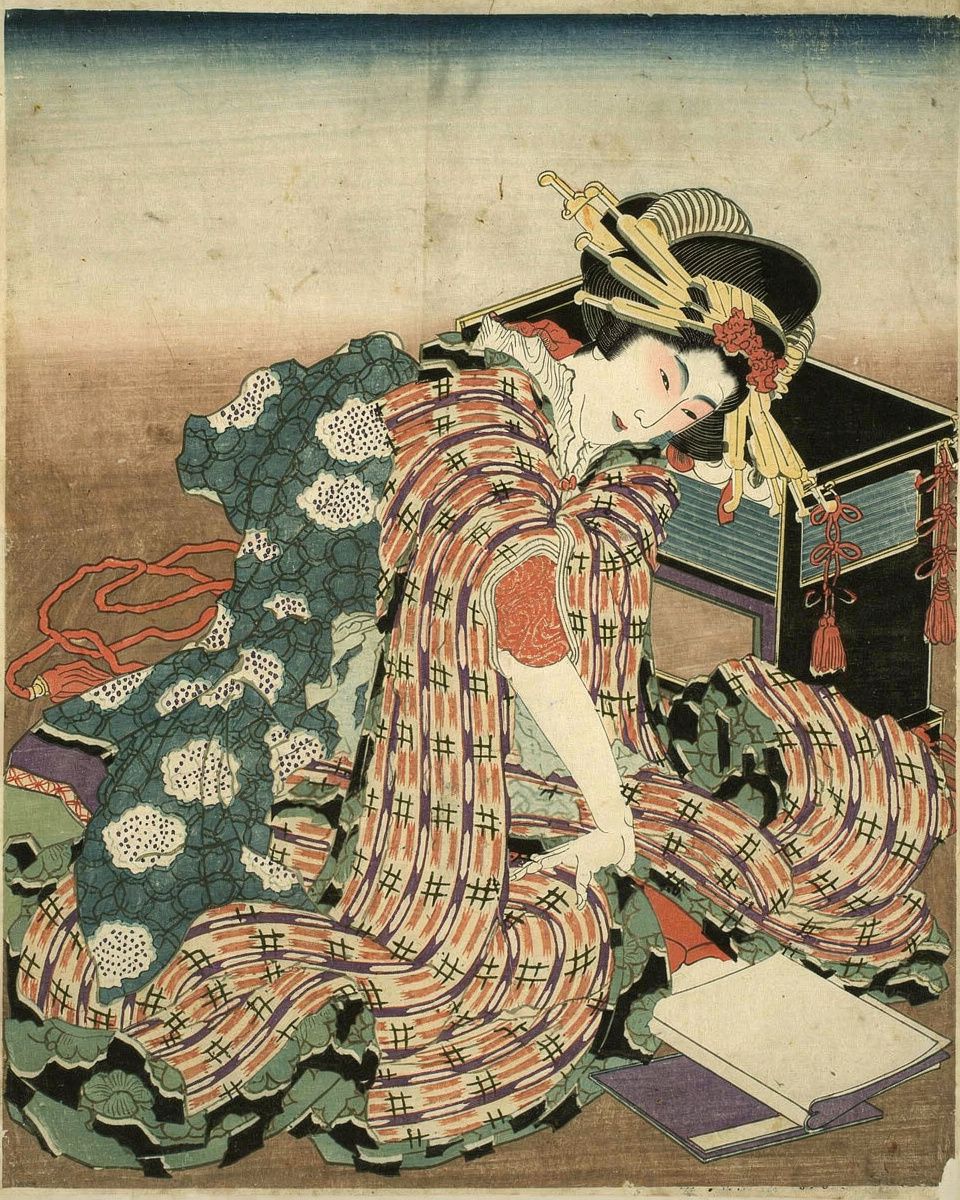
Young woman reading "The Pillow Book (makura no soshi)" — Katsushika Hokusai 葛飾 北斎, 1822. Art Institute of Chicago. Restored by Surrealium at Vaxholm Fortress, Sweden.
Hokusai’s reader bends over her book, with clothing, a box and the edge of the room enclosing the activity. The picture honours the ordinary physical experience of reading. For a person who spends long stretches with a book, consider how and where they will use a large art volume; an impressive object is only a good gift if there is somewhere comfortable to open it.
Explore Fable Editions · Explore this artwork
5. Two readers, two positions
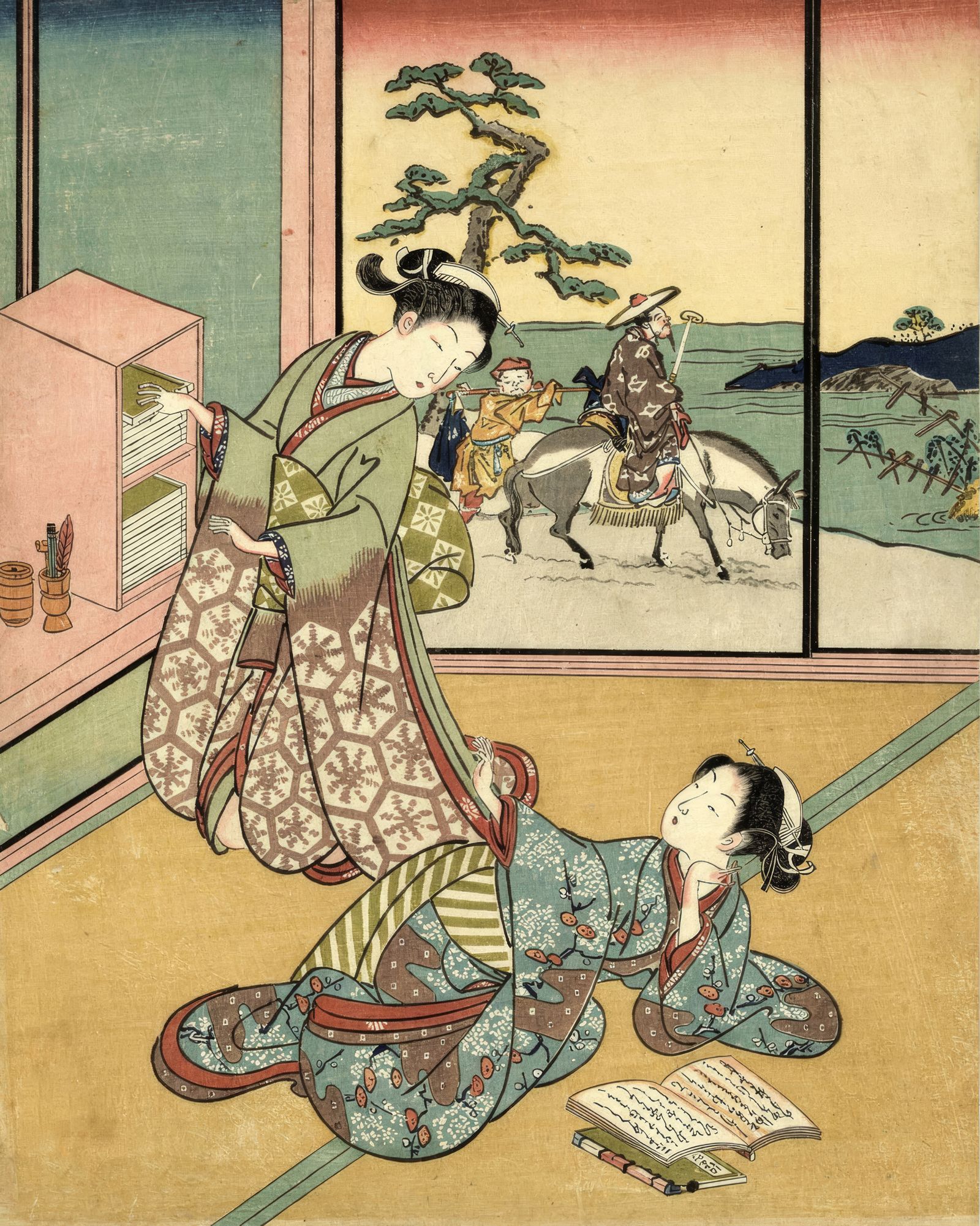
Two Young Women Reading Books — Suzuki Harunobu 鈴木 春信 , c. 1767/68. Art Institute of Chicago. Restored by Surrealium at Vaxholm Fortress, Sweden.
Harunobu’s young women occupy different levels of the room, with books connecting their separate poses. It suggests a gift for a reading pair or a household where books circulate between people. Choose a subject both would enjoy discussing, while remembering that a shared gift should not erase individual taste; a book selected for one person can still carry a note inviting the other to look too.
Explore Fable Editions · Explore this artwork
6. A letter held close

Courtesan Reading a Letter — Ishikawa Toyonobu, c. 1745. Art Institute of Chicago. Restored by Surrealium at Vaxholm Fortress, Sweden.
Toyonobu’s courtesan reads a long sheet, with the patterned surroundings giving the act of reading a decorative frame. A letter is not the same thing as a bound book, and that distinction is part of the interest. For someone drawn to paper, writing and the material life of texts, look for an art subject that lets those objects remain visible rather than treating reading as a generic emblem.
Explore Fable Editions · Explore this artwork
7. The scroll as a different rhythm
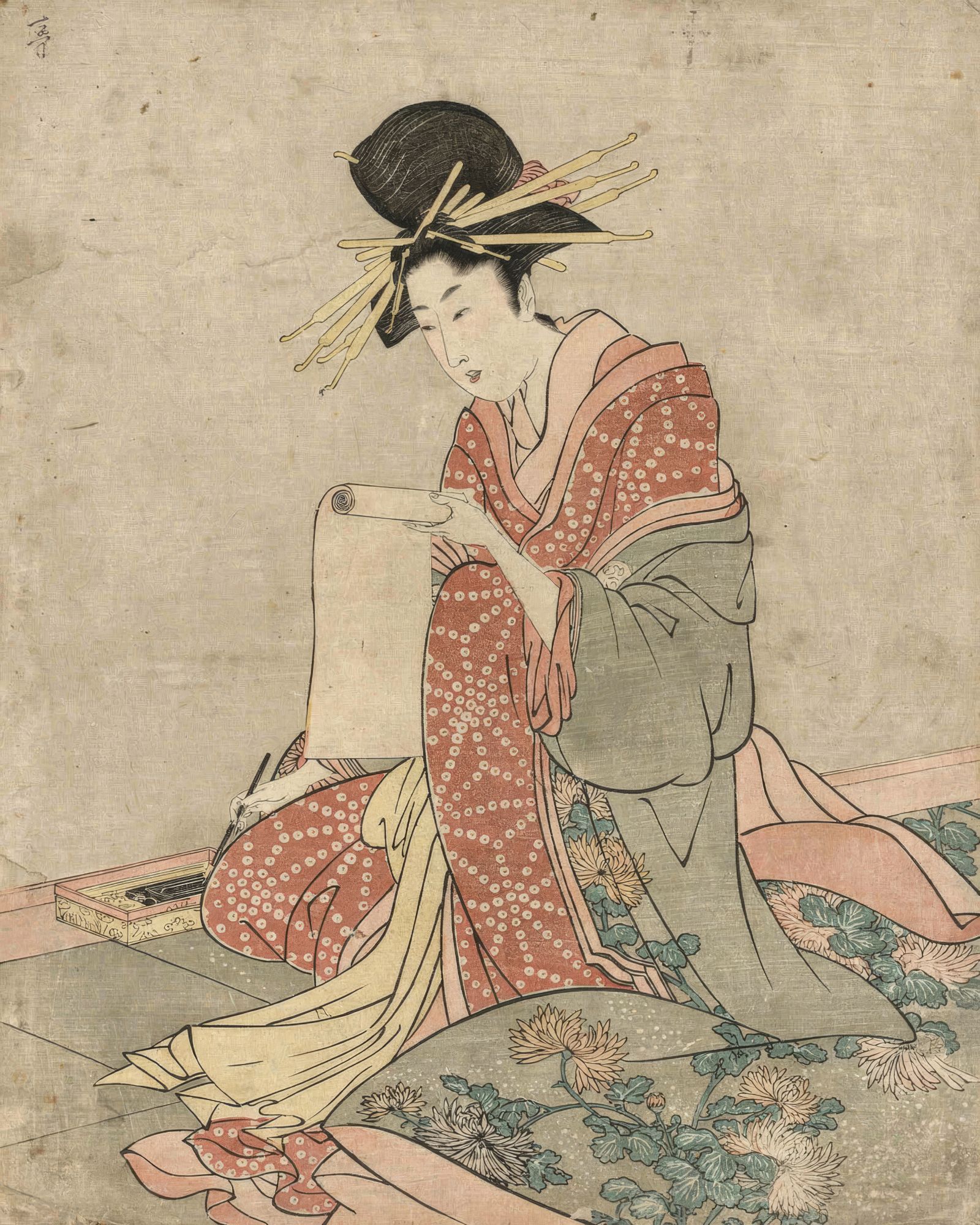
Woman of the Yoshiwara Reading Scroll — Kitagawa Utamaro, 1753–1806. Cleveland Museum of Art. Restored by Surrealium at Vaxholm Fortress, Sweden.
Utamaro’s reader holds a scroll whose unfolding shape changes the way the image is organised. It can prompt a gift choice for someone interested in how cultures make and handle texts. Let the actual Edition’s contents guide you, and avoid claiming a book covers a tradition simply because a single picture of a reader would fit its cover or its colour scheme.
Explore Fable Editions · Explore this artwork
8. Reading as a gesture
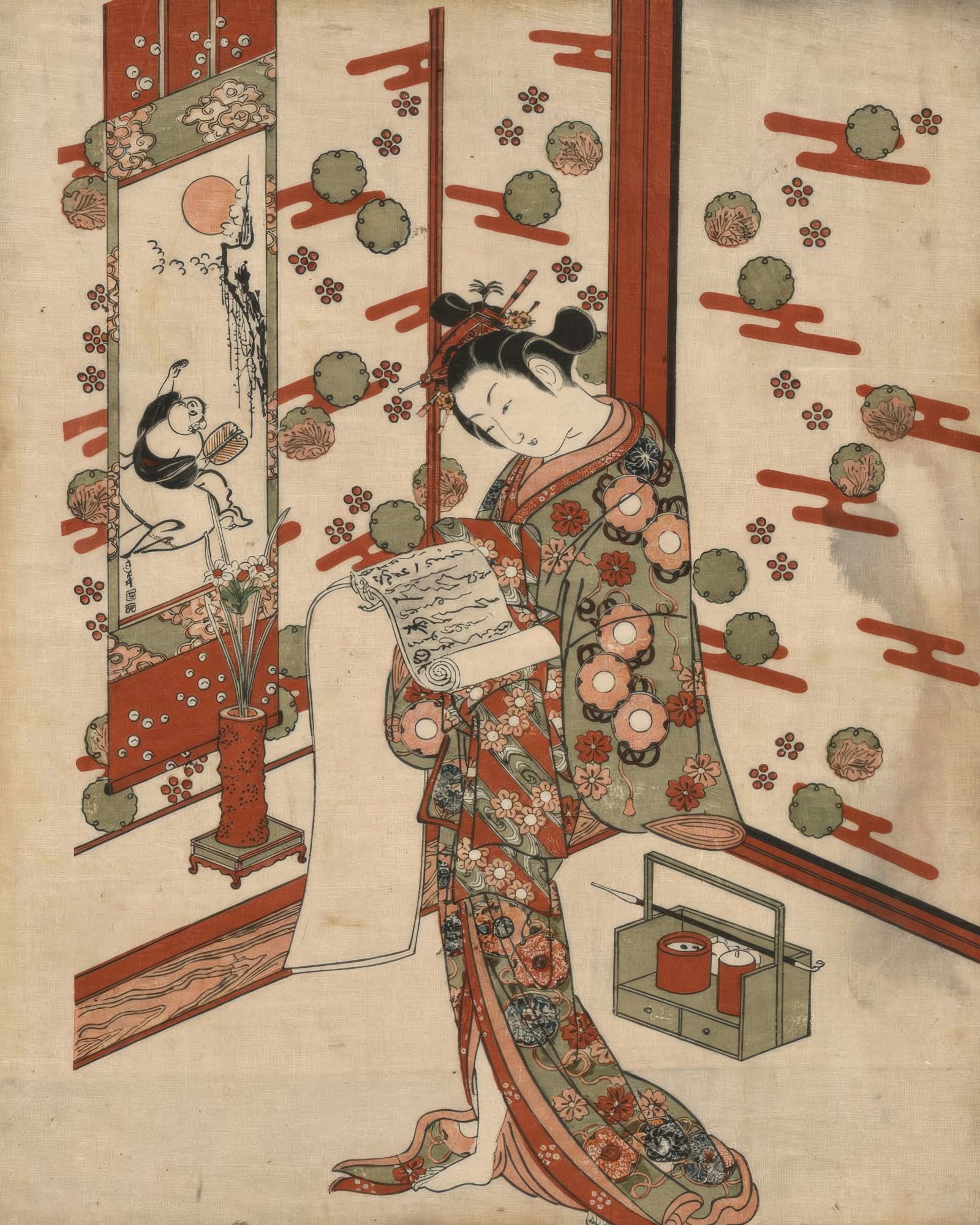
Beauty Reading a Letter — Ishikawa Toyonobu, c. 1758. Art Institute of Chicago. Restored by Surrealium at Vaxholm Fortress, Sweden.
In Toyonobu’s Beauty Reading a Letter, the long paper and the turn of the figure make a clear visual relationship. The image invites attention to hands and posture as well as to clothing. A reader who enjoys drawing or illustration may appreciate an art book for exactly those details, so inspect sample spreads and image scale instead of relying on a list of famous names.
Explore Fable Editions · Explore this artwork
9. A book of poems in a painted room
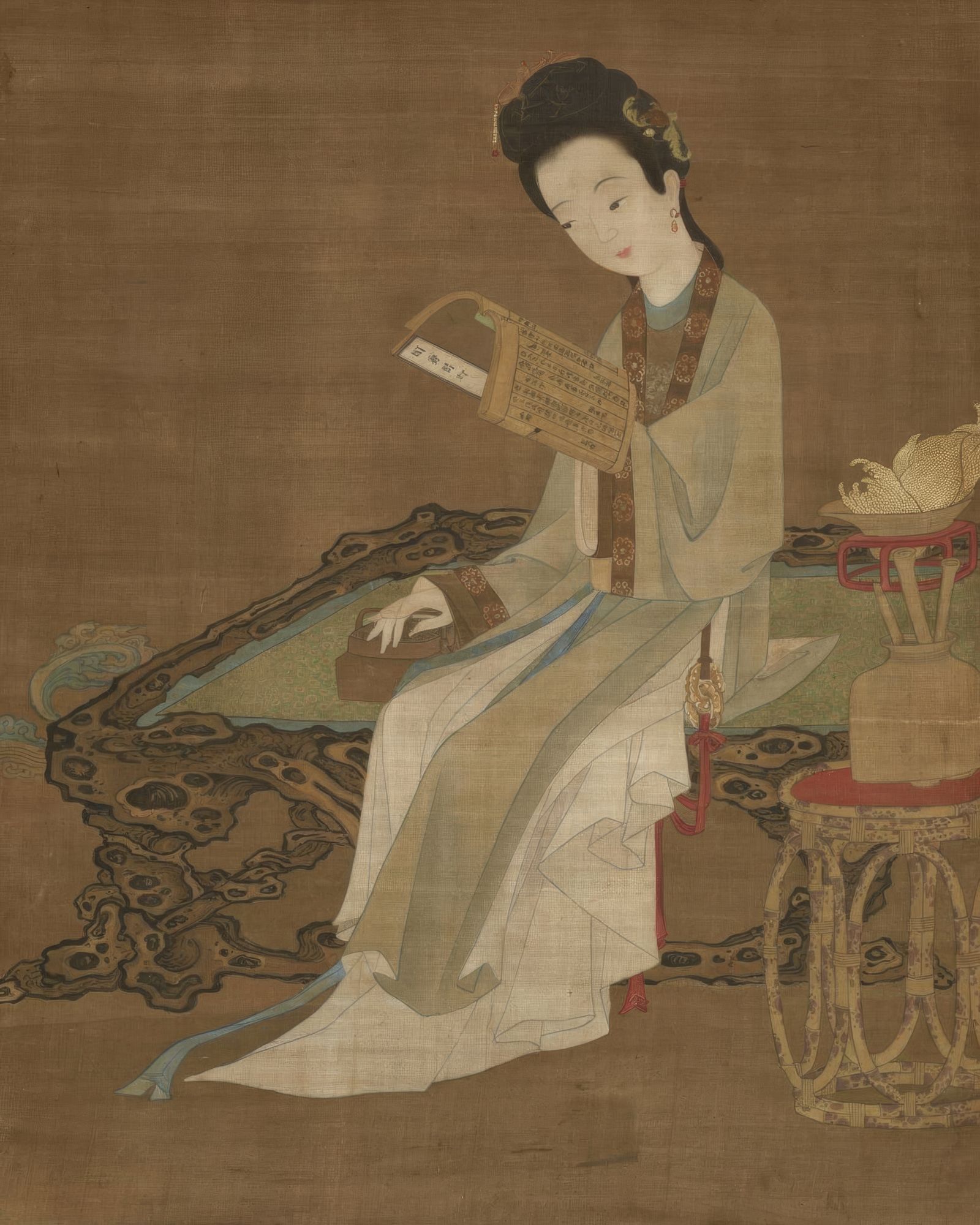
Young woman reading a book of poems — Traditionally attributed to Sheng Shiyan, Ming dynasty, 16th–17th century. Freer Gallery of Art, Smithsonian National Museum of Asian Art. Restored by Surrealium at Vaxholm Fortress, Sweden.
The Smithsonian scroll shows a young woman reading beside a low table, with the book held away from the body. Its attribution is traditional rather than certain, and the museum dates the work to the Ming dynasty. For a reader who values careful cataloguing, choose a book that makes room for such uncertainty; accurate labels can deepen enjoyment rather than interrupt the pleasure of looking.
Explore Fable Editions · Explore this artwork
10. A message that occupies the whole attention
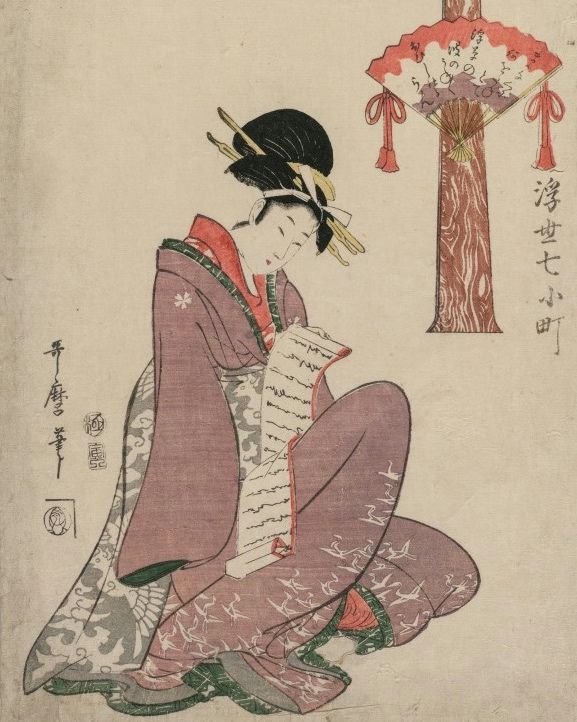
Woman Reading a Letter — Kitagawa Utamaro, 1806. Cleveland Museum of Art. Restored by Surrealium at Vaxholm Fortress, Sweden.
Utamaro’s seated woman follows a letter while her clothing gathers around her in a broad shape. The picture makes a private act visible without telling us what the letter says. It is a good reminder to leave a book recipient room for their own response: explain why you thought of them in a short note, then let the images become theirs to discover.
Explore Fable Editions · Explore this artwork
Before choosing an Edition, check its current subject, included works and physical presentation on the product page. Do not infer those details from the paintings in this story. Think about whether the recipient wants a focused artist study, a broader visual journey or a book connected to a particular interest. A handwritten note can explain the connection without summarising the whole book in advance. The best choice gives the reader something they want to return to, with enough space and time to look.
Continue with family gift choices, Christmas gifts for her.
- What makes an art book a good Christmas gift for a reader?
- A subject that connects with the reader’s interests and images that reward attention. Think about how they use books, whether alone or in conversation, and inspect the contents rather than choosing from the cover alone.
- Are all these paintings included in Fable Editions?
- No. They are historical references for choosing a reading-related gift. The current Editions pages show the books and contents available; this article does not promise a custom volume containing the selection above.
- Should I choose a large coffee-table book?
- Only if the recipient has somewhere to use it and enjoys that format. A large book can be rewarding to browse, but its size should serve the images and the reader rather than act as a substitute for a relevant subject.
- What should I write in the gift note?
- Mention the interest or conversation that made you choose the book. Keep the note separate if the recipient prefers unmarked books, and avoid writing inside until you know they would welcome an inscription.