Family crest tattoo: prepare an honest design brief
Plan a family crest tattoo by separating ancestry, personal symbolism and the practical design questions for your tattoo artist.
A family crest tattoo can express a personal connection to people, places or values, but the image deserves a clear explanation before it becomes permanent. A surname search alone does not establish that a particular set of historical arms belongs to you. A newly designed emblem is a different and legitimate creative idea when it is described as new.
This guide uses actual Fable Heraldry demonstrations to discuss shape, hierarchy and wording. They are decorative design examples, not photographs of tattoos, customer commissions or historic grants. A screen image can help you explain an intention, but your tattoo artist must assess its adaptation to the intended size and placement.
Begin with what a coat of arms is if you are unsure which part you want to use. The family crest versus coat of arms guide helps distinguish a shield, a crest and a full surrounding achievement before you choose the silhouette.
Name the connection you want to preserve
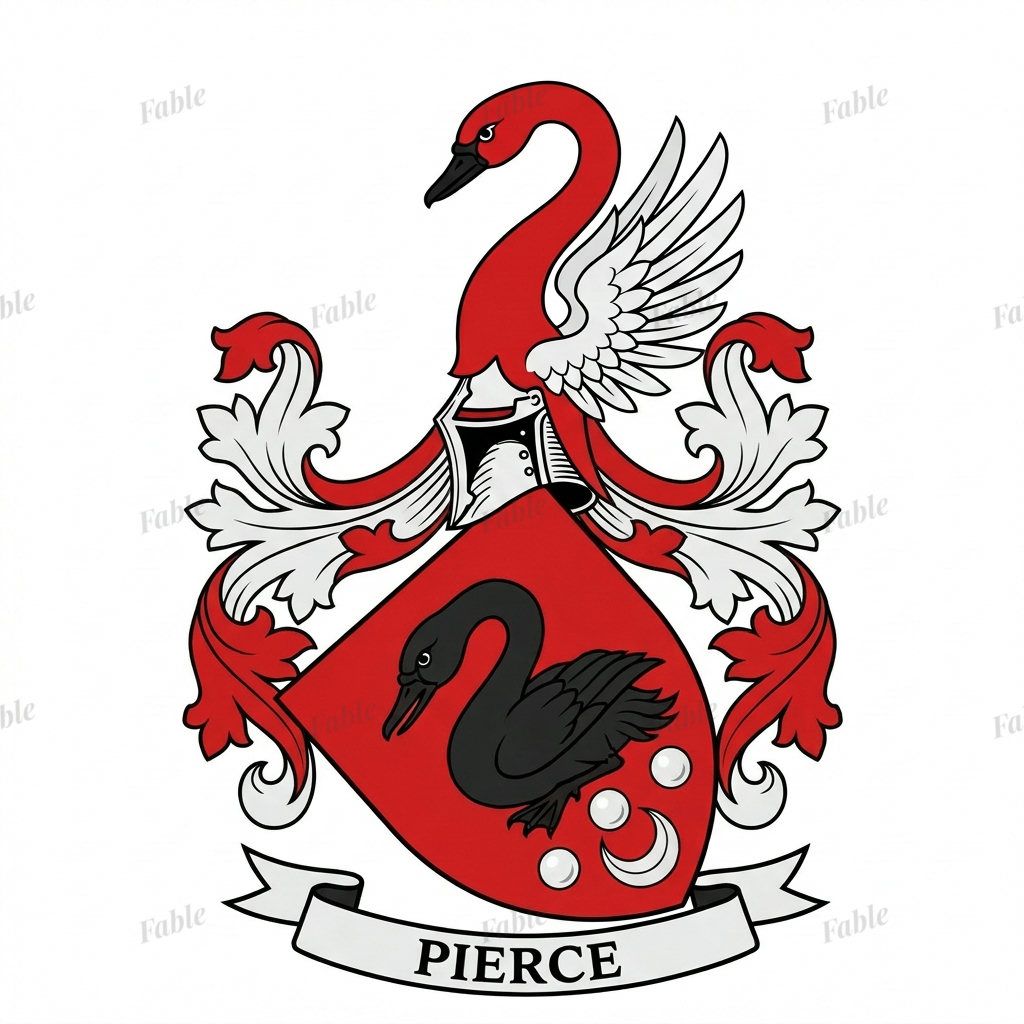
Pierce demonstration design · Fable Heraldry, 2026 · Fable Heraldry demonstration library. A new decorative emblem, not a historical grant or customer commission.
Write a short account of why you want the emblem. It might concern a parent, a shared place, a chosen family or an interest that has shaped your life. The account should make sense without depending on the design looking ancient or official. If the connection is personal rather than genealogical, state that directly.
The Pierce demonstration shown here uses a swan motif and a name ribbon. Its caption identifies it as a new decorative Fable design. The name does not authenticate historical arms for everyone called Pierce, and the image should not be used as evidence of a family grant. As a design example, however, it makes the difference between a principal animal shape and surrounding ornament easy to discuss with an artist.
Check historical claims before refining the drawing
If you want to reproduce documented arms, keep the source record and the named bearer with the reference image. A matching surname is not enough to establish your relationship to that bearer. Where the research is incomplete, mark the uncertainty rather than allowing an attractive design to turn a possibility into a fact.
If you prefer a new emblem, give yourself permission to choose symbols for present reasons. You can refer to a landscape, a craft or a shared memory without describing the result as inherited. The guide to finding a family crest concerns the research route, while how to make a coat of arms supports a design brief. Choosing the route early prevents the later conversation from mixing evidence and preference.
Decide which part of the image matters most
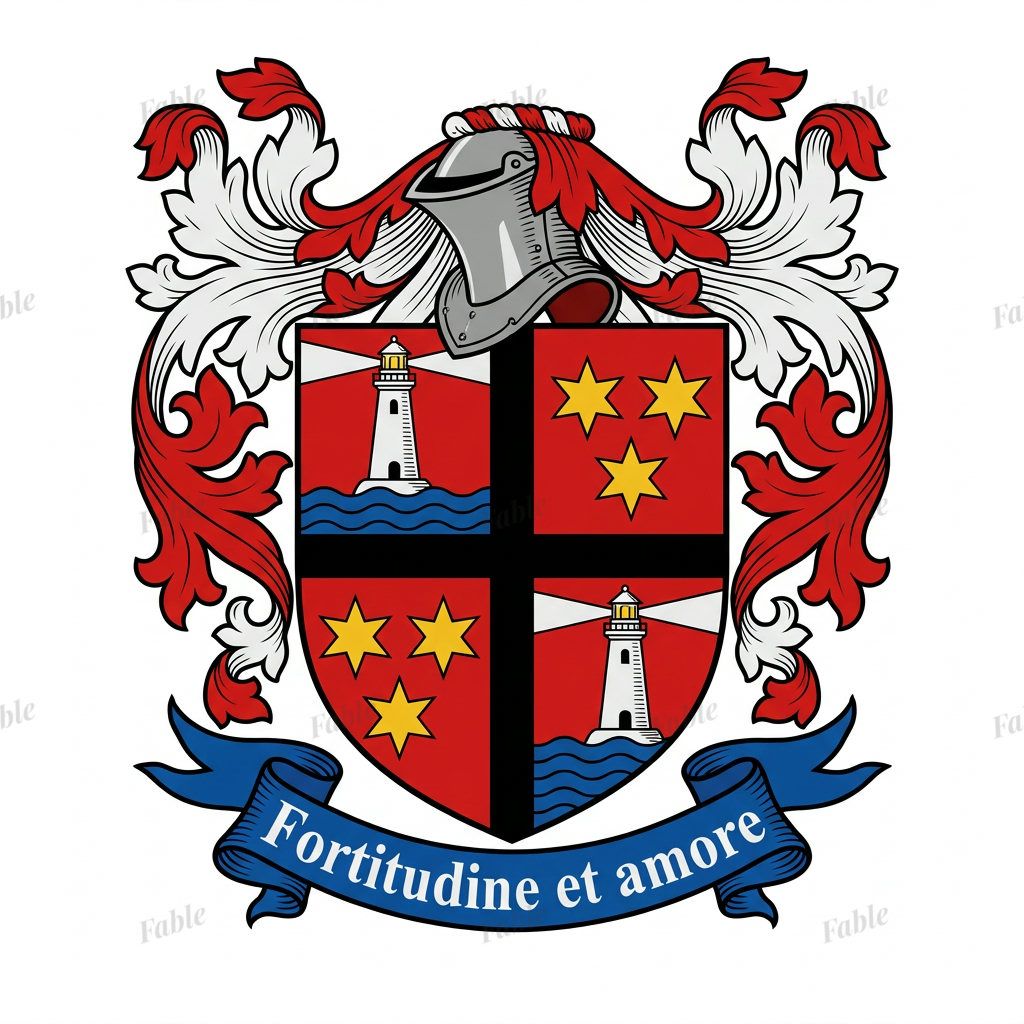
Fable crest demonstration · Fable · 2026 · Actual decorative Fable Heraldry output; not historic arms or a customer testimonial. Fable product demonstrations.
The Fable towers-and-stars demonstration includes a divided shield, a helmet, a crest, mantling and a motto ribbon. Each part adds information, but the whole arrangement may not be necessary for your intended tattoo. A shield alone has a different outline from a crest above a helmet, and a single principal motif may communicate a personal idea more directly.
Ask yourself what someone should recognise at first glance. If the answer is the central animal or plant, let the discussion begin there. If the relationship between several elements is essential, explain why each one matters. The aim is not to strip meaning from the design, but to give the tattoo artist a hierarchy they can use when deciding which details support the image and which make it harder to read.
Let the artist assess size and placement
A design that reads clearly on a large screen may behave differently at the intended scale and on a moving body. Bring the full reference, explain the important elements and ask the tattoo artist to assess the arrangement in relation to the place you have in mind. Avoid choosing a fixed size solely because a digital preview looks attractive.
The practical conversation should include line spacing, the amount of detail and the relationship between the design’s outline and the body. Those are questions for the professional making the tattoo, not promises supplied by a crest generator. Use a placement preview as a way to compare possibilities, and allow time to consider whether the design still feels right outside the excitement of the first draft. A clear brief can guide that discussion without pretending to replace it.
Distinguish colour from structure
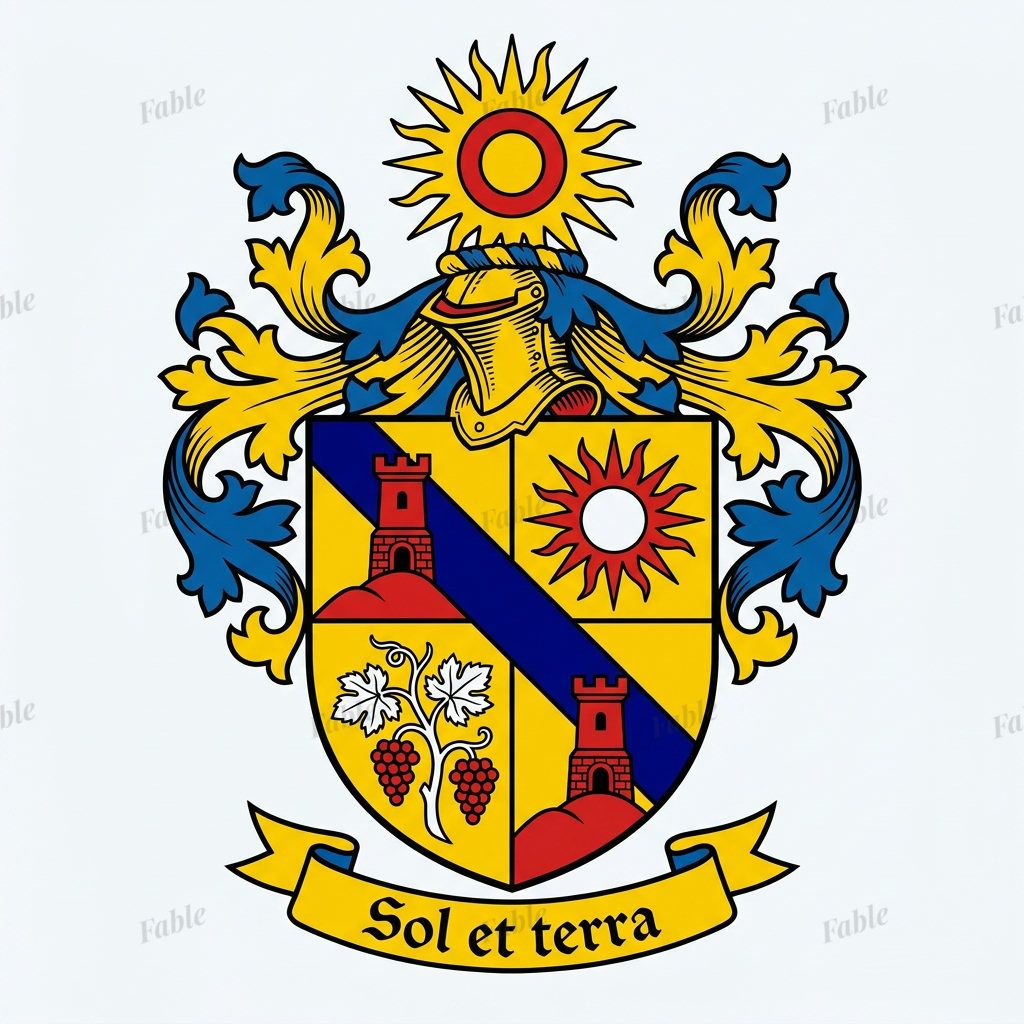
Winery crest demonstration · Fable · 2026 · Actual decorative Fable Heraldry output; not historic arms or a customer testimonial. Fable product demonstrations.
The winery demonstration uses strong blue, yellow and red areas, with a sun above the shield and several motifs within it. Colour helps separate those parts in the original decorative image. A different treatment may need other ways to preserve the distinctions, which is why a simple conversion of a colourful screenshot should not be treated as a finished tattoo design.
Ask the artist to show how the main forms remain readable in the proposed approach. The principal motif should not depend on a tiny colour change that disappears at the viewing distance you care about. Personal meanings attached to colours can remain part of the story, but they do not create a universal heraldic code. Explain what the colours mean to you, then assess how the image works visually.
Read every word before approving it
A name, date or motto may carry the most personal part of the design, so treat it as text as well as ornament. Write the exact approved wording separately from the image, including accents, punctuation and any preferred spelling. Read it aloud and compare it letter by letter with the artist’s final drawing.
If the phrase uses a language you do not know well, ask a competent speaker to verify the meaning and grammar before it becomes part of the finished design. Our family motto ideas are original English starting points, not historical translations. A short phrase that you understand is usually a clearer brief than a longer expression chosen mainly because it looks old. The tattoo artist can then assess lettering and spacing against a settled text.
Keep references labelled as references
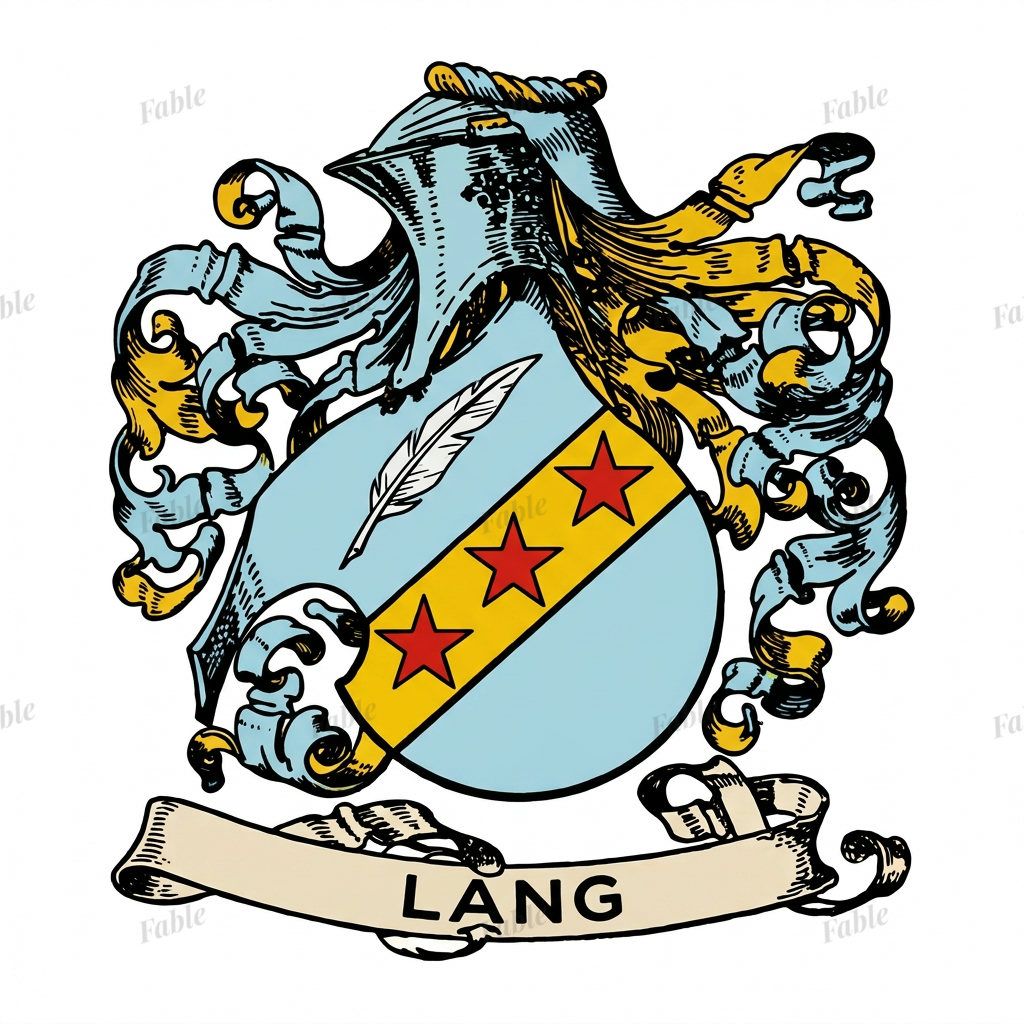
Lang demonstration design · Fable Heraldry, 2026 · Fable Heraldry demonstration library. A new decorative emblem, not a historical grant or customer commission.
The Lang demonstration has a diagonal band, stars, a feather and a name ribbon, giving several possible points of attention within one shield. It is another new Fable design rather than a historical record. If you use it to explain a preference, identify the particular feature you mean instead of asking for an unexamined copy of the whole image.
Bring a small, purposeful reference set rather than a large folder of conflicting examples. One image might explain the outline, another the kind of principal symbol and a written note the personal meaning. Label each role. This helps the tattoo artist understand what you are asking them to interpret, and it keeps a decorative demonstration from being mistaken for either an authenticated ancestral emblem or a completed design already prepared for skin.
Give the decision a final quiet review
Set the draft aside long enough to return to it without the momentum of the first idea. Read the explanation you wrote at the beginning and check whether the design still expresses that connection. If the image has accumulated extra details, ask whether they add meaning or simply make the drawing feel more elaborate.
Review the final version with the artist who will make the tattoo. Confirm the agreed image, wording and placement, and use their professional process for the practical questions of making and caring for it. Fable Heraldry’s role here is the creation of a decorative emblem that can clarify your idea. The tattoo is a separate piece of work requiring its own adaptation and assessment, even when the original crest remains a valuable starting reference.
The strongest brief combines an honest account of the emblem with a clear visual priority. Decide whether you are researching historical arms or creating a new personal symbol, settle the wording, and leave room for the tattoo artist’s adaptation. A decorative Fable crest can help make the idea visible before that professional conversation begins.
- Can I assume a surname crest found online belongs to me?
- No. A shared surname does not establish a relationship to a specific historical bearer. Keep genealogy and a new personal design as separate questions.
- Are the examples in this guide finished tattoo designs?
- No. They are actual Fable Heraldry decorative demonstrations. A tattoo artist must assess and adapt the chosen idea for its intended size and placement.
- Can a new emblem represent chosen or blended family?
- Yes, as a contemporary personal design. Explain the symbols through the relationships they represent and avoid describing the result as inherited historical arms unless that claim is independently documented.