Family motto ideas: ten original lines to make your own
Ten original family motto ideas, paired with historical art as visual prompts, plus a practical way to choose words together.
A family motto is most useful when the people who will live with it recognise their own intentions in the words. It can be modest: a reminder to listen, to make room or to keep learning. It does not need to sound ancient, and an unfamiliar language is not a requirement for making a phrase feel meaningful.
The ten lines below are original suggestions written for this guide. They are not quotations from the artists, historic mottoes attached to the paintings, or translations of words hidden in the images. Each artwork is a visual prompt for a conversation about the phrase. If a line sounds wrong for your household, change it together rather than treating a ready-made wording as an authority.
Start with what a coat of arms is if you are placing a motto beneath a new decorative crest. The historic crest design guide offers broader visual context, while family tree art distinguishes an emblem from a record of relationships. Words, images and genealogy can support one another, but they do different jobs.
1. Make room for each other
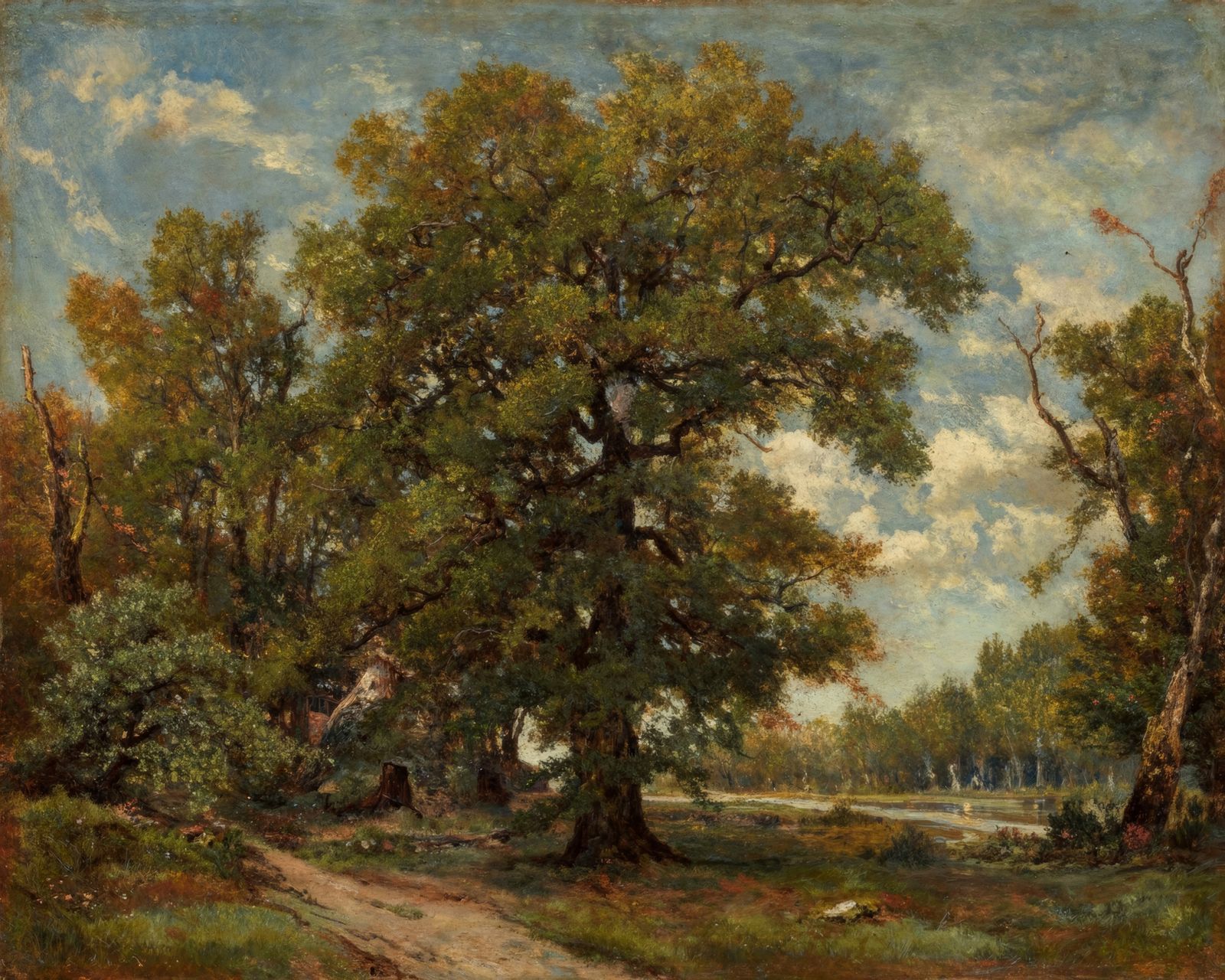
The Oak Tree · Théodore Rousseau, 19th century · Cleveland Museum of Art. Restored by Surrealium at Vaxholm Fortress, Sweden.
Rousseau’s broad oak spreads its branches across the woodland scene, giving the eye many smaller routes within a single larger form. That visible arrangement is a useful prompt for a household that wants a motto about belonging without requiring everyone to be alike. The proposed line is contemporary and original to this guide, not a historical inscription on the painting; ask each person what making room would look like in an ordinary week before choosing it for a crest.
2. Stand close when it matters

Lion on the Watch · Jean-Léon Gérôme, c. 1885 · Cleveland Museum of Art. Restored by Surrealium at Vaxholm Fortress, Sweden.
Gérôme’s lion holds a clear position on pale rocks, with a wide open landscape around it. The painting can prompt a discussion about steadiness, but it does not prove that every heraldic lion means the same thing or that strength must look aggressive. This line works when the family wants to express mutual presence in difficult moments, and its meaning should be explained through that intention rather than through an invented universal code for the animal.
3. Care is something we do
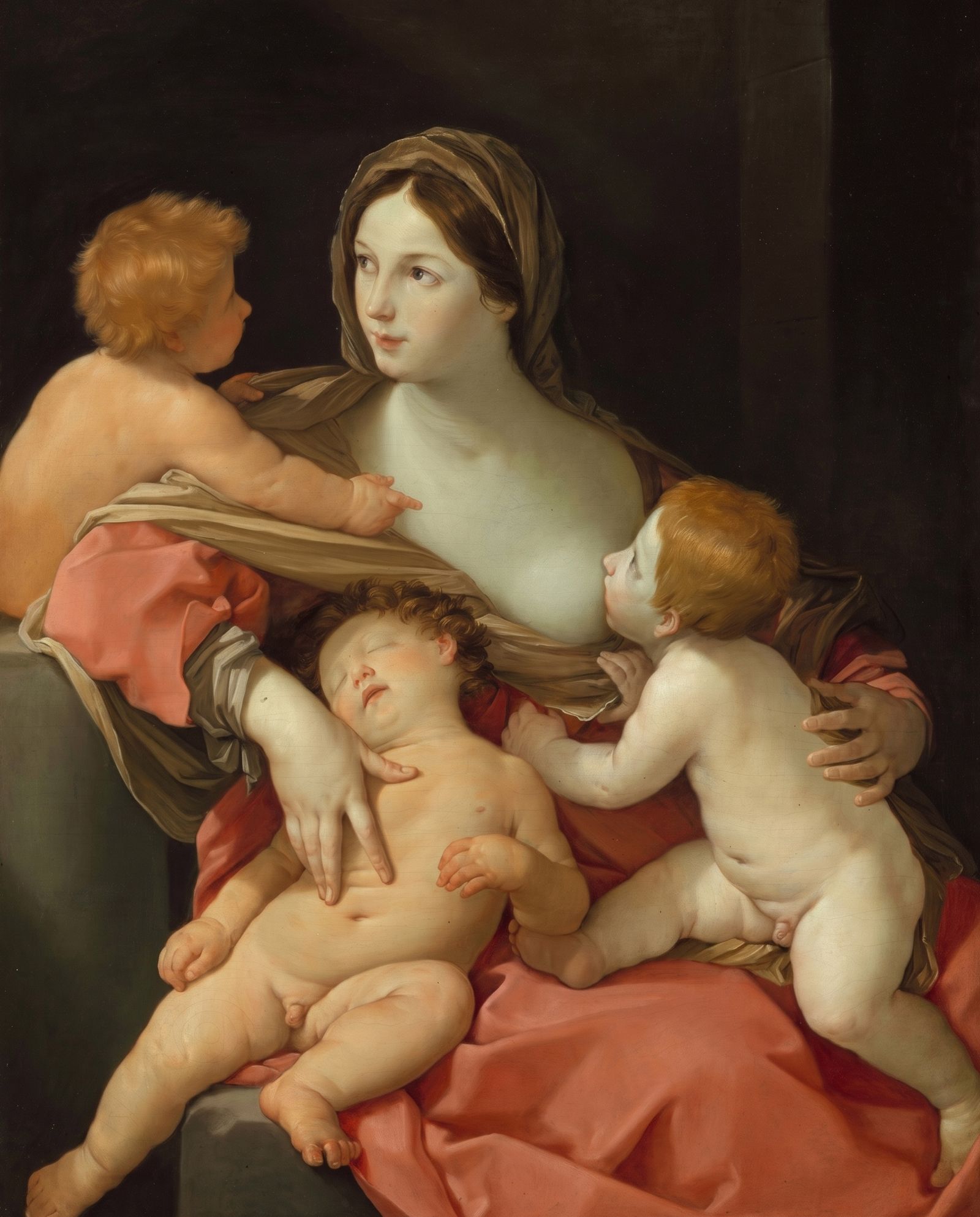
Charity · Guido Reni, ca. 1630 · The Metropolitan Museum of Art, New York. Restored by Surrealium at Vaxholm Fortress, Sweden.
Reni’s Charity gathers an adult and children through touch, with the figures closely connected within the picture. Its historical religious and allegorical context should remain distinct from the modern line suggested here. The phrase can be useful for a family that wants an active verb rather than a claim to perfection: discuss the small practical acts it would include, then decide whether those ordinary responsibilities are what you want the words beneath an emblem to recall.
4. Keep a place for wonder
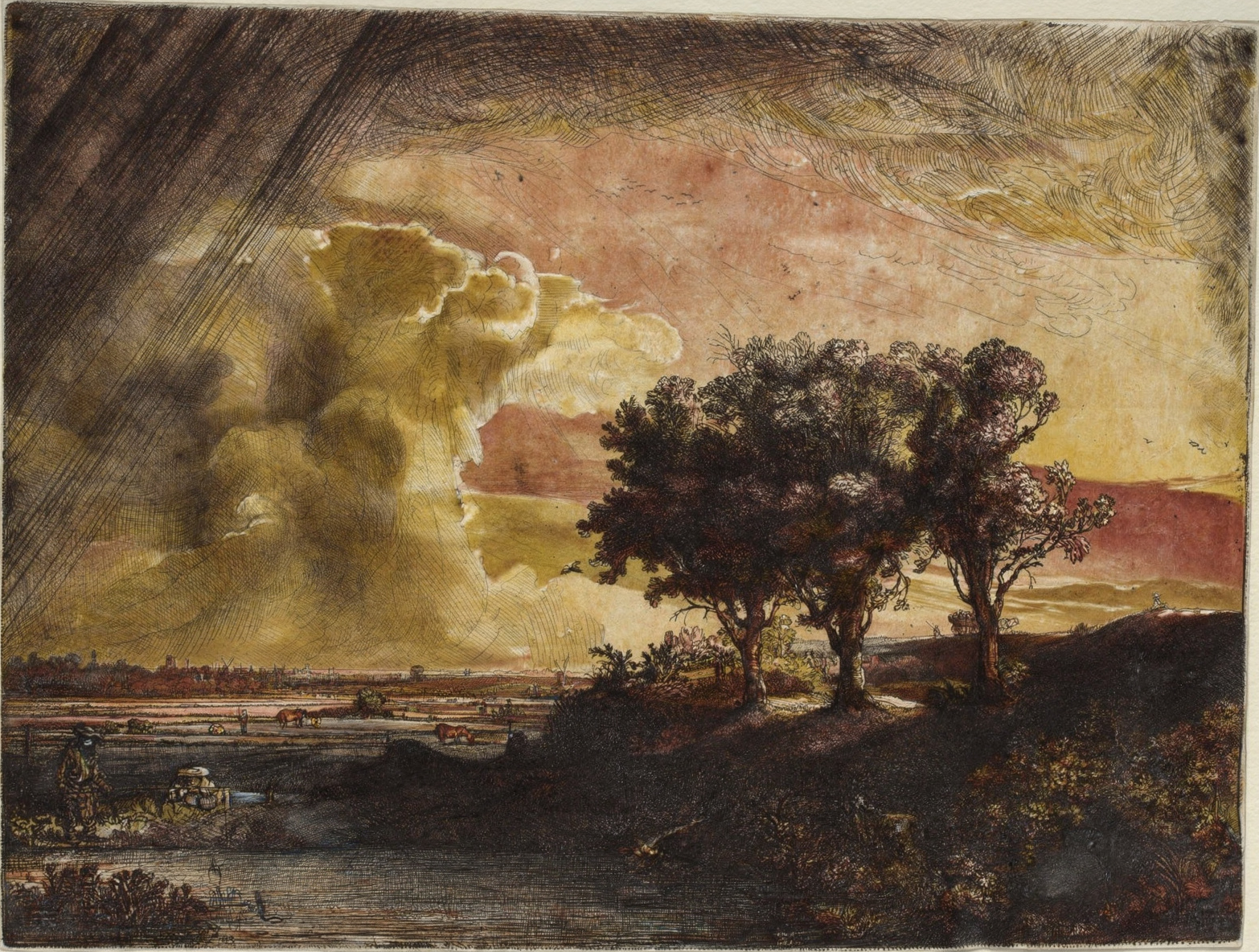
The Three Trees · Rembrandt van Rijn, 1643 · Cleveland Museum of Art. Contemporary Fable colour edition after the historical print. Restored by Surrealium at Vaxholm Fortress, Sweden.
The Three Trees sets a small group of trees beneath an expansive sky, offering several scales of attention within the same landscape. The reproduction shown is a contemporary Fable colour edition after Rembrandt’s historical print, and the suggested motto is not part of that original work. Use the picture as a prompt for curiosity: a family might choose this line to protect time for looking, asking questions or noticing something beyond the day’s immediate list of tasks.
5. Find the course together
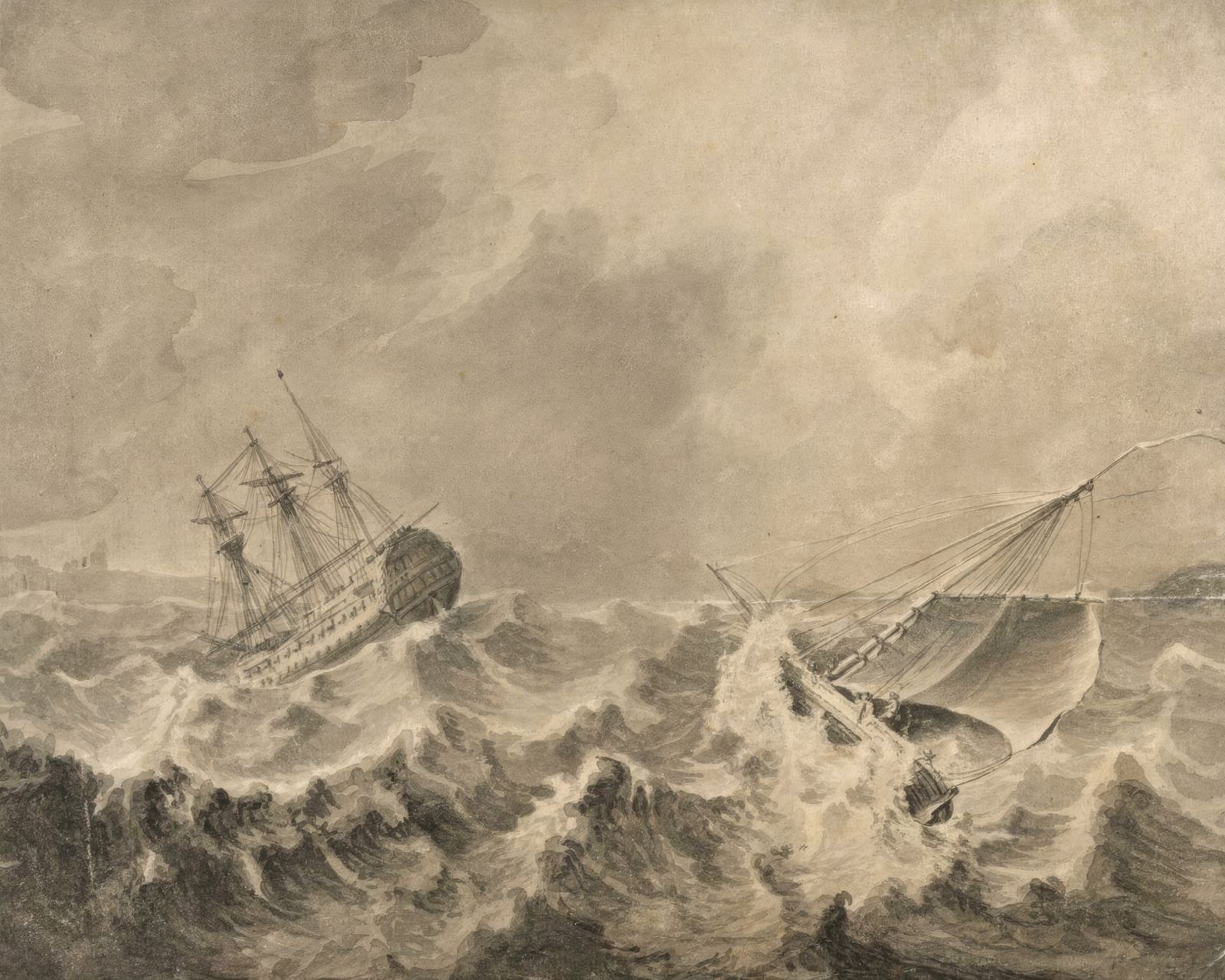
Ships Riding Out a Storm · Baur , Nicolaas, Late 18th century - early 19th century · Victoria and Albert Museum, London. Restored by Surrealium at Vaxholm Fortress, Sweden.
Ships Riding out a Storm gives the vessels a difficult, moving sea rather than a smooth empty horizon. As a visual prompt, it can support a conversation about cooperation without turning hardship into a promise that every problem will be overcome. The line leaves room for disagreement and adjustment: choosing a course together may involve listening and changing direction, which can be a more honest family intention than claiming that everyone will always want the same destination.
6. Let learning take its time
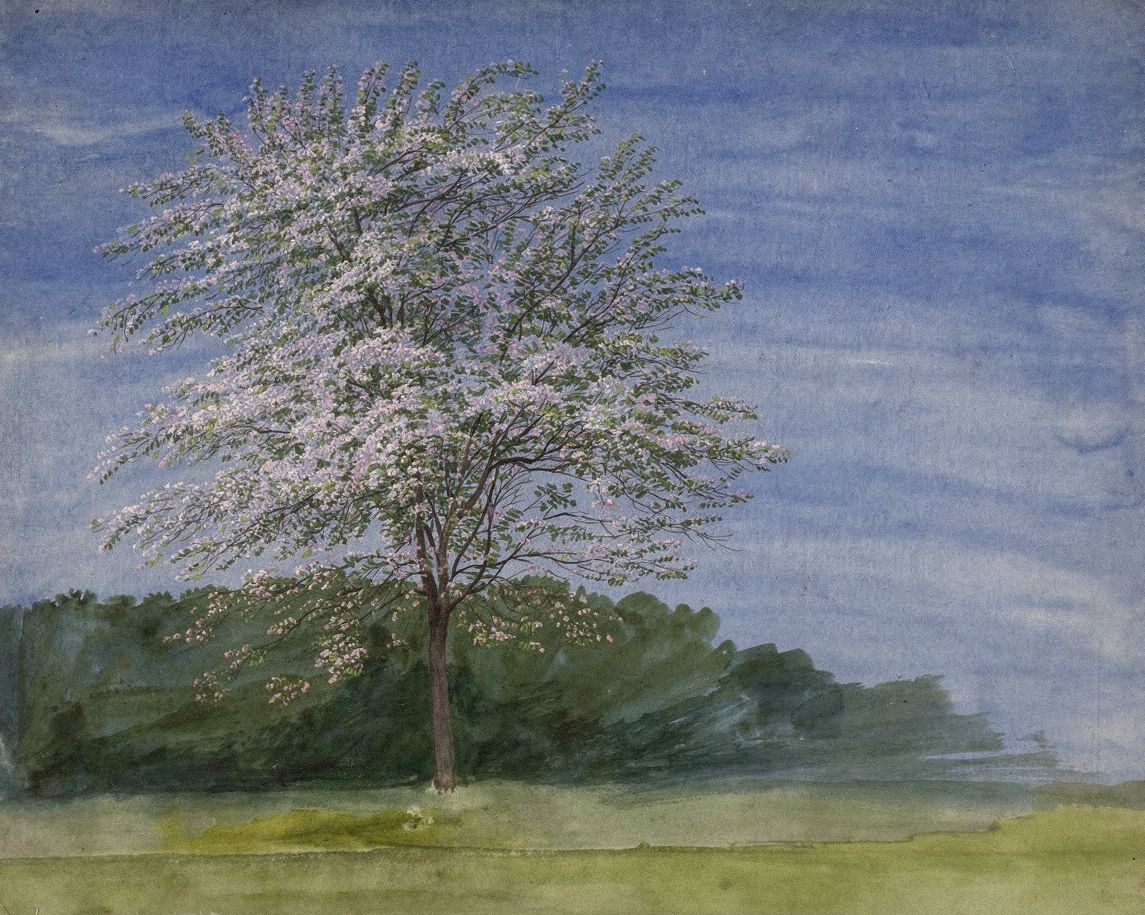
Study of a Tree in Bloom · William Turner, c. 1835 · Art Institute of Chicago. Restored by Surrealium at Vaxholm Fortress, Sweden.
The flowering tree in Study of a Tree in Bloom stands against a broad sky, with many small pale marks distributed across its branches. The picture does not contain a lesson about education, but its visible accumulation can prompt a discussion of growth without haste. This original line suits a household that wants patience to be part of its identity, especially if the people choosing it can name a practical way to make space for mistakes and gradual progress.
7. Begin with the place we share
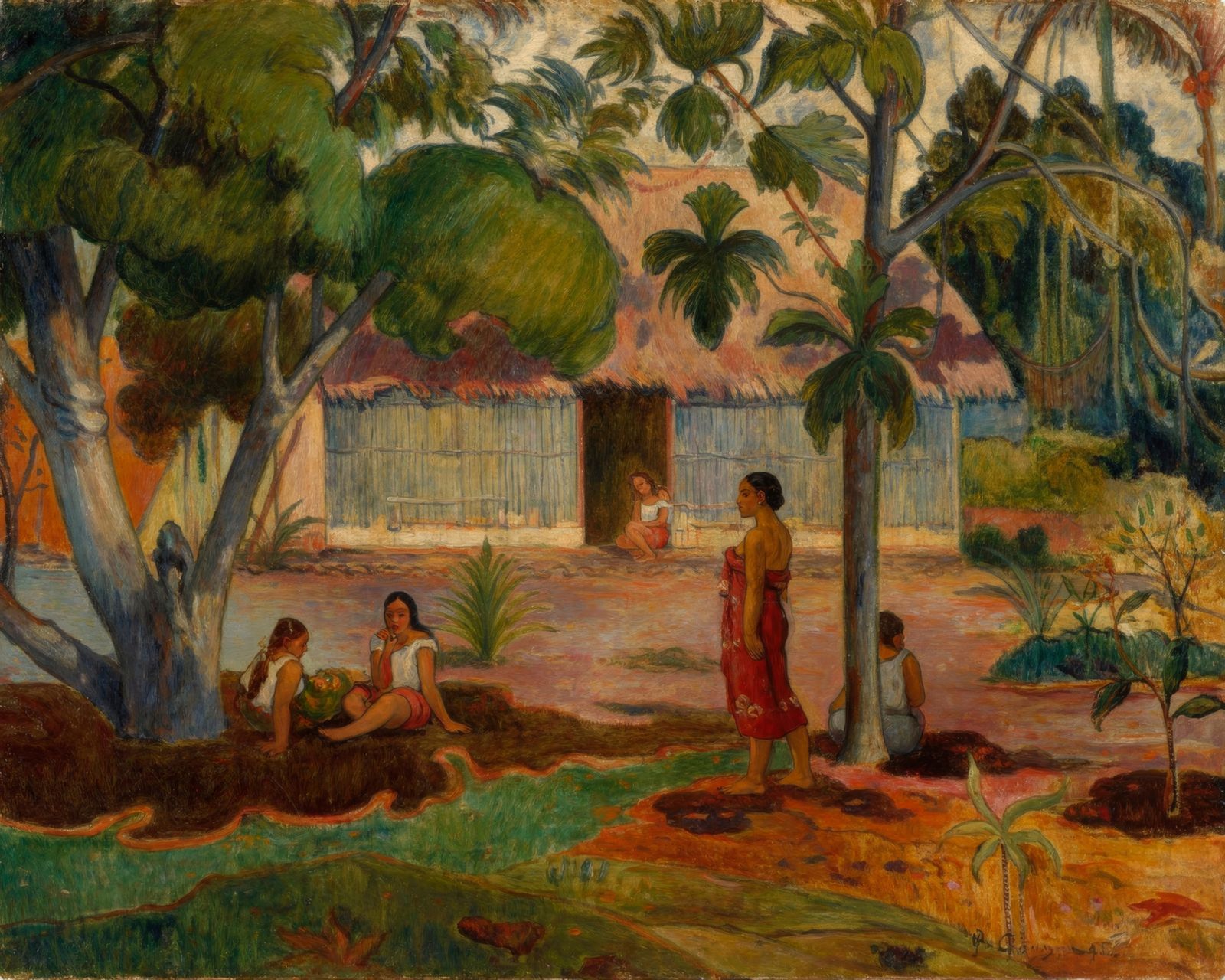
The Large Tree · Paul Gauguin, 1891 · Cleveland Museum of Art. Restored by Surrealium at Vaxholm Fortress, Sweden.
Gauguin’s The Large Tree places figures and buildings around a substantial tree, making the setting an active part of the composition. Its historical context belongs to the artist and the place pictured; it should not be borrowed as a claim about your own ancestry or community. The proposed phrase can instead refer to the home, street or landscape you actually share, with the picture serving only as a prompt to notice how surroundings shape everyday relationships.
8. Speak plainly, act kindly
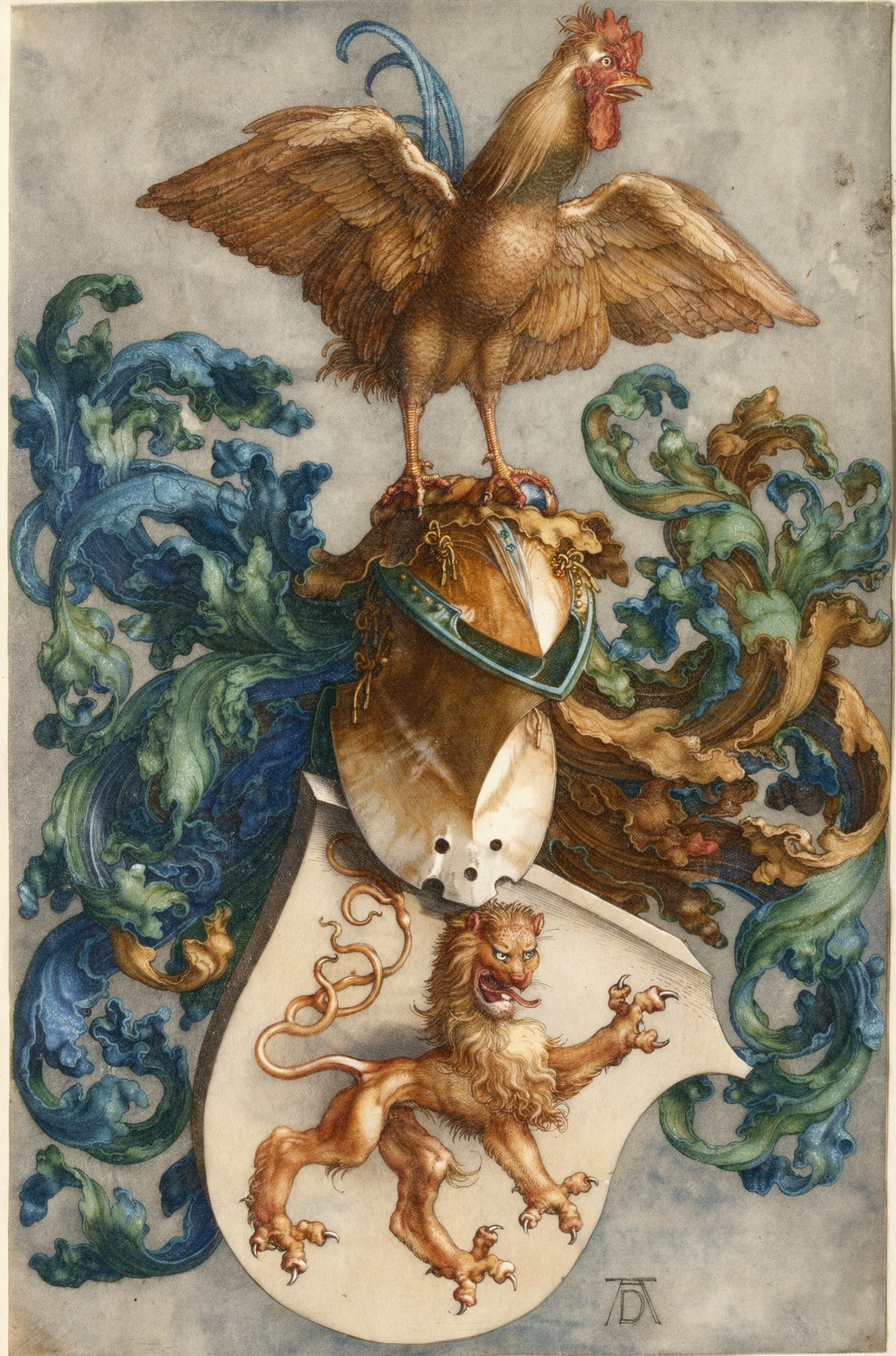
The Coat of Arms with a Lion and Cock · Albrecht Dürer, probably 1503 · Cleveland Museum of Art. Contemporary Fable colour edition after the historical print. Restored by Surrealium at Vaxholm Fortress, Sweden.
Dürer’s lion-and-cock composition keeps the shield, helmet and crest recognisable even within elaborate surrounding forms. The contemporary colour edition makes the parts easy to distinguish, but the motto offered here is a new phrase rather than a historic message in the print. It can be useful when a family wants communication and behaviour to appear in the same sentence: ask whether the words invite a practice you can attempt, rather than claiming a virtue you already possess without effort.
9. Ask before you assume
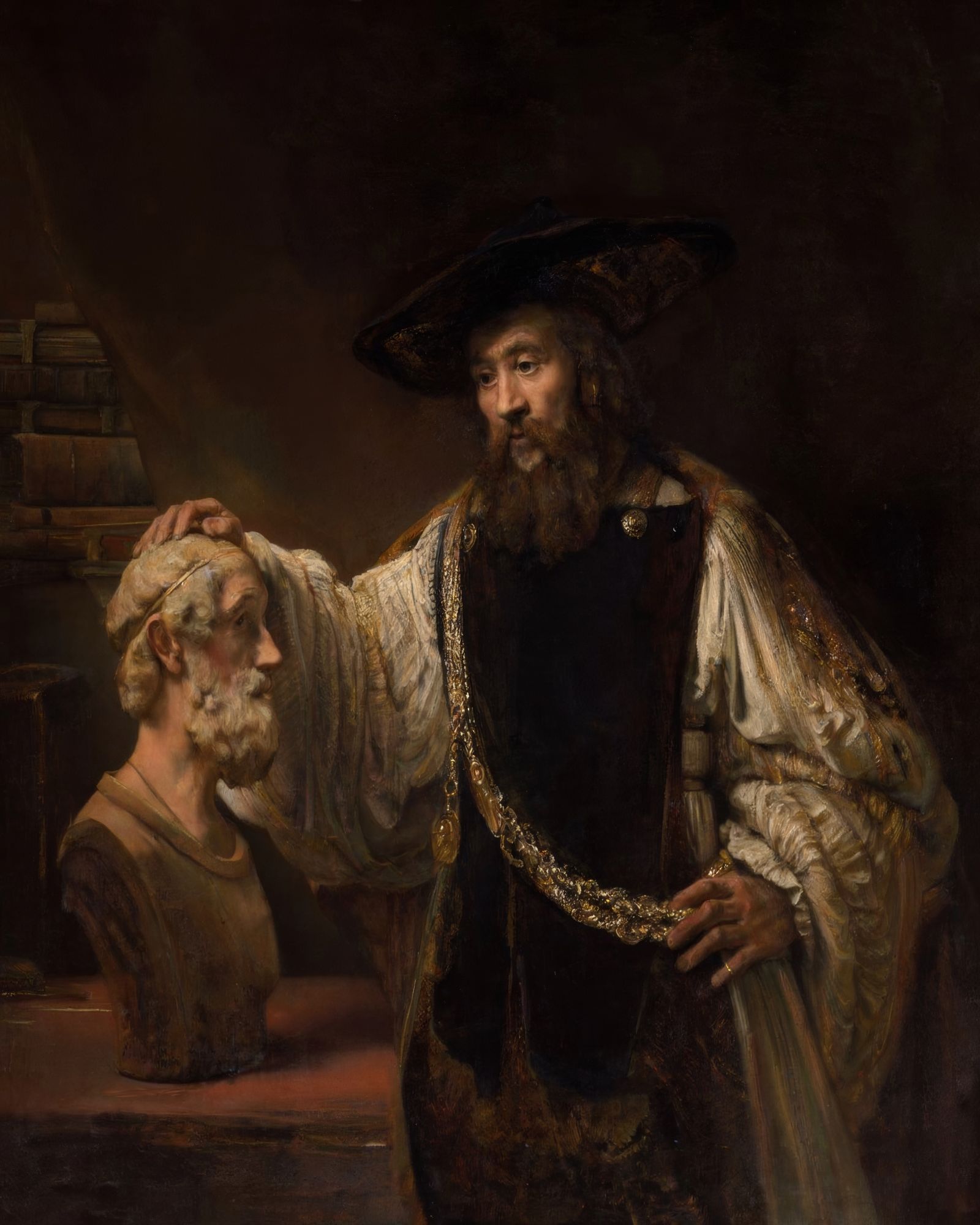
Aristotle with a Bust of Homer · Rembrandt, 1653 · The Metropolitan Museum of Art. Restored by Surrealium at Vaxholm Fortress, Sweden.
Rembrandt’s Aristotle rests a hand on the sculpted head of Homer, bringing a living figure into contact with an image from an earlier world. The painting can prompt a conversation about how we approach other people and inherited knowledge, without requiring a claim about the sitter’s exact thoughts. This line is deliberately practical: it asks for a pause before certainty, whether the subject is a family story, an unfamiliar opinion or a misunderstanding around the kitchen table.
10. Leave space for the horizon
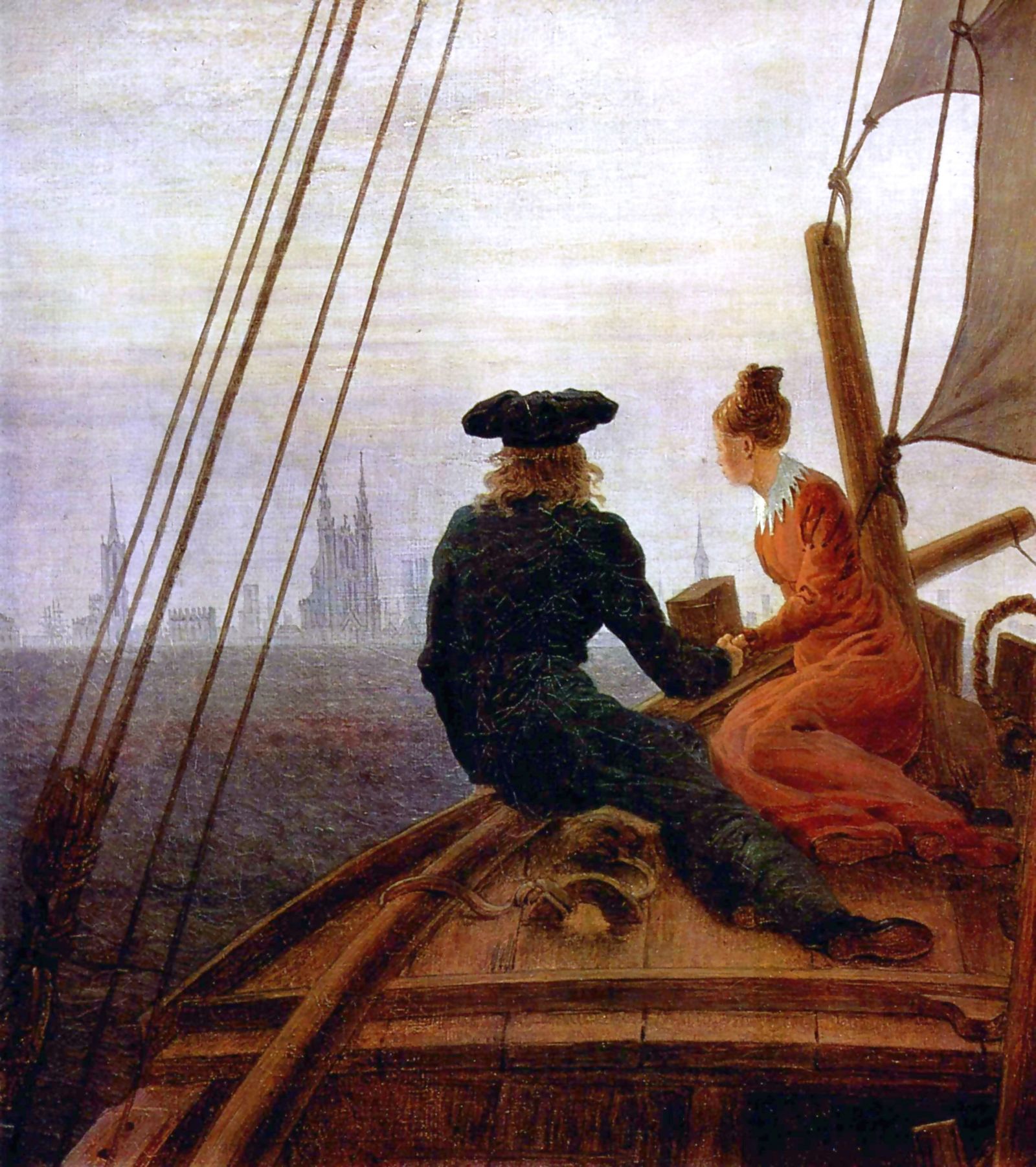
On the Sailing Boat · Caspar David Friedrich, 1818 · Hermitage, St Petersburg. Prepared for print by Surrealium at Vaxholm Fortress, Sweden.
Friedrich’s On the Sailing Boat looks past two seated figures towards a distant shore, with the structure of the boat framing their shared direction. The suggested motto uses that visible openness as a prompt, not as a translation of the painting’s historical meaning. It may suit a household that wants to keep future possibilities in view while allowing individuals to grow differently; discuss what should remain open before deciding whether the phrase belongs permanently on a decorative crest.
Read the shortlist aloud and remove words nobody would naturally say. A concise phrase is easier to place on a ribbon, but clarity matters more than sounding impressive. The oak tree masterwork offers one visual starting point, and how to make a coat of arms develops the design process. For a new Fable crest, describe the motto as your own chosen wording. If you are researching an inherited motto, keep its bearer, source and exact spelling separate from these original suggestions.
- Does a family motto have to be in Latin?
- No. For a new decorative design, choose a language the intended readers understand. If you want a translation, have a competent speaker check its meaning and grammar before treating it as final.
- Are these ten lines historical quotations?
- No. They are original suggestions written for this guide. The artworks are visual prompts and do not contain or authenticate the proposed mottoes.
- How should a family choose one motto?
- Let everyone suggest an action or value in plain words, then compare a short list aloud. Choose wording that invites a shared practice and leaves room for individual differences, rather than a claim that the family is perfect.