Family tree art: relationships, records and an emblem
Plan family tree art that keeps names and relationships clear, then decide whether a separate decorative crest belongs beside it.
Family tree art combines a record of relationships with a visual arrangement that people can read. Before choosing branches, borders or a central emblem, decide what the picture is meant to document and who will use it. A chart for a family gathering may need different information from a decorative piece intended for a wall.
The crest demonstrations in this guide are examples of separate decorative emblems. They are not family trees, genealogical records or evidence that the names shown share one historical coat of arms. Fable Heraldry can provide a contemporary emblem to accompany a family project; it is not presented here as a service that researches or generates the family tree itself.
The surname crest guide explains why a name alone cannot establish inherited arms. Start with what a coat of arms is if you want to understand the difference between an identifying emblem and the documented relationships that make a family chart meaningful.
Choose the centre of the chart
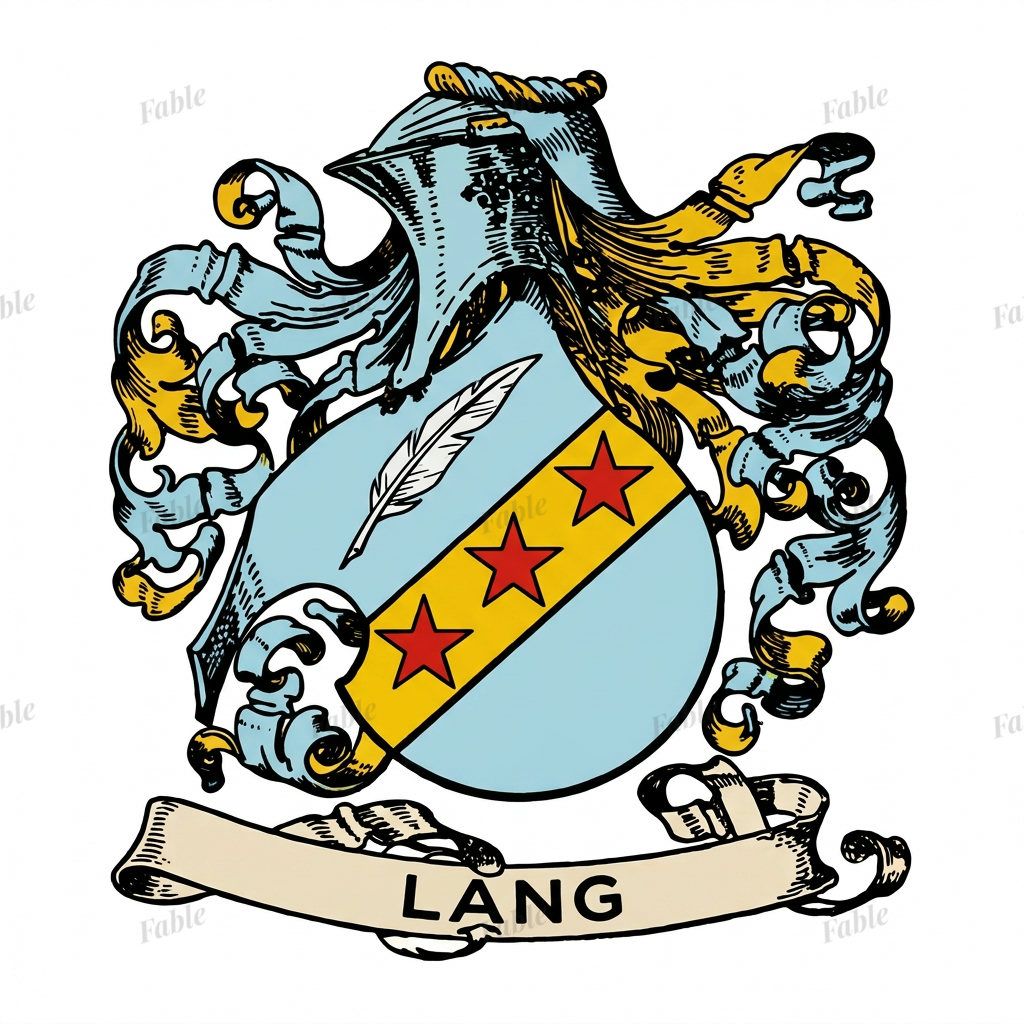
Lang demonstration design · Fable Heraldry, 2026 · Fable Heraldry demonstration library. A new decorative emblem, not a historical grant or customer commission.
A family tree can begin with one person and move backwards through ancestors, or begin with an earlier person and move forwards through descendants. Those arrangements answer different questions. Decide which story the viewer should be able to follow before choosing a decorative shape that may make one direction easier than the other.
Write a short scope note: whose relationships are included, how many generations you want to show and whether the chart is intended as a research record or a simplified display. The Lang demonstration beside this section is an emblem with a name ribbon, not a substitute for that structure. It can introduce the idea of a title or visual identity, but it cannot tell a viewer who is connected to whom or which relationships have been documented.
Keep a working record before making the artwork
Collect names, dates, places and the sources supporting each relationship in a separate working document. Keep uncertain information visibly uncertain. A guessed date should not become an apparently exact date simply because the final design looks cleaner without a question mark. The same applies to names with more than one recorded spelling.
A decorative display does not have to contain every note, but the fuller record should remain available to the people who will maintain it. Give the artwork a version date so later corrections can be understood. This is especially useful when relatives contribute new information over time. A beautiful chart is easier to trust when its claims can be traced, and keeping the source material separate allows the artwork to remain readable without hiding how its relationships were established.
Choose labels that fit the people represented
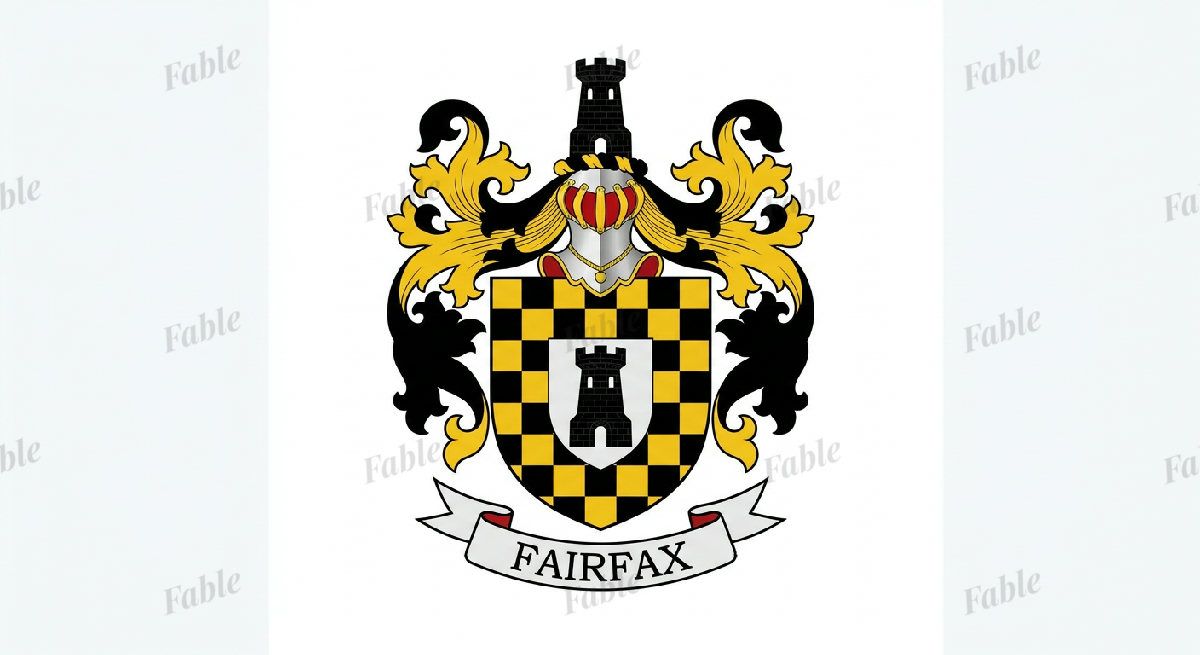
Fairfax demonstration design · Fable Heraldry, 2026 · Fable Heraldry demonstration library. A new decorative emblem, not a historical grant or customer commission.
Families do not all fit the same set of branches. Adoption, step-relations, remarriage, guardianship and chosen family may matter to the story you want to tell. Decide how the chart will describe those relationships, and discuss sensitive labels with the people concerned rather than allowing a decorative template to make the decision for them.
The Fairfax demonstration is another example of a name attached to a contemporary emblem. It illustrates how much information a short label can appear to carry while saying very little about actual relationships. For the family tree, use explicit wording where a line alone might be ambiguous. A small key can explain the design’s conventions, provided those conventions are consistent and the people reading the chart can understand them without guessing.
Make the reading order visible
Choose a clear direction through the generations and keep comparable relationships arranged consistently. Names should be easy to associate with the lines that connect them. If an ornamental branch crosses several labels, the decoration may be weakening the chart’s main purpose even if it looks attractive from a distance.
Test the draft with someone who did not assemble the information. Ask them to follow one relationship and explain what they think a particular connection means. Their uncertainty can reveal a problem in the layout rather than a problem in their knowledge of the family. Adjust spacing and labels before refining the border. A family tree works as an image only when its visual organisation supports the relationships it is supposed to communicate.
Decide what belongs in the public display
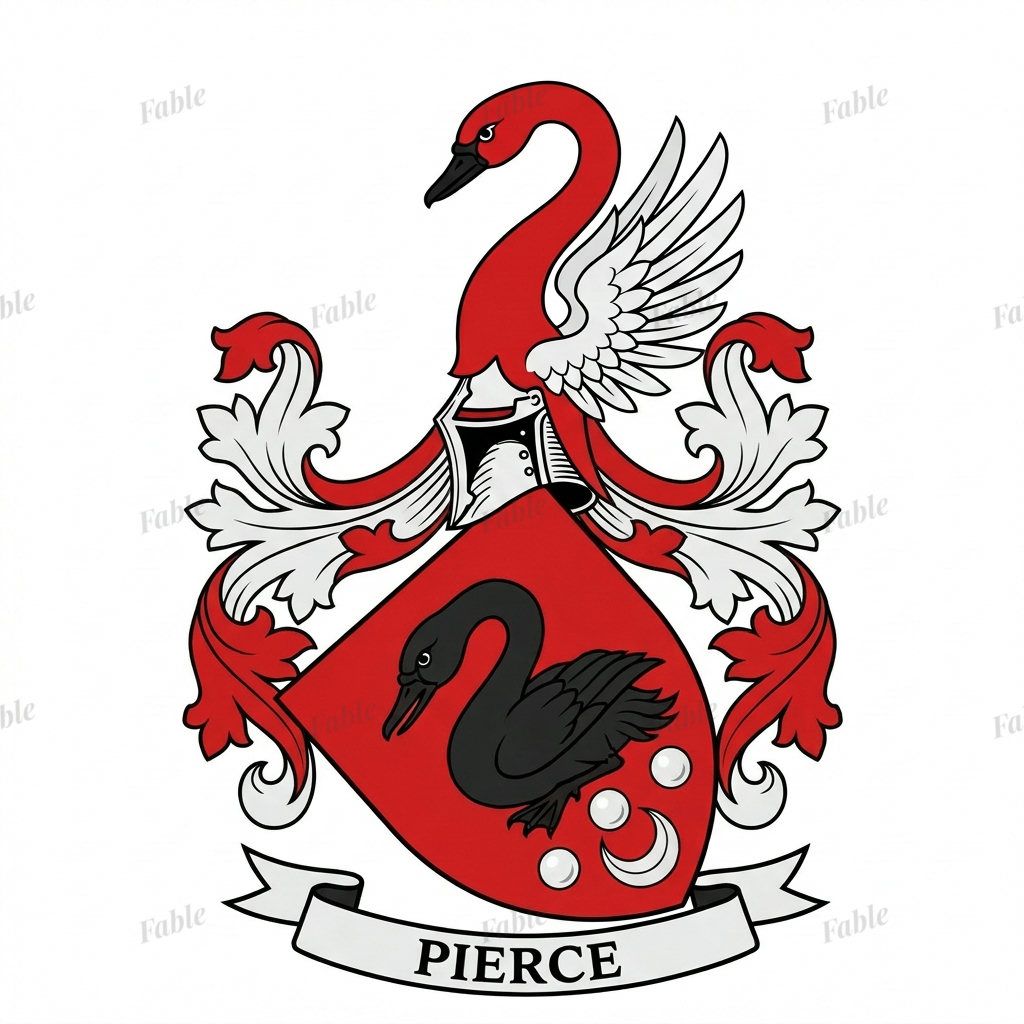
Pierce demonstration design · Fable Heraldry, 2026 · Fable Heraldry demonstration library. A new decorative emblem, not a historical grant or customer commission.
A wall display or shared digital image may circulate beyond the people who supplied the information. Consider whether living people want full dates, places or other personal details included, and discuss the intended audience before finalising the artwork. A simpler display can coexist with a fuller private record.
The Pierce demonstration shown here is a decorative name-based emblem, not evidence of a genealogy. Its clear caption models a useful habit: state what an image represents and what kind of information it supplies. Do the same for the family chart. A title such as a particular branch or generation can be more accurate than an expansive label that suggests the artwork contains every person connected with a surname. Precision helps readers understand the boundaries of the story.
Add an emblem only if it has a clear role
A crest can serve as a decorative companion to a family tree, but it should not be used to imply that the chart proves a right to historical arms. If the emblem is newly made, label it as a contemporary design. If it is a documented historical example, keep the bearer and source attached to it and explain the relationship you have actually established.
The guide to finding a family crest concerns that research question. For a new emblem, family motto ideas can help express a shared intention in words. Keep the chart and emblem visually distinct enough that a reader can tell which part documents relationships and which part interprets a family’s chosen identity. They can sit together without being made to authenticate each other.
Let the decorative language stay consistent
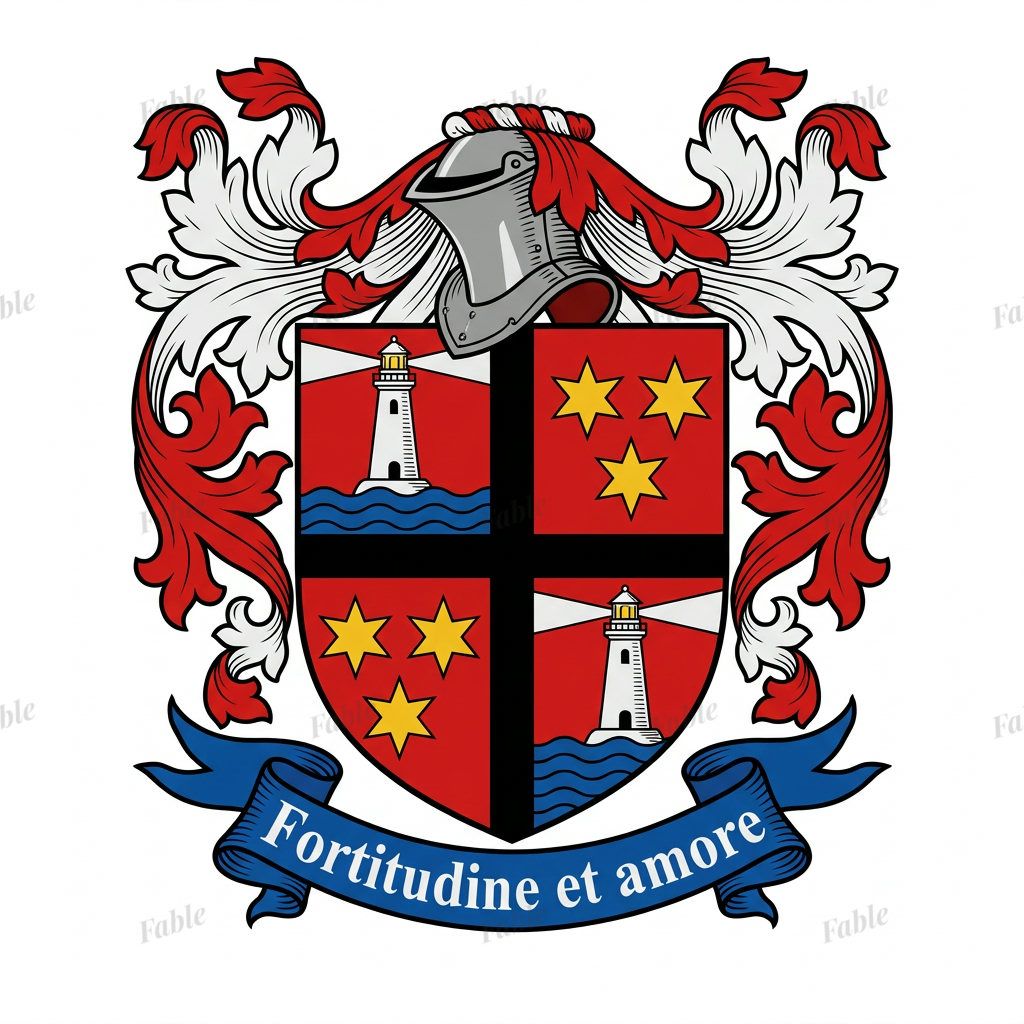
Fable crest demonstration · Fable · 2026 · Actual decorative Fable Heraldry output; not historic arms or a customer testimonial. Fable product demonstrations.
The towers-and-stars Fable demonstration uses a clear shield, strong colour divisions and a motto ribbon. Those features can suggest a visual vocabulary for a companion emblem, but they do not dictate the appearance of the family chart. A busy heraldic border around every name would make a very different reading experience from one emblem placed quietly beside a title.
Choose a limited set of type sizes and a consistent treatment for names, dates and notes. Let the most important information be recognisable without decoration. If you include a motto, keep its wording separate from the factual labels, so an aspirational phrase is not mistaken for an old inscription or a documented family saying. Our heraldic design guide can help with the emblem while the chart retains its own clear structure.
Leave a way to correct and continue the record
Before treating the artwork as finished, keep an editable version of the names and relationships and a note of who checked them. Families grow, research develops and earlier assumptions sometimes need correction. A decorative object can mark a moment in that work without pretending the record will never change.
Read the chart once for factual accuracy and again for visual clarity. Check repeated names, spelling, line connections and the placement of uncertain information. Then review the separate emblem’s caption and any historical claim attached to it. Personalized gifts offers a wider perspective if the finished project is intended for someone else. The most thoughtful gift may be a clear, honest account of what is known, with space for the recipient to add their own knowledge later.
Begin with the relationships and records, then choose the design that makes them easiest to follow. If you want a decorative crest beside the family tree, give it an explicit role and an honest caption. Fable Heraldry can help you develop that new emblem while the genealogy remains grounded in the information and sources you have assembled.
- Is a coat of arms the same as a family tree?
- No. A family tree records relationships. A coat of arms or decorative crest is an emblem, and the presence of a surname on it does not document those relationships.
- Can the artwork include adopted, blended or chosen family?
- Yes. Decide how to describe the relationships clearly and respectfully, and use consistent labels or a key so readers understand what the connecting lines mean.
- Does Fable Heraldry research or generate the family tree?
- This guide uses Fable Heraldry for a separate contemporary emblem. The names, relationships and supporting records for the family tree need to be assembled and checked as their own project.