10 Historic Crest Designs to Inspire a Personal Coat of Arms
Explore ten historical heraldic designs, from swans and rose trees to dragons, with source plates and a path to your own emblem.
Looking for family crest design ideas? Begin by looking closely at real heraldic art. These ten references come from Arthur Charles Fox-Davies’s The Art of Heraldry, published in 1904, in Fable’s restored presentations. Most show a whole coat of arms or achievement, rather than only a crest. They belong to historical families or bodies; Fable Heraldry uses their artistic directions to create a new personal design.
1. Lion Supporters
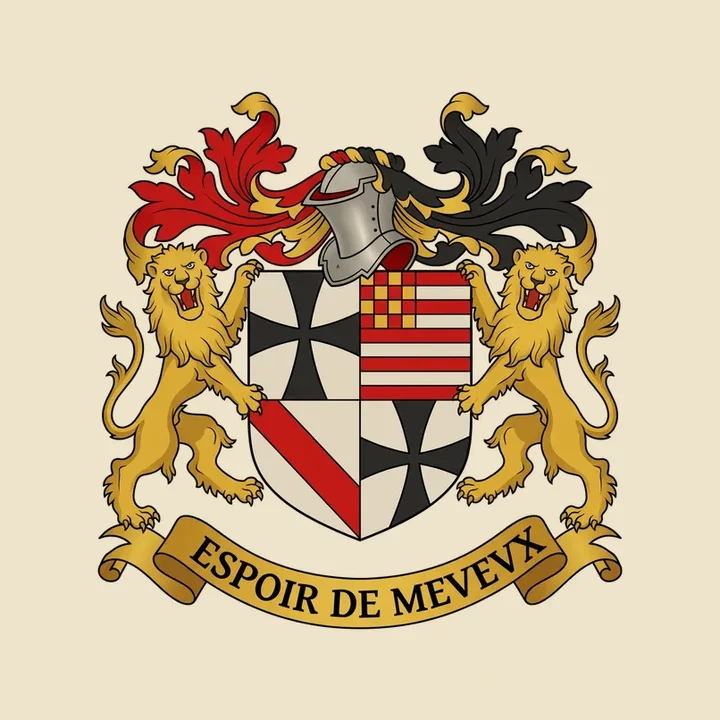
Two golden lions hold the shield within a broad, balanced composition. Helmet, mantling and a motto ribbon give it several layers, yet the paired figures keep the eye centred. It is an example of how symmetry can hold a great deal of detail together.
Look at the framing and rhythm. Your own emblem should tell your story rather than adopt the arms shown here.
Create your coat of arms in this style
Fox-Davies, The Art of Heraldry (1904), plate 128. Historical arms, restored by Fable; a design reference, not your inherited arms.
2. The Swan Helm
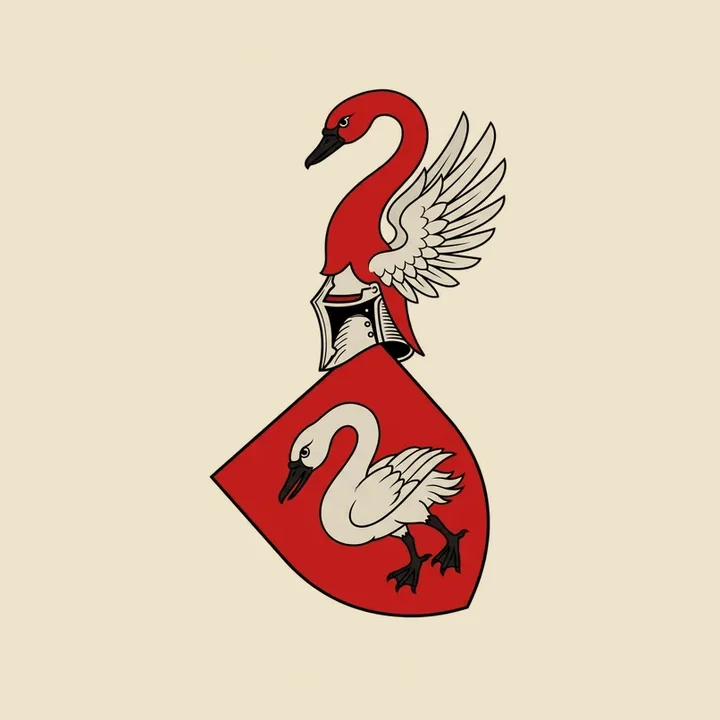
A red shield tilts beneath a helmet, and the swan rises above it. Repeating the bird across the shield and crest connects the upper and lower parts with remarkable economy. The outline feels lively even before you study its details.
A useful reference for an emblem built around one recognisable animal.
Create your coat of arms in this style
Fox-Davies, The Art of Heraldry (1904), plate 75. Historical arms, restored by Fable; a design reference, not your inherited arms.
3. The Guild Achievement
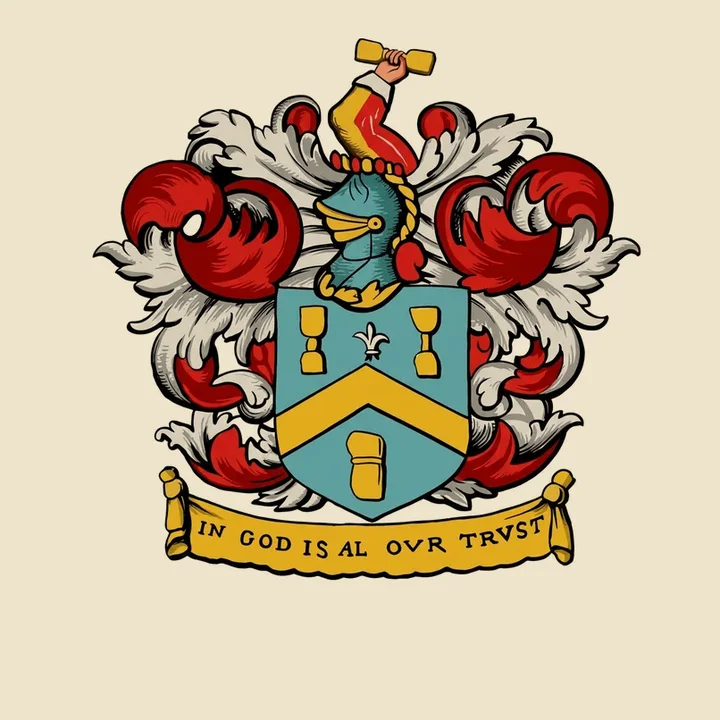
Tools and a working arm give this historic composition a very particular subject. Blue and gold keep the shield clear; red and pale mantling provide a fuller surround. It shows how work, craft or a shared pursuit can give a design its organising idea.
For a new personal design, describe the activity that matters to you in ordinary language.
Create your coat of arms in this style
Fox-Davies, The Art of Heraldry (1904), plate 124. Historical arms, restored by Fable; a design reference, not your inherited arms.
4. Crown and Peacock
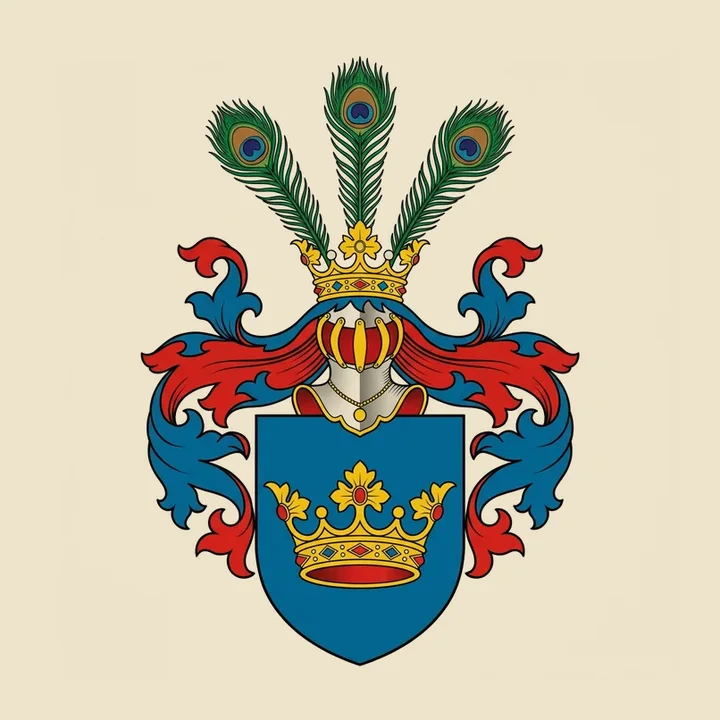
The peacock feathers make a wide fan above the compact shield. Blue, red and gold link the ornament to the centre. It is an especially clear lesson in silhouette: small central shape, large upper flourish.
Enjoy the historical composition as a reference; decorative crowns in a new design do not confer rank or title.
Create your coat of arms in this style
Fox-Davies, The Art of Heraldry (1904), plate 77. Historical arms, restored by Fable; a design reference, not your inherited arms.
5. Highland Supporters
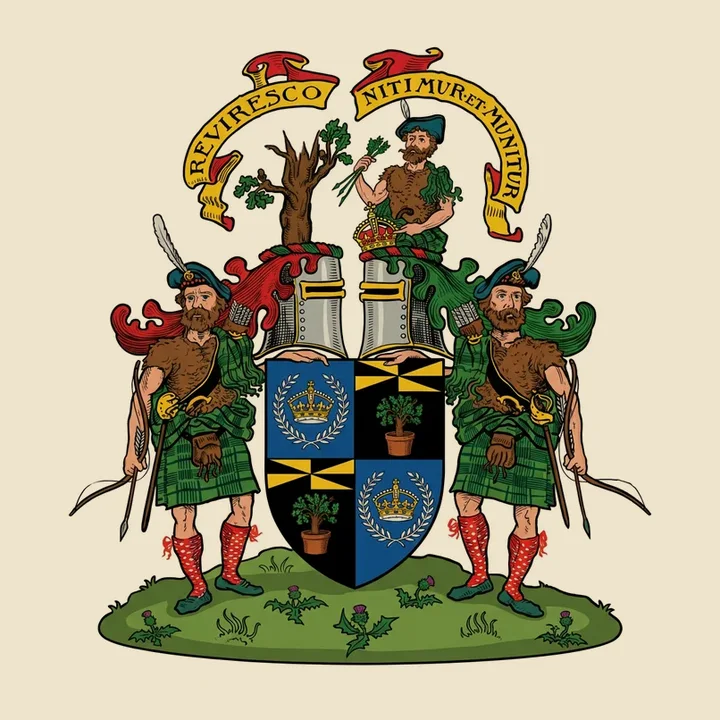
Two standing figures, several upper elements and ribbons make this one of the fullest arrangements in the selection. A green base gives the whole scene somewhere to stand. Its interest lies in the way many separate details become one complete outline.
Choose a fuller composition only if you enjoy looking closely; a simpler emblem can be just as personal.
Create your coat of arms in this style
Fox-Davies, The Art of Heraldry (1904), plate 59. Historical arms, restored by Fable; a design reference, not your inherited arms.
6. The Rose Tree
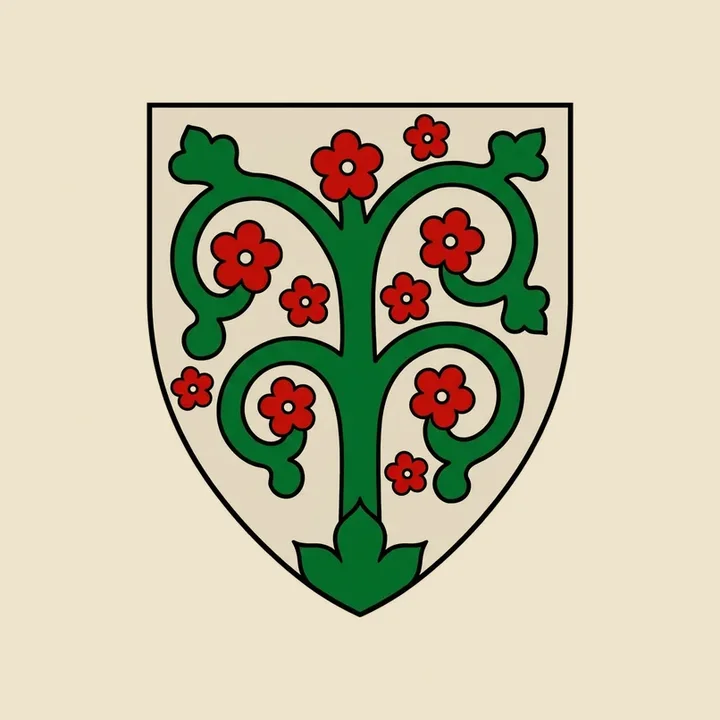
A flowering tree fills a pale shield without needing a helmet, supporters or ribbons. Strong branching curves and small red flowers carry the picture. This is the quietest lesson in the group: one well-chosen subject can be enough.
For someone whose story begins with a garden, a place or a single beloved plant.
Create your coat of arms in this style
Fox-Davies, The Art of Heraldry (1904), plate 75. Historical arms, restored by Fable; a design reference, not your inherited arms.
7. The Squirrel Crest

A dark crescent anchors the gold shield, while a squirrel gives the upper part an unexpected character. The contrast between a very simple shield and a distinctive animal above it makes the design easy to remember.
Let a familiar animal or small personal detail carry the character of a new design.
Create your coat of arms in this style
Fox-Davies, The Art of Heraldry (1904), plate 80. Historical arms, restored by Fable; a design reference, not your inherited arms.
8. Thole and Think On
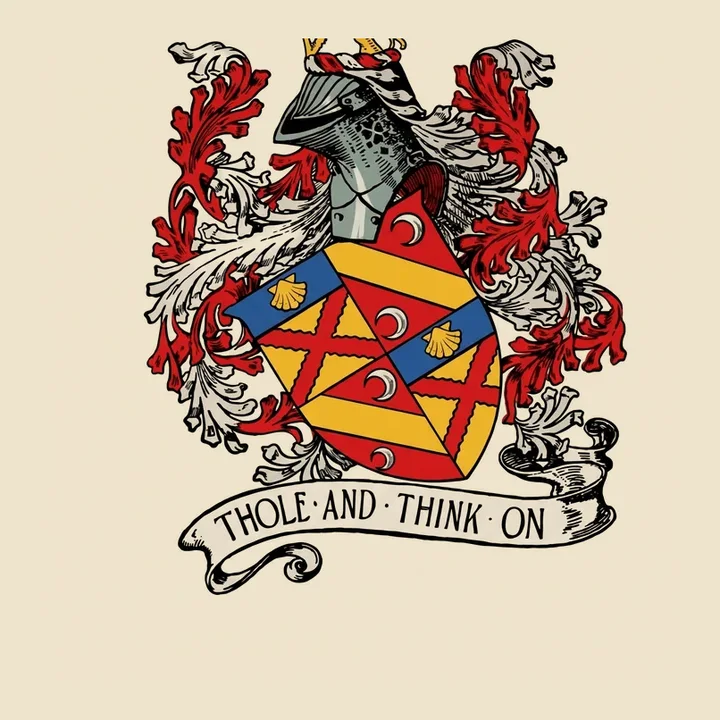
The motto ribbon becomes a confident base for a richly divided shield and flowing mantling. The contrast between disciplined geometry and loose ornament is the attraction here. The historic words belong to this example; your own design can use a phrase that means something to you.
Keep a new motto short enough to read comfortably, and inspect its spelling in the preview.
Create your coat of arms in this style
Fox-Davies, The Art of Heraldry (1904), plate 28. Historical arms, restored by Fable; a design reference, not your inherited arms.
9. The Leaping Goat
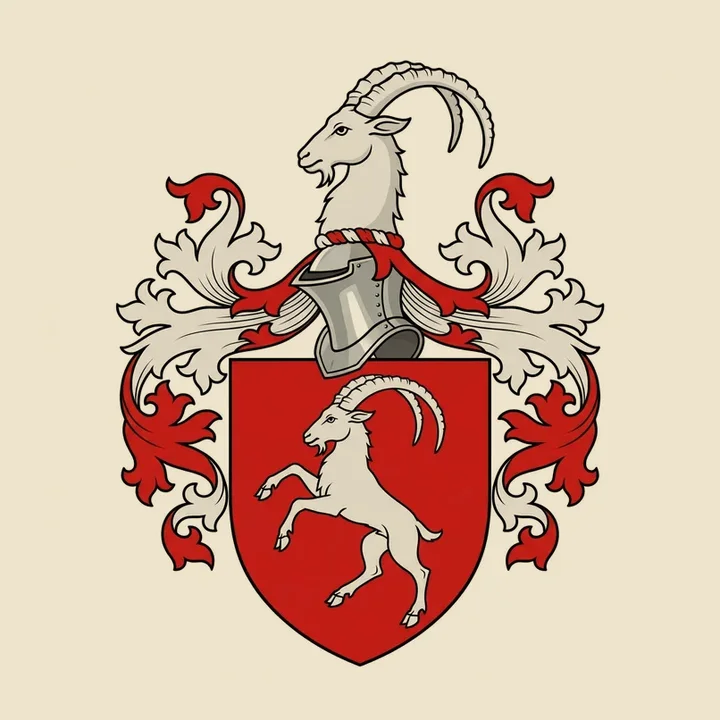
The pale goat stands out against red, while the animal reappears above the helmet. A repeated subject gives the design coherence without requiring every part to be identical. The diagonal movement adds energy to a compact form.
A reference for a new emblem with movement and one clear recurring subject.
Create your coat of arms in this style
Fox-Davies, The Art of Heraldry (1904), plate 75. Historical arms, restored by Fable; a design reference, not your inherited arms.
10. The Silver Dragon
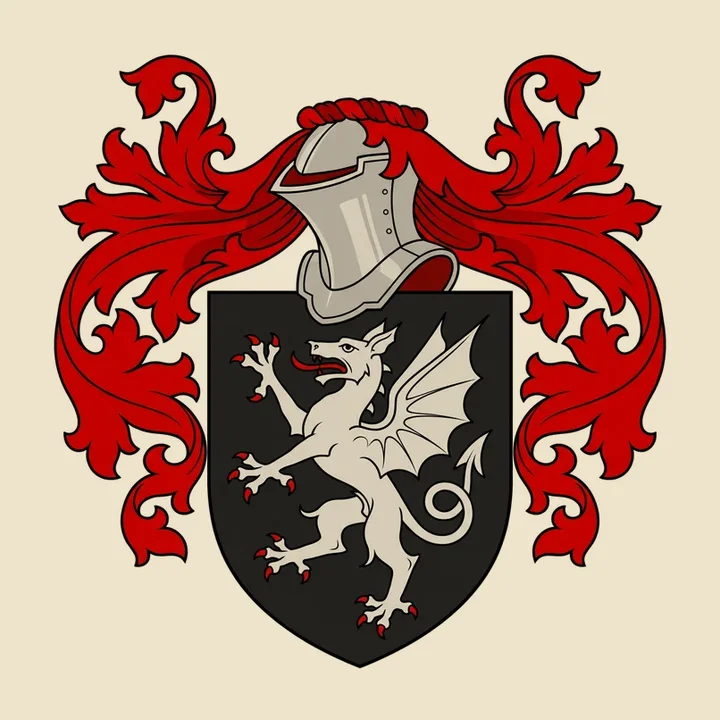
A pale dragon fills a black shield, surrounded by red and pale mantling. The restricted palette makes the silhouette immediate. It is a useful example for anyone drawn to a darker, more dramatic emblem.
Start with contrast, then add only the details that help your personal story.
Create your coat of arms in this style
Fox-Davies, The Art of Heraldry (1904), plate 80. Historical arms, restored by Fable; a design reference, not your inherited arms.
The most useful reference is the one that helps you see what to leave in and what to leave out. Choose a direction, describe your own story and review the result. Read the difference between a crest and a coat of arms before treating a historical emblem as your own.