Coat of arms generator: design a crest with a clear story
Choose symbols, colour and a motto for a decorative crest, with a practical brief and checks before you finish.
A coat of arms generator is useful when you want to turn a few meaningful details into a coherent decorative crest. It cannot establish an inherited right to historic arms. Begin with the people, place or undertaking the design represents, then decide what the shield needs to say. A tree for a shared garden, a bird associated with a coast or a small tool from a trade can be a better starting point than a crowded collection of grand symbols.
The aim is a design you can explain in a sentence and recognise at a glance. Here is a practical way to prepare that brief, read the result and decide what to simplify.
Start with a sentence, before a shield
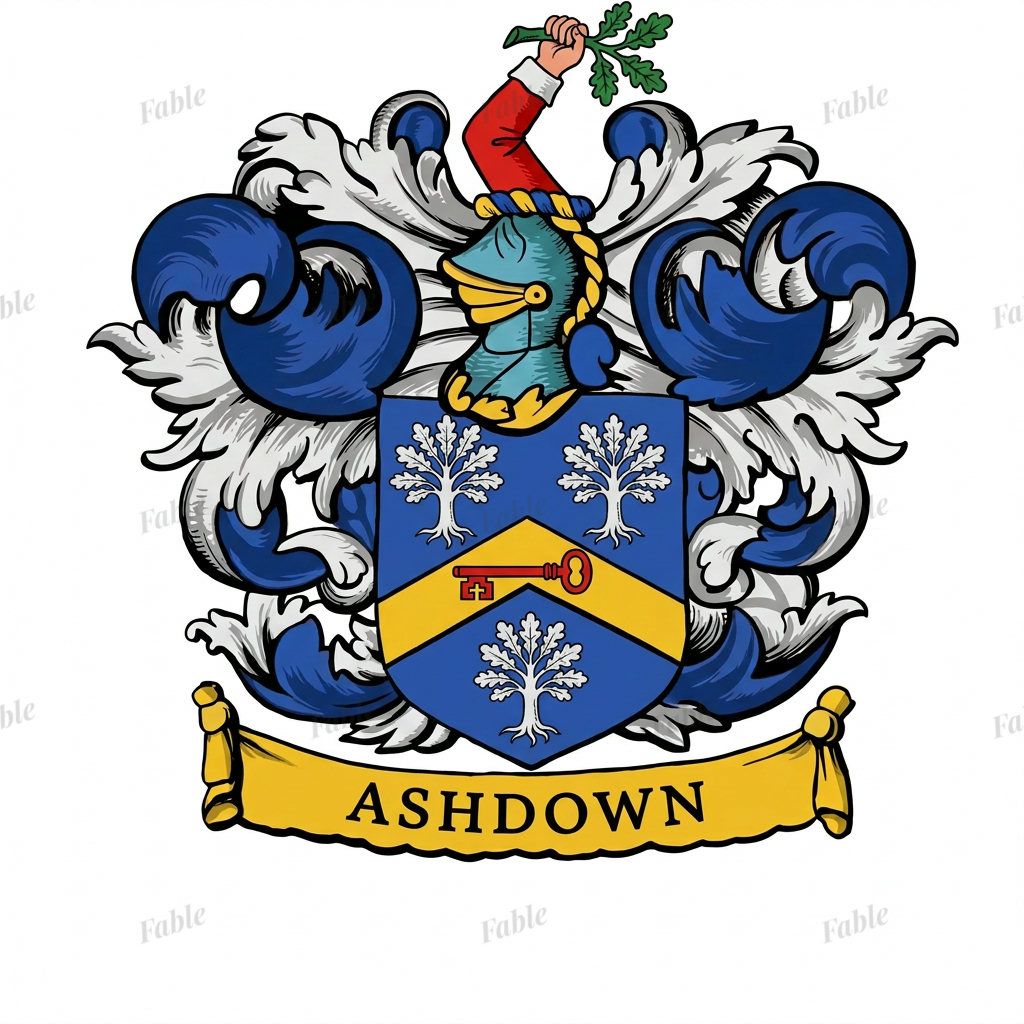
Oak crest demonstration · Fable · 2026 · Actual decorative Fable Heraldry output; not historic arms or a customer testimonial.
Write one sentence about the design's purpose: “A crest for our household, bringing together our seaside home and the garden we planted.” This supplies a subject and a limit. Without that limit, it is easy to ask for every hobby, birthplace and family story at once. The result may contain more information but communicate less.
Next choose the audience. A private anniversary keepsake can carry a reference that only two people understand. An emblem for a small business needs a clearer outline and fewer private clues. Keep the sentence beside the design while you work. When a new element is tempting, ask whether it supports that sentence or starts a second story. The oak example shown here is a contemporary Fable demonstration, not evidence that a particular surname owns tree-bearing arms.
Separate a new design from historic entitlement
Historic arms are associated with particular bearers, institutions and systems of authority. A surname search does not by itself establish that someone may use an old coat of arms. A generator produces an image; it does not investigate descent, issue a grant or enter a design into an official register. Describe your result as a new decorative crest when that is what you are making.
This distinction improves the design brief as well as its description. You are free to choose symbols for your own story instead of treating an unrelated historic shield as a template you must obey. If the purpose is formal heraldic registration or a question of entitlement, consult the relevant heraldic authority separately. Here the useful task is narrower: make an original personal emblem and keep a clear account of the choices behind it.
Choose one main charge
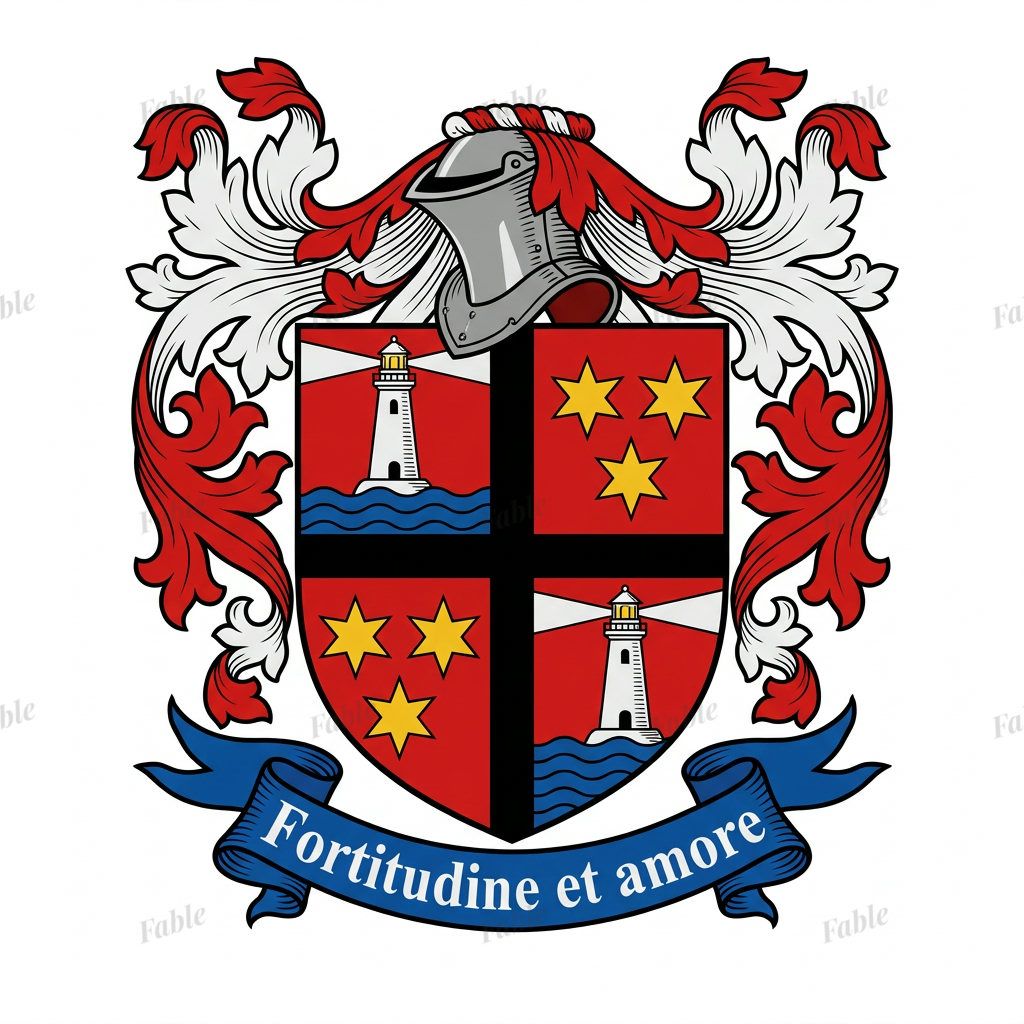
Fable crest demonstration · Fable · 2026 · Actual decorative Fable Heraldry output; not historic arms or a customer testimonial.
A charge is a figure or object placed on the shield. Start with one main charge, or a small repeated group, and make it large enough to read. An oak branch, a ship or a bird has a recognisable outline. Several tiny objects may look appealing on a large screen while becoming indistinct on a small card.
Consider the shape as well as the association. A tall tree needs vertical room; a wide ship requires space across the shield. Describe the important silhouette in ordinary language rather than collecting technical terms you do not understand. If you ask for a particular animal, check the resulting anatomy and identifying features. Your explanation should name the actual image, not rely on a hoped-for interpretation that the drawing has not made visible.
Make colour carry structure
Choose a compact palette and assign each colour a job. One can establish the field, another the main figure and a lighter tone the edges or small details. Contrast helps the design remain legible. A pale charge on a pale field needs more careful treatment than a strong light–dark separation.
Avoid presenting colour associations as a universal dictionary. A blue field can refer to your coast because you have chosen that meaning; it need not claim that blue always guarantees loyalty or that every green shield represents the same virtue. Record the intended meaning in your own description. Then look at the image without the explanation. If the main figure disappears, simplify the colour arrangement before adding more decorative detail. The small version is often the more revealing test.
Decide whether lettering belongs

Winery crest demonstration · Fable · 2026 · Actual decorative Fable Heraldry output; not historic arms or a customer testimonial.
A motto can give the design a voice, but a shield does not need one. Short, natural language is usually easier to place and easier to remember than a long sentence. Use words the intended recipient would actually say. If you choose a language you do not know, obtain a reliable translation before treating the wording as finished.
Read every letter in the resulting image. Decorative scrolls can make spacing and punctuation difficult to judge, and an attractive overall composition does not prove that text is correct. Check names against the intended spelling, including accents. For a business, distinguish the emblem from its full trading name: the smallest application may need the emblem alone. The displayed winery example illustrates a design approach, not an endorsement or a customer success story.
Prepare a brief that leaves room for judgement
A useful brief has four parts: purpose, main symbol, palette and optional wording. Add one sentence about the desired mood, such as restrained and botanical or bold and geometric. This gives the design a direction without trying to prescribe every leaf and line. Keep the number of requested elements small enough that you can tell which one leads.
You might write: “Create a decorative household crest with one oak branch, deep blue and warm gold, and no lettering. It should feel calm and readable at card size.” That is a writing example, not a promise about a particular output. After seeing a result, identify the most important change first. Asking for a clearer branch is more useful than asking for the whole image to feel somehow more personal while retaining every detail.
Review the whole design and its smallest use
Oak crest demonstration · Fable · 2026 · Actual decorative Fable Heraldry output; not historic arms or a customer testimonial.
Look at the shield, surrounding ornament and any text together. The ornament should support the centre, not compete with it. Check that the shield boundary remains visible, that repeated figures are consistent and that the intended focal point is obvious. Then reduce the view to roughly the size at which you expect someone to encounter it.
Finally, write a short plain-language description of the finished design and why you chose it. This is a useful companion to a gift and a check against accidental claims of ancestry. If you cannot describe the central idea without listing a dozen details, the design may still need editing. Save the final wording with the design so a later card or piece of stationery does not introduce a different spelling or an unintended meaning.
Continue with fable Heraldry: Monograms and Coats of Arms, Made Personal, coat of arms: a complete visual guide to the shield, crest and motto, monogram maker: make initials work together, and the historic works in the Masterworks collection.
Bring a concise brief to Fable Heraldry: a purpose, one main symbol, a small palette and optional wording. Choose the crest route when the shield and its story are the point. Treat the result as a new decorative design, and review the picture and lettering before deciding it is finished.
- Does a coat of arms generator find historic family arms?
- No. Image generation and historical research are different tasks. A new decorative crest does not establish ancestry, a grant or a right to use an existing bearer’s arms. Start a separate documented investigation if historic entitlement is the question.
- What should I put on a personal crest?
- Choose a small number of specific references that matter to the intended person or group. One place, activity or shared memory often gives a clearer design than a list of generic virtues. Make the main symbol legible before adding ornament.
- Do I need a motto?
- No. A clear shield can stand alone. If wording matters, keep it short and check its spelling, punctuation and translation. An unfamiliar Latin phrase should not be accepted simply because it looks convincing on a scroll.
- Is a generated crest an official grant of arms?
- No. Fable’s decorative design process is not a grant or registry. Formal heraldic questions belong with the appropriate authority; the crest maker is a way to create an image for your own stated purpose.