Home office wall art: 12 paintings for focus
Wright of Derby’s alchemist, Dürer’s scholars, Larsson’s children at their desks and Hilma af Klint’s key: twelve pictures of people thinking, reading and making, for the room where you work.
The pictures in a home office are company for long working days, and they also sit behind you on every video call. The best are calm enough not to distract, interesting enough to rest your eyes on, and say something about the work you do.
Painters have always loved scholars, writers and makers at work. Here are twelve, in three moods: desks and letters, scholars and thinkers, and ideas made visible. Each one is shown with its colour palette, and each can be ordered as a print.
At the desk
Writers, readers and letter writers, absorbed in their work.
1. Esbjörn at the Study Corner
Carl Larsson, Esbjörn at the Study Corner, 1912. Nationalmuseum, Stockholm.
Carl Larsson painted his youngest son Esbjörn at the study corner in 1912, lost in a big book at a bright red desk, with daylight from wide windows.
Cheerful and calm, perfect for a light home office with white walls.
2. Letter-Writing
Carl Larsson, Letter-Writing, 1912. Nationalmuseum, Stockholm.
In the same year, 1912, Larsson painted a girl writing letters at a secretary desk by the window, with a candle beside her paper and geraniums in the light.
Warm coral and green for a cosy study.
3. Lady Reading the Letters of Heloise and Abelard
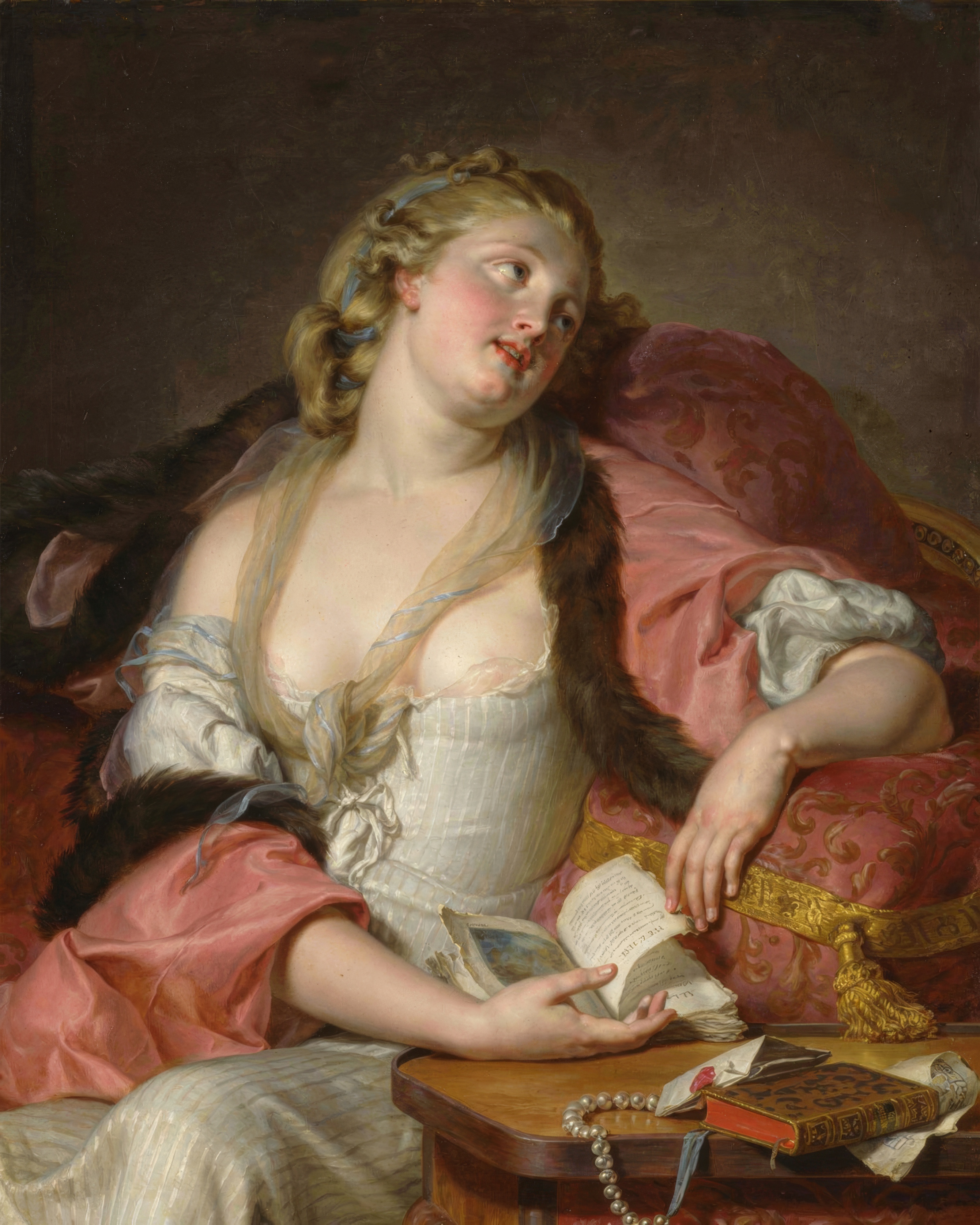
Bernard d'Agesci, Lady Reading the Letters of Heloise and Abelard, c. 1780. Oil on canvas. Art Institute of Chicago.
Bernard d’Agesci painted this reader around 1780. She is thought to be reading the letters of Héloïse and Abélard, the most famous correspondence of the Middle Ages.
A refined picture for a study in deep red, rose or cream.
4. The Studio, one half. From A Home
Carl Larsson, The Studio, one half. From A Home, 1899. Watercolour. Nationalmuseum, Stockholm.
Larsson painted his own studio in 1899 for A Home: a big desk covered in papers and portfolios, a sunflower in a glass vase and a portrait on the easel.
The perfect picture for a creative’s workspace.
Scholars and thinkers
Thinkers and scholars by lamplight and daylight.
5. The Alchymist, in Search of the Philosopher's Stone
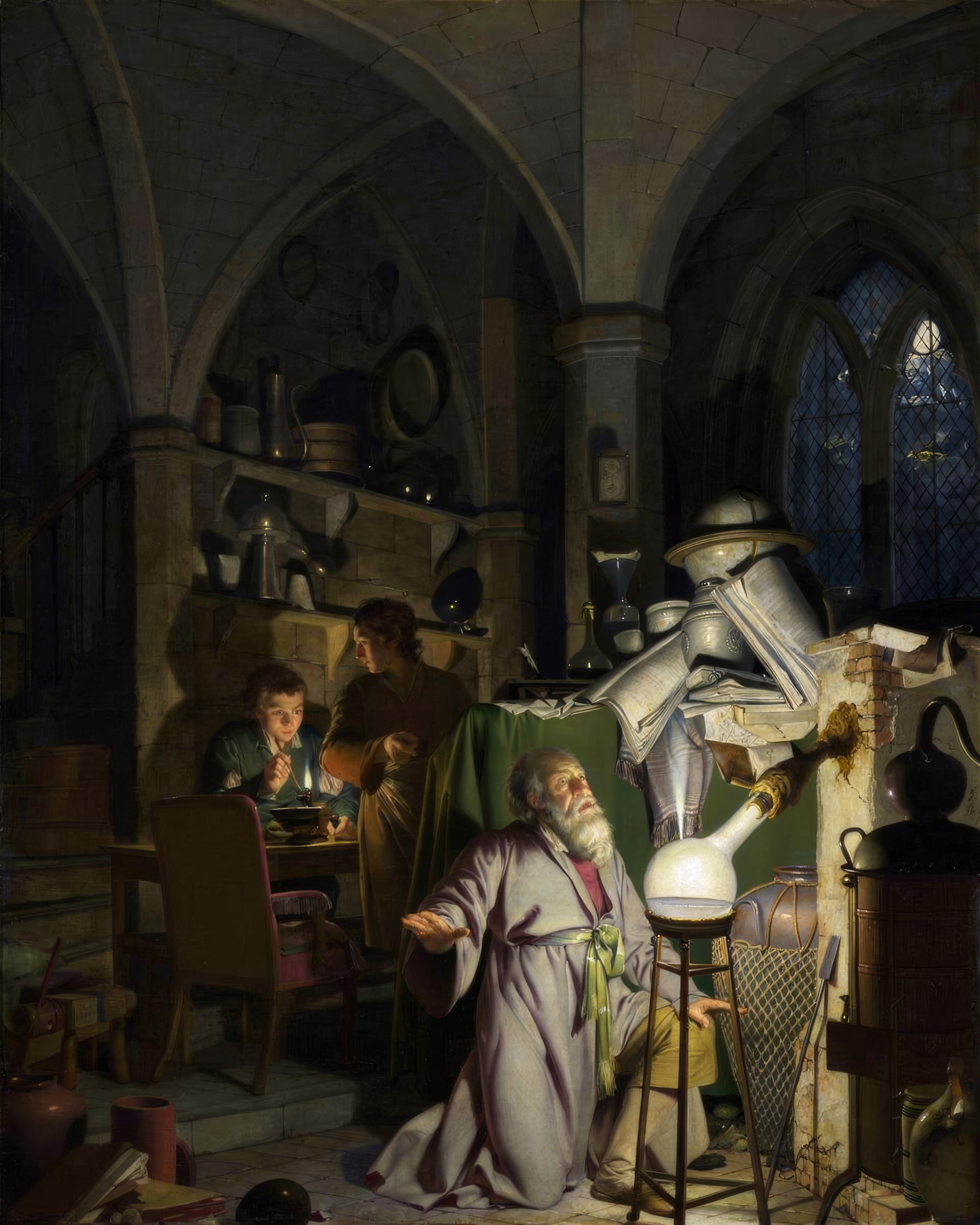
Joseph Wright of Derby, The Alchymist, in Search of the Philosopher's Stone, 1771. Oil on canvas. Derby Museum and Art Gallery.
Joseph Wright of Derby painted The Alchymist in 1771. It shows Hennig Brand, who in 1669, while searching for the philosopher’s stone, discovered phosphorus, and the room glows with its light.
A dramatic, dark picture for a study or library with deep walls.
6. Saint Jerome by the Pollard Willow
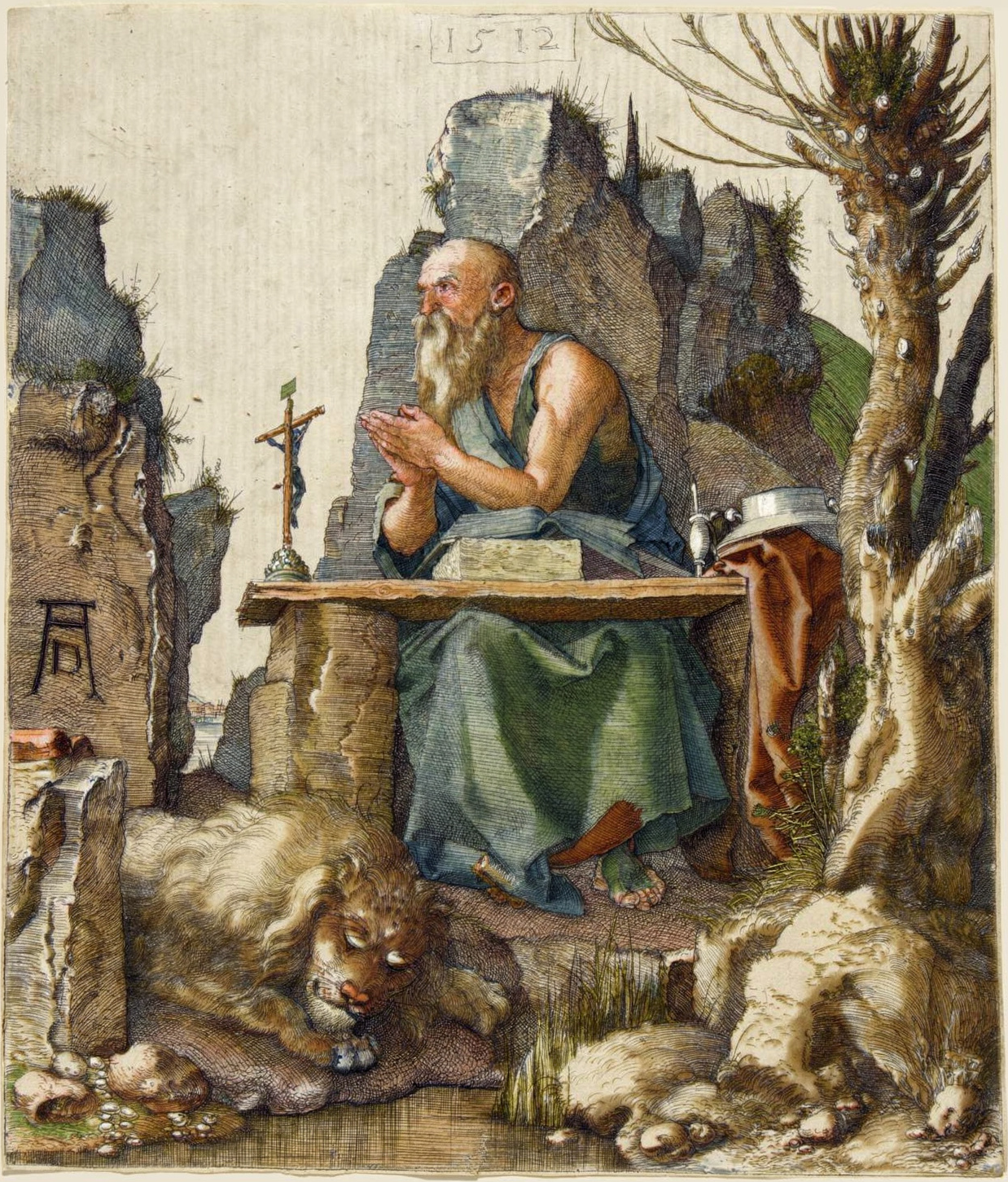
Albrecht Dürer, Saint Jerome by the Pollard Willow, 1512. Atelier colour edition of the drypoint. The Metropolitan Museum of Art, New York.
Dürer made this drypoint of Saint Jerome, patron saint of scholars and translators, in 1512. This is an atelier colour edition of the black ink print.
A thoughtful picture for a writer, translator or researcher.
7. Saint Anthony Reading
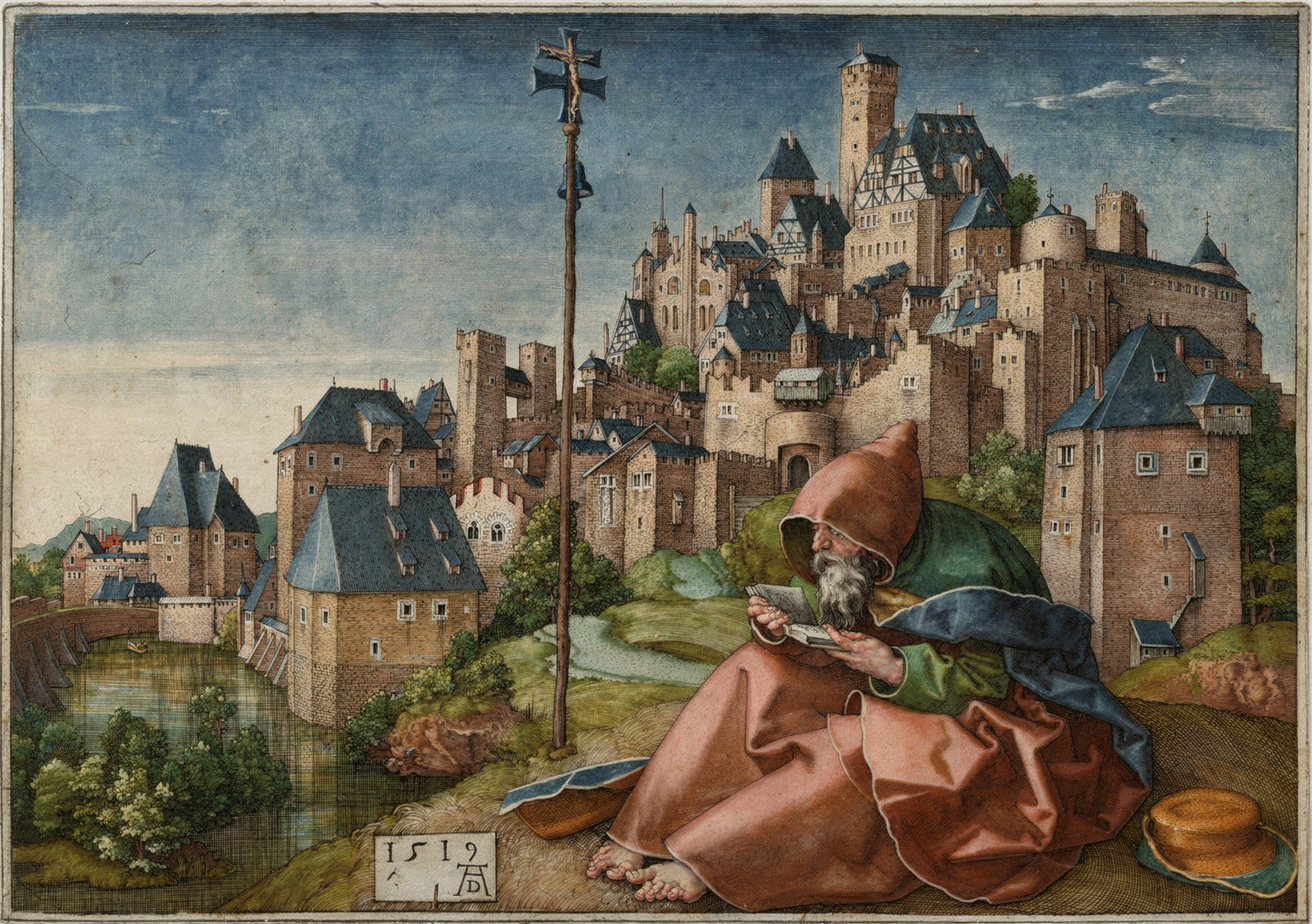
Albrecht Dürer, Saint Anthony Reading, 1519. Atelier colour edition of the engraving. Cleveland Museum of Art.
Dürer engraved Saint Anthony reading in 1519, the hermit absorbed in his book before a crowded town. This is an atelier colour edition of the engraving.
A quiet, concentrated picture to hang where you work.
8. Head of a Philosopher
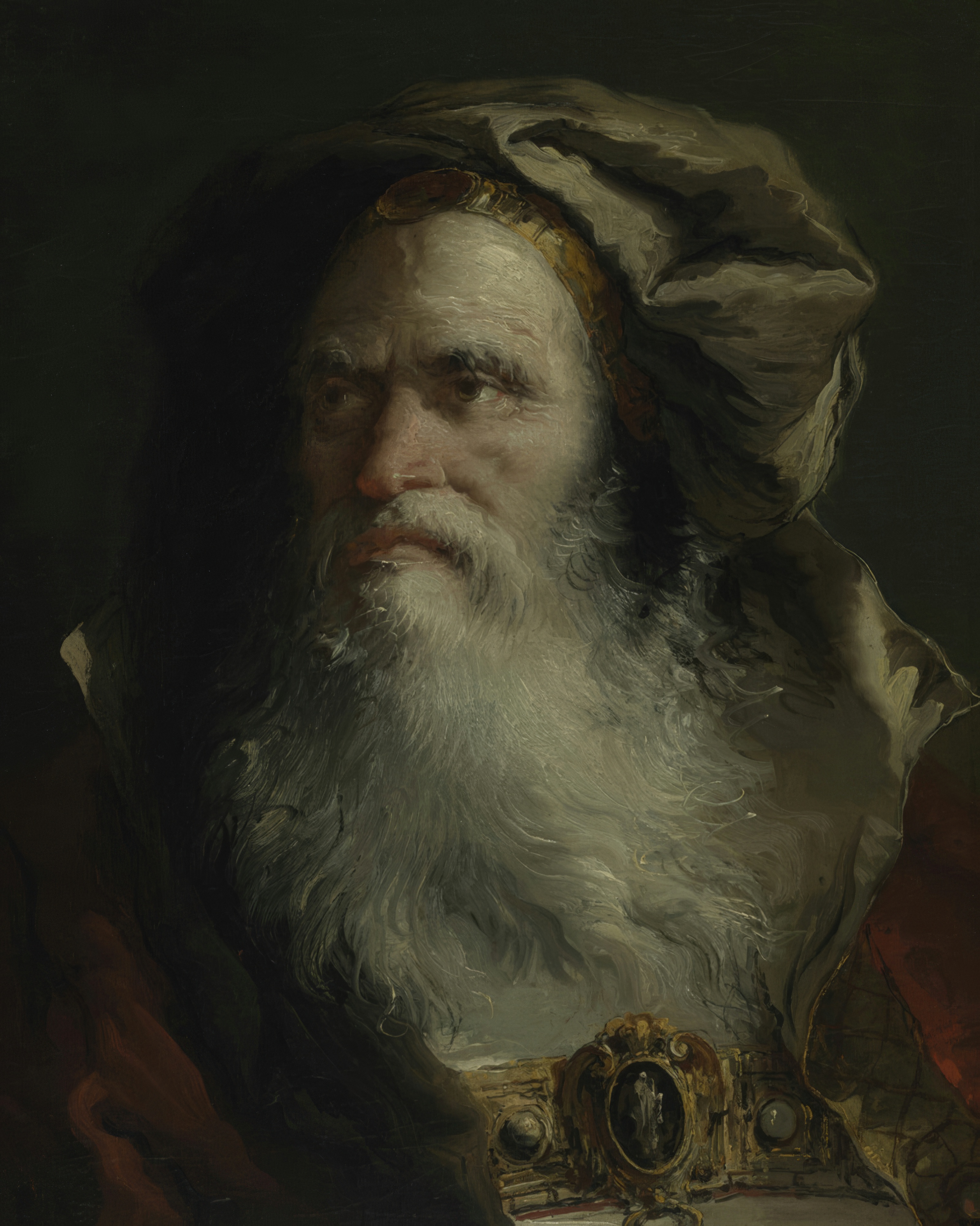
Giovanni Domenico Tiepolo, Head of a Philosopher, 1758–64. Oil on canvas. Art Institute of Chicago.
Giovanni Domenico Tiepolo painted a series of heads of philosophers in Venice between 1758 and 1764. This one is lost in his own thoughts.
A characterful portrait for a study with books and dark wood.
9. Study Head of an Old Man with a White Beard
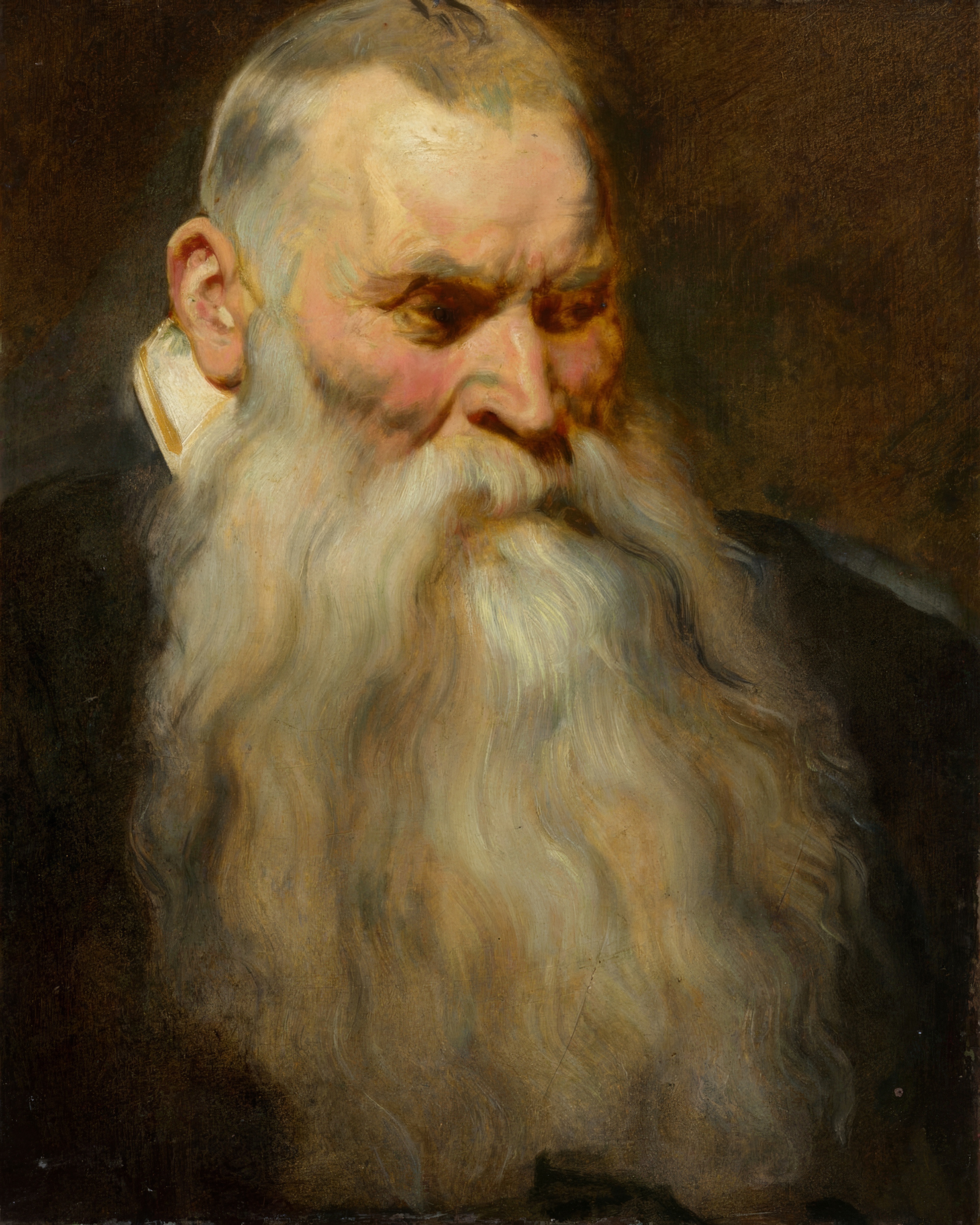
Anthony van Dyck, Study Head of an Old Man with a White Beard, ca. 1617–20. Oil on wood. The Metropolitan Museum of Art, New York.
The young Anthony van Dyck painted this study head around 1617 to 1620, while working in Rubens’s studio in Antwerp.
Warm browns and ochres for a classic library.
Makers and ideas
Studios, designs and diagrams for thinking.
10. The Sculptor's Studio
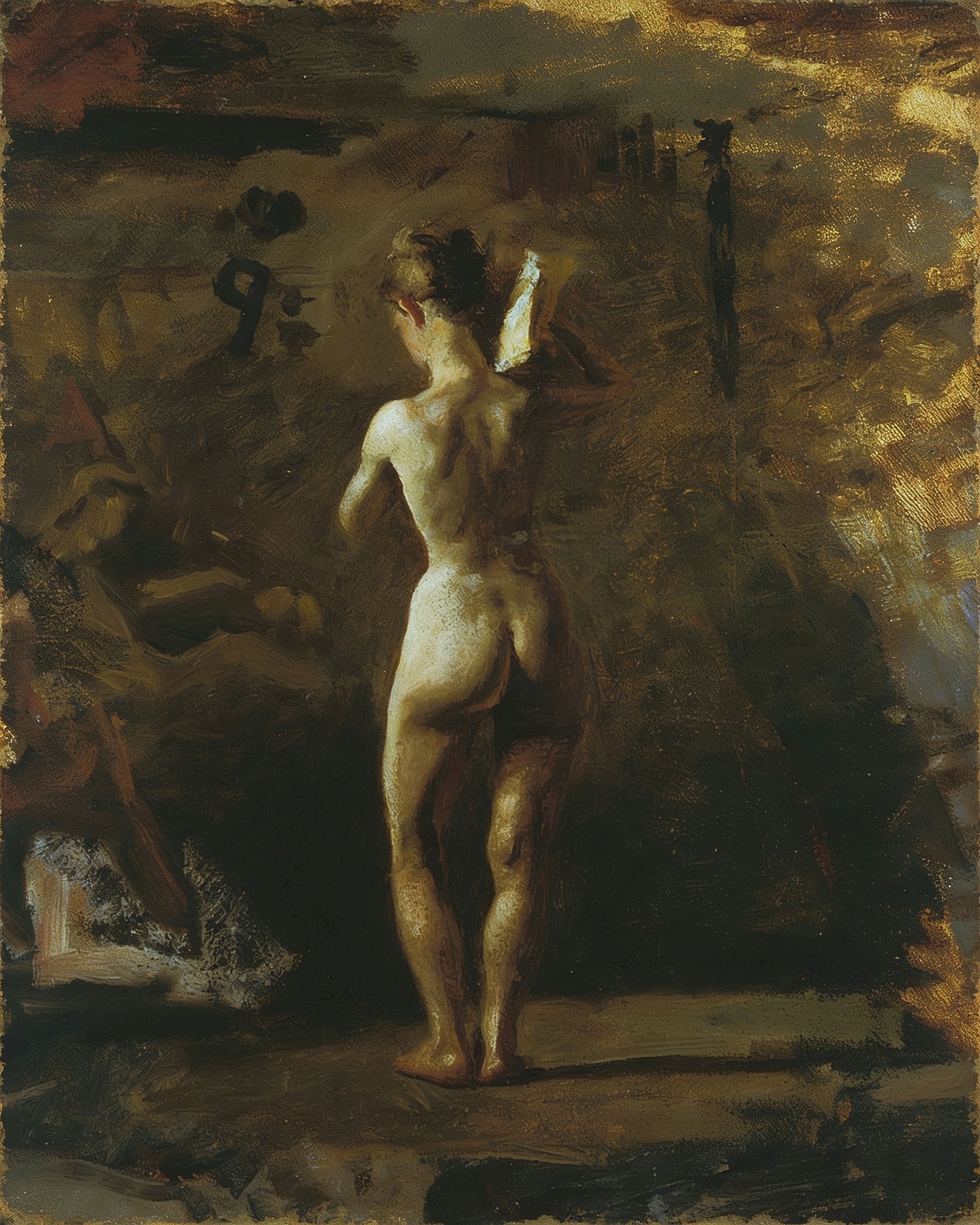
Thomas Eakins, The Sculptor's Studio, 1876–77. Oil on canvas mounted on board. Art Institute of Chicago.
Thomas Eakins painted this study in 1876 to 1877 for his picture of William Rush, the Philadelphia sculptor, carving a figure in his workshop.
Warm, golden tones for a maker’s studio or workshop.
11. King Ludwig's Study
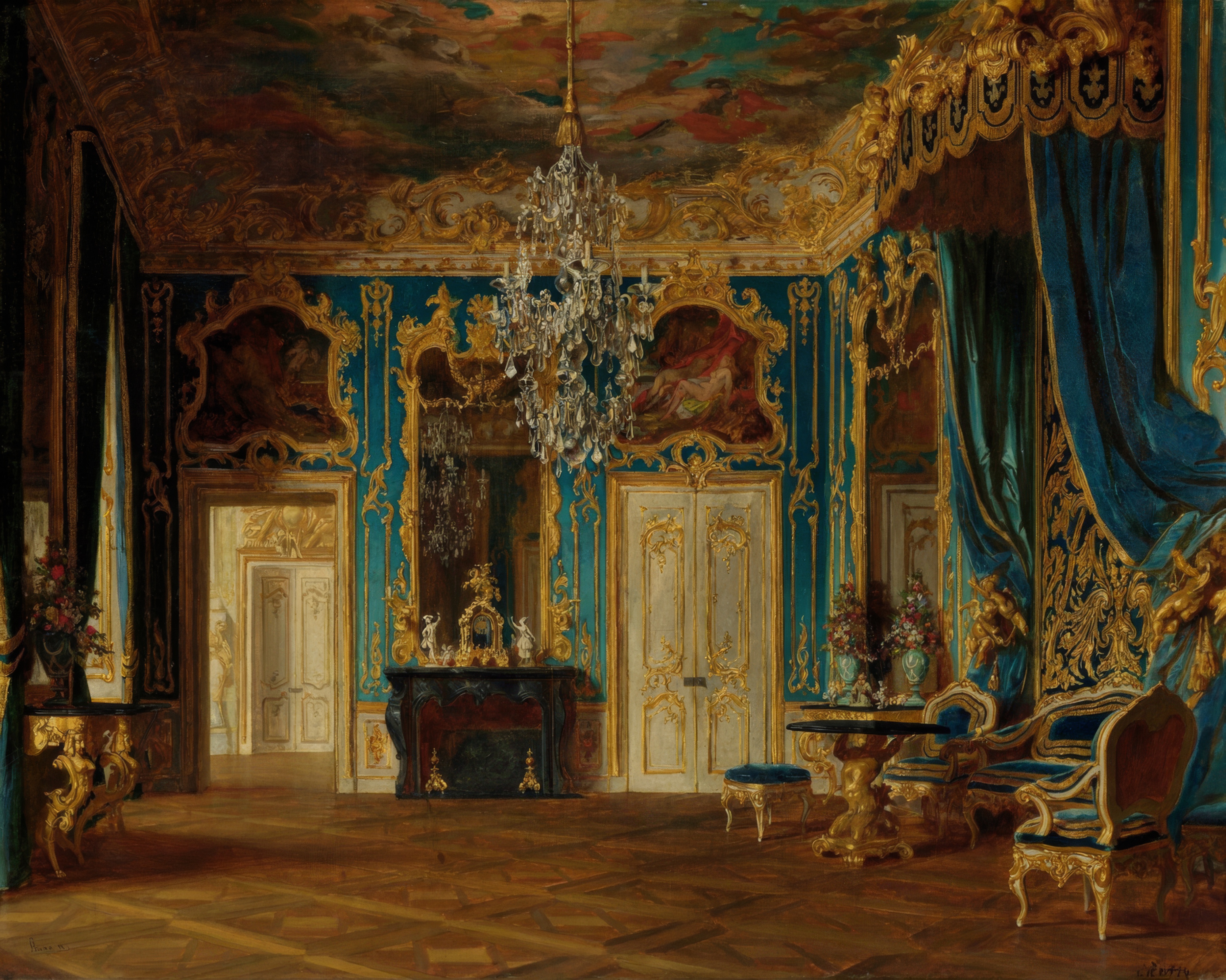
Gyula Benczúr, King Ludwig's Study. Oil on canvas. The Metropolitan Museum of Art, New York.
Gyula Benczúr painted this design for a room for King Ludwig II of Bavaria, the king who built Neuschwanstein. A carved desk is laden with books under rich draperies.
Teal and gold for a grand, book lined study.
12. The Key to the Work up to this Point
Hilma af Klint, The Key to the Work up to this Point, 1907.
In 1907 Hilma af Klint painted this key to her work so far, a diagram of circles and crosses on deep blue. It is a picture of thinking itself.
A bold, modern focal point for a contemporary office.
Hang one picture where you can see it when you look up from the screen, at eye level when seated, and choose the wall behind you with care, since it is the one your colleagues see. Calm, mid toned pictures work best behind a desk on camera; very bright or busy ones can be distracting. For a whole wall, see our gallery wall ideas.
Questions
What art is good for a home office?
Calm pictures that rest the eye and suggest focus: people reading or working, quiet interiors, maps and studies, or a strong abstract. Avoid very busy pictures right in front of you.
Where should art go in a home office?
On the wall you face when you look up from the screen, and on the wall behind you, which is what people see on video calls.
What art looks good behind a desk on video calls?
A single medium or large picture in calm, mid tones, hung centred behind your head. Avoid glare by choosing a matt print or angling your light.
Should office art be motivating?
It can be, but calm usually works better than loud. Pictures of thinkers and makers at work are quietly motivating without shouting.