Gallery wall ideas: 3 ready-made walls from 12 masterworks
A Japanese print wall, a wall of beloved dogs and cats, and a William Blake wall: three gallery walls built from twelve real masterworks that belong together.
The secret of a beautiful gallery wall is not the frames or the spacing. It is choosing pictures that belong together: a shared subject, a shared palette or a shared artist, so the wall reads as one idea instead of a jumble.
Here are three ready-made gallery walls of four pictures each, all real masterworks: a Japanese print wall, a wall of dogs and cats, and a William Blake wall. Each picture is shown with its colour palette, and each can be ordered as a print, so you can build the wall exactly as shown.
A Japanese print wall
Four Edo prints of beauty and seasons: flowers, cranes, a bird in moonlight and a night of plum blossom.
1. Beauty standing beside morning glories
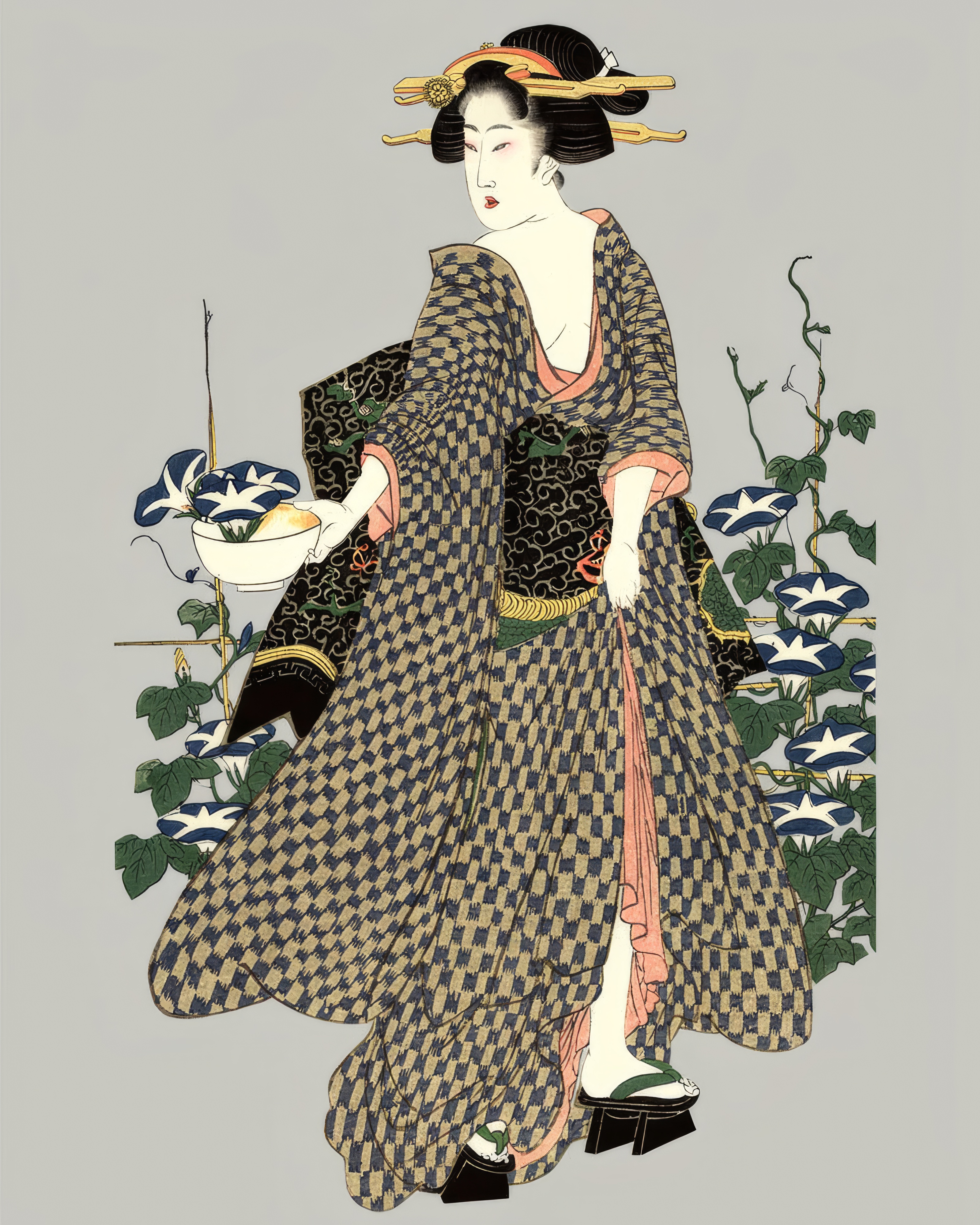
Kikukawa Eizan, Beauty standing beside morning glories, c. 1814/17. Color woodblock print; center sheet of oban triptych (right sheet: 1963.613). Art Institute of Chicago.
Kikukawa Eizan made this print around 1814 to 1817. A woman stands beside morning glories, the summer flower that blooms for a single morning.
The tall centrepiece of the Japanese wall.
2. Cranes on Branch of Snow-covered Pine
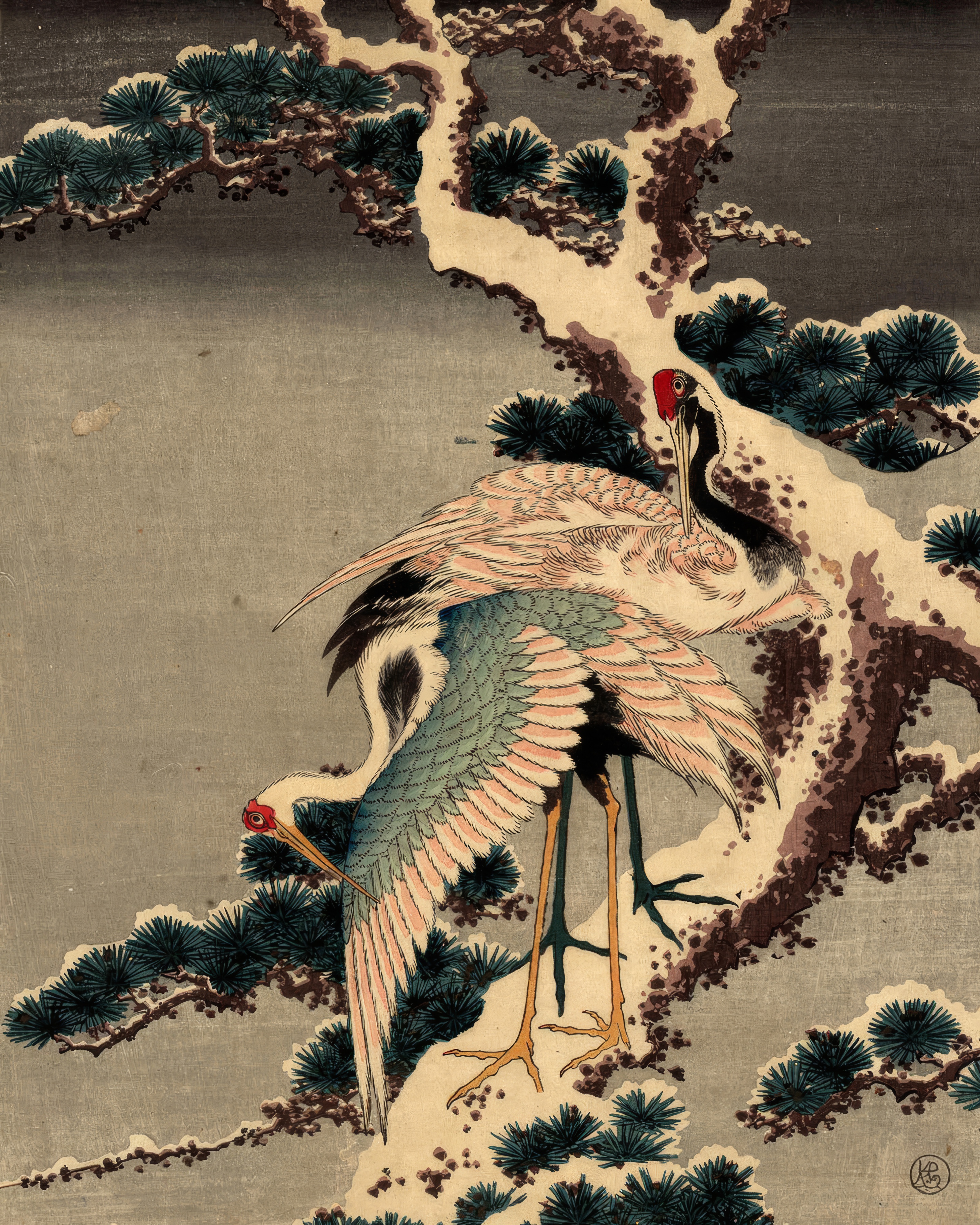
Katsushika Hokusai, Cranes on Branch of Snow-covered Pine, late 1820s. Woodblock print; ink and color on paper. The Metropolitan Museum of Art, New York.
Hokusai made this print of cranes on a snowy pine in the late 1820s. Cranes and pines are symbols of long life in Japan.
Cool blue and white to balance the warmer prints.
3. Bush Warbler on a Plum Tree in Moonlight
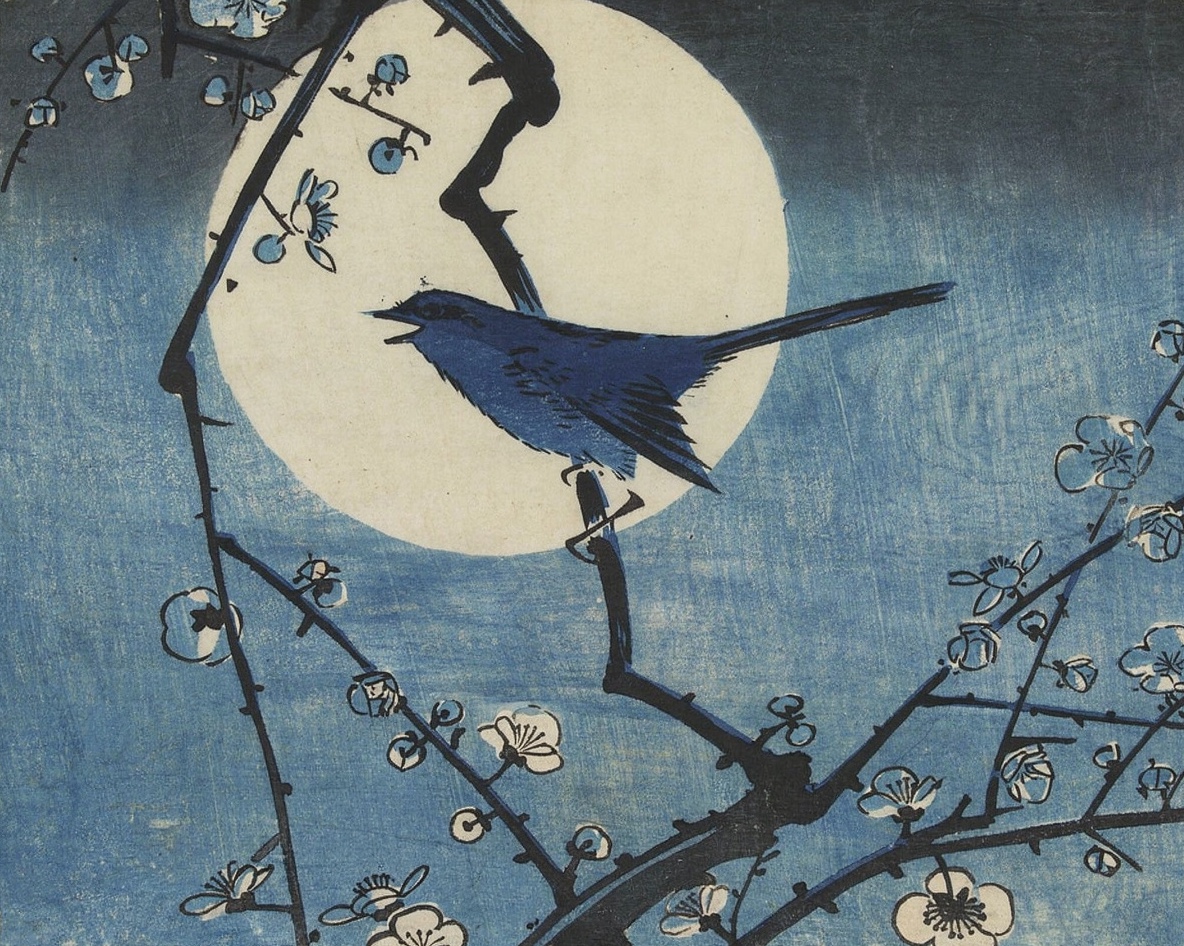
Utagawa Hiroshige, Bush Warbler on a Plum Tree in Moonlight, ca. 1840-1842. Victoria and Albert Museum, London.
Hiroshige designed this bird and flower print around 1840 to 1842. The bush warbler sings when the plum blossoms open, the first sign of spring.
A deep blue accent that ties the wall together.
4. Woman Admiring Plum Blossoms at Night
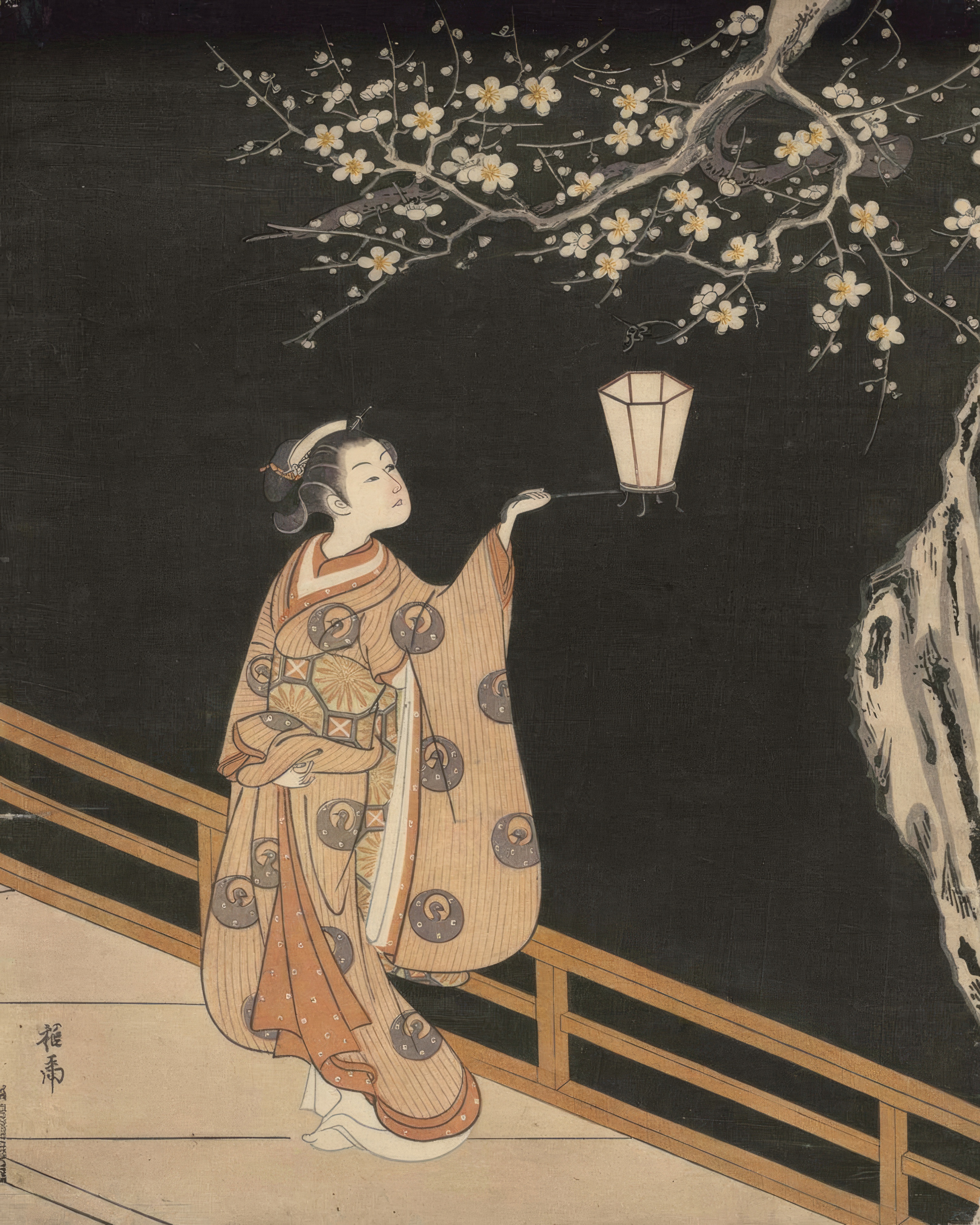
Suzuki Harunobu, Woman Admiring Plum Blossoms at Night, ca. 1766. Woodblock print (nishiki-e) with embossing (karazuri); ink and color on paper. The Metropolitan Museum of Art, New York.
Suzuki Harunobu, the first master of full colour prints, made this night scene around 1766, with a black sky and embossed blossoms.
Black and gold to anchor the corner of the wall.
A wall of dogs and cats
Four nineteenth and eighteenth century animal portraits, all in warm browns and creams.
5. Tick-Tick (Tick-Tack)
Briton Rivière, Tick-Tick (Tick-Tack), 1881. Oil on canvas. Russell-Cotes Art Gallery & Museum, Bournemouth.
Briton Rivière painted this pug puppy in 1881, fascinated by the ticking of a gold watch.
A playful start to an animal wall in a hall or family room.
6. Watching Dog
Briton Rivière, Watching Dog, 1875. Oil on canvas. Sudley House, Liverpool.
Rivière called this picture Watching Dog in 1875, as a joke: the guard dog is fast asleep while the mouse looks out.
Warm stone and straw tones that pair with the pug.
7. Kittens playing
Henriëtte Ronner-Knip, Kittens playing, c. 1880. Oil on canvas. Museum Boijmans Van Beuningen, Rotterdam.
Henriëtte Ronner-Knip, the great cat painter of the nineteenth century, painted these kittens at play around 1880.
A busy, happy picture for the middle of the wall.
Create your portrait in this style
8. Portrait of a Large Dog
George Stubbs, Portrait of a Large Dog, 1772. Oil on canvas. National Maritime Museum, Greenwich.
George Stubbs painted this Portrait of a Large Dog in 1772. It is a dingo, brought back from Captain Cook’s first voyage to Australia, one of the first pictures of the animal in Europe.
A calm landscape to close the animal wall.
Create your portrait in this style
A William Blake wall
Four pages from Blake’s illuminated books, glowing with gold, blue and rose.
9. The Song of Los, plate 5
William Blake, The Song of Los, plate 5, 1795.
William Blake printed and coloured his own books by hand. In this page of The Song of Los, of 1795, two figures rest on a vast flower in the night.
Deep blue and white, the anchor of the Blake wall.
10. Jerusalem, plate 53
William Blake, Jerusalem, plate 53, 1804-20.
Jerusalem was Blake’s longest illuminated book, made between 1804 and 1820. On this page a winged figure sits enthroned in a sunflower.
Gold and copper, the warmest picture of the four.
11. Europe a Prophecy, plate 5
William Blake, Europe a Prophecy, plate 5, 1794.
Blake made Europe a Prophecy in 1794. This page joins text and image in soft clouds of rose and blue.
A light, airy page to balance the darker ones.
12. The Book of Ahania, plate 1
William Blake, The Book of Ahania, plate 1, 1795.
The Book of Ahania of 1795 is one of Blake’s rarest books. Its opening picture is all tenderness and drama.
Deep red to finish the wall with a strong note.
To hang a four-picture wall, lay the prints out on the floor first, keep 5 to 8 centimetres between frames, and line up either the tops or the centres. Use the same frame for all four for a calm look, or mix wood and black for a collected feel. Hang the centre of the group at about eye level, around 150 centimetres from the floor. For more, see maximalist decor and horizontal wall art.
Questions
How do I plan a gallery wall?
Choose pictures that share a subject, palette or artist, lay them out on the floor or trace them on paper, then hang from the centre outward.
How far apart should pictures be on a gallery wall?
Usually 5 to 8 centimetres between frames, kept the same across the whole wall.
How high should a gallery wall be?
Hang the centre of the whole group at around 150 centimetres from the floor, or about 20 to 25 centimetres above a sofa or sideboard.
Should gallery wall frames match?
Matching frames feel calm and modern; mixed frames feel collected and personal. Both work if the pictures themselves belong together.