Maximalist decor: 12 paintings where more is more
Gold Japanese screens, Persian tiles, Rajput gardens, Mucha’s zodiac and Moreau’s jewelled legends: twelve dense, rich pictures for rooms that love pattern and colour.
Maximalism is the joy of more: more colour, more pattern, more pictures, all layered with confidence. The art that suits it is dense with detail and rich in colour, the kind you can look at for an hour and still find something new.
The great courts of India, Persia and Japan made exactly this kind of picture, and so did the decorative painters of Europe. Here are twelve, in three moods: gold and pattern, gardens and stories, and jewelled legends. Each is shown with its colour palette, and each can be ordered as a print.
Gold and pattern
Gold leaf, glazed tiles and decorative art.
1. Birds and Flowers
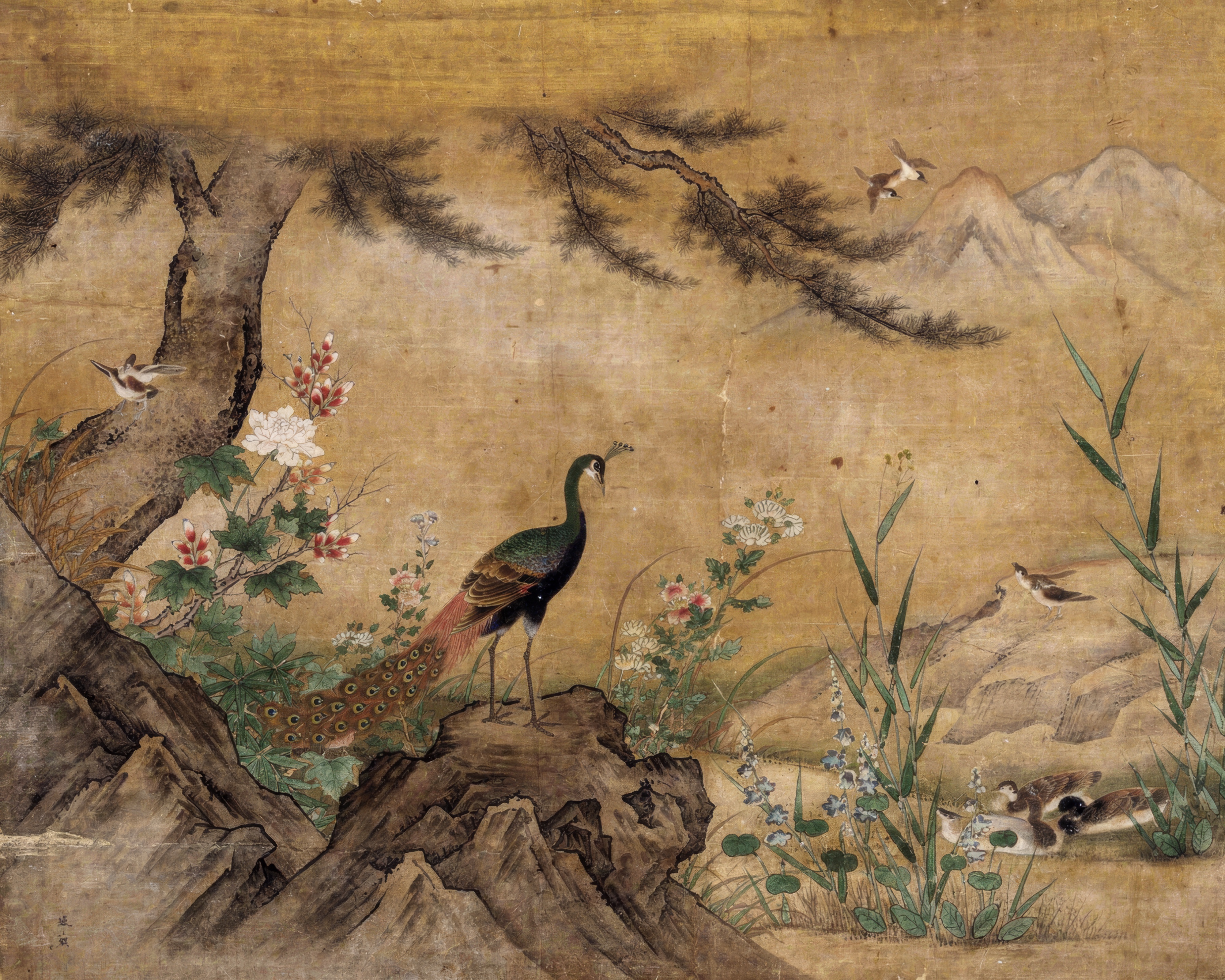
Kano Mitsunobu, Birds and Flowers, late 1500s. One of a pair of six-panel folding screens; ink, color, and gold on paper. Cleveland Museum of Art.
Kano Mitsunobu painted this folding screen in the late 1500s, when Japanese lords filled their castles with gold screens. Birds and blossoms glow on the gold.
Gold and deep green, magnificent against dark walls.
2. The Procession to Ōhara
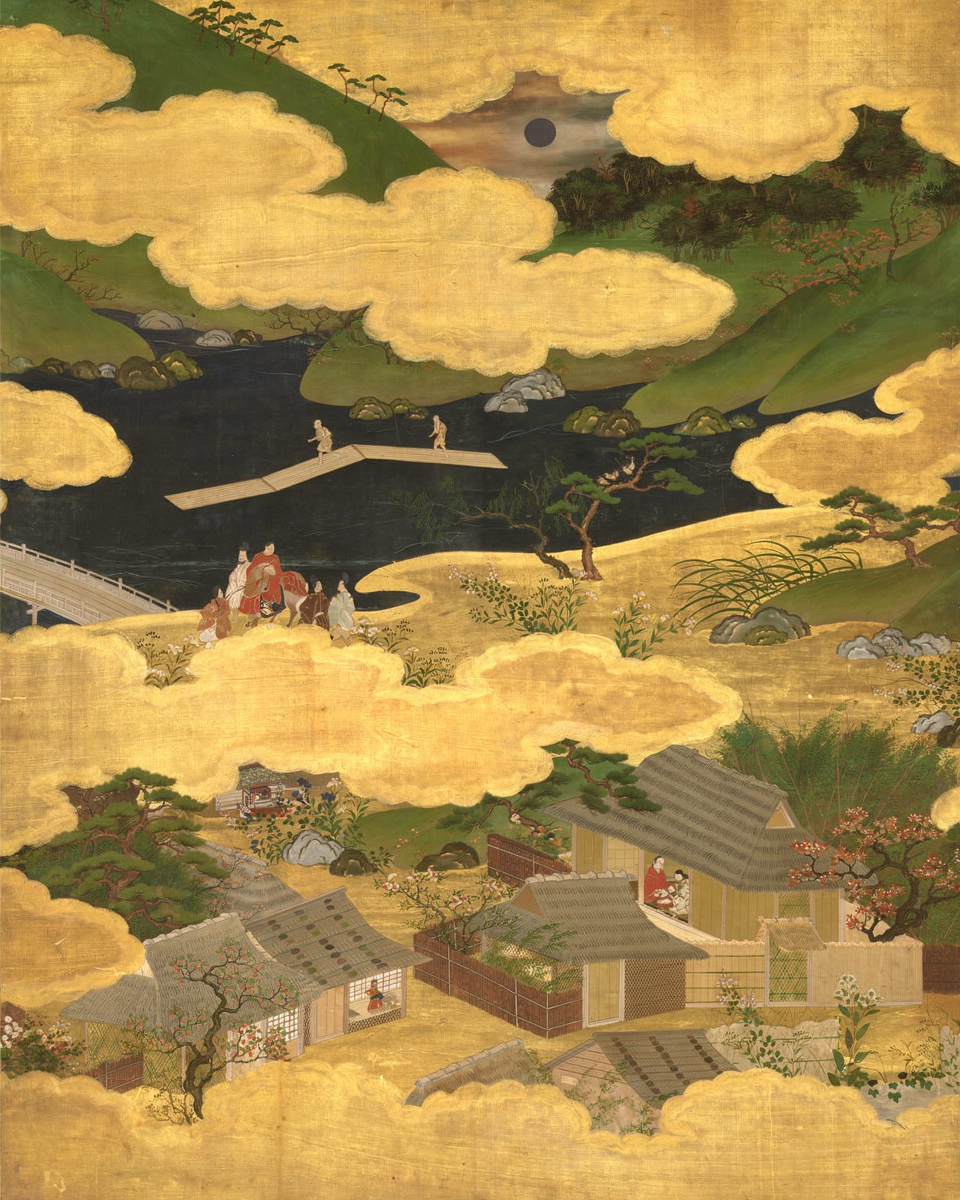
The Procession to Ōhara, early 17th century. Pair of six-panel folding screens; ink, color, gold and gold leaf on paper. The Metropolitan Museum of Art, New York.
This pair of screens of the early 1600s tells a story from The Tale of the Heike, with golden clouds dividing the scenes like chapters.
A rich, storytelling picture for a long wall.
3. Garden Gathering
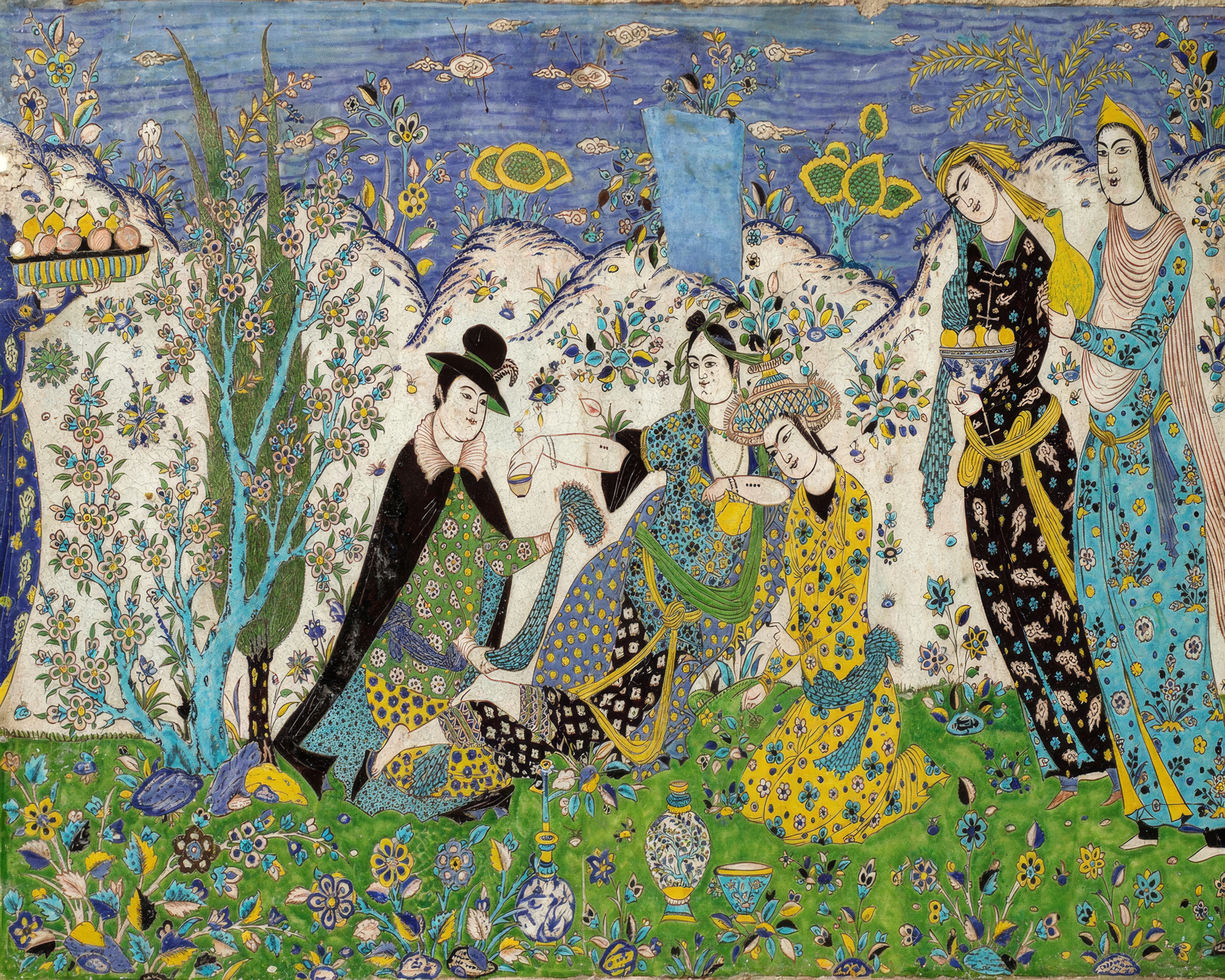
Garden Gathering, 1640–50. Stonepaste; painted and polychrome glazed (cuerda seca technique). The Metropolitan Museum of Art, New York.
These glazed tiles were made in Iran around 1640 to 1650 for a palace wall. Elegant figures gather in a flowering garden in brilliant colour.
Bright green, blue and yellow for a bold, colourful room.
4. Zodiac
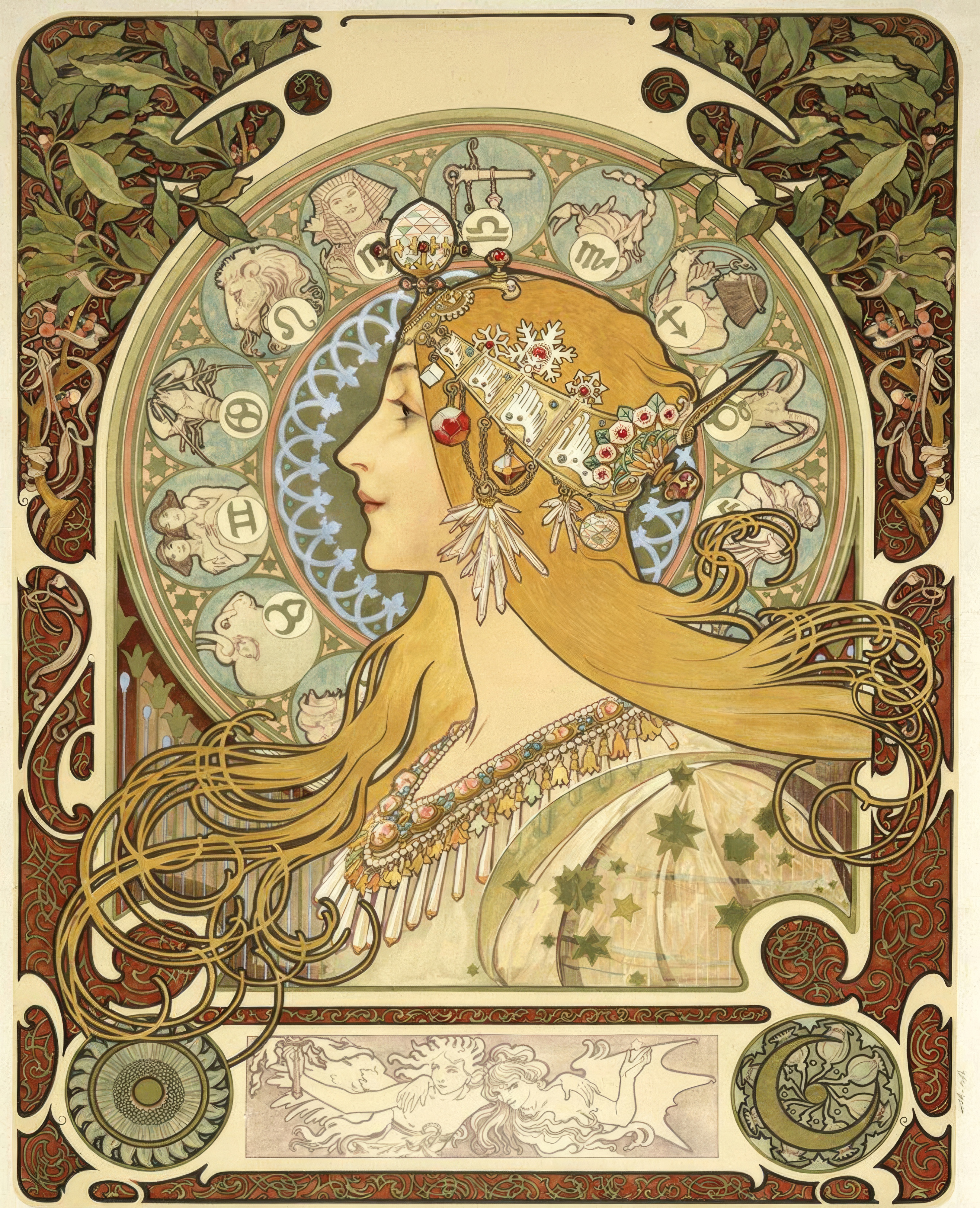
Alphonse Mucha, Zodiac, 1896. Colour lithograph. Victoria and Albert Museum, London.
Alphonse Mucha designed Zodiac in 1896, one of the best loved images of Art Nouveau. A serene profile is surrounded by the signs of the zodiac and swirling ornament.
Soft gold, sage and rust for an Art Nouveau corner.
Gardens and stories
Court painting from India, full of colour and detail.
5. Sita in the Garden of Lanka
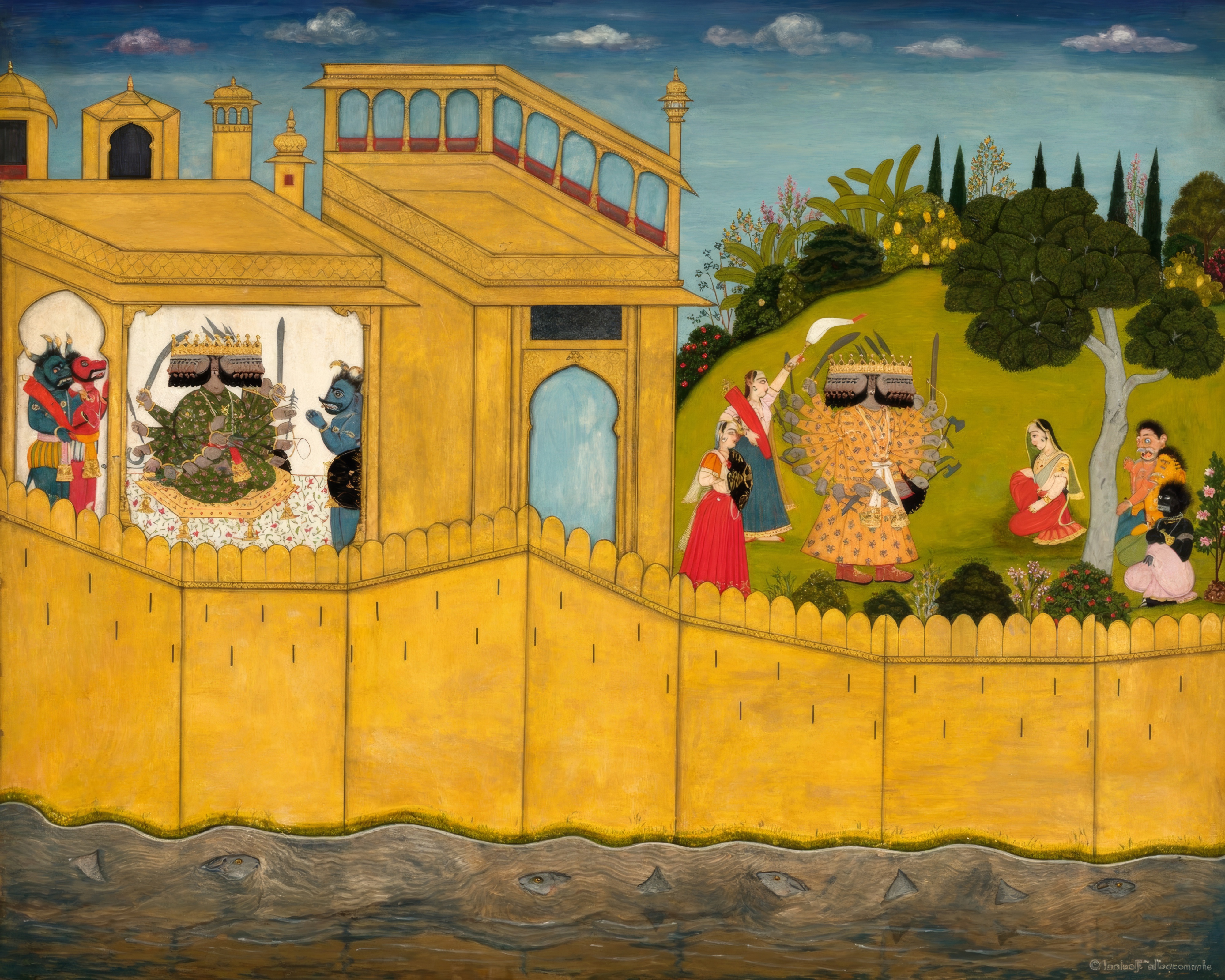
Sita in the Garden of Lanka, c. 1725. Gum tempera, gold, and silver on paper. Cleveland Museum of Art.
This page of about 1725 illustrates the Ramayana. Sita is held in a garden on Lanka, painted in gold, silver and bright colour.
Gold, teal and green for a room full of pattern.
6. Krishna Under a Canopy
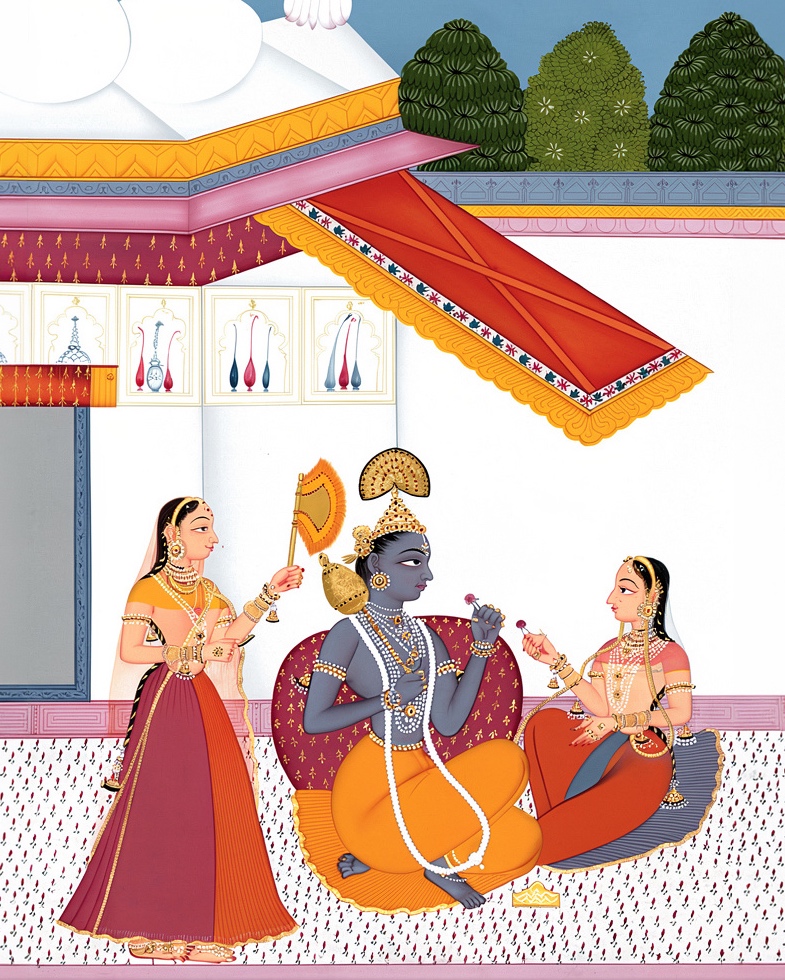
Krishna Under a Canopy, c. 1680. Gum tempera and gold on paper. Cleveland Museum of Art.
This Rajput painting of about 1680 shows the god Krishna under a gilded canopy, with patterned textiles and lush trees.
Saffron, deep red and green for a warm maximalist room.
7. The Parrot's Tale
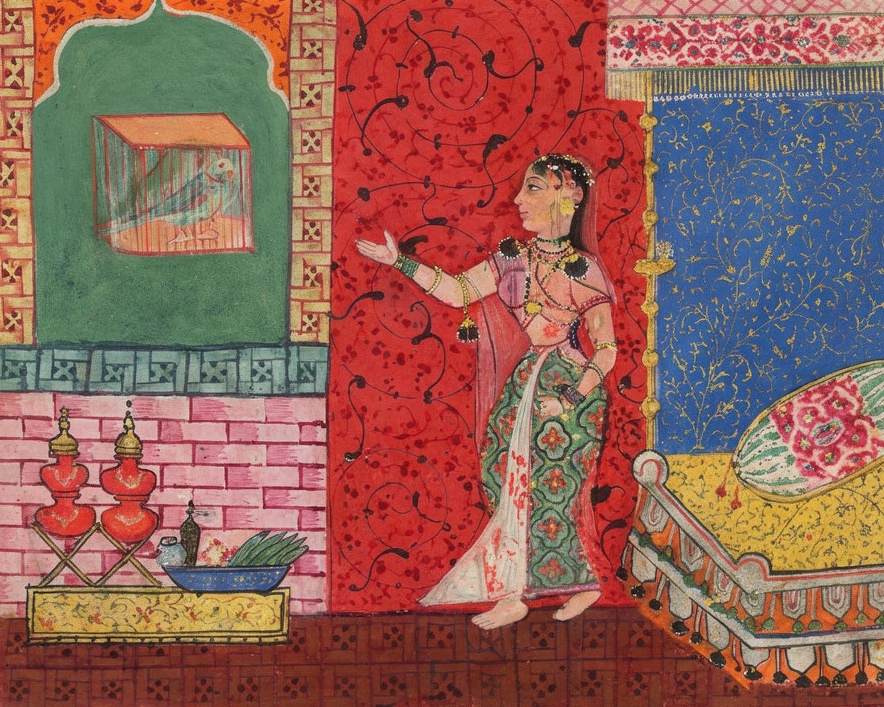
The Parrot's Tale, c. 1560. Gum tempera, ink, and gold on paper. Cleveland Museum of Art.
This page of about 1560 comes from the Tutinama, the Tales of a Parrot, made for the young Mughal emperor Akbar. Each night the parrot tells a story to keep its mistress at home.
Red, green and gold for a colourful study or snug.
8. Spring Blossom Viewing
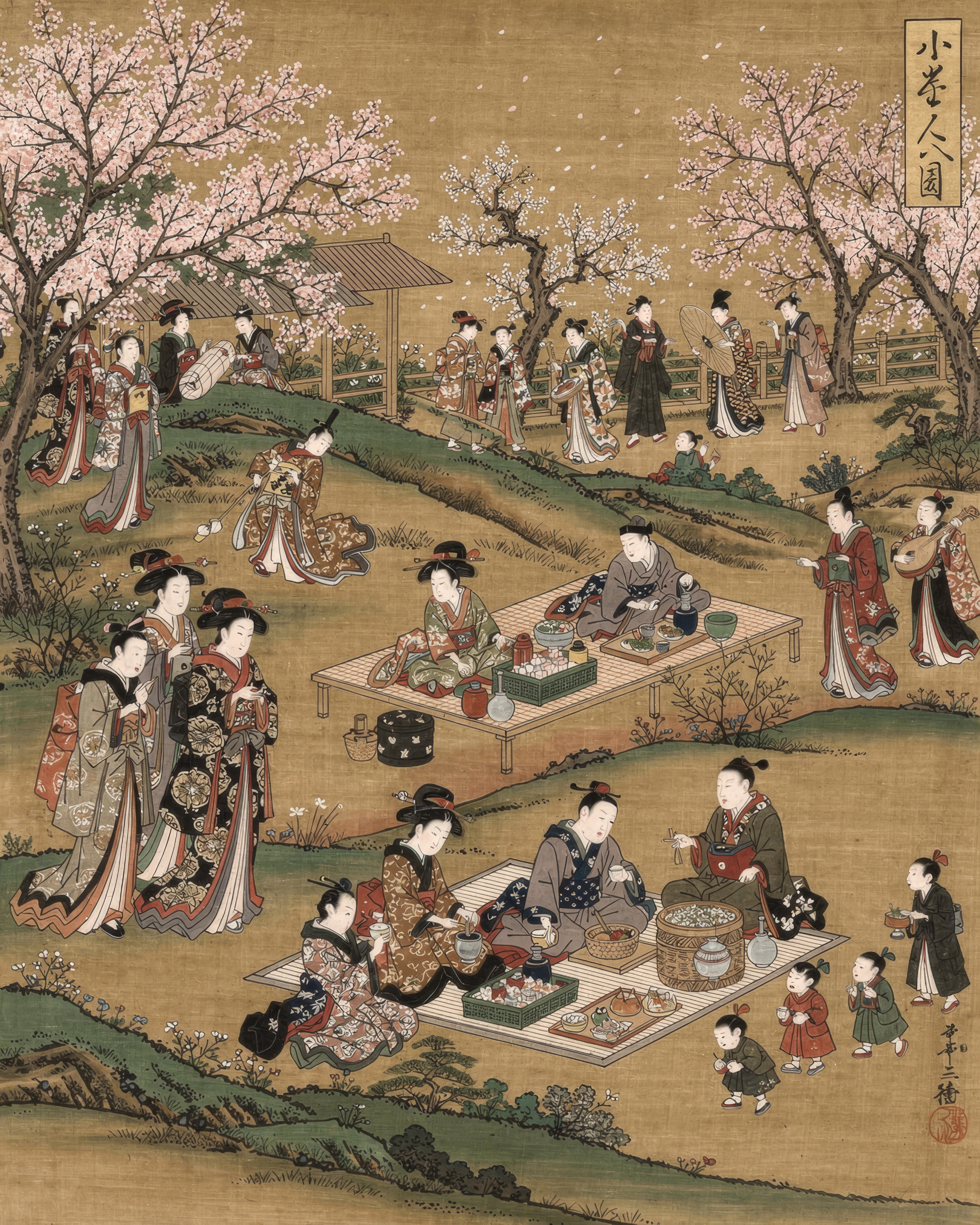
Hishikawa Moronobu, Spring Blossom Viewing, Edo period, circa 1684-1688 (Jōkyō era). First of a set of three handscrolls; ink, color and gold on silk. Harvard Art Museums.
Hishikawa Moronobu, a founder of ukiyo-e, painted this scroll of cherry blossom viewing around 1684 to 1688, full of people enjoying the spring.
Gold and soft pink for a joyful room.
Jewelled legends
Gustave Moreau and the colour of dreams.
9. Allegory of Fable
Gustave Moreau, Allegory of Fable, by 1898.
Gustave Moreau painted Fable herself: a winged woman with cobalt wings, riding a chimera through the clouds and carrying a banner inscribed Fables.
Cobalt blue and gold for a dreamy, colourful room.
10. The Unicorn
Gustave Moreau, The Unicorn, 1885.
Moreau painted unicorns and their maidens in the 1880s, inspired by the medieval Lady and the Unicorn tapestries in Paris.
A jewel like picture in black, gold and blue.
11. Saint George and the Dragon
Gustave Moreau, Saint George and the Dragon, 1889/90.
Moreau painted Saint George in 1889 to 1890 with his usual richness: dark armour, a white horse and a crimson lance.
Crimson and silver for a dramatic maximalist wall.
12. The Swan, No. 17
Hilma af Klint, The Swan, No. 17, 1915. Oil on canvas. Hilma af Klint Foundation, Stockholm.
Hilma af Klint painted The Swan, No. 17 in 1915. A bisected circle of black, white and bands of colour floats on vermilion red.
A bold modern note for a maximalist mix of old and new.
For a maximalist wall, hang pictures close together in mixed sizes and frames, and let them overlap visually with patterned wallpaper, textiles and objects. Choose one or two colours that repeat across the pictures, such as gold and deep green, so the abundance still feels composed. See also gallery wall ideas.
Questions
What is maximalist decor?
A style that embraces colour, pattern, collections and layered objects, the opposite of minimalism. It feels rich, personal and full of stories.
What art suits a maximalist room?
Dense, colourful and detailed pictures: Indian and Persian miniatures, gold Japanese screens, Art Nouveau posters, symbolist paintings and bold abstracts.
How do I hang art in a maximalist style?
Fill a wall with a gallery of mixed sizes and frames, hung close together, and repeat a few colours so the arrangement holds together.
Can maximalist art go on patterned wallpaper?
Yes. Choose pictures that share a colour with the wallpaper and frame them in gold or black so they stand out.