Reading a coat of arms: lions, stars and trees
Learn to look at a heraldic design before choosing symbols for your own: the shield, its charges, the crest and the story around them.
Read the structure before the story
A coat of arms can feel like a whole theatre of symbols. Begin with the shield, then look at the elements around it. Figures beside it are supporters; a crest occupies the position above the helmet. A motto adds words to the design. Keeping those parts distinct helps you describe what attracts you, whether it is a boldly divided shield, a particular animal or the rhythm of the surrounding ornament. The crest is one part of an achievement, rather than a technical name for everything in the picture.
The lion: look at the pose
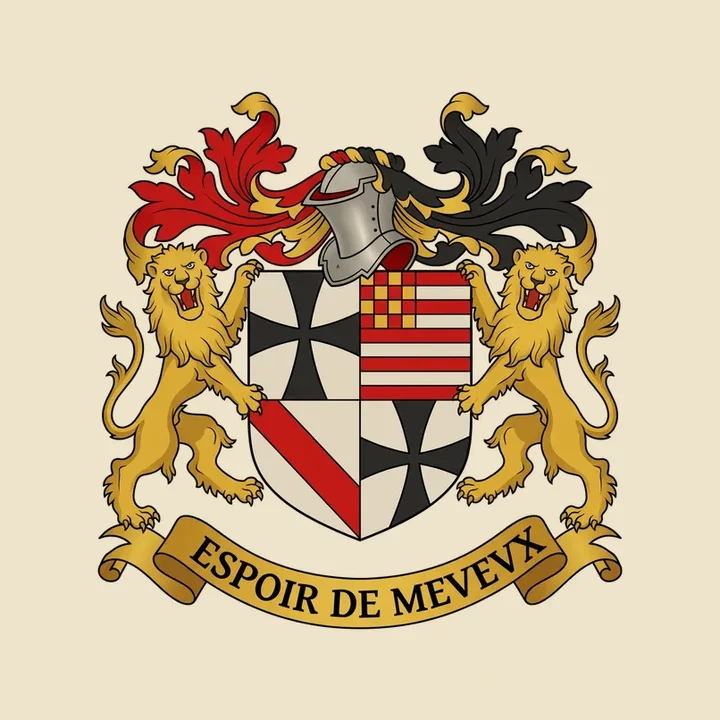
Historical design reference, presented by Fable; not a grant of arms or a new personal design.
In this historical reference, lions stand on either side of the shield. Their repeated shapes give the composition a strong outer structure. When looking at heraldic animals, notice their posture, direction and position before reaching for a symbolic dictionary. A lion on a shield and a lion supporting it play different compositional roles. Associations such as courage may appeal to a modern designer, but they do not supply a verified explanation for every historical use of the animal.
Stars: a shape needs a context
Count the points, look for rays and notice whether the centre is pierced. Star-like heraldic forms are not all interchangeable. Their historical interpretation depends on the actual arms and the tradition in which they were used. In a new personal design, you might choose three stars to represent three people or places, but that is your stated meaning. It should not be presented as a discovery about your ancestors. Start with the story you know, rather than one inferred from a shape.
A tree can carry the whole design
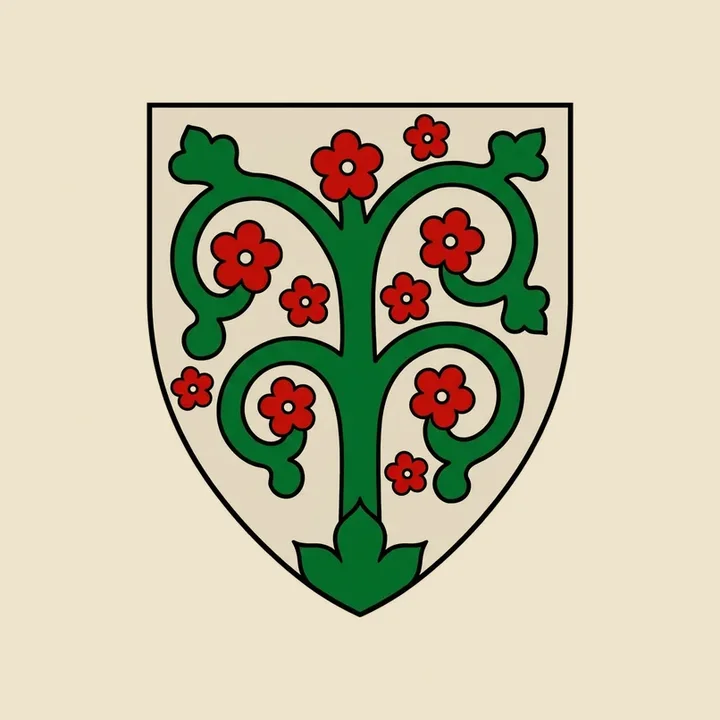
Historical design reference, presented by Fable; not a grant of arms or a new personal design.
Create a design with your own story
The branching green form and red flowers make this reference immediately readable. A plant can provide structure as well as subject: trunk, branches and repeated blossoms organise the shield. The illustration is Fable’s presentation of a historical plate from Fox-Davies’s The Art of Heraldry, published in 1904. It is a design reference, not a grant of those arms to the reader. For a new emblem, choose a tree because its connection to your own story is clear.
Make a personal emblem with intention
Write a short brief before opening Fable Heraldry: the name, two or three meaningful elements, a restrained colour direction and an optional motto. Keep the description specific enough to inspect in the preview. Check every letter, symbol and requested colour before you decide to keep it. Fable creates a contemporary decorative design; it does not establish ancestry or grant official arms. For the terminology behind that distinction, continue to family crest versus coat of arms.