Custom dog pillow: choose the photo, then the design
A practical guide to a woven cushion with your dog’s likeness, from source-photo detail to size and fabric.
A custom dog pillow should look like the dog you know, not simply like an appealing example of the same breed. Begin with the photograph: the shape of the muzzle, the position of the ears, familiar markings and a natural expression. Then choose a design that gives those features room to remain visible.
The historic dog paintings below are references for looking closely at animals. They are not customer examples or photographs of finished Fable cushions. The current product is a 43 × 46 cm cushion in a cotton and polyester blend, with the same picture woven on both sides. Those facts provide the practical framework for the visual choice.
Choose an individual, not a breed stereotype
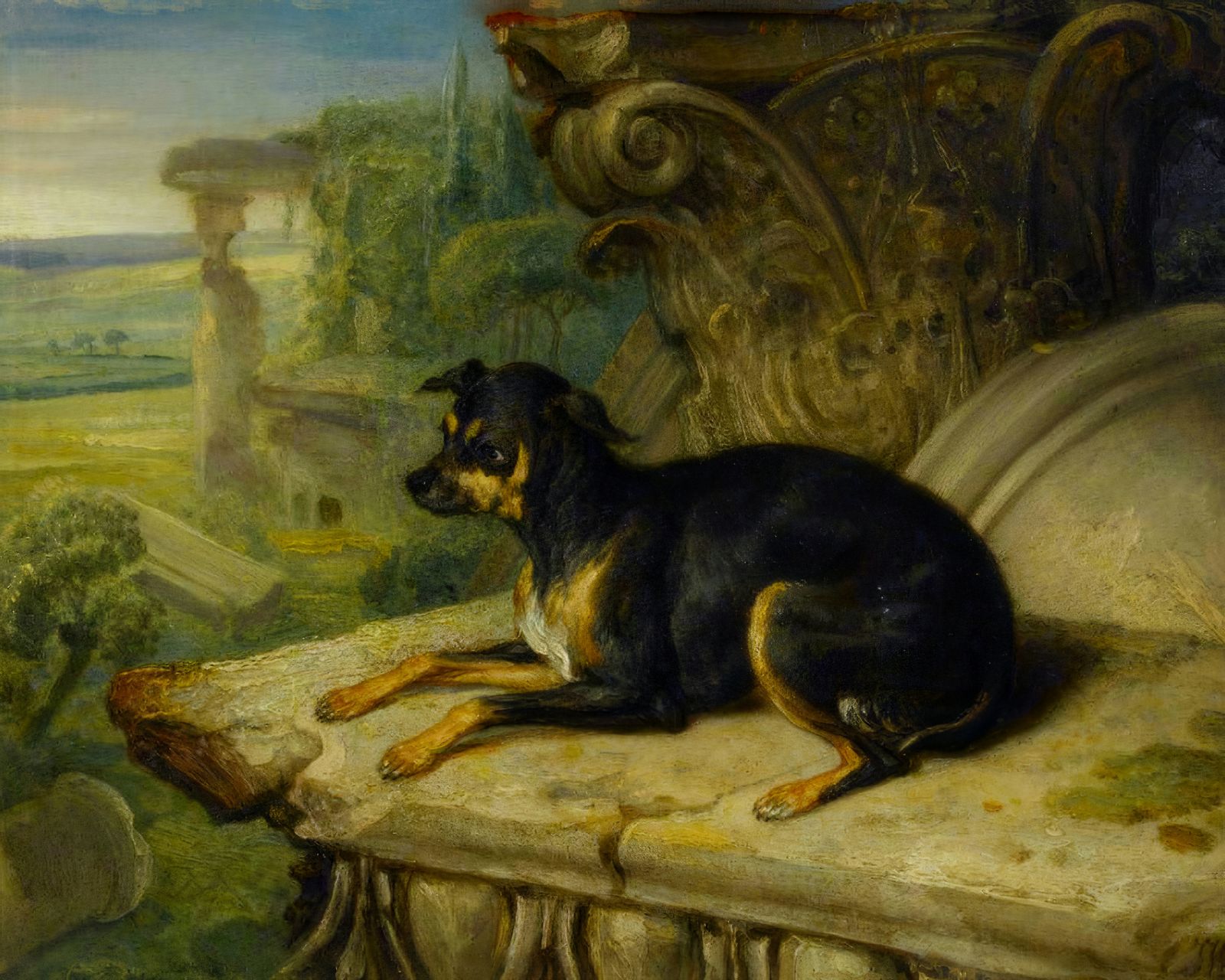
'Fanny', a Favourite Dog · James Ward · 1822 · Sir John Soane's Museum, London. Prepared for print by Surrealium at Vaxholm Fortress, Sweden
James Ward's Fanny presents a particular dog resting beside a carved support. The alert ears and settled body coexist in one pose. The image is useful because it directs attention to an animal's specific shape and stance rather than reducing the subject to a generic label.
Look through your photographs for the same kind of recognisable detail. Which image would you identify as your dog even without seeing the surroundings? A familiar tilt of the head or a small asymmetry in the ears may matter more than a perfectly centred pose. Avoid selecting a photograph solely because the background is attractive. For a cushion portrait, the animal's face and markings need to remain the clearest information. Keep the original image available so you can compare those details when reviewing the design.
Use light that reveals the face
A clear source photograph makes it easier to judge whether the likeness has been preserved. Choose visible eyes, a readable muzzle and enough separation between the head and background. Strong shadows can hide an eye, while bright reflections can make a pale coat lose detail. Inspect the actual image rather than assuming that daylight always solves the problem.
Photograph near the dog's level if possible, without forcing an uncomfortable posture. A close wide-angle view from above can exaggerate the nose or make the body look unusually small. Take several calm frames and compare them later. Do not ask the dog to hold a strenuous pose for the sake of a decorative object. A relaxed seated or resting position can be both useful as a reference and more characteristic of the animal you live with.
Look at fur as structure
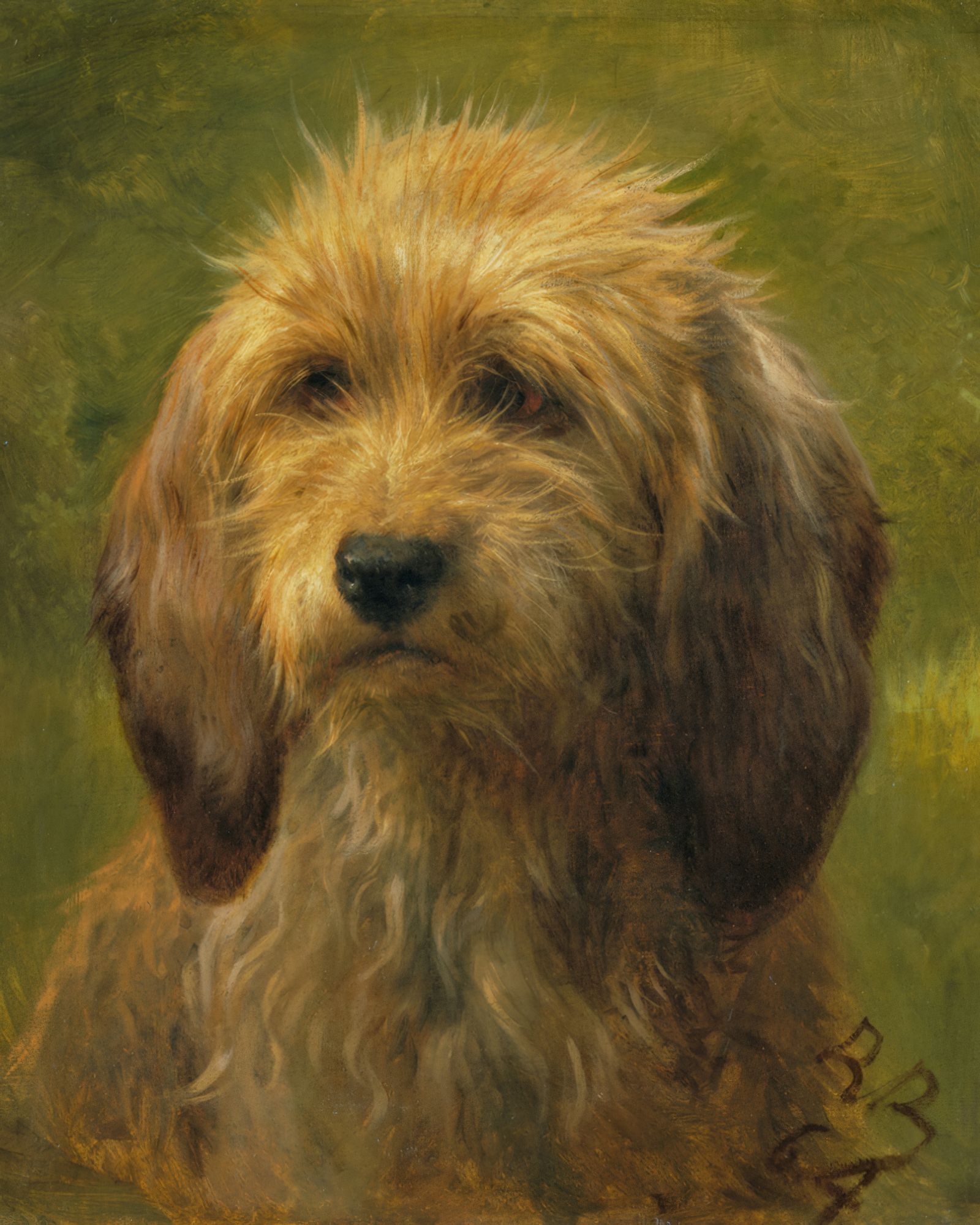
Brizo the dog · Rosa Bonheur · 1864 · Wallace Collection, London. Prepared for print by Surrealium at Vaxholm Fortress, Sweden
Rosa Bonheur's Brizo uses the dog's shaggy coat to describe the shape of the head. The fur is not an undifferentiated texture; it turns around the muzzle and eyes. Although the historic title has been associated with a shepherd's dog, the Wallace Collection identifies the animal as an otterhound. It should not be used as a labelled German shepherd example.
For your own dog, check whether long fur obscures the features in the source photograph. A small change in head angle may reveal the eyes more clearly. Keep distinctive coat markings visible and avoid filters that flatten them. A woven design will be a different material from a photograph or an oil painting, so judge the preview as a composed likeness rather than expecting every strand of hair to behave like a photographic close-up.
Choose the pattern around the dog
The current cushion range includes botanical and tapestry-inspired directions. Compare the density and scale of the surrounding pattern with the animal's head and coat. A strongly patterned dog may need different visual separation from a plain-coated one. The design should help you find the pet quickly, then reward a closer look.
Keep the dog naturally posed. This guide does not recommend human clothing or a human role for the animal. If a particular product design does not fit that preference, choose another available direction. Avoid adding a long list of objects, text and decorative motifs simply because the cushion is personalised. A single clear subject can feel more personal than a crowded design in which the dog's face competes with every other element. Start with recognition, then consider ornament.
Consider the relationship, not only the head
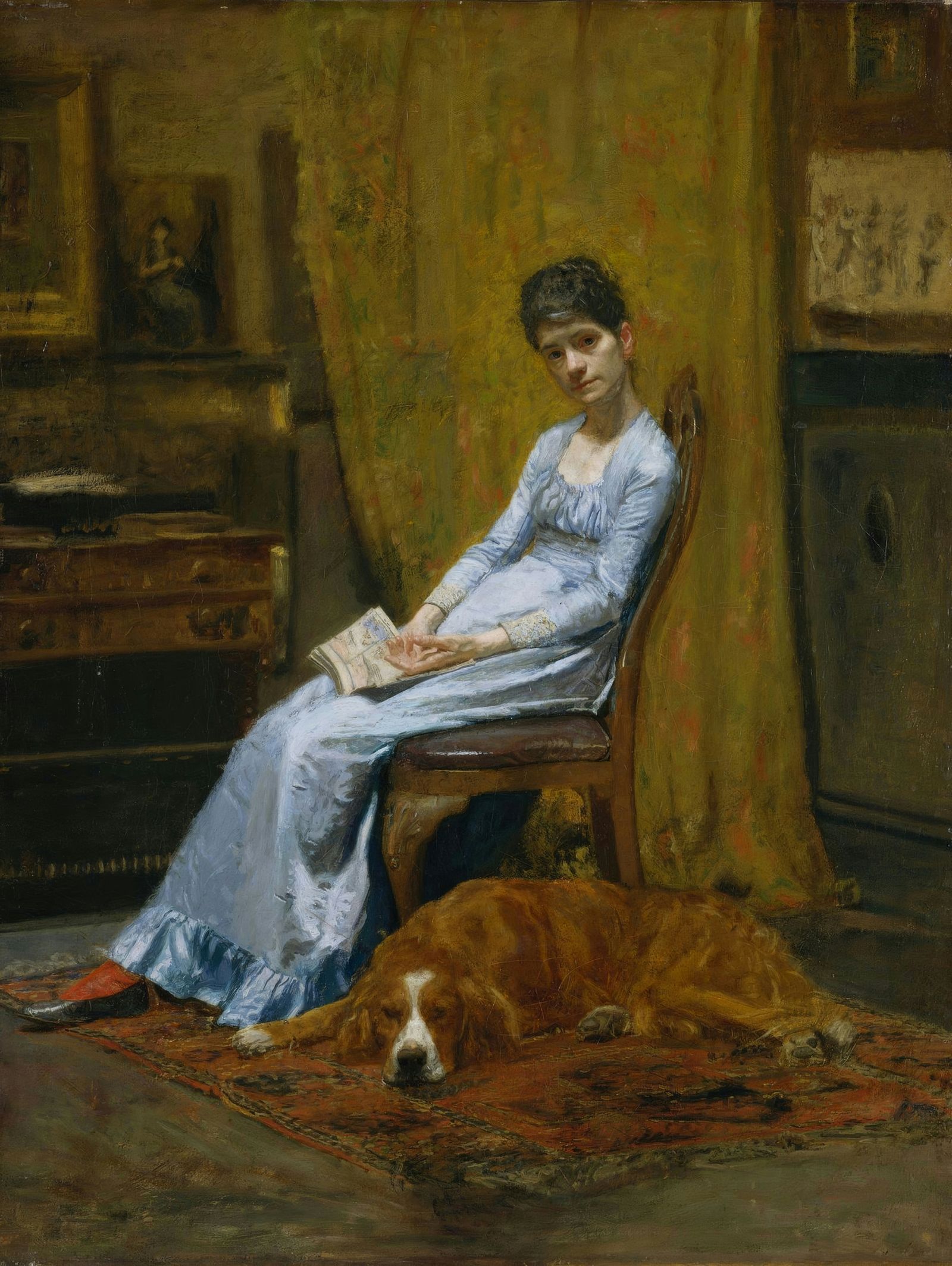
The Artist's Wife and His Setter Dog · Thomas Eakins · 1884 · Metropolitan Museum of Art, New York. Prepared for print by Surrealium at Vaxholm Fortress, Sweden
Thomas Eakins's portrait of his wife and his setter places the dog near the seated figure, within a shared interior. The animal belongs to the household scene without being made to behave like a person. It is a useful reference when the relationship with a pet is part of the intended meaning.
Fable's current cushion process uses one pet per cushion, with an optional companion photo where the relevant route offers it. Check the current options before assuming that a group of animals can be combined. If the cushion is a gift, decide whether the recipient would prefer the pet alone or a more relational image. Use a photograph they would be comfortable displaying. A personal object should respect the person as well as celebrate the animal, particularly when the source includes someone else.
Check size and material before the finishing details
The current size is 43 × 46 cm, also stated as 17 × 18 inches. Measure the intended chair or sofa and consider how the cushion will be used. A familiar face can make the object emotionally specific, but it still needs to fit the space and leave the furniture comfortable.
The outer fabric is a cotton and polyester blend. The insert is recycled polyester and is sewn closed; those are separate facts about separate parts. The same picture is woven on both sides. Do not infer a removable cover, a particular washing method or a different fibre from the appearance of a historic-style pattern. Read the care and product information supplied at the time of ordering. Clear specifications are more useful than a vague promise that a personalised object will suit every household.
Review silhouette before small decoration
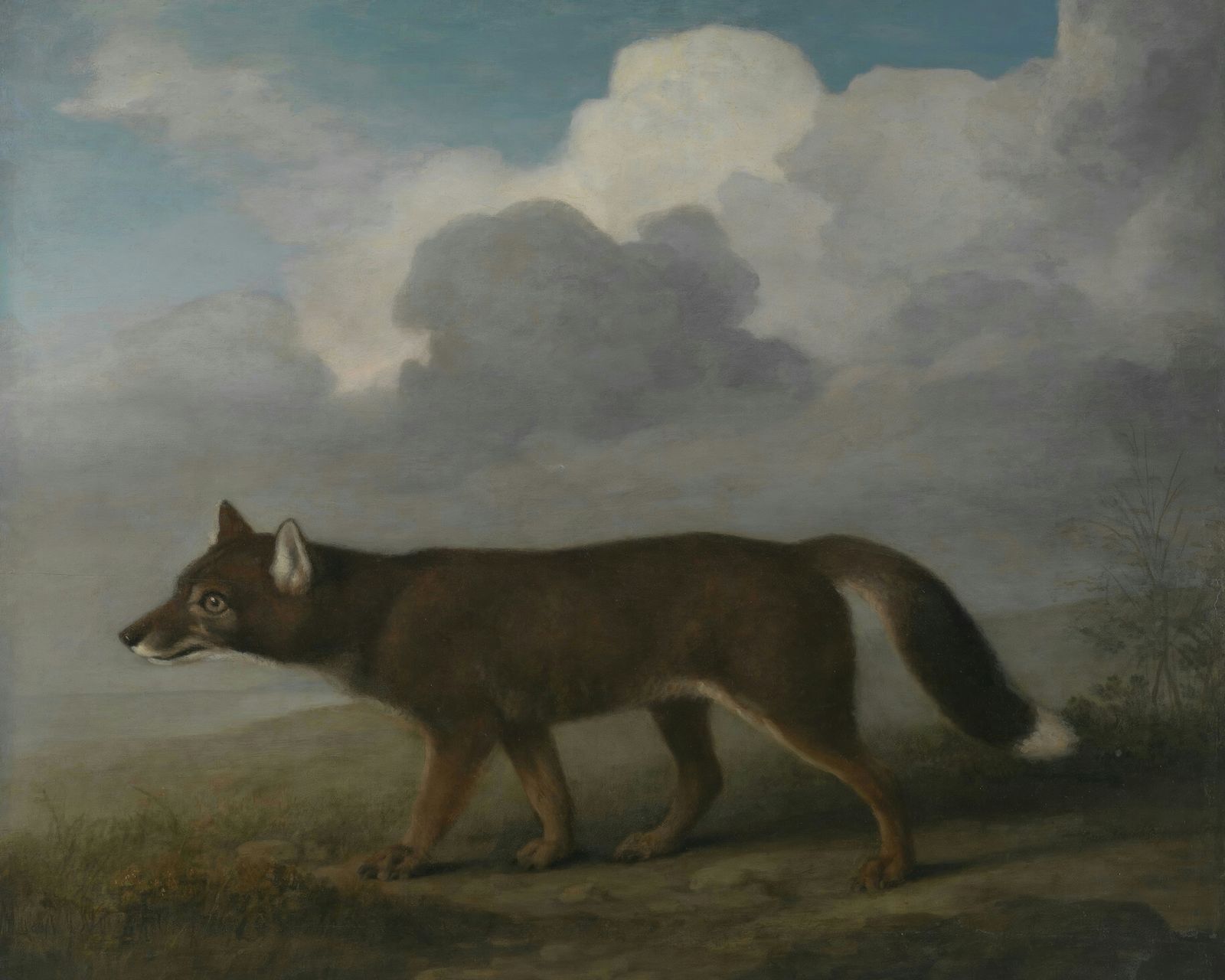
Portrait of a Large Dog · George Stubbs · 1772 · National Maritime Museum, Greenwich. Prepared for print by Surrealium at Vaxholm Fortress, Sweden
George Stubbs's Portrait of a Large Dog makes the animal's broadside outline easy to read against a relatively open setting. The work is dated 1772 and should not be treated as a documented German shepherd portrait. Its usefulness here is the clarity of the body's shape and the relationship between the head, legs and tail.
When reviewing your cushion design, look first at the overall silhouette and the placement of the dog within the pattern. Then inspect the face and markings. Finally reduce the view to see how it reads from a normal room distance. Do not let a pleasing border distract from a likeness that feels wrong. The design should remain recognisable when the cushion turns over or sits among other objects, with the dog continuing to be the reason for choosing it.
Continue with personalised Pet Cushions: Your Pet, Woven into Art, how to Choose a Photo for a Personalised Pet Cushion, luxury throw pillows: look past the label, and the full catalogue record for 'Fanny', a Favourite Dog.
Open the cushion range with a clear photograph, a measured place for the cushion and a preference for a natural portrait of your dog. Compare the current designs and specifications before finishing. The strongest choice joins a recognisable animal with an object that belongs comfortably in everyday life.
- What photo should I use for a custom dog pillow?
- Choose a clear image with visible eyes, muzzle, ears and identifying markings. Keep the dog comfortable and avoid strong filters or extreme camera angles. A natural resting or seated pose can be more characteristic than a forced performance.
- Can I include more than one dog?
- The current Fable process uses one pet per cushion, with an optional companion photo in the relevant route. Inspect the actual options before planning a group of animals; this guide does not promise a multiple-pet layout.
- Is a Fable dog cushion printed on one side?
- The current product has the same picture woven on both sides. Its outer fabric is a cotton and polyester blend, and it measures 43 × 46 cm. Consult the current product information for the choices and care details available when ordering.
- Are the paintings here examples of finished cushions?
- No. They are historic animal paintings used to discuss posture and likeness. Their captions name the actual artists and works. They do not demonstrate the weave, material or exact appearance of a finished personalised cushion.