Luxury throw pillows: look past the label
Judge scale, fabric and pattern before choosing a cushion, with historic interiors and clear facts about Fable’s woven range.
Luxury throw pillows are easier to judge when the word luxury is replaced by practical questions. Is the size useful on your chair? What is the outer fabric? Does the pattern look considered from both sides? Will the cushion belong in the room when the novelty of buying it has passed? Those questions tell you more than an adjective attached to a product.
The historic interiors and paintings here are references for colour, scale and visual balance. They are not photographs of Fable cushions. The product facts are kept separate: Fable's current cushions measure 43 × 46 cm and use a cotton and polyester blend, with the picture woven on both sides.
Begin with the room's existing rhythm
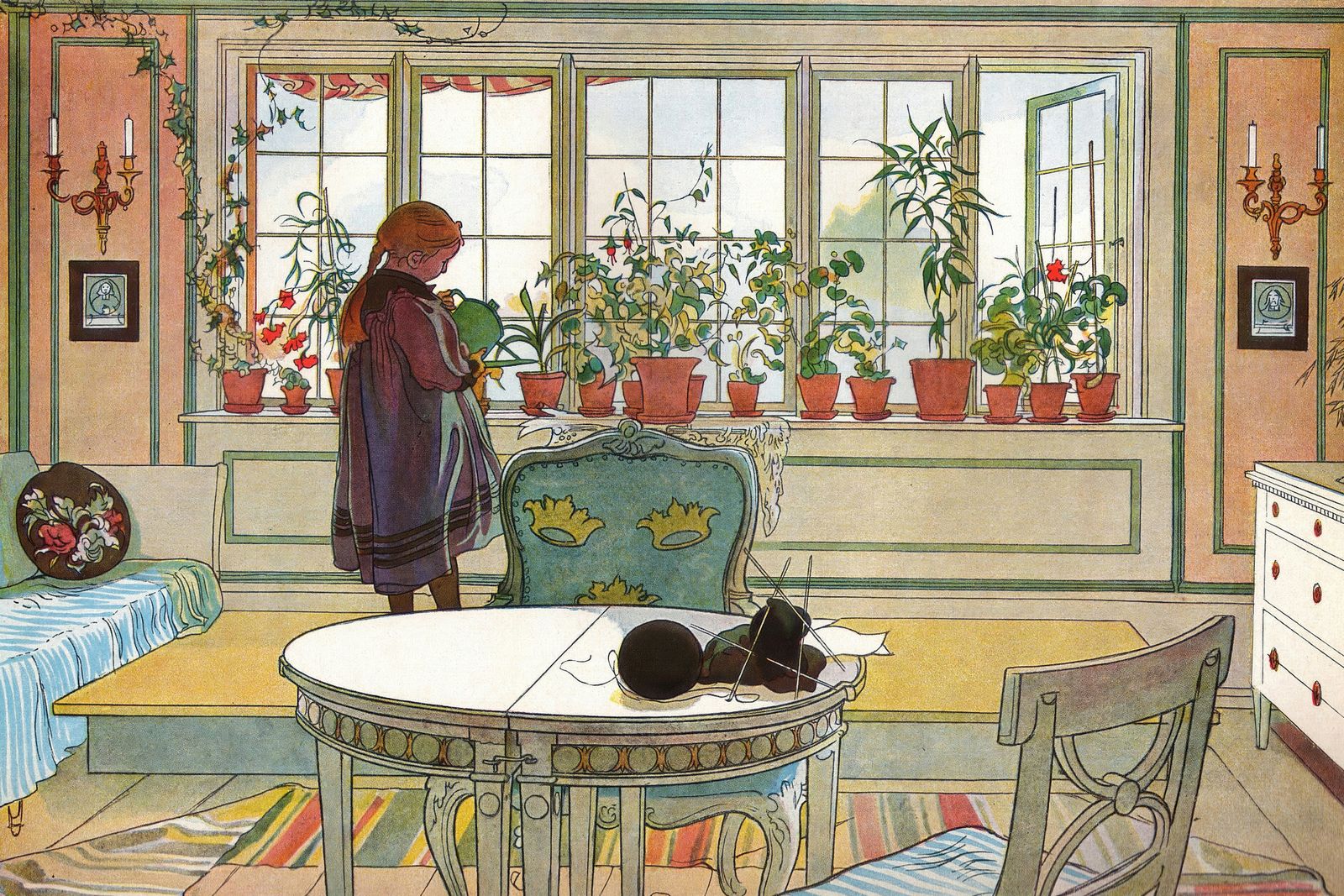
Flowers on the Windowsill. From A Home · Carl Larsson · 1894 · Nationalmuseum, Stockholm. Prepared for print by Surrealium at Vaxholm Fortress, Sweden
Carl Larsson's Flowers on the Windowsill places colour across a furnished interior rather than concentrating it in one decorative object. Plants, painted surfaces, chairs and textiles contribute to the whole. It is a useful reference for thinking about how a cushion participates in a room without claiming that the pictured furnishings are current products.
Look at the chair or sofa you already have. Is it visually quiet, or does it carry a strong pattern? A cushion can repeat one existing colour while introducing a different scale of detail. It does not need to match every surface. Take a photograph of the room in ordinary light and compare the broad colour relationships before choosing. The aim is a deliberate addition, not a small object burdened with the task of transforming everything around it.
Check the dimensions where the cushion will sit
A product photograph can make almost any cushion look substantial. Measure the intended seat and compare the actual dimensions. Fable's current size is 43 × 46 cm, also described as 17 × 18 inches. That is the product size to plan around, rather than an impression created by a staged room image.
Consider how much of the backrest should remain visible and whether the cushion leaves comfortable sitting space. On a small chair, one can be enough. On a long sofa, decide whether several cushions are useful or merely filling the surface. A paper or fabric rectangle of roughly the same size can help you judge the scale. Do not assume that a larger arrangement looks more generous; the right size is the one that works with the furniture and the way you use it.
Distinguish a material from its painted appearance
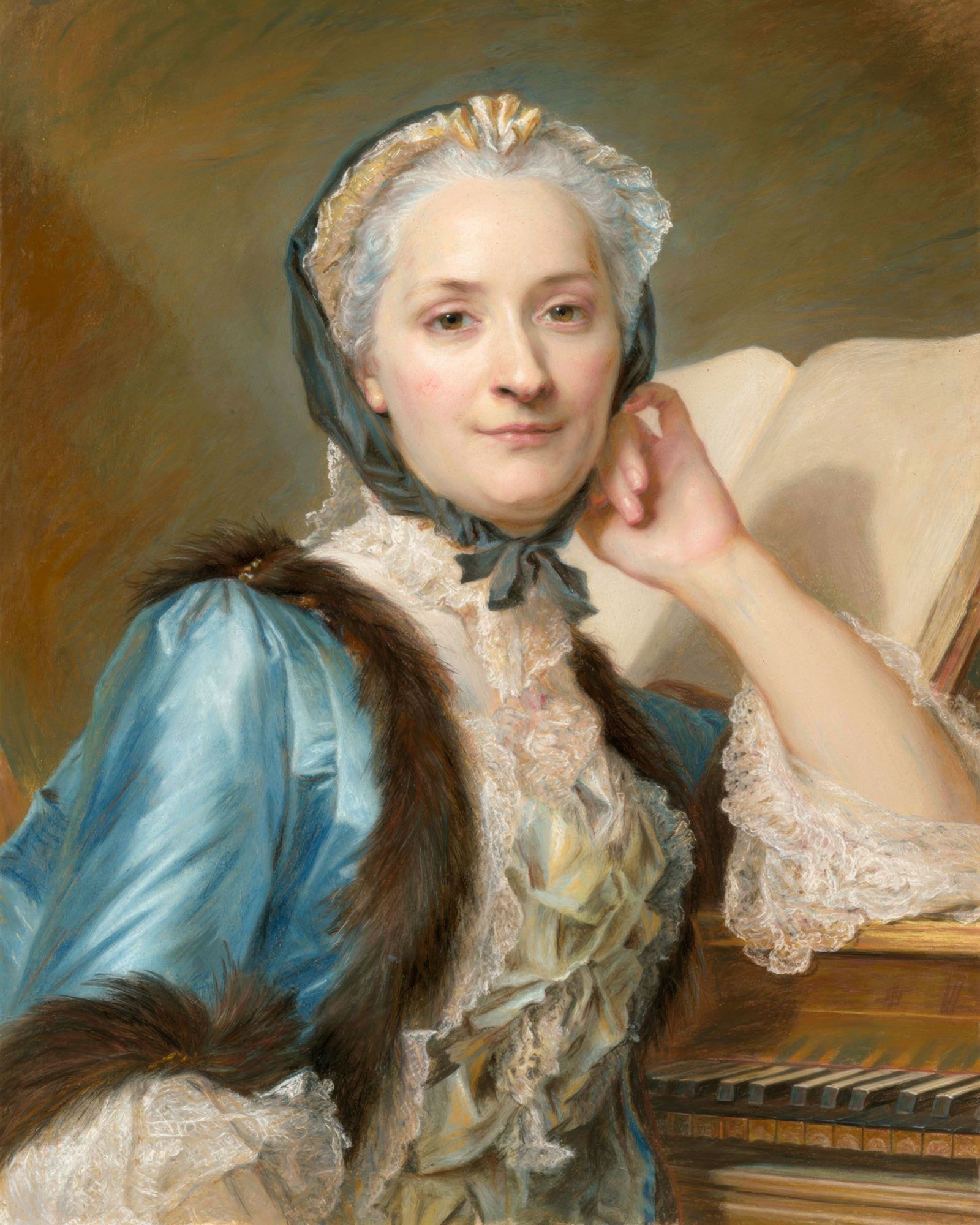
Portrait of Madame de Mondonville · Maurice-Quentin de La Tour · c. 1752 · Art Institute of Chicago. Restored by Surrealium at Vaxholm Fortress, Sweden
Maurice Quentin de La Tour's portrait of Madame de Mondonville gives careful attention to clothing and its changing tones. A painted textile can suggest softness or sheen, but it cannot tell you how a modern cushion feels. The image is a visual comparison, not material evidence for a product.
Read the actual fabric description. Fable describes its outer fabric as a cotton and polyester blend. The insert uses recycled polyester and is sewn closed; that is a different component from the outer fabric. Keeping those facts separate prevents a broad claim about one part from being applied to the whole object. Do not infer silk, wool or an all-natural composition from a historic-looking design. The pattern's inspiration and the product's material are distinct things, and both should be described accurately.
Consider what happens when it turns over
A cushion is handled, leaned against and moved. The reverse is therefore part of the experience, not an invisible technical detail. Fable's current range has the same picture woven on both sides, which means the image remains present when the cushion turns. That is a concrete feature to compare with other options.
Also consider the relationship between a detailed design and everyday viewing distance. A picture may look intricate close up while reading as a broad field of colour from across the room. Both views can be appealing, but they do different jobs. Look at the design as a whole before focusing on tiny details. Do not judge the material solely from a screen image, and follow the care information supplied with the current product rather than assuming a washing method from its appearance.
Give pattern a clear hierarchy
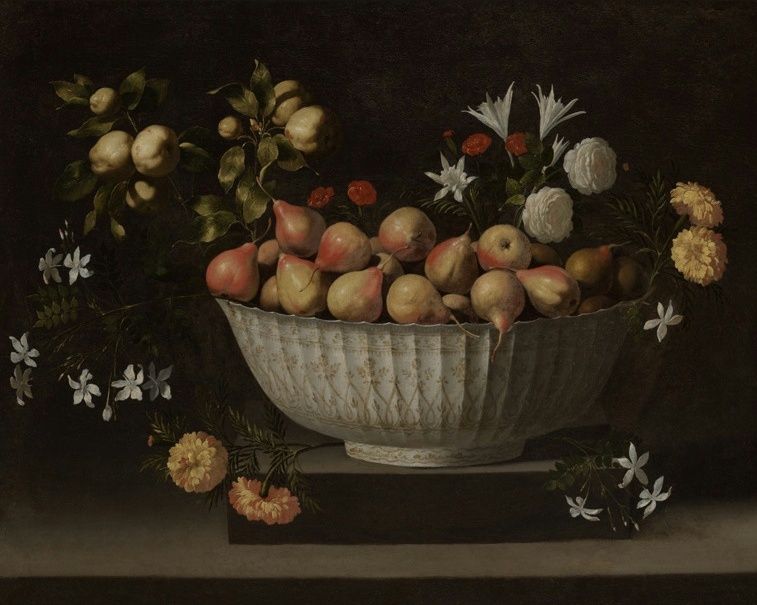
Flowers and Fruit in a Porcelain Bowl · Juan de Zurbarán · c. 1645 · Art Institute of Chicago. Restored by Surrealium at Vaxholm Fortress, Sweden
Juan de Zurbarán's Flowers and Fruit in a Porcelain Bowl brings several kinds of texture into one contained arrangement. The vessel, fruit and blooms do not all have the same visual weight. That hierarchy is useful when thinking about a patterned cushion beside patterned furniture.
Choose which element should lead. If the upholstery is busy, a design with a clearer central subject may be easier to read. If the room is quiet, a denser pattern can provide interest. Do not confuse this with a rule that every room needs a statement piece. Sometimes a modest repetition of colour is enough. Compare the pattern's scale with the chair or sofa, then step back. The cushion should make sense as part of the room before you ask whether every small motif can be seen.
Personalisation should belong to the household
A pet portrait can make a cushion specific to the people who live with it. That choice is strongest when the animal's features remain recognisable and the design suits the room. It need not become a joke or an imitation of a human portrait. Choose a natural source photograph and keep the pet's own character central.
The current Fable process uses one pet per cushion, with an optional companion photo in the relevant route. Inspect the actual choices before assuming that multiple animals or every kind of text can be included. For a gift, consider the recipient's taste and available space as well as their affection for the pet. A personal subject does not remove the practical questions about scale, colour and use. The most thoughtful object answers those questions together.
Imagine the room on an ordinary evening
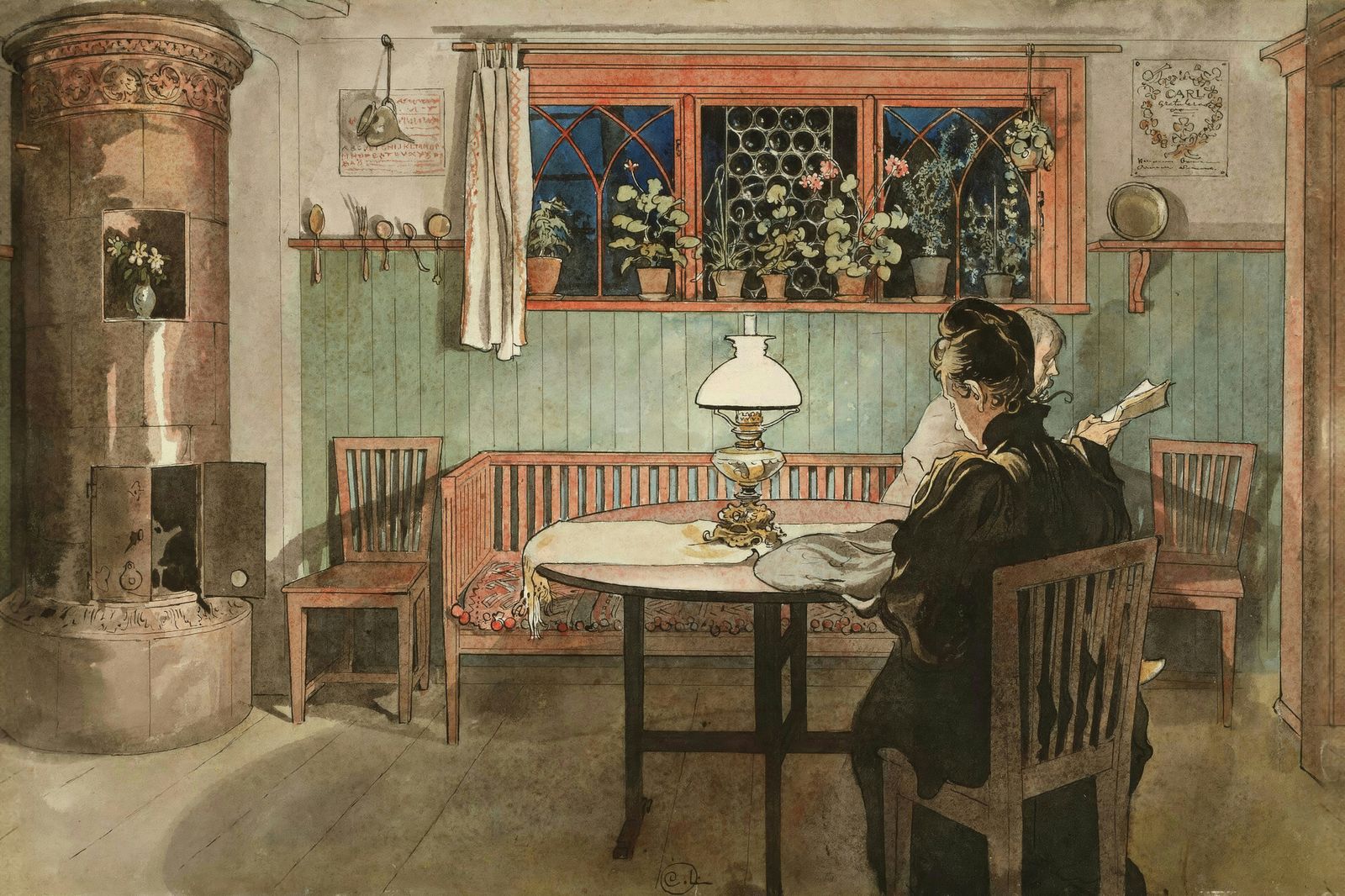
When the Children Have Gone to Bed. From A Home · Carl Larsson · 1899 · Nationalmuseum, Stockholm. Prepared for print by Surrealium at Vaxholm Fortress, Sweden
Larsson's When the Children Have Gone to Bed presents a domestic interior at a quieter moment. Furniture, light and the seated figure belong to an everyday rhythm. It is a helpful final comparison because a cushion will usually be encountered in ordinary life, not under the conditions of a product photograph.
Think about where you read, rest or talk at the end of the day. Is the cushion comfortable to keep there, and does its picture still feel welcome when the room is not arranged for display? A purchase can be considered without being precious. The useful test is whether you expect to live with the object easily. Check the current specifications, choose a design you enjoy as a whole and leave enough room for the furniture to remain useful.
Continue with a William Morris cushion with your pet in the pattern, Christmas throw pillows with a pet and a place beyond December, personalised Pet Cushions: Your Pet, Woven into Art, custom dog pillow: choose the photo, then the design, and the full catalogue record for Flowers on the Windowsill. From A Home.
Explore Fable's cushion range with the dimensions, fabric and room in mind. The historic references can help you notice colour and pattern, while the current product page supplies the actual choices. Let the decision rest on those details rather than on the word luxury alone.
- What makes a throw pillow worth choosing?
- Look at the size, fabric, construction and design in relation to its intended use. A luxury label is not a specification. The cushion should fit the furniture, feel appropriate to the household and have a pattern you enjoy beyond the first impression.
- What are Fable cushions made from?
- The current outer fabric is described as a cotton and polyester blend. The recycled polyester insert is a separate component and is sewn closed. Do not treat the insert description as a claim about the entire cushion.
- How large are Fable cushions?
- The current stated size is 43 × 46 cm, or 17 × 18 inches. Measure the chair or sofa before choosing so that the cushion leaves useful sitting space and has the visual scale you want.
- Is the design on both sides?
- The current Fable product has the same picture woven on both sides. Check the current product information when ordering. The historic paintings in this guide are visual references, not photographs showing the cushion’s fabric or construction.