Famous Rococo paintings: ten works to look at slowly
Look beyond the pastel palette in ten Rococo paintings, from Fragonard’s Swing to Boucher’s Venus and Lancret’s garden figures.
Famous Rococo paintings are often introduced through pale pinks, elaborate dresses and playful gardens. Those features are visible, but they do not explain how the pictures work. A diagonal swing, a turned wrist or a bright sleeve can organise the whole composition, while darker foliage gives the light fabrics somewhere to shine.
This selection places a familiar work, Fragonard's The Swing, beside less familiar paintings from Fable's catalogue. It is a route through the style, not a ranking of the ten most famous pictures or a complete history of eighteenth-century art. Look at the movement of bodies, the scale of the setting and the relation between painted performance and private likeness. The differences become clearer when each work is allowed to remain whole.
1. Lancret's figure within a garden
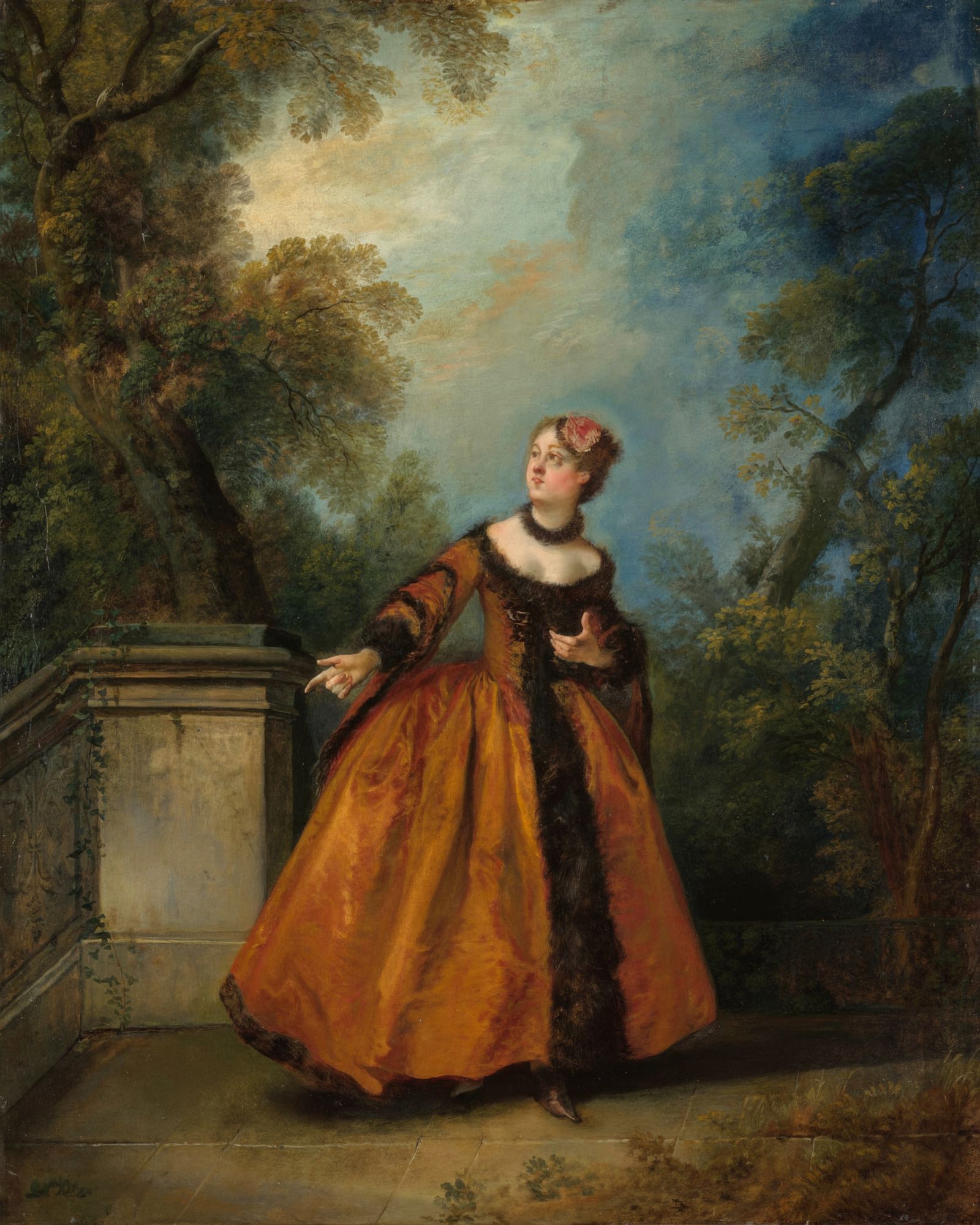
The Beautiful Greek Woman · Nicolas Lancret · 1731–36 · Art Institute of Chicago. Restored by Surrealium at Vaxholm Fortress, Sweden.
The Beautiful Greek Woman places a full-length figure beside a stone balustrade, with an ochre skirt spreading below the dark bodice and a garden opening behind. The historic title should not be treated as proof of the sitter's nationality. Look instead at how the extended arm and turning head connect the figure to the surrounding space, making the portrait-like presence part of a larger theatrical setting.
2. Boucher builds a fountain around Venus
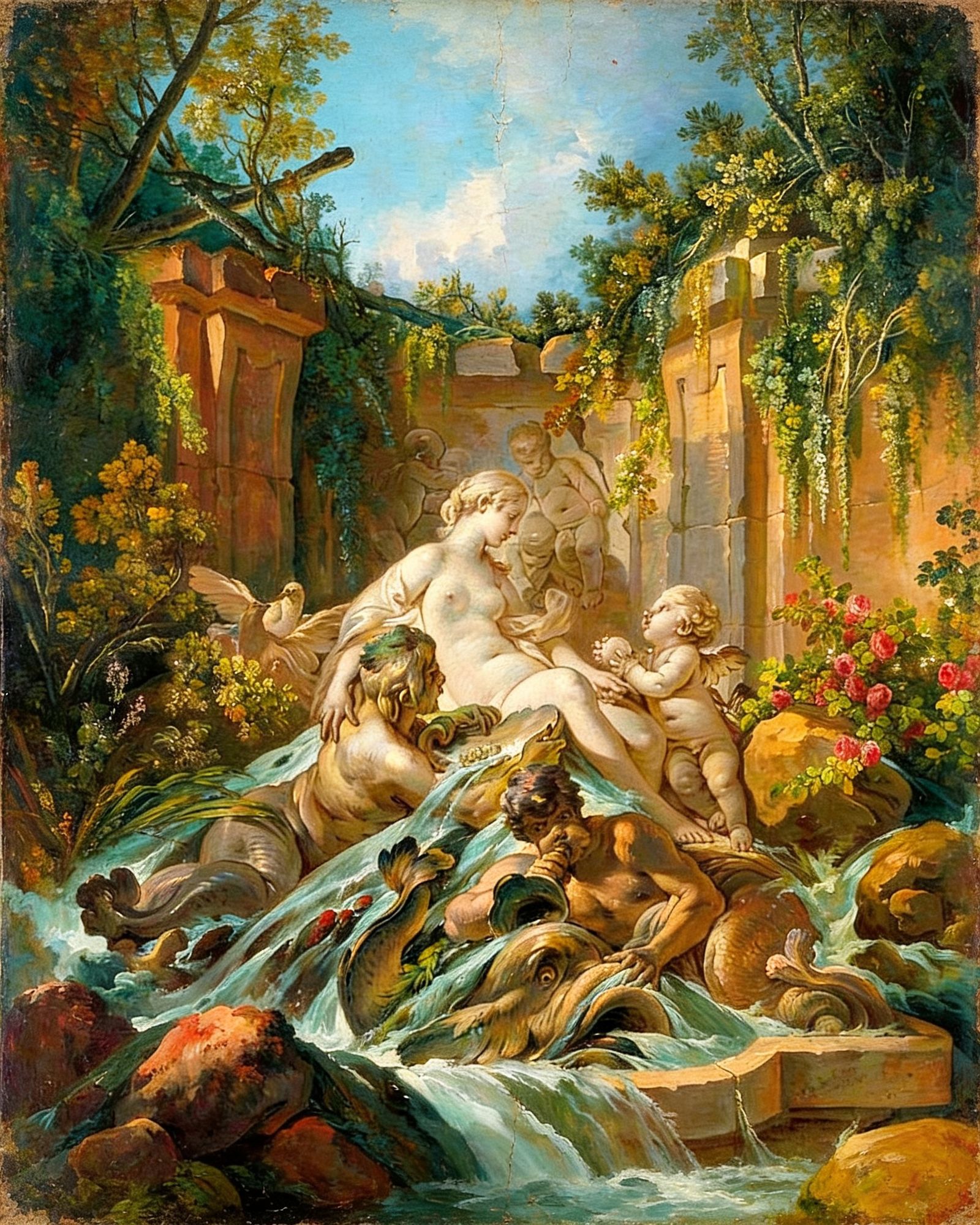
Fountain of Venus · François Boucher · 1756 · The Cleveland Museum of Art. Restored by Surrealium at Vaxholm Fortress, Sweden.
Fountain of Venus gathers pale figures, flowing water, plants and architectural fragments into a tall, crowded arrangement. The eye moves through diagonals and repeated curves rather than settling on a single isolated body. The decorative richness is easier to understand when the entire work is visible: the water at the bottom and the opening of sky above give the central group its place within the imagined setting.
3. Pompadour at her toilette
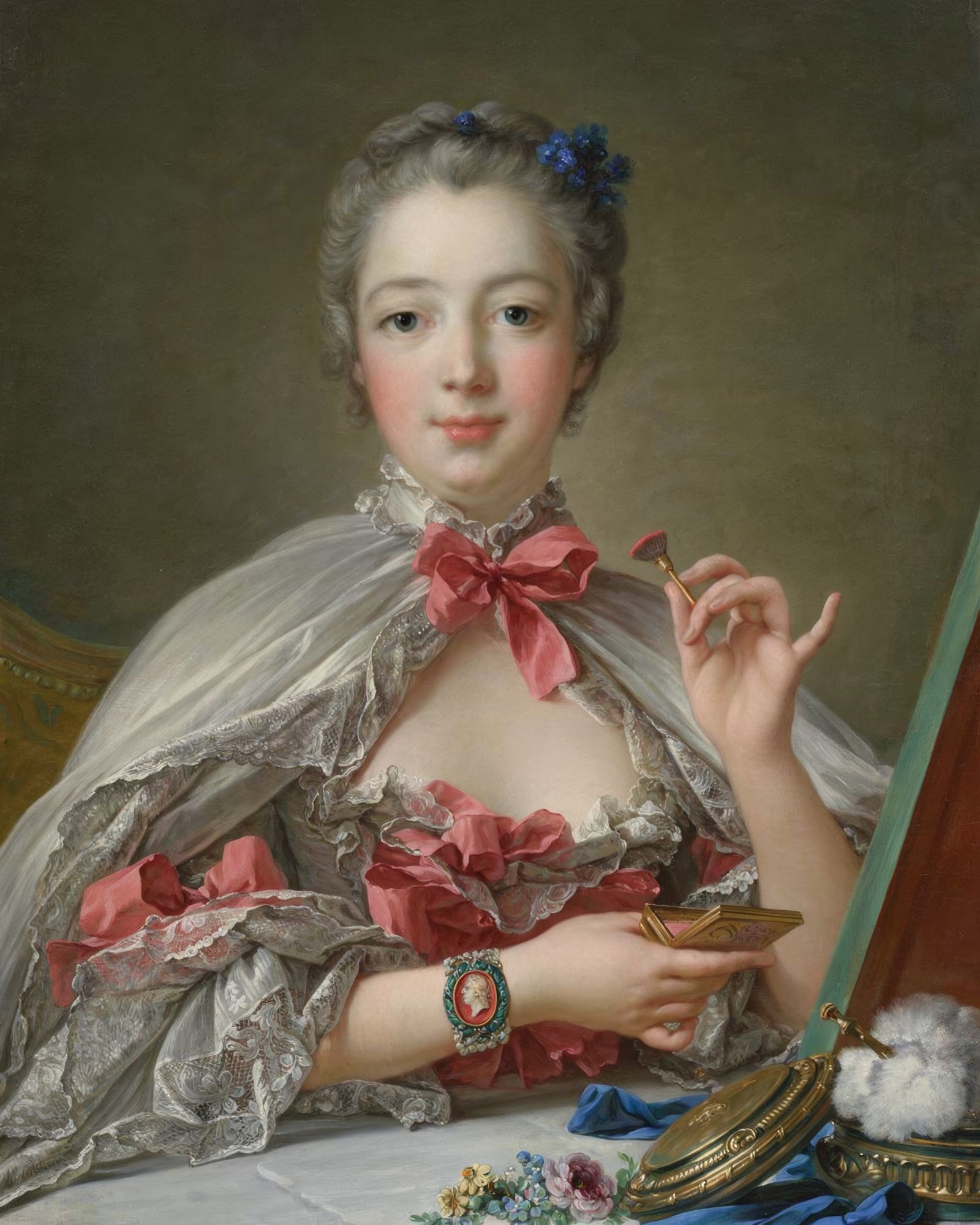
Pompadour at Her Toilette · François Boucher · 1750, with later additions · Harvard Art Museums. Restored by Surrealium at Vaxholm Fortress, Sweden.
Boucher's Pompadour at Her Toilette brings the sitter close, with ribbons, translucent fabric and small objects around her hands creating a carefully varied surface. Harvard dates the work to 1750 with later additions, a qualification worth retaining rather than smoothing the object into a single untouched moment. The intimate scale of the scene offers a different kind of spectacle from the expansive mythology elsewhere in this selection.
4. The Triumph of Venus spreads across the sea
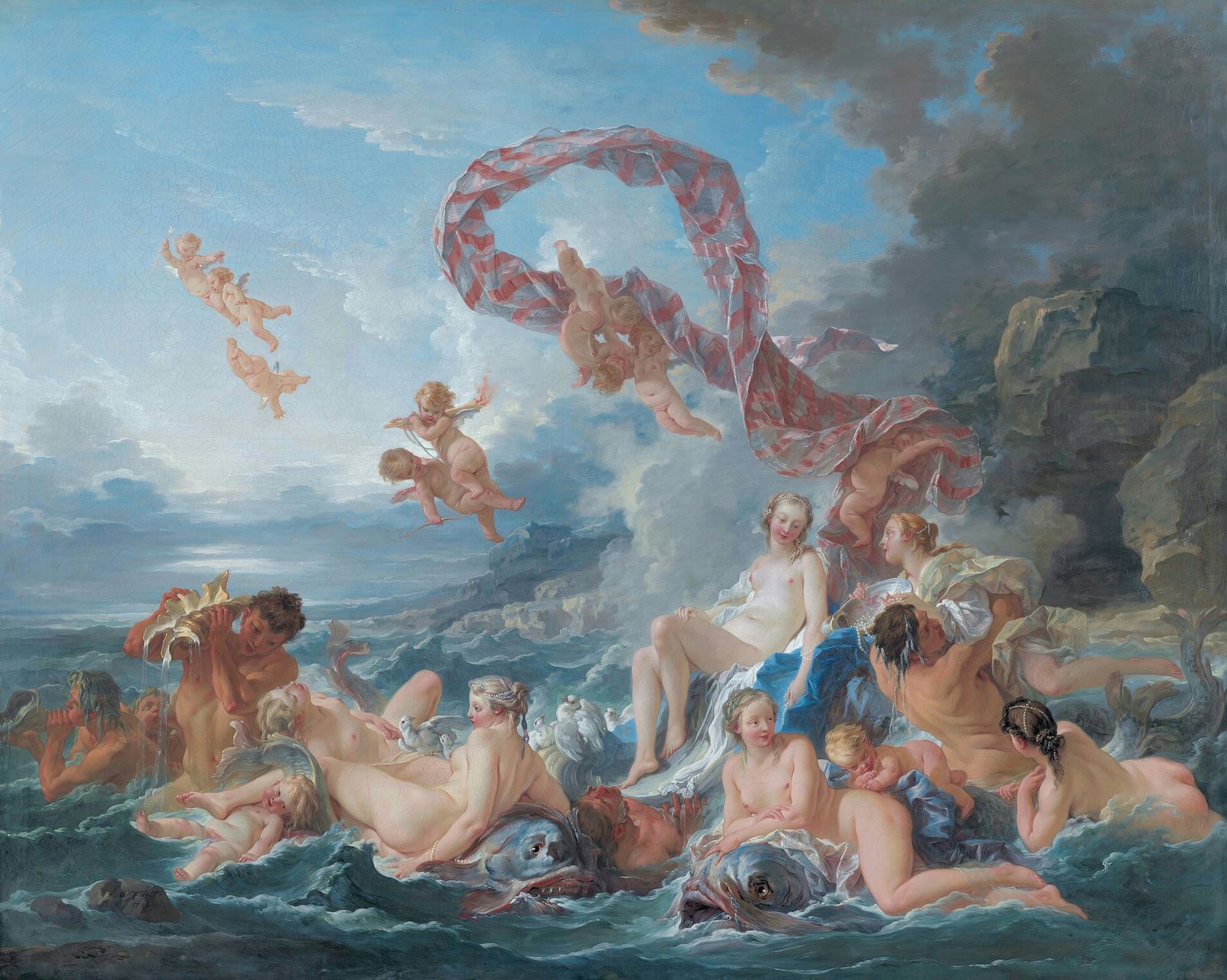
The Triumph of Venus · François Boucher · 1740 · Nationalmuseum, Stockholm (NM 770). Prepared for print by Surrealium at Vaxholm Fortress, Sweden.
Boucher's The Triumph of Venus fills a broad seascape with figures, billowing fabric and small airborne bodies, making the goddess part of a larger movement. Follow the pale forms from the water towards the lifted pink drapery, then return to the darker waves that support them. The picture's abundance depends on those contrasts of height and tone, not simply on the presence of many decorative figures.
5. Lancret's conversation under the trees
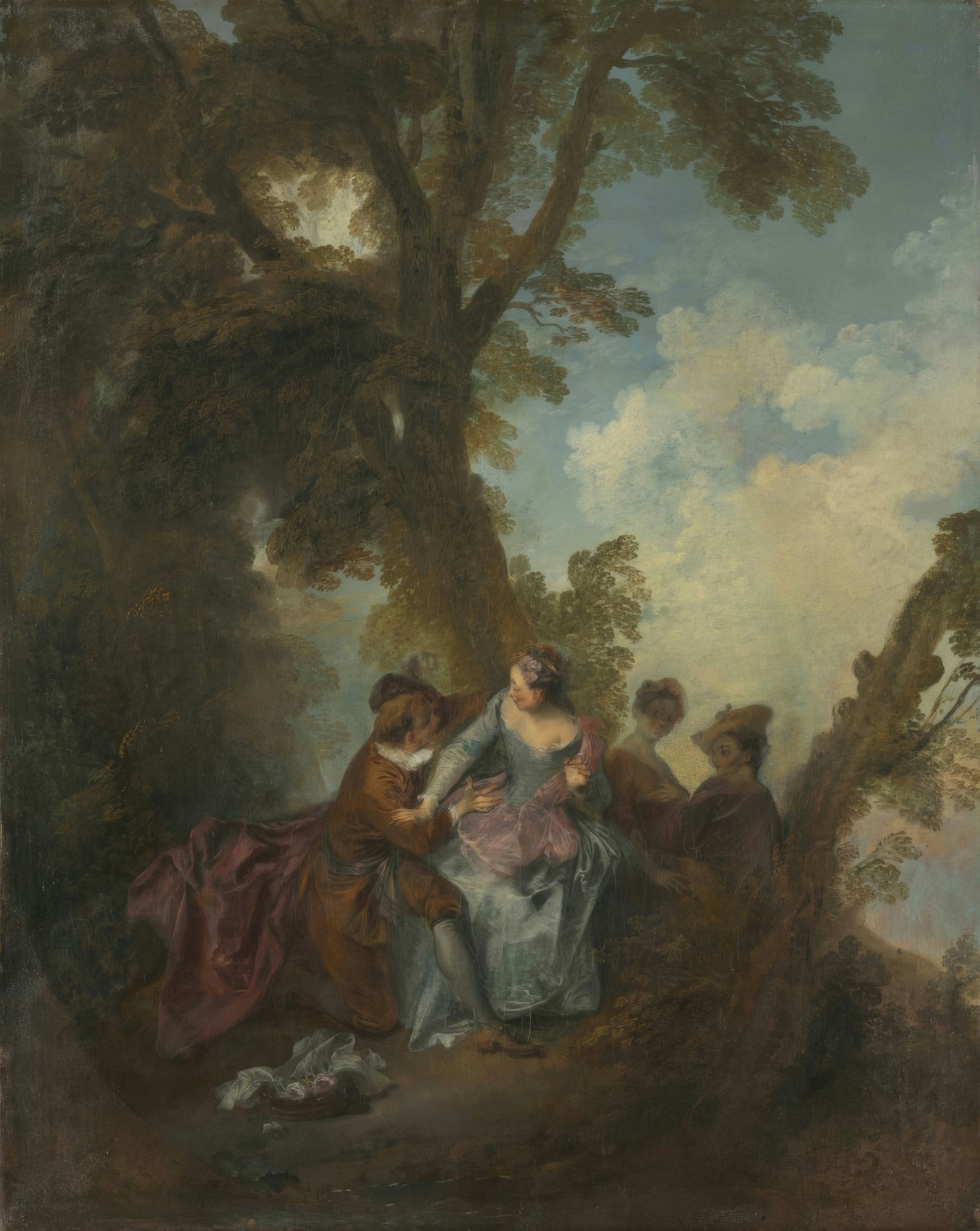
Declaration of Love · Nicolas Lancret · c. 1720 · The Cleveland Museum of Art. Prepared for print by Surrealium at Vaxholm Fortress, Sweden.
Declaration of Love keeps its small group low within a much larger landscape, with the tree and opening sky giving the encounter a sheltered setting. The figures' gestures direct attention towards one another, while the garden prevents the scene from becoming a close portrait. It shows how a relationship can be staged through distance and shared space, leaving the viewer to observe the encounter from outside it.
6. Fragonard's boy in a red-lined cloak
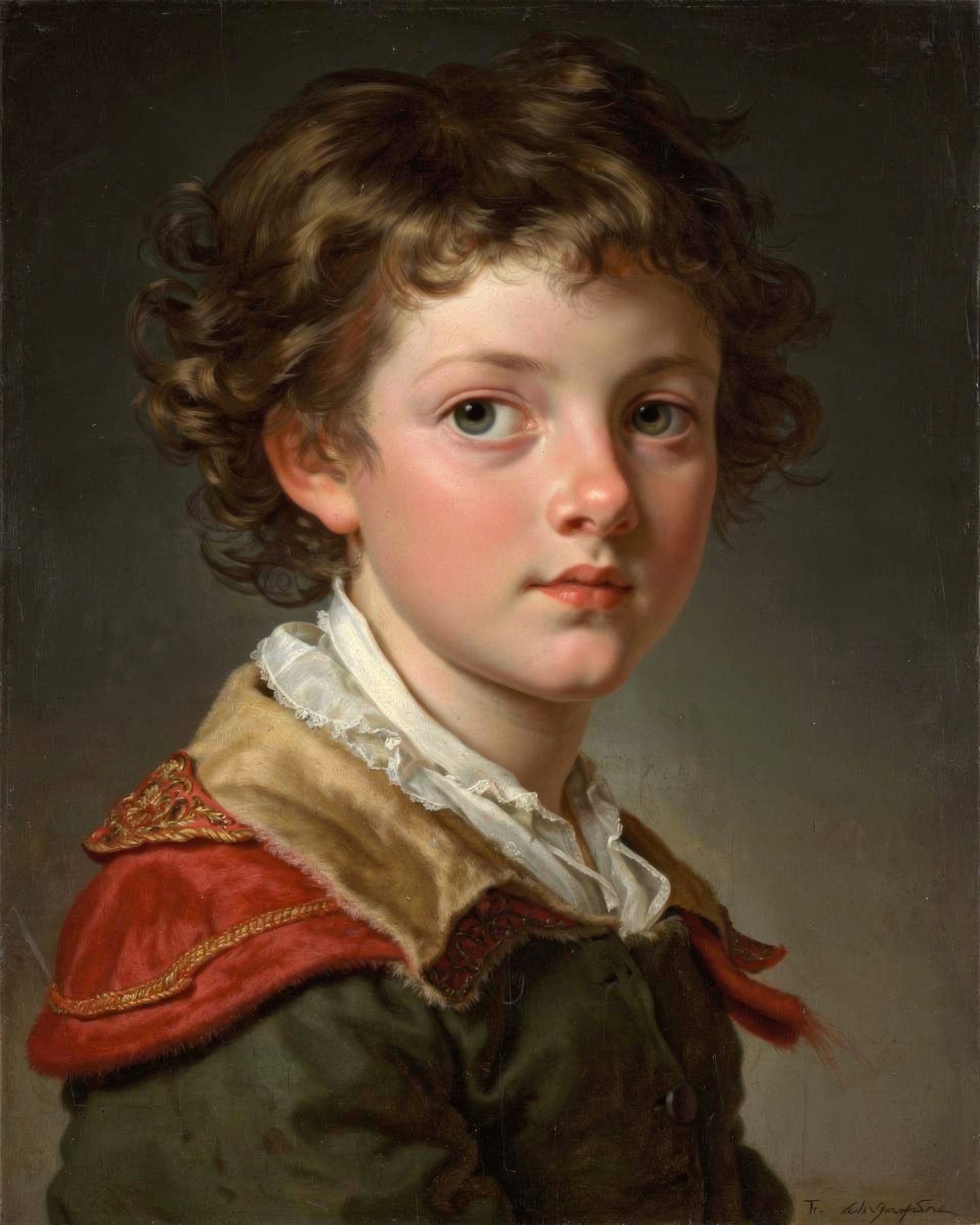
A Boy in a Red-lined Cloak · Jean-Honoré Fragonard · 1780s · The Cleveland Museum of Art. Restored by Surrealium at Vaxholm Fortress, Sweden.
A Boy in a Red-lined Cloak brings the head and shoulders forward against a quiet dark ground, with warm red fabric framing the face. The picture offers a useful pause among the crowded gardens and mythological scenes. Look at the turn of the head and the contrast between soft hair and firmer folds: a Rococo selection can include the concentrated presence of an individual as well as elaborate social play.
7. The Swing and its moving diagonals
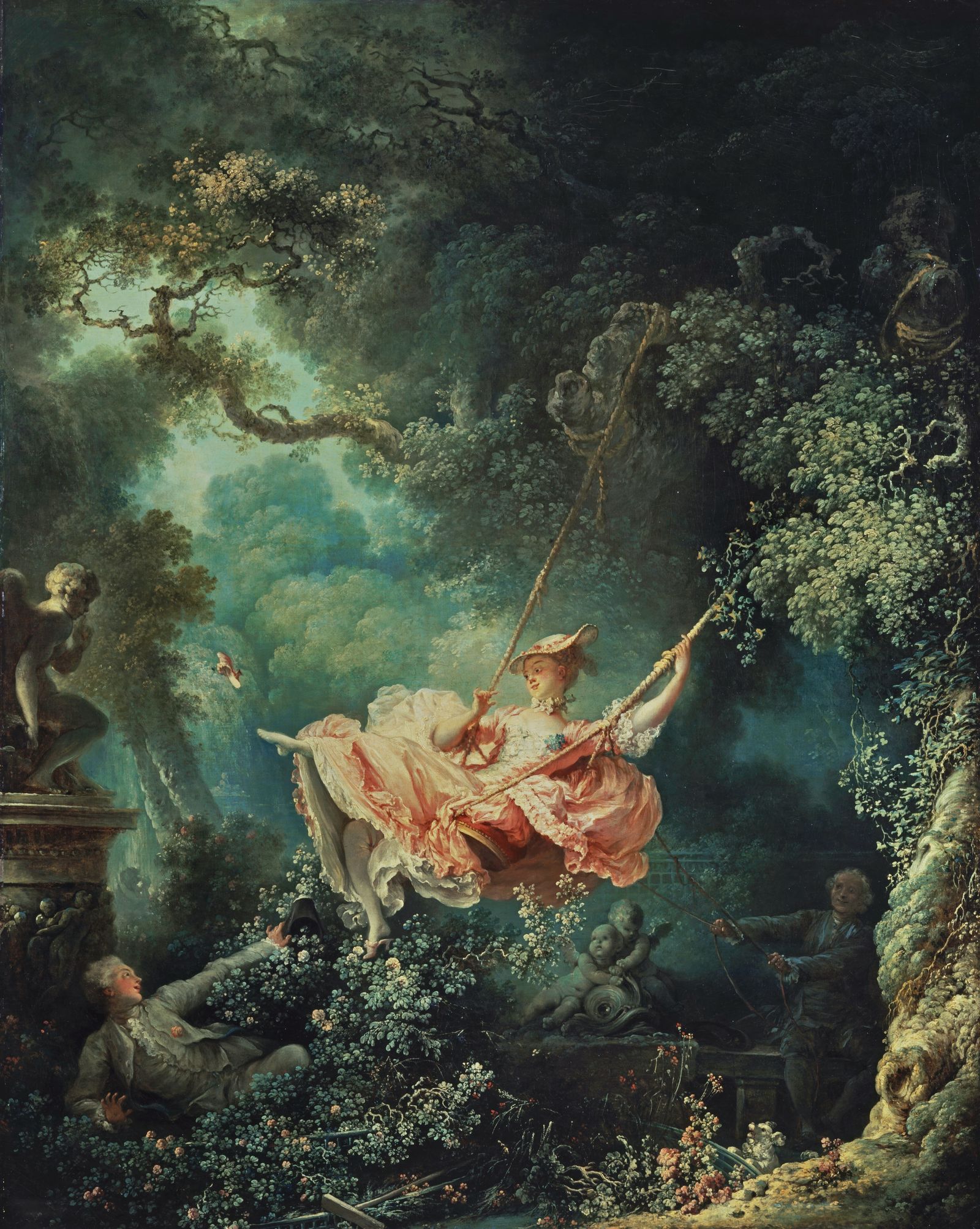
The Swing · Jean-Honoré Fragonard · 1767 · The Wallace Collection, London. Prepared for print by Surrealium at Vaxholm Fortress, Sweden.
Fragonard's The Swing suspends the pale pink dress within a deep green garden, with ropes, branches and the extended leg setting up intersecting directions. The lifted shoe is one lively detail, but the whole space is needed to understand the figures' different positions around the moving sitter. A close crop of the dress would preserve a pretty passage while losing the visual relationships that make the painting so memorable.
8. Boucher's pastoral encounter
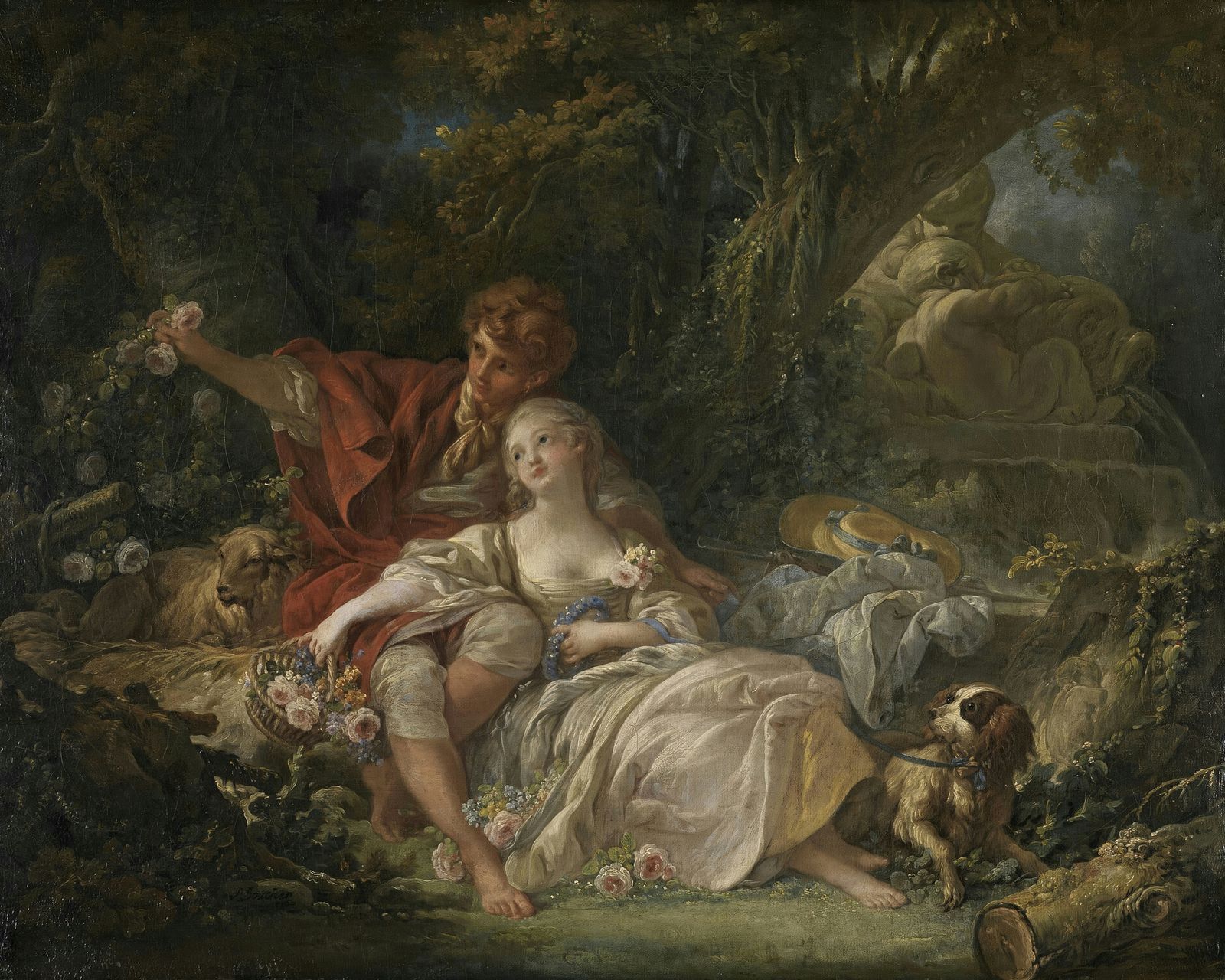
Shepherd and Shepherdess · François Boucher · 1760 · Staatliche Kunsthalle Karlsruhe (479). Prepared for print by Surrealium at Vaxholm Fortress, Sweden.
Shepherd and Shepherdess places the pair among foliage, animals and resting objects, with the man's lifted arm drawing attention across the upper part of the group. The rural setting is arranged as a scene of leisure rather than a documentary account of agricultural work. Compare the pale dress with the darker surrounding ground, and notice how the seated bodies create a compact centre within the loose abundance of the landscape.
9. Lancret's dancer has an audience
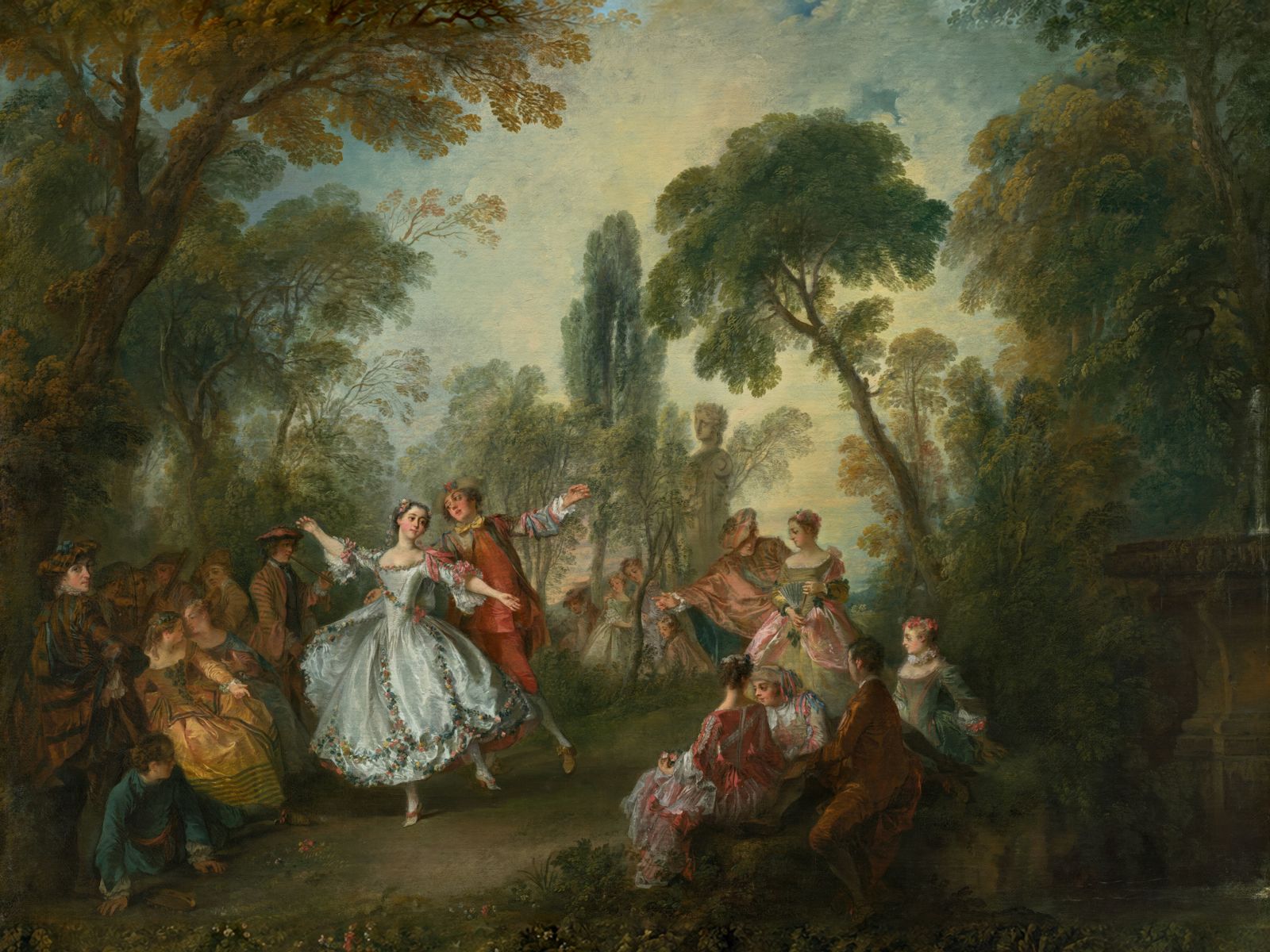
La Camargo Dancing · Nicolas Lancret · c. 1730 · National Gallery of Art, Washington. Prepared for print by Surrealium at Vaxholm Fortress, Sweden.
La Camargo Dancing gives the dancer room within a garden gathering, with seated and standing spectators forming a surrounding rhythm. The pale skirt is prominent because the other figures and trees establish a darker, less central field. The painting makes performance a social relation: the dancer's gesture matters, but so do the people looking towards it and the open space that allows the movement to be seen.
10. Boucher's close study of a face
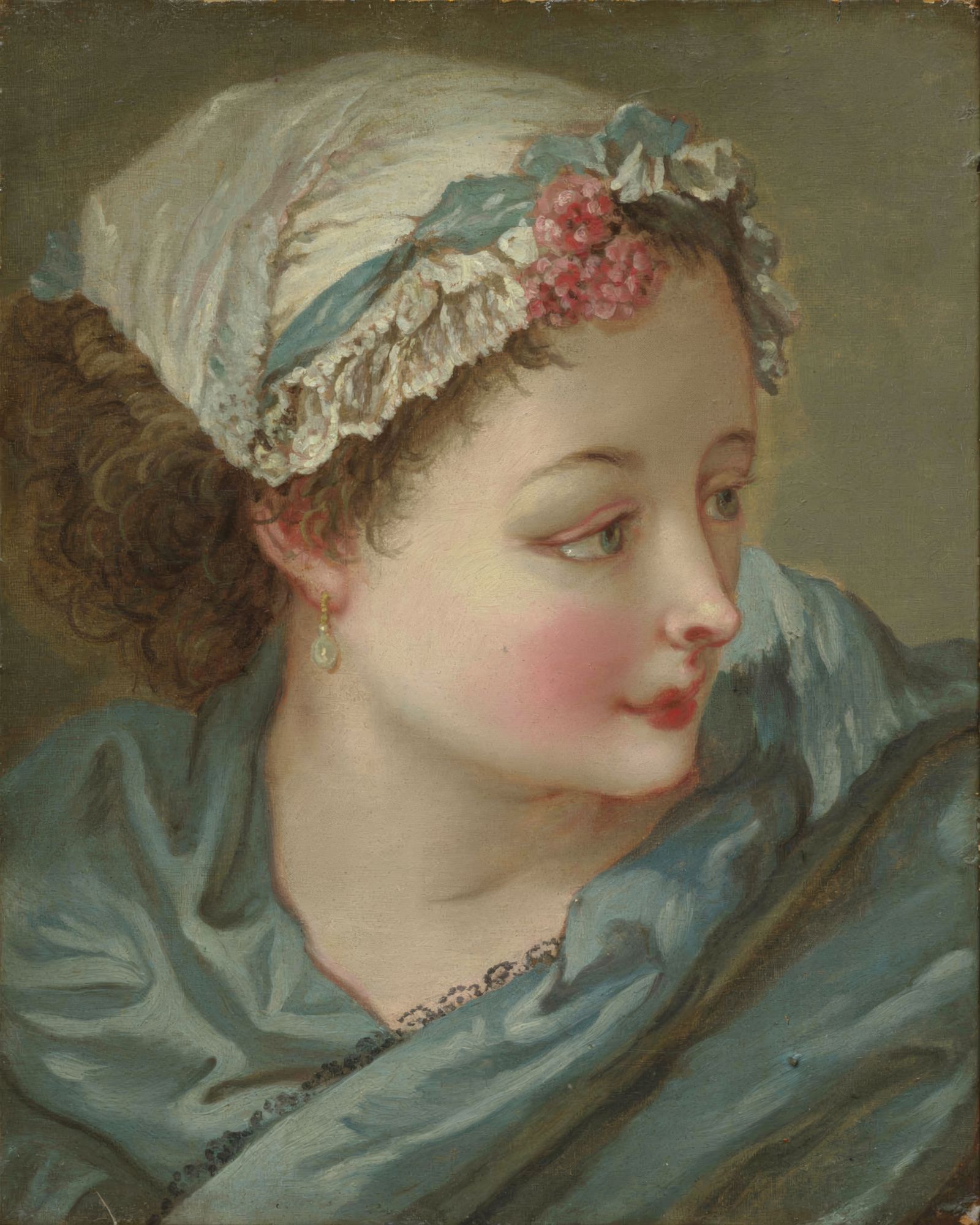
Head of a Young Woman · François Boucher · early 1730s · The Cleveland Museum of Art. Restored by Surrealium at Vaxholm Fortress, Sweden.
Head of a Young Woman brings a turned face close, with a pale cap, blue ribbons and a small pink flower gathering around the forehead. The surrounding blue fabric makes a broad, soft shape beneath the more precisely observed features. Ending with this concentrated head allows a comparison with the full gardens above: decorative colour can support an individual face as well as an elaborate social scene.
Choose a work by the kind of looking it invites. A close portrait rewards attention to expression and fabric, while a crowded garden or mythological scene asks for time to follow several small actions. The best print choice is not necessarily the most familiar name. Keep the full composition, and compare how its light, dark areas and scale will read from the place where you intend to look at it.
The Rococo art and style guide offers a wider introduction. Compare the different light in Caravaggio's paintings and the later social world of Manet, or follow the story of Venus. Browse the Rococo collection and Boucher's works to continue with the individual pictures.
- What makes a painting Rococo?
- In this selection, look for movement through curves and diagonals, decorative surfaces, intimate encounters and staged gardens or mythological settings. These are ways of comparing the works, not a checklist that every eighteenth-century picture must satisfy. The individual artist, date and subject still matter.
- Is The Swing the only famous Rococo painting here?
- It is the most immediately familiar example for many readers, but the selection also includes Boucher’s Triumph of Venus and other museum-held works. The list is designed for close looking rather than a popularity ranking, so it deliberately includes pictures that may be new to you.
- Can a Rococo print work without an elaborate frame?
- The artwork already contains its own relationships of ornament, colour and space. Start by preserving the whole image and choosing a size that lets the important figures remain readable. An ornate surrounding frame is a separate choice, not a requirement imposed by the painting’s period.