Caravaggio paintings: four works and six comparisons
Look closely at four Caravaggio paintings, then six clearly identified comparisons in the wider world of Baroque art.
Caravaggio paintings make an encounter feel immediate through bodies, light and the pressure of a particular instant. A hand recoils, a musician pauses, a face opens in alarm. The drama is visible before you know the full story, but close looking becomes more useful when it is tied to the exact work rather than a general idea of darkness.
The first four pictures here are by Caravaggio. The next six are clearly labelled comparisons by other artists or a workshop; they are not presented as more Caravaggios, and their inclusion does not claim that each painter directly copied him. Together they help distinguish a sudden bodily reaction, a quiet pool of light and a more crowded kind of Baroque movement. One image, Medusa, includes a severed head and blood; the caption and item title make its subject clear.
For the wider setting, read Rubens, Velázquez and Baroque art. The Baroque Masterworks collection also places these encounters among works with very different approaches to light. Use the comparisons as questions you can answer from the pictures themselves.
1. Caravaggio: Boy Bitten by a Lizard
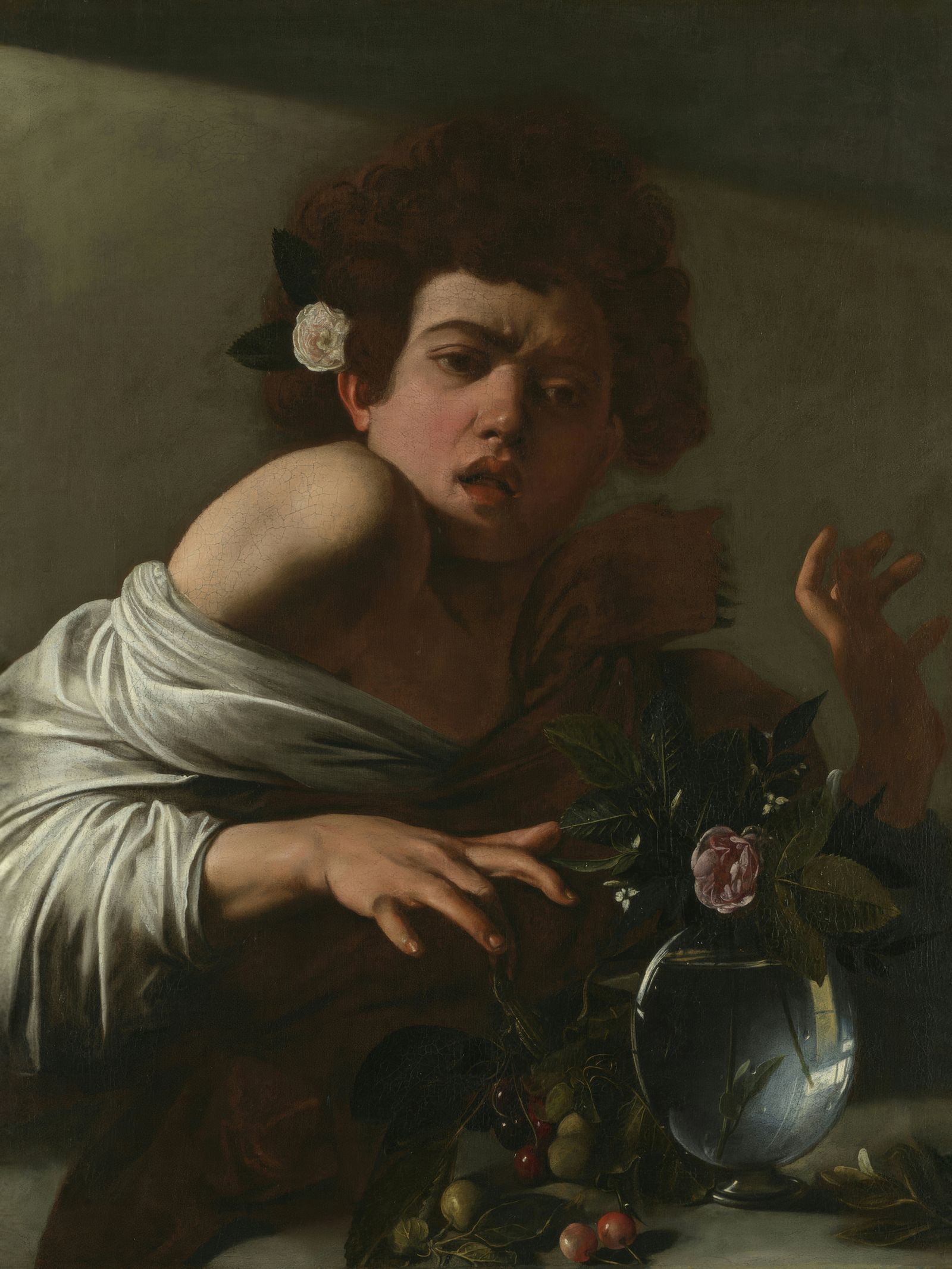
Boy Bitten by a Lizard · Caravaggio, c. 1594–95 · The National Gallery, London. Prepared for print by Surrealium at Vaxholm Fortress, Sweden.
The boy pulls one hand back sharply while the other remains close to a glass vessel, fruit and flowers. His raised shoulder, parted lips and interrupted gesture make the reaction seem to pass through the whole upper body. The tabletop is still carefully arranged, which intensifies the surprise: look from the reflective glass to the recoiling hand and notice how a quiet still life becomes the setting for a brief, uncomfortable event.
2. Caravaggio: The Musicians
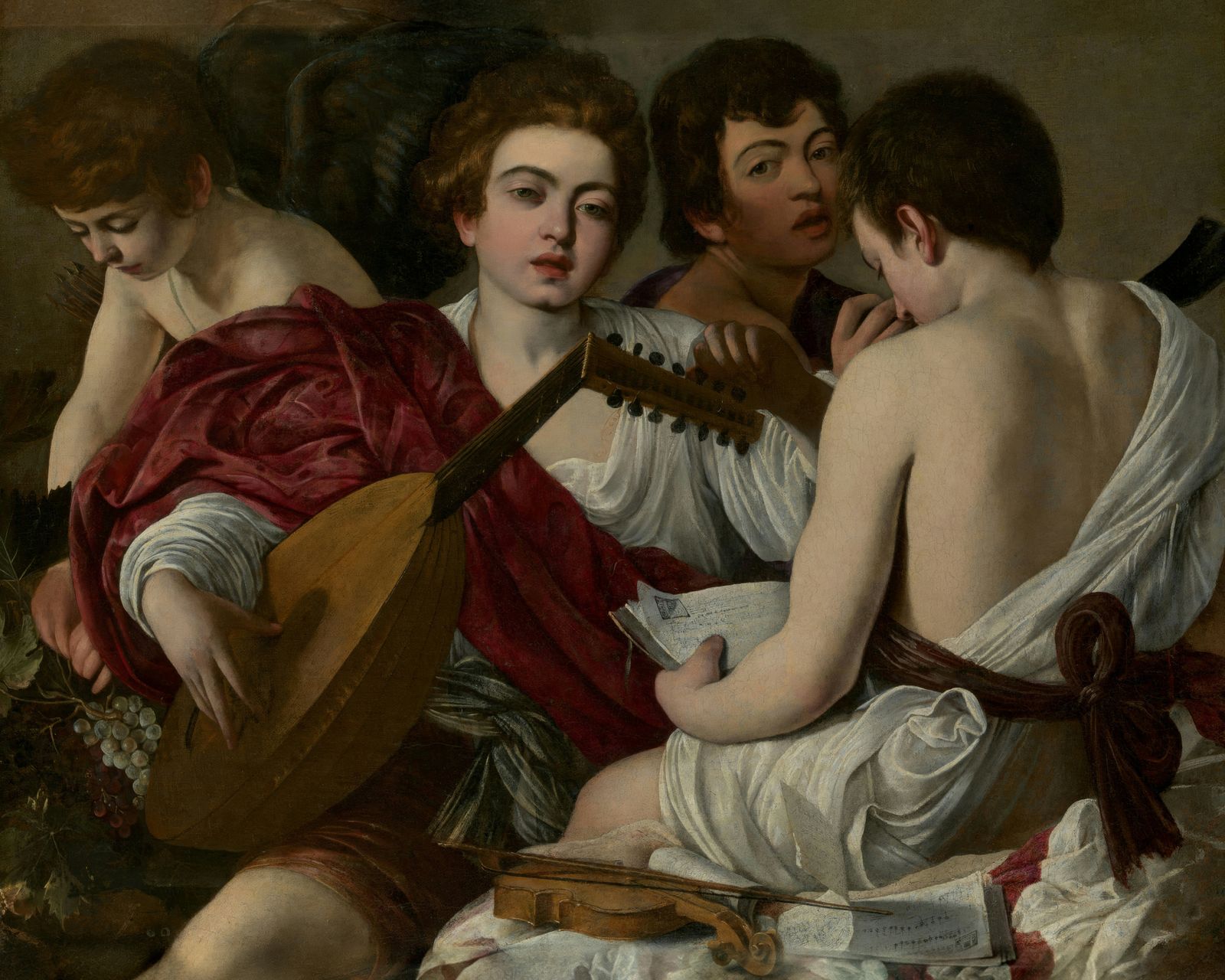
The Musicians · Caravaggio, 1597 · The Metropolitan Museum of Art, New York. Prepared for print by Surrealium at Vaxholm Fortress, Sweden.
The Musicians presses several figures into a shallow space, with a lute, music and bare shoulders creating a sequence of overlapping forms. The central face looks out while other heads turn away, preventing the group from becoming a neat line of performers. Before imagining a concert in progress, study those differences in attention; the picture is full of preparation and interruption, and its closeness makes the space between one person and another especially noticeable.
3. Caravaggio: The Lute Player
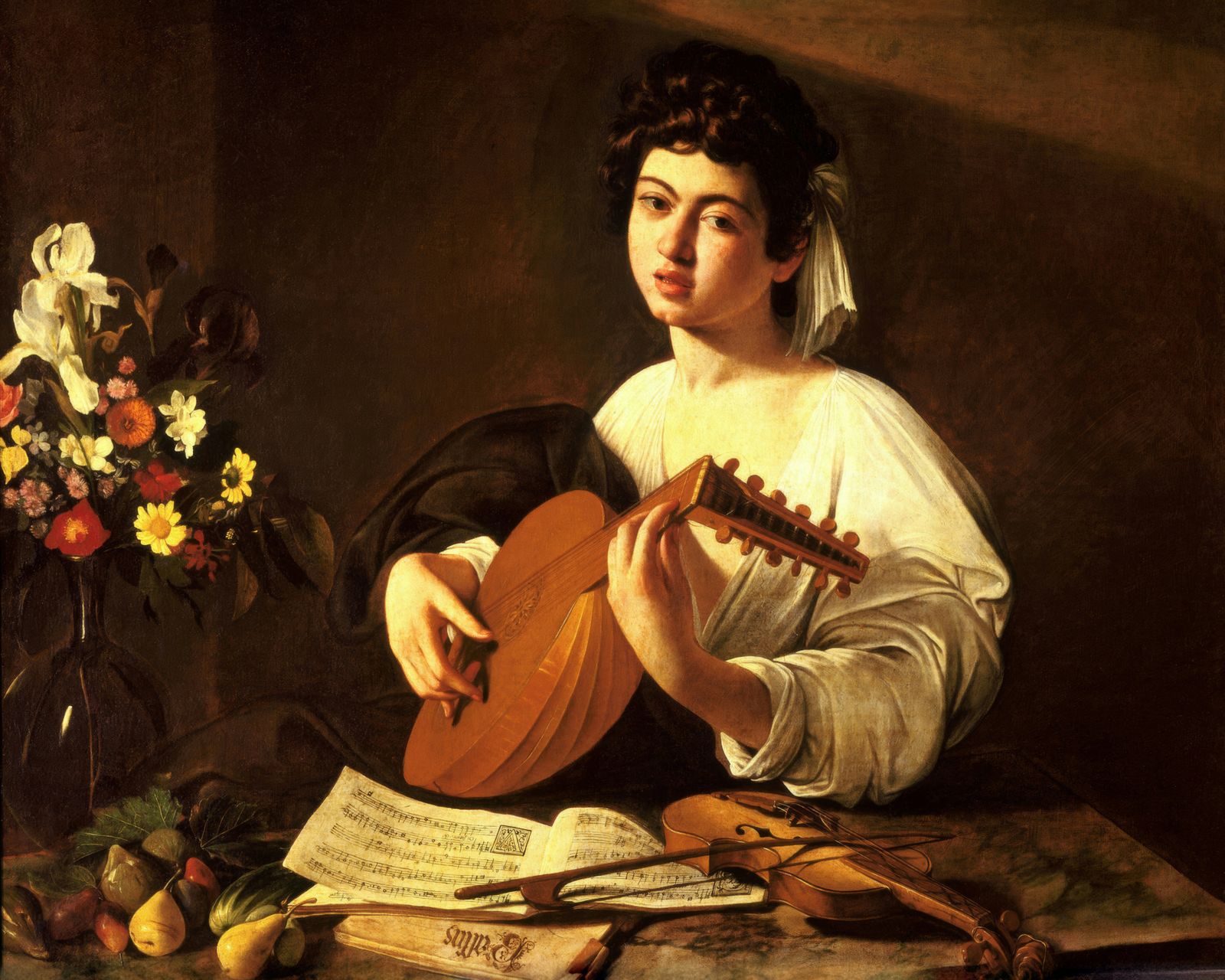
The Lute Player · Caravaggio, c. 1595 · The State Hermitage Museum, St Petersburg. Prepared for print by Surrealium at Vaxholm Fortress, Sweden.
The lute player sits behind an arrangement of music, fruit and flowers, with the rounded instrument occupying much of the foreground. Pale clothing and skin emerge against the dark background, but the small objects retain their own sharp presence. The relationship between the musician and the still life is worth following: the flowers are not merely a border, and the open music provides a bridge between the figure’s action and the viewer’s position at the table.
4. Caravaggio: Medusa
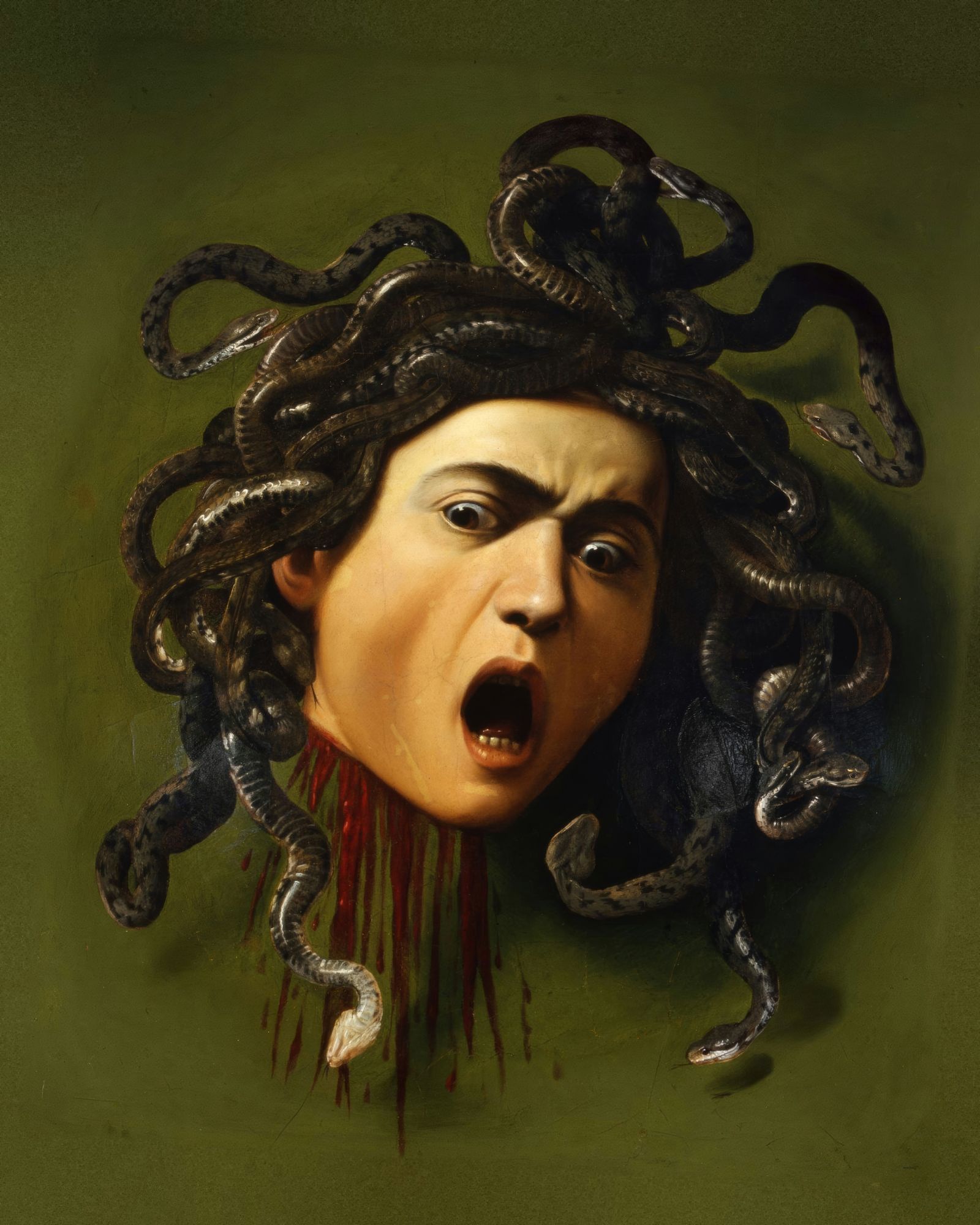
Medusa · Caravaggio, 1597–98 · Gallerie degli Uffizi, Florence. Prepared for print by Surrealium at Vaxholm Fortress, Sweden.
Medusa’s open mouth and widened eyes sit within a ring of twisting snakes, with blood descending below the severed head. The isolated face has no surrounding room to soften the encounter, so the changing directions of the snakes become part of its visual force. This is a violent mythological subject, and it may not suit every room or viewer; looking closely means acknowledging that content rather than treating the image only as a striking arrangement of green and dark tones.
5. Comparison: Ribera’s Saint Jerome
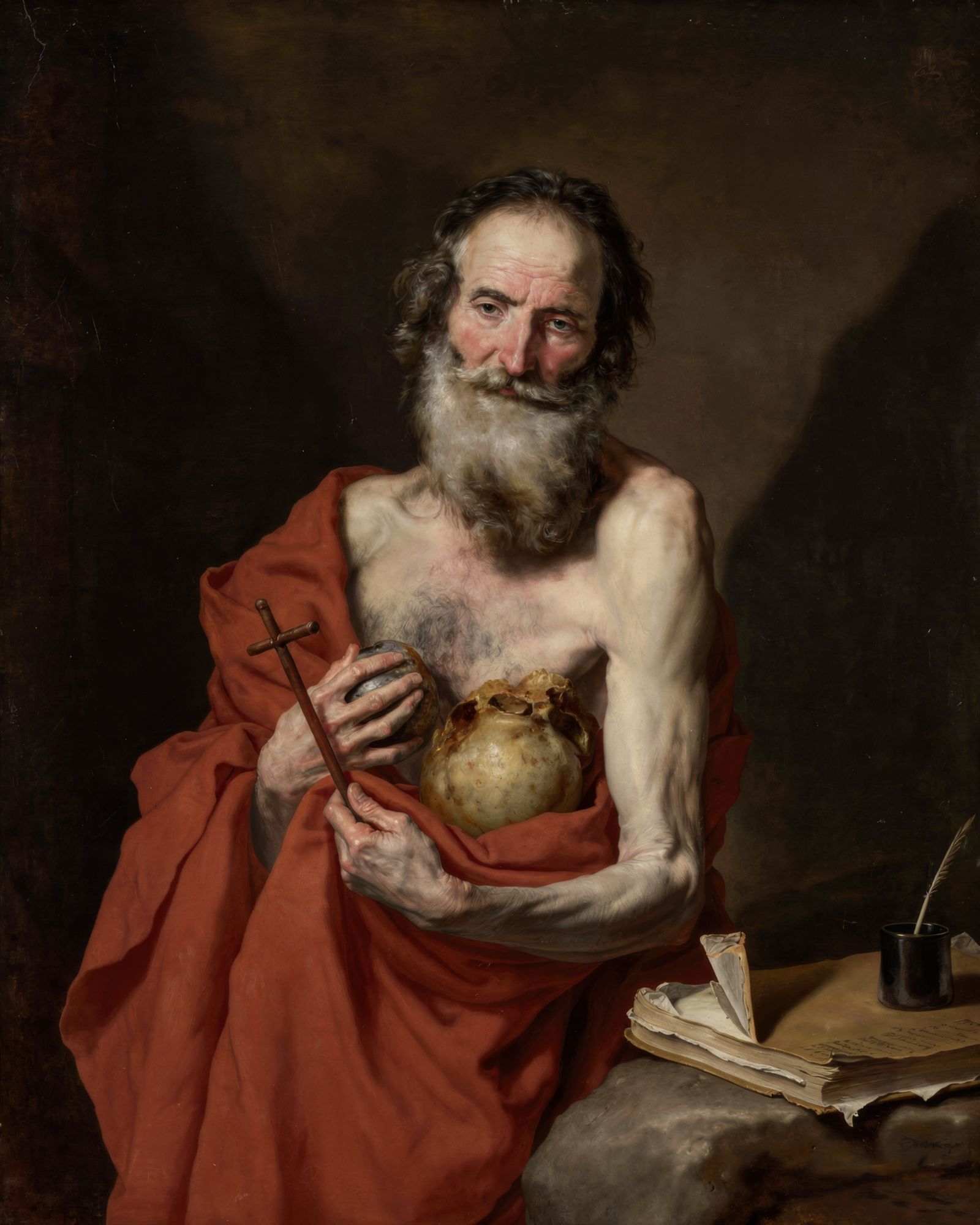
Saint Jerome · Jusepe de Ribera, c. 1638–40 · Cleveland Museum of Art. Restored by Surrealium at Vaxholm Fortress, Sweden.
Ribera’s Saint Jerome presents an older body with a skull and cross, placing the exposed chest and face against a dark ground. The physical description invites comparison with Caravaggio’s attention to bodies, but the work remains Ribera’s own painting and its devotional subject has a different pace. Notice the direction of the gaze and the objects held close to the torso; the scene asks for sustained contemplation rather than the split-second recoil of the opening picture.
6. Comparison: La Tour’s Magdalen
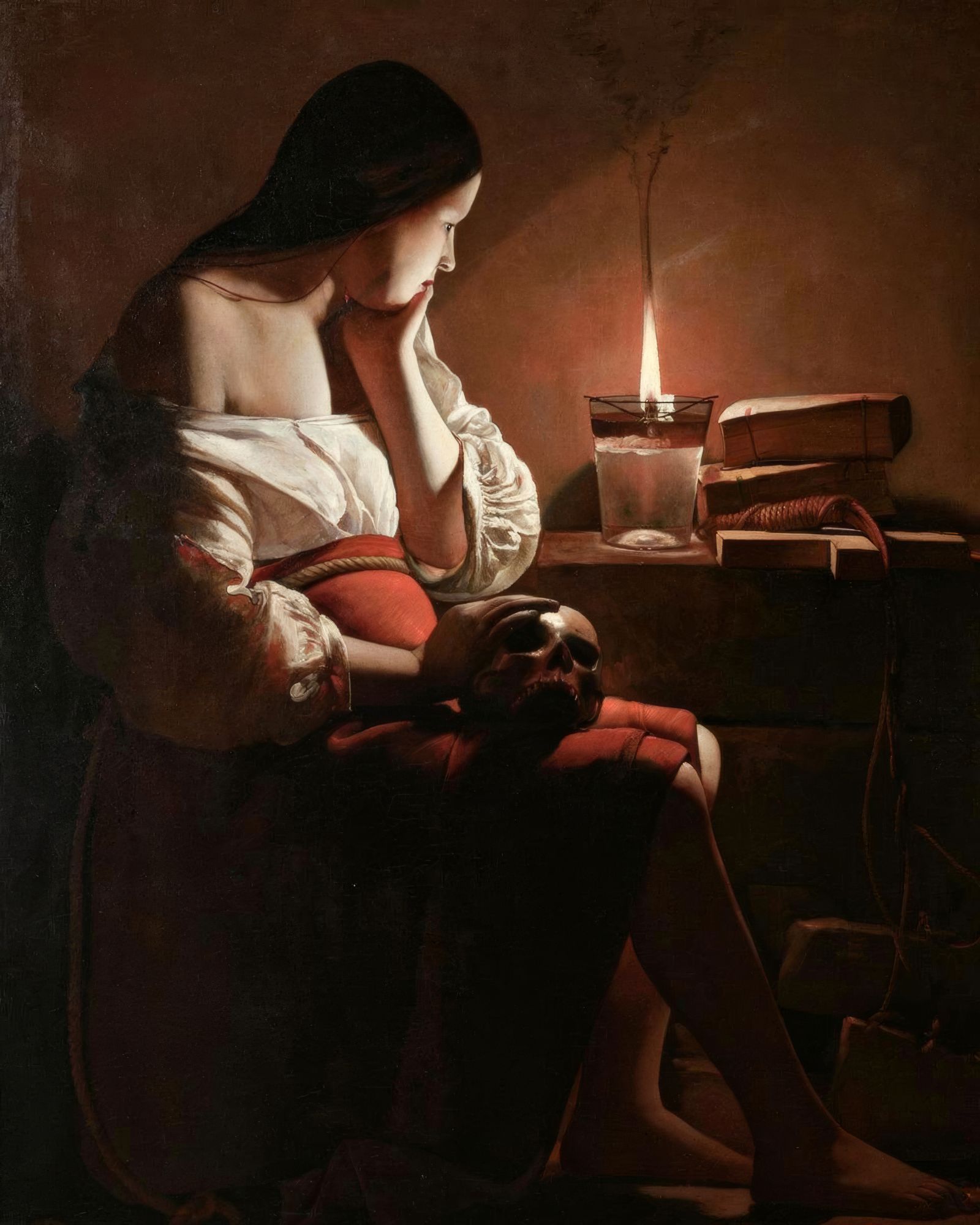
The Magdalen with the Smoking Flame · Georges de La Tour, c. 1635–37 · Los Angeles County Museum of Art. Restored by Surrealium at Vaxholm Fortress, Sweden.
In La Tour’s Magdalen with the Smoking Flame, a seated woman turns towards a small light, with a skull resting near her hand. The flame organises a still interior and a compact group of objects, rather than illuminating a crowd in motion. Compare the calm geometry of the body and table with the strained diagonals in Boy Bitten by a Lizard; both use darkness, but darkness alone does not explain the very different emotional tempo.
7. Comparison: Rembrandt’s Aristotle
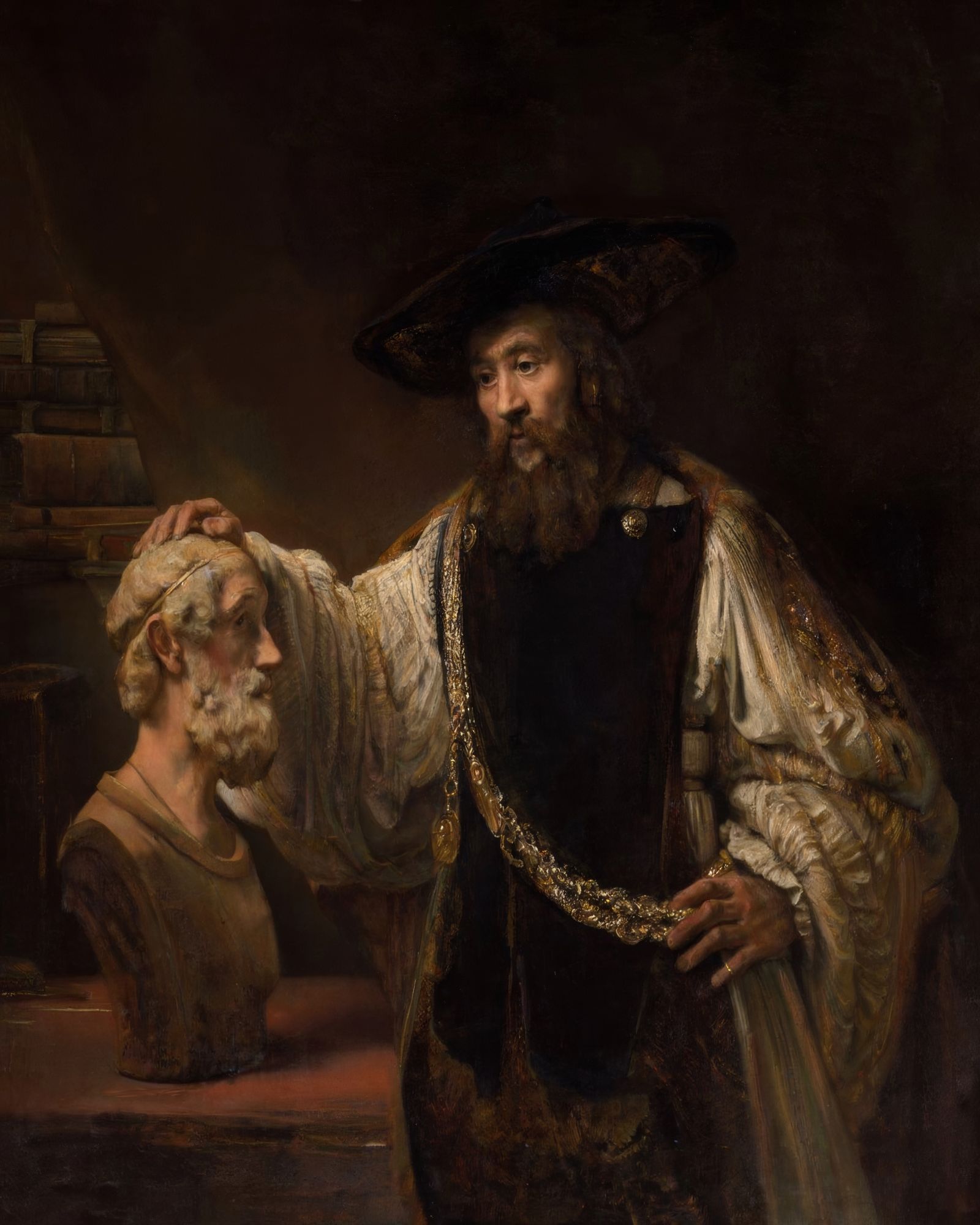
Aristotle with a Bust of Homer · Rembrandt, 1653 · The Metropolitan Museum of Art. Restored by Surrealium at Vaxholm Fortress, Sweden.
Rembrandt’s Aristotle places one hand on the sculpted head of Homer, linking a living figure with an object from the past. Rich fabric and a chain catch the light without displacing the quiet relationship between the two heads. This comparison is useful precisely because it does not behave like a sudden action scene: the painting makes thought visible through touch, distance and the weight of a hand rather than through a large theatrical gesture.
8. Comparison: Velázquez’s Juan de Pareja
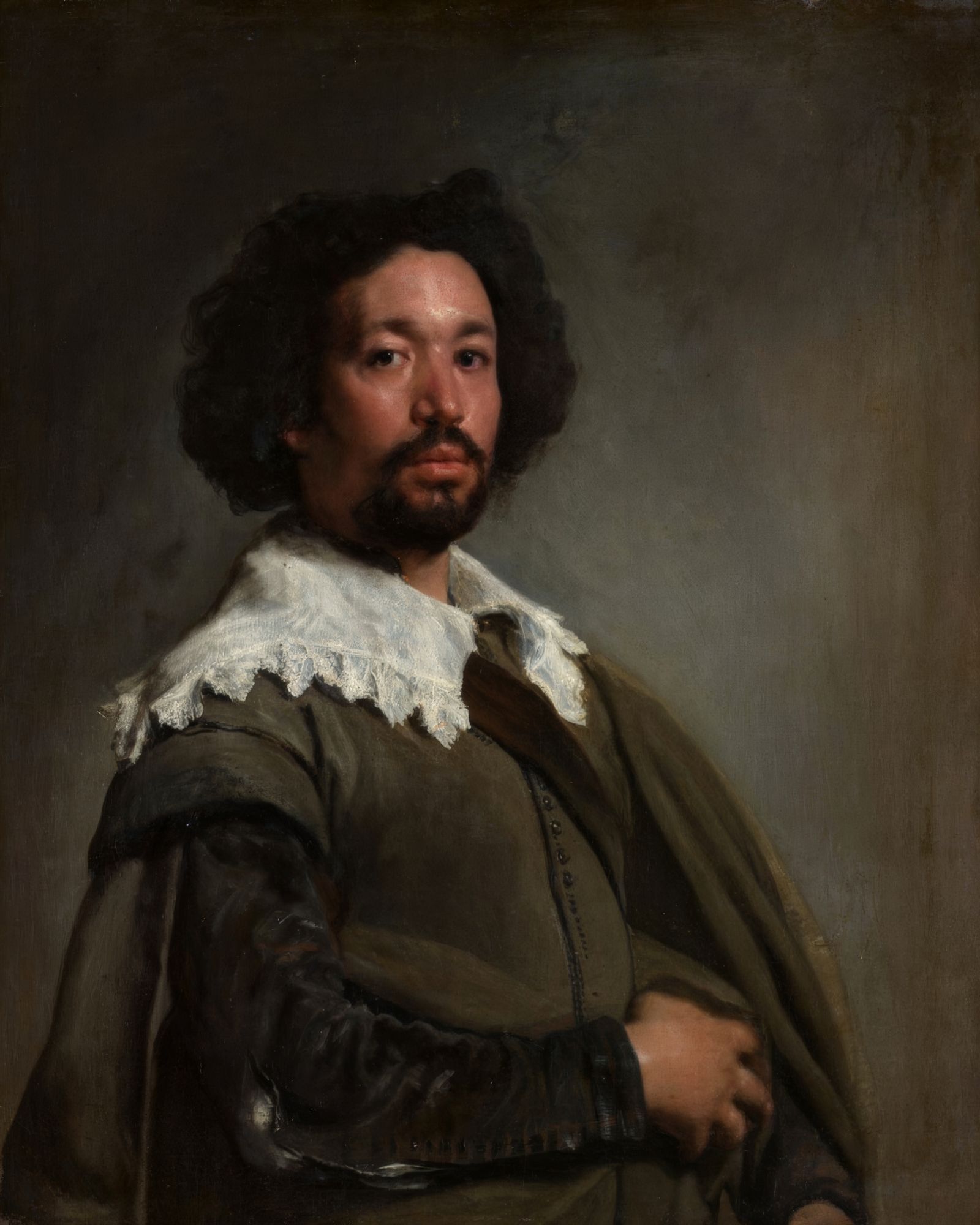
Juan de Pareja (ca. 1608–1670) · Velázquez, 1650 · The Metropolitan Museum of Art, New York. Restored by Surrealium at Vaxholm Fortress, Sweden.
Juan de Pareja faces the viewer with a steady gaze, his pale collar sharply set against dark clothing. The portrait establishes presence through the turn of the body and the economical separation of face, fabric and background. Set it beside The Musicians and consider how much changes when one figure occupies the whole encounter; the comparison concerns pictorial attention, not a claim that Pareja’s portrait belongs to Caravaggio’s authorship or to the same commission.
9. Comparison: Rubens’s Capture of Samson
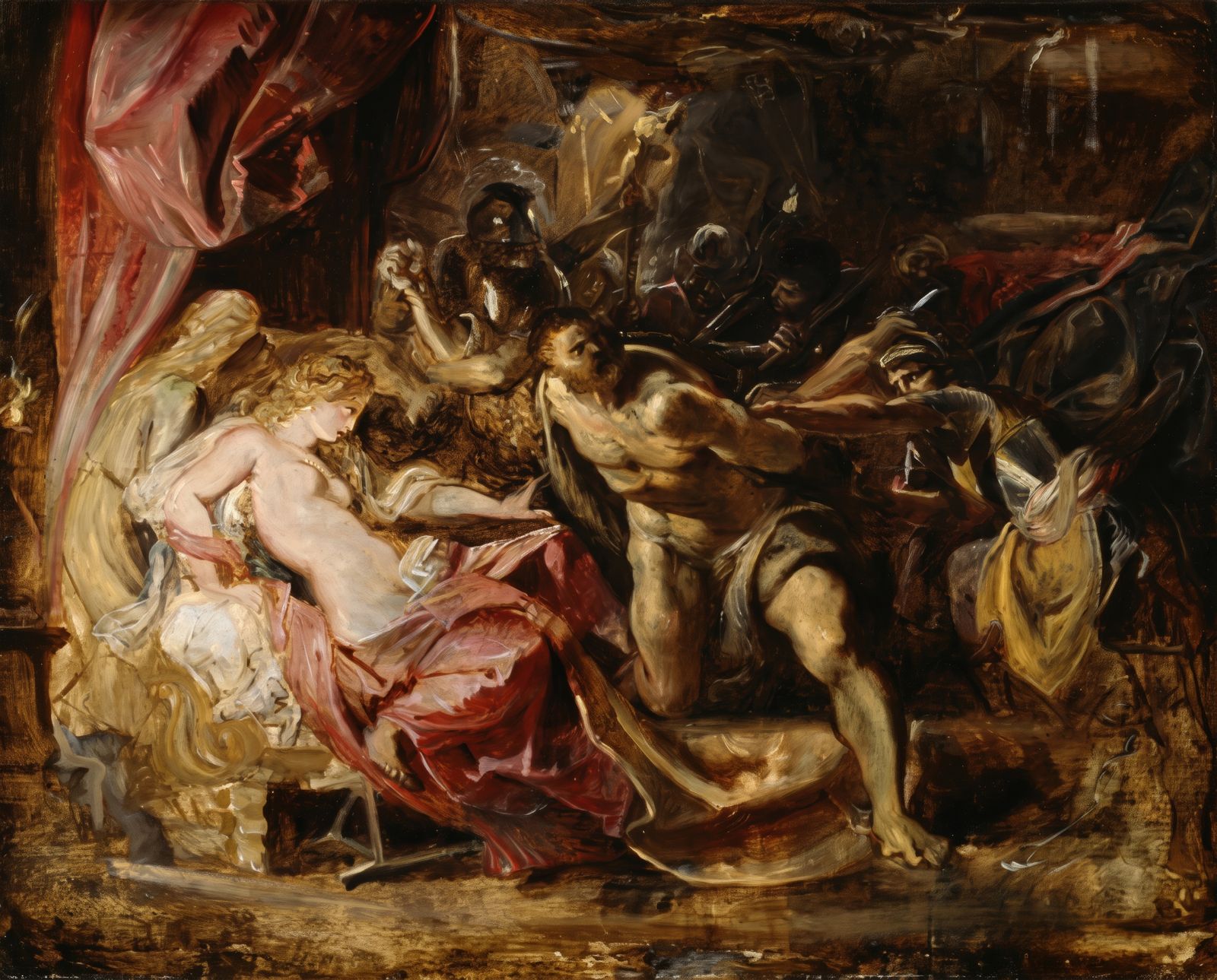
The Capture of Samson · Peter Paul Rubens, 1609–10 · Art Institute of Chicago. Restored by Surrealium at Vaxholm Fortress, Sweden.
Rubens crowds bodies, weapons and drapery into The Capture of Samson, making the scene difficult to take in with a single glance. The action travels across the composition through bent limbs and overlapping figures instead of resting on one isolated response. This is another violent narrative, and the comparison shows a different use of the picture’s edges: where Caravaggio’s boy recoils within a compact arrangement, Rubens lets the struggle seem to press outwards in several directions at once.
10. Comparison: a young woman at an open half-door
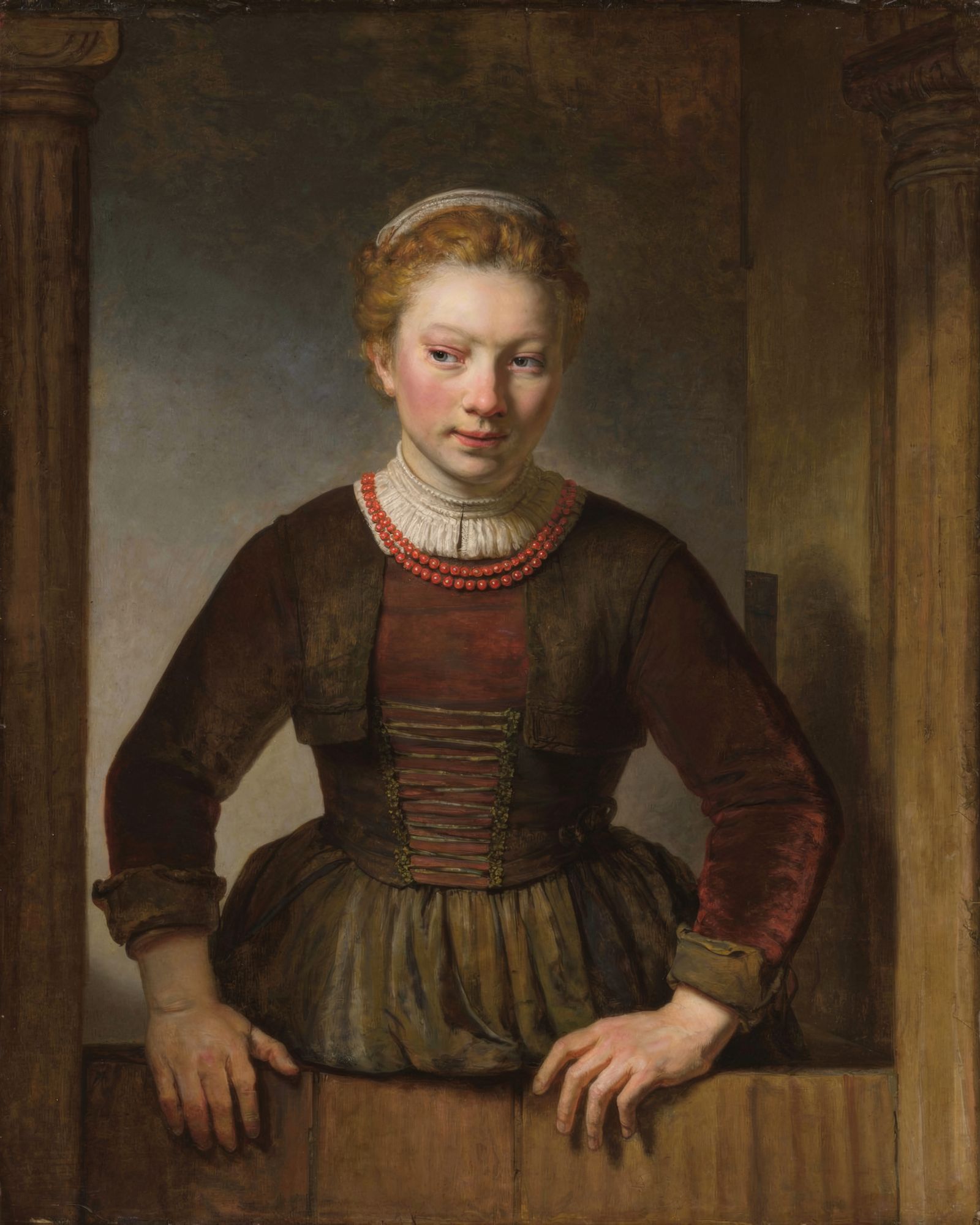
Young Woman at an Open Half-Door · Workshop of Rembrandt van Rijn, 1645 · Art Institute of Chicago. Restored by Surrealium at Vaxholm Fortress, Sweden.
The painting attributed to Rembrandt’s workshop places a young woman behind a wooden half-door, with her hands resting near its top. The barrier establishes a clear threshold between sitter and viewer, while the light makes the face and hands the main points of contact. Keep the workshop attribution when discussing the work; its quieter invitation is a useful final comparison to Caravaggio’s compressed encounters without pretending that a shared use of shadow establishes the same artist.
These comparisons make the differences as useful as the similarities. Study the whole Boy Bitten by a Lizard before returning to the crowded or quieter alternatives. Rembrandt paintings and famous portrait paintings continue two of the paths opened here. When choosing a print, consider the subject as well as the lighting: a reflective portrait, a musical gathering and a scene of violence ask different things of the space in which they are displayed.
- Are all ten pictures by Caravaggio?
- No. The first four are Caravaggio works in the Fable catalogue. The remaining six are labelled comparisons by Ribera, La Tour, Rembrandt, Velázquez, Rubens and Rembrandt’s workshop.
- What should I look for beyond dark backgrounds?
- Follow a hand, a face or a brightly lit object and see how it connects to the rest of the scene. The direction and timing of those relationships explain more than a broad description of dramatic lighting.
- Does the guide include violent imagery?
- Yes. Medusa shows a severed head and blood, and The Capture of Samson depicts a struggle. The subjects are identified before their descriptions so you can choose which works to spend time with.