Rembrandt prints: ten works to choose with the room in mind
rembrandt prints: Portraits, landscapes and narrative works, with attribution and reproduction clearly distinguished.
Rembrandt prints can bring a formal portrait, a mythological figure or a small landscape into a room. Start by deciding which kind of image you want to live with. A study above a desk may reward close looking, while a more commanding figure can carry a larger wall. The artist's name alone does not make every subject right for every place.
These ten works include eight catalogued as Rembrandt and two whose Metropolitan Museum attribution is “Style of Rembrandt”: Man in a Beret and Man with a Steel Gorget. The individual museum source remains the place to check attribution and medium; the famous name alone is not enough. This selection also avoids the catalogue's contemporary colour interpretations of older etchings. The prints you can order are modern reproductions of the identified works, not original seventeenth-century impressions. Follow each page to inspect its current version and available formats.
1. Aristotle with a Bust of Homer, for a room used to think
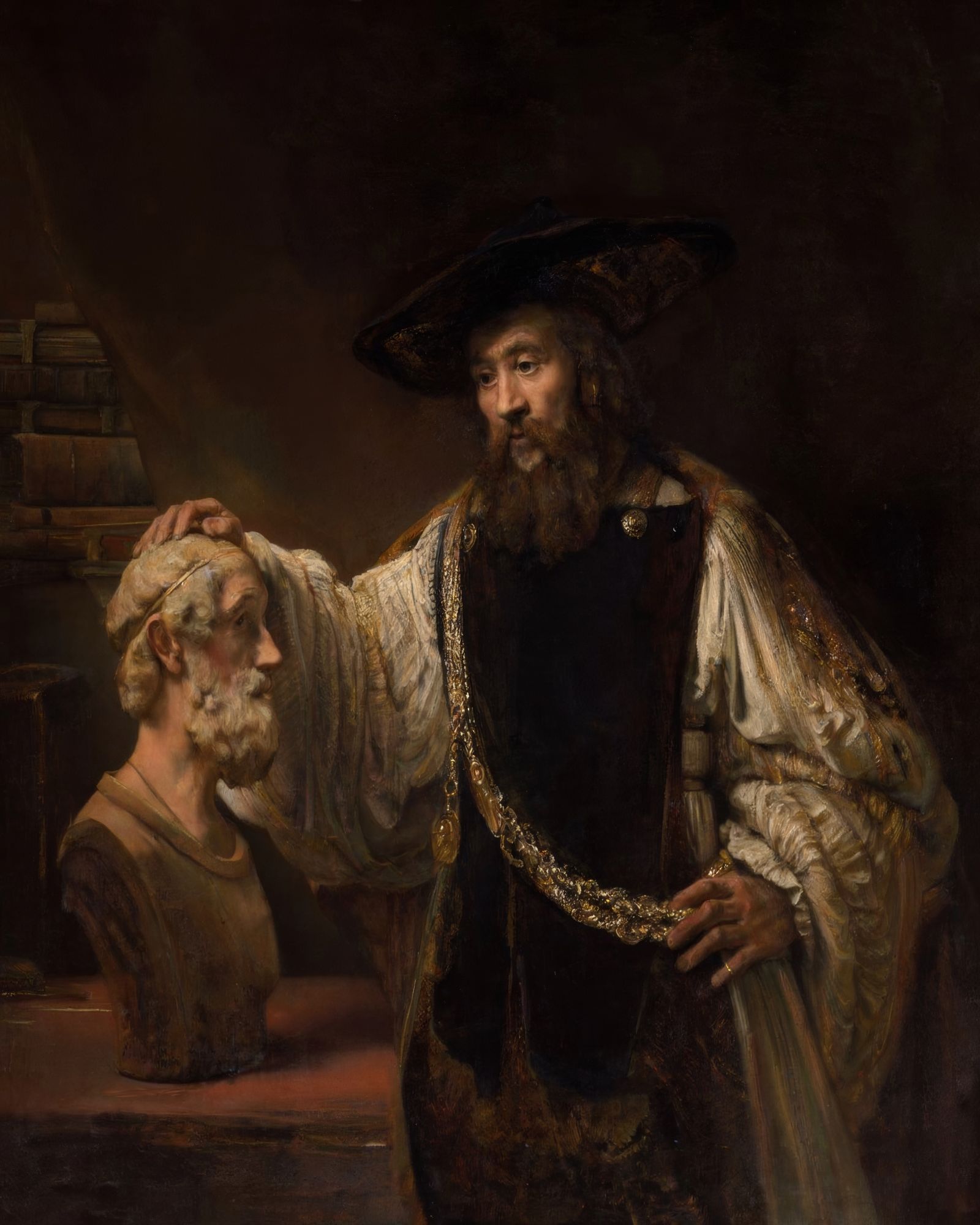
Aristotle with a Bust of Homer · Rembrandt · 1653 · The Metropolitan Museum of Art
The named encounter between a person and a bust makes this a useful starting point for a library, study or reading corner. Choose it because you want to spend time with that subject. Look at the complete composition and the catalogue record before deciding on a print size. A recognisable title should not replace looking carefully at the image that will actually occupy the wall.
2. The Writing Master, for a desk with breathing room
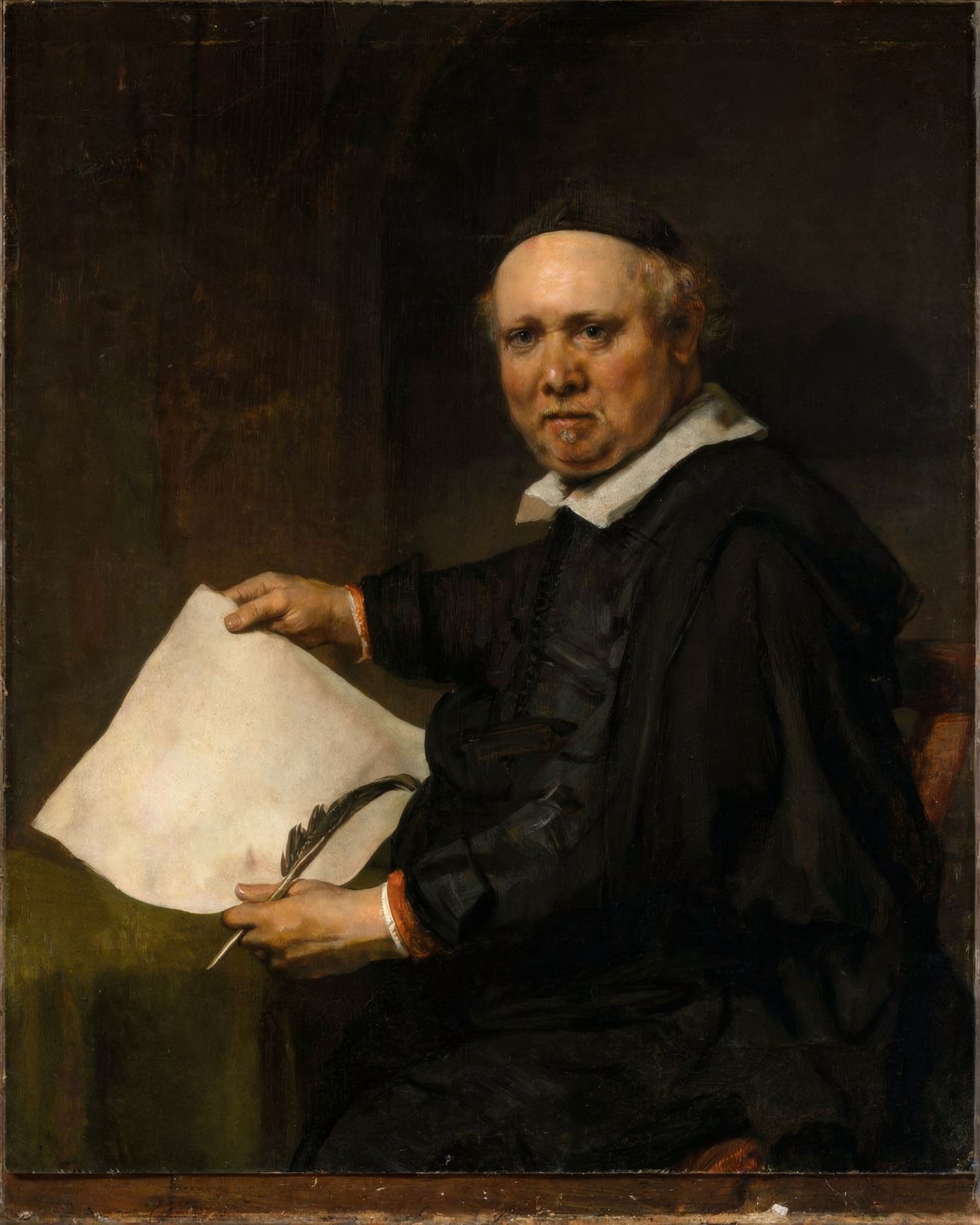
The Writing Master · Rembrandt (Rembrandt van Rijn) · date not stated in the current museum record · The Metropolitan Museum of Art
A sitter identified through writing can make a strong companion to a working space. Consider the distance between your desk and the intended wall, then compare the available dimensions. A picture placed very close may invite a smaller, more intimate format; a distant wall asks for a different judgement. Use the work's own proportions rather than cropping it to fit a frame you already happen to own.
3. Man in a Beret, attributed as Style of Rembrandt
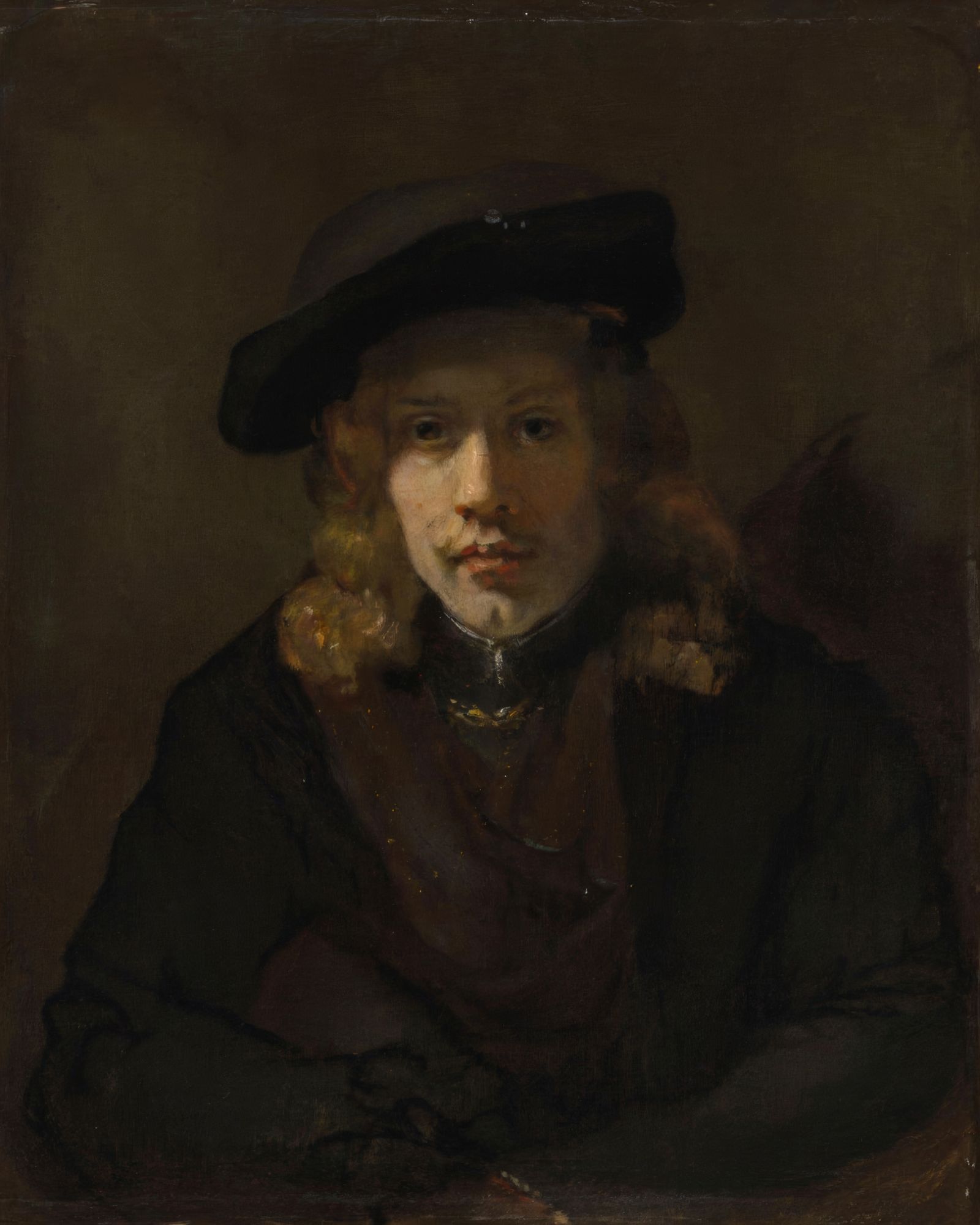
Man in a Beret · Style of Rembrandt · fourth quarter of the 17th century · The Metropolitan Museum of Art
The Metropolitan Museum attributes this work to Style of Rembrandt, rather than to Rembrandt himself. Keep that distinction with the print. It can still be chosen for the sitter’s presence and the composition you enjoy. If you plan a group of portraits, compare their actual dimensions and how large the heads appear within them. Matching frames do not automatically make pictures feel equally weighted.
4. Man with a Steel Gorget, attributed as Style of Rembrandt
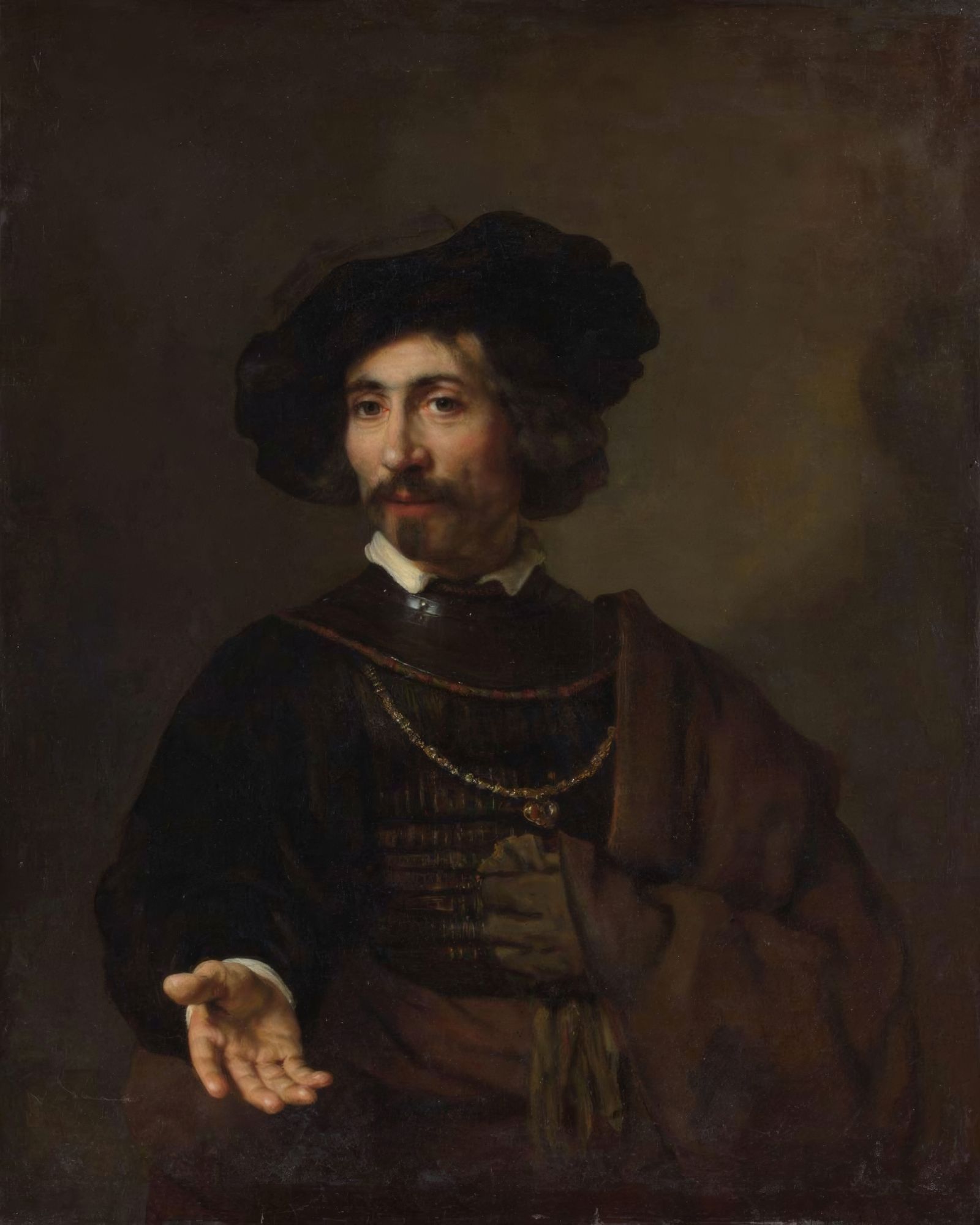
Man with a Steel Gorget · Style of Rembrandt · second or third quarter of the 17th century · The Metropolitan Museum of Art
The Metropolitan Museum’s attribution is Style of Rembrandt. The named piece of dress does not establish either the sitter’s rank or an autograph attribution. Choose the work for its own visual interest, with that label intact. A formal portrait may suit the room you have in mind, but the current image, source record and print options should guide the decision rather than the artist’s name alone.
5. Young Woman with a Red Necklace, for a named colour detail
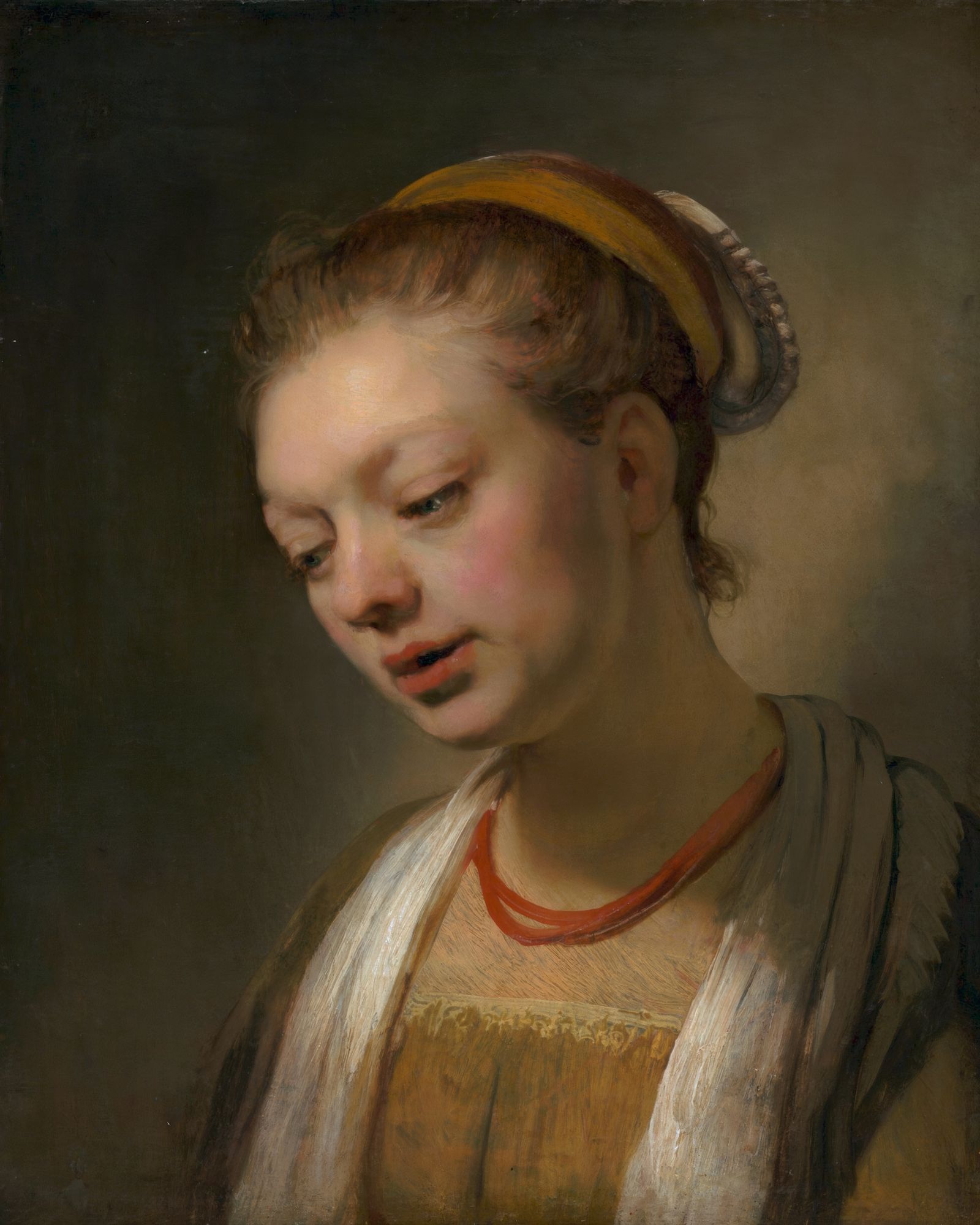
Young Woman with a Red Necklace · Rembrandt · ca. 1645 · The Metropolitan Museum of Art
The necklace in the title offers a clear point of entry when thinking about a room's colours. It should not become the only reason to choose the work. Inspect the whole portrait and decide whether you want the sitter's presence as much as that small accent. Follow the catalogue page for the exact version, then choose from its actual print options rather than expecting a particular frame finish.
6. Flora, for a mythological portrait subject
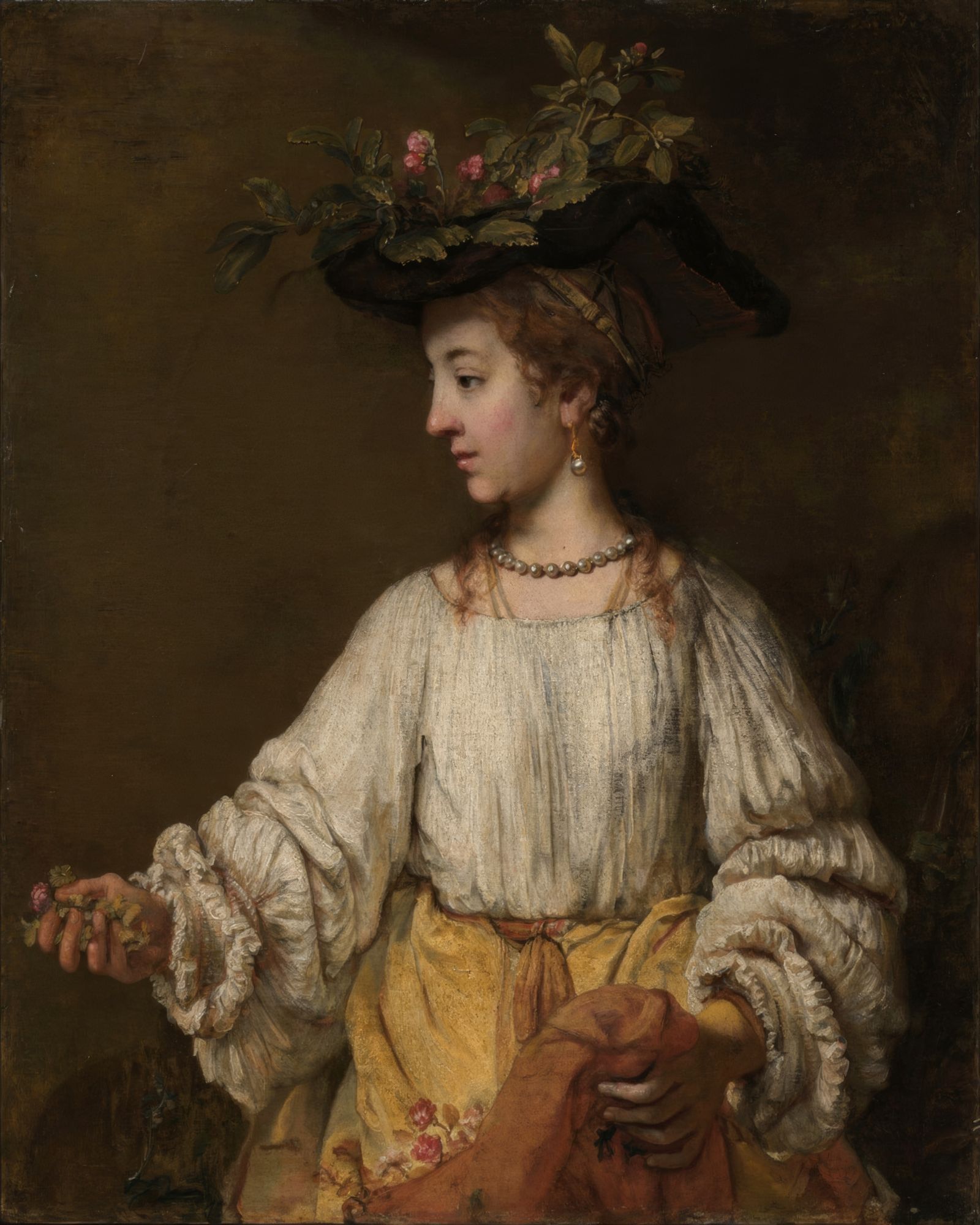
Flora · Rembrandt · ca. 1654 · The Metropolitan Museum of Art
Flora sits differently in a room from a plainly titled male portrait. The subject may appeal to someone who enjoys mythological figures, flowers or the staging of a sitter. Read the museum-linked catalogue information before adding a specific interpretation to your gift note. A print can be chosen for its visual pleasure without making an unverified claim about who posed or what every detail signifies.
7. Bellona, for a deliberate change of mood
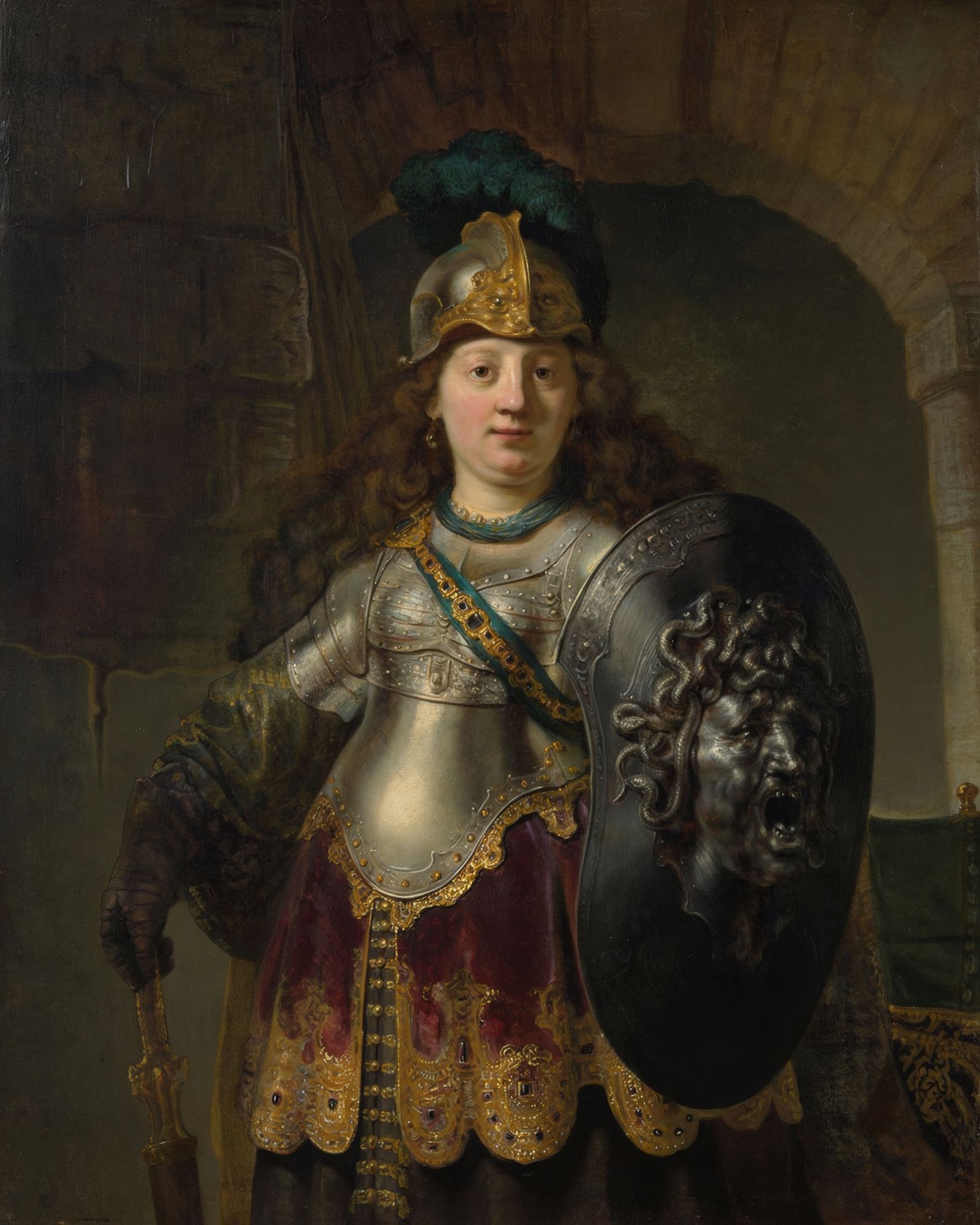
Bellona · Rembrandt · 1633 · The Metropolitan Museum of Art
A named mythological figure makes a different statement from an anonymous sitter. Consider the subject as well as the painting's visual presence before choosing it for a shared room or a gift. The catalogue page provides the specific attribution and image version. A title with martial associations may be exactly what you want, or a reason to choose another work; either judgement should be made knowingly.
8. A Cottage with White Paling, for a smaller conversation
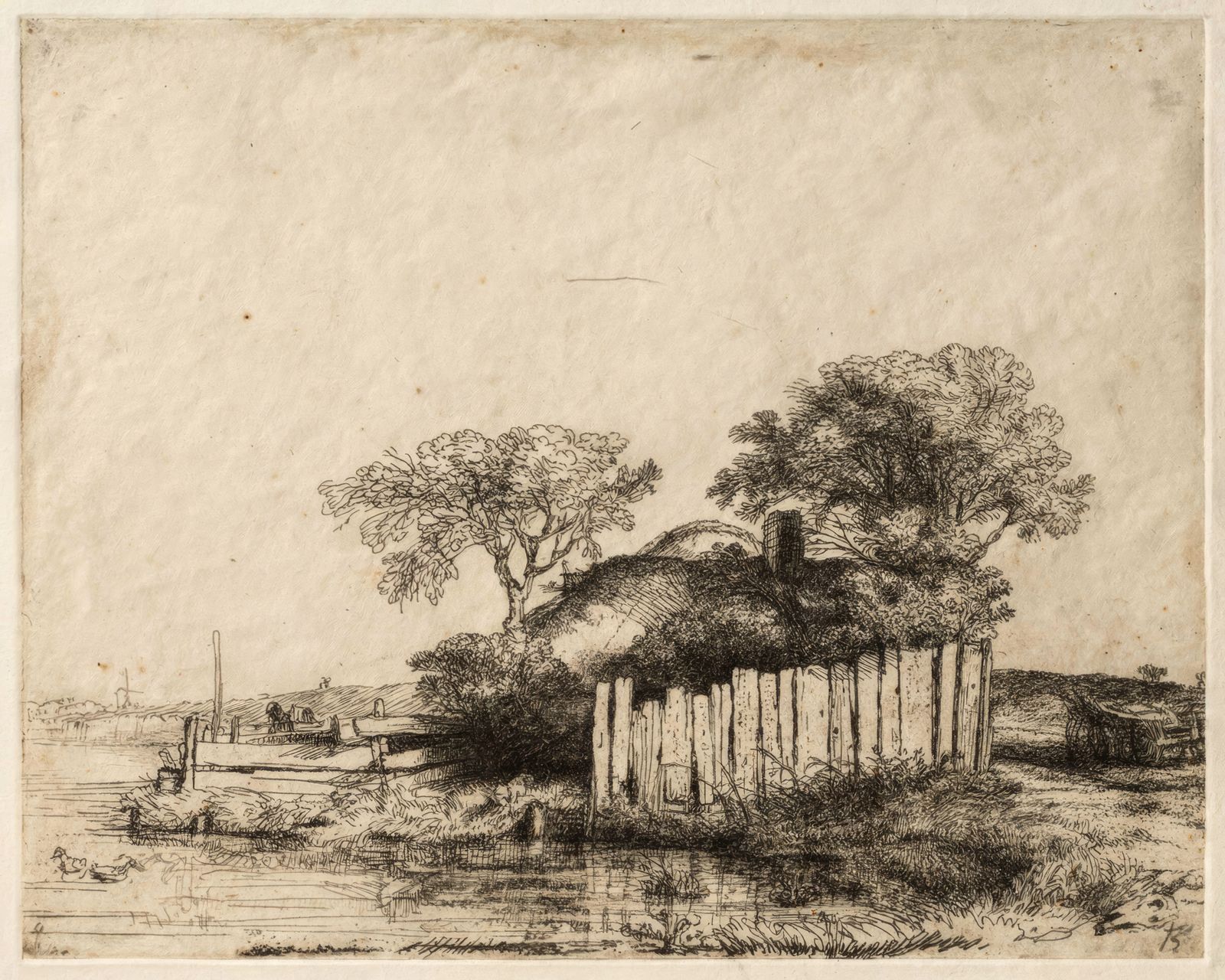
A Cottage with White Paling · Rembrandt van Rijn Dutch, 1606-1669 · 1648 · Art Institute of Chicago
A landscape print can be an alternative when you admire Rembrandt but do not want a portrait watching over the room. A cottage subject may invite close looking above a shelf or beside a reading chair. Inspect the work's medium and detail on the catalogue page. A modern reproduction does not become an original etching, and its appeal need not depend on pretending that it is one.
9. Landscape with a cow, for an unceremonious wall
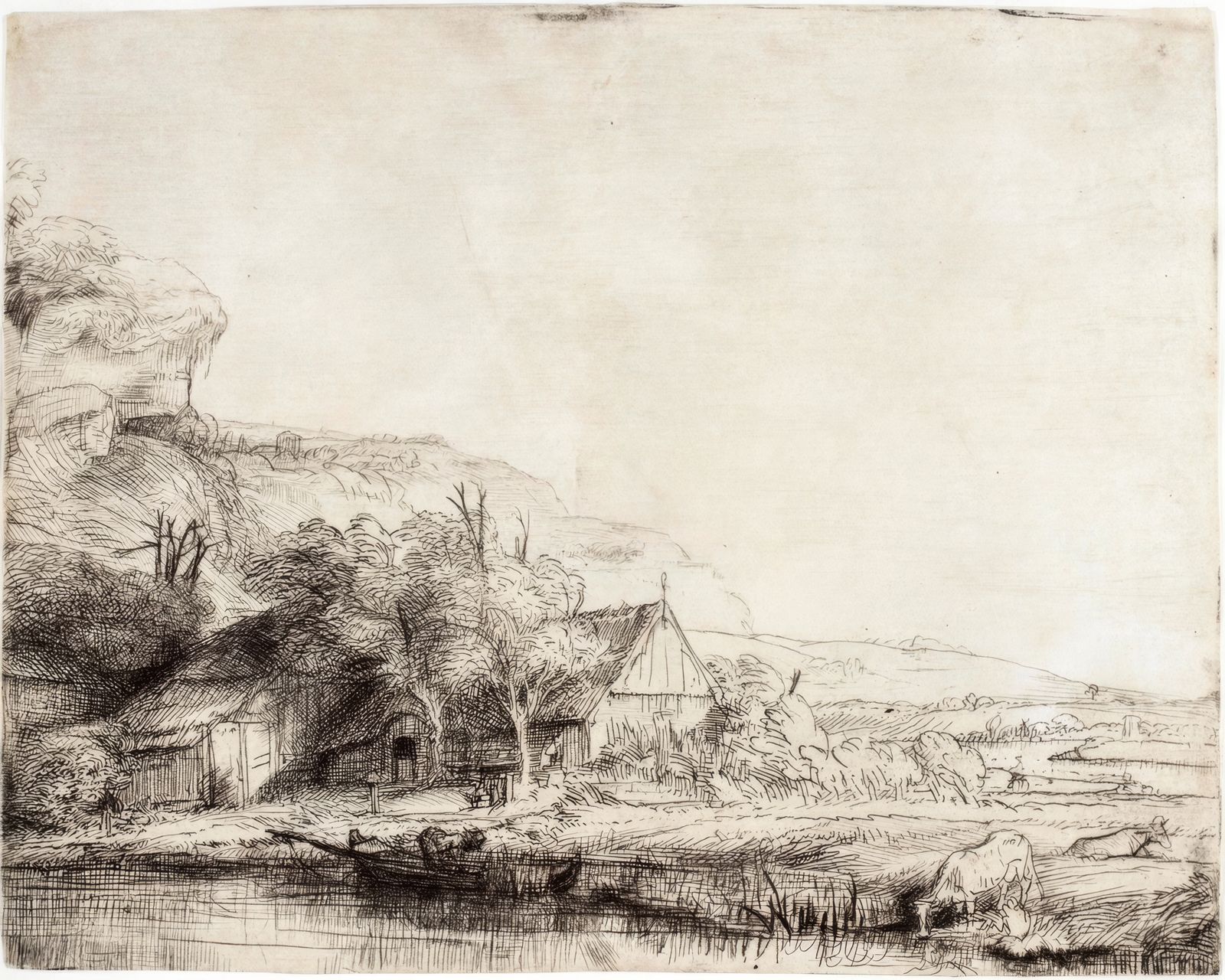
Landscape with a cow · Rembrandt van Rijn · ca.1650 · Victoria and Albert Museum
An ordinary landscape subject can keep an art group from feeling entirely formal. Choose it for the complete scene, including the space around the named animal. Before planning a pair with another print, compare the works' proportions and the offered dimensions. Related artists or dates do not require identical sizes; a quieter landscape may be more effective when it is allowed its own scale.
10. A Night Piece, for someone who enjoys a quieter image
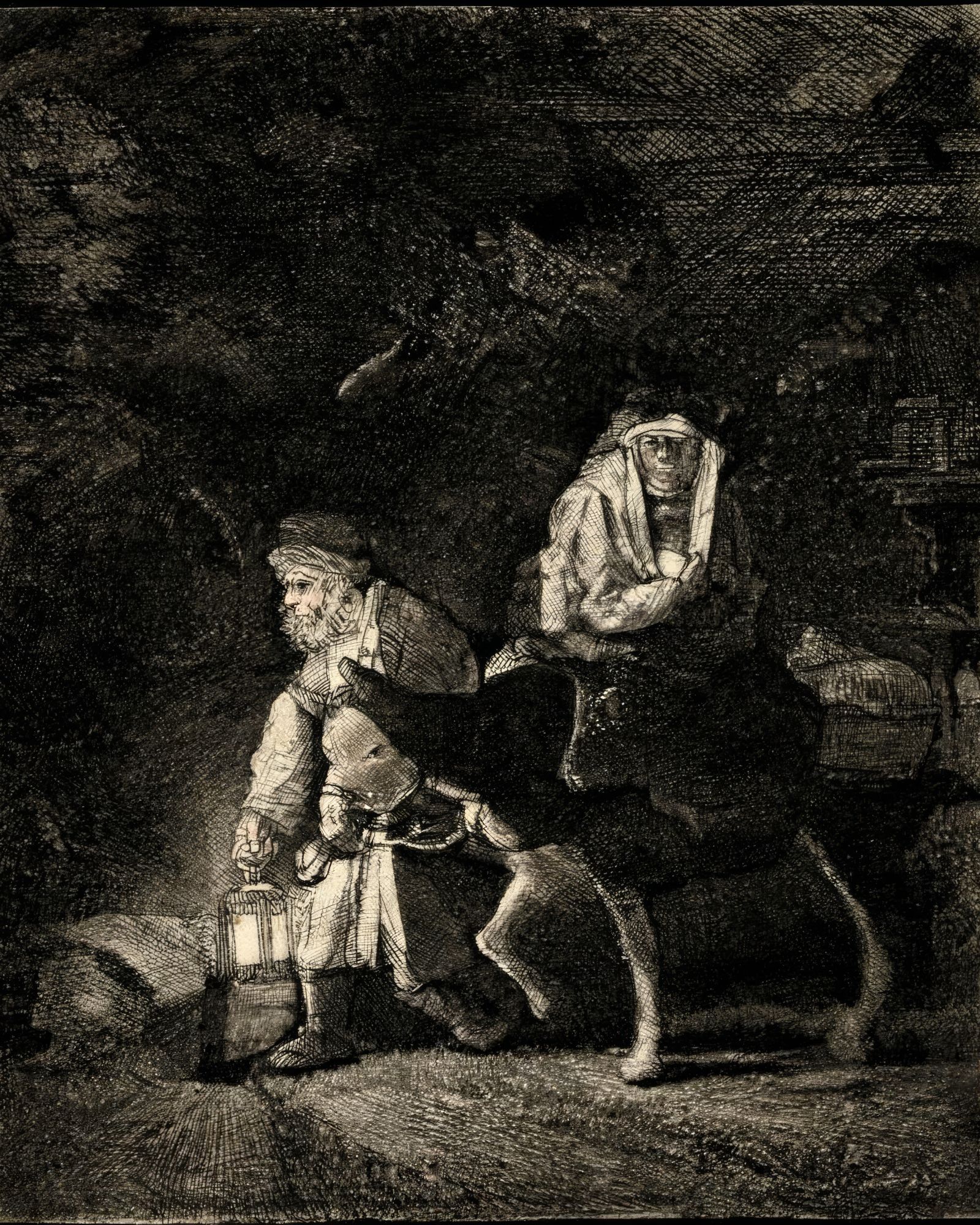
The Flight into Egypt: A Night Piece · van Rijn, Rembrandt Harmensz · 1650s · Smithsonian American Art Museum
The Flight into Egypt: A Night Piece gives the selection a narrative and a different light setting. Read its catalogue information and inspect the current image before choosing a print. A work intended for close looking may need a place where viewers can approach it without glare. Keep the full composition visible and choose the room for the image, rather than expecting every Rembrandt subject to fill the same role.
Choose the work that belongs in the room, then follow its masterwork page to compare available sizes, materials and prices. Keep the attribution with the print and be precise about what you have bought: a modern reproduction of the catalogue work. If you later explore other Rembrandt-related images, read labels such as “workshop”, “follower” and “contemporary colour interpretation” rather than treating them as interchangeable. The pleasure of collecting prints can begin with one well-chosen image and the habit of looking at its actual source.
- Are these original Rembrandt etchings for sale?
- No. The ordering pages offer modern reproductions of the catalogue works. The historical medium and attribution belong to the original image identified by the museum source. Inspect the live product description for what the current print purchase includes.
- Why are some Rembrandt-related works left out?
- The catalogue includes different attributions and some contemporary colour interpretations. This selection explicitly identifies two works as Style of Rembrandt, following their Metropolitan Museum records. Do not treat style-of, workshop and follower labels as an autograph attribution; read each source record.
- Which print size should I choose?
- Measure the wall and consider viewing distance, then compare the dimensions actually offered on the work’s page. Keep the artwork’s complete proportions visible. Choose the frame after the image and print dimensions are known.