Framed art prints: ten ways to let the whole painting belong
Choose framed art prints by proportion, room and viewing distance, with ten masterworks that show why the complete image matters.
Framed art prints work best when the frame supports the image rather than competing with it. A dramatic portrait, a small still life and a winter landscape do not all ask for the same visual weight. Before choosing a finish, spend time with the complete work and the wall where it will hang.
The masterworks below are practical starting points for comparing framed prints. They are shown as historical works, without a suggested frame baked into the picture. The frame directions are ideas to consider, not claims that a particular product finish or size is currently available. Check the live frame guide and the individual work's purchase options before ordering.
One principle stays constant: keep the entire composition visible. A frame should not cut away hands, sky, a table edge or the space between figures merely because another format happens to fit your wall.
1. The Morning Walk: give the figures their space
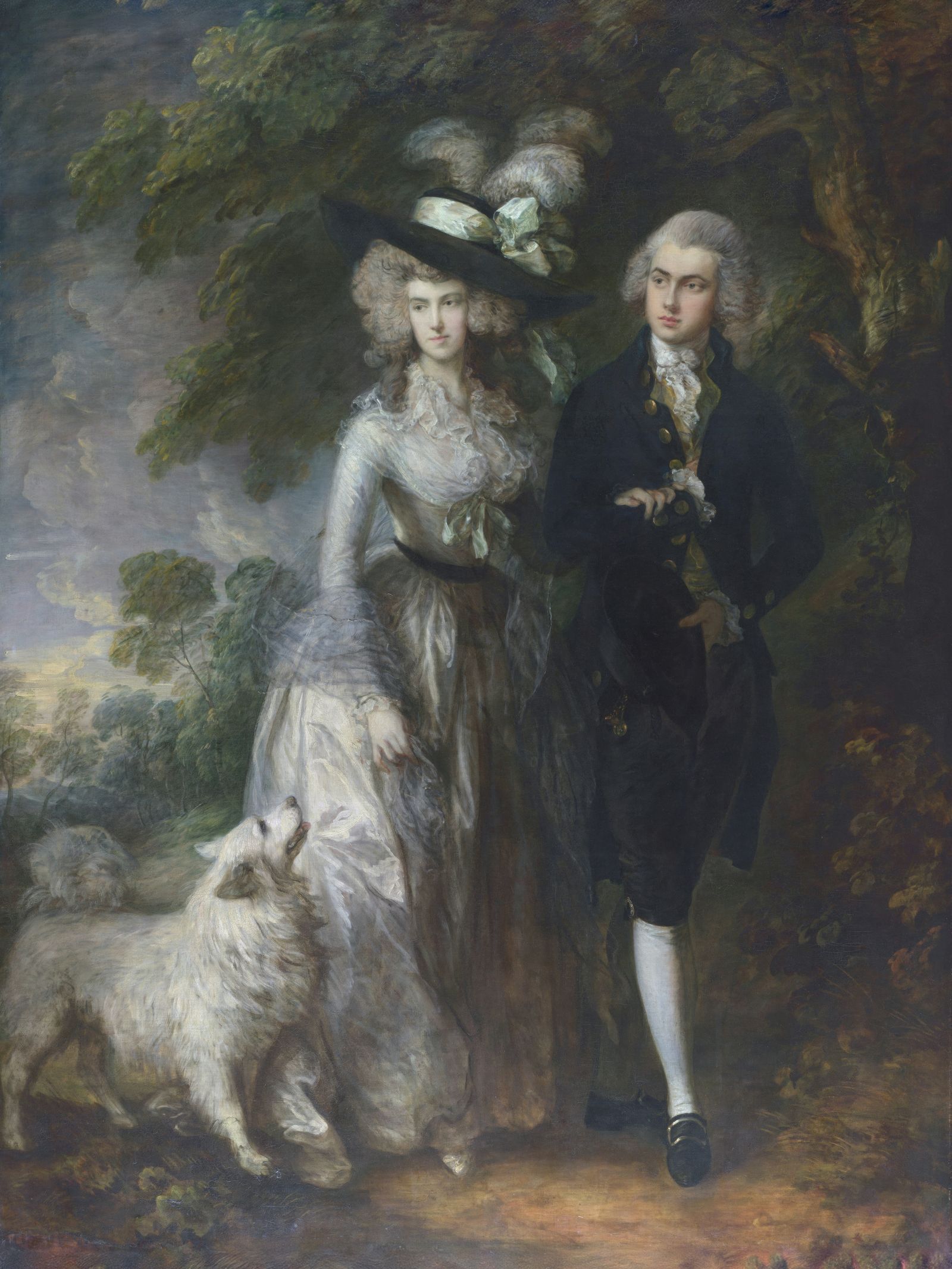
The Morning Walk (Mr and Mrs William Hallett) · Thomas Gainsborough · 1785 · National Gallery, London
A double portrait asks you to consider the setting as well as the faces. When comparing frame widths, step back and check that the border does not make the two figures feel crowded. A restrained finish is a useful starting point, especially near family photographs. Choose the print format from the whole work's proportions, then decide how much visual weight its surroundings can carry.
2. Roses: begin with the image, then the border
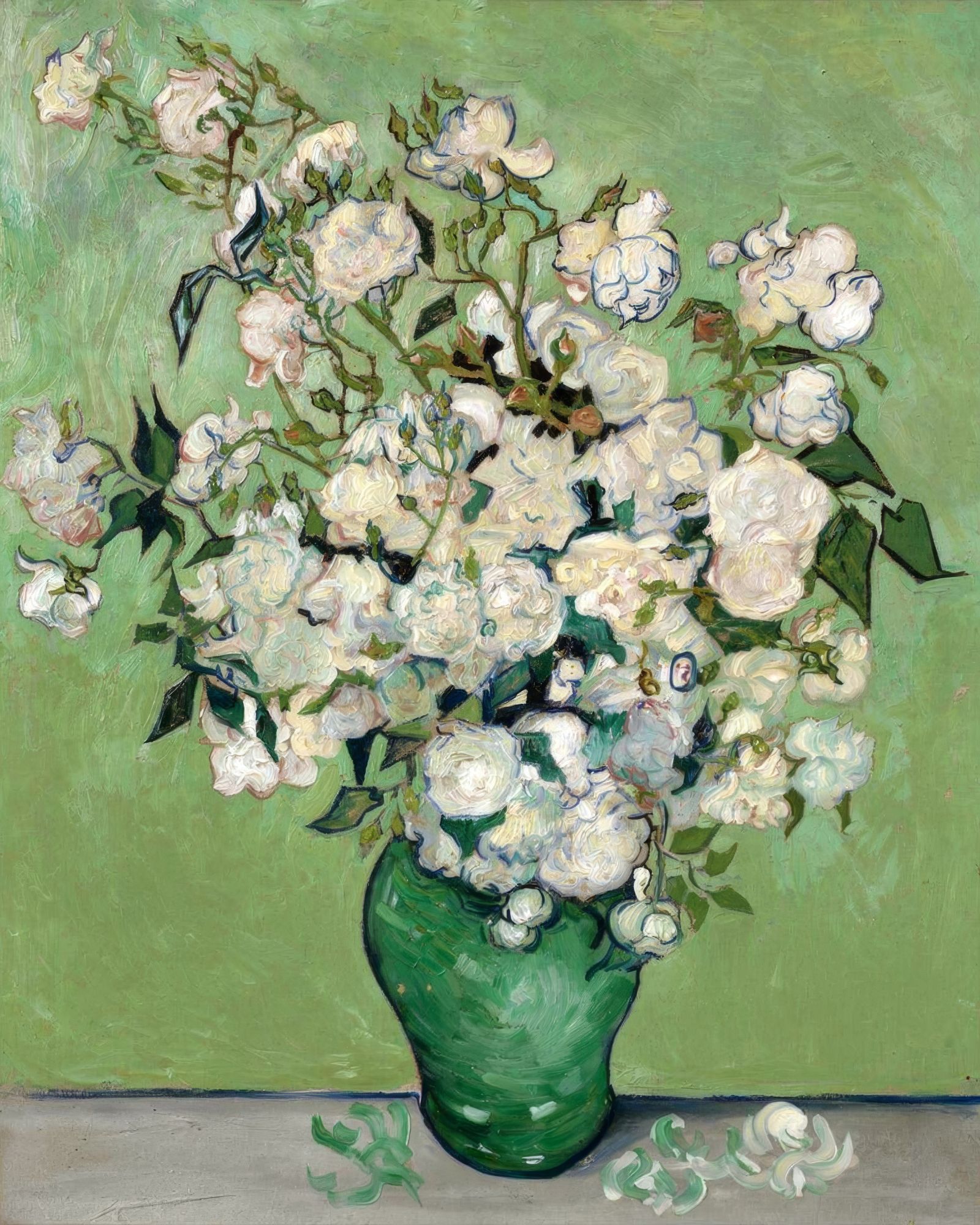
Roses · Vincent van Gogh · 1890 · The Metropolitan Museum of Art
Van Gogh's floral work can prompt several frame choices, so avoid deciding from a colour name alone. Look at it beside the actual wall and nearby furniture. A quiet finish may let the flowers lead; a stronger border may make the piece more distinct in a busy room. The useful test is whether you notice the work before you notice the frame.
3. Irises: let the full arrangement remain visible
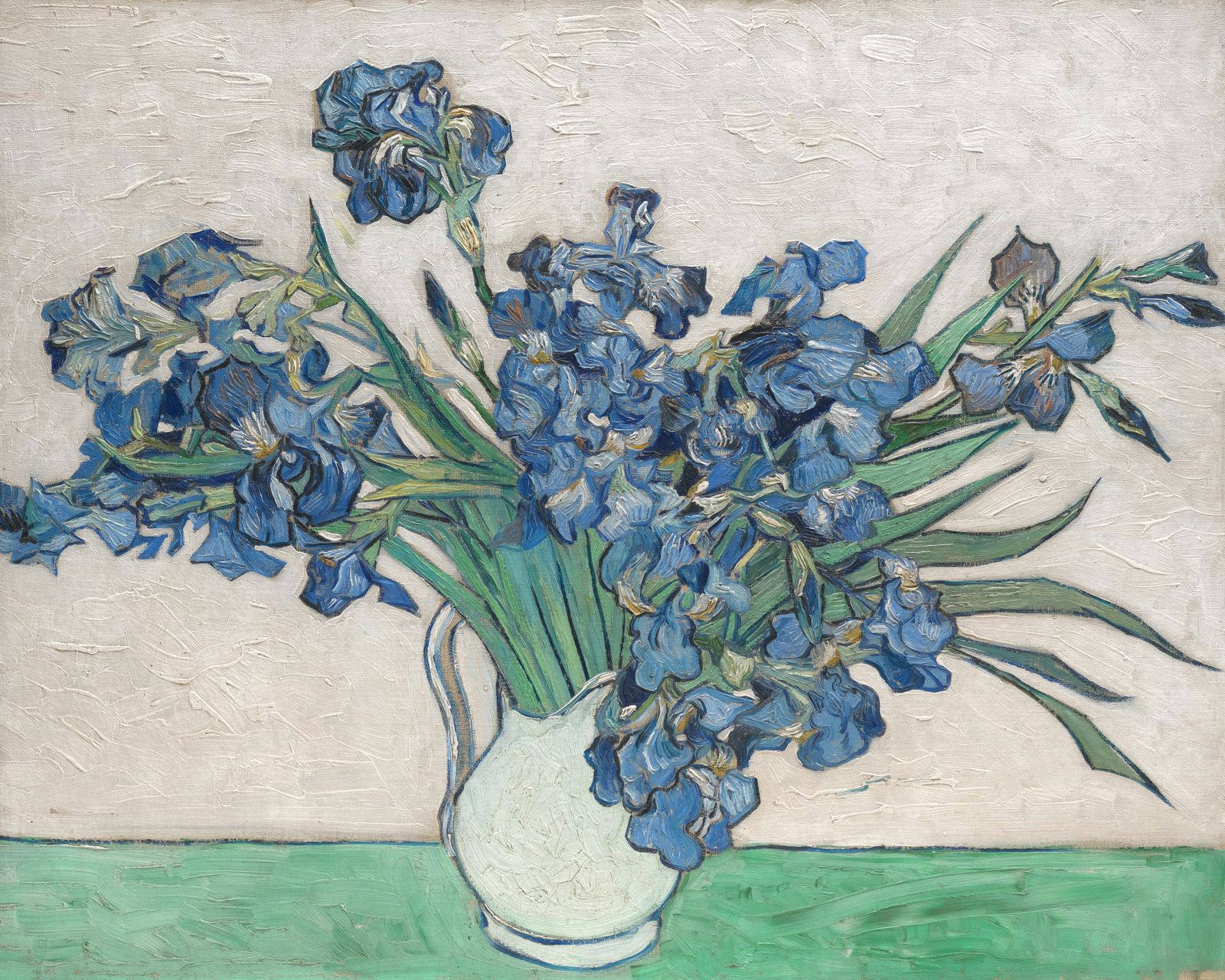
Irises · Vincent van Gogh · 1890 · The Metropolitan Museum of Art
A floral subject can tempt you to focus only on the most recognisable blooms. Keep the complete painting in view when choosing framed famous paintings. The arrangement includes spaces and edges that make the flowers read as a composition. If the shape does not suit an existing frame, choose another format rather than trimming the work to make the purchase convenient.
4. Still Life with Apples and Pears: consider nearby surfaces
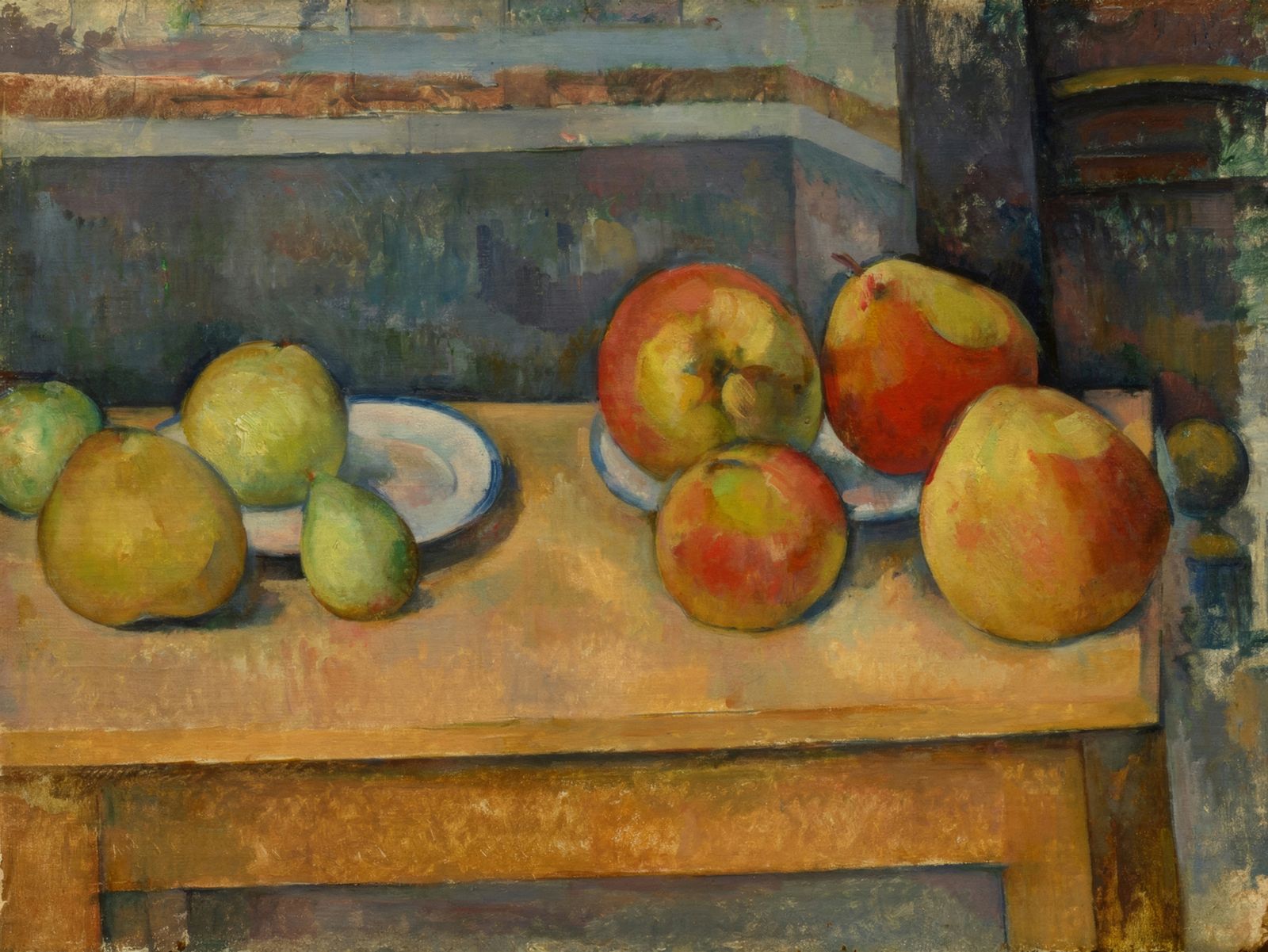
Still Life with Apples and Pears · Paul Cézanne · ca. 1891–92 · The Metropolitan Museum of Art
Cézanne's still life is worth comparing in a dining room or kitchen where real tables and objects already occupy the space. A frame can distinguish the painted scene from those surroundings without becoming decorative clutter. Check how the finish relates to the furniture, but do not assume every wood tone must match. Look for a calm relationship rather than an exact repeated colour.
5. A Bouquet of Flowers in a Crystal Vase: allow some distance
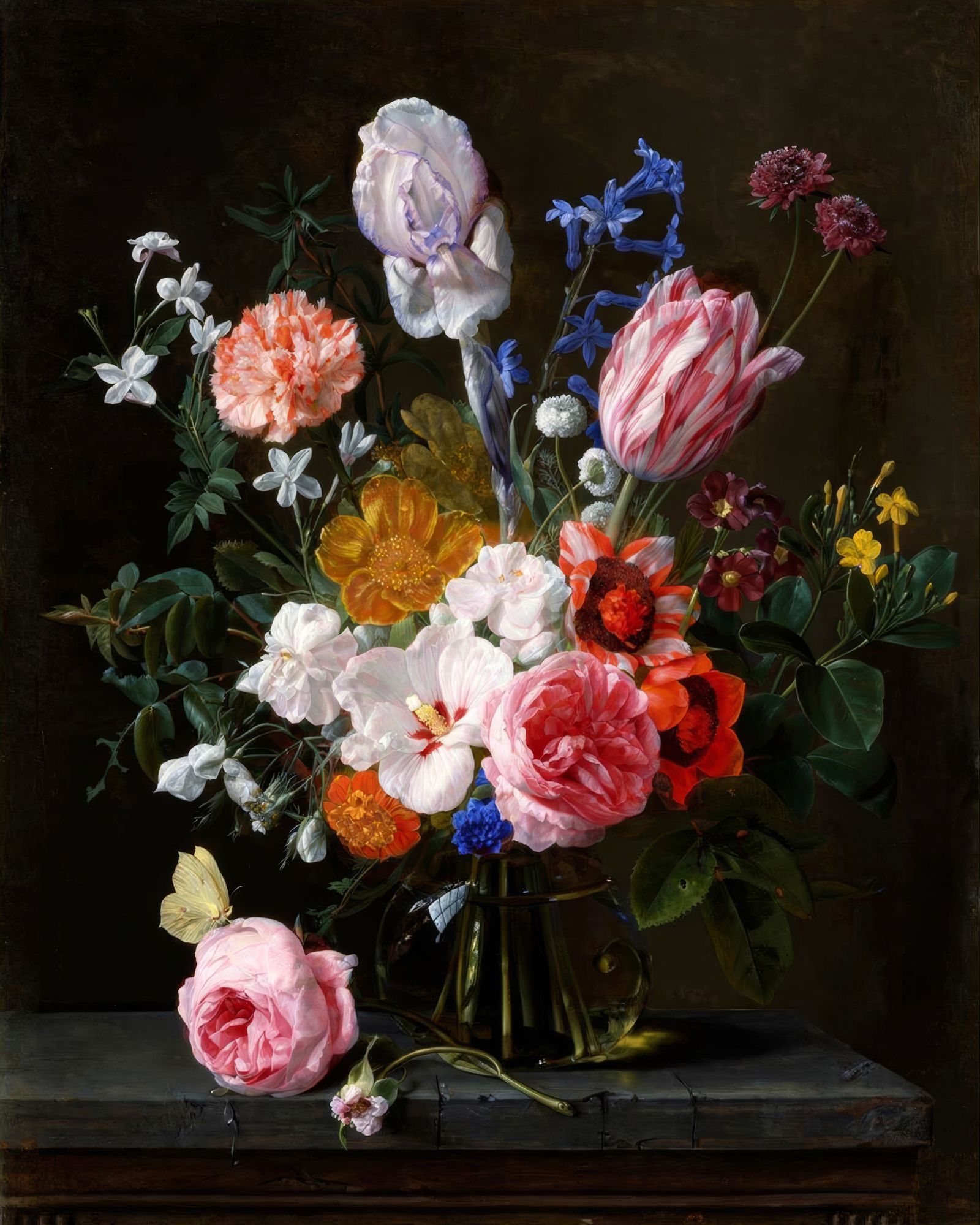
A Bouquet of Flowers in a Crystal Vase · Nicolaes van Veerendael · 1662 · The Metropolitan Museum of Art
A flower painting with a formal title can sit in either a simple or more decorative interior. Before choosing a substantial frame, consider how close viewers will stand. A narrow corridor may make a broad border feel more dominant than it would across a room. Measure the complete framed footprint, leaving room for the image to be read comfortably as a whole.
6. A Cart on the Snowy Road at Honfleur: keep the atmosphere
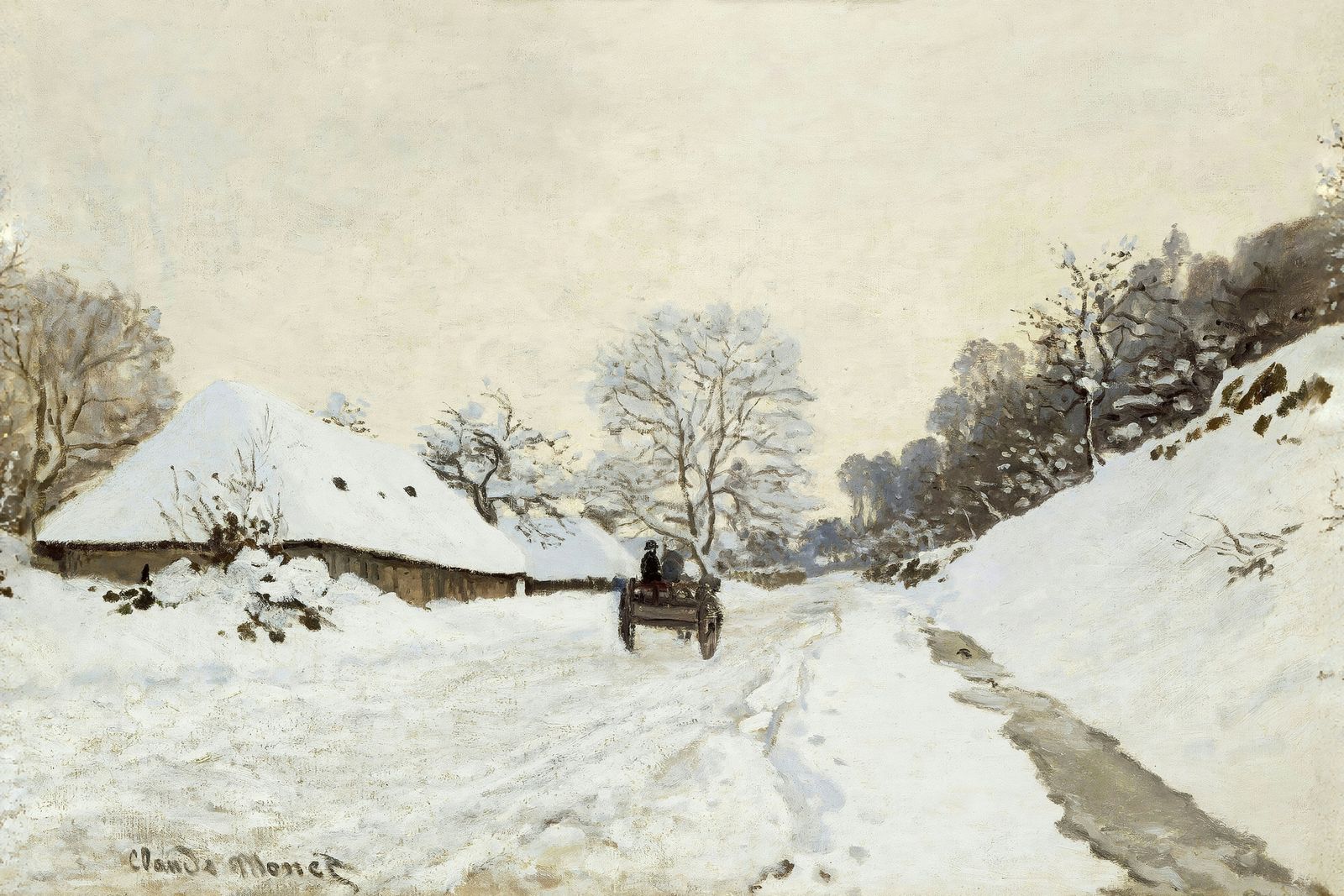
A Cart on the Snowy Road at Honfleur · Claude Monet · c. 1867 · Musée d’Orsay, Paris
Monet's winter reference is a useful test for whether a proposed frame overwhelms a quieter image. Compare the work with a simple border before adding visual weight. A pale wall does not automatically require a dark frame, and a dark wall does not require a pale one. The aim is to preserve the picture's presence in the actual lighting of the room.
7. The Cottage: make a domestic picture at home
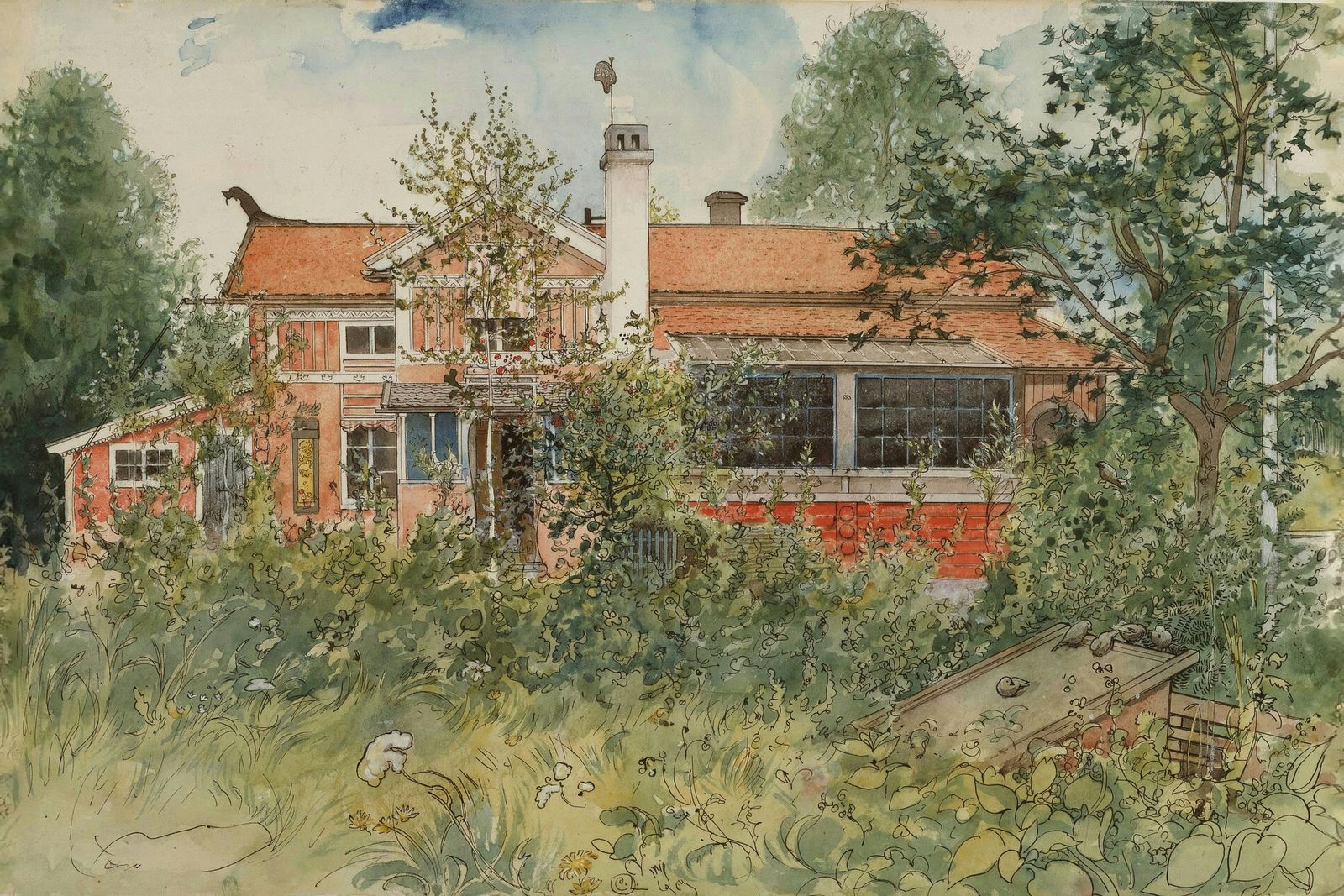
The Cottage (Stugan). From A Home · Carl Larsson · 1899 · Nationalmuseum, Stockholm
Larsson's work can be considered alongside the real domestic objects around it. Look at shelving, door trim and the height of neighbouring photographs before selecting a frame. A familiar subject still needs breathing room. If several small pieces already share the wall, test whether this work wants to join them or whether a quieter separate position would make it easier to enjoy.
8. Dance in the City: frame movement without constraining it
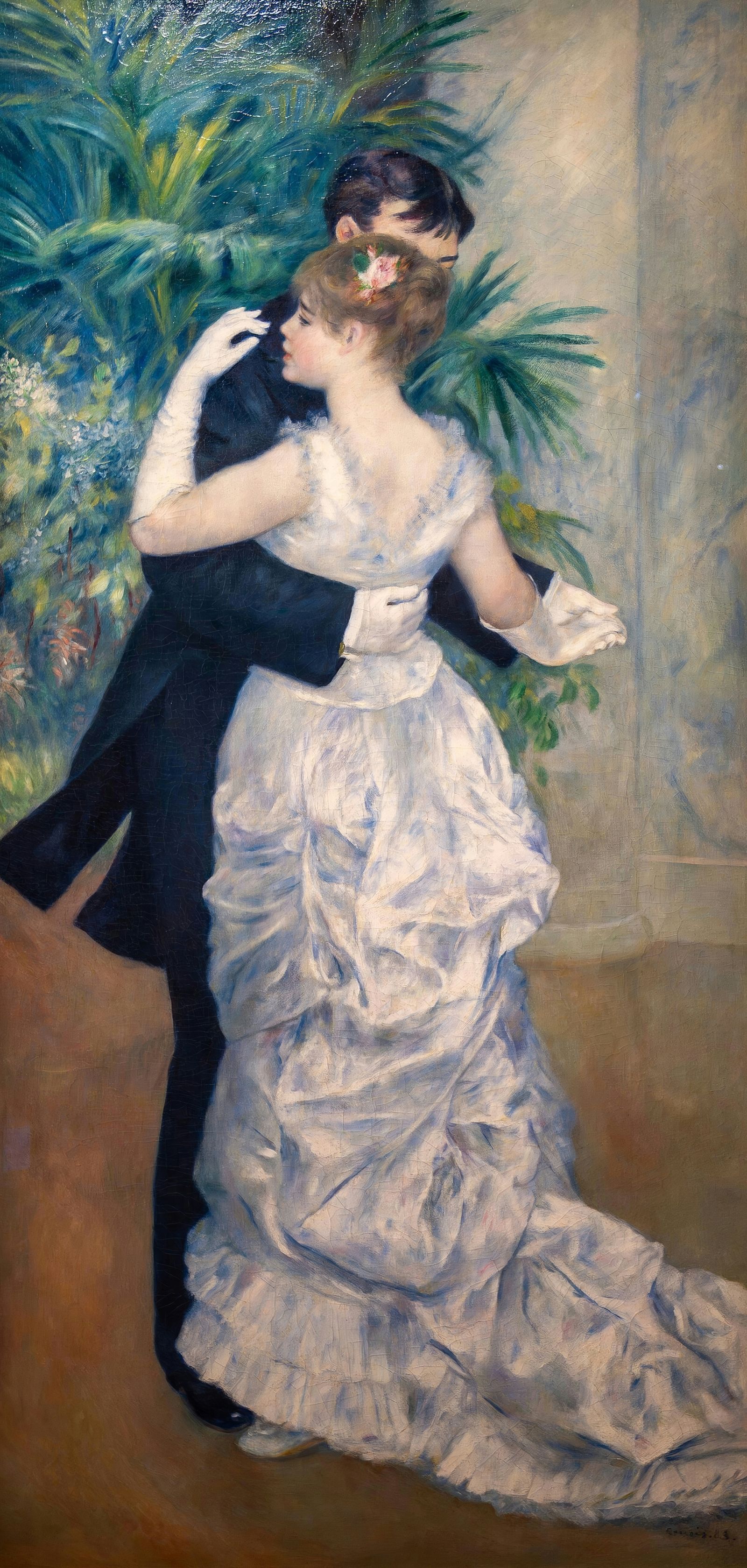
Dance in the City · Pierre-Auguste Renoir · 1883 · Musée d'Orsay, Paris
Renoir's dancers need the whole composition to retain their relationship. An assertive border may suit a larger wall, but begin by checking the image at the intended viewing distance. Avoid choosing solely from a tiny screen preview. The picture, frame and surrounding wall create one visual arrangement, and a finish that looks striking alone may be too busy beside nearby objects.
9. The Tuxen double portrait: balance a portrait group
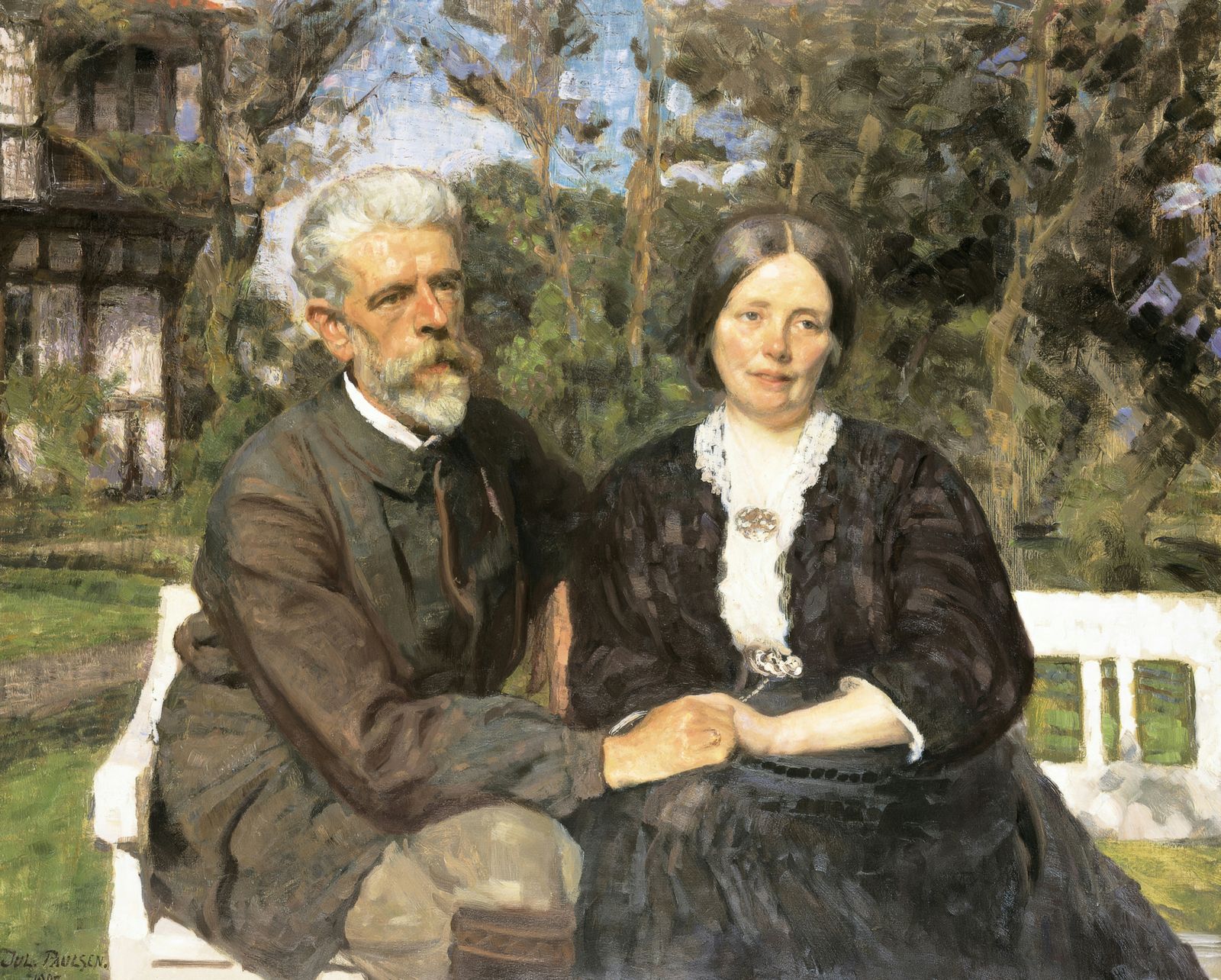
Double Portrait of Laurits and Frederikke Tuxen · Julius Paulsen · 1907 · Skagens Museum
If this Paulsen double portrait joins personal photographs, a restrained frame can help the images share a wall without pretending to come from the same source. Keep the historical work's caption available when giving it as a gift. Different print sizes can coexist if their spacing is considered. Matching every border is only one option, not a requirement for an orderly display.
10. Corner of a Table: leave the edges intact
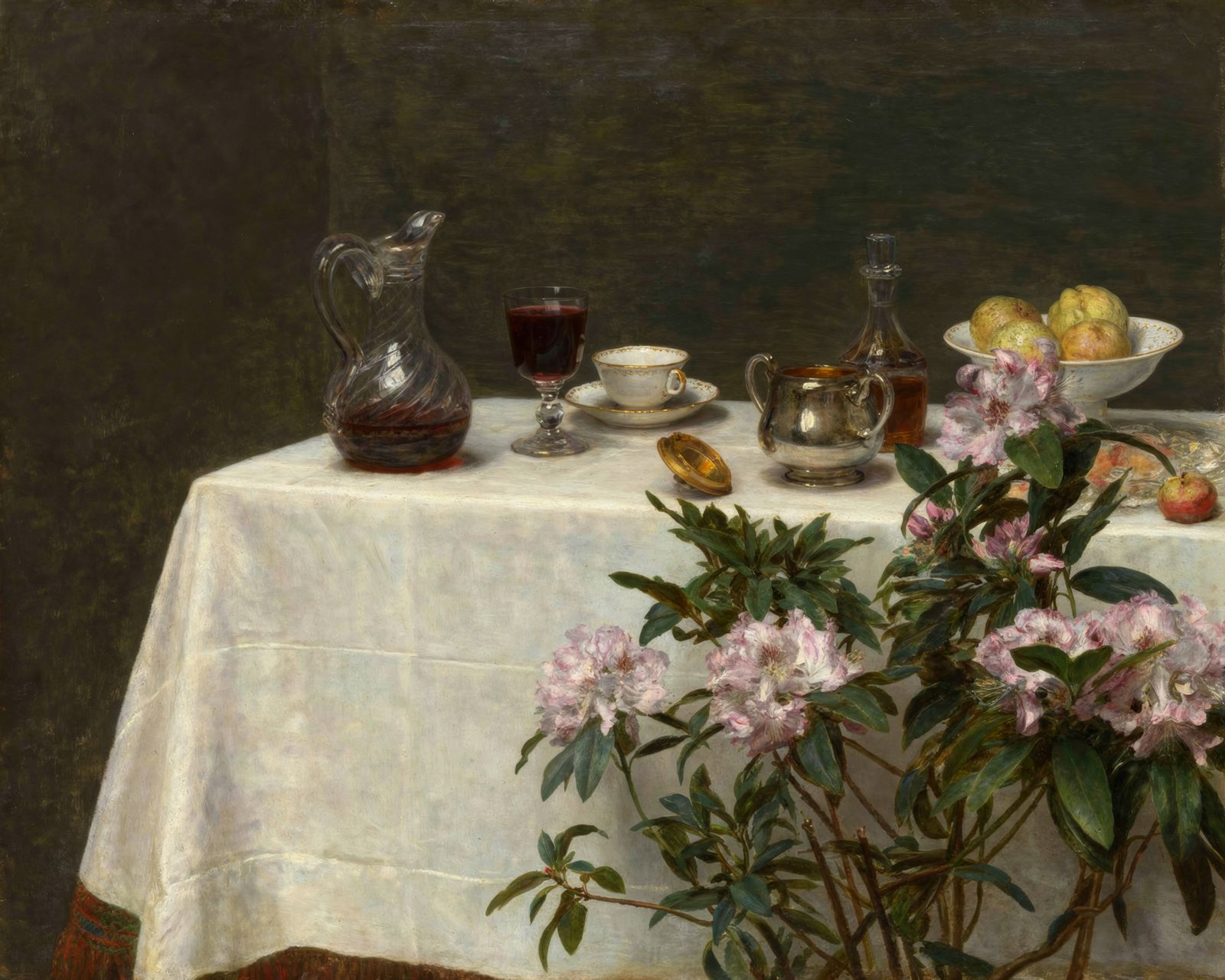
Still Life: Corner of a Table · Henri Fantin-Latour · 1873 · Art Institute of Chicago
Fantin-Latour's still-life title is a useful reminder that a table edge can be part of what makes a painting work. Do not treat the picture as a collection of objects that can be rearranged to fit a frame. Choose from the formats currently offered for the work. If you are reusing an existing frame, seek a suitable mounting solution that preserves the full image.
Before buying framed art, measure more than the empty patch of wall. Include the border, the furniture beneath it and the distance from which the picture will normally be seen. Use paper to mark out the proposed footprint if that helps. A size that seems modest on a product page can feel substantial above a narrow desk.
Open Fable's frame guide to compare the current options, then return to the work you want. The individual masterwork page is the place to check what can be ordered with that image. This article's pairings describe choices to consider; the live catalogue determines the available materials, finishes and sizes.
Above all, choose a frame that keeps the complete painting visible. When a work and an existing frame have incompatible proportions, changing the frame is usually a kinder decision than changing the artwork. The border should make a place for the picture, not take part of it away.
Choosing vintage framed prints
If you are choosing vintage framed prints, begin with the picture and the space it needs. The works below are historical compositions offered as modern reproductions; their age does not make a newly printed sheet an antique.
Measure the wall before choosing the print. Mark the proposed outside frame dimensions with paper or removable tape, then look from the doorway and from the seat where you will usually see it. The artwork size and the finished frame size are different measurements. Leave enough space around a detailed picture to read its figures and edges.
For a single focal work, compare the complete image at two possible sizes. For a pair, look for a shared colour, a similar horizon or a comparable amount of empty space. Matching every colour is unnecessary; a repeated frame finish can connect two quite different pictures. Choose the frame around the artwork rather than cutting the artwork to fit a frame you already own.
Open the artwork you prefer from the selection above and check the formats, dimensions and framing currently offered for that specific print. A room image helps you imagine placement; it is not a list of included frame finishes. Read the selected product and checkout summary before ordering. For a paired floral arrangement, continue with vintage botanical prints.
Are these original antique prints?
The historical artwork and the newly produced print are different objects. These Fable selections are modern reproductions of historical compositions; do not buy them expecting an original antique sheet.
How do I choose a frame for vintage art?
Compare the picture with the wall and nearby furniture. A restrained finish can leave a detailed work room to breathe. Check the finishes offered on the chosen product, and preserve the full composition.
What size should a framed print be?
Use the outside frame dimensions when planning the wall. Mark them out at home and compare two sizes from your normal viewing position before ordering.
- Should all the frames in a room match?
- They can, but they do not have to. Consider spacing, scale and the furniture around them. A group can feel coherent without repeating exactly the same finish.
- Can I crop a print to fit an existing frame?
- Keep the complete composition visible. Choose a compatible format or a mounting solution that preserves the work rather than cutting away part of the image.
- Are all frame finishes mentioned here available to order?
- These are selection principles, not a stock list. Check Fable’s current frame guide and the individual masterwork page for the options offered today.
- Are these original antique prints?
- The historical artwork and the newly produced print are different objects. These Fable selections are modern reproductions of historical compositions; do not buy them expecting an original antique sheet.
- How do I choose a frame for vintage art?
- Compare the picture with the wall and nearby furniture. A restrained finish can leave a detailed work room to breathe. Check the finishes offered on the chosen product, and preserve the full composition.
- What size should a framed print be?
- Use the outside frame dimensions when planning the wall. Mark them out at home and compare two sizes from your normal viewing position before ordering.