Famous ballerina paintings: Degas, Renoir and the dancers of the Paris Opéra
Eleven ballet paintings worth knowing, from Degas's The Star and Renoir's The Dancer to Lancret's La Camargo and Toulouse-Lautrec at the Moulin Rouge, and what each one shows.
Most of the ballerina paintings people know by heart were made in one city within about thirty years. In the 1870s and 1880s the dancers of the Paris Opéra were everywhere in its art: on stage under the gas lights, at the barre in rehearsal, and waiting in the wings beside the men in top hats who paid for the right to be there. Edgar Degas made dancers the subject of more than half of his work, and Renoir, Manet, Forain and Toulouse-Lautrec all painted the same world from their own side of it. Here are eleven famous ballet paintings, ten from that Paris and one from a century earlier, with what to look for in each. Every one is in a public museum, and every one is a Fable print.
See the Dancers & Ballerinas book
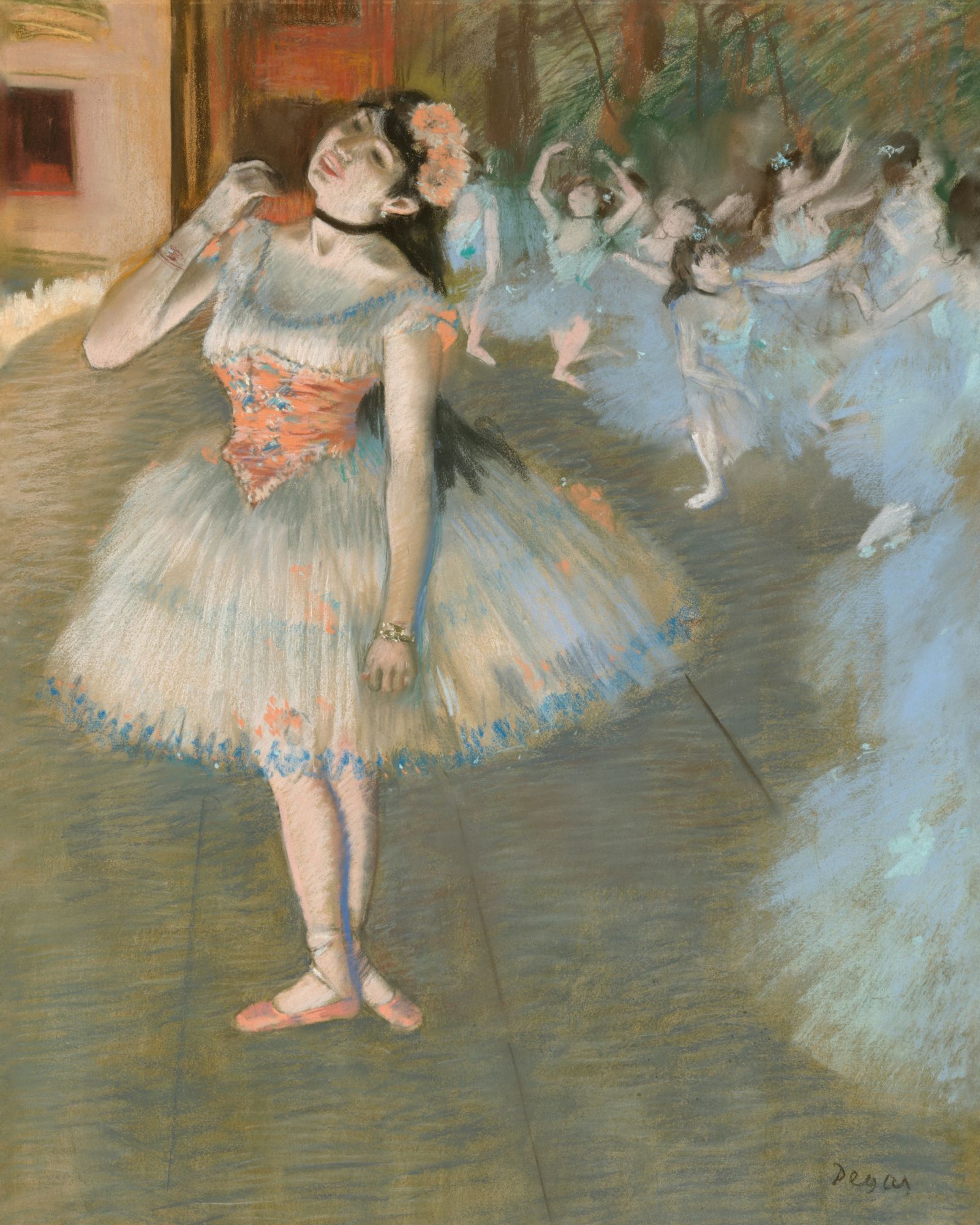
1. The Star
Edgar Degas, The Star, 1879–81. Art Institute of Chicago. Complete composition.
A dancer in a pale tutu with an orange bodice tilts her head back as she finishes, while the rest of the corps de ballet waits behind her in a blur of blue. Degas drew it in pastel, which let him lay the gauze of the skirt in a few quick strokes and keep the stage floor rough and bare around her.
The ballerina painting most people picture first. It reads from across a room.
2. The Dancer
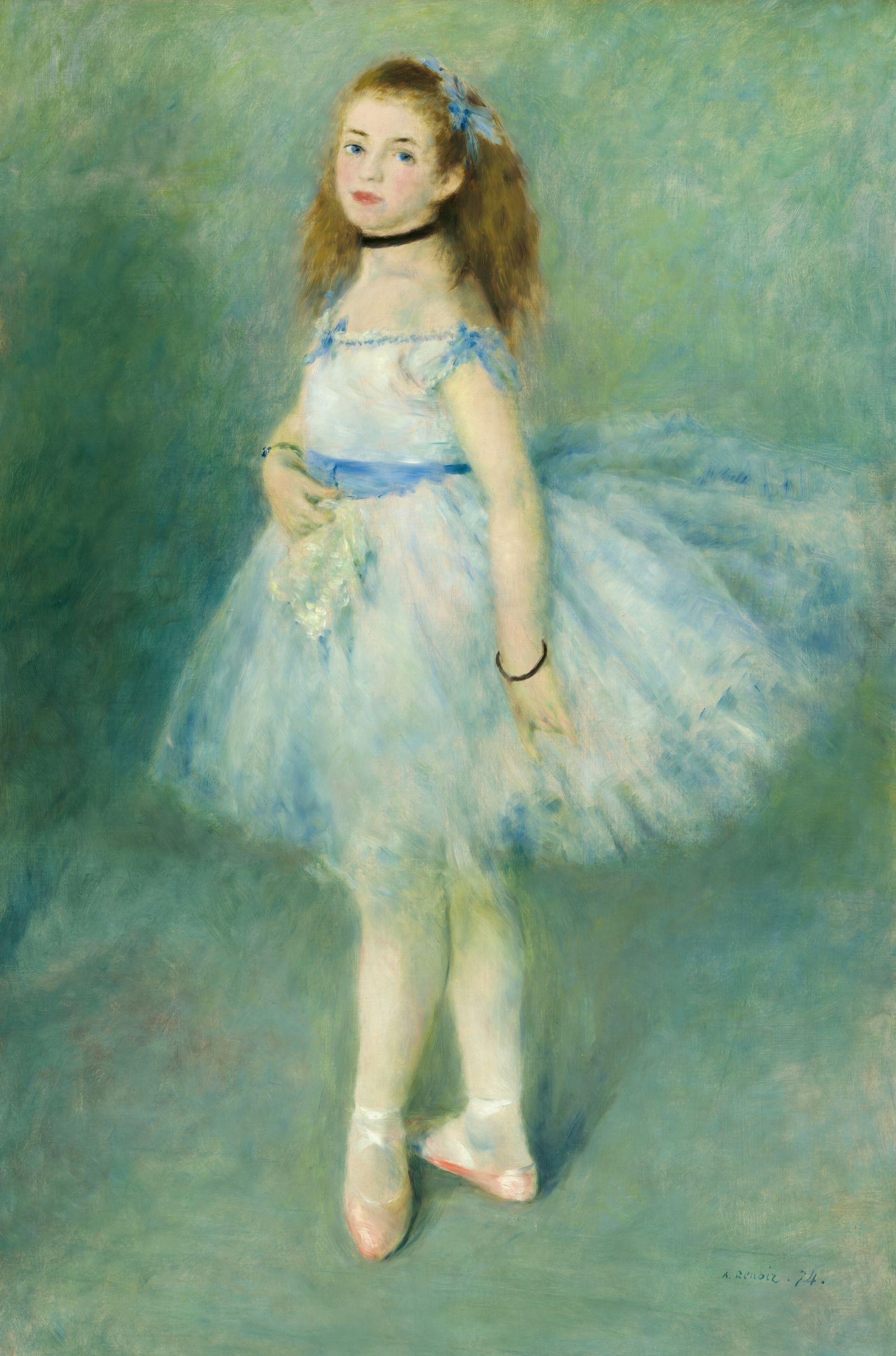
Pierre-Auguste Renoir, The Dancer, 1874. National Gallery of Art, Washington. Complete composition.
Renoir painted a young dancer standing in her slippers against a soft blue-green ground, her tutu almost dissolving into the air around her. He showed it at the first Impressionist exhibition in Paris in 1874, the same show that gave the movement its name.
Tall, light and calm: right for a hallway or a girl's room.
3. Yellow Dancers (In the Wings)
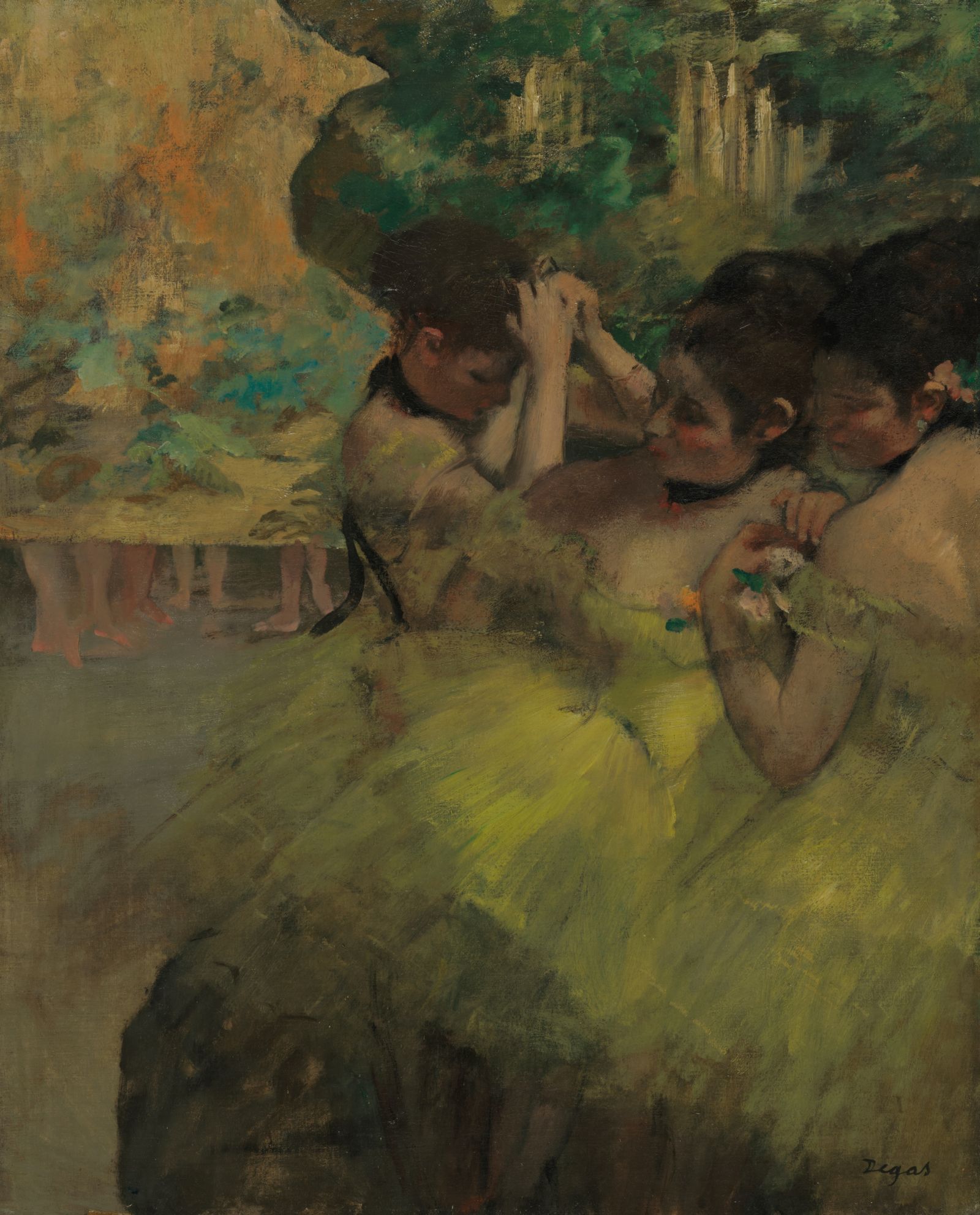
Edgar Degas, Yellow Dancers (In the Wings), 1874–76. Art Institute of Chicago. Complete composition.
Four dancers in yellow fix their hair and shoulder straps in the wings, their faces turned away from us. Degas cuts them off at the edges of the canvas like a photograph, and lets a painted stage flat fill the top corner.
A backstage moment rather than a performance, in warm yellows and greens.
See the print of Yellow Dancers (In the Wings)
4. Ballet at the Paris Opéra
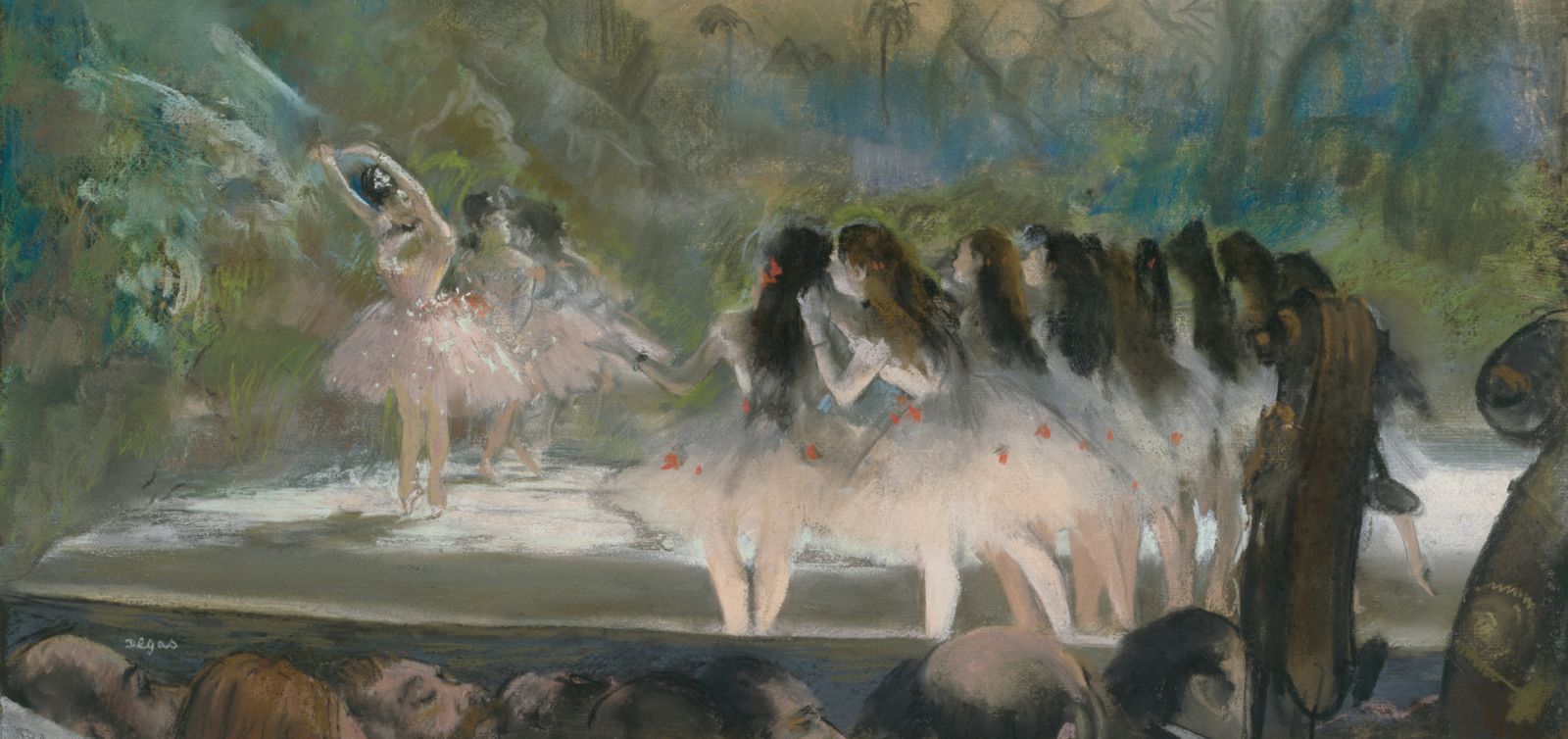
Edgar Degas, Ballet at the Paris Opéra, 1877. Art Institute of Chicago. Complete composition.
Here we sit in the audience. The dancers cross the lit stage in a long line while the heads of the orchestra and the scroll of a double bass rise in the dark foreground. Degas made it in pastel over a monotype, a print pulled from a painted plate.
A wide picture, made for a long wall above a sofa.
See the print of Ballet at the Paris Opéra
5. Dancers Backstage
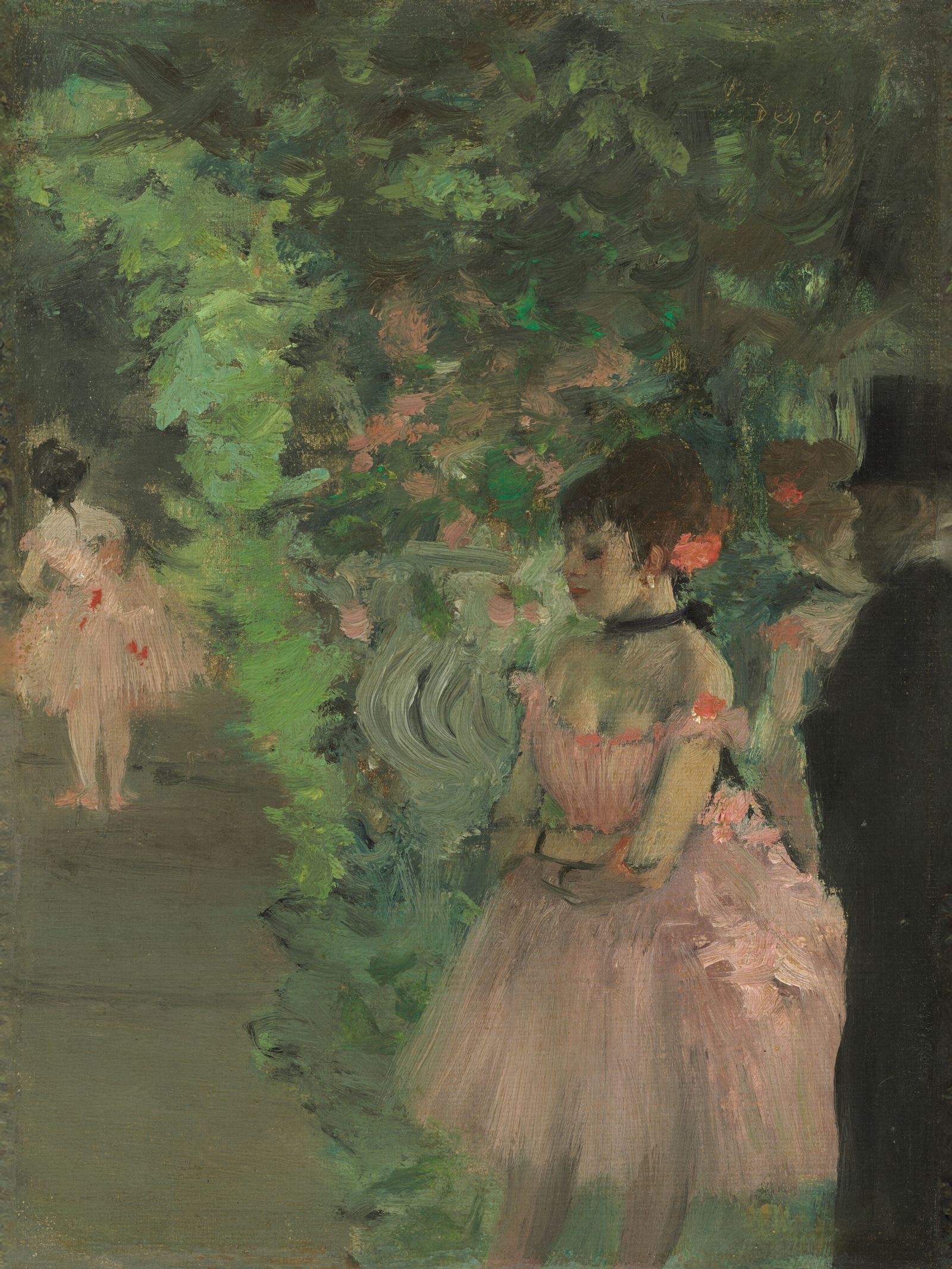
Edgar Degas, Dancers Backstage, 1876/1883. National Gallery of Art, Washington. Complete composition.
A dancer in pink waits by the scenery with her hands folded while a man in a black top hat stands just behind her. Men like him held subscriptions to the Opéra and the right to go backstage, and Degas often put them in the corner of his pictures.
Small and quiet, with a story in it.
See the print of Dancers Backstage
6. Two Dancers
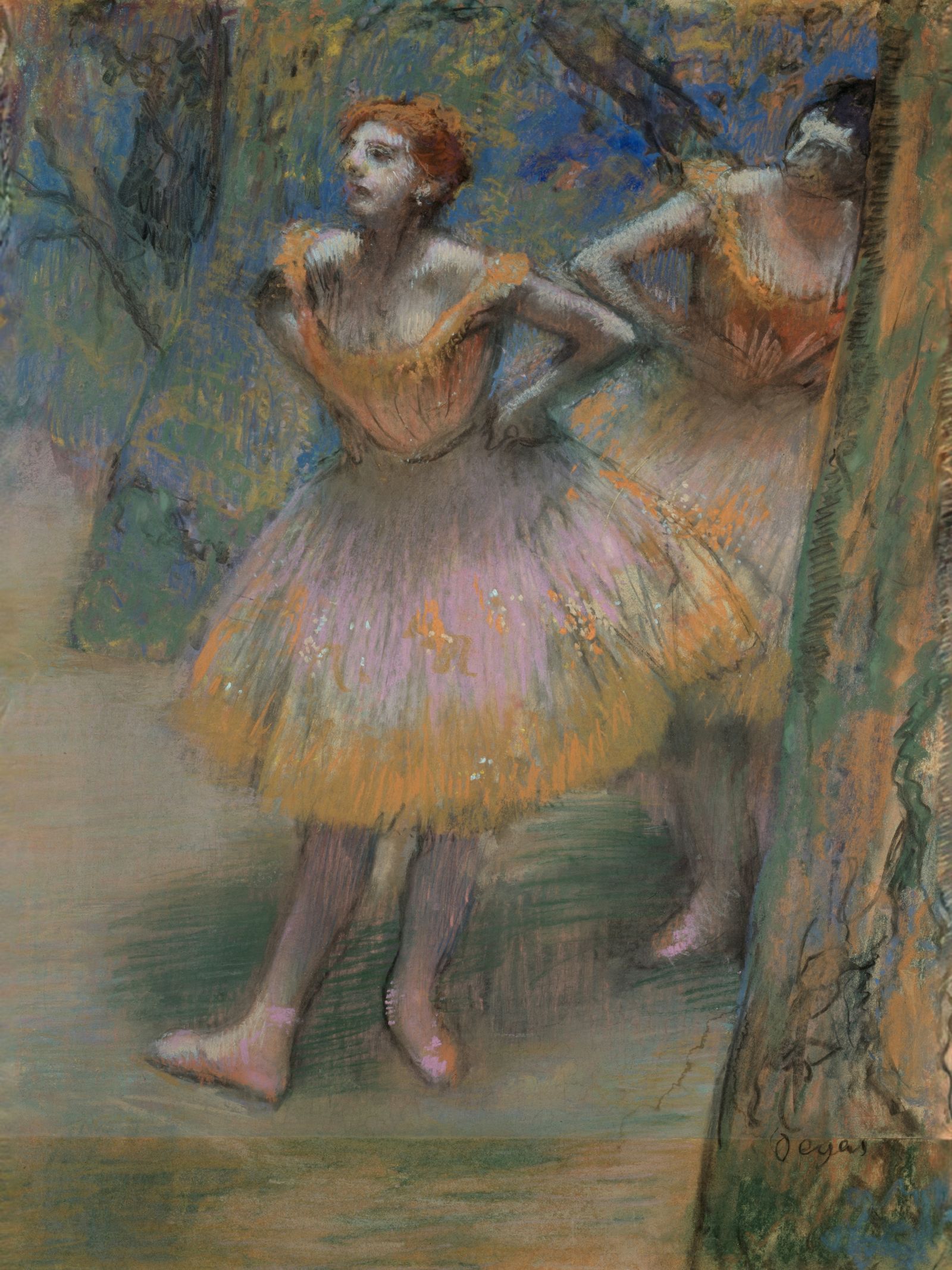
Edgar Degas, Two Dancers, c. 1893–98. Art Institute of Chicago. Complete composition.
Two dancers in orange and lilac stand with their hands on their hips beside a painted tree trunk. In his later years Degas worked in pastel on tracing paper, building the colour up in layers, and his dancers grew larger and plainer on the page.
The brightest of the late Degas pictures here.
7. Four Dancers
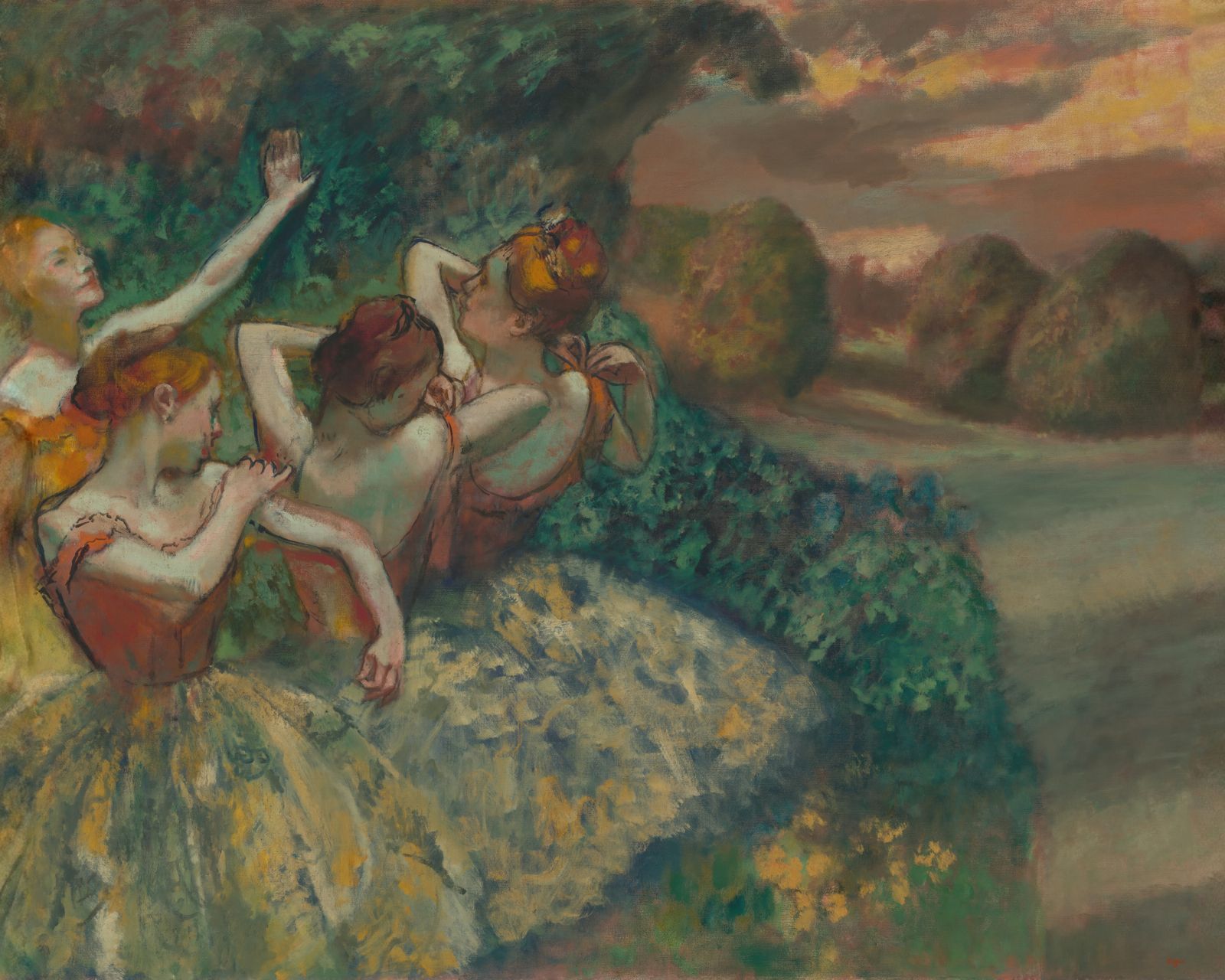
Edgar Degas, Four Dancers, c. 1899. National Gallery of Art, Washington. Complete composition.
Four dancers lift their arms to fix their costumes against a painted landscape and a red sky. Degas painted it around 1899, late in his life, when his eyesight was failing and his colour grew bolder.
Green, gold and coral: it holds a large wall on its own.
8. La Camargo Dancing
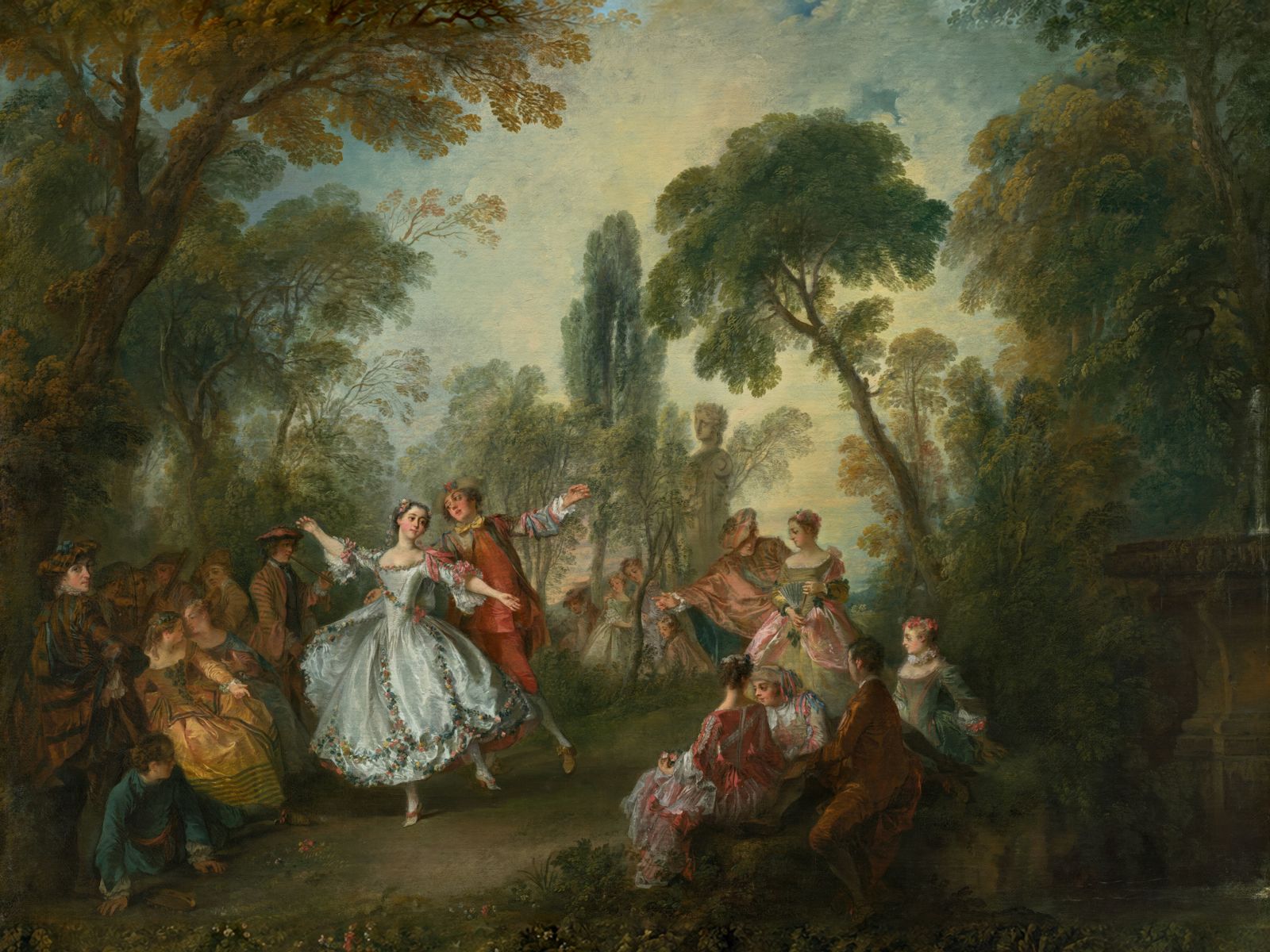
Nicolas Lancret, La Camargo Dancing, c. 1730. National Gallery of Art, Washington. Complete composition.
A century before Degas, Nicolas Lancret painted Marie-Anne de Camargo, the star of the Paris Opéra ballet, dancing in a park among elegant spectators. She was famous for her quick footwork, and was said to have shortened her skirts so that audiences could see it.
The first ballet star in art, in a rococo garden.
See the print of La Camargo Dancing
9. In the Wings
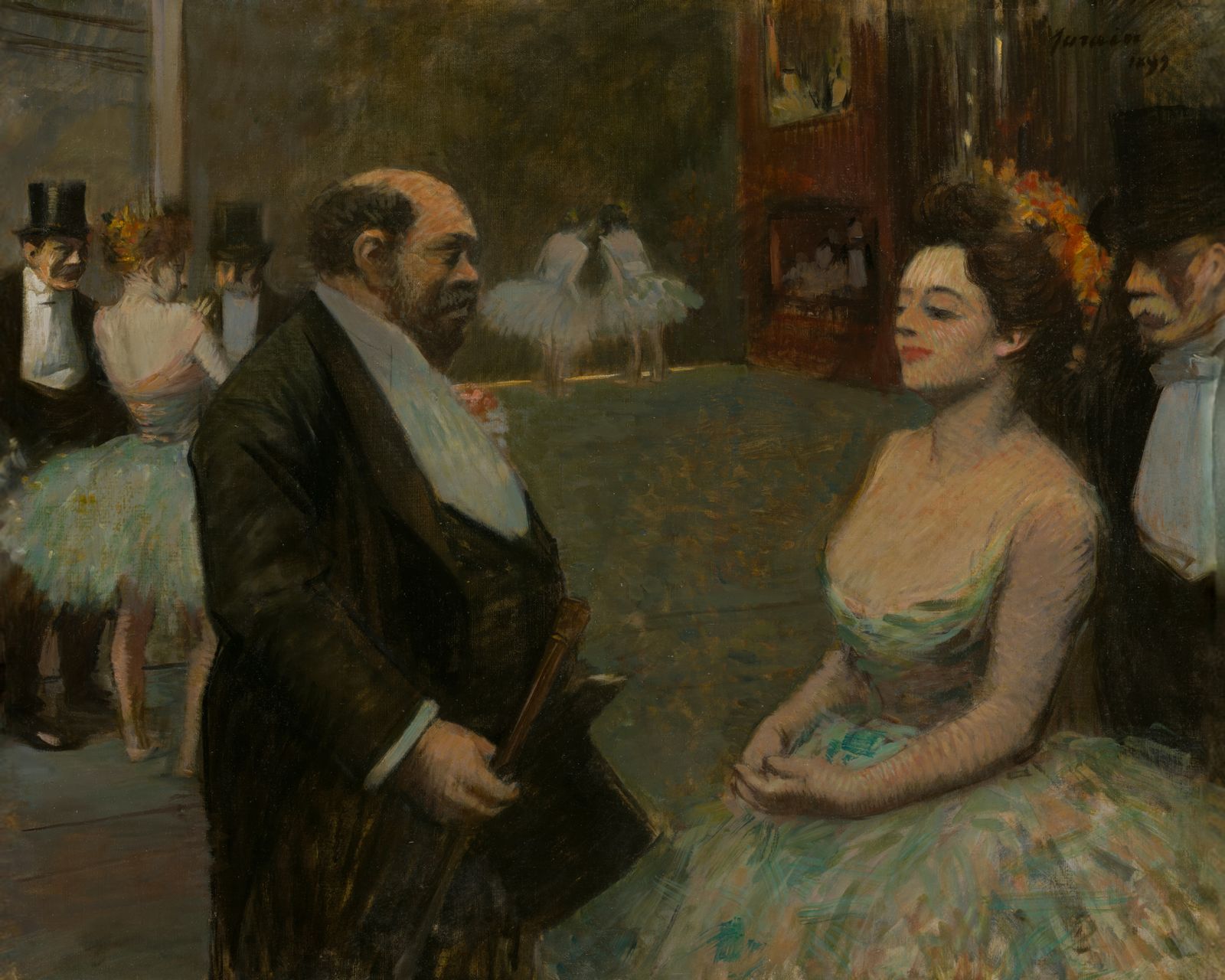
Jean-Louis Forain, In the Wings, 1899. Art Institute of Chicago. Complete composition.
Jean-Louis Forain, a friend of Degas, painted the other side of the stage: a heavy man in evening dress talks to a smiling dancer while the corps rehearses behind them. Forain was known as a satirist, and his backstage pictures are sharper about money and power than Degas's.
The most dramatic painting here, all dark suits and pale tulle.
10. Masked Ball at the Opera
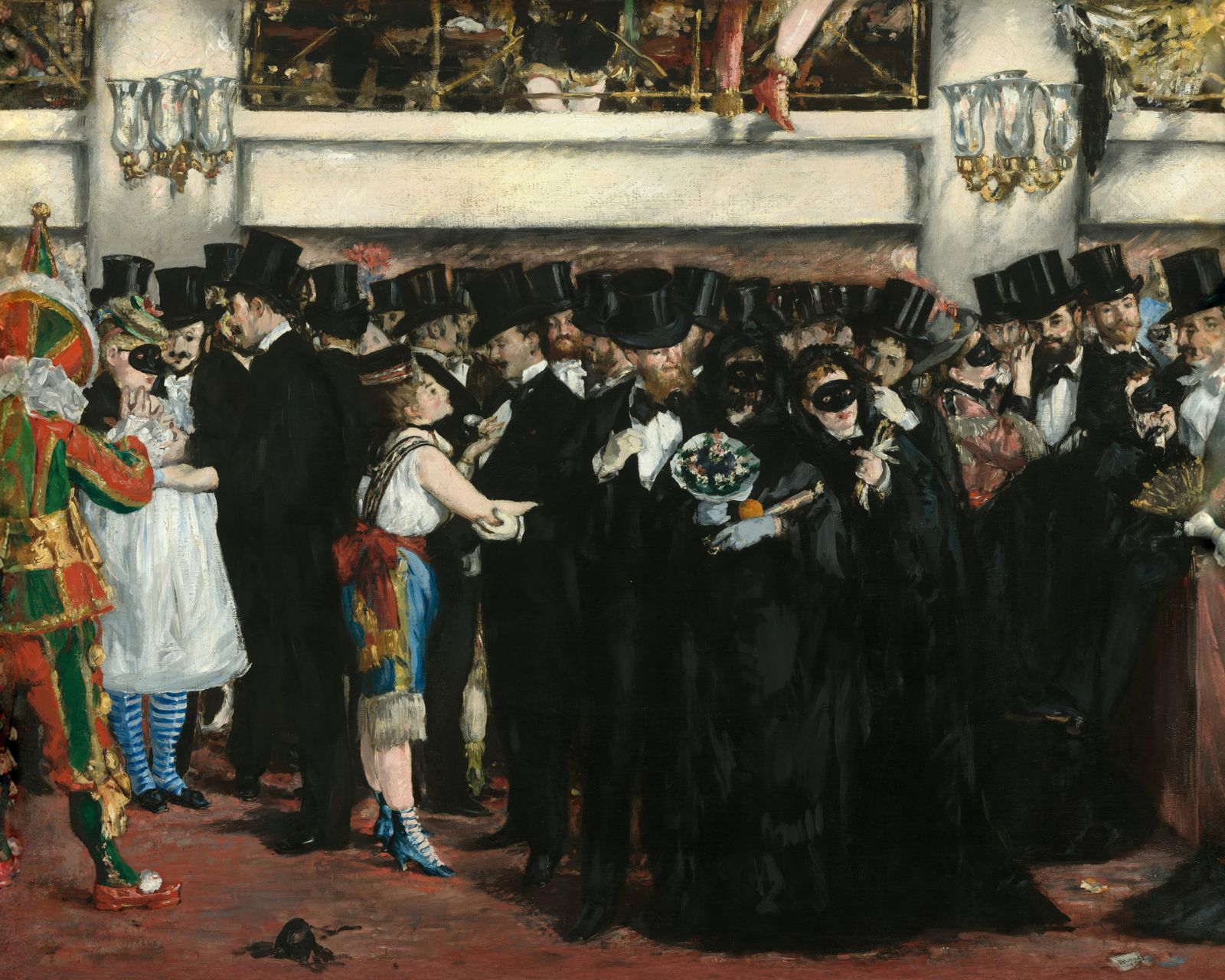
Édouard Manet, Masked Ball at the Opera, 1873. National Gallery of Art, Washington. Complete composition.
Not ballet, but the Opéra's other dance. Manet painted the masked ball at the opera house on the rue Le Peletier: a crowd of men in top hats around women in masks, with a dancer's legs swinging over the balcony at the top. The building burned down later the same year.
A crowded, witty picture for anyone who likes a story.
See the print of Masked Ball at the Opera
11. Quadrille at the Moulin Rouge
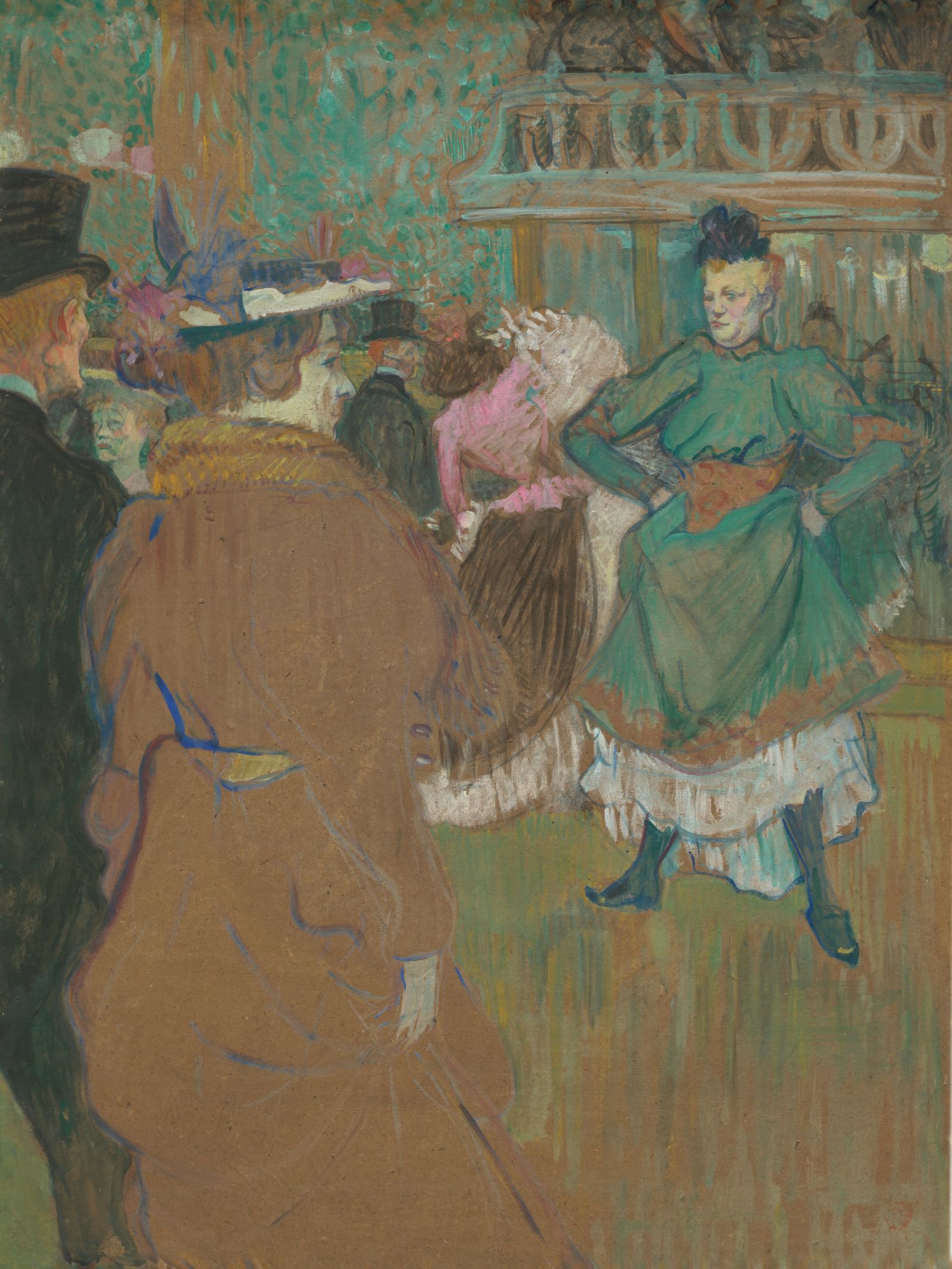
Henri de Toulouse-Lautrec, Quadrille at the Moulin Rouge, 1892. National Gallery of Art, Washington. Complete composition.
By 1892 the dancers that Paris talked about were in Montmartre. Toulouse-Lautrec shows a dancer in green, hands on her hips, about to start the quadrille at the Moulin Rouge while the crowd in coats and hats watches.
The end of the story: from the Opéra to the dance hall.
See the print of Quadrille at the Moulin Rouge
Seven of these pictures are bound together in Dancers & Ballerinas, a 100-page Fable Editions hardcover with The Star on its cover and Lancret, Renoir, Manet, Toulouse-Lautrec, Forain and Degas inside, each captioned from its museum's record. Every copy opens with a dedication and a title page made for the person it is for, which makes it a good present for anyone who dances or once did.
See the Dancers & Ballerinas book
Choosing vintage ballerina print
If you came looking for a vintage ballerina print, use these paintings to compare stage scenes, rehearsals and quieter moments. Fable offers new reproductions of historical art; a vintage subject is not a claim that the printed sheet is an antique.
Choose the moment before the frame. A solitary dancer can make a calm focal point; a rehearsal or a cluster of figures brings movement into a room. Look at the whole picture, including the empty floor, curtain or shadow around the dancer. Those areas are part of the composition, not spare material to trim away.
For a dance-room gift, consider where the recipient can actually hang it. Mark the outside frame dimensions on the wall, and compare a small work for close viewing with a larger one seen across the room. A print for a child’s bedroom need not be chosen as though it were a studio poster: start with the colours and scene they enjoy.
The artwork links above lead to the available catalogue selections. Check the chosen print’s dimensions and formats, then compare frame options where offered. Use the framing guide for planning the final size. The original media described in the captions should not be confused with the material of the reproduction you order.
Is a ballerina print a reproduction of a painting or pastel?
It may reproduce either. Read the individual caption for the historical medium and the product page for the material of the new print.
Should a dancer be cropped to fit a tall frame?
Keep the artwork’s full composition. Choose a suitable print proportion or a mount around the image instead of cutting off limbs, costumes or surrounding space.
How do I choose between a rehearsal and a stage scene?
Compare the atmosphere you want: concentration and quieter movement, or a more theatrical focal point. The right choice depends on the room and the recipient, not simply the fame of the artist.
- Is a ballerina print a reproduction of a painting or pastel?
- It may reproduce either. Read the individual caption for the historical medium and the product page for the material of the new print.
- Should a dancer be cropped to fit a tall frame?
- Keep the artwork’s full composition. Choose a suitable print proportion or a mount around the image instead of cutting off limbs, costumes or surrounding space.
- How do I choose between a rehearsal and a stage scene?
- Compare the atmosphere you want: concentration and quieter movement, or a more theatrical focal point. The right choice depends on the room and the recipient, not simply the fame of the artist.