French bulldog portraits that keep the face in character
french bulldog painting: Ten ways to choose a composed, natural portrait for a distinctive little dog.
A french bulldog painting should begin with the dog, not with a joke about it. The broad ears, short muzzle and compact body already provide a distinctive subject. For a custom Fable portrait, a clear photo of those features is more useful than a hat, a military uniform or a novelty throne. The historical works below are studies in how to give an animal presence; they do not all depict French bulldogs.
A frenchie wall art gift can be playful without changing the dog's nature. Decide whether the owner would recognise an attentive expression, a sprawled sleeping pose or the patient stare beside a food bowl. Then compare the scale and handling of the animal in each masterwork. Choose a style whose balance supports that particular photograph, and keep the dog comfortably itself throughout the creation process.
1. Make room for the ears
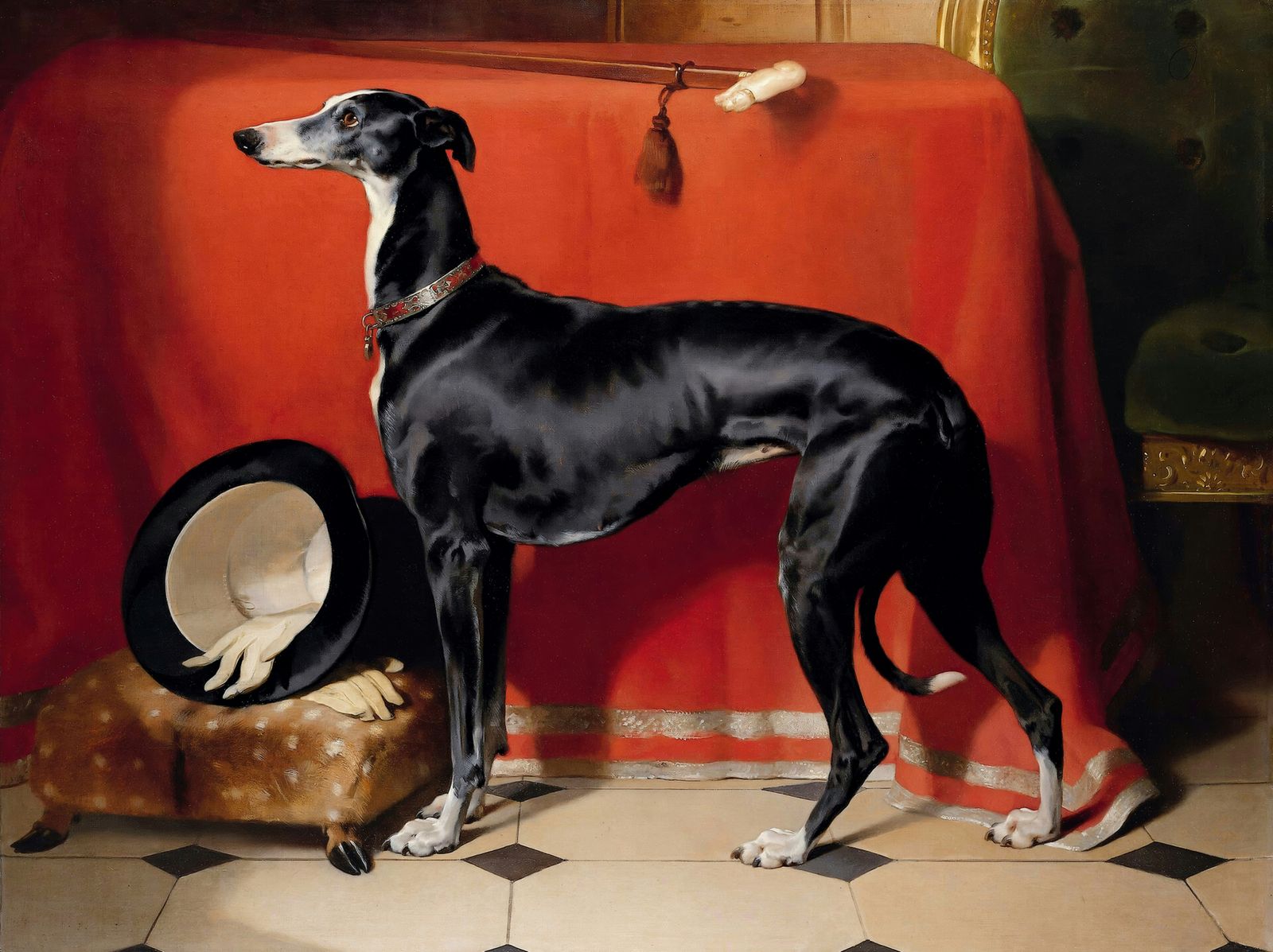
Eos · Edwin Landseer · 1841 · Royal Collection
Eos is useful here as a reminder that an animal's outline matters. For a French bulldog, check that both ears sit inside the photograph with some space above them. A close crop that clips an ear removes one of the clearest identifying features before the portrait begins. Photograph from level with the head; a view looking down can shorten the muzzle and make the ears dominate unnaturally.
Create a portrait in this style · Explore this artwork
2. Give the short muzzle a clear reference
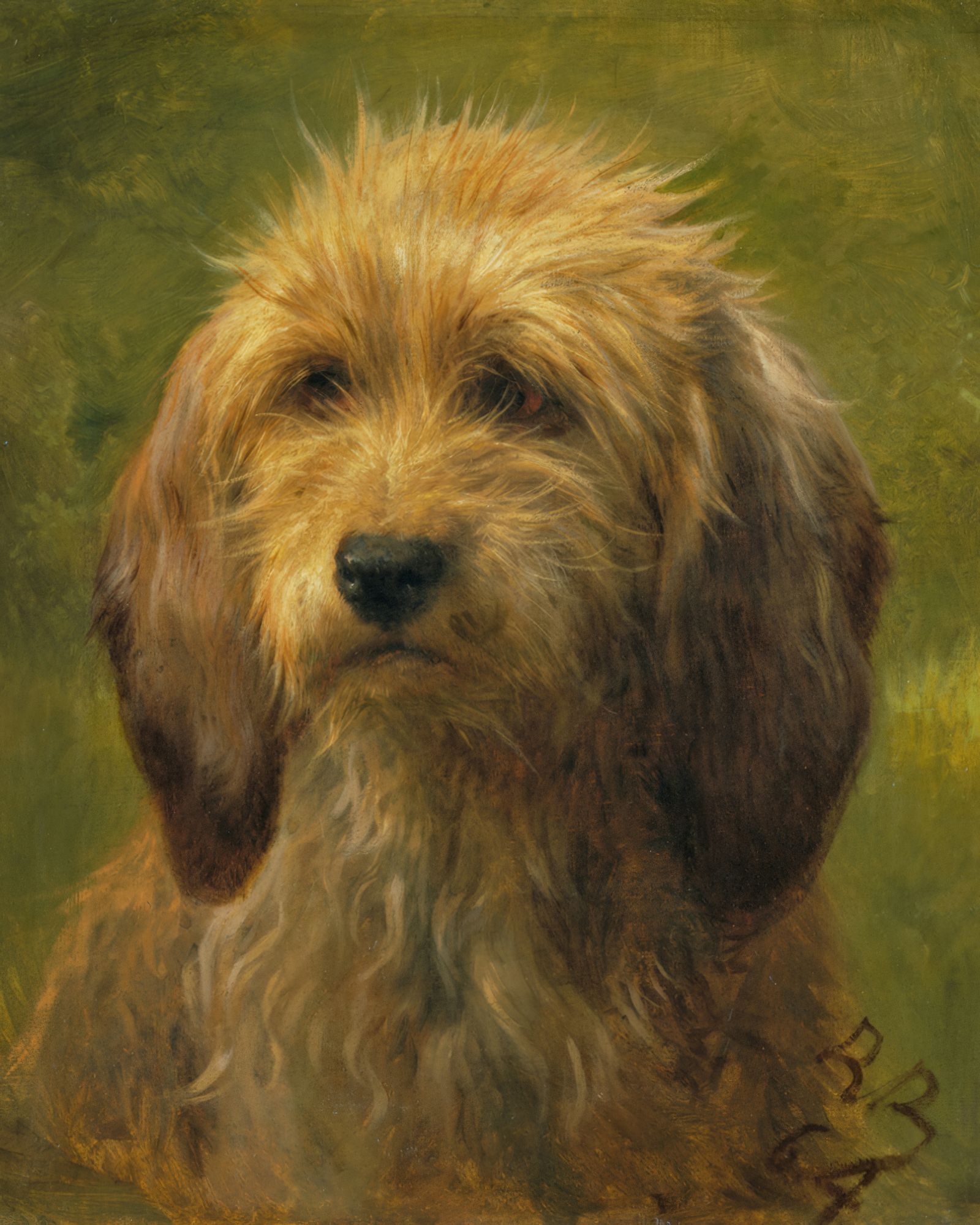
Brizo the dog · Rosa Bonheur · 1864 · Wallace Collection, London
A frontal photograph needs enough distance to avoid a large nose and receding cheeks. Brizo offers a reason to look carefully at the relationship between head and body rather than choosing on colour alone. Inspect your own photo at full size, especially the eyes and nose. A flattering angle is one that keeps those features readable while retaining the shape the owner knows.
Create a portrait in this style · Explore this artwork
3. Choose stillness for a formal little dog
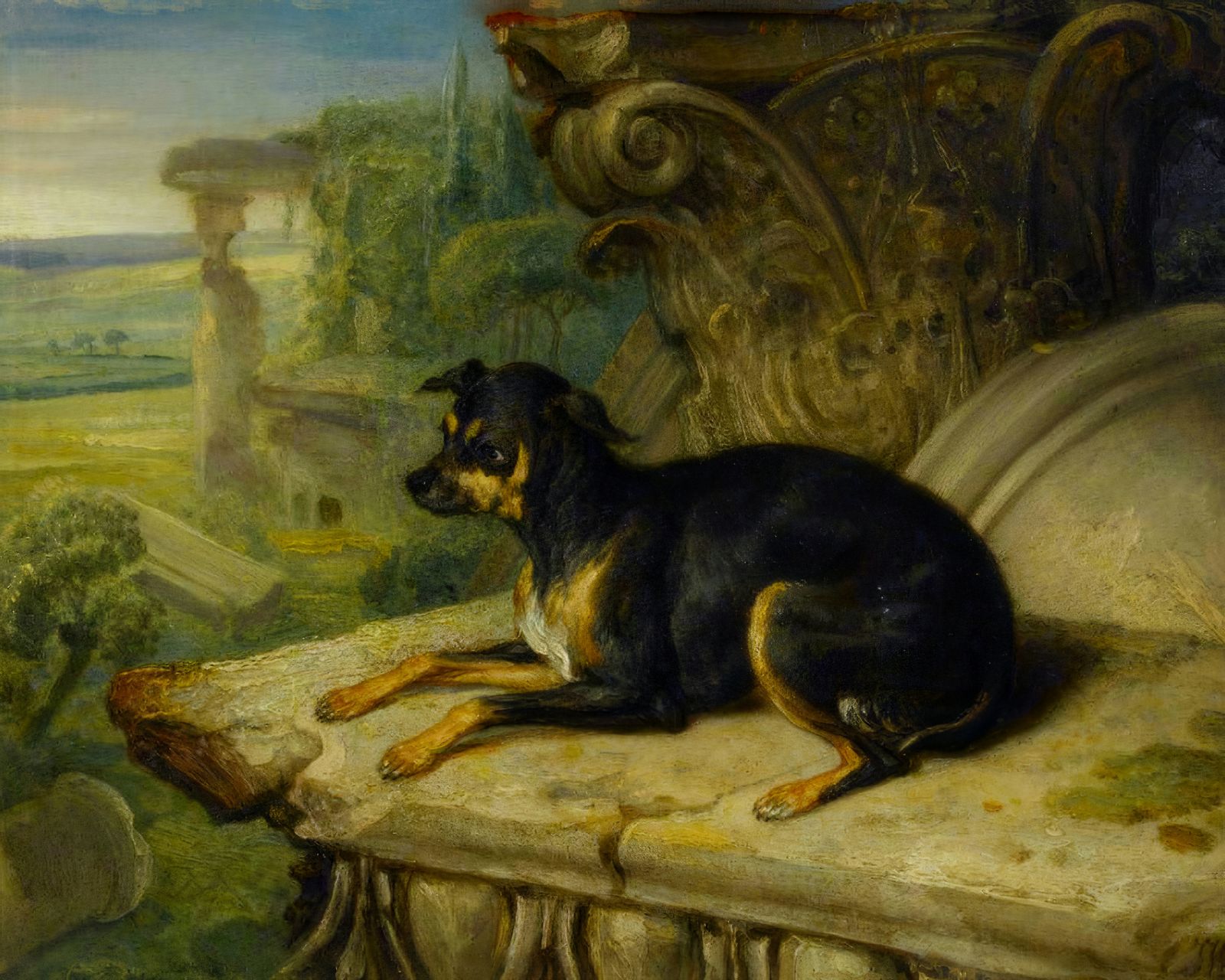
'Fanny', a Favourite Dog · James Ward · 1822 · Sir John Soane's Museum, London
A formal portrait does not require a solemn costume. It can come from an ordinary seated pause and the decision to give the dog undivided attention. This named canine work is a useful comparison for that direction. If your frenchie is small in the source image, choose another photo rather than enlarging a screenshot. More original detail gives the portrait a stronger starting point.
Create a portrait in this style · Explore this artwork
4. Allow a comic expression to remain subtle
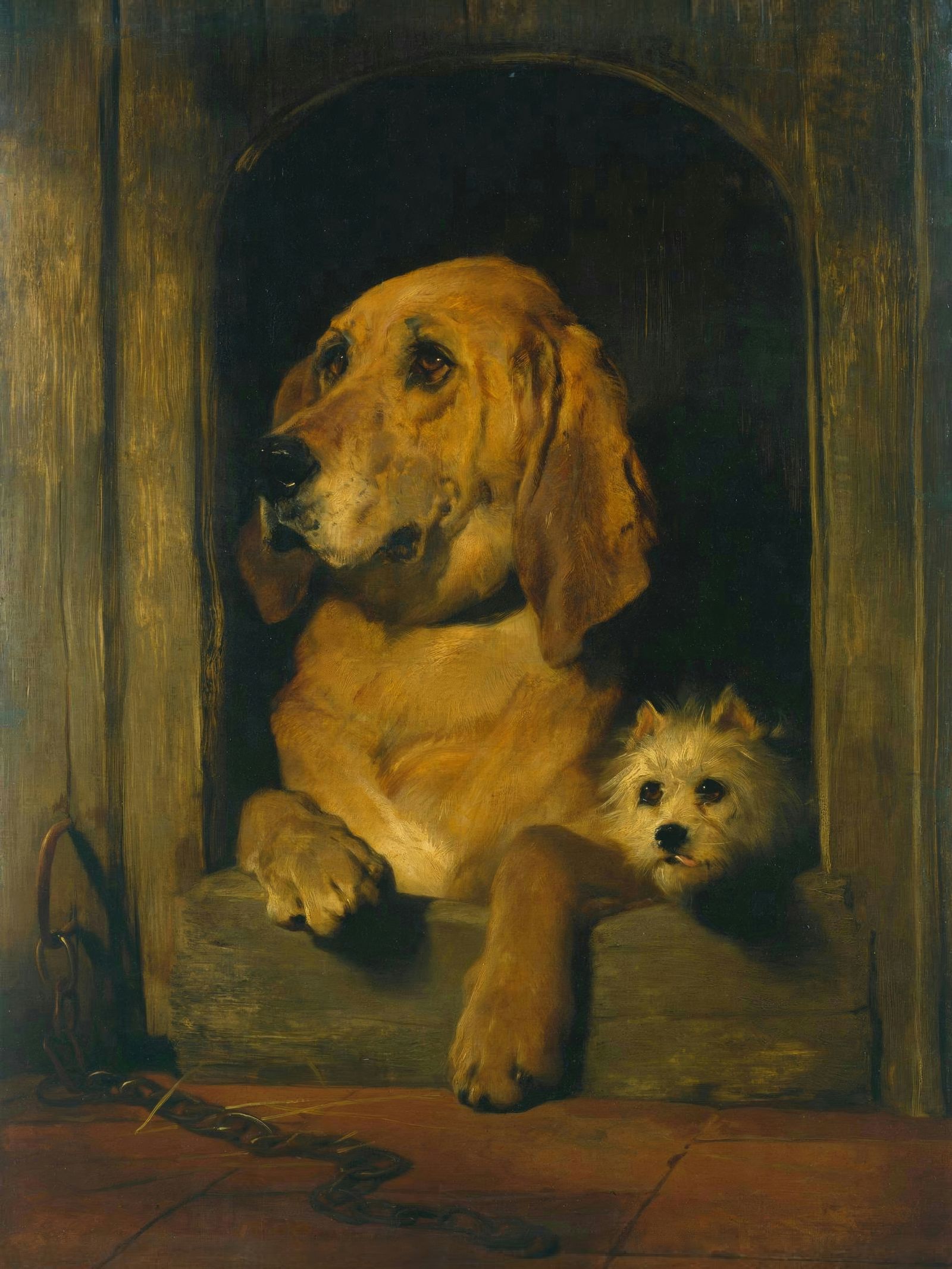
Dignity and Impudence · Edwin Landseer · 1839 · Tate, London
Owners often recognise a dog's humour in a slight turn of the head. Let that familiar look do the work instead of adding a caption to the picture. Compare this historical treatment with a reference made during a relaxed moment at home. Keep the mouth and eye line visible. An expression the owner knows is usually a better gift than a pose selected because it resembles an internet meme.
Create a portrait in this style · Explore this artwork
5. Use resting poses when they are characteristic
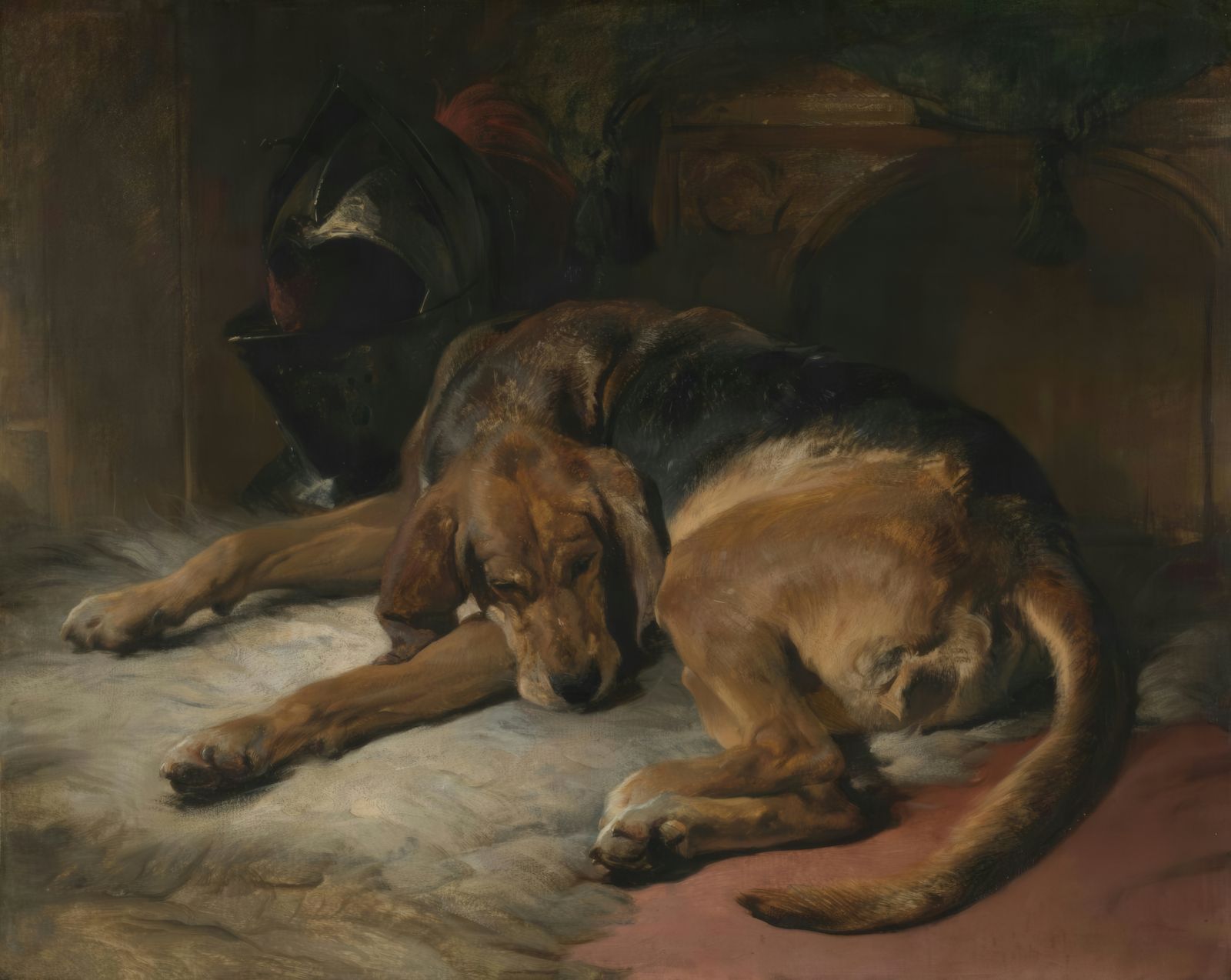
Sleeping Bloodhound · Edwin Landseer · 1835 · Tate, London
A resting dog can be a lovely subject for the person who shares its sofa. The photo should show how the body fits together; avoid a blanket that hides every paw and the entire chest. A quiet composition is particularly helpful when the owner's favourite memory is domestic. Choose it for that reason, without pretending the historical bloodhound shown here is a French bulldog.
Create a portrait in this style · Explore this artwork
6. Preserve pale coat markings
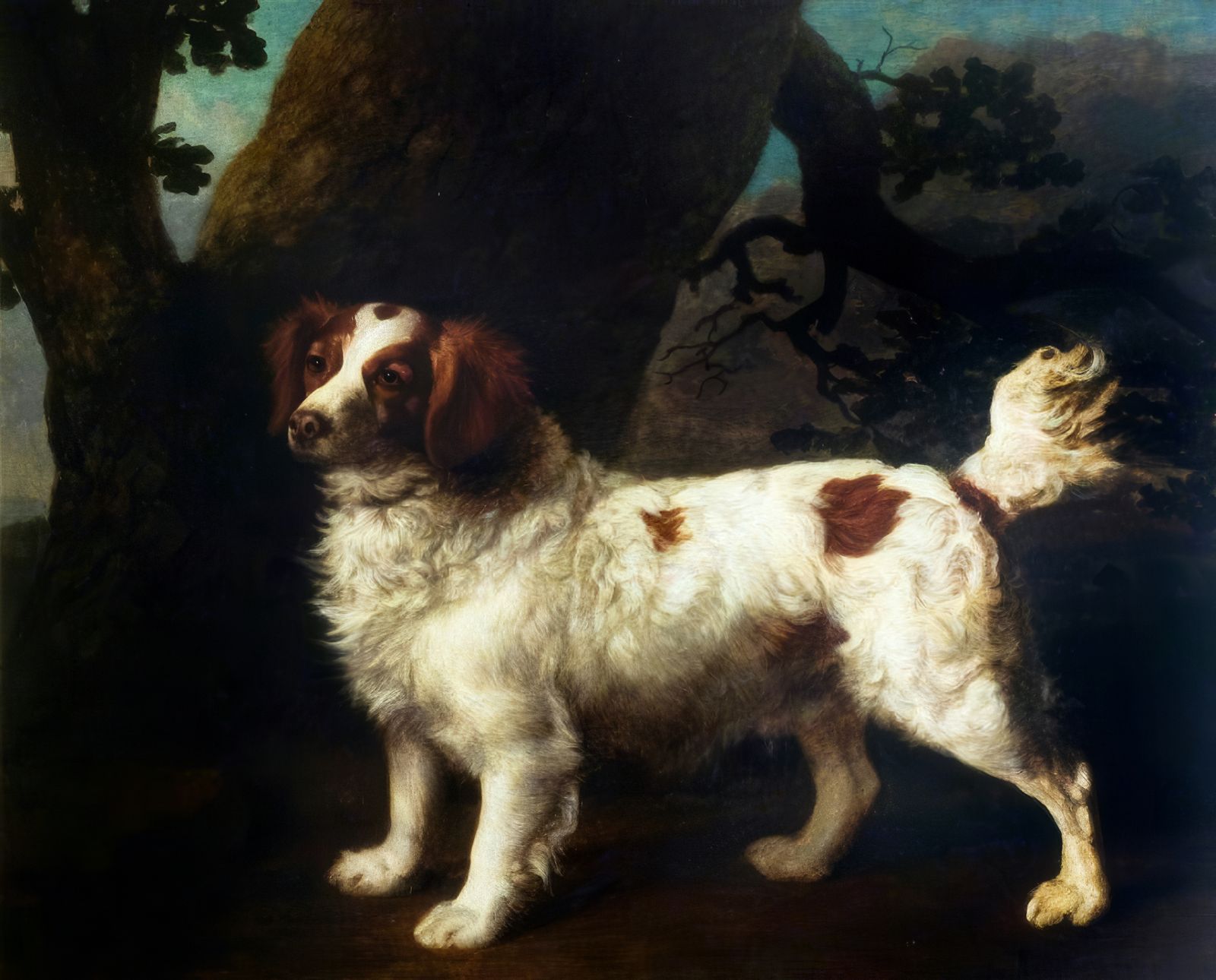
A Clumber Spaniel · George Stubbs · 1784 · Usher Gallery, Lincoln
For a white or pied frenchie, the important distinction may be the edge of one patch around an eye. Look for a photo with detail in the light fur and without a bright flash. This pale-coated canine comparison helps you think about how much of the picture should remain light. Keep your dog's markings in the reference, rather than relying on a breed description to replace them.
Create a portrait in this style · Explore this artwork
7. Let a darker dog separate from its setting
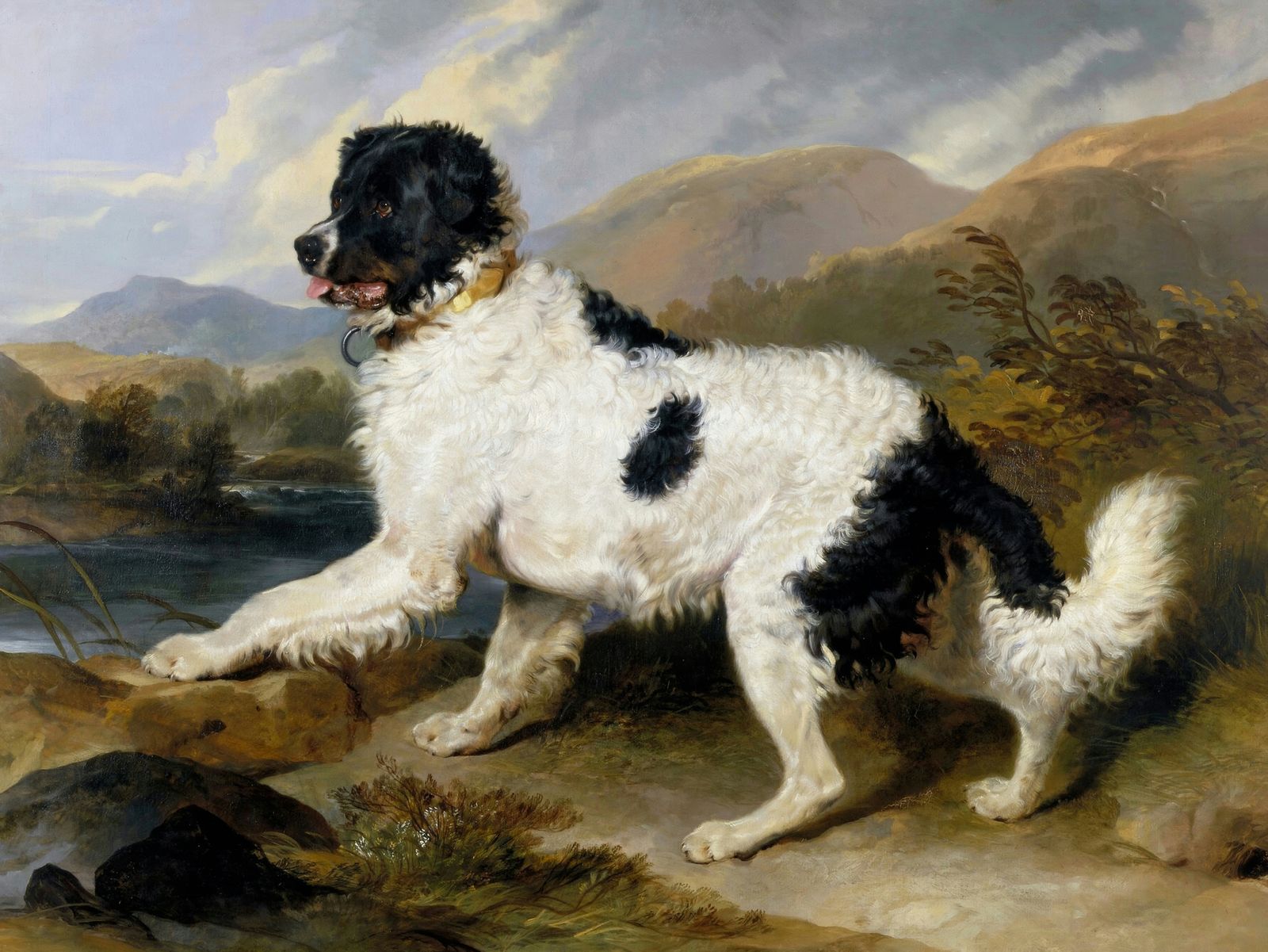
'Lion', a Newfoundland Dog · Edwin Landseer · 1824 · Victoria and Albert Museum, London
A dark coat can disappear into a shadowy background in a phone photograph. Before selecting a dramatic treatment, check that you can still see the face and the edge of the shoulders in the source. Landseer's large dog is a comparison for presence, not breed. Your frenchie can occupy a confident composition at its own scale, with the same requirement for a readable outline.
Create a portrait in this style · Explore this artwork
8. Choose one main subject
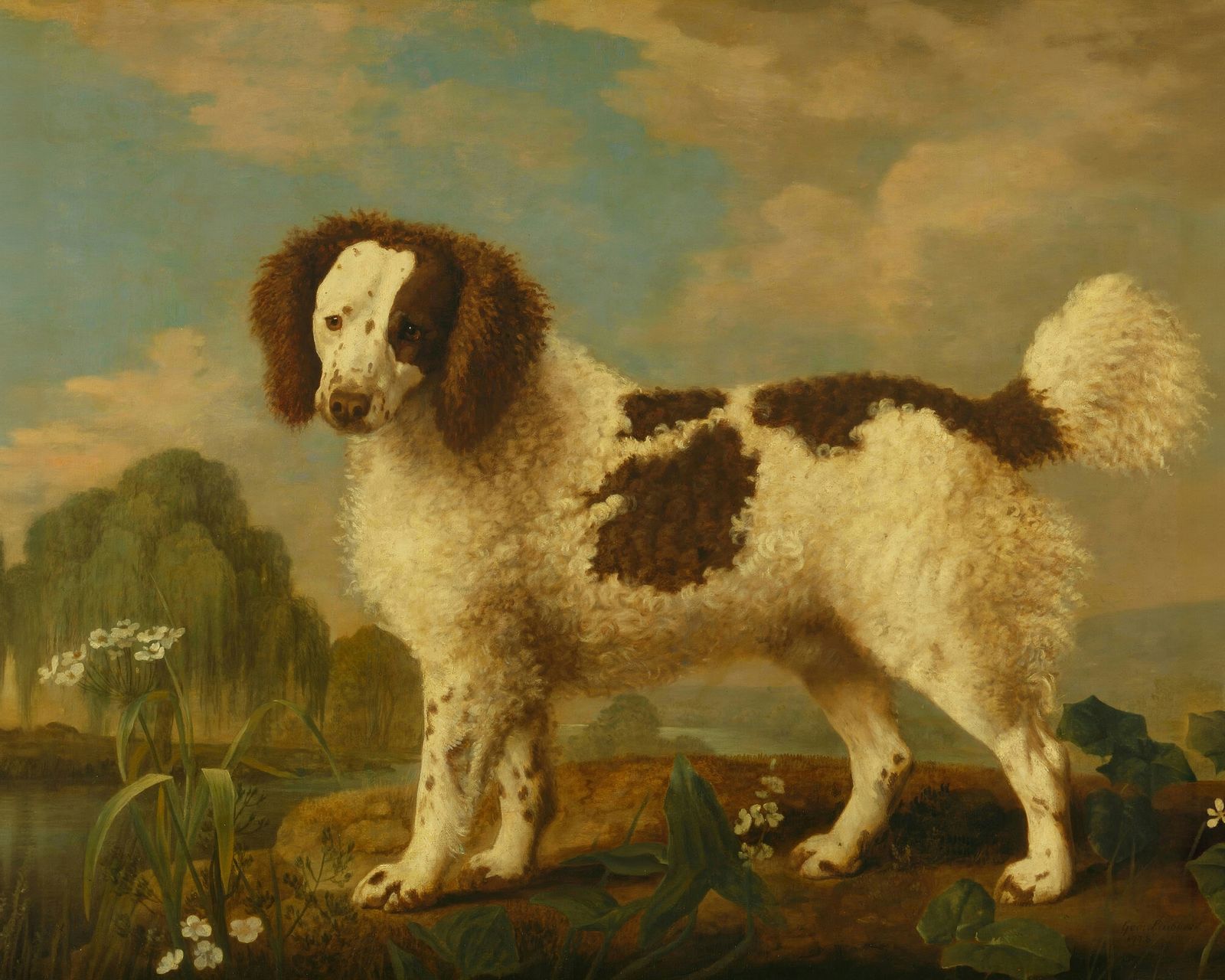
Brown and White Norfolk or Water Spaniel · George Stubbs · 1778 · Yale Center for British Art
A compact body benefits from a composition that does not crowd it with accessories. Consider the amount of surrounding space in this historical animal work and then inspect your own reference for clutter. A clear photo on a plain floor or outside against a calm background can be easier to use than a busy party picture. Keep the attention on the particular dog, including its natural posture.
Create a portrait in this style · Explore this artwork
9. Check the treatment of a small figure
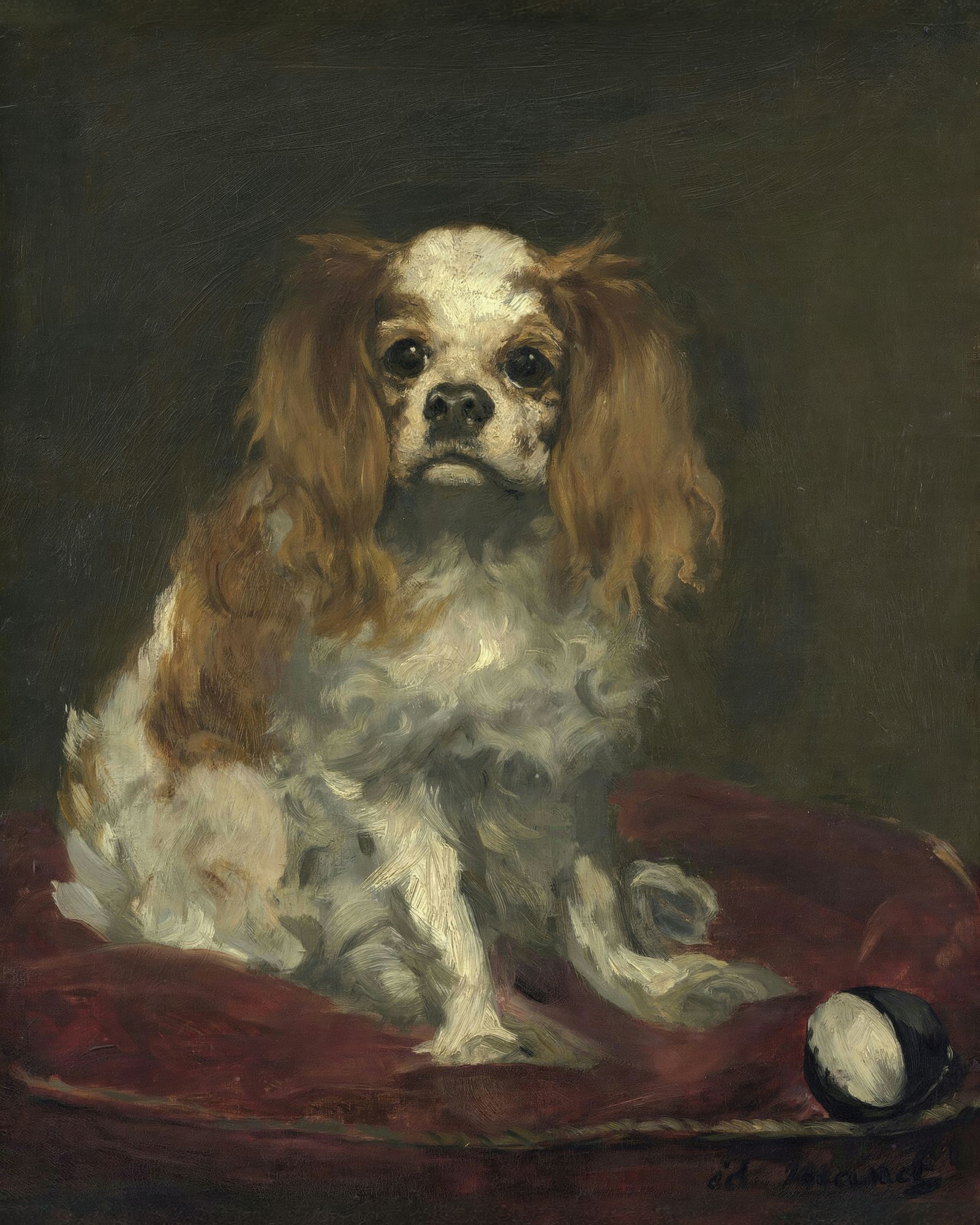
A King Charles Spaniel · Édouard Manet · c. 1866 · National Gallery of Art, Washington
A small dog need not become a tiny detail in a large setting. Compare the animal's prominence here before choosing a wide composition. If the finished portrait will hang above a desk, view the preview at roughly the distance from which it will be seen. The eyes, ears and head shape should still make visual sense, even when individual hairs no longer matter.
Create a portrait in this style · Explore this artwork
10. Plan companion portraits as a pair
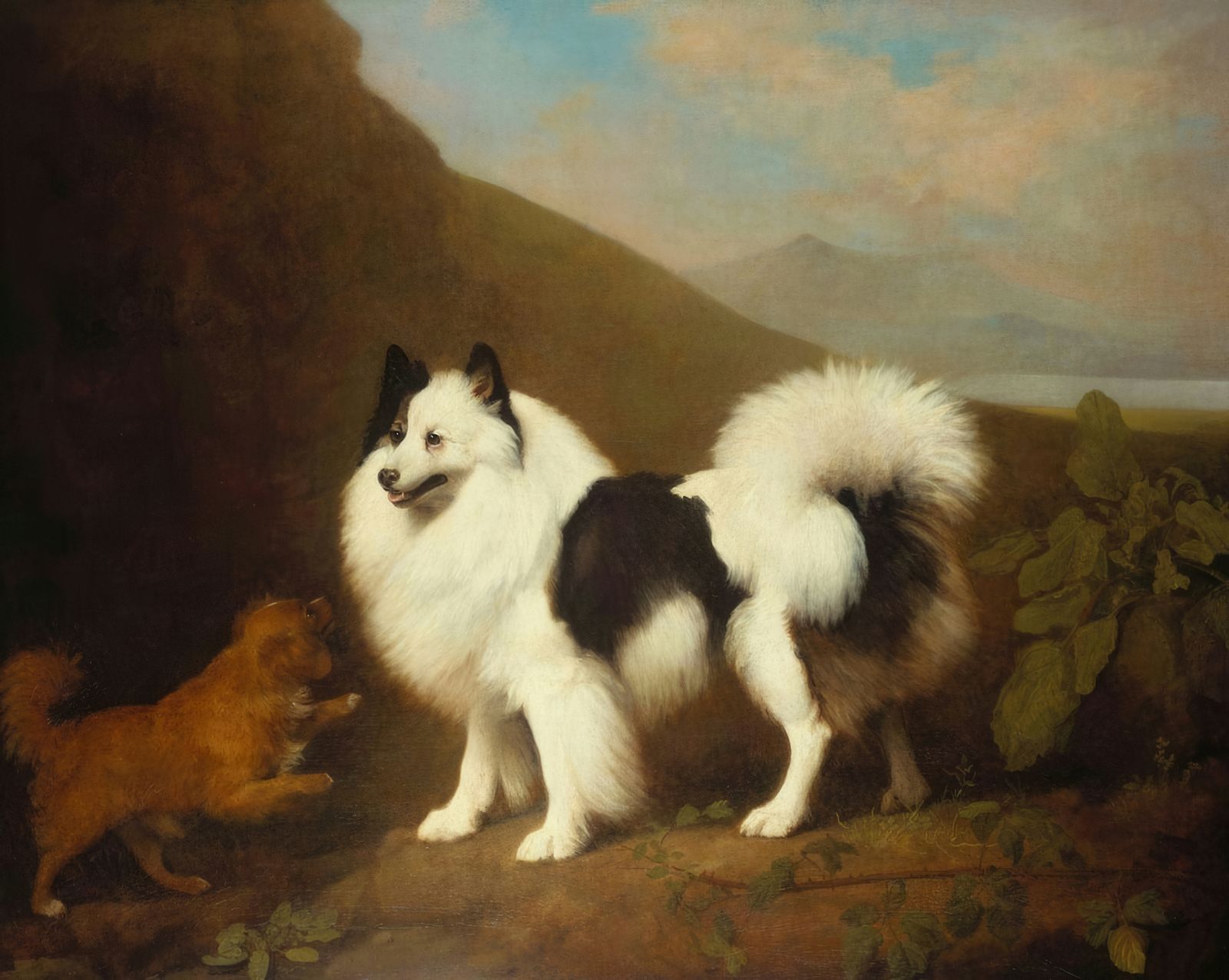
Fino and Tiny · George Stubbs · 1791 · Royal Collection
If the frenchie shares a home with another dog, two coordinated portraits may be easier to compose than forcing both into a single-pet treatment. Use the same print size and related frames after checking the actual available options. Each animal can keep its own pose and character. A pair should feel connected through scale and placement, without making the dogs look interchangeable.
Create a portrait in this style · Explore this artwork
Start from the image that most clearly says “that is our dog”. Open the chosen style, upload that reference and review the portrait before selecting any physical format. If you are buying french bulldog artwork for someone else's home, a restrained presentation gives the recipient more freedom over where it hangs. Current material choices and prices appear in the ordering flow. The useful promise of the gift is attention to one recognisable animal; it does not need extra costume, a made-up title or an invented story.
Create your frenchie’s portrait
- Do I need a photograph of my own French bulldog?
- Yes, a custom portrait starts with your reference photograph. Choose a clear image with the ears, eyes and muzzle visible. A generic breed photograph cannot stand in for the individual dog you want to recognise.
- Are these originals all French bulldog artwork?
- No. They are historical canine works chosen to compare portrait approaches. Their captions preserve the original subjects and artists. Your uploaded photograph supplies your own dog’s breed, markings and expression.
- How do I choose between a close portrait and full body?
- Use a close portrait when the face is the central memory and a full-body view when posture matters. Check that your photo includes the information the composition needs, particularly ears and paws.