Gemini gifts: ten pictures for shared interests
Gemini gifts chosen through paired forms, conversation and curiosity, with real historic art and room for the recipient’s own taste.
Gemini gifts can begin with the traditional image of the twins without turning a person into a personality description. A pair of birds, two people sharing a view or objects arranged in conversation can make a gentle reference to the sign. The stronger reason to choose any picture is something you know about its recipient: a shared walk, a favourite colour or a pleasure in looking closely.
Our astrology gift story explains this approach to signs as themes; the companion Aries selection offers another example. Here the ten works move from social scenes to still lifes. Their connections are editorial choices, not claims that the artists painted them for Gemini birthdays. For a gift with a clearer personal starting point, the personalized gifts guide begins with the person and the occasion.
1. Birds sharing the water
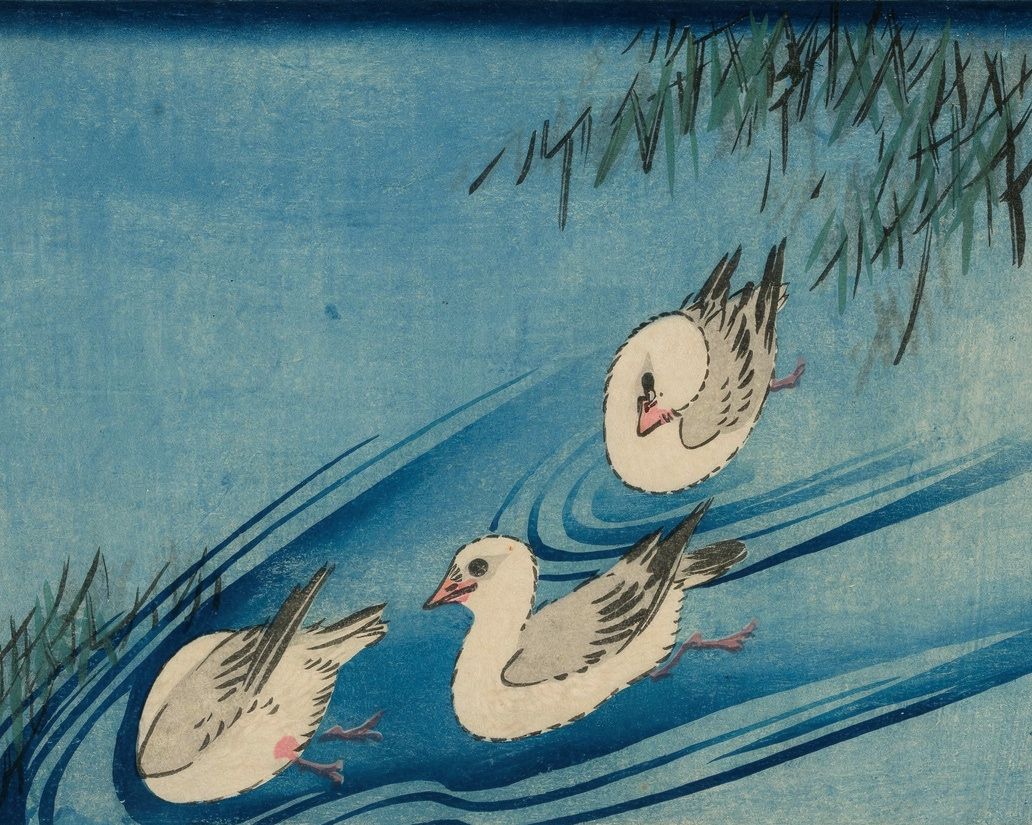
Oystercatchers — Utagawa Hiroshige, c. 1833/34. Art Institute of Chicago. Restored by Surrealium at Vaxholm Fortress, Sweden.
Hiroshige’s waterbirds move across blue in separate but related directions, with curved ripples doing much of the compositional work. The catalogue calls the print Oystercatchers; the visible birds are best appreciated through their pale shapes and shared water rather than a symbolic species assignment. Choose it for someone who enjoys birds or walks beside a river, and let the paired theme remain a light secondary reference.
2. A long scene to discover slowly
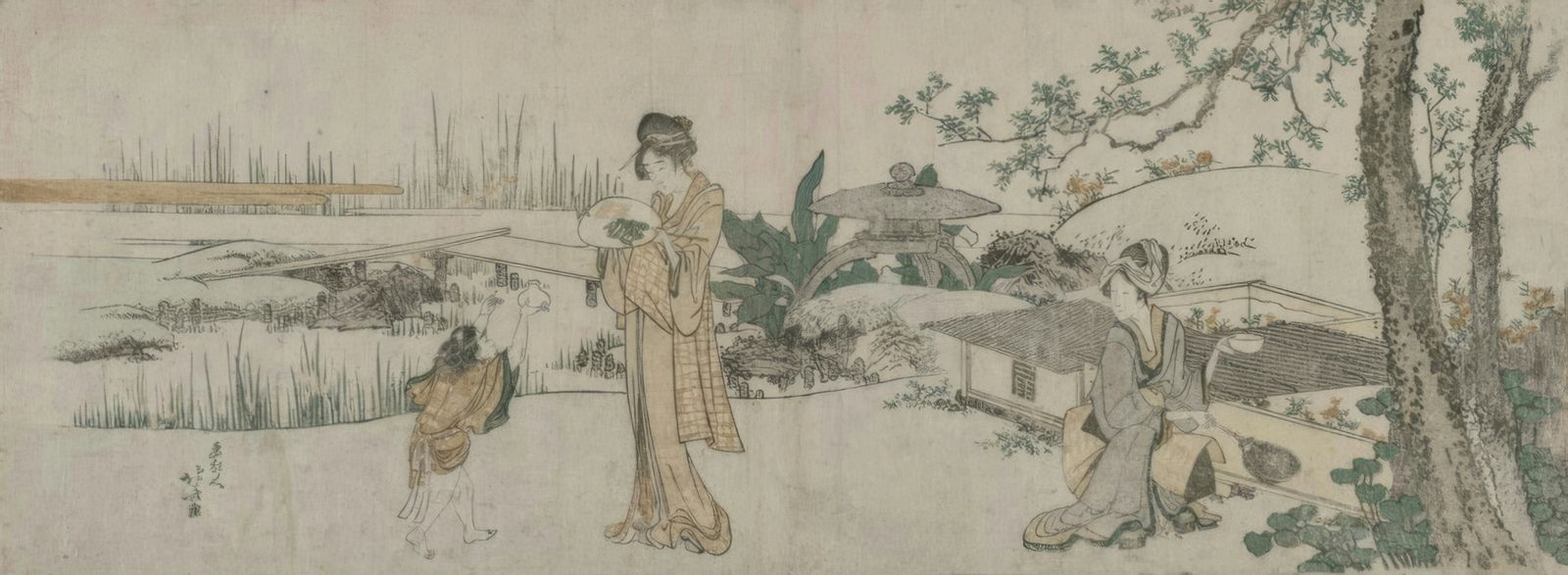
Two Women and a Child Beside a Goldfish Tank — Katsushika Hokusai, c. 1800. Cleveland Museum of Art. Prepared for print by Surrealium at Vaxholm Fortress, Sweden.
Hokusai spreads small figures across an unusually wide outdoor composition, leaving much of the pale surface open. Its narrow format asks for a different kind of attention from a central portrait: the viewer travels along it instead of meeting one face. This can suit a recipient who enjoys unfolding narratives or quiet details, provided you have a place in mind where the whole horizontal image can be seen.
3. A fishbowl as a shared focus
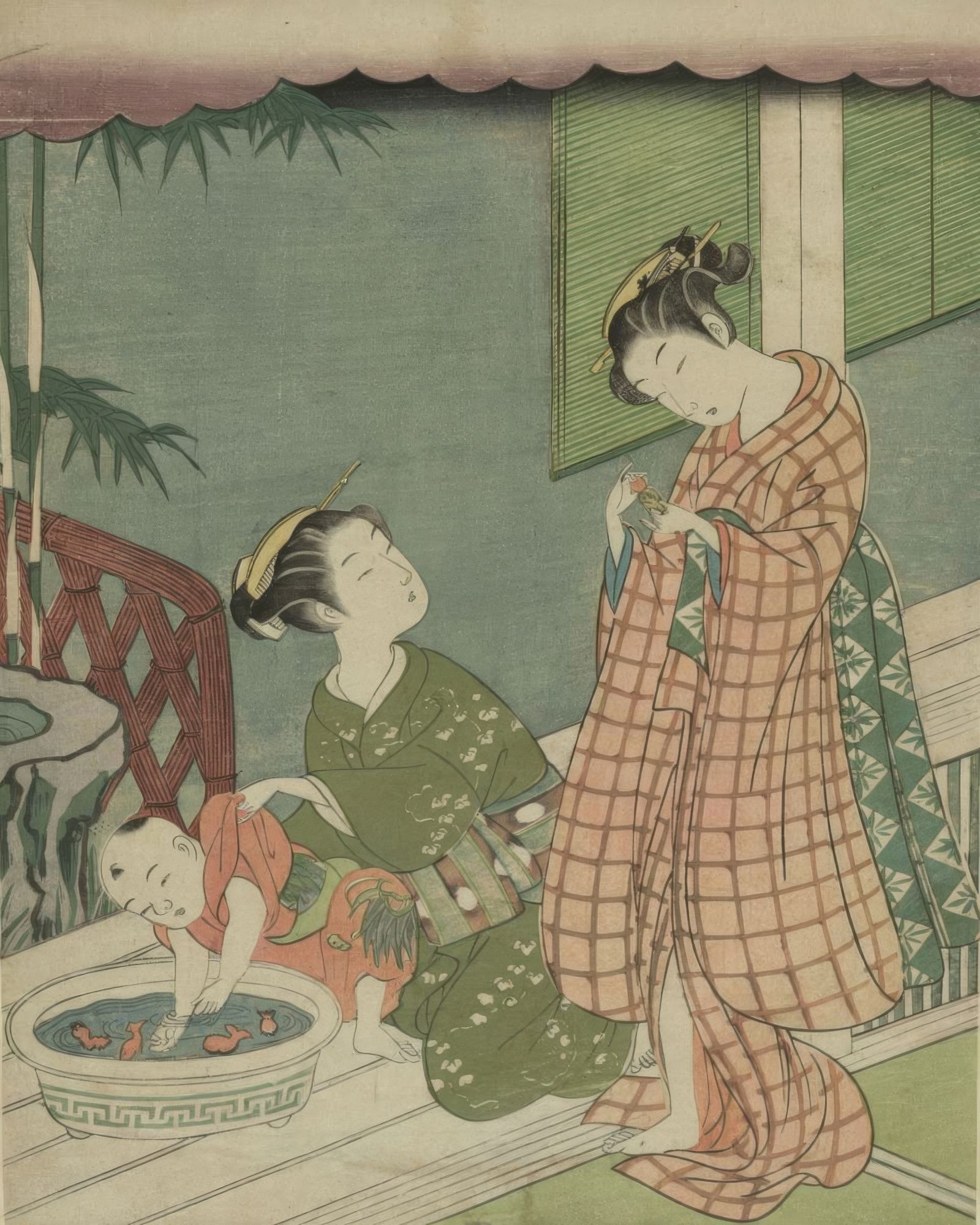
Two Girls and Small Boy with Fishbowl — Suzuki Harunobu, Edo period, circa 1765-1770. Harvard Art Museums. Restored by Surrealium at Vaxholm Fortress, Sweden.
Harunobu brings two women and a child around a bowl, using their gestures to connect different levels of the room. The child’s movement gives the scene an immediate point of interest, while the patterned clothing supplies plenty to notice afterwards. It makes a thoughtful choice for a shared family space when the recipient likes intimate domestic subjects, without requiring the figures to stand in for named members of their own family.
4. Two people stopping to look
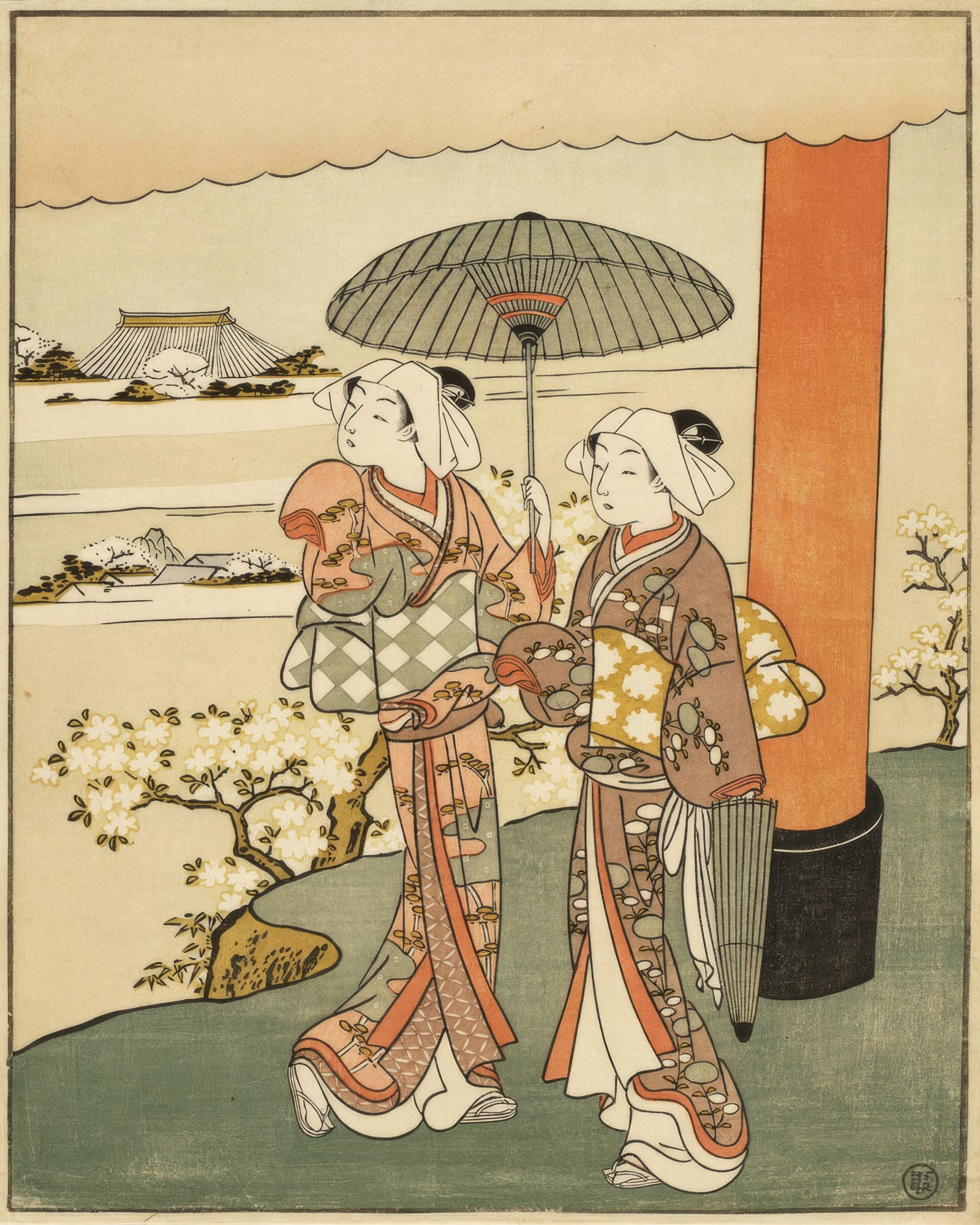
Two Young Girls Pausing to Admire the View by a Torii — Suzuki Harunobu, Edo period, circa 1765-1770. Harvard Art Museums. Restored by Surrealium at Vaxholm Fortress, Sweden.
The two women in Harunobu’s view pause beneath a gate, with blossoms and distant roofs beyond them. Their proximity and the opening landscape give the print a companionable rhythm, but the image does not tell us what either person is thinking. Give it with a note about a real place you explored together, rather than an invented story about the figures or a claim that Gemini people always want company.
5. Fruit passed between hands
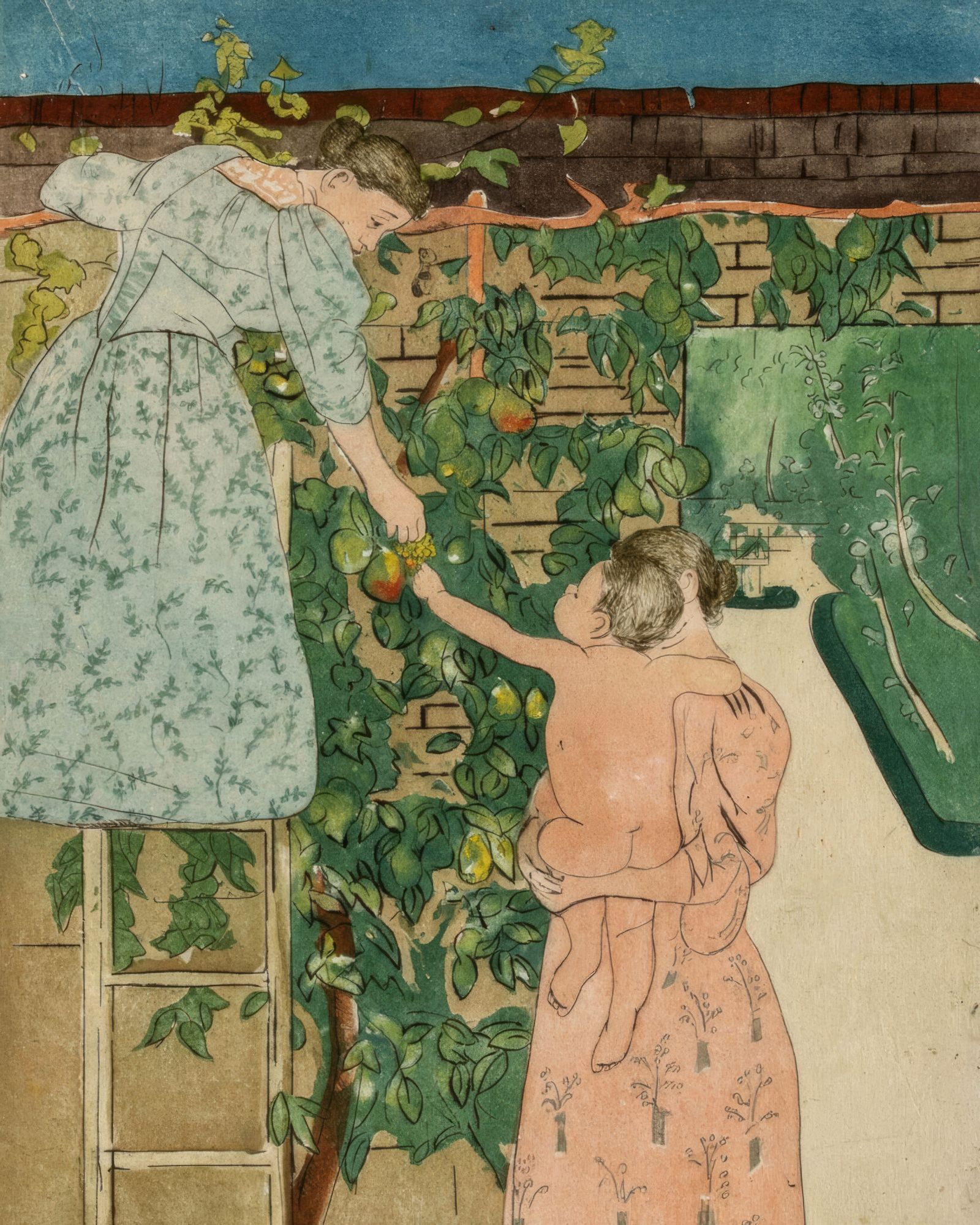
Gathering Fruit — Mary Cassatt, c. 1893. Harvard Art Museums. Restored by Surrealium at Vaxholm Fortress, Sweden.
Cassatt’s Gathering Fruit builds its connection through a reaching gesture across a leafy barrier. The flat colour, repeated leaves and patterned dresses make the exchange feel part of the design rather than an isolated anecdote. For someone who likes gardens and graphic art, it offers a generous meeting of those interests; the relevant personal detail might be an allotment or an afternoon picking fruit, not a horoscope label.
6. Company on a snowy day
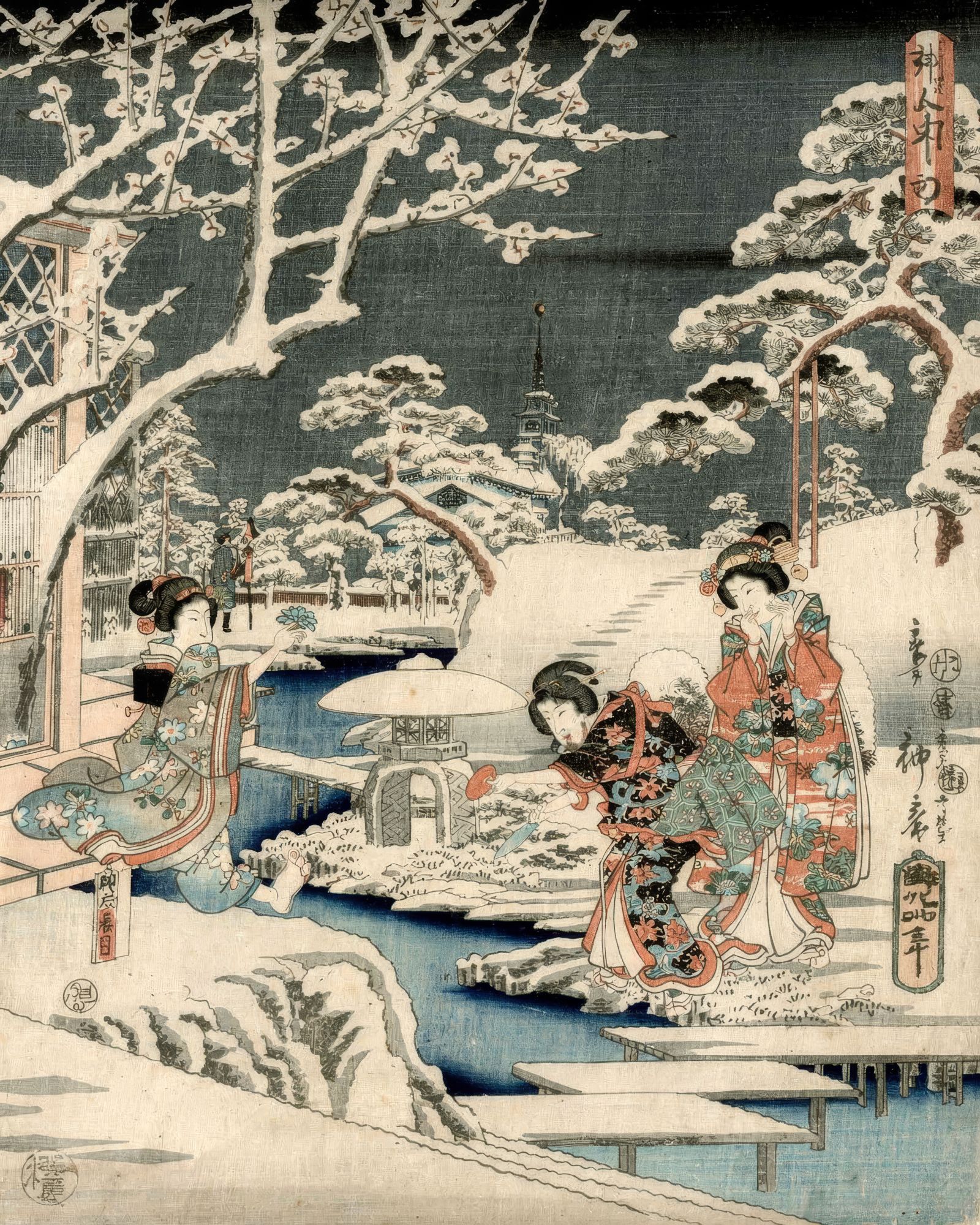
The Snowy Garden — Utagawa Hiroshige (Japanese, 1797–1858), Utagawa Kunisada, 1854. Cleveland Museum of Art. Restored by Surrealium at Vaxholm Fortress, Sweden.
The Snowy Garden combines the work of Hiroshige and Kunisada, bringing figures and landscape into one wintry scene. White branches and sheltered clothing create a contrast between the cold outside and the social space at the edge of the house. It is a good candidate when the recipient’s favourite season is winter, and its seasonal character can matter more than whether the birthday itself falls in a warmer month.
7. A branch close enough to interrupt the view
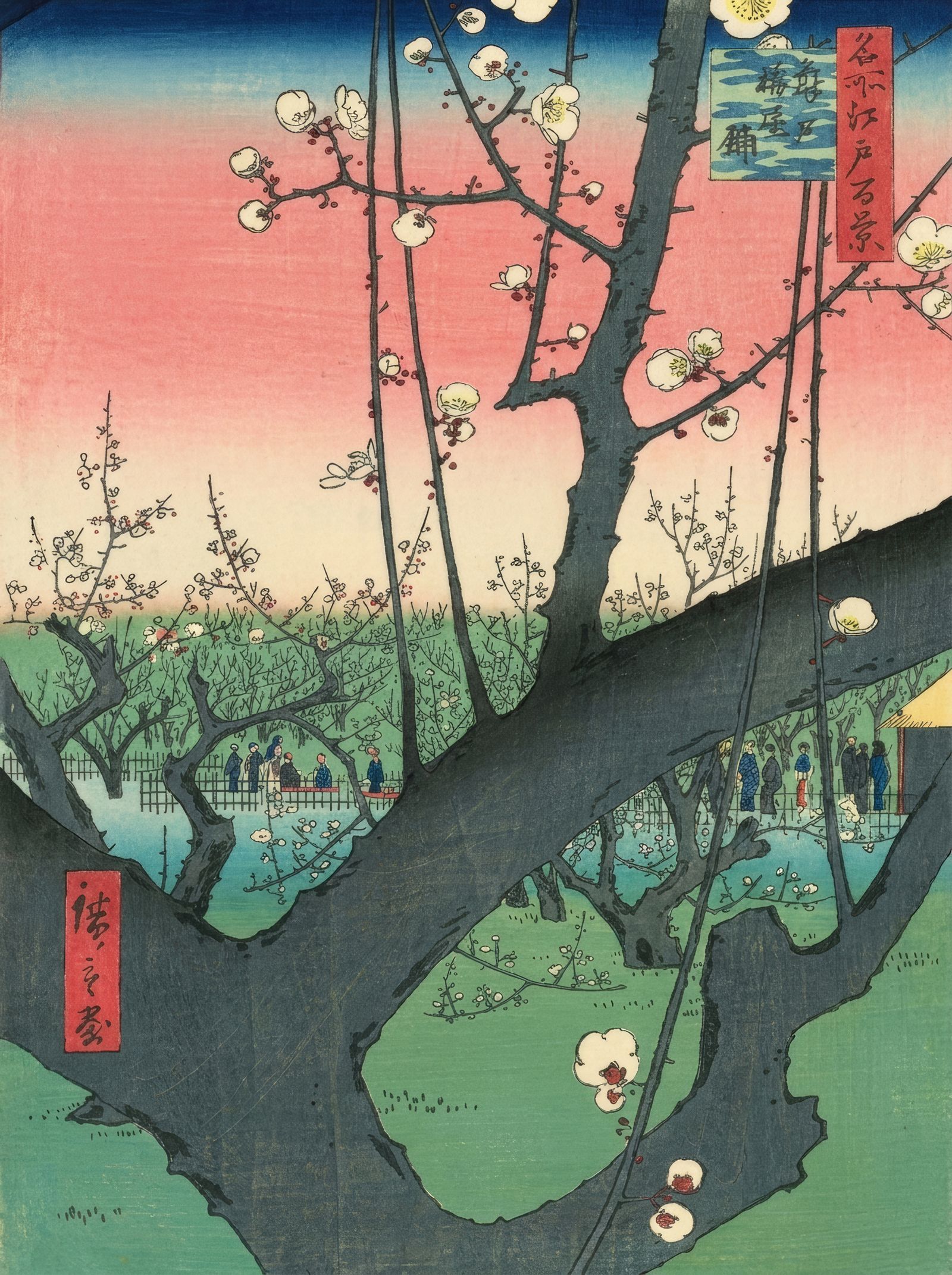
Plum Garden at Kameido — Utagawa Hiroshige, 1857. Art Institute of Chicago. Restored by Surrealium at Vaxholm Fortress, Sweden.
Hiroshige’s Plum Garden at Kameido puts a dark tree trunk across the foreground, with small visitors beyond it. The sudden change of scale gives the viewer two ways to enter the picture: through the near branch or through the distant garden. Someone who enjoys unusual composition may appreciate that visual puzzle more than a literal twins motif, especially if you mention the detail that first made you stop.
8. Objects with separate personalities
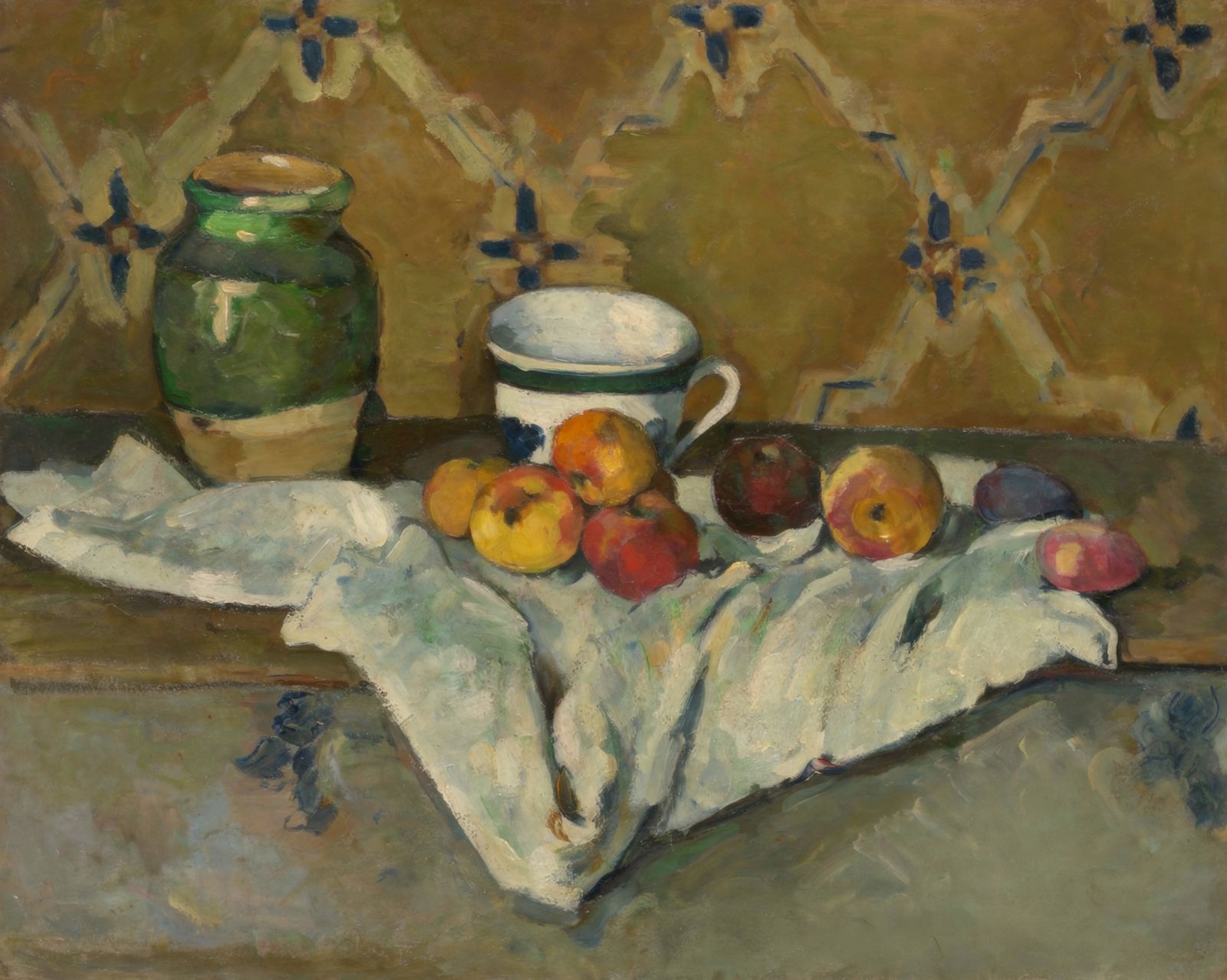
Still Life with Jar, Cup, and Apples — Paul Cézanne, ca. 1877. The Metropolitan Museum of Art, New York. Restored by Surrealium at Vaxholm Fortress, Sweden.
Cézanne’s jar, cup and apples sit close together while keeping their different shapes and weights. The folded cloth and patterned wall refuse to become a neutral background, so the eye has several relationships to follow. This is an option for a recipient who prefers still life to figures, with the connection between objects offering a quiet alternative to a conspicuous zodiac emblem on the wall.
9. A table waiting for conversation
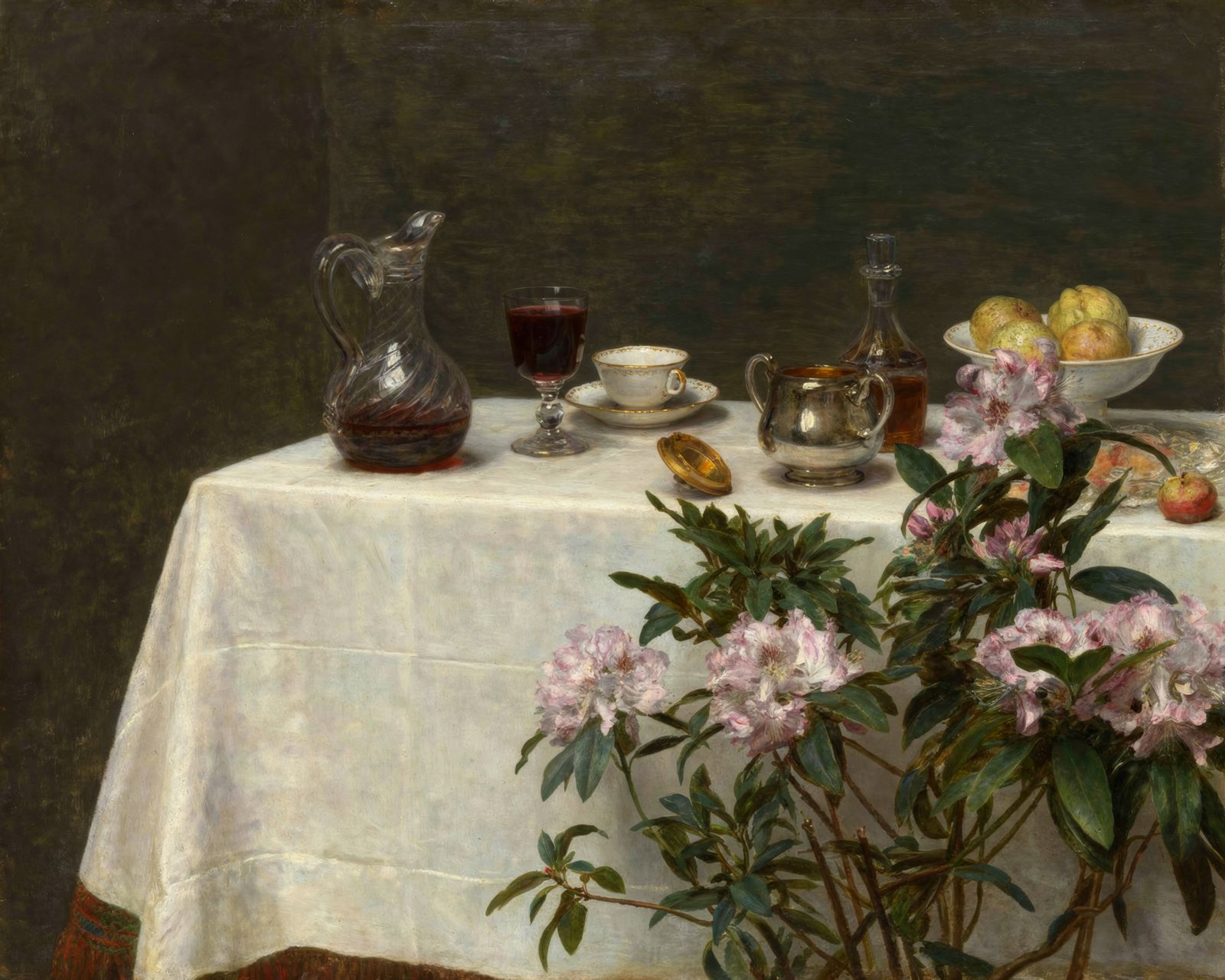
Still Life: Corner of a Table — Henri Fantin-Latour, 1873. Art Institute of Chicago. Restored by Surrealium at Vaxholm Fortress, Sweden.
Fantin-Latour’s Corner of a Table gives glass, a cup and flowers a measured amount of space. The white cloth makes small differences in transparency and surface especially visible, while the dark background keeps the setting restrained. If your shared pleasure is a long meal or a conversation over coffee, the picture can carry that memory without needing an inscription, a pair of portraits or a prescribed astrological meaning.
10. A busy picture for an attentive viewer
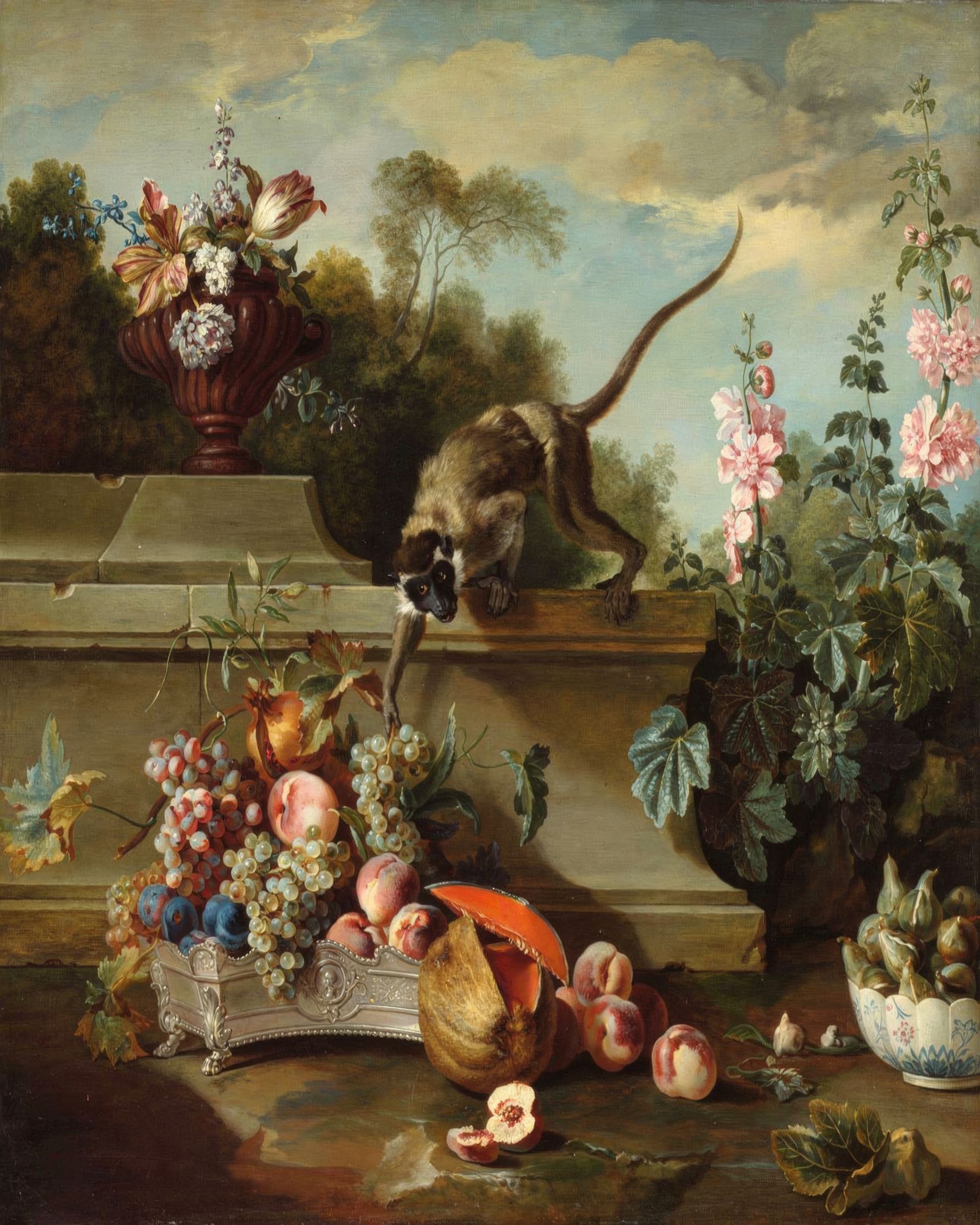
Still Life with Monkey, Fruits, and Flowers — Jean Baptiste Oudry, 1724. Art Institute of Chicago. Restored by Surrealium at Vaxholm Fortress, Sweden.
Oudry’s monkey, fruit and flowers turn a still life into a scene full of competing attractions. A tail, a stem or a bright piece of fruit can redirect the eye just when it seems settled, making the whole image worth repeated viewing. Choose it for someone who already enjoys playful abundance and animal subjects, while acknowledging that its formal eighteenth-century display is different from a modern natural-history illustration.
If the recipient likes symbolic reflection, Fable has a personalised astrology reading and a tarot reading desk. Offer either as an optional experience, with no claims that it reveals personality or predicts events.
Before choosing, compare the works at their complete proportions. A long Japanese scene and a tall still life ask for different spaces, even when both look appealing as small previews. Write one sentence explaining why the picture reminded you of the recipient; if that sentence depends only on the word Gemini, look again at their actual interests. Explore the Masterworks collection when you have a subject and a place in mind.
- Do Gemini gifts have to show twins?
- No. Twins are a traditional sign motif, but a gift can refer to pairing, conversation or a shared interest without depicting twins. The recipient’s taste should decide the final choice.
- What if the recipient does not believe in astrology?
- Use the sign as a small birthday reference only if they would enjoy it. Otherwise, explain the real connection you see between the picture and their interests; no belief is required to enjoy the art.
- Can a reading accompany the print?
- Yes, if the recipient enjoys symbolic reflection. Offer a reading as an optional experience, with no claim that it reveals personality or predicts events.