A Mother's Day card, with ten pictures of care
Looking for a mothers day card? Begin with ten historic pictures of care, then write a message only you could send.
A mothers day card becomes personal when it names something small and true: the lift home, the remembered appointment, the meal that appeared when nobody felt like cooking. A picture can start that conversation. These ten works show holding, feeding, keeping quiet, making room and finding a moment after the children are asleep. They offer different ways of saying thank you without pretending that every mother, or every relationship, is the same.
Use the image as a starting point for your words, rather than as a claim about your own family. The examples below are original lines to adapt. Fable Cards lets you begin with a card; these historical works are inspiration, not promises that every picture is a preset card face. If you are also choosing a present, the guide to personalised Mother's Day gifts starts with the recipient's tastes. For a greeting on its own, keep the message short enough to read at one sitting.
1. For the person who held you
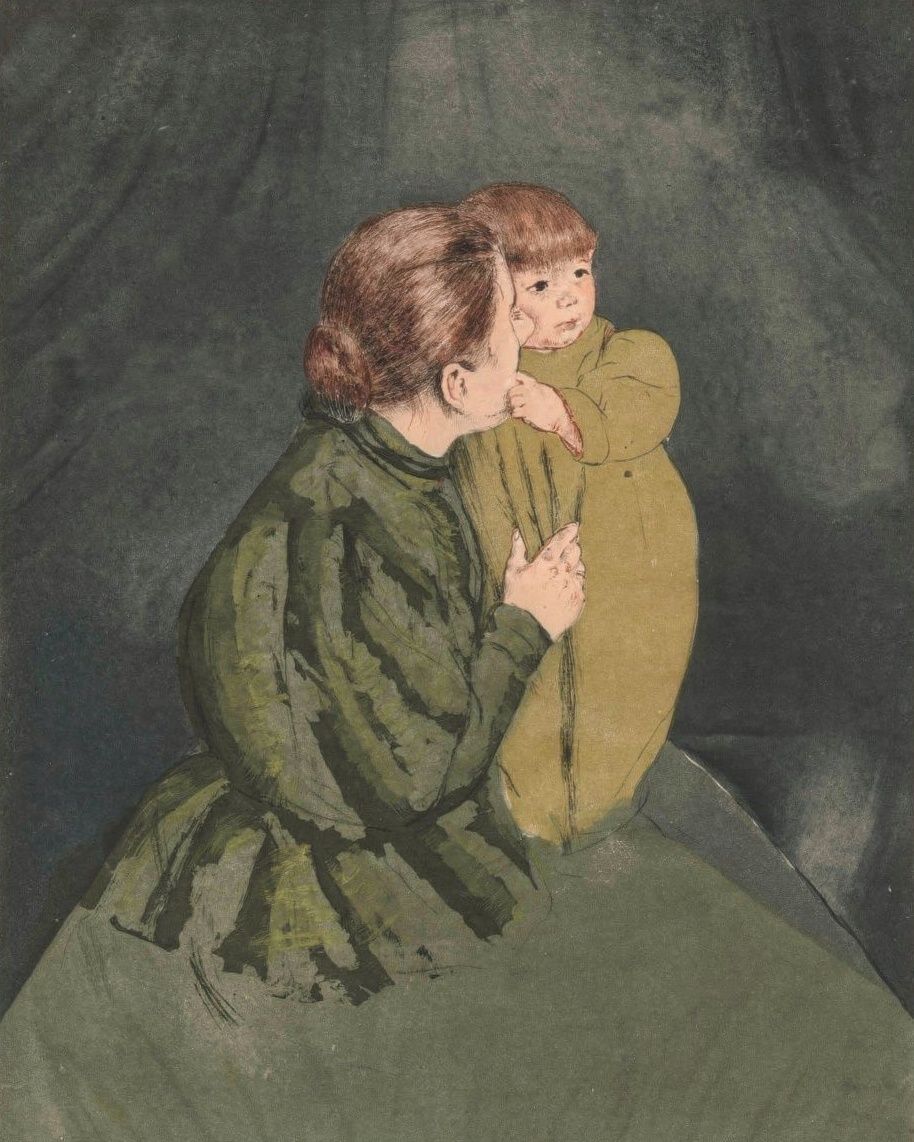
Peasant Mother and Child · Mary Cassatt, c. 1894 · Art Institute of Chicago. Restored by Surrealium at Vaxholm Fortress, Sweden.
Cassatt's mother turns towards the child standing close against her shoulder, their subdued green clothes joining the two figures against a dark ground. The print gives the gesture space, which makes it a useful companion to a simple line: “Thank you for making room for me, even when your arms were already full.” Add one memory of that care, such as waiting through a difficult evening, so the thanks belongs to a person rather than an ideal of motherhood.
2. For the keeper of everyday routines
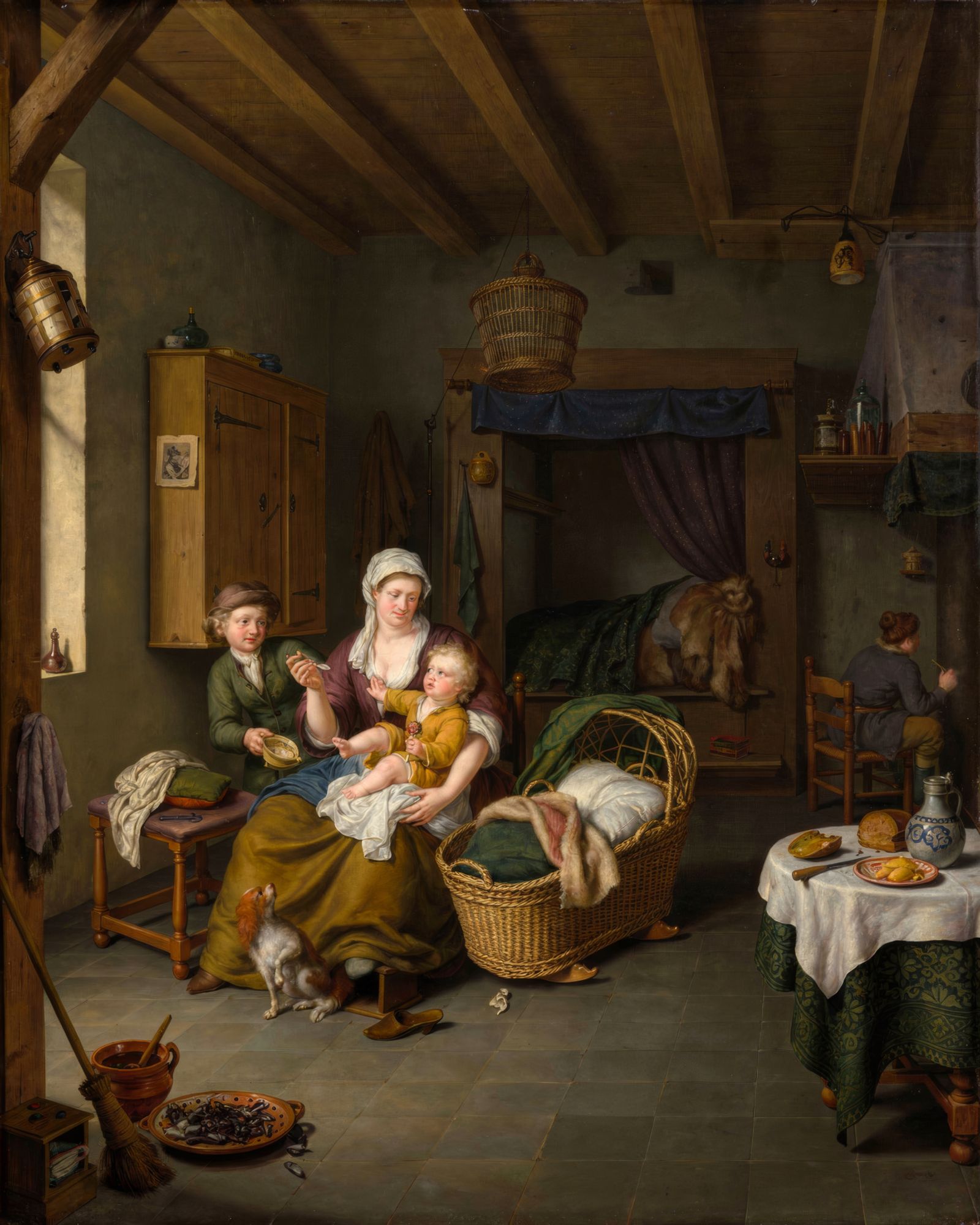
A Mother Feeding her Child (The Happy Mother) · Willem van Mieris, 1707 · Art Institute of Chicago. Restored by Surrealium at Vaxholm Fortress, Sweden.
Willem van Mieris puts the mother inside a busy room, with children, a cradle, a cat and the objects of a household continuing around her. “I remember all the ordinary days you made easier” recognises repeated work without turning it into a demand for more. Follow it with a practical invitation you can keep, perhaps making lunch together or taking over an errand; if a family portrait would also be welcome, the Happy Mother family style uses this very painting as its reference.
3. For the mother who needs some quiet
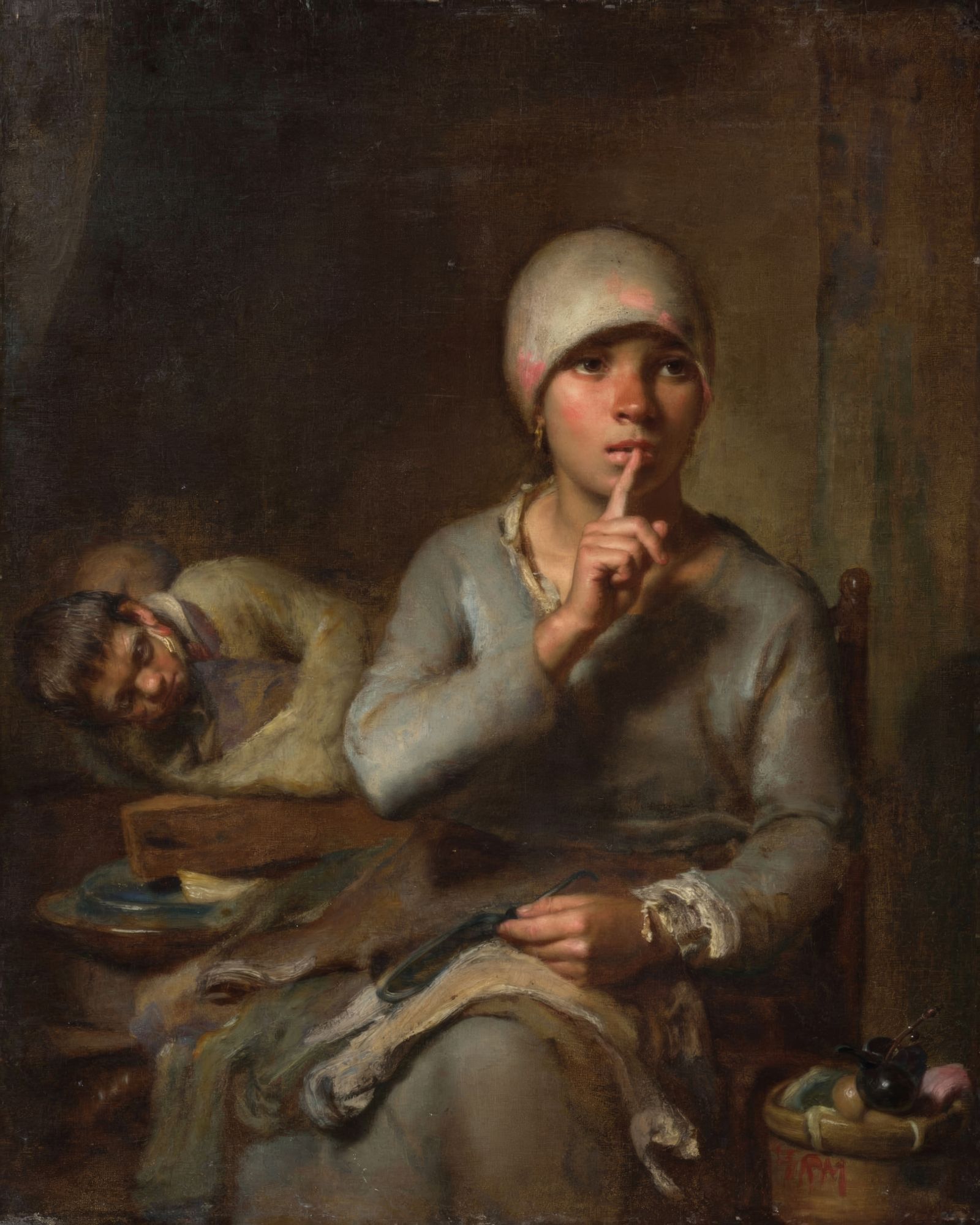
Woman and Child (Silence) · Attributed to Auguste Boulard, the Elder, 1855/60 · Art Institute of Chicago. Restored by Surrealium at Vaxholm Fortress, Sweden.
In Woman and Child (Silence), the raised finger matters as much as the sleeping figure behind it: the whole painting asks the viewer to lower their voice. A suitable message might be, “Today I hope you get an hour that is entirely yours.” This can be warmer than telling someone to relax, especially if you pair the wish with an actual offer to handle a task while she reads, walks or does nothing at all.
4. For care shared across generations
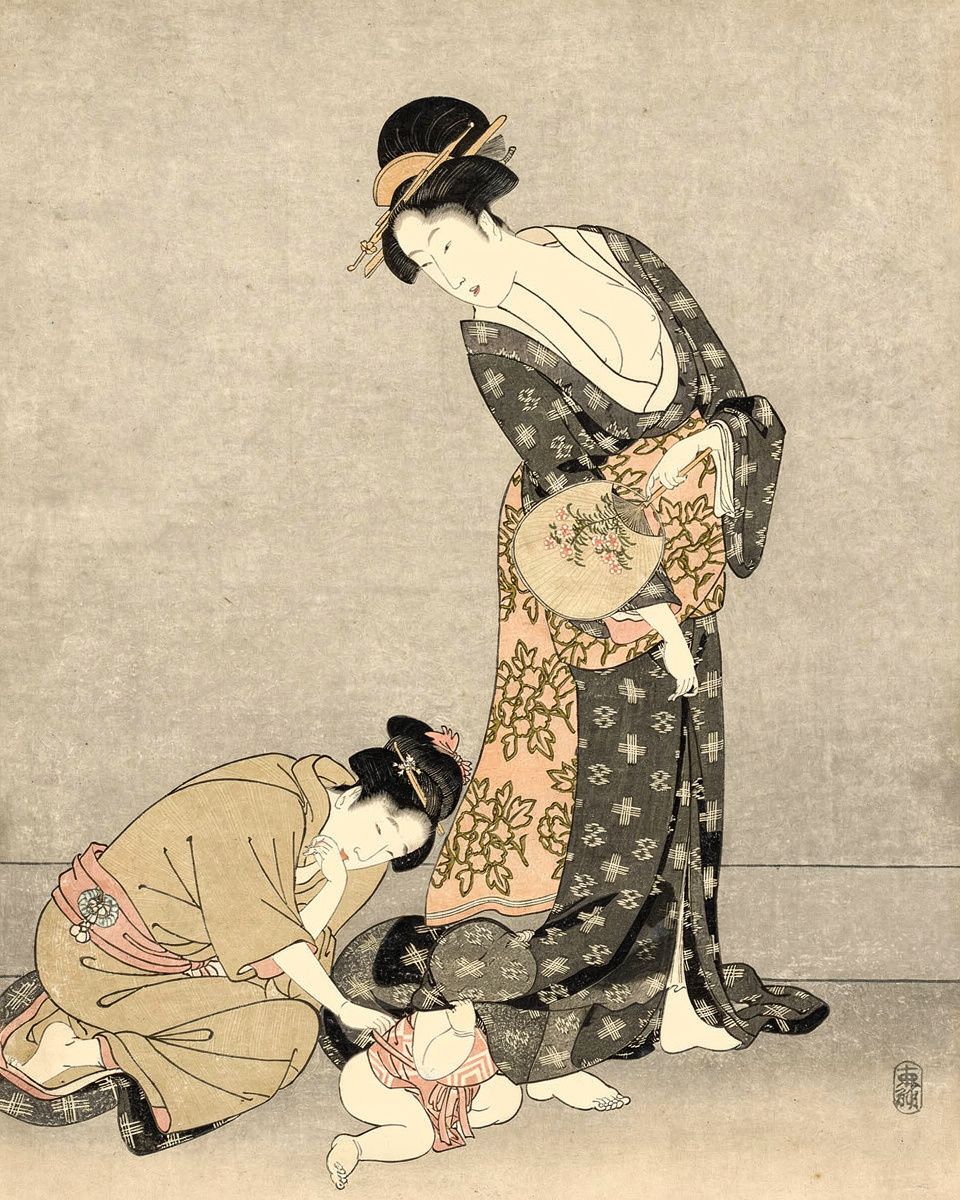
Mother and Child · Kitagawa Utamaro 喜多川 歌麿, c. 1800 · Art Institute of Chicago. Restored by Surrealium at Vaxholm Fortress, Sweden.
Utamaro places the small child low in the composition between two adults, so the long patterns of the robes lead the eye towards the tiny figure. You need not identify the adults as particular relatives to recognise a scene of shared attention. “Thank you for being one of the people who helped me grow” works for a grandmother, aunt or another mother figure; put the name you actually use at the beginning, and let the relationship speak for itself.
5. For an afternoon you still remember
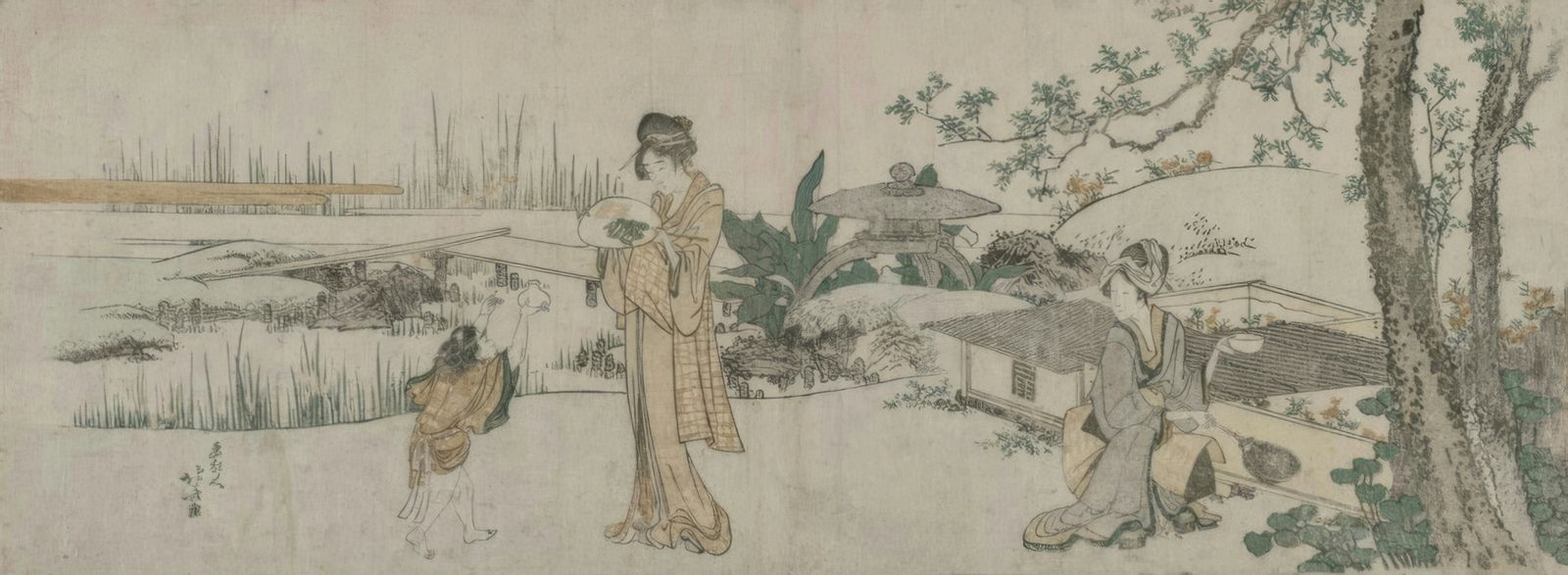
Two Women and a Child Beside a Goldfish Tank · Katsushika Hokusai, c. 1800 · Cleveland Museum of Art. Restored by Surrealium at Vaxholm Fortress, Sweden.
Hokusai's wide, pale scene gives the people a whole landscape to inhabit, with water, banks and distant buildings extending beyond the central group. Choose it as a prompt for a remembered outing, not as evidence that the figures represent your own kind of family. “I still think about that afternoon by the water with you” is a start; the weather, the snack or the route home will make the rest of the message unmistakably yours.
6. For the mother who gathers everyone
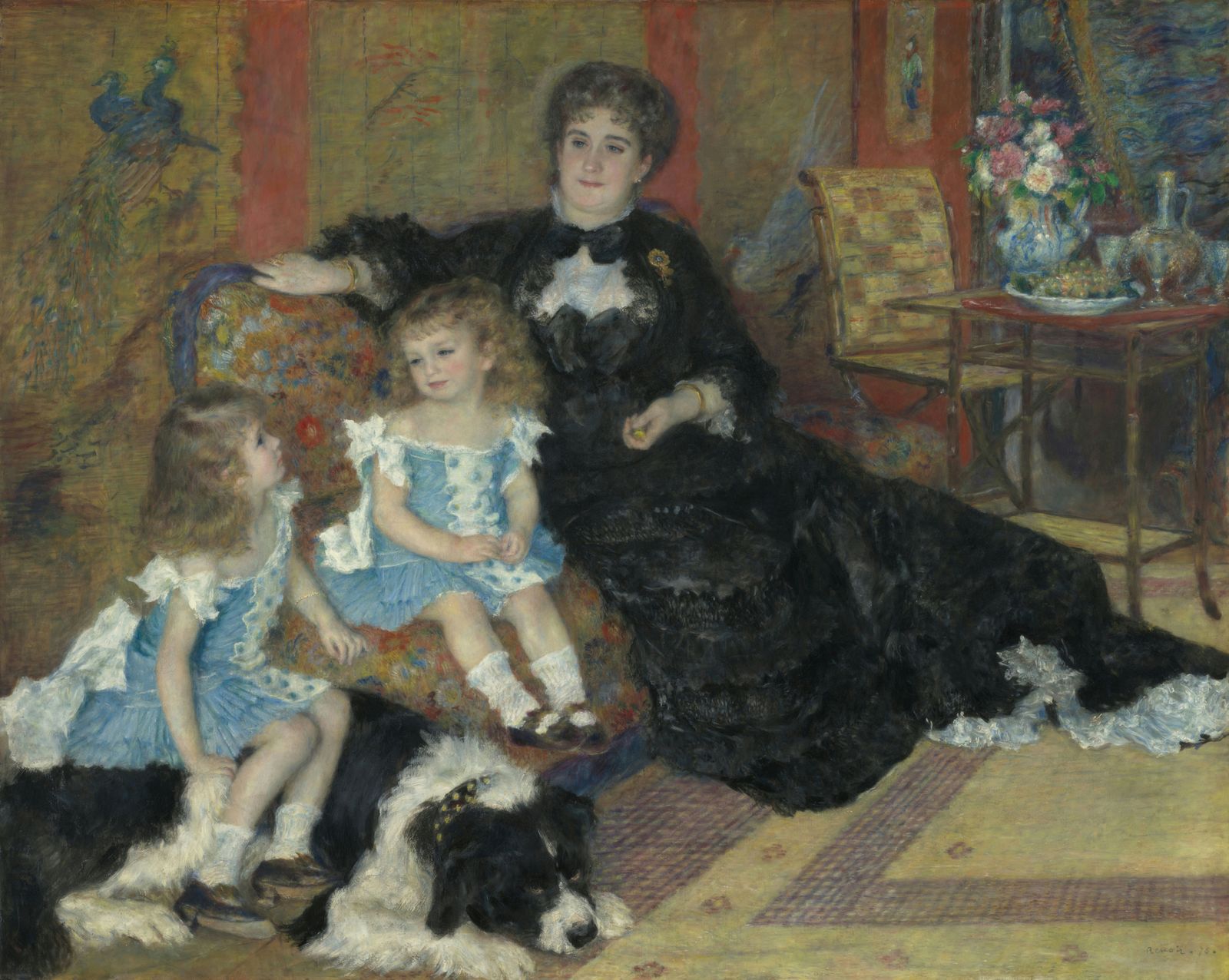
Madame Charpentier and Her Children · Auguste Renoir, 1878 · The Metropolitan Museum of Art. Restored by Surrealium at Vaxholm Fortress, Sweden.
Renoir's Madame Charpentier sits with her children in a room where patterned furnishings and a large dog make family life feel spacious and sociable. The composition can suggest a host who knows how to include people, although the sitter's actual household is its own historical subject. Try “You have always known how to make another person feel welcome,” followed by an occasion when she did exactly that, rather than a general claim that she is perfect at everything.
7. For the physical work of care
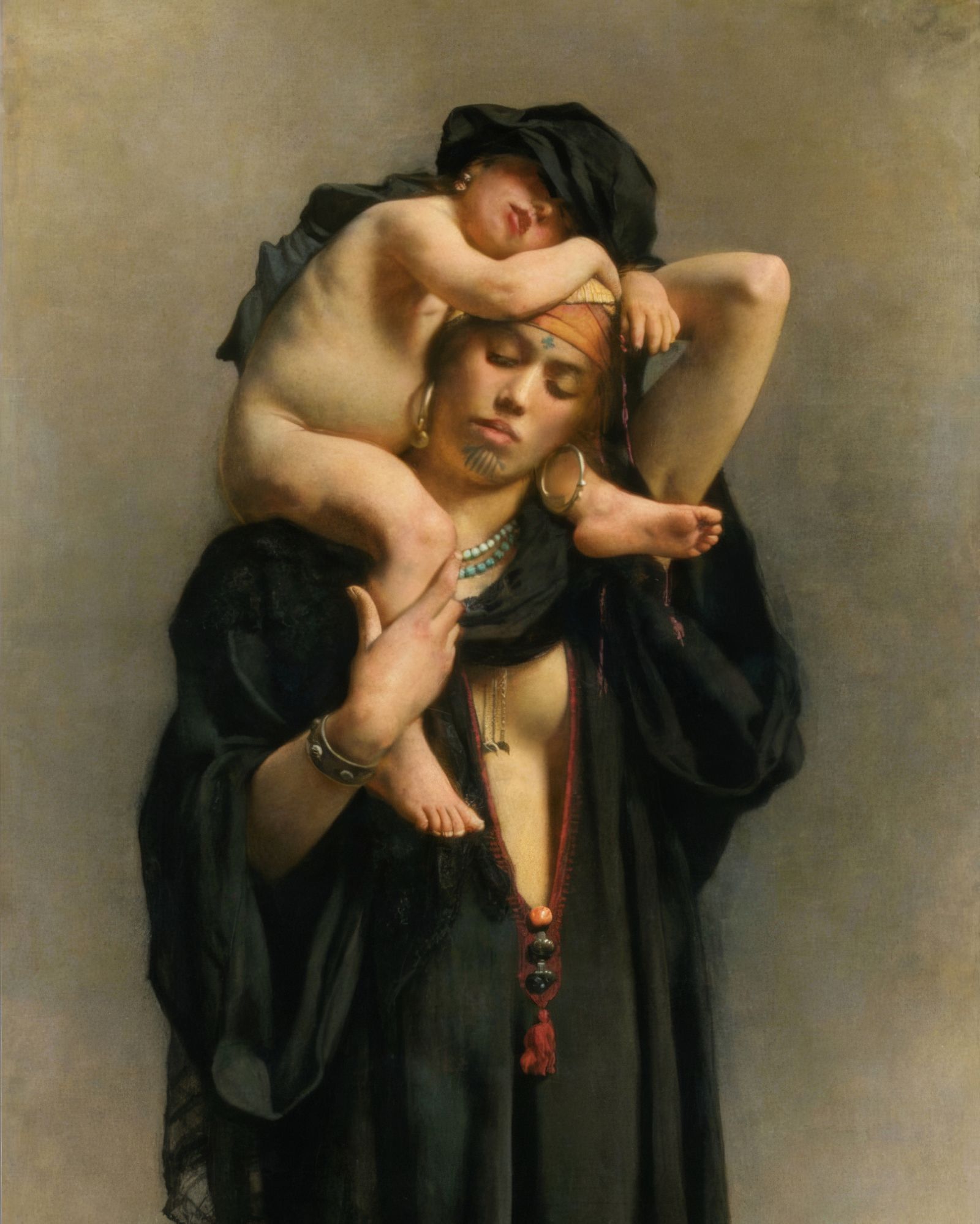
An Egyptian Peasant Woman and Her Child · Léon Bonnat, 1869–70 · The Metropolitan Museum of Art. Restored by Surrealium at Vaxholm Fortress, Sweden.
Bonnat's woman carries a child across her shoulders, and the painting makes that weight visible through the lift of her arms. It is a nineteenth-century artist's representation, not an account of all Egyptian mothers, so keep your response grounded in the particular gesture. “Thank you for carrying more than I understood at the time” can suit an adult child looking back, provided it does not introduce guilt or ask the recipient to reassure the sender.
8. For a relationship that has changed
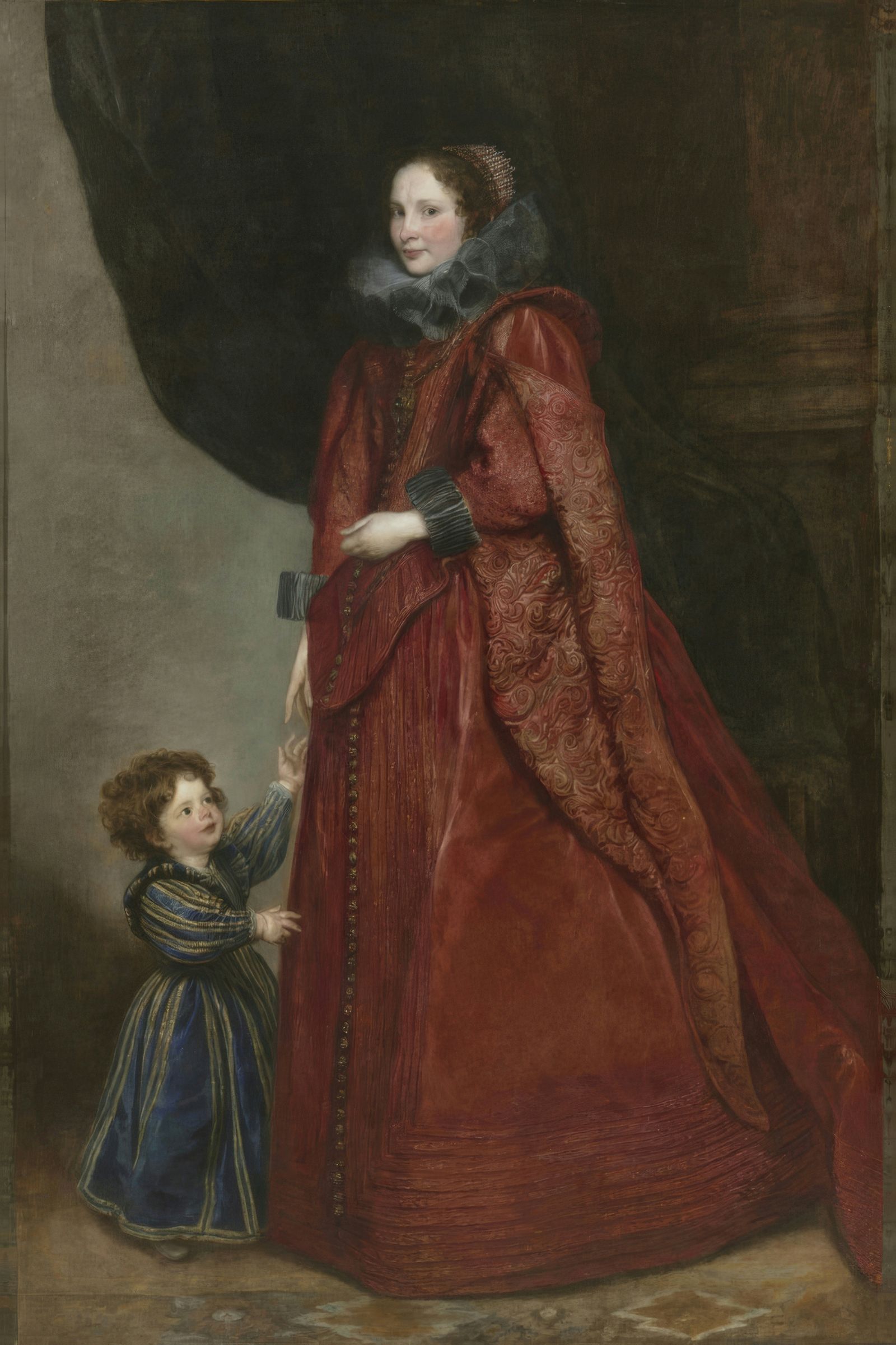
A Genoese Lady with Her Child · Anthony van Dyck, c. 1623–25 · Cleveland Museum of Art. Restored by Surrealium at Vaxholm Fortress, Sweden.
Van Dyck separates the adult and child by scale while joining them through a small hand at the woman's side. The formal clothes belong to a historical portrait, but the different heights can still prompt a memory of walking beside someone when you were small. “I like the way our conversations have grown with us” honours an adult relationship and leaves room for new things to share, rather than trying to return to an imagined perfect childhood.
9. For the evening after everyone is asleep
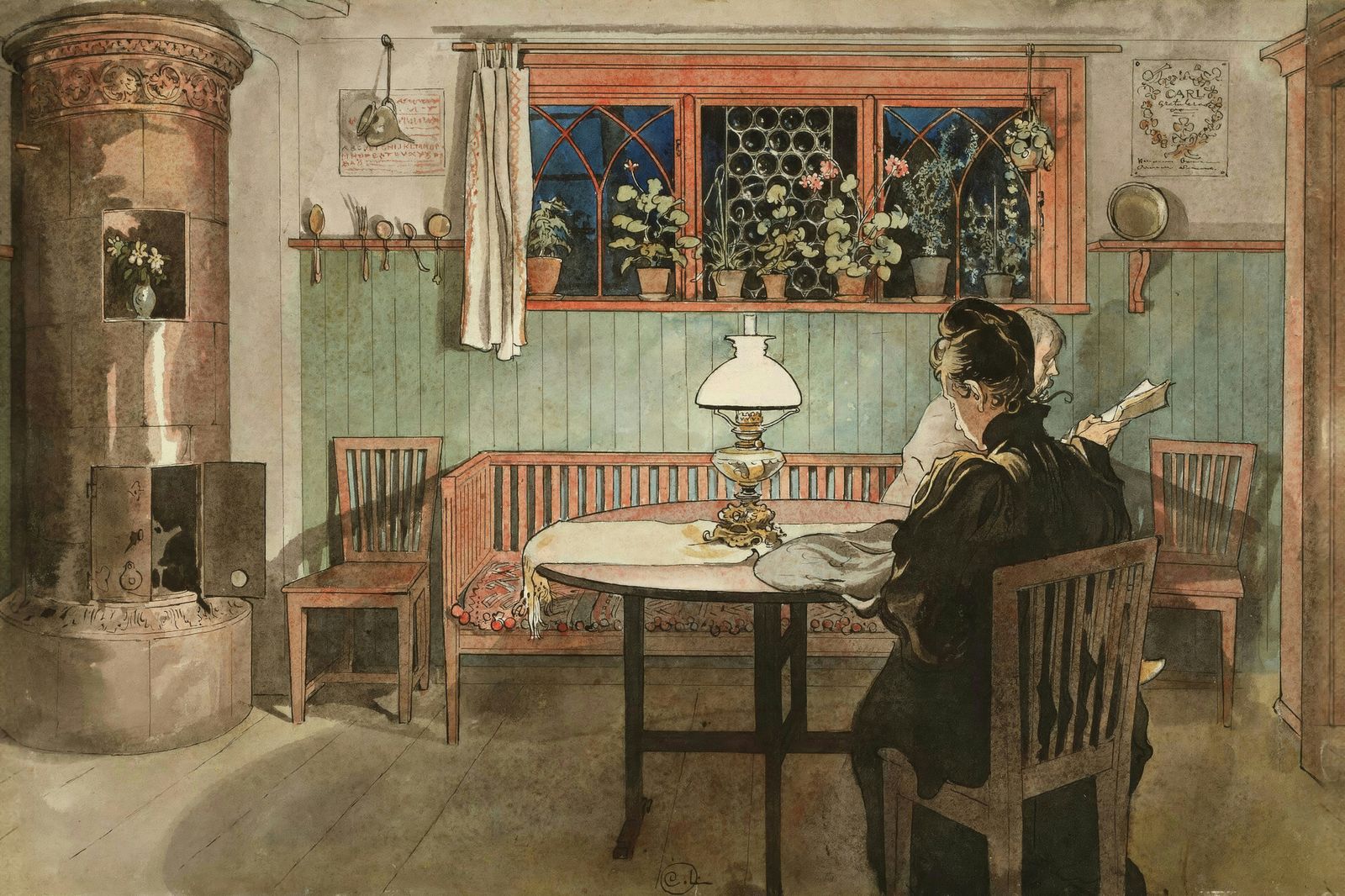
When the Children Have Gone to Bed. From A Home · Carl Larsson, 1899 · Nationalmuseum, Stockholm. Prepared for print by Surrealium at Vaxholm Fortress, Sweden.
Larsson's room holds a table, a lamp and seated adults after the children have gone to bed, allowing the home to have a quieter second life. A card for this picture could say, “I hope this year brings you more evenings for the things you love.” Name one of those things accurately, whether it is sewing, music or talking with friends, and resist filling the rest of the space with more instructions about how she should spend her time.
10. For a mother who enjoys a little honesty
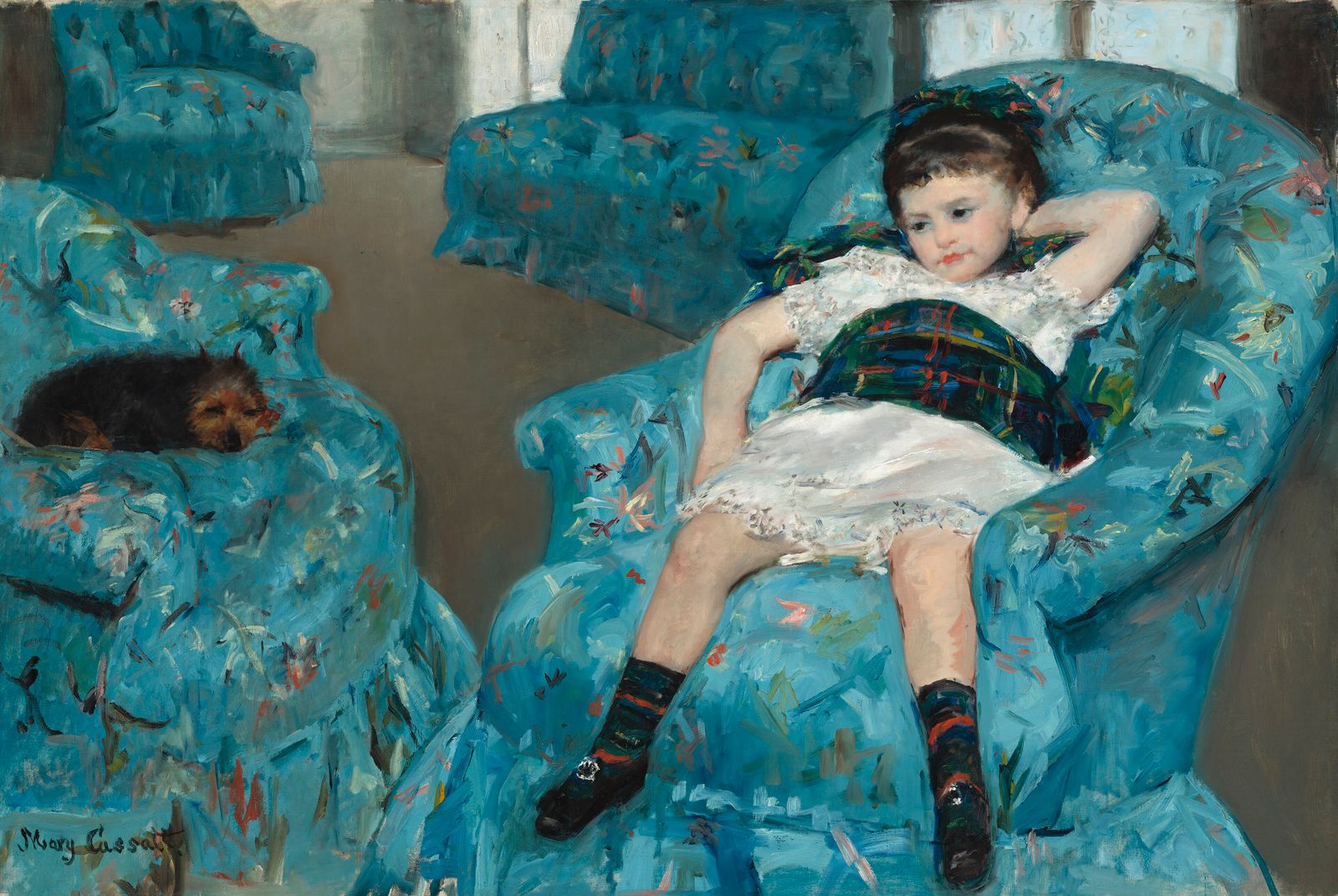
Little Girl in a Blue Armchair · Mary Cassatt, 1878 · National Gallery of Art, Washington, Collection of Mr. and Mrs. Paul Mellon. Prepared for print by Surrealium at Vaxholm Fortress, Sweden.
Cassatt's girl sprawls across a blue armchair while a small dog occupies another seat, a splendid answer to the idea that every family picture must show perfect manners. “Thank you for loving us through the untidy bits” can carry affection without pretending that raising children was effortless. If the recipient enjoys humour, add one harmless shared mishap; leave out a story that embarrasses a child or turns the mother's difficult day into a joke at her expense.
Read your note aloud before sending it. If a sentence sounds like something you would never say, shorten it. A greeting can acknowledge a complicated relationship without settling it: “Thinking of you today, and wishing you a gentle day” is enough when warmth needs a little distance. For more picture-led ideas, browse gifts chosen around a mother's interests, the wider personalised gift guide or Cassatt's blue armchair. The next step is simply to choose a card and give your own words enough room.
- What should I write in a Mother’s Day card?
- Name one thing you appreciate, recall one moment, and finish in your usual voice. A specific sentence about her patience, curiosity or company often says more than a list of superlatives.
- Can I send one to someone who is not my mother?
- Yes. Address the person by the name you use and describe the care she has offered. You do not need to assign a new family title or explain the whole relationship.
- What if Mother’s Day is difficult for her?
- Keep the note gentle and avoid assuming a celebration. Acknowledge that you are thinking of her, offer company if appropriate, and let her decide whether she wants to talk.