George Stubbs: horses, dogs and close attention
George Stubbs in nine animal pictures, with one clearly labelled Rosa Bonheur comparison and practical ideas for a pet portrait.
George Stubbs made animals worth looking at on their own terms. A horse’s weight, a dog’s attentive head or the relation between a body and the ground could sustain a complete picture. The nine Stubbs works below show that range; a tenth work by Rosa Bonheur provides a later comparison, clearly identified as another artist’s painting.
Stubbs, who lived from 1724 to 1806, studied equine anatomy closely and published The Anatomy of the Horse in 1766. Knowledge supported his art, but anatomy alone does not explain the differences between a startled horse and a resting dog. Our horse portrait guide turns attention towards a contemporary source photograph, while famous horse paintings supplies a wider historical comparison. Begin with the animal’s characteristic posture, not a costume or a borrowed human role.
1. A Clumber Spaniel — a low, substantial presence
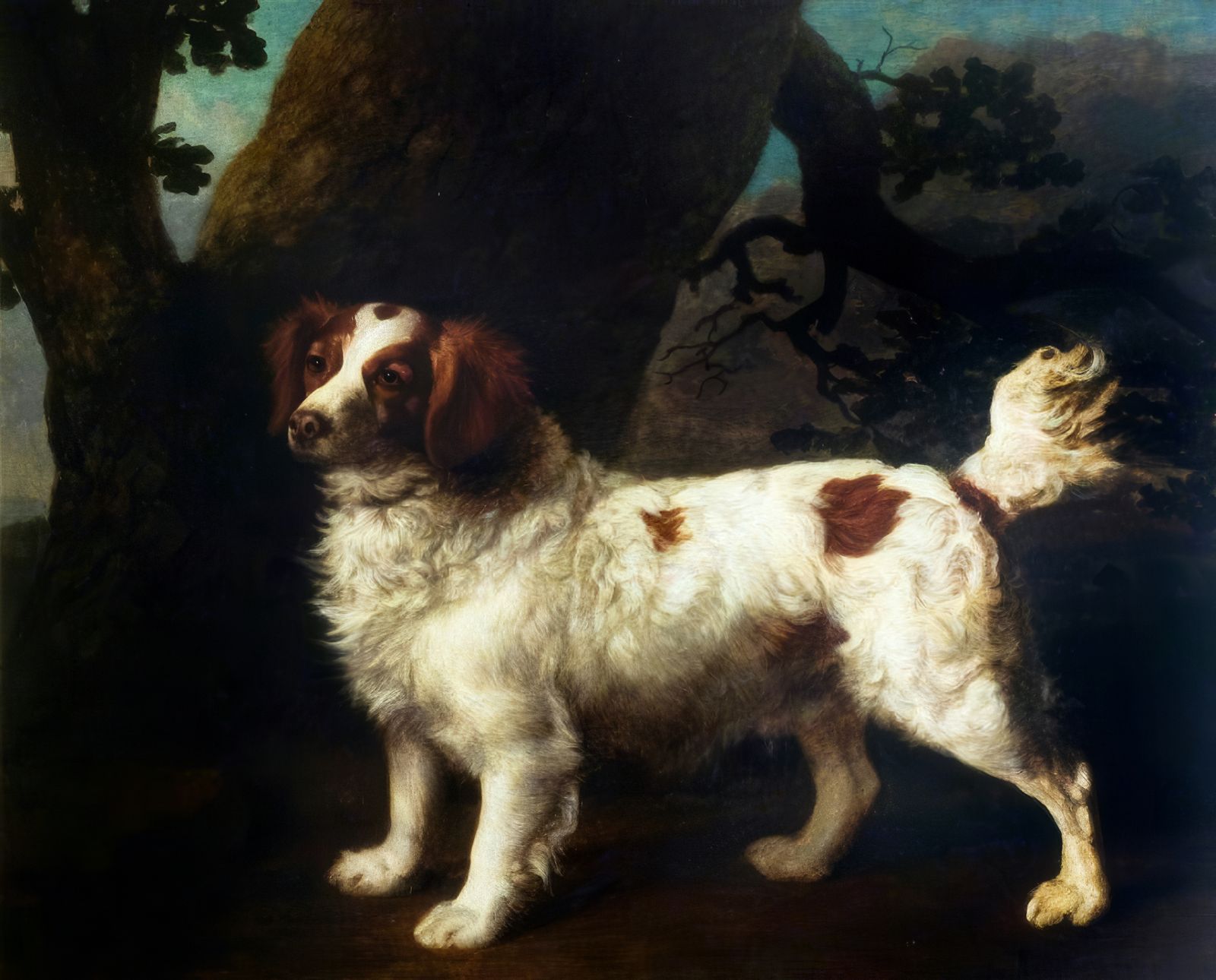
A Clumber Spaniel · George Stubbs, 1784 · Usher Gallery, Lincoln. Prepared for print by Surrealium at Vaxholm Fortress, Sweden.
The spaniel’s body sits close to the ground, giving the animal a distinct weight and proportion before we attend to its expression. Stubbs allows the shape of the dog to remain the main event, with its setting supporting rather than overwhelming that presence. For a modern pet photograph, this suggests getting down to the animal’s level so that the body is not shortened by a steep view from above. A familiar stance can communicate more about an individual dog than an elaborate collection of accessories arranged around it.
2. Fino and Tiny — two individuals together
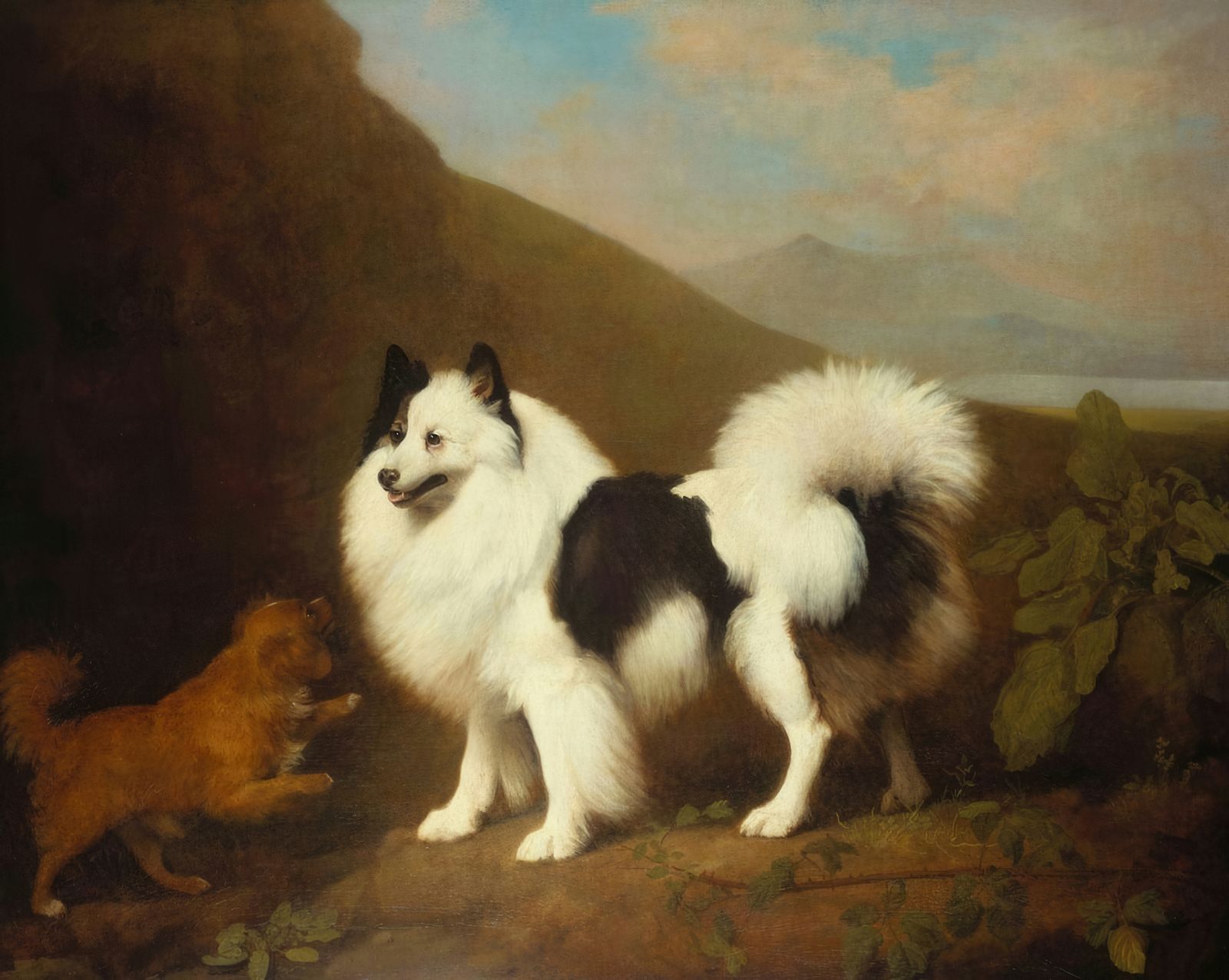
Fino and Tiny · George Stubbs, 1791 · Royal Collection. Prepared for print by Surrealium at Vaxholm Fortress, Sweden.
A paired animal portrait has to make a relationship visible while preserving two separate presences. Stubbs gives the dogs different shapes and positions, so the viewer can move between them rather than reading the pair as a repeated motif. If you are photographing two pets, look for a moment in which both remain legible instead of requiring perfectly matching poses. Their difference in scale, direction of attention or habitual distance may be the very thing that makes the eventual portrait recognisable to someone who knows them.
3. A Couple of Foxhounds — bodies at rest
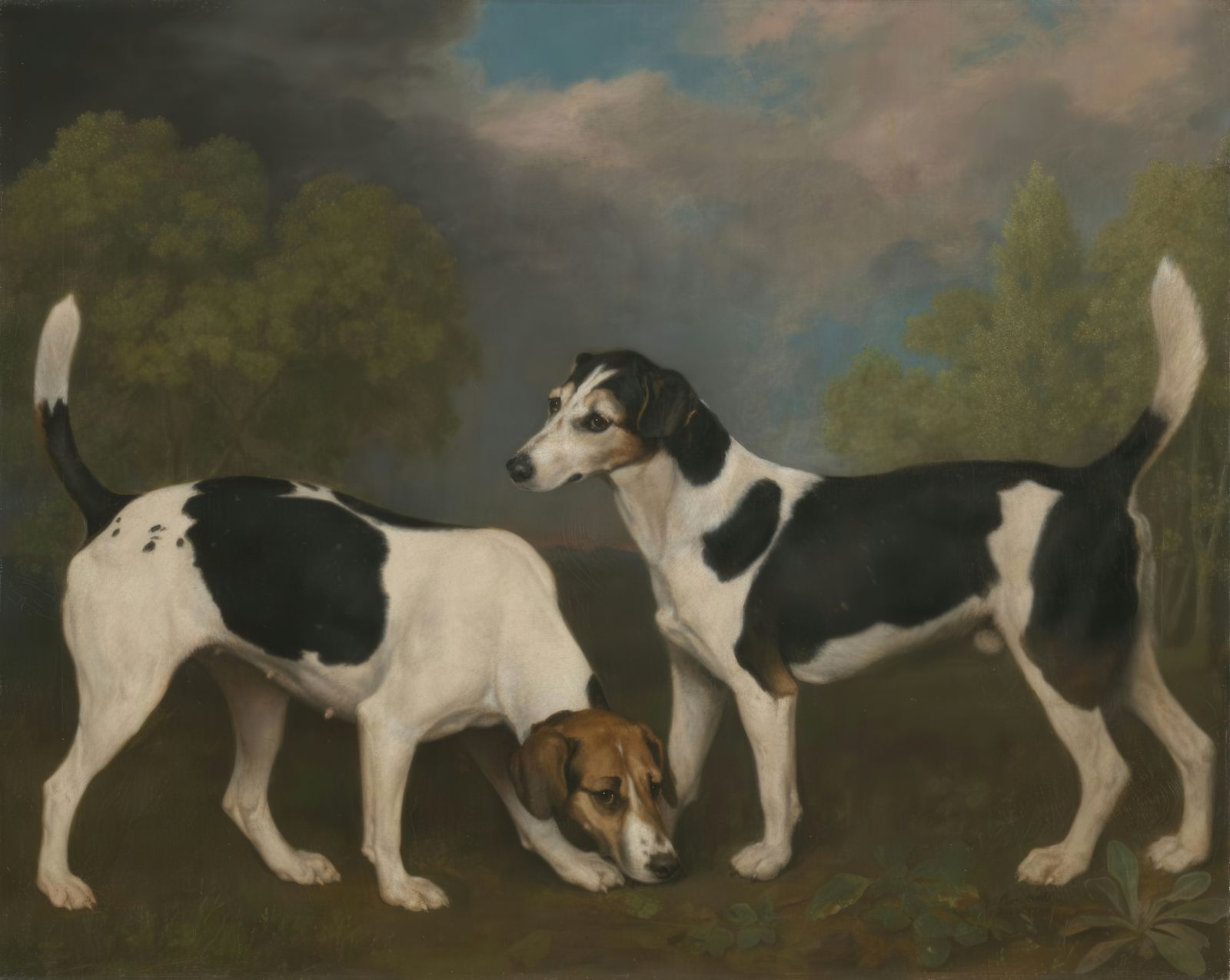
A Couple of Foxhounds · George Stubbs, 1792 · Tate, London. Prepared for print by Surrealium at Vaxholm Fortress, Sweden.
The hounds offer a quieter kind of observation than a dramatic sporting scene, with the arrangement of their bodies carrying much of the picture’s interest. The viewer can attend to contours, markings and the way one animal’s presence changes the space available to the other. This is useful evidence that a compelling animal picture does not require action at its most spectacular point. A resting photograph may show a pet’s proportions and habitual comfort more clearly than a blurred image taken while trying to make the animal perform.
4. A Grey Horse Galloping in a Field — movement made visible
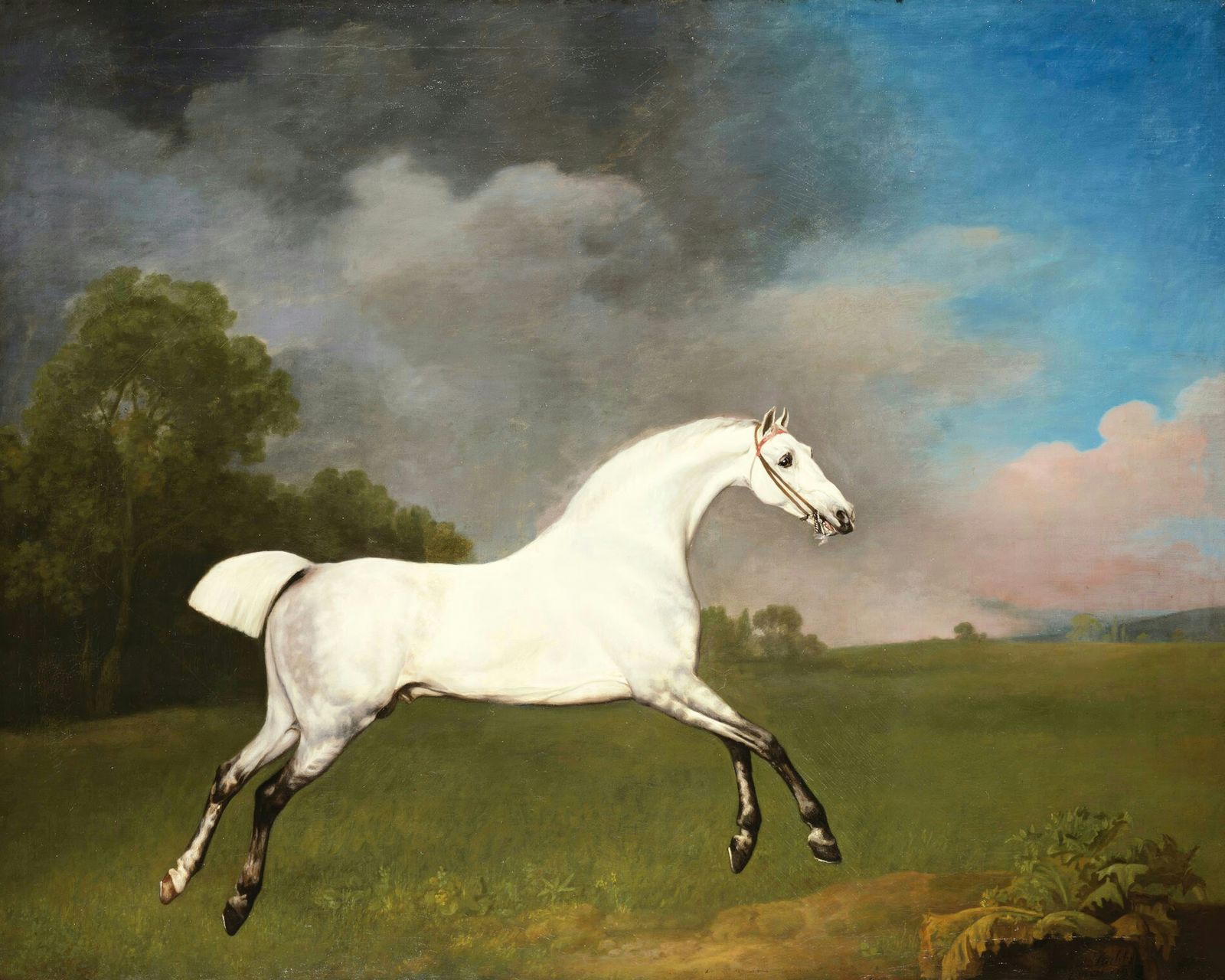
A Grey Horse galloping in a field · George Stubbs, 1793 · Royal Collection. Prepared for print by Surrealium at Vaxholm Fortress, Sweden.
The pale horse stands out against its field, allowing the extended body and legs to dominate the reading of movement. Stubbs worked before photographic sequences transformed the study of the gallop, so the picture belongs to a different history of representing motion. Enjoy its designed energy without treating every painted leg position as a modern biomechanical diagram. For a portrait made from a photograph, choose an image in which the face and body remain clear, and decide whether motion or a steadier characteristic stance is the quality you most want to preserve.
5. Bay Hunter by a Lake — the standing horse
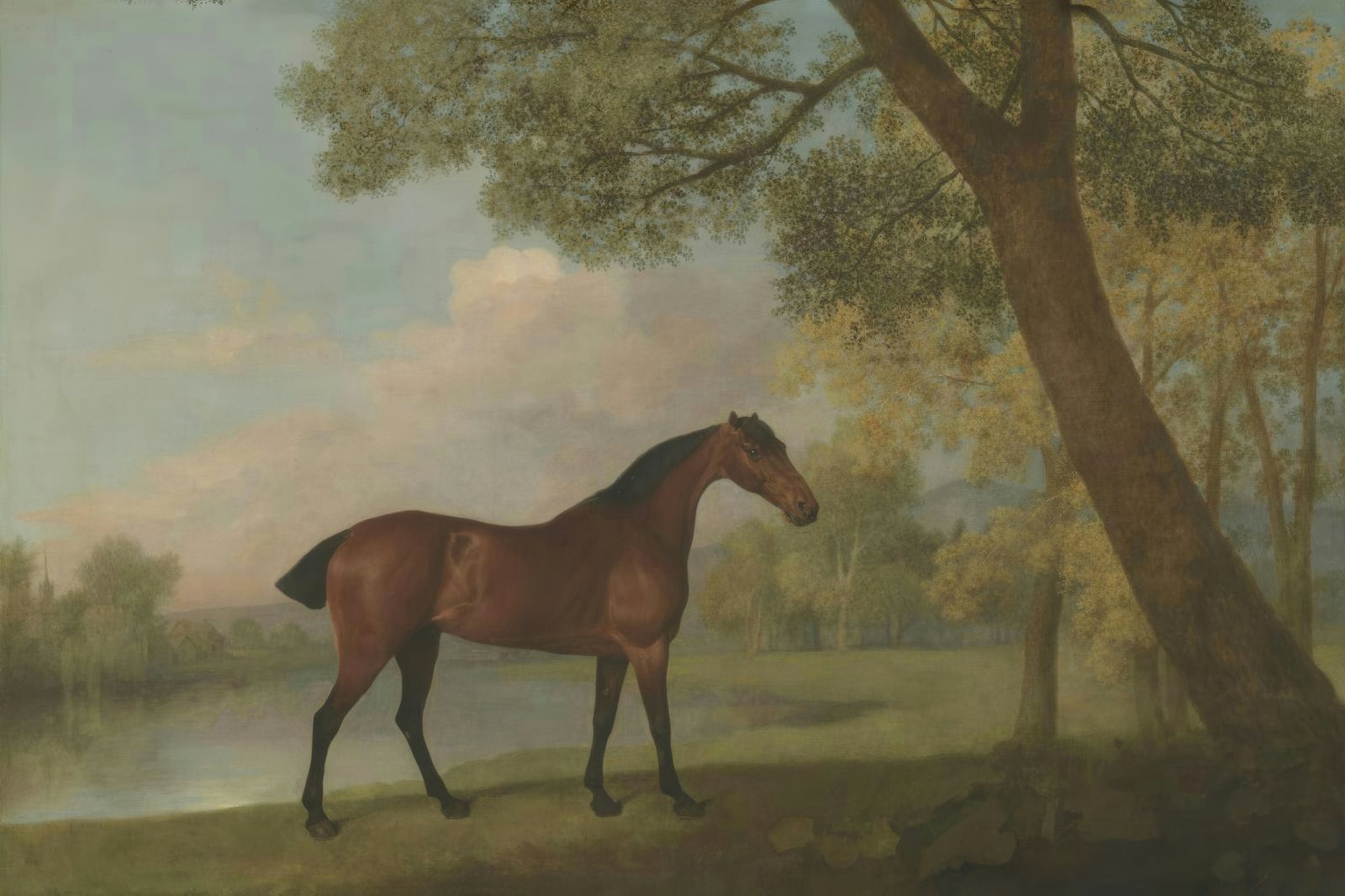
Bay Hunter by a Lake · George Stubbs, 1787 · Tate, London. Prepared for print by Surrealium at Vaxholm Fortress, Sweden.
A standing horse can reveal its build with remarkable clarity when the artist gives the silhouette room to read. Here the landscape supplies a setting and a sense of space without removing attention from the animal’s body. Notice the relation between the legs and the ground, because a convincing stance depends on more than an attractive head. When selecting your own source image, avoid cutting off hooves or hiding the lower body behind a fence if the aim is a full-length portrait with the same sense of physical presence.
6. A Horse Frightened by a Lion — fear in a print
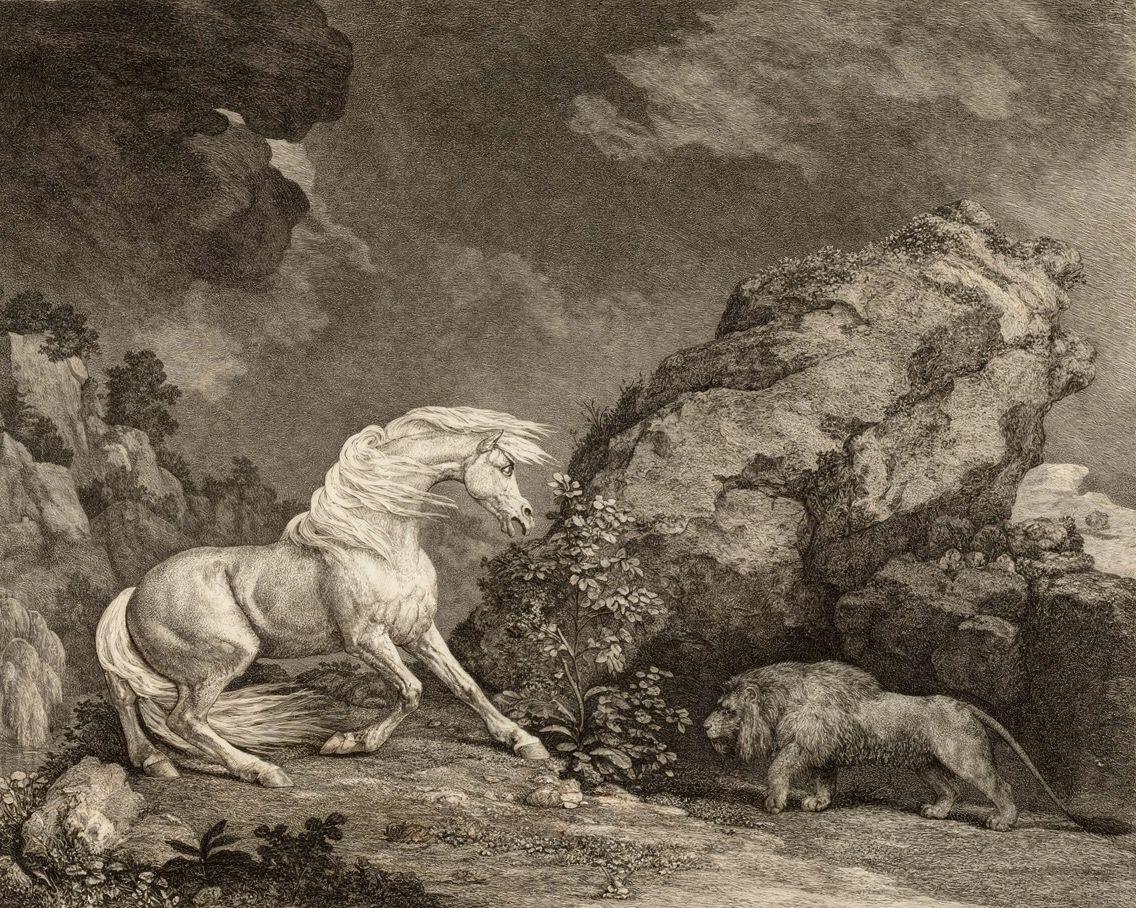
A Horse Frightened by a Lion · George Stubbs English, 1724-1806, 1777 · Art Institute of Chicago. Prepared for print by Surrealium at Vaxholm Fortress, Sweden.
This print belongs to Stubbs’s sustained interest in the charged encounter between a horse and a lion. The animal’s response is expressed through the body, turning anatomy into a vehicle for tension rather than a neutral record of structure. Printed marks also create a different viewing experience from the broad colour of the paintings, inviting attention to line, density and contrast. It is a powerful historical image, although a familiar calm expression may be the more suitable choice when the purpose of a new portrait is to remember a much-loved animal.
7. Portrait of a Large Dog — a dingo in an English picture
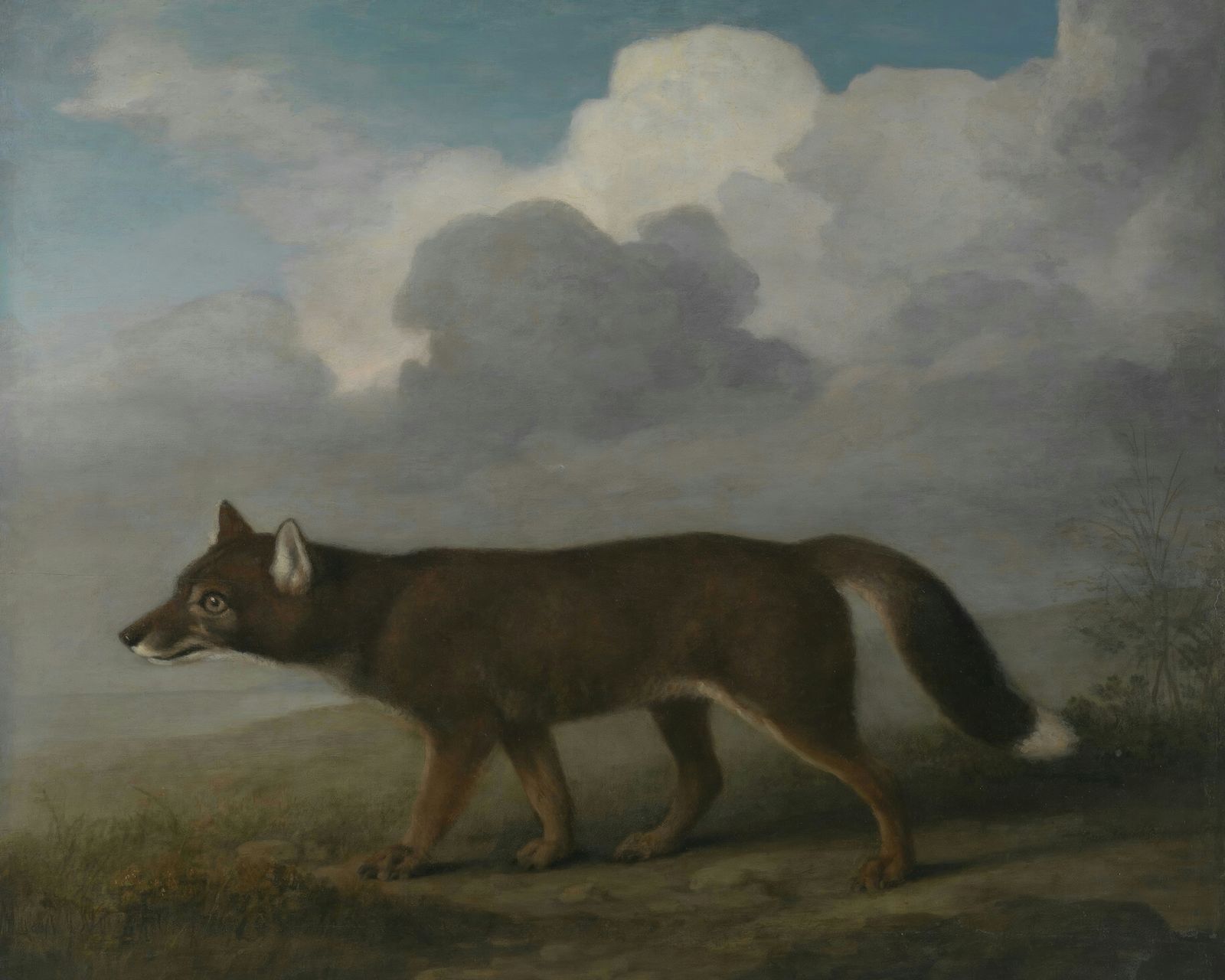
Portrait of a Large Dog · George Stubbs, 1772 · National Maritime Museum, Greenwich. Prepared for print by Surrealium at Vaxholm Fortress, Sweden.
The work conventionally titled Portrait of a Large Dog depicts a dingo and belongs to Stubbs’s pictures connected with the first Cook voyage. Its historical circumstances differ from a straightforward commission to paint a neighbour’s domestic pet, so the familiar title should not erase that distinction. Look at the animal’s outline and alertness while remembering that the picture also records a European encounter with an unfamiliar species. The comparison encourages care with labels: a breed, a name and the story of how an image was made can each change what we think we are seeing.
8. Brown and White Norfolk or Water Spaniel — markings matter
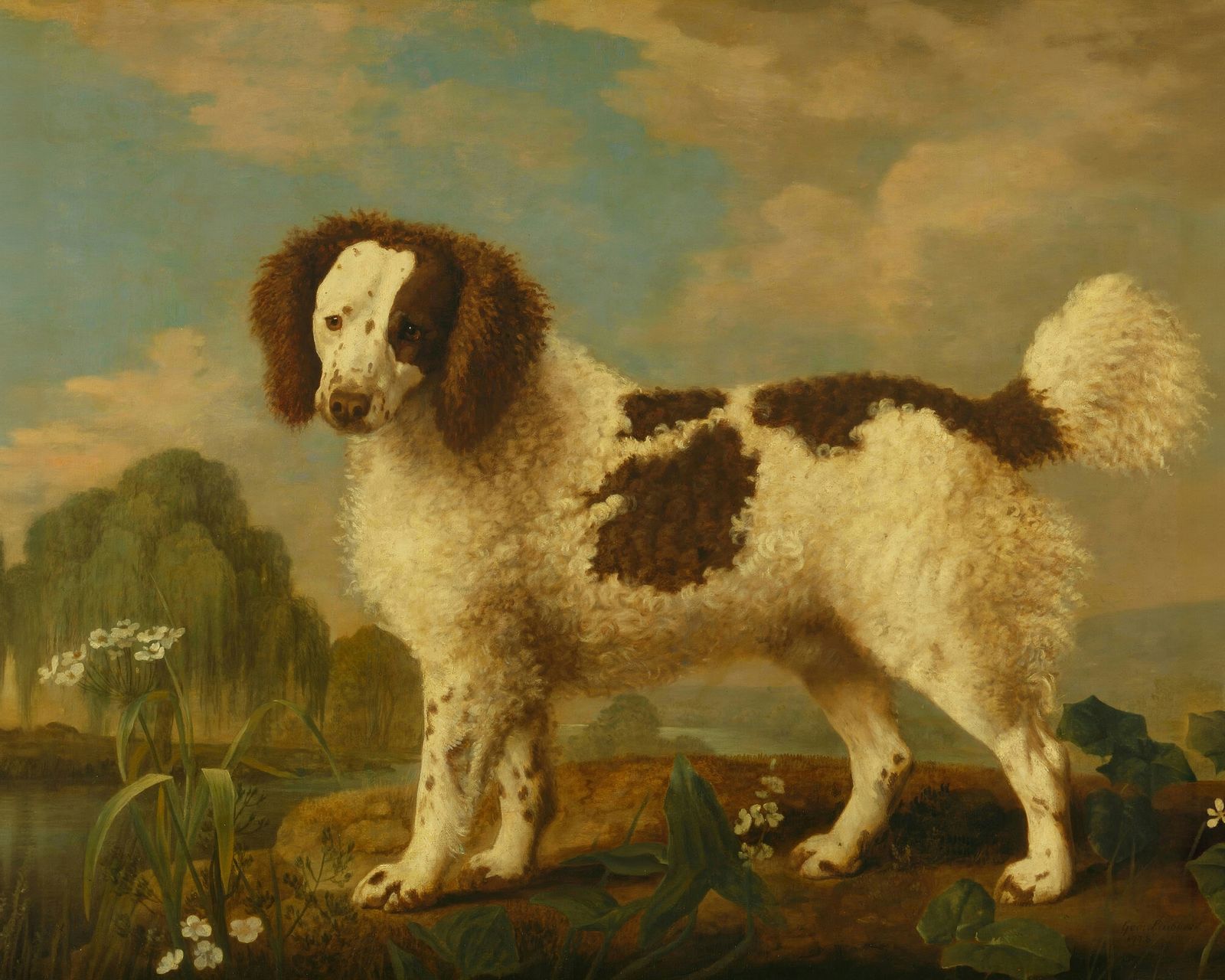
Brown and White Norfolk or Water Spaniel · George Stubbs, 1778 · Yale Center for British Art. Prepared for print by Surrealium at Vaxholm Fortress, Sweden.
The brown and white coat gives the dog a pattern that is inseparable from its individual appearance. Stubbs keeps those markings readable while allowing the body beneath them to remain solid, rather than turning the animal into a flat arrangement of coloured patches. For a source photograph, clear natural light can help preserve the relation between coat colour and form. The pet portrait styles guide develops that practical question, especially where dark fur, bright highlights or a busy background make a familiar face harder to read.
9. White Poodle in a Punt — an animal and its place
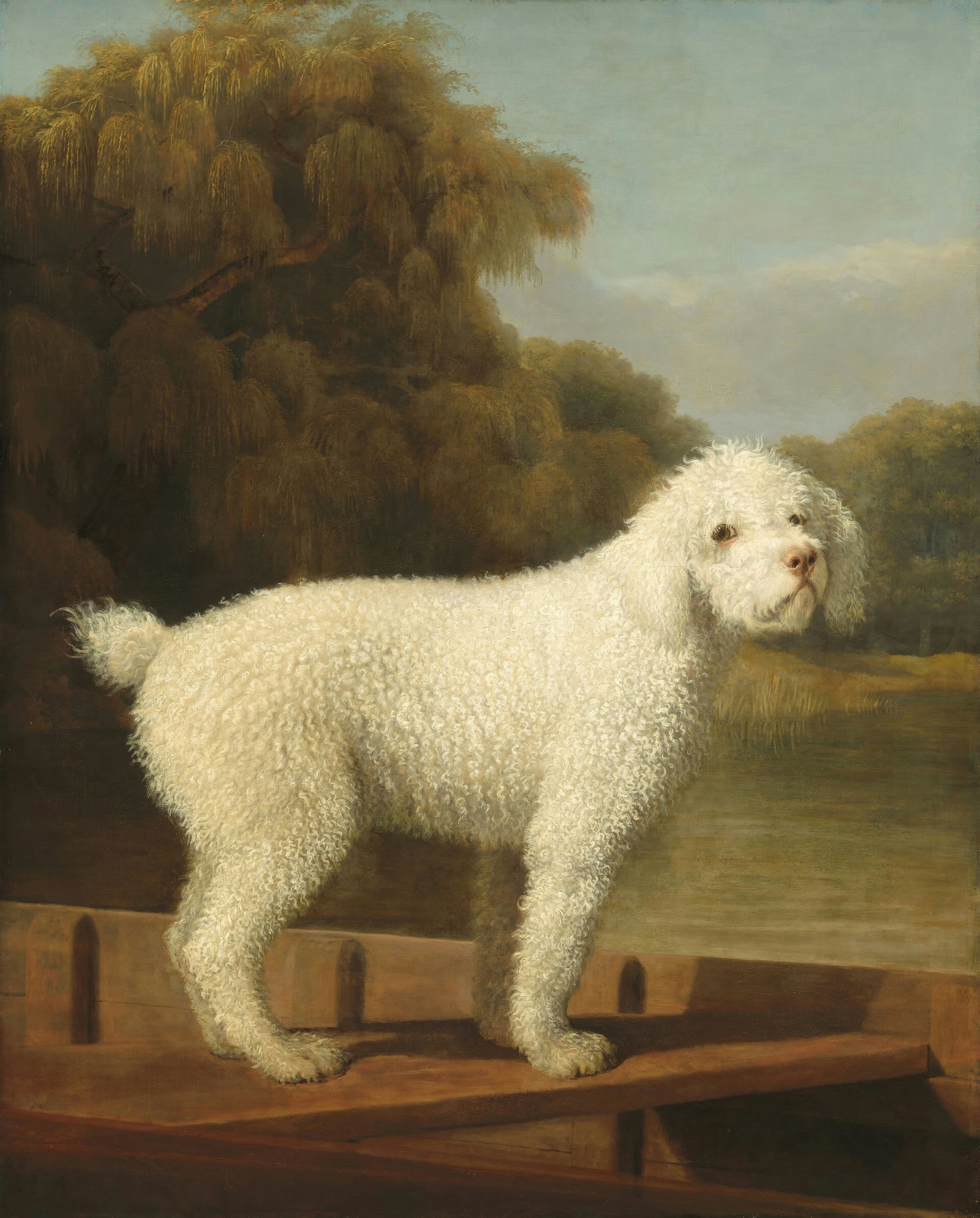
White Poodle in a Punt · George Stubbs, c. 1780 · National Gallery of Art, Washington (Paul Mellon Collection). Prepared for print by Surrealium at Vaxholm Fortress, Sweden.
The punt makes the setting unusually specific, giving the dog a small platform within a larger outdoor scene. Its pale coat becomes a strong visual focus, while the boat supplies a shape that anchors the composition. A meaningful location can work similarly in a contemporary portrait when it is genuinely part of the animal’s life, such as a familiar patch of garden or a regular place beside a window. The horse portrait guide helps distinguish useful environmental detail from a background that competes with the animal.
10. Comparison: Brizo the Dog — Rosa Bonheur
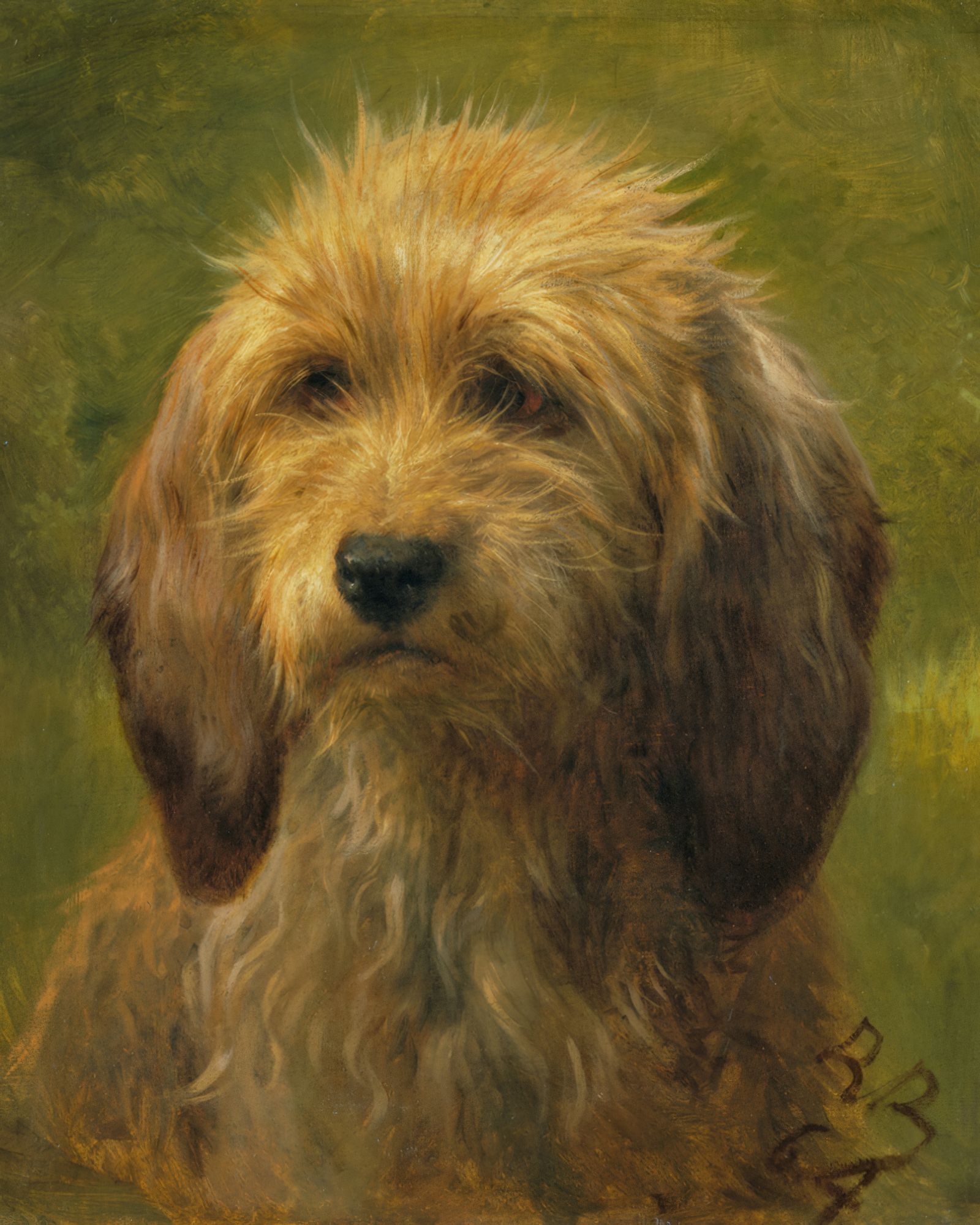
Brizo the dog · Rosa Bonheur, 1864 · Wallace Collection, London. Prepared for print by Surrealium at Vaxholm Fortress, Sweden.
Bonheur painted Brizo in 1864, long after Stubbs’s lifetime, and the comparison is valuable precisely because it comes from another artist. Her dog has its own bodily presence and coat, inviting the same close attention while belonging to a different painterly world. Compare the treatment of the head, the surrounding space and the edges of the fur with Stubbs’s spaniels rather than assuming all animal portraits pursue the same effect. If a historic work itself is what you want to live with, explore the original pictures in Masterworks before choosing a contemporary portrait route.
A good pet portrait begins with recognition. Choose a photograph that preserves the animal’s proportions, markings and familiar expression, then let those qualities carry the picture. These historic examples offer ways to look carefully; the new portrait should still belong to the animal you know. Create a pet portrait.
- Are all ten pictures by George Stubbs?
- Nine are by Stubbs. The final comparison, Brizo the Dog, is by Rosa Bonheur and is labelled separately.
- Did Stubbs paint only horses?
- No. His work includes dogs and other animals as well as horses. This selection deliberately gives the dogs room alongside the equine pictures.
- Should I dress my pet for a portrait?
- These examples suggest a simpler starting point: the animal’s natural body, markings and expression. Choose a clear photograph without human clothing or props that obscure the animal.