Gifts for grandma: ten pictures of a life beyond the label
Choose a family portrait with attention to her interests, preferred photographs and the relationships she wants to keep close.
Gifts for grandma should begin with the person, not with a stock idea of grandmotherhood. She may love reading, gardening, music, a particular pet or a lively family gathering. She may also prefer a quiet portrait to a crowded display of everyone related to her. Ask which photographs she keeps close and which moments she likes to revisit.
The ten historic works below are prompts for that conversation. They show care, companionship and domestic life in different forms, without suggesting that any one image represents all grandmothers. Use the references to choose the scope and mood of a family portrait, then let her own preferences decide who appears and how. A personal gift can include her in the making without losing its thoughtfulness.
1. Begin with the way she looks at people
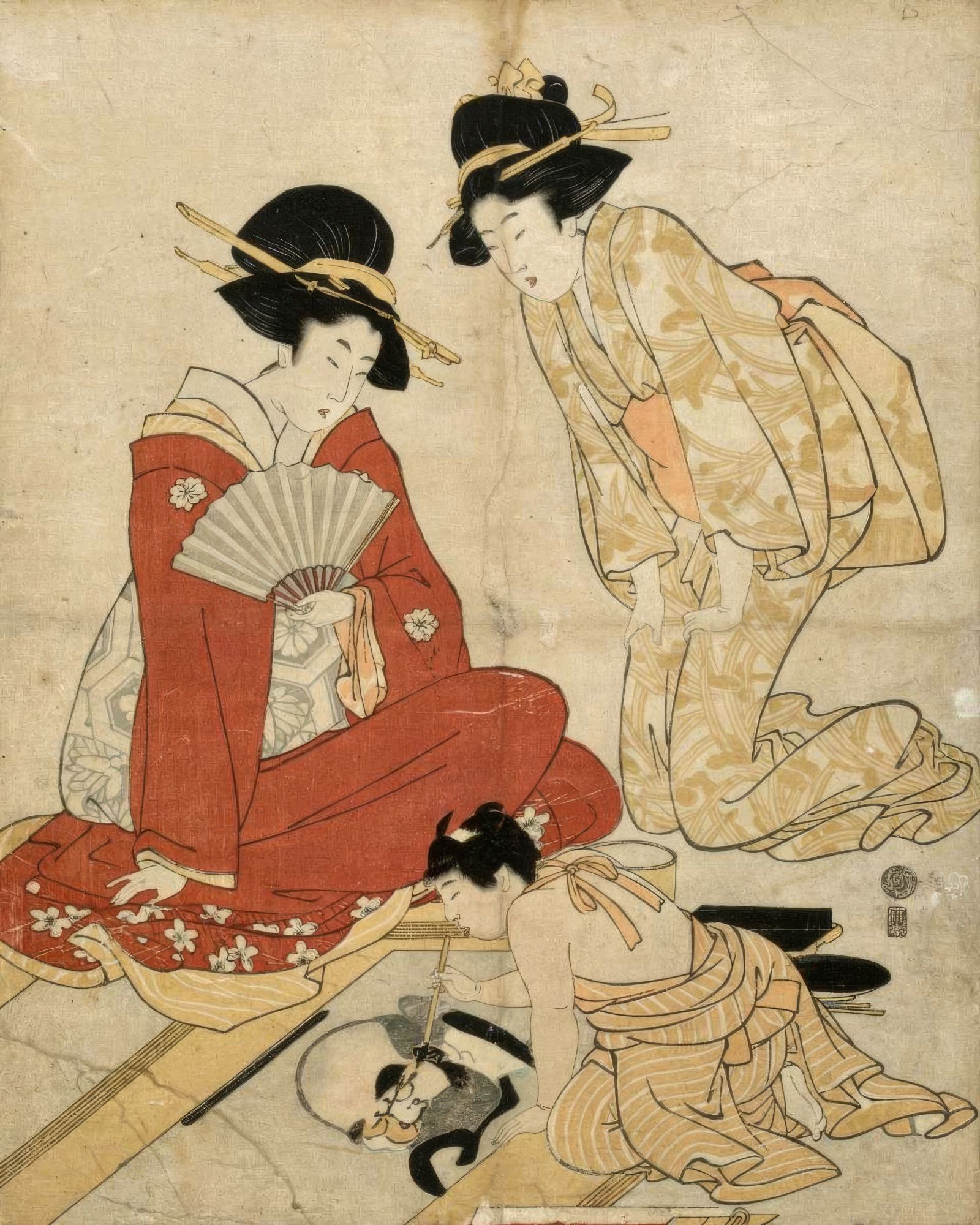
A Mother's Gaze · Kitagawa Utamaro 喜多川歌麿, Izumiya Ichibei 和泉屋市兵衛 · 1806 (Bunka 3), 6th month · Harvard Art Museums. Restored by Surrealium at Vaxholm Fortress, Sweden
Utamaro's A Mother's Gaze brings attention to the relationship between figures rather than presenting a single formal face. It suggests looking for a family photograph in which her characteristic attention is visible: listening, watching or sharing a small activity. Do not reduce that expression to a generic idea of maternal tenderness. Choose the moment because you recognise her in it, and because she would be comfortable seeing it displayed.
2. Make room for her companion animal
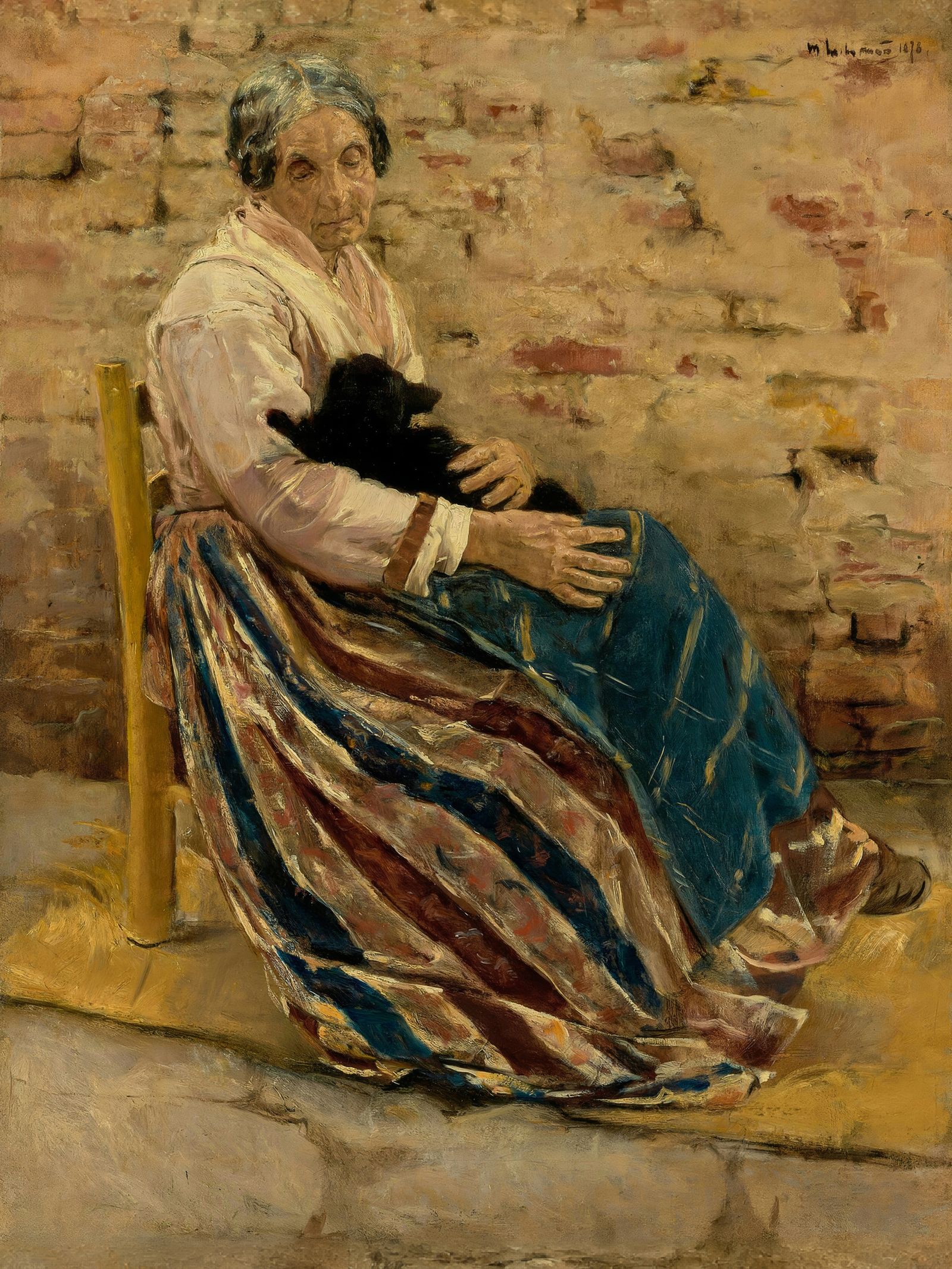
An Old Woman with Cat · Max Liebermann · 1878 · J. Paul Getty Museum, Los Angeles. Prepared for print by Surrealium at Vaxholm Fortress, Sweden
Liebermann's old woman with a cat gives the animal a natural place in the seated figure's lap. If a pet is important to her daily life, a portrait can acknowledge that relationship without treating it as a humorous accessory. Use a source photograph in which both faces are visible and the animal is comfortable. A familiar resting moment may feel more personal than a staged image intended to look impressive.
3. Remember that she was also a young parent
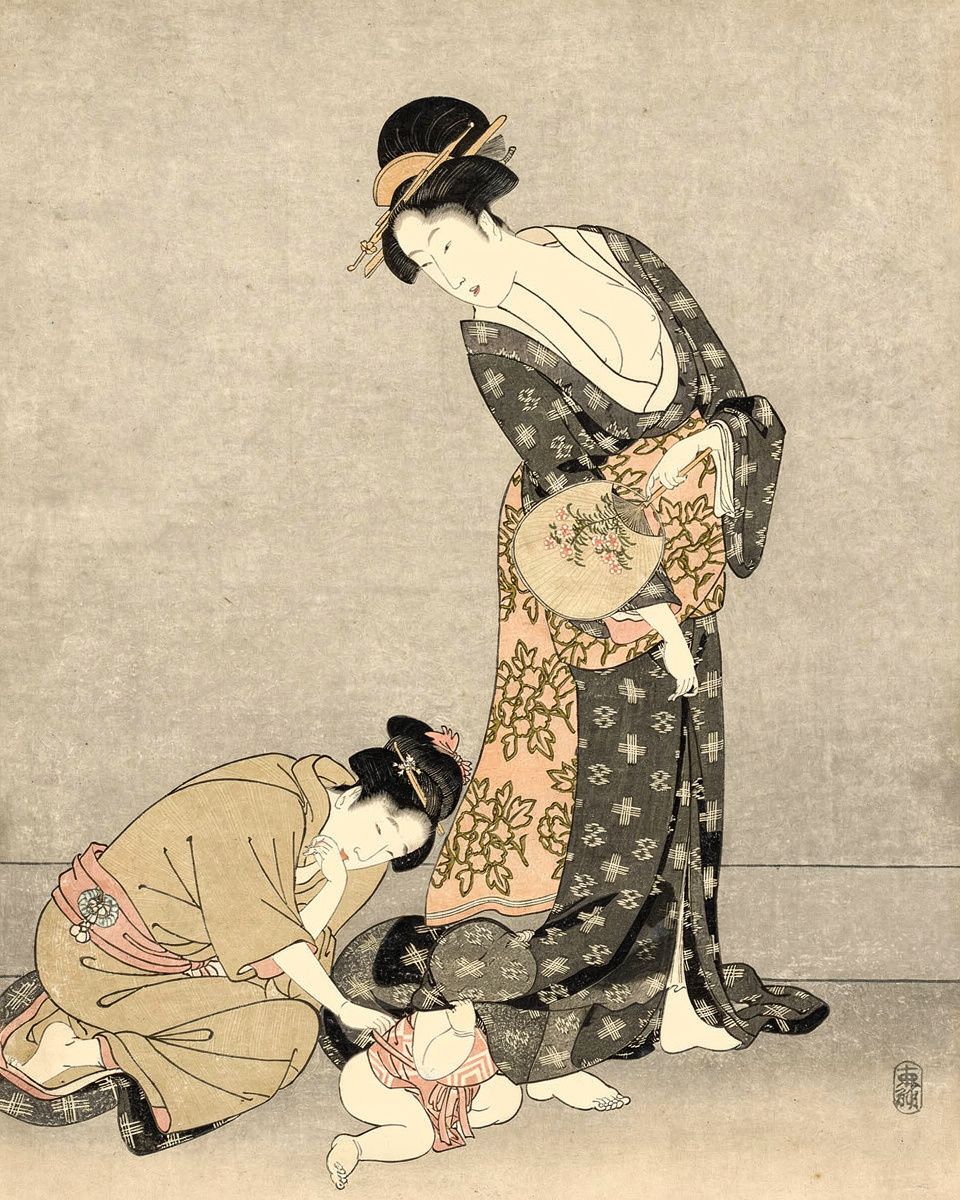
Mother and Child · Kitagawa Utamaro 喜多川 歌麿 · c. 1800 · Art Institute of Chicago. Restored by Surrealium at Vaxholm Fortress, Sweden
Utamaro's Mother and Child offers a close view of an earlier stage of family life. An old photograph of her with a child may be meaningful if she values that memory, but do not assume nostalgia is automatically the right gift. Ask which period she would like the portrait to hold. The choice can recognise continuity across generations while keeping her own experience, rather than the family's preferred story, at the centre.
4. Choose a gesture she recognises
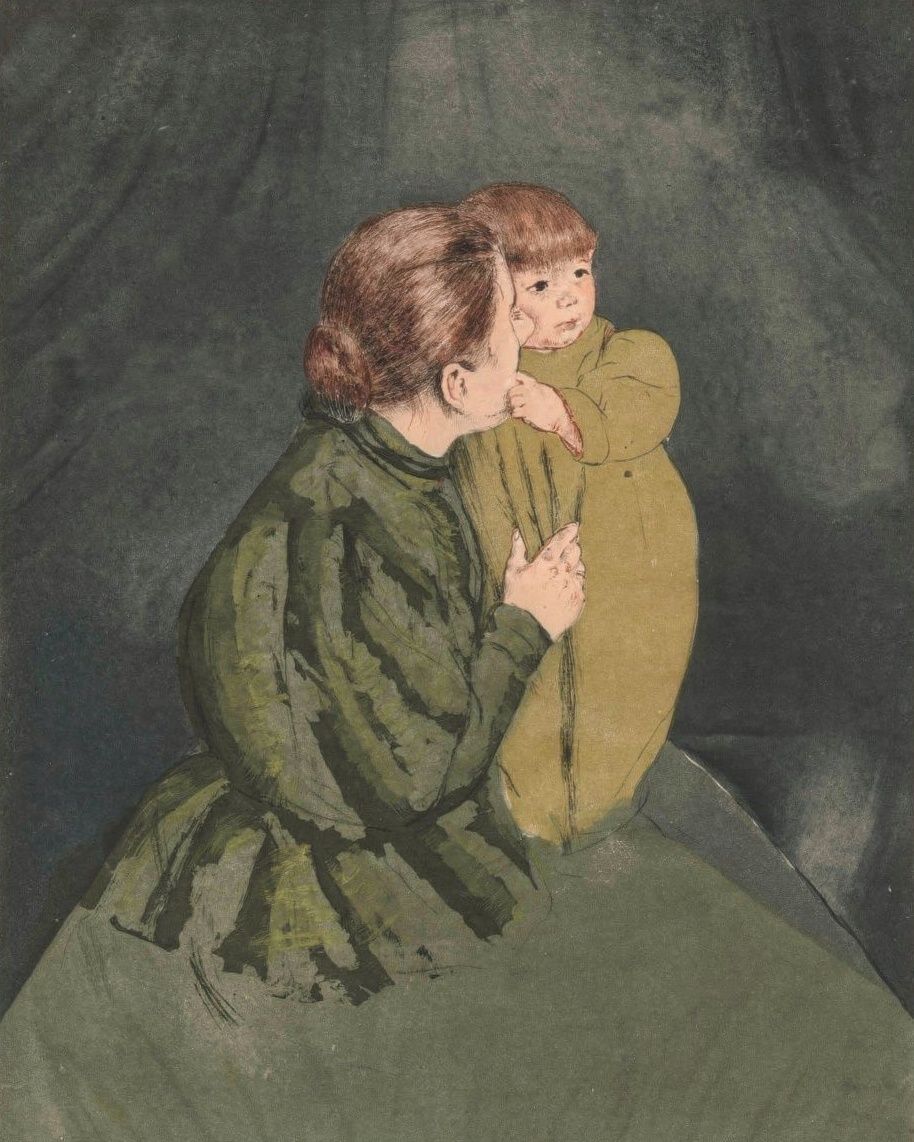
Peasant Mother and Child · Mary Cassatt · c. 1894 · Art Institute of Chicago. Restored by Surrealium at Vaxholm Fortress, Sweden
Cassatt's mother-and-child print makes closeness visible through the arrangement of bodies. It can prompt a search for an unforced family photograph rather than a formal occasion chosen only because everyone is dressed well. Check whether the gesture and expression feel characteristic to her. A gift should preserve a relationship she recognises, not replace a familiar moment with an idealised performance of affection for the viewer.
5. Respect the quiet parts of a household
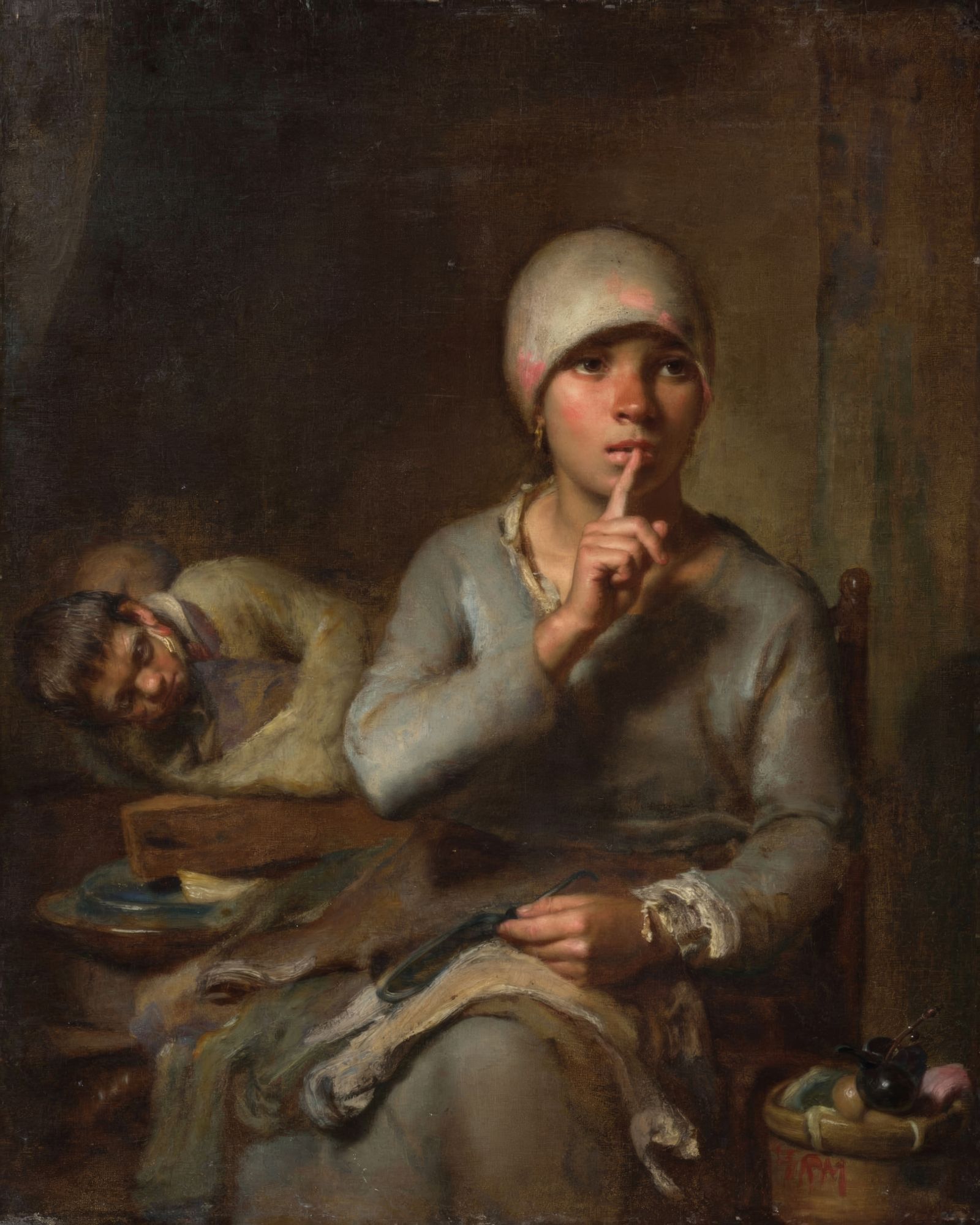
Woman and Child (Silence) · Attributed to Auguste Boulard, the Elder · 1855/60 · Art Institute of Chicago. Restored by Surrealium at Vaxholm Fortress, Sweden
Woman and Child, also called Silence, places a gesture of quiet beside a sleeping child. The picture suggests a kind of care that is easy to overlook in a collection of celebratory photographs. If that resonates with her life, choose a source that acknowledges it without making private labour into a sentimental spectacle. The accompanying note can name what you appreciate while leaving her free to respond in her own way.
6. Let strength appear without a slogan
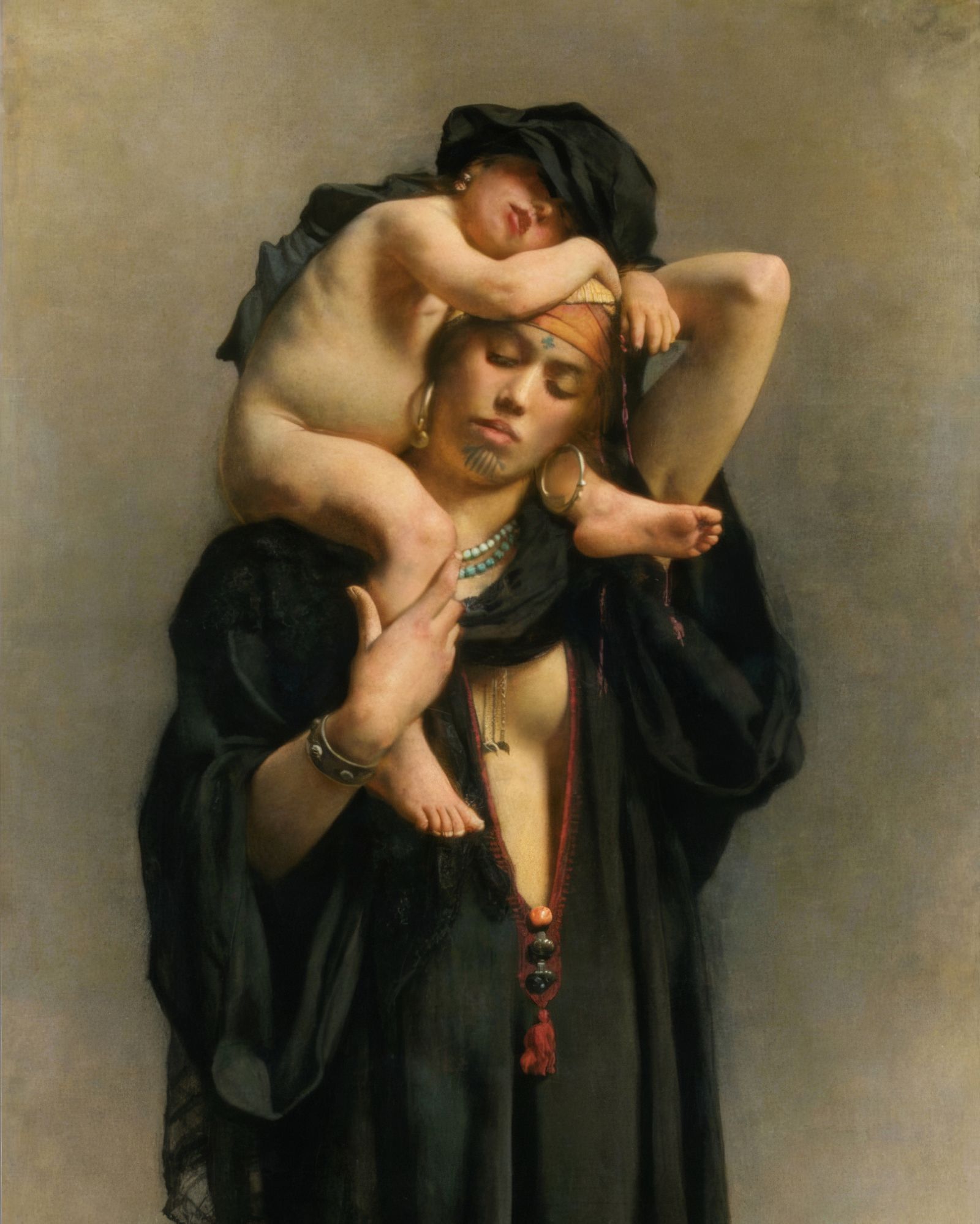
An Egyptian Peasant Woman and Her Child · Léon Bonnat · 1869–70 · The Metropolitan Museum of Art. Restored by Surrealium at Vaxholm Fortress, Sweden
Bonnat's Egyptian woman carries a child high against her body, making physical support part of the composition. The image is a specific historic work and should not become a universal claim about motherhood. For a personal gift, look for a photograph that shows her presence as she would describe it, whether energetic, composed or playful. Avoid assigning her a heroic role simply because the family wants the gift to sound grand.
7. Include a child's own presence
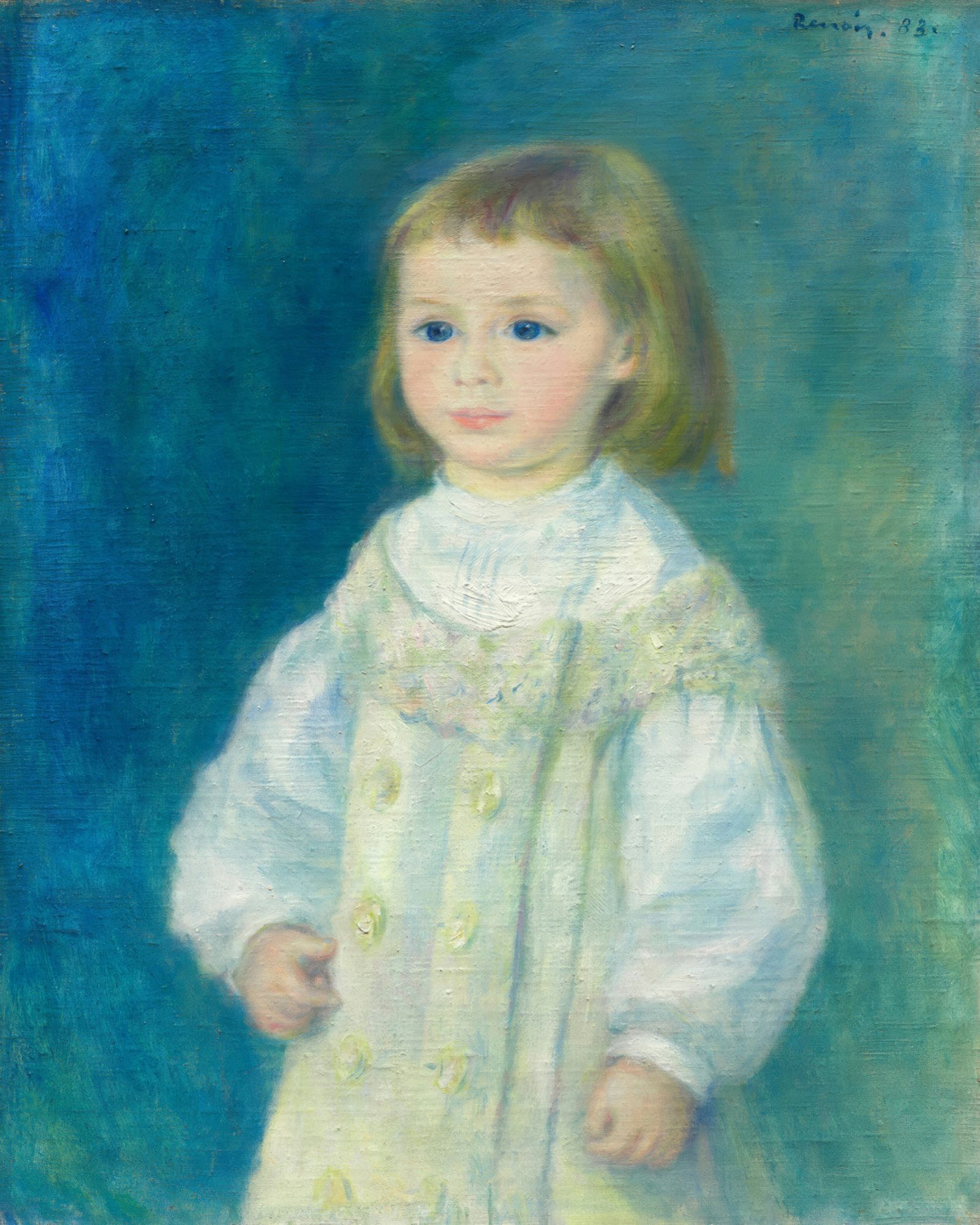
Lucie Berard (Child in White) · Pierre-Auguste Renoir · 1883 · Art Institute of Chicago. Prepared for print by Surrealium at Vaxholm Fortress, Sweden
Renoir's Lucie Berard gives the child a distinct face and stance rather than treating childhood as a generic symbol. If grandchildren belong in the portrait, choose references that preserve their individual expressions and give them appropriate visual space. Confirm which photograph she would most enjoy, especially when several ages or occasions are possible. A clear small grouping can be more satisfying than a crowded arrangement of every available image.
8. Remember her life when the room is quiet
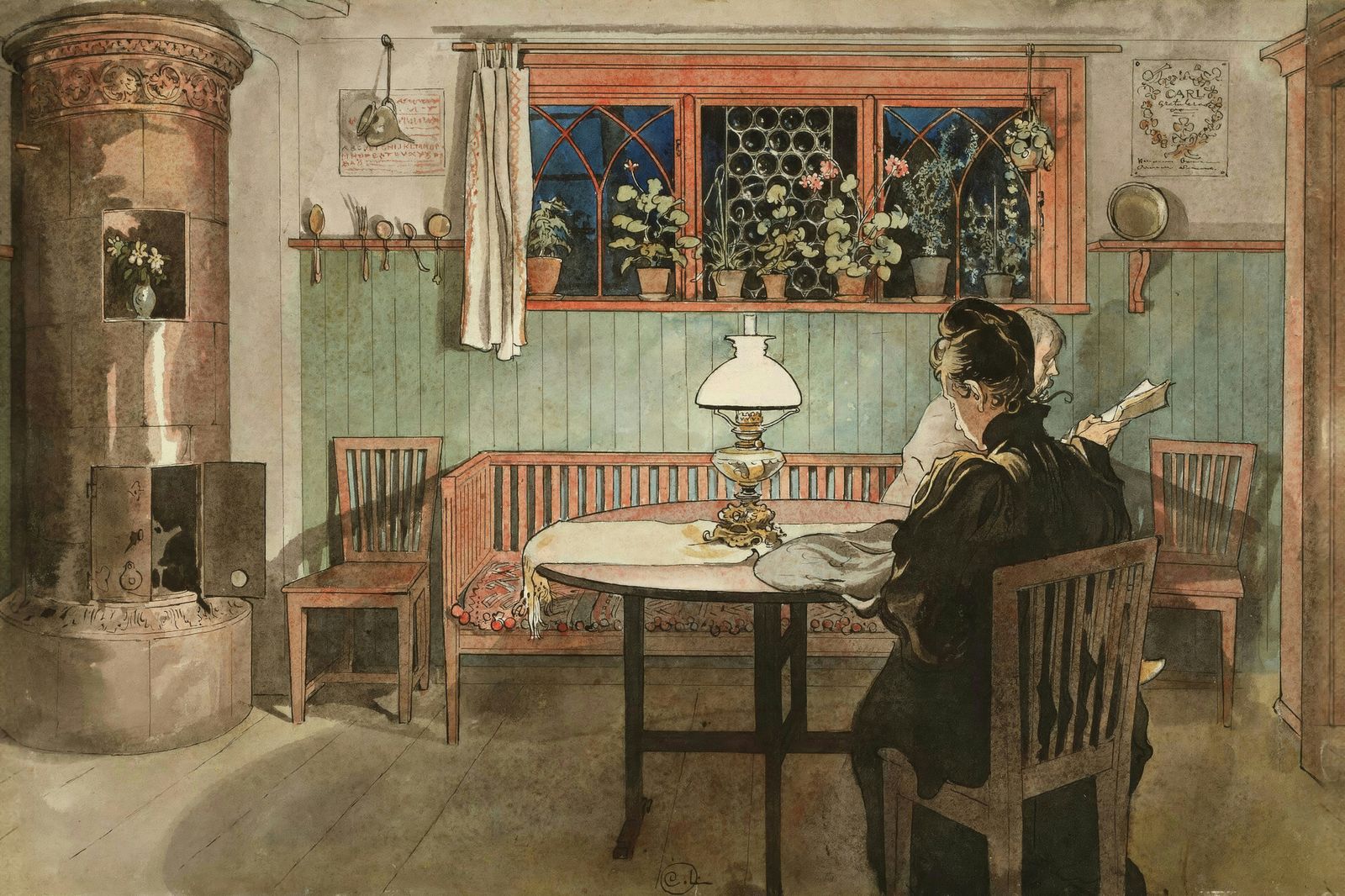
When the Children Have Gone to Bed. From A Home · Carl Larsson · 1899 · Nationalmuseum, Stockholm. Prepared for print by Surrealium at Vaxholm Fortress, Sweden
Larsson's interior after the children have gone to bed centres an adult at a table in a settled room. It is a useful prompt to think about her own routines beyond the role of grandmother. Reading, writing, making things or simply enjoying a familiar room may be central to her sense of home. A portrait gift can recognise that fuller life instead of assuming she always wants to be pictured surrounded by children.
9. Take her interests seriously
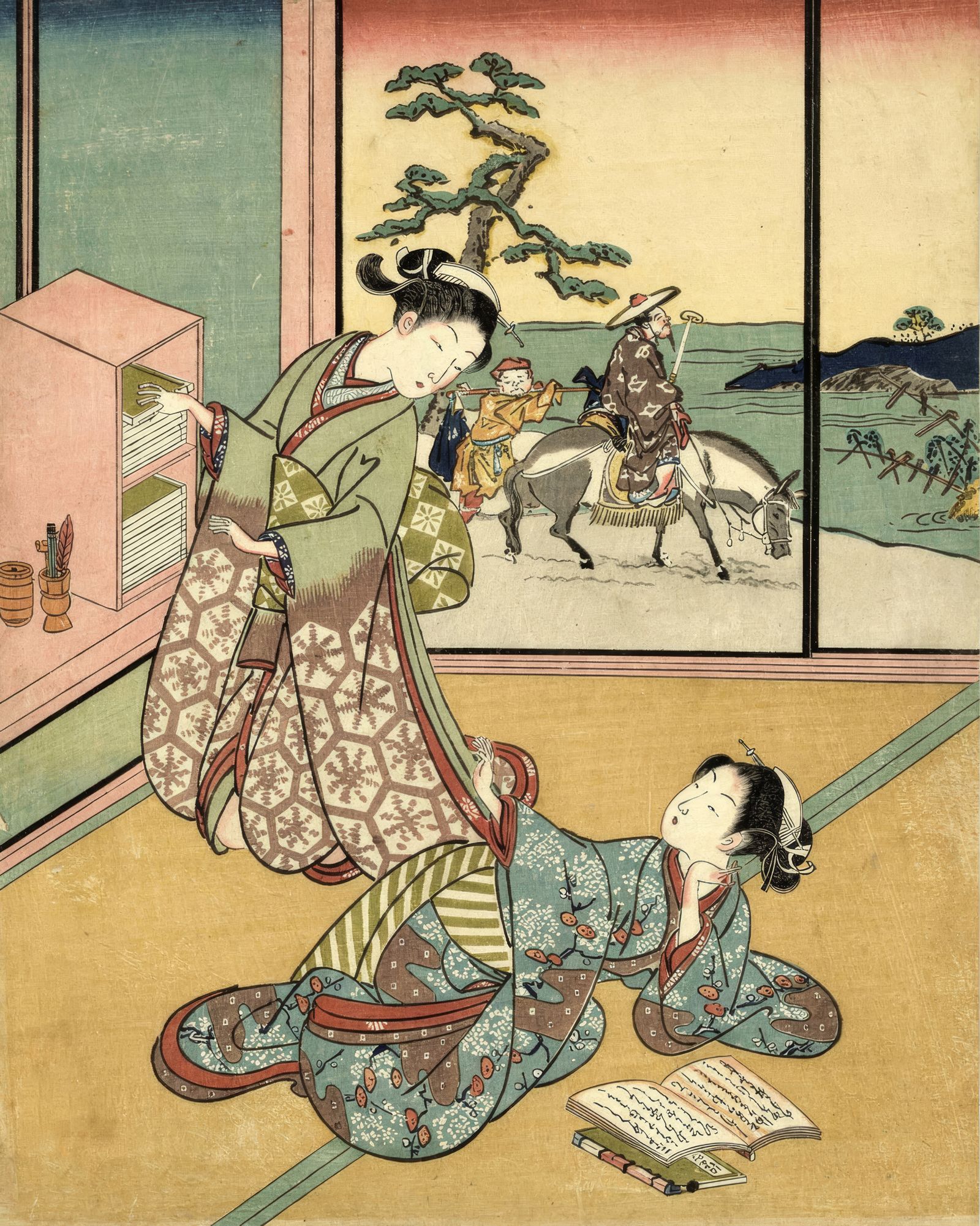
Two Young Women Reading Books · Suzuki Harunobu 鈴木 春信 · c. 1767/68 · Art Institute of Chicago. Restored by Surrealium at Vaxholm Fortress, Sweden
Harunobu's two women reading give books and shared attention a place in the picture. If she is a reader, ask about the particular books, conversations or reading places that matter to her rather than choosing a generic literary theme. That interest can guide the mood of a portrait and the note accompanying it. The personal connection should come from what she actually enjoys, not from an age-based assumption about quiet hobbies.
10. Keep a relationship across a lifetime
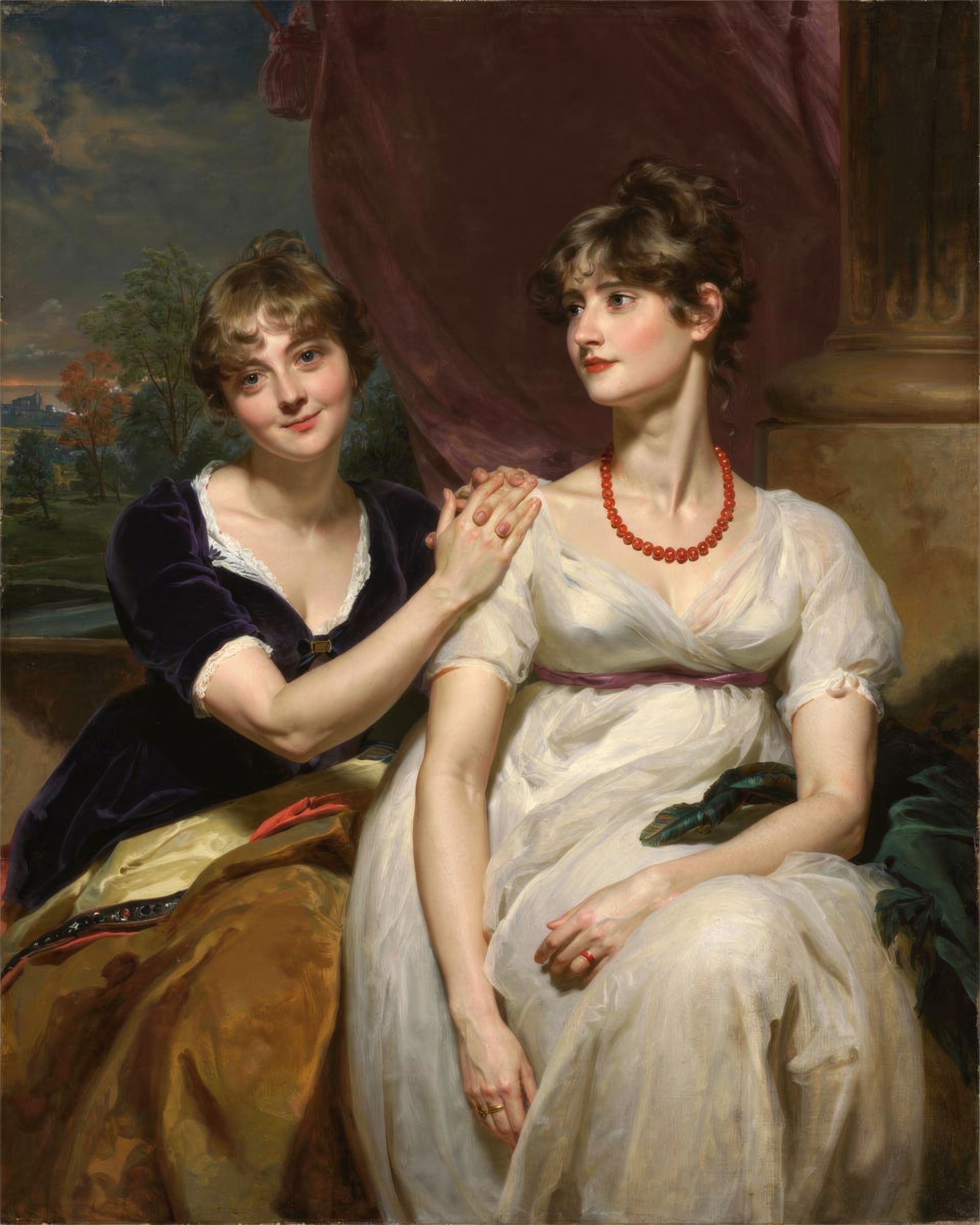
Portrait of Charlotte and Sarah Carteret-Hardy · Thomas Lawrence · 1801 · Cleveland Museum of Art. Restored by Surrealium at Vaxholm Fortress, Sweden
Lawrence's portrait of Charlotte and Sarah makes the closeness of two women central. A sister, old friend or other lifelong companion may be as important to her story as the younger generations. Ask whether a portrait of that relationship would be welcome, and choose the source photograph together if needed. A gift for grandma can honour a connection that existed long before anyone began calling her by that name.
Continue with gifts for grandparents: 12 family portraits after the masters, personalized gifts: ten ways to begin with a real person, 50th anniversary gift: ten ways to picture a family, and the full catalogue record for A Mother's Gaze.
Explore a family portrait after listening to which people and photographs she wants close. Keep the grouping and style suited to her taste, and include a note about the particular memory you chose. The gift can acknowledge grandmotherhood while leaving room for the whole person.
- What is a thoughtful gift for a grandmother?
- Begin with her own interests and preferences. A family portrait can be thoughtful when she likes the photograph, grouping and intended display. Do not assume that every grandmother wants the same sentimental theme or a large picture of every relative.
- Should grandchildren be included in the portrait?
- Only if that is the grouping she would enjoy. A portrait of her with a partner, sibling, friend or pet may be equally meaningful. Ask which relationship and period of life she wants the image to hold.
- Can I use an old family photograph?
- Choose an older photograph if the memory matters to her and the faces remain clear enough to use. Keep the original file or scan and avoid heavy processing that removes detail. If uncertain about the choice, involve her before beginning.
- How can I make the gift personal without making it a surprise?
- Invite her to choose among a few photographs or discuss the people she would like included. You can still prepare the accompanying note and presentation. Thoughtfulness comes from attention, not from keeping every decision secret.