A golden retriever portrait with room for the whole dog
golden retriever painting: Ten historical canine works to help choose a natural portrait treatment.
A golden retriever painting is often a search for one particular dog: the feathering behind the ears, the head tipped towards a familiar voice, the patient body beside the kitchen table. For a Fable portrait, start with those observations before choosing a historical style. The strongest reference is usually a clear photograph made at the dog's own height, with the eyes visible and the coat evenly lit.
The historical dogs below are comparisons for portrait treatment, not claims that the originals depict golden retrievers. Their different poses help you decide whether your dog belongs in a full-length composition, a close study or a landscape. Keep the dog's own anatomy and colouring central; a period setting needs neither a costume nor a crown. Look at the whole work, open the style that interests you, and compare its treatment with the photograph you actually have.
1. Begin with an unhurried pose
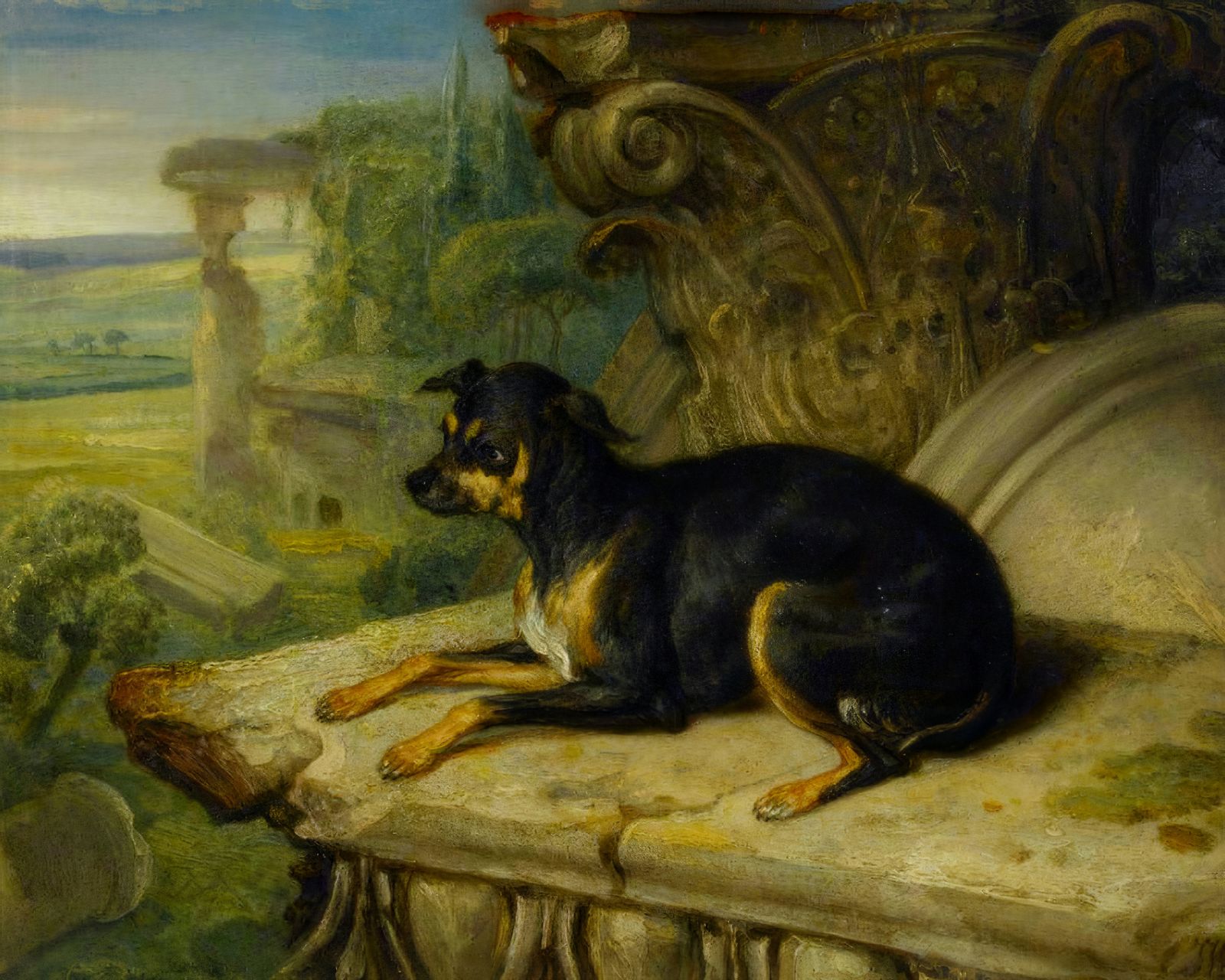
'Fanny', a Favourite Dog · James Ward · 1822 · Sir John Soane's Museum, London
A favourite dog does not need an elaborate story added around it. Use Ward's named canine portrait as a starting point for a photograph taken during an ordinary pause, when the dog's posture is familiar rather than trained for the camera. A golden retriever's easy weight and settled expression can say more than a prop. Keep paws and tail within the photograph if you want a full-body result.
Create a portrait in this style · Explore this artwork
2. Choose a study that lets the face lead
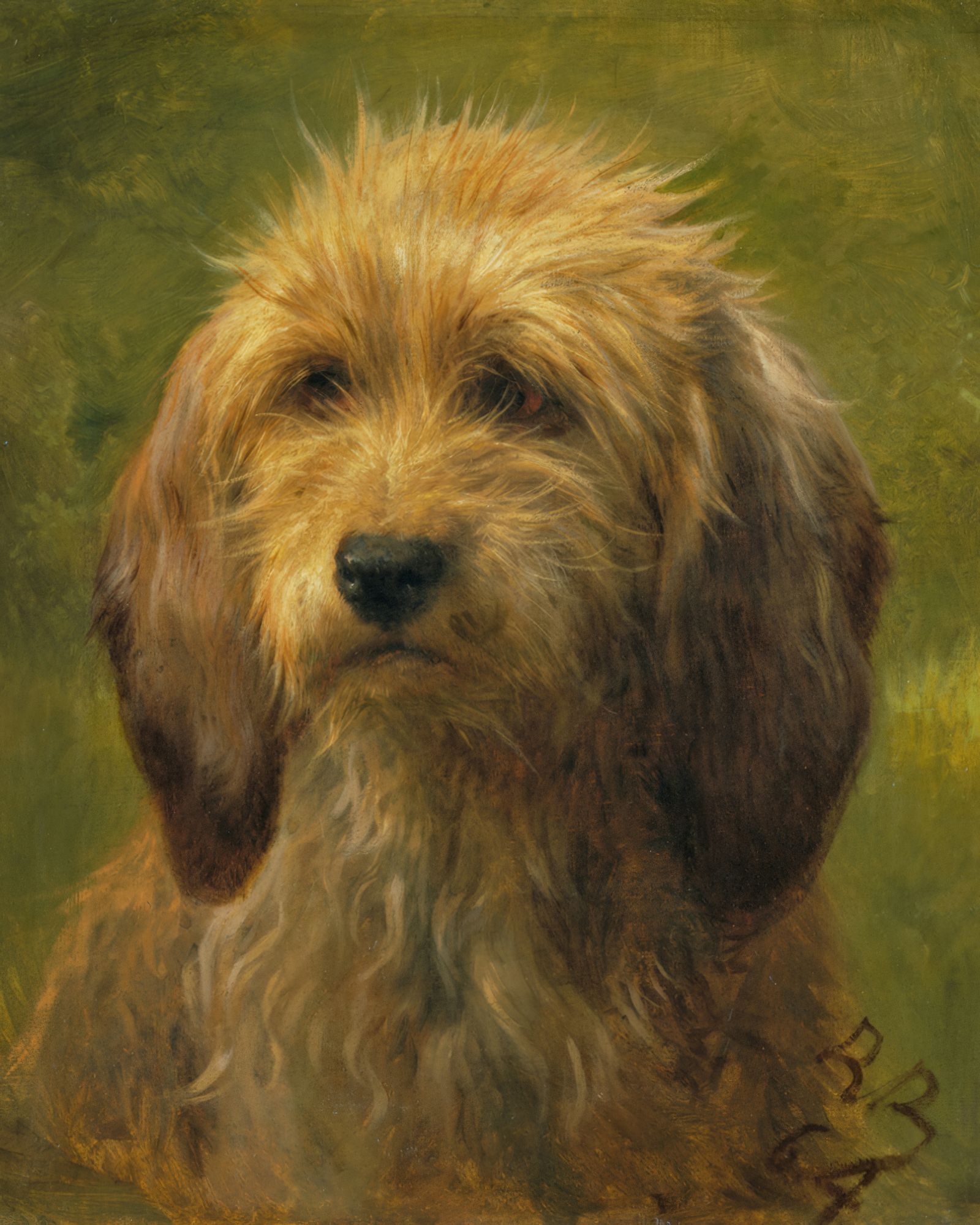
Brizo the dog · Rosa Bonheur · 1864 · Wallace Collection, London
For a dog recognised first by an expression, a closer composition may make more sense than a panoramic scene. Compare the prominence of the animal with the surrounding space before choosing this style. Supply a photograph in which the eyes are clear and the muzzle has not been enlarged by a phone held too close. The face should have enough room around it to remain naturally proportioned.
Create a portrait in this style · Explore this artwork
3. Give a dignified dog a quiet setting
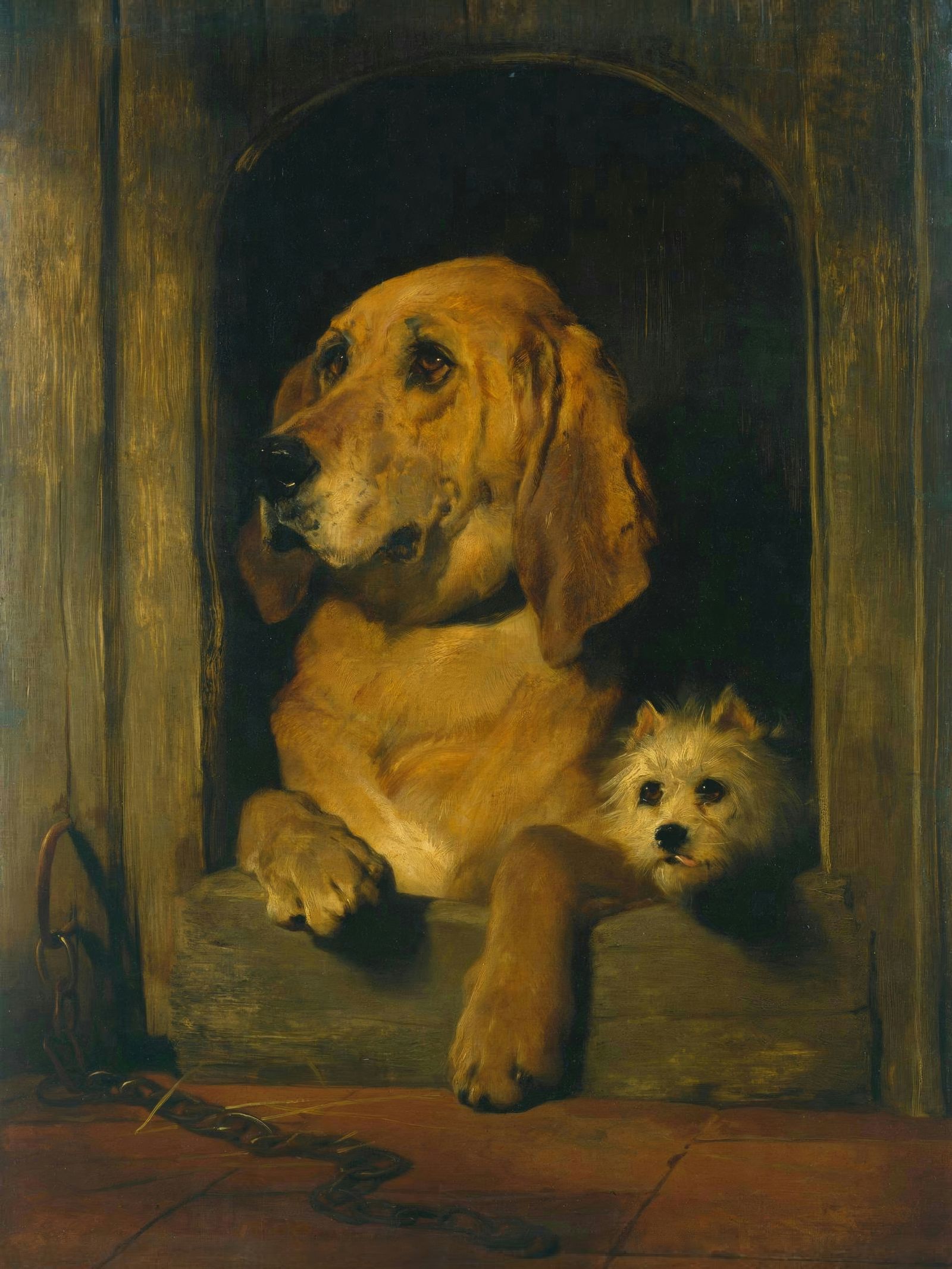
Dignity and Impudence · Edwin Landseer · 1839 · Tate, London
The title offers a useful question: is your retriever the composed older presence or the irrepressible newcomer? Pick a photograph that answers that question without human accessories. If two dogs will be remembered separately, make separate portraits rather than assuming a single-pet style can take both. A restrained setting is especially useful when the coat itself supplies the picture's warmth and texture.
Create a portrait in this style · Explore this artwork
4. Read the entire silhouette
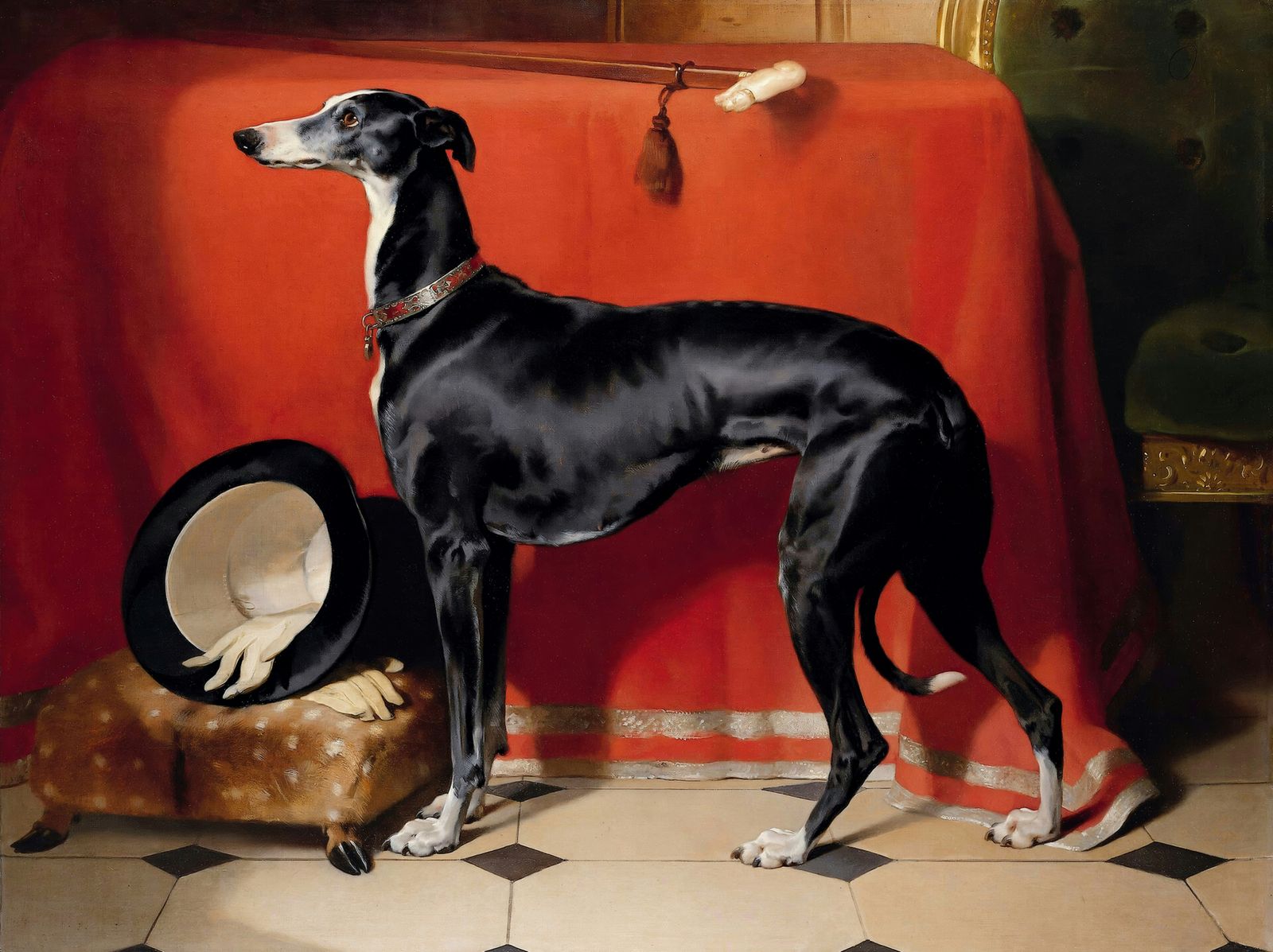
Eos · Edwin Landseer · 1841 · Royal Collection
A dog's outline carries identity as surely as its eyes. This comparison is useful when deciding whether the retriever's full figure should remain visible. Check the reference for an uncropped back, a clear tail and legs separated enough to read. A recognisable pose can be more valuable than a technically sharp photograph that cuts away the body or hides it behind furniture.
Create a portrait in this style · Explore this artwork
5. Allow a large dog enough visual weight
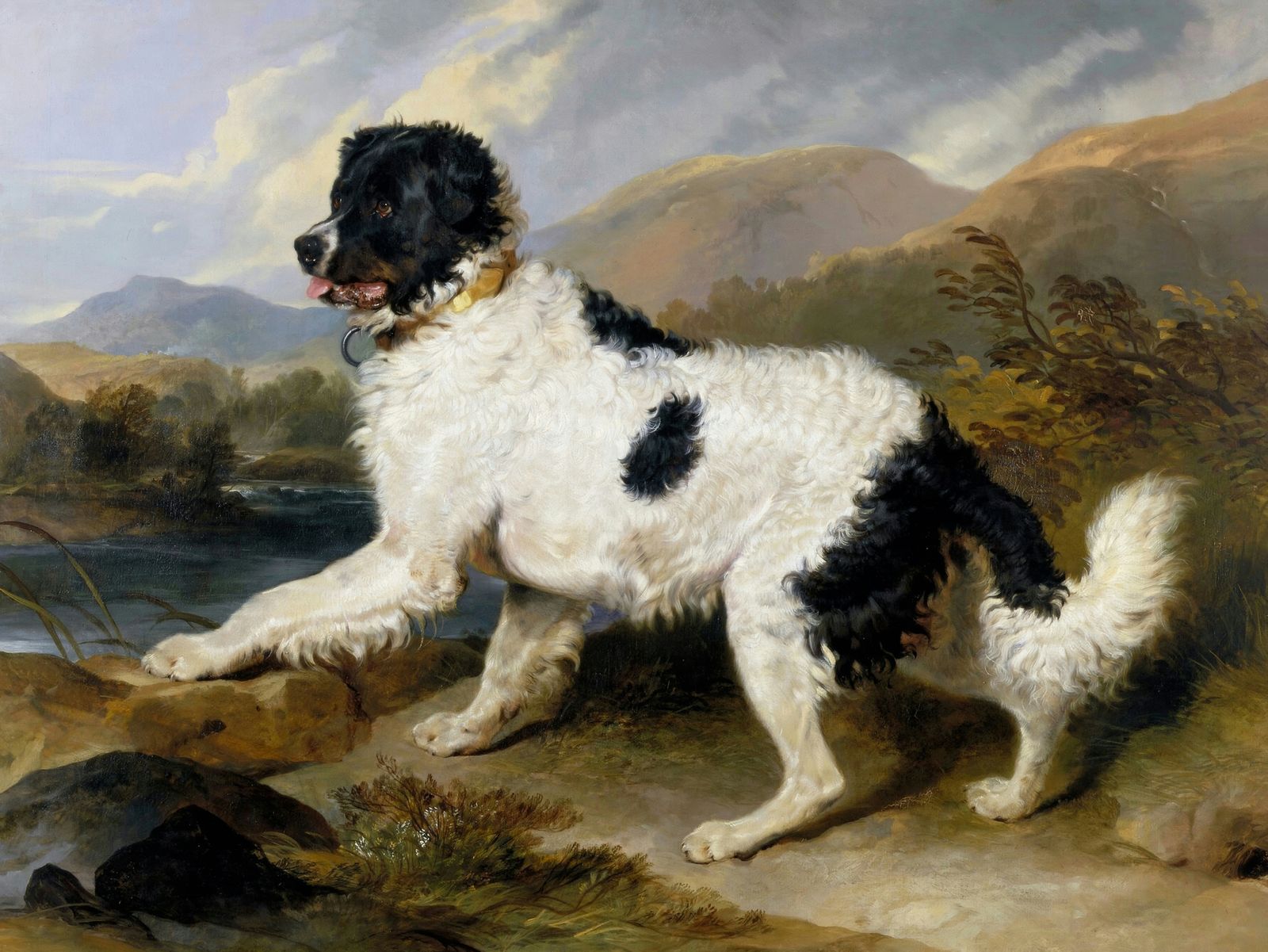
'Lion', a Newfoundland Dog · Edwin Landseer · 1824 · Victoria and Albert Museum, London
Landseer's Newfoundland is a different breed, so use it to judge scale and presence rather than to borrow an anatomy. A broad, mature retriever may suit a composition that gives the body room instead of reducing it to a head above a collar. Photograph from a little distance at eye level. This avoids the large nose and undersized hindquarters created by a steep angle.
Create a portrait in this style · Explore this artwork
6. Keep a sleeping portrait truthful
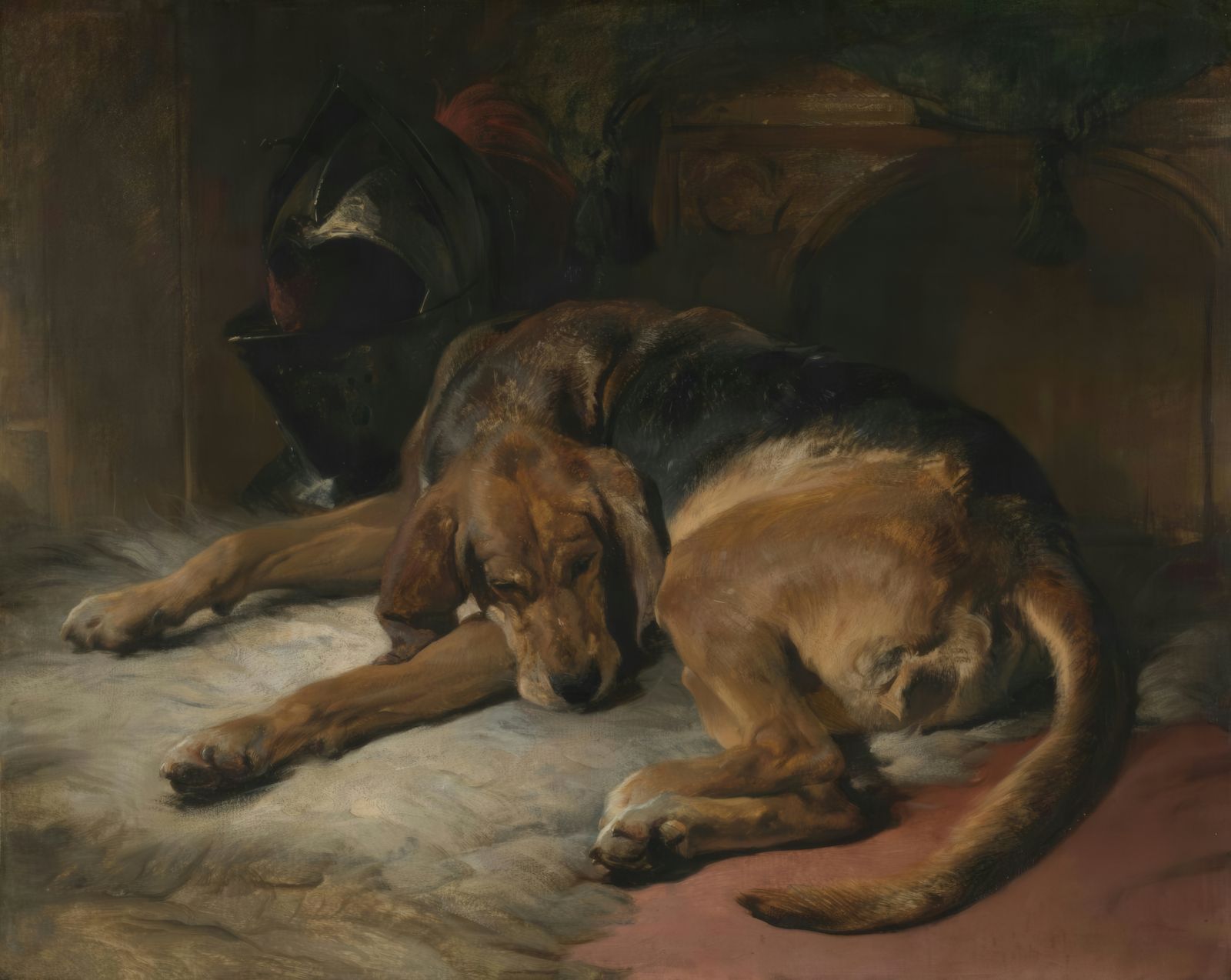
Sleeping Bloodhound · Edwin Landseer · 1835 · Tate, London
Sleep is a real part of a household's memory of a dog. Choose this direction only if the owner loves that quiet pose, and choose a reference in which the animal remains legible. For a golden coat, avoid a bright window that erases the lighter fur. An alert portrait and a resting portrait serve different feelings; neither is automatically more faithful to the dog.
Create a portrait in this style · Explore this artwork
7. Think carefully about small companions
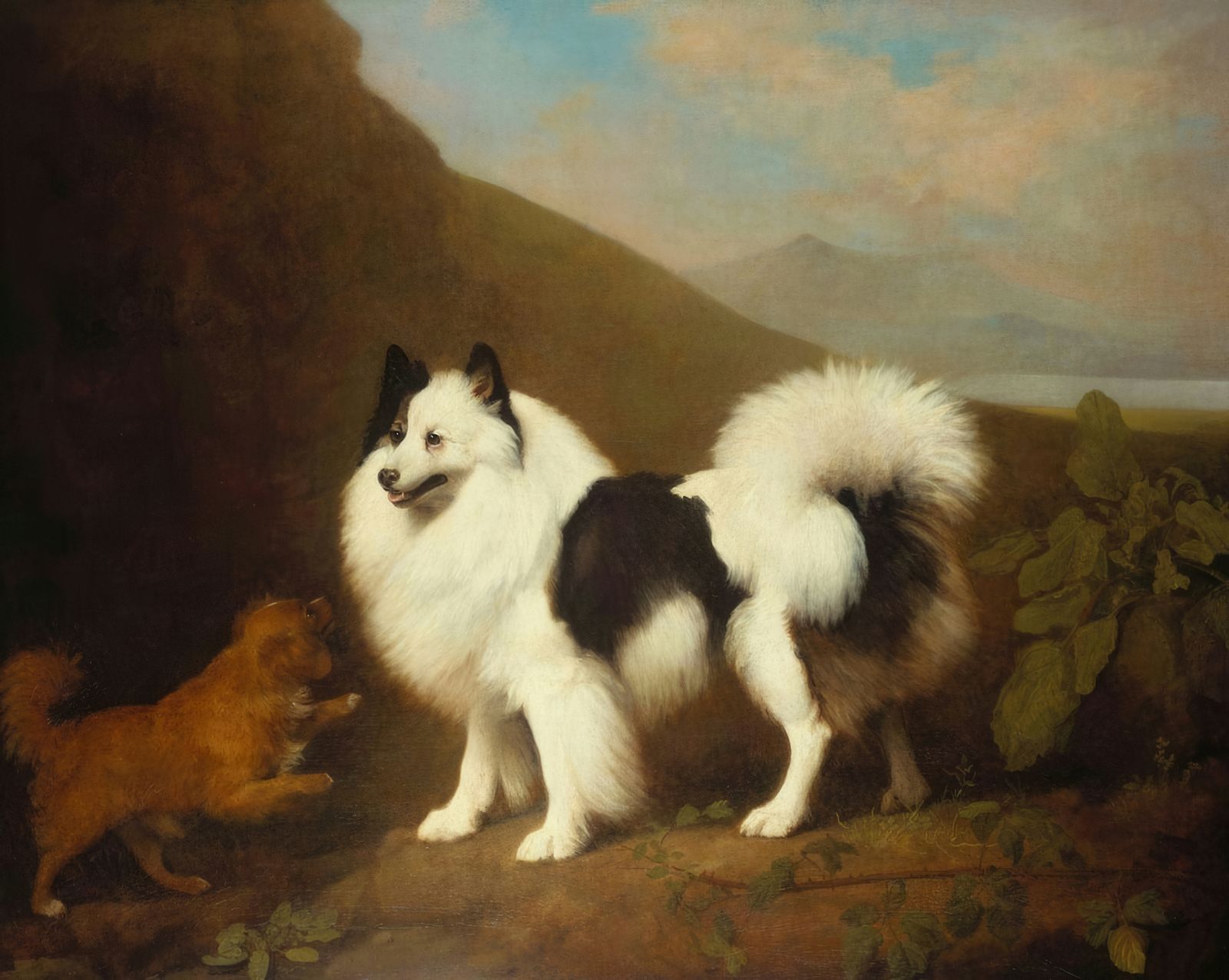
Fino and Tiny · George Stubbs · 1791 · Royal Collection
A picture containing two historical animals can help you notice how spacing changes a portrait. It does not establish that every Fable style accepts two pets. If your retriever has a smaller companion, check the chosen creation flow before uploading, and keep the dogs distinct in the source photograph. The useful lesson here is proportion: neither animal should disappear into the other's outline.
Create a portrait in this style · Explore this artwork
8. Protect the light parts of the coat
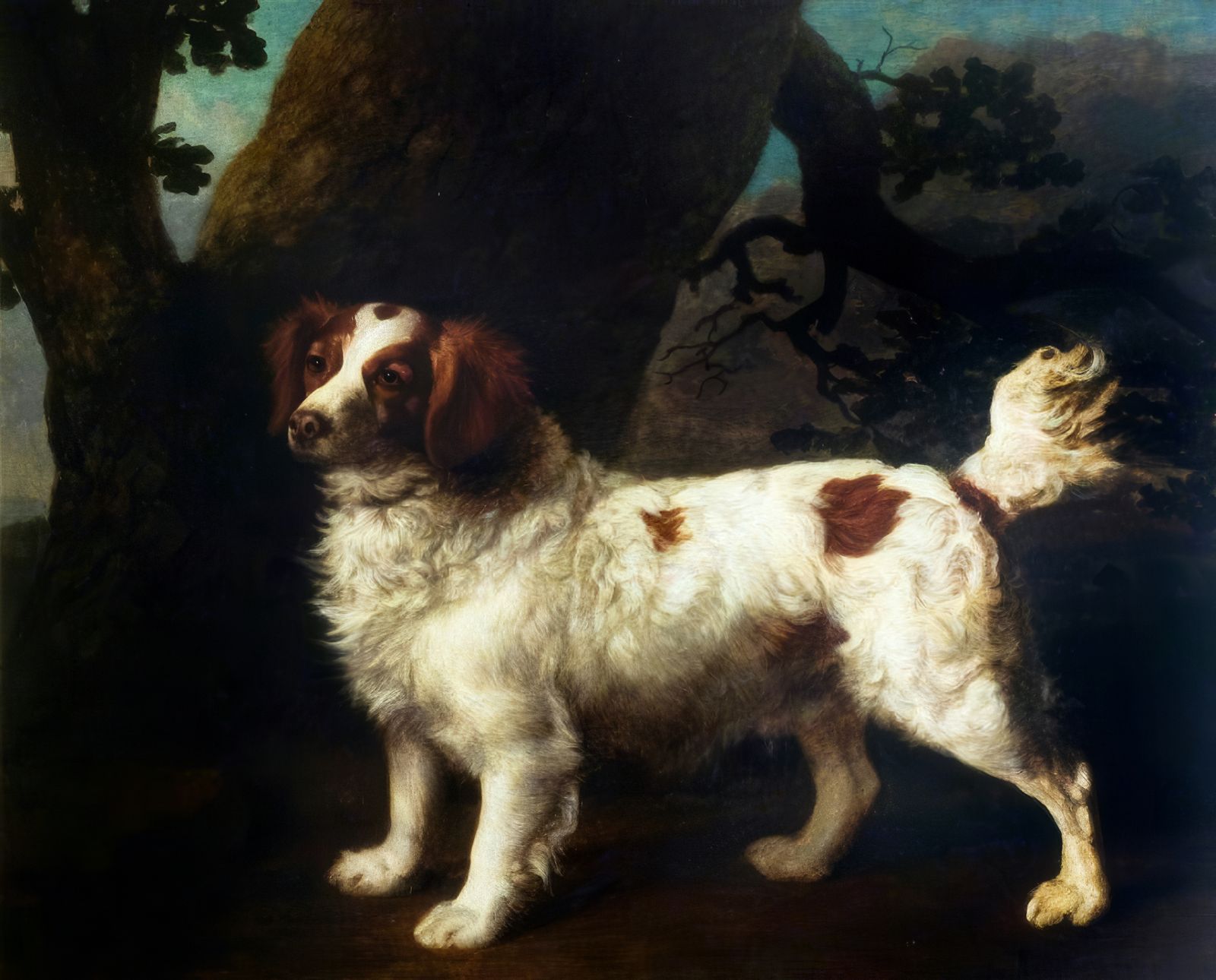
A Clumber Spaniel · George Stubbs · 1784 · Usher Gallery, Lincoln
A pale spaniel provides a useful comparison when looking at the lightest areas in your retriever's fur. Use soft daylight instead of a direct flash, and inspect the forehead, chest and ears for detail. The reference should retain the difference between cream and pure white. A warm portrait treatment can support those tones, but it cannot recover markings that the source photograph has lost.
Create a portrait in this style · Explore this artwork
9. Let the setting echo a real walk
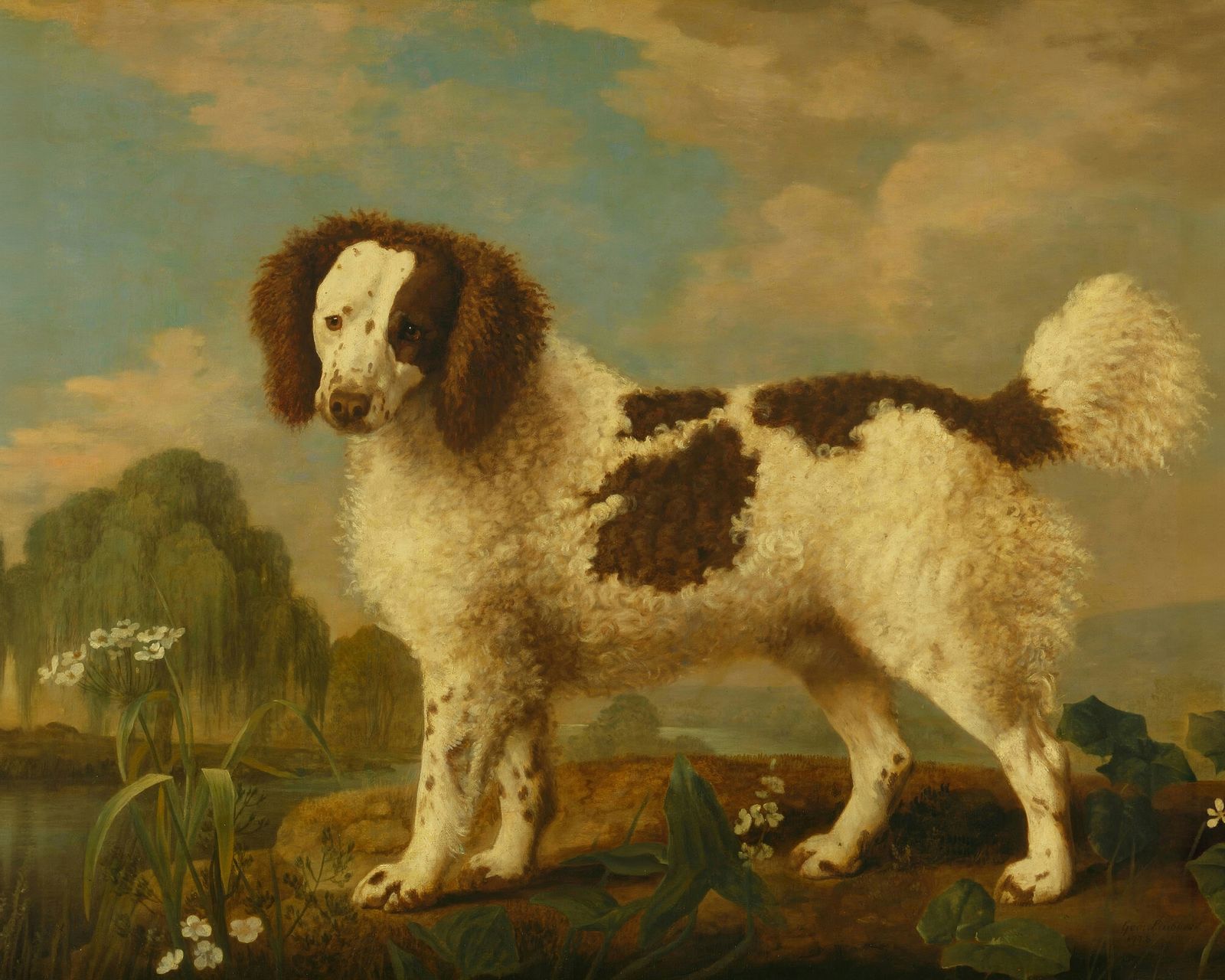
Brown and White Norfolk or Water Spaniel · George Stubbs · 1778 · Yale Center for British Art
For a dog whose happiest place is outdoors, consider a portrait treatment that leaves room for its surroundings. Select a photograph made during a calm pause rather than a fast sequence full of motion blur. Include the whole body if the setting will matter. The result should recall your own dog on a walk, not turn the animal into a generic sporting illustration.
Create a portrait in this style · Explore this artwork
10. Compare looseness before choosing texture
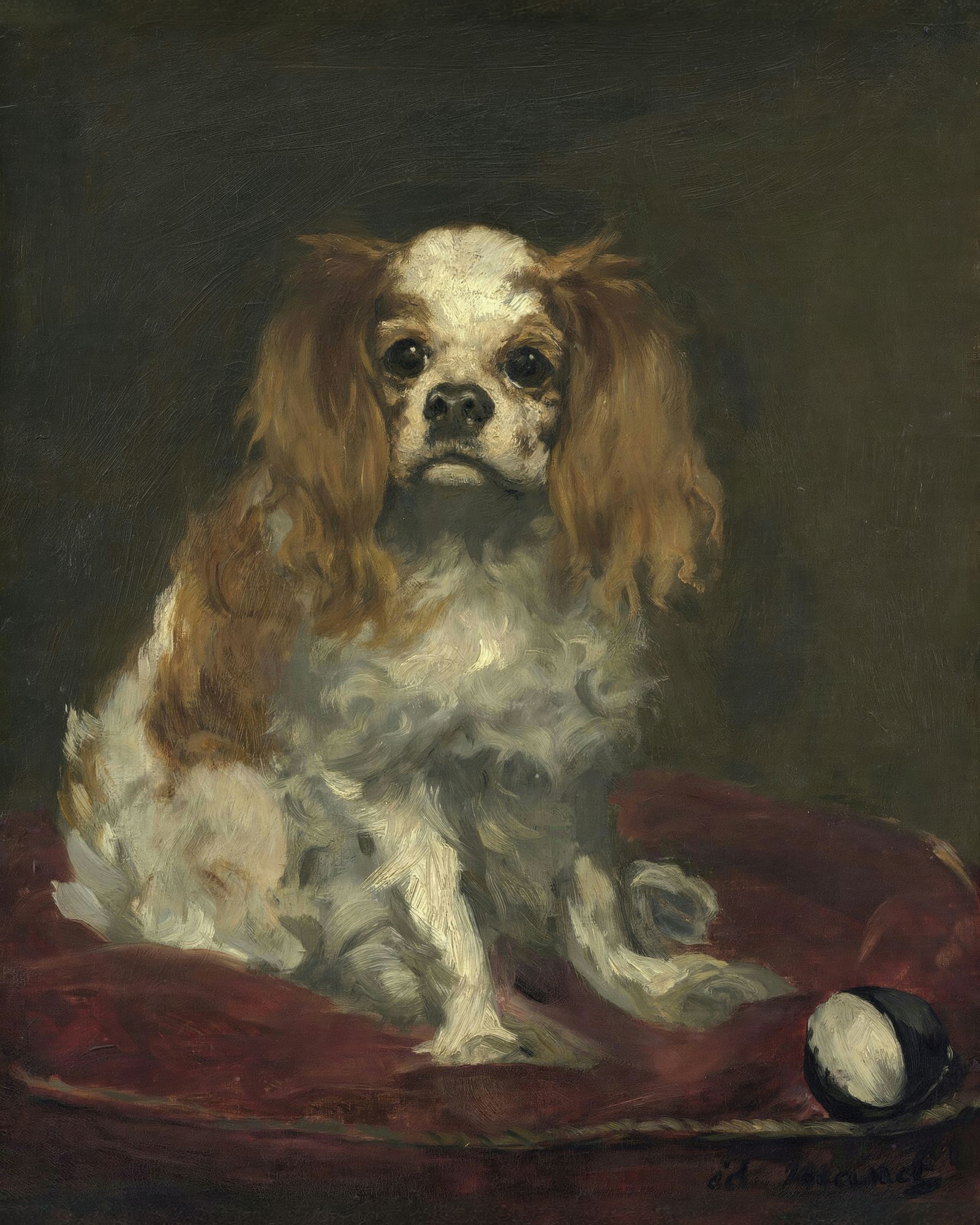
A King Charles Spaniel · Édouard Manet · c. 1866 · National Gallery of Art, Washington
Manet's canine picture offers a different point of comparison from a formal animal study. Ask how much detail you want to read from across the room, and how much you want to discover close up. If you prefer a looser treatment, begin with a reference that still records the eyes and mouth clearly. Expressive handling works best when the underlying likeness has useful information to work from.
Create a portrait in this style · Explore this artwork
Choose the reference before choosing the final format. Once you have found a treatment that feels like your retriever, open the style, review the portrait and then inspect the available print options, dimensions and current price in the ordering flow. A golden retriever wall art gift becomes more personal when you add the dog's real name and a brief note about the moment in the photo. Those details need not appear on the image itself. If you are choosing for someone else, let them decide which expression belongs on their wall.
- Are the historical dogs shown here golden retrievers?
- No. These are real historical canine works used to compare pose, composition and portrait treatment. Your own photograph supplies the golden retriever. The caption identifies each original work rather than relabelling its subject.
- What photograph works for a golden retriever portrait?
- Use a clear image at the dog’s eye level, preferably in soft daylight. Keep the eyes visible and preserve detail in pale fur. Include the full body when the chosen composition calls for it.
- Can I choose canvas for golden retriever wall art?
- Inspect the current print options on the chosen portrait’s ordering page. Availability, sizes and prices belong to that live flow. Judge the portrait at its proposed dimensions before deciding which surface suits your room.