Gothic art: medieval light and the later dark imagination
Separate the medieval style from a modern gothic mood, then look at sacred interiors, strange landscapes and ruins.
Gothic art does not simply mean dark art. The medieval style is closely associated with architecture that opened space to height and coloured light. A later taste for ruins, mystery and unsettling stories uses the word differently. Keeping those meanings apart helps you choose a picture for its actual history as well as for the atmosphere you find in it.
This story compares a small group of Fable's historic paintings. The nineteenth-century ruin at the opening is a later atmospheric reference, not a medieval Gothic object. The distinctions matter: a picture can belong in a dark reading room without belonging to the medieval period.
A ruin is a mood, not a date
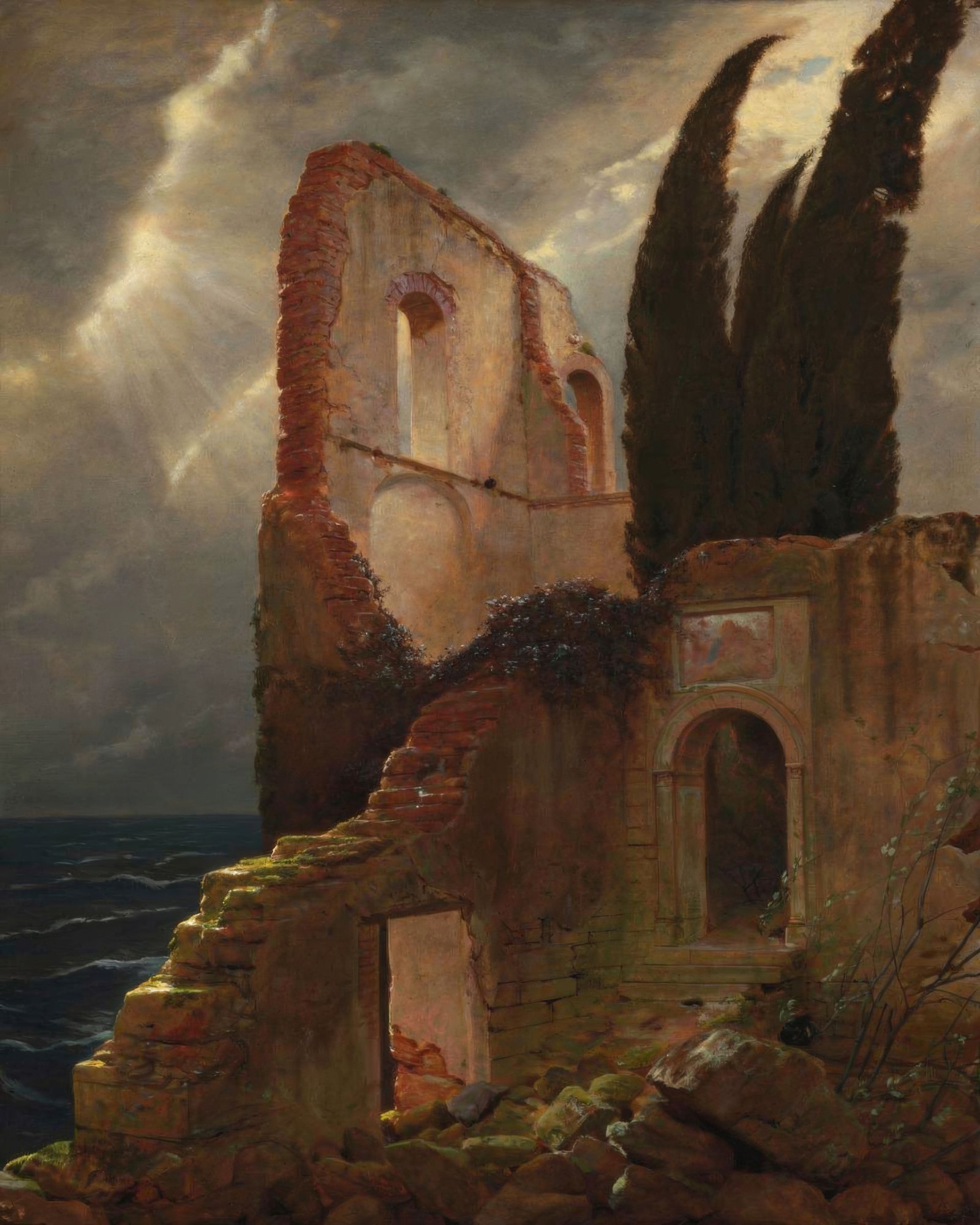
Ruin by the Sea · Arnold Böcklin · 1881 · Cleveland Museum of Art. Restored by Surrealium at Vaxholm Fortress, Sweden
Arnold Böcklin's Ruin by the Sea places broken architecture beside water and dark trees. The fragments make absence part of the picture. We can look at the contrast between solid masonry and open sky, or at the way the sea extends beyond the remains, without assigning the building an invented history.
The painting is useful here as an example of a later image that may appeal to someone searching for a gothic atmosphere. That is an interpretation of its effect, not a replacement for its date or attribution. When choosing a work, keep both kinds of description available: what it is and what you find in it. “A nineteenth-century ruin with a brooding setting” is clearer than calling it medieval simply because the architecture is old or the palette feels sombre.
Begin with the medieval meaning
The Metropolitan Museum of Art traces Gothic architecture to twelfth-century developments around Paris. Pointed arches, ribbed vaults and external supports helped builders create taller spaces with larger windows. The result could be an interior transformed by light rather than an environment defined by gloom. The architectural vocabulary also appeared in objects made on a much smaller scale.
That history changes the way the word is used in a picture search. A dark landscape is not automatically Gothic art, and a luminous religious object is not excluded because it lacks an ominous mood. The term names a historical field with regional and chronological variation. Use the Met's introduction to Gothic art as a starting point for that history, then read the record of the individual work you are considering. A broad label is useful only when it leads to more precise looking.
Read a sacred interior on its own terms
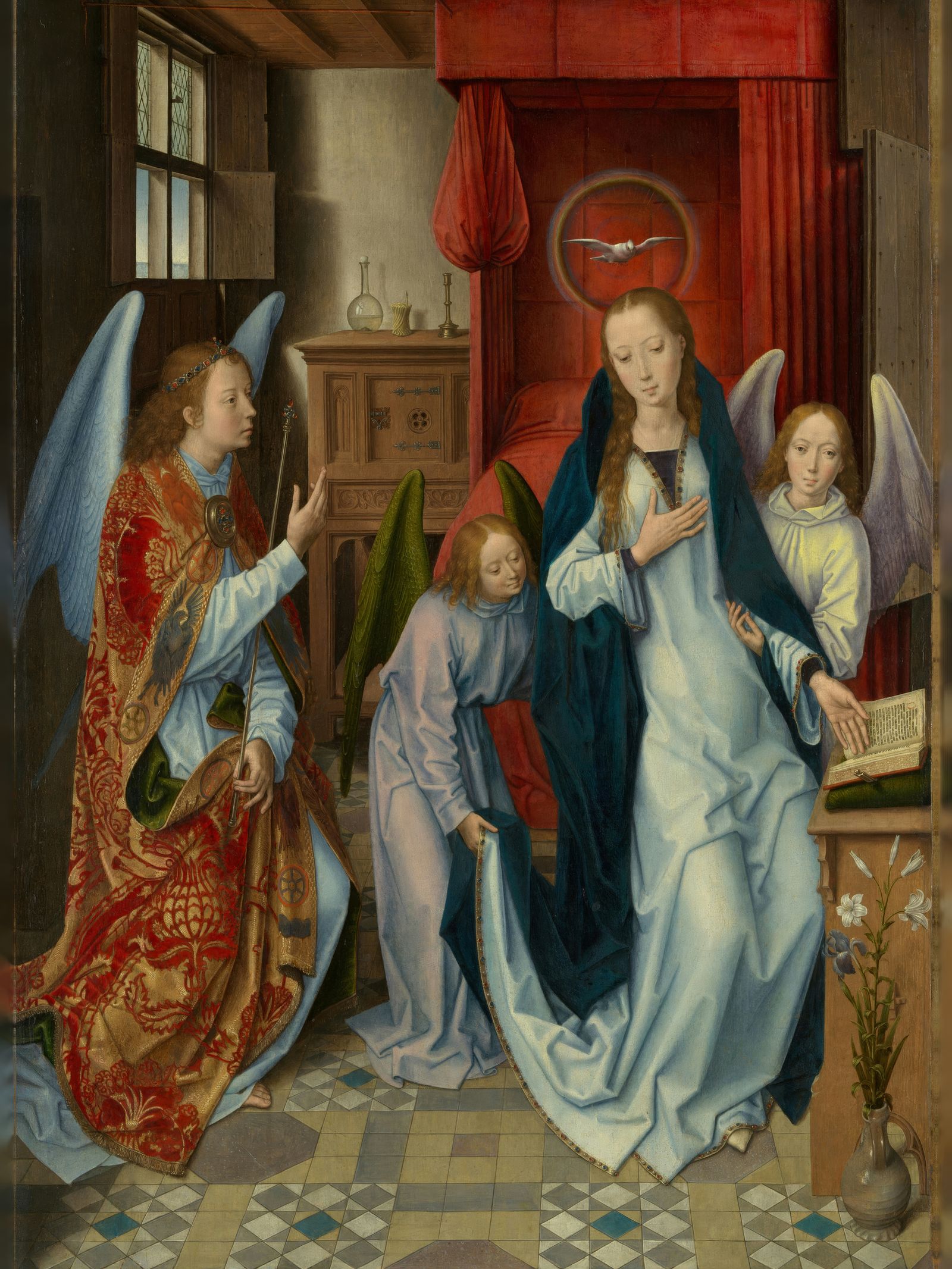
The Annunciation · Hans Memling · 1480–89 · The Metropolitan Museum of Art. Prepared for print by Surrealium at Vaxholm Fortress, Sweden
Hans Memling's Annunciation places sacred figures within an articulated interior. The room, furnishings and gestures belong to the narrative rather than serving as a generic old-fashioned backdrop. The picture is a late fifteenth-century reference near the period boundaries often encountered in searches for medieval and Renaissance art.
Look at how the figures occupy the room and how the architecture establishes depth. The work offers a different experience from Böcklin's empty ruin: the interior is inhabited by a specific sacred event. It should not be described merely as a mysterious chamber. If you are choosing art for a room, consider whether you want that religious subject as well as the visual qualities. A picture's iconography remains part of it even when its colours happen to suit a wall or a collection.
Look for natural observation as well as ornament
The Victoria and Albert Museum's introduction emphasises the Gothic style's interest in recognisable natural forms and expressive figures. Elaborate surfaces and careful observation are not opposites. A folded garment, a leaf or a small change in posture can make an image emotionally accessible while also contributing to its decorative structure.
This is a useful way to look beyond a shorthand of pointed arches and darkness. Ask what has been closely observed in the particular picture. Does a gesture connect two figures? Does a plant have an identifiable form? Keep the answer grounded in what you can see and what the source record supports. The V&A's account of the Gothic style provides historical context; your response to an individual work can remain more personal, provided it is not presented as a universal meaning.
Allow a strange landscape to remain specific
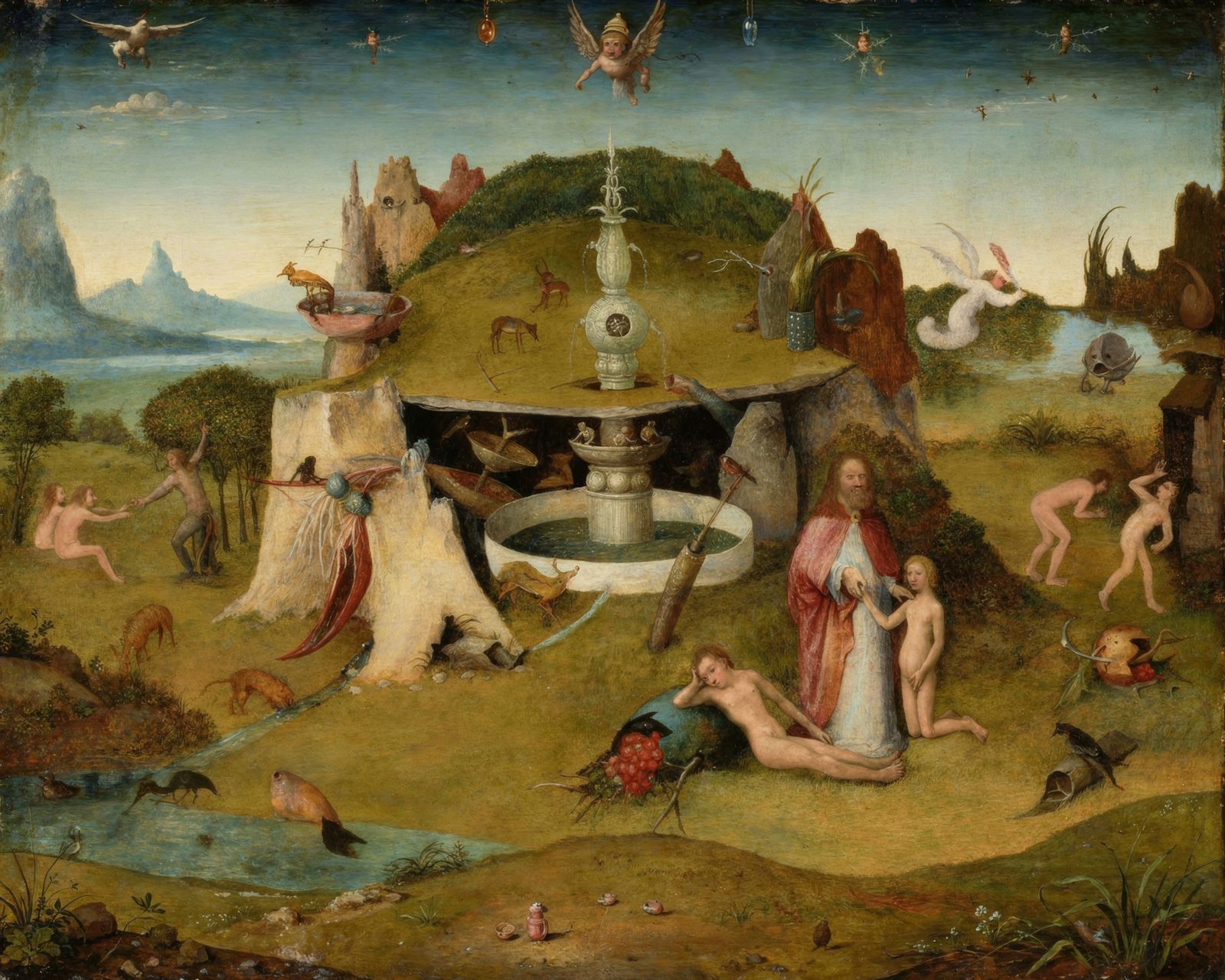
The Garden of Paradise · Workshop of Hieronymus Bosch · c. 1500–c. 1520 · Art Institute of Chicago. Restored by Surrealium at Vaxholm Fortress, Sweden
The Garden of Paradise associated with Bosch's workshop presents an extraordinary landscape of forms, creatures and small figures. Its strangeness is organised within a particular religious and pictorial world. It should not become a convenient illustration of every modern idea of the uncanny.
Begin by looking across the whole image. Notice how the eye moves between foreground activity, water, vegetation and the distant structures. Then choose one area for closer attention. This approach preserves the relationship between detail and setting. A crop of one unusual creature may be striking, but it can make the original work seem to be only a collection of oddities. If you choose such a picture as a print, allow enough viewing space for both the broad arrangement and the small incidents that reward a second look.
Distinguish period, subject and atmosphere
Three descriptions can coexist without becoming interchangeable. The period tells you when a work was made. The subject identifies what it represents. The atmosphere describes an effect you experience while looking. A nineteenth-century painting of an ancient myth can feel unsettling, but neither its subject nor that feeling makes it a medieval object.
Use all three descriptions when comparing works. This prevents a collection from being built around an inaccurate label and can make the choices more varied. You might prefer a quiet ruin to a crowded narrative, or a luminous sacred interior to a dark landscape. Those preferences are legitimate without requiring every picture to share the same historical category. The aim is to find an image you want to keep looking at, with a caption that remains accurate after the first impression has faded.
Read the narrative before choosing the drama
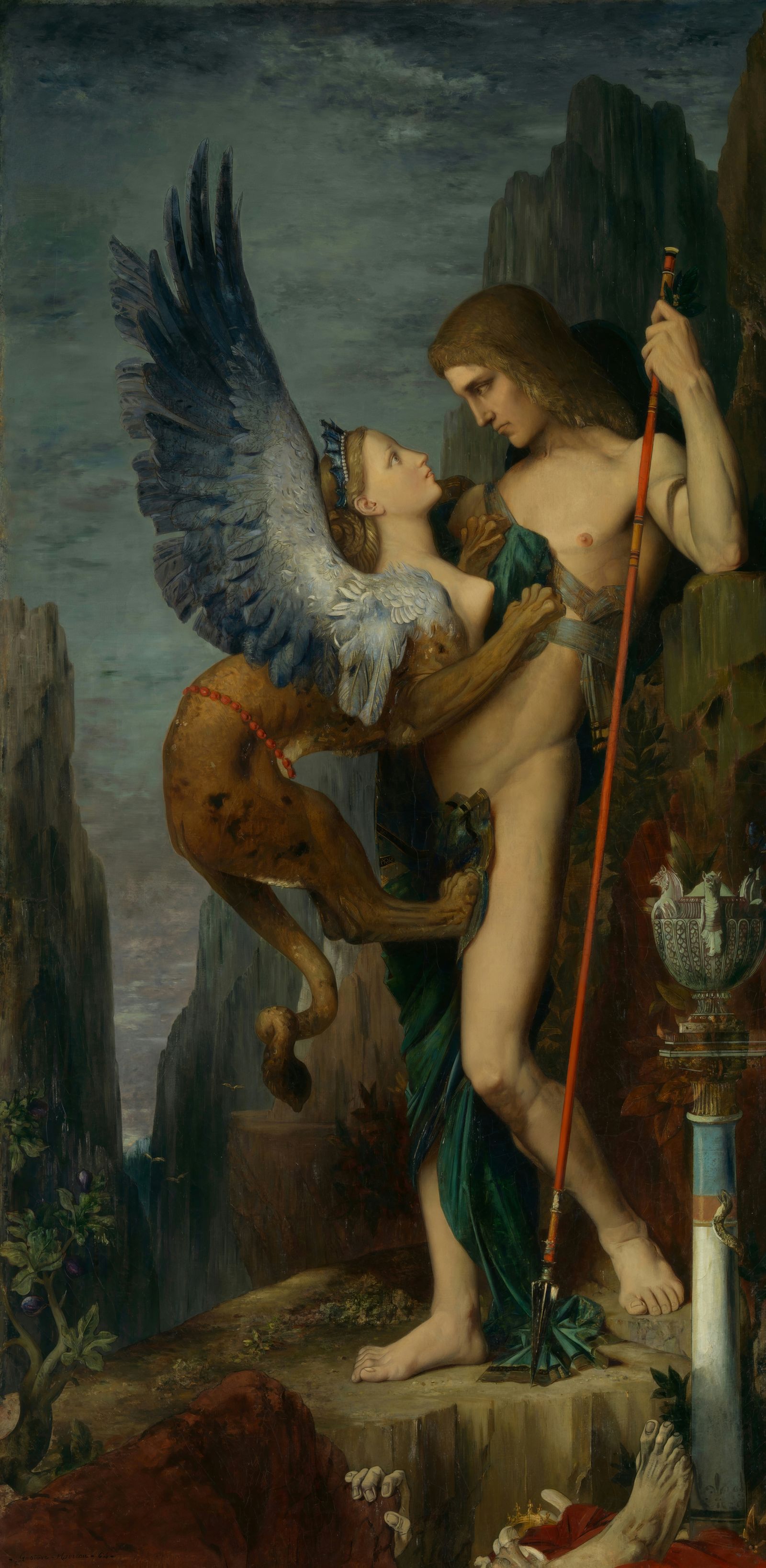
Oedipus and the Sphinx · Gustave Moreau · 1864 · The Metropolitan Museum of Art. Restored by Surrealium at Vaxholm Fortress, Sweden
Gustave Moreau's Oedipus and the Sphinx brings a close encounter between human and hybrid creature into a rocky setting. The subject is the ancient myth named in the title, interpreted by a nineteenth-century artist. Its tension is visible in the proximity of the figures and the creature's hold on the man's body.
This can appeal to a viewer drawn to symbolic or unsettling imagery, but it should not be presented as medieval Gothic painting. Read the title and date alongside your reaction to the colour and composition. Consider whether you want the story as well as the atmosphere in your room. A picture chosen only because its palette is dramatic may reveal a narrative you did not intend to live with. Informed selection allows the meaning to contribute to the pleasure of the work.
Continue with dark art for a reading room, moody wall art: 12 dark paintings for a dramatic room, symbolism art: 16 paintings of dreams and visions, the full catalogue record for Ruin by the Sea, and the portrait direction based on Oedipus and the Sphinx.
Explore Masterworks with a more precise brief than “something gothic”: perhaps a ruin, a sacred interior or a strange narrative landscape. Read the individual record, keep the painting whole and choose a work whose history is as welcome as its atmosphere.
- Is Gothic art always dark?
- No. Medieval Gothic architecture made extensive use of height and coloured light. The word’s later association with ruins, mystery and darkness is a different use. A work can have a gothic atmosphere without belonging to the medieval Gothic period.
- When did the Gothic style begin?
- The museum introductions cited here locate its architectural emergence in twelfth-century northern France, with later development and variation across Europe. Period labels are not identical everywhere, so the date and record of each object remain important.
- Are Böcklin and Moreau medieval Gothic artists?
- No. The works shown here are nineteenth-century paintings used to discuss a later taste for ruins and symbolic tension. Their actual artists, subjects and dates remain in the captions; they are not being relabelled as medieval objects.
- How should I choose a gothic-looking art print?
- Separate the historical period, the subject and the atmosphere you enjoy. Read the title and source record, then view the whole composition. Choose a narrative or setting you want to live with, not only a dark palette.