An impressionist portrait, seen through ten real works
impressionist portrait: Morisot and Renoir as guides to light, likeness and choosing a portrait from your own photo.
An impressionist portrait is often chosen for a feeling of light and immediacy: a person seen in the middle of a day rather than placed outside time. It still needs a recognisable subject. If you want a Fable portrait from your own photograph, begin with a clear face and a natural pose, then compare how much looseness you enjoy in a real historical work.
The ten pictures here are works by Berthe Morisot and Renoir from the catalogue. They are historical comparisons, not claims that each one is the source recipe for Mountain Bloom. Their different subjects help separate a portrait's mood from its setting. You can open a masterwork to explore it as a print, or take the closing link to Mountain Bloom for your own impressionist portrait treatment. Each route makes clear what you are choosing.
1. A person with room to breathe
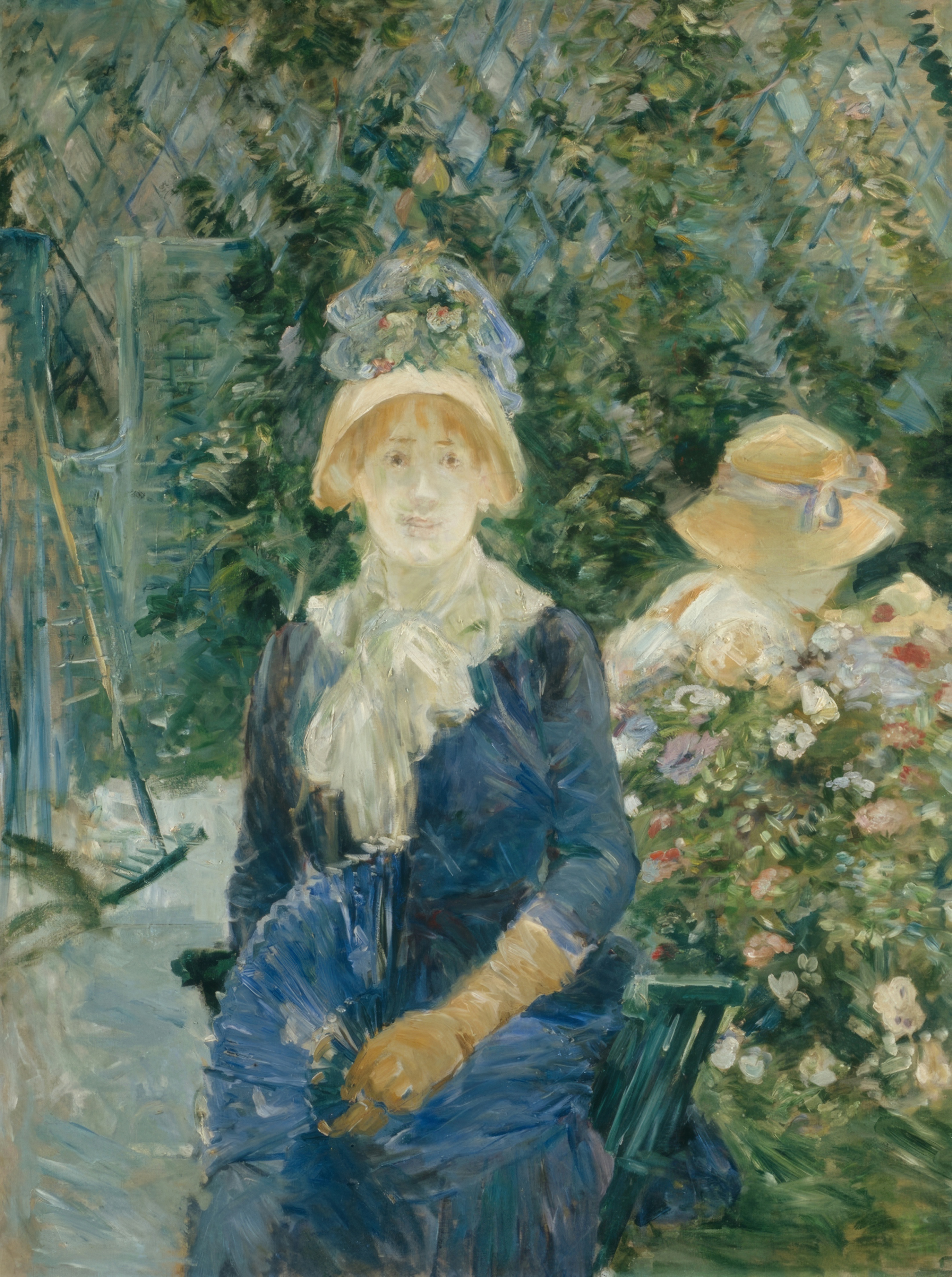
Woman in a Garden · Berthe Morisot · 1882–83 · Art Institute of Chicago
Morisot's garden title offers a useful starting point: a figure can belong to a place without being swallowed by it. When choosing your own reference, look for a person whose face remains clear even when the surroundings matter. An impressionist treatment does not make an indistinct source photograph more informative. For a print, consider whether you want the whole garden mood or a more concentrated human presence.
2. The ordinary interior as a portrait setting
In the Dining Room · Berthe Morisot · 1886 · National Gallery of Art, Washington
A dining room is a reminder that a portrait can begin in everyday life. You do not need a studio background to make a person feel worth looking at. Choose a photo with even light across the face and a comfortable expression. If you are considering this historical work for the wall, inspect its complete composition and dimensions before deciding whether its domestic scale suits your room.
3. A private moment without a formal pose
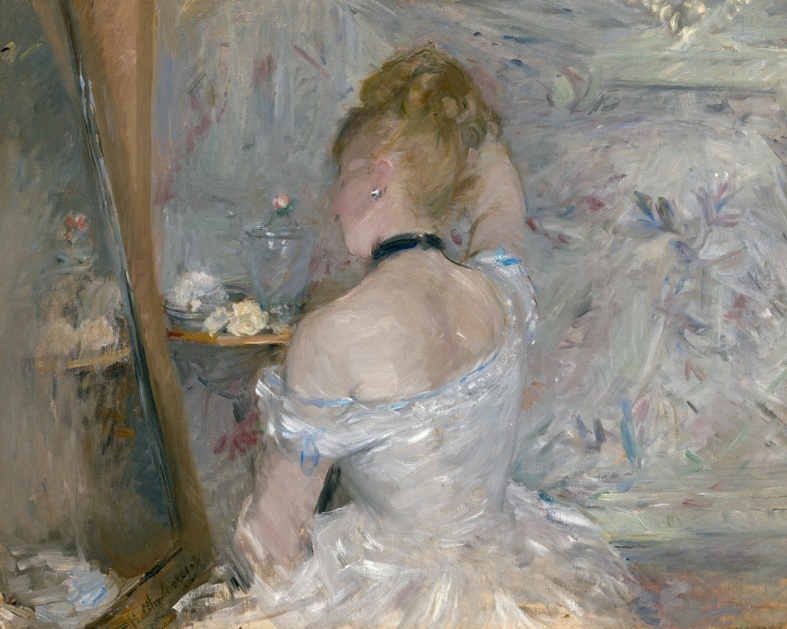
Woman at Her Toilette · Berthe Morisot · 1875–80 · Art Institute of Chicago
A toilette subject prompts a practical distinction between an image that is beautiful and one a person wants publicly displayed. Ask before using a private photograph as a gift. A portrait's informality should feel welcome to its subject. This masterwork offers a point of comparison for an intimate setting; your own image can keep the same relaxed spirit while using an entirely different, comfortable moment.
4. A portrait with a companion
Julie Manet · Pierre-Auguste Renoir · 1887 · Musée d'Orsay, Paris
Julie Manet also belongs to the history of people pictured with animals. It helps you consider whether a companion is central to your own image or merely present in the photograph. Check the selected Fable style's subject limits before adding a pet. If the animal matters as much as the person, a dedicated pet-and-owner route may serve the photograph more clearly than a general single-person portrait.
5. Keep the light clothing legible
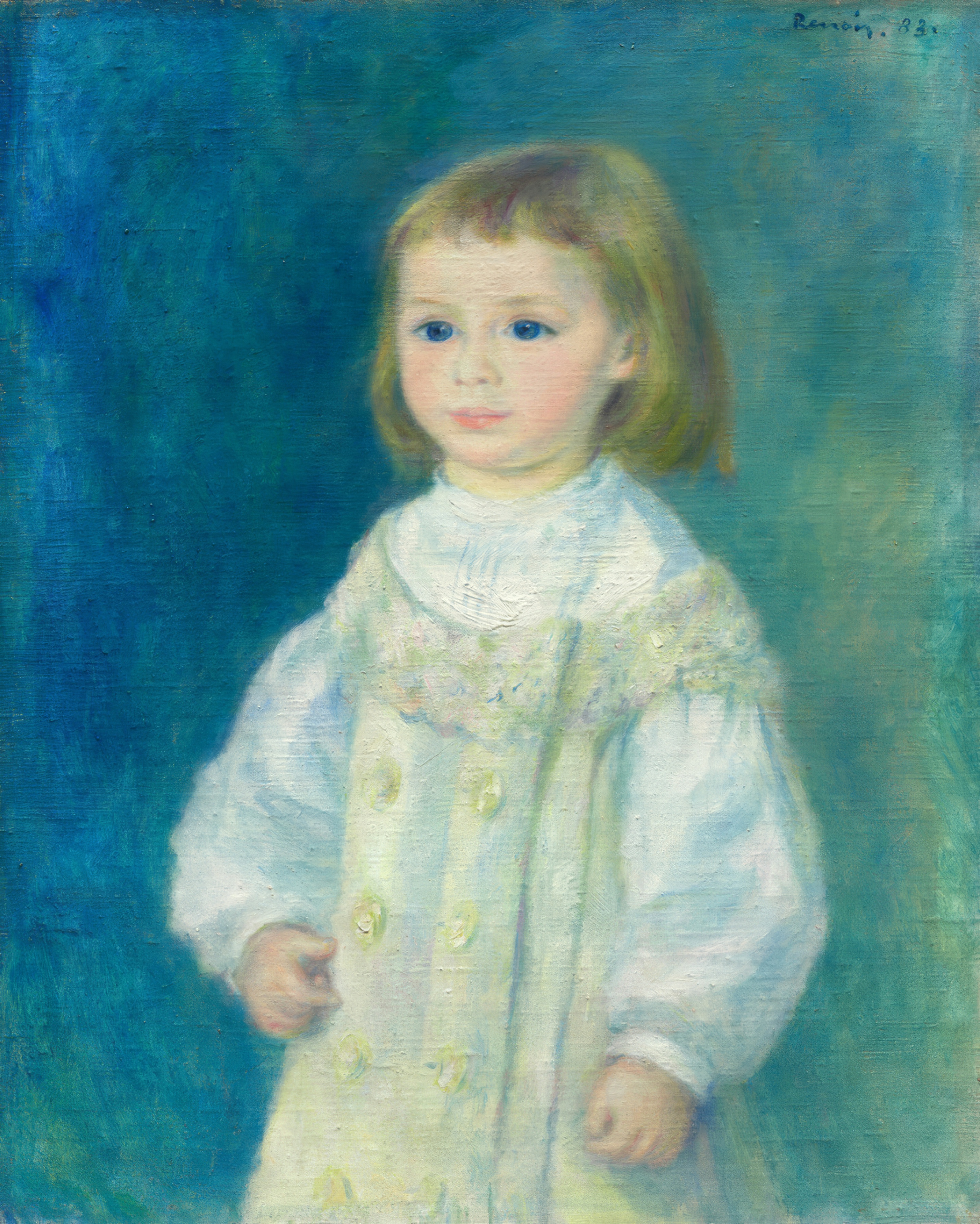
Lucie Berard (Child in White) · Pierre-Auguste Renoir · 1883 · Art Institute of Chicago
The title Child in White directs attention to a common reference-photo problem: bright clothes can lose detail before the face does. Choose a source with information in both. A soft historical treatment may leave edges loose, but it should not be confused with a badly exposed image. When buying the print, inspect how the complete work reads against the wall colour you have in mind.
6. Give a young sitter a natural expression
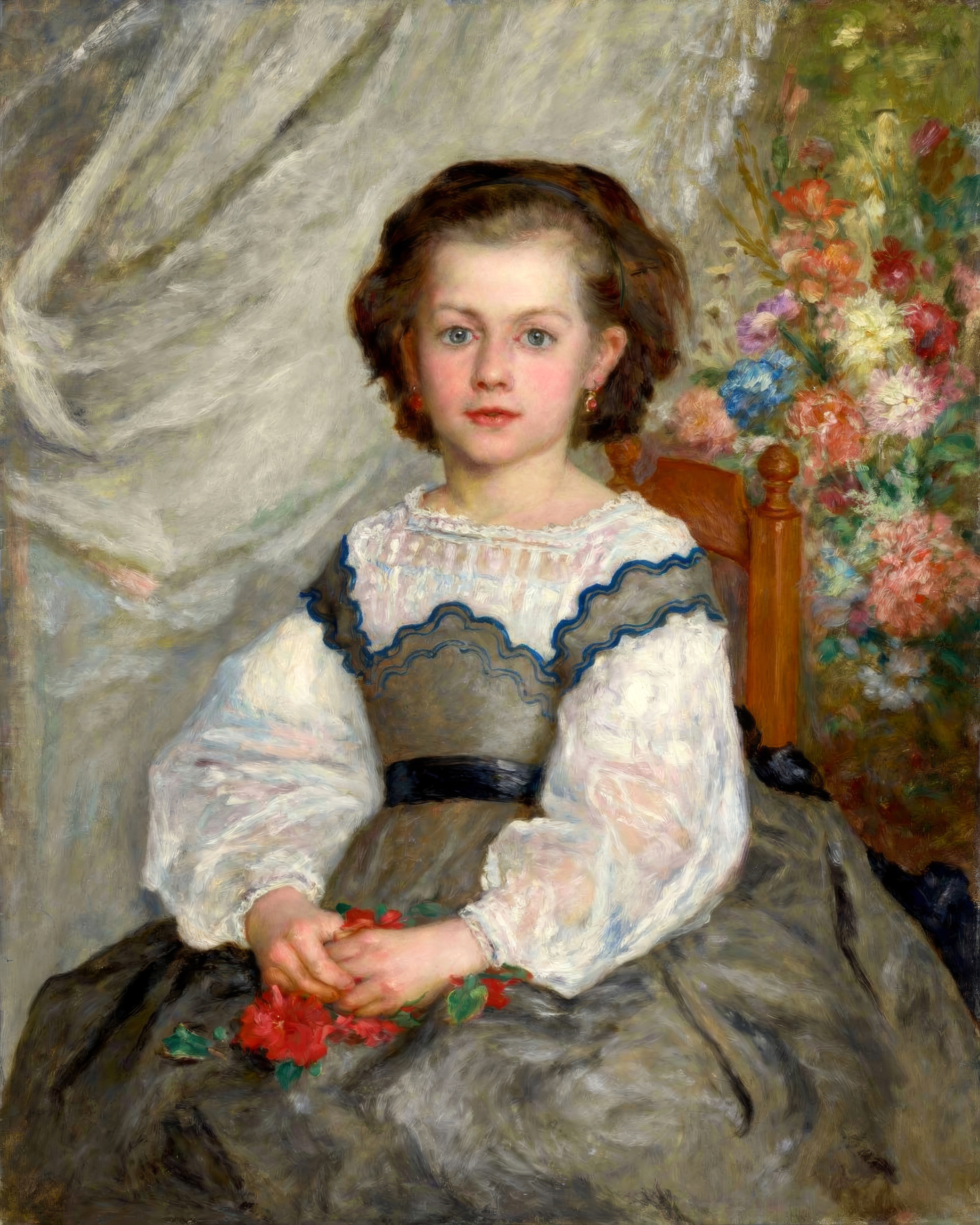
Romaine Lacaux · Pierre-Auguste Renoir · 1864 · Cleveland Museum of Art
A child portrait does not need an adult's idea of grandeur. Think about the expression the family recognises, and choose a clear, recent photograph rather than asking for a long posed session. This named portrait is a historical comparison for attending to one sitter. A Fable portrait should use the child's own reference, with the family's consent and an understanding of how the image will be displayed.
7. Let a small personal detail carry the image
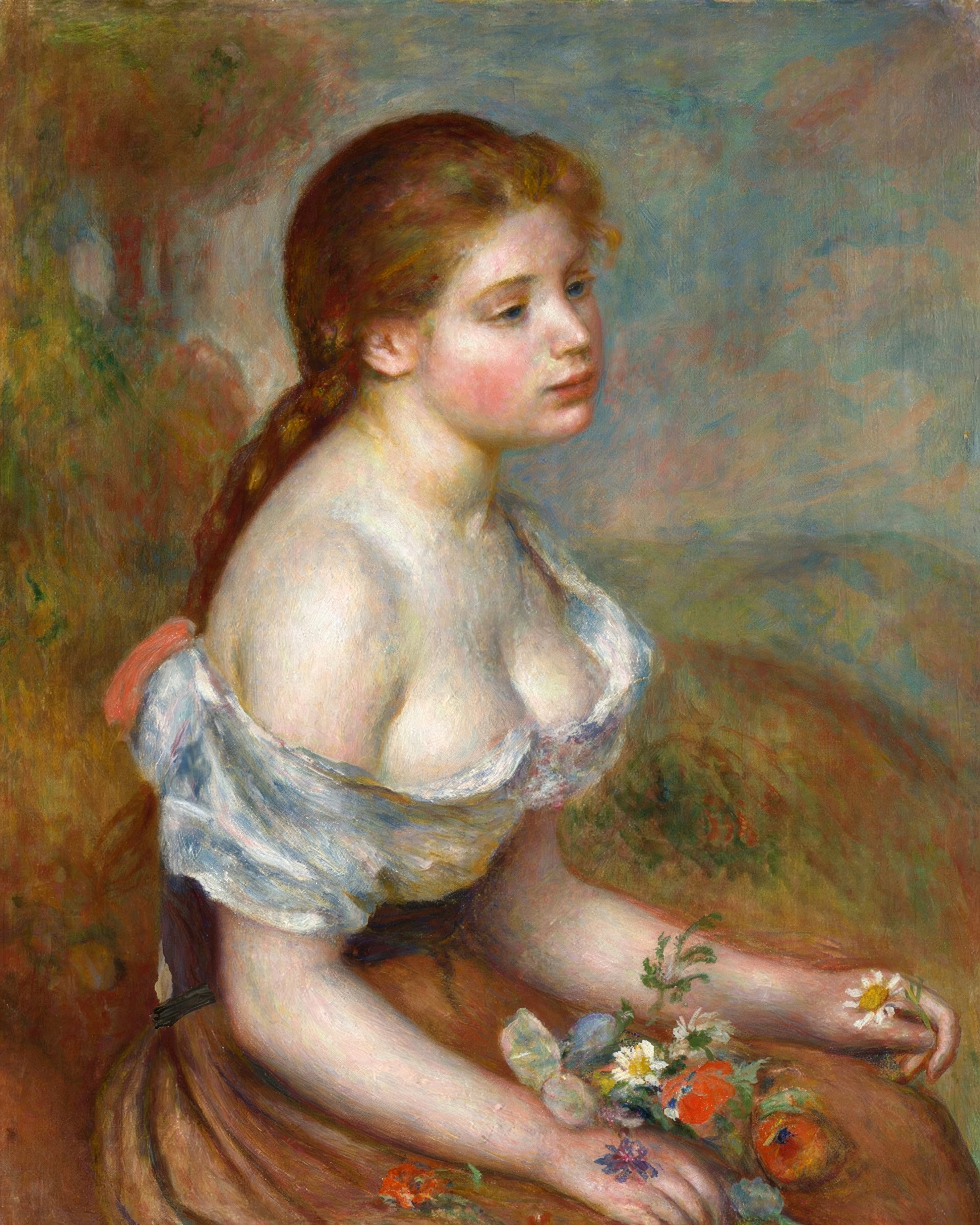
A Young Girl with Daisies · Auguste Renoir · 1889 · The Metropolitan Museum of Art
The daisies named in this work suggest how little a portrait may need around its sitter. For your own photograph, a familiar object can be meaningful if it does not obscure the face or hands. Do not add props simply to make the image look artistic. A useful portrait reference records something the person actually does or likes, with the human subject remaining the centre of attention.
8. Choose outdoor light with care
Nini in the Garden · Pierre-Auguste Renoir · 1876 · The Metropolitan Museum of Art
A garden photograph can produce a relaxed portrait, but strong sun and patches of deep shade can divide a face. Look for soft light before choosing an outdoor treatment. The historical picture is useful as a mood comparison, not an instruction to reproduce its exact location. For a print, consider the relationship between the image's overall palette and the natural light in the room where it will hang.
9. Plan a family composition around the actual group
Madame Charpentier and Her Children · Auguste Renoir · 1878 · The Metropolitan Museum of Art
A family portrait needs more than several clear faces: it needs the figures to make sense together. Start with a photograph where the intended subjects are visible and their relationships feel natural. Check the chosen creation route's subject guidance before uploading. Renoir's named group is a historical work you can explore as a print, and a reminder to give each family member enough space to remain identifiable.
10. Recognise when a scene matters more than a likeness
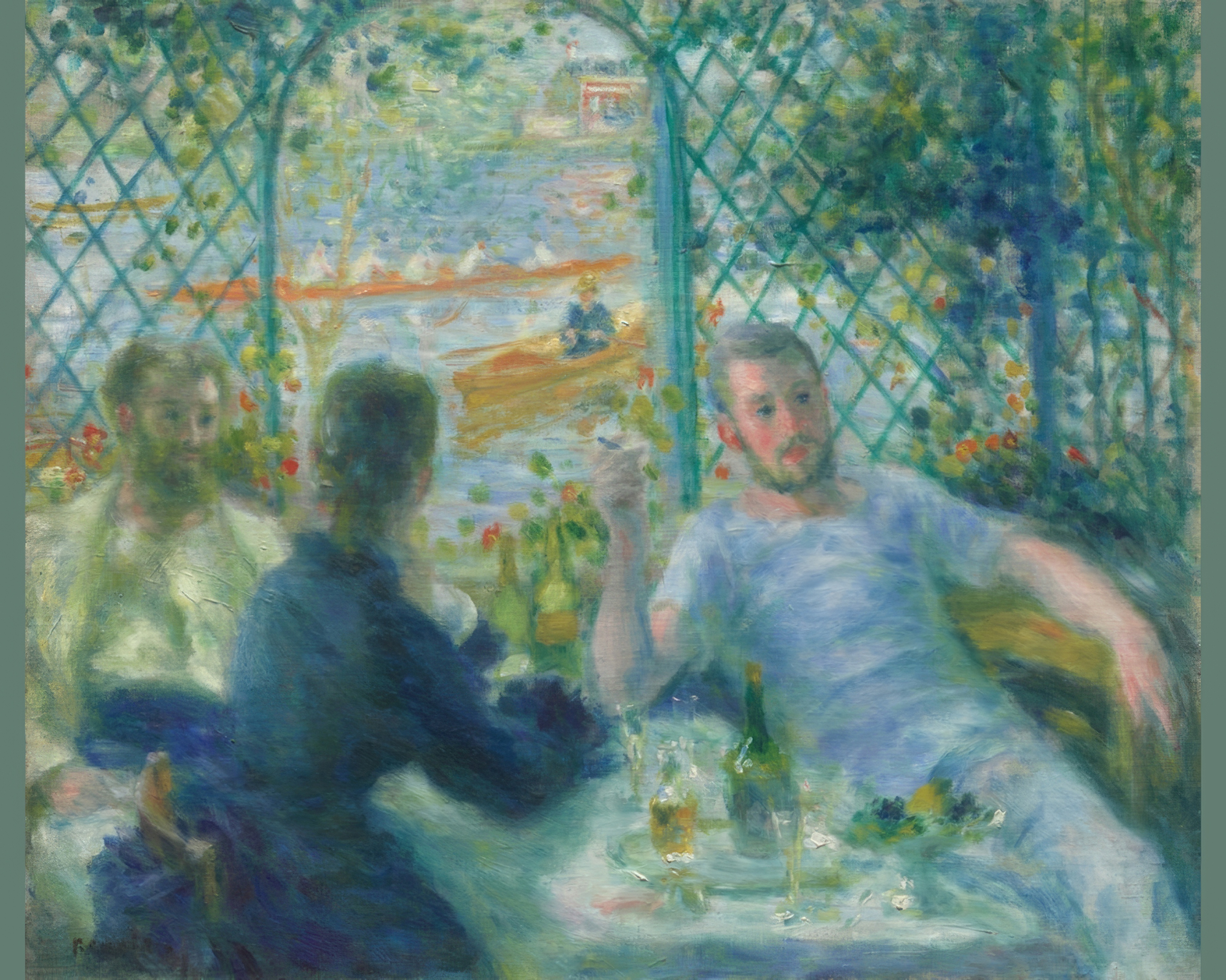
Lunch at the Restaurant Fournaise (The Rowers' Lunch) · Pierre-Auguste Renoir · 1875 · Art Institute of Chicago
A shared meal can be an occasion to remember even when no individual face dominates. Decide whether you want a portrait of one person or an image of a social moment before choosing the style. That distinction changes what your source photograph needs to show. A busy, distant group snapshot may work as a memory in an album while offering too little detail for a recognisable custom portrait.
Choose an impressionist portrait treatment because you like its balance of light, colour and human presence. Mountain Bloom is the Fable route linked here; open it to inspect its current presentation and photo guidance. If one of the historical originals is what you want on the wall, follow that work's own page instead and inspect its print options. Keep those decisions separate in your mind: one begins with your photograph, the other with a catalogue work. In both cases, review the image at the intended size before placing an order.