The major arcana: a visual guide to the twenty-two cards
The major arcana are twenty-two symbolic images whose names and appearances change across decks. Learn to look before reaching for a meaning.
The major arcana are the twenty-two named cards that many readers distinguish from the four suits of a tarot deck. Their pictures can seem familiar even before you know their titles: a traveller, a ruler, a turning wheel, a tower, a star. Familiarity is not the same as a single fixed meaning. The most useful first step is to look at the particular card in front of you.
This guide uses historical cards as visual references, principally Jean-Pierre Payen's Marseille deck held in Yale's Cary Collection. Tarot is a symbolic tradition for reflection, not a way to establish facts about the future. The interpretations below are possibilities to think with, rather than predictions or instructions about what you must do.
You can read the sequence as a set of related questions. Where do you begin? What do you know? What holds power over you? What would balance, change or completion mean in the situation you are considering?
Start with the picture, then the deck
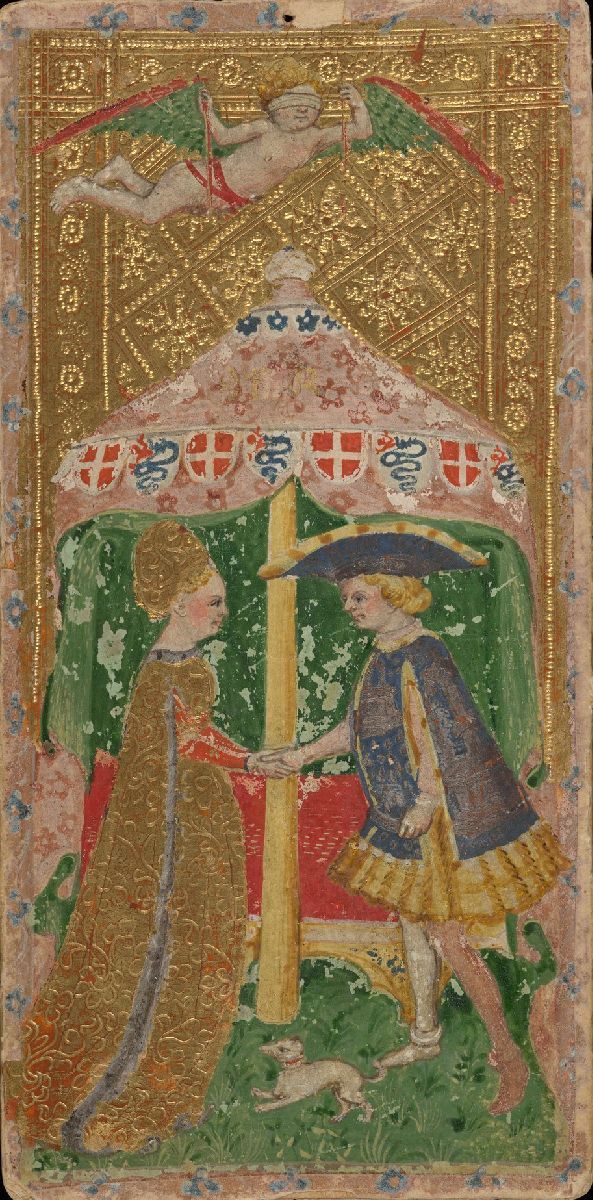
Love · Visconti di Modrone tarot, Milan, 1442–1447 · Cary Collection of Playing Cards (PLAYING CARDS GEN965), Beinecke Rare Book and Manuscript Library, Yale University
A card's title is a useful label, but it should not replace the image. Spend a moment noticing the figures, objects and relationships before consulting a list of major arcana meanings. Distinguish what you can actually see from the associations you bring to it.
Decks differ. The Marseille tradition, the Visconti-Sforza cards, the Cary-Yale group, the Sola Busca and Rider-Waite-Smith do not share one identical visual system. Names, numbering and iconography can vary. The examples here use original Marseille and Cary-Yale cards held at Yale. They provide a concrete place to begin, with the holding source retained in each caption, while the other decks deserve their own close reading.
The Fool and the Magician: beginning and attention
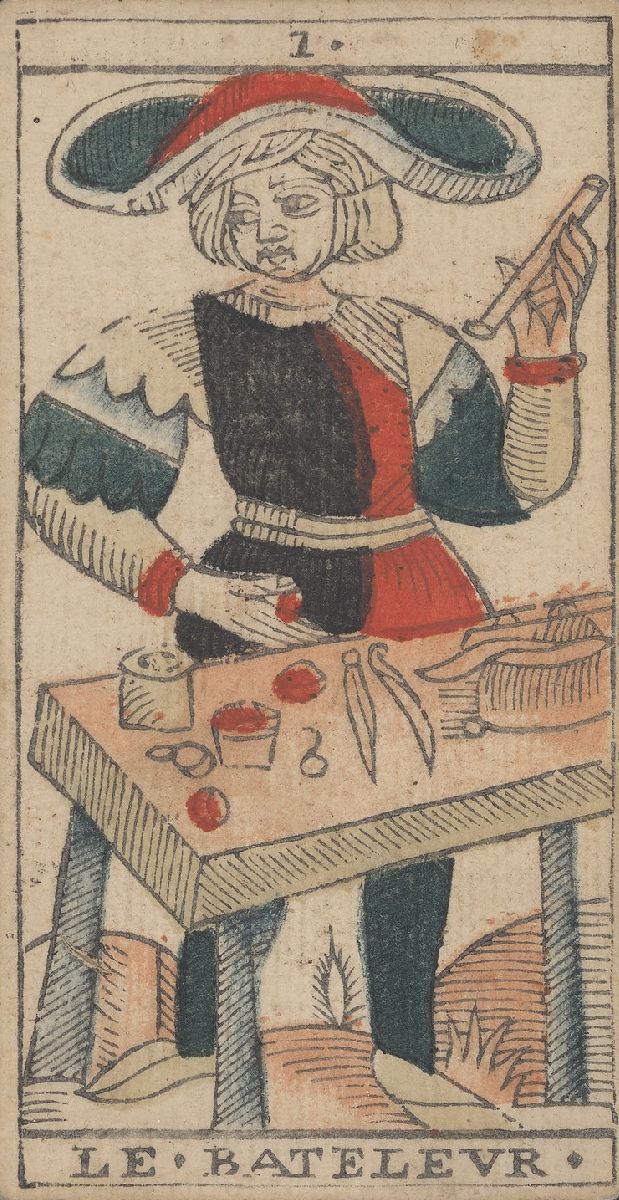
The Magician · Jean-Pierre Payen, Tarot de Marseille, blocks dated 1713 · Cary Collection of Playing Cards (FRA166), Beinecke Rare Book and Manuscript Library, Yale University
The Fool can be approached as a question about entering something before you know all its terms. That need not mean being foolish or being guaranteed an adventure. Ask what you are willing to try, and what practical information you still need.
The Magician can turn attention towards agency: what is already available, and what can you do with it? Do not use either card to dismiss preparation. A reflective reading might place curiosity beside competence, inviting you to consider the difference between starting impulsively and beginning with the resources you actually have. The card offers a prompt; your circumstances supply the evidence.
The Priestess and the Empress: inward knowledge and care
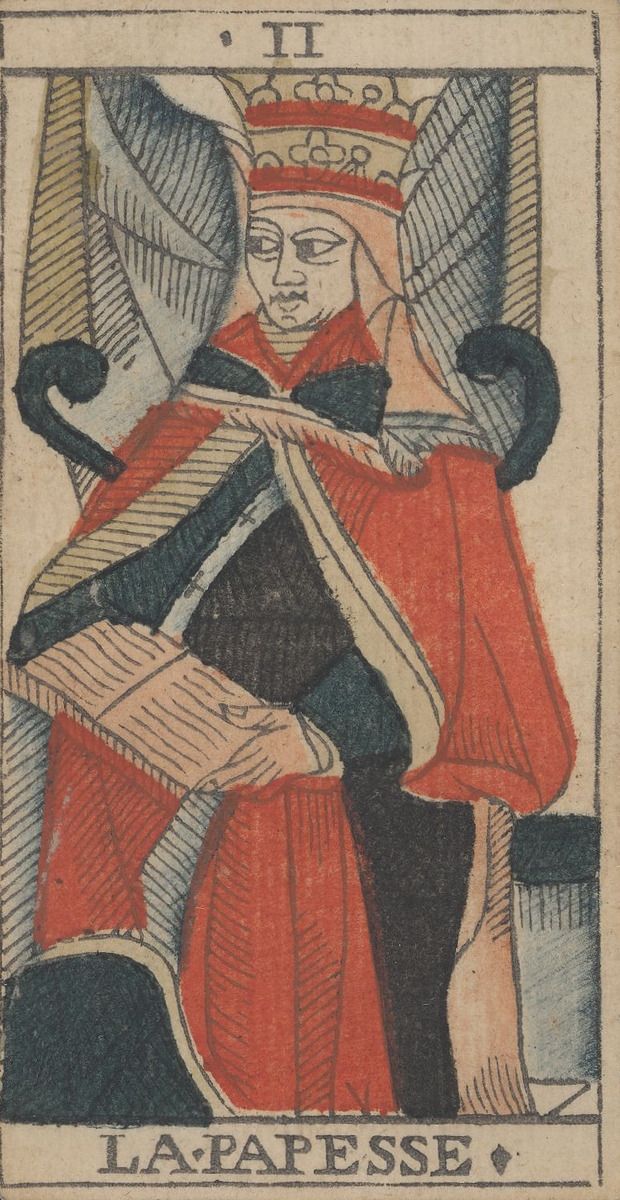
The Popess · Jean-Pierre Payen, Tarot de Marseille, blocks dated 1713 · Cary Collection of Playing Cards (FRA166), Beinecke Rare Book and Manuscript Library, Yale University
The Priestess can prompt a pause before speaking or acting. What are you still considering privately? What would you like to understand more clearly? Treat intuition as something to examine alongside facts, rather than a substitute for them.
The Empress can bring questions of care, growth and making. Those associations do not require a prediction about pregnancy or a rule about gender. You might ask what needs attention in a project, a home or your own daily life. Let the symbolic figure open a question broad enough to fit the actual situation, without turning its title into a medical or personal conclusion.
The Emperor and the Pope: authority and inherited structures
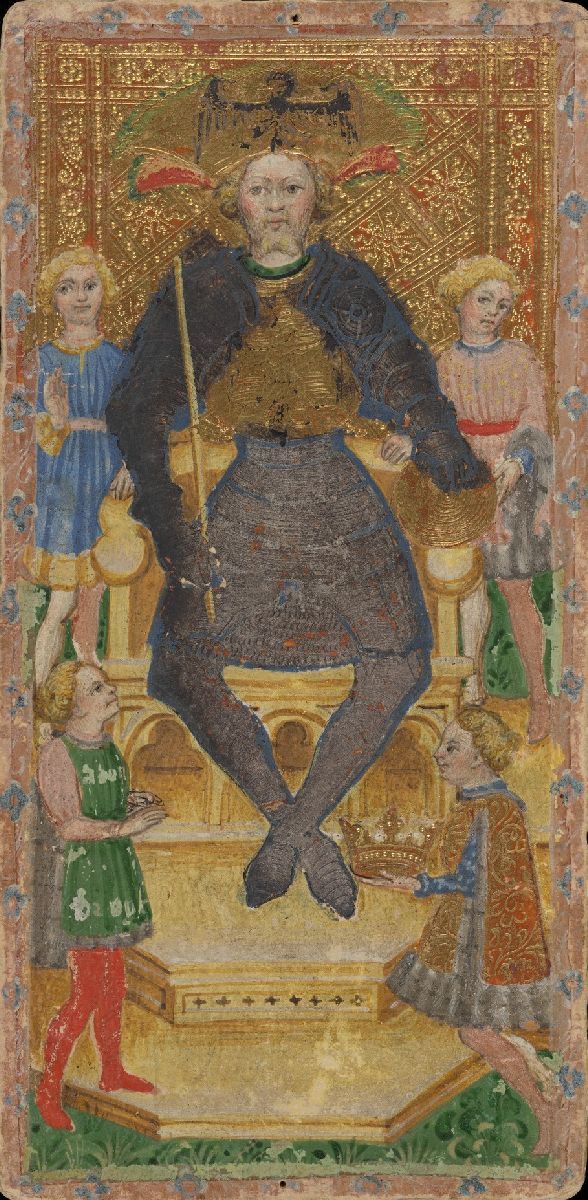
The Emperor · Visconti di Modrone tarot, Milan, 1442–1447 · Cary Collection of Playing Cards (PLAYING CARDS GEN965), Beinecke Rare Book and Manuscript Library, Yale University
The Emperor can prompt questions about boundaries, responsibility and who has the power to decide. Consider whether a structure is helping you work, or whether you are following it without examining its purpose.
The card often called the Pope in Marseille decks is also known as the Hierophant in other traditions. Its title alone shows why deck context matters. You might reflect on institutions, teaching or customs you have inherited. Neither card proves that an authority is right or wrong. A useful reading asks what standards you want to follow and where you need clearer information, permission or accountability.
The Lovers and the Chariot: choice and direction
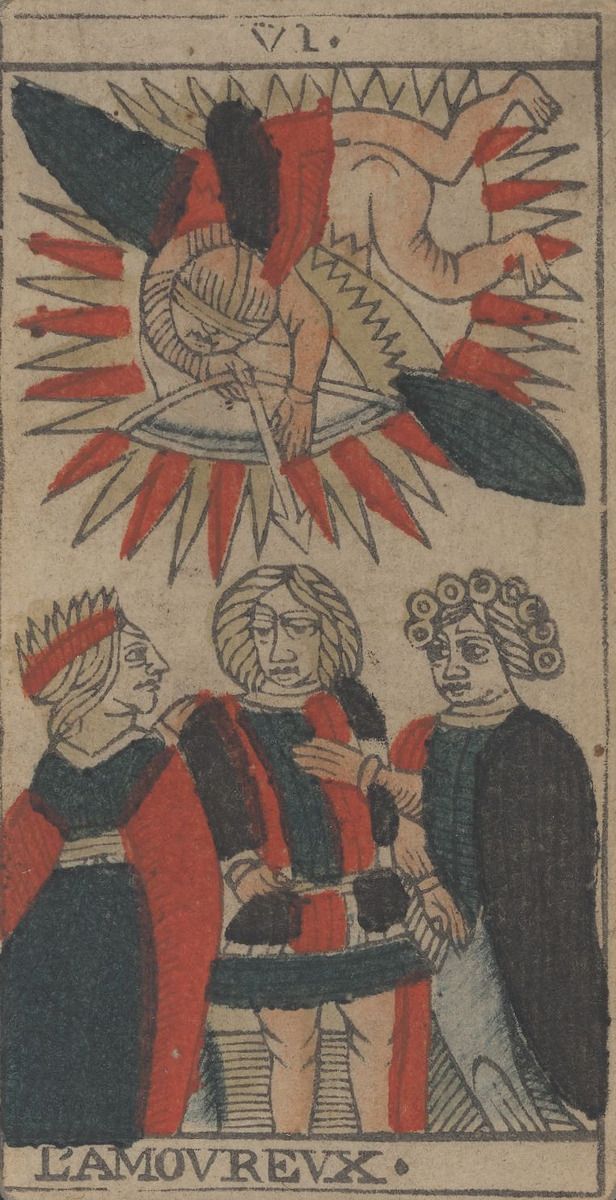
The Lovers · Jean-Pierre Payen, Tarot de Marseille, blocks dated 1713 · Cary Collection of Playing Cards (FRA166), Beinecke Rare Book and Manuscript Library, Yale University
The Lovers need not answer whether another person loves you. It can prompt reflection on values, relationships and a choice whose consequences involve more than one person. Ask what alignment would mean in the situation, and who should be part of the conversation.
The Chariot can suggest direction and the effort of keeping competing demands moving together. That is not a promise of victory. Consider what you are trying to accomplish, what resources it requires and whether your current pace is sustainable. Together, the cards can turn attention from an imagined outcome towards the choices and practical commitments within your control.
Justice and Strength: judgement and steadiness
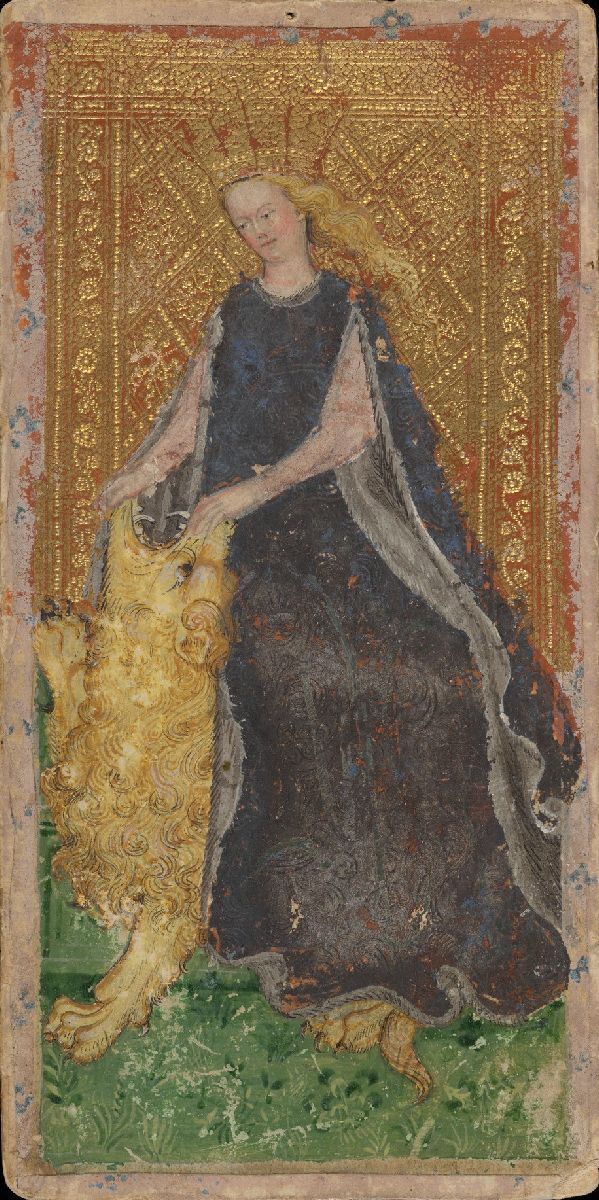
Fortitude · Visconti di Modrone tarot, Milan, 1442–1447 · Cary Collection of Playing Cards (PLAYING CARDS GEN965), Beinecke Rare Book and Manuscript Library, Yale University
Justice can prompt questions about fairness, evidence and the consequences of a decision. It should not be used to predict a legal result or replace professional advice. You can ask what a fair process would require and whether all relevant people have been heard.
Strength can invite reflection on patience, restraint and the way you use influence. It does not mean that you must tolerate harm or prove your endurance. Numbering for Justice and Strength differs between familiar deck traditions, another reason to identify the actual cards rather than relying on one sequence memorised from elsewhere.
The Cary-Yale example is catalogued as Fortitude. Keep that historical name in mind rather than assuming its identity and position are identical to every later Strength card.
The Hermit and the Wheel: distance and change
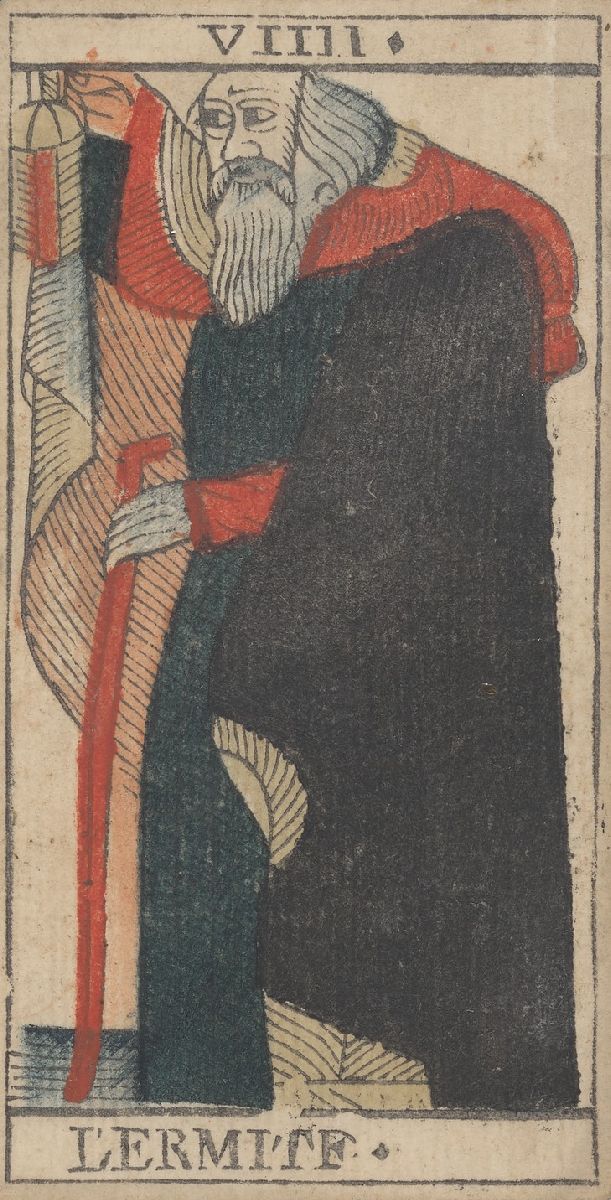
The Hermit · Jean-Pierre Payen, Tarot de Marseille, blocks dated 1713 · Cary Collection of Playing Cards (FRA166), Beinecke Rare Book and Manuscript Library, Yale University
The Hermit can prompt a useful distinction between solitude you choose and isolation you do not want. Ask what kind of space would help you think, and where support is still needed. Reflection does not require withdrawing from everyone.
The Wheel can bring attention to change, recurring patterns and the limits of control. It is not a forecast of a lucky turn. You might ask which parts of a situation are changing independently of your wishes, and which habits you can alter. A reading can help you name the difference without pretending that a symbolic image supplies advance knowledge of events.
The Hanged Man and Death: pause and endings
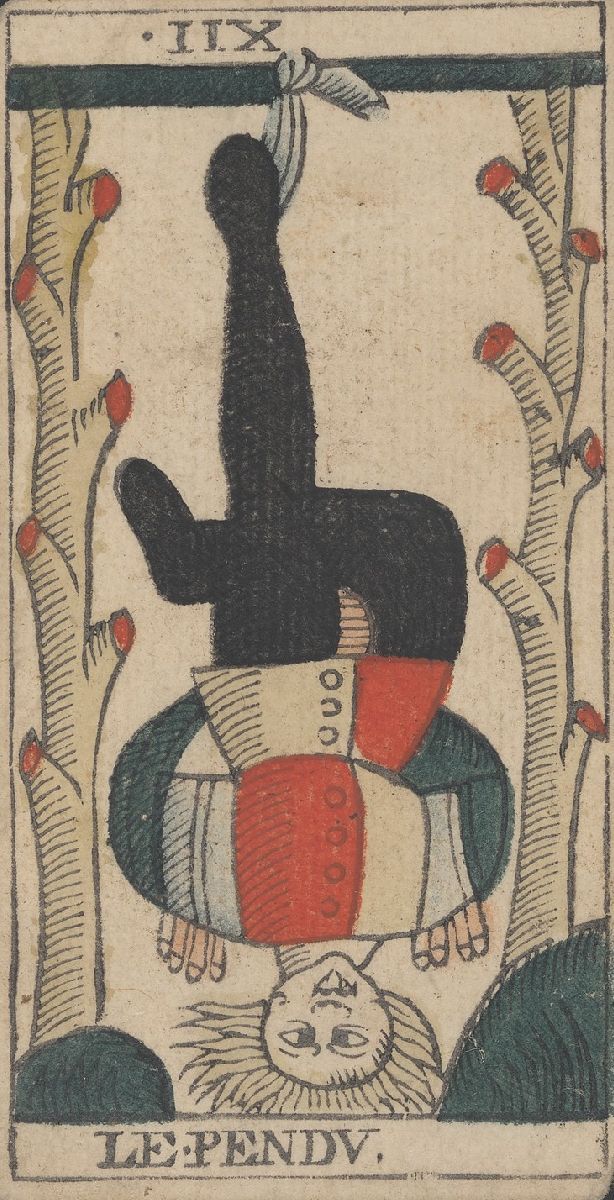
The Hanged Man · Jean-Pierre Payen, Tarot de Marseille, blocks dated 1713 · Cary Collection of Playing Cards (FRA166), Beinecke Rare Book and Manuscript Library, Yale University
The Hanged Man can prompt a change of perspective or a pause in habitual action. That does not mean every delay is beneficial. Ask whether waiting is giving you useful information, or whether a practical decision is being avoided.
The card conventionally called Death is often approached through endings and transition. It must not be treated as a prediction that someone will die. If an image feels upsetting, you can step away from it. A reflective question might concern what has already ended, what you are reluctant to release and what support would make a change easier to navigate.
Temperance and the Devil: balance and attachment
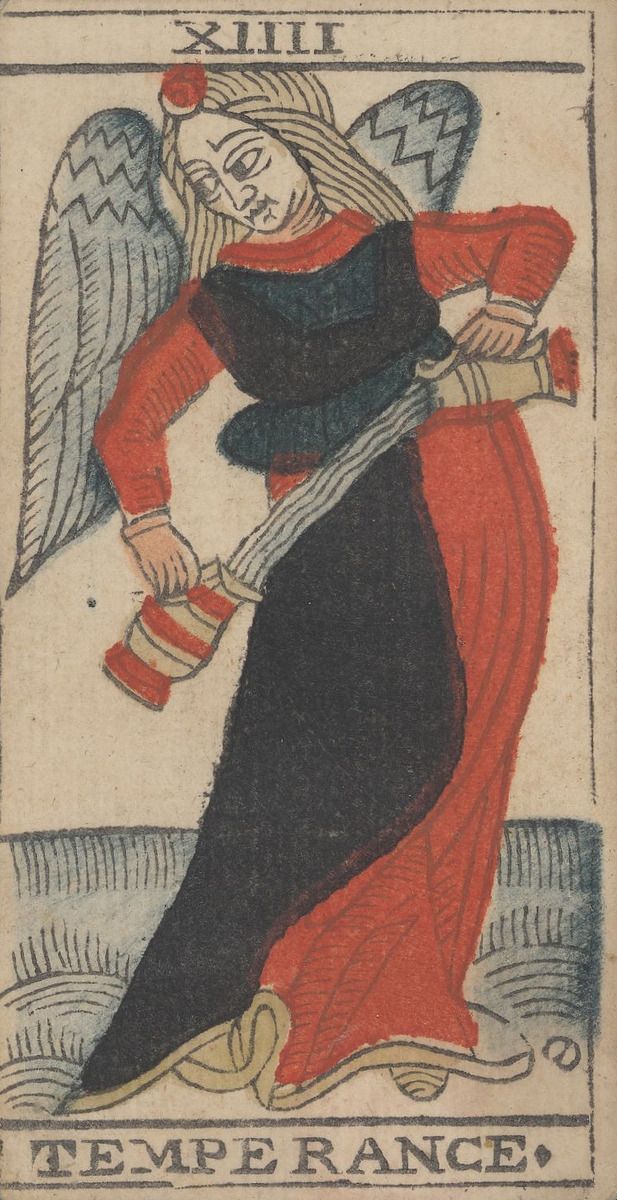
Temperance · Jean-Pierre Payen, Tarot de Marseille, blocks dated 1713 · Cary Collection of Playing Cards (FRA166), Beinecke Rare Book and Manuscript Library, Yale University
Temperance can prompt questions about proportion, adjustment and how different parts of life fit together. Balance is not always an equal division of time. You might consider what needs more attention now and what can reasonably wait.
The Devil can be approached as a question about attachment, compulsion or a story that makes you feel less free. It does not diagnose addiction, identify an enemy or establish a supernatural influence. Keep the reflection grounded in your own behaviour and choices. If a serious concern arises, seek appropriate real-world support rather than treating the card as an answer.
The Tower and the Star: disruption and a point of orientation
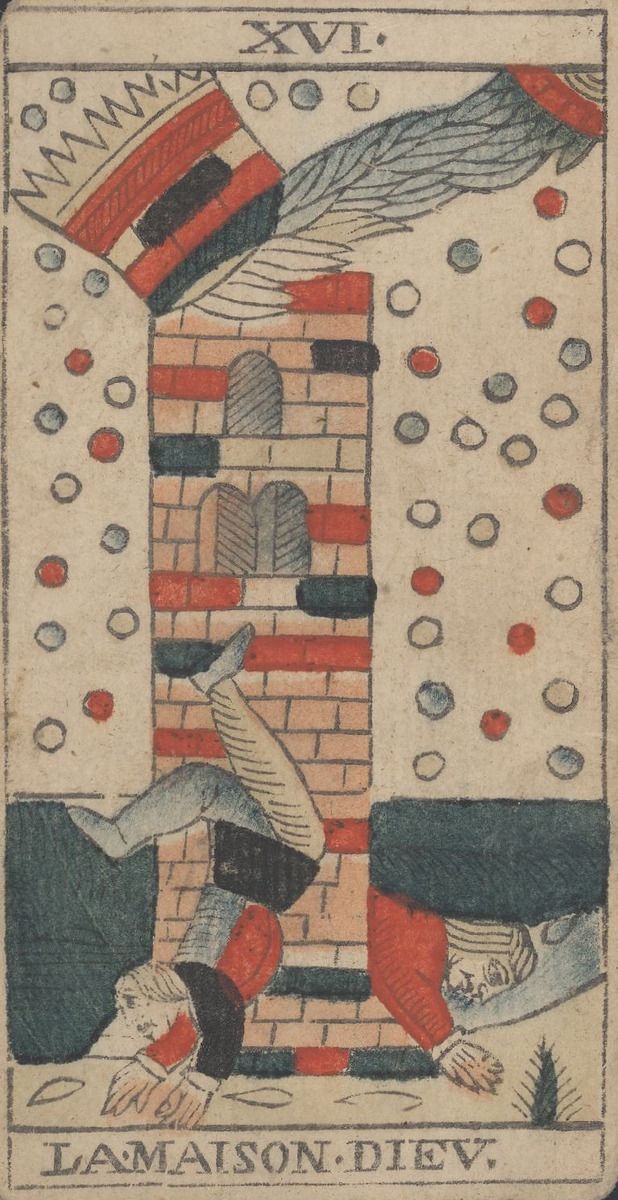
The Tower · Jean-Pierre Payen, Tarot de Marseille, blocks dated 1713 · Cary Collection of Playing Cards (FRA166), Beinecke Rare Book and Manuscript Library, Yale University
The Tower can prompt reflection on a structure or assumption that has become unstable. It is not evidence that disaster is coming. Ask what you already know is under strain, and what practical steps would make the situation safer or clearer.
The Star can offer a different question: what helps you orient yourself when certainty is limited? Hope can be a resource without becoming a guarantee. These cards do not need to be forced into a tidy story in which difficulty automatically produces growth. Reflection can acknowledge uncertainty and still identify one manageable next step.
The Moon and the Sun: uncertainty and clarity
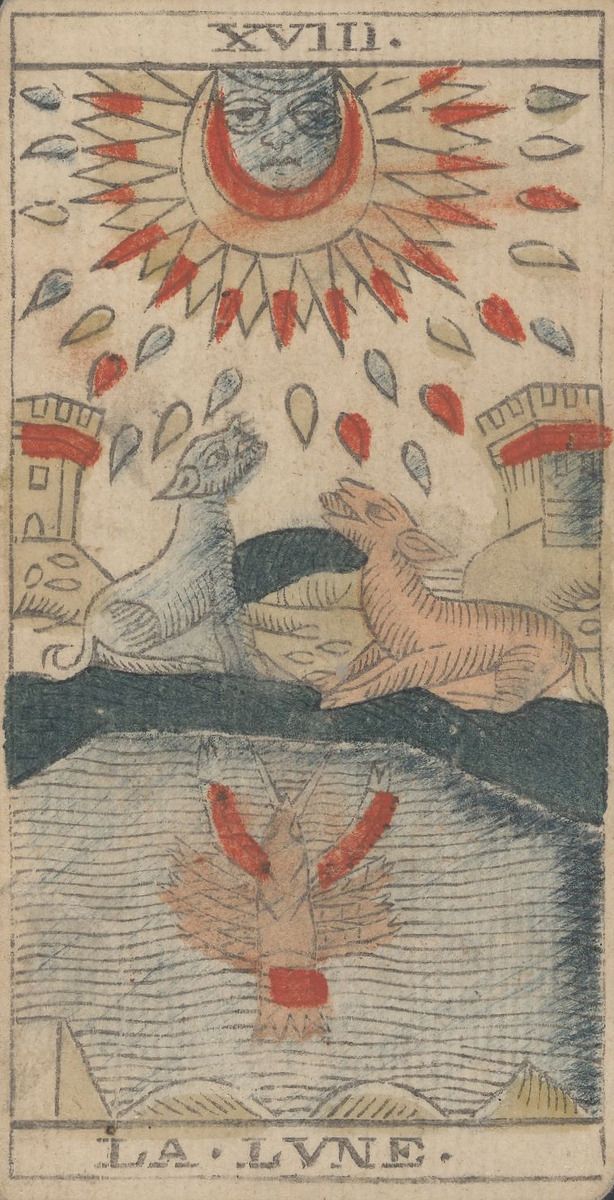
The Moon · Jean-Pierre Payen, Tarot de Marseille, blocks dated 1713 · Cary Collection of Playing Cards (FRA166), Beinecke Rare Book and Manuscript Library, Yale University
The Moon can prompt attention to ambiguity, fear or information that remains incomplete. Do not use it to accuse someone of deception. Ask what is known, what is assumed and what you can check directly.
The Sun can suggest openness, vitality or a situation becoming easier to see. It does not guarantee happiness or remove practical concerns. Consider what clarity would let you do differently. A reflective reading becomes more useful when it helps distinguish observation from interpretation, rather than replacing one uncertain story with another that merely feels more reassuring.
Judgement and the World: review and completion
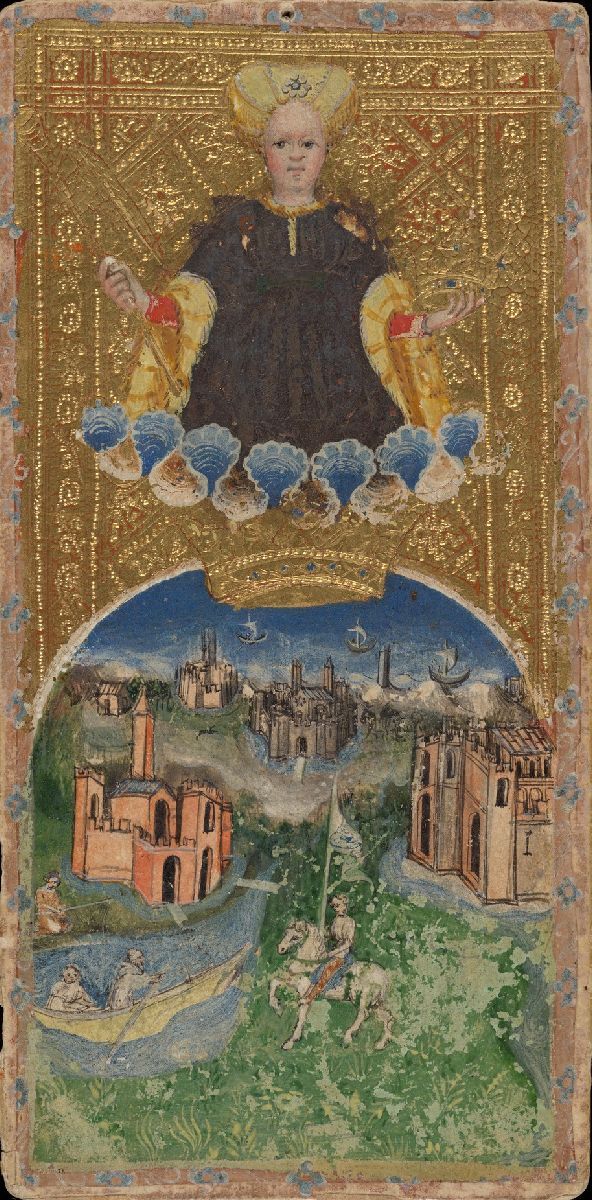
The World · Visconti di Modrone tarot, Milan, 1442–1447 · Cary Collection of Playing Cards (PLAYING CARDS GEN965), Beinecke Rare Book and Manuscript Library, Yale University
Judgement can prompt a review of choices, responsibilities or an invitation to respond. It need not mean condemnation. You might ask what you understand differently now, and what action would be consistent with that understanding.
The World can invite reflection on completion and the relationship between a finished chapter and a wider life. Completion does not have to mean perfection. Ask what is ready to be acknowledged, what remains unfinished and whether the next step needs to happen immediately. The sequence can close with attention rather than prediction: a chance to recognise where you are before deciding what comes next.
You do not need to memorise twenty-two definitions before using the major arcana as prompts. Begin with a card's actual image, identify the deck and notice your own response. Then turn the association into a question that can be considered against real circumstances. Avoid questions that ask the cards to establish another person's thoughts or guarantee an outcome.
If you would like to continue, start a free tarot reading with an intention and, if useful, a question. Fable's reading journey keeps the experience within symbolic reflection. The next step is to consider what the images bring to mind, not to hand a practical decision over to a prediction.
- Are major arcana meanings fixed?
- No single list captures every deck or reading tradition. Identify the deck, look at the image and treat interpretations as prompts rather than facts about what will happen.
- Does Death predict a death?
- No. Tarot is a symbolic tradition for reflection. Do not use a card to predict a death or replace medical, legal or other professional advice.
- Why do Justice and Strength have different numbers in some decks?
- Deck traditions differ in names, numbering and images. Check the specific deck rather than assuming every sequence follows the same arrangement.
- Can I begin without knowing all twenty-two cards?
- Yes. Start by looking carefully and asking a grounded question. You can learn the names and traditions gradually while keeping your own judgement involved.