The Palace of Sleep and its two gates of dreams
Horn and ivory gates, nocturnal figures and competing interpretations in the final plate of Le Temple des Muses.
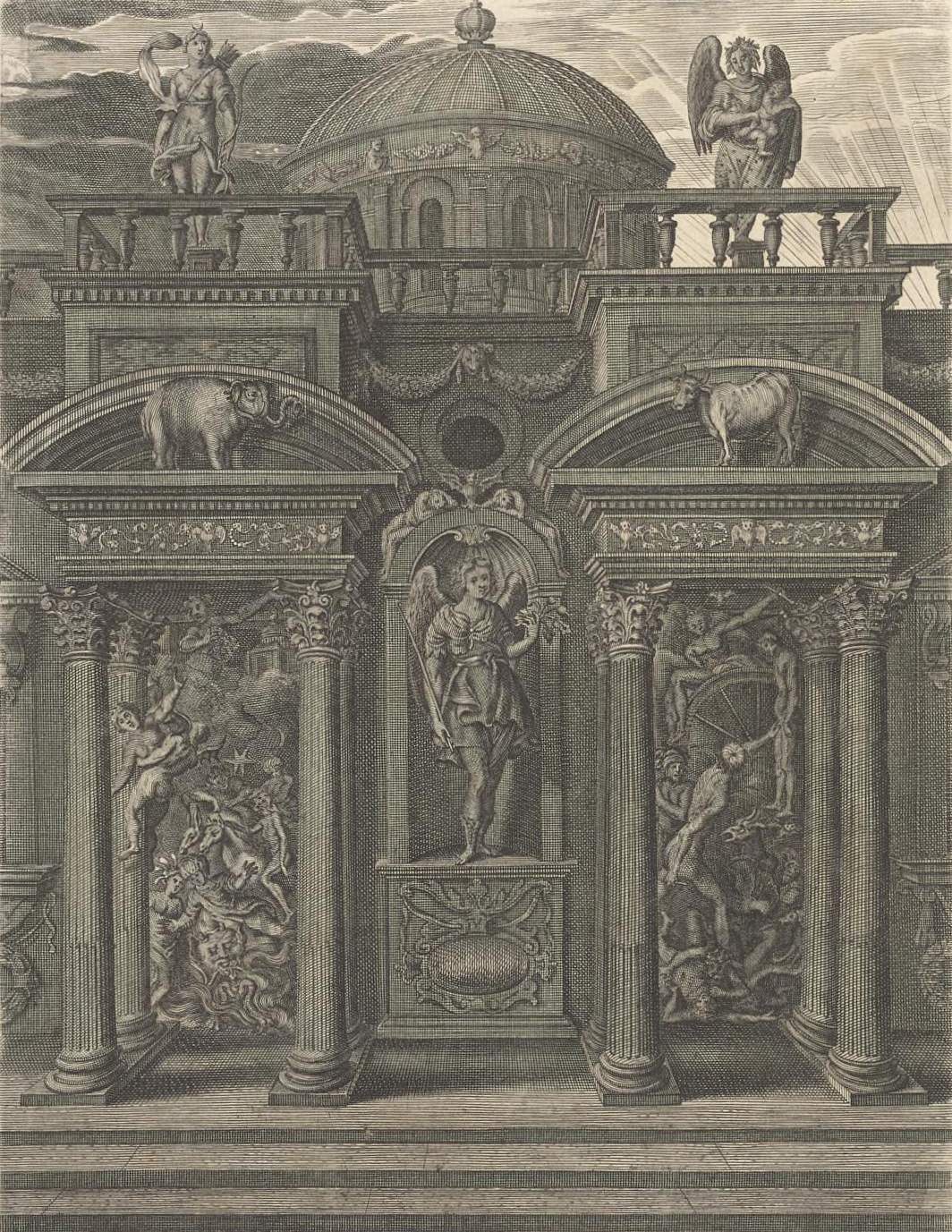
A palace should make its boundaries clear. Here, its open doors make everything less certain. One releases dreams associated with truth; the other opens onto deception. Grotesque figures and castles in the clouds disturb the promise of orderly architecture.
The Palace of Sleep, the final plate in the 1749 Temple des Muses, is a picture about crossing between states. It closes a book of transformations with the nightly transformation of consciousness itself.
Dreams and impossible architecture
Released editions with dream figures, uncertainty and imagined spaces. The Palace of Sleep colour study remains editorial-only.
 Historical original
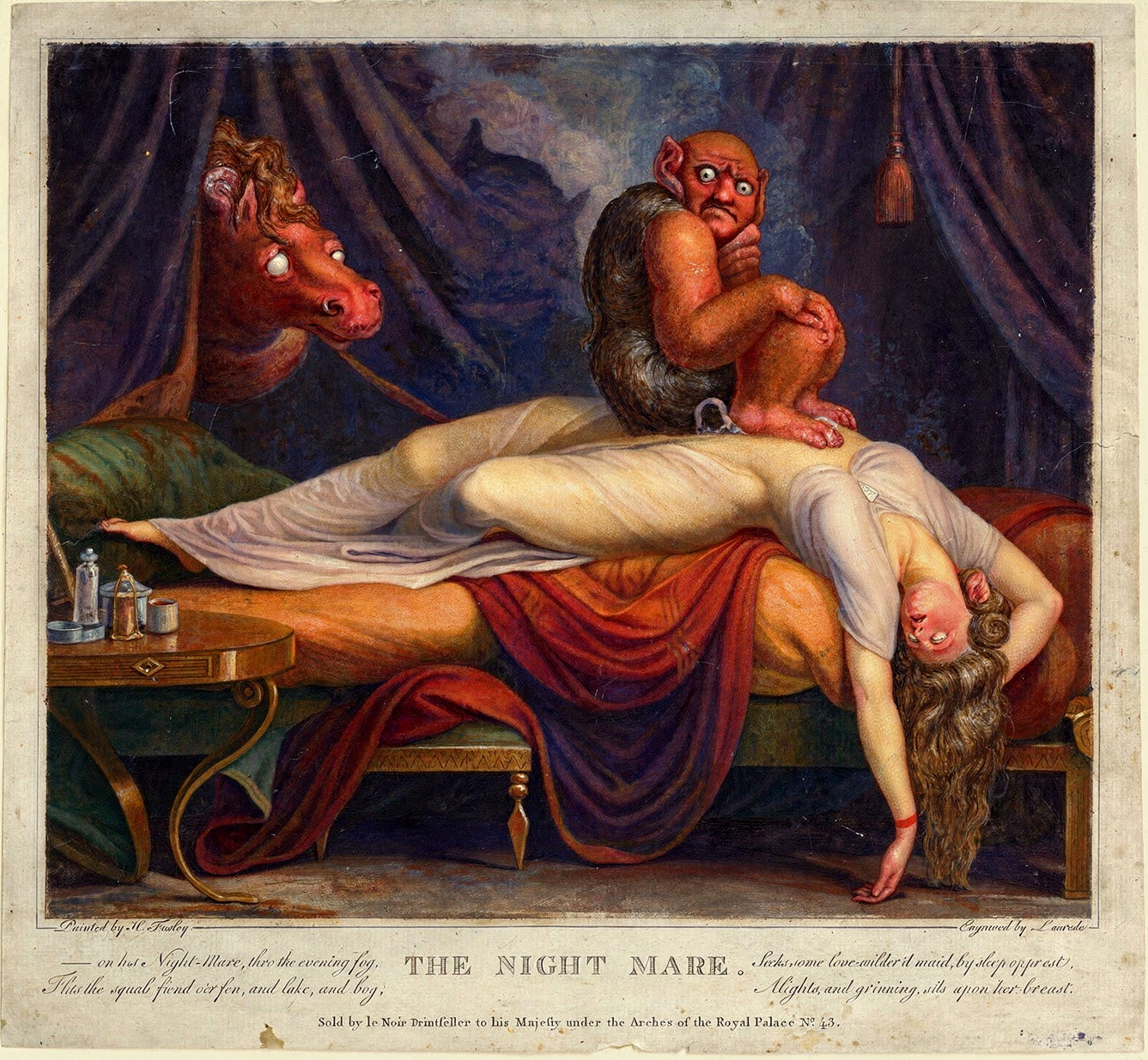
The Night Mare
Buy-ready print · Contemporary colour edition
A sleeping figure and an unsettling apparition make dream imagery the subject, not merely a dark palette.
From $39
 Historical original
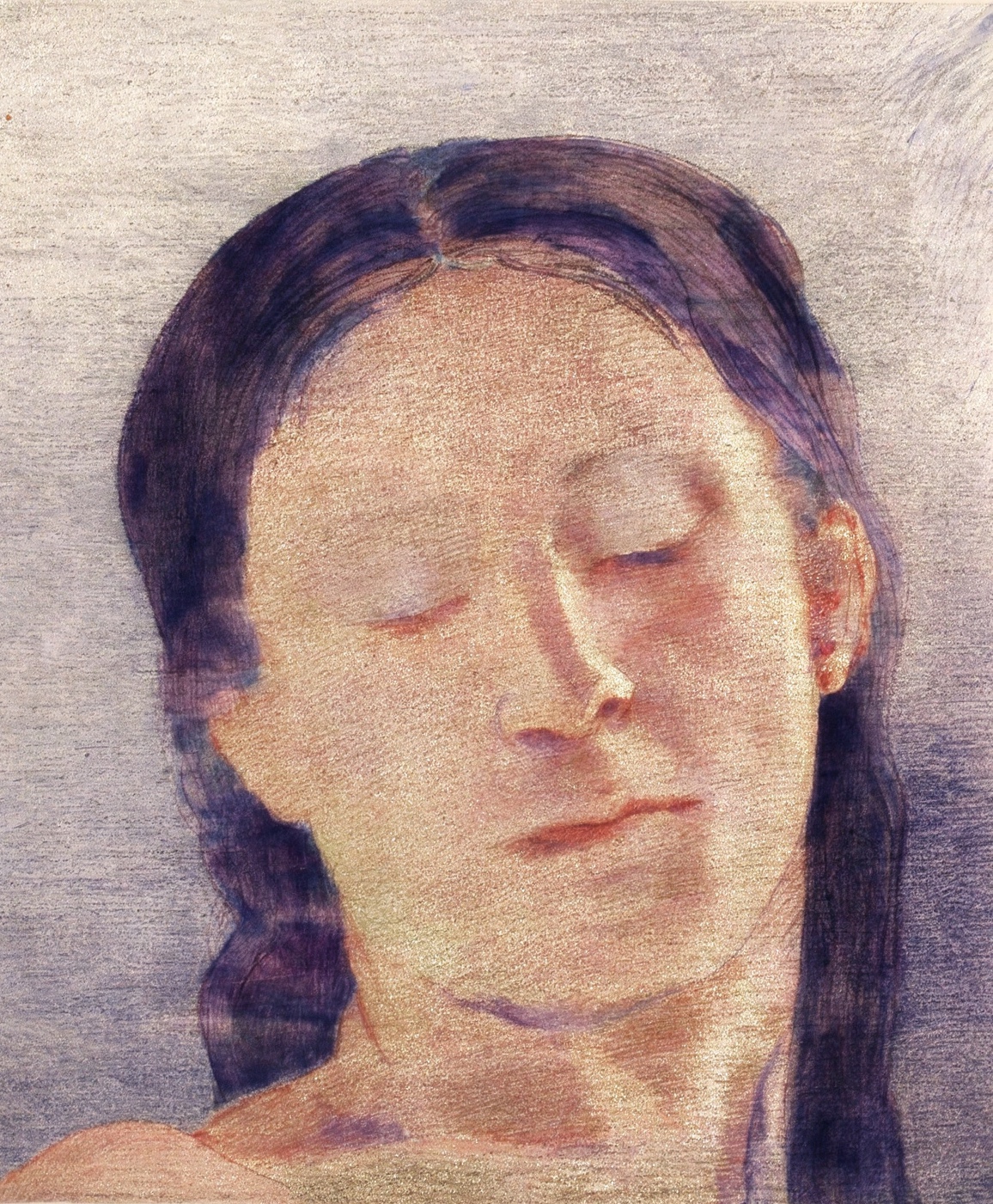
Eyes Closed
Buy-ready print · Contemporary colour edition
A face with closed eyes provides a quiet counterpoint to more disturbing visions of sleep.
From $39
 Historical original
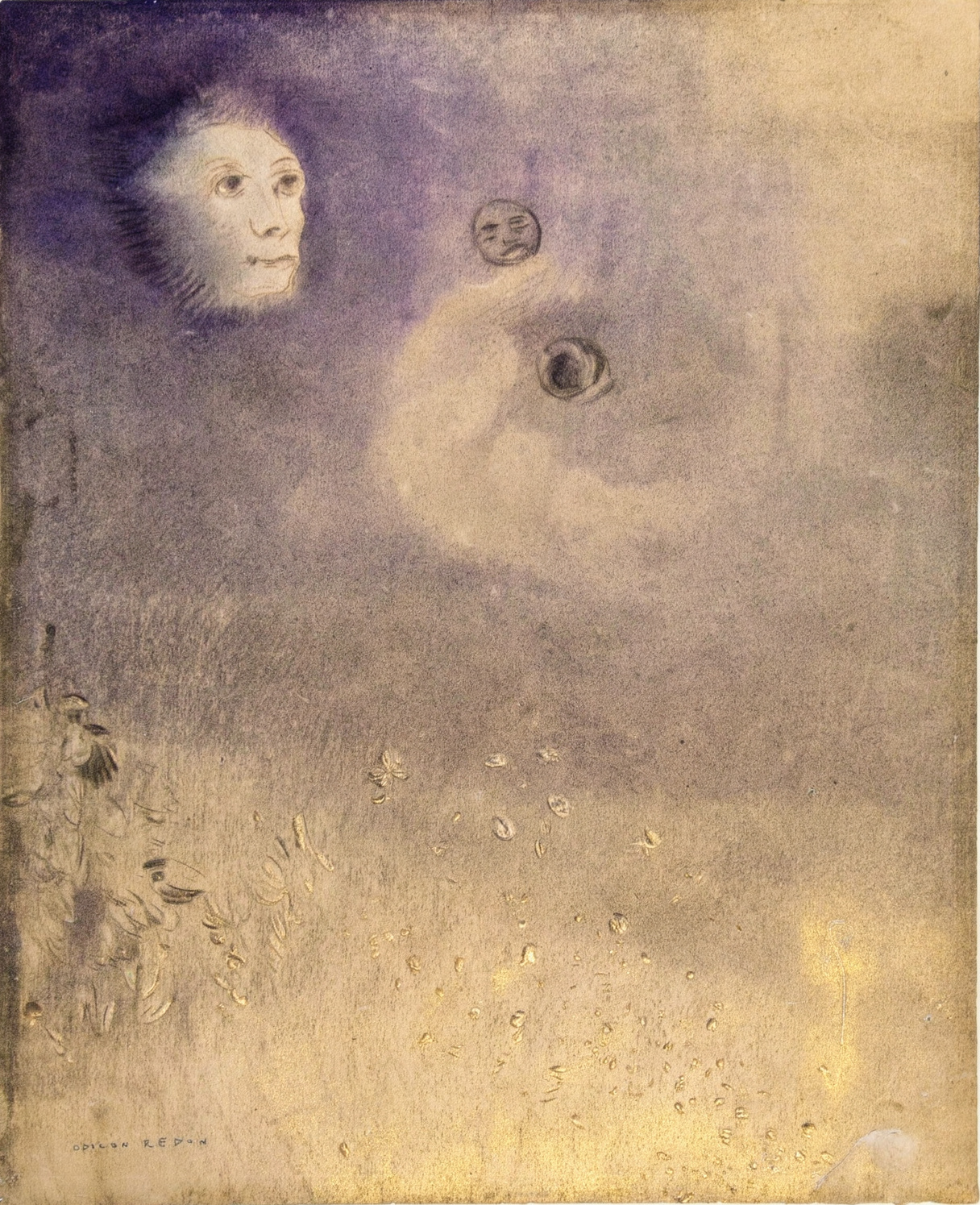
Hallucinations
Buy-ready print · Contemporary colour edition
An uncertain visionary scene suits the article’s interest in images that remain unresolved.
From $39
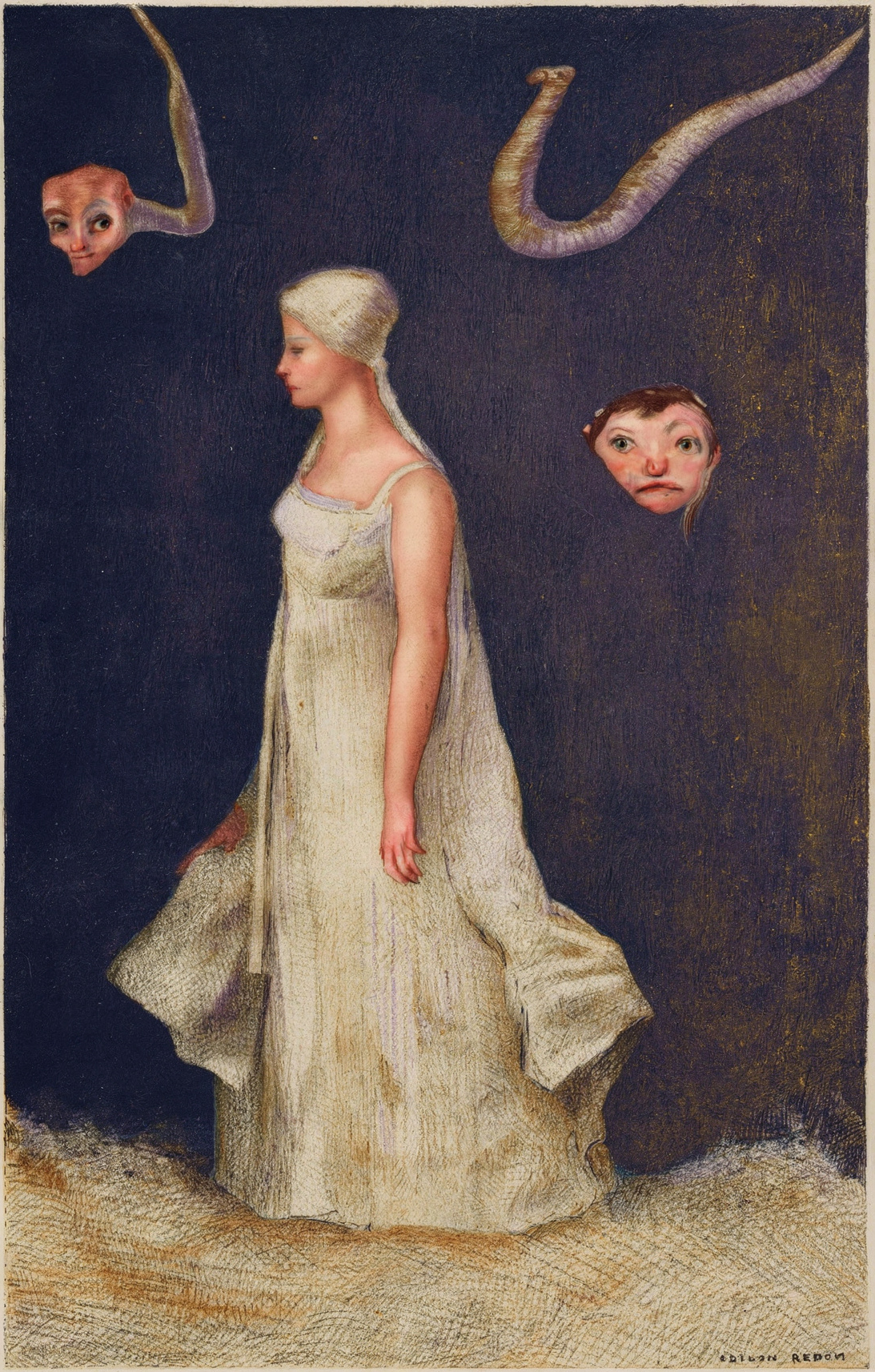
 Historical original
Haunting
Buy-ready print · Contemporary colour edition
An apparition gives a reading room a lingering ambiguity rather than a purely decorative dark ground.
From $39
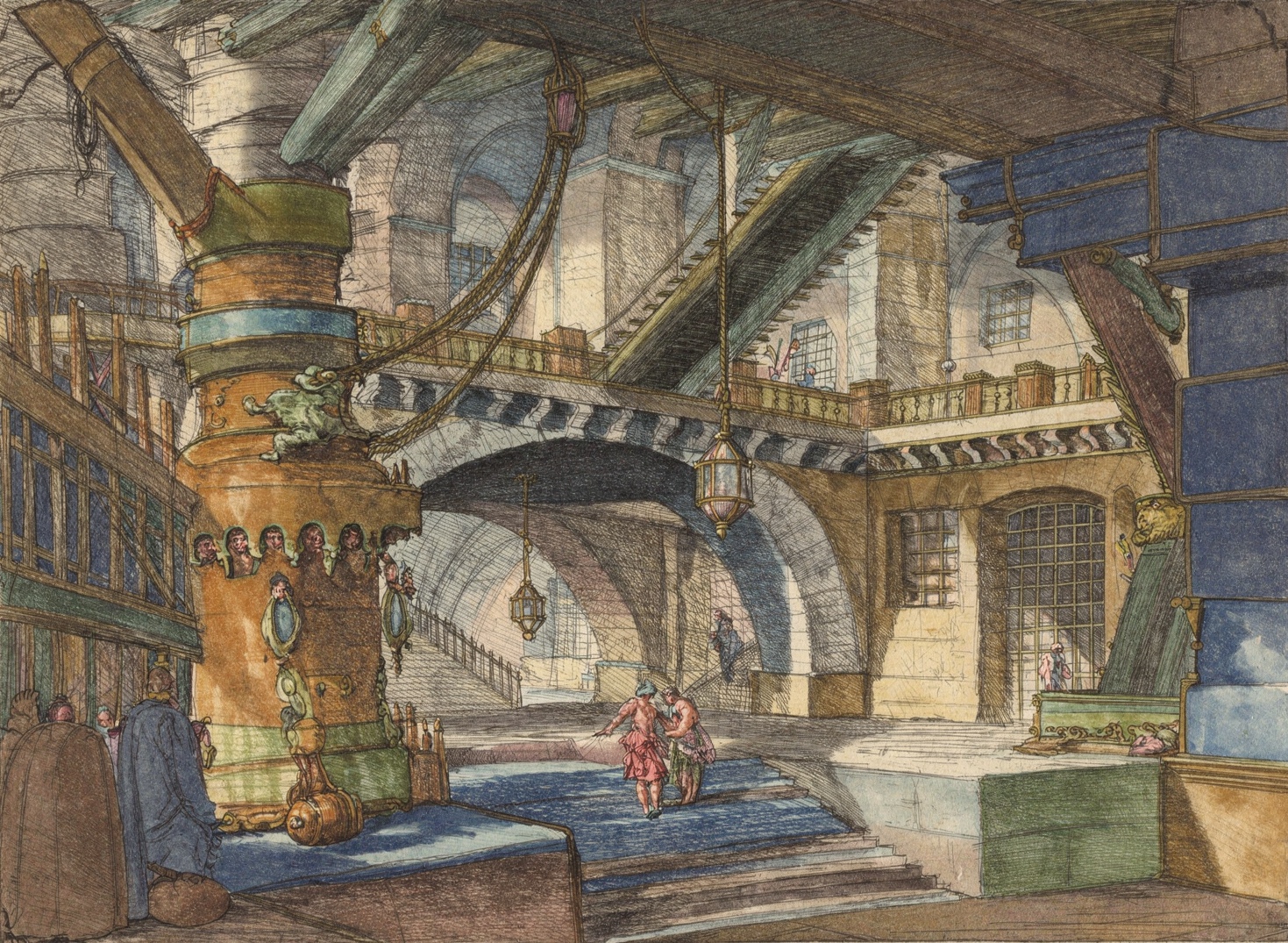
 Historical original
Imaginary Prisons: The Hall with Lanterns
Buy-ready print · Contemporary colour edition
Piranesi’s imagined interior answers the article’s interest in architecture that seems to obey dream logic.
From $39
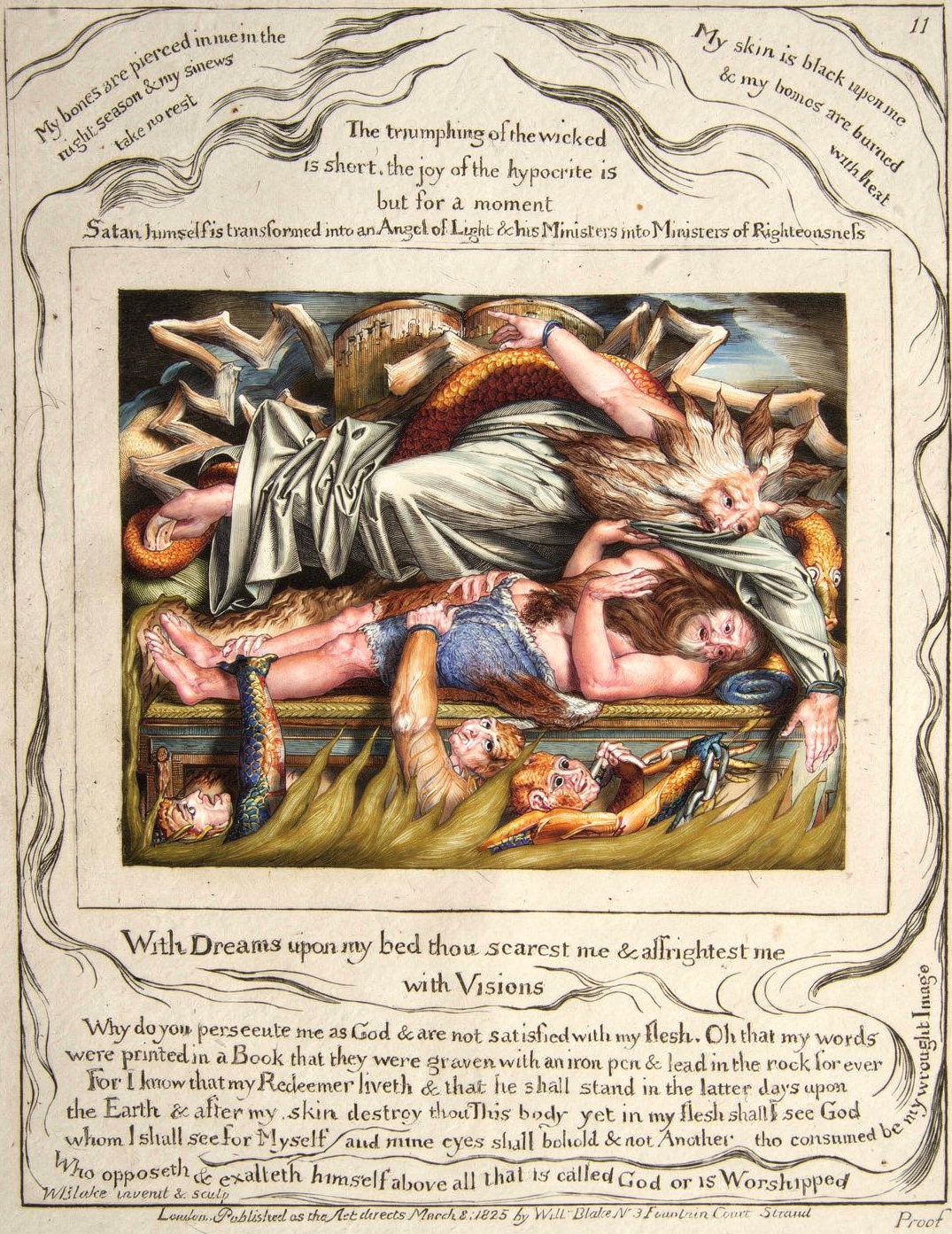
 Historical original
Job’s Evil Dreams
Buy-ready print · Contemporary colour edition
A dream narrative offers a darker counterpart to the Palace of Sleep’s uncertain visions.
From $39
Horn and ivory
The accompanying text identifies two gates. The gate of horn admits true dreams; the gate of ivory releases deceptive ones. Animals placed above the entrances indicate the materials associated with them.
On the following page, the commentator records several proposed explanations. One connects the gates with the eye and the mouth; another with the sky and earth. The text also offers the simpler distinction between horn’s transparency and ivory’s opacity. These alternatives are part of the pleasure of reading the image: the book presents a symbol, then shows how it can sustain competing interpretations. Read the description and explanation.
The commentary’s idea of truth is far from comforting. It associates real miseries and sombre apparitions with one side, while impossible and grotesque visions crowd the other. That pessimistic interpretation belongs to the author’s account. A viewer today may experience the same architecture with more curiosity than dread.
The figures watching over sleep
The text names Diana, identified with the moon, on one side of the platform. On the other is Night, winged and dressed in stars, holding the sleeping figures of Sleep and Death.
In the central niche, the god of Sleep carries poppies and a wand. Above, a bat spreads its wings over the shelter. Each element helps turn an abstract state into something that can be pictured: a place, a figure, an attribute, a threshold.
Once those details are recognised, the engraving becomes easier to explore. Start at the doors, move towards the central niche, and then look upwards. Architecture provides the order against which the dreams can become strange.
Dreamlike art before Surrealism
The image may appeal to someone searching for surreal or dreamlike wall art. Its impossible combinations invite that response. Historically, however, it belongs to an earlier illustrated mythology, not the twentieth-century Surrealist movement.
That distinction makes it more interesting. The appetite for impossible worlds did not begin with a modern movement. Here it appears through classical literary references, allegorical figures and a palace built to contain the uncontainable.
The Surrealium Atelier is developing a contemporary colour edition from this engraving for Fable Masterworks. Its colours are an interpretation, while the source and its explanatory text remain available for comparison.
A picture for repeated looking
Consider this subject for a library, study or other room where looking can happen slowly. Its meaning depends on small distinctions, so judge the image at the size you intend to order. A crowded arrangement of neighbouring pictures could make the symbolic details harder to enjoy.
The most useful question is not whether you understand every figure immediately. It is whether you want to keep finding out.
Browse Fable’s available Atelier Editions for historical images reinterpreted in colour, with their source works kept in view.