Romanticism paintings: 15 storms, ruins and moonlit skies
Friedrich’s wanderer, Fuseli’s nightmare, Delacroix’s lions, Turner’s calm morning and Dadd’s fairy world: fifteen Romantic paintings of feeling, nature and the supernatural.
Romanticism, roughly 1790 to 1850, turned art toward feeling. After the calm reason of Neoclassicism, painters wanted storms, mountains, ruins, dreams and terror. Nature became sublime, too big and too wild to understand; the imagination became a place to explore.
The fifteen paintings below cover the movement’s great themes: the lone figure before nature, the nightmare, the exotic, the fairy world, and the English landscape seen as if for the first time. Each is available as a print.
1. Wanderer above the Sea of Fog
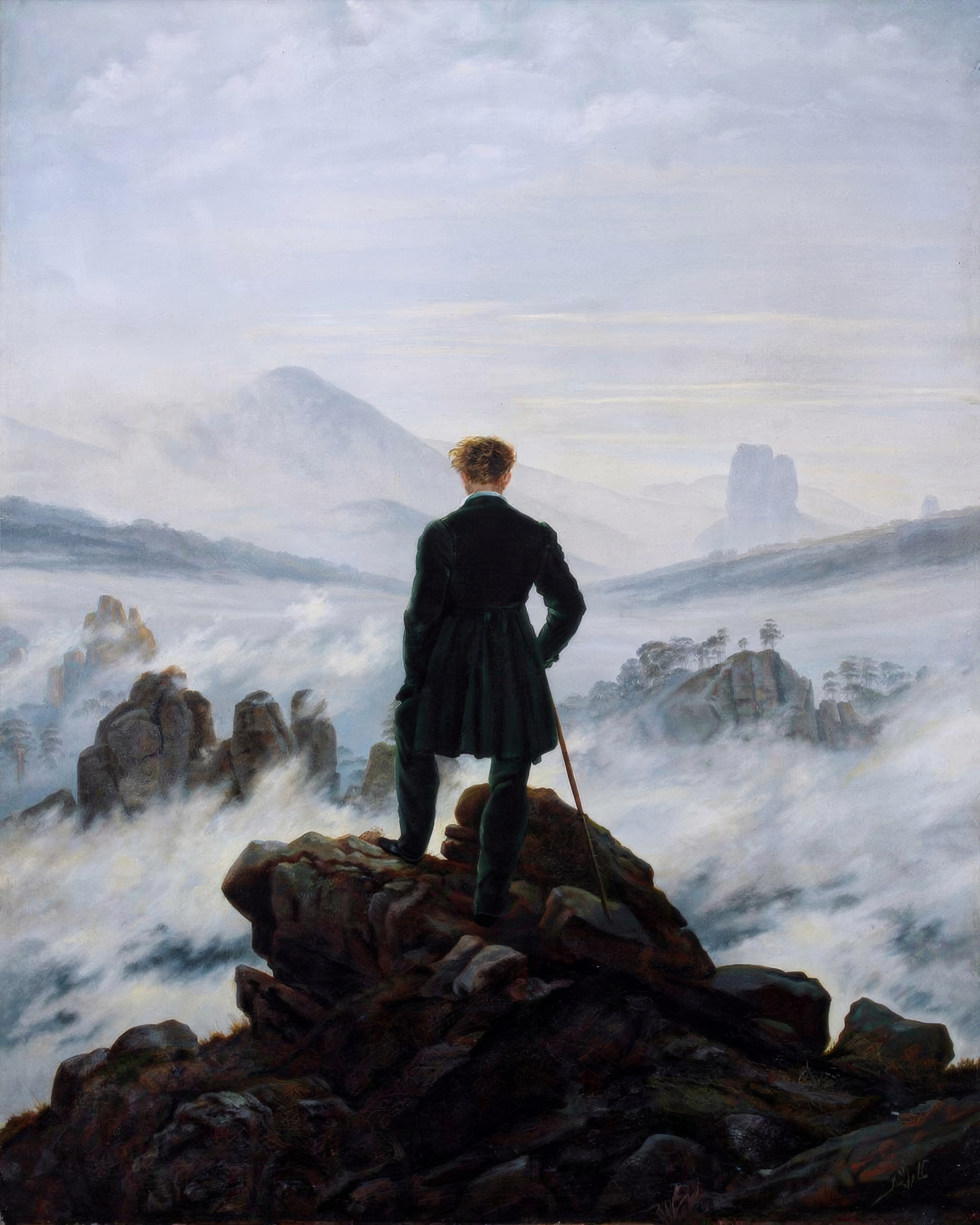
Caspar David Friedrich, Wanderer above the Sea of Fog, c. 1817. Oil on canvas. Hamburger Kunsthalle.
The emblem of the whole movement: a lone man on a summit, facing the immensity of nature. Friedrich painted it around 1817, and it still defines what Romantic means.
For a study, a stairwell or anyone who loves mountains.
2. Nightmare
Henry Fuseli, Nightmare, 1800.
Fuseli’s Nightmare caused a sensation when it was first shown in 1782, and he painted versions of it for years after. A sleeping woman, an incubus on her chest, and a wild-eyed horse peering through the curtain: horror as art.
For a dark wall and a strong stomach.
3. Tabley, the Seat of Sir J. F. Leicester: Calm Morning
J. M. W. Turner, Tabley, the Seat of Sir J. F. Leicester: Calm Morning, 1809. Oil on canvas. Tate.
Turner was the great painter of light. In 1809 he painted the lake at Tabley House at dawn, the water so still that the sky seems to lie on it.
4. Feige Waterfall (Feigefossen), Lysterfjord, Norway
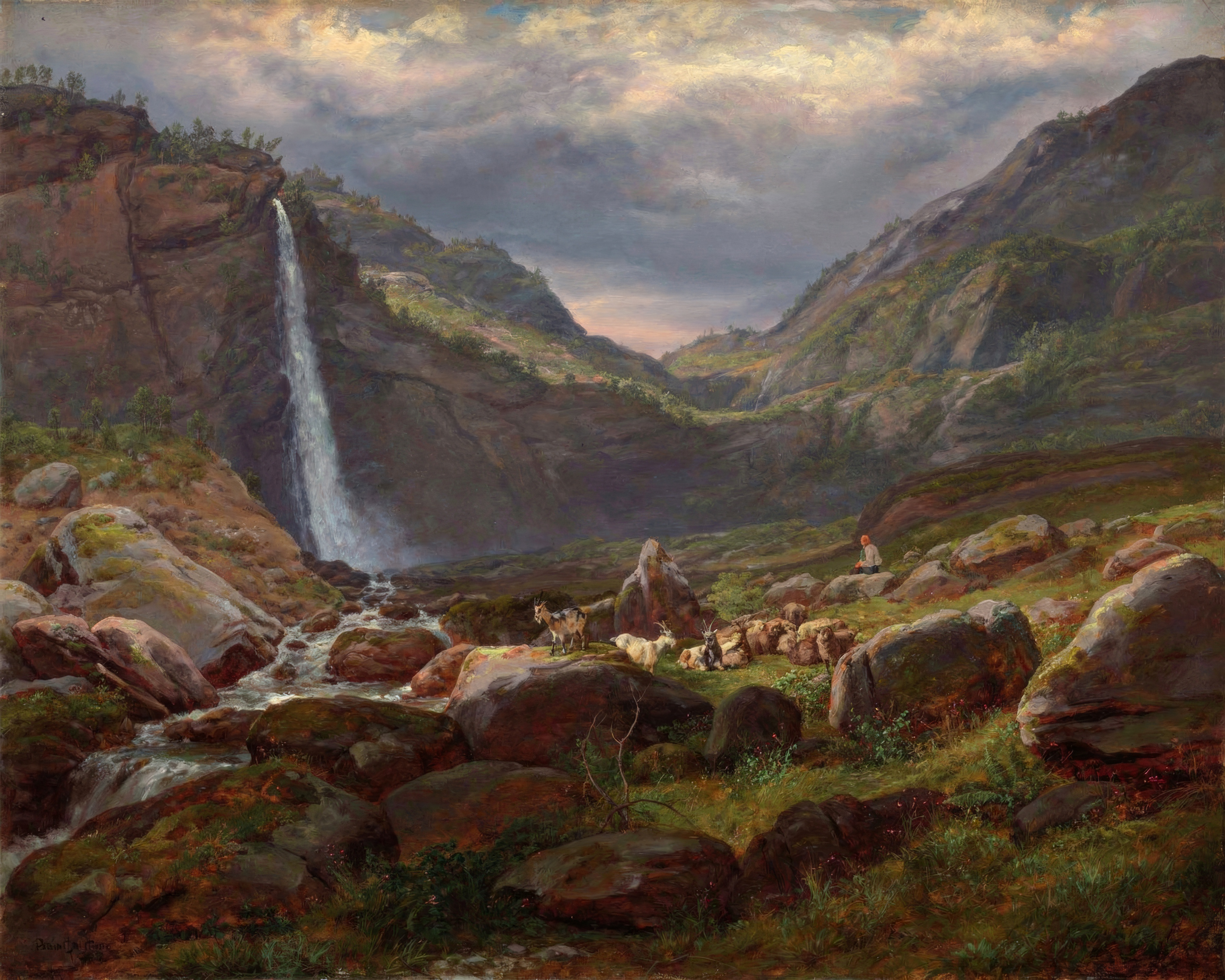
Johan Christian Clausen Dahl, Feige Waterfall (Feigefossen), Lysterfjord, Norway, 1848. Oil on canvas. Cleveland Museum of Art.
Johan Christian Dahl, the father of Norwegian landscape painting, painted the Feigefossen falling into the Lysterfjord in 1848. Nature on a scale that makes people tiny.
5. A Storm at Sea
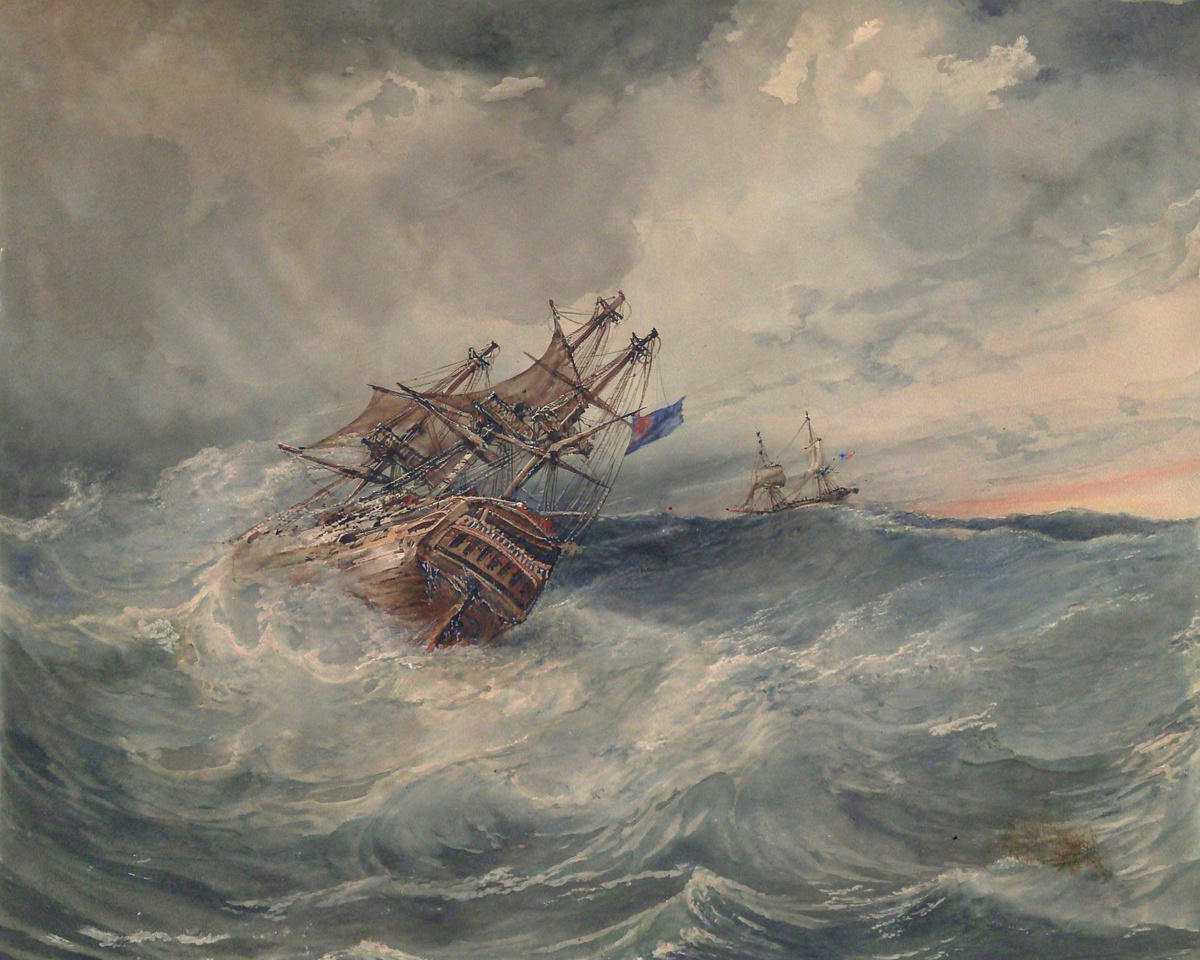
Gudin, A Storm at Sea, 1827. Victoria and Albert Museum, London.
Théodore Gudin made his name with shipwrecks and storms. This 1827 storm at sea is pure Romantic drama: grey water, a sinking ship and no hope of rescue.
6. Manfred and the Alpine Witch
John Martin, Manfred and the Alpine Witch, 1837.
From Byron’s poem Manfred: the tormented hero summons the Witch of the Alps in a gorge so huge he is almost invisible. John Martin specialised in this kind of overwhelming scale.
7. Arab Horseman Attacked by a Lion
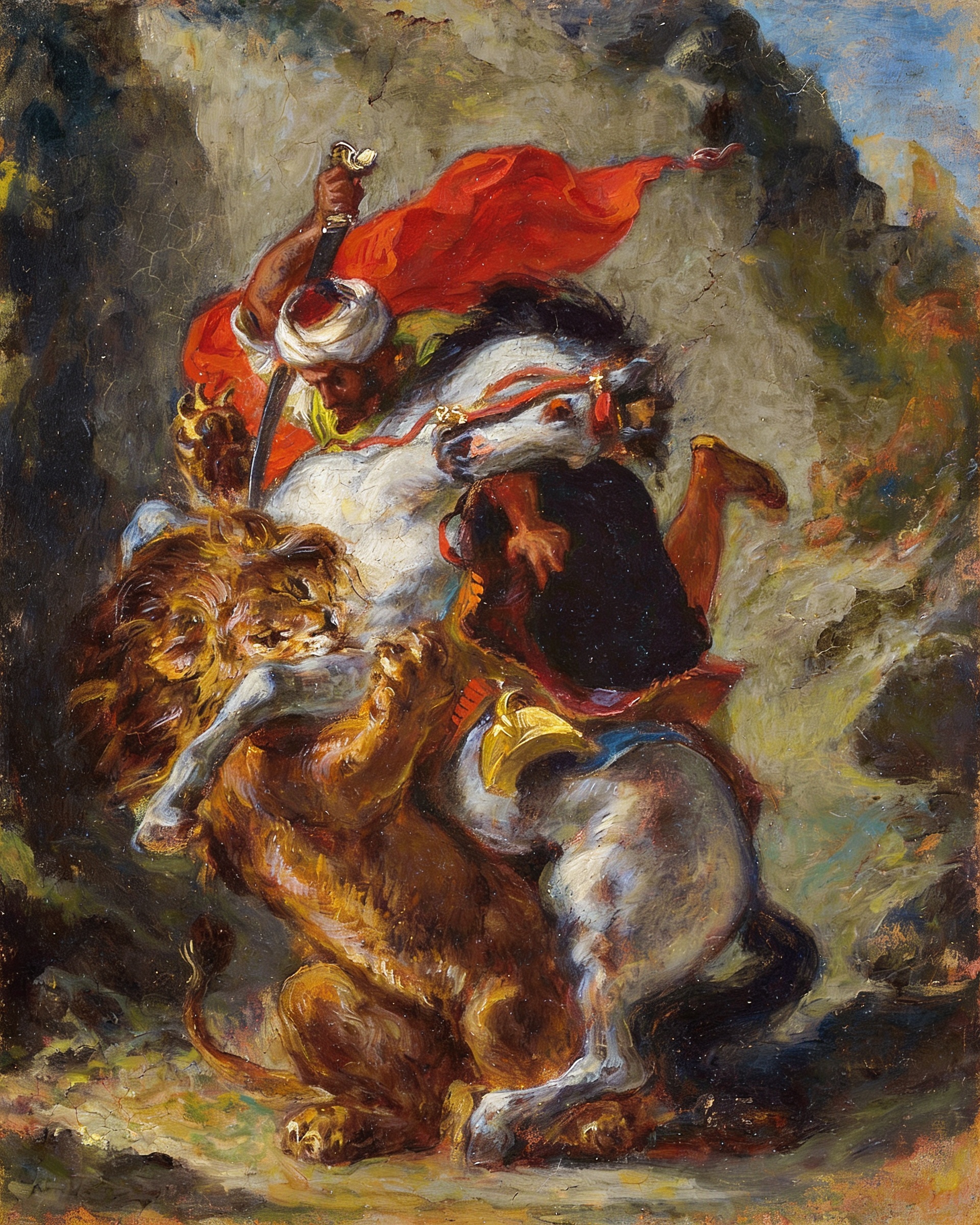
Eugène Delacroix, Arab Horseman Attacked by a Lion, 1849–50. Oil on panel. Art Institute of Chicago.
Delacroix travelled to Morocco in 1832 and painted its horses and riders for the rest of his life. Here a lion leaps at a horseman in a whirl of colour and fury.
8. Lions in a Mountainous Landscape
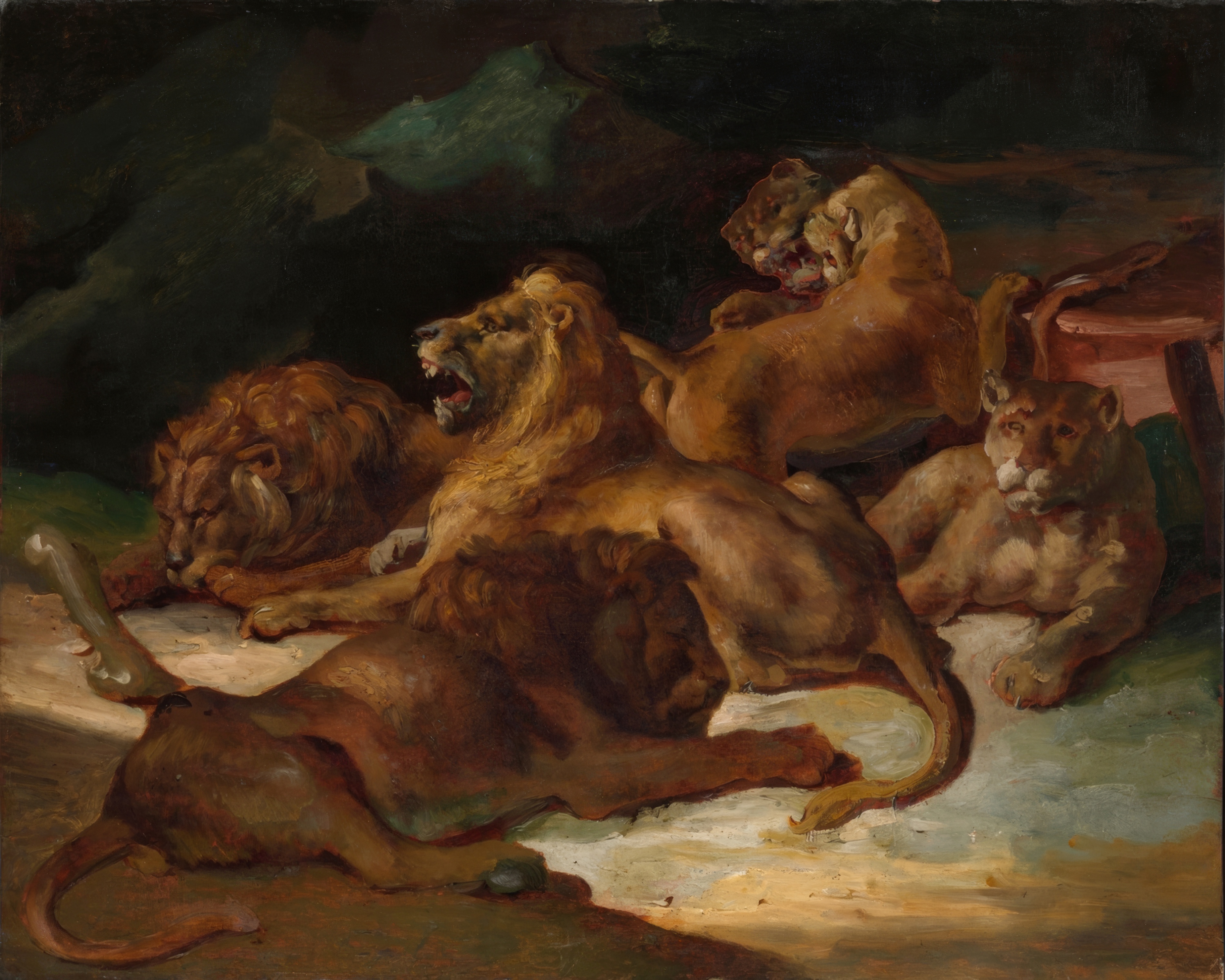
Théodore Géricault, Lions in a Mountainous Landscape, ca. 1818–20. Oil on wood. The Metropolitan Museum of Art, New York.
Géricault, painter of The Raft of the Medusa, studied lions at the Paris zoo. His two lions in the mountains are calm, powerful and utterly wild.
9. Majas on a Balcony
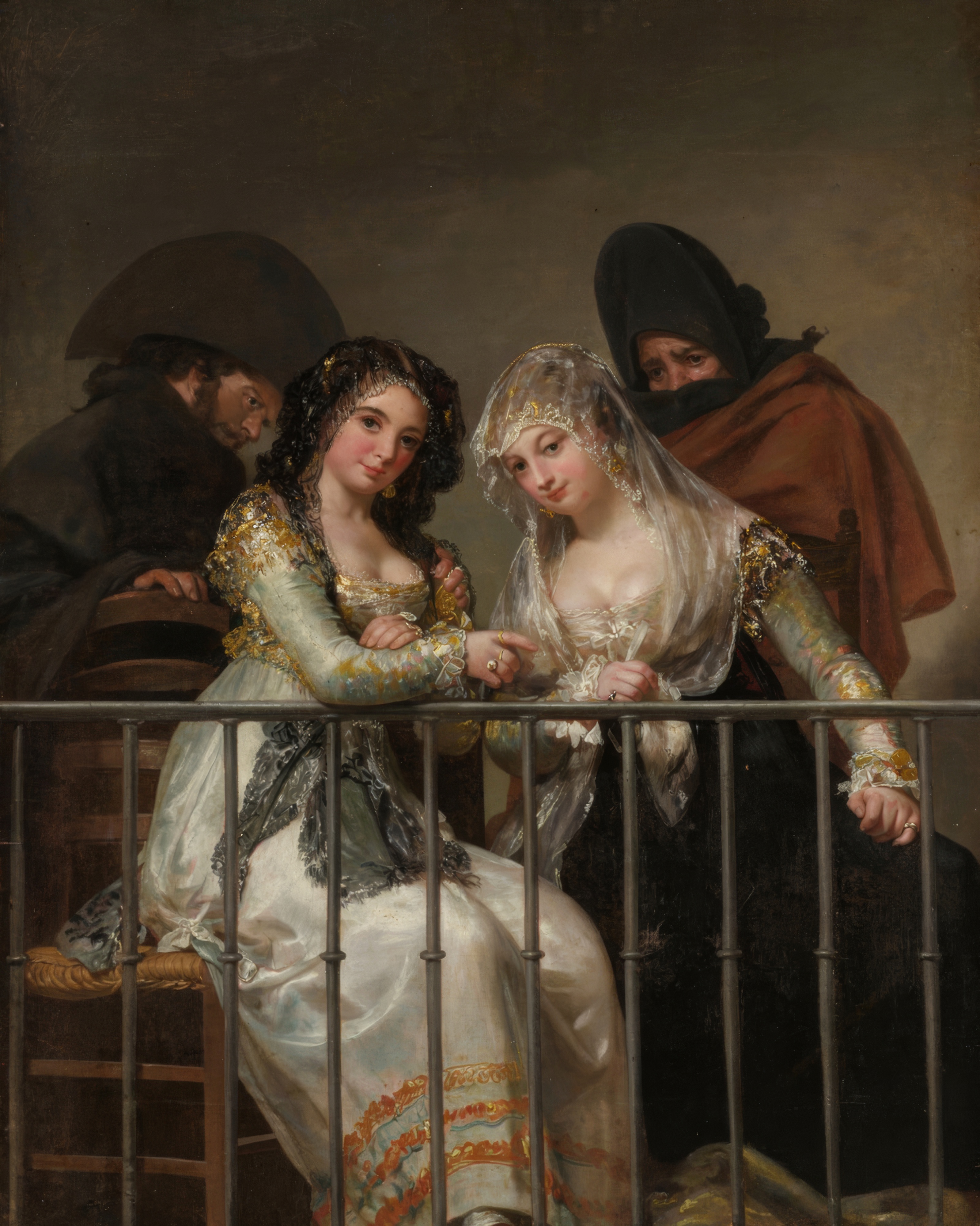
Goya, Majas on a Balcony, ca. 1800–1810. Oil on canvas. The Metropolitan Museum of Art, New York.
Two majas, the fashionable women of Madrid, sit at a balcony while two cloaked men lurk in the shadows. Goya’s mix of glamour and menace is unforgettable.
10. The Erl-King
Moritz von Schwind, The Erl-King, c. 1830.
From Goethe’s ballad: a father rides through the night with his sick child while the Erl-King, a spirit of the forest, calls to the boy. Moritz von Schwind paints the terror of the ride.
11. The Quarrel of Oberon and Titania
Joseph Noel Paton, The Quarrel of Oberon and Titania, 1849.
From A Midsummer Night’s Dream: Oberon and Titania argue in a moonlit wood full of fairies and goblins. Joseph Noel Paton painted every one of hundreds of tiny figures.
12. The Fairy Feller's Master-Stroke
Richard Dadd, The Fairy Feller's Master-Stroke, 1855–64.
Richard Dadd painted this over nine years in a psychiatric hospital. A crowd of fairies waits for a woodsman to split a hazelnut with one blow. Every inch is crammed with detail.
A picture people will stand in front of for a long time.
13. In a Shoreham Garden
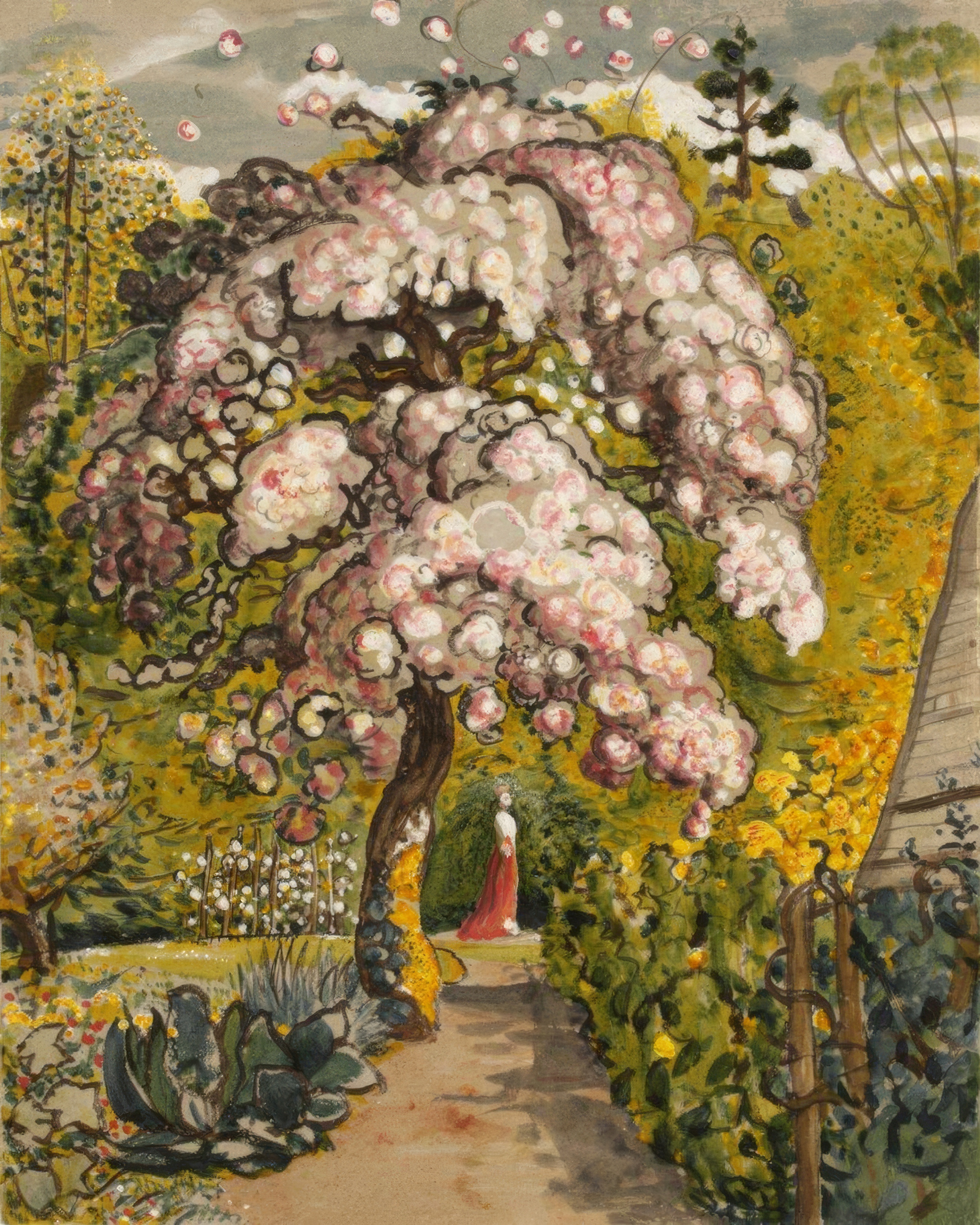
Samuel Palmer, In a Shoreham Garden, ca.1830. Victoria and Albert Museum, London.
Samuel Palmer, a follower of William Blake, painted the Kent village of Shoreham as a visionary paradise. His garden bursts with blossom as if seen in a dream.
14. Branch Hill Pond, Hampstead
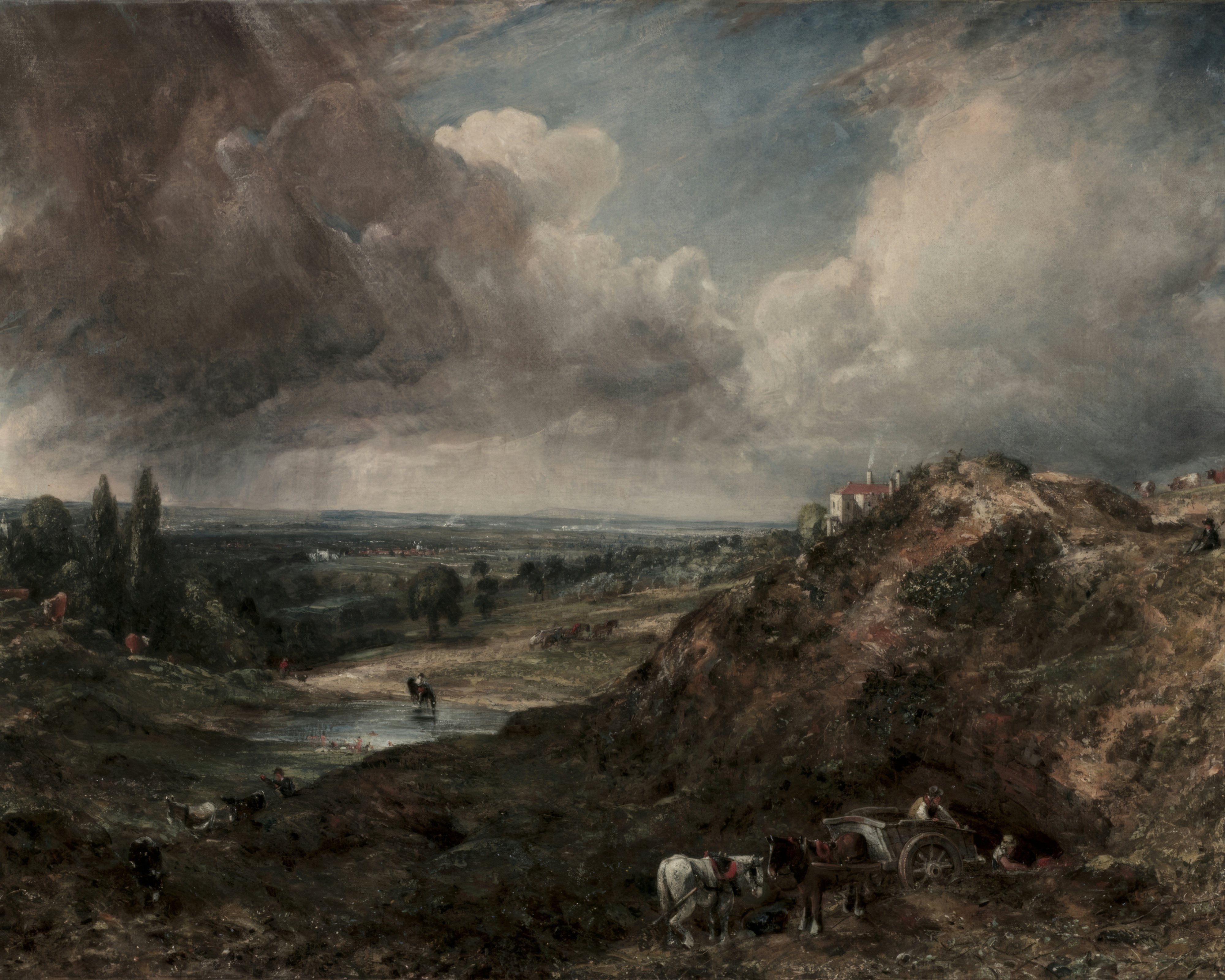
John Constable, Branch Hill Pond, Hampstead, 1828. Oil on canvas. Cleveland Museum of Art.
Constable moved to Hampstead in the 1820s and painted its skies obsessively. In Branch Hill Pond the clouds are the real subject, rolling over the heath like weather you can feel.
15. Schloss Milkel in Moonlight
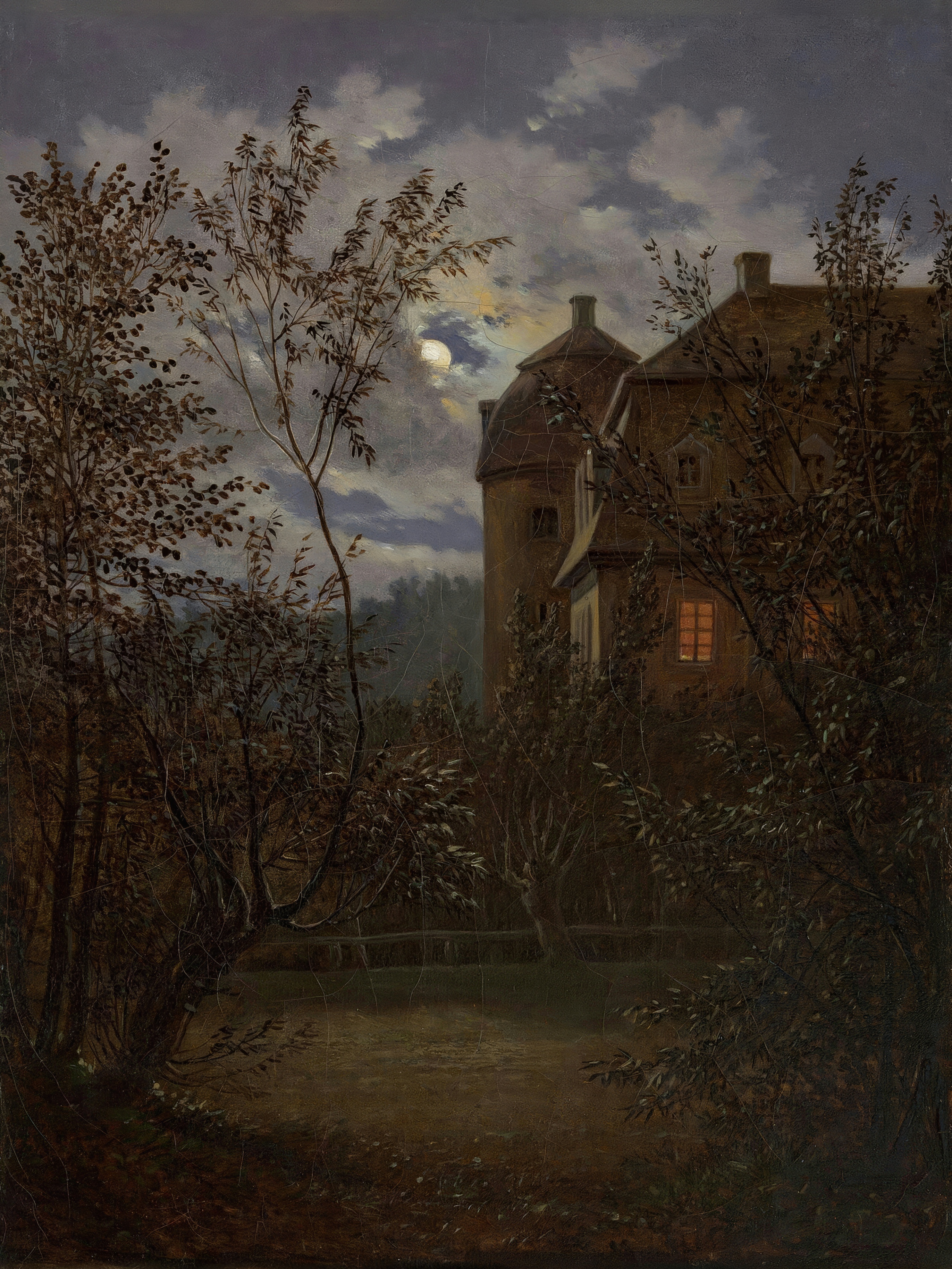
Carl Gustav Carus, Schloss Milkel in Moonlight, 1833–35. Oil on canvas. Metropolitan Museum of Art.
Carl Gustav Carus, friend of Friedrich, painted this Saxon castle by moonlight in the 1830s. It is also one of Fable’s home styles: send a photo of a house and see it under the same moon.
Create your portrait in this style
Romantic paintings want atmosphere: hang them in a room with low, warm light, or on a deep blue, green or grey wall. A single large landscape becomes the window of the room.
Questions
What is Romanticism in art?
A movement from about 1790 to 1850 that valued emotion, imagination and the power of nature over reason and order. Its painters include Friedrich, Turner, Constable, Delacroix, Géricault, Goya and Fuseli.
Is romantic art the same as Romanticism?
Not quite. Romanticism is the historical movement; romantic art in everyday speech means art about love. Some works are both, but most Romantic paintings are about nature, drama and the sublime.
What is the sublime?
An idea central to Romanticism: the mix of awe and fear we feel before something vast or powerful, such as a mountain, a storm or the sea.