Terracotta wall art: 12 paintings in clay and rust
Böcklin’s forge, Courbet’s portraits, Ford Madox Brown’s Lear and a prairie on fire: twelve paintings in clay, rust and burnt orange.
Terracotta is the colour of fired clay: warm, earthy and calm. It came into our homes through Mediterranean tiles and pots, and now fills living rooms, kitchens and bedrooms as paint, linen and velvet. Earth tones like rust, clay and burnt orange sit easily with natural wood, plants and stone.
Here are twelve paintings in terracotta, in three groups: rust and clay landscapes, terracotta portraits, and earthy colours from Japan and India.
Rust and clay
Earthy reds and browns for living rooms and kitchens.
1. Château Interior
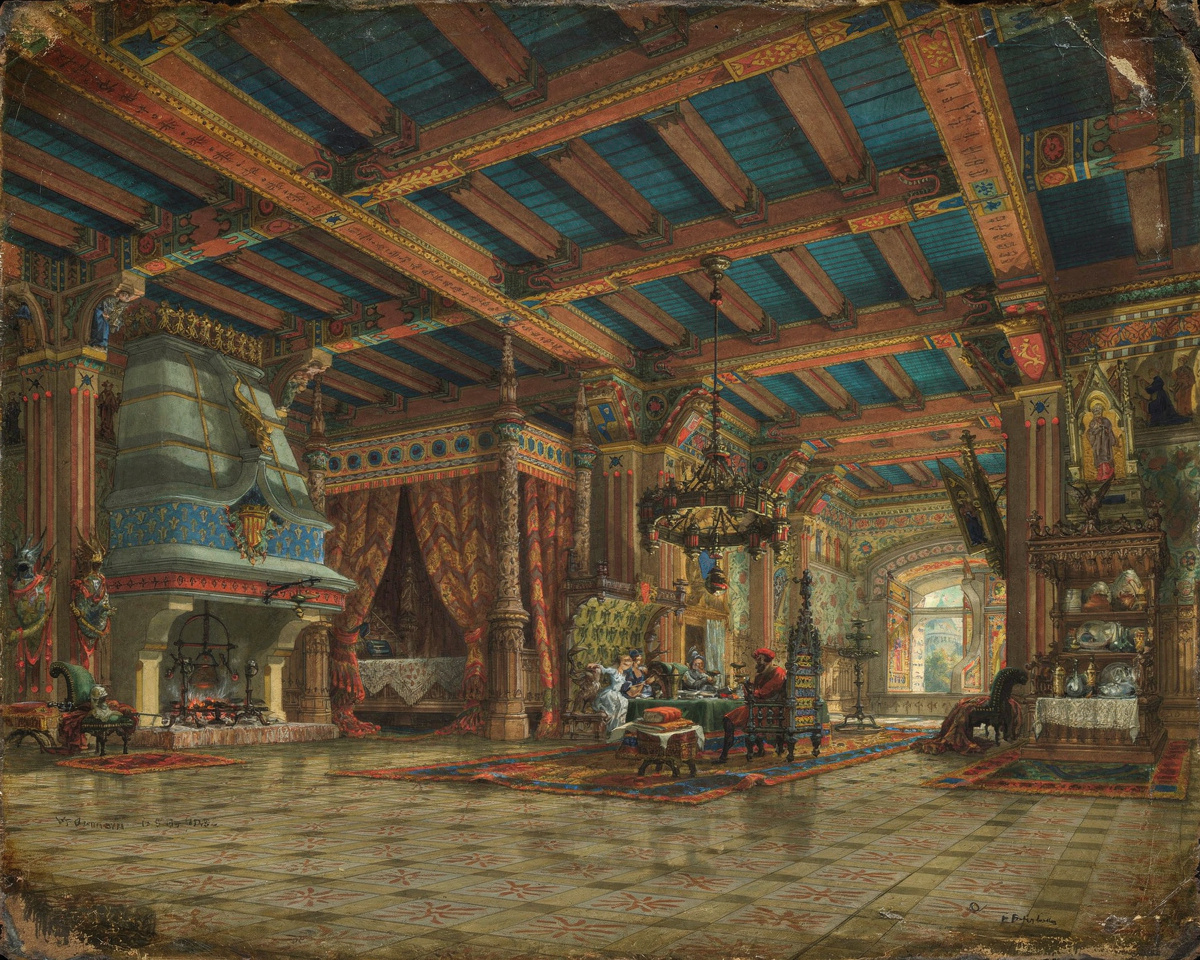
V. Germain, Château Interior, 1834. Pen and ink, watercolor, gouache with graphite underdrawing on heavy cream wove paper. Cleveland Museum of Art.
This watercolour of 1834 by V. Germain shows the romantic French taste for medieval interiors.
Terracotta, teal and stone.
2. Centaur at the Village Blacksmith's Shop
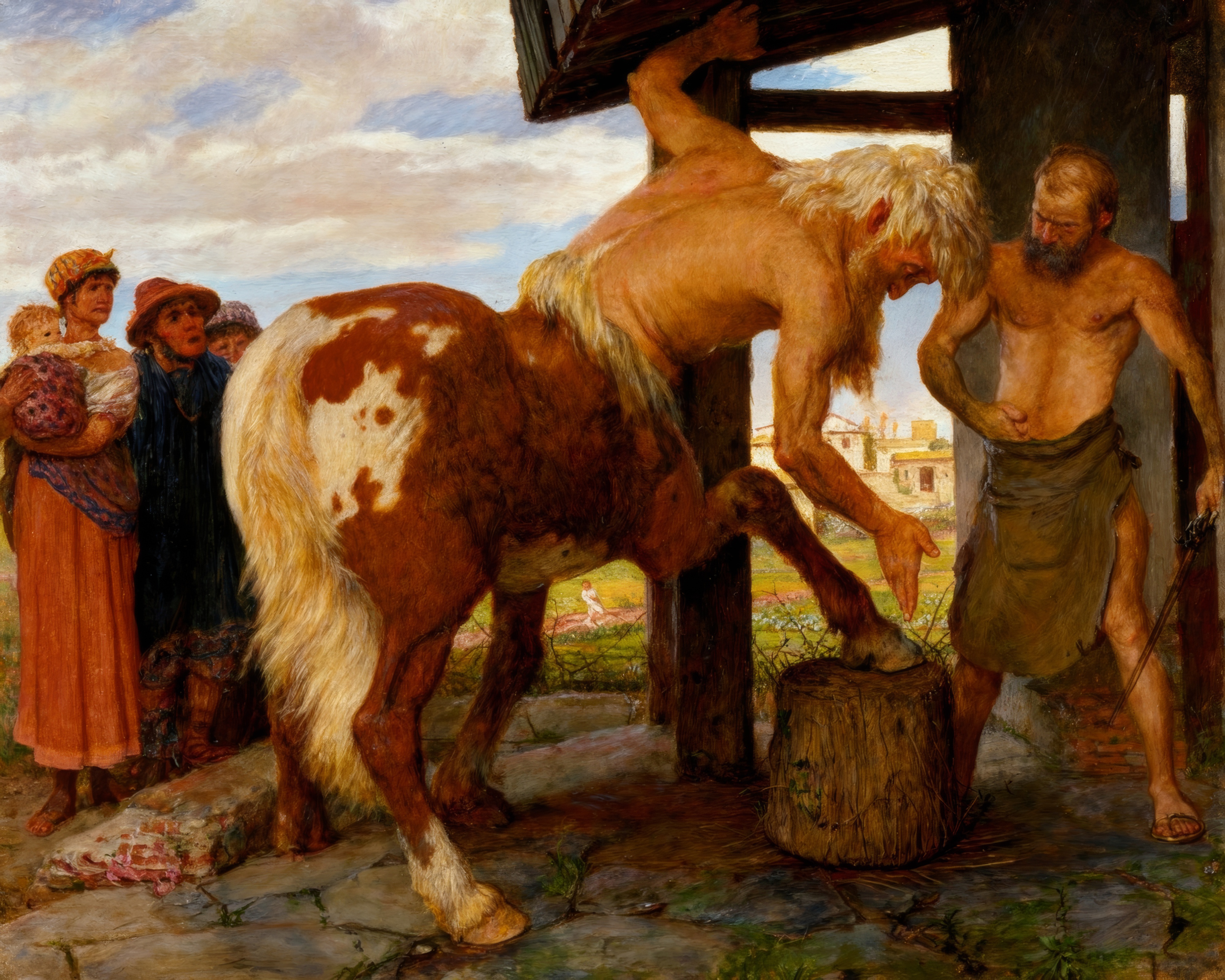
Arnold Böcklin, Centaur at the Village Blacksmith's Shop, 1888. Oil on canvas. Museum of Fine Arts, Budapest.
Arnold Böcklin painted this mythical visitor to an ordinary village smithy in 1888.
Rust, clay and soot black.
3. Farmland in Early Spring
Arnold Böcklin, Farmland in Early Spring /, 1884.
Arnold Böcklin painted this quiet landscape of ploughed fields in 1884.
Clay brown, spring green and mist.
4. The Prairie on Fire
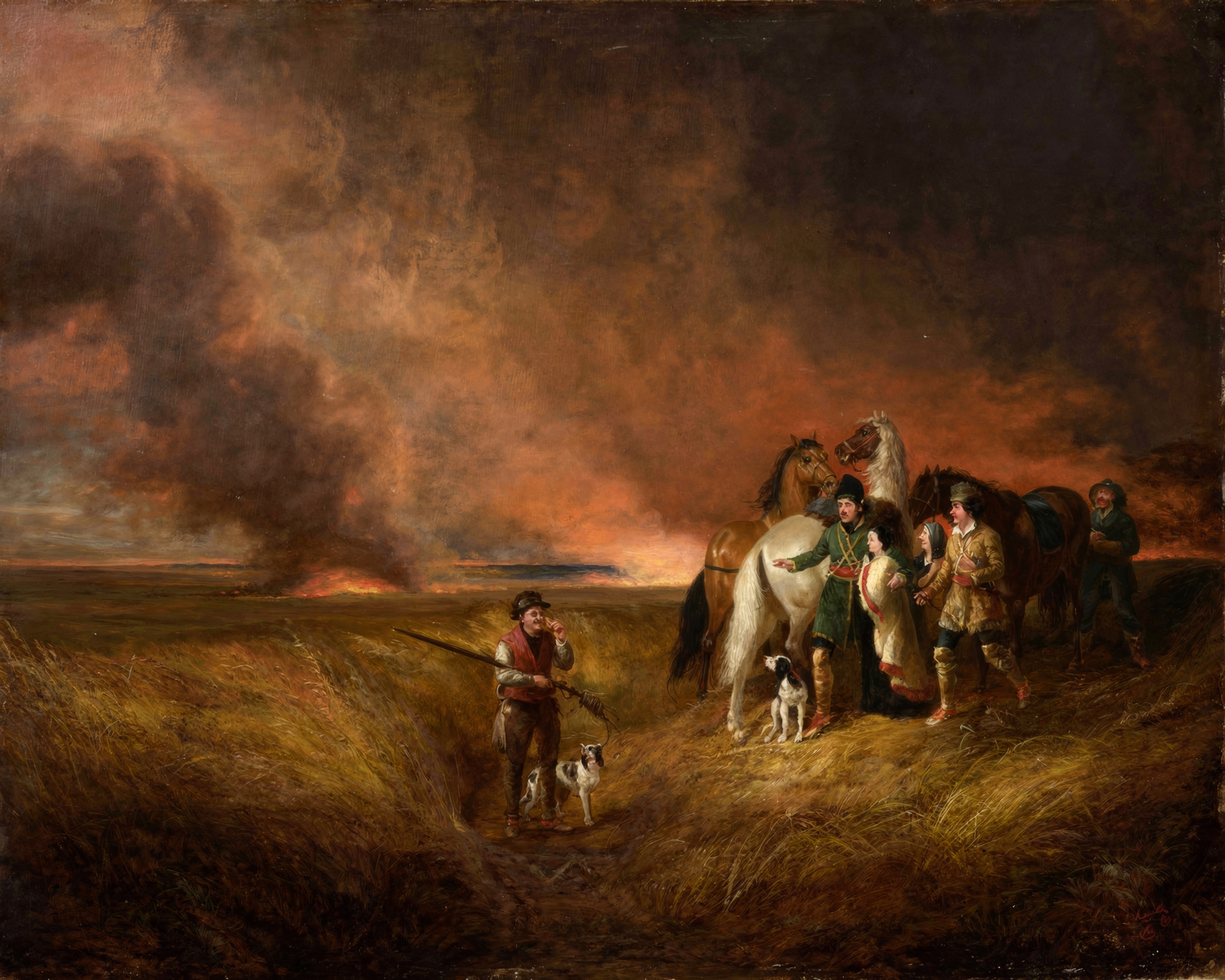
Alvan Fisher, The Prairie on Fire, 1827. Oil on canvas. Art Institute of Chicago.
Alvan Fisher, one of the first American landscape painters, painted this drama of the frontier in 1827.
Burnt orange, smoke and umber.
Terracotta portraits
Warm, earthy faces and fabrics for bedrooms and studies.
5. Mme L . . . (Laure Borreau)
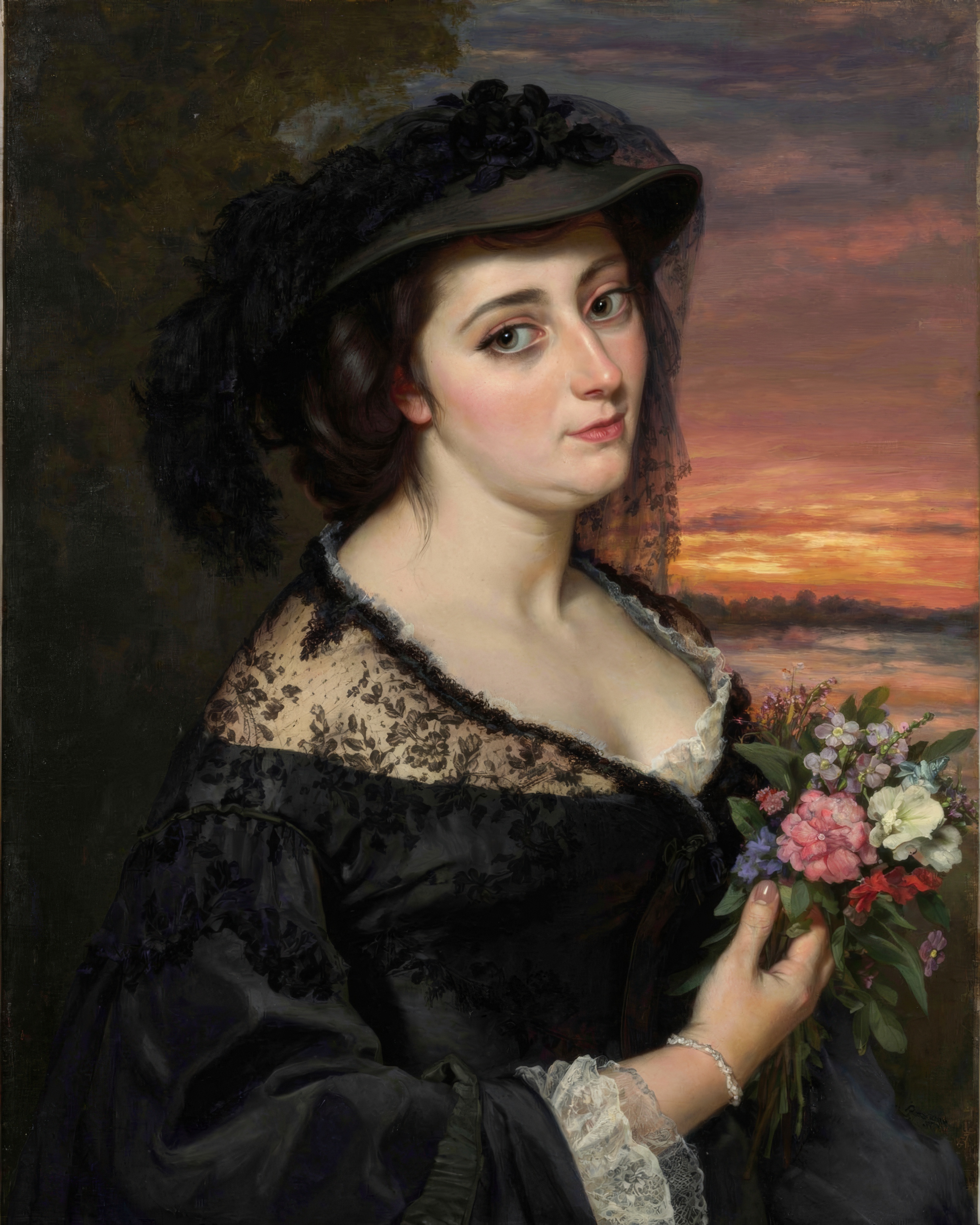
Gustave Courbet, Mme L . . . (Laure Borreau), 1863. Oil on fabric. Cleveland Museum of Art.
Gustave Courbet painted Laure Borreau in 1863; the year before, he had painted her daughter Gabrielle.
Terracotta and blush on near black.
6. Saint Maurice
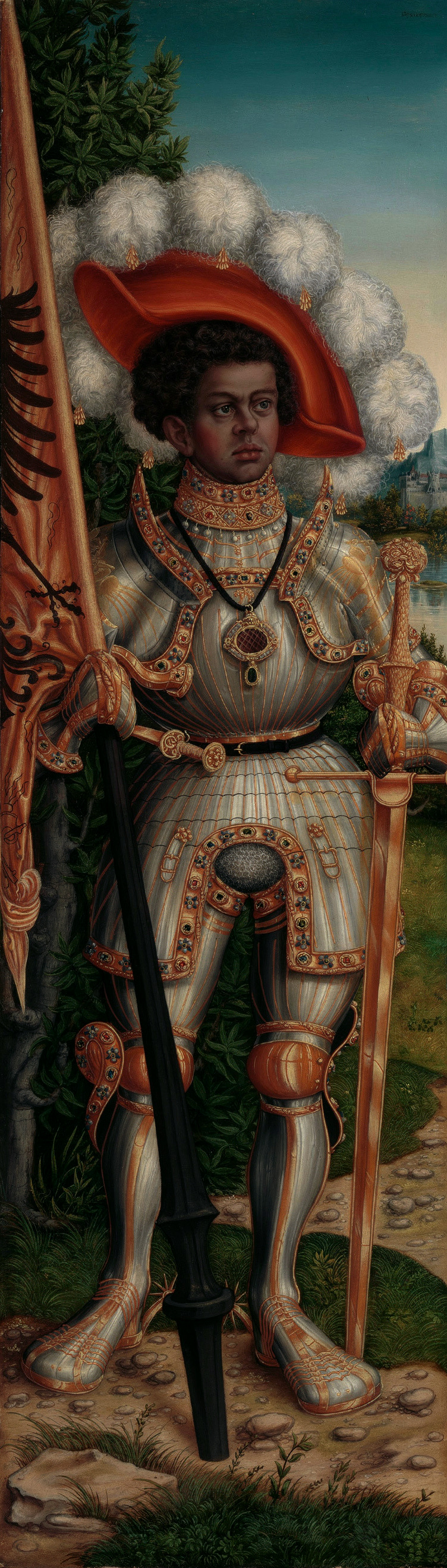
Lucas Cranach the Elder and Workshop, Saint Maurice, ca. 1520–25. Oil on linden. The Metropolitan Museum of Art, New York.
Lucas Cranach the Elder and his workshop painted Saint Maurice, commander of the Theban Legion, around 1520–25.
Rust red, silver and ochre.
7. Madonna and Child
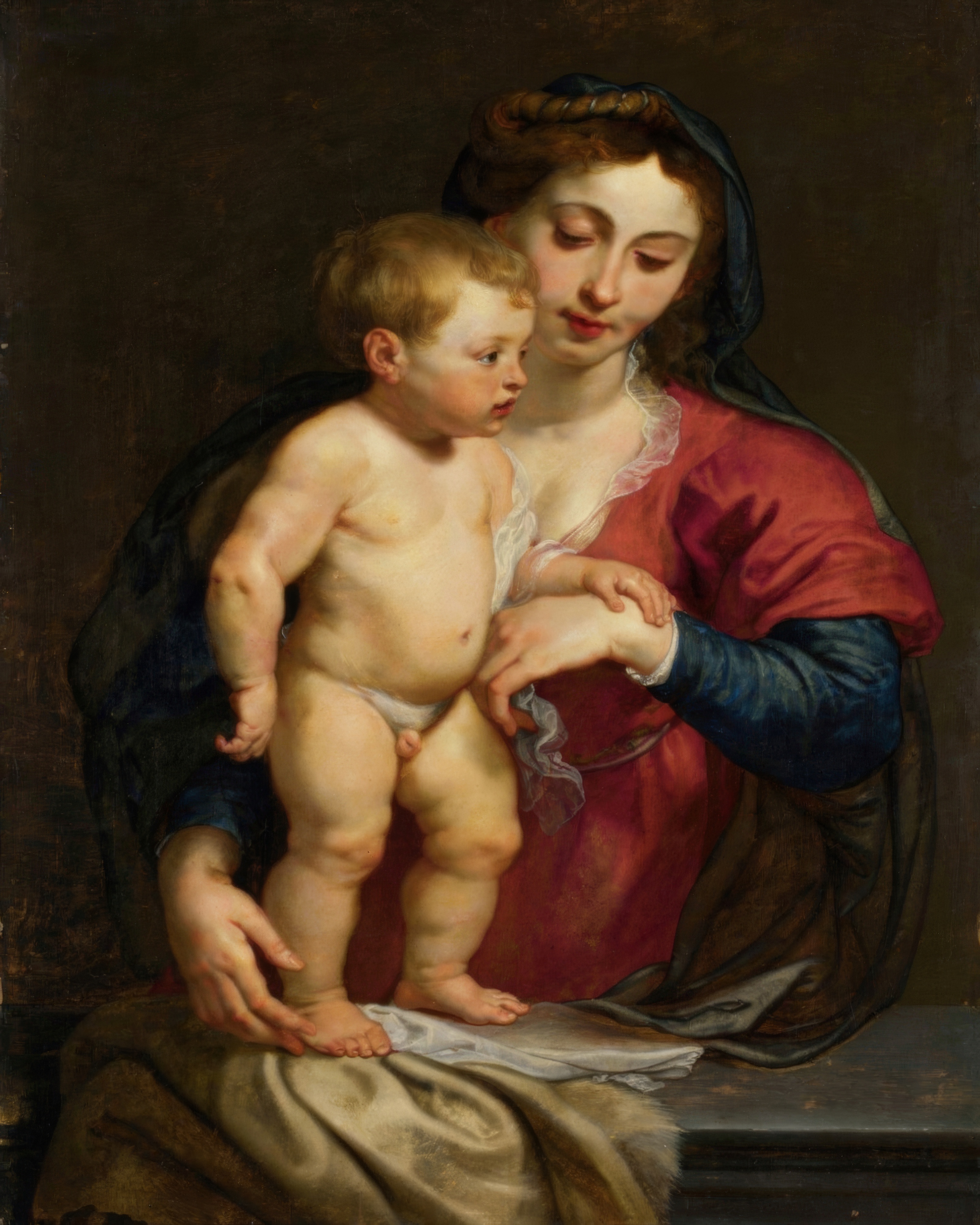
Peter Paul Rubens, Madonna and Child, 1610s. Oil on wood. Smithsonian American Art Museum.
Peter Paul Rubens painted this tender Madonna in the 1610s, soon after returning to Antwerp from Italy.
Clay, rose and slate blue.
8. Cordelia Parting from her Sisters
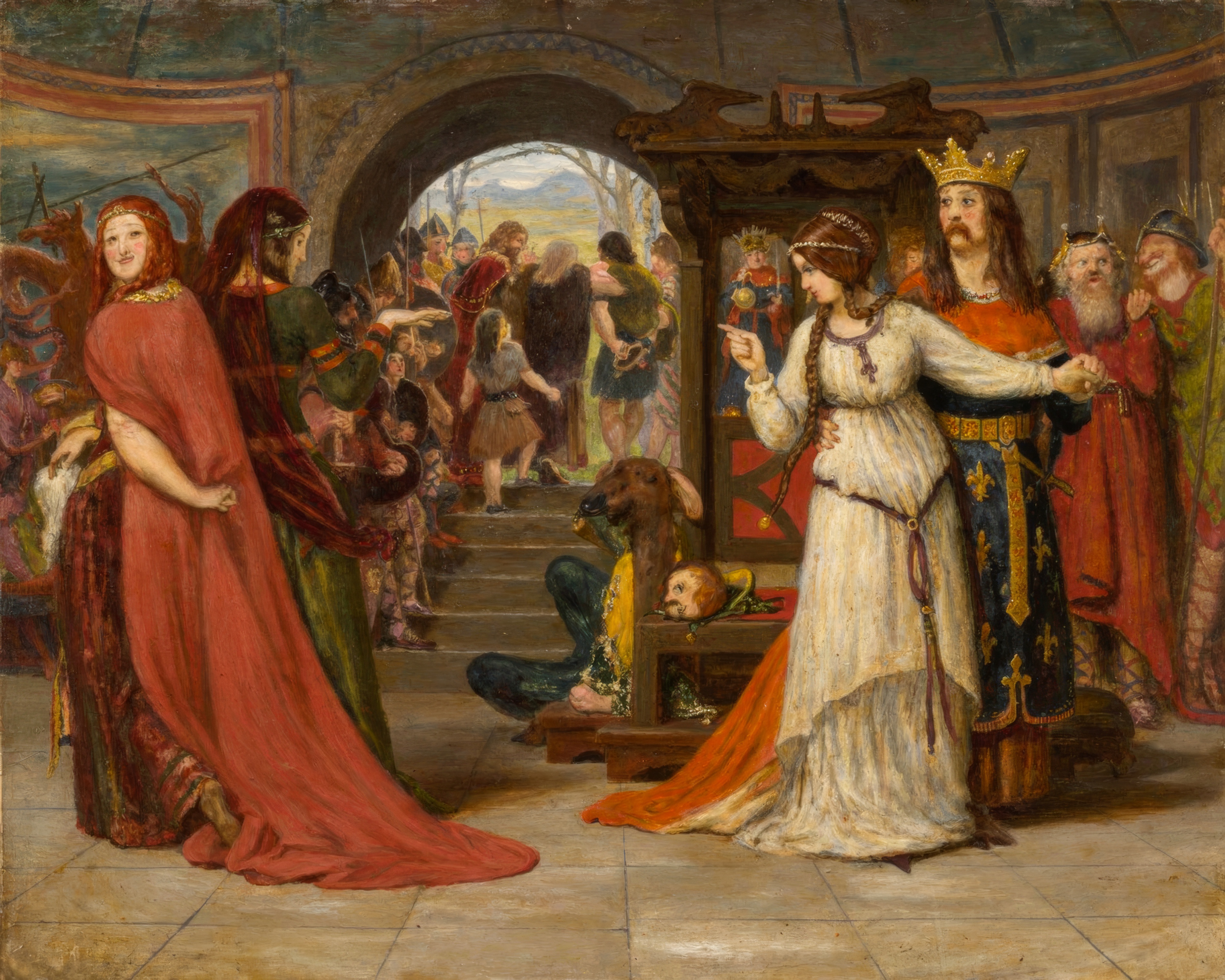
Ford Madox Brown, Cordelia Parting from her Sisters, 1854. Pen and oil on paper on panel. Cleveland Museum of Art.
Ford Madox Brown made this scene from Shakespeare’s King Lear in 1854.
Rust, ochre and scarlet.
Earthy colours from Japan and India
Clay and rust in prints and manuscript pages.
9. Autumn Maples at Takinogawa
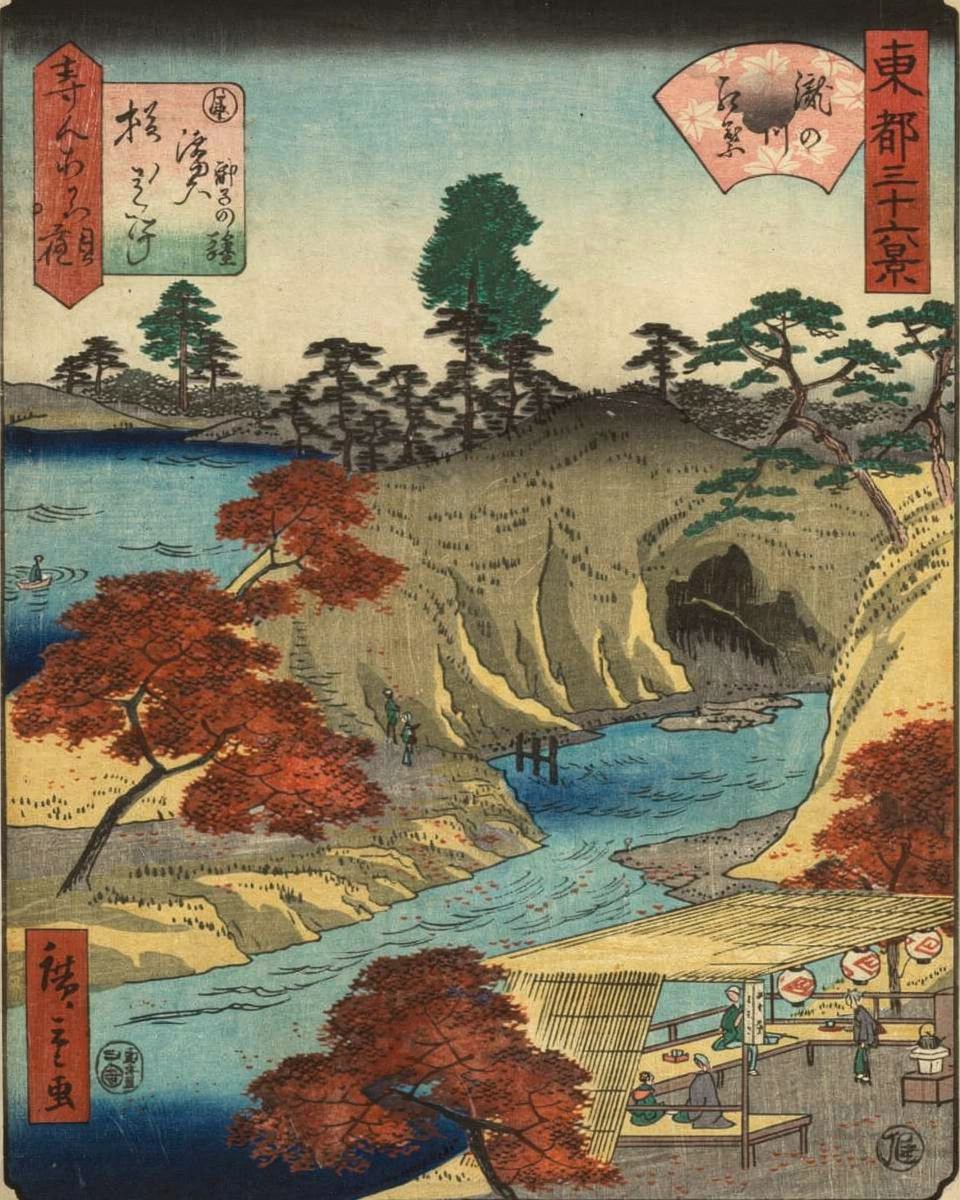
Utagawa Hiroshige II, THIRTY-SIX VIEWS OF YEDO, "TAKINOGAWA KOYO", Late Edo period, 1862. Ink on paper. Harvard Art Museums.
Utagawa Hiroshige II made this print in 1862 for his Thirty-Six Views of Edo.
Rust red, teal and straw.
10. Iris Garden
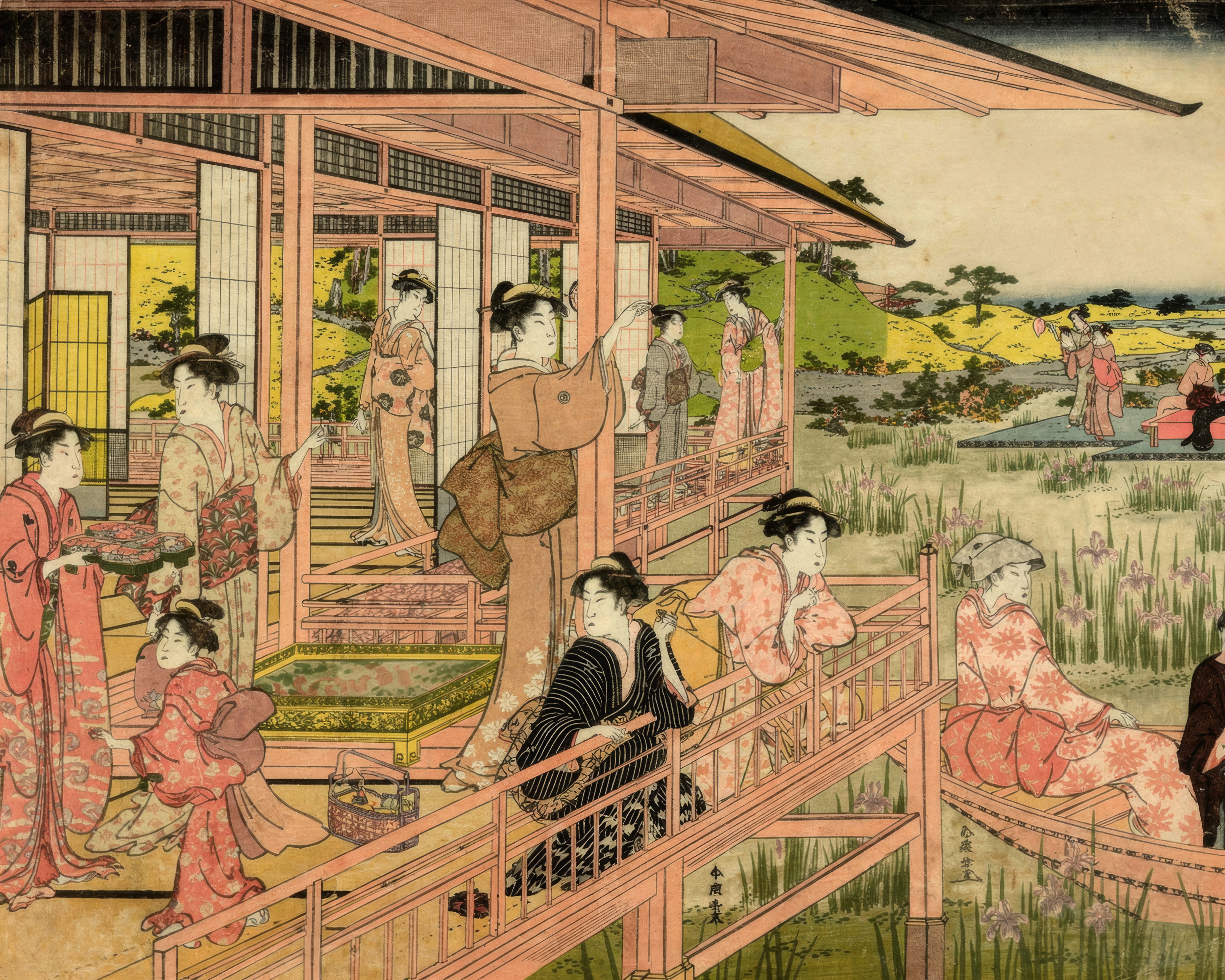
Katsukawa Shuncho, Iris Garden, c. 1781/89. Color woodblock print; oban triptych. Art Institute of Chicago.
Katsukawa Shunchō made this triptych in the 1780s, when tall, elegant beauties were the height of fashion.
Clay pink, moss and terracotta.
11. The Defeat of Jatayu
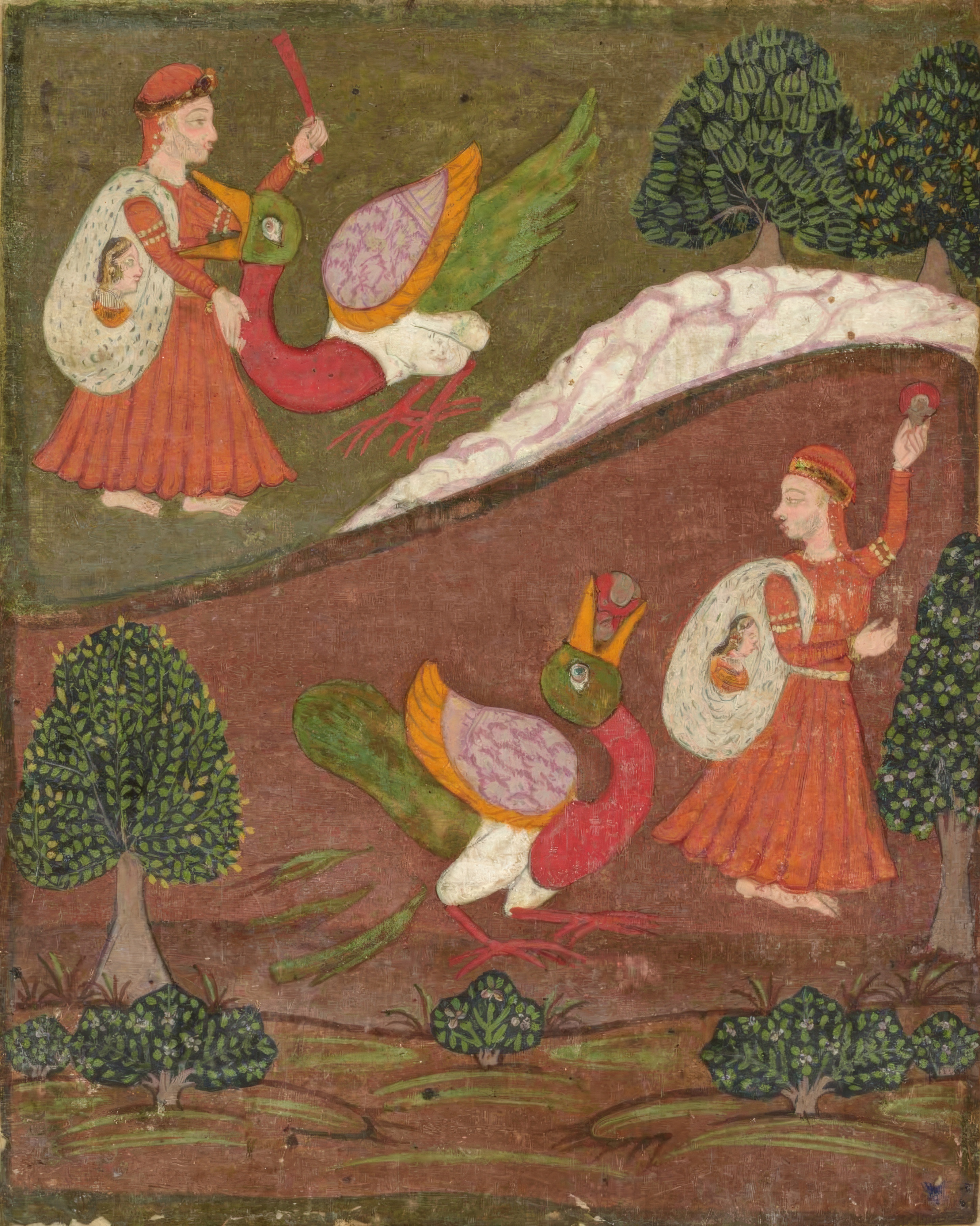
Indian painter, The Defeat of Jatayu, 1744–45. Gum tempera, ink, and gold on paper. Cleveland Museum of Art.
This page of the Ramayana was painted in north India in 1744–45.
Burnt orange, saffron and earth.
12. The Bride's Courtyard
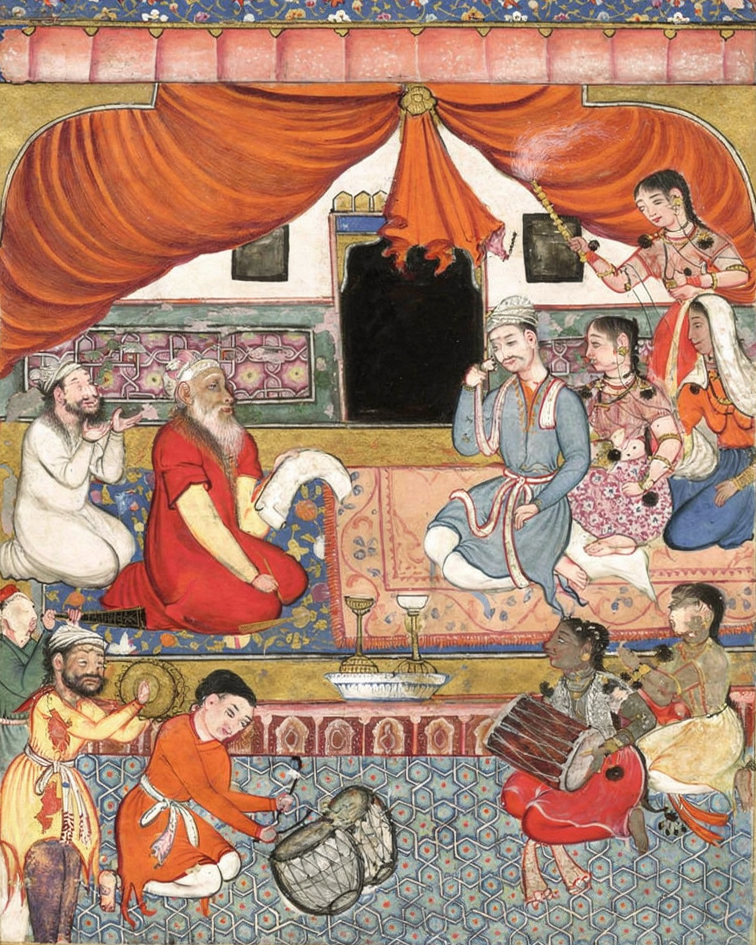
Mughal painter, The Bride's Courtyard, c. 1560. Gum tempera, ink, and gold on paper. Cleveland Museum of Art.
This page of the Tuti-nama, the Tales of a Parrot, was painted in Akbar’s studio around 1560.
Terracotta, sky blue and saffron.
Terracotta loves sage, olive, cream, sand, navy and teal, and natural materials like linen, rattan and oak. Brass and wood frames suit it better than black. For more, see orange wall art, colours that go with sage green and cottagecore decor.
Questions
What colours go with terracotta?
Sage and olive green, cream, sand, navy, teal and blush.
What art goes with terracotta walls?
Pictures with cream, sage, teal or gold, or warm earthy landscapes that echo the wall.
Is terracotta a warm or cool colour?
Warm. It is a muted orange brown, softer than true orange.
What frame goes with terracotta art?
Natural oak, walnut and brass.