An anniversary gift for your wife, chosen through her eyes
Choose an anniversary gift for wife with ten couple styles guided by her photographs, her taste and the life you share.
An anniversary gift for wife searches often end in lists of objects that could belong to almost anyone. A portrait starts somewhere more particular: with how she likes to be seen, the photographs she keeps and the art she already enjoys. Those clues are more reliable than choosing a style because it seems conventionally romantic.
A couple portrait can hold a shared memory without making her birthday, preferences or identity disappear into the marriage. The historical works below are references for Love stories styles, each offering a different mood. They are not finished customer portraits or promises of a particular result.
As you compare anniversary gifts for her, decide whether the gift should recall a wedding, a journey or an ordinary part of your life. Then choose a photograph she likes. If you are unsure, letting her make that choice can be a more thoughtful gift than protecting the surprise at all costs.
1. The Embrace: begin with the gesture she remembers
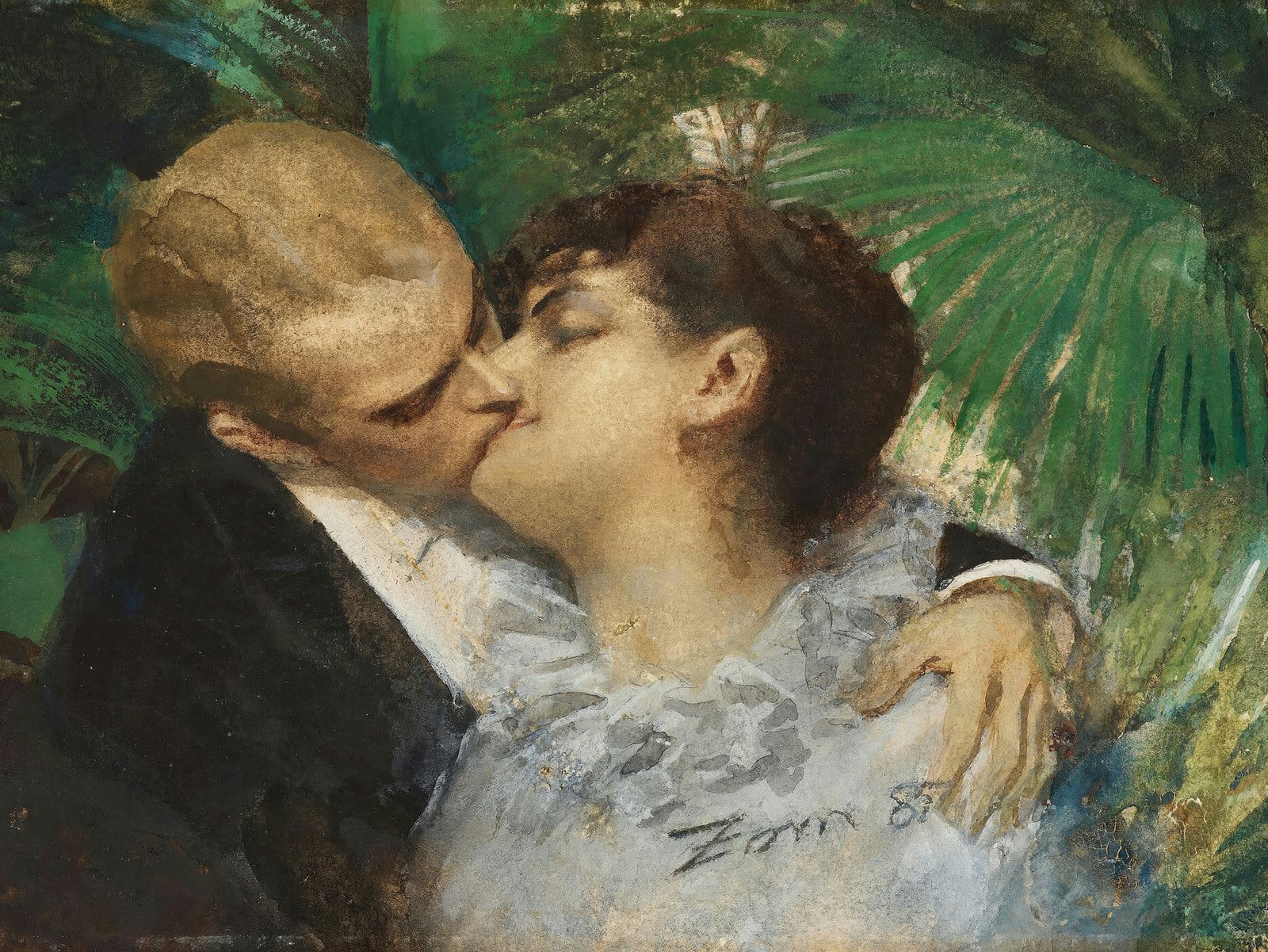
The Embrace · Anders Zorn · 1882–83 · Private collection
Zorn's reference puts affection at the centre of the idea. Choose this direction if she values the candid photograph more than the formal one. A remembered touch can matter more than an elaborate setting. Ask yourself whether she has ever chosen the source image herself; a photograph she saves or displays is a stronger starting point than one you alone prefer.
Explore this portrait style · Explore this artwork
2. The Morning Walk: recognise your everyday partnership
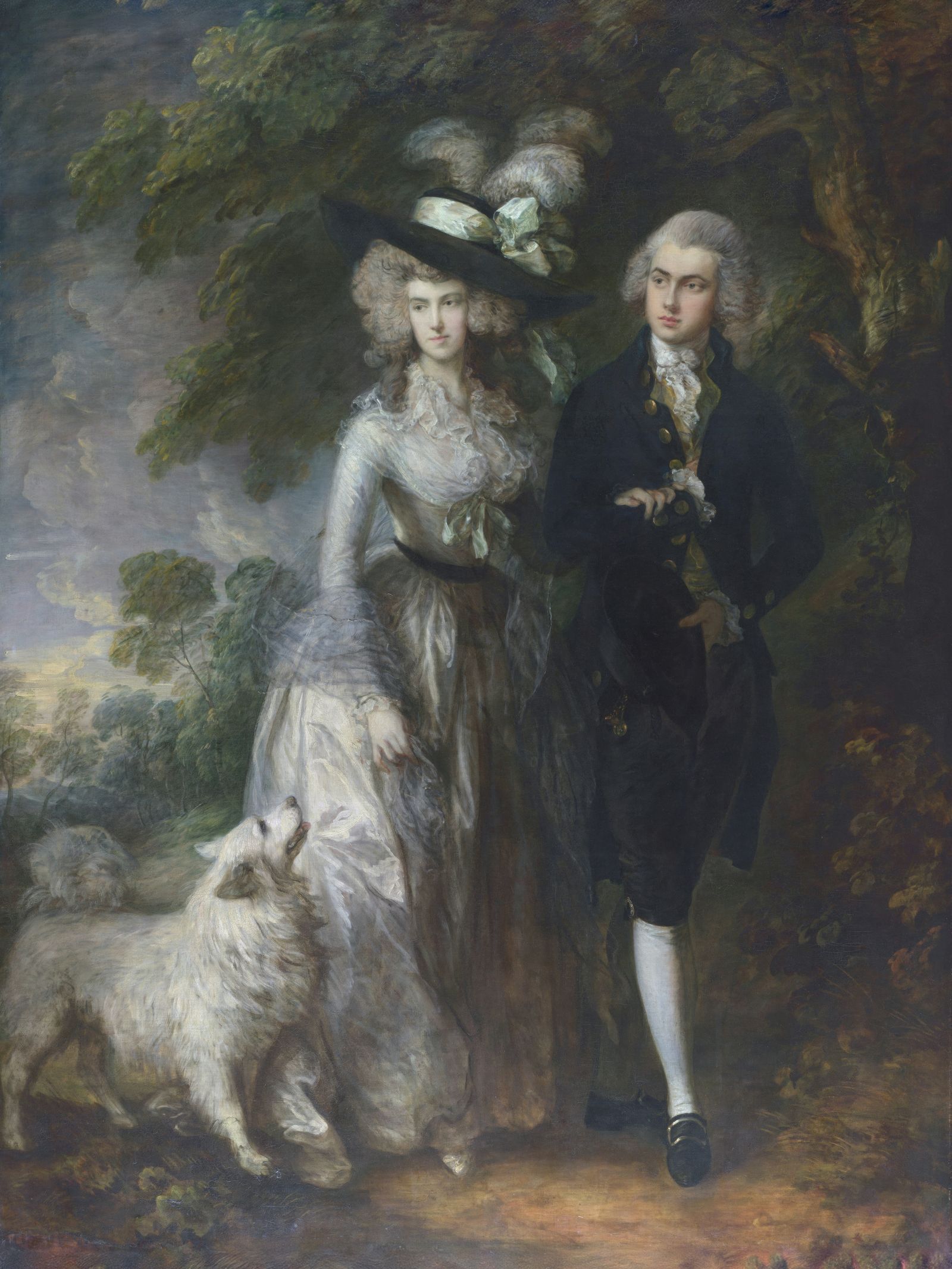
The Morning Walk (Mr and Mrs William Hallett) · Thomas Gainsborough · 1785 · National Gallery, London
Gainsborough's couple offers a companionable reference for a marriage built on small shared routines. This can suit the photograph from an ordinary Sunday as much as one from a holiday. Explain why you chose it in a short note. The anniversary gives the picture its occasion; the scene does not have to advertise that occasion every time she looks at it.
Explore this portrait style · Explore this artwork
3. Dance in the City: remember her pleasure
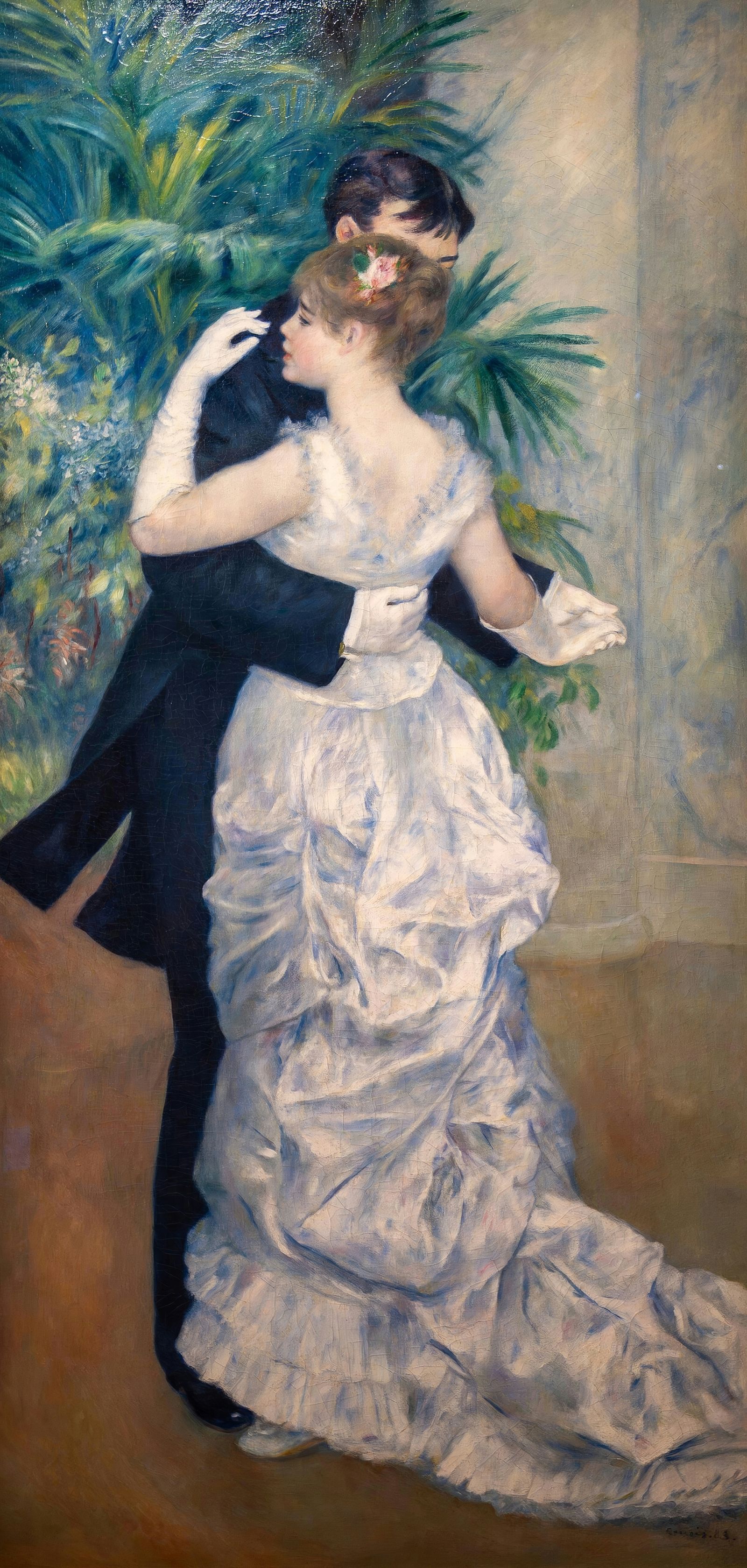
Dance in the City · Pierre-Auguste Renoir · 1883 · Musée d'Orsay, Paris
Choose Renoir's dance reference for someone who enjoys the social part of your shared life: dressing up, hearing music and finding a reason to go out. Look beyond the wedding album for an image. A photograph from a recent evening may honour who she is now more clearly. Check that both faces remain visible before starting from a dimly lit party picture.
Explore this portrait style · Explore this artwork
4. The Red Parasol: let the gift be lighthearted
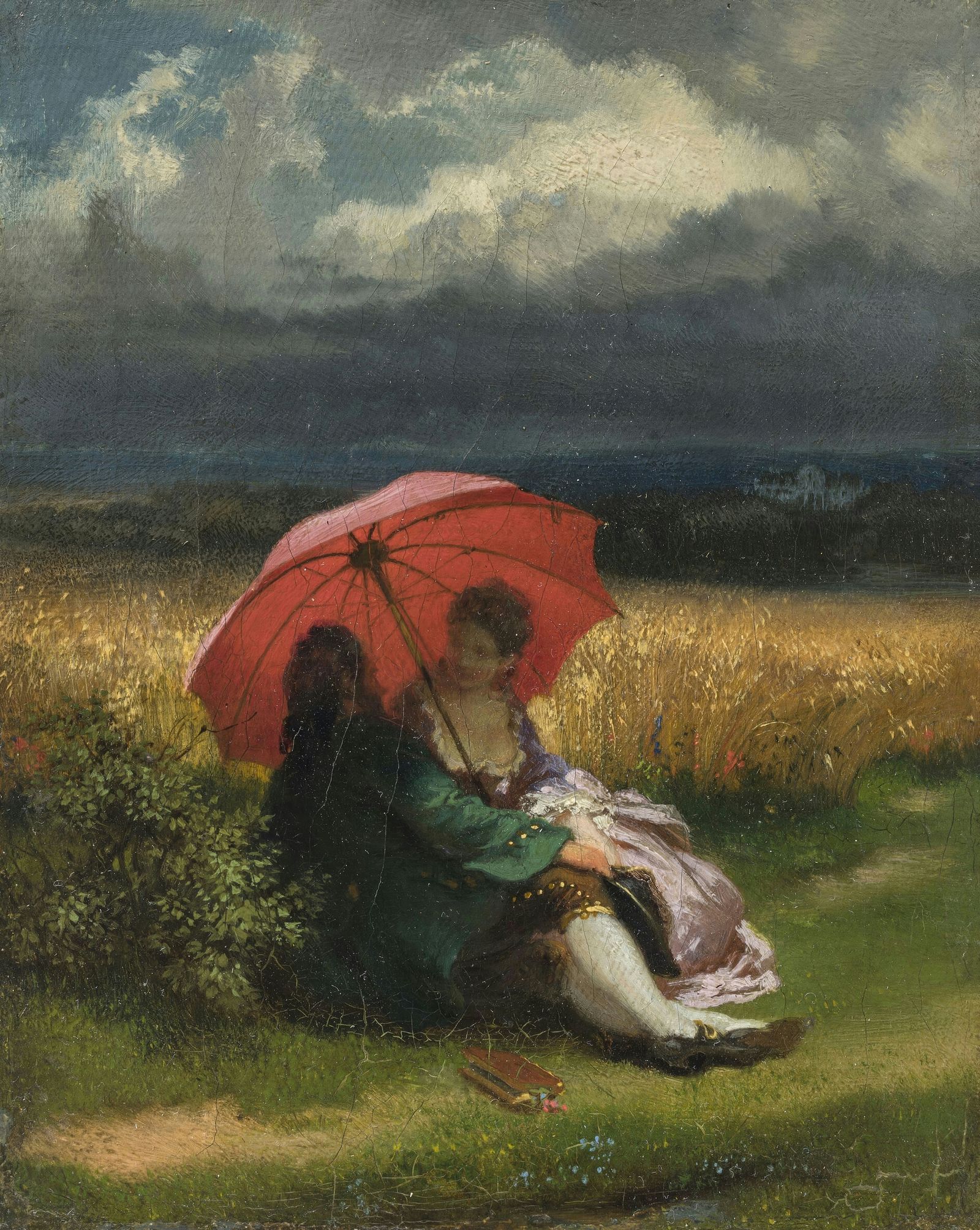
In the Summer (The Red Parasol) · Josef Mánes · 1855 · National Gallery Prague
This Mánes reference gives you permission to choose playfulness over grandeur. If your wife prefers a wry note to a solemn inscription, let the portrait carry that same ease. Select a source she finds flattering, rather than a photograph whose joke depends on her discomfort. A personal gift should make recognition pleasurable for the person receiving it.
Explore this portrait style · Explore this artwork
5. La Promenade: revisit a place without copying it
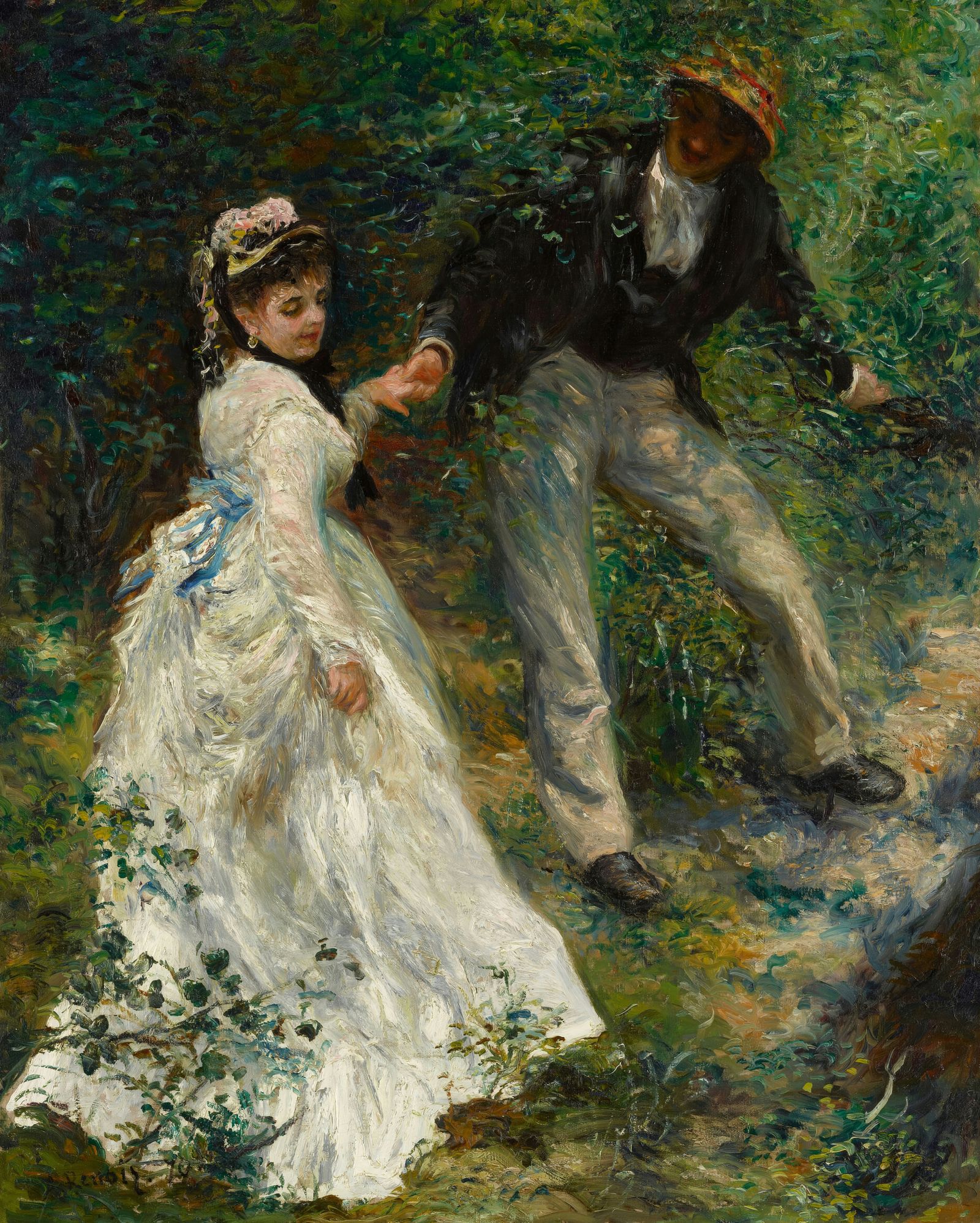
La Promenade · Pierre-Auguste Renoir · 1870 · J. Paul Getty Museum, Los Angeles
Renoir's walking reference can connect the portrait to a garden, a honeymoon route or somewhere you visit each year. The source location supplies a memory, while the historical style offers another setting for the two of you. Keep your reason for choosing the photograph specific. A single remembered detail is more useful than a generic dedication about love.
Explore this portrait style · Explore this artwork
6. Wedded: choose the wedding deliberately
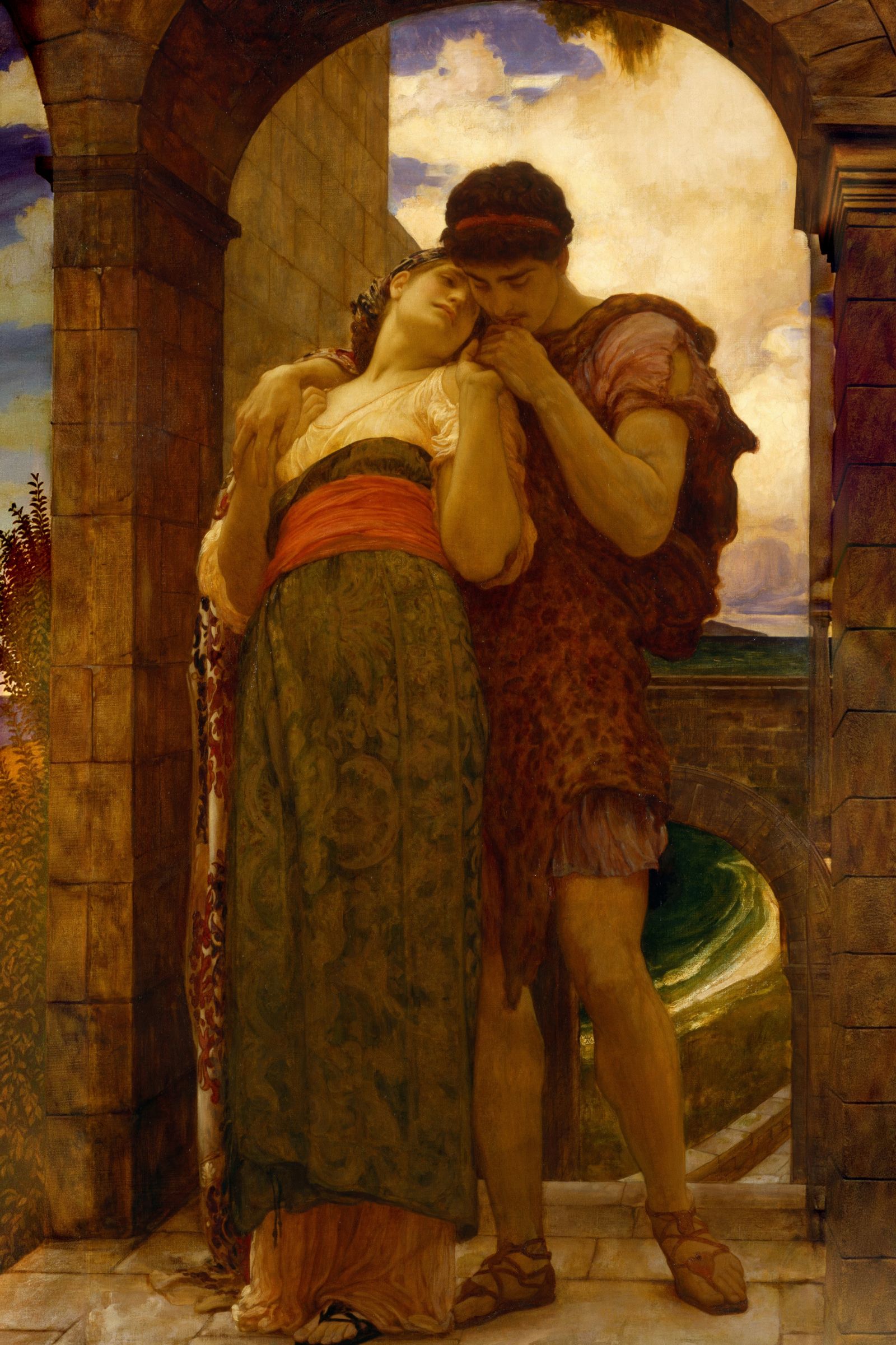
Wedded · Frederic Leighton · 1882 · Art Gallery of New South Wales, Sydney
Leighton's work is an explicit marital reference, so it suits a wife who still enjoys the symbolism of your wedding day. Compare the original photograph with one taken recently. You may discover that the later image feels more like the marriage you want to celebrate. There is no obligation to use the oldest available picture simply because this is an anniversary.
Explore this portrait style · Explore this artwork
7. Summer Evening at Skagen: consider her room
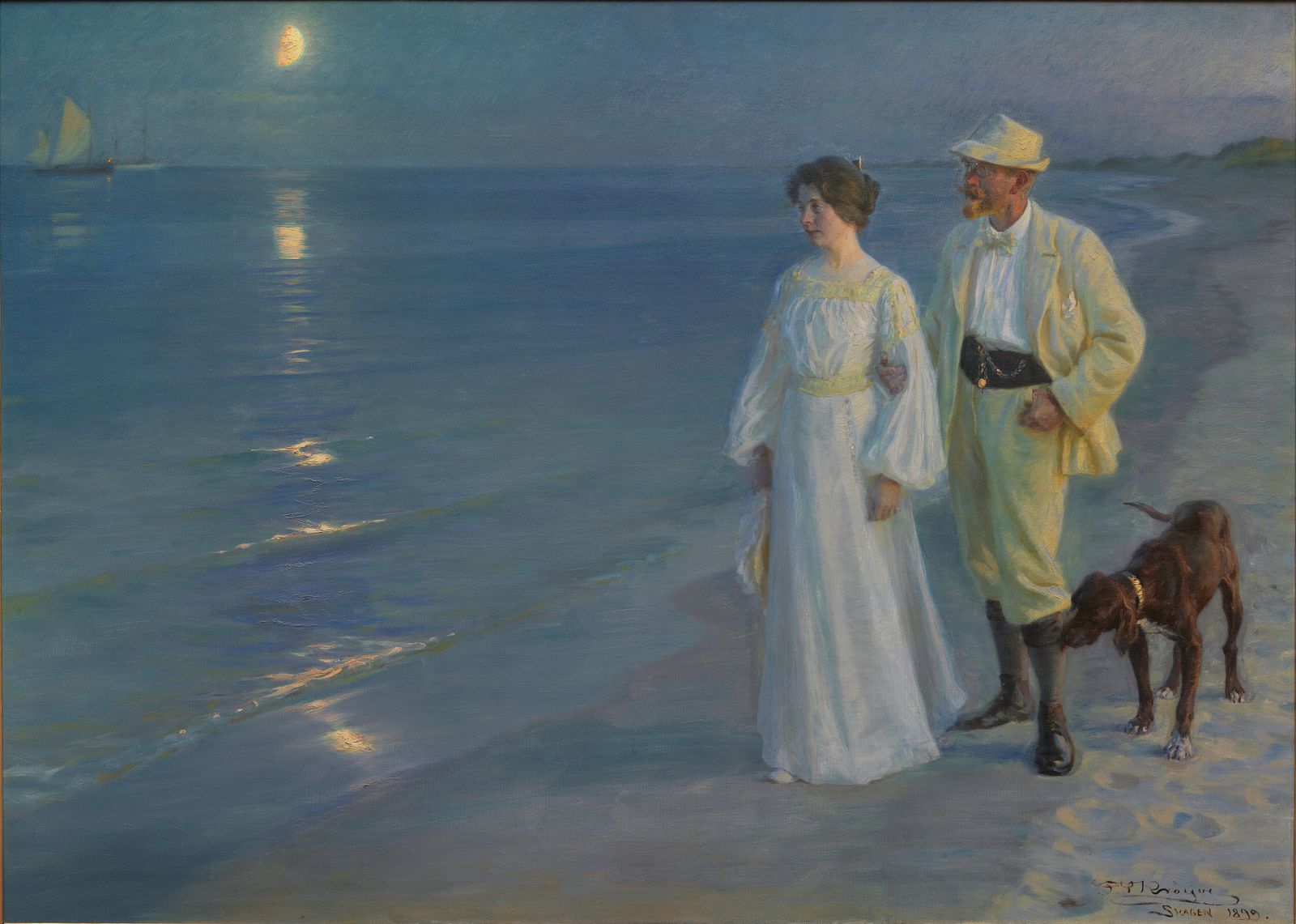
Summer Evening on Skagen's Beach · Peder Severin Krøyer · 1899 · Hirschsprung Collection, Copenhagen
Krøyer's couple reference is worth considering if she likes a calmer wall. Look at the art, furniture and photographs she has already chosen for the room. A portrait can join that arrangement without becoming its loudest object. Check the current format options after creating, and think about the space around the finished piece as carefully as the image itself.
Explore this portrait style · Explore this artwork
8. Laurits and Frederikke Tuxen: preserve two personalities
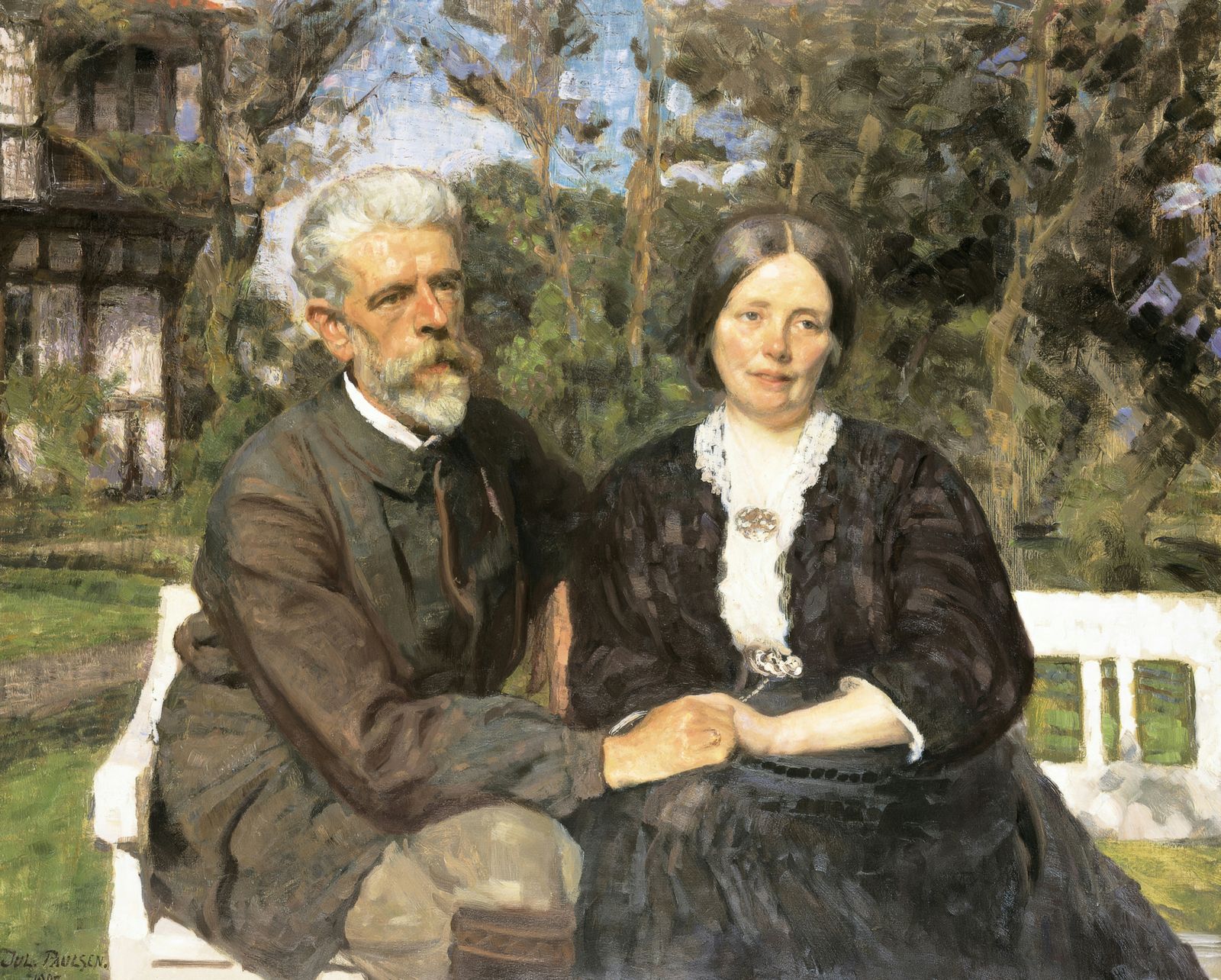
Double Portrait of Laurits and Frederikke Tuxen · Julius Paulsen · 1907 · Skagens Museum
A double portrait can be a way of showing partnership without erasing individual character. Paulsen's reference is a useful starting point for that thought. Choose a photograph where each person looks comfortable, even if the expressions differ. The most convincing source is not always the most symmetrical. It is often the one in which she would recognise you both immediately.
Explore this portrait style · Explore this artwork
9. An Out-of-Doors Study: honour something you do together
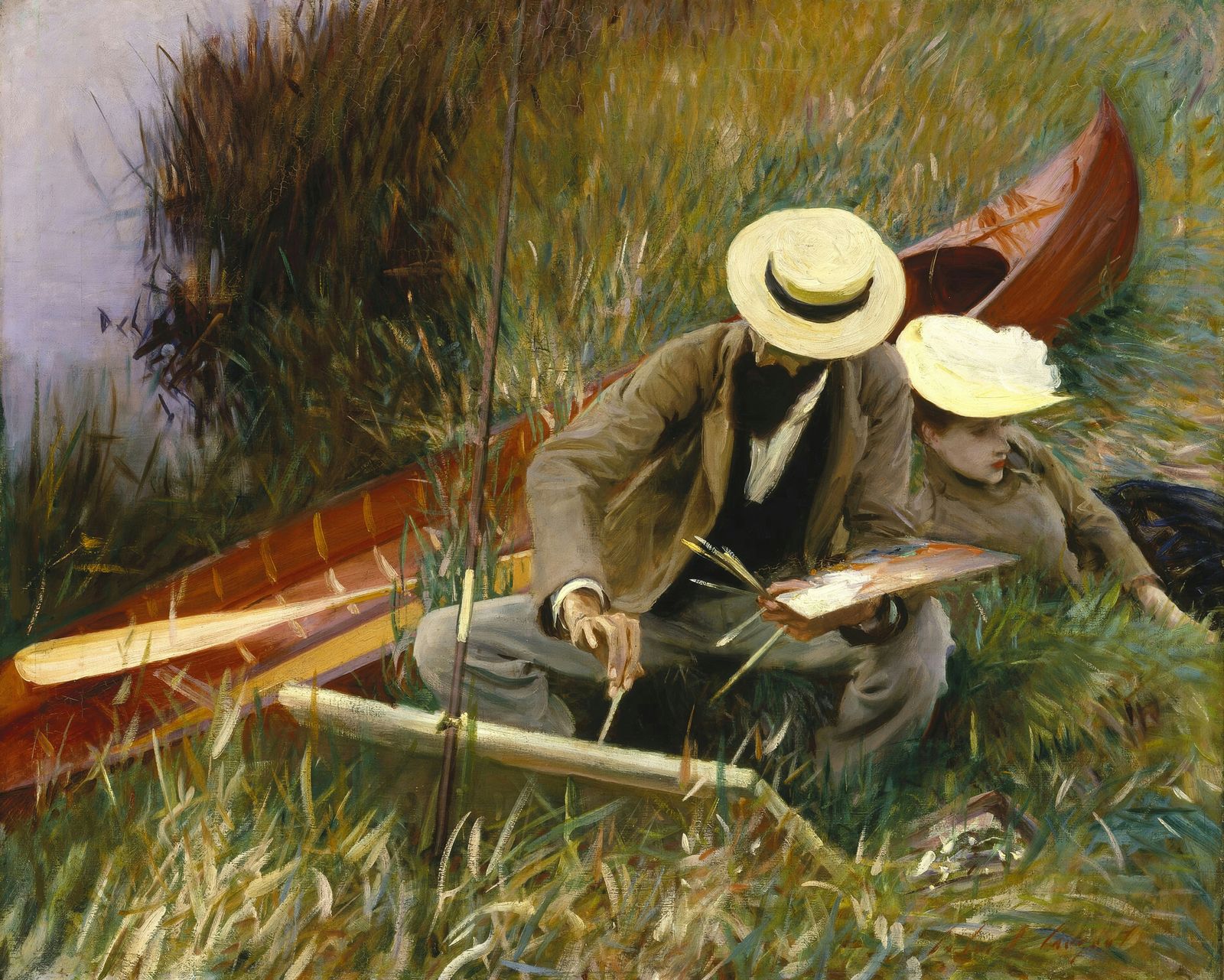
An Out-of-Doors Study (Paul Helleu and his Wife) · John Singer Sargent · 1889 · Brooklyn Museum
Sargent's reference suggests a gift rooted in shared interests. If you garden, draw or travel together, find a photograph associated with that activity. You need not ask the portrait to reproduce equipment, clothing and every background object. Let the source carry the memory and the style carry the mood, then explain the connection in your own words.
Explore this portrait style · Explore this artwork
10. Promise of Spring: look forward as well as back
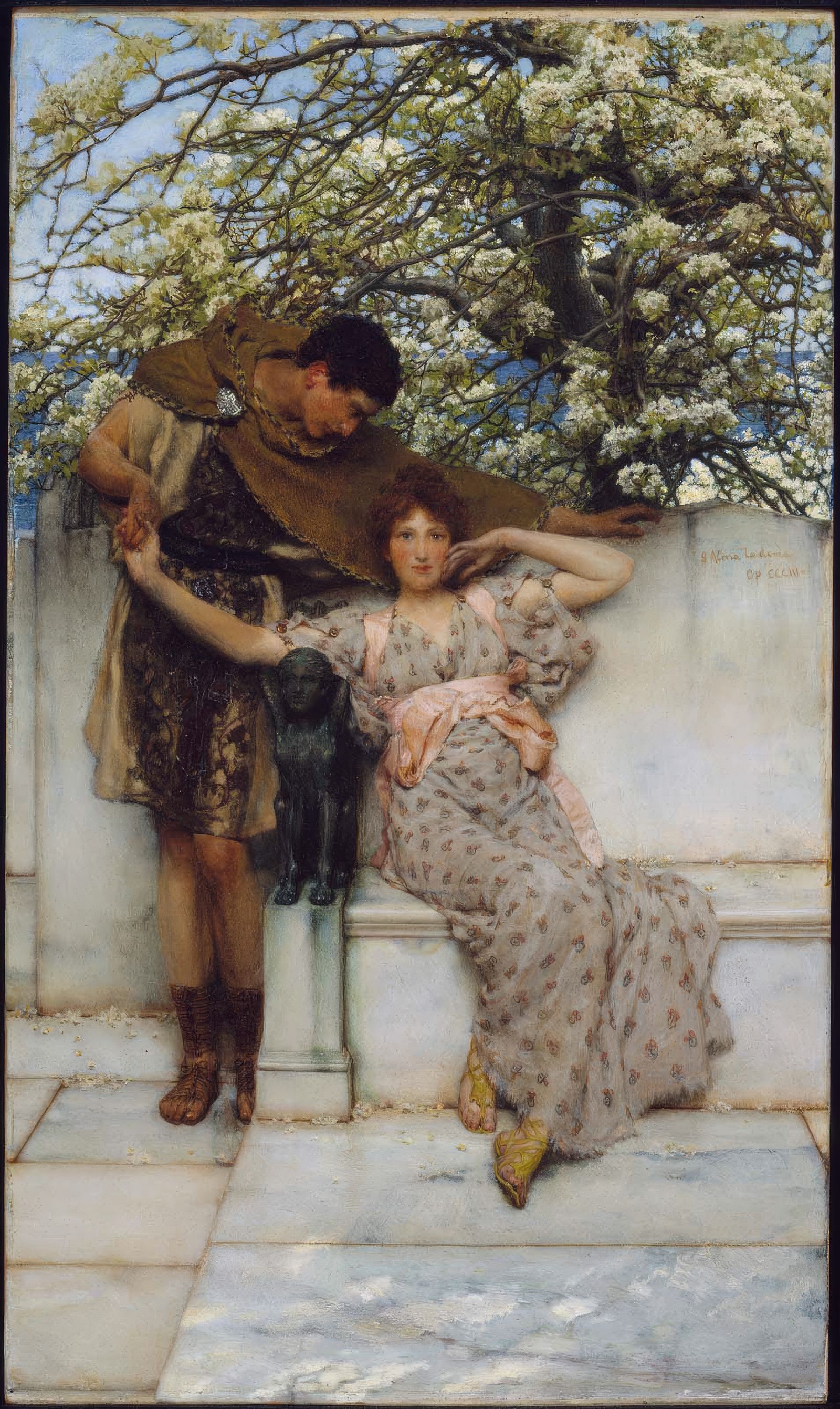
Promise of Spring · Lawrence Alma-Tadema · 1890 · Museum of Fine Arts, Boston
Alma-Tadema's reference can make the gift feel expectant rather than retrospective. It is a thoughtful direction for an anniversary that coincides with a move, a new routine or plans you have made together. Keep promises in your note personal and realistic. The portrait can celebrate a beginning without being asked to predict the shape of the next chapter.
Explore this portrait style · Explore this artwork
Before you create, separate your preferences from hers. Which photograph would she choose? Does she like a dramatic historical setting or a quieter one? Would she enjoy choosing a print herself? Answering those questions is part of the present, not an obstacle to it.
Begin with The Embrace for an intimate couple reference, or open the style that most closely matches her taste. The journey continues with your own photograph and a chance to review the portrait before choosing any available purchase option. Look to the current product page for formats, prices and delivery information.
The best anniversary gift for your wife need not be a surprise in every detail. A thoughtful starting point and the freedom to make the final choice can feel more personal than a portrait selected entirely on her behalf. Pair it with words that only you could write, and leave her room to decide where it belongs.
For more about the historical references, continue with real couples in art before choosing your own direction.
- Is a couple portrait better than a portrait of her alone?
- That depends on what she would enjoy. This selection focuses on couple styles; her own preferences should decide whether a shared portrait is the right gift.
- How can I keep the gift personal without a long inscription?
- Choose a meaningful photograph and write a separate note explaining the memory. The portrait can then live naturally in the room after the anniversary.
- Should I choose the frame before creating?
- Start with the image and review the available formats afterwards. Current product options, rather than the historical reference, determine what can be purchased.