Famous paintings of lovers, chosen for a real shared home
Famous paintings of lovers can suggest intimacy, companionship or a shared journey. Choose ten masterworks for the mood you want to live with.
Famous paintings of lovers can be easier to admire in a museum than to choose for your own wall. A dramatic embrace, a quiet walk and a farewell may all be called romantic, yet they ask very different things of a room. The most useful question is not simply whether a picture shows love. It is whether you want to live with the kind of relationship it suggests.
This selection considers ten historical masterworks through that practical question. Their captions preserve the catalogue identities, and the links take you to the works themselves. Each also belongs to the Love stories portrait references, so you can choose between keeping the historical image and exploring a portrait of your own.
Avoid choosing a picture only because its title is familiar. Spend a little time with the two figures, the distance between them and the mood the composition brings into the room.
1. The Embrace: intimacy on a shared wall
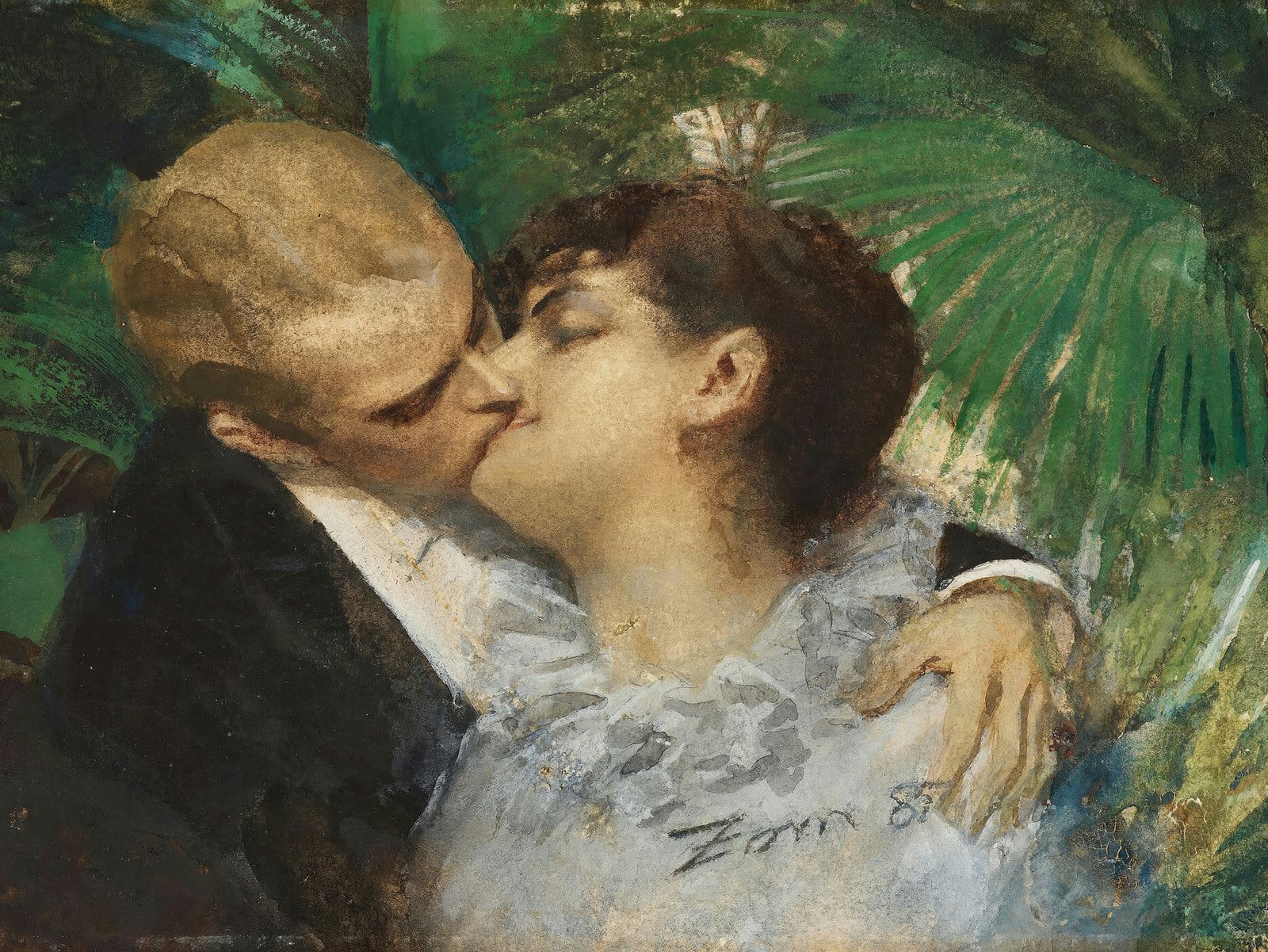
The Embrace · Anders Zorn · 1882–83 · Private collection
Zorn's title makes affection explicit without requiring the picture to commemorate a named anniversary. Before choosing a print, consider whether the room is private or shared with visitors. An intimate subject may feel particularly at home in a bedroom, but the people living there should decide. If you prefer the idea with yourselves as the subjects, explore The Embrace's portrait reference.
2. The Morning Walk: love as companionship
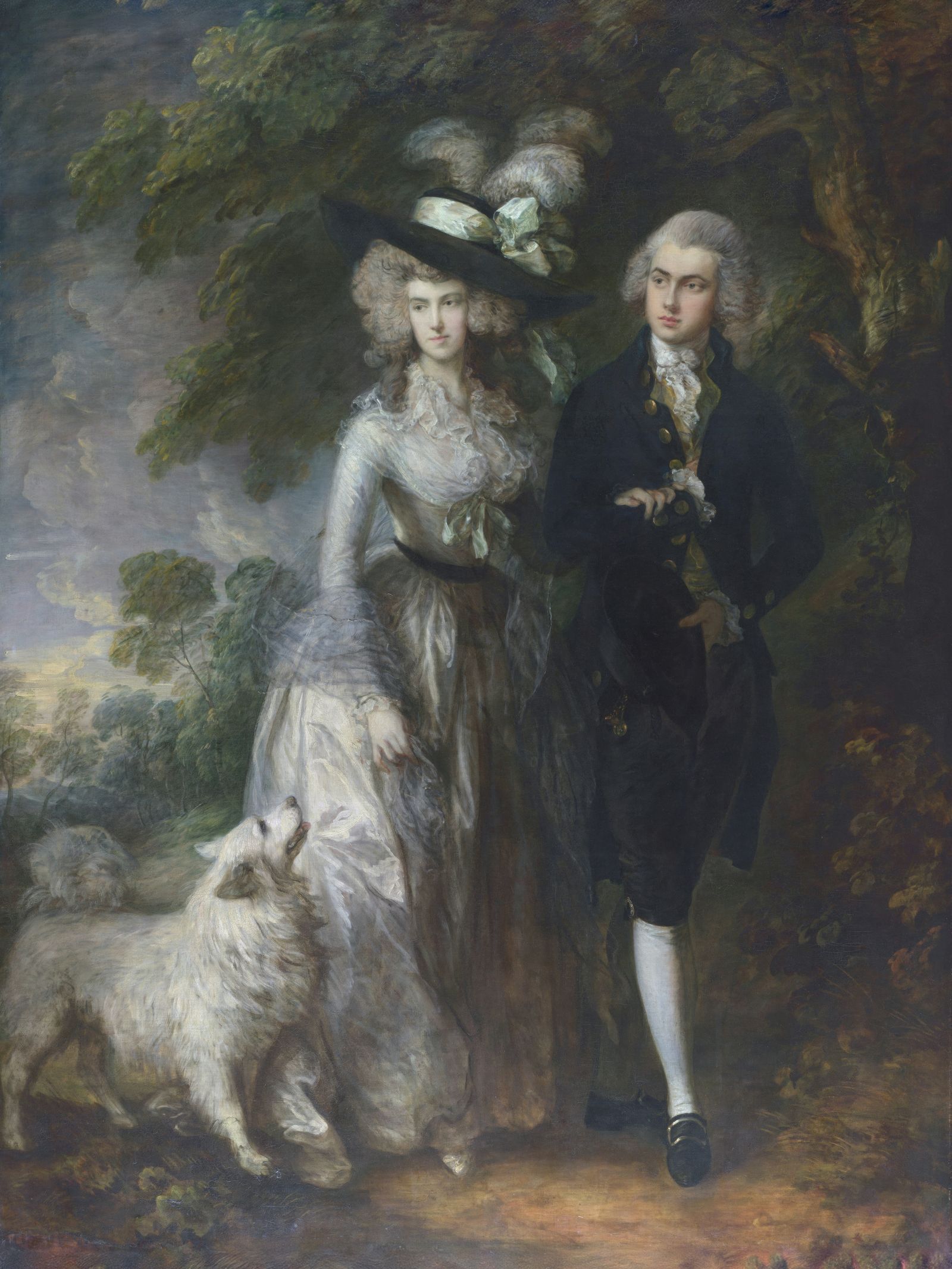
The Morning Walk (Mr and Mrs William Hallett) · Thomas Gainsborough · 1785 · National Gallery, London
Gainsborough's double portrait gives a couple a shared action rather than a dramatic crisis. It is a useful choice for people who want a relationship picture that can sit easily among other subjects. Look at the work as a whole before selecting a format. The figures belong to the surrounding composition; preserving that space matters as much as displaying the faces clearly.
3. Wedded: a title with a clear occasion

Wedded · Frederic Leighton · 1882 · Art Gallery of New South Wales, Sydney
Leighton's work is a more explicit choice for a home marking a marriage. Its title may appeal to a newly married couple or to people returning to their vows many years later. Keep the historical work separate from your own story: a print brings this painting home, while the linked portrait style begins another creation. Choose which of those gifts the recipient would prefer.
4. Dance in the City: a picture with an evening in it
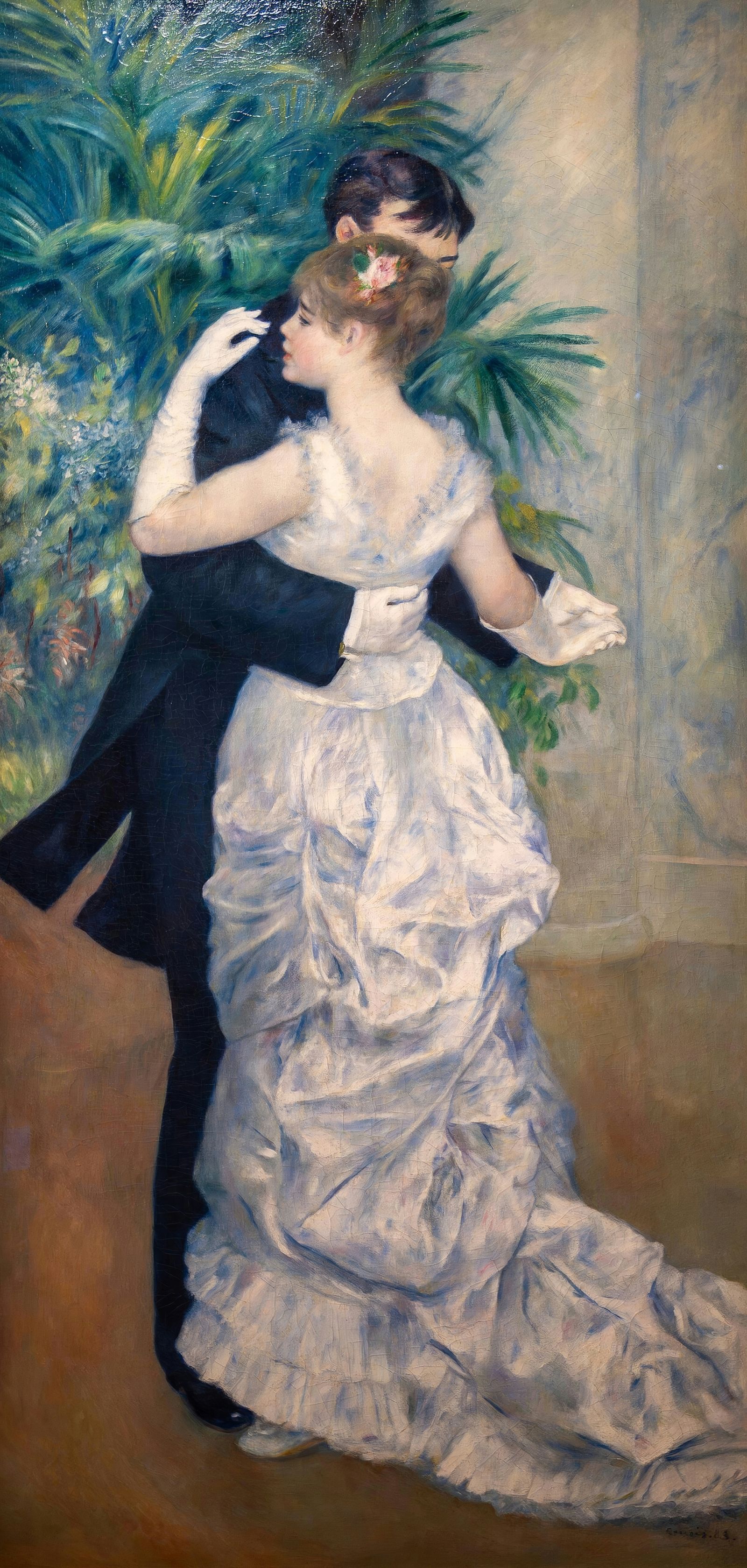
Dance in the City · Pierre-Auguste Renoir · 1883 · Musée d'Orsay, Paris
Renoir's dance can bring the idea of music and sociability to a wall. Consider it for a room used for meals or conversation if the people living there enjoy that atmosphere. Do not choose a frame by habit before looking at the complete image. The movement depends on the relationship of the two figures, so keep the whole canvas visible in any display.
5. La Promenade: a relationship in motion
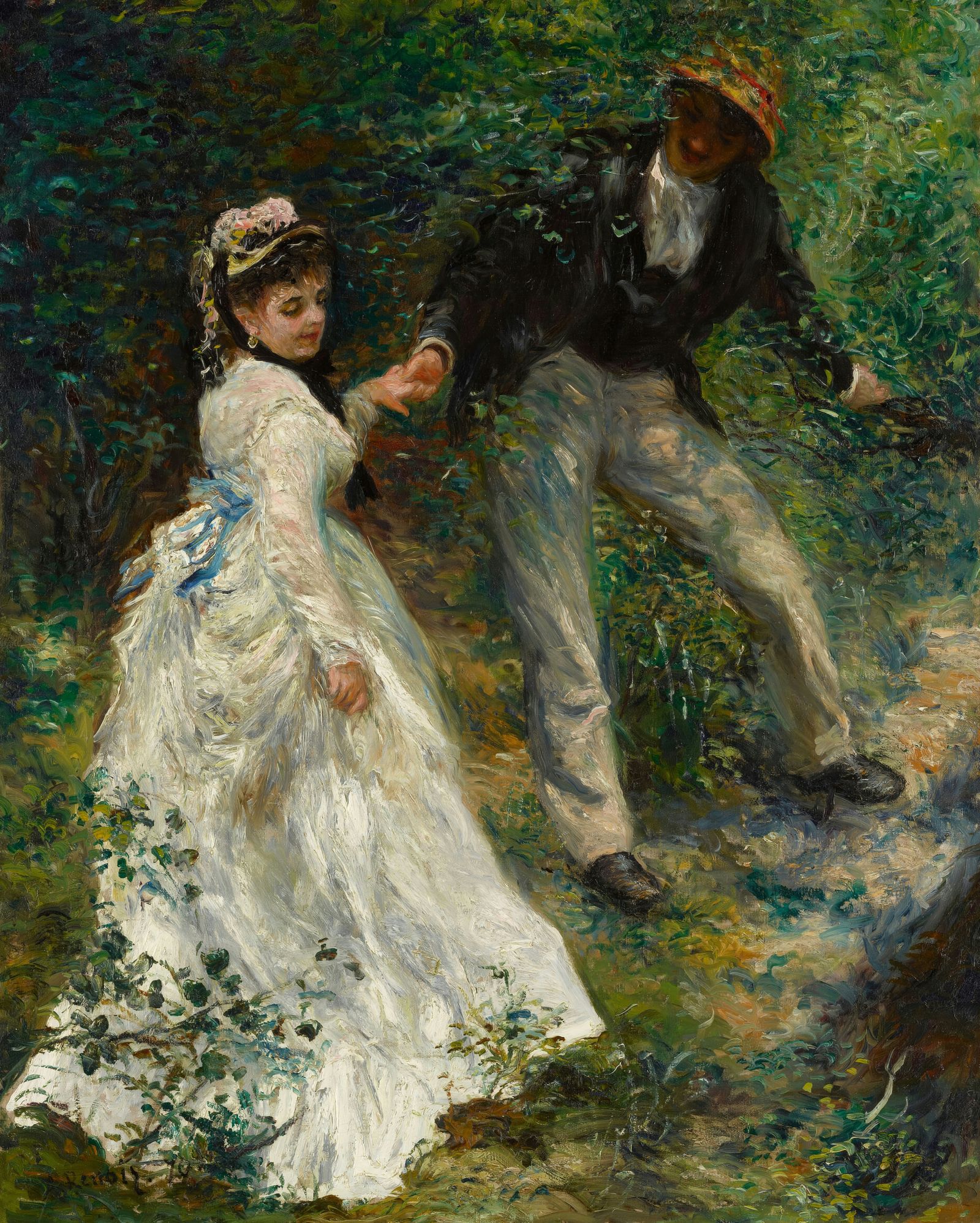
La Promenade · Pierre-Auguste Renoir · 1870 · J. Paul Getty Museum, Los Angeles
This Renoir reference offers a different version of shared movement from a dance. It is worth comparing with The Morning Walk if you want a couple picture without a ceremonial title. Set the two works beside each other on screen before deciding. Their different moods may reveal more about your taste than a label such as romantic wall art ever could.
6. Summer Evening on Skagen’s Beach: a place for two
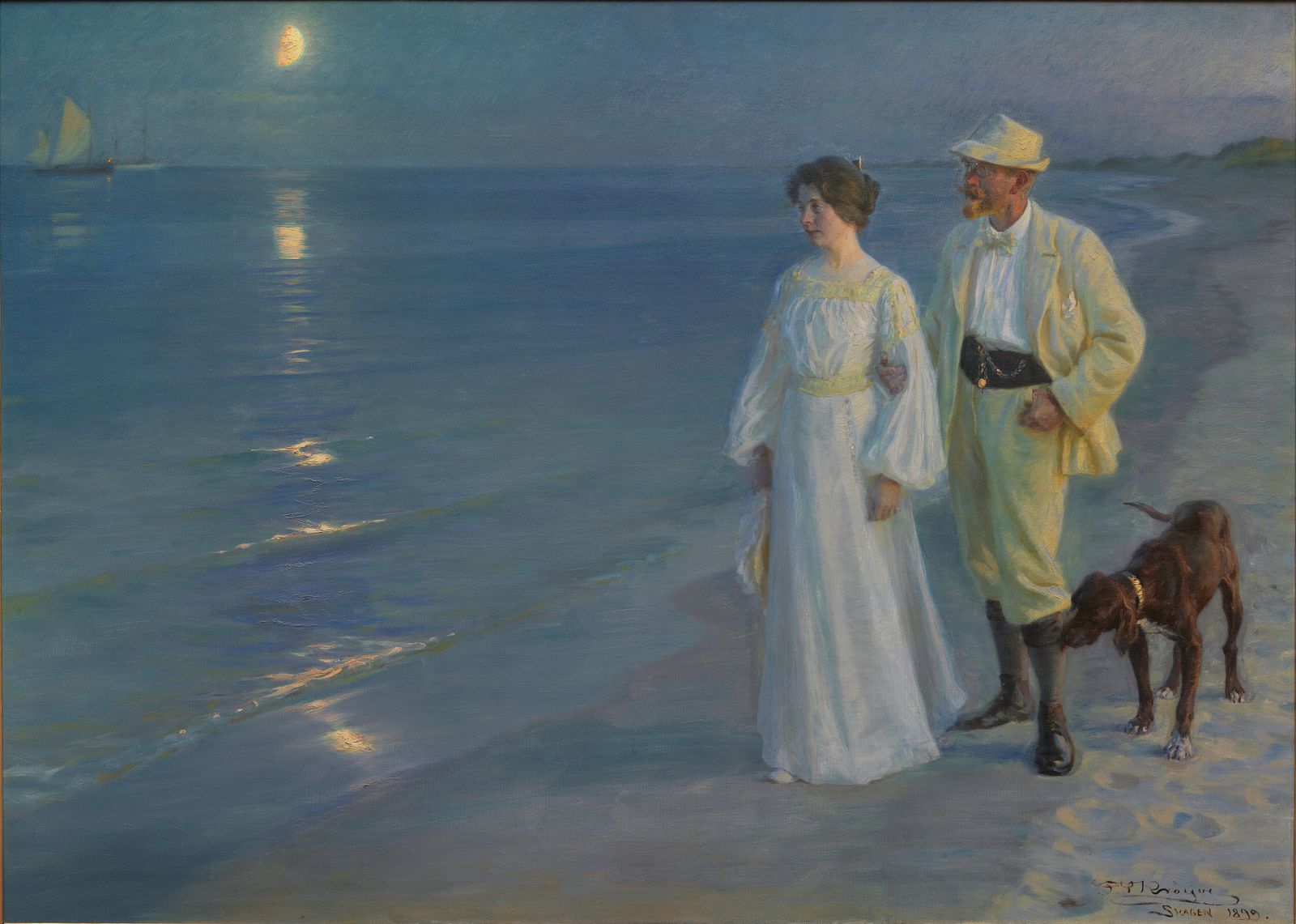
Summer Evening on Skagen's Beach · Peder Severin Krøyer · 1899 · Hirschsprung Collection, Copenhagen
Krøyer's title places the relationship within a particular time of day and landscape. That can appeal to people who choose art through memories of being somewhere together. Let the historical location remain itself, rather than treating it as an illustration of your own holiday. Your personal connection is a reason to keep the work, not a replacement for its identity.
7. The Tuxen double portrait: a named partnership
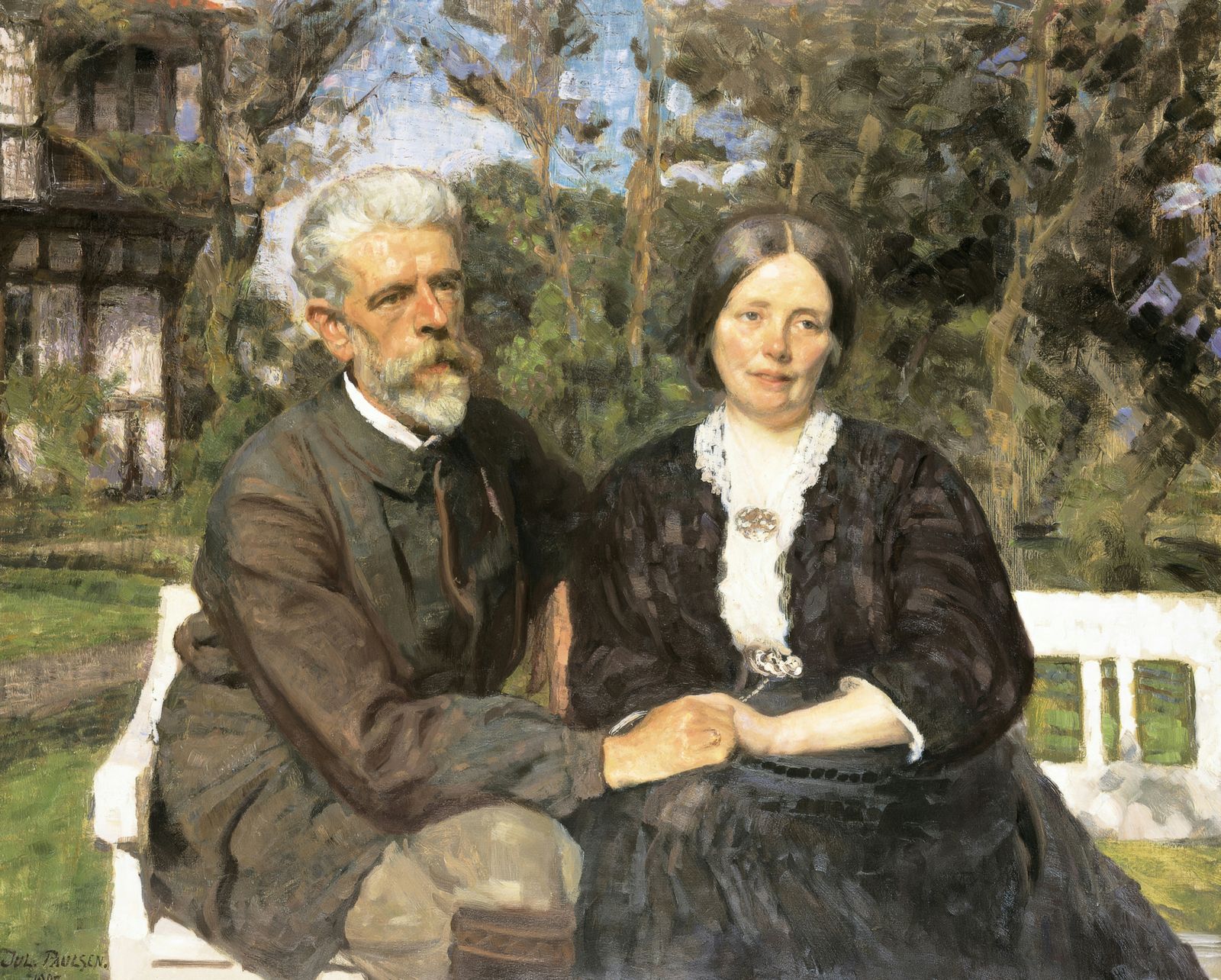
Double Portrait of Laurits and Frederikke Tuxen · Julius Paulsen · 1907 · Skagens Museum
Paulsen's portrait of Laurits and Frederikke Tuxen is a reminder that some romantic couple paintings begin with identifiable people rather than literary characters. Keep the sitters' names when discussing or gifting the work. Their individuality is part of its interest. A double portrait can invite reflection on partnership while still allowing each person to remain a separate subject.
8. On the Sailing Boat: share a direction
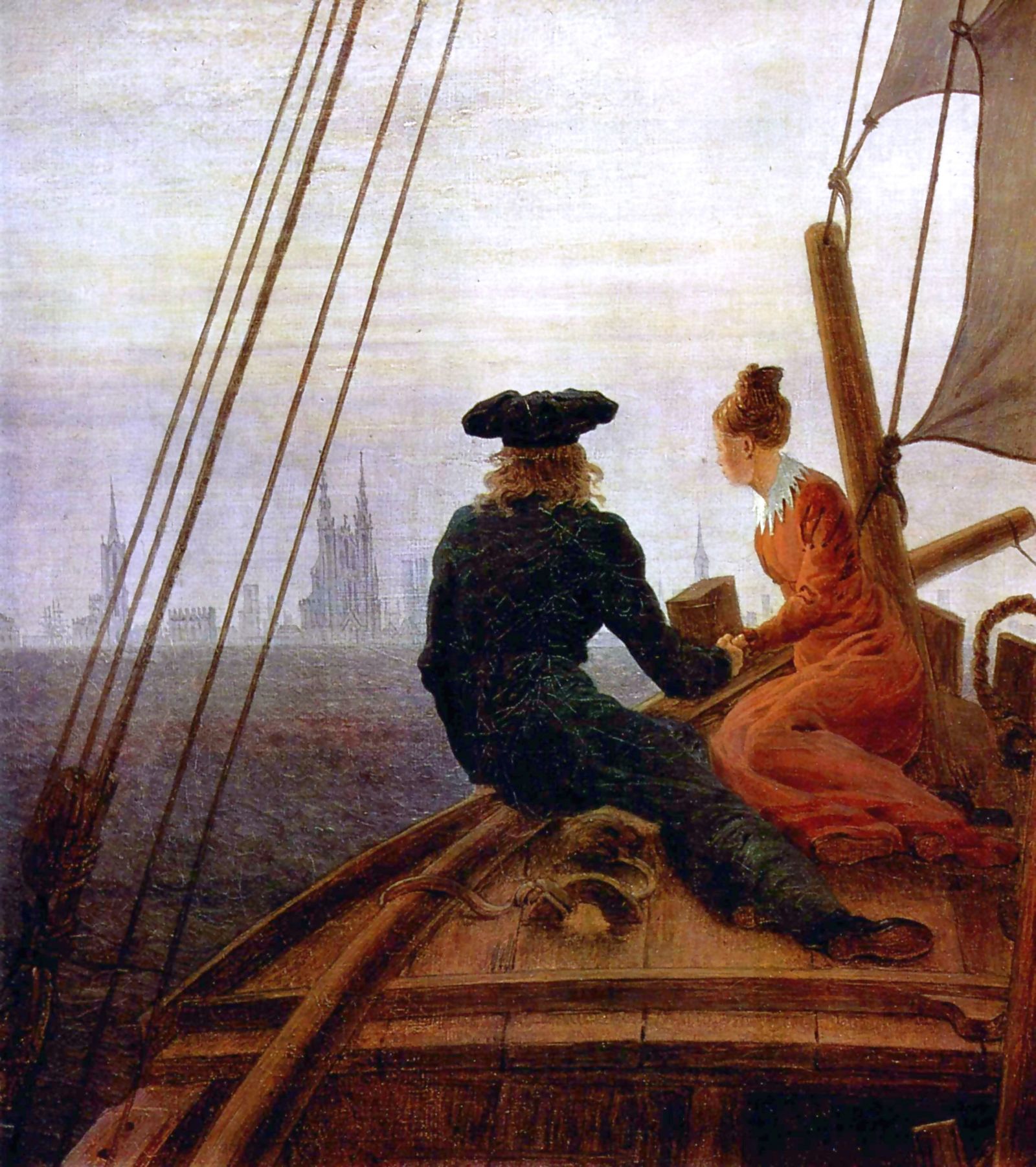
On the Sailing Boat · Caspar David Friedrich · 1818 · Hermitage, St Petersburg
Friedrich's work offers a setting that can connect with the idea of a journey. That is an interpretation you may bring to the picture, rather than a universal meaning every viewer must accept. Compare how it would feel in the room with a more intimate portrait. A relationship picture can work through shared space and direction as well as through an embrace.
9. An Out-of-Doors Study: the life around the couple
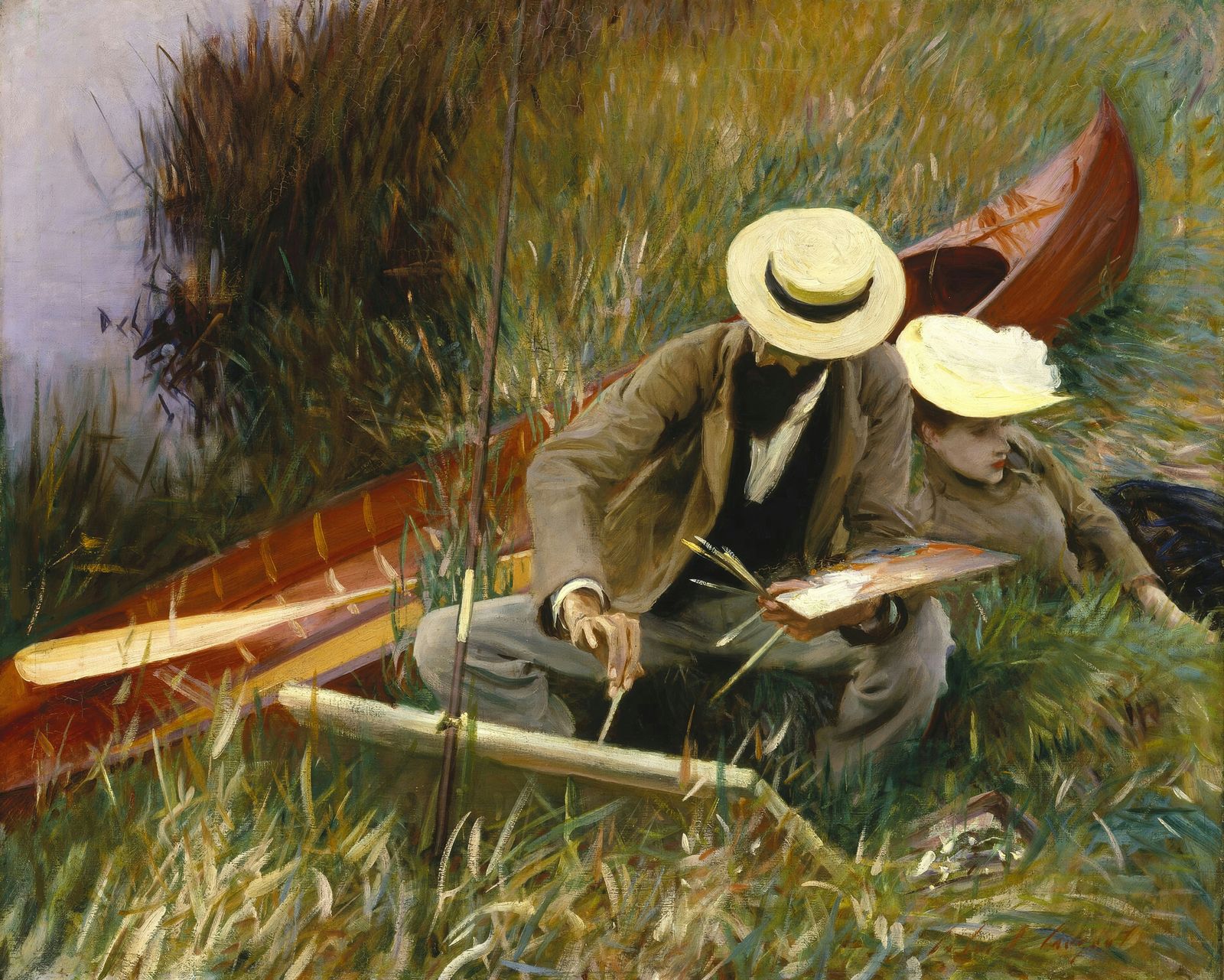
An Out-of-Doors Study (Paul Helleu and his Wife) · John Singer Sargent · 1889 · Brooklyn Museum
Sargent's study names Paul Helleu and his wife, placing a relationship within an observed moment. It is an appealing work to compare with more ceremonial references when choosing art for a working or reading room. Look for the balance between people and setting. A picture of companionship need not isolate its figures from the ordinary activities that make a life together.
10. An Eloquent Silence: leave the interpretation open
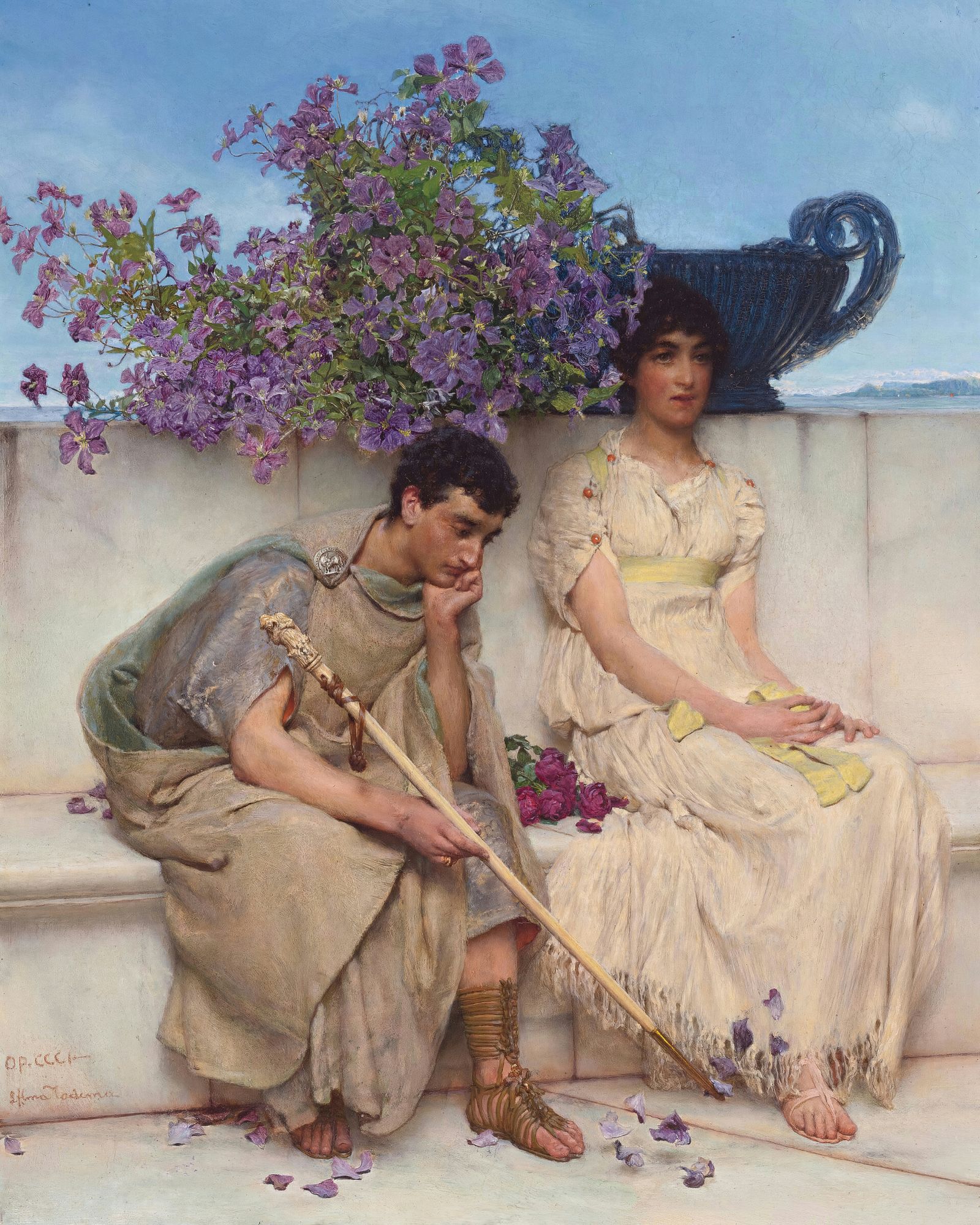
An Eloquent Silence · Lawrence Alma-Tadema · 1890 · Private collection
Alma-Tadema's title is an invitation to look rather than a complete account of what the figures think. That openness can be useful in a home where the same picture will be seen every day. Avoid reducing it to a slogan about perfect love. A work can remain interesting because its atmosphere leaves room for different readings as your own life changes.
To choose between famous romantic paintings, begin with the room and the people who will live with the image. Compare an explicit embrace, a companionable double portrait and a landscape-led work. Notice which one you return to after closing the browser. Familiarity with the title is less useful than wanting to look again.
Each masterwork link opens the historical work for further viewing and any current print options. If you would rather explore a couple portrait, begin with The Embrace, the lead style for this story. These are two different choices: keeping the original subject in a print, or using a historical reference to create a portrait from your photographs.
Whichever path you take, preserve the work's complete composition and its catalogue caption. A painting of lovers deserves the same attention to artist, title and source as any other work you bring into your home.
For the narratives behind romantic subjects, continue with famous love stories in art, or compare romantic wall art for couples for another way to choose a shared wall.
- Are all paintings of lovers suitable anniversary gifts?
- No. Mood, narrative and the recipient’s taste matter. Look at the work and read its catalogue identity before assuming a romantic subject makes an appropriate gift.
- Can I buy the historical image or create a portrait?
- The masterwork links lead to the historical works and their current options. A Love stories style starts a separate creation journey using your photographs.
- How should a couple painting be framed?
- Keep the complete image visible and compare the current format and frame options. Do not crop figures or their setting merely to fit an existing frame.