Art cards for every occasion: 12 masterpieces to send instead of a shop card
A card with a real painting on the front says more than any shop rack can. Here are twelve masterpieces matched to twelve moments, from a birthday bouquet to a quiet pond for a letter of sympathy.
People keep good cards. They stand them on the mantelpiece, tuck them into books and find them again years later. A card with a real painting on the front is one people keep, because it is a small work of art as well as a message.
Here are twelve famous paintings matched to the moments we send cards for, with a few words on why each one works. Each is restored from its museum scan, and each opens a card in Fable Cards with the right lettering for the occasion and your own words inside.
Birthdays, weddings and the big days
Flowers are the oldest language of celebration, and the Dutch and Flemish flower painters of the seventeenth century were its greatest masters. Their bouquets were often impossible, combining blooms from different seasons in one vase, which is exactly what a birthday should be.
1. For a birthday
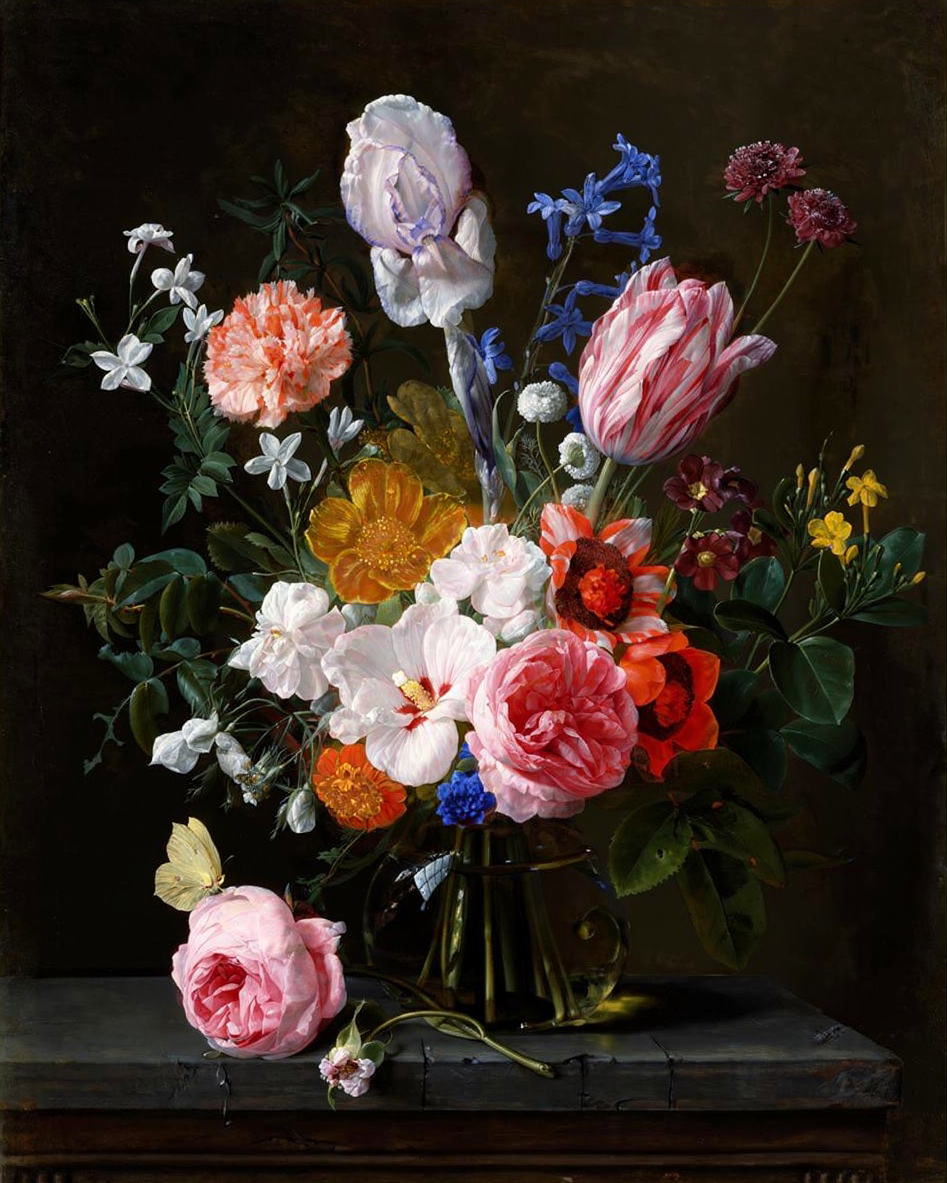
Nicolaes van Veerendael, A Bouquet of Flowers in a Crystal Vase, 1662. The Metropolitan Museum of Art, New York.
Veerendael's bouquet is a party in a vase: striped tulips, roses, irises and carnations spilling out of clear glass against a velvet dark. Flowers that would never bloom together, gathered for one day. It is hard to think of a happier picture to open on a birthday.
2. For a wedding
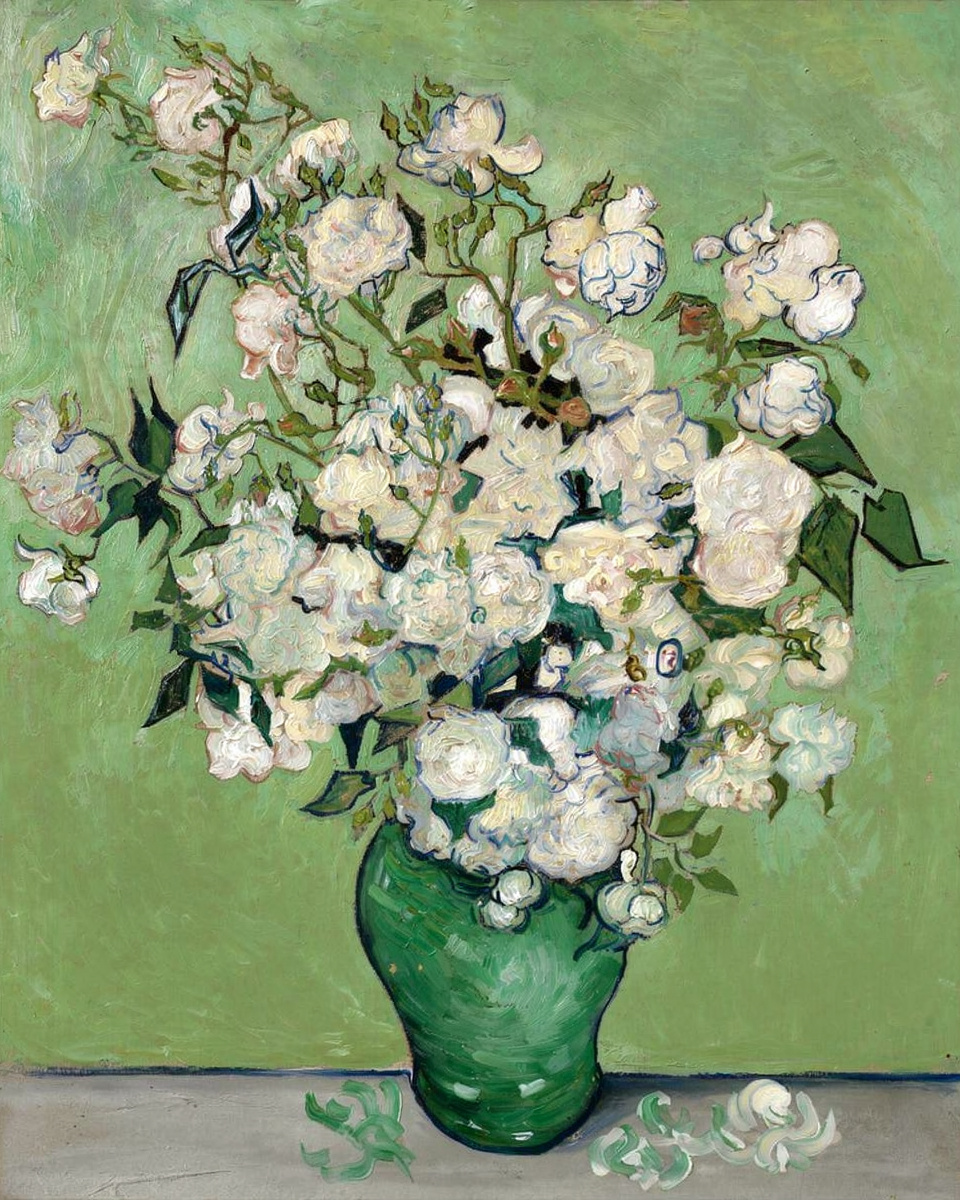
Vincent van Gogh, Roses, 1890. The Metropolitan Museum of Art, New York.
Van Gogh painted these roses in May 1890, just before he left the asylum at Saint-Rémy, in one of the calmest moods of his life. The roses were pink when he painted them; the red pigment has faded over time to the white we see now. A picture of abundance and new beginnings, for a wedding day.
Use it for your wedding stationery
3. For an anniversary
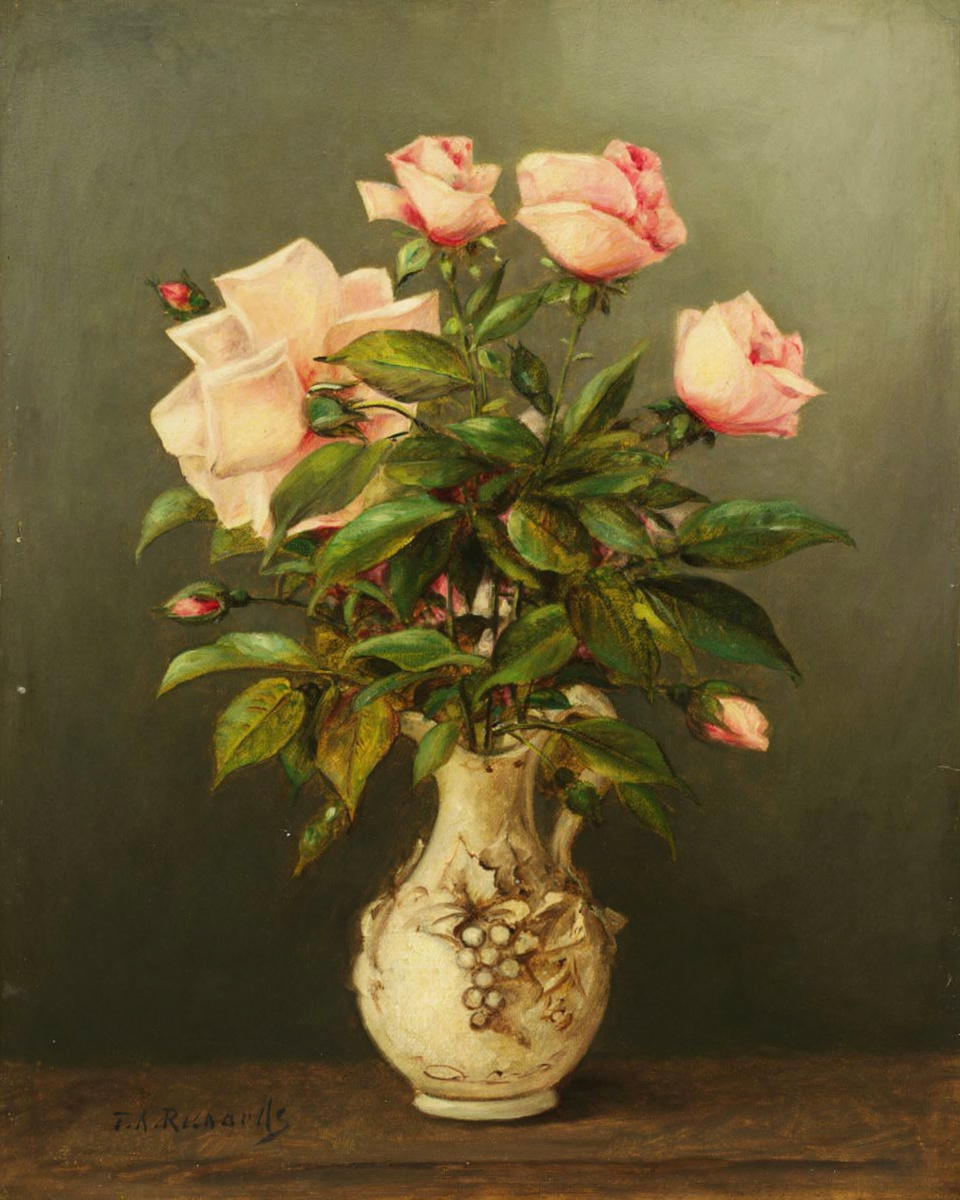
Thomas Addison Richards, Vase of Roses, c. 1865. Harvard Art Museums.
Richards was better known for his American landscapes, which makes this simple jug of roses all the more personal. Pale pink, a few buds still closed, nothing showy. It has the quiet warmth of a long marriage.
Send it as an anniversary card
4. For congratulations
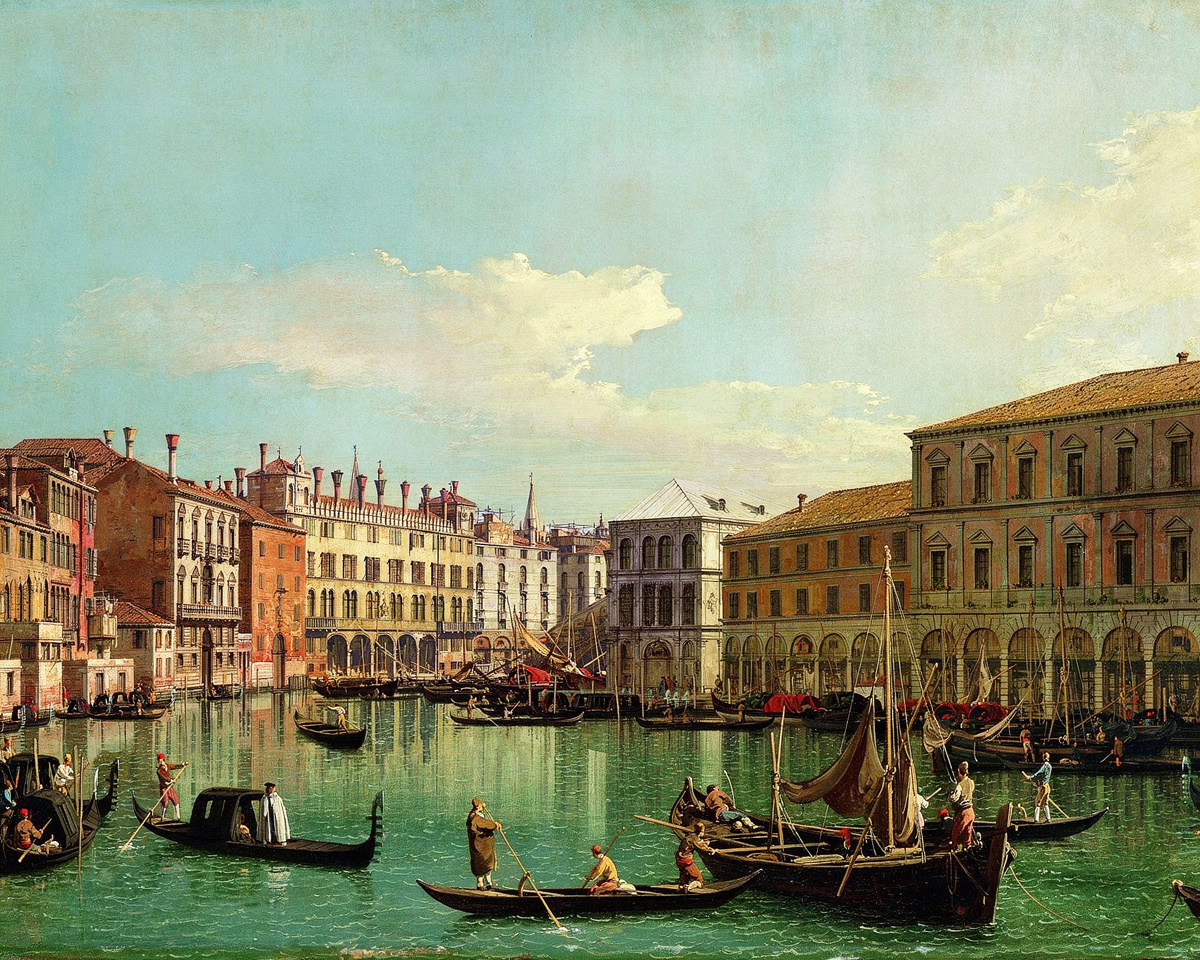
Canaletto, The Grand Canal and Rialto Bridge, 1730s. The Metropolitan Museum of Art, New York.
Canaletto painted Venice for young Englishmen on the Grand Tour, as a souvenir of the trip of a lifetime. His Grand Canal glitters with boats and sunlight. Send it for a new job, a graduation or any big step out into the world.
Send it as a congratulations card
5. For New Year
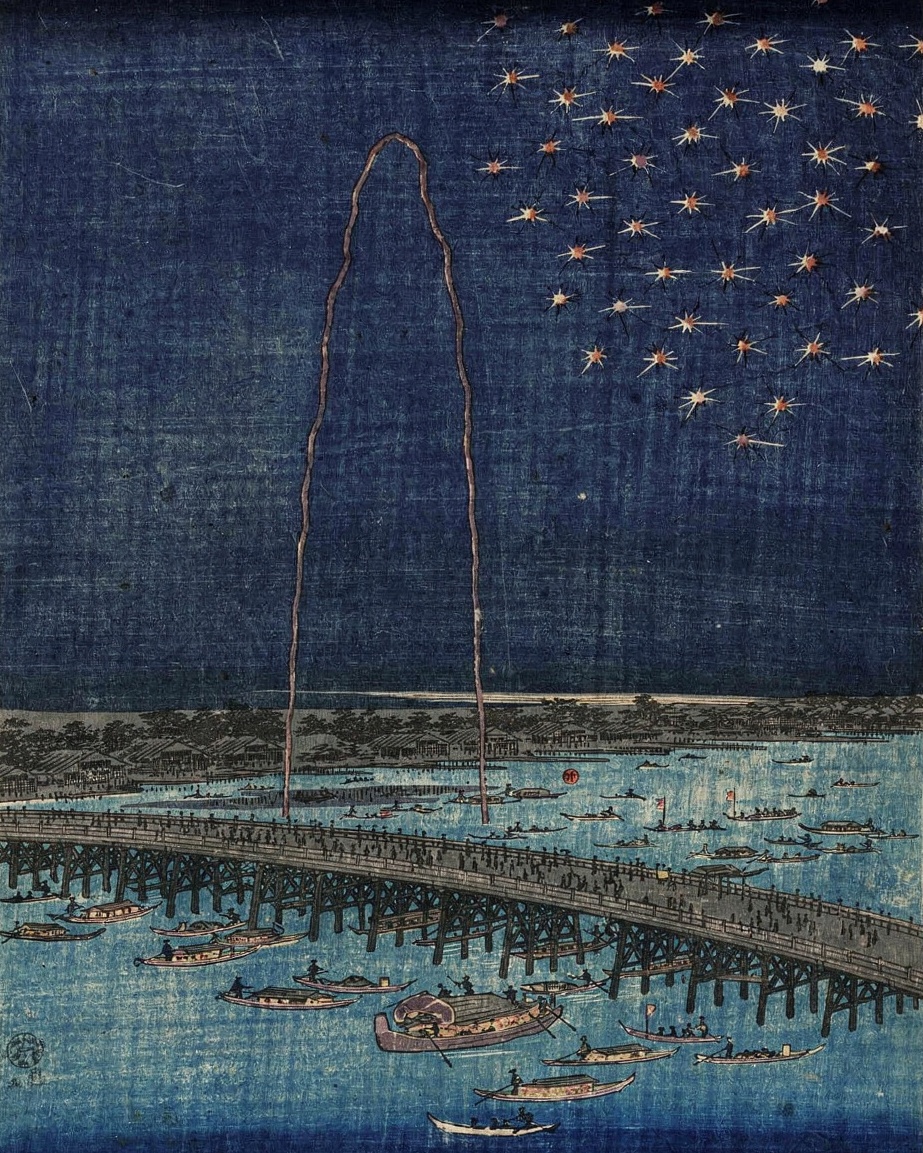
Utagawa Hiroshige, Fireworks at Ryōgoku, from One Hundred Famous Views of Edo, 1858. Cleveland Museum of Art.
In Edo, today's Tokyo, fireworks over the Ryōgoku bridge opened the summer river season. Hiroshige shows a single rocket bursting into falling stars above a dark river full of boats. It is one of the most beautiful pictures of celebration ever made, and a perfect way to raise a glass to the year ahead.
6. For an invitation
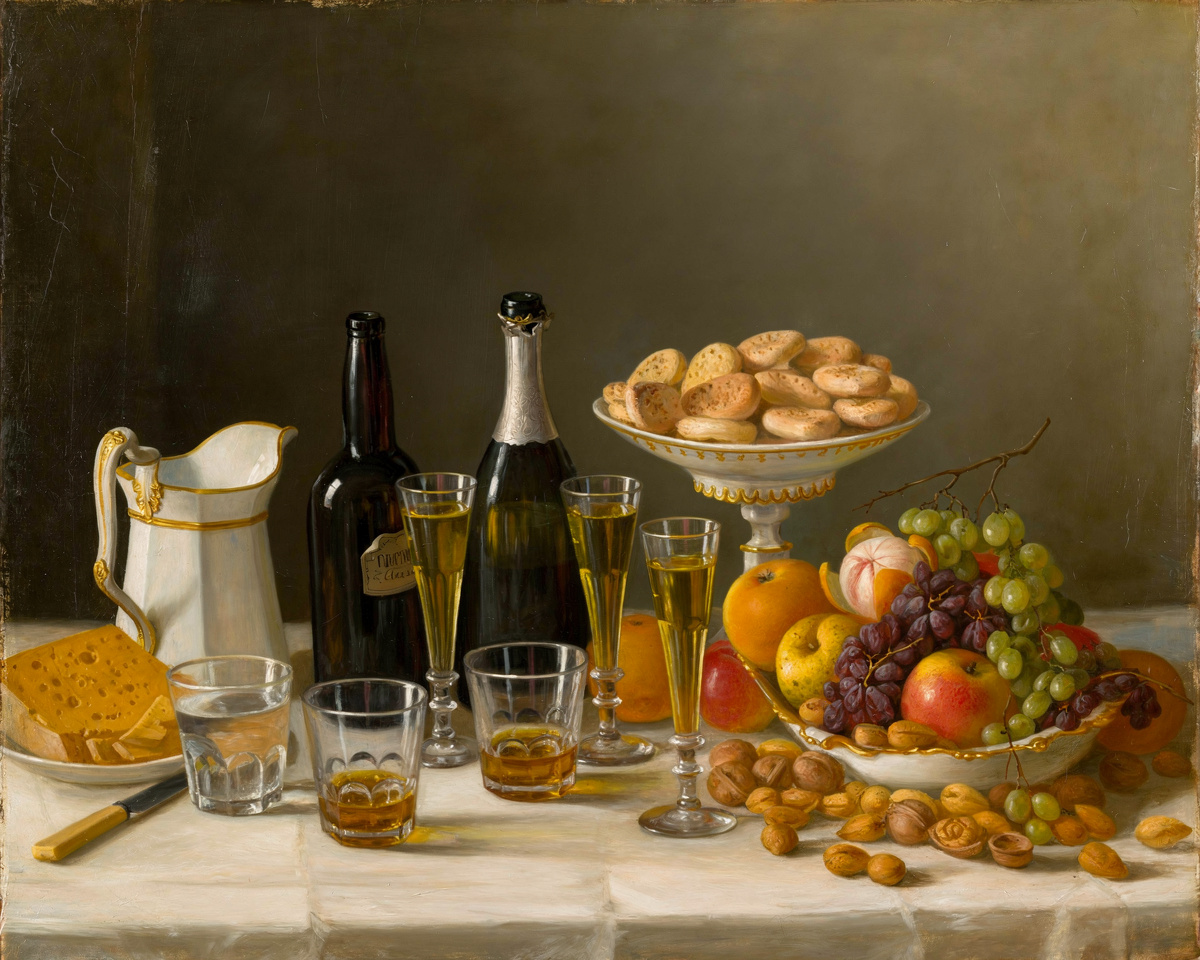
John F. Francis, Wine, Cheese, and Fruit, 1857. Art Institute of Chicago.
John F. Francis painted what Americans called luncheon pieces: tables already laid for guests. Champagne is open, the glasses are filled and the cheese is cut. As the front of a dinner invitation, it says everything before a word is read.
Thank you, welcome and thinking of you
Not every card marks a big day. The ones people remember are often the small ones: a thank you that arrives when they did not expect it, a welcome for a new baby, a few words when life is hard. These paintings say the right thing quietly.
7. For a thank you
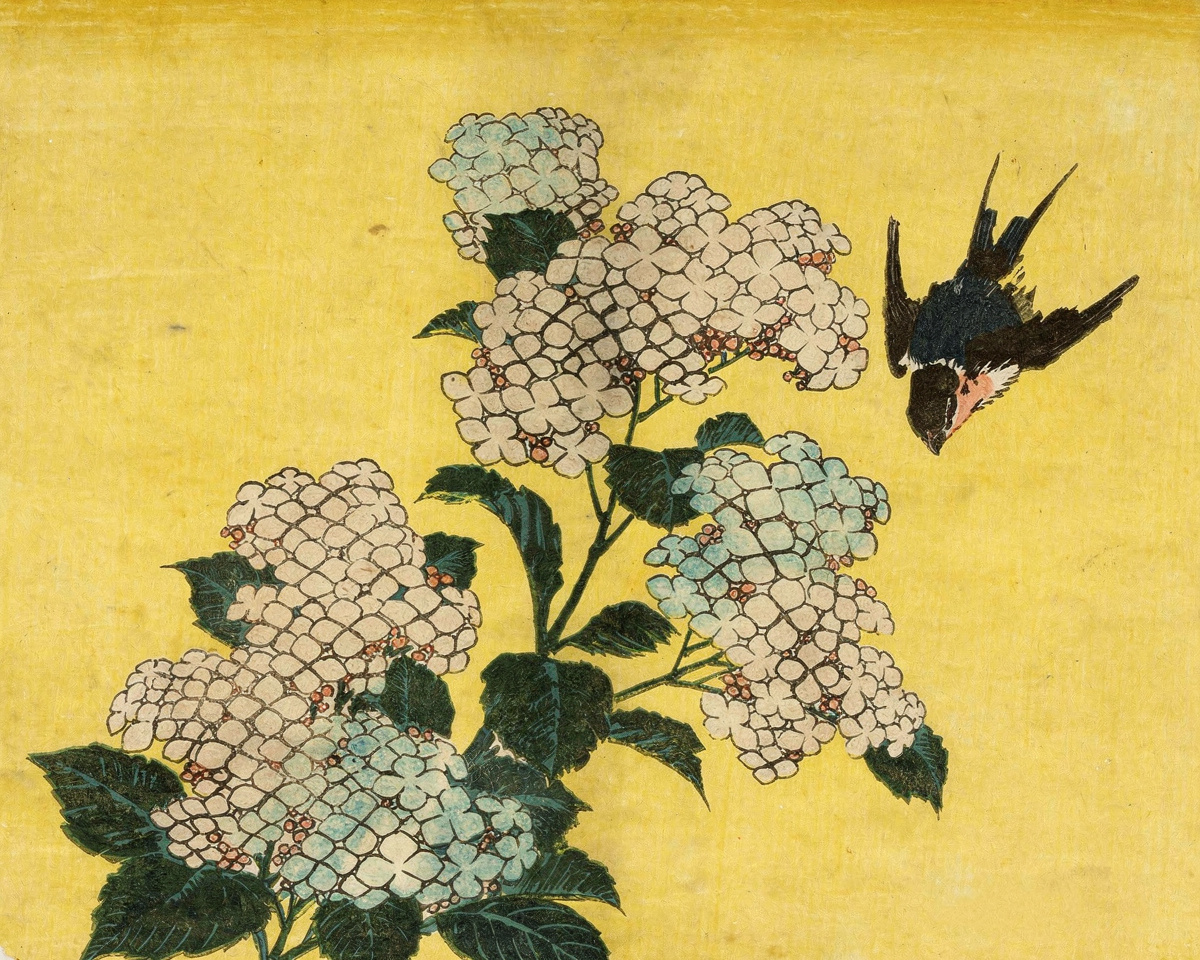
Katsushika Hokusai, Hydrangea and Swallow, c. 1833/34. Art Institute of Chicago.
Hokusai, the master of The Great Wave, made a series of large flower prints in the 1830s. A swallow swoops toward a cloud of hydrangea on a golden ground, light and quick, like a thank-you note that arrives at exactly the right time.
8. For a new baby
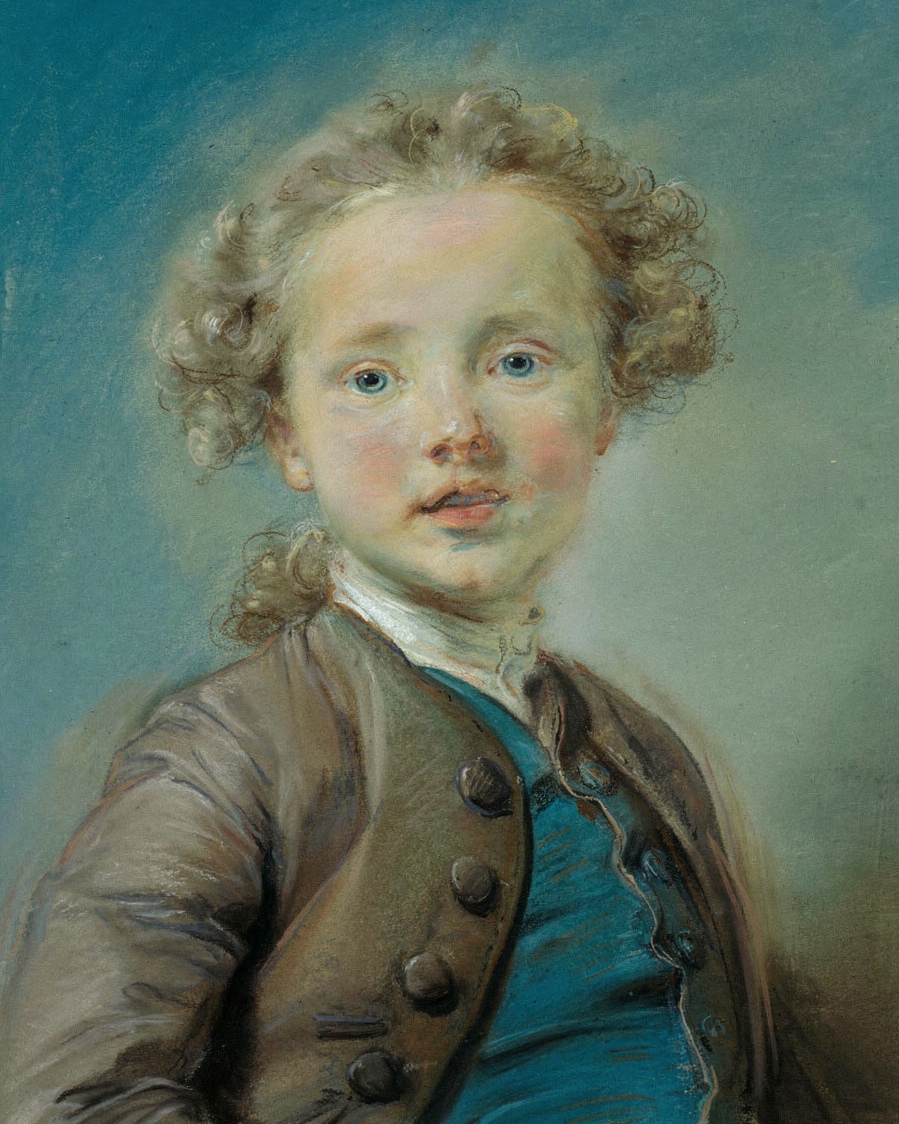
Jean-Baptiste Perronneau, Portrait of a Young Boy with Blue Eyes, 1745. Art Institute of Chicago.
Perronneau was one of the great pastel portraitists of eighteenth-century France, and pastel suited children perfectly: soft, warm and almost alive. This little boy with blond curls and wide blue eyes is the very picture of a new arrival looking at the world for the first time.
9. For your mother
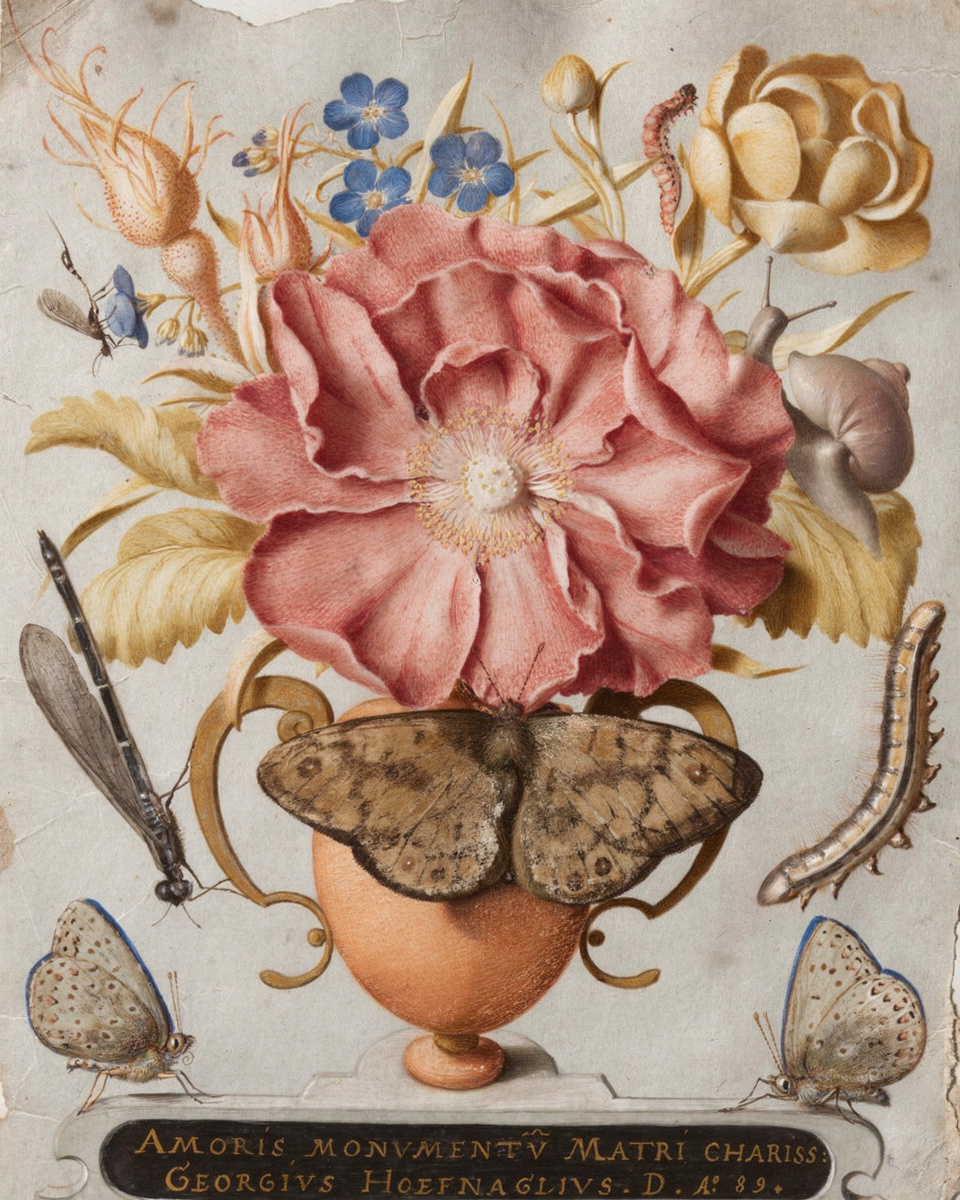
Joris Hoefnagel, Still Life with Flowers, a Snail and Insects, 1589. The Metropolitan Museum of Art, New York.
This is the oldest picture here, and the most personal. Hoefnagel painted it as a gift for his mother, and the Latin inscription at the bottom calls it a monument of love to his dearest mother. Four hundred years later, it still says it.
10. For Easter and spring
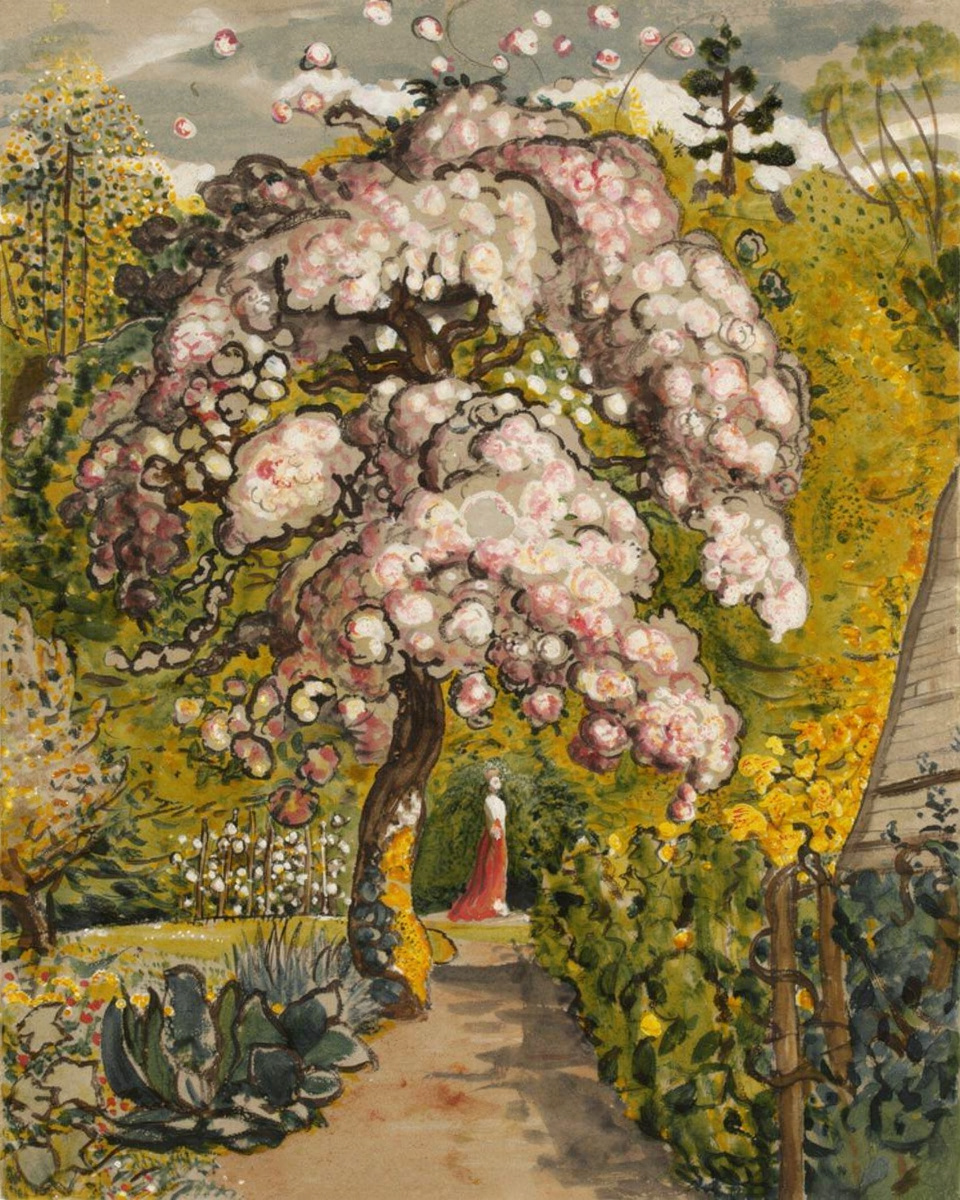
Samuel Palmer, In a Shoreham Garden, c. 1830. Victoria and Albert Museum, London.
Samuel Palmer spent his twenties in the Kent village of Shoreham, painting a countryside that seemed to him almost holy. Here an apple tree erupts with blossom over a woman in a red dress. It is spring as a miracle, which is what Easter is about.
11. For sympathy
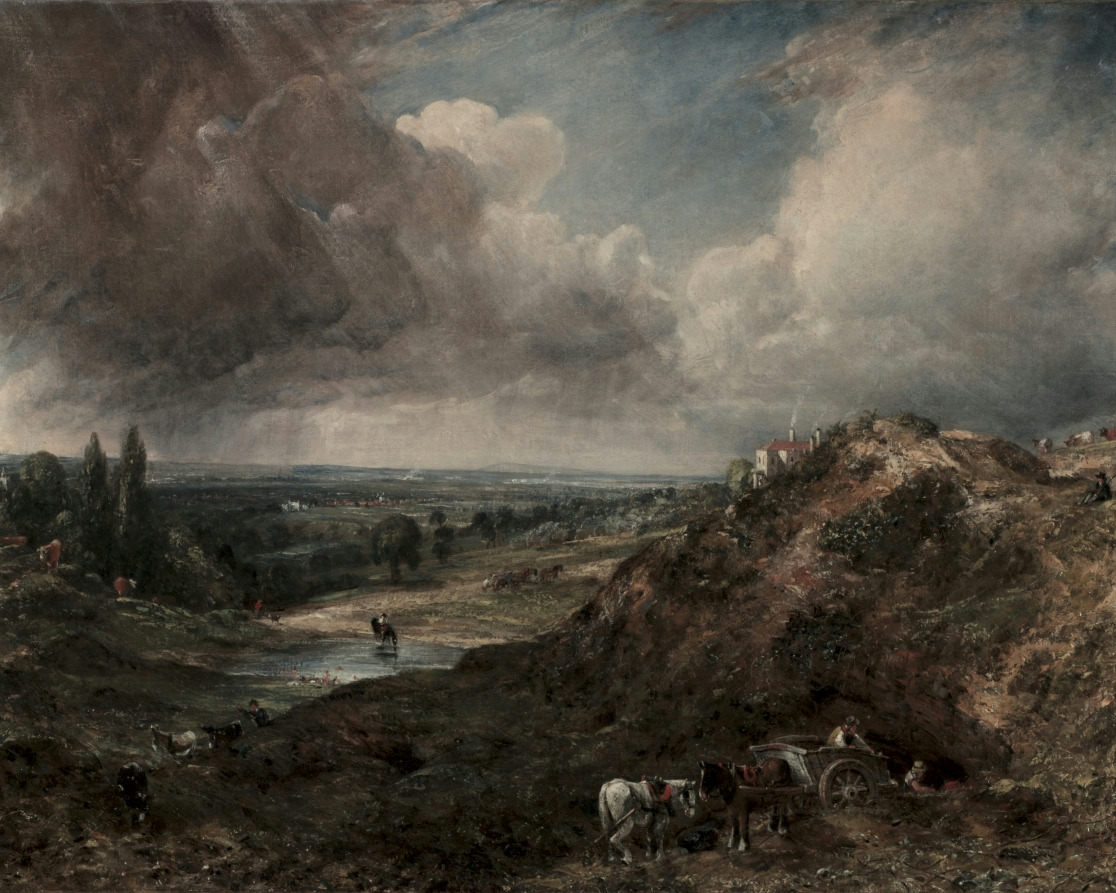
John Constable, Branch Hill Pond, Hampstead, 1828. Cleveland Museum of Art.
Constable moved his family to Hampstead for his wife Maria's health, and painted the heath again and again. Maria died in November 1828, the year of this picture. A big sky, a still pond and light coming through the clouds: it offers comfort without pretending grief is simple.
12. For Christmas
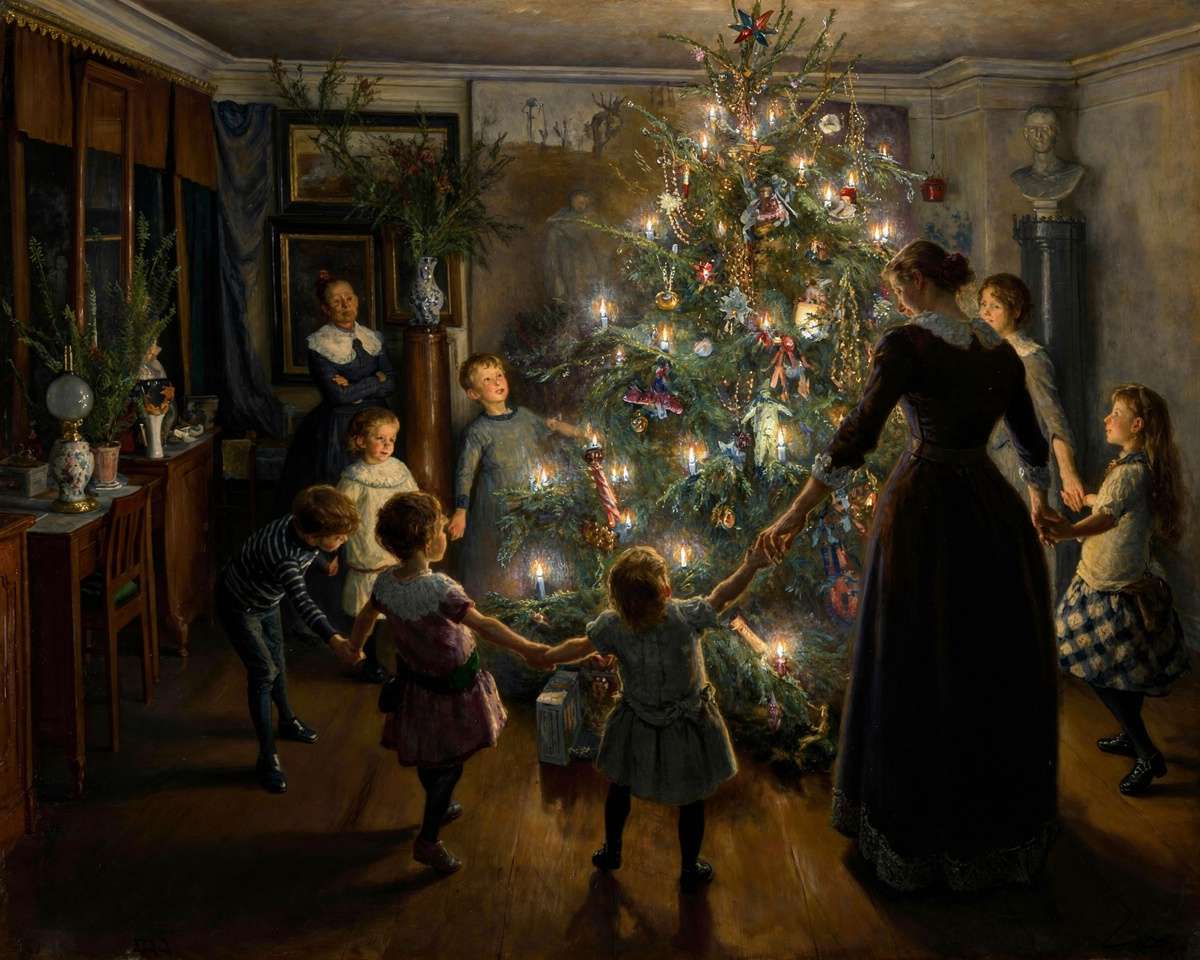
Viggo Johansen, Glade jul (Happy Christmas), 1891. The Hirschsprung Collection, Copenhagen.
Johansen painted his own family dancing round the tree on Christmas Eve, lit only by the candles. Its title is the Danish for Happy Christmas, and no card has ever said it better. For more Christmas paintings, see our story on Christmas in art.
Common questions
Are art cards a good idea for every occasion?
Yes, if you match the painting to the moment. Flowers and celebrations suit birthdays and weddings, quiet landscapes suit sympathy, and family scenes suit Christmas. A famous painting makes even a short message feel considered.
What painting is good for a sympathy card?
Calm landscapes with open skies are the classic choice: Constable, Corot and the Dutch painters of the seventeenth century. Avoid anything too bright or too busy.
Can I write my own message inside?
Yes. In Fable Cards you choose the painting, the lettering for your occasion and your own words, and we print the cards and send them to you.
Are the paintings printed in full?
Yes. Every painting is restored from its museum scan, and on the classic card it is shown whole, never cropped to fit.
Every painting here opens a card in Fable Cards with lettering made for its occasion, and every one can also be printed for the wall. For Christmas, our Victorian cards are restored originals from the 1800s, and The history of the Christmas card tells their story.