Bernese mountain dog painting: a portrait with weight
Ten historic dog pictures offer ways to show a Bernese mountain dog’s dark coat, pale markings and substantial body clearly.
A Bernese mountain dog painting needs to make the whole animal feel present. The broad body, long coat and relationship between the dark fur and pale markings can disappear when a photograph is too tightly framed or too dark. Choose a reference that shows the dog's own proportions before deciding how decorative or painterly the portrait should become.
These ten historic works show other dogs, including a Newfoundland and spaniels. They are not labelled as Bernese mountain dogs and do not provide evidence about the breed's history. Their value is visual: how to give a large animal room, separate long fur from a background, and include a person without making the dog secondary. Use them as comparisons, then return to the individual markings and posture in your photograph.
1. A large dog needs space around it
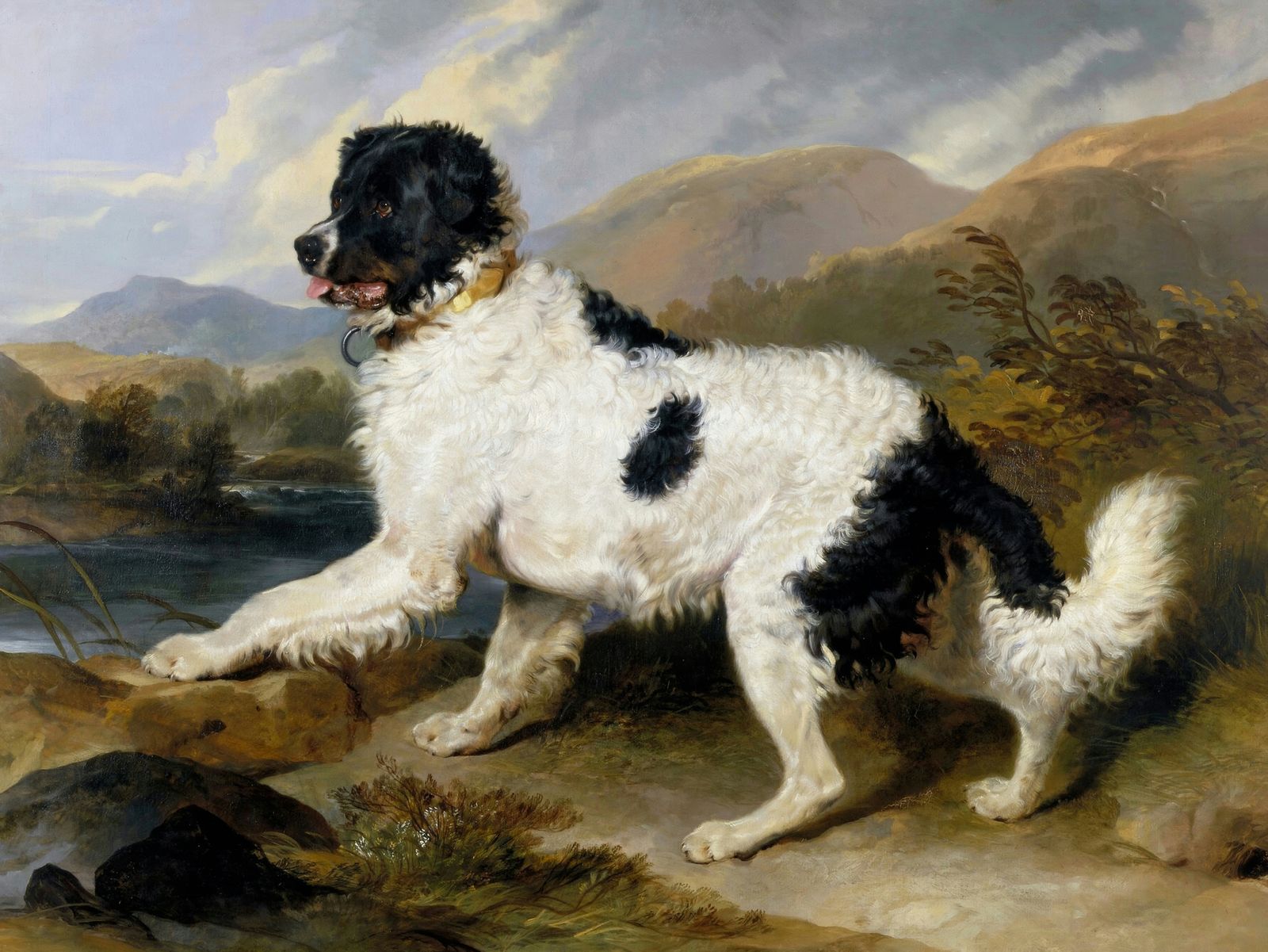
'Lion', a Newfoundland Dog · Edwin Landseer · 1824 · Victoria and Albert Museum, London. Prepared for print by Surrealium at Vaxholm Fortress, Sweden.
Landseer's Lion, a Newfoundland Dog gives the animal's substantial body room to occupy the composition. The coat and proportions belong to that Newfoundland, but the lesson in scale is useful for a Bernese portrait. Leave space around the shoulders and back in the source photograph so the animal's size can be understood without making the head unnaturally large in relation to the body.
2. Long fur and a readable outline
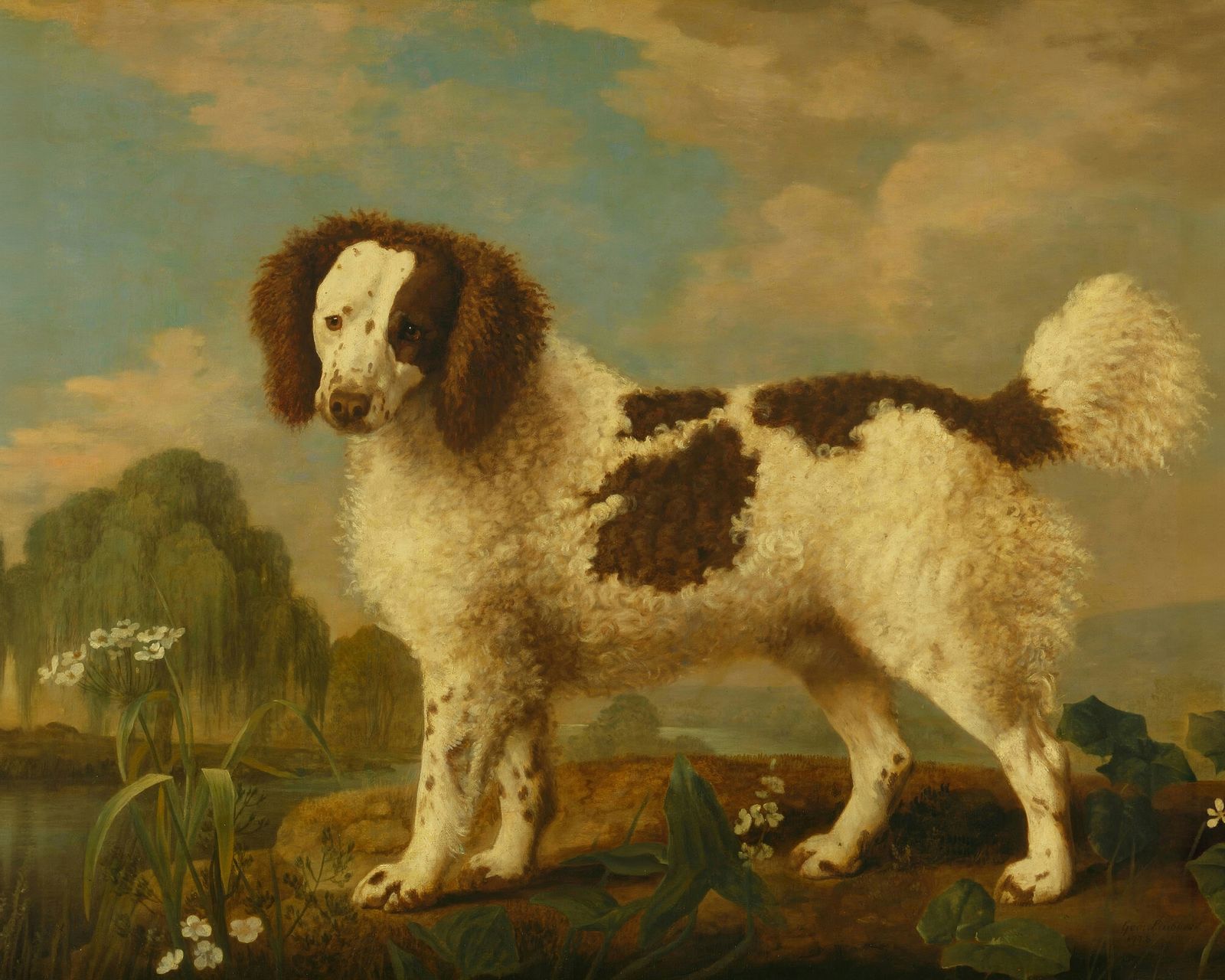
Brown and White Norfolk or Water Spaniel · George Stubbs · 1778 · Yale Center for British Art. Prepared for print by Surrealium at Vaxholm Fortress, Sweden.
Stubbs's Brown and White Norfolk or Water Spaniel shows a full coat while keeping the body distinct from the landscape. A Bernese dog's longer fur can similarly blur the boundary between shoulder, chest and ground if the light is poor. Choose a photograph in which the outline remains visible, and let the coat's texture support the form rather than hide it beneath a uniformly soft effect.
3. An alert stance
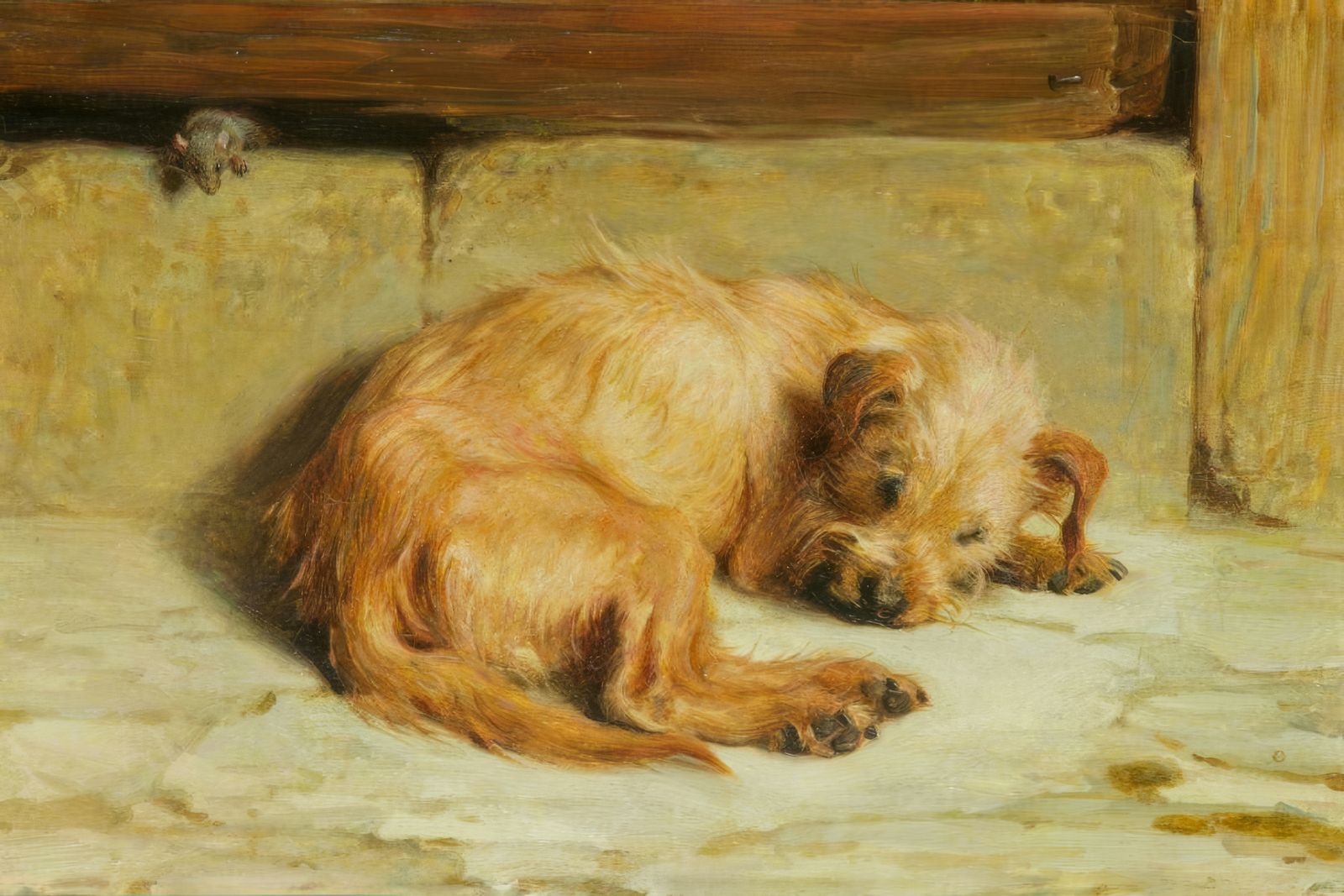
Watching Dog · Briton Rivière · 1875 · Sudley House, Liverpool. Prepared for print by Surrealium at Vaxholm Fortress, Sweden.
Riviere's Watching Dog shows the animal curled on the ground, its head low and an eye still open beside the paws. A large dog does not need to be running to look active or engaged. A photograph during a quiet pause can preserve a Bernese's stance clearly, with the paws placed visibly and the head turned enough to show the familiar face markings.
4. The direction of the head
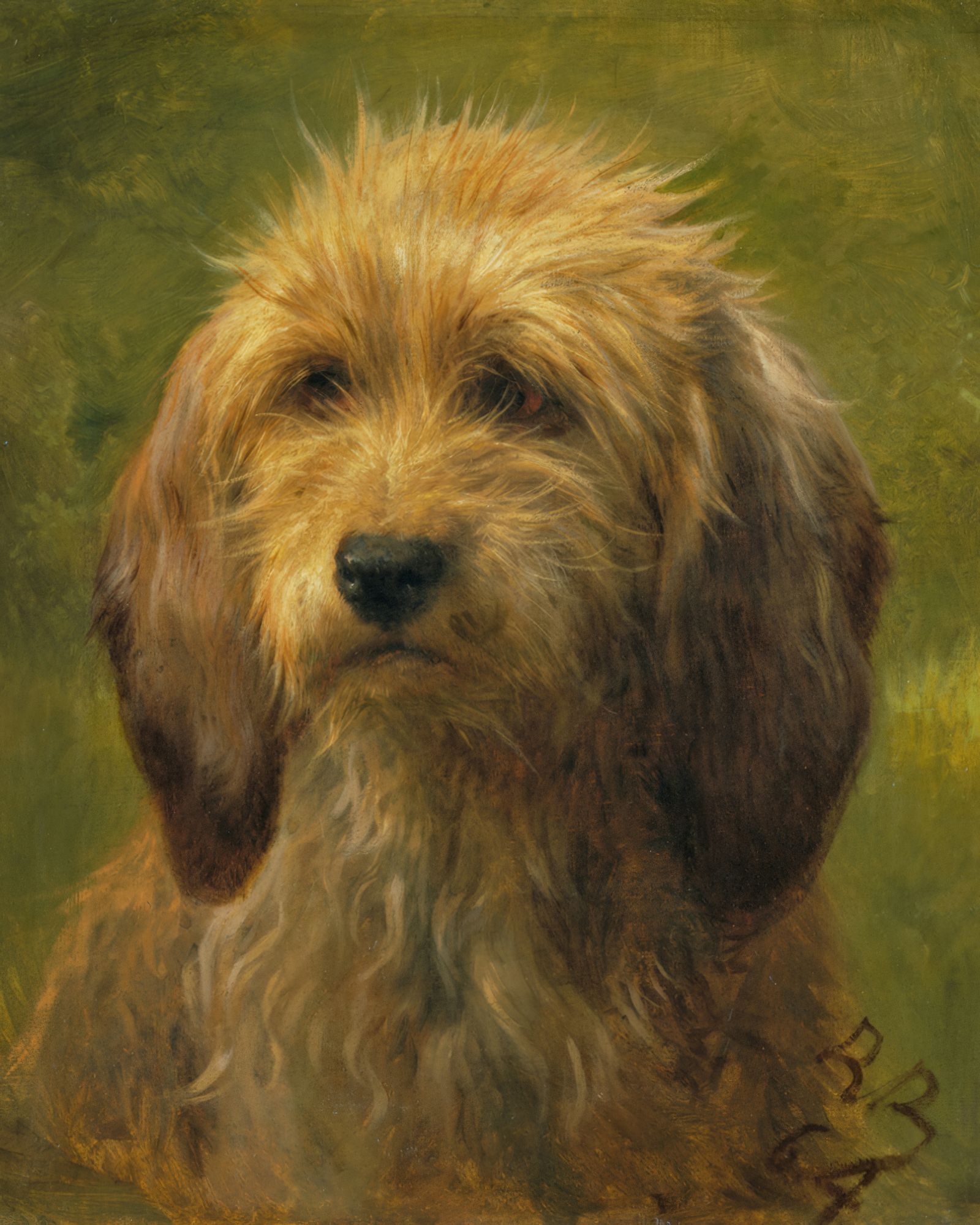
Brizo the dog · Rosa Bonheur · 1864 · Wallace Collection, London. Prepared for print by Surrealium at Vaxholm Fortress, Sweden.
Bonheur's Brizo looks beyond the viewer, giving the portrait a sense of attention without a forced front-facing pose. A slight turn can be helpful when a Bernese's dark facial areas would otherwise merge into a flat shape. Check that the visible eye and muzzle remain clear, and choose the angle that resembles the dog's ordinary expression rather than the most dramatic silhouette.
5. Several animals in one setting
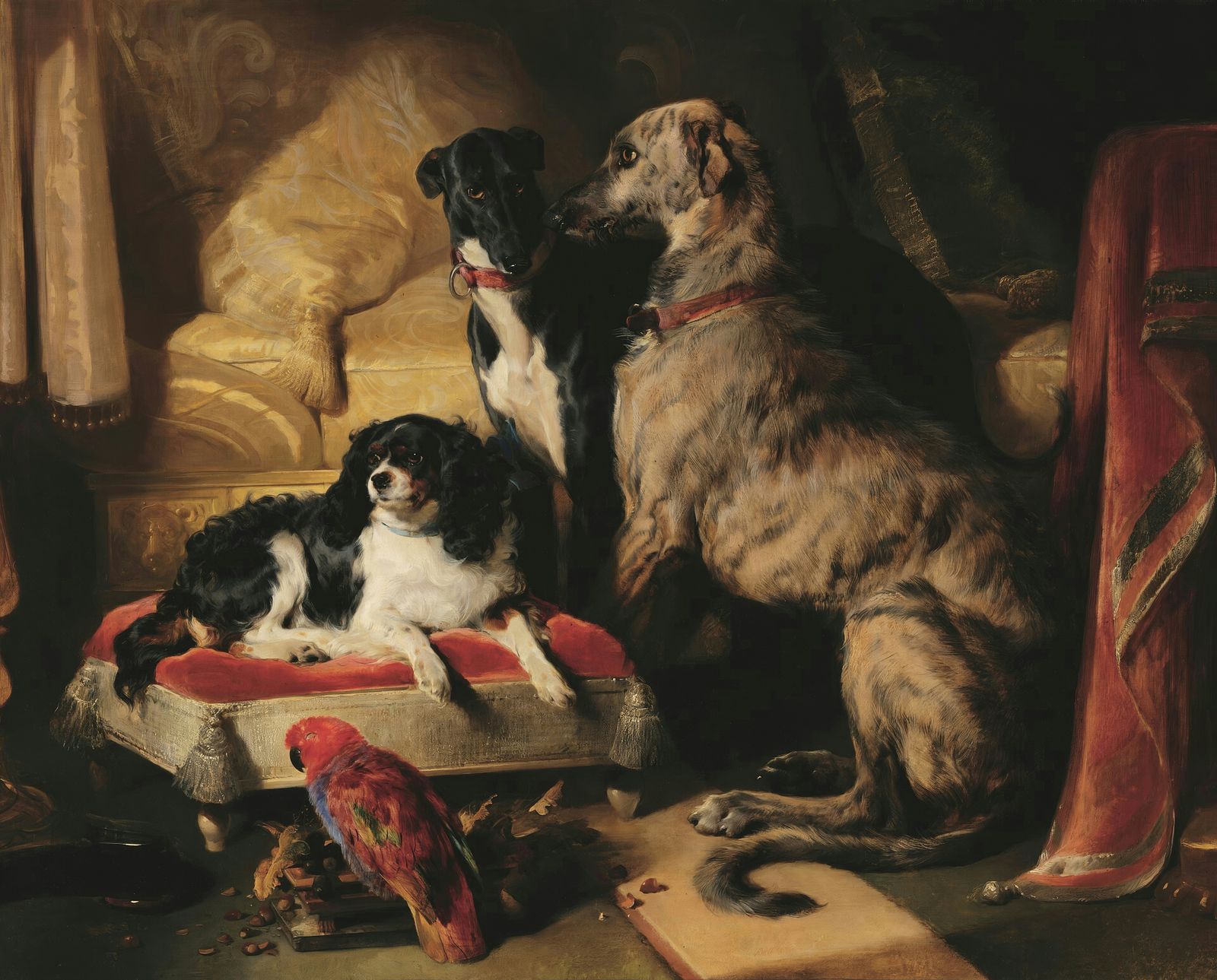
Hector, Nero, and Dash with the parrot, Lory · Edwin Landseer · 1838 · Royal Collection. Prepared for print by Surrealium at Vaxholm Fortress, Sweden.
Landseer's Hector, Nero and Dash gives the dogs different positions within a shared scene. Their names and identities matter to the original picture, just as each pet's individual appearance matters in a new group portrait. If your Bernese is pictured with another animal, avoid selecting a photograph where its larger body hides the companion or where similar dark coats make the outlines difficult to separate.
6. The dog beside daily work
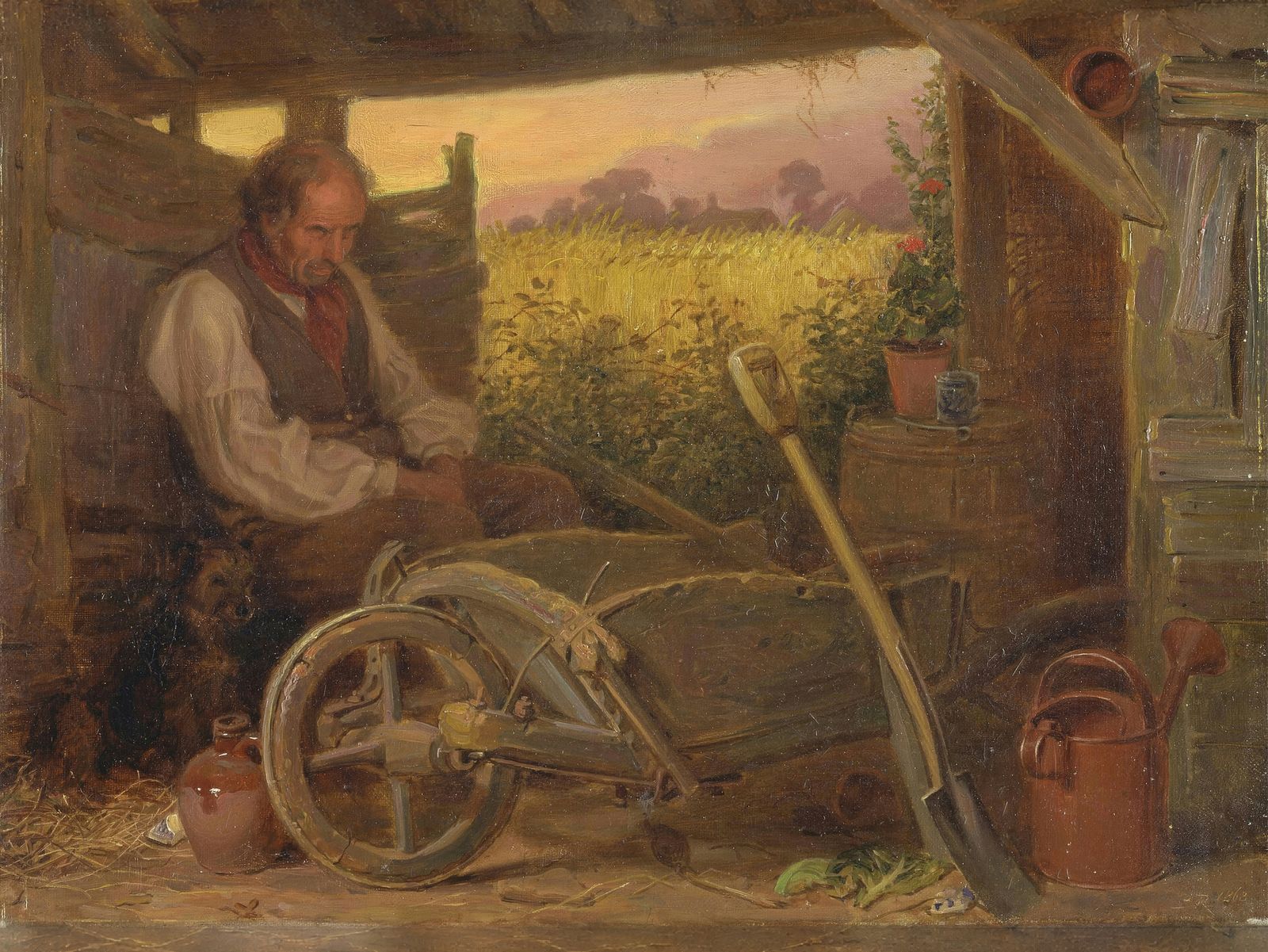
The Old Gardener · Briton Rivière · 1863 · Yale Center for British Art, New Haven. Prepared for print by Surrealium at Vaxholm Fortress, Sweden.
In The Old Gardener, the animal belongs among a person's familiar tools and surroundings. The relationship is legible through proximity and shared space rather than a staged embrace. A photograph of a Bernese near its owner can carry that same sense of ordinary companionship, provided the dog is not reduced to a small shape at the edge of a much larger human scene.
7. Attention to a person
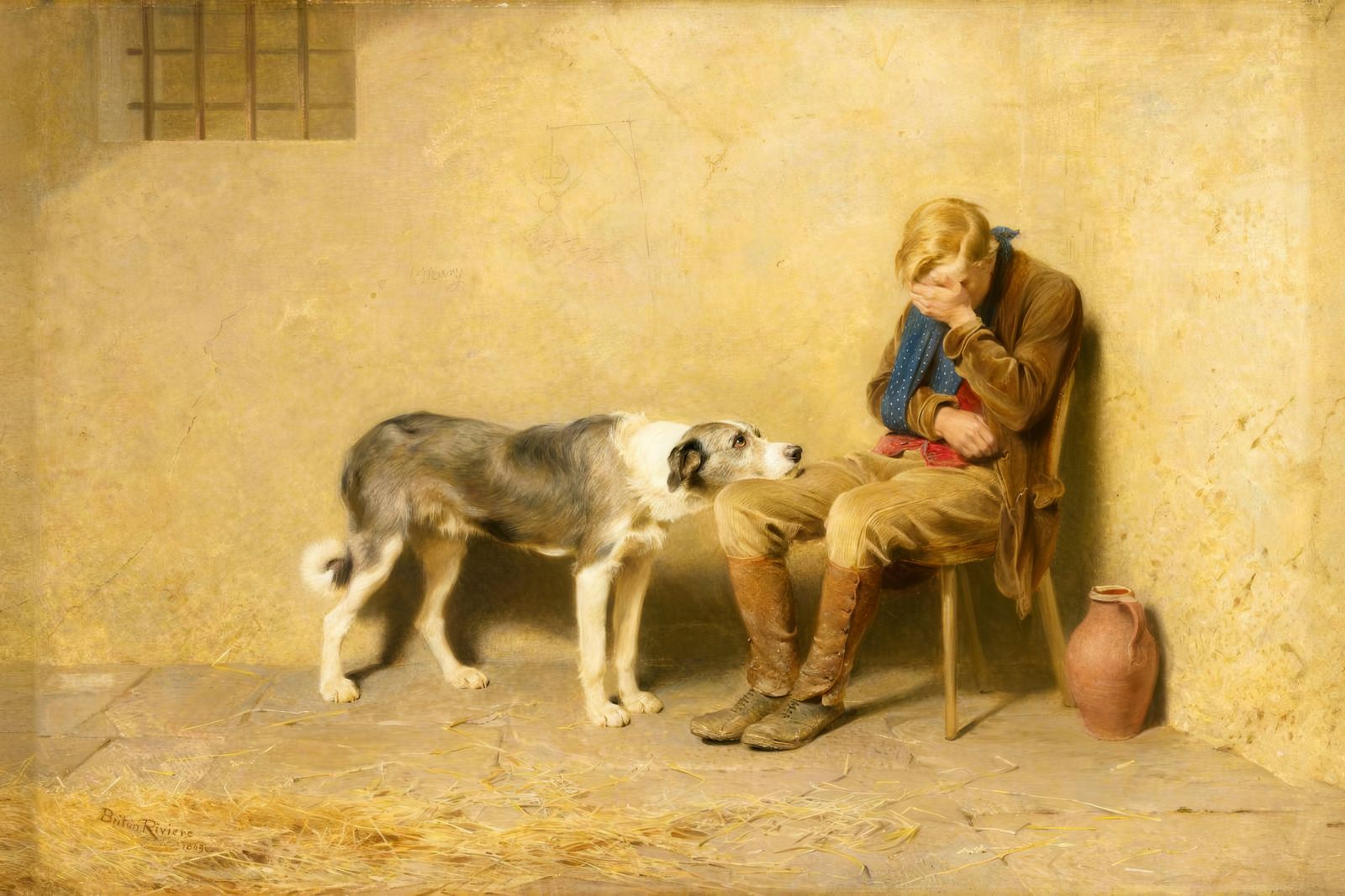
Fidelity · Briton Rivière · 1869 · Lady Lever Art Gallery, Port Sunlight. Prepared for print by Surrealium at Vaxholm Fortress, Sweden.
Riviere's Fidelity places the dog in a clear relationship with a seated man. The picture offers a way to think about the direction of attention, without assigning the same narrative to your own photograph. If the portrait includes a person, choose an image where the connection is visible and comfortable, with neither face obscured by the larger animal's head or coat.
8. A dark shape within a landscape
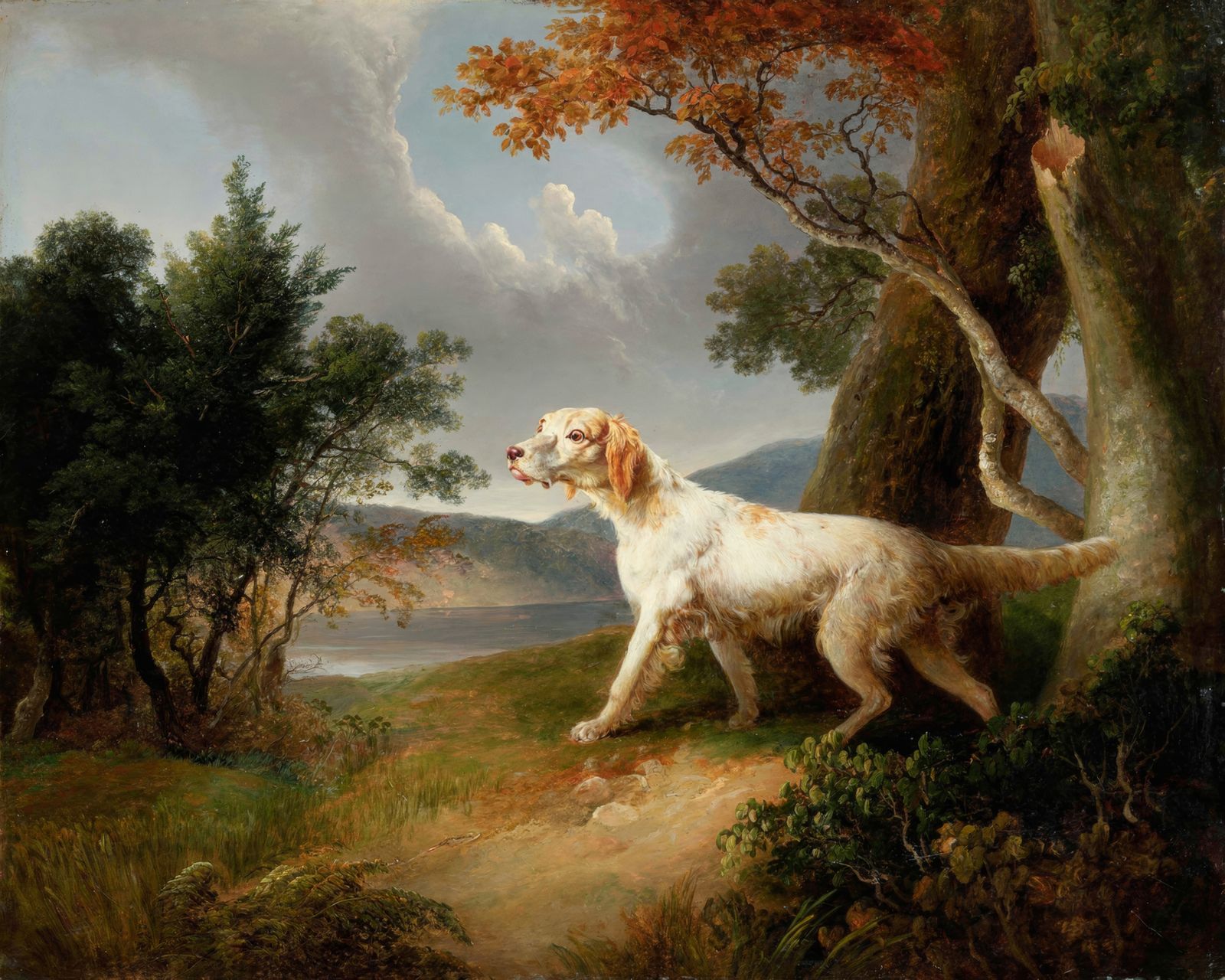
Landscape with Dog · Thomas Doughty · 1832 · Art Institute of Chicago. Restored by Surrealium at Vaxholm Fortress, Sweden.
Landscape with Dog lets the surrounding ground and vegetation help define the animal. For a Bernese portrait, a quieter patch of background behind the dark back can make the whole body easier to read. Look beyond the face when comparing photographs, because an attractive expression will not by itself explain where the legs, chest and long coat end.
9. A person and a substantial companion
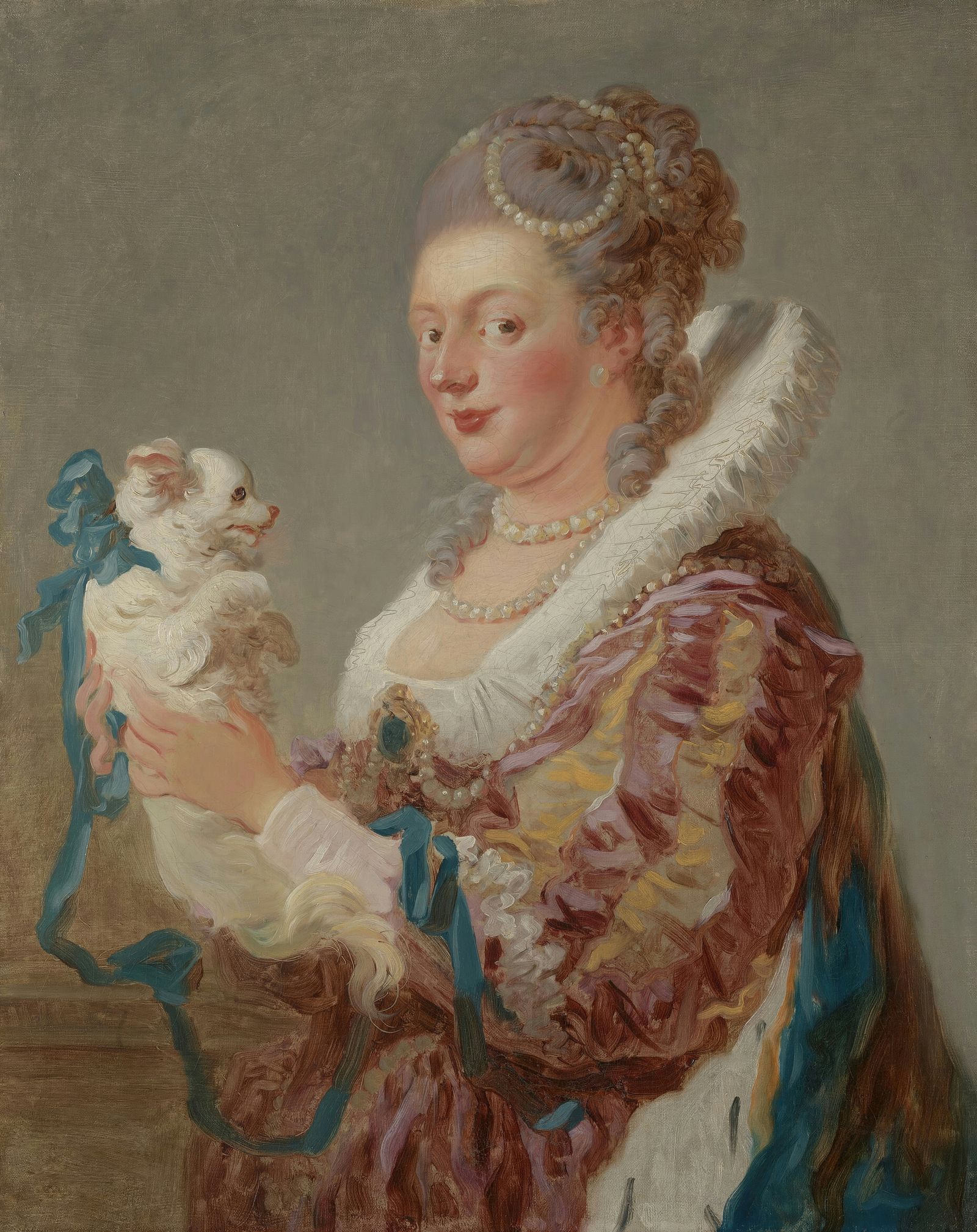
A Woman with a Dog · Jean-Honoré Fragonard · 1769 · Metropolitan Museum of Art, New York. Prepared for print by Surrealium at Vaxholm Fortress, Sweden.
A Woman with a Dog gives the animal a meaningful place alongside the human figure. The balance is useful when a family wants the dog included as a recognisable subject rather than a decorative detail. Choose a photograph that gives enough space to the Bernese's face and body, and check that the person's clothing does not merge with the dog's darkest areas.
10. A small gesture beside a large animal
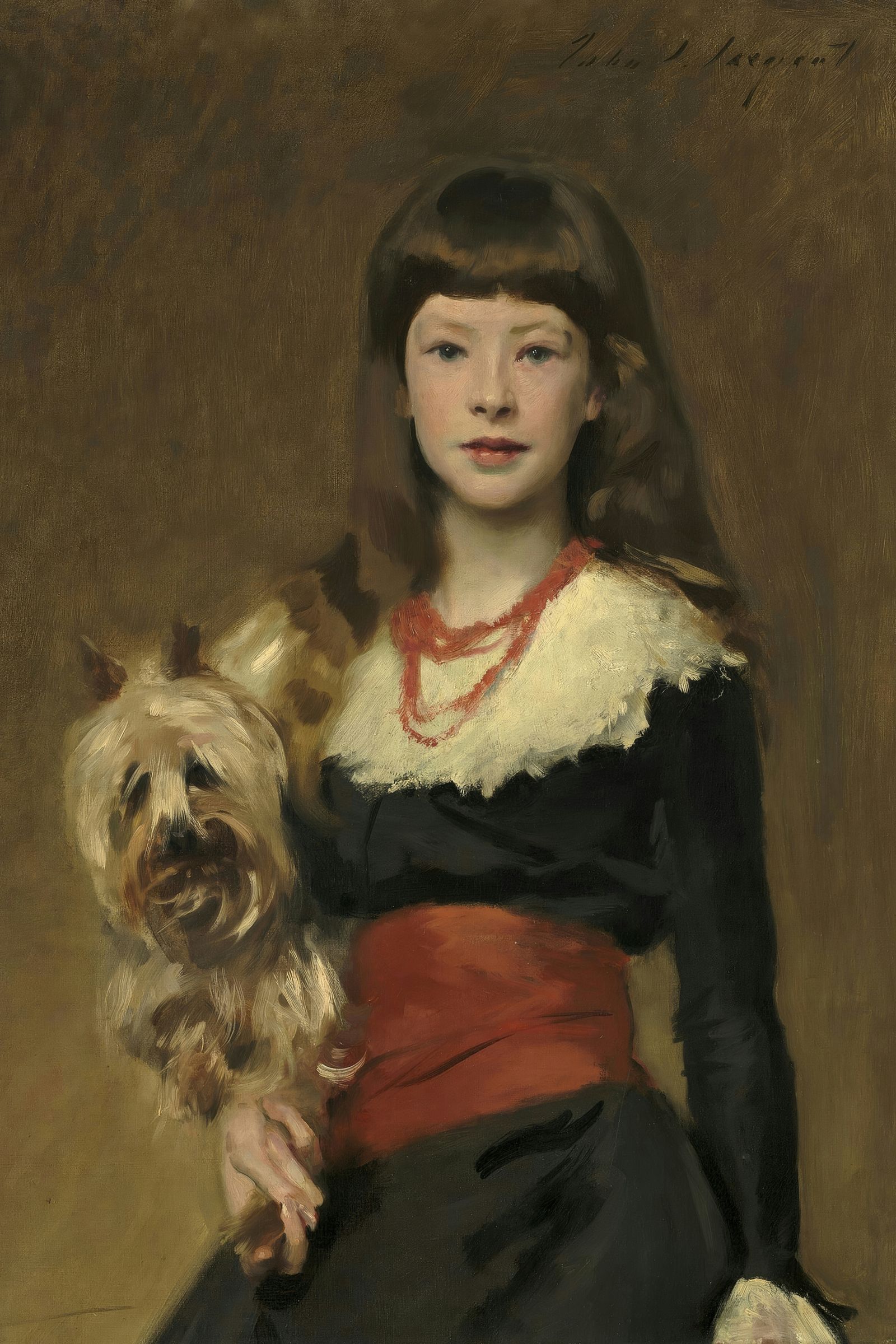
Miss Beatrice Townsend · John Singer Sargent · 1882 · National Gallery of Art, Washington. Prepared for print by Surrealium at Vaxholm Fortress, Sweden.
Sargent's Miss Beatrice Townsend places the dog close to the sitter, with the relationship expressed through the arrangement rather than a busy setting. A portrait can be intimate without reducing the animal's scale. For your source photograph, keep the touch or proximity that matters while allowing the dog's head and chest to remain visible enough to retain its individual presence.
Review the photograph at a small size and then close up. At a glance, the body should have a clear shape; closer in, the eyes, muzzle and distinctive markings should remain readable. A Bernese portrait can use rich colour or loose brushwork, but those choices should not erase the animal's actual pattern. Fable's pet portrait route begins with the particular dog in your photograph, while these historic works help you compare ways of presenting it.
The custom dog portrait guide covers the starting photograph, and pet portrait styles compares visual approaches. See husky portraits for another coat problem and Labrador portraits for a shorter-coated subject. Landseer's Lion remains a useful reference for giving a large dog space.
- Is a Bernese mountain dog the same portrait subject as a border collie?
- No. Use the individual dog’s photograph and proportions rather than substituting another black, white and tan animal. Similar colours do not make two dogs interchangeable. This guide uses other historic dogs only to compare composition and light.
- How do I keep black fur visible?
- Choose a photograph with enough light to show changes across the coat, especially around the face and chest. A dark background can work if the outline remains separate. Avoid an image where bright white markings are visible but all the dark fur has become one featureless area.
- Should I choose a close head portrait or the whole body?
- A close view can emphasise the face, while a full-body image can preserve the dog’s scale and familiar stance. Compare both if you have suitable photographs. The better choice is the one that retains the features and posture you most associate with your own animal.