Labrador painting: ten ways to make the likeness clear
Ten historic dog pictures help you choose a Labrador portrait with readable coat colour, a natural stance and a familiar expression.
A Labrador painting should preserve the dog's individual head, expression and stance rather than rely on a familiar breed label. Whether the coat is light or dark, a good source photograph needs enough tonal detail to show the eyes, muzzle and shoulders clearly. A bright background cannot compensate for a face lost in shadow.
These ten historic works show other dogs and their relationships with people and places. They are visual comparisons, not a claim that the pictured setters, hounds or other animals are Labradors. Look at the handling of dark fur, the support beneath a resting body and the balance between a person and a dog. Then choose the photograph that carries the specific details you recognise in your own companion.
1. A dog with equal importance
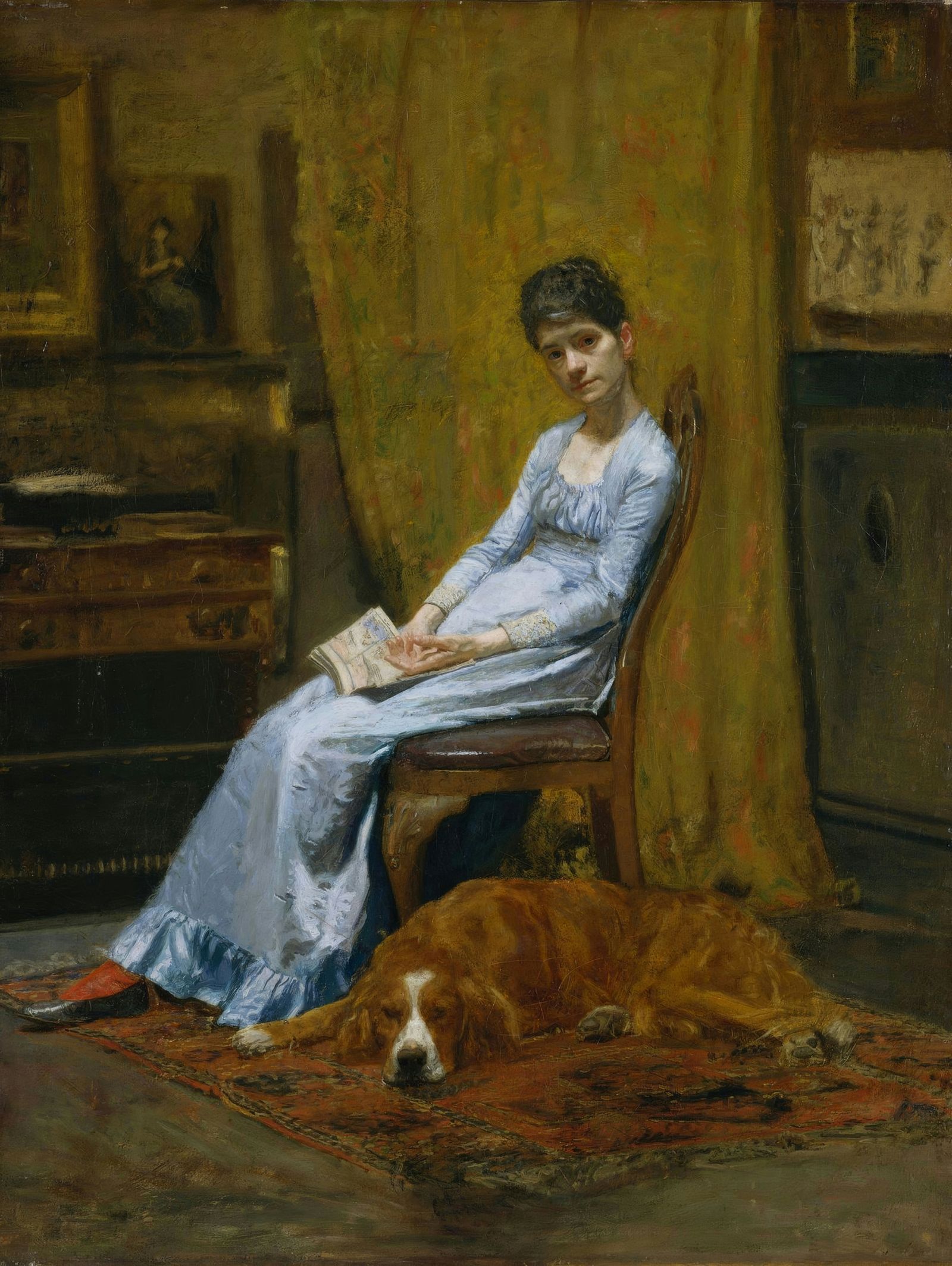
The Artist's Wife and His Setter Dog · Thomas Eakins · 1884 · Metropolitan Museum of Art, New York. Prepared for print by Surrealium at Vaxholm Fortress, Sweden.
Eakins's The Artist's Wife and His Setter Dog gives the animal a substantial role beside the human sitter. The dog is a setter, and that identity remains part of the historic picture. For a Labrador portrait with an owner, the useful lesson is balance: choose a photograph where the dog's face and body remain clear rather than becoming a small secondary shape beside a more prominent person.
2. A strong body beside the water
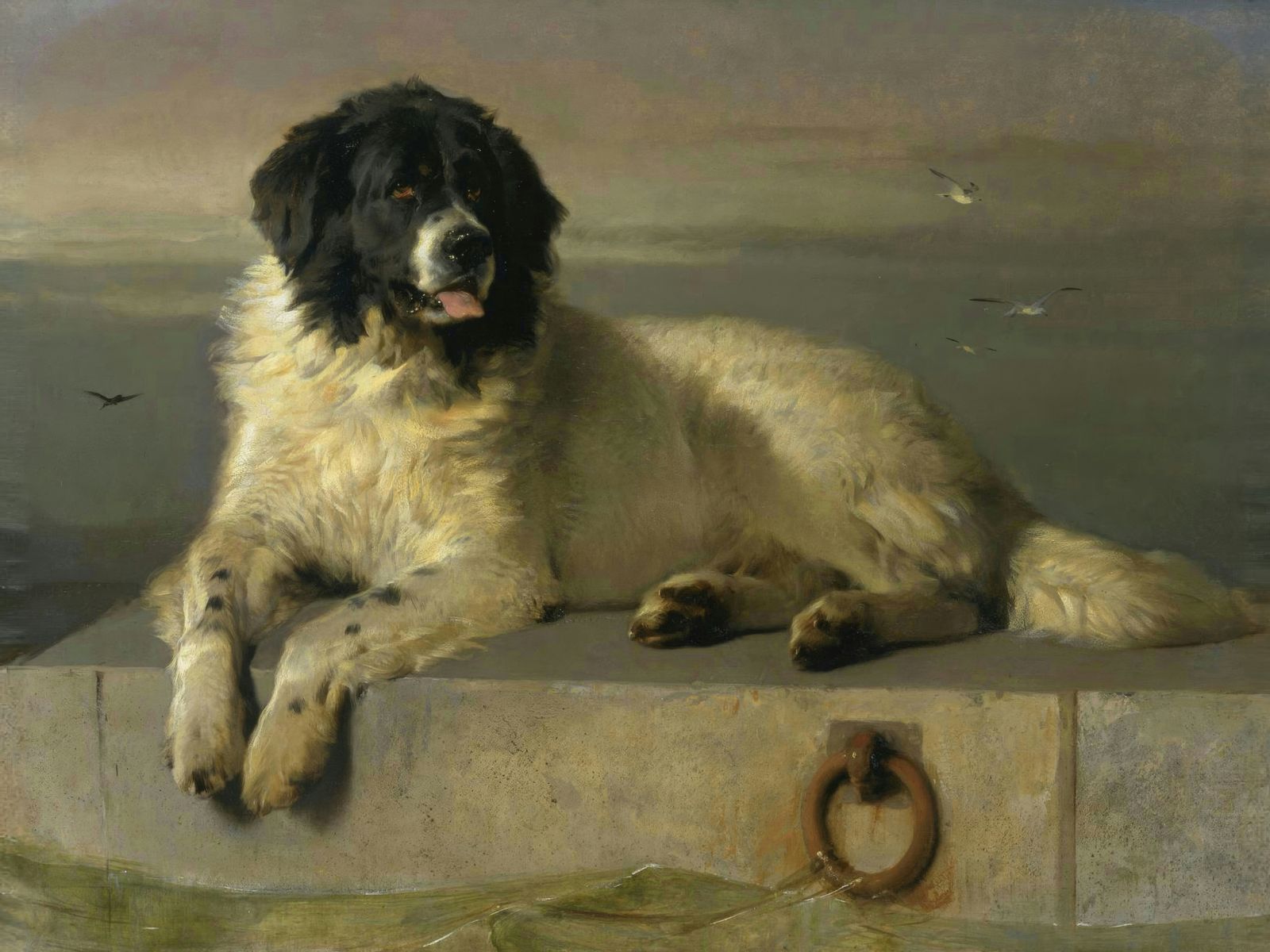
A Distinguished Member of the Humane Society · Edwin Landseer · 1831 · Tate, London. Prepared for print by Surrealium at Vaxholm Fortress, Sweden.
Landseer's A Distinguished Member of the Humane Society places a large dog near the water, with the supported body clearly visible. The setting can suggest a useful comparison for a Labrador that regularly visits a beach or lake. Use an actual photograph from that place, and check that reflections or bright water do not leave the dog's face much darker than the rest of the image.
3. The animal within the landscape
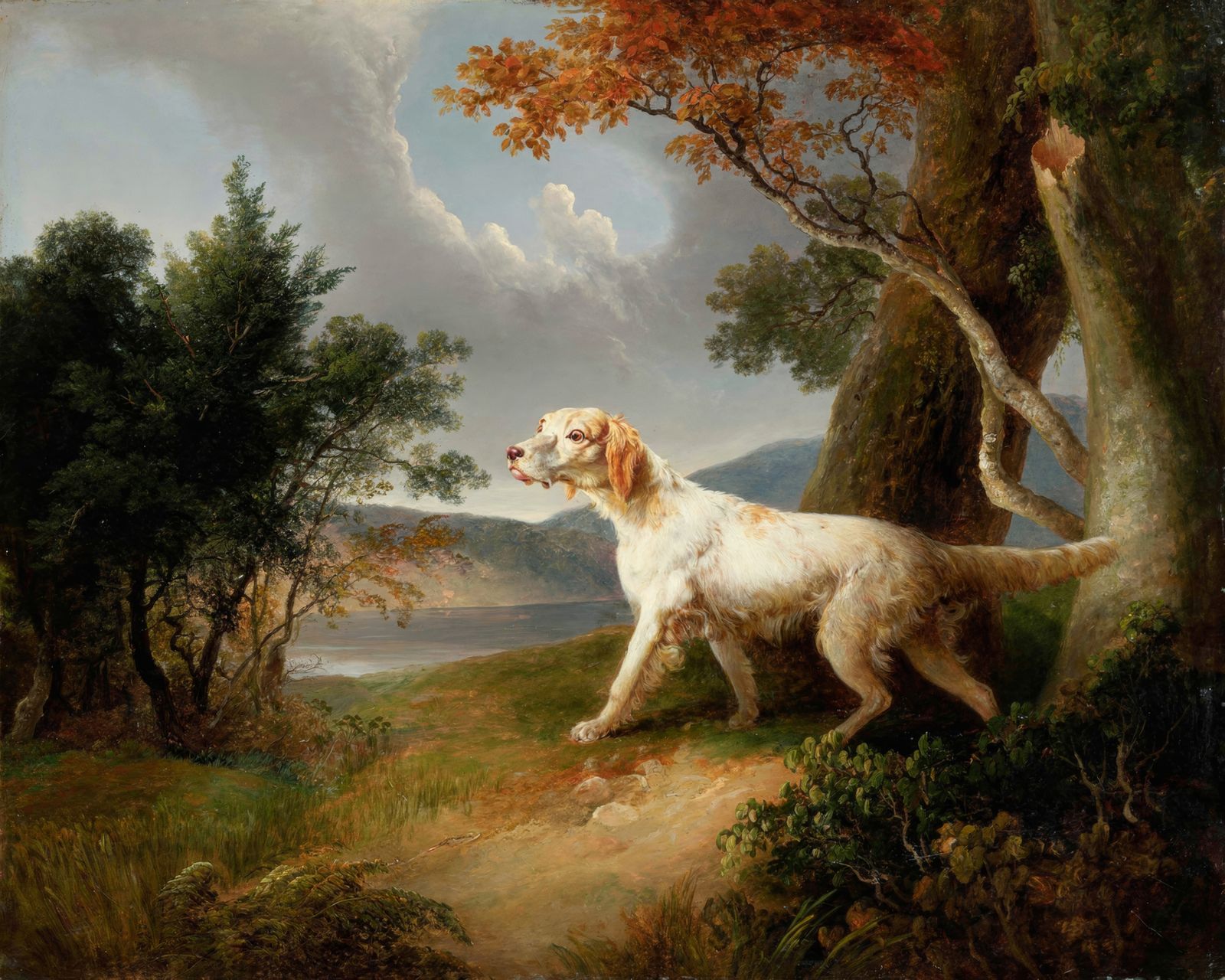
Landscape with Dog · Thomas Doughty · 1832 · Art Institute of Chicago. Restored by Surrealium at Vaxholm Fortress, Sweden.
Landscape with Dog gives the surrounding ground and vegetation a role in defining the subject. A quiet patch behind a Labrador's head or back can make the outline readable without requiring a plain studio background. When comparing photographs, look at the whole body first and ask whether the setting explains the pose or simply fills the frame with competing texture.
4. A resting hound as a comparison
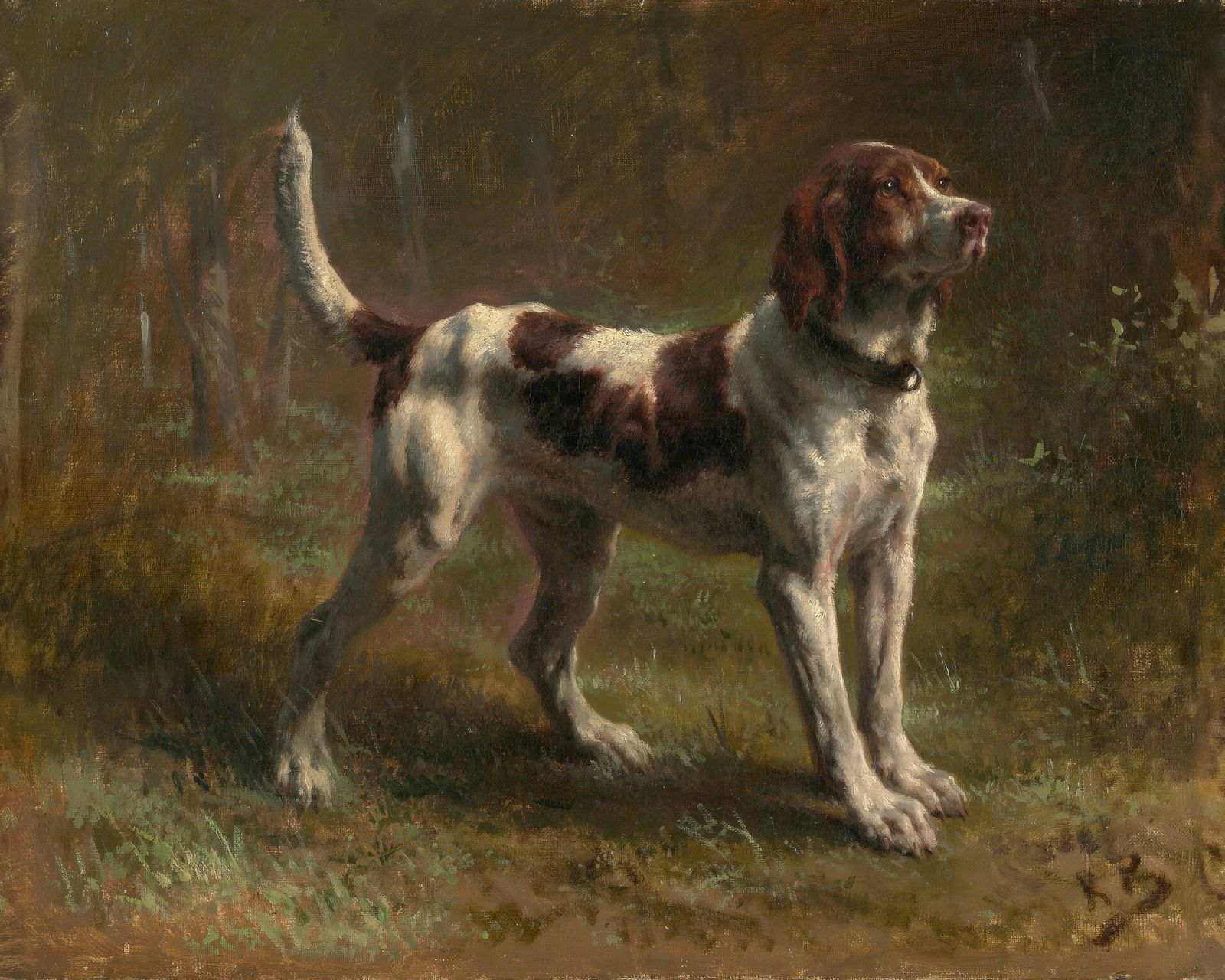
A Limier Briquet Hound · Rosa Bonheur · 1856 · Metropolitan Museum of Art, New York. Prepared for print by Surrealium at Vaxholm Fortress, Sweden.
Bonheur's A Limier Briquet offers a different dog type, with the animal standing on clearly visible paws. The comparison is useful because a portrait does not have to show a Labrador standing alert to capture its character. A familiar resting photograph can be equally strong, provided the head, folded legs and surface beneath the body remain easy to understand.
5. A whole body against darkness
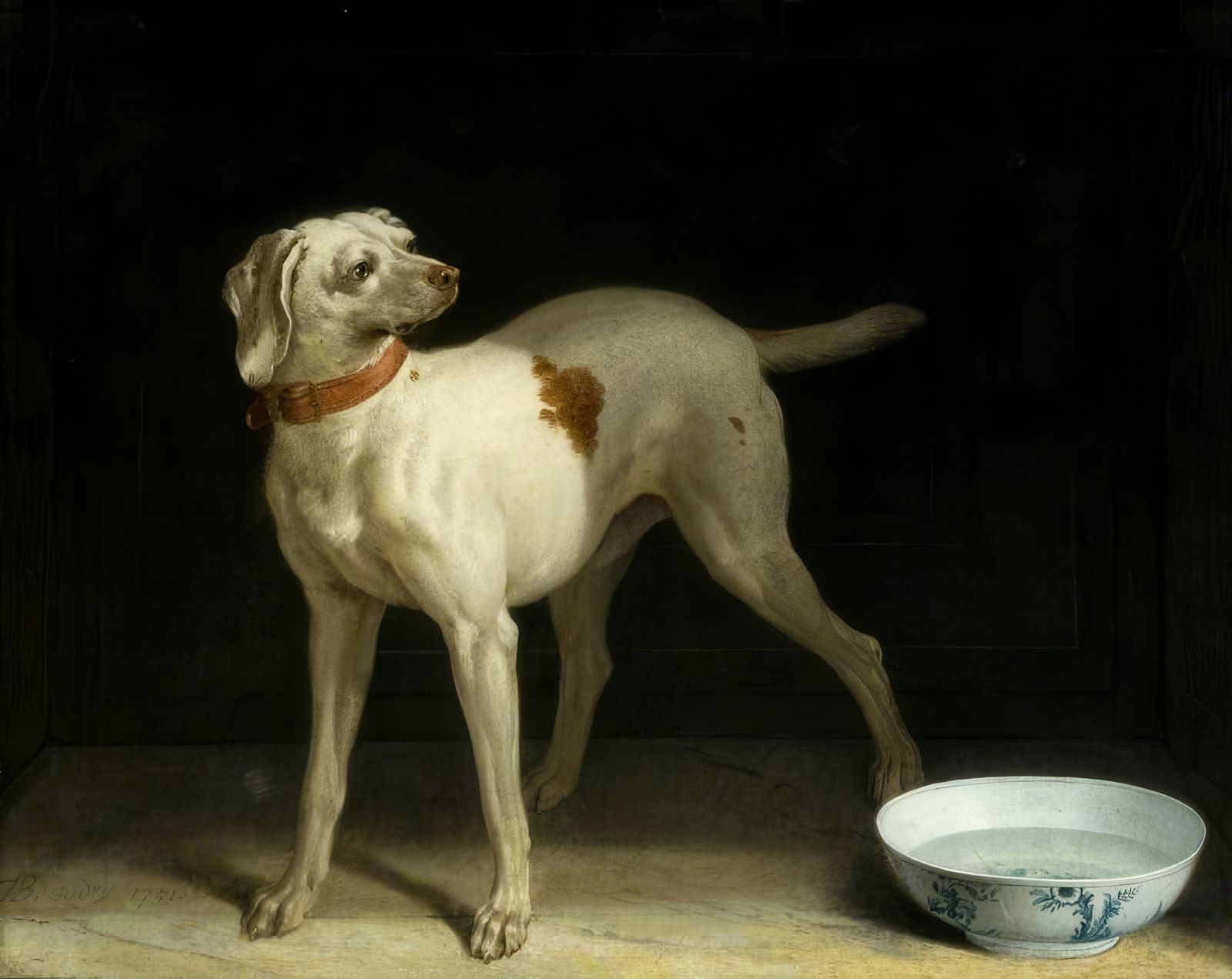
The Dog · Jean-Baptiste Oudry · 1751 · Burrell Collection, Glasgow. Prepared for print by Surrealium at Vaxholm Fortress, Sweden.
Oudry's The Dog gives the animal's whole standing body a clear silhouette against a dark background. The restrained setting lets the outline and individual patches of the coat hold attention without a complicated narrative. Choose a Labrador photograph in which the eyes, nose and mouth are actually visible, then let the style change the surface treatment without asking it to reconstruct a face that the source does not show.
6. A companion beside a child
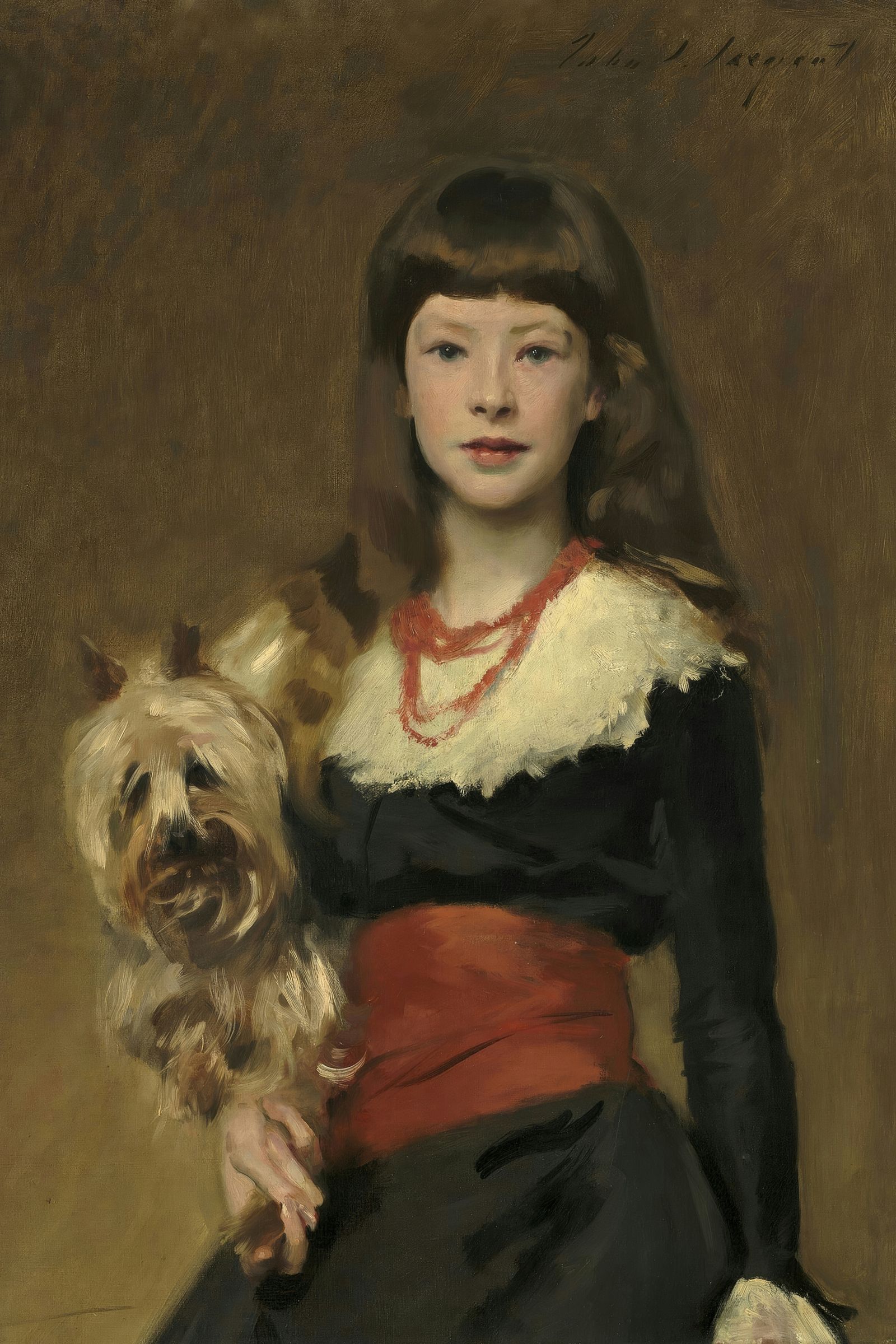
Miss Beatrice Townsend · John Singer Sargent · 1882 · National Gallery of Art, Washington. Prepared for print by Surrealium at Vaxholm Fortress, Sweden.
Sargent's Miss Beatrice Townsend places the dog close to the sitter, with the scale of the two figures forming part of the picture. A family portrait can give a Labrador a similar place without turning it into a human character. Choose an image where the child and dog both look comfortable, and where hands or clothing do not cover the animal's identifying features.
7. The shared walk
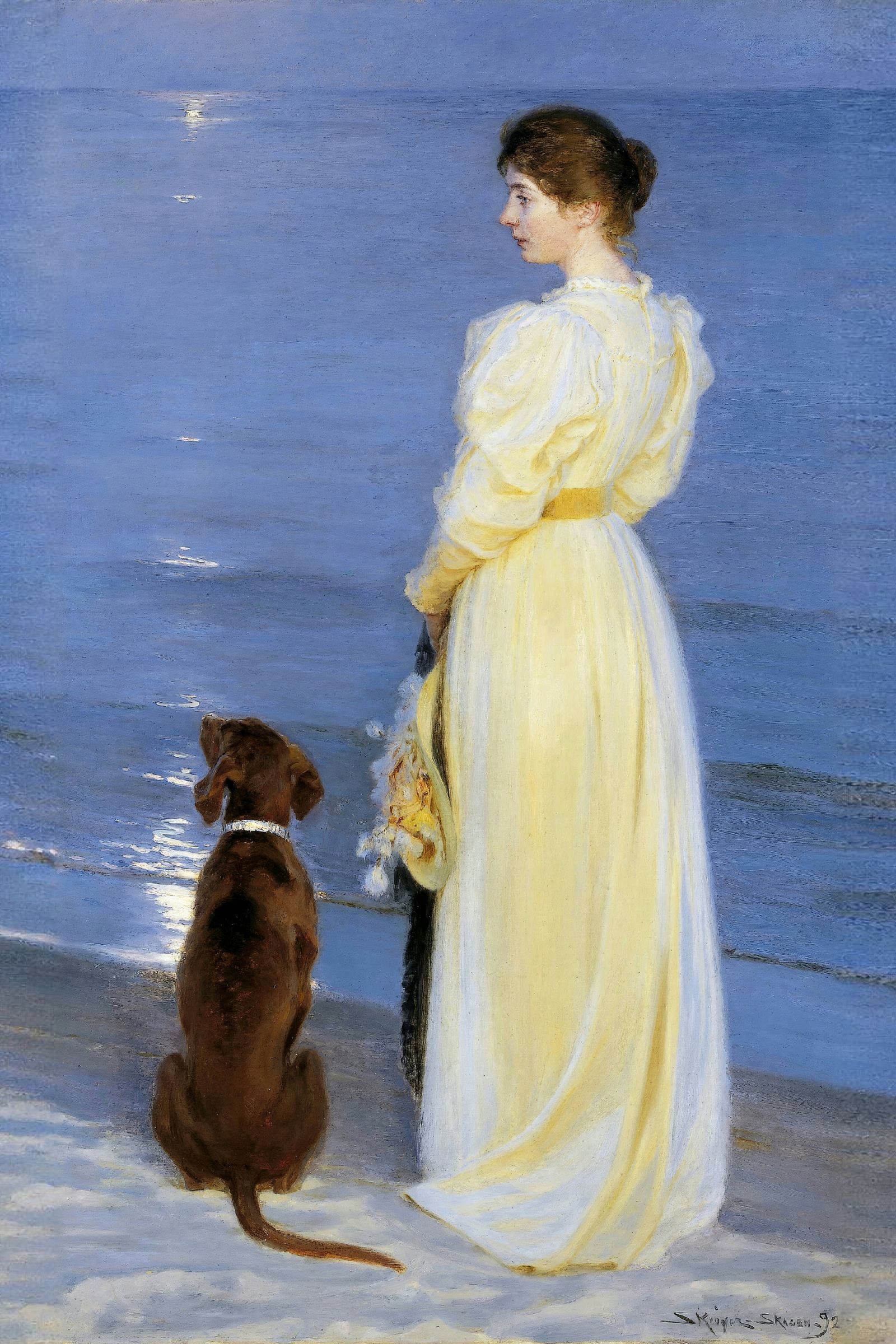
Summer Evening at Skagen · Peder Severin Krøyer · 1892 · Skagens Museum. Prepared for print by Surrealium at Vaxholm Fortress, Sweden.
Krøyer's summer evening scene shows a person and dog facing towards the shore, their companionship carried by the shared setting. A photograph of a familiar walk may hold more personal meaning than a formal pose against a generic backdrop. Decide whether the portrait should preserve the experience of being there together or offer a close facial likeness, since those aims call for different source images.
8. Dark fur beside a dark figure
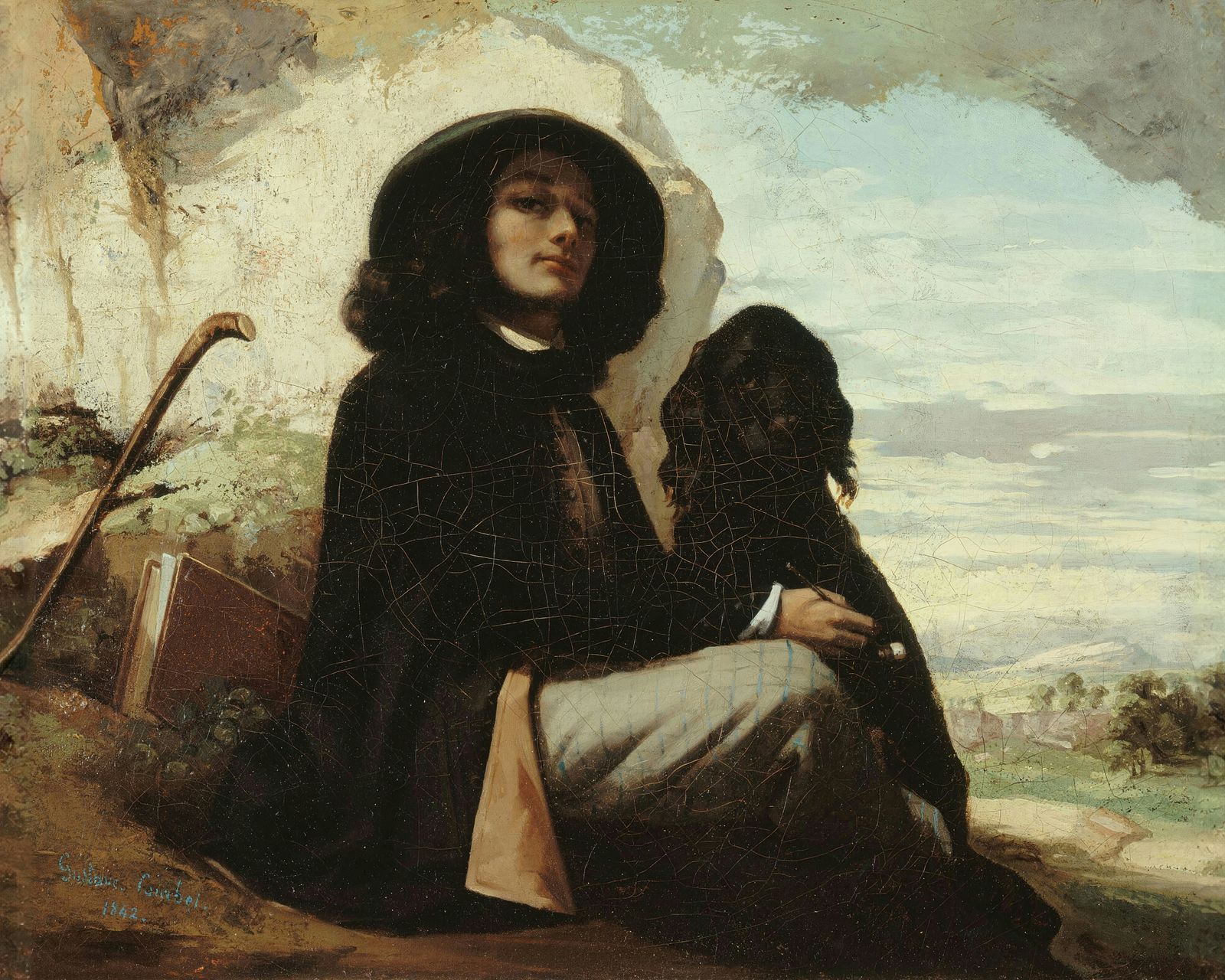
Self-Portrait with a Black Dog · Gustave Courbet · 1842 · Petit Palais, Paris. Prepared for print by Surrealium at Vaxholm Fortress, Sweden.
Courbet's Self-Portrait with a Black Dog is a useful study in keeping a dark animal distinct within a larger composition. For a black Labrador, look for subtle light across the muzzle, chest and back rather than relying on a single bright highlight. A photograph with visible changes in the coat gives a portrait more information than one in which the animal becomes an uninterrupted silhouette.
9. The place the dog chooses
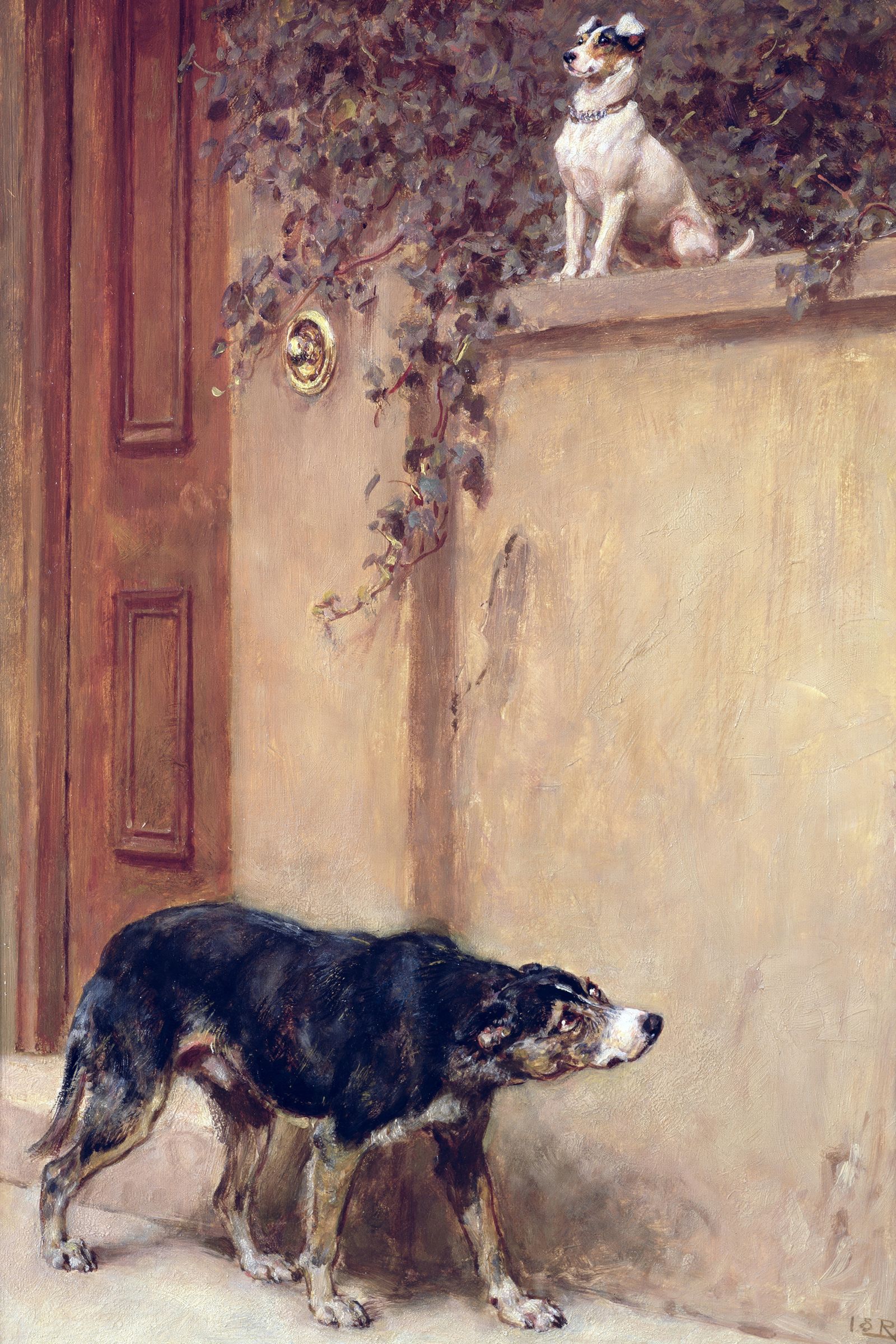
Pride of Place · Briton Rivière · 1891 · Royal Albert Memorial Museum & Art Gallery, Exeter. Prepared for print by Surrealium at Vaxholm Fortress, Sweden.
Riviere's Pride of Place makes a dog's position within the household part of the scene's interest. A favourite chair or corner can carry the same personal value in a photograph of your Labrador. Keep the actual object if it matters, but make sure its pattern or edges do not obscure the dog's outline so thoroughly that the setting becomes more recognisable than the animal.
10. Attention without a forced pose
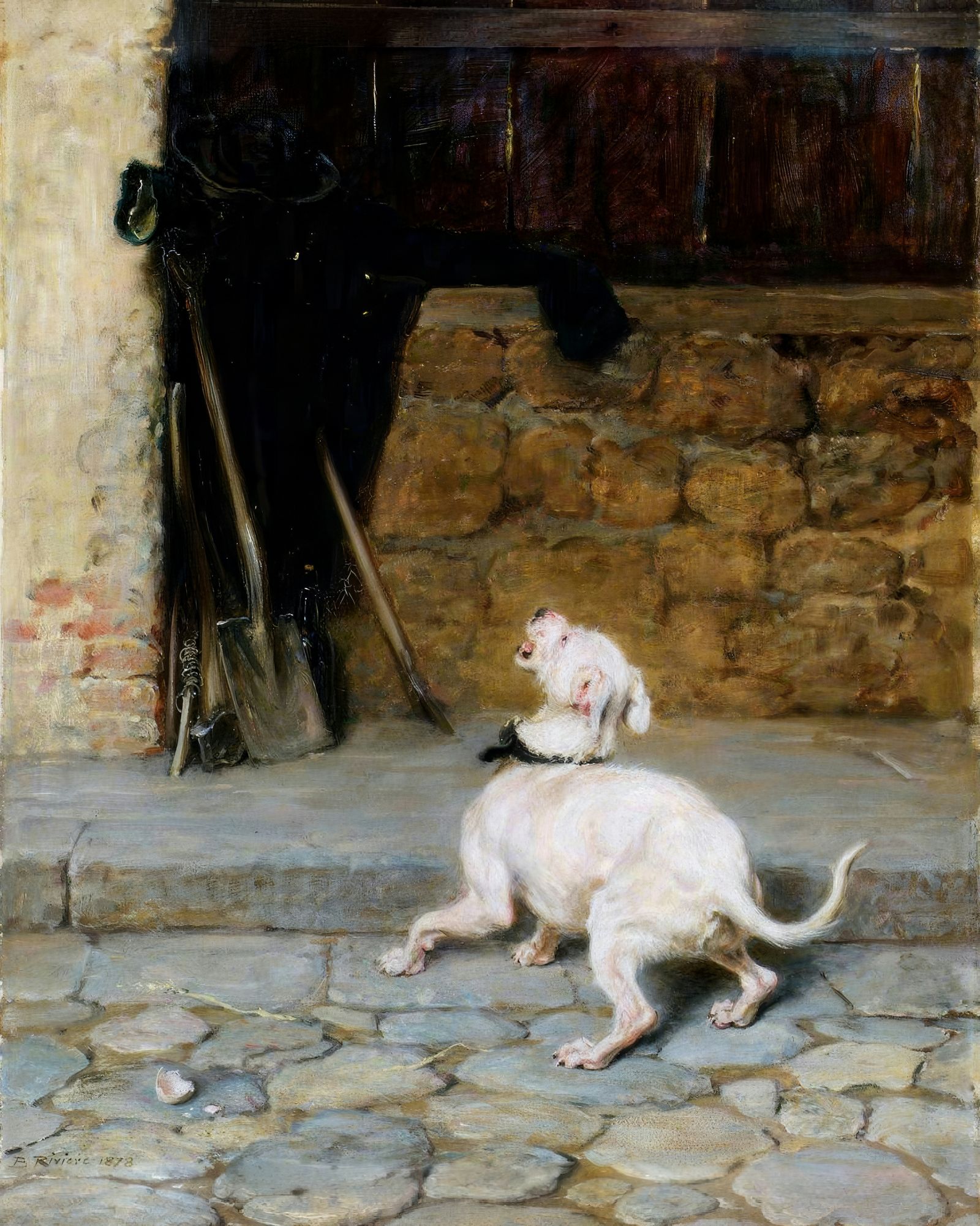
So Full of Shapes Is Fancy · Briton Rivière · 1878 · Aberdeen Art Gallery & Museums. Prepared for print by Surrealium at Vaxholm Fortress, Sweden.
So Full of Shapes Is Fancy gives the dog a particular direction of attention within the scene. A portrait can preserve that kind of absorbed pause without turning the animal into a human thinker or adding an elaborate narrative. Choose a photograph that shows the head and ears clearly, and let the familiar posture communicate the dog's presence rather than inventing a dramatic expression.
Compare photographs taken in even light before choosing one for the portrait. The best reference shows the familiar shape of the head, readable coat detail and a pose that belongs to your dog. Fable's pet portrait route starts from that image. Use these historic works to discuss composition and tone, while keeping the Labrador's actual markings, proportions and ordinary character as the measure of likeness.
Start with custom dog portraits and the broader pet portrait styles guide. Compare the shape problem in greyhound portraits and the long coat in Bernese mountain dog portraits. Eakins's portrait with a setter shows how to give the animal its own place beside a person.
- How do I photograph a black Labrador for a portrait?
- Look for even light that reveals the muzzle, eyes and changes across the coat. Check the image without brightening it dramatically. If the body is only a silhouette, a different photograph may provide a clearer reference than trying to recover detail that was never recorded.
- Can a yellow Labrador work against a pale background?
- Yes, if the coat and background remain distinguishable through tone and the outline stays clear. Look particularly at the ears, muzzle and chest. Strong sunlight that turns both dog and background into featureless light areas is less useful than a softly lit photograph with visible detail.
- Do the historic dogs need to be Labradors to be useful?
- No, provided their identities are stated honestly. These works help compare pose, light and the relationship between a dog and its surroundings. They do not replace the photograph of your own Labrador or establish a breed history from appearance alone.