Greyhound painting: ten pictures that give shape room
Ten historic dog pictures help you choose a greyhound portrait that preserves the long outline, fine head and relaxed posture.
A greyhound painting depends on the spaces around the dog as much as the dog itself. Long legs, a fine head and the curve between chest and abdomen can lose their character when a photograph is tightly framed or taken from an awkward height. A little room around the complete outline often tells more than a dramatic close-up.
This selection includes historic greyhounds and other hounds, with their catalogue identities kept distinct. It does not assume that every slender dog is a greyhound or that a historic label proves a modern pedigree. The pictures help compare profile, resting posture, the relationship to a person and the use of open ground. Your own photograph supplies the individual animal and its familiar proportions.
1. A dog given its own place beside a boy
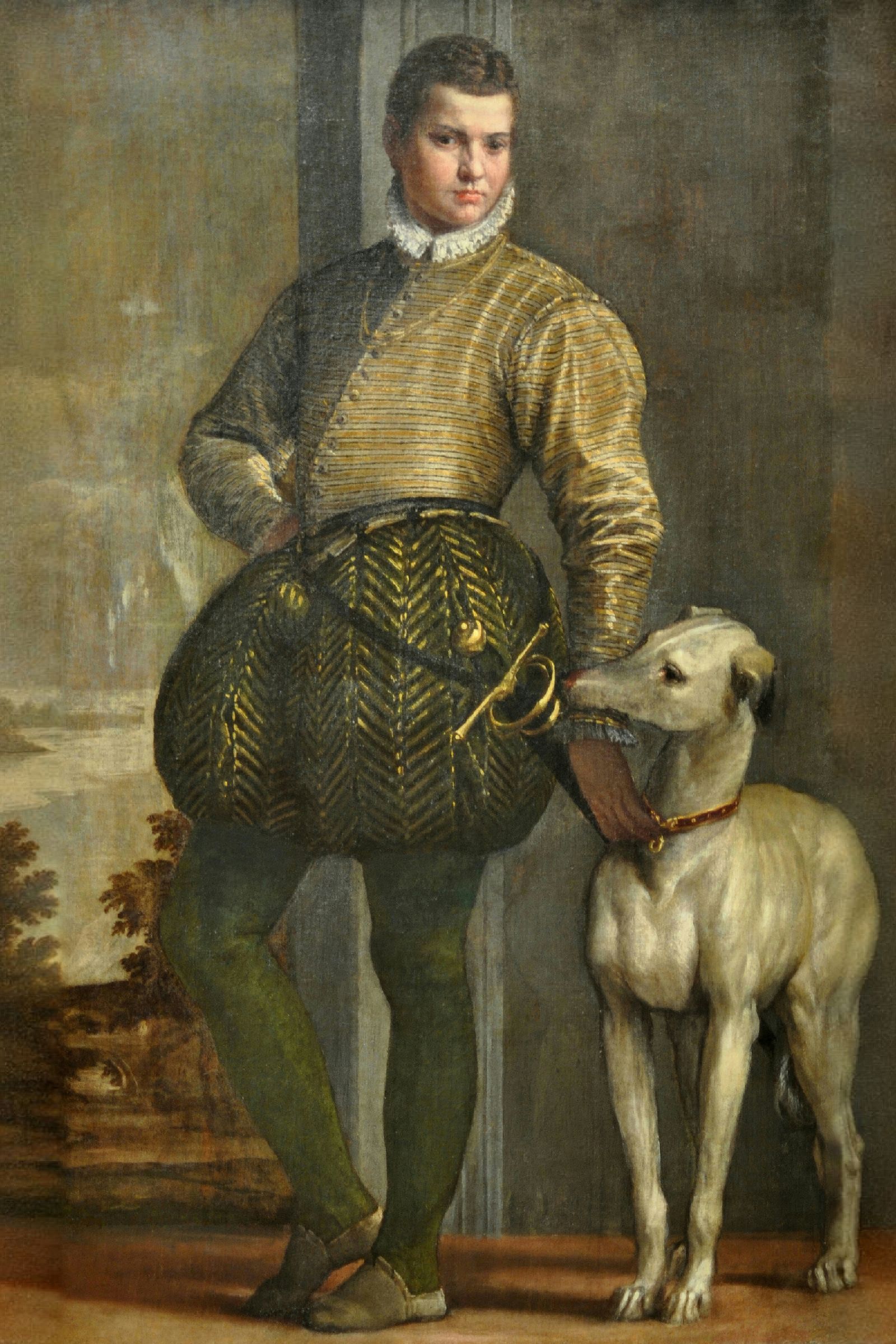
Boy with a Greyhound · Paolo Veronese · possibly 1570s · The Metropolitan Museum of Art. Prepared for print by Surrealium at Vaxholm Fortress, Sweden.
Veronese's Boy with a Greyhound lets the animal occupy a substantial part of the composition beside the human sitter. The long head and body remain readable rather than becoming an accessory at the edge. For a person-and-dog portrait, choose a photograph with a similar balance, keeping enough space around the greyhound for its characteristic outline to remain part of the subject.
2. The named greyhound
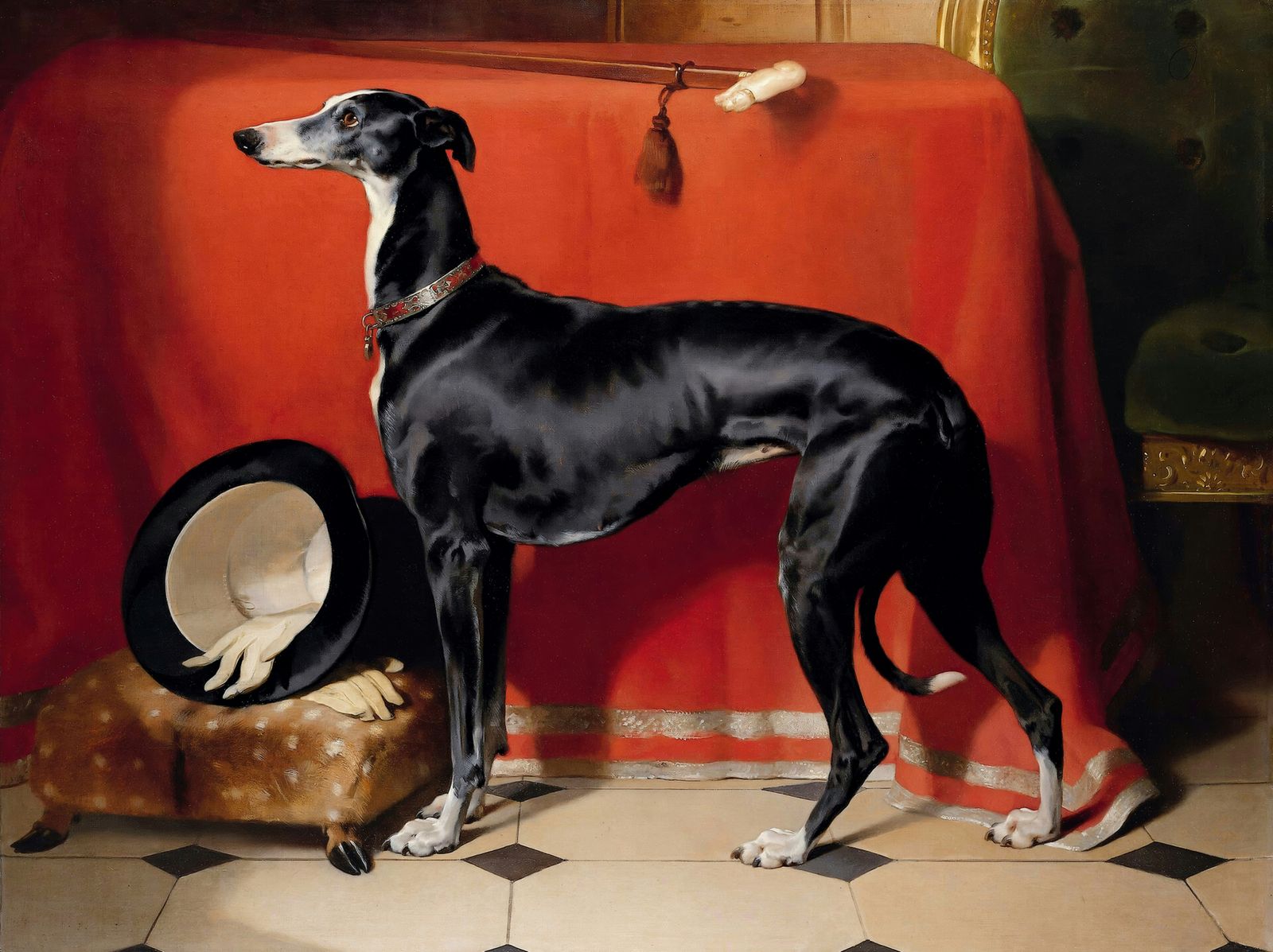
Eos · Edwin Landseer · 1841 · Royal Collection. Prepared for print by Surrealium at Vaxholm Fortress, Sweden.
Landseer's Eos presents an individual dog whose lean body and long head deserve attention beyond the familiar breed label. The portrait's specificity is useful when choosing your own reference: the way one ear folds or the angle of the head may matter more than a perfect standing pose. Look for those small signs of recognition before deciding which photograph is the most impressive.
3. Open ground around a long body
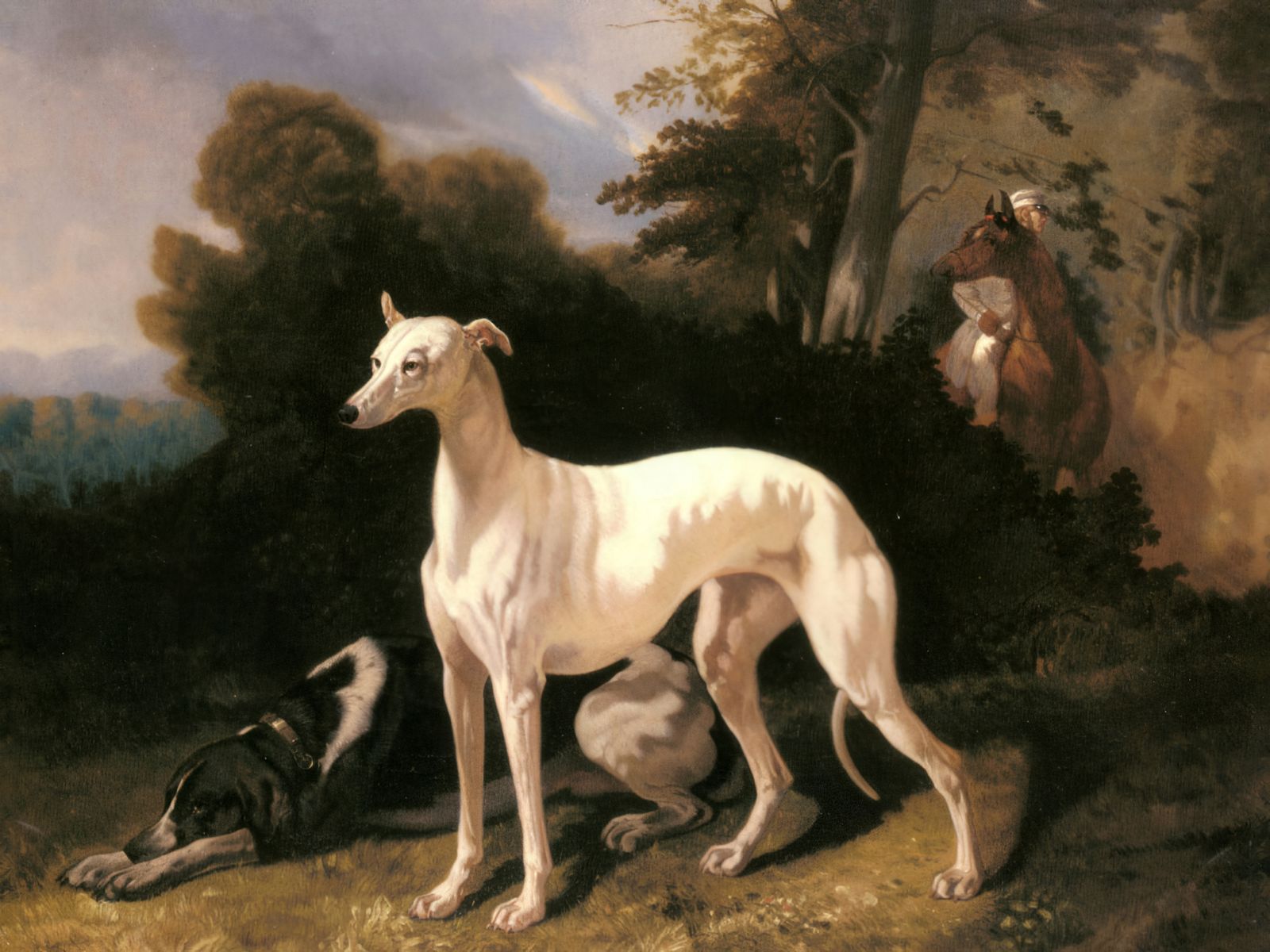
A Greyhound In An Extensive Landscape · Alfred de Dreux · c. 1850 · Private collection; present location unrecorded. Prepared for print by Surrealium at Vaxholm Fortress, Sweden.
De Dreux's greyhound occupies a landscape broad enough to give the animal room. The space is not empty decoration; it allows the silhouette to read without pressure from nearby objects. A greyhound photograph can benefit from the same generosity, especially around the tail and legs, so the portrait preserves the full relationship between body, ground and the direction of attention.
4. A hound in a clear side view
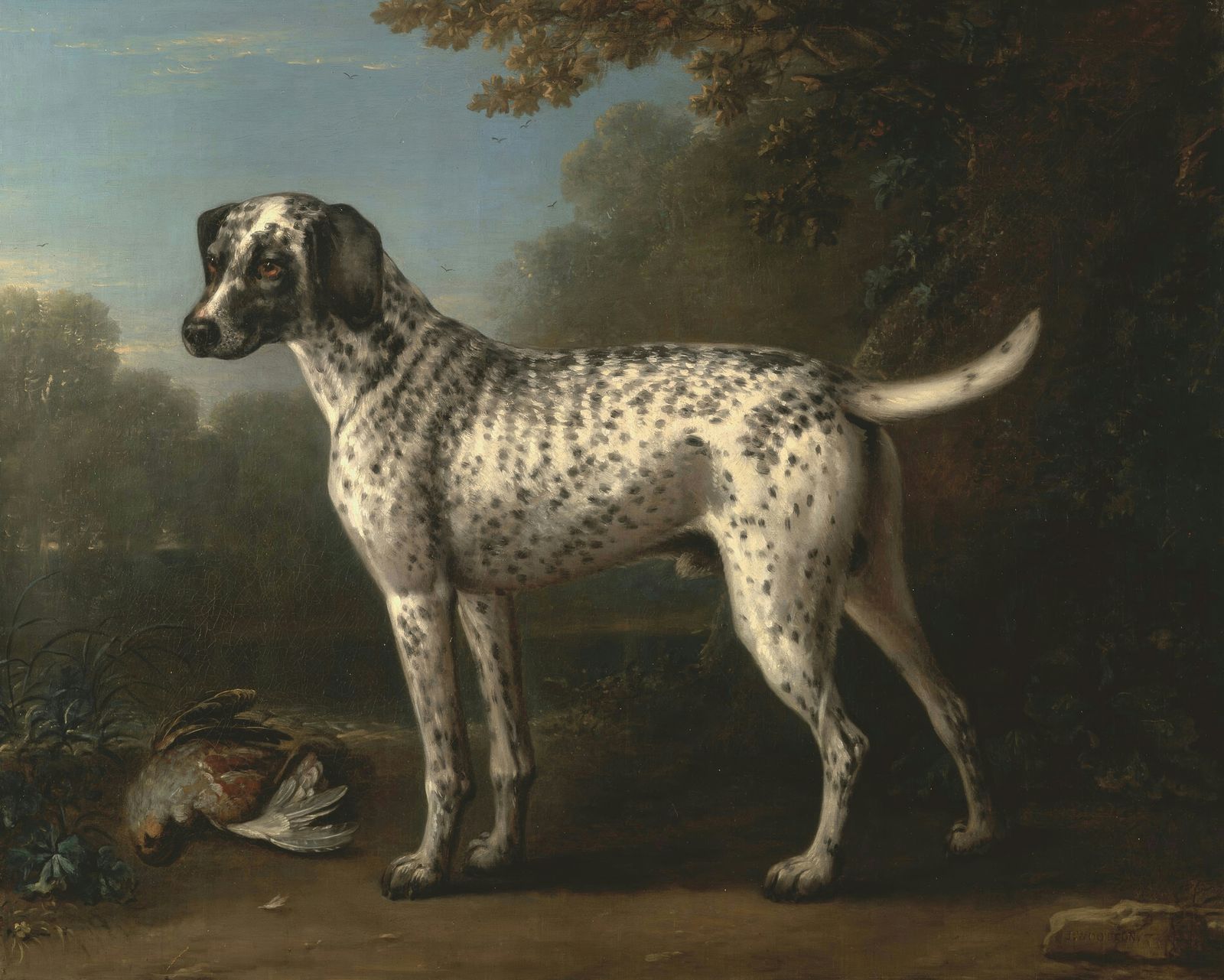
A Grey Spotted Hound · John Wootton · 1738 · Yale Center for British Art. Prepared for print by Surrealium at Vaxholm Fortress, Sweden.
Wootton's A Grey Spotted Hound shows the body across the picture, with the legs and head arranged against the landscape. It is a hound comparison rather than a claim that the animal is your dog's breed. A side view of a greyhound can be equally informative, but choose one taken from a sensible distance so the nearer end of the body is not exaggerated.
5. Two dogs across a horizontal space
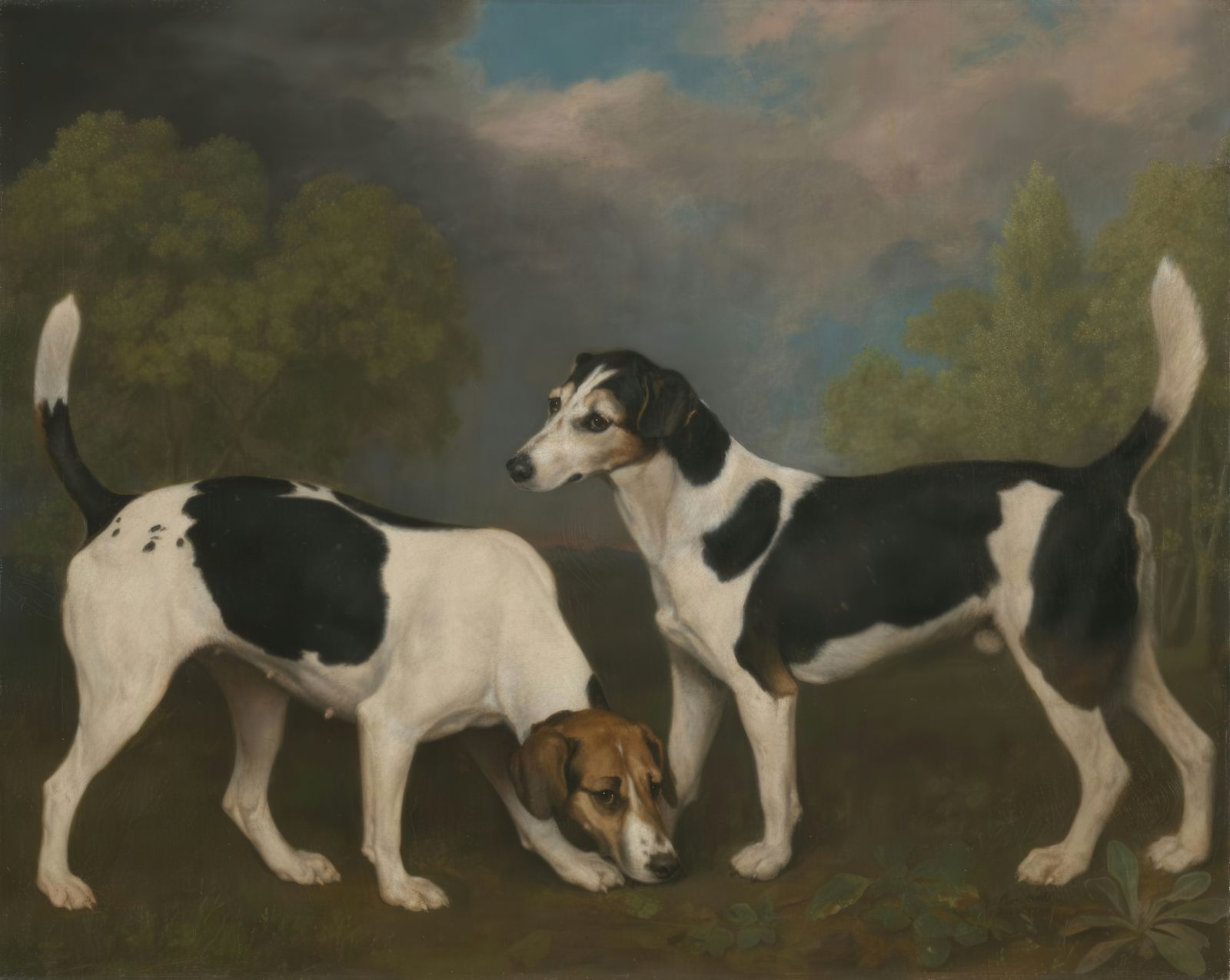
A Couple of Foxhounds · George Stubbs · 1792 · Tate, London. Prepared for print by Surrealium at Vaxholm Fortress, Sweden.
A Couple of Foxhounds offers a different kind of hound body and a useful lesson in sharing the frame. If your portrait includes two greyhounds, the photograph should give each animal a distinct head and outline. Avoid relying on coat colour alone to separate them, especially when their legs overlap or one body obscures the curve that makes the other recognisable.
6. Different directions of attention
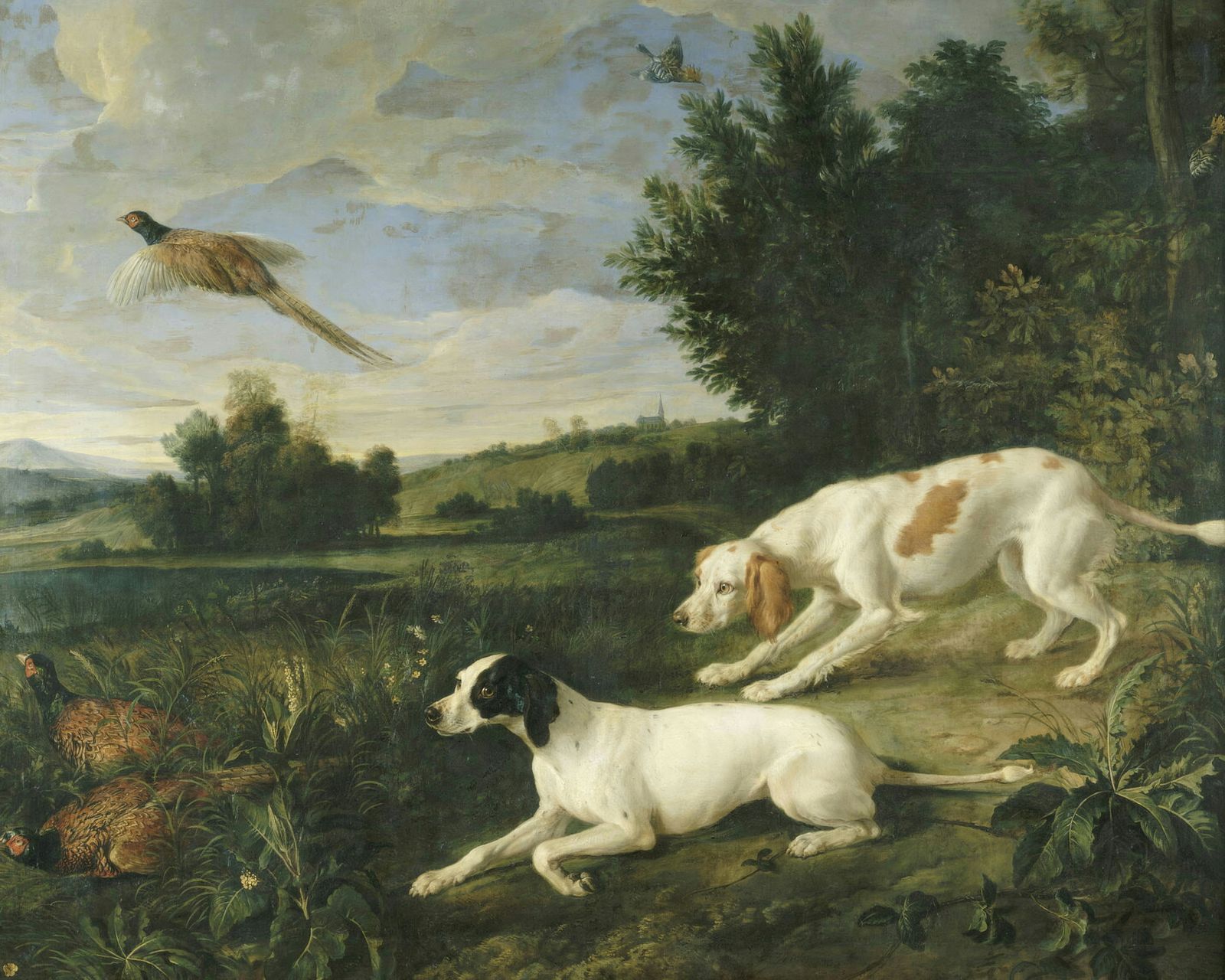
Diane and Blonde, Hounds of Louis XIV · Alexandre-François Desportes · 1702 · Musée du Louvre, Paris. Prepared for print by Surrealium at Vaxholm Fortress, Sweden.
Diane and Blonde lets the two dogs occupy the same scene without making them mirror one another. That variety can make a pair portrait feel more natural than an insistence that both animals look directly at the camera. Choose a photograph where their different attention still forms a clear composition, with each face visible enough to preserve the individual dog rather than merely the idea of a pair.
7. A dog in a formal human portrait
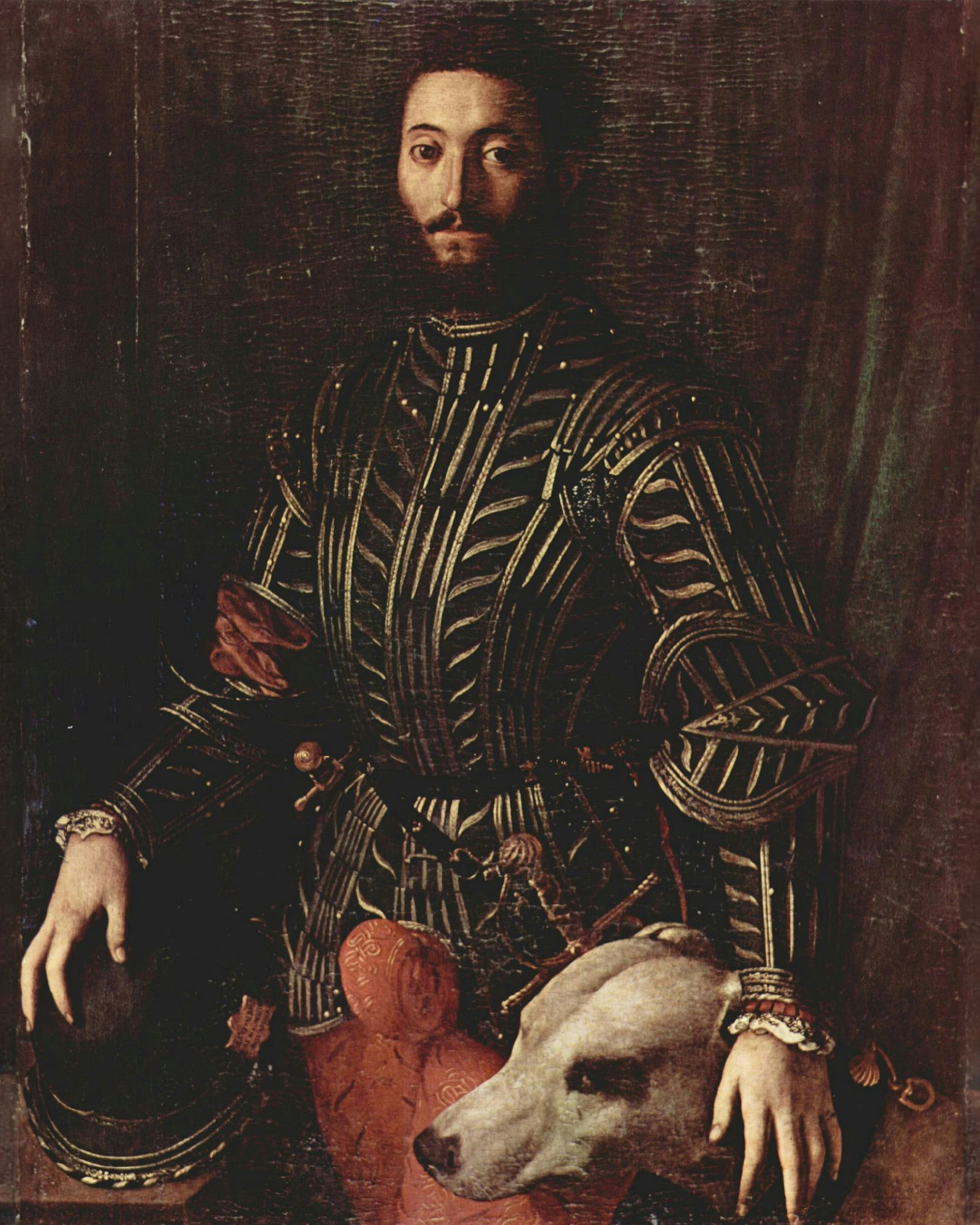
Portrait of Guidobaldo II della Rovere · Agnolo Bronzino · 1531 · Palazzo Pitti, Florence. Prepared for print by Surrealium at Vaxholm Fortress, Sweden.
The portrait of Guidobaldo II della Rovere includes the animal within a larger presentation of the sitter. It shows how a dog can belong in a human portrait while retaining a recognisable shape. For a modern picture, decide whether the person or the greyhound should lead, and choose a photograph whose proportions support that choice rather than letting the larger figure dominate by accident.
8. The symbolic dog
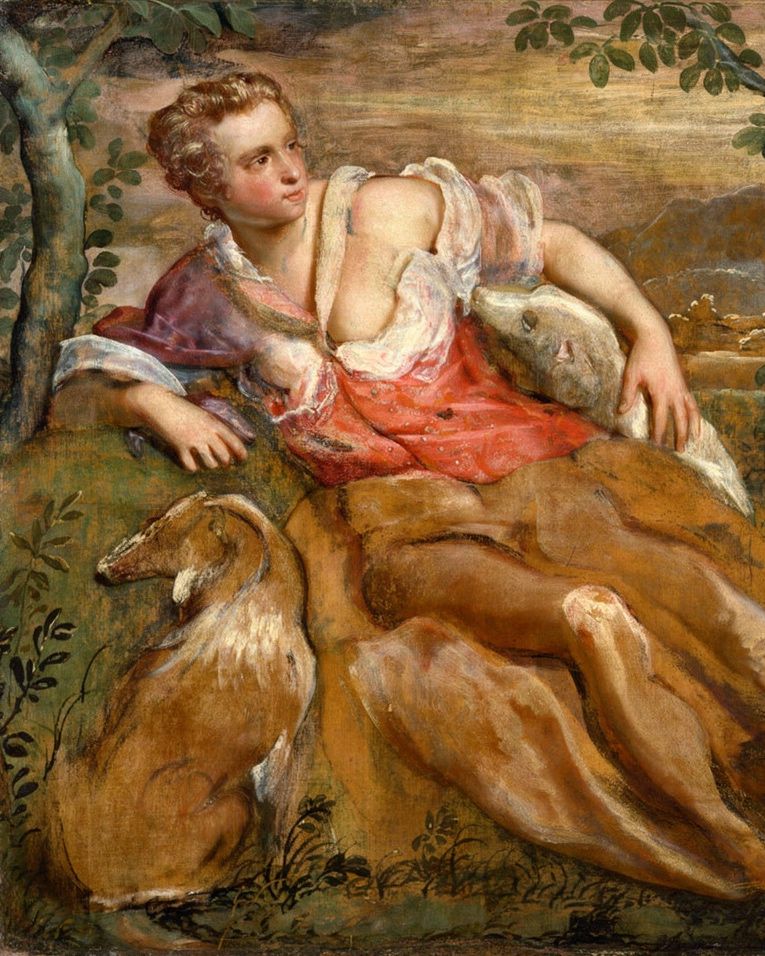
Personification of Fidelity · Domenico Tintoretto · c. 1595-1600 · Harvard Art Museums. Restored by Surrealium at Vaxholm Fortress, Sweden.
Personification of Fidelity uses the animal within an allegorical scene, where the title points beyond a simple pet portrait. That historical meaning should not be imposed on a modern owner or their dog. The transferable lesson is the visual relationship between figures: a portrait can show closeness through placement and attention without requiring a written claim about loyalty or an invented symbolic role.
9. An informal encounter
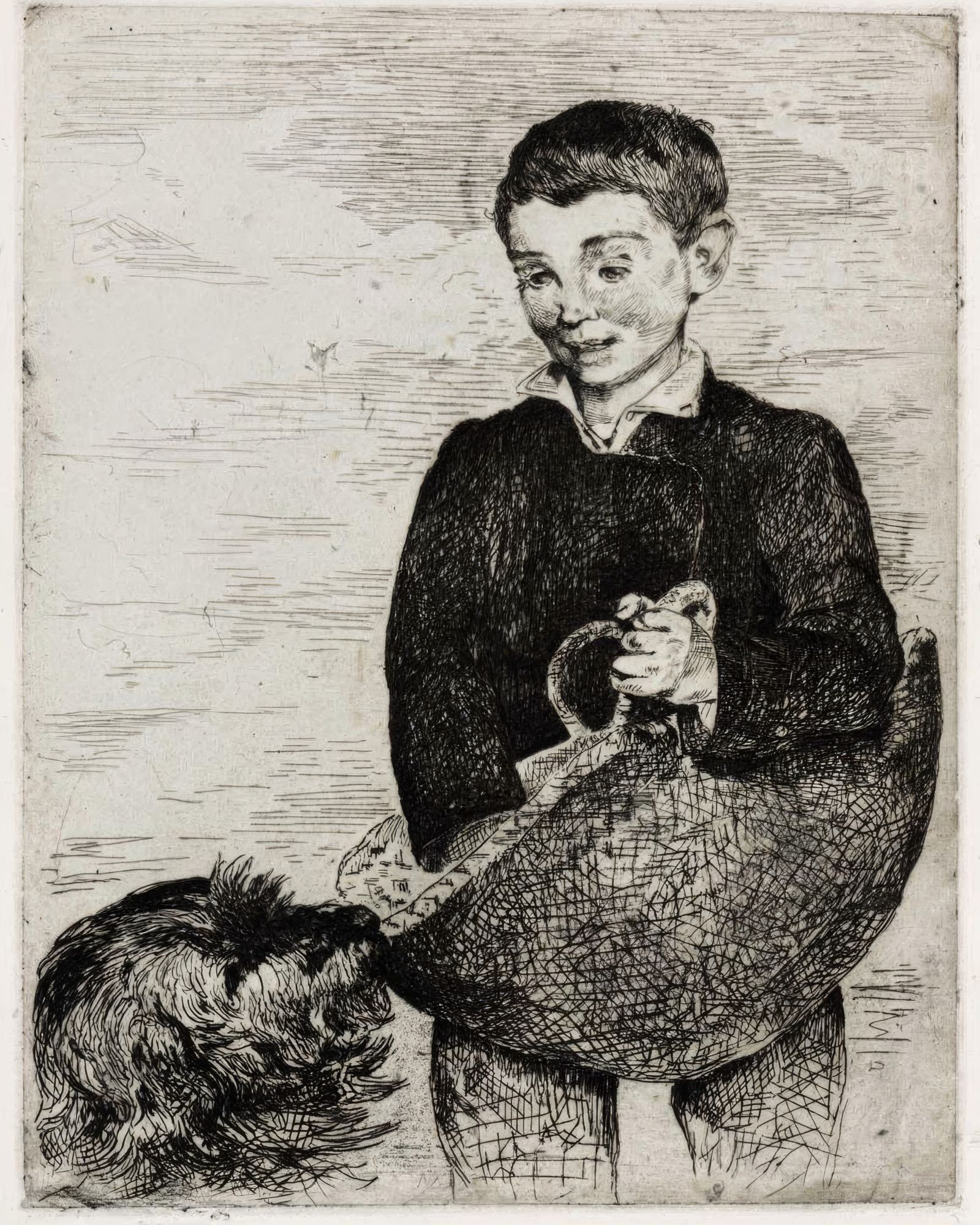
The Urchin (Boy with Dog) · Edouard Manet · 1861-1862 · Harvard Art Museums. Restored by Surrealium at Vaxholm Fortress, Sweden.
The Urchin Boy with Dog gives the relationship a less formal setting than a court portrait. The animal's presence helps shape the scene rather than supplying only a decorative flourish. A greyhound beside a familiar person can be pictured with similar ease, provided the photograph preserves the dog's long head and body instead of hiding them behind a hand, sleeve or piece of furniture.
10. A hound at rest
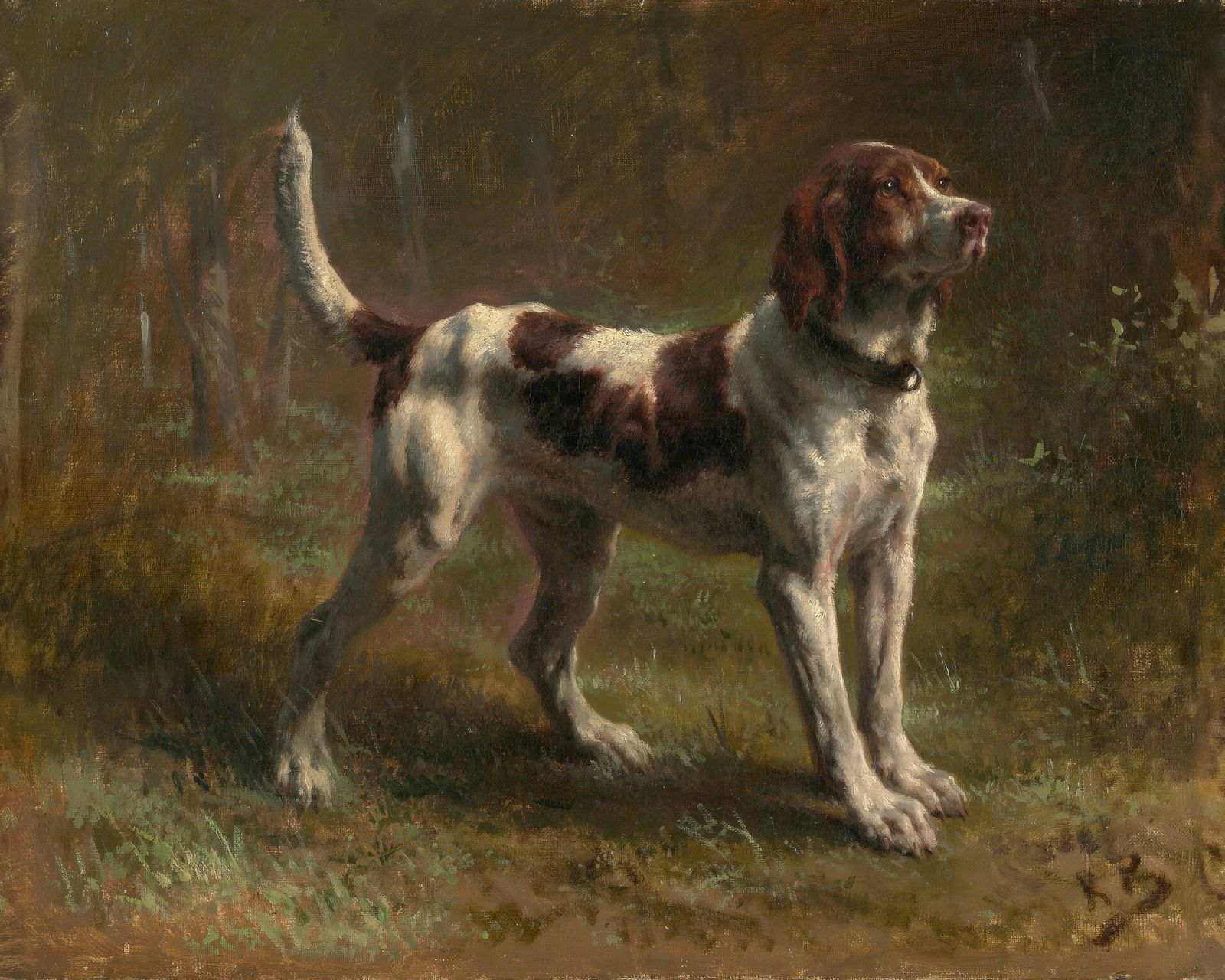
A Limier Briquet Hound · Rosa Bonheur · 1856 · Metropolitan Museum of Art, New York. Prepared for print by Surrealium at Vaxholm Fortress, Sweden.
Bonheur's A Limier Briquet shows another hound type whose body and surface deserve close observation. The comparison helps distinguish the relaxed pose you want from an assumption that every hound should be shown running. A resting greyhound can be a complete portrait subject; choose a photograph that makes the folded legs and supported head understandable rather than compressing the animal into an ambiguous bundle.
Choose the view that preserves the posture you know best. A standing profile, a head beside a person's hand and a long resting shape are different subjects, each requiring a different amount of space. Fable's pet portrait route begins with the photograph, so check the paws, ears and tail before settling on it. The aim is a particular greyhound, with enough room for its shape to remain unmistakable.
For the historical context, explore famous dog paintings. Our pet portrait styles guide, custom dog portraits and Labrador portrait guide offer useful comparisons. Look closely at the complete Boy with a Greyhound before choosing how much space your own subject needs.
- Can a greyhound portrait be square?
- The useful format depends on the pose. A curled or seated dog may fit a compact arrangement, while a standing profile needs more horizontal room. Choose a photograph that shows the complete intended subject before deciding how much surrounding space belongs in the portrait.
- Are greyhounds and whippets interchangeable in art?
- No. Similar slender outlines do not make individual dogs or breed labels interchangeable. Keep the historic title attached to each artwork and use your own dog’s photograph for its proportions. This selection is a comparison of composition, not a breed-identification chart.
- Does a greyhound need to be shown running?
- No. A familiar resting pose can be just as characteristic and often gives a clearer reference. If you choose an action photograph, make sure the head, body and legs remain readable. The best subject is the one that reflects the dog you want to remember.