Cavalier King Charles spaniel painting: a closer look
Ten historic spaniel and companion-dog pictures help distinguish the old subjects from a portrait of your own Cavalier today.
A Cavalier King Charles spaniel painting search brings together modern pet portraits and much older pictures of small companion dogs. Those are related visual interests, but they are not interchangeable identities. A historic title such as King Charles Spaniels should remain attached to its own animals rather than being treated as proof that every pictured dog matches the modern Cavalier breed.
The ten works below offer useful comparisons in ears, coat, posture and the relationship between a dog and a person. Some depict spaniels; others show different companion dogs whose scale helps clarify the composition. For a portrait of your own Cavalier, the photograph remains the authority for the face, markings and proportions. The historical pictures supply ways to look, not a substitute animal.
1. The pair in Landseer's picture
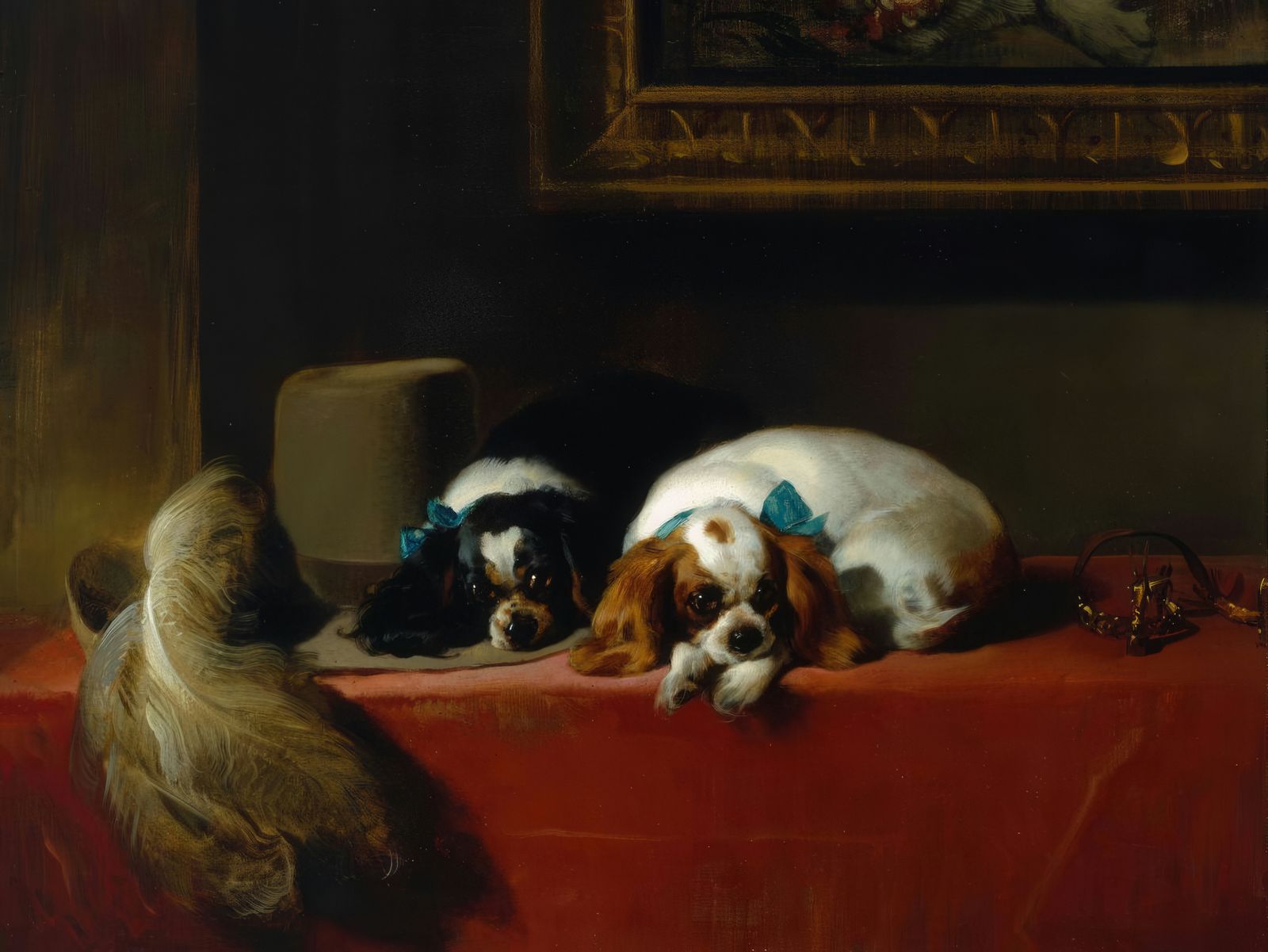
King Charles Spaniels (The Cavalier's Pets) · Edwin Landseer · 1845 · Tate, London. Prepared for print by Surrealium at Vaxholm Fortress, Sweden.
King Charles Spaniels, often known as The Cavalier's Pets, gives two small dogs a rich setting and distinct positions. The title belongs to the historic work, while the individual faces reward a close look beyond the familiar breed words. For a new portrait, preserve the differences in your own dog's muzzle, ears and markings rather than borrowing an old picture's features to make the result seem more historic.
2. A small dog with a large presence
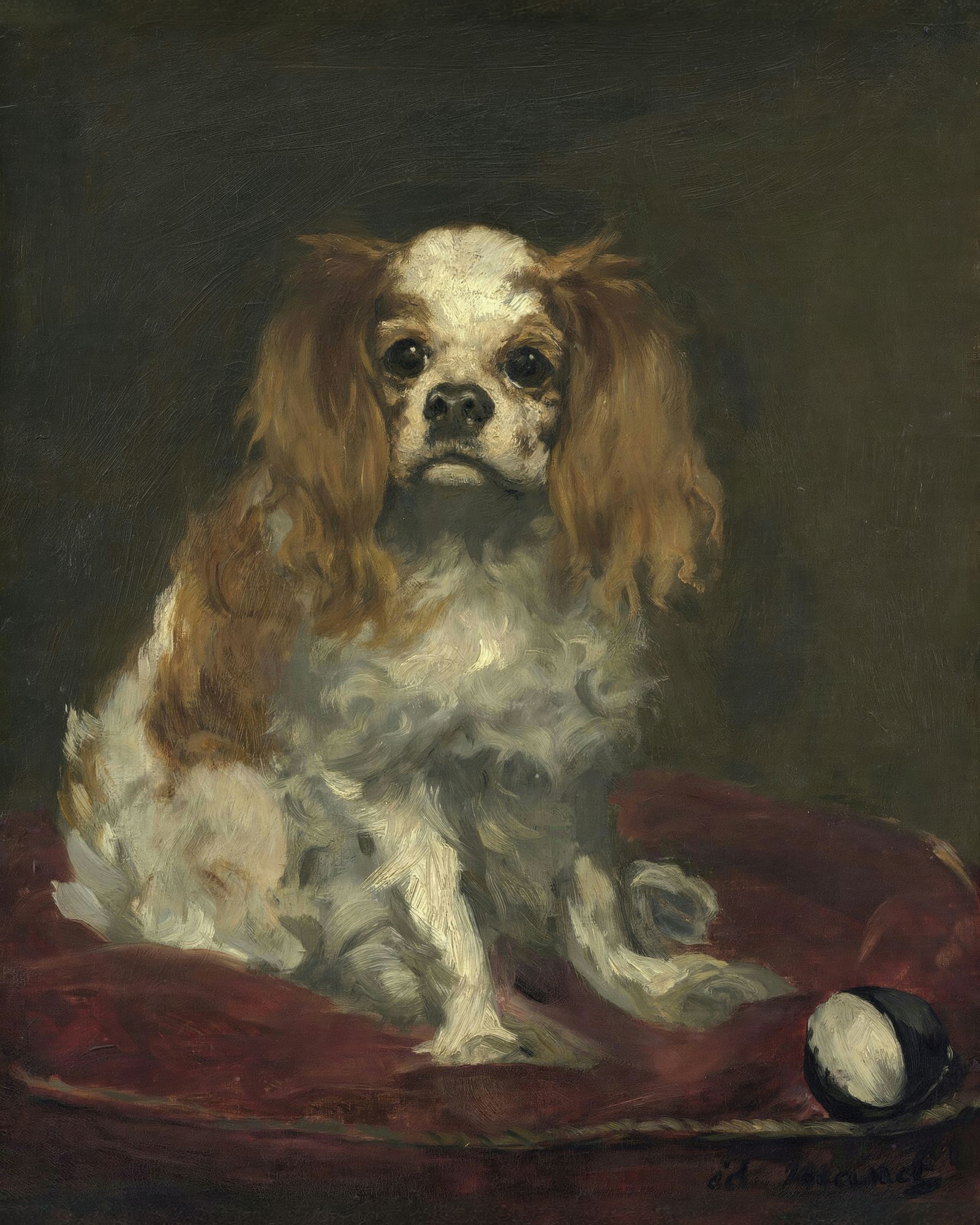
A King Charles Spaniel · Édouard Manet · c. 1866 · National Gallery of Art, Washington. Prepared for print by Surrealium at Vaxholm Fortress, Sweden.
Manet's A King Charles Spaniel brings the animal close, with soft fur surrounding a plainly visible face. The nearby ball helps establish scale without taking over the picture. A similar close photograph of your Cavalier can work when the ears and chest remain visible, so the head feels part of a whole animal rather than a face cut out from its usual posture.
3. Dogs within a royal family portrait
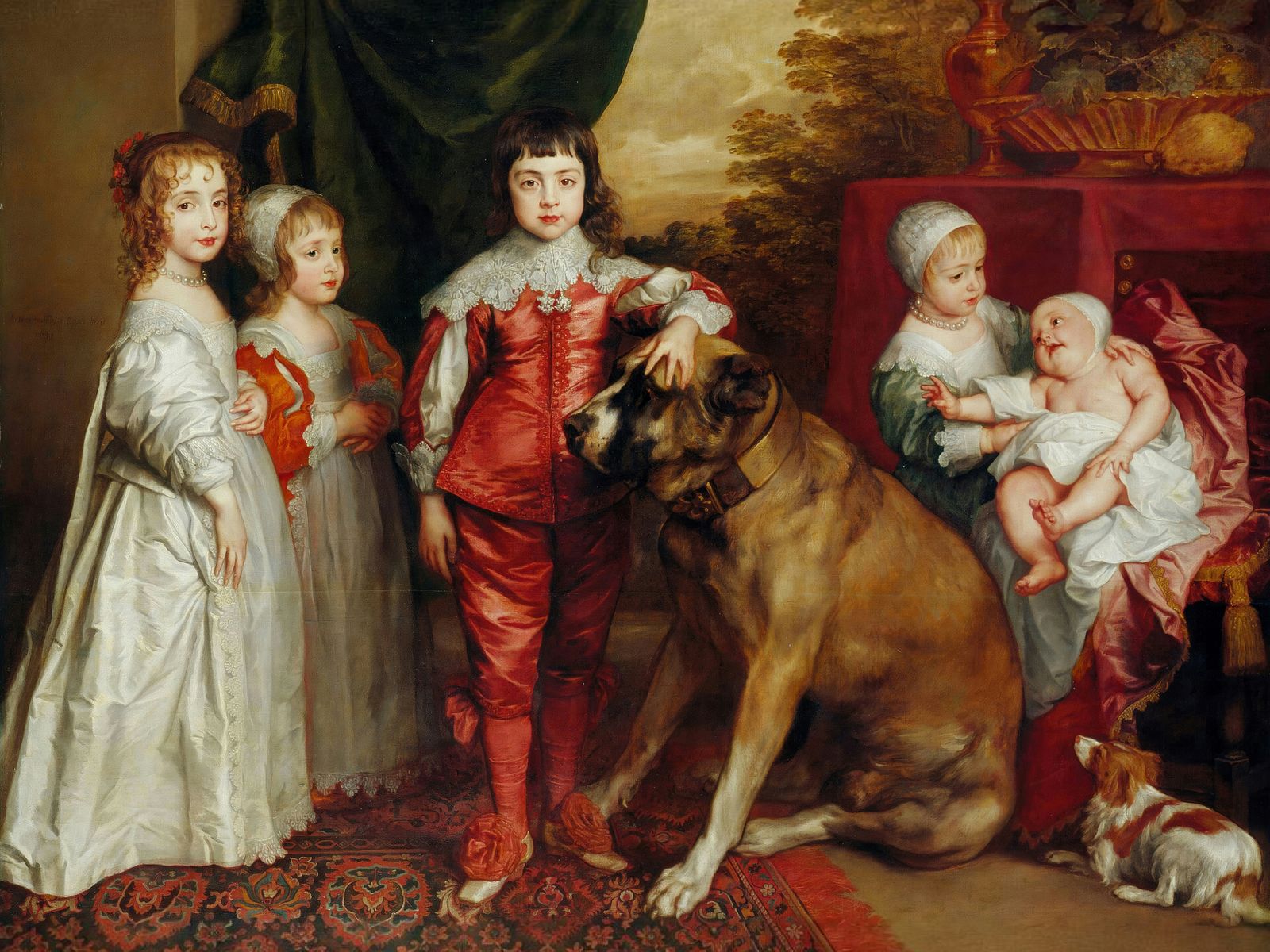
The Five Eldest Children of Charles I · Anthony van Dyck · 1637 · Royal Collection. Prepared for print by Surrealium at Vaxholm Fortress, Sweden.
Van Dyck's Five Eldest Children of Charles I places dogs among specific royal sitters, with different sizes anchoring the lower part of the group. The animals belong to that historical setting; a modern pet portrait does not need crowns or human clothing to refer to the tradition. Borrow the clarity of placement and keep your own dog in its natural, recognisable form.
4. The named royal companion
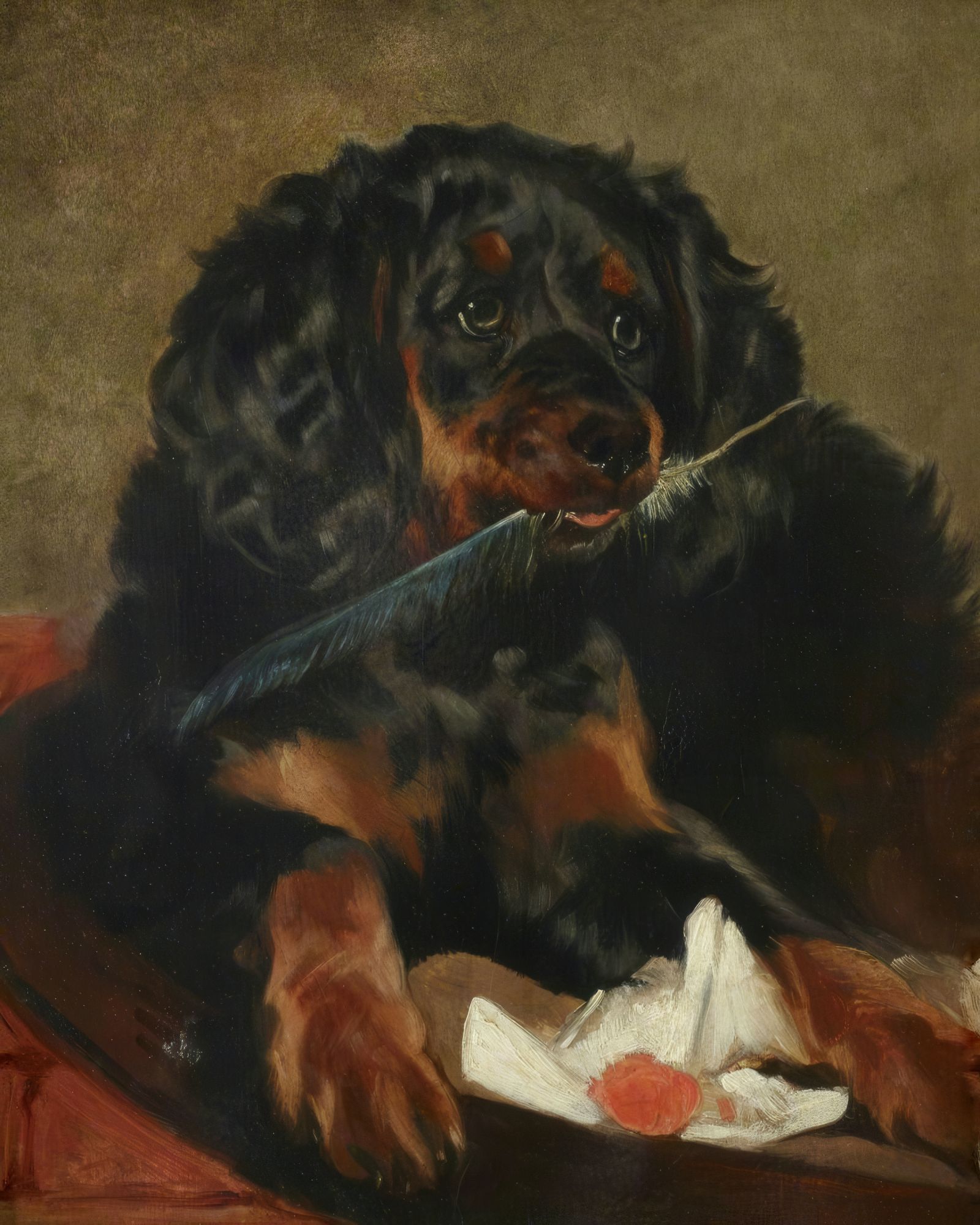
Queen Victoria's Spaniel Tilco · Edwin Landseer · 1838 · National Trust. Prepared for print by Surrealium at Vaxholm Fortress, Sweden.
Landseer's portrait of Queen Victoria's spaniel Tilco identifies an individual animal with its own appearance. The name is a useful reminder that historical dog pictures can be portraits of particular companions, not simply illustrations of a breed. Choose a reference photograph of your Cavalier for its familiar expression and small asymmetries, and judge likeness by those details rather than a perfectly generic spaniel face.
5. Several companions, separately seen
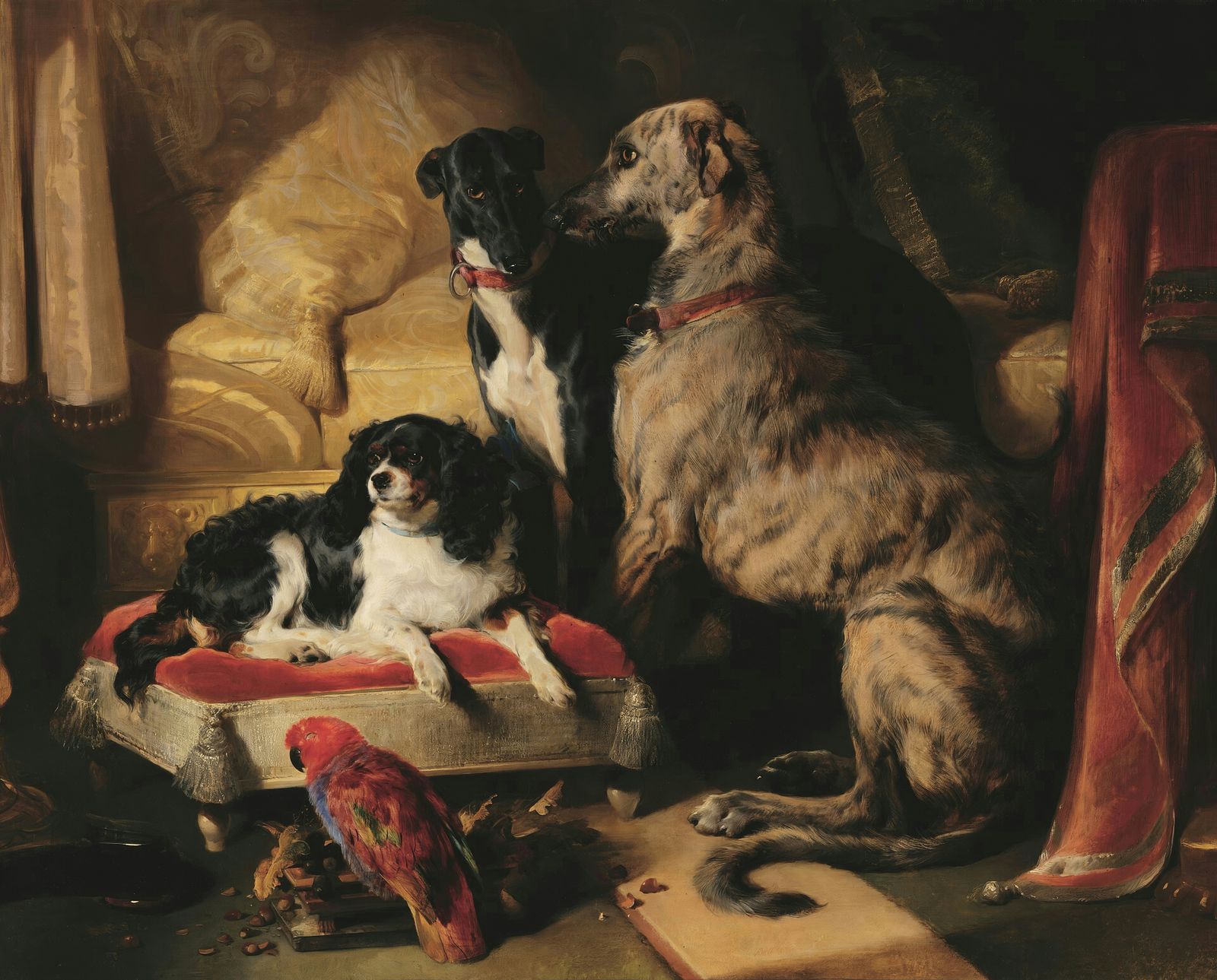
Hector, Nero, and Dash with the parrot, Lory · Edwin Landseer · 1838 · Royal Collection. Prepared for print by Surrealium at Vaxholm Fortress, Sweden.
Hector, Nero and Dash places differently sized animals within one shared composition. The picture asks the viewer to notice the animals individually even when the scene is richly furnished. If your Cavalier shares a portrait with another pet, choose a photograph that leaves each face clear and avoids overlapping ears or coats that make it difficult to tell where one animal ends and the other begins.
6. A small dog beside a child
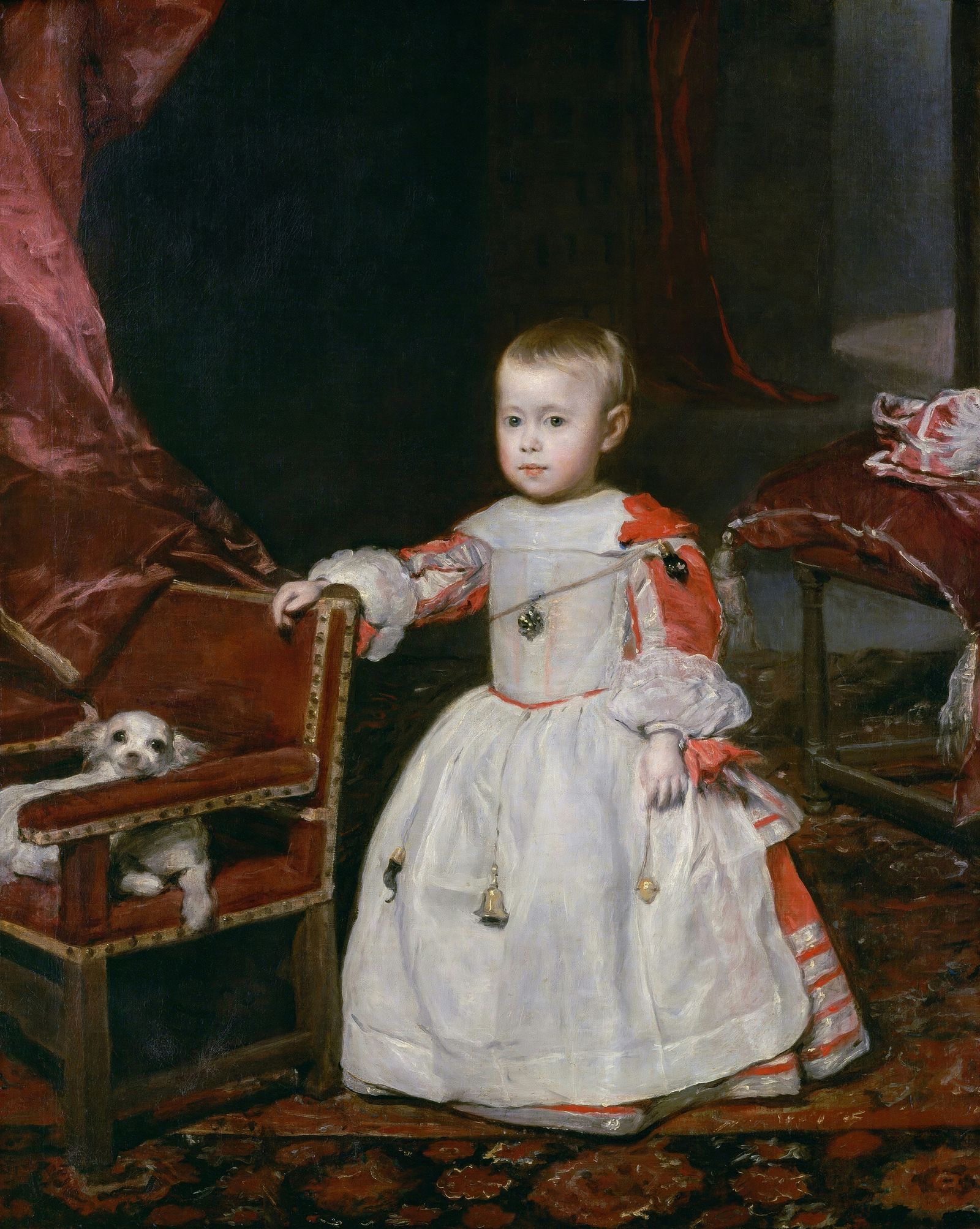
Prince Felipe Próspero · Diego Velázquez · 1659 · Kunsthistorisches Museum, Vienna. Prepared for print by Surrealium at Vaxholm Fortress, Sweden.
Velázquez's Prince Felipe Prospero gives the dog a visible place beside the young sitter, its small body supported by the chair. The historic child and the dog's relationship belong to the painting, but the scale comparison is useful. In a modern family photograph, make sure a small Cavalier remains large enough to be recognised rather than disappearing beside the people it accompanies.
7. A broader spaniel form
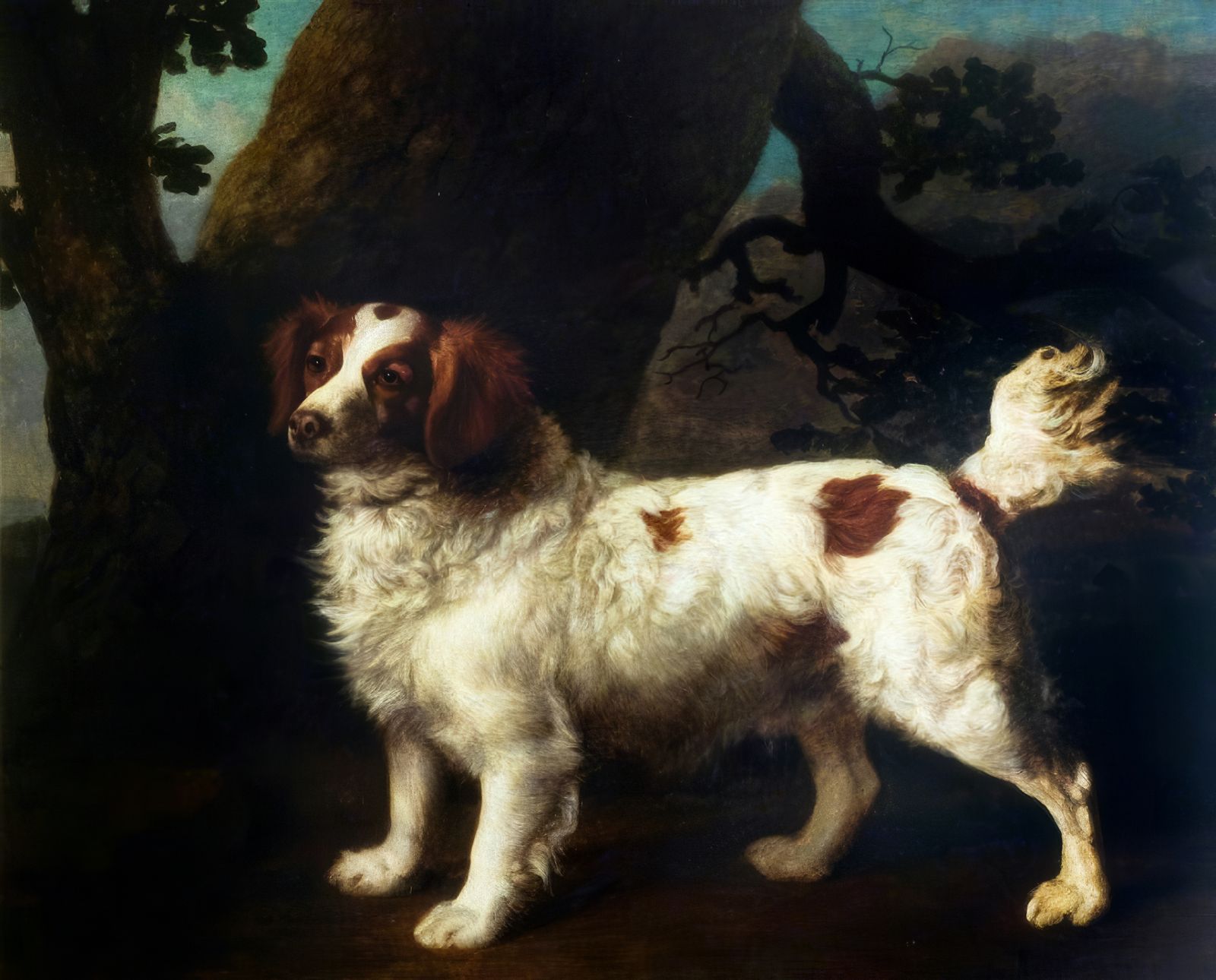
A Clumber Spaniel · George Stubbs · 1784 · Usher Gallery, Lincoln. Prepared for print by Surrealium at Vaxholm Fortress, Sweden.
A Clumber Spaniel offers a different body and head shape from the small companion dogs elsewhere in the selection. That difference is precisely why the picture is useful as a comparison rather than a model to copy. A spaniel label does not make proportions interchangeable; keep the muzzle, ear placement and stance of your own Cavalier visible in the photograph you choose.
8. Texture around a complete body
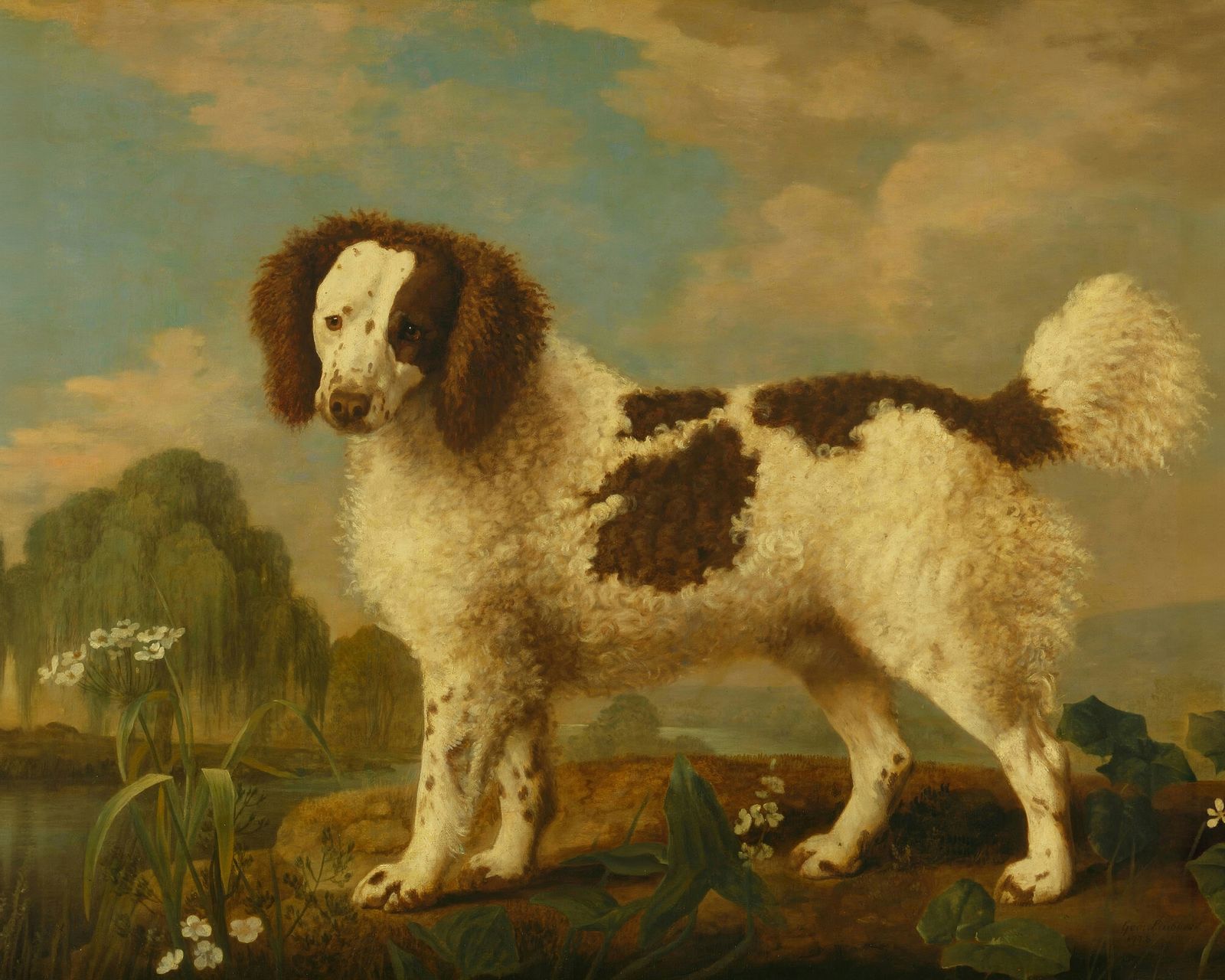
Brown and White Norfolk or Water Spaniel · George Stubbs · 1778 · Yale Center for British Art. Prepared for print by Surrealium at Vaxholm Fortress, Sweden.
Stubbs's Norfolk or Water Spaniel shows how a long coat can remain attached to a readable body. For a Cavalier portrait, the ears and chest may carry much of the texture, but they still need enough structure to avoid becoming a soft halo around the face. Choose a photograph that shows where the shoulders and front legs sit beneath the fur.
9. A companion in an expressive portrait
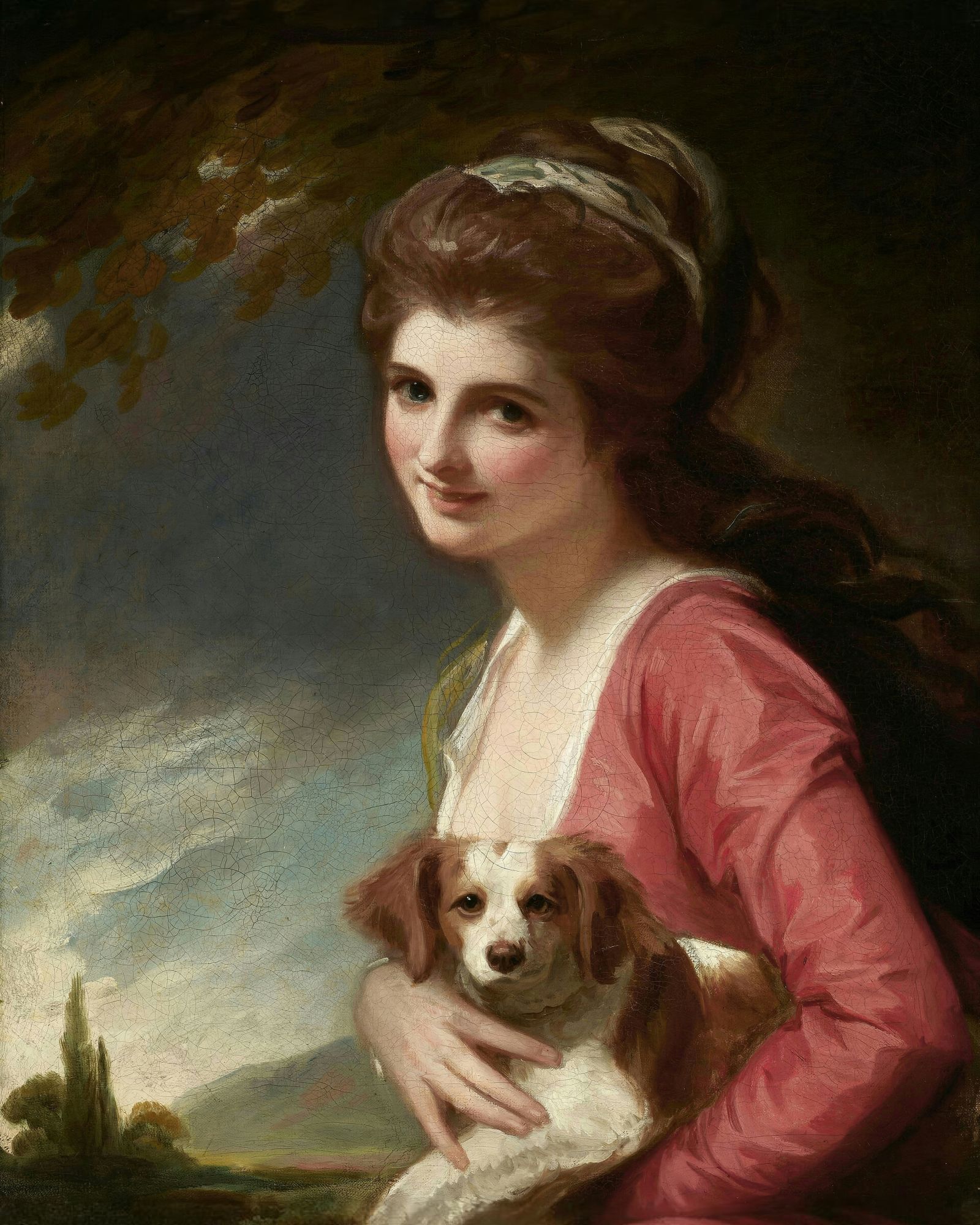
Lady Hamilton as 'Nature' · George Romney · 1782 · Frick Collection, New York. Prepared for print by Surrealium at Vaxholm Fortress, Sweden.
Romney's Lady Hamilton as Nature includes a dog within a larger human image, making companionship part of the scene's appeal. The animal should still be seen on its own terms, without inheriting the sitter's theatrical role. If your portrait includes a person, choose a photograph where the Cavalier's posture is comfortable and its face remains clear beside the larger human figure.
10. Another small companion, another silhouette
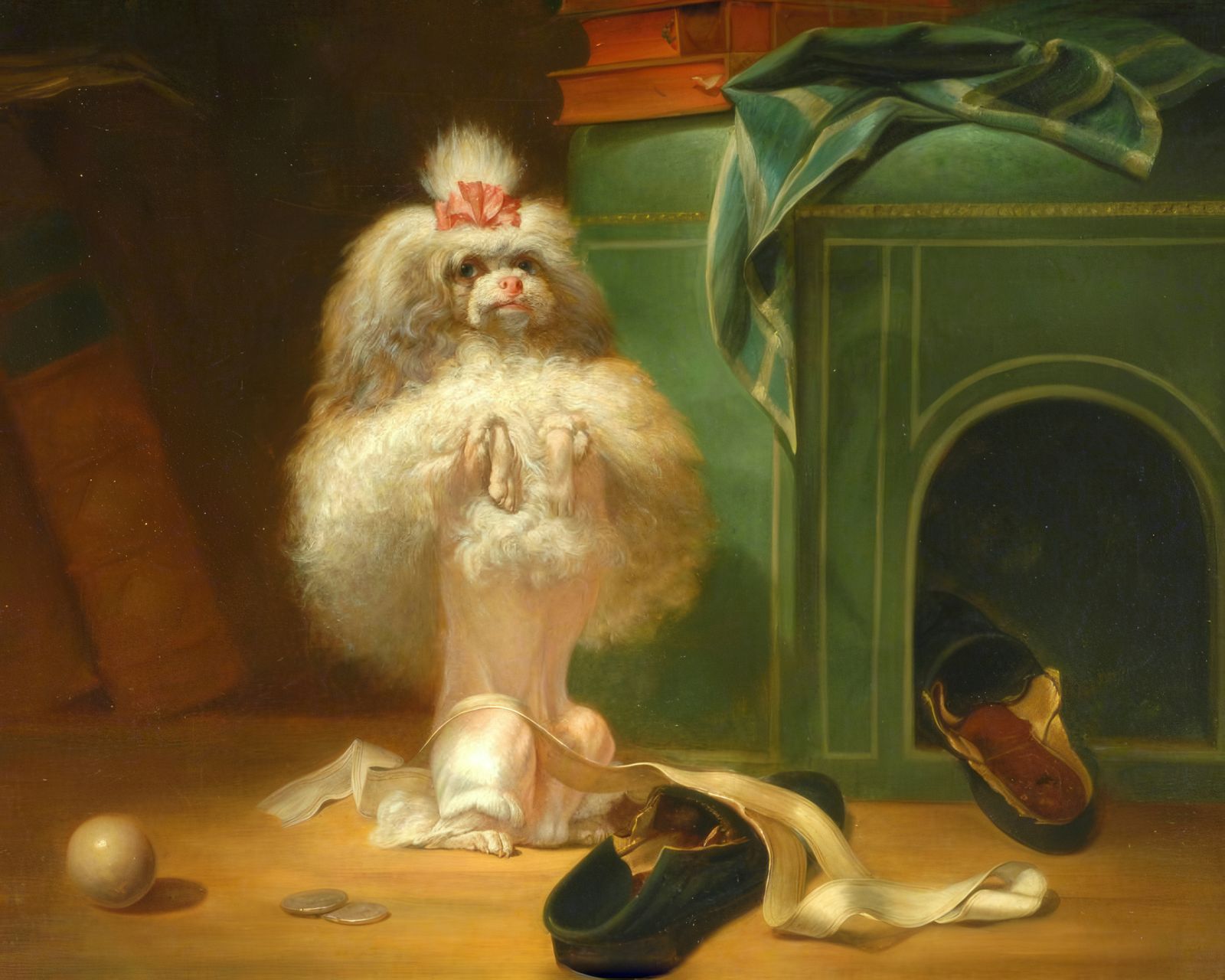
Dog of the Havana Breed · Jean-Jacques Bachelier · 1768 · Bowes Museum, Barnard Castle. Prepared for print by Surrealium at Vaxholm Fortress, Sweden.
Dog of the Havana Breed gives a useful contrast in the shape and texture of a small animal's coat. It is not a Cavalier, and the difference helps prevent a generic small-dog portrait from replacing a particular likeness. Compare the outline of the ears, muzzle and body with your own photograph, then keep the details that make your dog recognisable rather than simply decorative.
Choose a photograph with the face, ears and chest clearly visible, then decide how much of the body and setting belongs in the portrait. Historical spaniel pictures can suggest a quieter palette or a more spacious arrangement without changing the dog's identity. Fable's pet portrait route begins with your own animal. Let the old works remain accurately named, and let the new portrait remain a picture of the Cavalier you know.
Read the broader Renaissance, Baroque and Rococo pet portrait guide alongside our pet portrait styles. Compare custom dog portraits and the different scale of Bernese mountain dog portraits. The whole King Charles Spaniels shows what belongs to Landseer's original composition.
- Are old King Charles spaniel paintings pictures of modern Cavaliers?
- The historic catalogue titles identify the dogs as understood in their own context. They should not be treated as exact modern breed registrations. This guide keeps those names and uses the works for visual comparison rather than making a claim about an individual dog’s ancestry.
- Can a portrait look traditional without a costume?
- Yes. A restrained palette, clear light and a calm arrangement can refer to historic portraiture while the dog keeps its natural body and ordinary appearance. Human clothing, crowns and invented rank are unnecessary to make the animal worth looking at.
- What details matter most in a Cavalier photograph?
- Check the eyes, muzzle, ear shape and the dog’s particular markings. Include enough chest or body to explain the pose, and avoid a photograph where long ears hide the face entirely. A familiar expression is more useful than an unusually elaborate background.