Classical paintings: ten works, several meanings
Classical subjects, old-master portraits and still lifes offer different routes into choosing a historical print.
Classical paintings is a useful search phrase, but it can mean several different things: pictures of ancient myth, work shaped by classical ideals, or simply older European paintings. Those categories overlap without becoming identical. A seventeenth-century still life may be an old-master painting without depicting a classical subject at all.
These ten works make the distinction visible. Begin with the story or subject, then look at the way bodies, objects and light are arranged. The guide to famous paintings to hang at home considers the practical choice, while old-master portrait prints narrows the field to faces. Here, the aim is to replace one broad label with several useful observations, so that the picture you choose is more specific than an idea of what “classical” is supposed to look like.
1. Poussin: a myth spread across a landscape

Blind Orion Searching for the Rising Sun · Nicolas Poussin, 1658 · The Metropolitan Museum of Art. Restored by Surrealium at Vaxholm Fortress, Sweden.
Blind Orion moves through a landscape whose trees, clouds and distant water occupy as much attention as the great figure. The mythological subject is classical, but the experience of the picture depends on the whole setting. Follow the direction of movement and the changes in scale; a cropped figure would lose the relation between the searching body and the space through which it travels.
2. Rembrandt’s Flora: a figure and an abundance of flowers
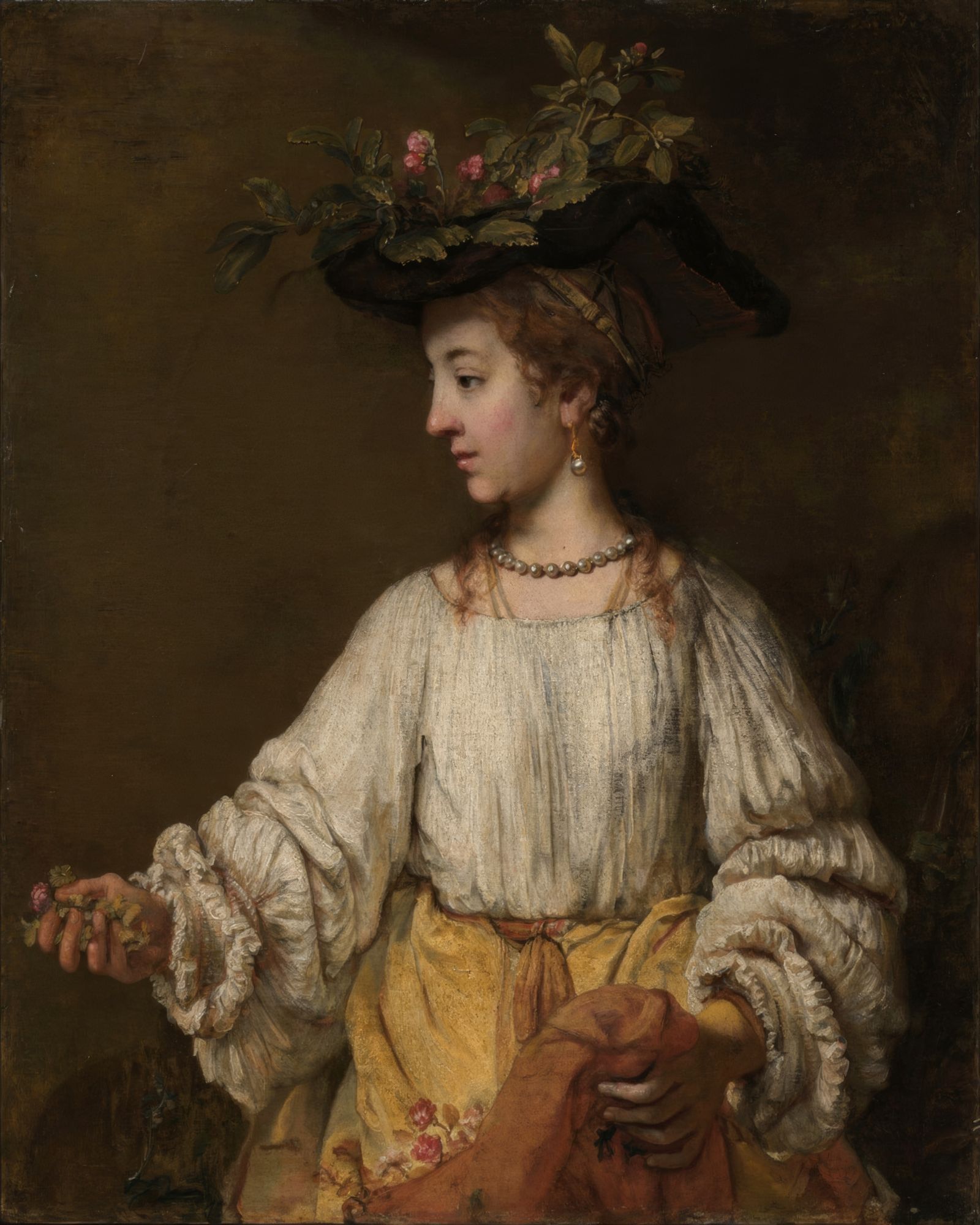
Flora · Rembrandt, ca. 1654 · The Metropolitan Museum of Art. Restored by Surrealium at Vaxholm Fortress, Sweden.
The sitter’s profile rises beneath a flower-filled headdress, with pale fabric catching light across the body. The title connects the image with Flora, yet the close presence of the figure makes it feel different from a distant narrative scene. Notice how the flowers alter the silhouette and the balance of the head rather than treating them only as a decorative signal that the work is old.
3. Rembrandt’s Bellona: a personification with weight
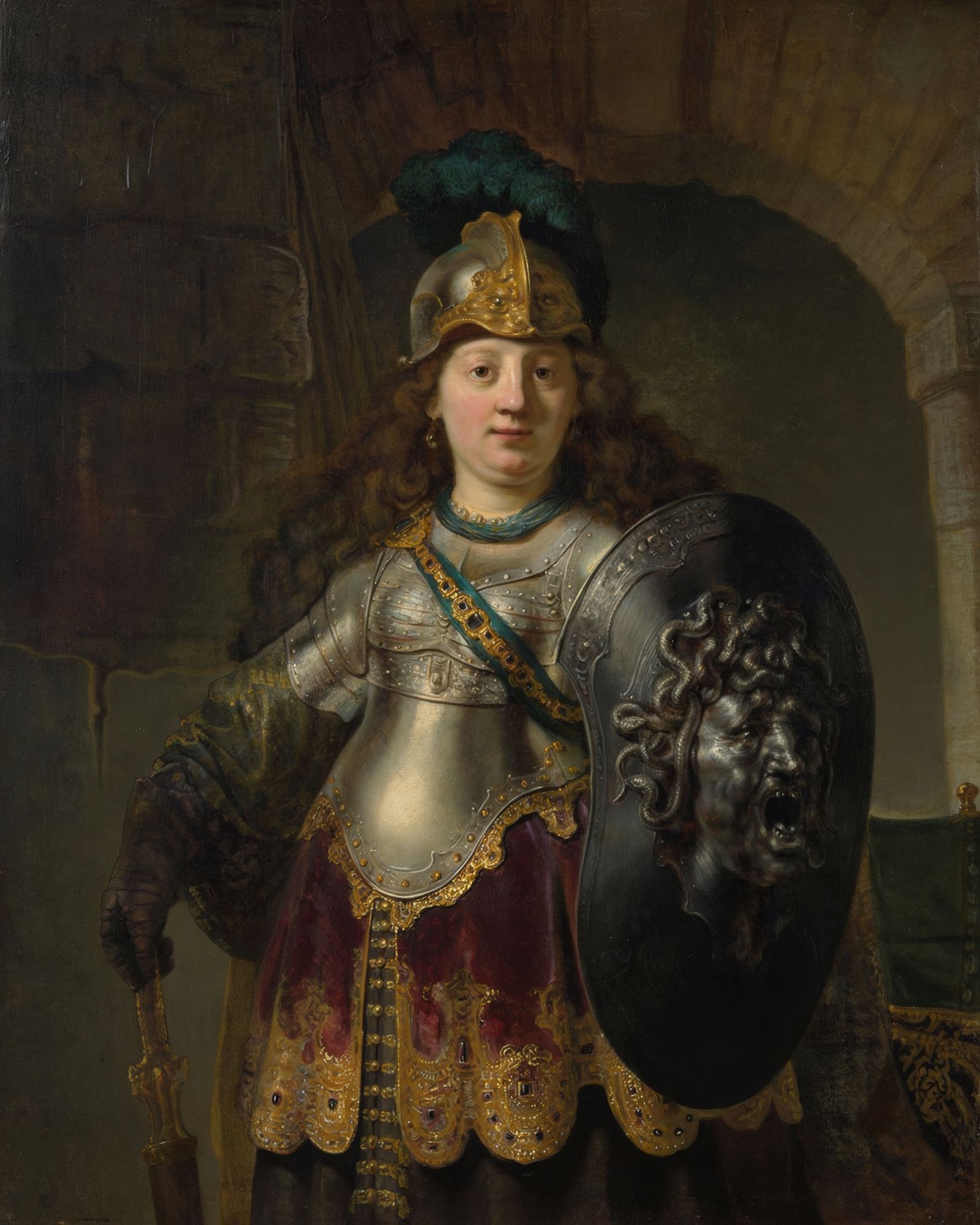
Bellona · Rembrandt, 1633 · The Metropolitan Museum of Art. Restored by Surrealium at Vaxholm Fortress, Sweden.
Armour, shield and a raised head give Bellona a substantial presence against a dark setting. The image makes a classical personification feel physically close, with metal and fabric competing for light. Compare the arrangement with Flora: the painter’s attention to a figure remains strong in both, while the objects surrounding that figure change the subject and the viewer’s sense of how to approach it.
4. Venus and Cupid in a later imitation
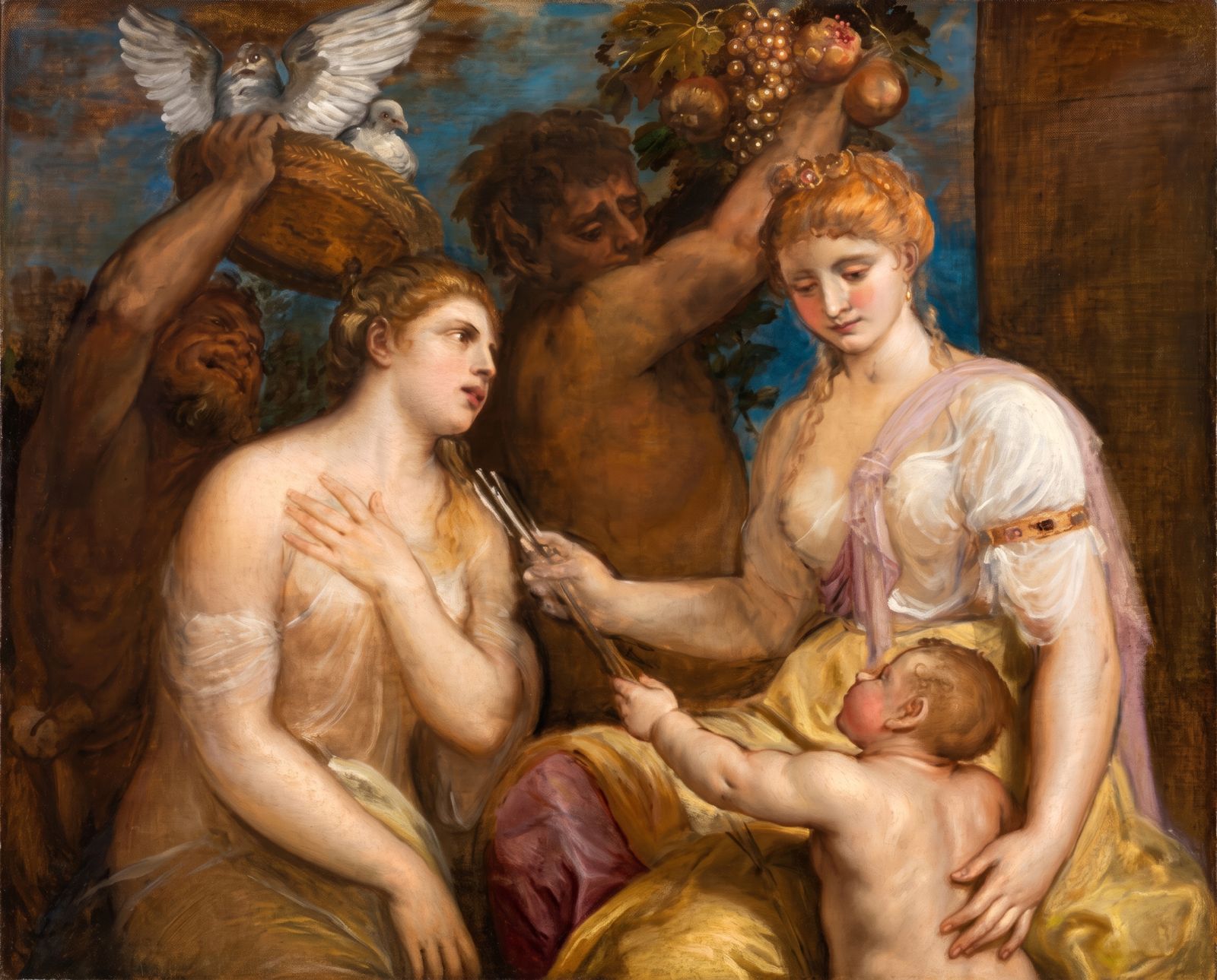
Allegory of Venus and Cupid · Imitator of Titian, c. 1600 · Art Institute of Chicago. Restored by Surrealium at Vaxholm Fortress, Sweden.
The catalogue identifies this work as an imitation of Titian rather than an autograph painting by him. That distinction belongs beside the image, even when the figures and rich colours make the association with Venetian painting immediately appealing. Enjoy the arrangement on its own terms and keep the attribution intact; the value of looking does not depend on silently promoting a follower or imitator to the famous artist’s name.
5. Perino del Vaga: a close sacred group
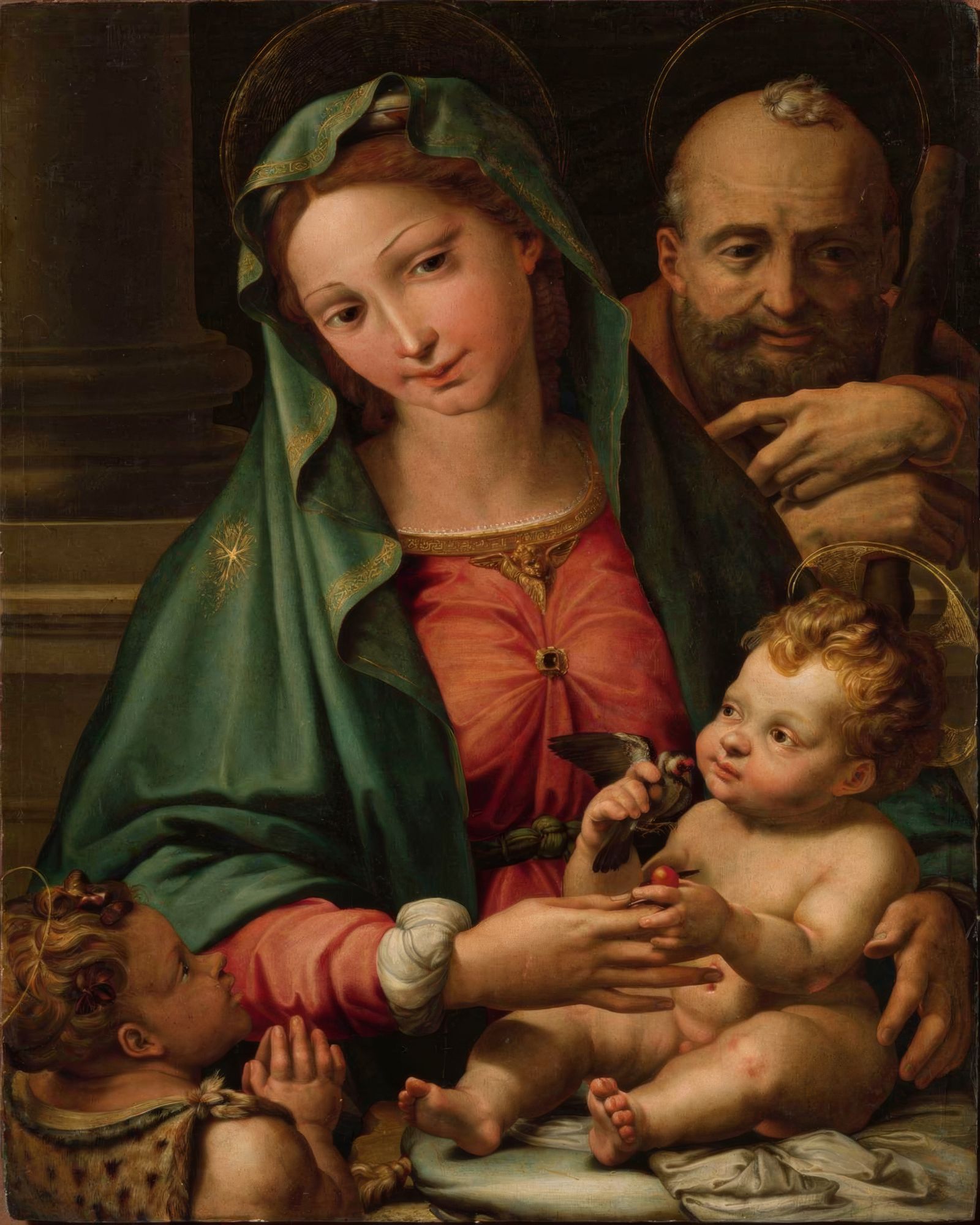
The Holy Family with the Infant Saint John the Baptist · Perino del Vaga, ca. 1524–26 · The Metropolitan Museum of Art. Restored by Surrealium at Vaxholm Fortress, Sweden.
The Holy Family gathers within a compact space, with faces and hands leading the eye between adults and children. This is a Christian subject, so calling it classical in the sense of ancient mythology would be misleading. It can still belong in a broader selection of old-master work, where its overlapping figures offer a useful comparison with the more open landscape and personifications shown earlier.
6. Rubens: a larger circle of attention
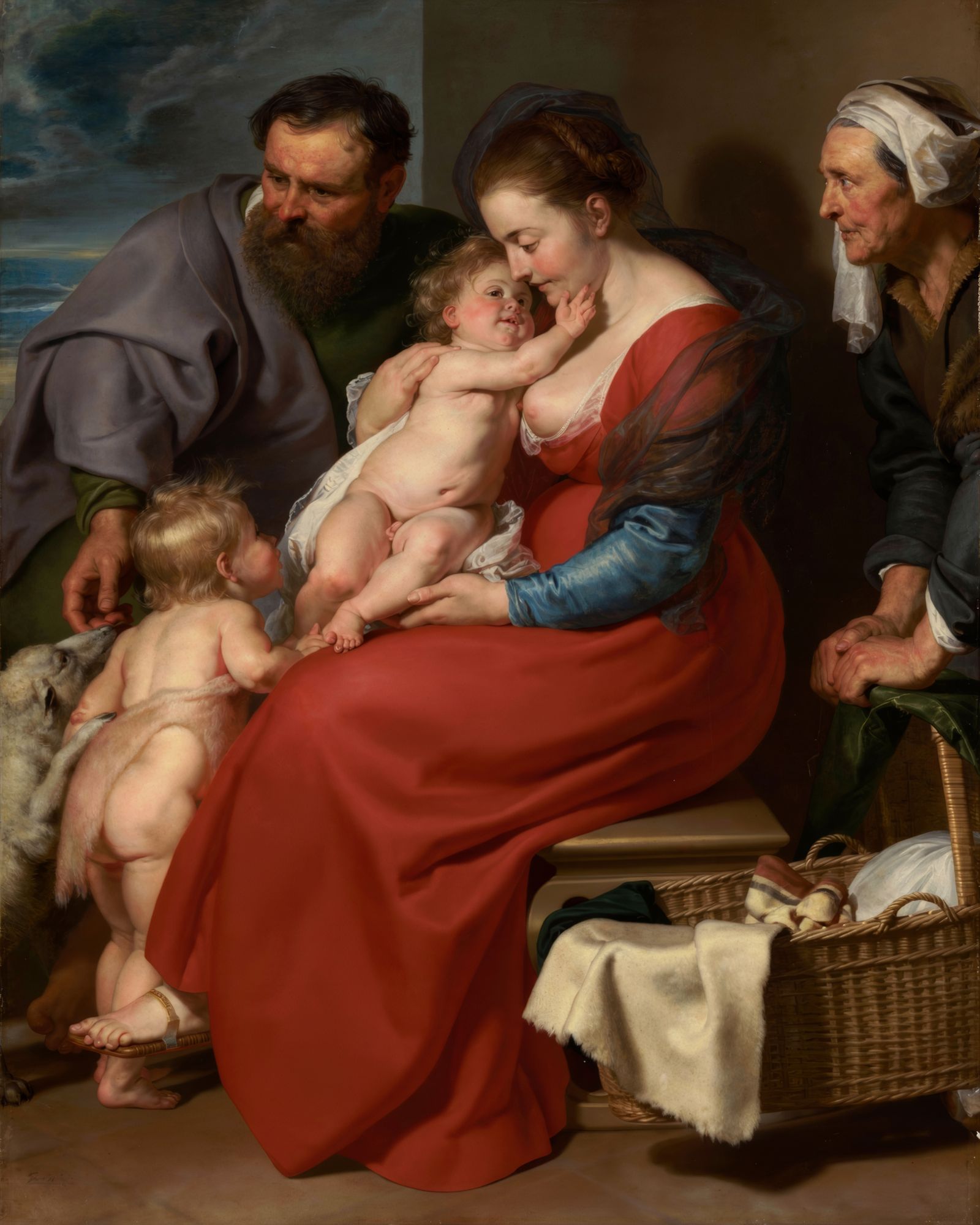
The Holy Family · Peter Paul Rubens, c. 1615 · Art Institute of Chicago. Restored by Surrealium at Vaxholm Fortress, Sweden.
Rubens brings the family group close, using faces, hands and bright drapery to connect several figures. The arrangement feels full without requiring each person to occupy a separate compartment. If you like the painting, study those connections before choosing a size; its effect depends on seeing how one figure’s gesture leads into another, rather than on isolating the central child or a single expressive face.
7. Bathsheba: a figure within a shadowed setting
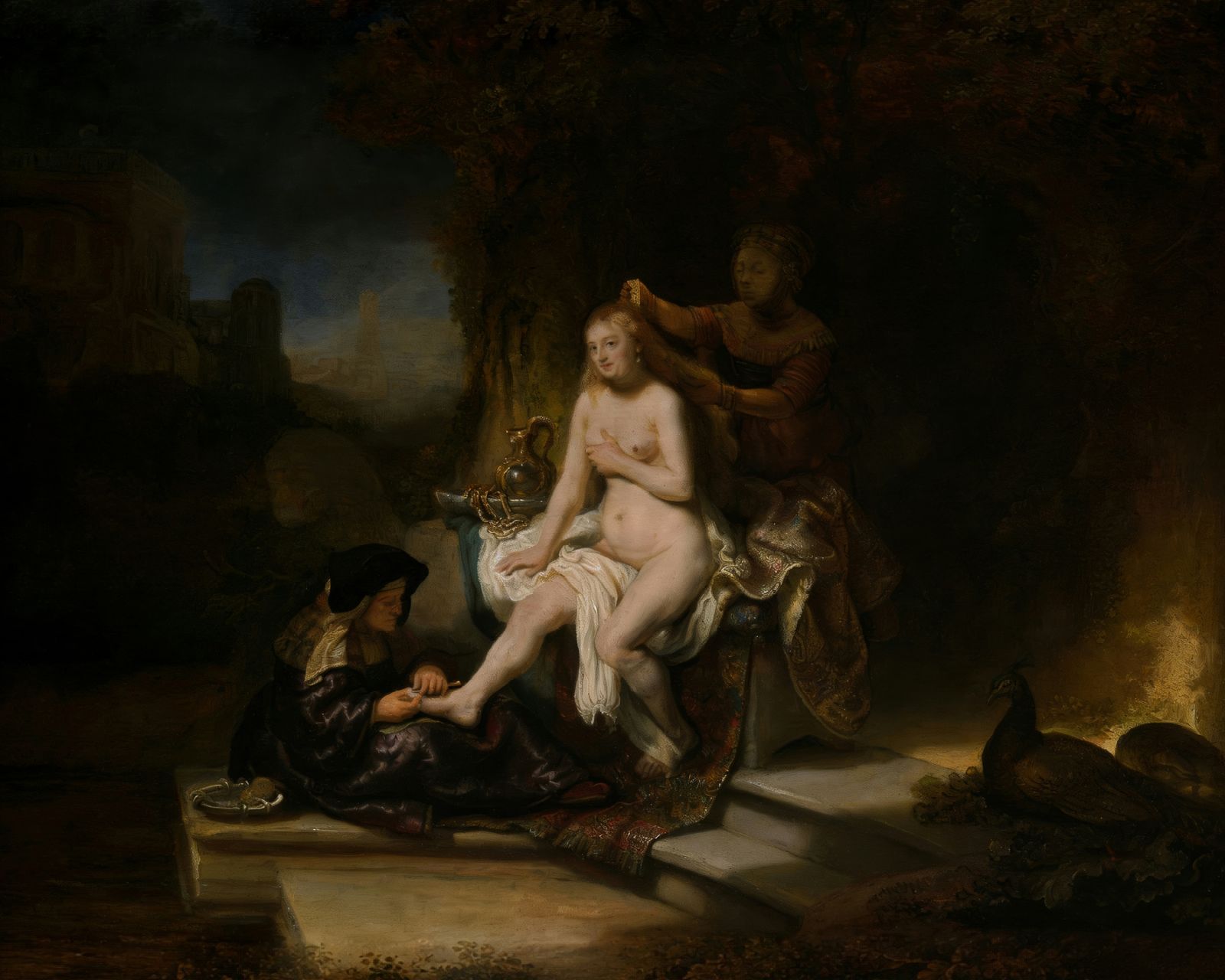
The Toilet of Bathsheba · Rembrandt, 1643 · The Metropolitan Museum of Art. Restored by Surrealium at Vaxholm Fortress, Sweden.
The illuminated body appears within a much darker landscape and architectural setting. That contrast draws the viewer inward, but the surrounding space also determines how exposed or enclosed the figure seems. Keep the biblical title and the full composition together, and avoid treating every historical nude as a classical goddess simply because the broad search phrase has brought several kinds of image onto the same page.
8. Van Beyeren: abundance on a table
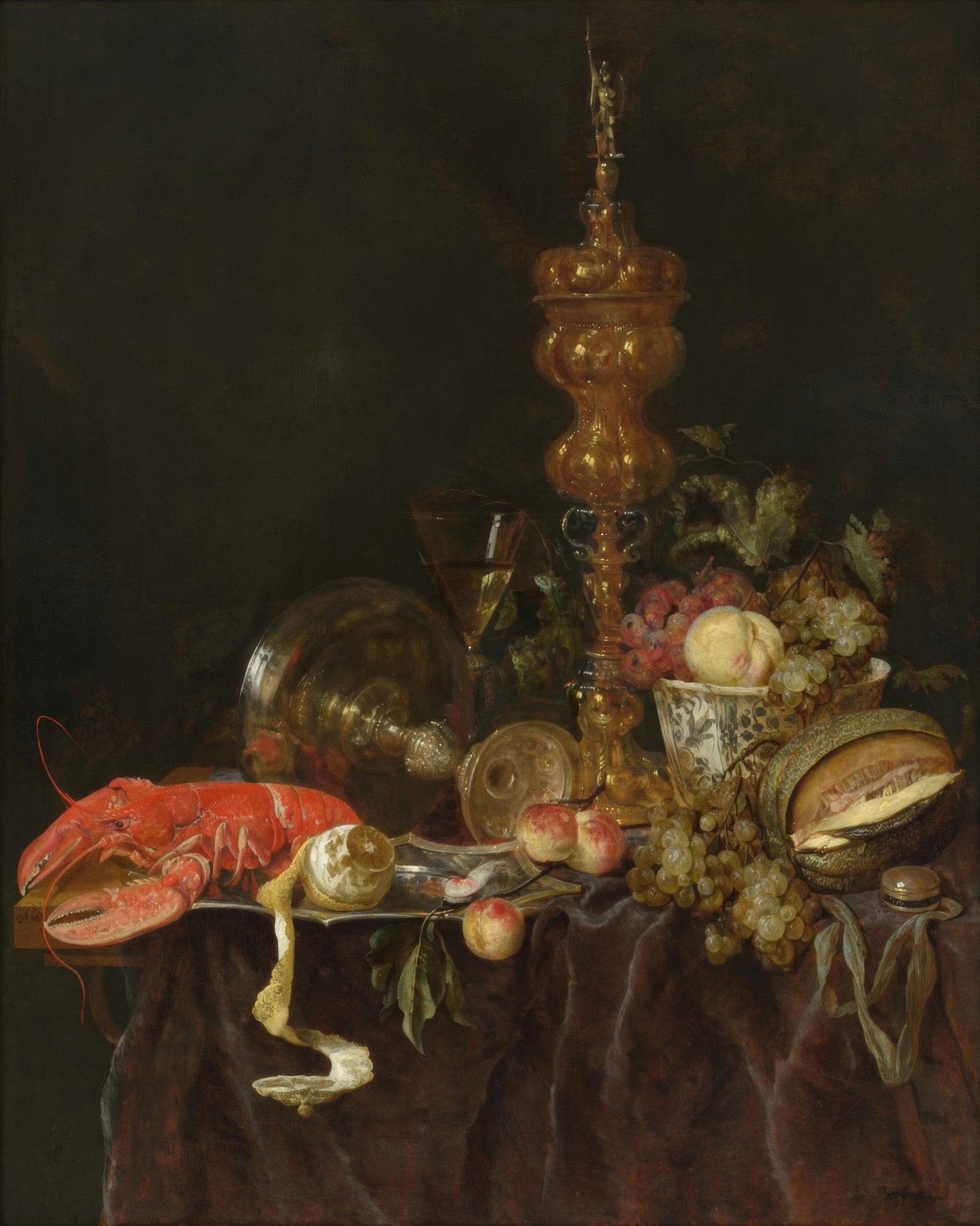
Still Life with Lobster and Fruit · Abraham van Beyeren, probably early 1650s · The Metropolitan Museum of Art. Restored by Surrealium at Vaxholm Fortress, Sweden.
Lobster, fruit, vessels and drapery crowd the tabletop, with small bright surfaces catching the light. The subject is still life rather than a classical narrative, and the pleasure comes from relationships between textures and shapes. Look at how a curved shell answers a rounded vessel or a folded cloth; the picture offers a way into old-master painting that does not require identifying mythological characters.
9. Kalf: a smaller assembly against darkness
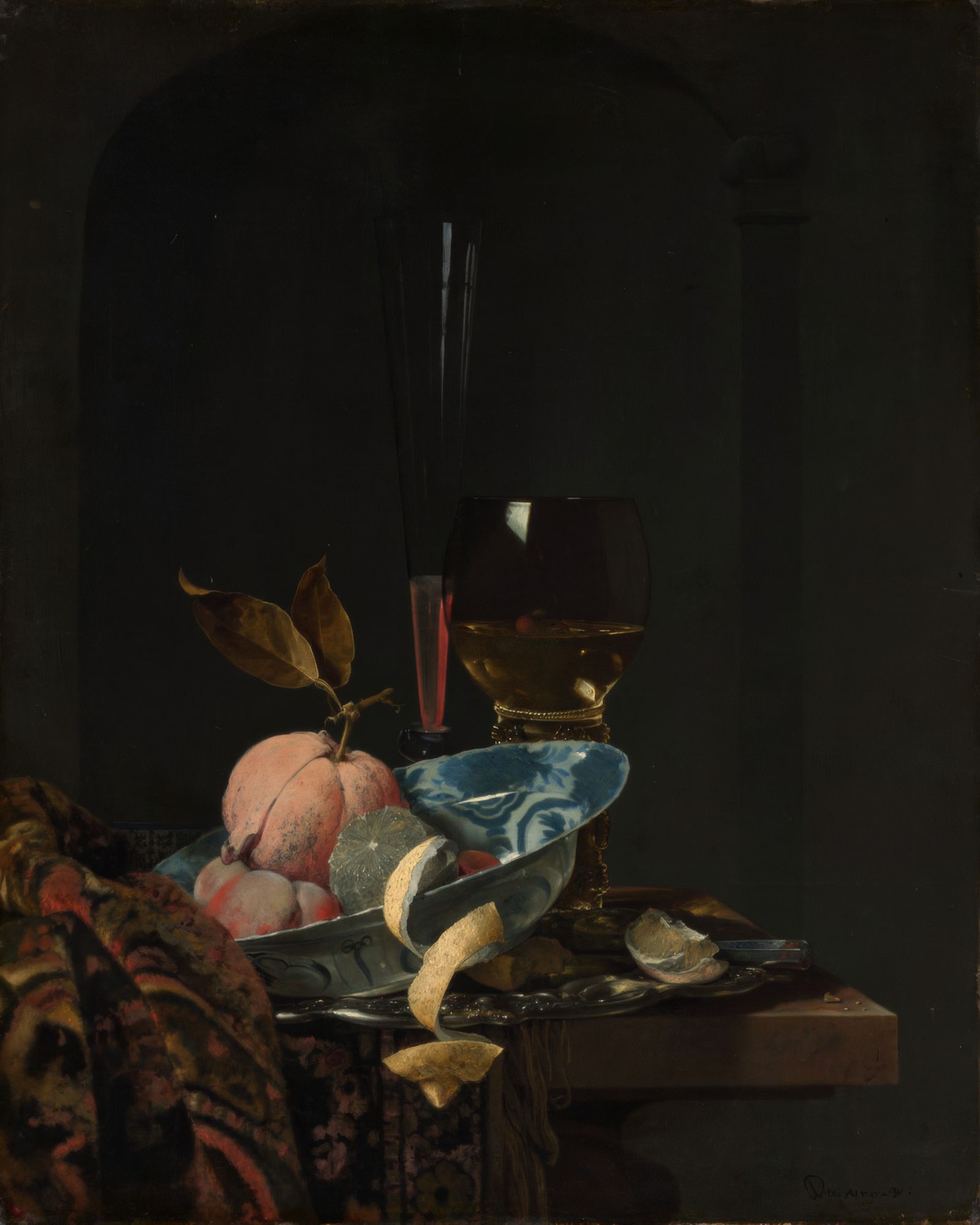
Still Life with Fruit, Glassware, and a Wanli Bowl · Willem Kalf, 1659 · The Metropolitan Museum of Art. Restored by Surrealium at Vaxholm Fortress, Sweden.
A glass, fruit and a decorated bowl emerge from a deep background, each material responding differently to the light. The limited number of objects gives the viewer time to compare their surfaces. This work may suit someone who wants a quieter historical image, but quiet does not mean empty: the angle of a vessel and the placement of a small highlight carry much of the composition.
10. A Rembrandt follower: a farewell in a small space
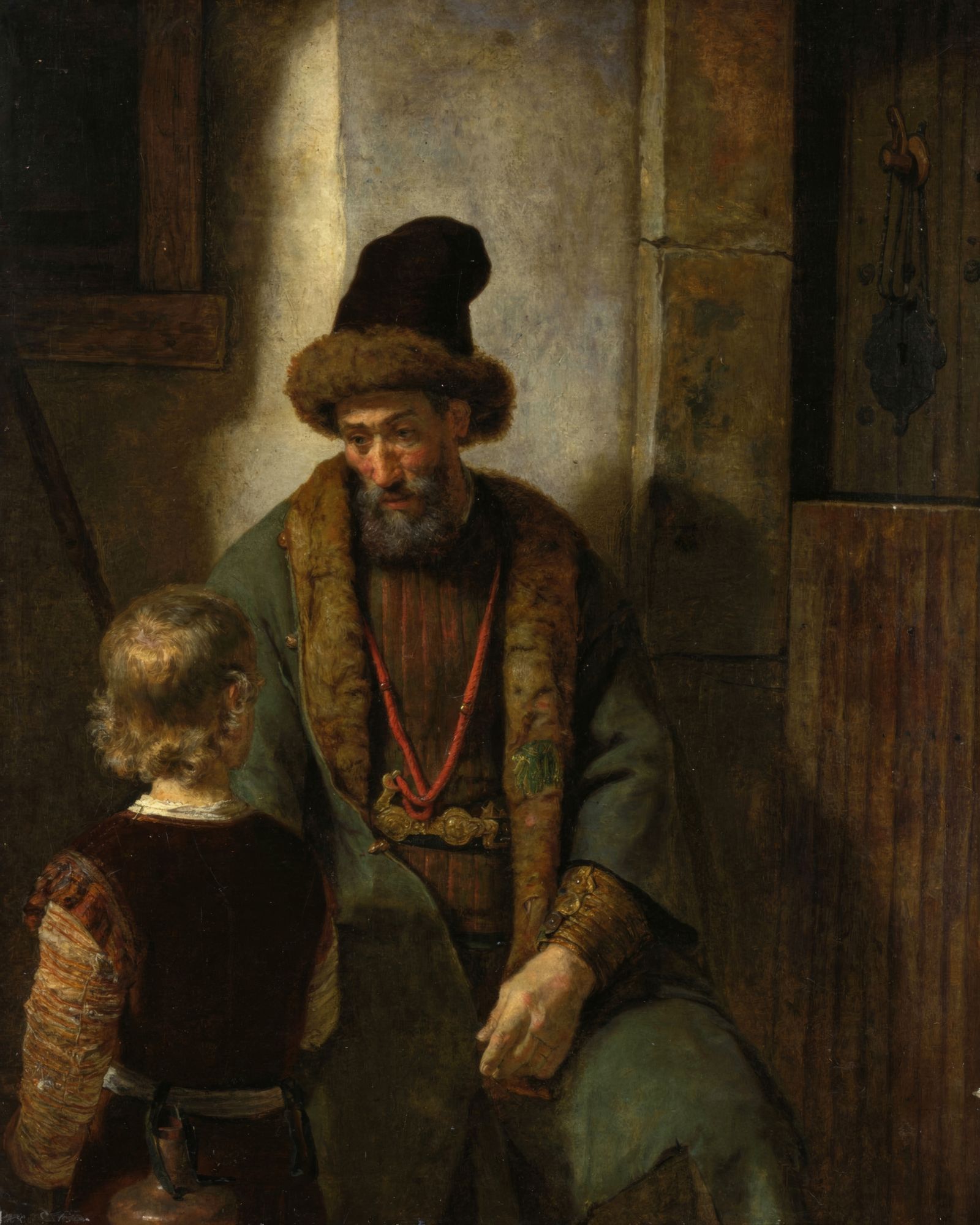
Jacob's Farewell to Benjamin · Follower of Rembrandt van Rijn, c. 1655 · Art Institute of Chicago. Restored by Surrealium at Vaxholm Fortress, Sweden.
An older man and a younger figure meet within a close interior, their hands and faces giving the scene its focus. The catalogue’s attribution to a follower is part of the evidence, not a detail to remove for a stronger headline. It is a useful final comparison because a moving narrative can survive uncertainty about authorship, provided the caption remains honest about what is known.
When you compare these pictures, name the quality that attracts you: a mythological landscape, a tightly grouped family, a face in armour, or light on glass. That description will help more than asking whether the work looks sufficiently classical. Piranesi’s architectural prints show another relationship with antiquity, while Dante Gabriel Rossetti offers a later approach to historical and literary subjects.
Explore Masterworks with the attribution and title in view. A print is a reproduction of the selected image, not an original old-master painting. Preserve the full composition and choose a format that allows its particular details to remain visible, whether those details are a distant figure in a landscape or a small reflection on a glass.
The Baroque collection offers another way to browse the period around several works shown here.
- Does classical painting mean the same thing as old-master painting?
- Not exactly. Classical can refer to ancient subjects or ideals, while old master is a broader historical label. A still life can belong to the latter category without depicting anything from classical mythology.
- What does “follower of” or “imitator of” mean in a caption?
- It identifies a relationship to an artist’s work without claiming that the famous artist made the picture. Keep the museum’s attribution visible when discussing or choosing a reproduction; do not shorten it into a more confident authorship claim.
- Is a Masterworks print an original painting?
- No. It reproduces the selected historical image. Choose it for the composition and the currently offered print format, while keeping the artist, work, date and any edition treatment accurately identified.