Corgi painting: ten lessons in a low point of view
Ten historic small-dog pictures help you choose a corgi portrait with natural proportions, visible paws and room for the ears.
A corgi painting is easier to judge when the photograph is taken near the dog's level. Looking steeply down can make the head dominate and hide the relationship between the long body, short legs and ground. A clear, comfortable pose gives the portrait a better starting point than an exaggerated close-up chosen only for its comic effect.
The ten historic pictures below show other small dogs and a few contrasting companions. They are not relabelled as corgis, and they do not establish a breed history. Instead, they offer practical comparisons in scale, alert ears, low bodies and the use of a familiar setting. Your own photograph supplies the particular dog, including its individual tail, coat pattern and expression.
1. A small dog with a clear stance
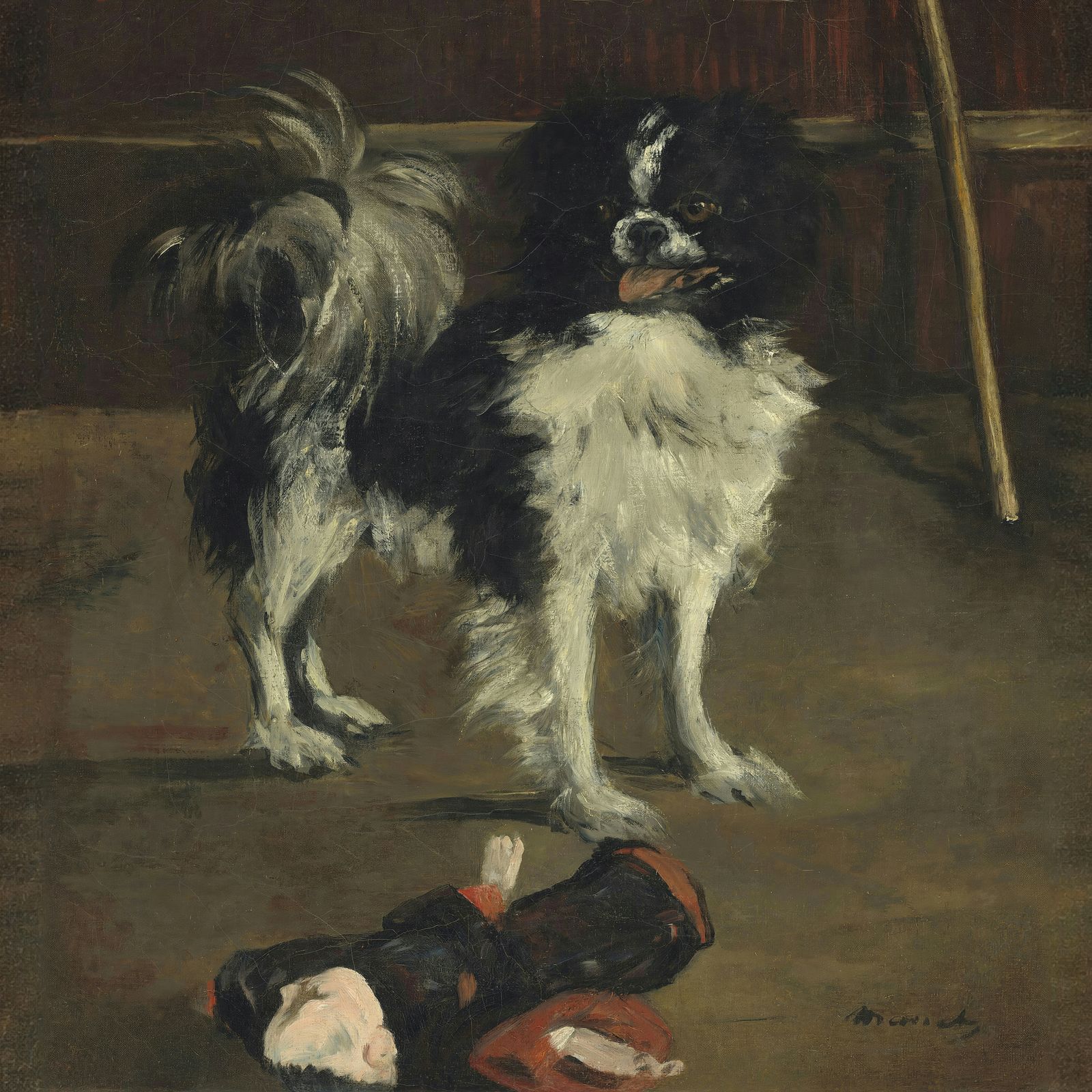
Tama, the Japanese Dog · Édouard Manet · c. 1875 · National Gallery of Art, Washington. Prepared for print by Surrealium at Vaxholm Fortress, Sweden.
Manet's Tama, the Japanese Dog gives the small animal enough space for the head, body and legs to read together. The dog is not a corgi, but the low viewpoint is a useful comparison. Choose a photograph that shows how your dog stands on the ground rather than letting a large head and hidden paws turn the portrait into a generic small-dog caricature.
2. A difference of size
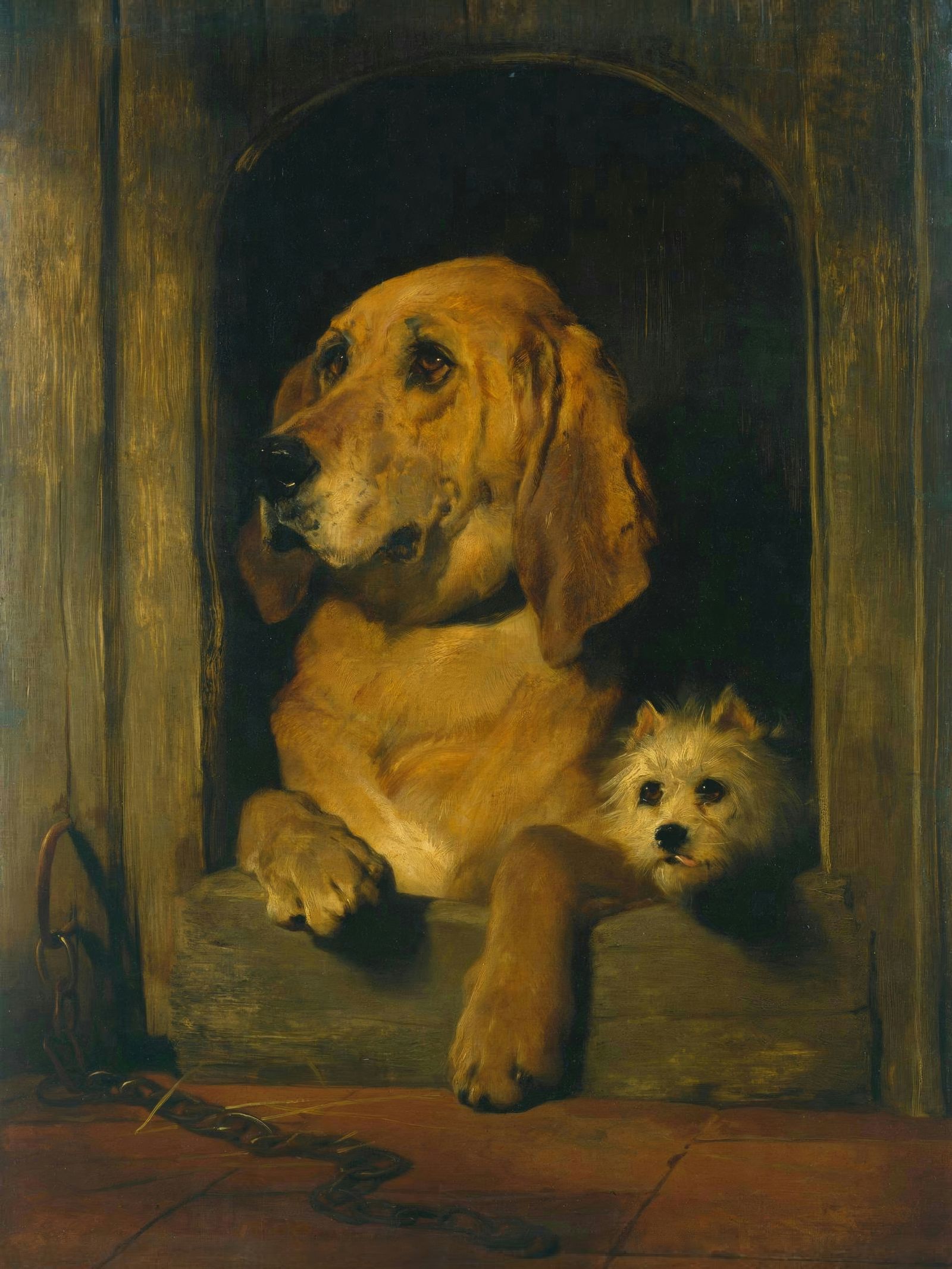
Dignity and Impudence · Edwin Landseer · 1839 · Tate, London. Prepared for print by Surrealium at Vaxholm Fortress, Sweden.
Landseer's Dignity and Impudence places two very different heads beside one another, making scale part of the picture's interest. A corgi photographed with a larger dog or a person needs the same clarity of relationship. Keep enough of each subject visible to explain the difference, and avoid enlarging the nearer animal through a very close camera position that distorts its familiar proportions.
3. A full coat around a small body
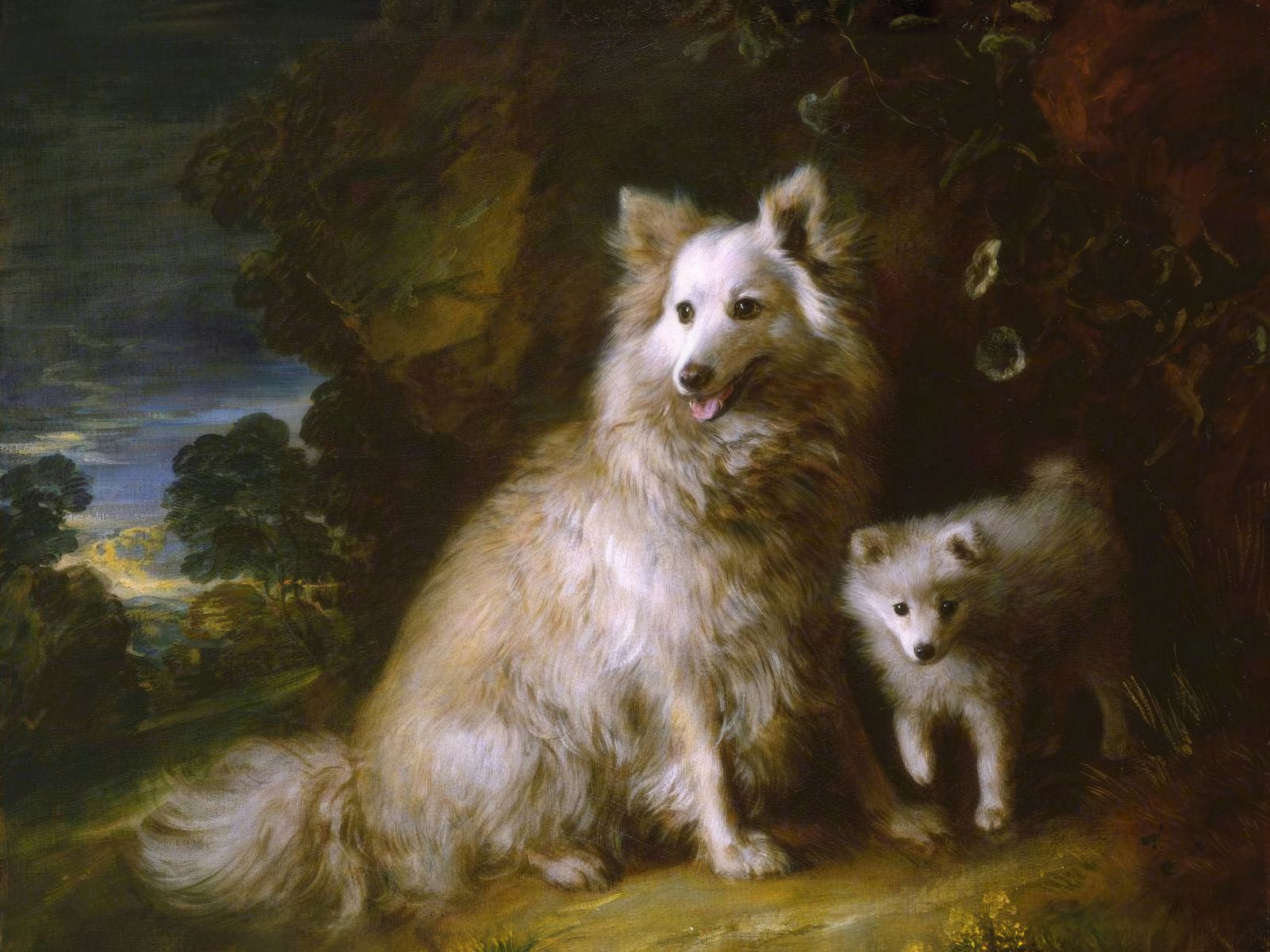
Pomeranian Bitch and Puppy · Thomas Gainsborough · 1777 · Tate, London. Prepared for print by Surrealium at Vaxholm Fortress, Sweden.
Gainsborough's Pomeranian Bitch and Puppy shows how fur can surround a compact animal without erasing its posture. A corgi's outline has a different structure, but the need to keep the body readable remains relevant. In your photograph, look for the chest, back and legs beneath the coat, especially when pale fur blends with a light blanket or a bright patch of ground.
4. Ears and tails in the silhouette
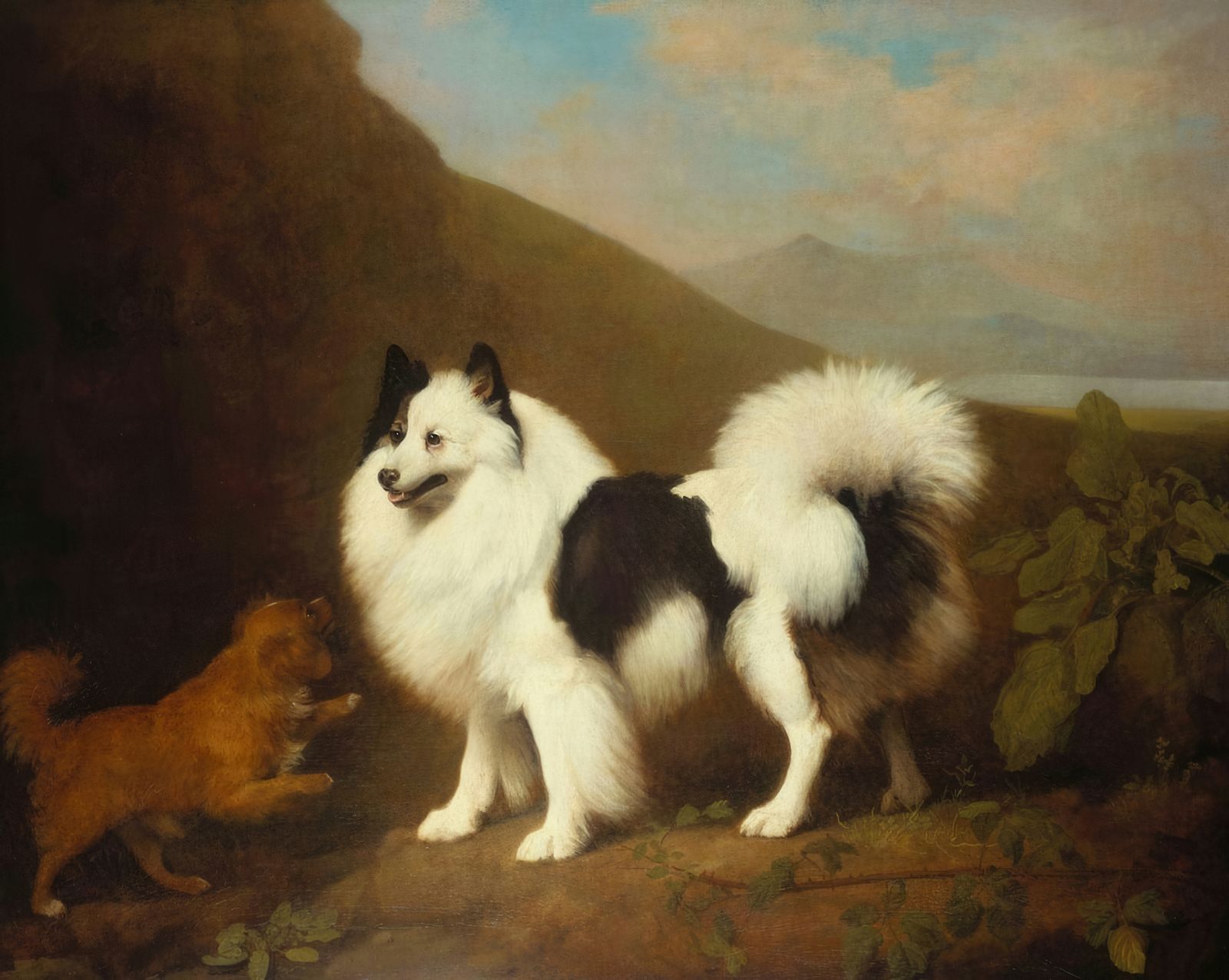
Fino and Tiny · George Stubbs · 1791 · Royal Collection. Prepared for print by Surrealium at Vaxholm Fortress, Sweden.
Fino and Tiny gives the two dogs clear outer shapes, with small changes of head and tail helping distinguish them. For a corgi, the ears and the actual tail are part of the individual likeness and should not be guessed from a general breed image. Choose a photograph that leaves those details visible, even if a more tightly framed face looks immediately appealing.
5. A particular companion
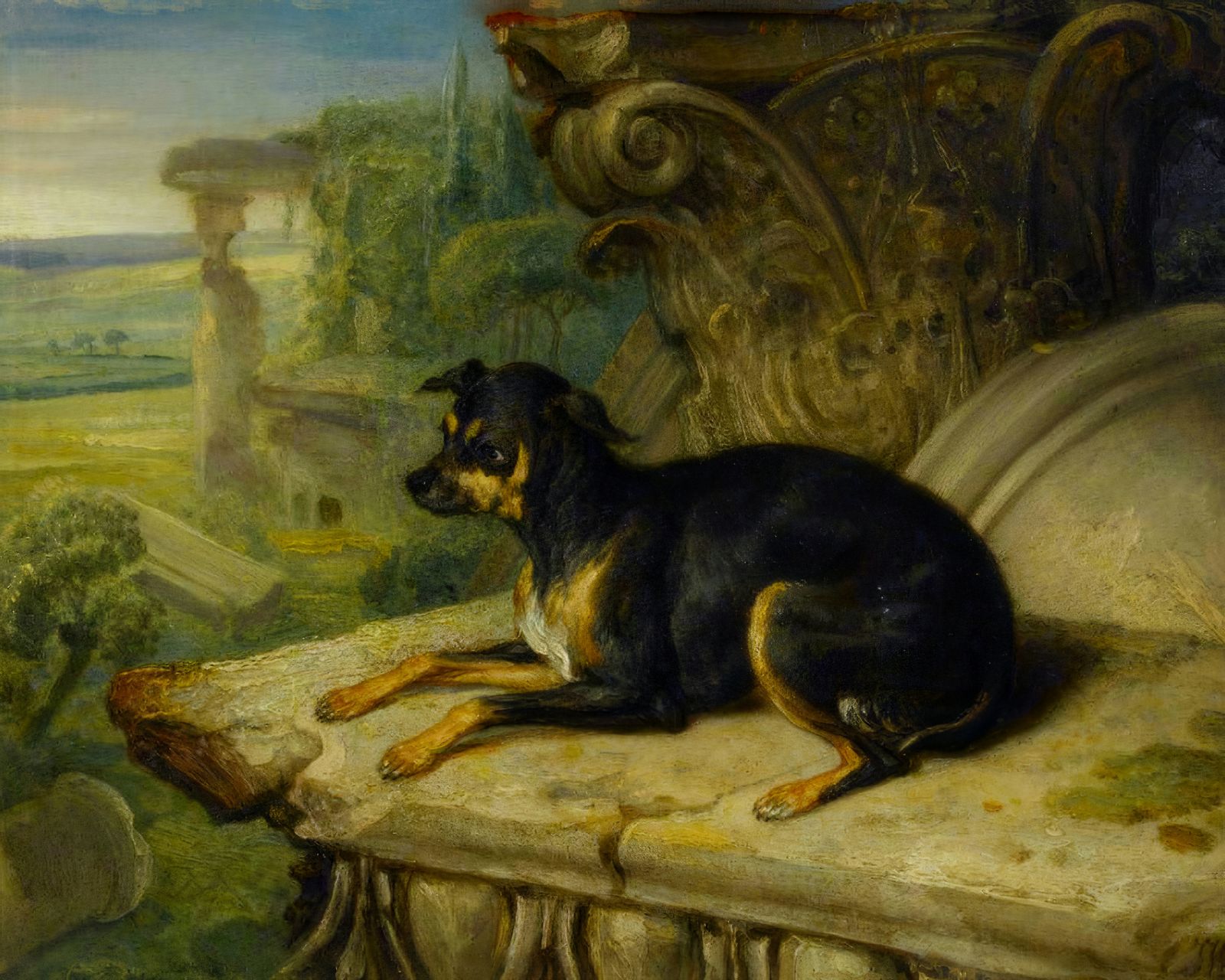
'Fanny', a Favourite Dog · James Ward · 1822 · Sir John Soane's Museum, London. Prepared for print by Surrealium at Vaxholm Fortress, Sweden.
Fanny, a Favourite Dog presents a named animal rather than an interchangeable emblem of pet affection. That principle is useful for a corgi portrait, where a familiar tilt of the head or an uneven marking may matter more than a perfectly symmetrical face. Select the photograph that shows your own dog's habits of posture, and keep those differences instead of polishing them into a stock illustration.
6. The dog near the ground
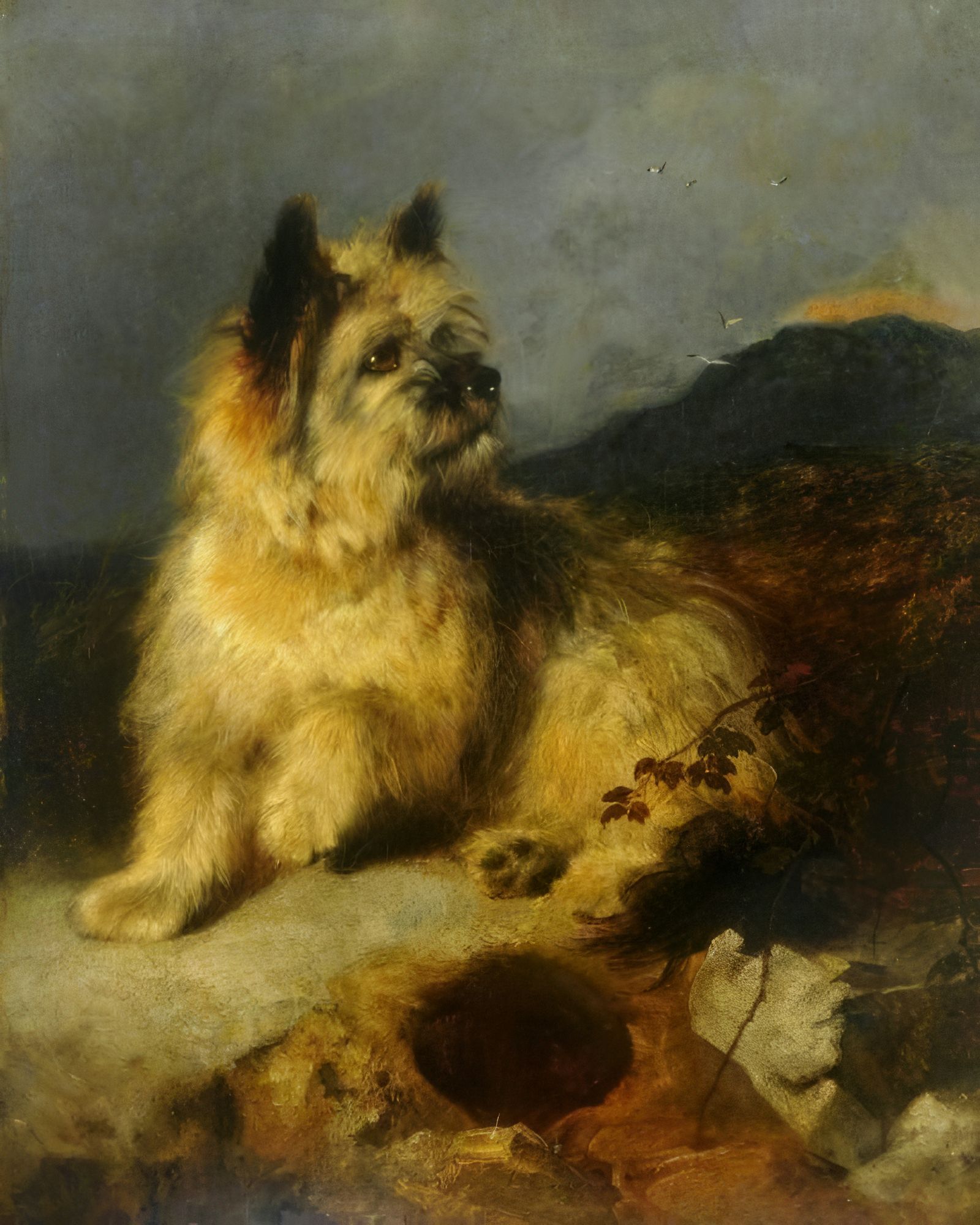
A Terrier by a Rabbit Hole · George Earl · Late 19th century · Cooper Gallery, Barnsley. Prepared for print by Surrealium at Vaxholm Fortress, Sweden.
A Terrier by a Rabbit Hole makes the low setting and the animal's attention part of the composition. The terrier is a different subject, but the picture helps explain why ground level can be important for a short-legged dog. A photograph from nearby and lower down can preserve the corgi's body length and stance more clearly than one taken from an adult's standing height.
7. A soft coat with a distinct head
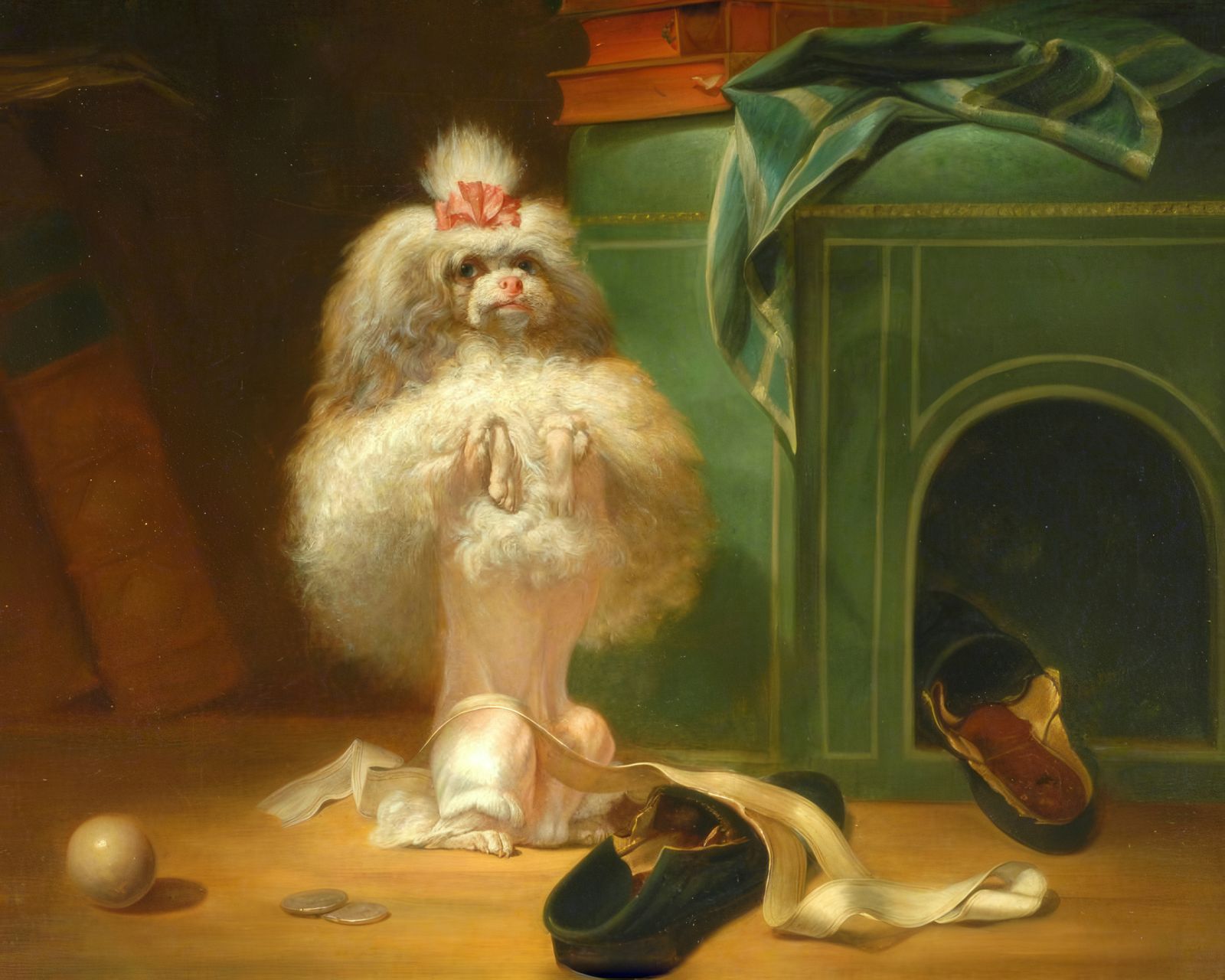
Dog of the Havana Breed · Jean-Jacques Bachelier · 1768 · Bowes Museum, Barnard Castle. Prepared for print by Surrealium at Vaxholm Fortress, Sweden.
Dog of the Havana Breed offers a small companion whose fur and proportions differ from a corgi's. The comparison helps separate a general impression of cuteness from the details that make a dog recognisable. In your own photograph, check the muzzle length, ear placement and body outline rather than assuming that any appealing small-dog pose will produce a convincing likeness.
8. Waiting in a familiar place
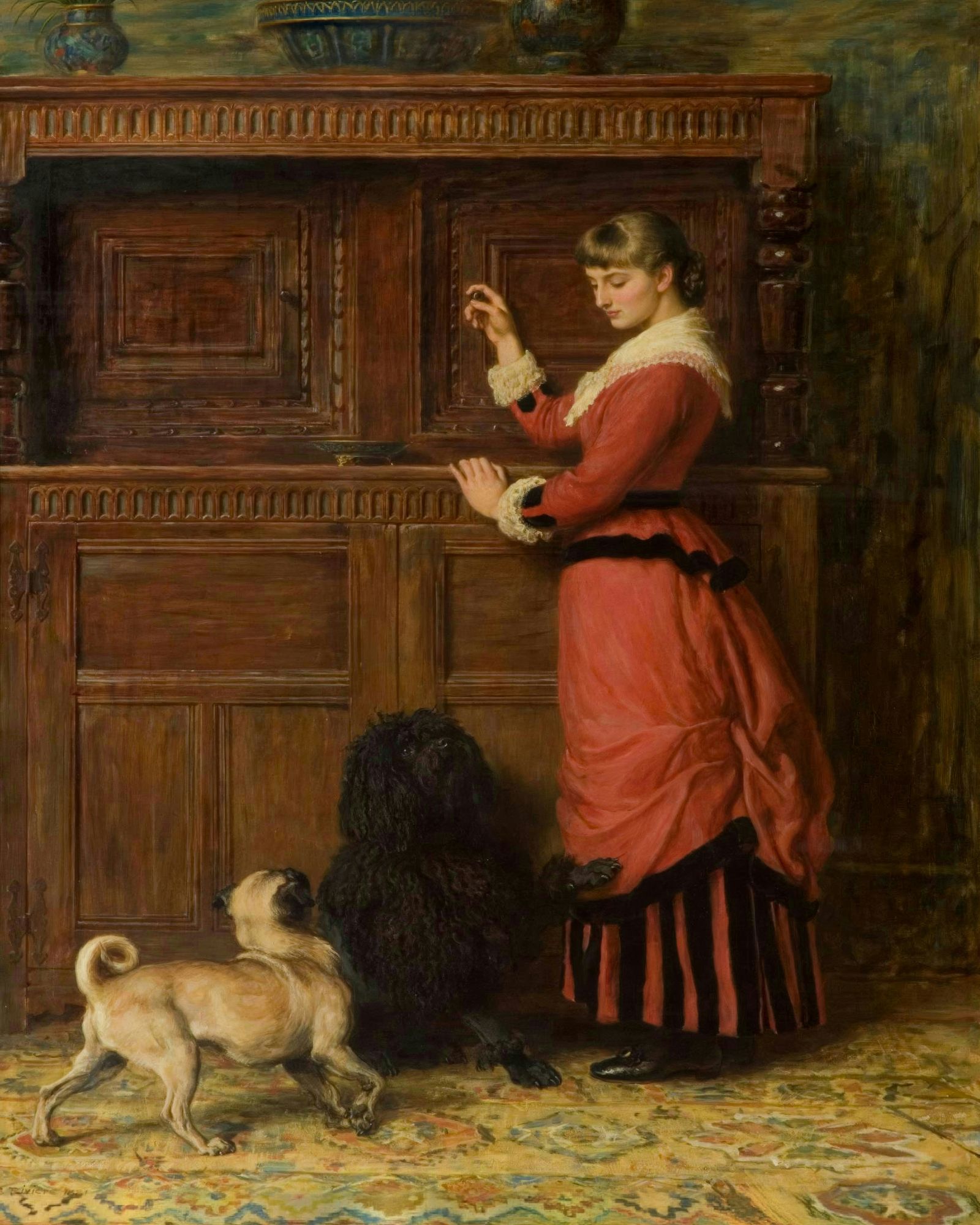
Cupboard Love · Briton Rivière · 1881 · The New Art Gallery Walsall. Prepared for print by Surrealium at Vaxholm Fortress, Sweden.
Riviere's Cupboard Love finds its subject in an ordinary domestic interaction. A corgi's usual waiting spot can provide equally personal context without adding a costume or a human occupation. If a cupboard, chair or doorway belongs in the photograph, retain enough of it to explain the pose while keeping the dog's face and low body clearly visible in front of it.
9. A small movement of attention
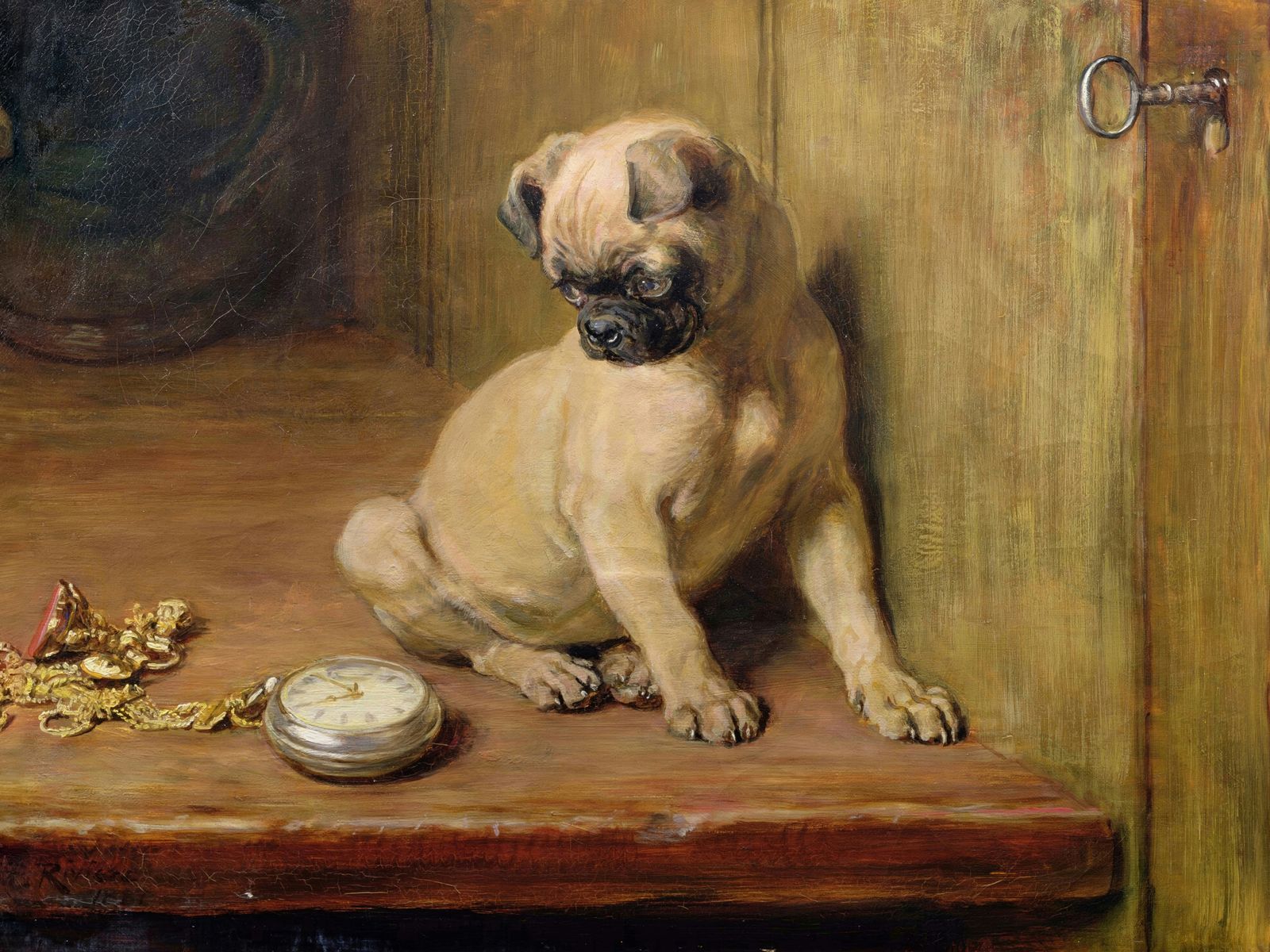
Tick-Tick (Tick-Tack) · Briton Rivière · 1881 · Russell-Cotes Art Gallery & Museum, Bournemouth. Prepared for print by Surrealium at Vaxholm Fortress, Sweden.
Tick-Tick makes a dog's alert attention the centre of a domestic scene. The picture offers a way to think about expression through posture and direction rather than an invented human grin. Choose a photograph in which the corgi's eyes and ears show a familiar pause, and let that observed moment supply the character instead of exaggerating the face for a joke.
10. A boundary that explains the pose
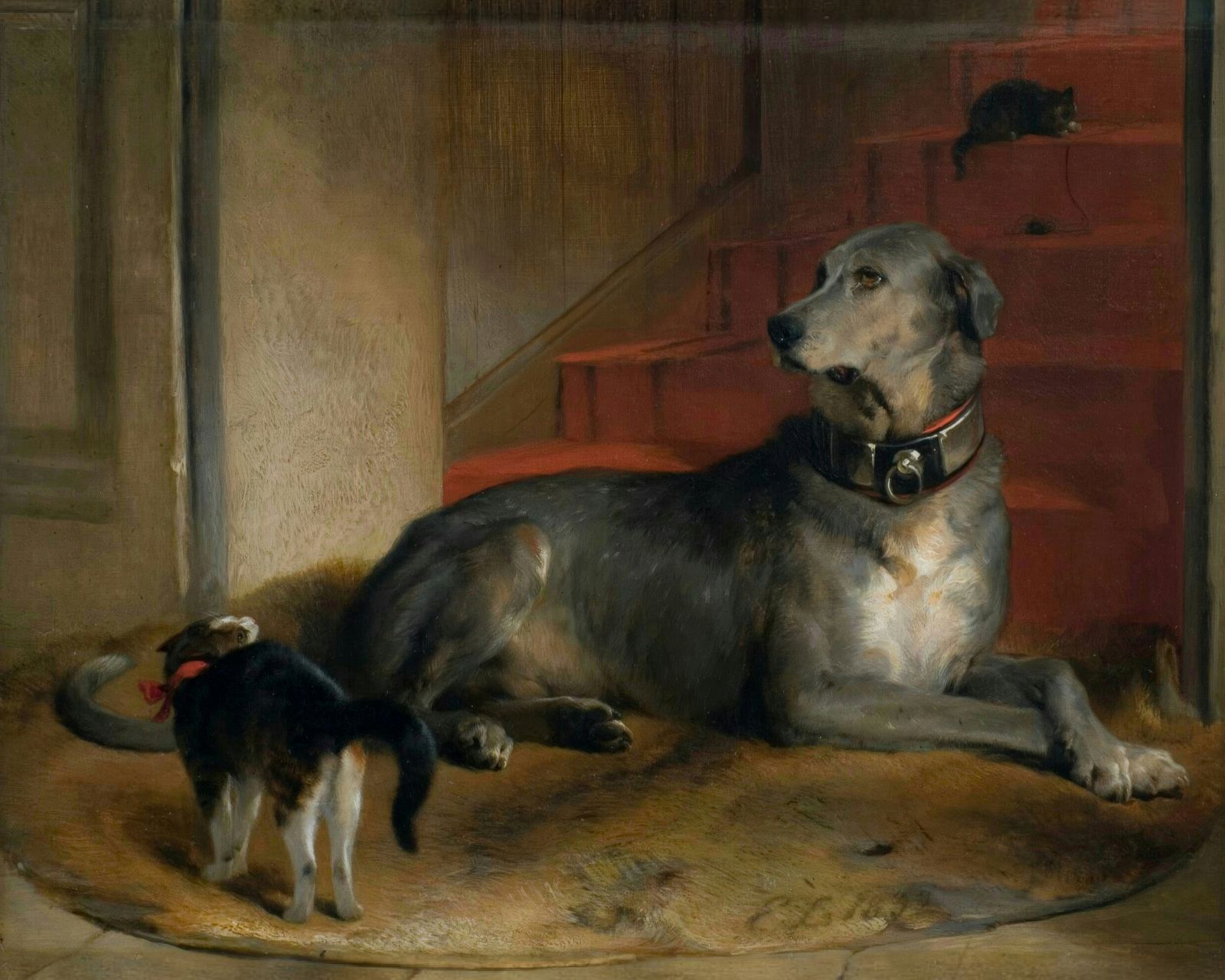
Lady Blessington's Dog: The Barrier · Edwin Landseer · 1832 · Victoria and Albert Museum, London. Prepared for print by Surrealium at Vaxholm Fortress, Sweden.
Lady Blessington's Dog places the animal beside a barrier, using the setting to clarify where it stands. A low wall or furniture edge can similarly give scale to a corgi, but it should not cut across the face or hide the legs completely. Choose the image in which the setting supports the dog's shape rather than making the viewer reconstruct it from a few visible parts.
Compare a low, complete view with a closer face photograph. The first may preserve the corgi's distinctive body better; the second may hold a particularly familiar expression. The natural posture and individual expression supply the character. Fable's pet portrait route begins with your photograph, so keep the natural proportions and the individual animal as the basis for every later style choice.
Compare the historic pet portrait guide, pet portrait styles and custom dog portraits. The bulldog guide considers another compact body. Manet's Tama shows how much a complete small-dog silhouette can communicate.
- Should I photograph a corgi from above?
- A view from above can be a familiar photograph, but it often hides the legs and changes the apparent balance between head and body. Try a view closer to the dog’s level as well. Choose according to whether the portrait should emphasise a face or a complete posture.
- Should the portrait include the tail?
- Use the tail your own dog has, as shown in the reference photograph. Do not substitute a generic breed silhouette or assume all corgis look the same. If the tail is important to the pose, leave enough room around it to make its shape clear.
- Can a corgi portrait feel historic without human clothing?
- Yes. Light, colour, a quiet setting and the arrangement of the body can draw on historic dog portraiture. The animal can remain entirely itself. These references show that a pet does not need an invented title or costume to deserve a carefully considered portrait.