Bulldog painting: ten ways to keep the dog recognisable
Ten historic dog pictures help you choose a bulldog portrait with a readable face, natural proportions and an individual pose.
A bulldog painting should begin with the dog in front of you: the actual width of the head, the placement of the eyes, the folds around the muzzle and the way the body settles when resting. Exaggerating those features can quickly turn a recognisable animal into a stock comic character. A clear photograph at the dog's level gives a portrait a better foundation.
The historic works below show several kinds of dog. They are composition references, not a claim that every animal is a bulldog or a demonstration of a customer's result. Look at how the painters separate a dark face from a dark background, give a heavy body space, or make a small change of expression visible. Then return to the particular proportions of your own dog.
1. Two faces with different weights
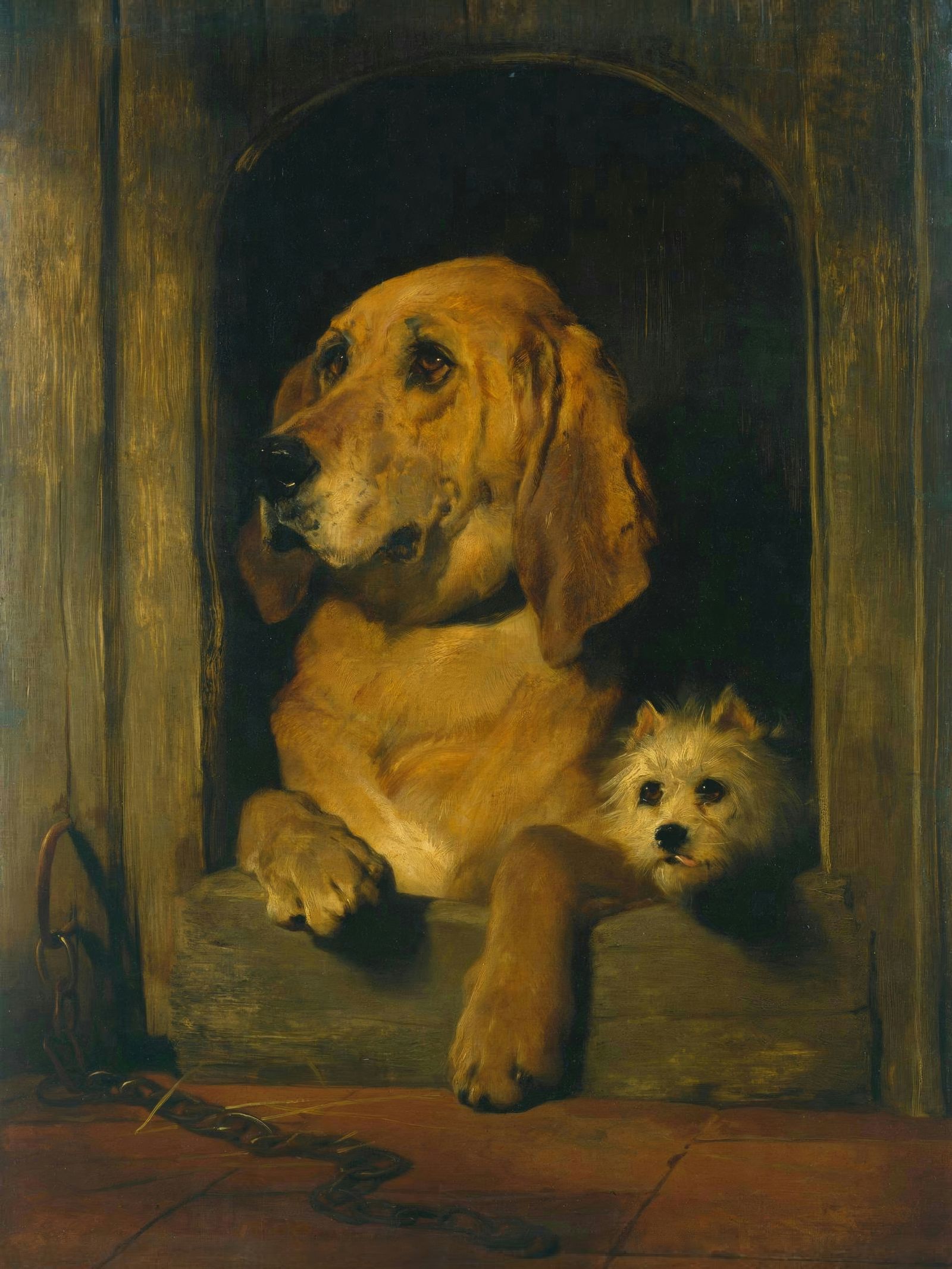
Dignity and Impudence · Edwin Landseer · 1839 · Tate, London. Prepared for print by Surrealium at Vaxholm Fortress, Sweden.
Landseer's Dignity and Impudence sets a large dog beside a small one at the opening of a kennel. The contrast makes each head feel distinctive without requiring a costume or an elaborate background. For a bulldog portrait, this is a reminder to preserve the individual balance of eyes, muzzle and forehead rather than importing the expression of a different dog because it looks amusing.
2. A resting head deserves enough space
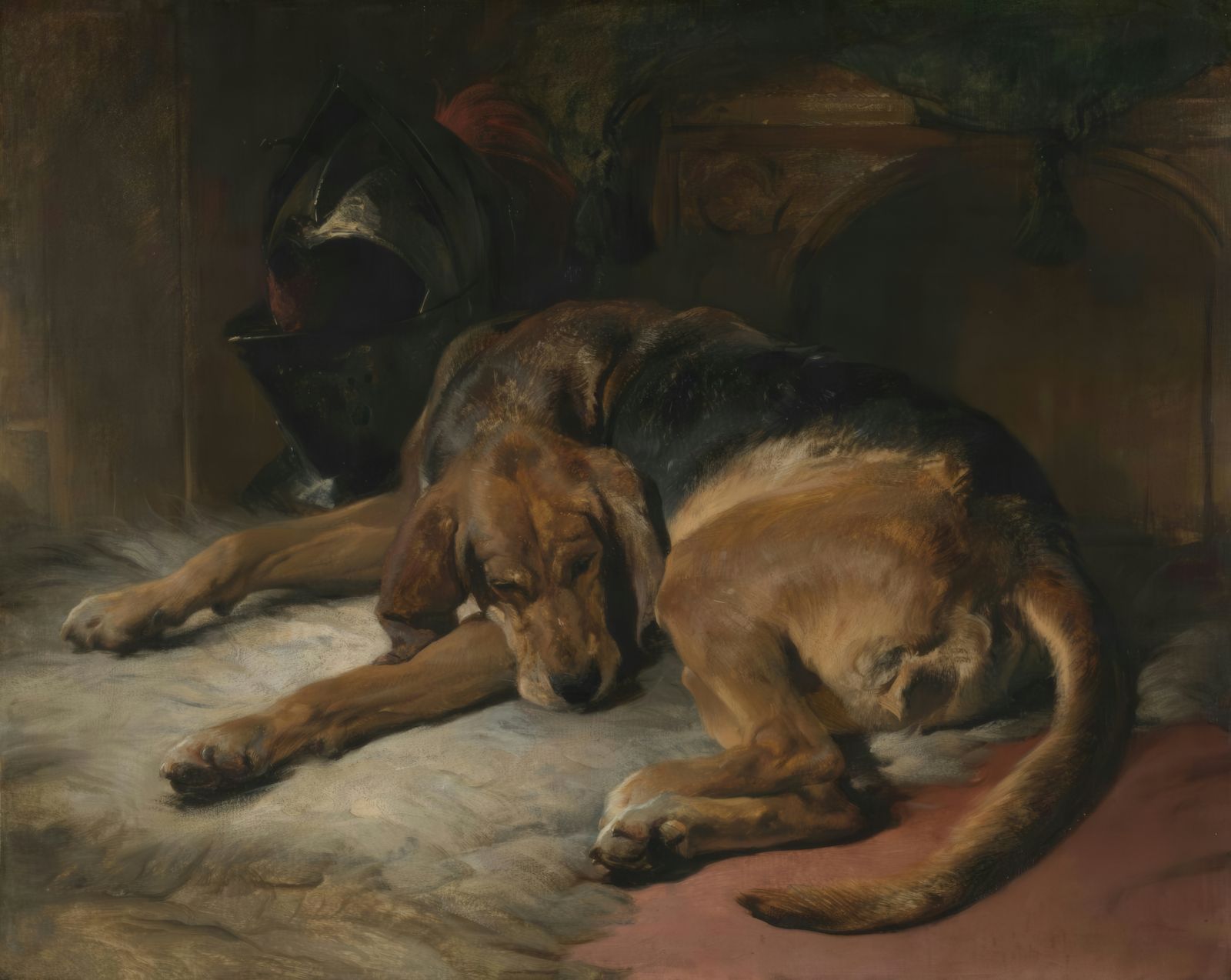
Sleeping Bloodhound · Edwin Landseer · 1835 · Tate, London. Prepared for print by Surrealium at Vaxholm Fortress, Sweden.
Sleeping Bloodhound concentrates on the weight of a dog's lowered head and the folds around it. A resting bulldog can offer an equally characteristic subject, but the photograph needs to show where the muzzle ends and the supporting surface begins. Keep the nose clear of blankets and retain enough of the neck or forelegs to explain how the head is resting.
3. A strong body in a busy scene
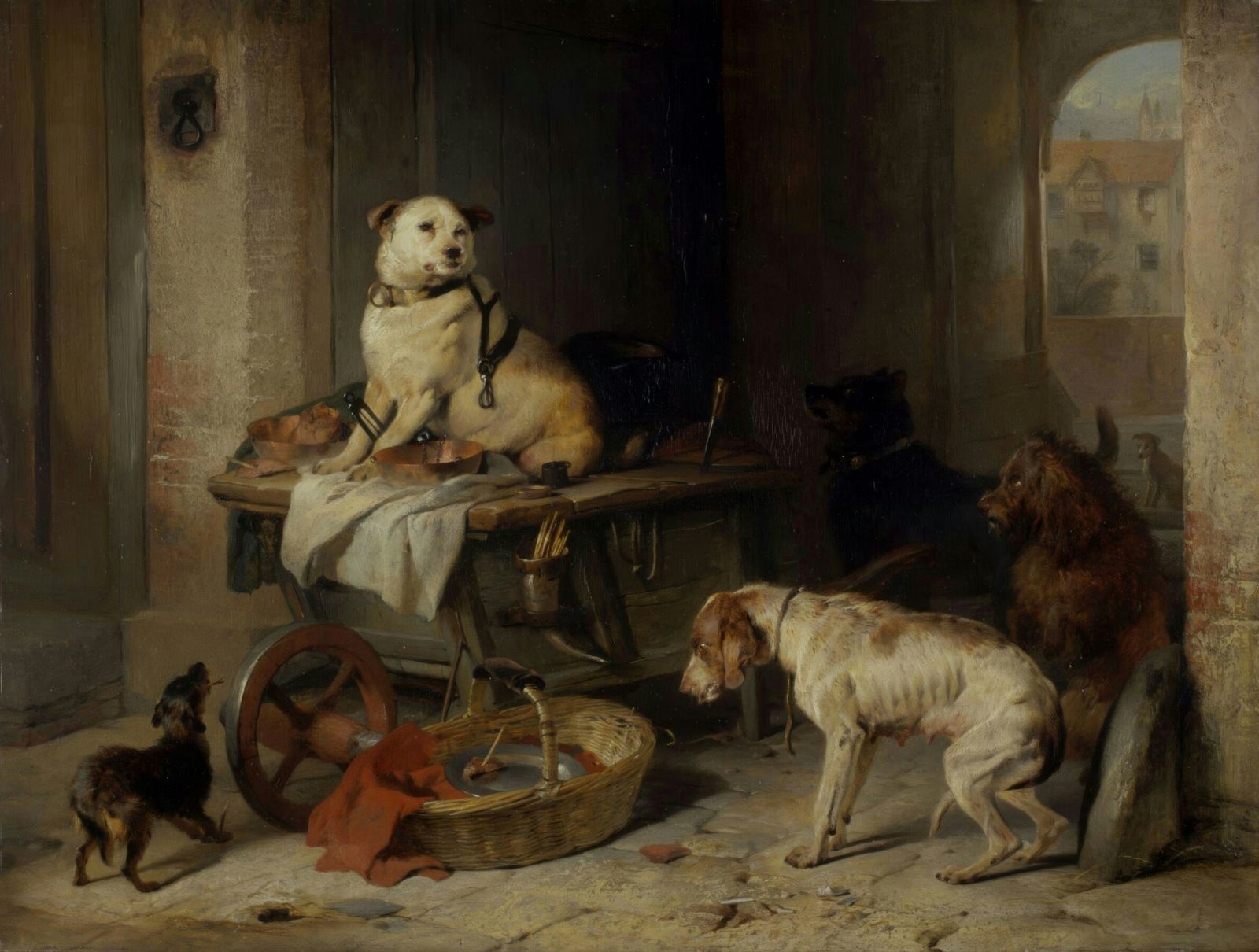
A Jack in Office · Edwin Landseer · 1833 · Victoria and Albert Museum, London. Prepared for print by Surrealium at Vaxholm Fortress, Sweden.
A Jack in Office places its central dog among other animals and a clutter of objects. The surrounding activity gives the figure narrative weight, but a new portrait does not need to reproduce the picture's social satire. If you want a setting around your bulldog, choose one familiar object or place first, then check that it does not overwhelm the dog's broad, compact outline.
4. The dog beside a boundary
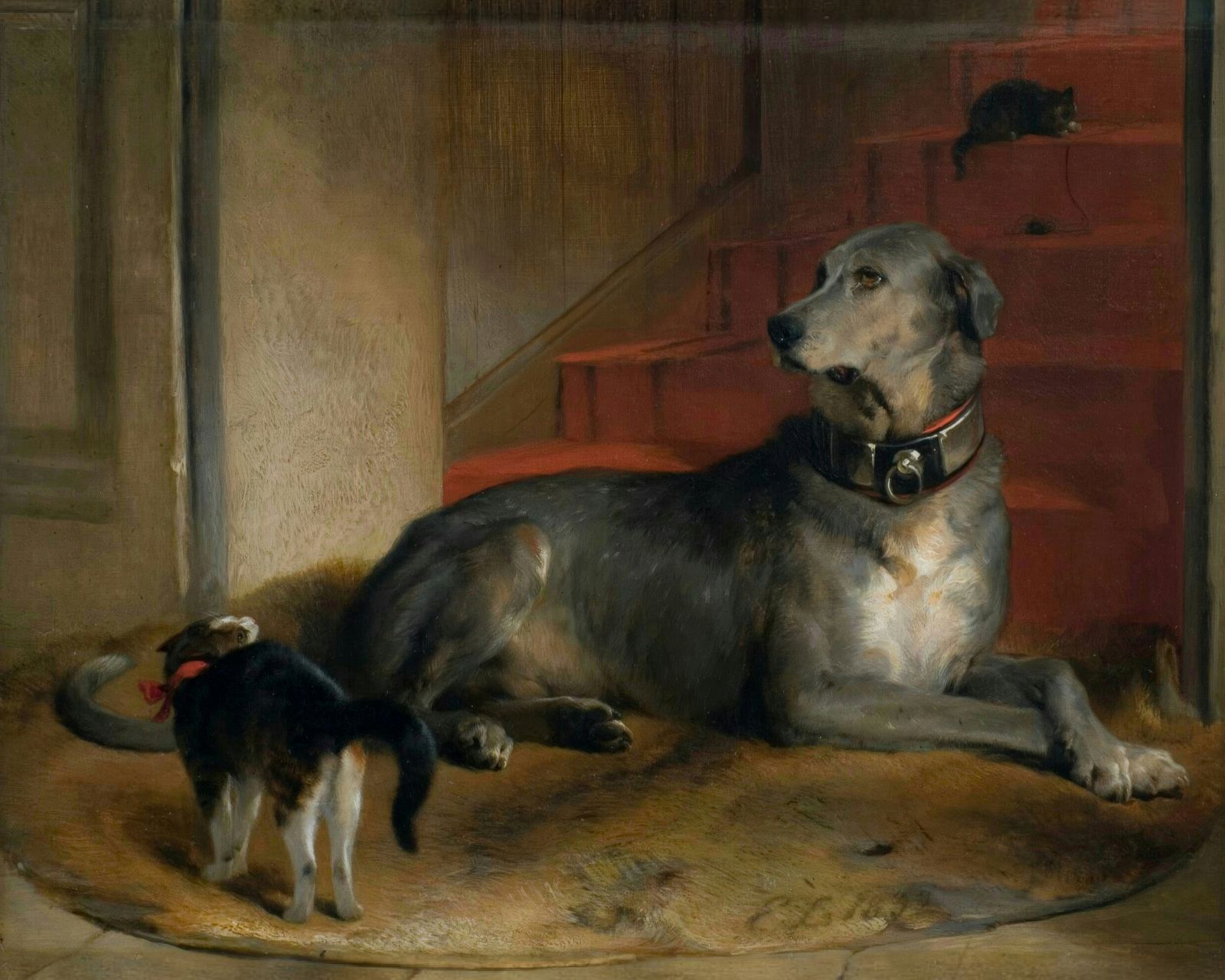
Lady Blessington's Dog: The Barrier · Edwin Landseer · 1832 · Victoria and Albert Museum, London. Prepared for print by Surrealium at Vaxholm Fortress, Sweden.
Lady Blessington's Dog uses a barrier to organise the scene and to make the animal's position easy to understand. A fence, doorway or low wall can do similar work in a photograph, provided it does not cut across the eyes or hide the muzzle. Think of the setting as a way to explain the pose, rather than a reason to squeeze the dog into a narrow space.
5. A large shape against quieter surroundings
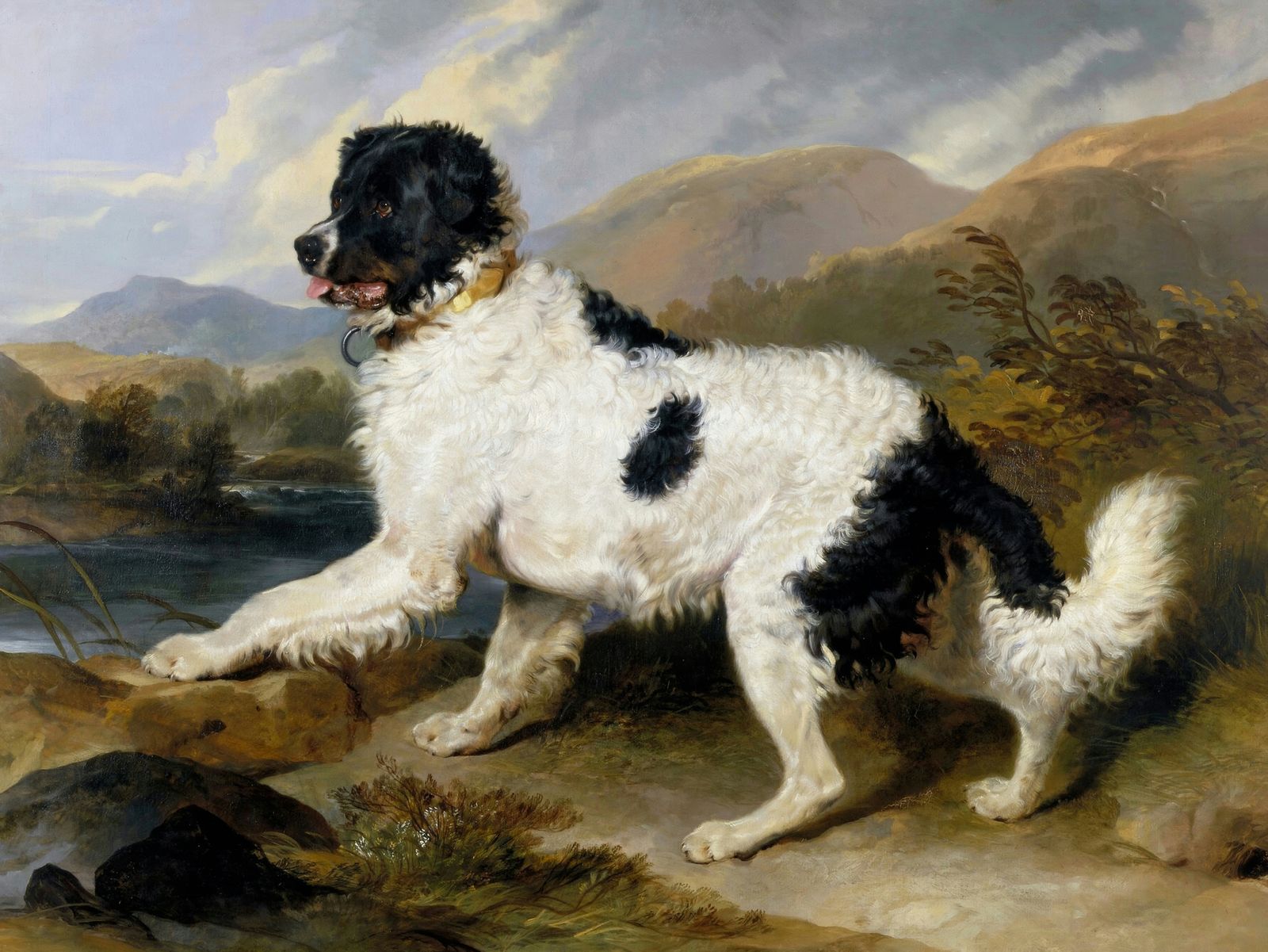
'Lion', a Newfoundland Dog · Edwin Landseer · 1824 · Victoria and Albert Museum, London. Prepared for print by Surrealium at Vaxholm Fortress, Sweden.
Lion, a Newfoundland Dog gives the animal's substantial form room within the picture. This is a Newfoundland, not a bulldog, and the difference in coat and proportions matters. What transfers is the compositional patience: leave room around the body so a broad chest, short legs or a seated posture can be seen as part of one animal rather than as disconnected details.
6. Character in the direction of attention
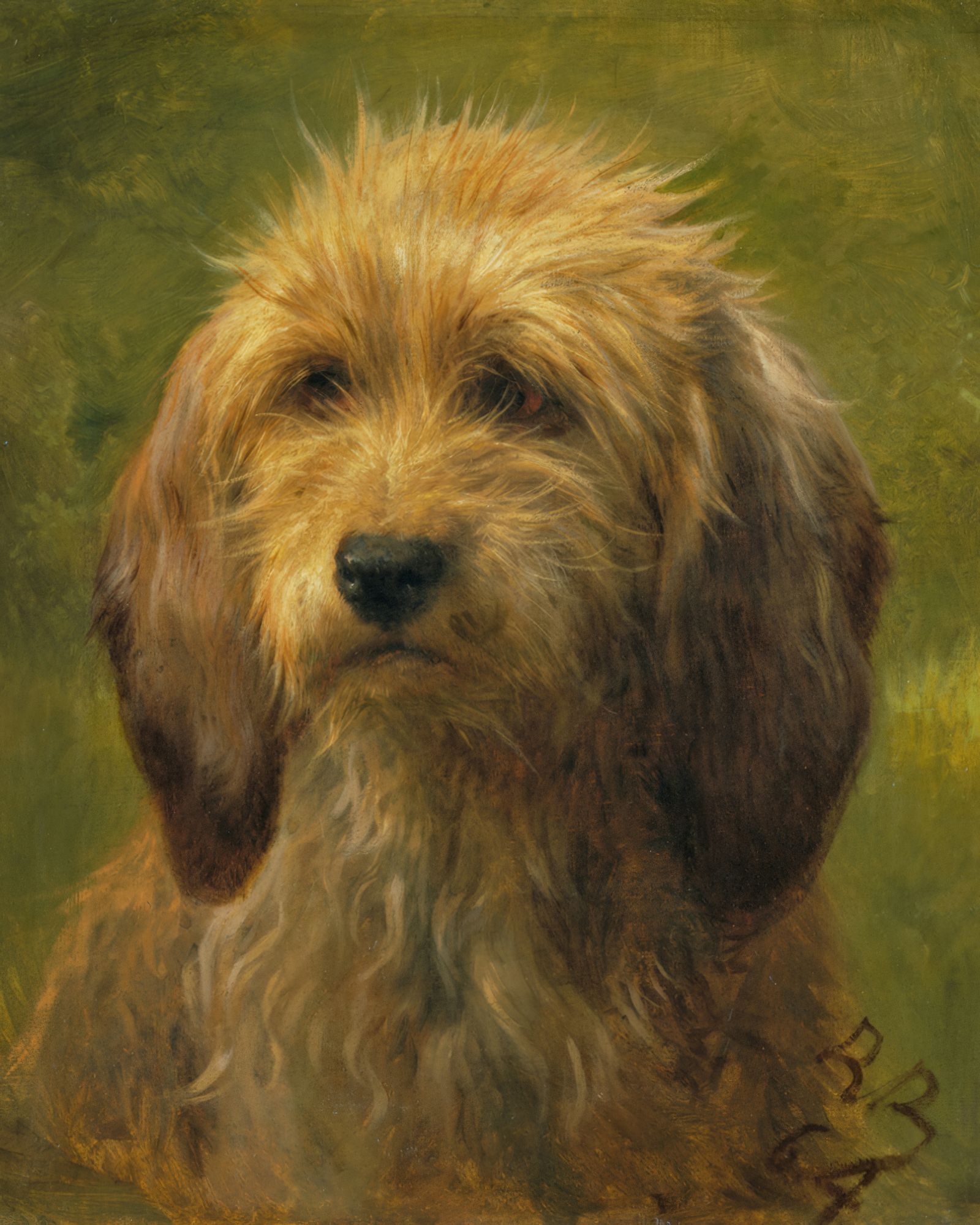
Brizo the dog · Rosa Bonheur · 1864 · Wallace Collection, London. Prepared for print by Surrealium at Vaxholm Fortress, Sweden.
Rosa Bonheur's Brizo is alert to something beyond the viewer, making the direction of the head an important part of the portrait. A bulldog need not look straight into the lens to look like itself. A slight turn can make the muzzle and brow more legible, as long as the nearer eye remains clear and the far side of the face is not lost entirely.
7. A quiet, close view
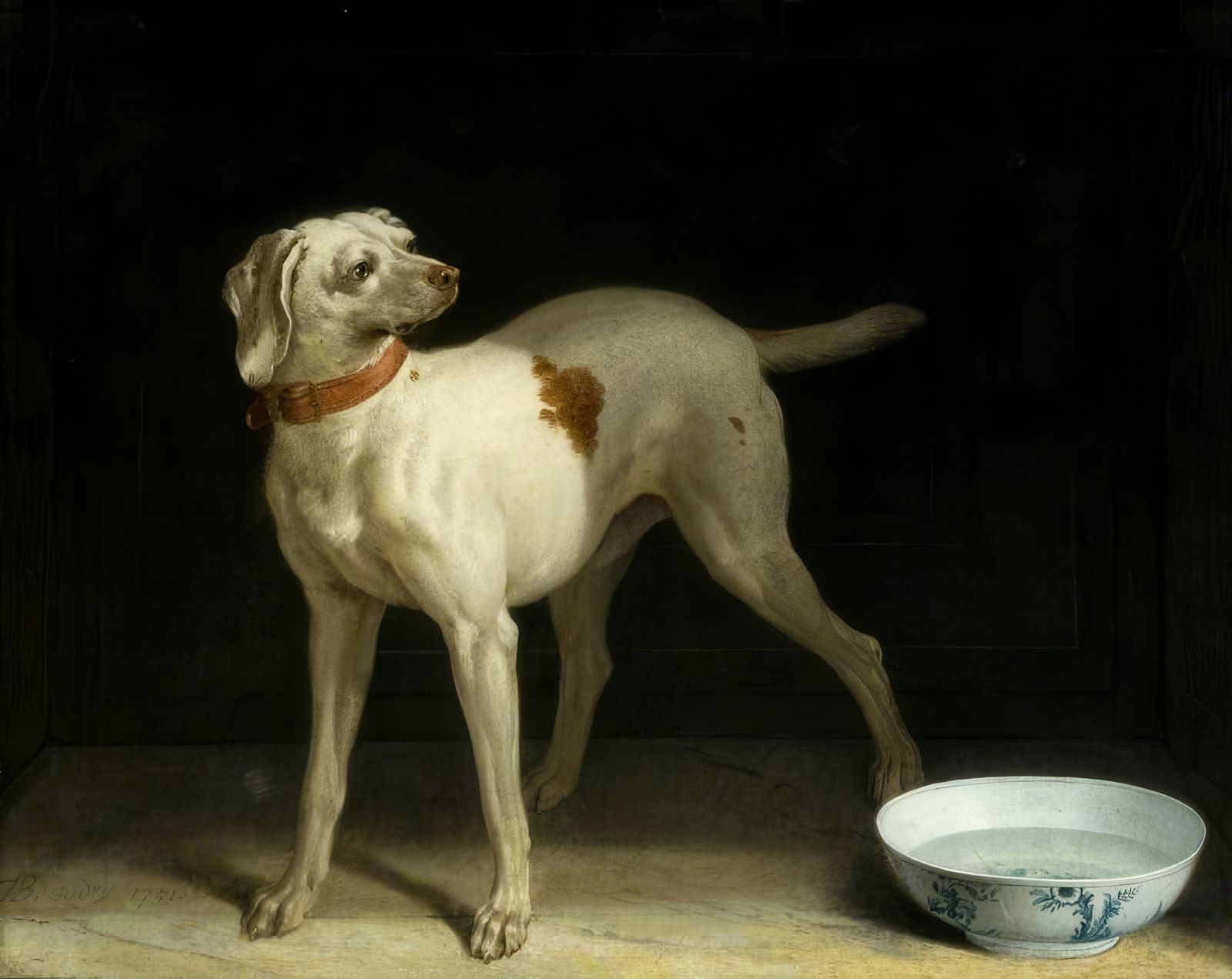
The Dog · Jean-Baptiste Oudry · 1751 · Burrell Collection, Glasgow. Prepared for print by Surrealium at Vaxholm Fortress, Sweden.
Oudry's The Dog sets a standing, light-coated animal against a dark background, with a water bowl beside its feet. For a short-coated dog, the comparable details may be a small patch, a line of shadow or the edge of an ear. Choose a source photograph with those features intact rather than relying on an unusually sharp outline to do all the work of recognition.
8. The everyday reason for looking up
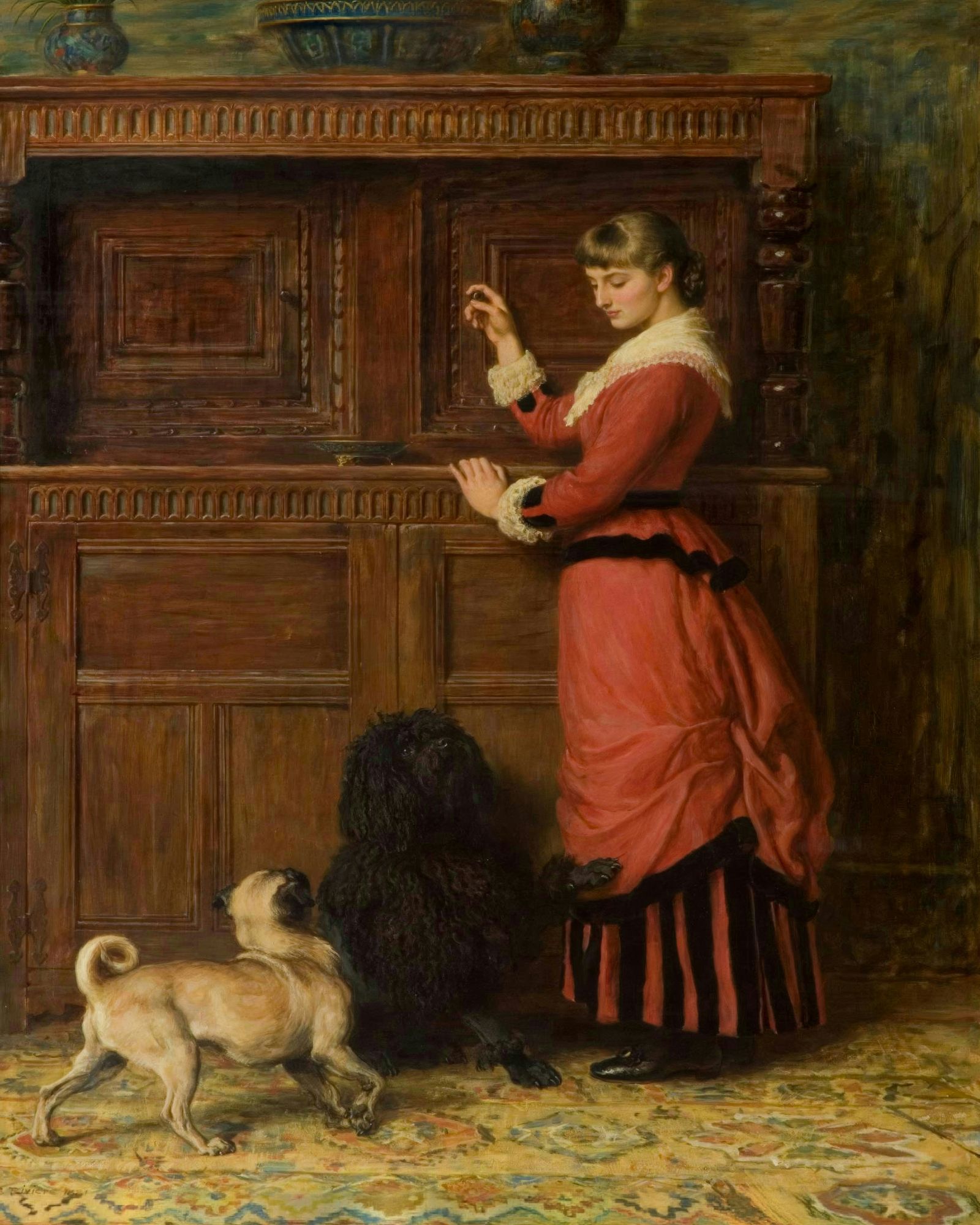
Cupboard Love · Briton Rivière · 1881 · The New Art Gallery Walsall. Prepared for print by Surrealium at Vaxholm Fortress, Sweden.
Riviere's Cupboard Love builds its scene around a dog's attention to a person and a nearby cupboard. The interest comes from an ordinary household relationship, not from dressing the animal as a person. If your bulldog has a familiar waiting place, that setting may make a better portrait source than an invented throne or a grand interior unrelated to its daily life.
9. The pause before movement
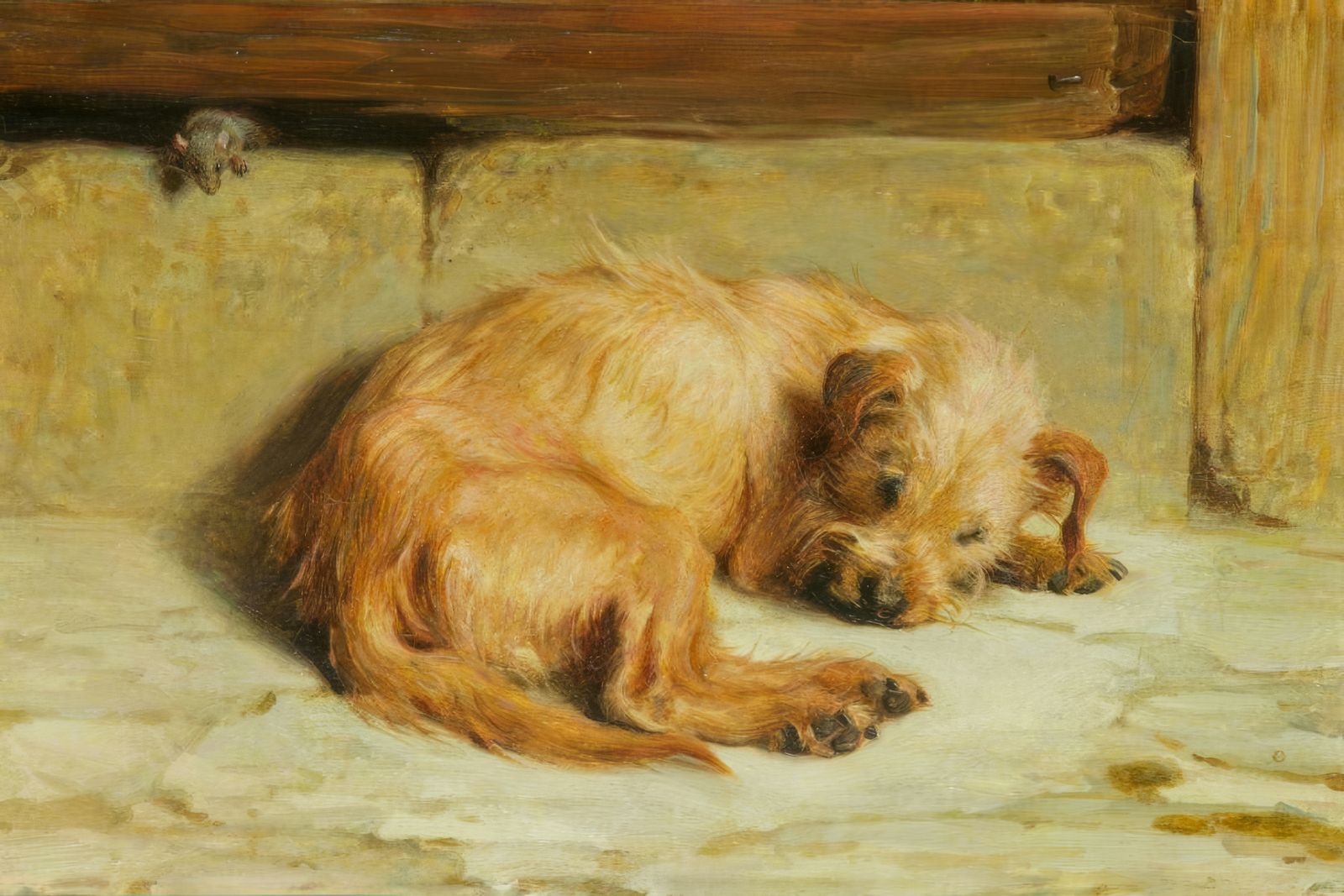
Watching Dog · Briton Rivière · 1875 · Sudley House, Liverpool. Prepared for print by Surrealium at Vaxholm Fortress, Sweden.
Watching Dog shows an animal curled low beside a doorway, its open eye visible close to its paws. A photograph taken during a similar pause can preserve the stance of a bulldog that rarely sits for long. Give the paws and the chest enough room in the frame to show how its weight is carried, instead of selecting only the sharpest face.
10. A particular dog, named
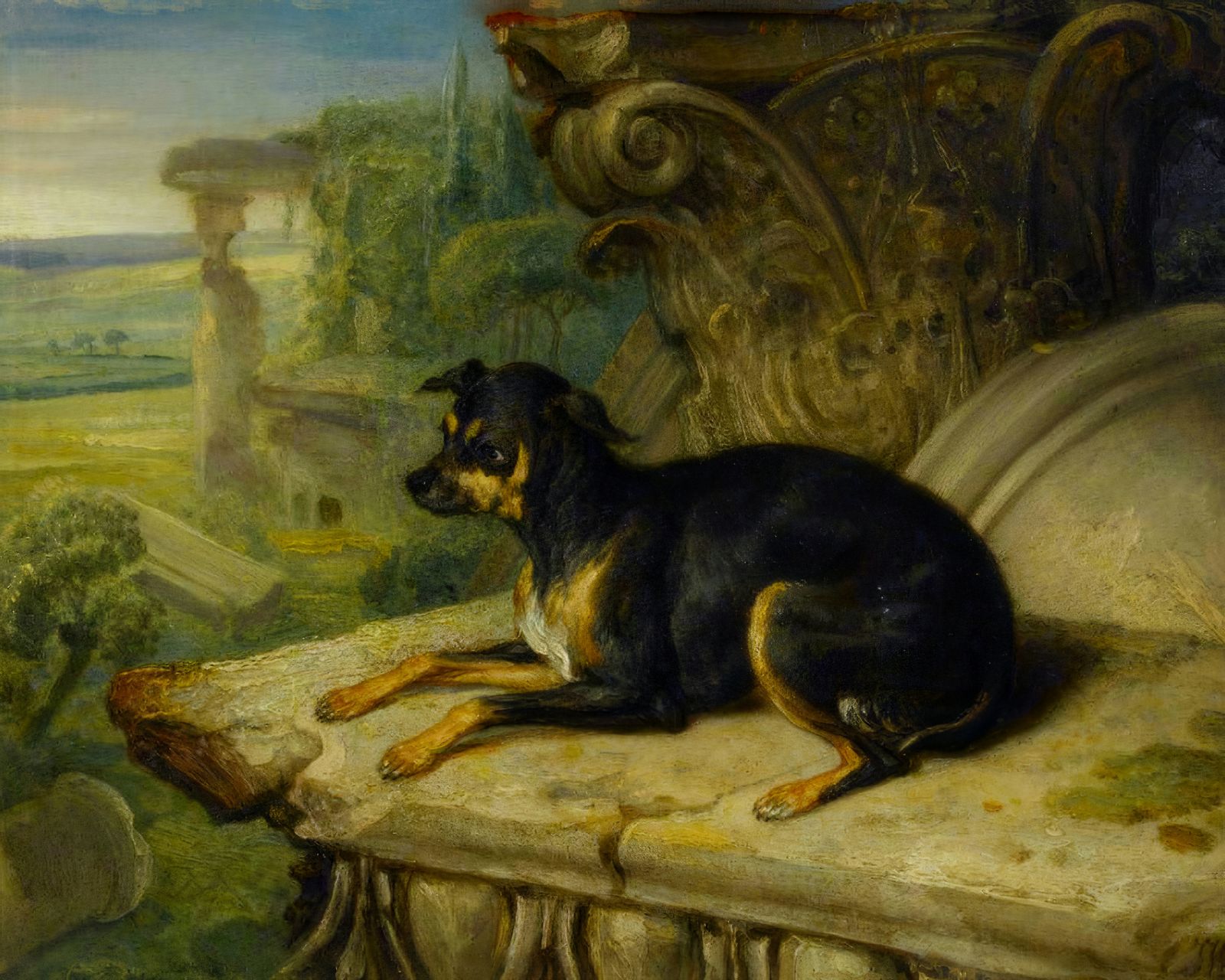
'Fanny', a Favourite Dog · James Ward · 1822 · Sir John Soane's Museum, London. Prepared for print by Surrealium at Vaxholm Fortress, Sweden.
Fanny, a Favourite Dog identifies an individual rather than presenting a general specimen of canine character. That is a useful principle for a custom portrait: the small asymmetry of an ear or a familiar tilt of the head may be more valuable than a tidy breed ideal. Keep those identifying details visible in the photograph and judge the finished likeness by the dog you know.
Choose a photograph with the whole face readable, natural light and enough of the body to explain the pose. Compare a direct view with a gentle three-quarter turn; the best choice is the one that shows your dog's familiar proportions. The historic pictures supply ways of looking, while Fable's pet portrait route starts with your own photograph. A recognisable bulldog needs neither a comic exaggeration nor a human role.
For the related but distinct subject, see the French bulldog guide. Compare the broader dog portrait choices and pet portrait styles, then the different shape problem in corgi portraits. Landseer's Dignity and Impudence remains a useful close-looking reference.
- Should a bulldog portrait show the whole body?
- A head portrait can work, but include enough neck or chest to make the head feel supported. A full-body view is useful when the dog’s seated shape or stance is especially familiar. Choose according to the photograph you have, not a rule that every breed needs the same format.
- Are these paintings all of bulldogs?
- No. They are historic dog pictures used to compare composition, light and posture. Their catalogue titles identify the pictured subjects where known. The guide does not relabel a Newfoundland, bloodhound or terrier as a bulldog.
- How can I avoid a cartoonish result?
- Use a clear, unfiltered reference and keep the dog’s real proportions central to the choice of style. Strong colour or expressive brushwork need not mean enlarging the head, compressing the muzzle further or inventing a human expression.