Family Christmas cards that feel like your own household
Ten family Christmas card ideas for choosing a photograph, a portrait mood and a message that belongs to the people sending it.
The best starting point for family Christmas cards is a photograph everyone is comfortable sharing. That sounds simple until the folder contains a hundred pictures, one child dislikes the favourite shot, and the clearest group photograph was taken in July. Begin with the people rather than the seasonal background. A good family image does not need Christmas decorations to become a Christmas card.
The historical works below introduce ten approaches to choosing and presenting that image. They are references, not finished family-card examples. Fable’s portrait Christmas card page is the place to review the current creation steps, image requirements and layouts. Agree on the subject first, then keep the words short enough that the card still has room for the picture.
1. A family gathered rather than formally arranged
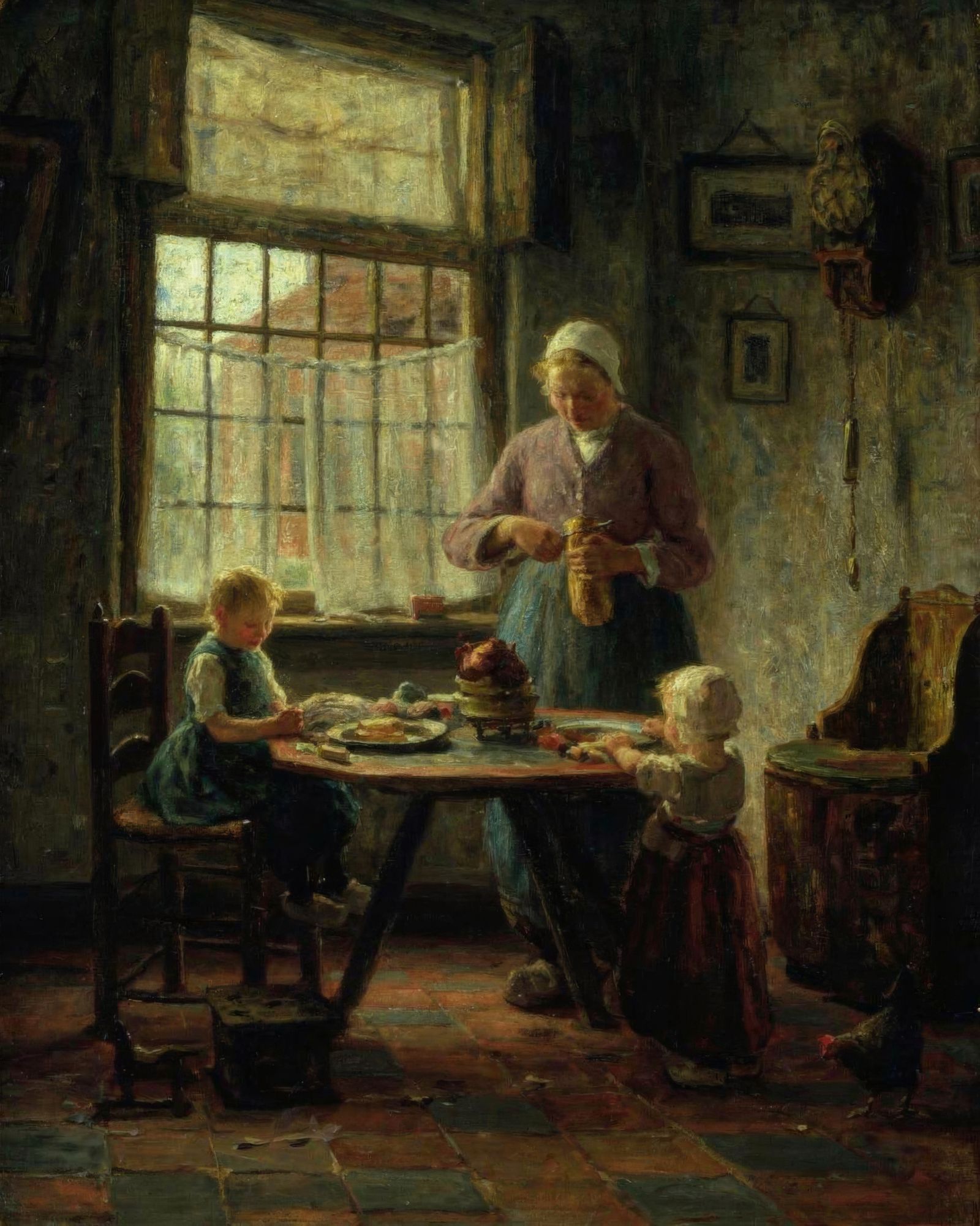
A Family Meal · Evert Pieters · 1890s (?) · Art Institute of Chicago
A photograph taken around a shared activity can represent a household more naturally than a line of people looking at the camera. Check that faces remain clear and nobody is hidden behind a hand or another person. The reference introduces a family subject; the actual creation page determines whether your chosen group photograph is suitable for the portrait you want to make.
Start a family portrait card · Explore this artwork
2. The children as they are this year
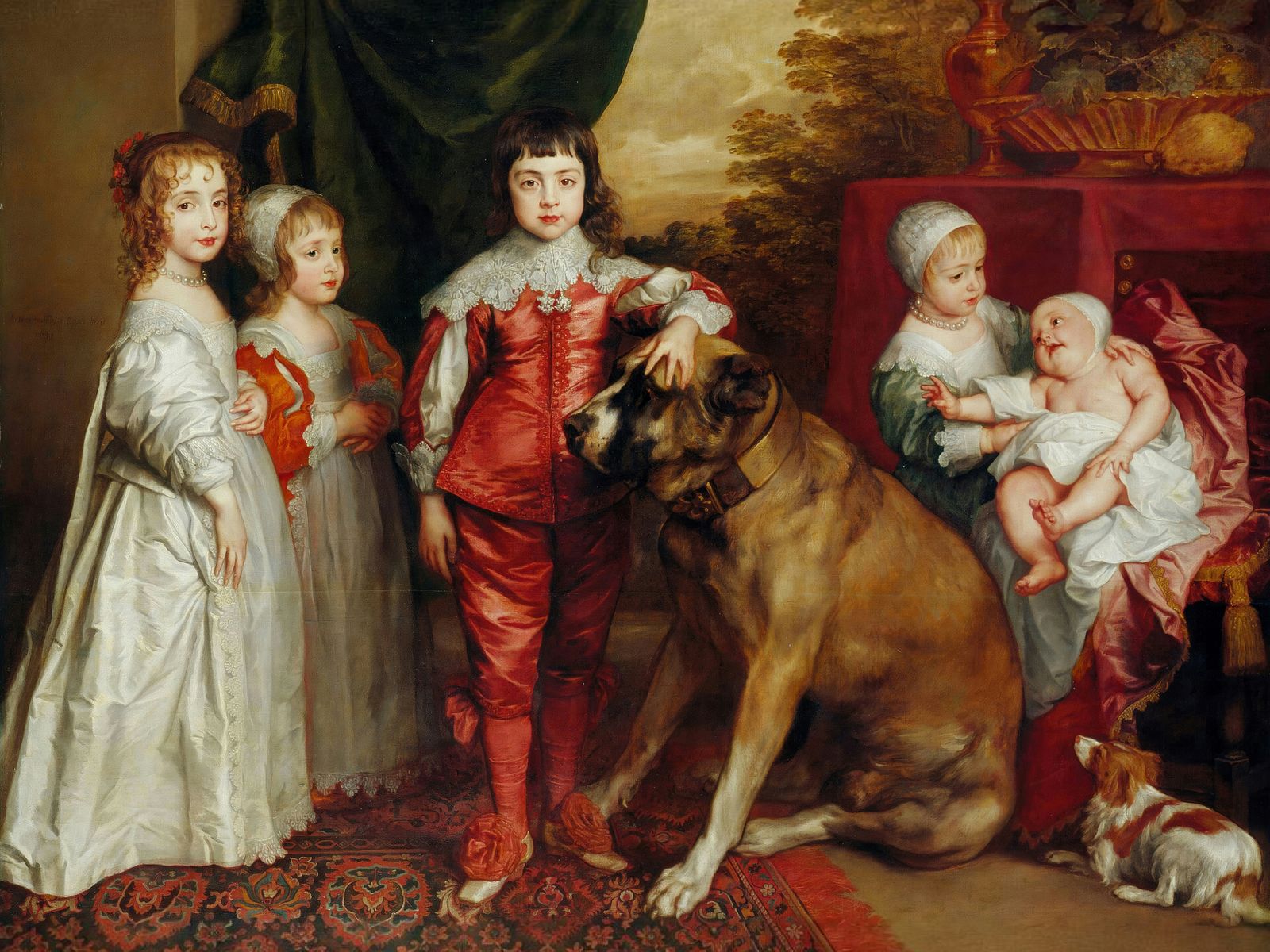
The Five Eldest Children of Charles I · Anthony van Dyck · 1637 · Royal Collection
A children’s portrait can make a Christmas card specific to a moment in family life. Choose the image with the children, where age and circumstances allow, and respect an older child’s preference about sharing their face. A clear source photograph and a brief greeting can say enough without adding a full account of everyone’s achievements to the front.
Create a children’s Christmas card · Explore this artwork
3. A parent and child together
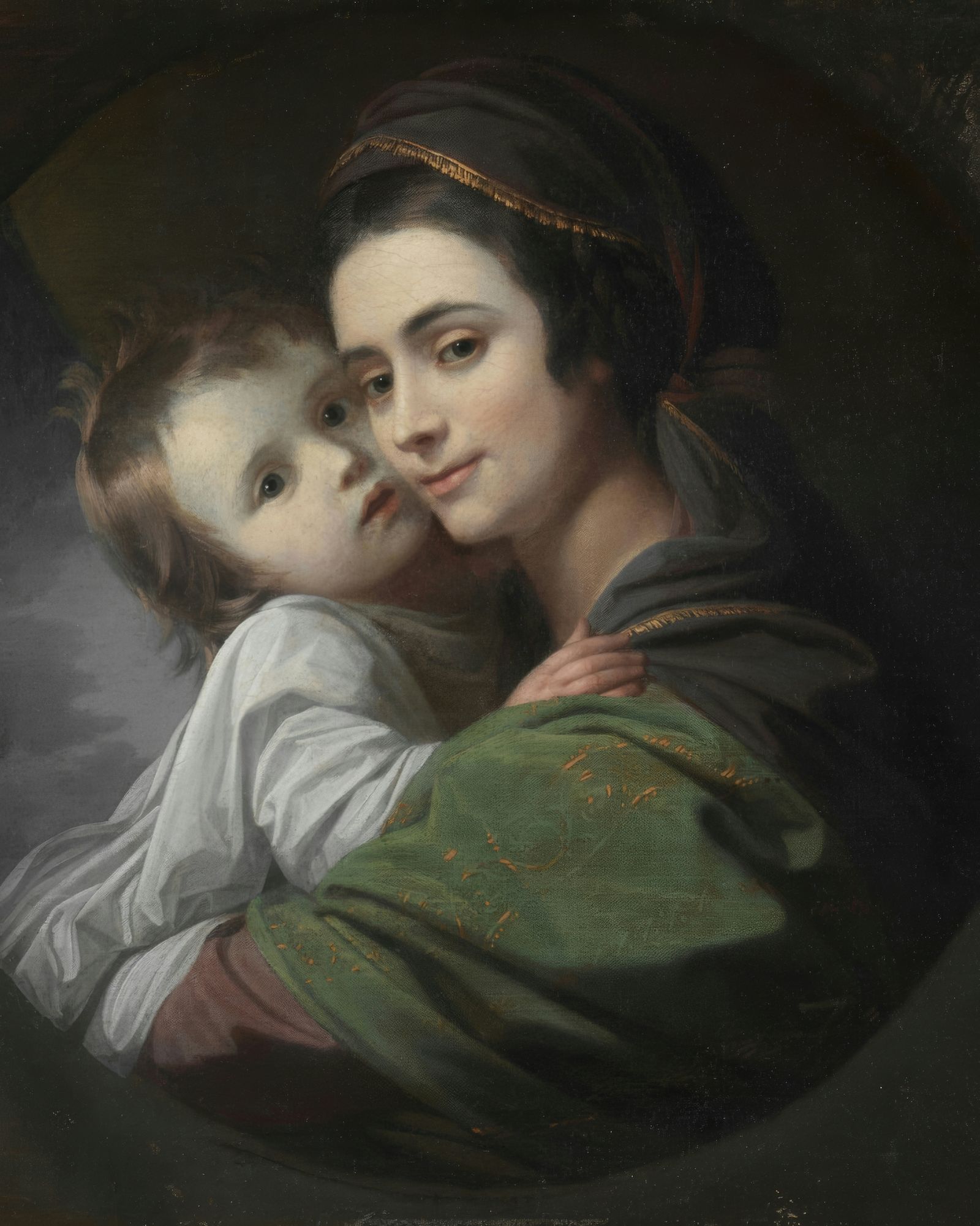
Elizabeth Shewell West and Her Son, Raphael · Benjamin West · c. 1770 · Cleveland Museum of Art
A family card need not contain a conventional whole-household group. A parent and child, a guardian and child or another meaningful pairing may be the right subject. Choose the photograph according to your actual family rather than a template. Make the sender names clear so the image does not have to explain every relationship on its own.
Explore portrait card creation · Explore this artwork
4. A household with the dog included
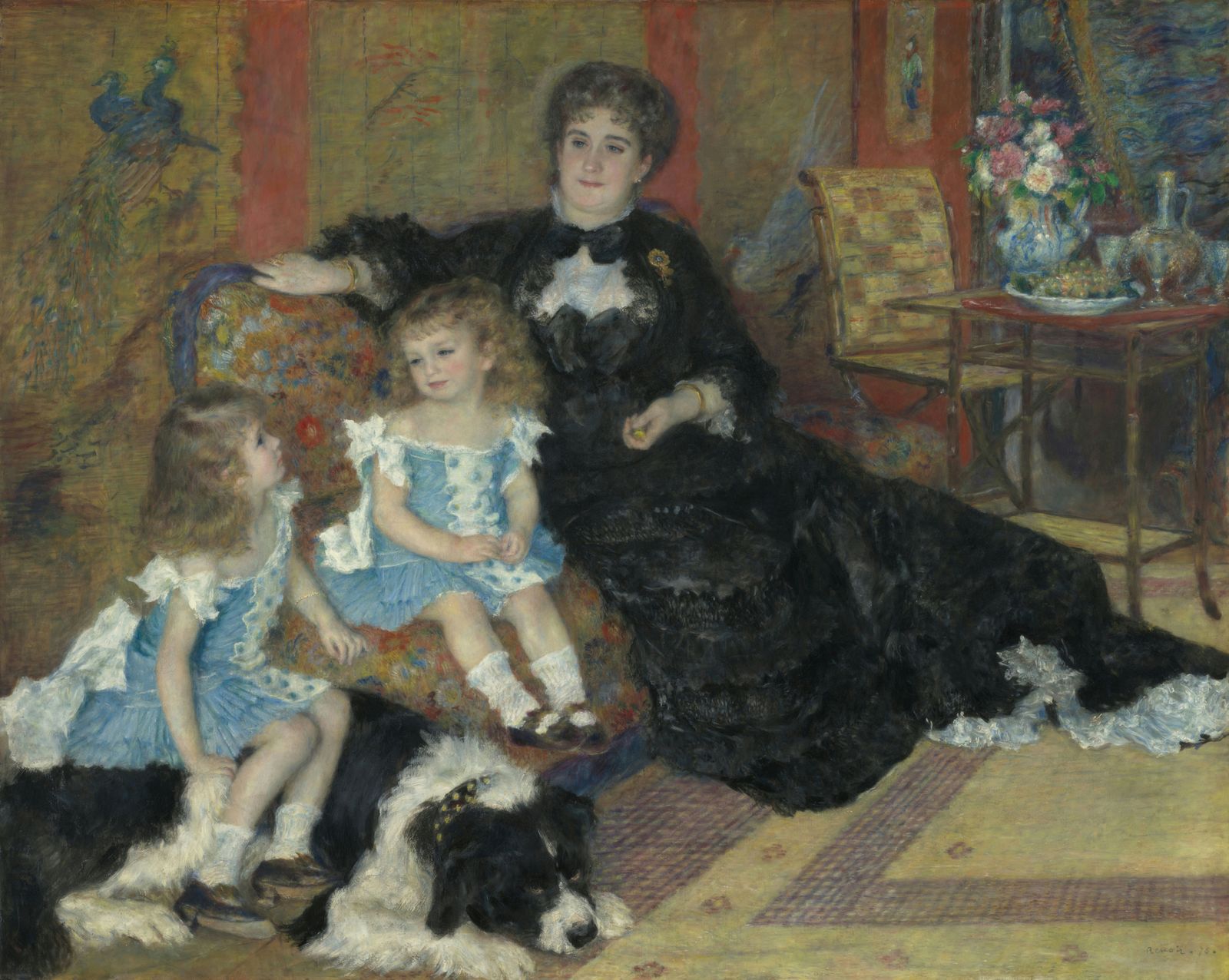
Madame Charpentier and Her Children · Auguste Renoir · 1878 · The Metropolitan Museum of Art
When the dog belongs in the family photograph, give it enough room and clarity to be recognisable. Do not assume a tiny animal in the corner of a large group will read well at card size. Review the source-image guidance and choose another photograph if needed. The animal should appear naturally, with its own proportions and familiar place in the group.
Make your household portrait card · Explore this artwork
5. A card for relatives who gather at Christmas
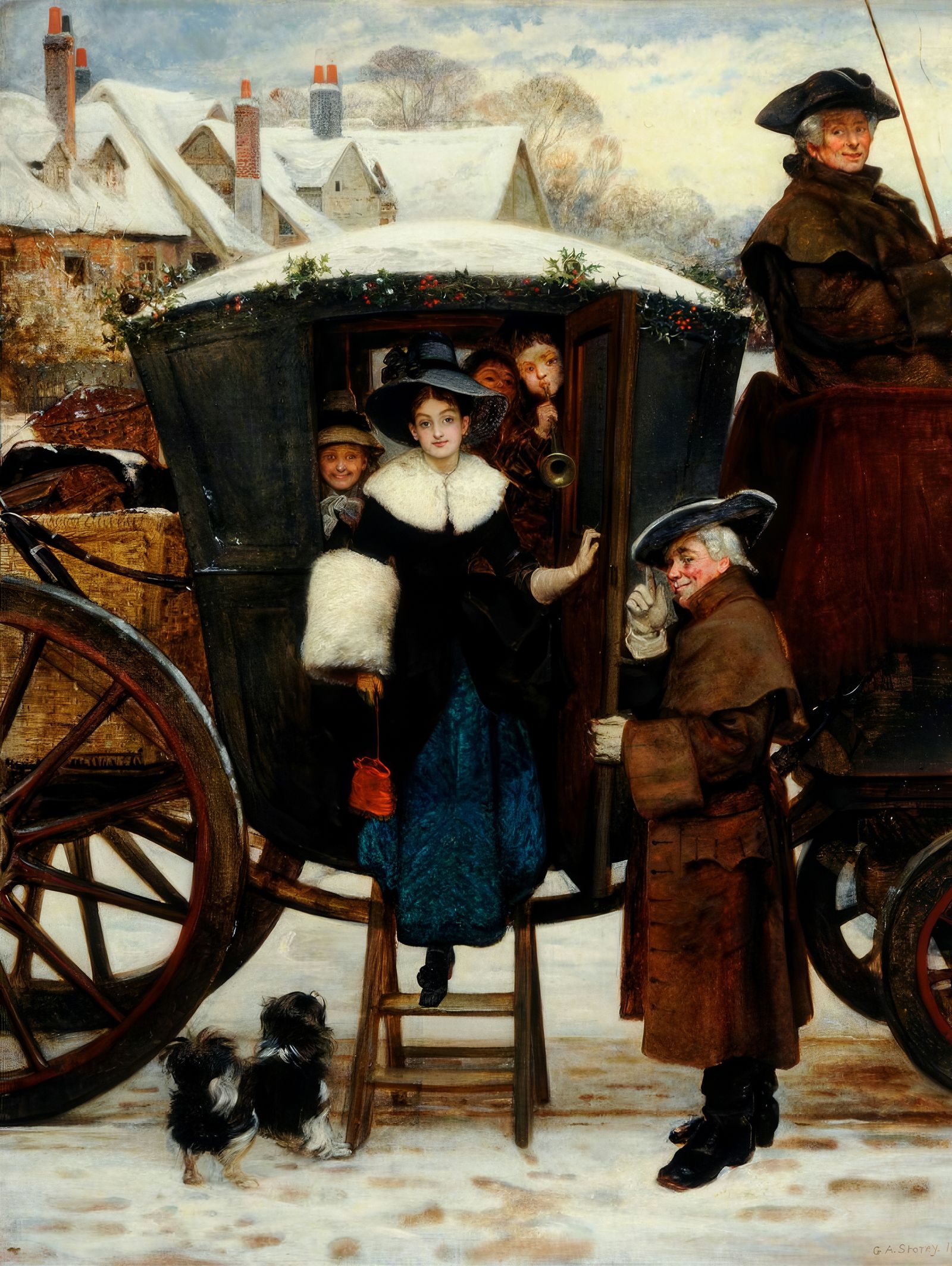
Grandmamma's Christmas Visitors · George Adolphus Storey · 1873 · Sheffield Museums (VIS.1432)
An intergenerational subject can suit a card sent between households that usually come together in December. Keep the actual photograph inclusive and check who should appear before arranging a new portrait. If the group is too large for one useful source image, reconsider the subject rather than allowing some people to become indistinct faces at the edge.
Choose your family card route · Explore this artwork
6. A musical or shared-interest memory
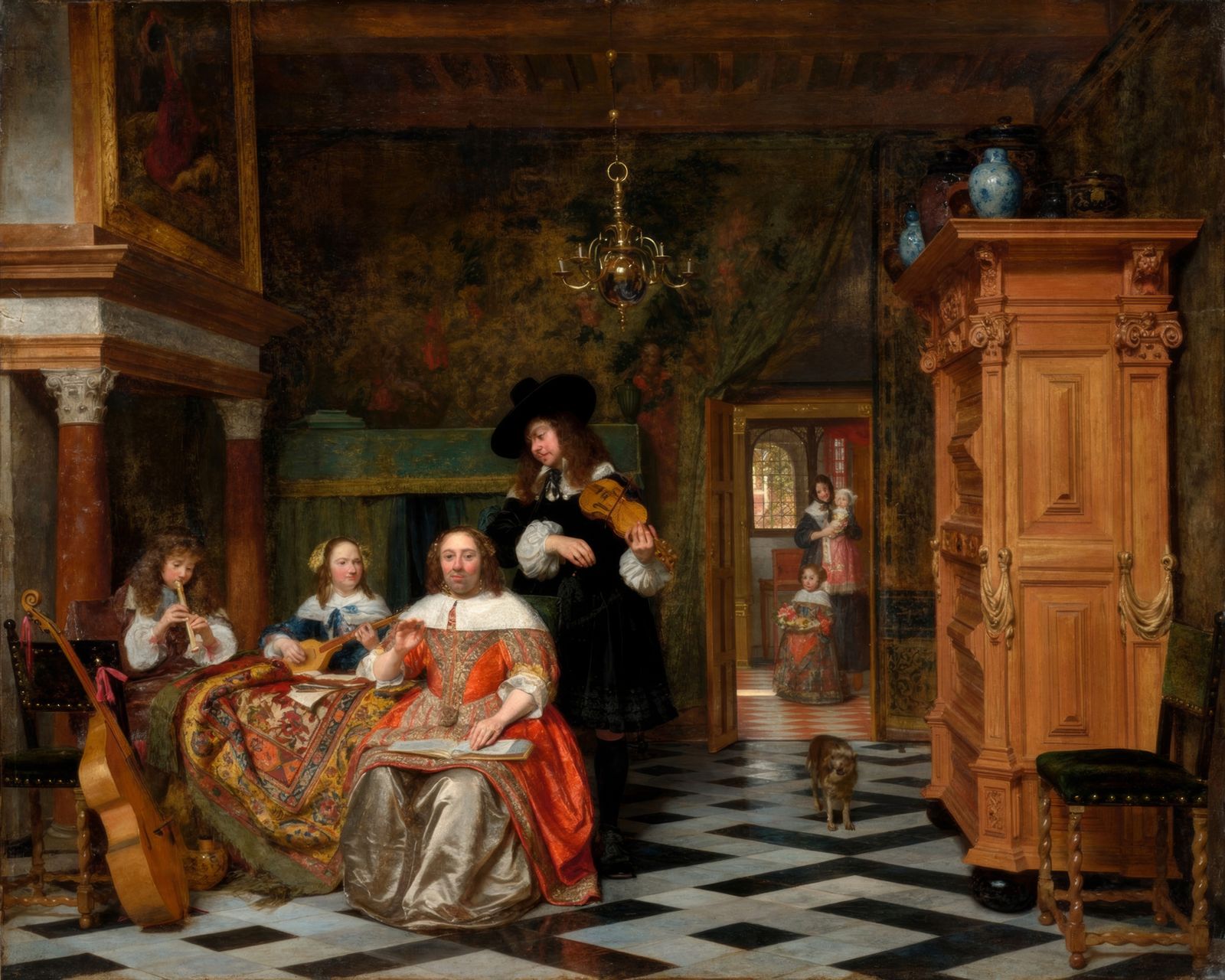
Portrait of a Family Playing Music · Pieter de Hooch · 1663 · Cleveland Museum of Art
A family activity gives the picture a reason beyond the occasion of sending it. Choose a photograph connected to something the household actually enjoys, whether music, reading or being outdoors. Do not try to recreate the historical scene literally. The useful lesson is to let a shared interest guide your subject, then follow the creation flow’s practical requirements.
Begin a personal family card · Explore this artwork
7. A quiet domestic moment
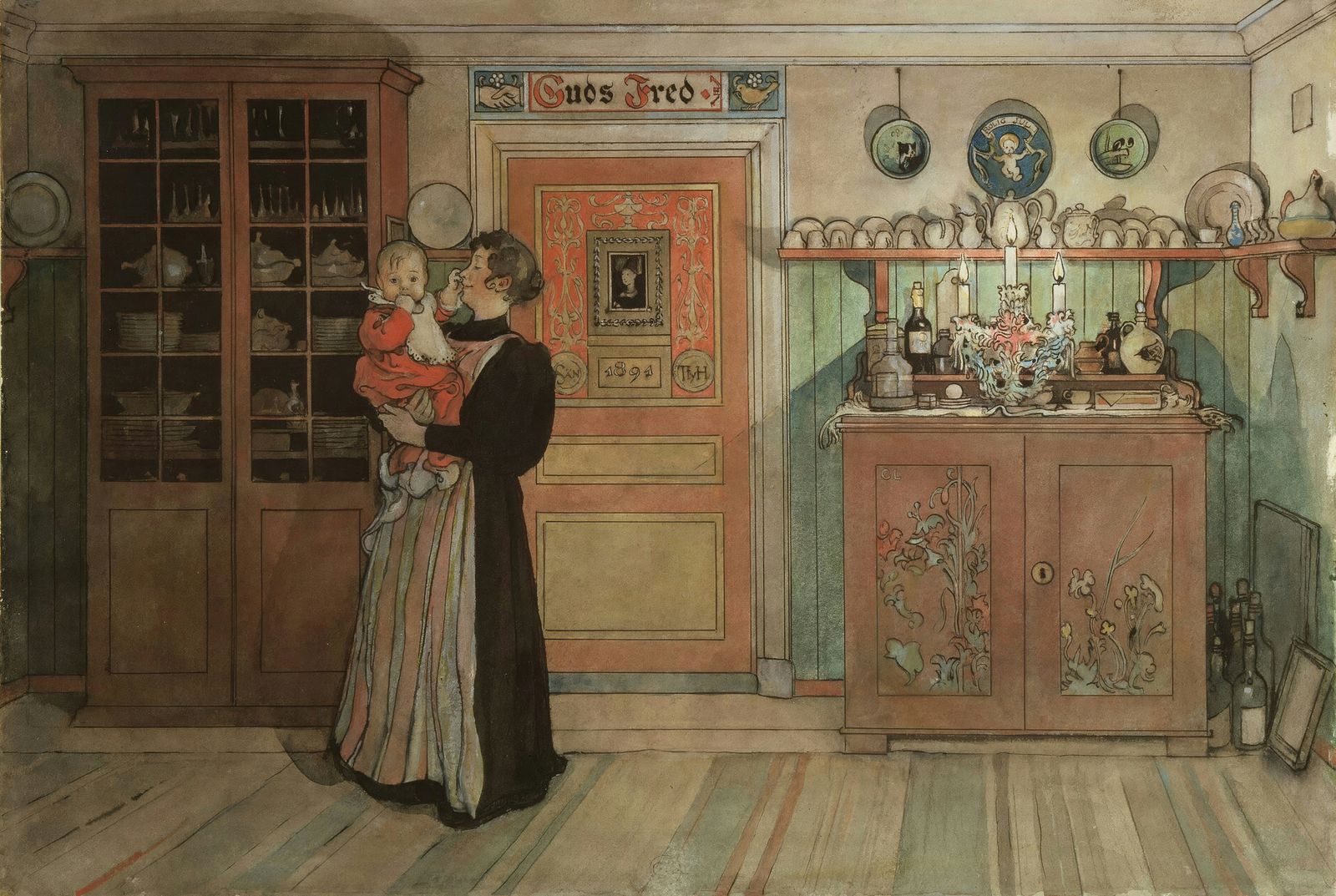
Between Christmas and New Year (A Home) · Carl Larsson · 1899 · Nationalmuseum, Stockholm
A less formal Christmas card may suit a family whose favourite memories happen between the celebrations. Choose an ordinary photograph with good clarity, and let the greeting supply the seasonal connection. This can be kinder than asking everyone to stage a perfect festive scene, especially in a year when time, energy or circumstances make elaborate preparations difficult.
Explore a quieter family card · Explore this artwork
8. A Christmas gathering with an unmistakable occasion
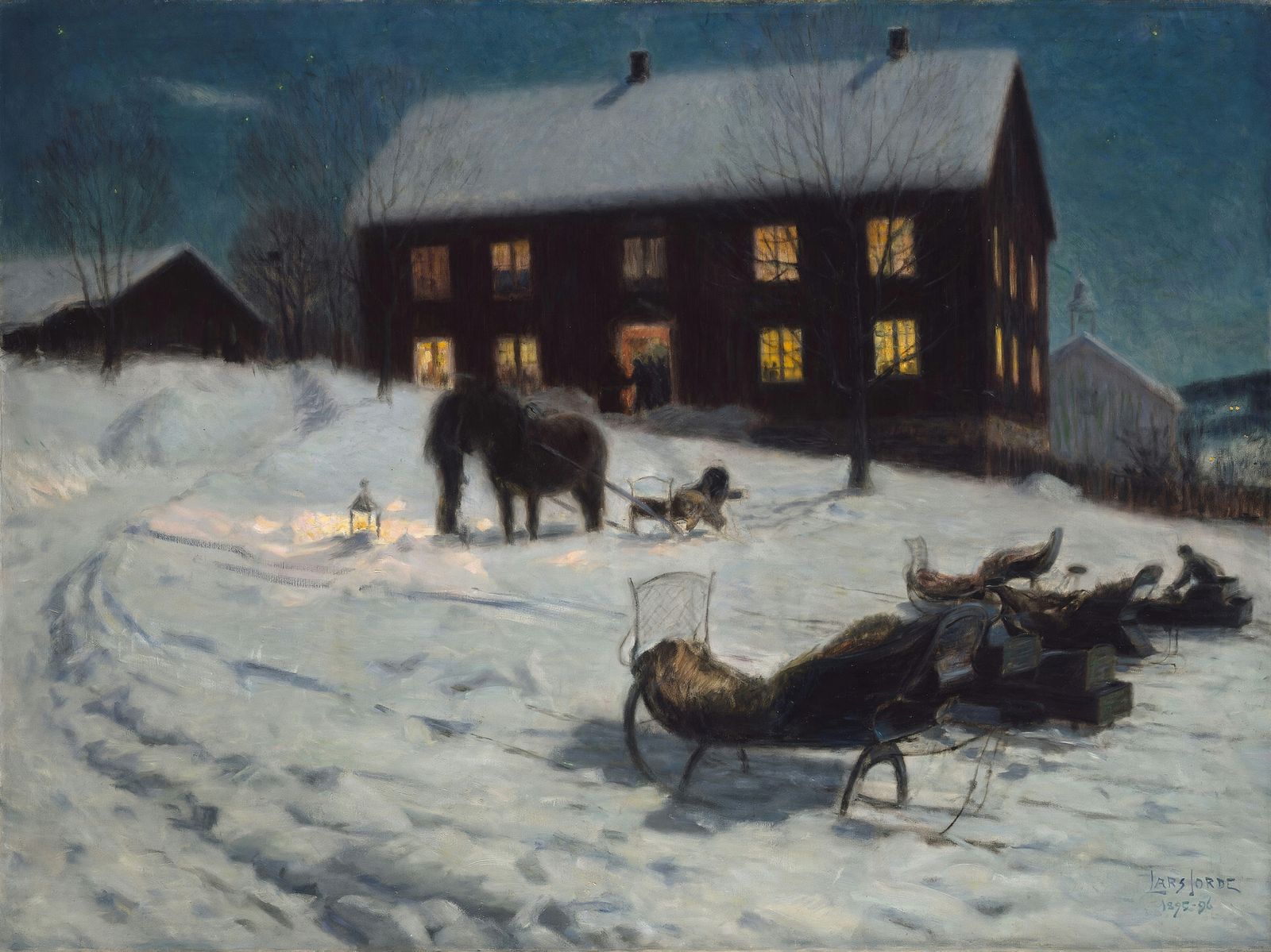
Christmas Party · Lars Jorde · 1895–96 · Nasjonalmuseet, Oslo (NG.M.00475)
A photograph from a previous Christmas can be useful if it remains a happy image for everyone represented. Check that it still feels appropriate and that no recipient will mistake it for a photograph taken this year. A short line giving context solves that easily. The card can celebrate continuity without presenting an old picture as a new event.
Create your gathering card · Explore this artwork
9. A picture of one household’s companionship
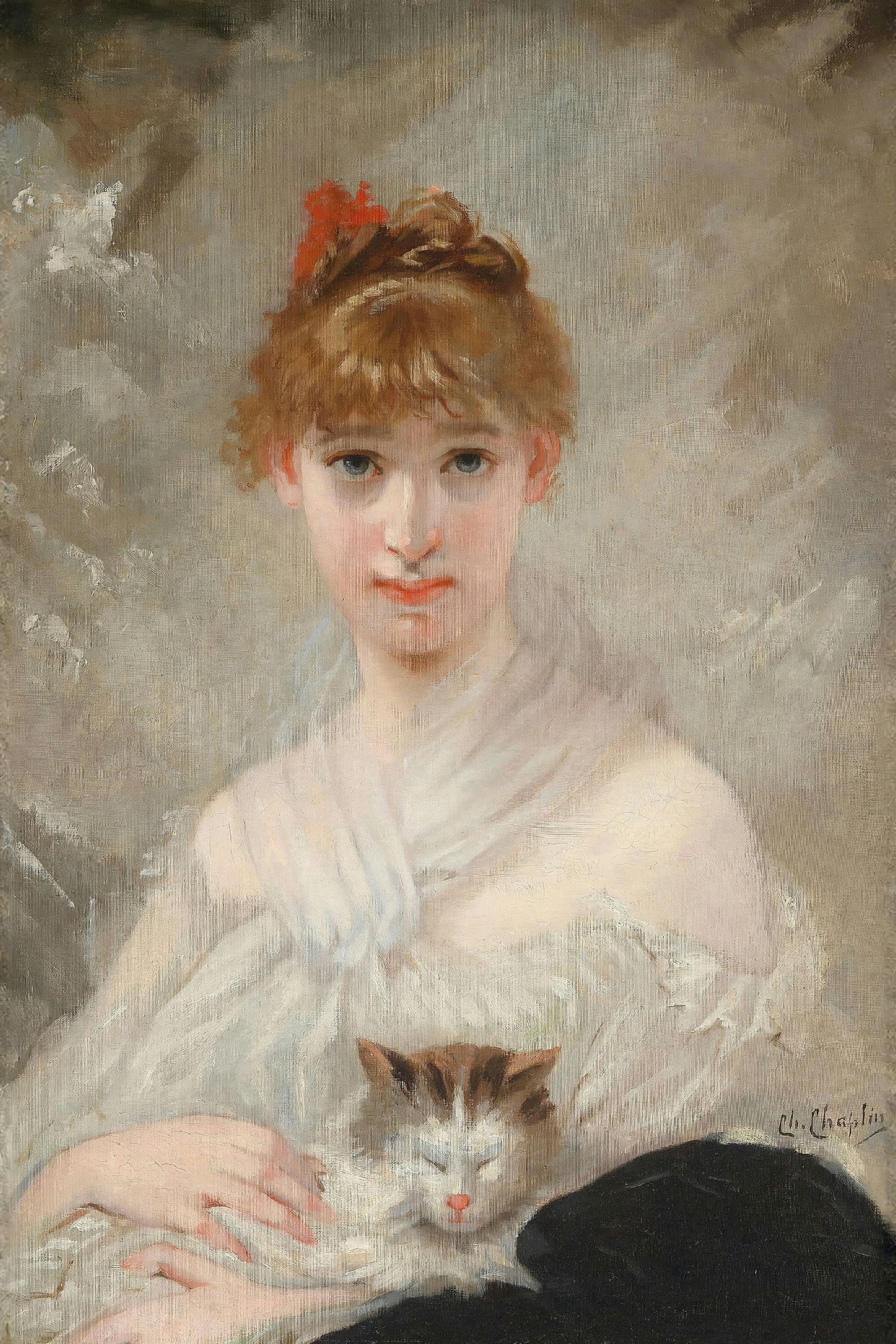
Girl with a White Shawl and a Cat · Charles Joshua Chaplin · 1891
For a small household, a person and pet may be the most honest family portrait. Choose a clear photograph showing both faces and avoid treating the animal as an accessory. The historical reference offers a relationship to consider, while the creation page establishes the actual source requirements. Keep the sender wording natural to the people and animals represented.
Start a person and pet card · Explore this artwork
10. An artwork when a family photograph is not the answer
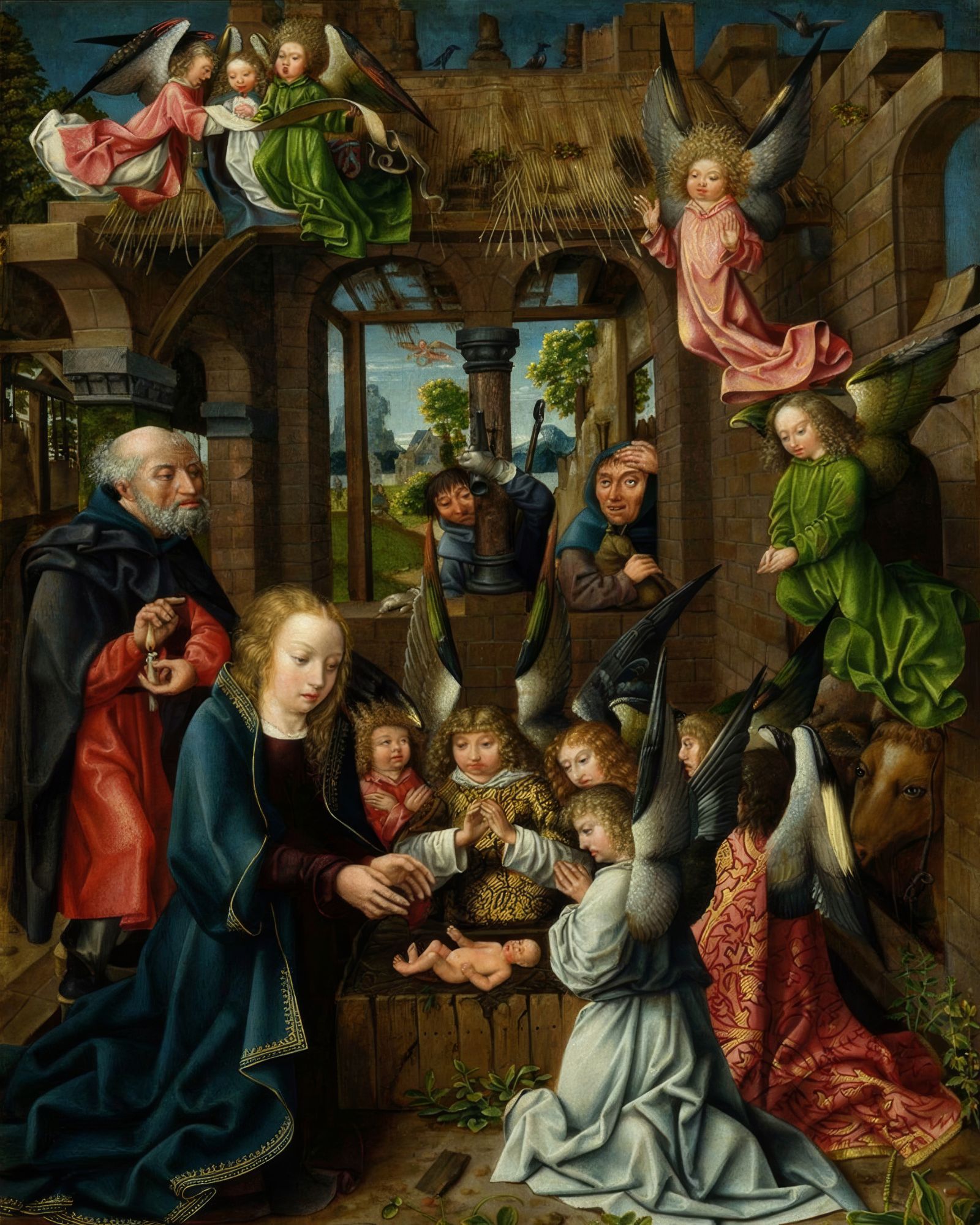
The Adoration of the Christ Child · Master of Frankfurt · possibly 1496–1502 · The Metropolitan Museum of Art
Sometimes the most comfortable family card uses an artwork instead of a personal photograph. Choose a sacred image only when it suits your recipients and your own greeting. The masterwork card gallery offers the current available choices. Your household names and a sentence written in your own voice can make an artwork card personal without requiring anyone to pose.
Choose a masterwork family card · Explore this artwork
Open the portrait card page when your family photograph is ready, or choose the masterwork gallery if an artwork suits the household better. Review the current layout, then check names, spelling and the image at a realistic size. You can send a warm Christmas greeting without manufacturing a perfect family performance. A picture everyone welcomes and words you would actually say are a strong place to begin.
Create your family Christmas card
- Does a family Christmas card need a Christmas photograph?
- No. A clear summer photograph or a favourite ordinary moment can work well when the wording establishes the season. Choose a picture everyone is comfortable sharing and follow the portrait flow’s current image guidance.
- Should we include our pet?
- Include the animal if it belongs naturally in the family story and is clearly visible in the source image. Check the creation guidance for mixed groups of people and animals. Keep pets naturally posed and avoid costumes or human roles.
- What if someone dislikes being photographed?
- Respect that preference. You can choose an artwork card, a house subject where supported or another image that does not require their face. The purpose is to send a greeting from the household, not to make everyone participate in a portrait they do not want.
- How much news belongs on the front?
- Usually a greeting and the sender names are enough. Put longer news in a separate note or the message area offered by the current format. Review the preview so the words do not crowd faces or reduce an important image to decoration.