A family portrait from your photos: three styles with room for everyone
Toddlers, grandparents and the dog: how Royal Autumn, Colonel Baby and Storm handle a household, and what Renoir got right in 1878.
A family portrait has more to solve than any other kind. Several faces of different ages have to share one light and one setting. Children rarely sit still, grandparents may live far away, and the dog has opinions. The best family portraits make all of that look effortless.
Painters were solving this long before anyone uploaded a photo. Below, a nineteenth-century example shows how one artist handled a mother, two children and a dog — followed by three current Fable styles that make room for a whole household, and how to prepare the photos.
A painting that solved it first
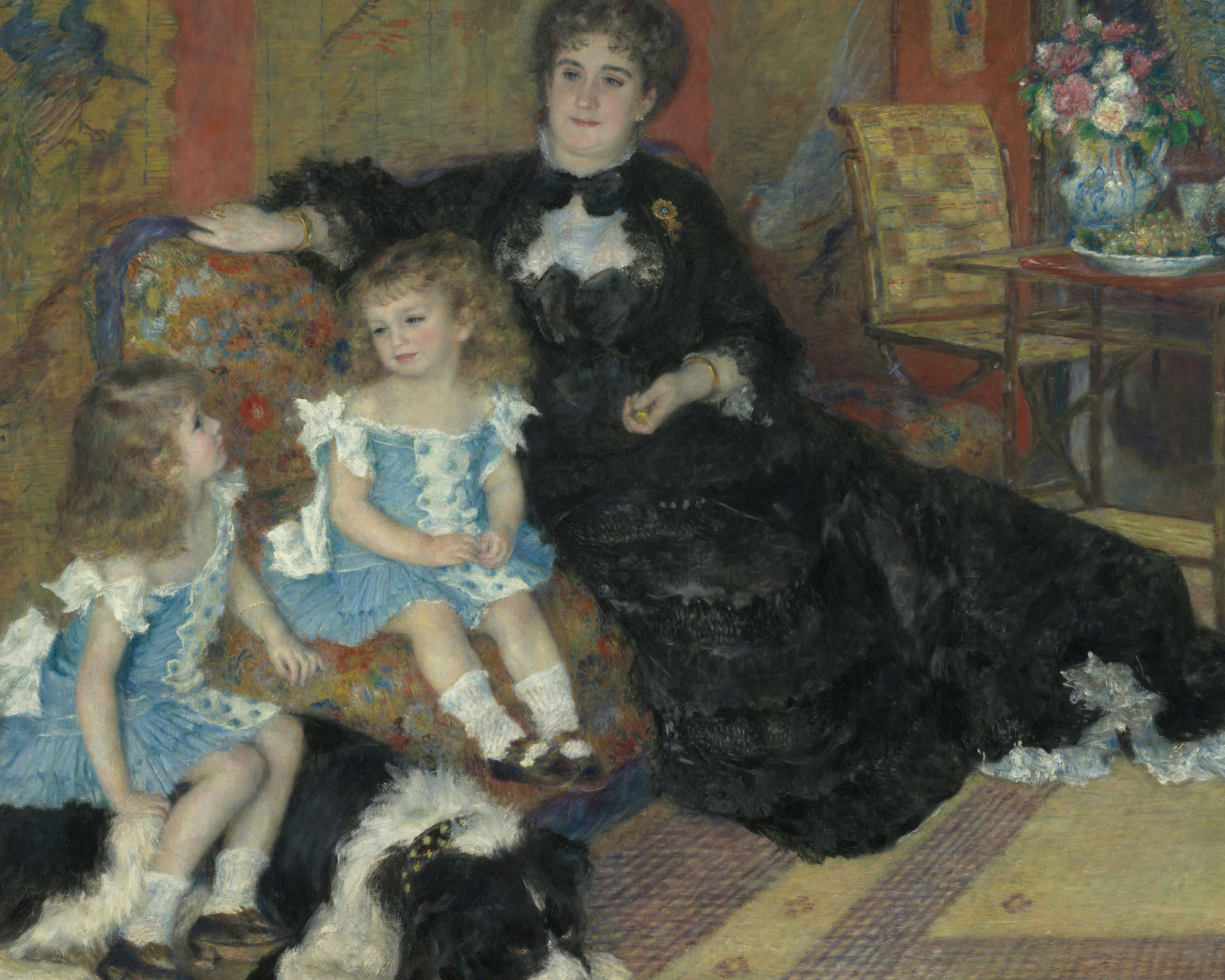
In Madame Charpentier and Her Children, painted in 1878, Auguste Renoir sets Madame Georges Charpentier in a fashionable Parisian drawing room with her two children, Georgette and Paul, dressed alike in delicate blue. The family dog lies on the floor, one child perched on its back. Rather than lining everyone up, Renoir lets the group settle naturally across the sofa, and the dog becomes part of the composition rather than an afterthought.
That is still the right ambition: one scene, everyone at ease in it. The painting itself is available as a fine-art print.
Royal Autumn: room for everyone, including the pets
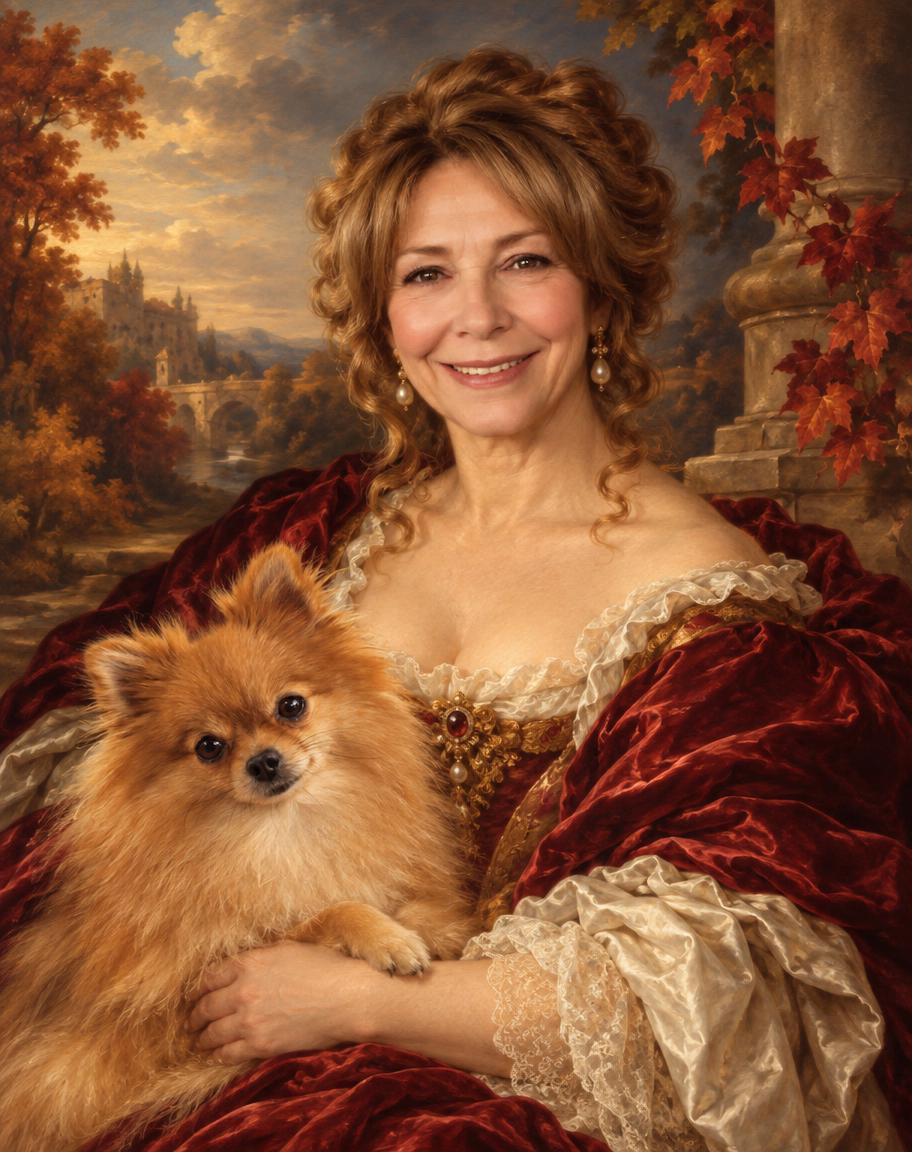
Royal Autumn places its sitters in a Rubens-inspired autumn landscape: crimson velvet and gold brocade, russet foliage and a late-afternoon sky above a river. Its style description says it works for a single sitter, a couple, a family or people with a pet, keeping each face and expression and each animal's breed and markings, while the clothing becomes period velvet, silk and lace.
The current example shows one sitter with her Pomeranian. If your household includes animals, this is the style to start with.
Colonel Baby: a ceremonial portrait, from toddlers up
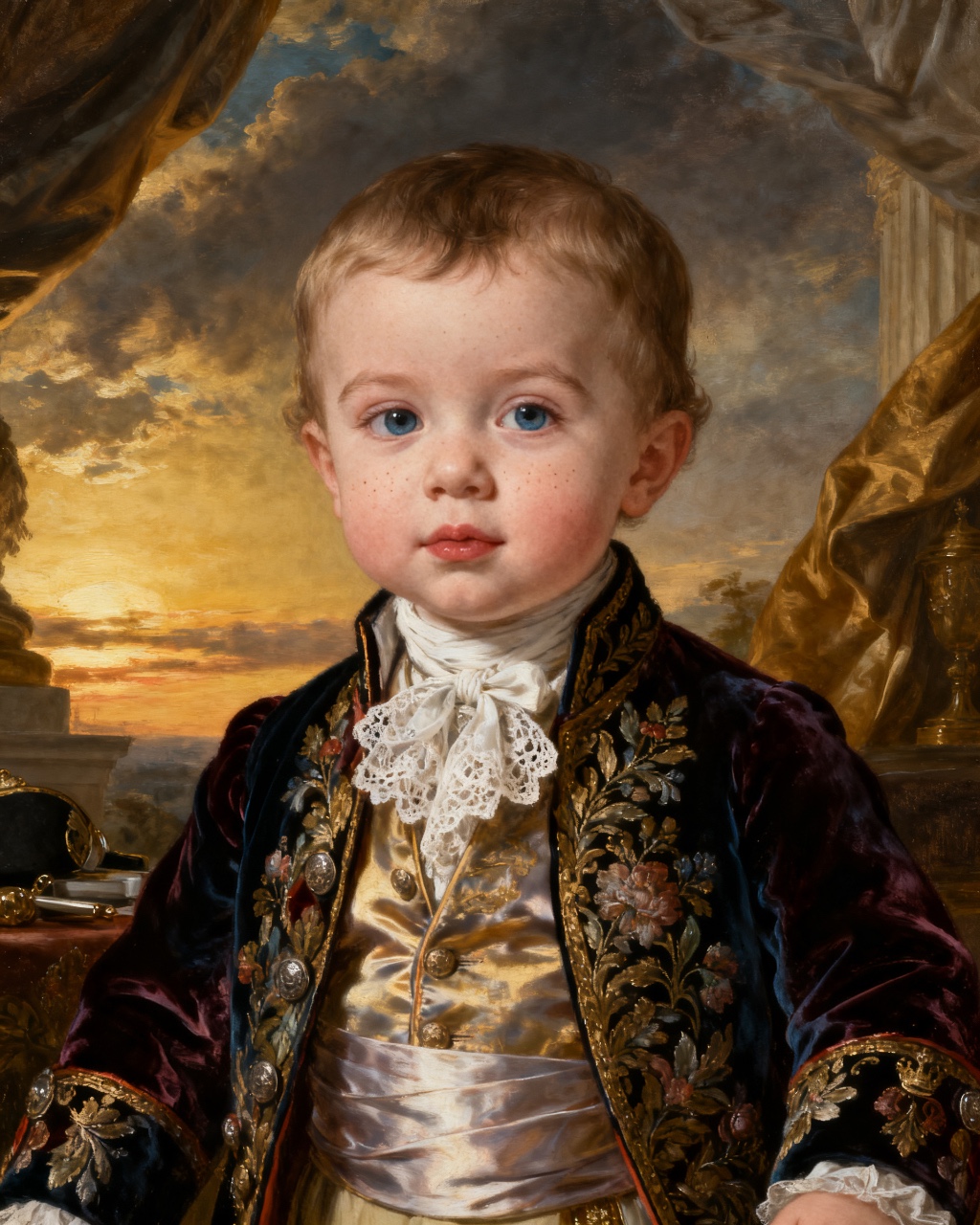
Colonel Baby works in the register of a Napoleonic-era state portrait: upright, composed figures in Romantic-era dress against rich drapery or open sky, with one unified light across the scene. The current example is a toddler, and it shows how well the formality suits a child — the embroidered jacket and lace cravat are grand, but the face is entirely a small child's.
The style description says it works for a solo figure, a couple or a wider group, and that with three or more people the frame opens up so every face keeps its place. That makes it a good fit for a portrait of all the grandchildren, or for parents who want something grander than a photo above the dining table.
Storm: drama and a dog
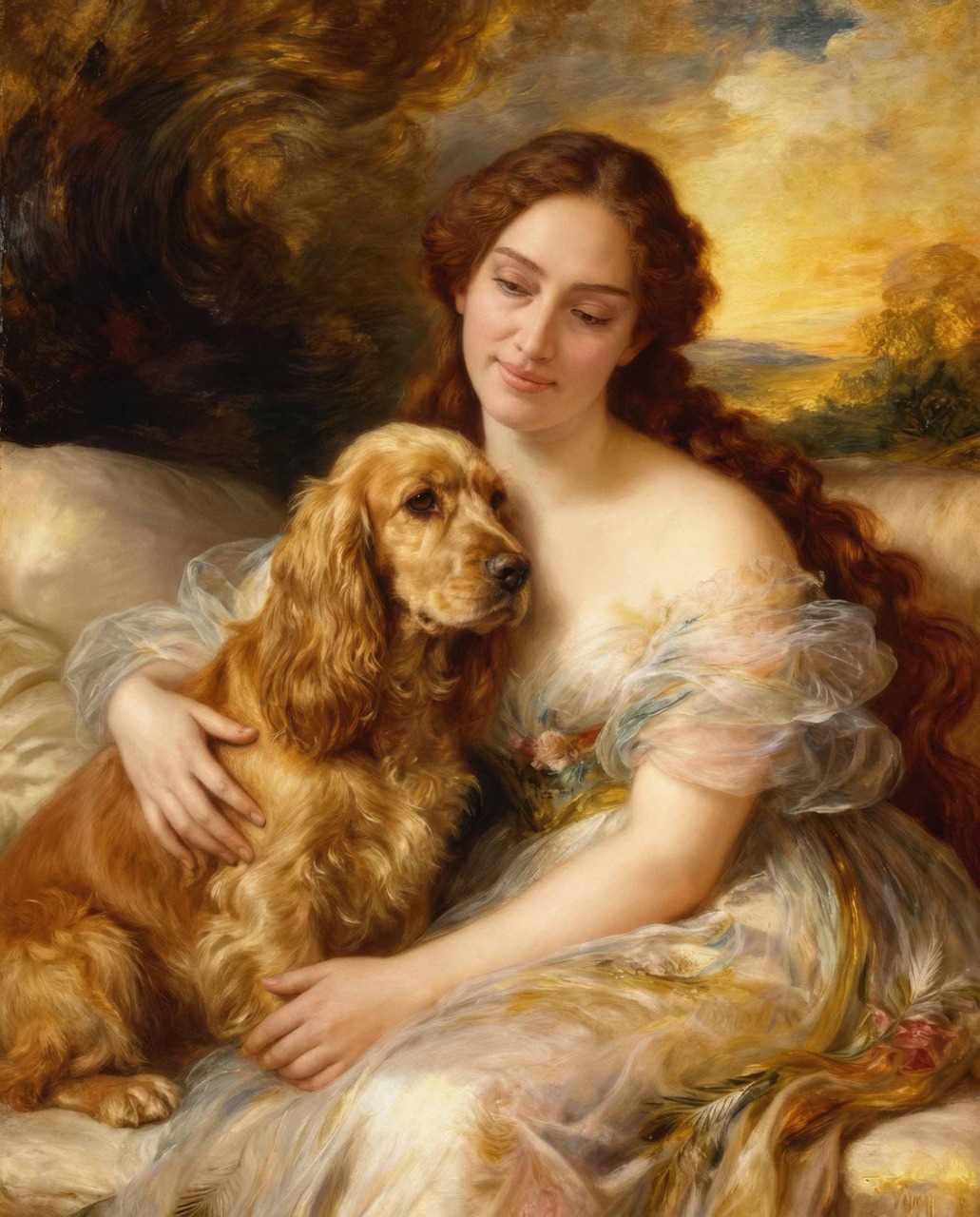
Storm sets its subjects in a moody, Romantic-era landscape where a brewing storm meets warm light, with fluid, expressive brushwork and a smooth, porcelain-like finish on the faces. The current example pairs a woman with her cocker spaniel, and the closeness between them is the point of the picture.
Choose Storm when the family portrait is really about a bond — a parent and child, or a person and a much-loved dog — and you want atmosphere rather than ceremony.
How the three compare
| Your household | Start with | | --- | --- | | People and pets, warm colours | Royal Autumn | | Young children, or a large formal group | Colonel Baby | | Two people (or a person and a dog) and a dramatic sky | Storm |
These are editorial starting points based on the current examples and style descriptions. Look at each style page before deciding.
Getting the photos right
Family portraits are only as good as the faces you give them. A few habits help:
- One clear photo per person is often better than one group photo. Faces in large group shots are small, and someone is always blinking.
- Light from the front or side, no sunglasses, nothing covering the eyes.
- For pets, a photo where the coat, markings and eyes are clearly visible.
- For children, a recent picture — they change quickly.
Our family portrait photo guide goes into more detail on group photos.
Check every face in the preview
Fable produces digitally rendered portrait artwork and shows you a preview before purchase. With a family portrait, check each person separately: count the people (and animals), then look at eyes, smiles, hairlines and the pet's markings. Use the likeness checklist if it helps.
When everyone looks like themselves, choose a format: digital, print or canvas, with sizes in the print size guide and current prices on the pricing page.