Gifts for wife: ten ways to begin with her taste
Ten paintings suggest gifts for a wife who likes books, gardens, colour or quiet company, with room for her own choice.
The best starting point for gifts for wife is something she already chooses for herself: a kind of picture, a place, a book, a colour she wears repeatedly. A portrait or art gift becomes more personal when that preference leads the decision. It need not announce what a wife is supposed to enjoy.
These ten paintings offer distinct starting points, from Morisot's garden to a reader absorbed in a book. They are pictures to discuss, not a personality test and not promises that Fable will reproduce every scene in a new portrait. Notice which work she would pause beside in a gallery. That answer can guide a choice of art, a photograph for a portrait or a gift you choose together.
1. For someone who likes the garden left a little wild
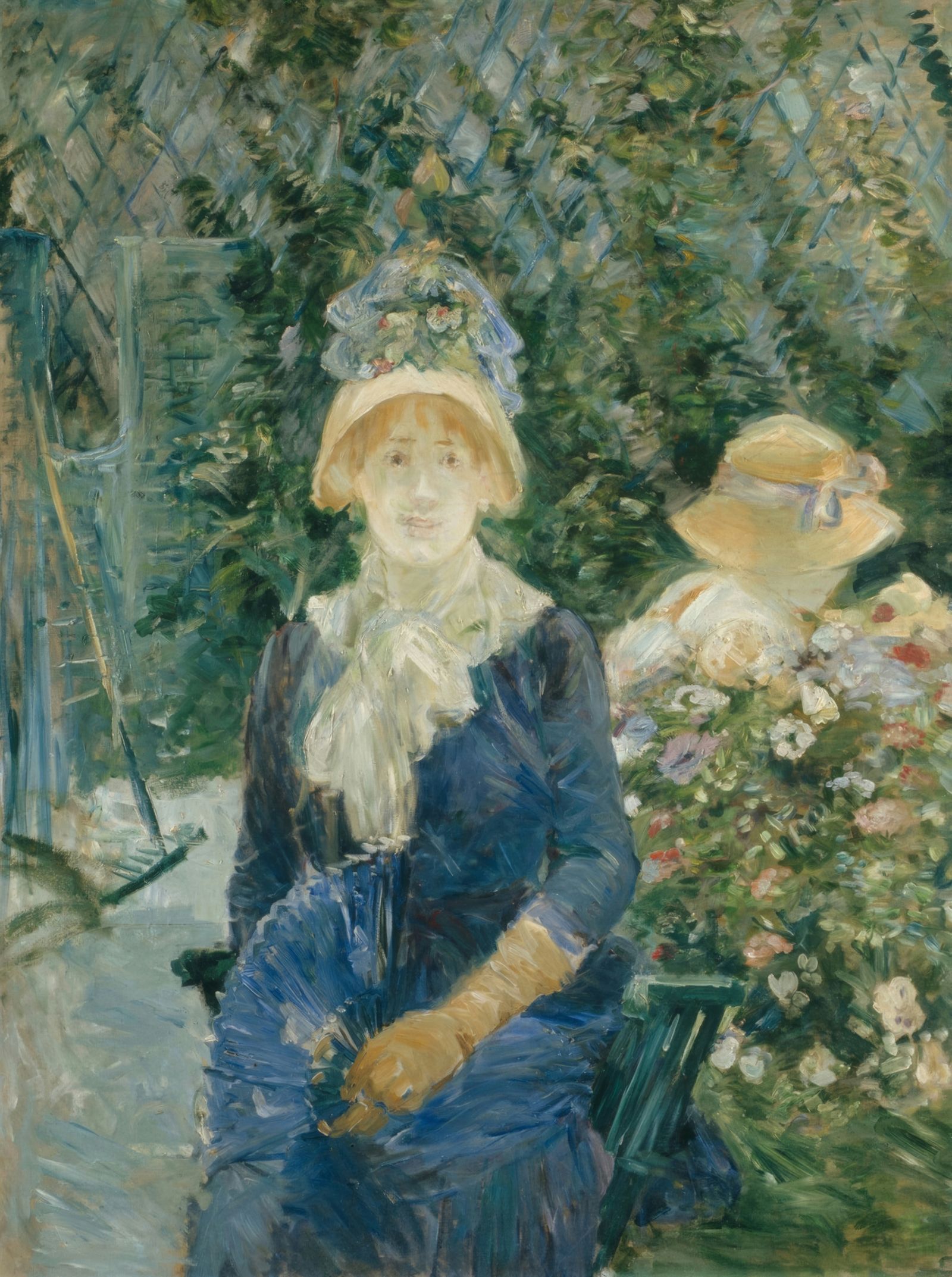
Woman in a Garden · Berthe Morisot · 1882–83 · Art Institute of Chicago. Prepared for print by Surrealium at Vaxholm Fortress, Sweden.
Morisot's Woman in a Garden gives the plants room to spread around the seated figure, making the setting feel inhabited rather than arranged for an occasion. It is a useful reference for a wife whose favourite photographs come from a garden or an ordinary walk. Choose the picture because the setting belongs to her experience, not because flowers are a default gift for women.
2. For a reader who wants time with the book
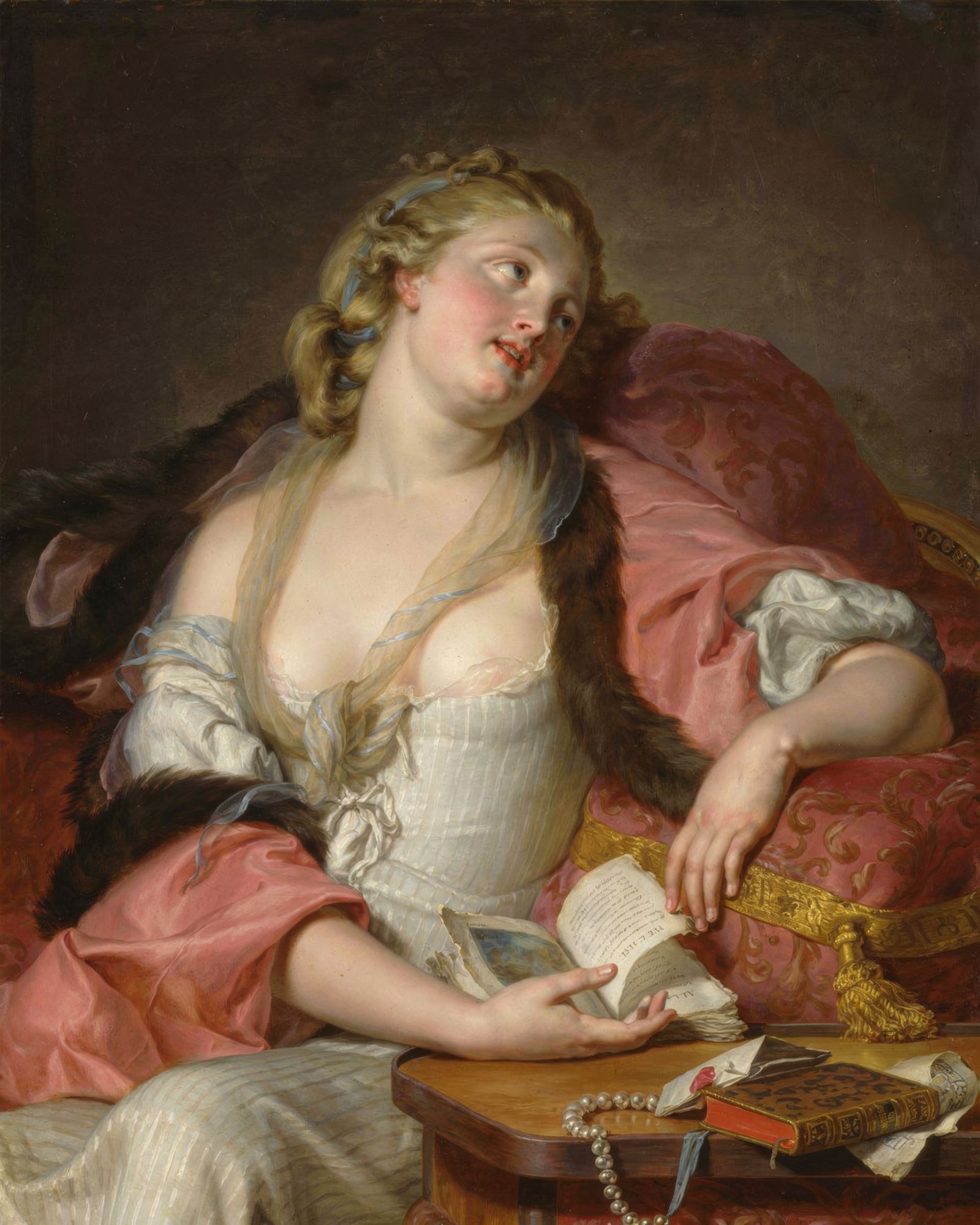
Lady Reading the Letters of Heloise and Abelard · Bernard d'Agesci · c. 1780 · Art Institute of Chicago. Restored by Surrealium at Vaxholm Fortress, Sweden.
Bernard d'Agesci's reader holds an open volume while turning her attention beyond it, with the hands and pages forming part of the portrait. A book can be a meaningful detail when it connects with something she actually reads. If you are choosing a source photograph, retain the natural gesture of reading rather than asking her to pose with a prestigious title she would never pick up.
3. For a taste for thoughtful portraits
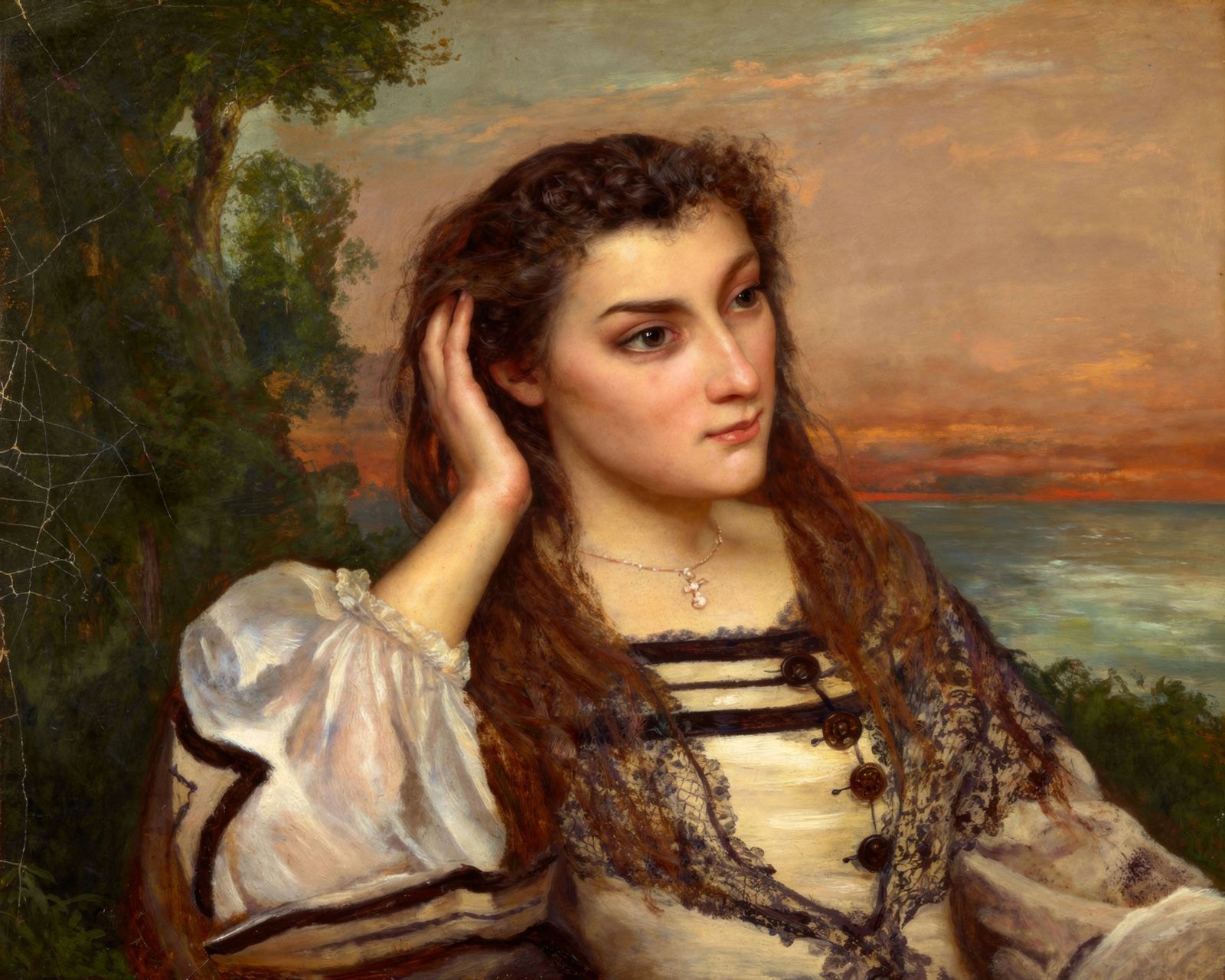
Rêverie (Portrait of Gabrielle Borreau) · Gustave Courbet · 1862 · Art Institute of Chicago. Restored by Surrealium at Vaxholm Fortress, Sweden.
Courbet's Reverie lets the sitter's expression carry the picture without requiring a large setting or a dramatic action. This offers a quieter starting point for someone who prefers a face and a restrained palette to an elaborate scene. A familiar, unforced expression in a photograph may matter more than perfect occasion clothes, especially if she usually dislikes being photographed formally.
4. For the person who collects pictures
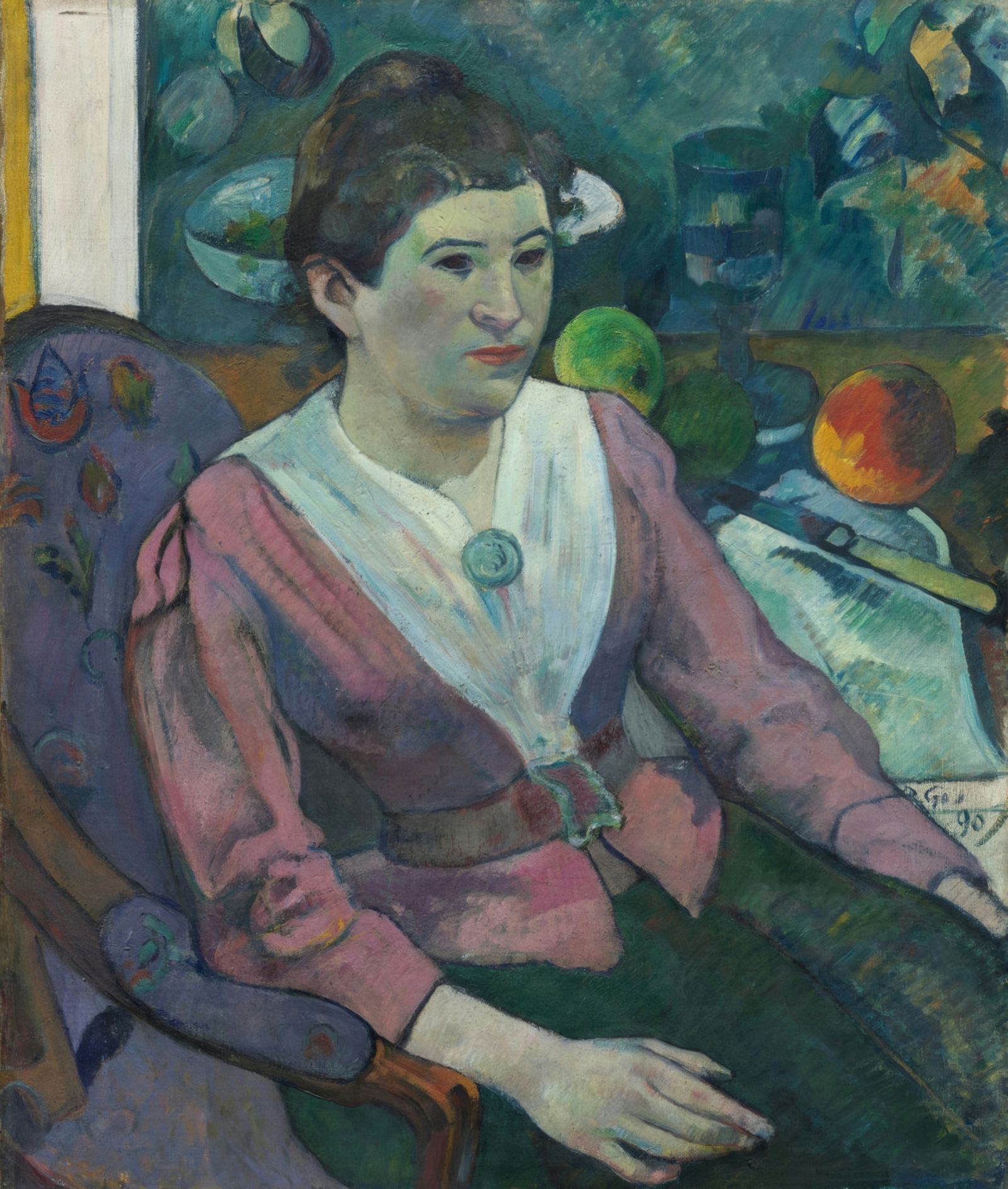
Woman in Front of a Still Life by Cezanne · Paul Gauguin · 1890 · Art Institute of Chicago. Restored by Surrealium at Vaxholm Fortress, Sweden.
Gauguin's Woman in Front of a Still Life by Cézanne makes another artwork part of the sitter's surroundings. It suggests a gift conversation about the pictures she already keeps, rather than an attempt to match a new object to a generic interior. Ask whether the new work should sit comfortably with those favourites or introduce a different colour, scale or kind of subject.
5. For someone drawn to a direct gaze
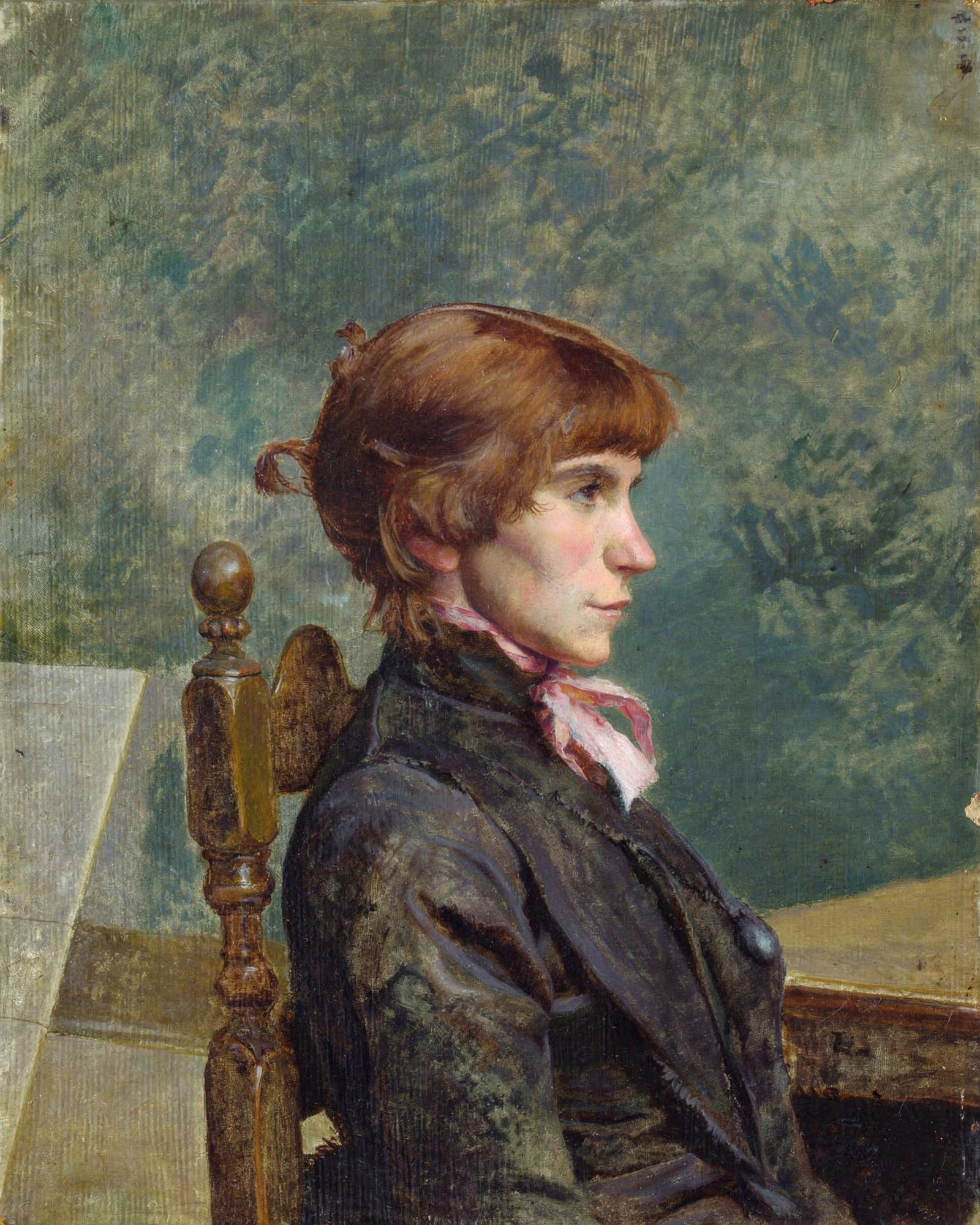
Portrait of Jeanne Wenz · Henri de Toulouse-Lautrec · 1886 · Art Institute of Chicago. Restored by Surrealium at Vaxholm Fortress, Sweden.
Toulouse-Lautrec's Jeanne Wenz appears in profile, her face held clearly against a quiet background. The simple framing of the head and shoulders shows how much a portrait can do without an elaborate narrative. If that directness suits her taste, choose a photograph with the expression she recognises as her own, and resist smoothing every distinctive feature into a more anonymous version of beauty.
6. For a love of the coast
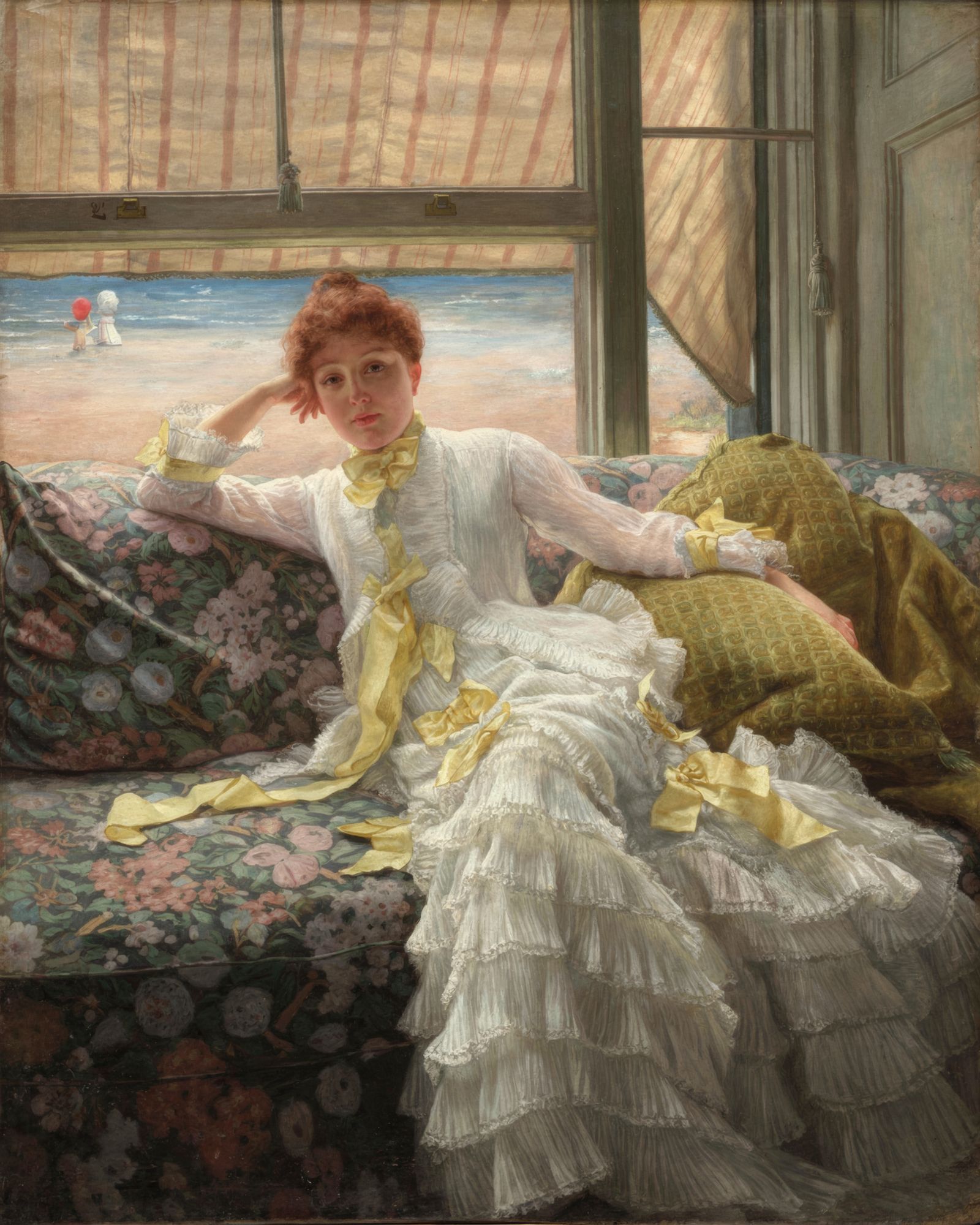
Seaside (July: Specimen of a Portrait) · James Tissot · 1878 · The Cleveland Museum of Art. Restored by Surrealium at Vaxholm Fortress, Sweden.
Tissot's Seaside holds the seated woman against patterned cushions and a bright view through the window, giving the setting a strong visual rhythm. The appeal may be the seaside association, the stripes or the poised arrangement rather than the costume. A coastal photograph can supply its own personal history; keep the actual place in mind before choosing a style simply because its blue and white colours seem summery.
7. For a shared walk
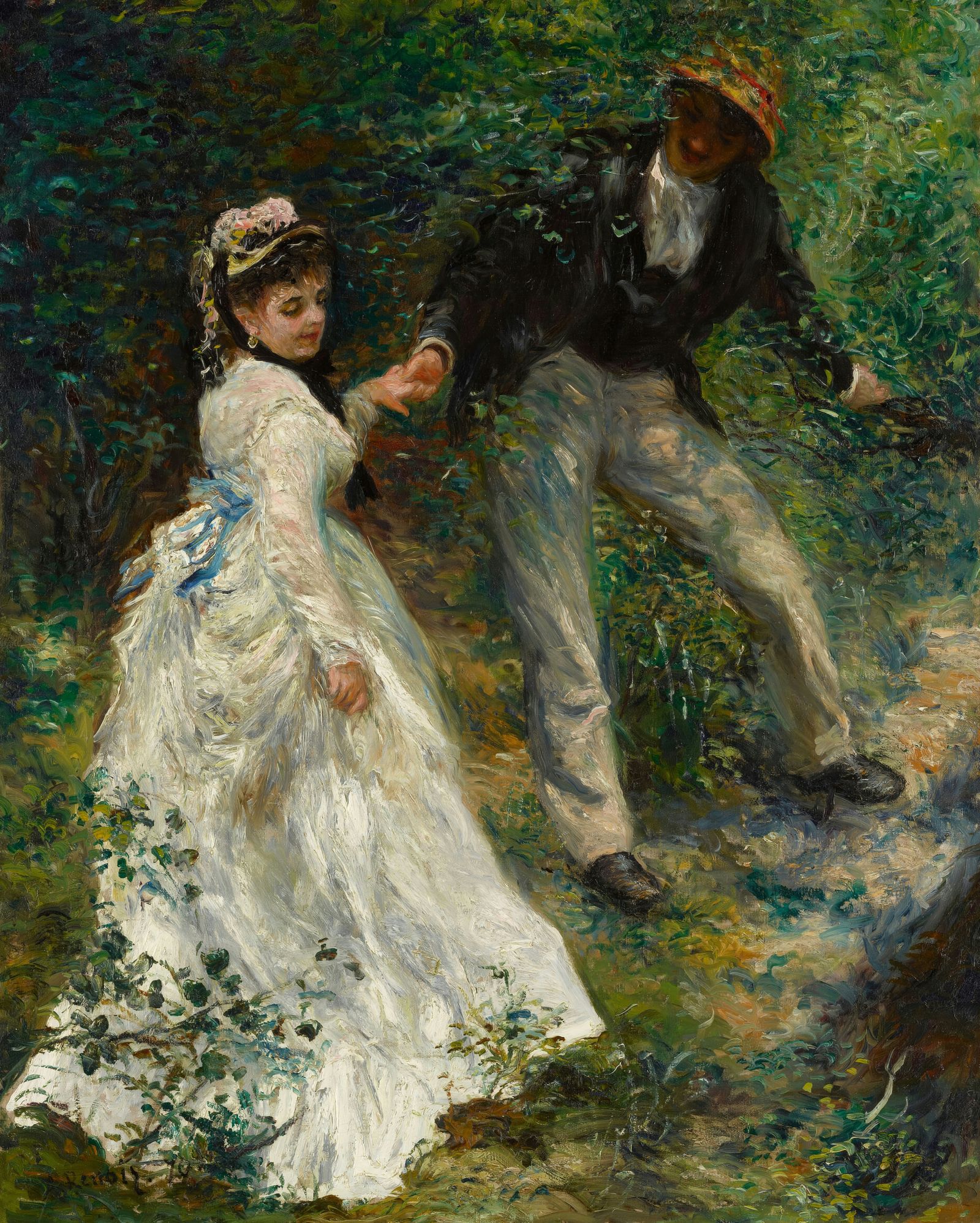
La Promenade · Pierre-Auguste Renoir · 1870 · J. Paul Getty Museum, Los Angeles. Prepared for print by Surrealium at Vaxholm Fortress, Sweden.
Renoir's La Promenade links two people through a hand and a movement across the leafy setting. The gesture is more useful as a reference than a demand to copy the clothing or the precise pose. A photograph from a walk can carry the same sense of being together, particularly when both people look comfortable and neither has disappeared behind the other.
8. For a taste for playful romance
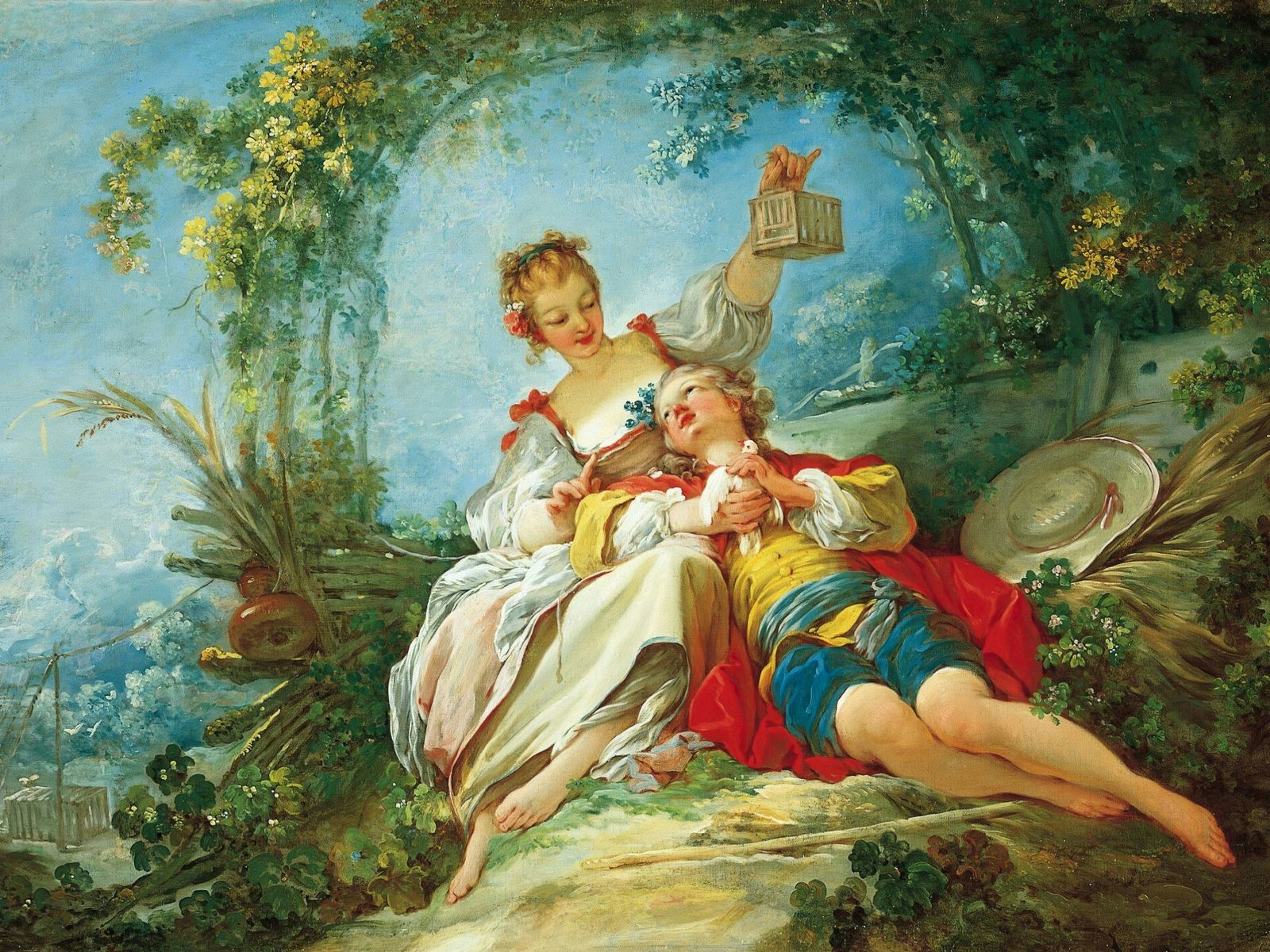
The Happy Lovers · Jean-Honoré Fragonard · c. 1760–65 · Norton Simon Museum. Prepared for print by Surrealium at Vaxholm Fortress, Sweden.
Fragonard's The Happy Lovers makes intimacy light and animated, with the surrounding greenery softening the scene. It can appeal to someone who enjoys decorative pictures without wanting a solemn anniversary statement. Check that the playfulness is part of her taste; a portrait gift should not turn a private relationship into a public performance merely because a historic picture makes it look charming.
9. For a strong note of colour
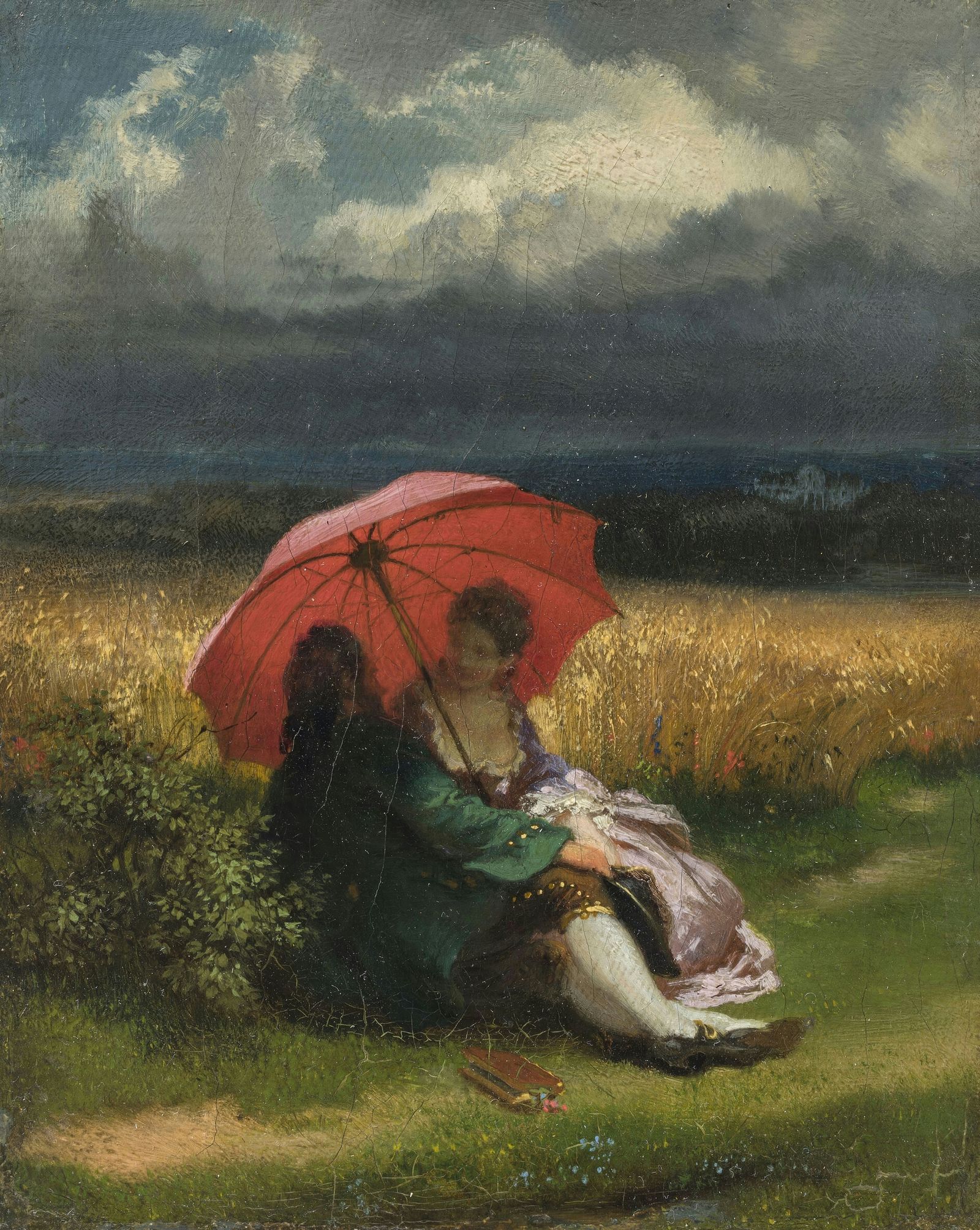
In the Summer (The Red Parasol) · Josef Mánes · 1855 · National Gallery Prague. Prepared for print by Surrealium at Vaxholm Fortress, Sweden.
Josef Mánes's red parasol cuts through the greenery, giving a small part of the picture unusual force. This is a useful model for a wife who enjoys one confident colour rather than a whole palette of competing accents. In a portrait photograph, an actual scarf, coat or object can provide that focus more personally than adding an arbitrary bright accessory after the fact.
10. For the memory of childhood
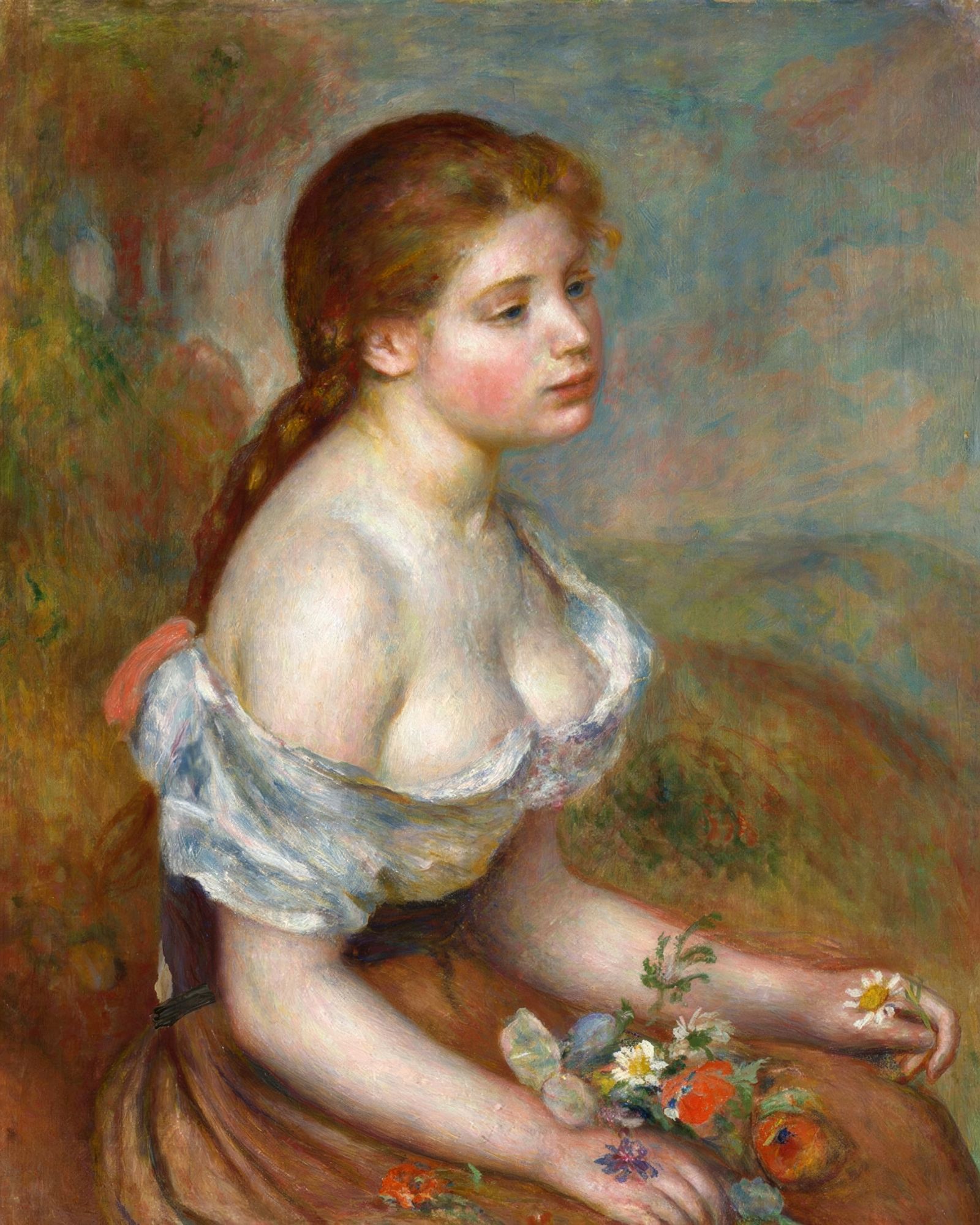
A Young Girl with Daisies · Auguste Renoir · 1889 · The Metropolitan Museum of Art. Restored by Surrealium at Vaxholm Fortress, Sweden.
Renoir's young girl holds daisies close to her body, with the flowers making a modest companion to the face. This is a child portrait, so its relevance is a family memory or a picture of a daughter, not a model of how an adult wife should look. Choose it only when that particular relationship matters to her, and let her decide which family photograph belongs in the gift.
Narrow the choice to two different directions and let her react. She may want a portrait of herself, a picture of the two of you, a pet portrait or an existing artwork she simply likes. Those are different gifts, and none is automatically more personal than the others. Fable's gifts page is a useful place to continue once you know the subject; keep the recipient's taste in charge of the decision.
For an occasion, compare the anniversary guide for a wife, birthday guide and Christmas ideas. Our guide to personal gifts begins with the recipient, while 30th birthday ideas explores another moment of choice. You can examine Morisot's garden as a whole work.
- Is a portrait a good gift for my wife?
- It can be if she enjoys portraits and has a photograph she likes. Ask which subject she would want: herself, a relationship, a pet or a family group. Giving her a say in the image can preserve the thoughtfulness while avoiding an unwelcome surprise likeness.
- How do I choose an art gift without knowing her favourite artist?
- Start with pictures she already notices or keeps. Compare subject, colour and mood before searching for an artist’s name. A quiet garden and a direct portrait offer different experiences even when both would fit the same wall.
- What if she says she does not want more things?
- Take that preference seriously. A shared gallery visit or simply choosing a picture together may be more welcome than another object. If she does want art, agree on its place and scale first so the gift does not create a display obligation.