Gustave Courbet: ten works from rock to portrait
Explore ten Gustave Courbet works through streams, village life, portraits and animals, with a clear note before the hunting scene.
Gustave Courbet gives stone, cloth, water and living bodies an insistent physical presence. A landscape is not only a distant view; it can be a close encounter with a stream blocked by rocks. A portrait is not only an identity; it is also the weight of clothing, the turn of a shoulder and the way a person occupies the foreground.
These ten works move between landscape, portraiture and animals. They are not a complete account of Courbet’s career, but they let you compare different subjects through the pictures themselves. One item depicts hunting dogs with a dead hare, so its content is identified plainly before the description. The other animal scenes include a woman holding a cat and the artist with a black dog.
The broader Romanticism paintings guide offers a useful neighbouring context without making Courbet simply another Romantic painter. Coastal wall art approaches landscape from a different setting, while Manet paintings continues towards another nineteenth-century artist’s treatment of people and ordinary objects.
1. The Brook of Les Puits-Noir: water among obstacles
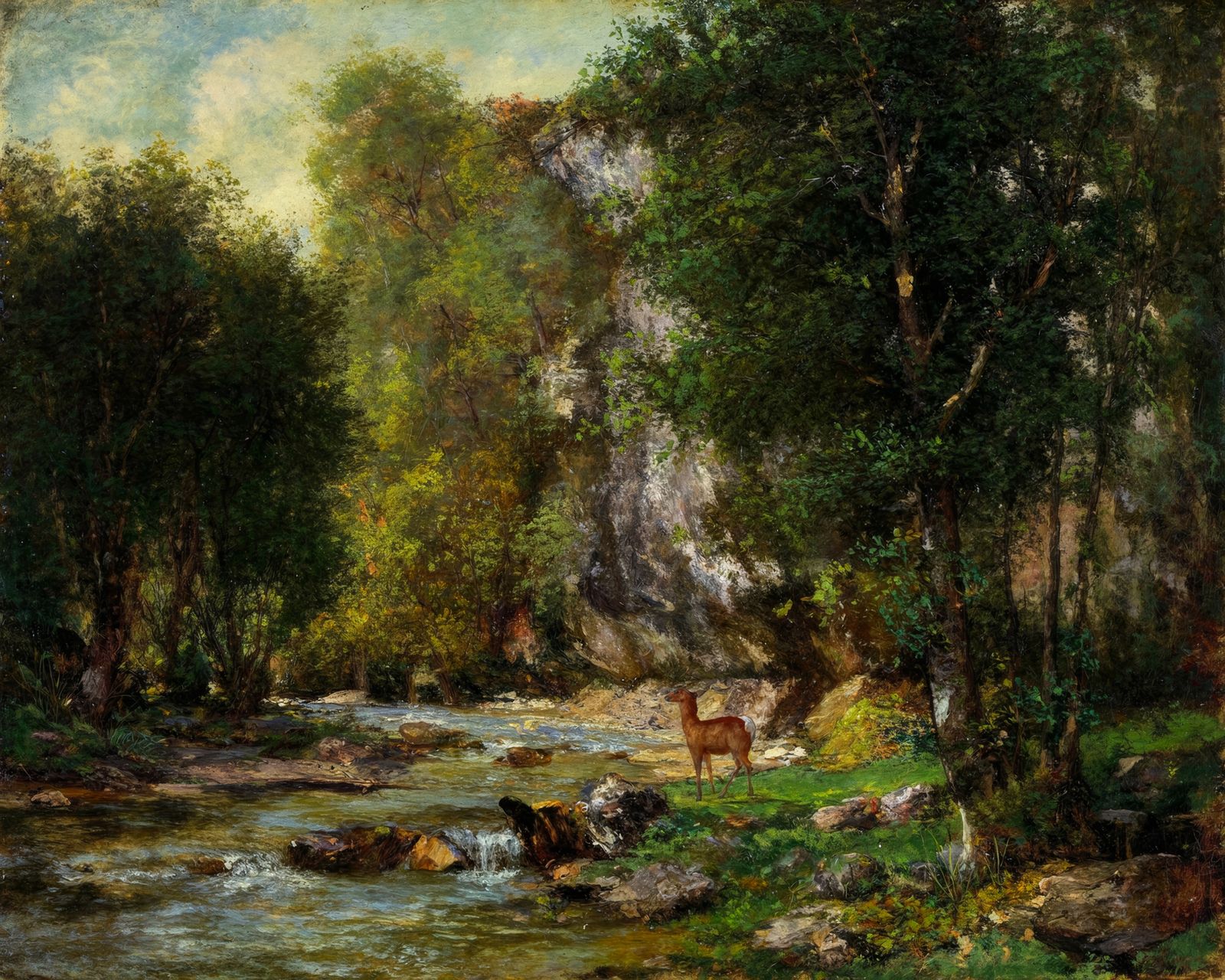
The Brook of Les Puits-Noir · Gustave Courbet, c. 1855 · Art Institute of Chicago. Restored by Surrealium at Vaxholm Fortress, Sweden.
The stream in The Brook of Les Puits-Noir runs between rocks, trees and uneven ground, with a small animal helping establish the scale of the scene. Light opens a route through the woodland without clearing away its density. Follow the water’s changes of direction rather than searching immediately for a distant horizon; the painting asks you to attend to what is nearby, where the surfaces of stone, foliage and moving water meet.
2. The Valley of Les Puits-Noir: a different enclosure
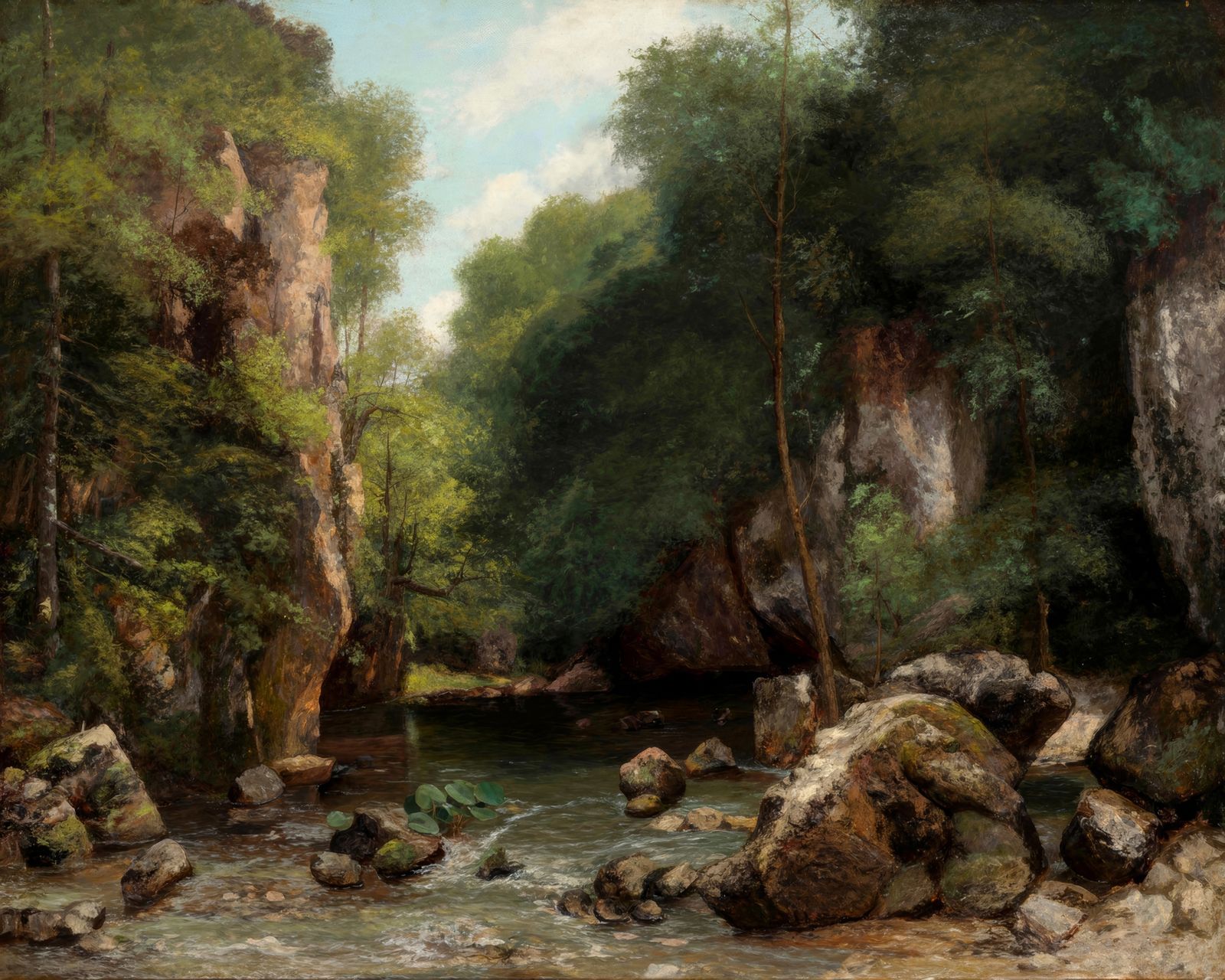
The Valley of Les Puits-Noir · Gustave Courbet, 1868 · Art Institute of Chicago. Restored by Surrealium at Vaxholm Fortress, Sweden.
The valley view gives the rocks a larger share of the picture, with the stream held between steep, wooded sides. The open sky is limited, so the scene feels organised by the ground and its obstacles more than by a broad atmospheric distance. Comparing it with the previous work makes a repeated place feel newly particular: the change in viewpoint alters which surfaces press forward and which become passages into the darker parts of the landscape.
3. Young Ladies of the Village: people within a landscape
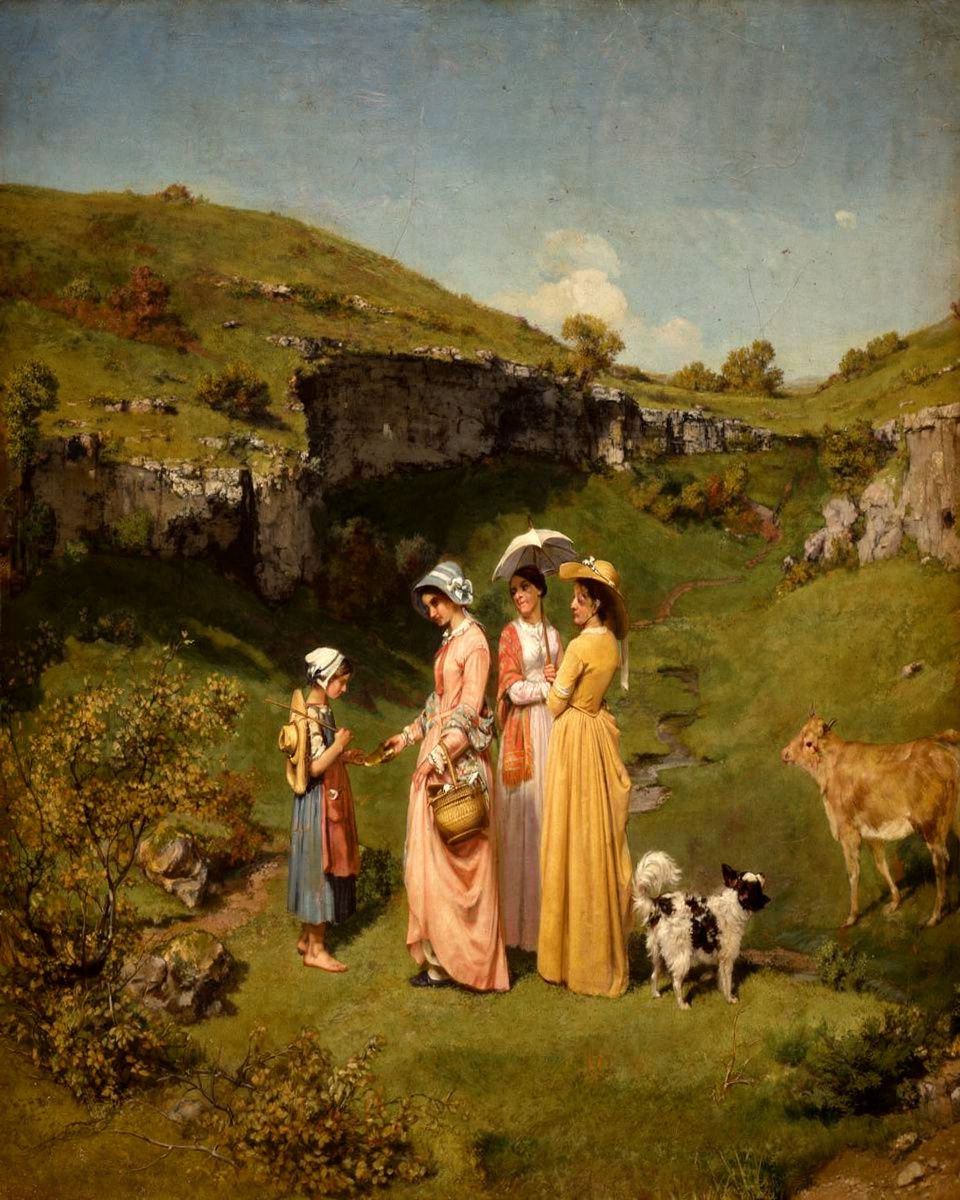
Young Ladies of the Village · Gustave Courbet, 1851–52 · The Metropolitan Museum of Art, New York. Restored by Surrealium at Vaxholm Fortress, Sweden.
Three well-dressed women stand near a younger figure in a rocky pastoral setting, with animals occupying the nearby ground. The group is small enough for the surrounding land to remain important, yet its exchange gives the scene a human focus. Look at the differences in scale and clothing before trying to supply a complete narrative; the picture lets social relationships enter through visible contrasts rather than through a neutral arrangement of interchangeable figures.
4. Mme L., Laure Borreau: the bouquet and the face
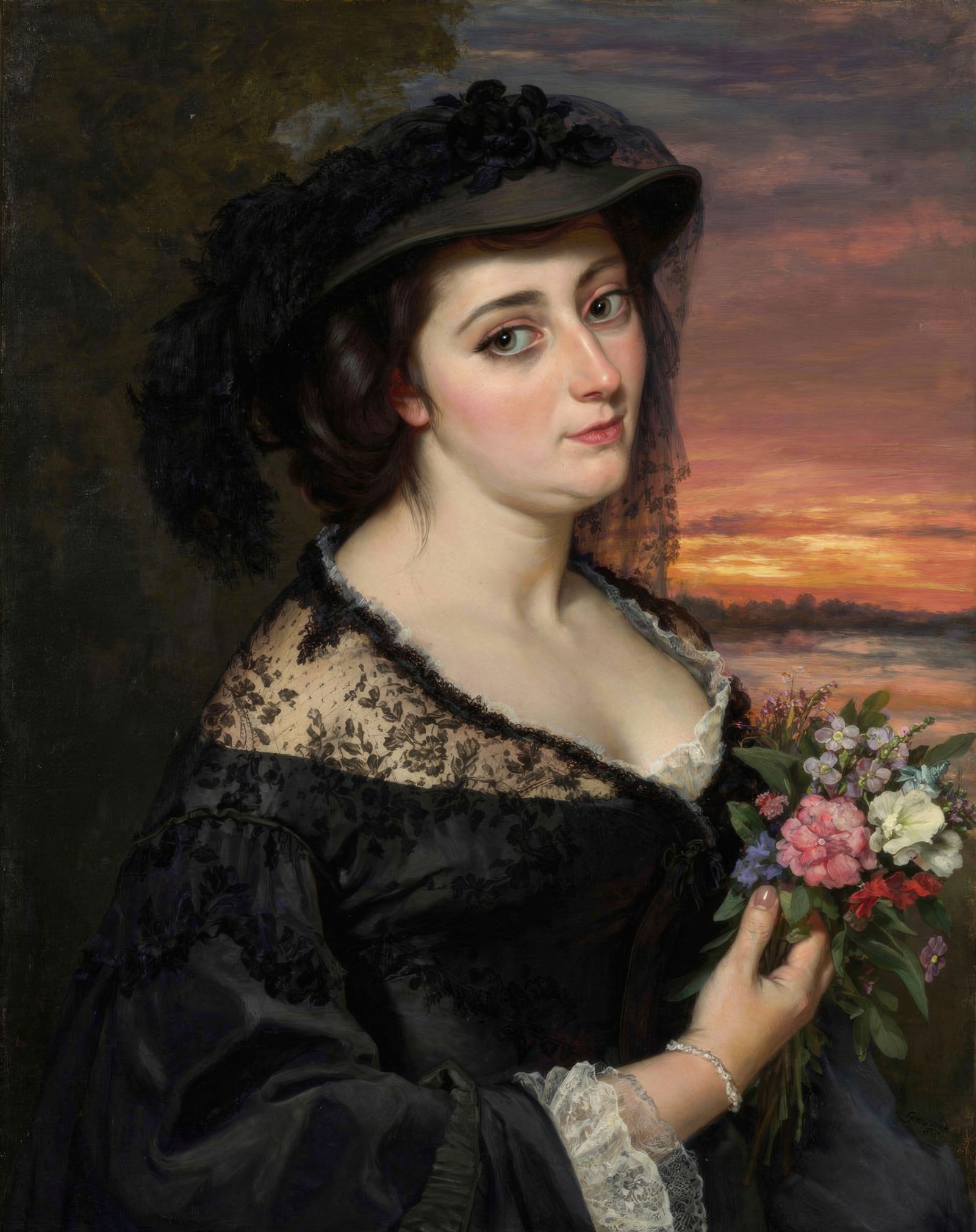
Mme L . . . (Laure Borreau) · Gustave Courbet, 1863 · Cleveland Museum of Art. Restored by Surrealium at Vaxholm Fortress, Sweden.
The sitter holds flowers against dark clothing, with a warm evening sky extending behind her. The bouquet adds a small concentration of colour near the body, but the pale face remains the main point of contact with the viewer. Notice how the portrait balances those two areas without turning the flowers into a complete explanation of the sitter; the object participates in the composition even when its private significance is not known.
5. Rêverie, Gabrielle Borreau: a supported head
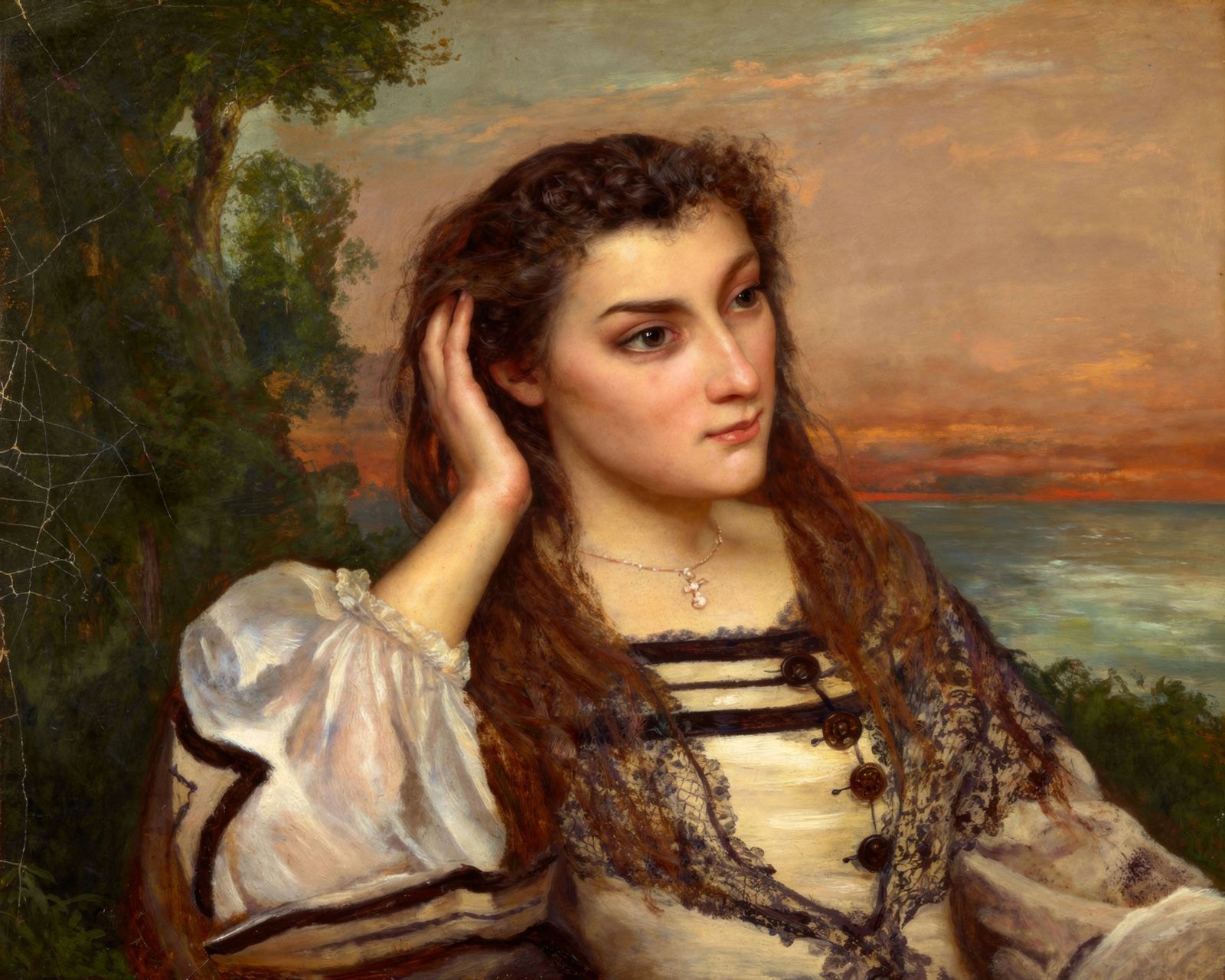
Rêverie (Portrait of Gabrielle Borreau) · Gustave Courbet, 1862 · Art Institute of Chicago. Restored by Surrealium at Vaxholm Fortress, Sweden.
The sitter rests one hand near her head, with the face turned away from a direct frontal encounter. Warm clothing and a distant sky give the portrait a different atmosphere from the neighbouring image of Laure Borreau. The title suggests a reflective state, but the visible gesture is the firmer starting point: a head supported by a hand changes the body’s rhythm and invites a slower kind of attention without revealing the sitter’s exact thoughts.
6. An Alpine Scene: buildings beneath the mountains
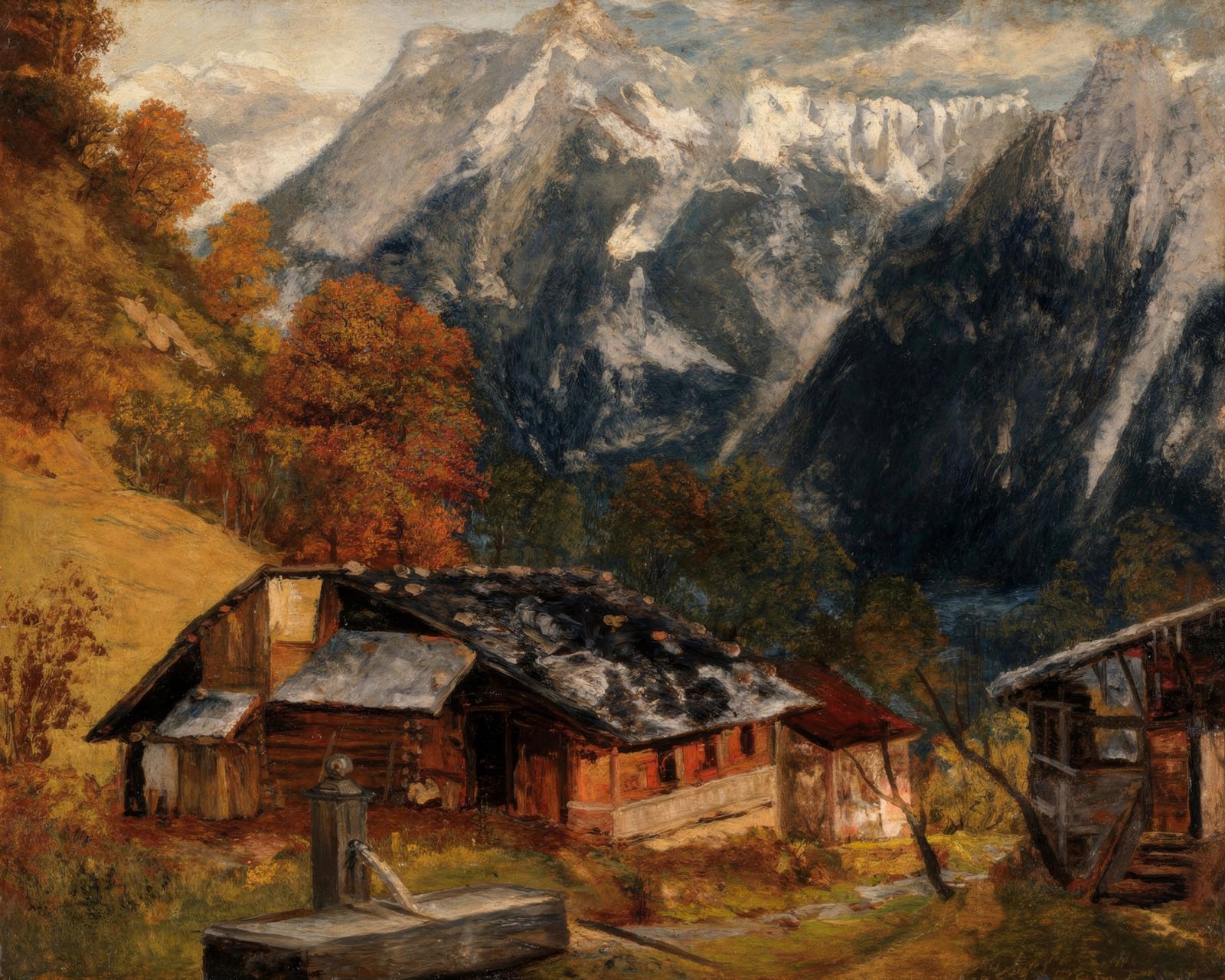
An Alpine Scene · Gustave Courbet, 1874 · Art Institute of Chicago. Restored by Surrealium at Vaxholm Fortress, Sweden.
Low buildings occupy the foreground of An Alpine Scene, with steep mountains rising beyond them. The contrast in scale makes the human structures feel provisional beside the larger landforms, while warm patches of colour keep the nearer scene from disappearing into a distant panorama. Compare the rooflines with the angles of the mountains; the painting connects built and natural forms through shape, even as their relative sizes make their differences unmistakable.
7. Village Street in Winter: snow and dark openings
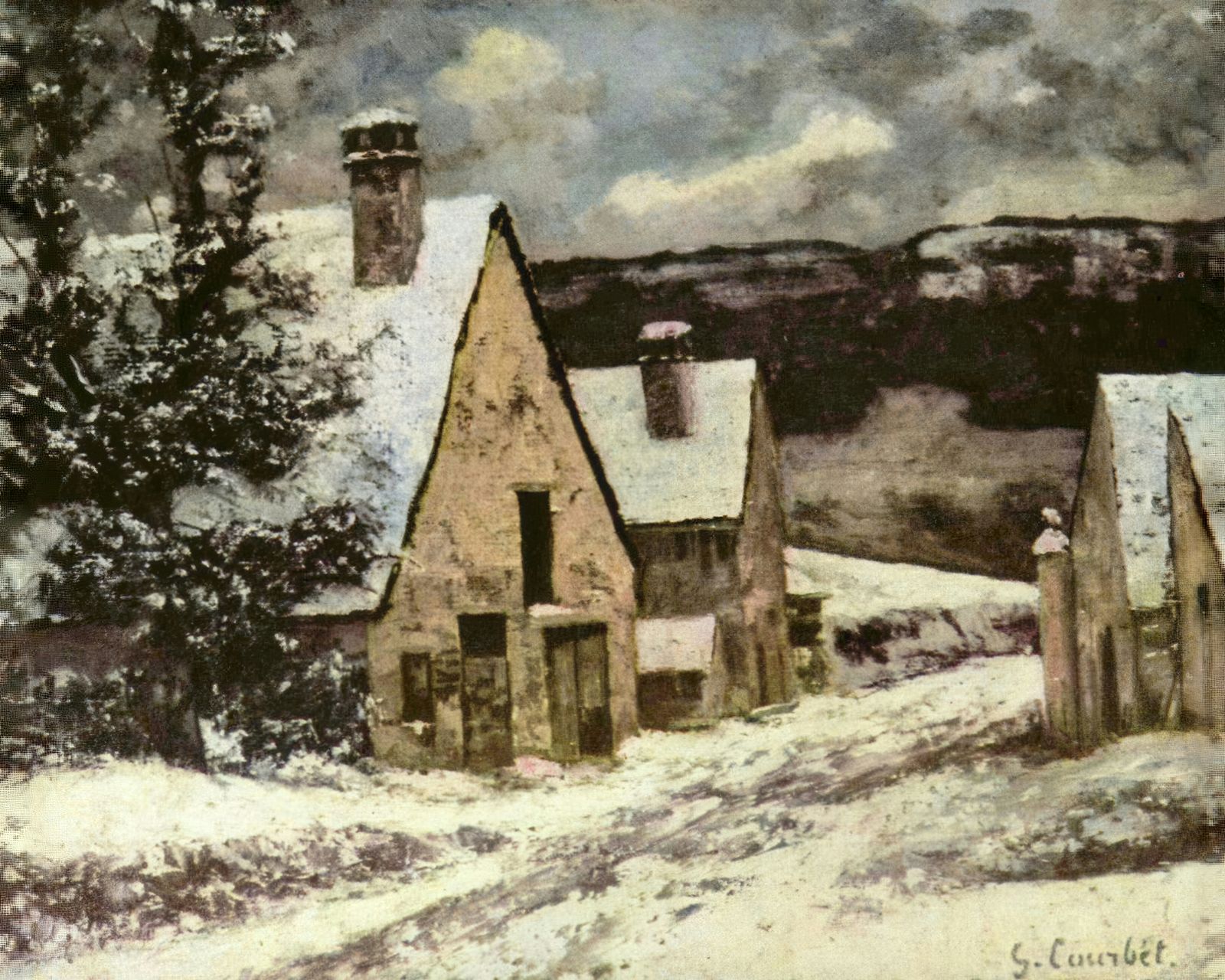
Village Street in Winter · Gustave Courbet, c. 1868 · Städel Museum, Frankfurt. Prepared for print by Surrealium at Vaxholm Fortress, Sweden.
Snow gathers around the houses and road in Village Street in Winter, while dark windows and roof edges punctuate the pale surface. The buildings make a clear sequence through the scene, giving the eye something firmer to follow than an empty field of white. A winter landscape need not be described as universally peaceful: look instead at the visible contrast between shelter, open ground and the marks that suggest a route through the village.
8. Woman with a Cat: a close and imperfectly still encounter
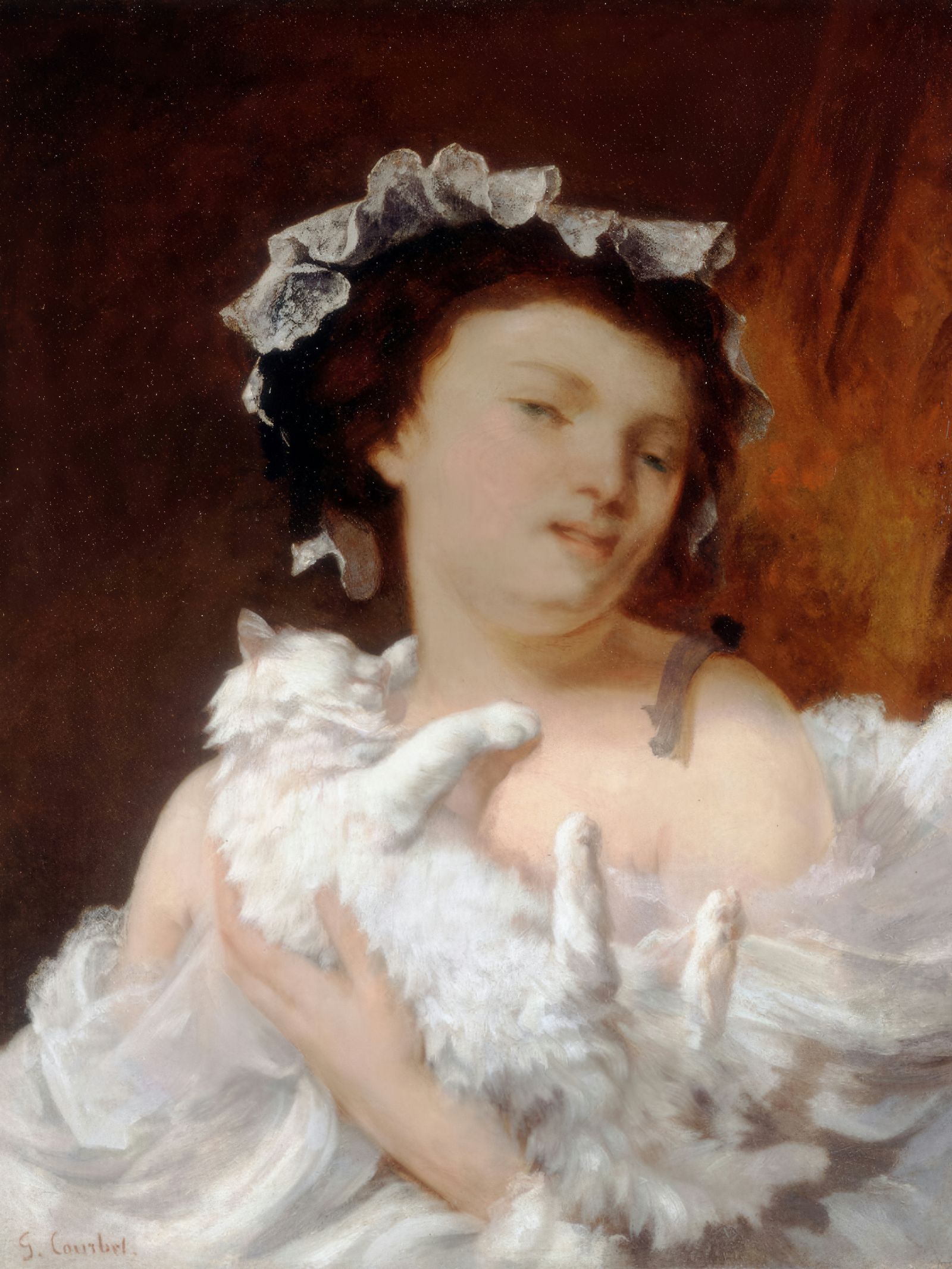
Woman with a Cat · Gustave Courbet, 1864 · Worcester Art Museum. Prepared for print by Surrealium at Vaxholm Fortress, Sweden.
The woman holds a pale cat close to her chest, its paws and head creating small interruptions against the soft light clothing. The picture’s intimacy comes from the bodies being near one another rather than from a grand setting. Keep the animal’s ordinary appearance in view: the scene can be affectionate without assigning the cat a human identity, and the slight differences in direction between sitter and animal make the encounter feel more particular.
9. Hunting Dogs with Dead Hare: a plainly named subject
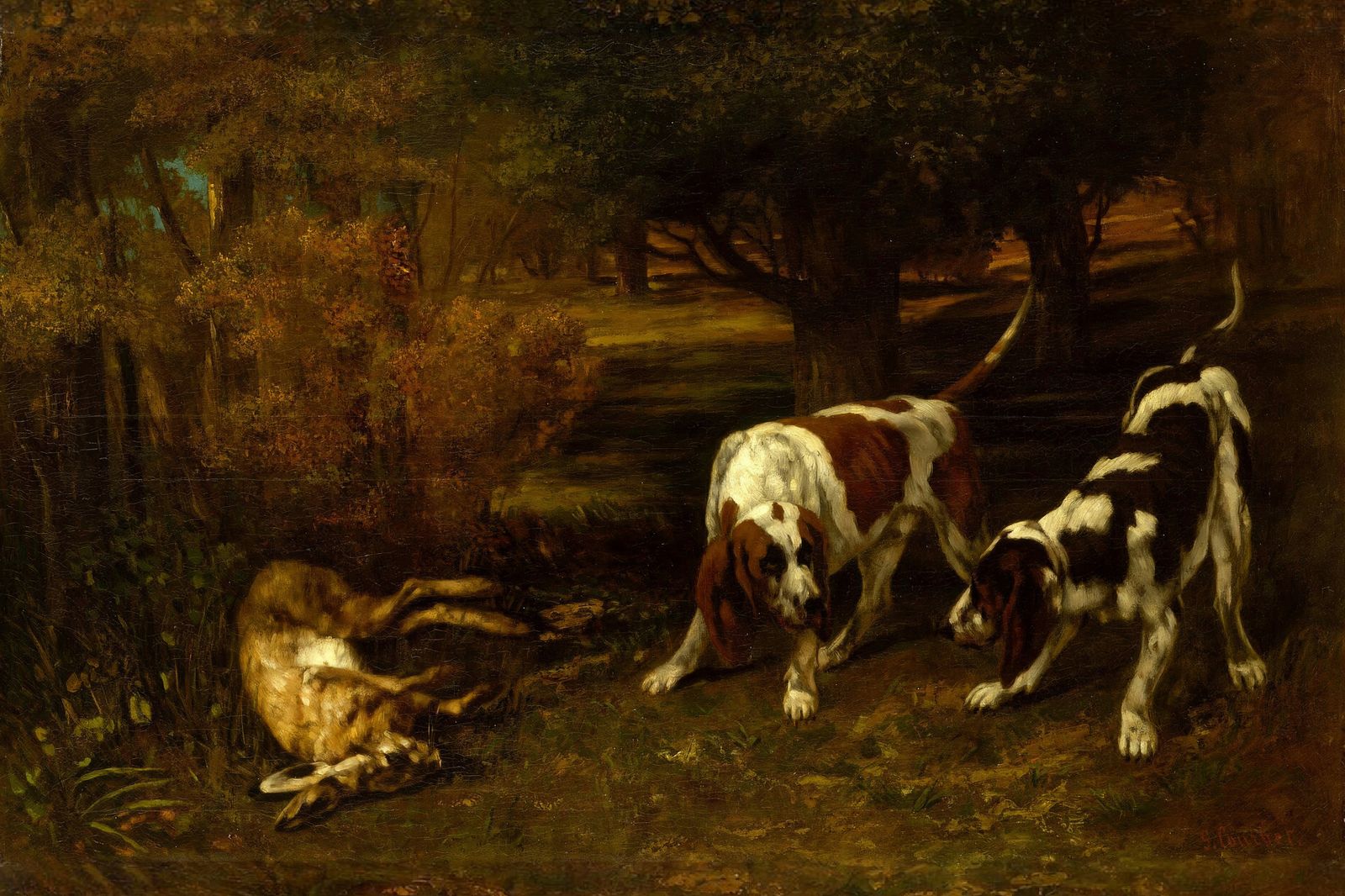
Hunting Dogs with Dead Hare · Gustave Courbet, 1857 · Metropolitan Museum of Art, New York. Prepared for print by Surrealium at Vaxholm Fortress, Sweden.
Two dogs attend to a dead hare on the ground, with trees and a dark woodland setting surrounding them. The hunting subject includes a dead animal and should be part of any decision about displaying the work. Looking at the picture closely means acknowledging that content while also noticing the arrangement: the dogs’ bodies and lowered heads direct attention towards the hare, creating a concentrated group within the larger shaded space.
10. Self-Portrait with a Black Dog: the artist beside an animal
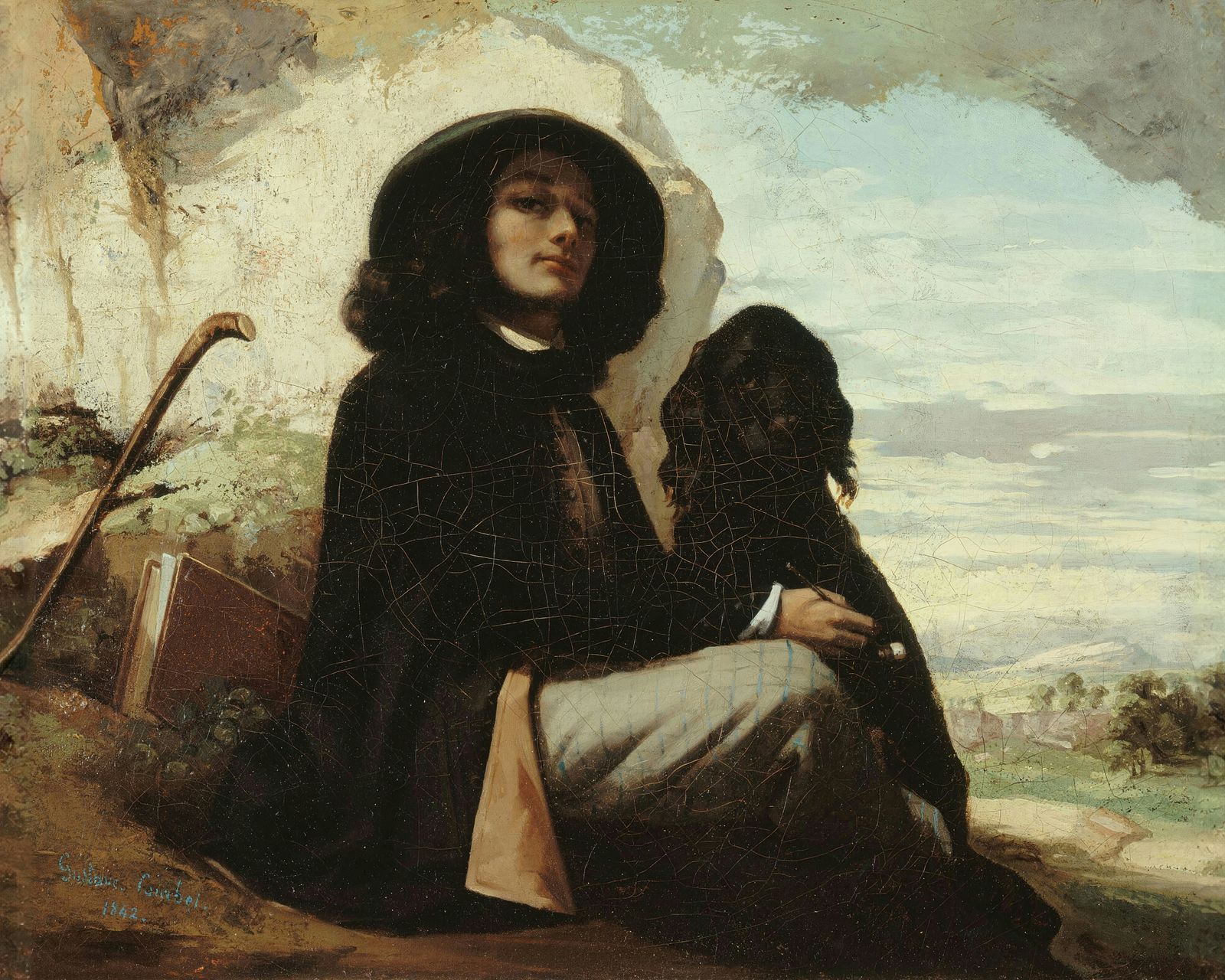
Self-Portrait with a Black Dog · Gustave Courbet, 1842 · Petit Palais, Paris. Prepared for print by Surrealium at Vaxholm Fortress, Sweden.
Courbet sits in the foreground with a black dog close to him, his dark hat and clothing forming a large shape against the lighter sky. The dog’s position connects it to the artist without turning it into a decorative border. Compare this arrangement with the woman and cat: both works bring a human figure and animal together, but the wider setting and more deliberate outward presence give the self-portrait a different kind of encounter with the viewer.
The Brook of Les Puits-Noir masterwork makes a useful return point after the portraits. Its rocks and water have a presence as specific as a sitter’s hand or a fold of cloth. Browse the Realist-era collection for neighbouring works, or compare Wanderer above the Sea of Fog for a very different relationship between a figure and a landscape. Keep the entire image when comparing them; the space around a subject helps establish what kind of picture it is.
- What is a useful first way to look at Courbet?
- Start with a material: rock, water, fabric or fur. Follow how it occupies space and meets another surface, then look at the larger arrangement of the picture.
- Does this selection include only landscapes?
- No. It includes landscapes, portraits and animal subjects. The range helps connect Courbet’s attention to physical presence across different kinds of picture.
- Which work includes a dead animal?
- Hunting Dogs with Dead Hare shows a dead hare with two dogs. The subject is clearly named so that viewers can decide whether it is appropriate for their interests and intended display space.