Music paintings: ten ways to see sound
Instruments, listeners and dancers make music visible in these historical works, from a family room to a dramatic self-portrait.
Music paintings do something a recording cannot: they let us inspect the room, the gesture and the listening before a note has passed. An instrument may be played, held, set aside or used to organise the picture. Looking closely means distinguishing those possibilities rather than treating every lute or harp as a simple symbol of harmony.
These ten works are drawn from Fable’s current catalogue and shown whole. Some are paintings of musicians; others show dancing, instruments in an interior or a musical figure inside a larger story. Their differences are the point. If you are choosing a print, consider whether you want an image of performance, companionship, study or a more unsettled encounter with music.
For a related starting point, read famous ballerina paintings.
1. Players gathered close
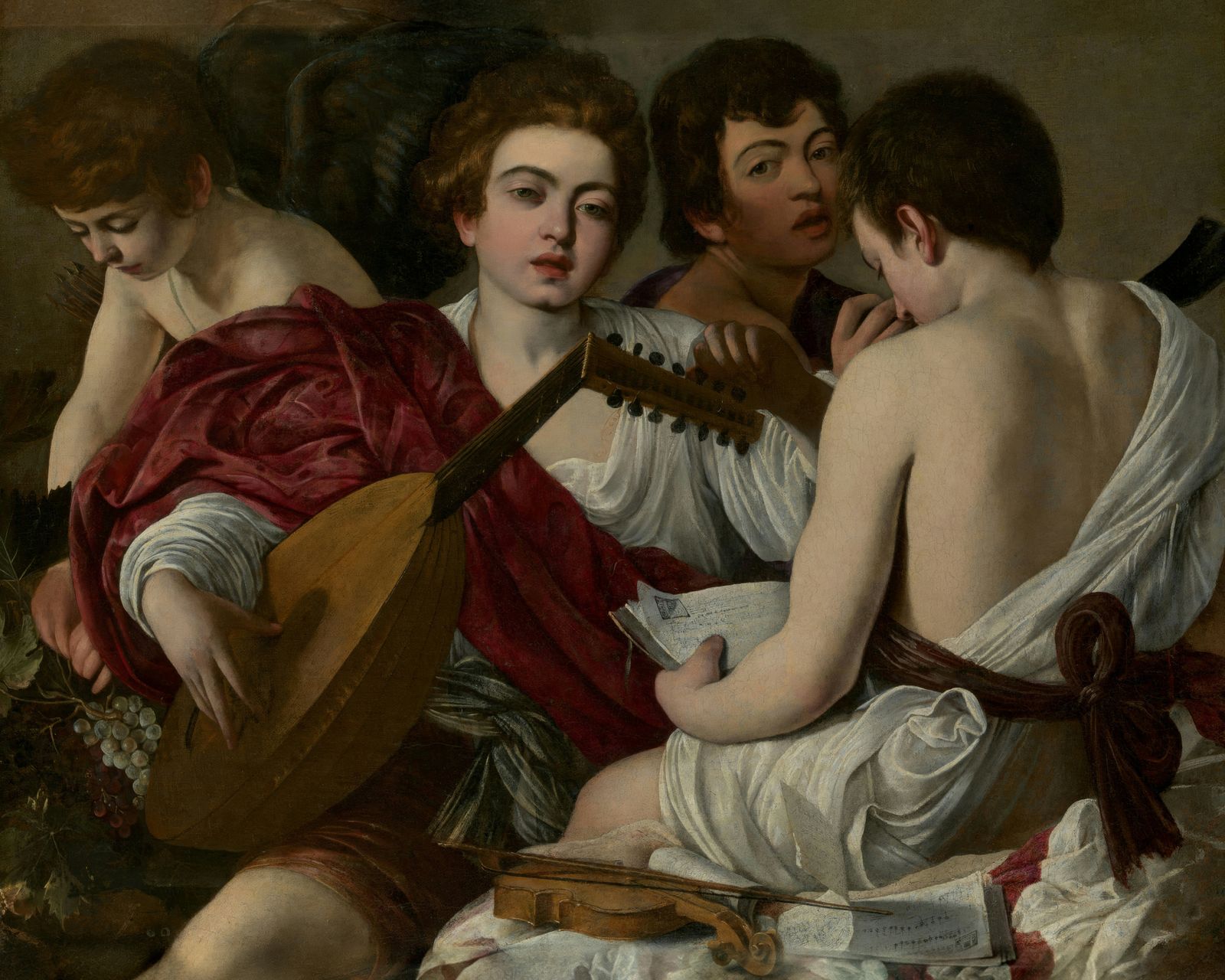
The Musicians — Caravaggio, 1597. The Metropolitan Museum of Art, New York. Prepared for print by Surrealium at Vaxholm Fortress, Sweden.
Caravaggio’s Musicians compresses several figures and instruments into a shallow space, with a turned back bringing the viewer close to the group. The picture feels intimate before we decide what music might be played. Look at the relationship between the faces, the lute and the sheet music, and resist supplying a specific sound or performance that the image itself cannot document.
Explore Masterworks prints · Explore this artwork
2. The instrument beside the sitter
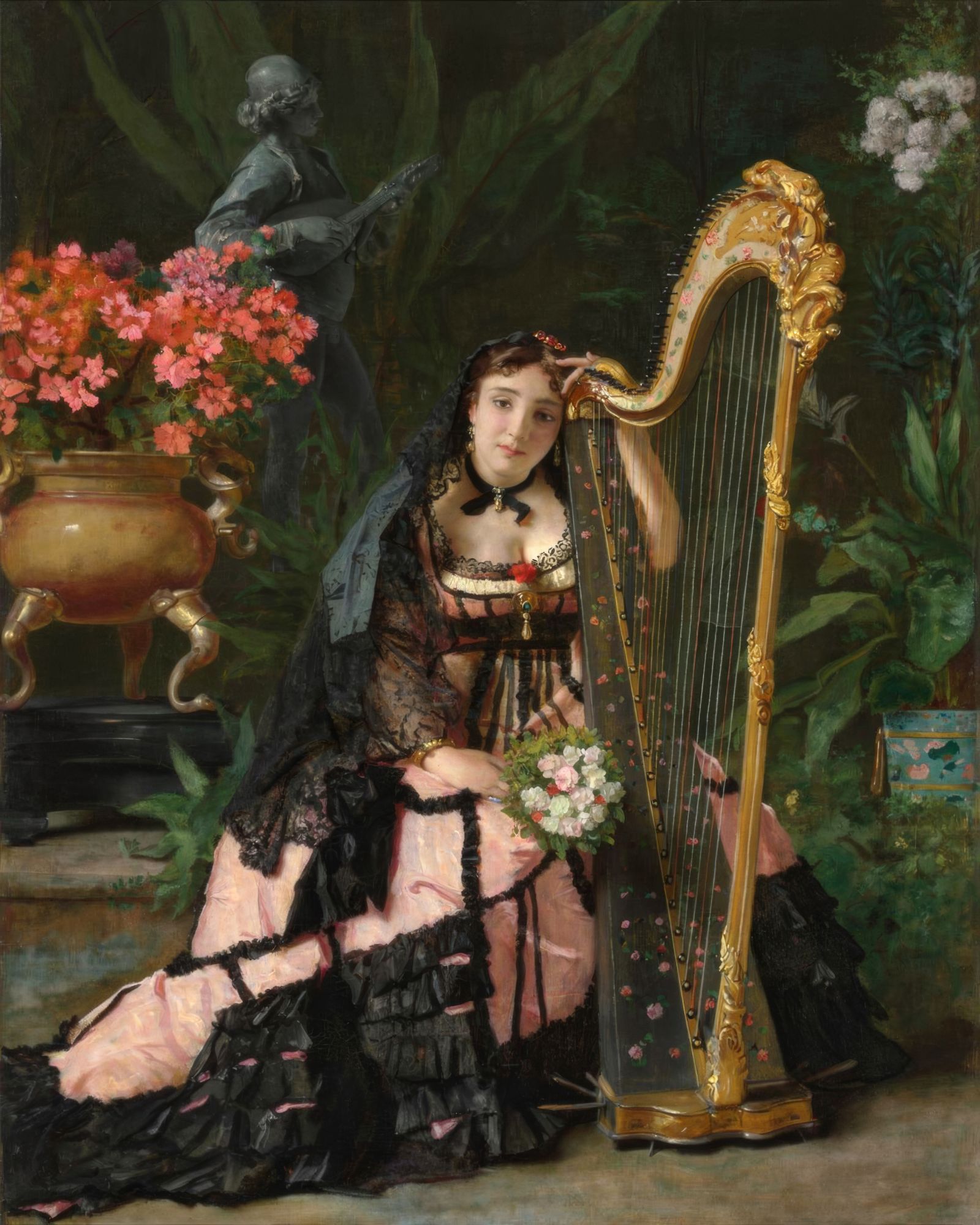
A Musician — Alfred Stevens, c. 1868-69. Harvard Art Museums. Restored by Surrealium at Vaxholm Fortress, Sweden.
Alfred Stevens places a richly dressed woman beside a harp, whose curved frame rises through the surrounding plants and furnishings. The instrument contributes to the portrait’s setting even when the image does not show a clear instant of playing. This distinction matters when choosing a musical picture: a composed presence beside an instrument offers a different mood from a scene of active performance.
Explore Masterworks prints · Explore this artwork
3. Music as a household activity
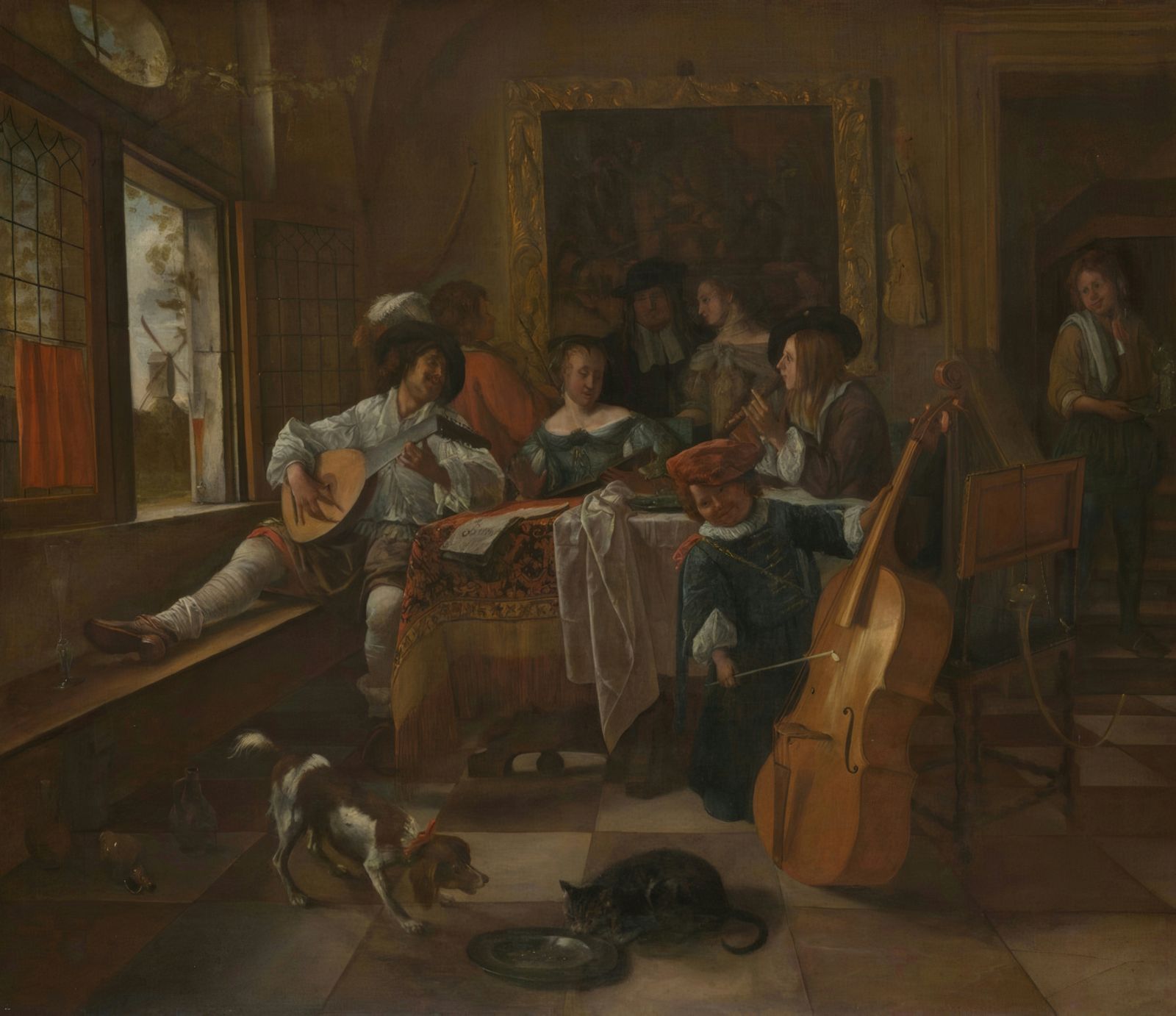
The Family Concert — Jan Steen, 1666. Art Institute of Chicago. Prepared for print by Surrealium at Vaxholm Fortress, Sweden.
Jan Steen’s Family Concert distributes people and instruments across a crowded room, with a dog and furniture sharing the foreground. The activity connects the figures without making the household look perfectly orderly. Follow the different directions of attention through the scene; the pleasure lies partly in the group’s unevenness, which a tight crop around the largest instrument would remove.
Explore Masterworks prints · Explore this artwork
4. The music that has been put down
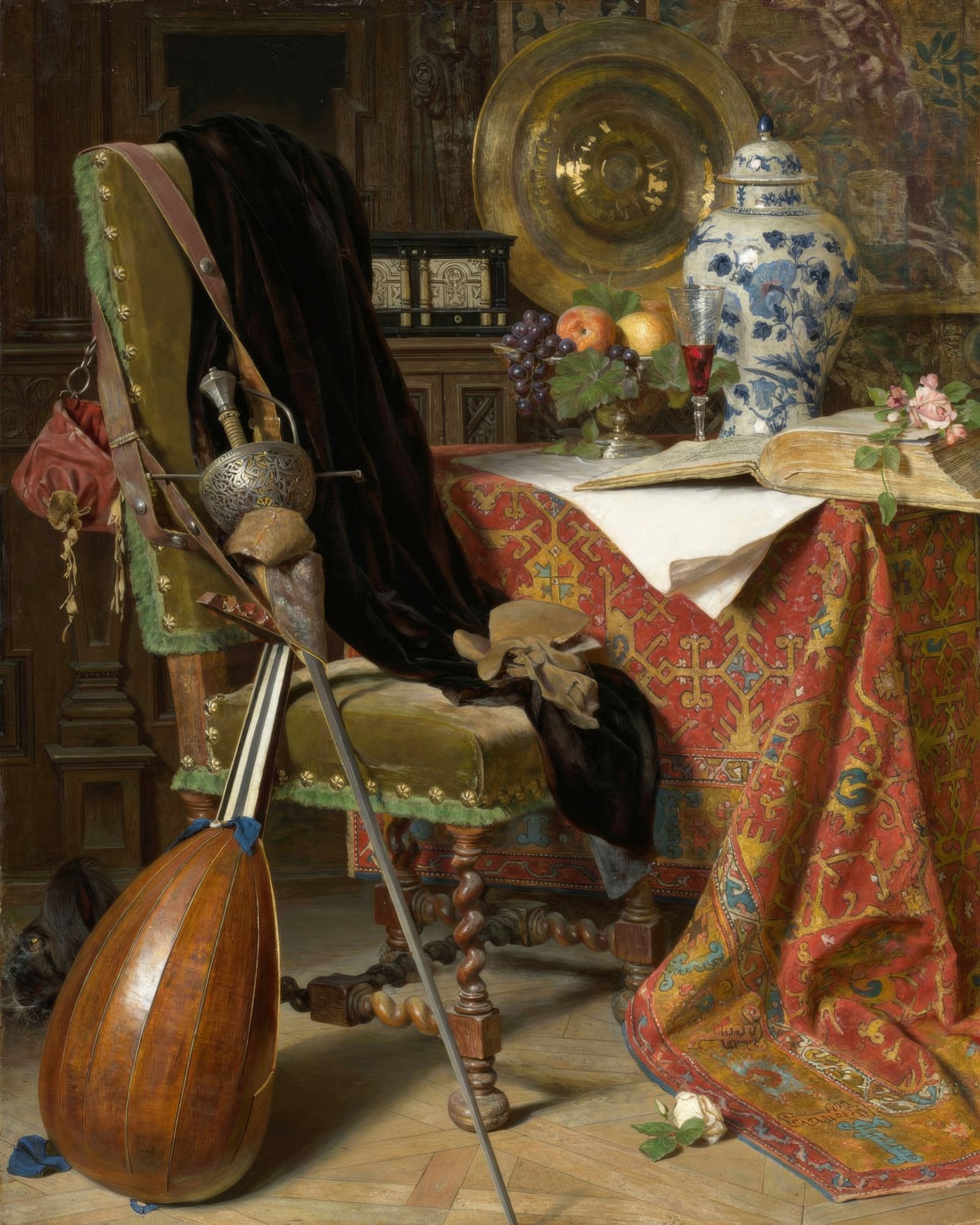
Seventeenth-Century Interior — Charles Gifford Dyer, 1877. Art Institute of Chicago. Restored by Surrealium at Vaxholm Fortress, Sweden.
Dyer’s Seventeenth-Century Interior includes a large stringed instrument leaning beside a table crowded with objects. Its silence is part of the picture: the instrument belongs to a room rather than to an active player. For a music room or reading corner, this kind of image can be more congenial than a concert scene, because it suggests the life around practice as well as the performance itself.
Explore Masterworks prints · Explore this artwork
5. A single player and the objects nearby
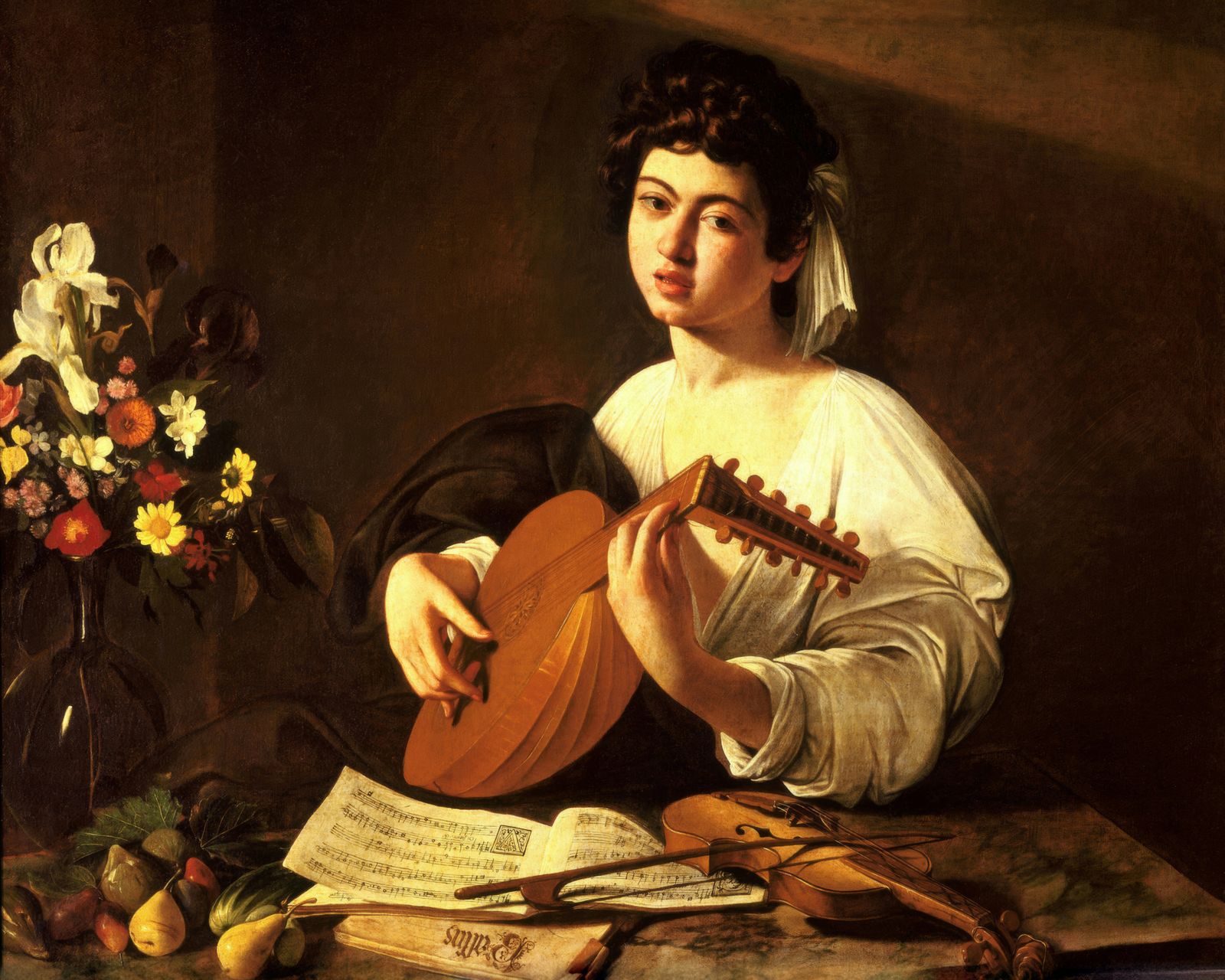
The Lute Player — Caravaggio, c. 1595. The State Hermitage Museum, St Petersburg. Prepared for print by Surrealium at Vaxholm Fortress, Sweden.
Caravaggio’s Lute Player places the instrument across the figure’s body, with sheet music and a still life arranged in front. The hands, strings and face create several competing points of attention. Look at the full composition before deciding which detail matters most; removing the tabletop would turn a carefully constructed encounter between person and objects into a much simpler portrait.
Explore Masterworks prints · Explore this artwork
6. Music inside a dramatic name
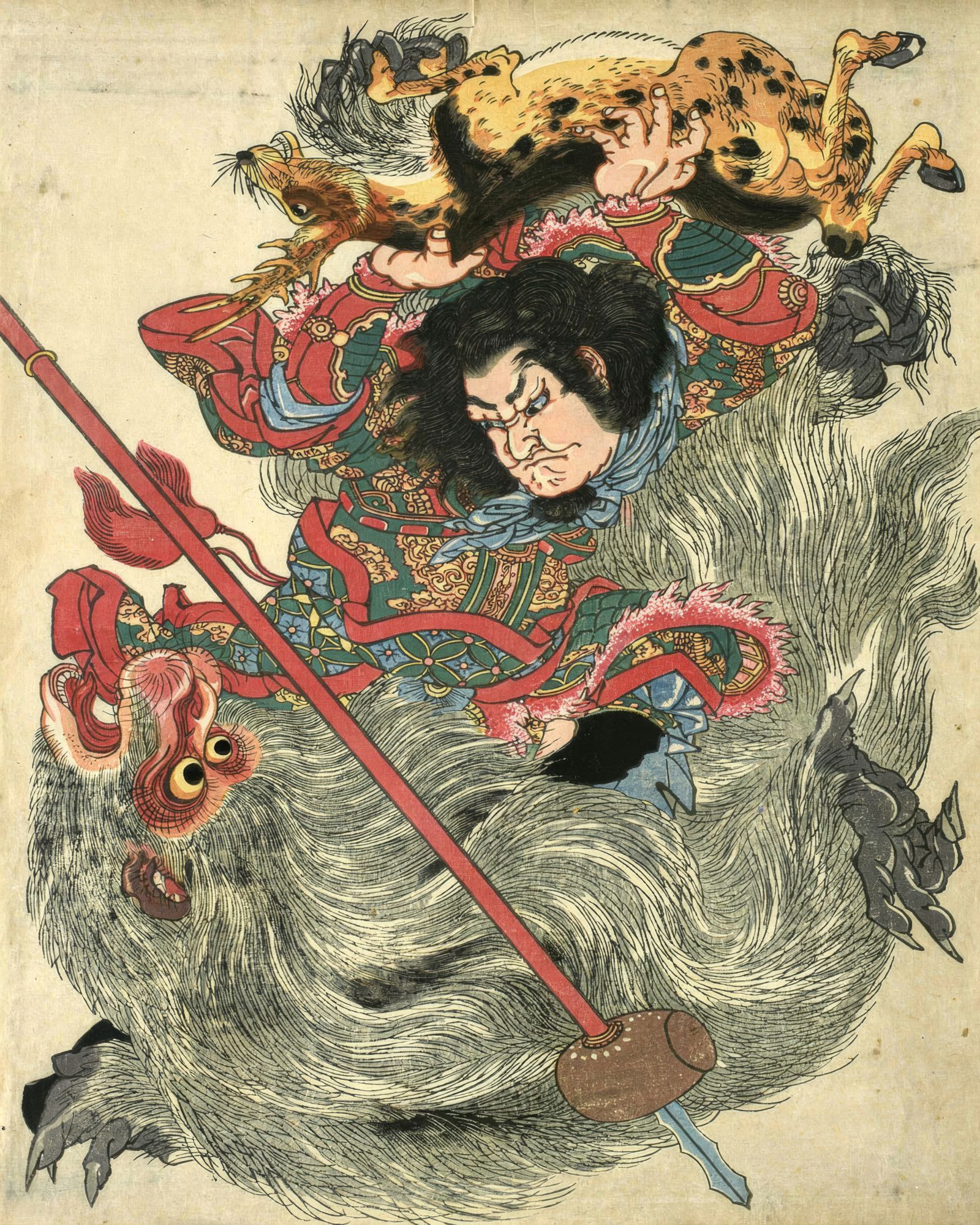
The Iron Flute Warrior, Ma Lin — Utagawa Kuniyoshi , c. 1827/30. Art Institute of Chicago. Restored by Surrealium at Vaxholm Fortress, Sweden.
Kuniyoshi’s Iron Flute Warrior belongs to a martial, narrative world, with the figure’s forceful movement dominating the print. The title includes a musical object, but that does not make the scene a quiet study of instrumental performance. It offers a useful contrast within this selection: words and objects can carry music into an image whose main energy comes from action rather than listening.
Explore Masterworks prints · Explore this artwork
7. A song in an ordinary room
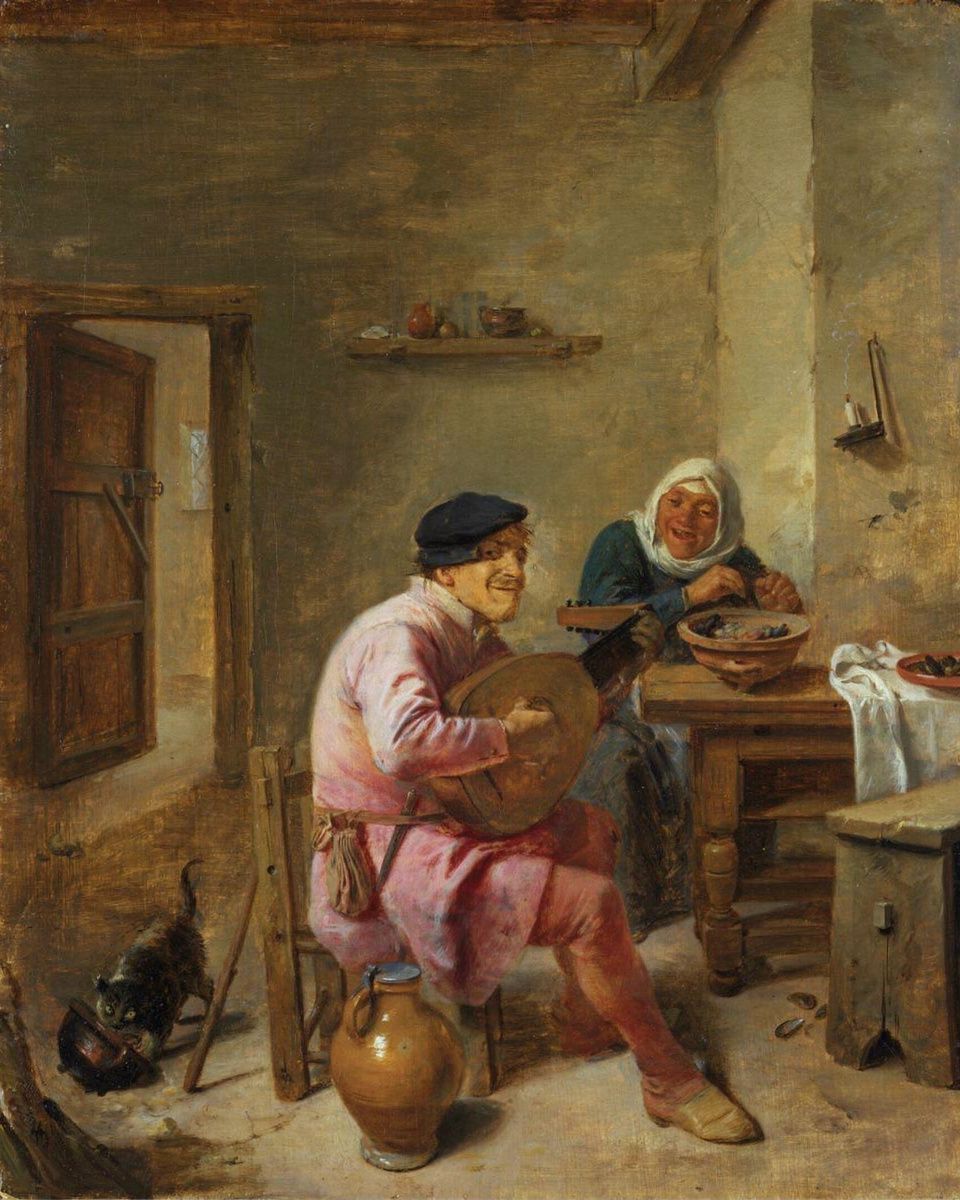
The Lute Player's Song — Brouwer, Adriaen, ca. 1625. Victoria and Albert Museum, London. Restored by Surrealium at Vaxholm Fortress, Sweden.
Brouwer’s lute player sits within a modest interior, with another figure and domestic objects close by. The setting makes music part of everyday life rather than a separate ceremonial event. Notice how little space the performance needs, and compare that intimacy with the elaborate rooms elsewhere in the selection; neither requires us to invent an audience beyond the people actually shown.
Explore Masterworks prints · Explore this artwork
8. Movement that implies a rhythm
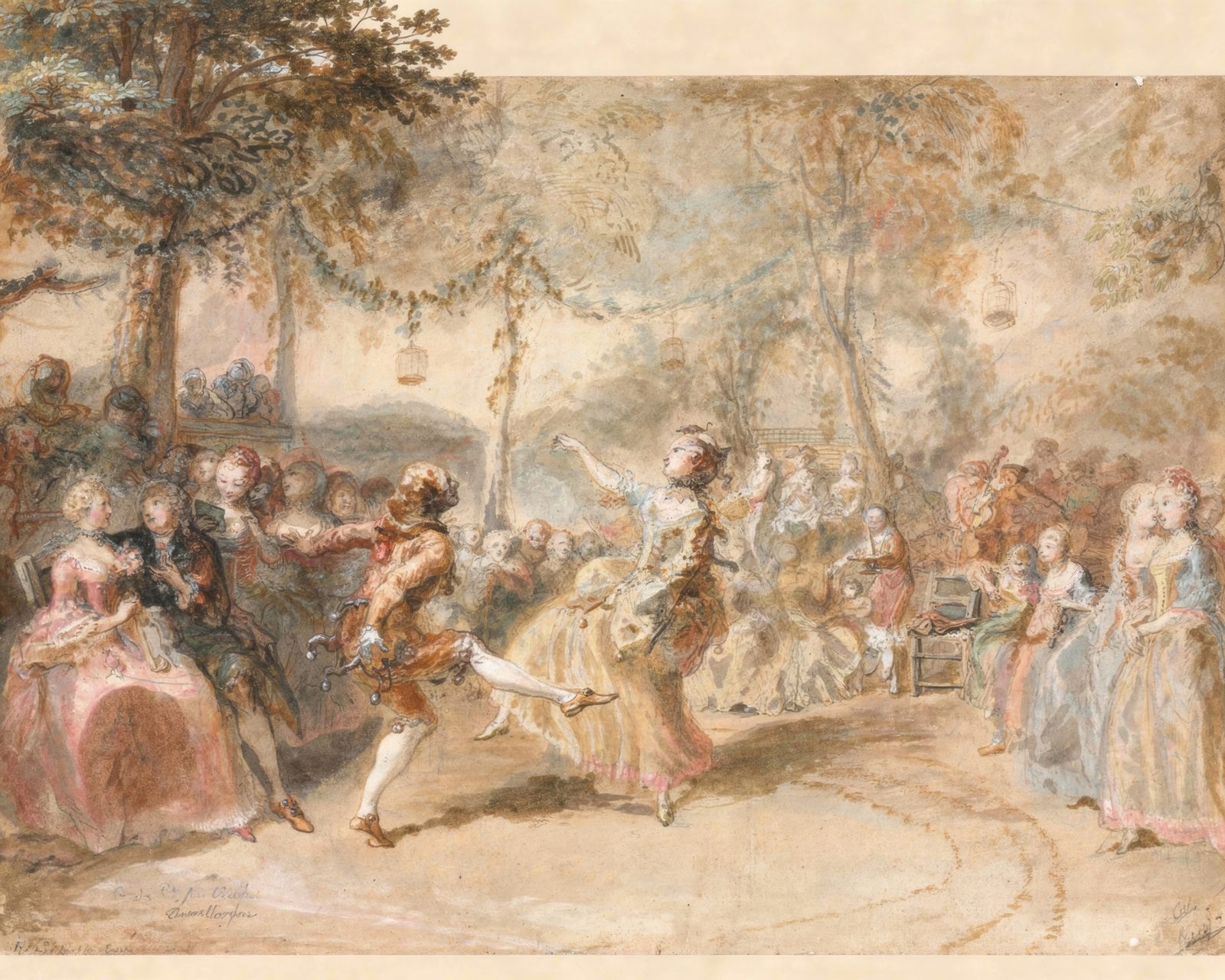
Costumed Dancers Performing in a Garden Tavern — Gabriel de Saint-Aubin, 1756. Cleveland Museum of Art. Restored by Surrealium at Vaxholm Fortress, Sweden.
Saint-Aubin’s costumed dancers spread across a garden tavern scene, their gestures carrying the eye through the crowd. Here music is approached through the bodies responding to it rather than through an isolated instrument. The picture rewards a wide view, because the relationship between dancers and onlookers supplies the social setting that a single extracted figure could not preserve.
Explore Masterworks prints · Explore this artwork
9. A song within an imagined world
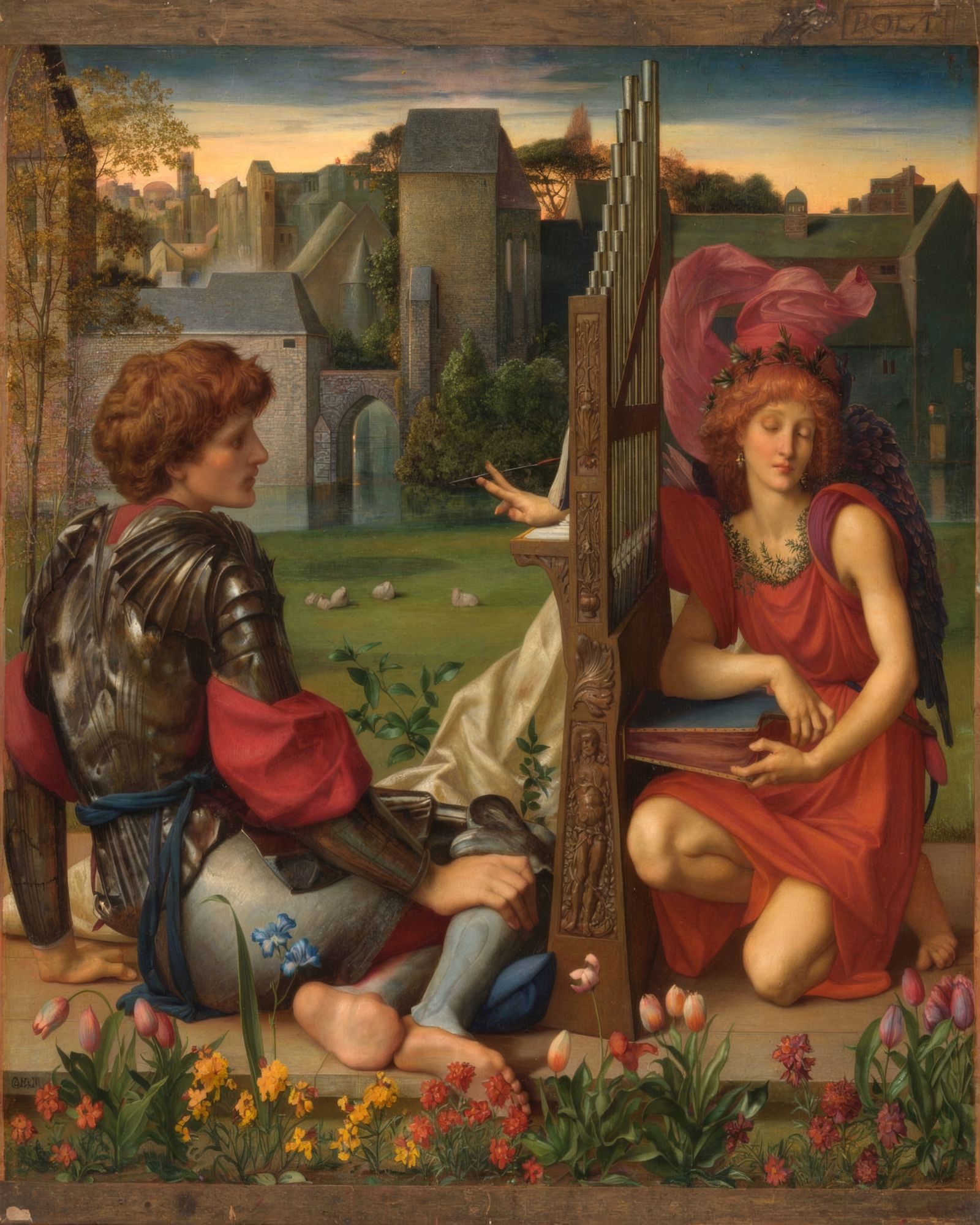
The Love Song — Sir Edward Burne-Jones, 1868–77. The Metropolitan Museum of Art, New York. Restored by Surrealium at Vaxholm Fortress, Sweden.
Burne-Jones places his figures and instruments in a carefully arranged setting, with architecture and flowers reinforcing the picture’s formal character. The work invites a slower kind of looking than a lively tavern scene. Treat its musical atmosphere as an artistic construction, and distinguish what you can see from any story or symbolic meaning that would require a separate historical source.
Explore Masterworks prints · Explore this artwork
10. A listener with an unsettling companion
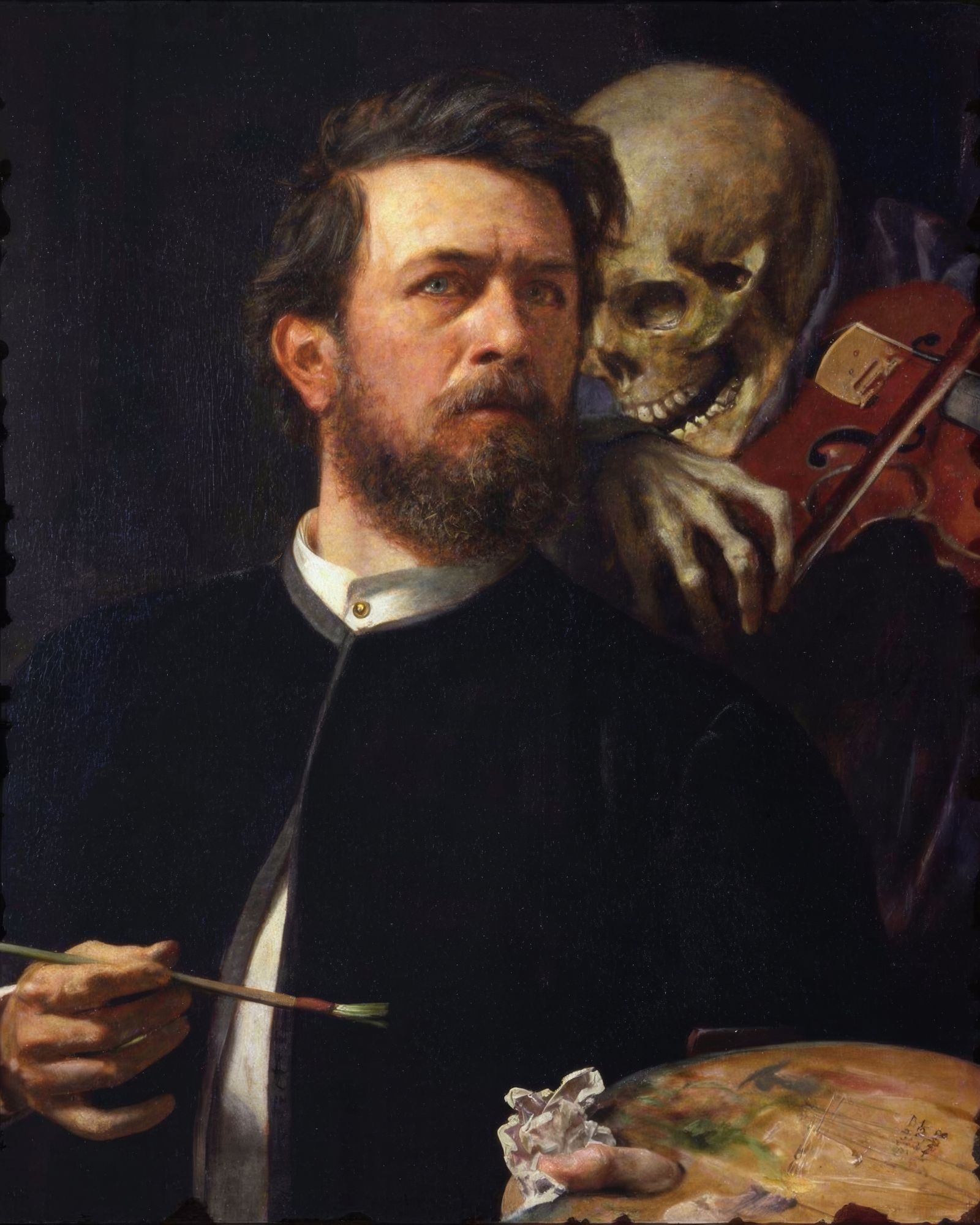
Self-Portrait with Death Playing the Fiddle — Arnold Böcklin, 1872. Alte Nationalgalerie, Berlin (A I 633). Restored by Surrealium at Vaxholm Fortress, Sweden.
Böcklin’s self-portrait places a skeletal fiddler close behind the artist, whose face and painting tools remain sharply present. Music here is not simply sociable or reassuring; the proximity of the two figures changes the mood. If you choose it for a print, keep the whole relationship visible, since the figure behind the shoulder is essential to the picture’s tension rather than an optional detail.
Explore Masterworks prints · Explore this artwork
To compare musical pictures, ask three questions: who is making the sound, who appears to hear it, and what the instrument does within the composition. Sometimes one of those answers remains uncertain, and that uncertainty can be interesting. Choose a print for the kind of attention it invites rather than only for the instrument you play. A domestic concert, a solitary sitter and a self-portrait with a fiddler can all belong to a musical collection while offering very different company on a wall.
Continue with famous portrait paintings, a closer look at Baroque art.
- What are music paintings?
- They are images that engage with music through players, instruments, listeners, dancing or related subjects. Some depict performance directly; others use an instrument as part of a portrait, an interior or a narrative scene.
- Does an instrument always symbolise harmony in a painting?
- No. Its meaning depends on the work and its context. Start with the visible arrangement, then consult a reliable record before assigning a specific symbolic meaning. A title alone may not explain every object in the picture.
- Are all the works here paintings of live performances?
- No. The selection includes instruments at rest, a narrative print and dancers whose movement implies music. Those differences help show how artists can make a musical subject visible without recording a particular concert.
- How do I choose a music-related art print?
- Consider the atmosphere you want: active, intimate, reflective or dramatic. Look at the whole image and its proportions, then compare the available print options on the Masterworks page rather than choosing from an isolated instrument detail.