A pet and owner portrait starts with the space between them
pet and owner portrait: Ten historical works about the quiet art of sharing a picture.
A pet and owner portrait records two identities and the small distance between them. That might be a dog waiting beside a chair, a cat resting on a lap or an animal leaning against the person who feeds it. For Fable, begin with a clear photograph that shows both subjects comfortably. The aim is to recognise the relationship already in the reference, without asking the animal to perform a human role.
These ten historical works offer different models for sharing a picture. They are shown as original art references, not as examples of a finished customer order. Look first at how the human and animal occupy the composition, then at whether the mood fits your own photograph. A successful choice does not always make the figures the same size. It gives both enough presence for the person who knows them to feel the connection.
1. A dog beside a person, with equal attention
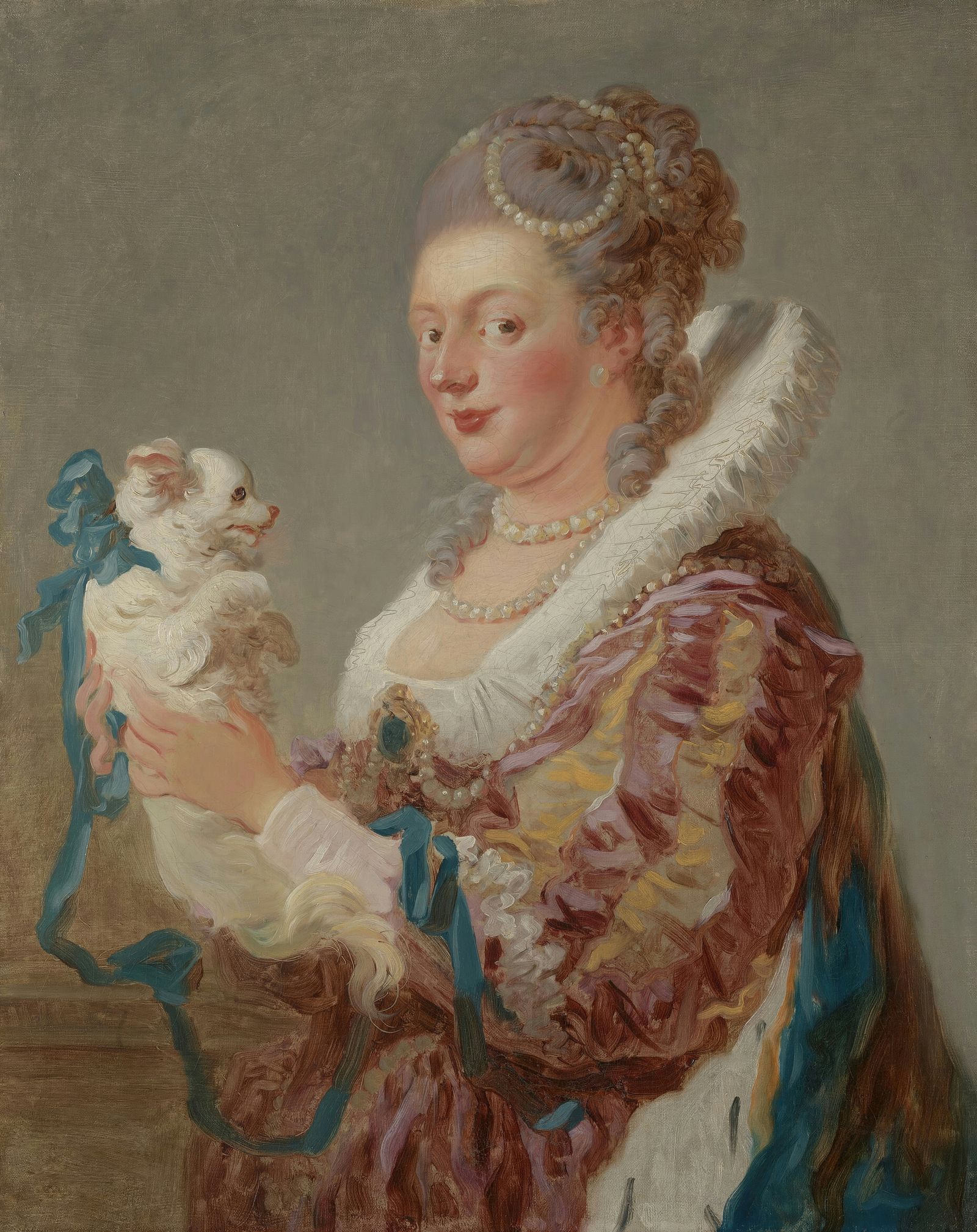
A Woman with a Dog · Jean-Honoré Fragonard · 1769 · Metropolitan Museum of Art, New York
Start by checking that the dog in your source photo is more than a shape at the edge. A portrait with two subjects depends on both remaining legible. Use this historical pairing to think about shared attention before selecting a style. A clear view of the animal's head and the person's face is usually more useful than a grand background that reduces the pair to distant figures.
Create a portrait in this style · Explore this artwork
2. Name the relationship in an ordinary pose
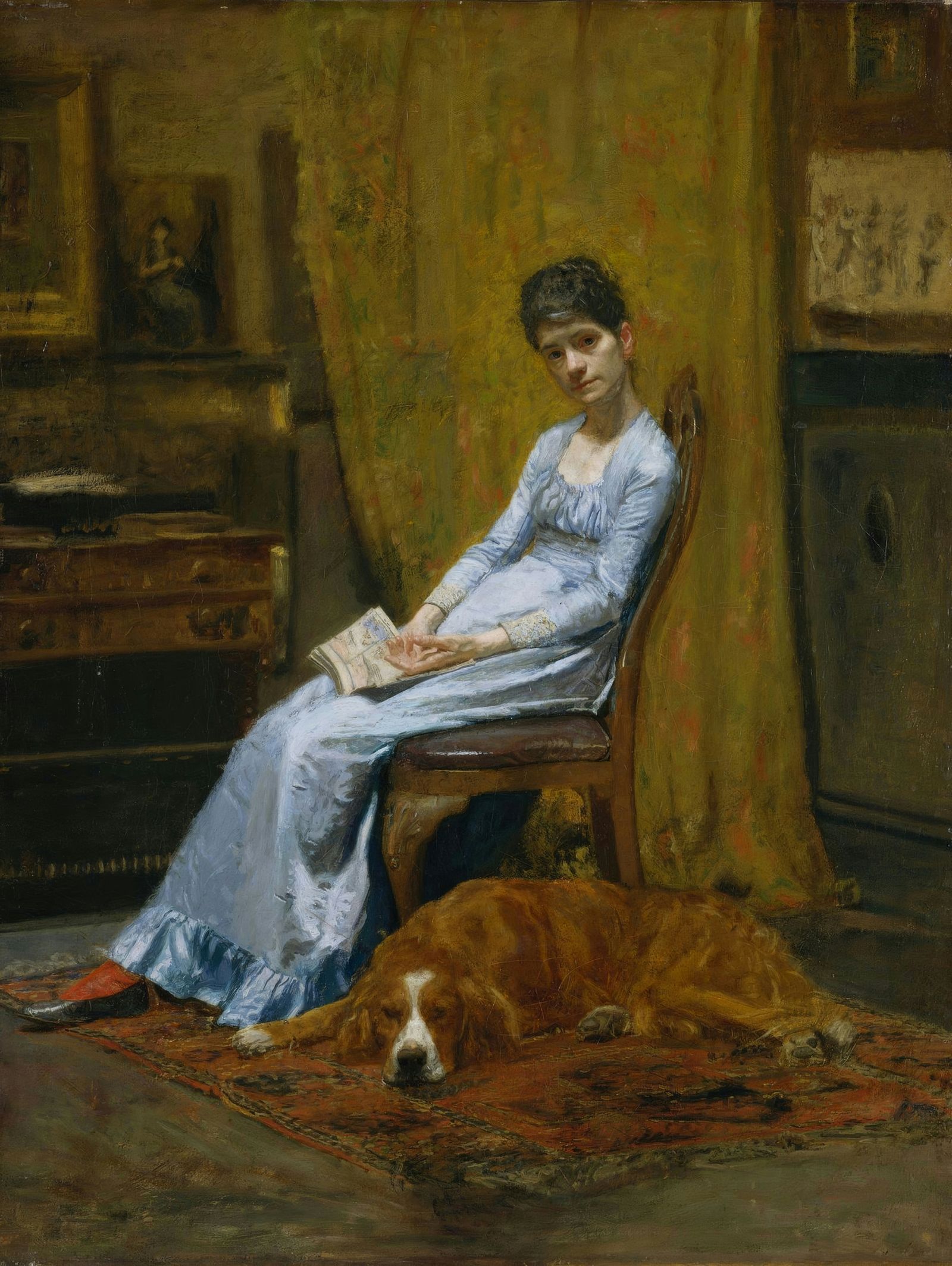
The Artist's Wife and His Setter Dog · Thomas Eakins · 1884 · Metropolitan Museum of Art, New York
A named person-and-animal portrait can make everyday companionship feel worth recording. For your own version, choose the position the pet naturally takes beside its owner. A hand resting near the dog may be sufficient; there is no need to force a cuddle. The source should preserve each body's outline so the portrait has clear information about where one subject ends and the other begins.
Create a portrait in this style · Explore this artwork
3. Let a self-portrait include its companion
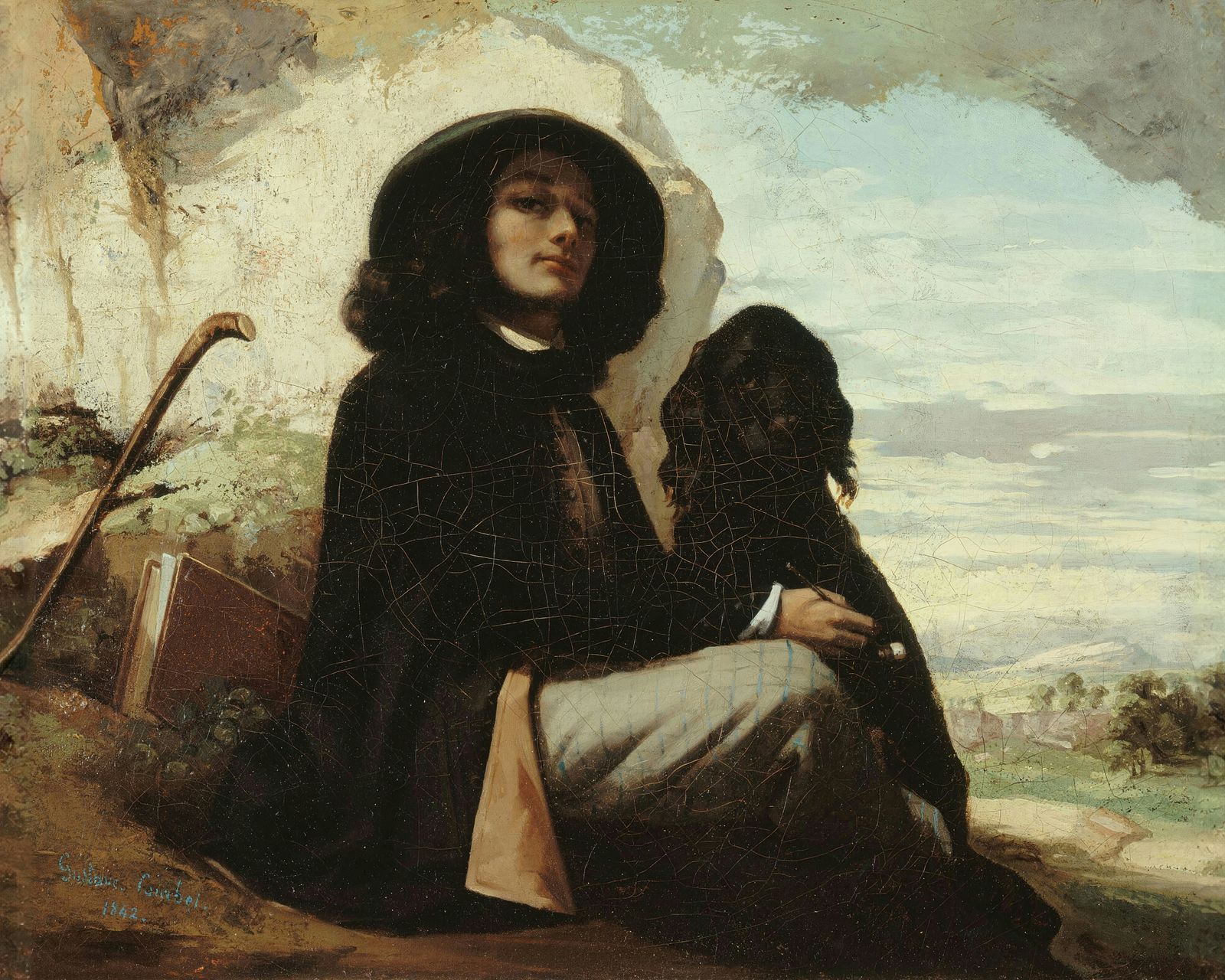
Self-Portrait with a Black Dog · Gustave Courbet · 1842 · Petit Palais, Paris
If the owner wants to appear in the picture, resist treating that as vanity. People often keep many photographs of their pets and very few of themselves with them. This self-portrait offers a precedent for including both. Choose an image with a natural expression and an animal at ease. A clear shared photograph can be more revealing than a formal sitting arranged only for the order.
Create a portrait in this style · Explore this artwork
4. Bring a small animal into the composition
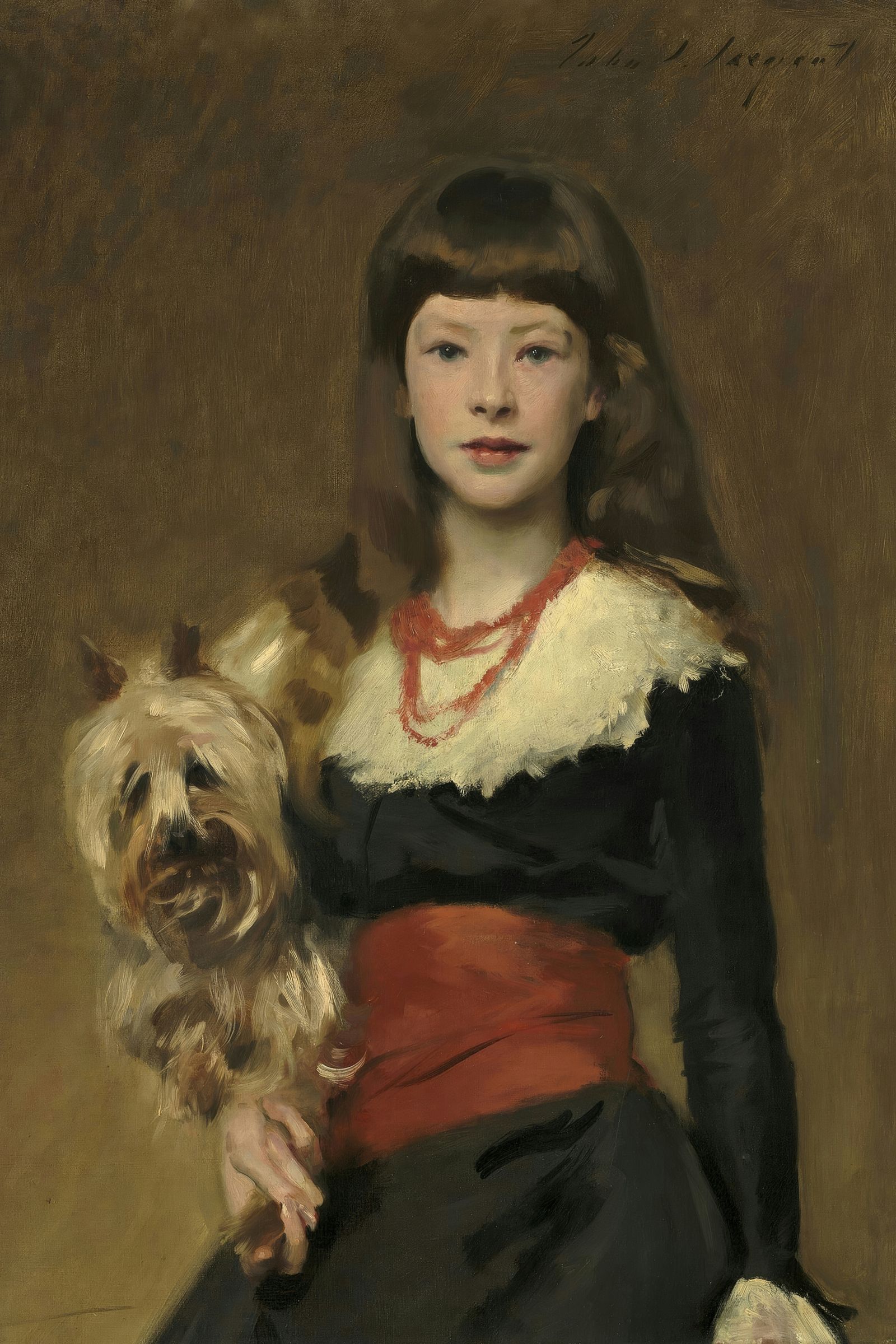
Miss Beatrice Townsend · John Singer Sargent · 1882 · National Gallery of Art, Washington
A standing owner and a small pet can create a difficult scale difference. Before choosing this direction, inspect the reference at the size it will be viewed on screen. A comfortably seated person may bring the faces closer, but the animal should choose its own position. Do not crop away paws or ears just to make the two heads appear equal in the photograph.
Create a portrait in this style · Explore this artwork
5. Take feline company on its own terms
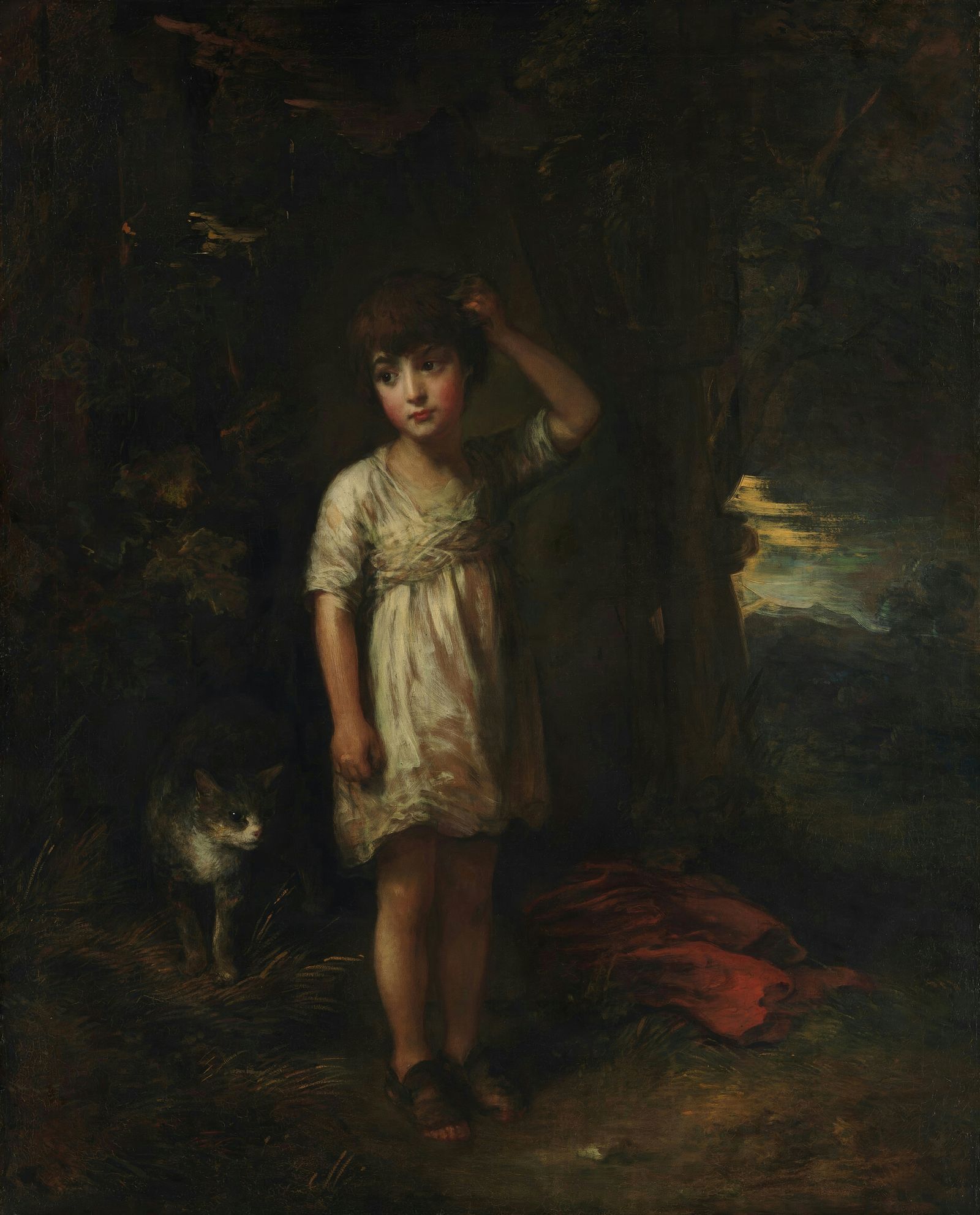
A Boy with a Cat—Morning · Thomas Gainsborough · 1787 · Metropolitan Museum of Art, New York
A cat may offer proximity rather than an embrace, and that is enough to build a portrait. Use Gainsborough's subject as a reason to notice how your own animal prefers to sit. A reference should preserve that temperament. If the cat looks away while the person faces the camera, the difference can still feel natural; matching expressions are less important than recognisable character.
Create a portrait in this style · Explore this artwork
6. Keep a lap portrait calm
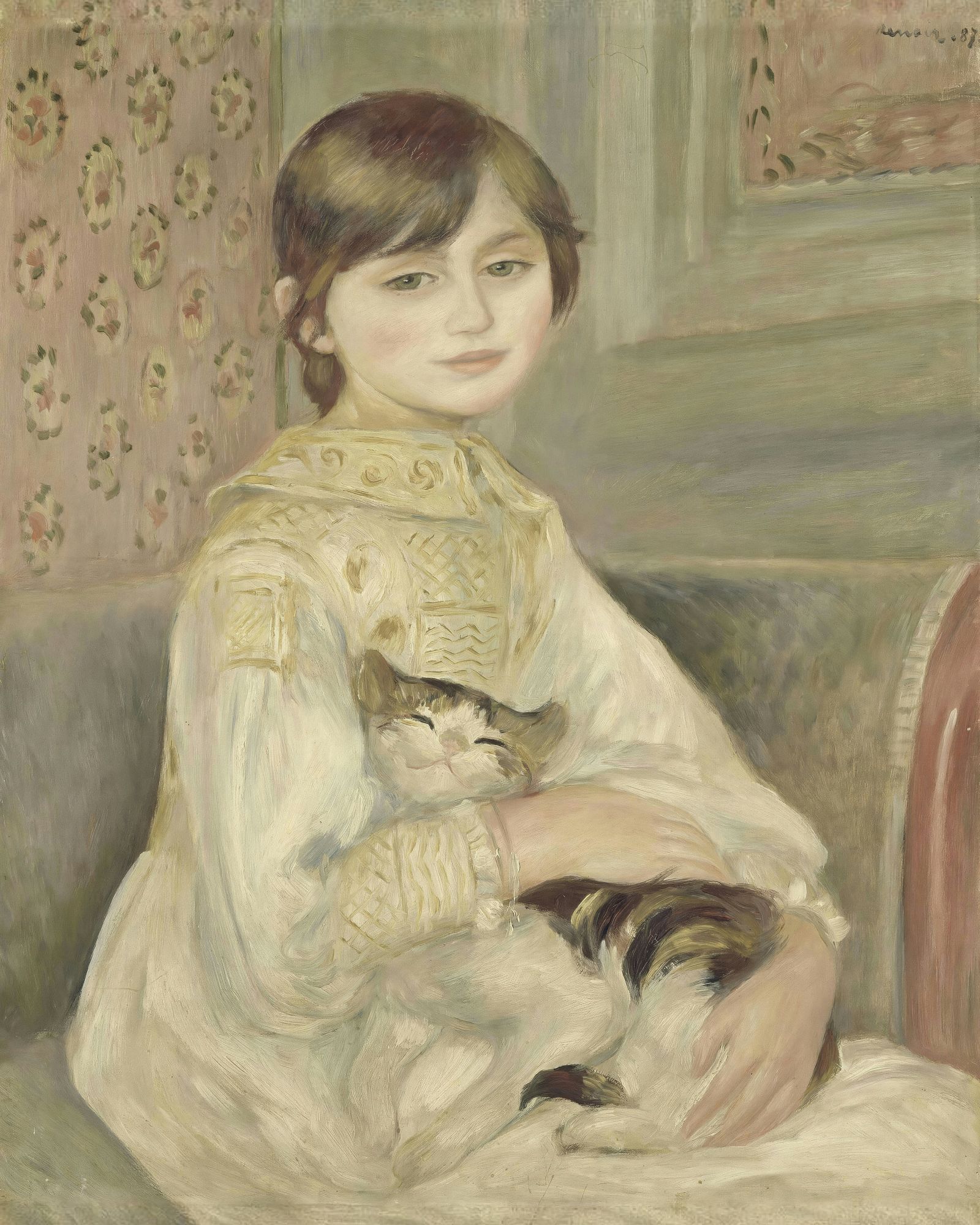
Julie Manet · Pierre-Auguste Renoir · 1887 · Musée d'Orsay, Paris
For a pet that regularly settles on its owner, a lap photograph can bring both subjects into a compact composition. Check that hands do not obscure the animal's face and that the person's features remain in focus. This historical comparison is useful for thinking about closeness without crowding. The best source may be an unplanned photograph taken during an ordinary afternoon rather than a carefully posed session.
Create a portrait in this style · Explore this artwork
7. Choose a mood that the recipient can live with
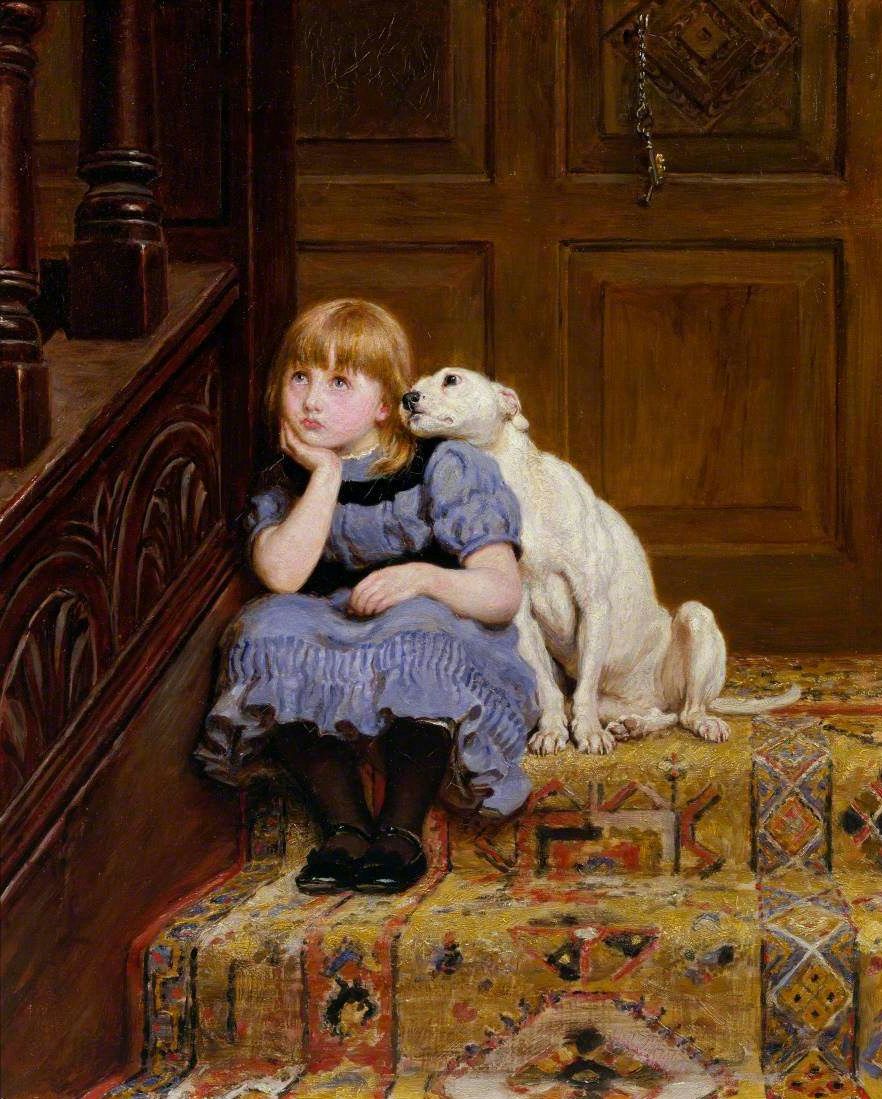
Sympathy · Briton Riviere · 1878 · Royal Holloway, University of London
A reflective portrait may be right for a relationship built around comfort. It should still feel welcome on the wall, so ask the person choosing it how they want to remember the moment. Sympathy offers a quieter register than a celebratory group scene. Keep any private explanation in a note accompanying the gift, allowing the portrait itself to remain gentle and open to everyday viewing.
Create a portrait in this style · Explore this artwork
8. Let a familiar room remain familiar
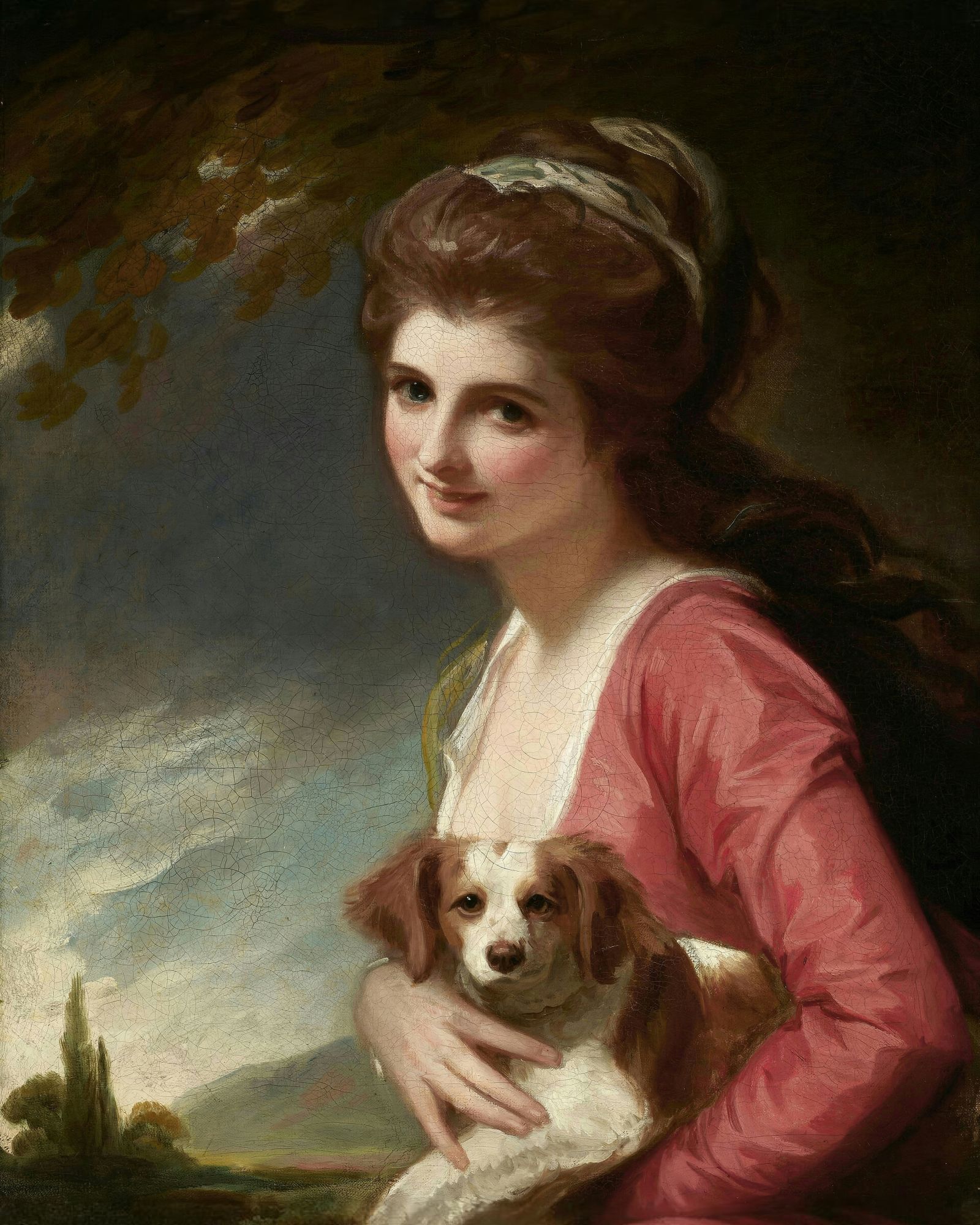
Lady Hamilton as 'Nature' · George Romney · 1782 · Frick Collection, New York
A domestic setting can matter because it is where the relationship happens. Use a photograph whose background supports the figures rather than competing with them. A few recognisable surroundings may be welcome, but the pet should not disappear into upholstery. Compare the historical work's amount of surrounding space with the reference you have, then choose the treatment that needs the least forced change.
Create a portrait in this style · Explore this artwork
9. Remember the shared outdoor rhythm
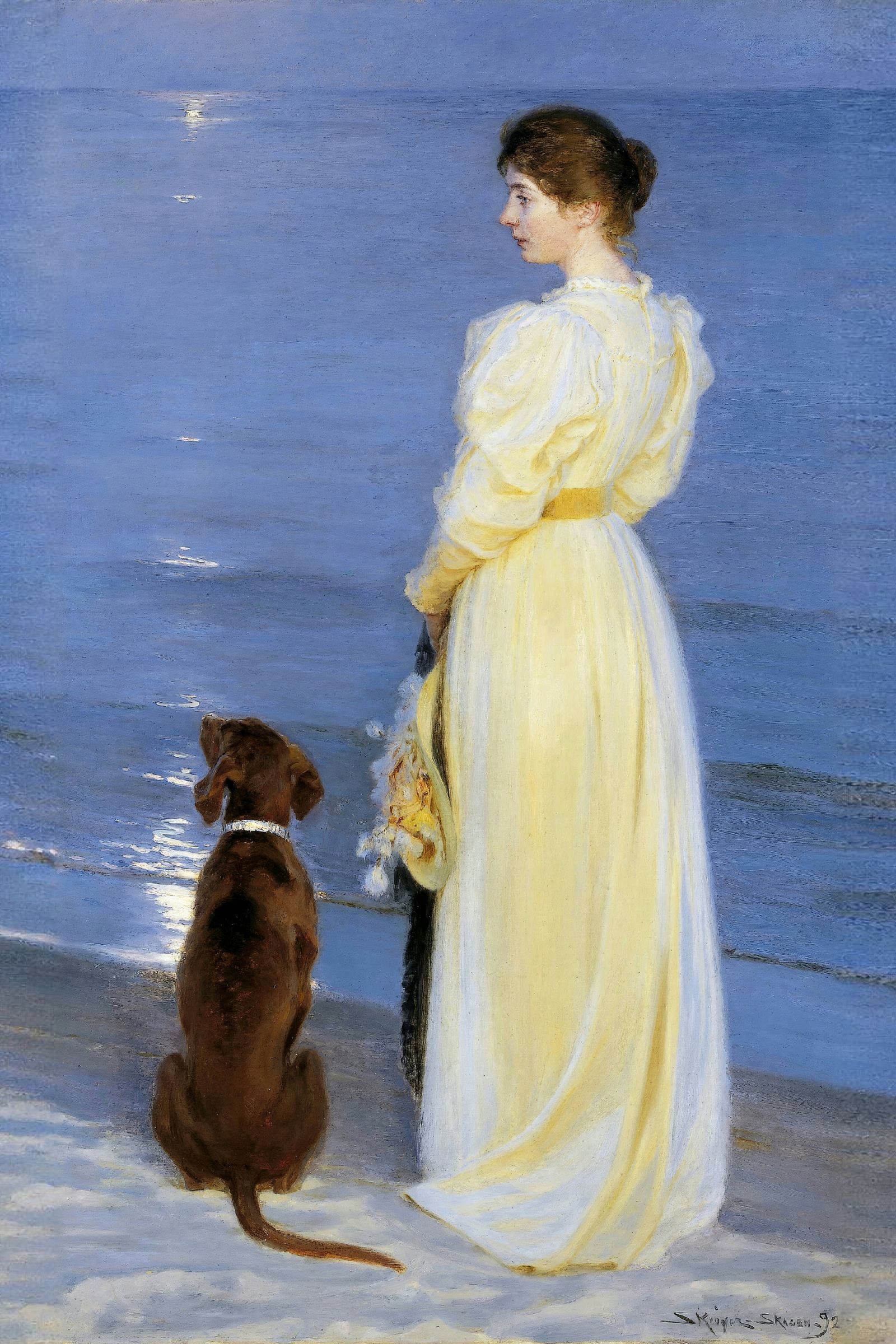
Summer Evening at Skagen · Peder Severin Krøyer · 1892 · Skagens Museum
A dog-and-owner portrait may be most truthful outdoors, particularly for people who remember their days through walks. Choose a photograph made during a pause, when neither subject is blurred and the animal's lead does not cover its face. The location can remain ordinary. What matters is that the pair look like themselves in a place they actually occupy together.
Create a portrait in this style · Explore this artwork
10. Decide when a family portrait is the better route
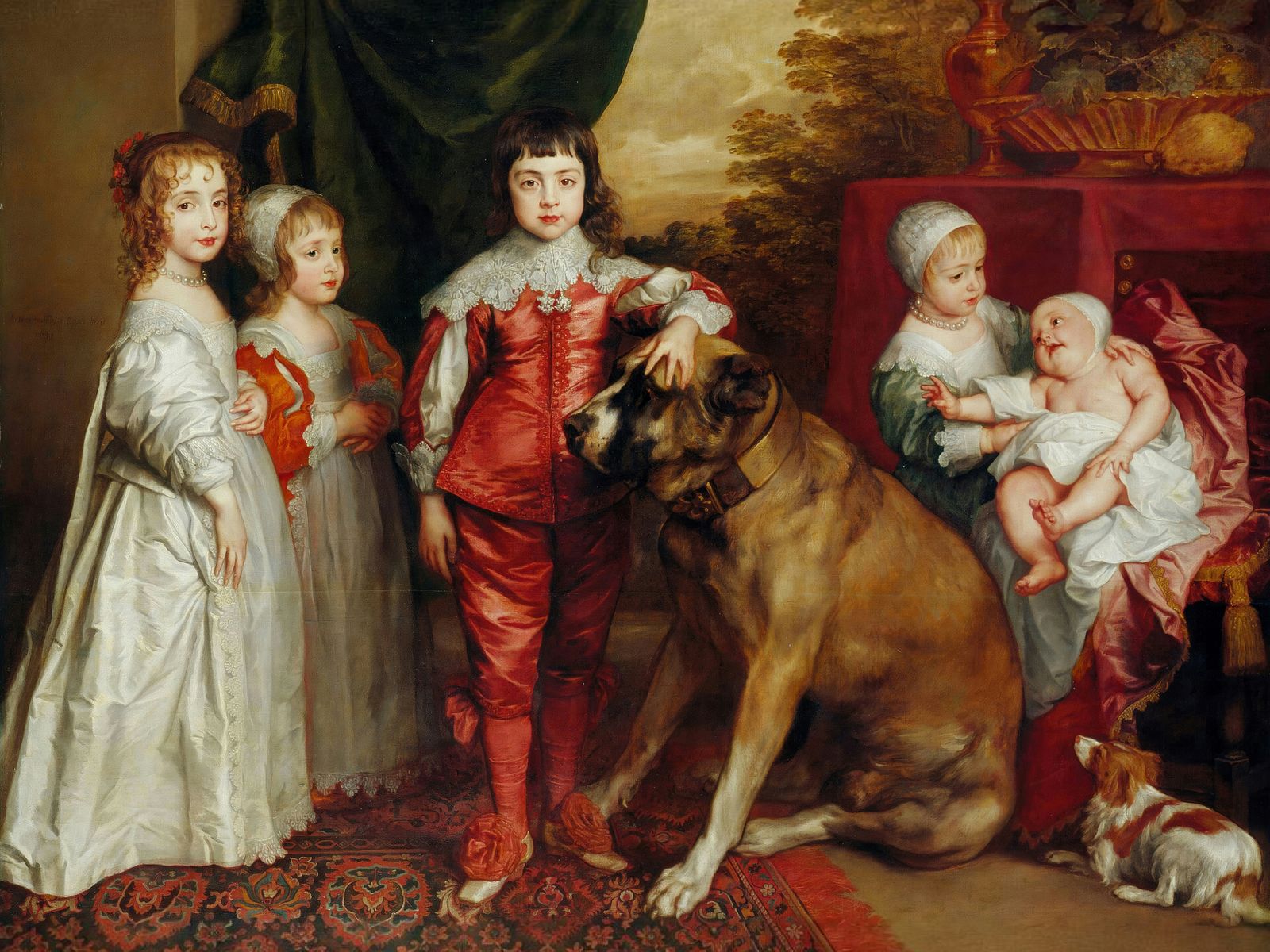
The Five Eldest Children of Charles I · Anthony van Dyck · 1637 · Royal Collection
Some pets belong visually to an entire household. If that is the story, choose a family-compatible creation route and a photograph with all the intended subjects visible. Do not expect a pair portrait to absorb extra people without checking its guidance. A smaller composition may be more effective when the central memory is one person and one animal, while a group suits a shared family gift.
Create a portrait in this style · Explore this artwork
Choose the portrait's subjects before choosing its frame. Open the pet-and-owner route, read the photo guidance and review the result with both identities in mind. Then compare the current print sizes and materials with the place the portrait will hang. If it is a gift, let the recipient help choose the reference when possible. The most personal detail is often already there: the pet's preferred position, the owner's habitual gesture, the way their bodies share a chair or a patch of ground. Keep those recognisable, and let the presentation stay quiet.
Create a pet-and-owner portrait
- What photograph works best for a person and pet portrait?
- Choose a clear image of both together, with the person’s face and the animal’s head visible. Keep the natural spacing and body outlines. A calm photograph in soft light is usually easier to assess than a dark or blurred action shot.
- Can I make a portrait with my cat instead of my dog?
- Check the subject guidance in the chosen route and style. The compositional advice applies to either animal, but the live creation flow sets what it accepts. Pick a natural pose rather than trying to make a cat behave like a dog.
- Should I choose the wall size first?
- Have the intended wall in mind, then review the portrait and the print dimensions offered. Check how clearly both subjects read at the proposed size. The ordering flow supplies current availability and prices.