Religious Christmas cards with art and words chosen together
A guide to religious Christmas cards, with ten sacred-art directions and practical messages for the people receiving them.
Choosing religious Christmas cards is a decision about both an image and a relationship. A Nativity may be a natural choice for someone who celebrates the Christian meaning of Christmas; a more general winter scene may suit another person better. Choose deliberately rather than assuming every recipient shares the same tradition.
The historical works below offer ten ways to think about sacred imagery. Their catalogue captions identify the artists and collections. The card links open Fable’s live masterwork gallery, where you can check the currently available designs and begin adding your words. Not every artwork illustrated in a story is offered in every card layout. If you love one of these pictures as a work of art, its own artwork link is the route to its print page.
1. Begin with the Nativity
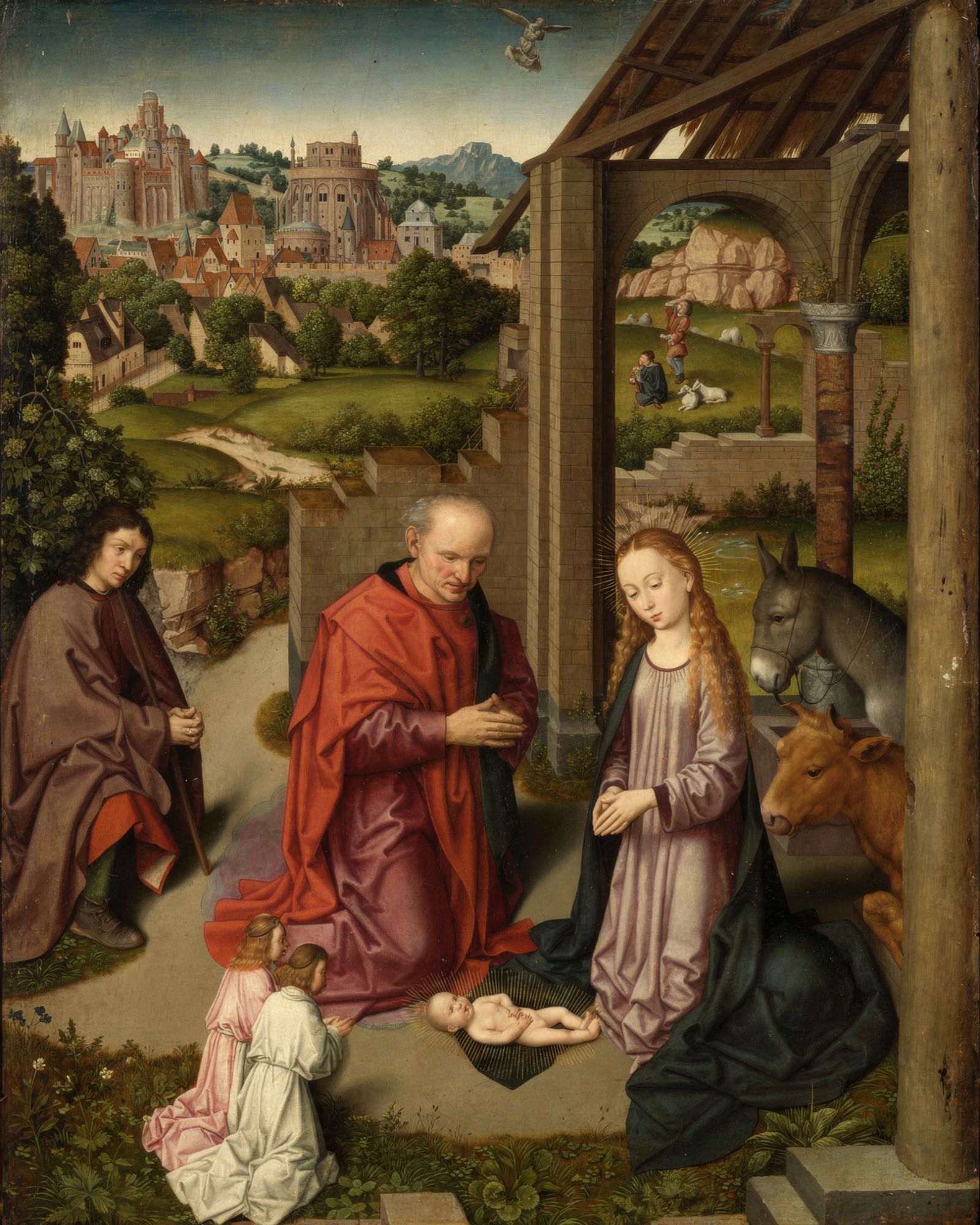
The Nativity · Gerard David · c. 1485–90 · Cleveland Museum of Art
A Nativity gives the card an unmistakable subject before a word is added. Keep the message proportionate: a wish for peace and a sentence addressed to the actual recipient can be enough. Look at the available card design in its preview, checking that the whole artwork and the lettering have enough room rather than crowding a detailed historical image.
Choose sacred card art · Explore this artwork
2. Let adoration set a quiet tone
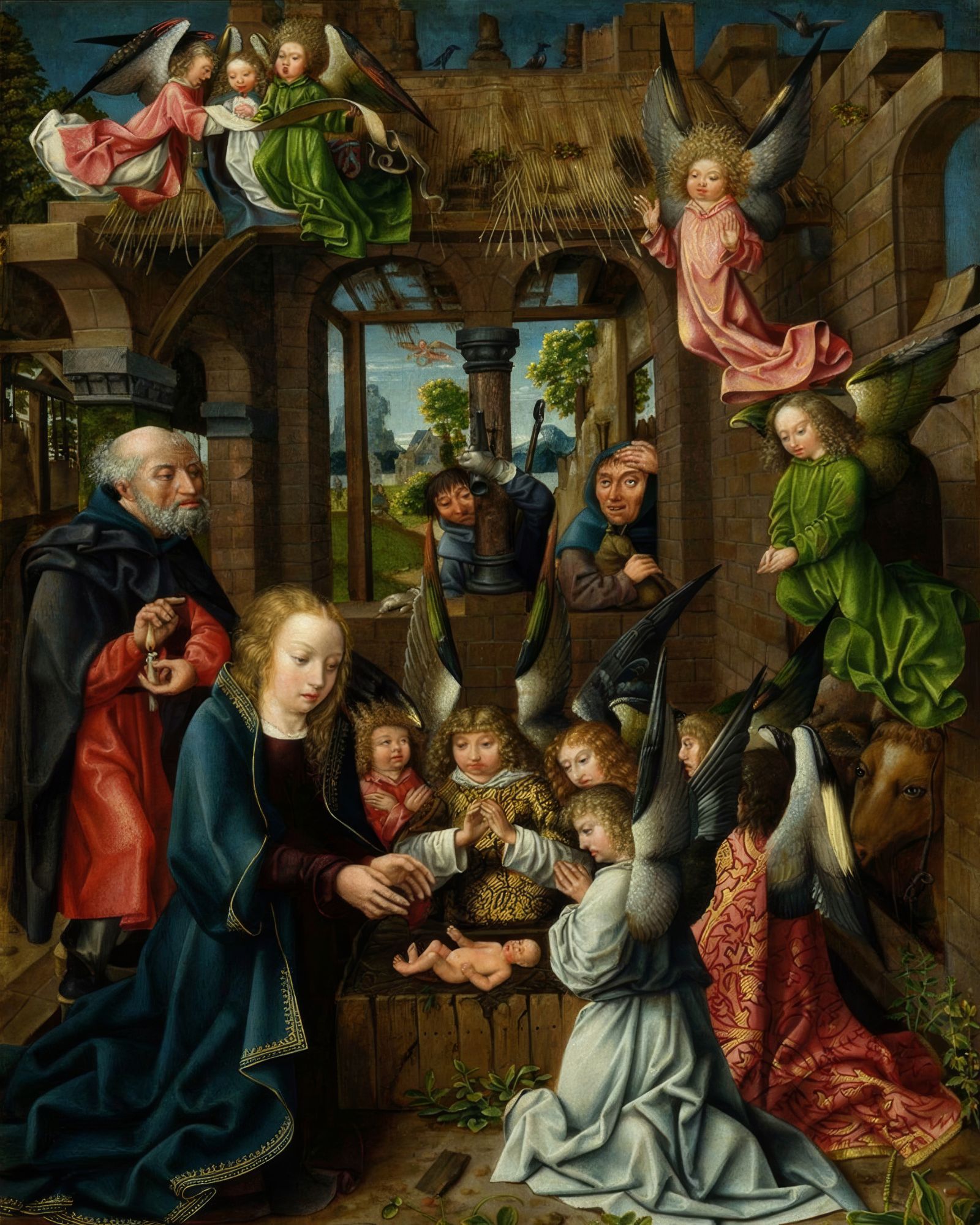
The Adoration of the Christ Child · Master of Frankfurt · possibly 1496–1502 · The Metropolitan Museum of Art
An image of adoration can suit a message that is reflective rather than celebratory. Consider who will receive it and whether a brief personal greeting or a shared scriptural reference is appropriate. You need not turn a card into a sermon. A simple acknowledgement of someone’s place in your life can sit comfortably beside a sacred work without explaining every symbol.
Open the masterwork card gallery · Explore this artwork
3. Consider an Annunciation
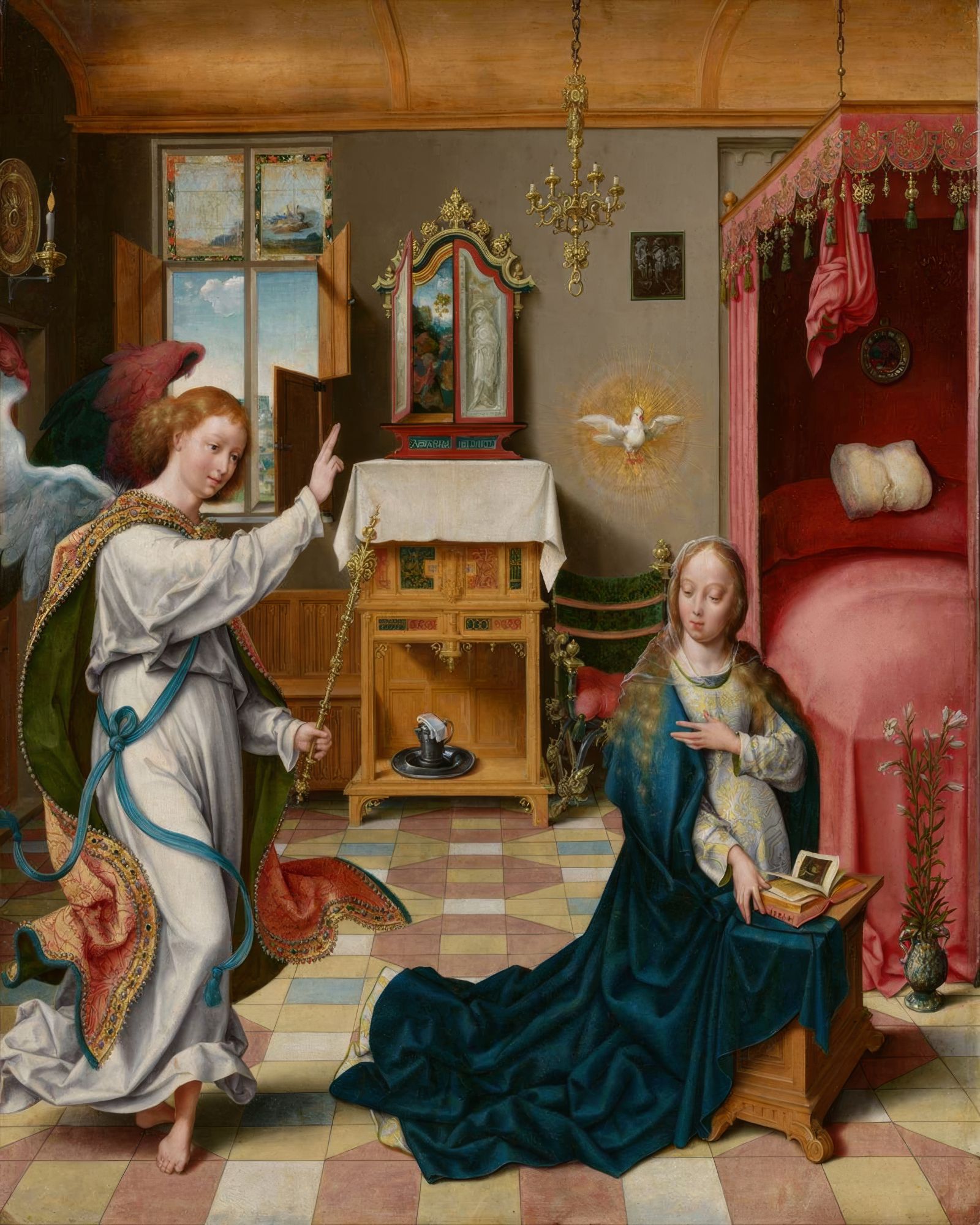
The Annunciation · Joos van Cleve · ca. 1525 · The Metropolitan Museum of Art
An Annunciation offers another part of the Christian story for a Christmas greeting. If the recipient enjoys sacred art, name the work and artist in your accompanying note rather than describing it vaguely as an old religious picture. Keep any interpretation modest and grounded in the catalogue; the personal message does not require an art-history lecture to be meaningful.
Explore sacred-art cards · Explore this artwork
4. Compare how another artist tells the subject
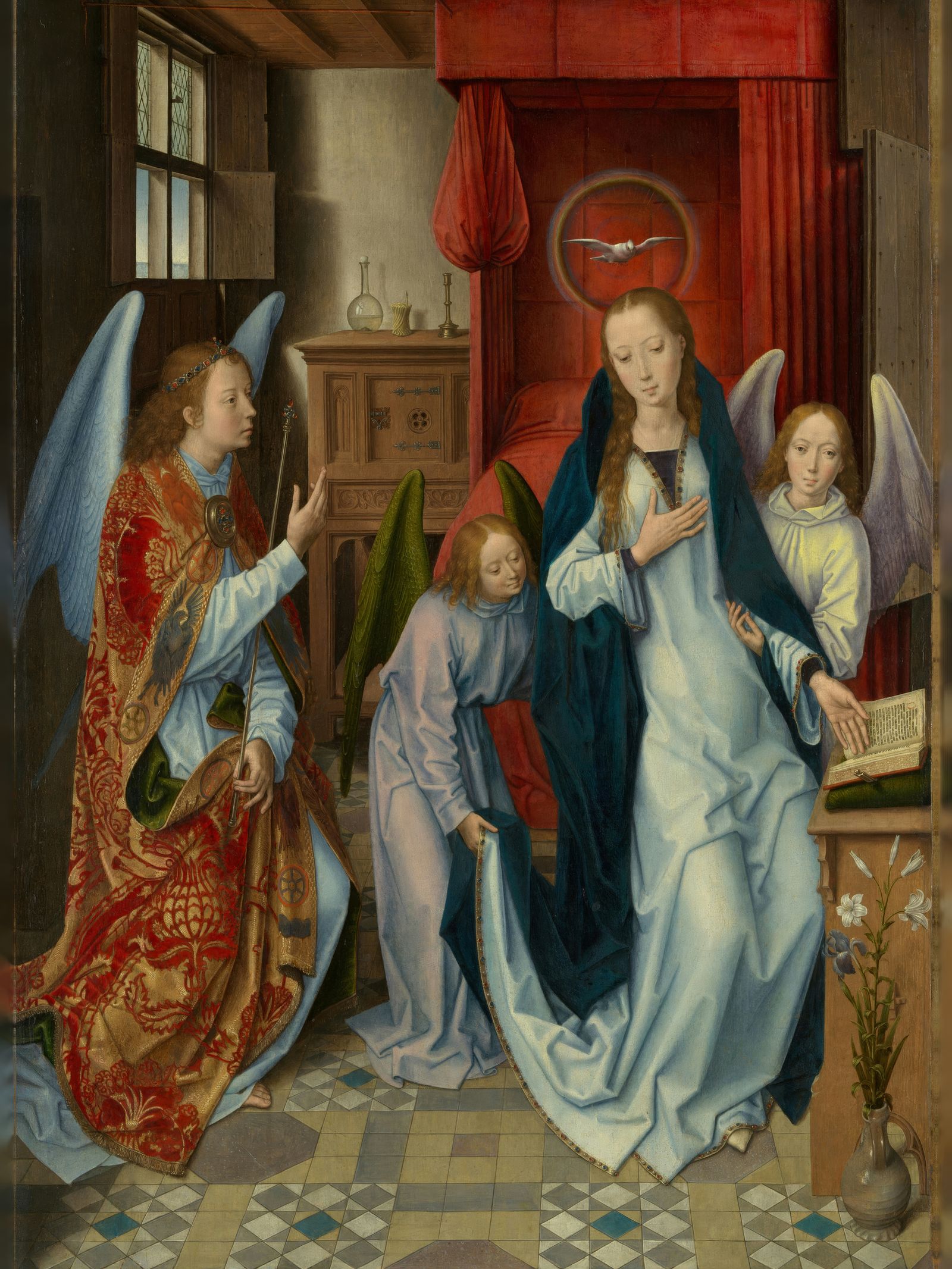
The Annunciation · Hans Memling · 1480–89 · The Metropolitan Museum of Art
Looking at two versions of a sacred subject can help you choose a tone that feels right for the recipient. You may respond to a work’s formality, intimacy or detail without claiming that one is the correct religious image. Browse the live card choices and read the final preview carefully, particularly if a long message would compete with the artwork.
Browse religious card choices · Explore this artwork
5. A third encounter with the same story
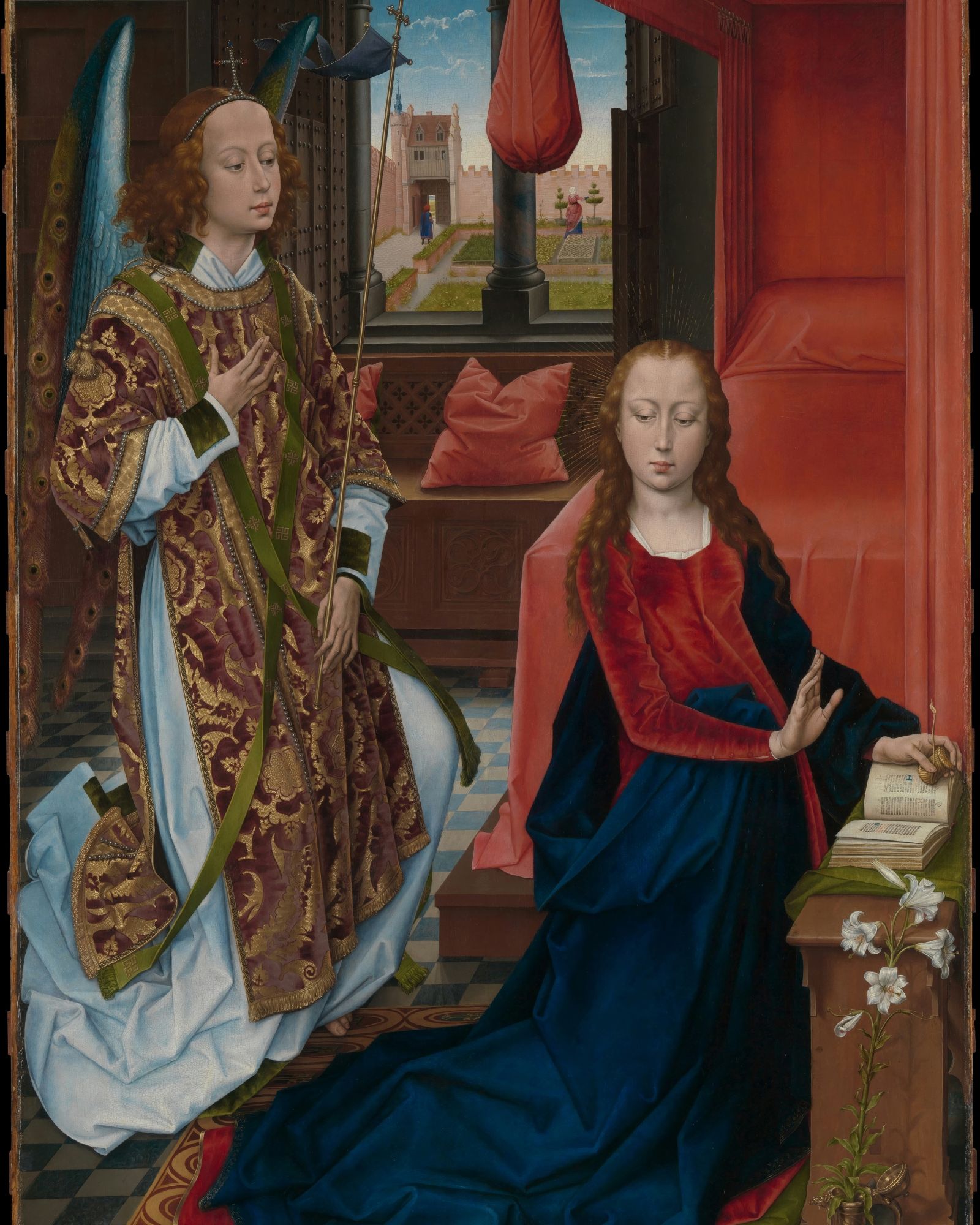
The Annunciation · Hans Memling · ca. 1465–70 · The Metropolitan Museum of Art
A familiar subject can still reward a fresh look. Choose this direction for a recipient who appreciates the act of looking closely at historical art. In your message, relate the season to something real: gratitude for their welcome, hope for a peaceful visit, or affection across distance. Specific words prevent a beautiful image from becoming an anonymous seasonal gesture.
Choose a masterwork card · Explore this artwork
6. A Virgin and Child for a family greeting
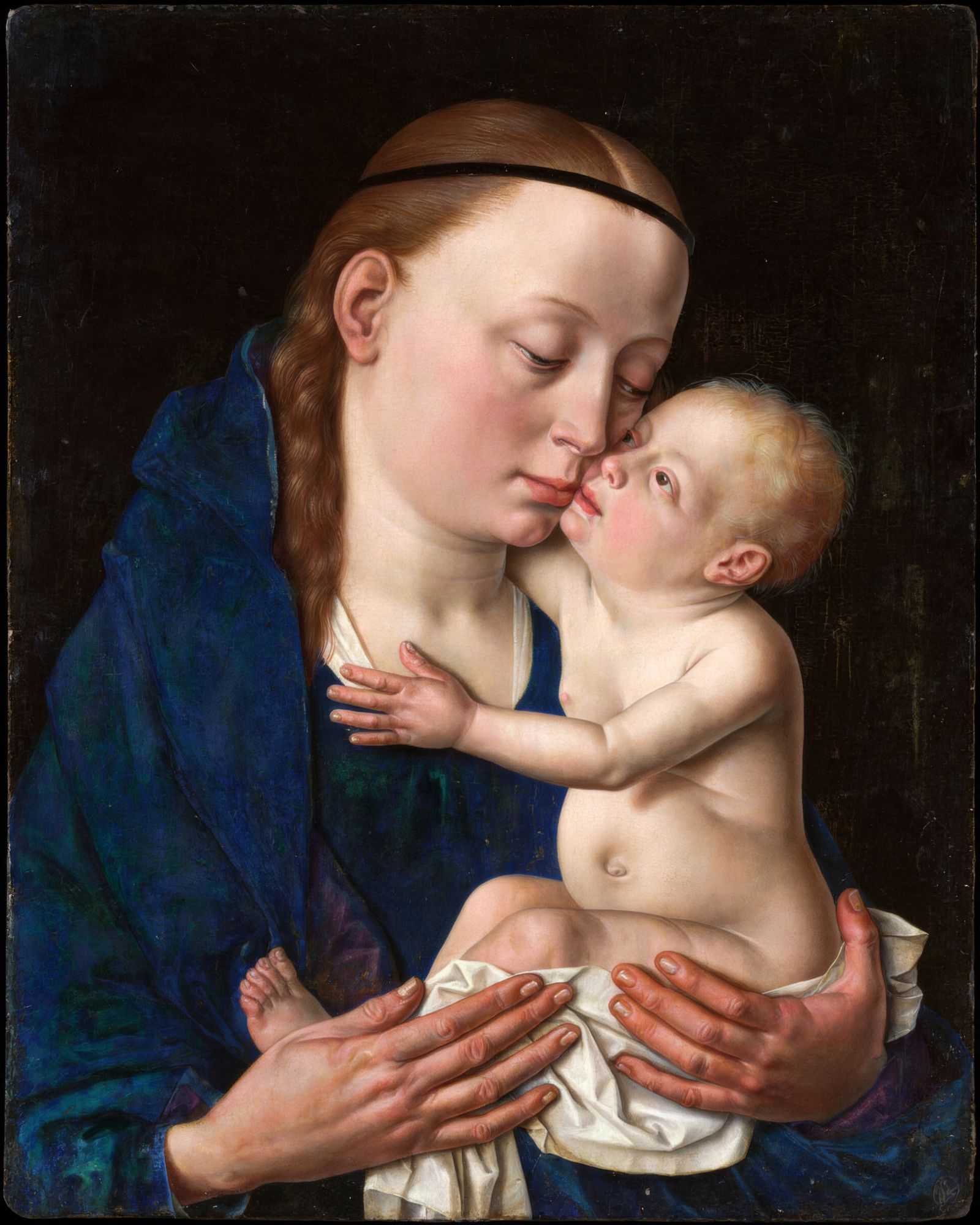
Virgin and Child · Dieric Bouts · ca. 1455–60 · The Metropolitan Museum of Art
A Virgin and Child may be an appropriate choice where that devotional image belongs to the recipient’s tradition. Avoid using it as a generic illustration of parenthood without considering its religious meaning. A warm family greeting can acknowledge Christmas plainly, then include a sentence about the people sending the card. Review names and spelling in the card preview before ordering.
Explore the sacred card gallery · Explore this artwork
7. Another workshop’s devotional image
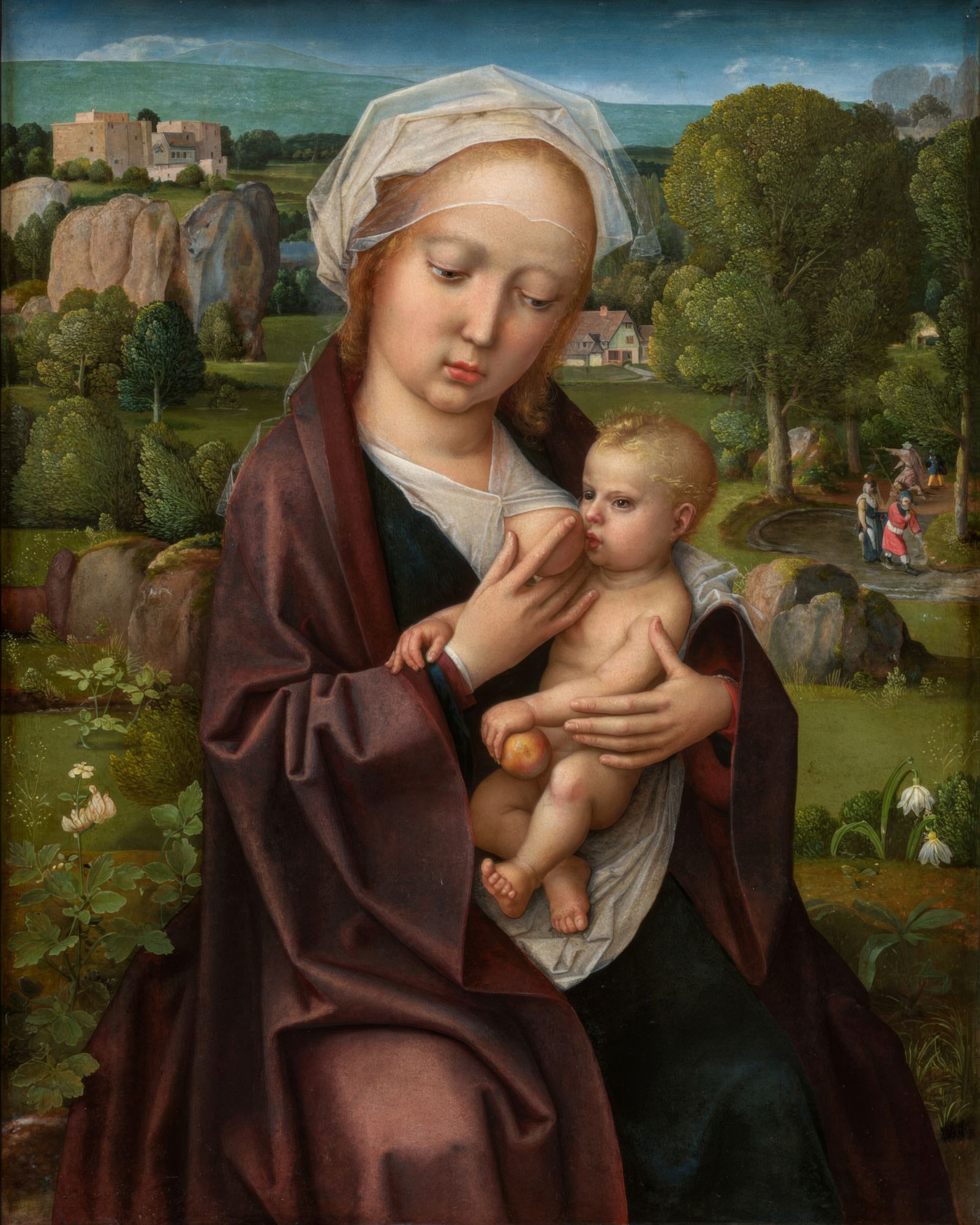
Virgin and Child · Workshop of Adriaen Isenbrant · c. 1520 · Art Institute of Chicago
Historic workshop attributions deserve the same accuracy as famous artists’ names. Keep the catalogue’s wording when identifying the picture; do not turn an attribution into a certainty for the sake of a more impressive card description. The greeting itself can remain simple. For a recipient who values tradition, thoughtful selection and correct naming are often more welcome than elaborate festive lettering.
Start an artwork Christmas card · Explore this artwork
8. The Holy Family as the subject
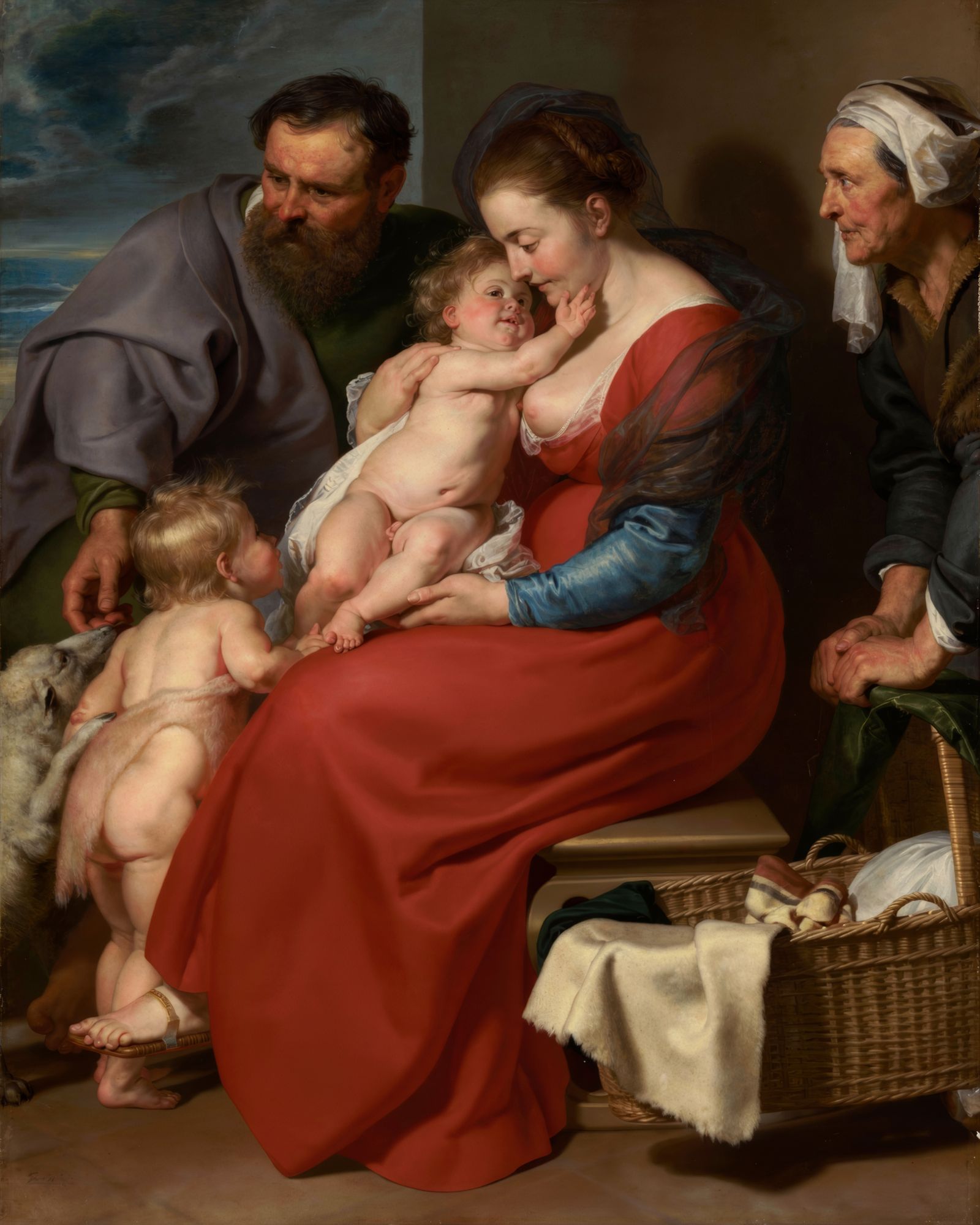
The Holy Family · Peter Paul Rubens · c. 1615 · Art Institute of Chicago
A Holy Family subject may suit a card sent from one household to another, provided the religious connection is welcome. Let the image carry its own identity and write about your actual relationship with the recipients. If the year has been difficult, a restrained wish for comfort and companionship can be more considerate than insisting on joy or making the message unnaturally bright.
Browse masterwork Christmas cards · Explore this artwork
9. Make room for a more detailed sacred group
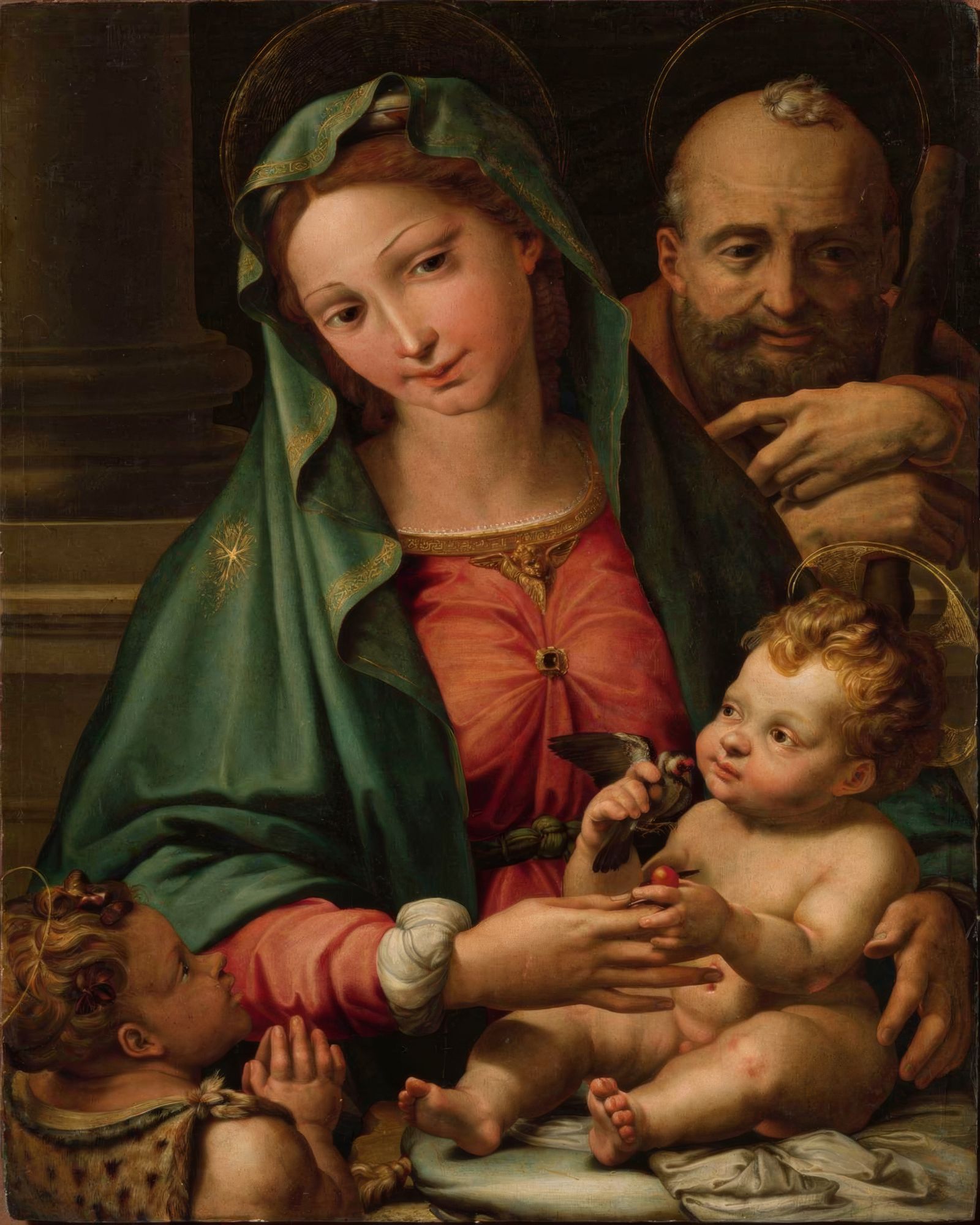
The Holy Family with the Infant Saint John the Baptist · Perino del Vaga · ca. 1524–26 · The Metropolitan Museum of Art
A work with several figures needs careful consideration at card size. Use the preview to see whether the image remains legible and whether the lettering interferes with faces or important details. Choose another layout when needed. A complete work shown with space around it is preferable to losing part of the scene simply to make the greeting look larger.
Review the current card layouts · Explore this artwork
10. For someone who likes the wider sacred narrative
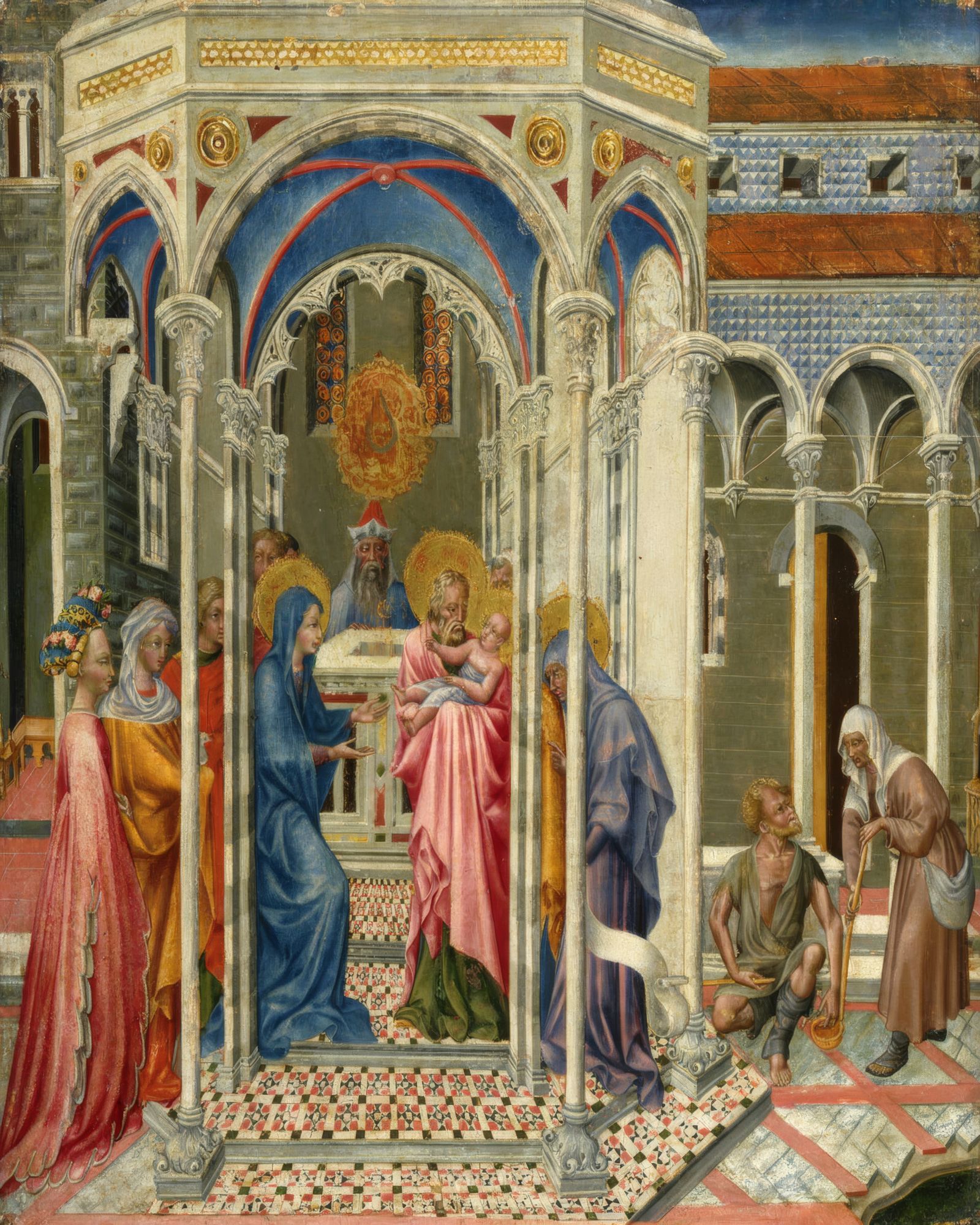
The Presentation of Christ in the Temple · Giovanni di Paolo · ca. 1435 · The Metropolitan Museum of Art
A recipient with an interest in sacred art may enjoy an image that reaches beyond the most familiar Nativity scene. Name the subject correctly and choose it for a reason you can explain in a sentence. If you want a card tied narrowly to Christmas Day, return to the Nativity options instead. The thoughtful choice depends on the person receiving it.
Choose your Christmas card artwork · Explore this artwork
Open the masterwork card gallery to choose an available sacred design, then write the message for one actual recipient before adapting it for others. Keep the artwork whole and check the preview at a realistic size. If a religious image would not suit someone on your list, choose a different work for them. That small adjustment keeps the handoff from art to card as considered as the picture itself.
Choose your masterwork Christmas card
- What should I write in a religious Christmas card?
- Start with a greeting appropriate to the recipient’s faith and your relationship. Add one specific sentence of gratitude or affection, then a wish for the season. Use a scriptural quotation only when you know it is welcome and can reproduce it accurately.
- Are these Catholic Christmas cards or general Christian cards?
- The artworks come from different historical contexts. Choose according to the recipient’s tradition and the actual image, rather than treating every sacred work as interchangeable. The live card gallery shows the designs currently offered; it does not determine a recipient’s devotional practice.
- Can every artwork here be ordered as a card?
- The article presents historical references, while the linked card gallery establishes the current card selection. Check that gallery and the design preview before ordering. The individual artwork links are also useful if you want the historical work as a print instead.
- Can I send religious cards to people who do not celebrate Christmas that way?
- Consider the recipient rather than a universal rule. A winter landscape or another non-devotional masterwork may be a more comfortable choice. A personal message can still convey warmth without assuming a shared belief.